Poodle Mixes: 25 Popular Doodle Breeds Compared
Poodle mixes range from 4-pound Chipoos to 150-pound Newfypoos. Compare 25 doodle breeds by weight, height, shedding, energy and price, plus generation codes, allergy facts and how to choose one responsibly.
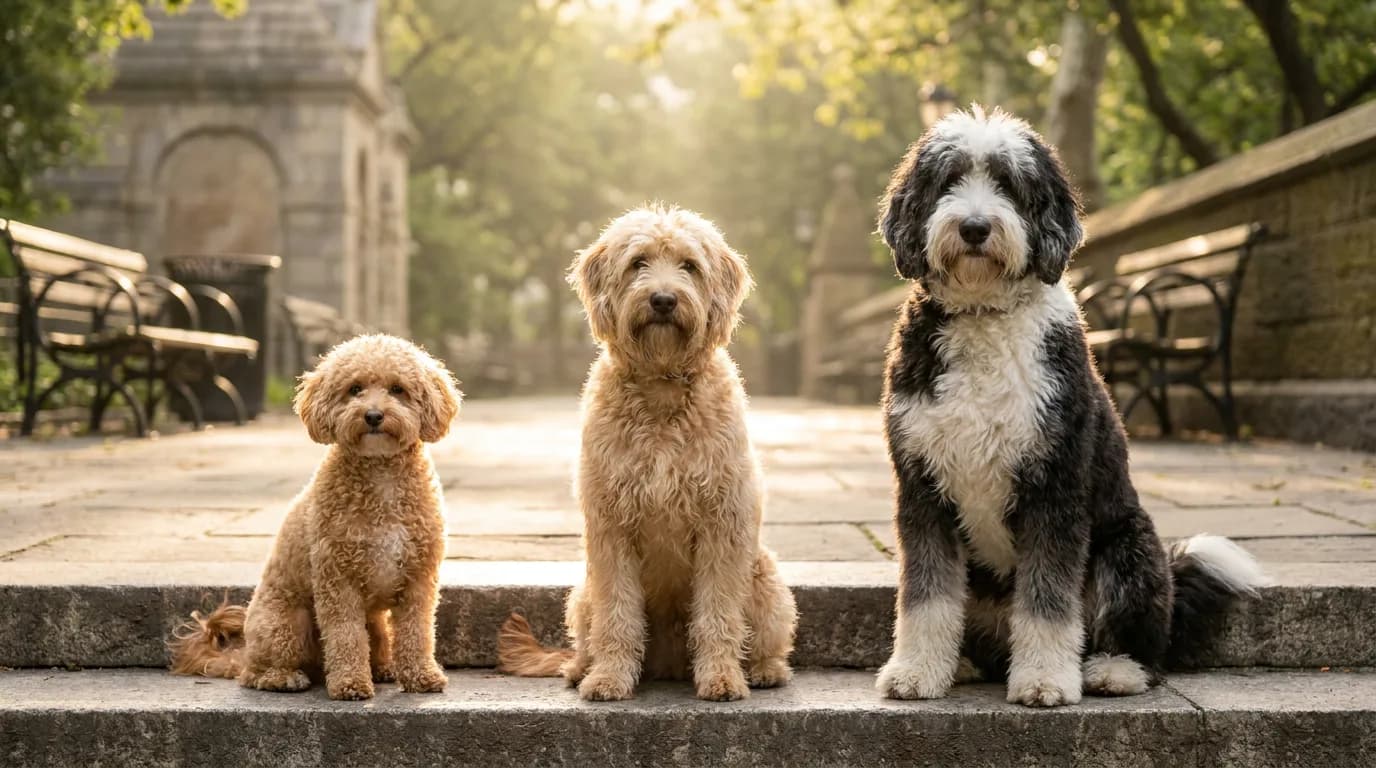
Left to right, a Maltipoo, a Whoodle, and a Sheepadoodle show how a Poodle mix's adult size depends mostly on whether its Poodle parent is a Toy, Miniature, or Standard.
Petful is reader supported. As an affiliate of platforms like Amazon and Chewy, we may earn a commission when you buy through links on this page. There is no extra cost to you.
Poodle mixes are dogs with one Poodle parent and one parent of another breed, and the 25 most popular in the US range from Chipoos that can weigh 4 pounds to Newfypoos that can top 150. The Poodle parent's size (Toy, Miniature, or Standard) sets roughly how big the dog will get, the other breed shapes its energy and instincts, and no cross comes with a guaranteed low-shedding coat.
Below, all 25 are compared side by side on size, shedding, energy, and price, then profiled one by one with photos. After the profiles come the generation codes breeders use, the best mix for common needs, and what allergy research actually shows. If you are still deciding between a doodle and a purebred, our Poodle breed guide compares the three Poodle sizes.

Sign up for expert-backed reviews and safety alerts all in one place.
What is a Poodle mix?
A Poodle mix (sometimes called a Poodle mixture or doodle) is a cross between a Toy, Miniature, or Standard Poodle and one other breed, usually named by blending the two breed names with a -doodle or -poo ending, as in Labradoodle or Maltipoo. Its adult size, coat, and temperament vary with the Poodle parent's size, the other breed, and the generation, so each mix is a range of possible dogs rather than one predictable type.
- 1Adult size follows the Poodle parent: Toy Poodle crosses usually stay under about 15 pounds, while Standard Poodle crosses often reach 50 to 90 pounds or more.
- 2There is no coat guarantee: many crosses shed, and no Poodle mix is reliably hypoallergenic, whatever the generation label says.
- 3Ask for health testing on both parent breeds, because a cross can inherit problems from either side.
Doodle is the informal umbrella name. The -doodle ending, a rhyming play on Poodle, was popularized by the Labradoodle and tends to mark larger crosses such as the Goldendoodle and Bernedoodle, while small companion crosses usually end in -poo, like the Cockapoo and Yorkipoo. No registry controls these names, so one cross may be sold under several. Designer dog, hybrid, and crossbreed all mean the same thing, and a dog of unknown background that looks part Poodle is simply a mixed breed or Poodle mutt.
The idea is older than the name. Breed historians trace the first intentional Cockapoos to the United States in the 1950s, but the doodle boom began in 1989, when Wally Conron of the Royal Guide Dogs Association of Australia crossed a Labrador Retriever with a Standard Poodle to produce a lower-shedding guide dog.
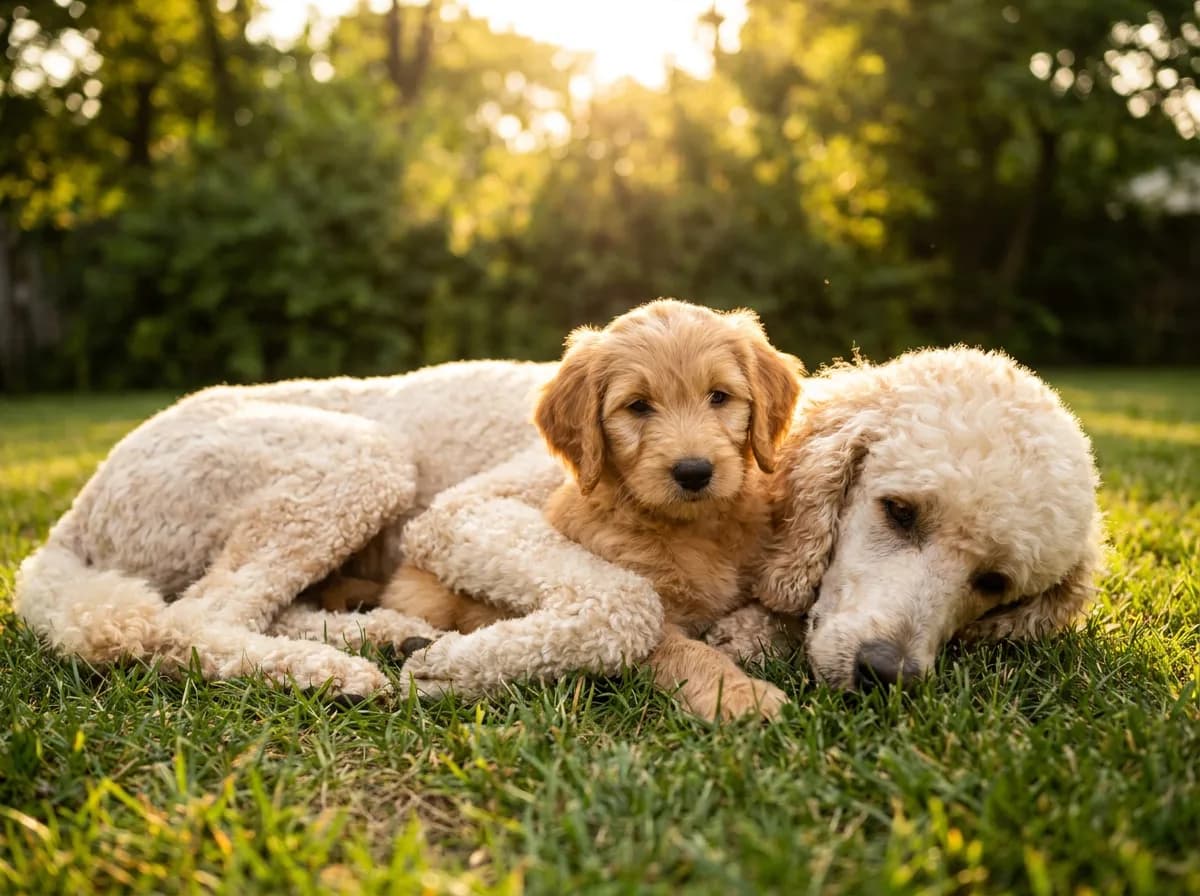
Why are there so many Poodle mixes? Poodles come in three sizes, so they can be matched with almost any breed: under the AKC standard, a Toy Poodle stands 10 inches or less at the shoulder, a Miniature over 10 and up to 15 inches, and a Standard over 15 inches. Add a low-shedding coat and a quick, people-focused mind, and breeders have paired Poodles with everything from the Maltese to the Saint Bernard.
A doodle and a Poodle differ in ways that matter to buyers:
- Breed standard: a Poodle is bred to a written standard, so its size and coat are predictable; a doodle has no breed standard.
- Coat: Poodles have a tight, curly, low-shedding coat, while doodle coats can be curly, wavy, or flat and shedding, even within one litter.
- Looks: a doodle can resemble either parent, and some look nothing like a Poodle.
- Registration: Poodles are registered with the AKC; doodles are not.
Poodle mixes are not an AKC-recognized breed. The American Kennel Club registers none of them, though a doodle can still earn titles in agility, rally, and other sports through the AKC's Canine Partners program for mixed-breed dogs.
If you adopted a curly dog labeled part Poodle, that shelter label is usually a visual guess. A breed-ancestry DNA test such as the Embark Breed & Health Dog DNA Test Kit estimates how much of the dog's ancestry is Poodle and screens for inherited disease variants you can share with your veterinarian, which tells you far more than the coat does.
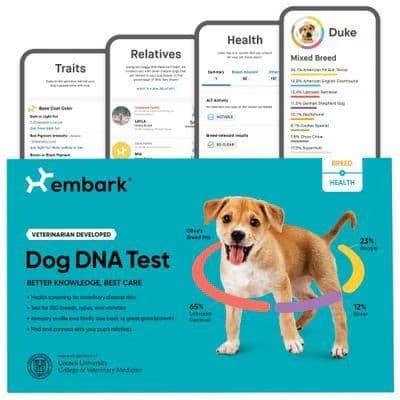
Petful may earn a commission when you click through to Chewy, at no extra cost to you.
25 Poodle mixes compared at a glance
Use this chart to compare all 25 Poodle mixes on typical adult weight, shoulder height, shedding tendency, energy level, and typical puppy price. Sizes come from Petful's breed guides where they give a range and otherwise from named breed profiles (PetMD, Canine Journal, Dogster, and Hepper); prices are typical US breeder asking prices, not adoption fees.
| Mix (parents) | Typical adult weight and shoulder height | Shedding tendency | Energy level | Typical puppy price | Petful guide |
|---|---|---|---|---|---|
| Cavapoo (Cavalier King Charles Spaniel and Poodle) | 12 to 25 lb; 9 to 14 in | Low to moderate | Moderate | $1,500 to $4,000 | Cavapoo guide |
| Maltipoo (Maltese and Poodle) | 5 to 20 lb; 8 to 14 in | Low | Moderate | $1,000 to $4,000 | Maltipoo guide |
| Cockapoo (Cocker Spaniel and Poodle) | 12 to 24 lb (6 to 30 across sizes); 10 to 15 in | Low to moderate | Moderate to high | $1,200 to $2,500 | Cockapoo guide |
| Havapoo (Havanese and Poodle) | 11 to 20 lb; 10 to 15 in | Low to moderate | Moderate | $2,000 to $4,500 | Havapoo guide |
| Schnoodle (Schnauzer and Poodle) | 5 to 70 lb (small crosses about 10 to 20); 10 to 26 in | Low | Moderate to high | $1,500 to $4,000 | Schnoodle guide |
| Pomapoo (Pomeranian and Poodle) | 5 to 15 lb; 8 to 10 in | Low to moderate | Moderate | $500 to $2,500+ | Pomeranian mixes guide |
| Shih-Poo (Shih Tzu and Poodle) | 8 to 15 lb; About 10 in | Low | Low to moderate | $2,200 to $4,500+ | Shih-Poo guide |
| Yorkipoo (Yorkshire Terrier and Poodle) | 4 to 15 lb; 7 to 15 in | Low | Moderate | $900 to $3,000 | Yorkipoo guide |
| Doxiepoo (Dachshund and Poodle) | 10 to 30 lb; About 5 to 15 in (parents' range) | Low to moderate | Moderate | $500 to $2,500 | Doxiepoo guide |
| Poochon (Bichon Frise and Poodle) | 7 to 15 lb; 9 to 14 in | Low | Moderate | About $1,000 (sparse data) | Poochon guide |
| Chipoo (Chihuahua and Poodle) | 4 to 15 lb; 5 to 15 in | Moderate | Moderate | $600 to $900 | Profile on this page |
| Whoodle (Soft Coated Wheaten Terrier and Poodle) | 20 to 45 lb; 14 to 20 in | Low | High | Over $1,000 | Profile on this page |
| Bordoodle (Border Collie and Poodle) | 35 to 65 lb; 16 to 22 in | Low to moderate | Very high | $700 to $1,500 | Border Collie mixes guide |
| Corgipoo (Corgi and Poodle) | 10 to 28 lb; 10 to 12 in | Moderate to high | Moderate to high | $500 to $1,500+ | Corgi mixes guide |
| Poogle (Beagle and Poodle) | 15 to 30 lb; 10 to 15 in | Moderate | High | From about $700 | Beagle mixes guide |
| Bernedoodle (Bernese Mountain Dog and Poodle) | 10 to 90 lb (tiny to standard); 12 to 29 in | Low to moderate | Moderate | $2,000 to $5,000 | Bernedoodle guide |
| Goldendoodle (Golden Retriever and Poodle) | 15 to 90 lb (petite to standard); 11 to 24 in | Low to moderate | High | $2,000 to $4,000 | Goldendoodle sizes guide |
| Labradoodle (Labrador Retriever and Poodle) | 15 to 65 lb (mini to standard); 14 to 24 in | Low to moderate | High | $1,500 to $4,000 | Labradoodle guide |
| Aussiedoodle (Australian Shepherd and Poodle) | 10 to 70 lb (toy to standard); 10 to 25 in | Low to moderate | Very high | $1,500 to $5,000 | Aussiedoodle guide |
| Sheepadoodle (Old English Sheepdog and Poodle) | 10 to 85 lb (micro to standard); 10 to 27 in | Low to moderate | Moderate to high | $1,500 to $3,500 | Sheepadoodle guide |
| Irish Doodle (Irish Setter and Poodle) | 40 to 70 lb; 22 to 26 in | Low to moderate | High | $1,350 to $3,000 | Profile on this page |
| Saint Berdoodle (Saint Bernard and Poodle) | 70 to 150 lb; 20 to 26 in | Moderate | Low to moderate | $1,500 to $3,000 | Profile on this page |
| Shepadoodle (German Shepherd and Poodle) | 40 to 90 lb; 22 to 28 in | Moderate | High | From about $800 | Profile on this page |
| Pyredoodle (Great Pyrenees and Poodle) | 85 to 100 lb; 20 to 30 in | Moderate | Moderate | $700 to $2,800 | Great Pyrenees mixes guide |
| Newfypoo (Newfoundland and Poodle) | 70 to 150 lb; 22 to 30 in | Low to moderate | Moderate | $1,500 to $3,000 | Newfoundland mixes guide |
Treat every range as the spread for the whole mix, not a promise for one puppy. A Goldendoodle with a Toy Poodle parent and one with a Standard Poodle parent can finish 60 pounds apart, and a first-generation litter can include flat and curly coats. Pyredoodle and Newfypoo prices come from thinner sources than the rest of the chart (Wag! for the Pyredoodle, Doodle Doods for the Newfypoo), and general doodle guides such as Chewy's put most doodle puppies from ethical breeders at $500 to $3,000.
Coat colors follow the Poodle's palette plus whatever the other parent adds, which is why different types of doodles look so different in photos:
- Solid colors: white, cream, apricot, red (often sold as ginger or copper), chocolate or dark brown, black, blue, and gray or silver.
- Parti (sometimes spelled party): mostly white with large patches of another color; a tuxedo parti is black with a white chest and paws.
- Phantom: a dark coat with tan or cream points on the face, chest, and legs.
- Merle: a marbled pattern inherited from merle parents such as the Australian Shepherd, Border Collie, or a dapple Dachshund; it is not an accepted Poodle color.
- Tricolor: black, white, and rust, the classic Bernedoodle look.
Names such as lavender, orange, and yellow are sales labels for dilute or pale shades rather than separate colors, and many dark puppies lighten with age; our Poodle colors guide explains which shades fade. Which mix is cutest is a matter of taste, but the teddy-bear look in most doodle dog pictures comes from a wavy or curly coat kept in a short, even clip, not from any one breed.
How many types of doodles are there? No registry keeps count. Published lists run from about 30 names (Highland Canine lists 32) to more than 60 (Canine Journal lists 67), because breeders can cross a Poodle with almost anything; the 25 compared here are the one-breed Poodle crosses Americans search for most when searches for each mix name are added to descriptive searches such as "chihuahua poodle mix".
Which Poodle mixes are most popular?
The Cavapoo, Bernedoodle, and Maltipoo are the most popular Poodle mixes in the US by search demand, each looked up more than 200,000 times a month. The ranking below counts monthly US searches for each mix name in Ahrefs Keywords Explorer (September 2026). Search interest measures curiosity, not how many of each dog exist: people search a name to check a photo, a price, or a problem, so read this as a map of attention rather than a census.
- Cavapoo: 350,000
- Bernedoodle: 341,000
- Maltipoo: 228,000
- Goldendoodle: 134,000
- Cockapoo: 127,000
- Labradoodle: 125,000
- Aussiedoodle: 78,000
- Sheepadoodle: 57,000
- Havapoo: 33,000
- Schnoodle: 30,000
- Pomapoo: 26,000
- Shih-Poo: 16,000
- Yorkipoo: 15,000
- Doxiepoo: 14,000
- Whoodle: 13,000
- Irish Doodle: 13,000
- Saint Berdoodle: 9,800
- Poochon: 9,500
- Shepadoodle: 7,900
- Pyredoodle: 7,800
- Newfypoo: 7,700
- Bordoodle: 7,100
- Corgipoo: 6,700
- Chipoo: 5,600
- Poogle: 4,800
Why are Poodle mixes so popular? Buyers want a friendly, trainable family dog with less hair on the furniture, and the top doodle breeds are marketed exactly that way. Rarer crosses trail far behind the top names. The Peekapoo just missed this list: its name draws 6,300 monthly US searches, more than the Chipoo or Poogle, but those two pull ahead once descriptive searches such as "chihuahua poodle mix" and "beagle poodle mix" are counted, which is how this list was chosen. The Springerdoodle (4,700) and Westiepoo (4,400) come next. Some older lists, such as Highland Canine's 32-doodle ranking, rely on worldwide Google Trends data from 2020 to 2021, which is why they put different mixes first.
How the other parent breed shapes a Poodle mix
The non-Poodle parent is the best single predictor of a mix's energy, trainability, and instincts, because the Poodle side is fairly consistent in every size: smart, athletic, and people-focused. A herding parent adds drive and a need for a job, a terrier parent adds alertness and barking, a retriever adds sociability and exercise needs, and a giant working parent adds calm bulk and a shorter life. Grouping the 25 mixes by that parent tells you more than the doodle label does.
| Other parent's breed group | Mixes on this page | What it usually adds | The tradeoff owners underestimate |
|---|---|---|---|
| Toy companion | Cavapoo, Maltipoo, Havapoo, Shih-Poo, Poochon, Pomapoo, Chipoo | Lap-size affection and portability | Fragility around toddlers, dental disease, and distress when left alone |
| Terrier | Yorkipoo, Schnoodle, Whoodle | Alertness, confidence, and quick wits | Barking at every sound and chasing small animals |
| Spaniel | Cockapoo | A soft, people-pleasing temperament | Ear infections under long, heavy ears |
| Scent hound | Poogle, Doxiepoo | A cheerful, social nature and a strong nose | Unreliable recall, baying, and a back prone to disc disease in the Doxiepoo |
| Retriever and setter | Goldendoodle, Labradoodle, Irish Doodle | Sociability, trainability, and a love of water and fetch | Size, jumping, and an hour or more of daily exercise |
| Herding | Aussiedoodle, Bordoodle, Sheepadoodle, Shepadoodle, Corgipoo | Focus and very high trainability | Nipping at heels, noise sensitivity, and damage when bored |
| Giant working | Bernedoodle, Saint Berdoodle, Newfypoo, Pyredoodle | Calm, gentle bulk | Food and vet bills, joint strain, shorter lifespans, and night barking in Pyredoodles |
Poodle terrier mixes such as the Yorkipoo, Schnoodle, and Whoodle are the watchdogs of the doodle world: alert, confident, and quick to bark, with a prey drive that may send them after squirrels. The Yorkshire Terrier sits in the AKC's Toy Group, but it was bred to hunt rats and still acts like a terrier. Spaniel crosses such as the Cockapoo tend to be softer and more eager to please, which makes them easier for first-time owners.
Doodle dog temperament is otherwise a blend, and training should plan for the other parent's instincts: herding crosses need jobs and impulse-control games, hound crosses need recall practice around smells, and giant crosses need manners before they weigh 100 pounds. Don't count on a doodle as a guard dog, either. The Shepadoodle and Pyredoodle may guard, but most retriever and spaniel crosses greet strangers happily.
Looks follow the same logic. Some Poodle mixes don't look like Poodles at all: a smooth-coated Chipoo, a long, low Corgipoo, and a flat-coated Poogle with Beagle ears can all be first-generation crosses with a purebred Poodle parent.
Small Poodle mixes (Toy and Miniature Poodle crosses)
Small Poodle mixes are crosses between a Toy or Miniature Poodle and a small breed, and most weigh 5 to 25 pounds as adults. The Poodle parent sets the ceiling: a Toy Poodle weighs about 4 to 6 pounds and a Miniature Poodle 10 to 15 pounds in AKC figures, so a Toy Poodle mix usually finishes smaller than a Miniature Poodle mix of the same breed. Our guides to Toy Poodle size and Miniature Poodle size cover the two parents in detail.
Mini doodle, micro, pocket, tiny, and teacup are sales labels rather than sizes. Mini usually means a Miniature Poodle parent. Teacup, micro, and pocket labels usually mean the smallest Toy Poodle lines, sometimes bred down on purpose, which brings the fragility our teacup Poodle guide describes. A Toy Poodle and Miniature Poodle mix is not a doodle at all: both parents are Poodles, so the puppies are purebred Poodles whose adult size can land anywhere between the two.
Every small cross shares a few toy-breed basics worth planning for:
- Kneecaps: small dogs are prone to slipping kneecaps (patellar luxation), so ask for patella exams on both parents.
- Teeth: crowded small mouths collect tartar quickly, and daily brushing from puppyhood heads off painful dental disease.
- Windpipe: Toy Poodles, Yorkshire Terriers, Pomeranians, and Chihuahuas can develop tracheal collapse, so walk small crosses on a harness rather than a collar.
- Handling: Adopt a Pet cautions that very small Poodle mixes, under about 10 pounds, may be too fragile for children younger than five.
If portability is the reason you want a small mix, check the dog against real limits. Airlines set their own size and weight rules for pets in the cabin, so compare the adult ranges in the chart with the carrier you would actually use, such as the Sherpa Original Deluxe Airline-Approved Dog & Cat Carrier Bag, before choosing between a Toy and a Miniature Poodle cross.
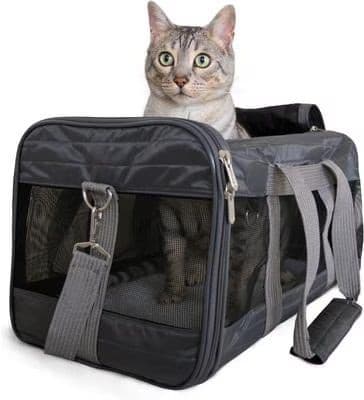
An airline-approved soft-sided carrier with mesh ventilation windows, a top-rated travel pick for cats and small dogs.
Petful may earn a commission when you click through to Chewy, at no extra cost to you.
The photos below show each adult small Poodle mix so you can compare build and coat texture, from the silky Maltipoo and wiry Schnoodle to the plush Poochon.
1. Cavapoo (Cavalier King Charles Spaniel and Poodle)
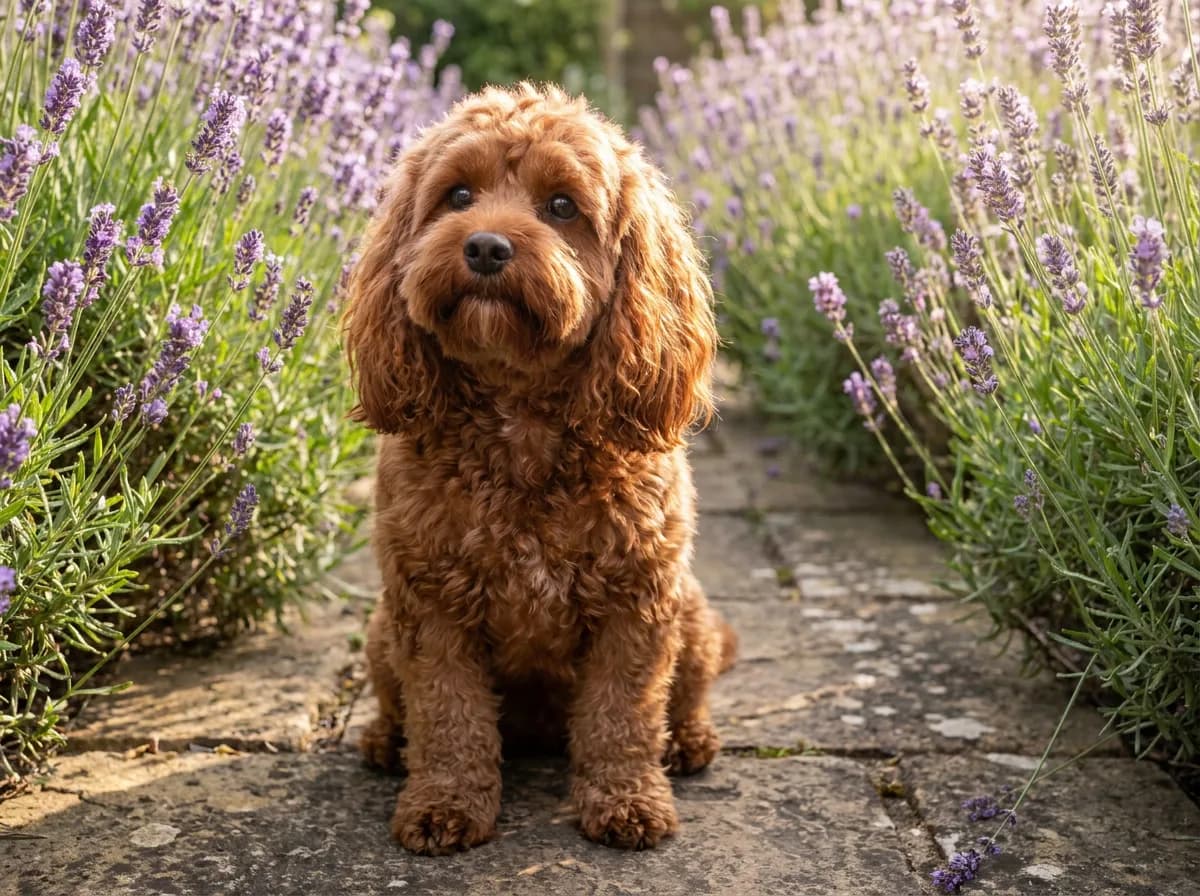
The Cavapoo is the most searched Poodle mix in the US and one of the easiest small doodles to live with. Adults usually weigh 12 to 25 pounds and stand 9 to 14 inches, and they are affectionate, gentle with visitors, and content with two walks and some play a day. The catch is on the Cavalier side: mitral valve disease is common in Cavalier King Charles Spaniels, so ask for a recent heart exam on the Cavalier parent. Responsible breeders charge about $1,500 to $4,000, and our Cavapoo guide covers generations and yearly costs.
2. Maltipoo (Maltese and Poodle)
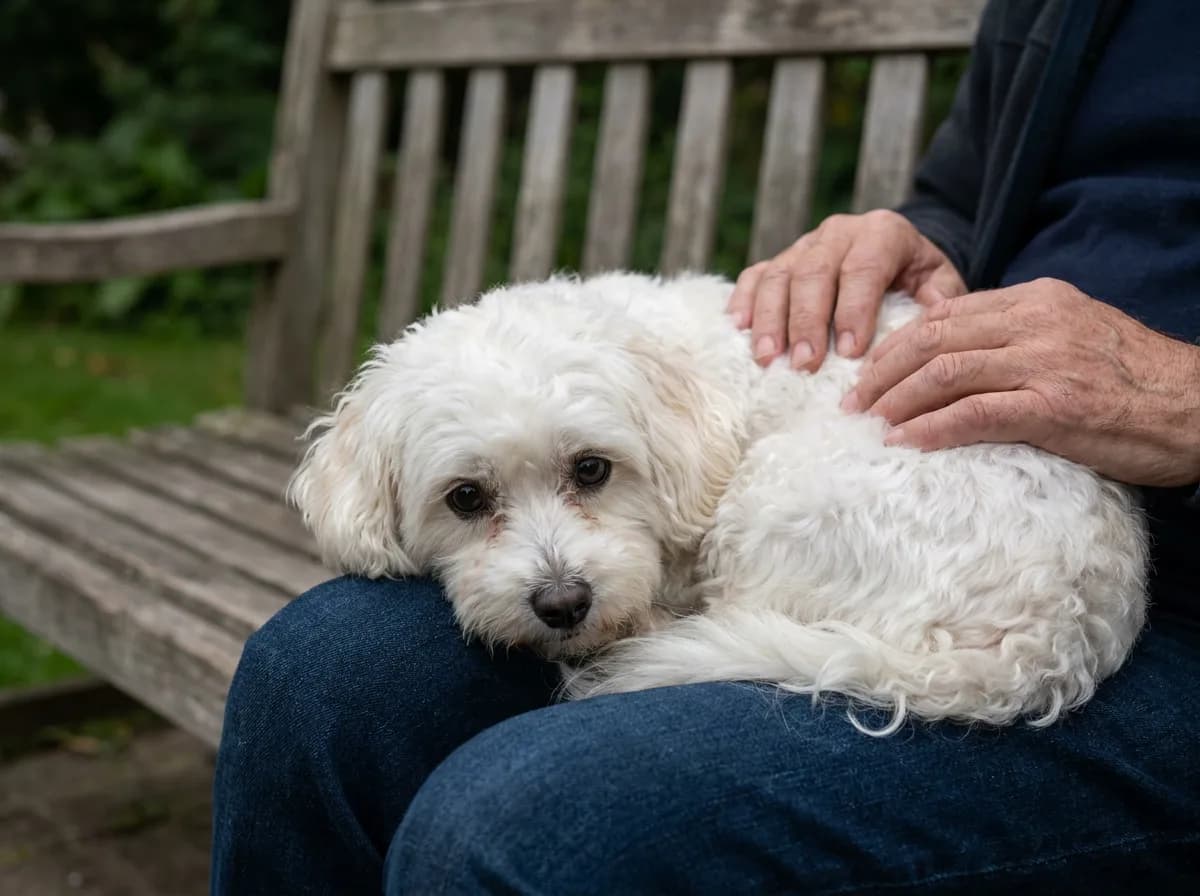
A Maltipoo pairs the Maltese with a Toy or Miniature Poodle and usually finishes at 5 to 20 pounds and 8 to 14 inches, with Toy Poodle crosses at the small end. Its low-shedding coat keeps growing, so plan on brushing several times a week and a professional groom every 6 to 8 weeks. Maltipoos bond closely, bark at noises, and can struggle when left alone, so they suit someone who is home most of the day better than a long commuter. Expect $1,000 to $4,000 for a puppy; our Maltipoo guide has size and color detail.
3. Cockapoo (Cocker Spaniel and Poodle)
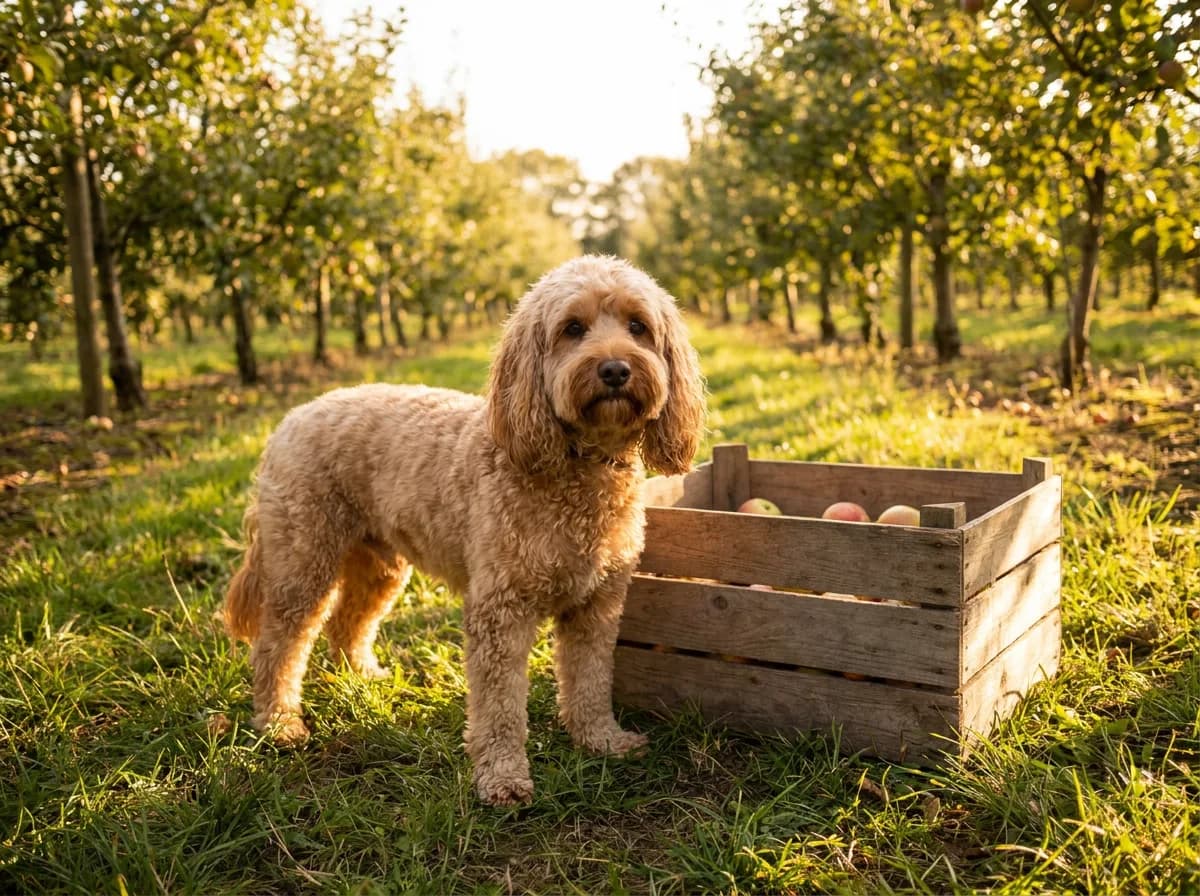
Bred in the United States since the 1950s, the Cockapoo is one of the oldest Poodle crosses and one of the most adaptable. Most weigh 12 to 24 pounds and stand 10 to 15 inches, though Toy crosses can be as light as 6 pounds and Maxi crosses reach 30. They are cheerful, trainable, and sporty enough for long walks, and their coat sheds less than many breeds without being allergy-proof. Check and clean the spaniel ears weekly to head off infections. Puppies usually cost $1,200 to $2,500, with premium colors topping $3,000; our Cockapoo guide compares the sizes.
4. Havapoo (Havanese and Poodle)
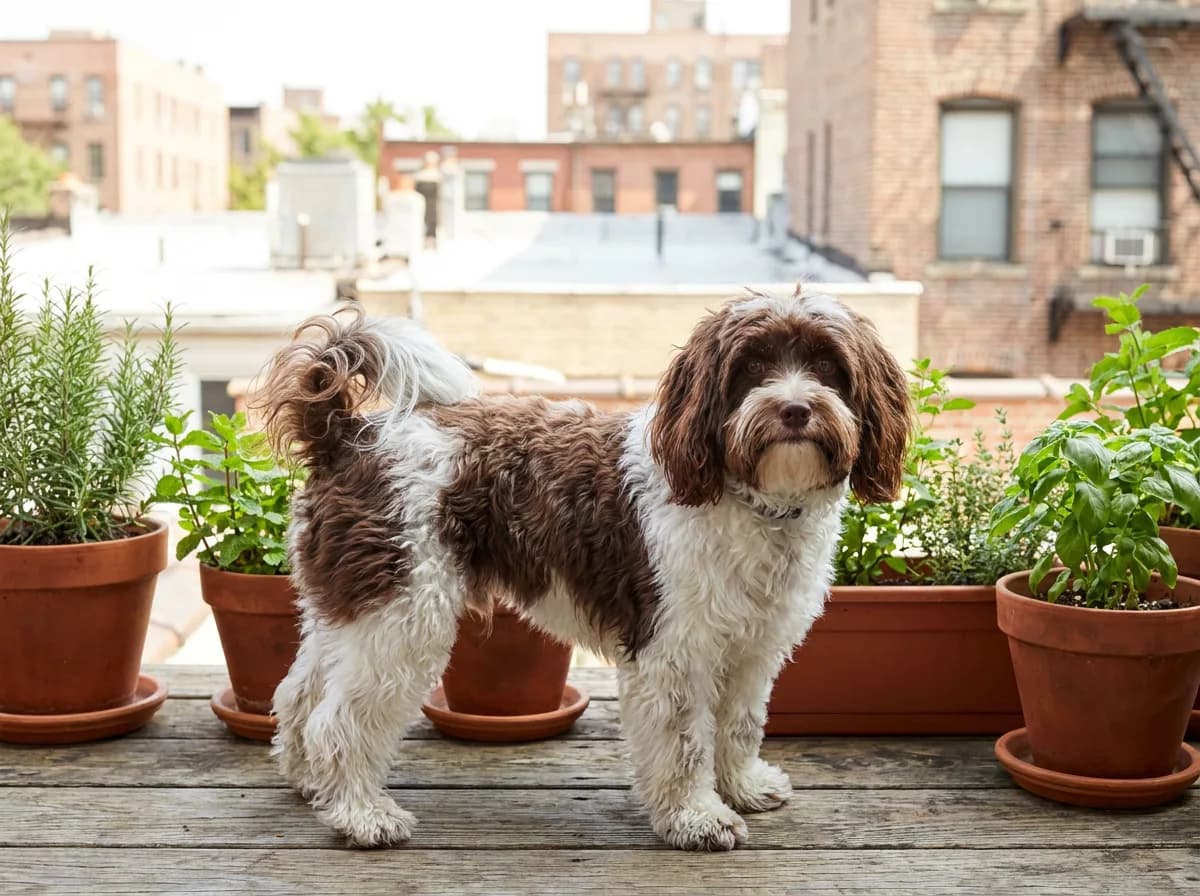
The Havapoo crosses the Havanese, the only dog breed native to Cuba, with a Toy or Miniature Poodle. Published size estimates differ: PetMD describes most as under 15 pounds, while Dogster gives 11 to 20 pounds and 10 to 15 inches. It is a sociable, adaptable house dog with modest exercise needs that settles well in apartments, but its wavy-to-curly coat mats fast without combing to the skin. DogTime estimates puppies at $2,000 to $4,500. Our Havapoo guide covers coat care and teaching a Havapoo to handle time alone.
5. Schnoodle (Schnauzer and Poodle)
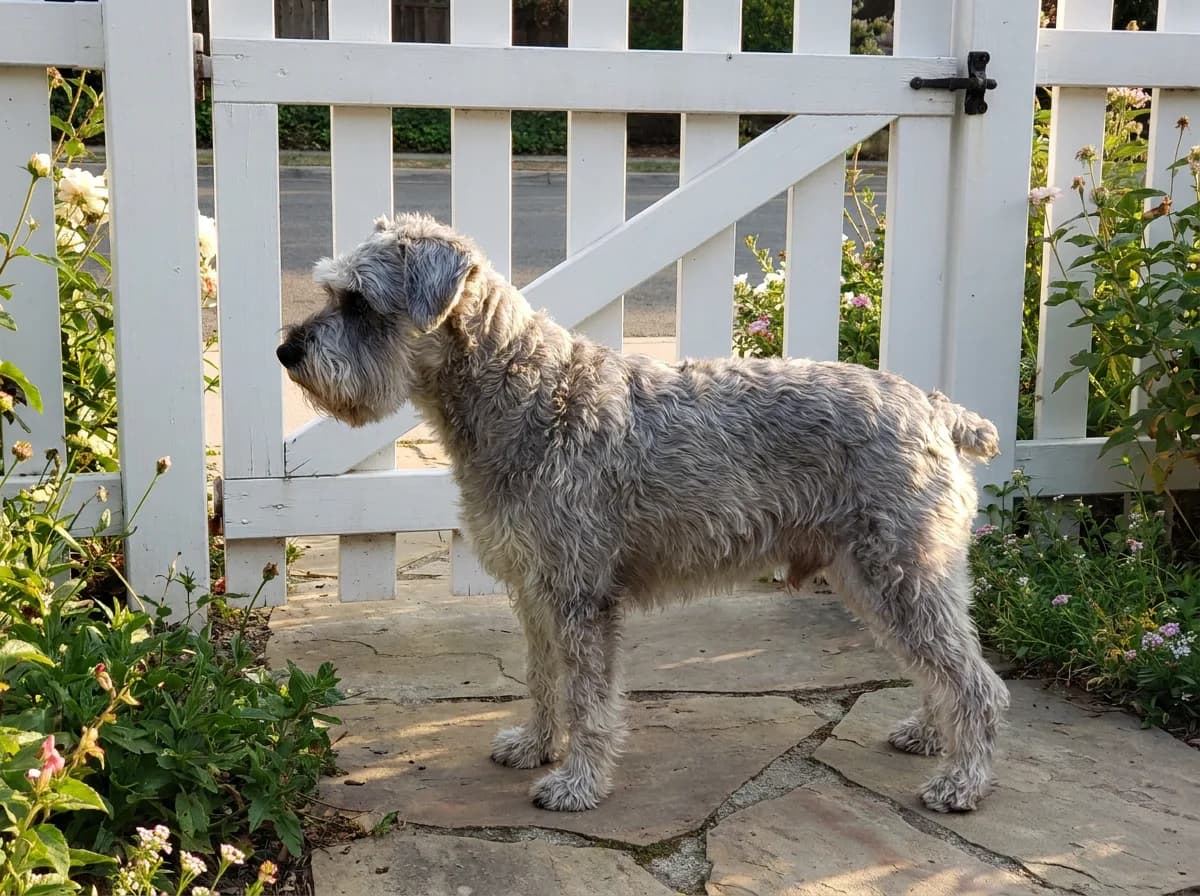
Schnoodle size depends on which Schnauzer and which Poodle were bred, which is why PetMD's range runs from 5 to 70 pounds and 10 to 26 inches. The familiar small Schnoodle comes from a Miniature Schnauzer (11 to 20 pounds in AKC figures) and a Toy or Miniature Poodle, while Giant Schnauzer crosses become large dogs. Expect a terrier-style doorbell: alert, vocal, quick to learn, and in need of daily play. The wiry-to-wavy coat sheds little but needs regular clipping. Chewy estimates breeder prices at $1,500 to $4,000, and our Schnoodle guide explains each size.
6. Pomapoo (Pomeranian and Poodle)
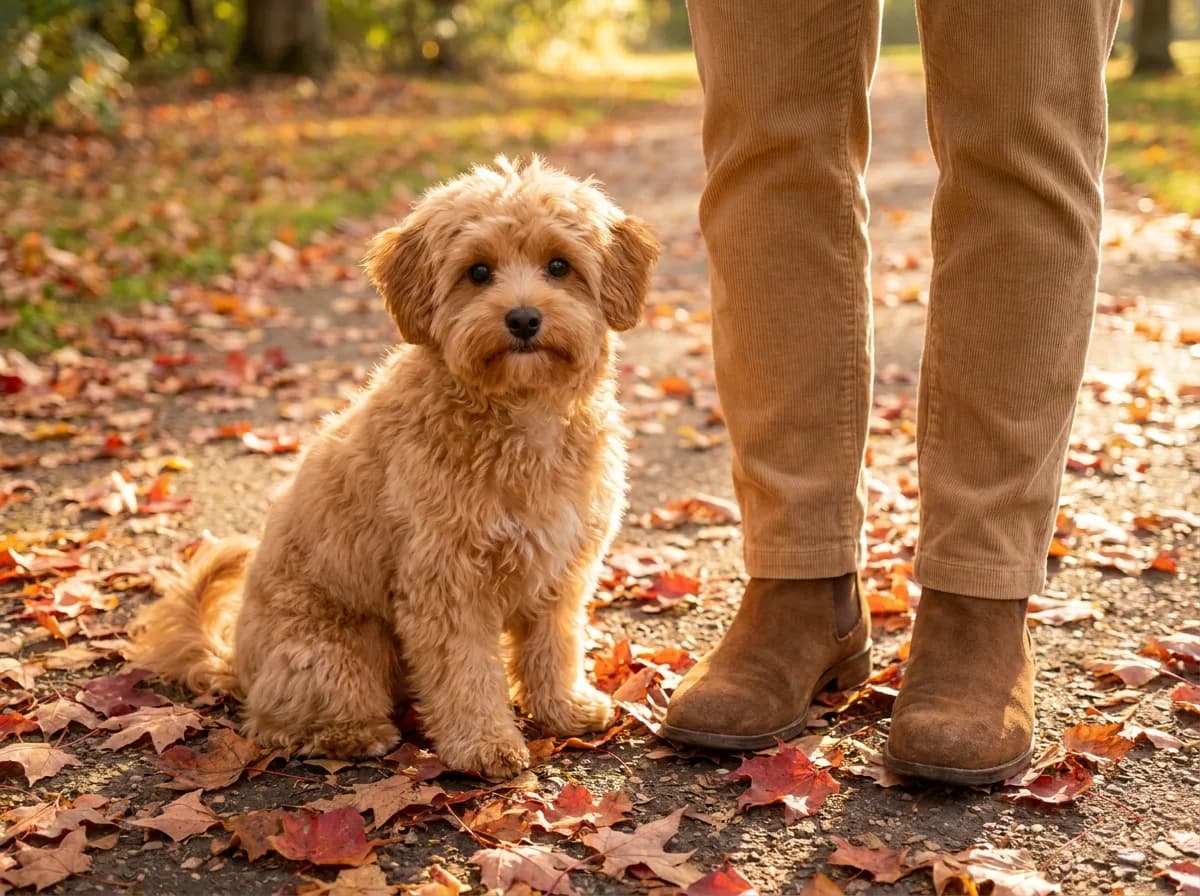
The Pomapoo, a Pomeranian and Toy Poodle cross, is one of the smallest dogs here at about 5 to 15 pounds and 8 to 10 inches, according to Canine Journal. It is bright, bold, and often vocal. It can also inherit the Pomeranian's double coat and shed more than a Maltipoo or Poochon, so a Pomapoo is no more hypoallergenic than any other cross. Keep walks on a harness, since both parent breeds are prone to tracheal collapse. Canine Journal cites about $500 to more than $2,500, and our Pomeranian mixes guide compares it with other Pom crosses.
7. Shih-Poo (Shih Tzu and Poodle)
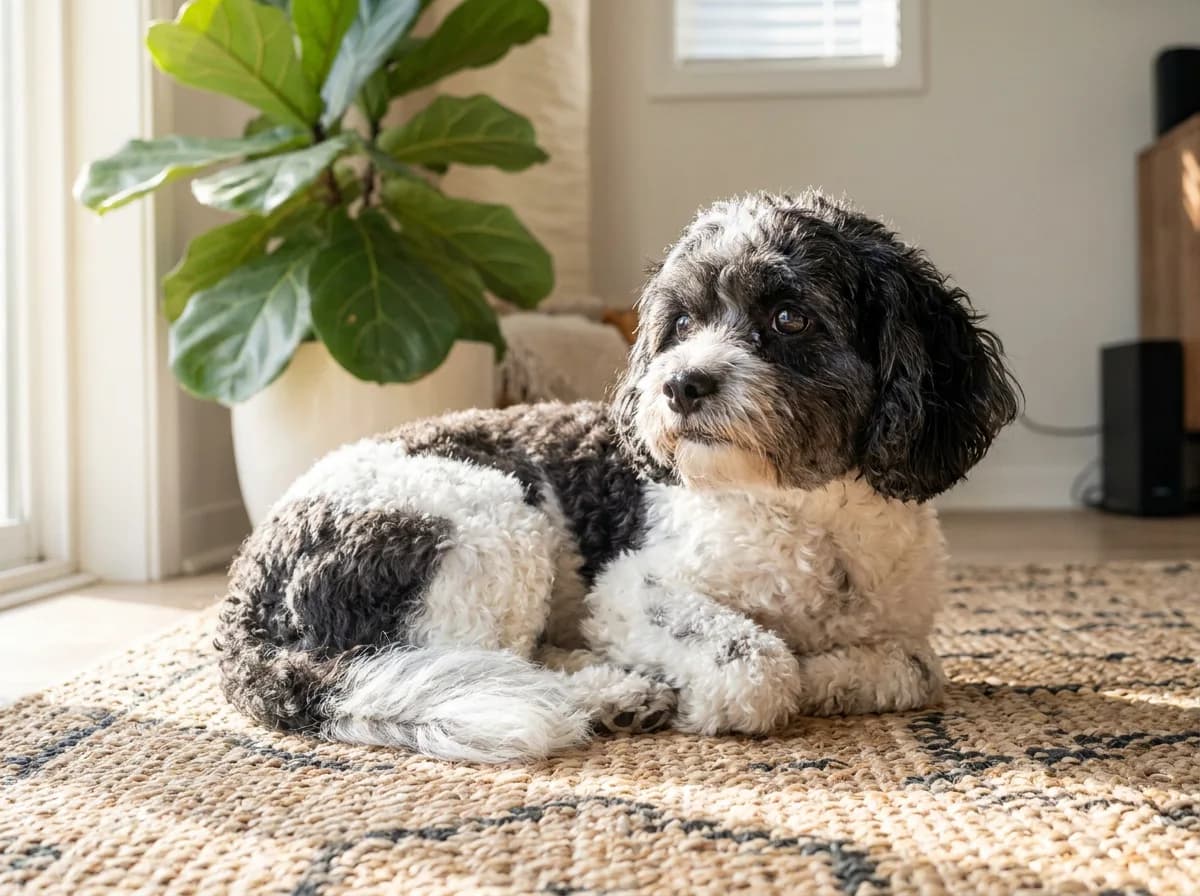
The Shih-Poo is one of the calmer small crosses, typically 8 to 15 pounds and about 10 inches tall (PetMD), and it suits quieter homes and older owners well. The Shih Tzu side can bring a short muzzle, which raises the risk of breathing trouble in hot weather, and prominent eyes that are easy to injure. Its soft coat mats around the face and ears, so daily brushing matters more than the coat's low shedding suggests. MetLife's breed profile puts breeder prices around $2,200 to $4,500 or more; see our Shih-Poo guide for daily care.
8. Yorkipoo (Yorkshire Terrier and Poodle)
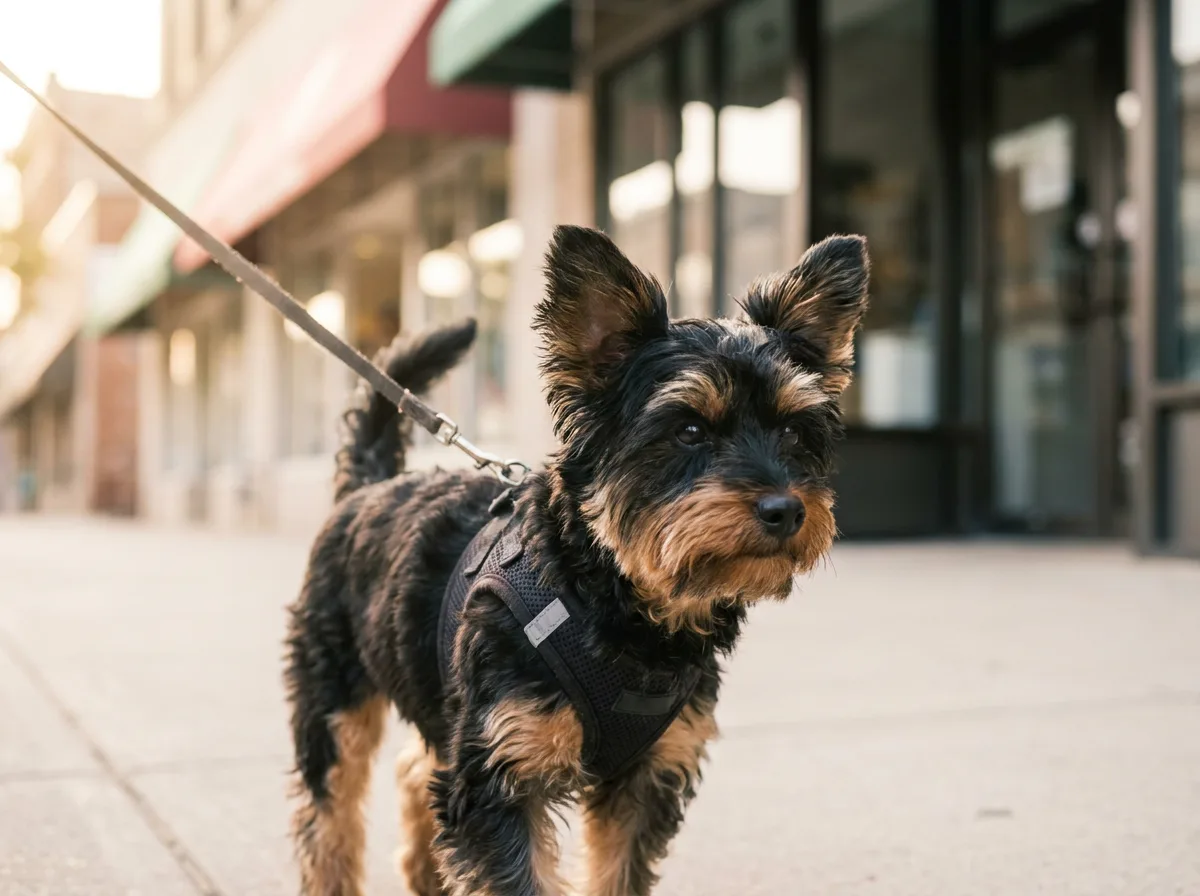
Yorkipoos weigh 4 to 15 pounds and stand 7 to 15 inches (PetMD), and they pack terrier confidence into a toy body: alert, playful, and quick to bark at the window. They need 30 to 60 minutes of activity a day, part of which can be indoor play, and their fine, low-shedding coat needs regular brushing to stay tangle-free. PetMD puts puppies at $900 to $3,000. For a small dog that can keep up on errands and still fit on a lap, it is a strong choice; our Yorkipoo guide covers adult size and grooming.
9. Doxiepoo (Dachshund and Poodle)
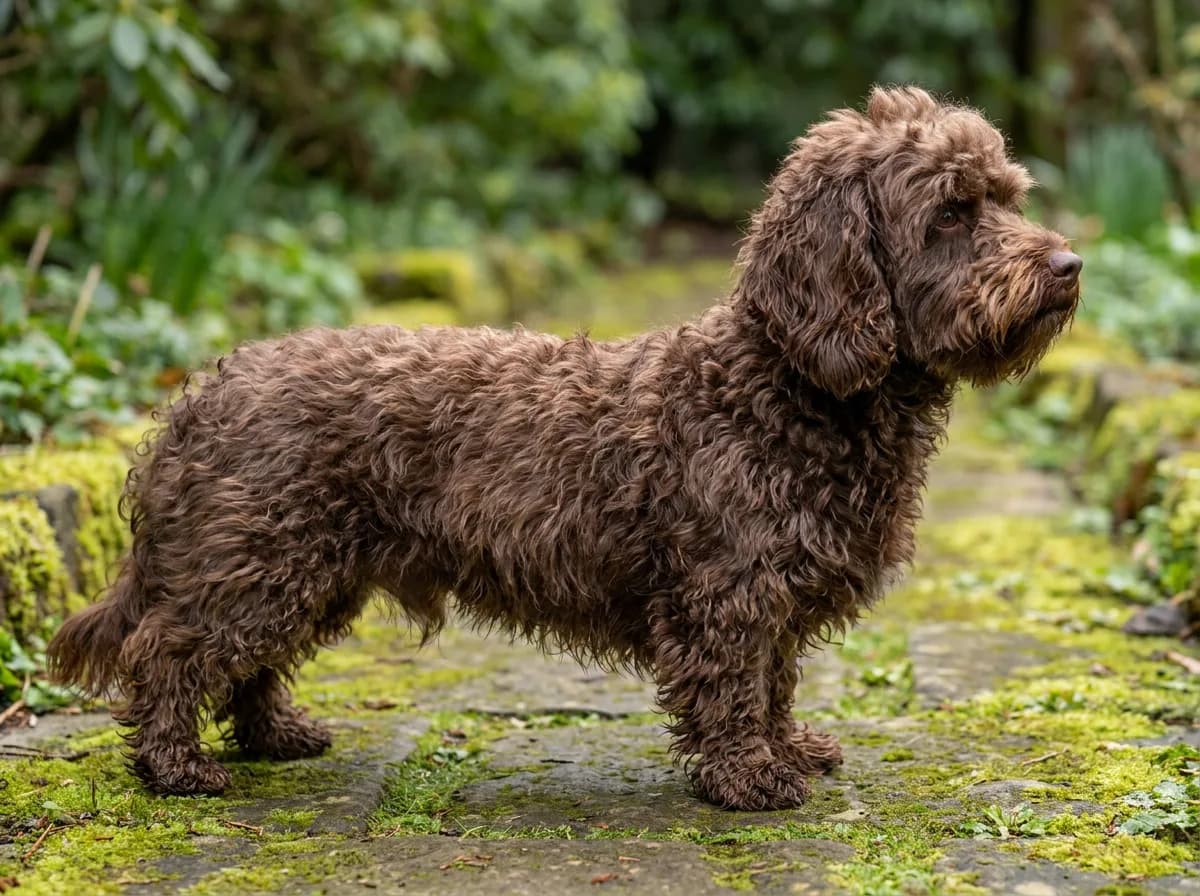
A Doxiepoo often inherits the Dachshund's long body and short legs. Vetstreet lists 10 to 30 pounds, and Adopt a Pet notes that Toy Poodle crosses tend to weigh 10 to 15 pounds and Miniature Poodle crosses 15 to 30. Height is not reliably published, but it usually falls between the Dachshund parent's 5 to 9 inches and the 15-inch ceiling of a Miniature Poodle. That long back is the main health question: keep the dog lean and limit jumping off furniture.
A floor-level orthopedic bed such as the FurHaven Velvet Waves Perfect Comfort Orthopedic Sofa Cat & Dog Bed gives a Doxiepoo a comfortable place to settle without climbing onto the couch. Adopt a Pet estimates breeder prices at $500 to $2,500, and our Doxiepoo guide covers coat types and size labels.
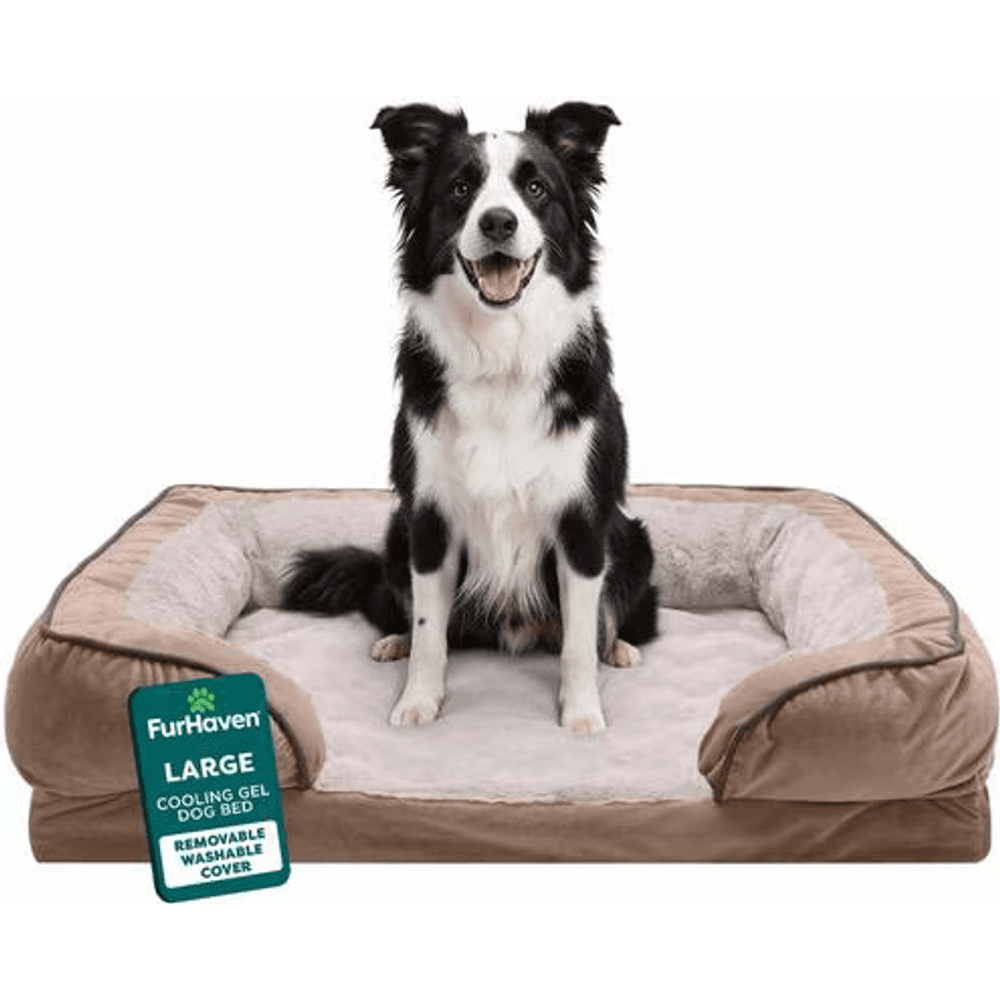
An orthopedic sofa bed with three bolstered sides for dogs who like to rest their head and joints against a cushion. The supportive foam base cradles hips and elbows, a comforting spot for an older or shaky dog to settle.
Petful may earn a commission when you click through to Chewy, at no extra cost to you.
10. Poochon (Bichon Frise and Poodle)
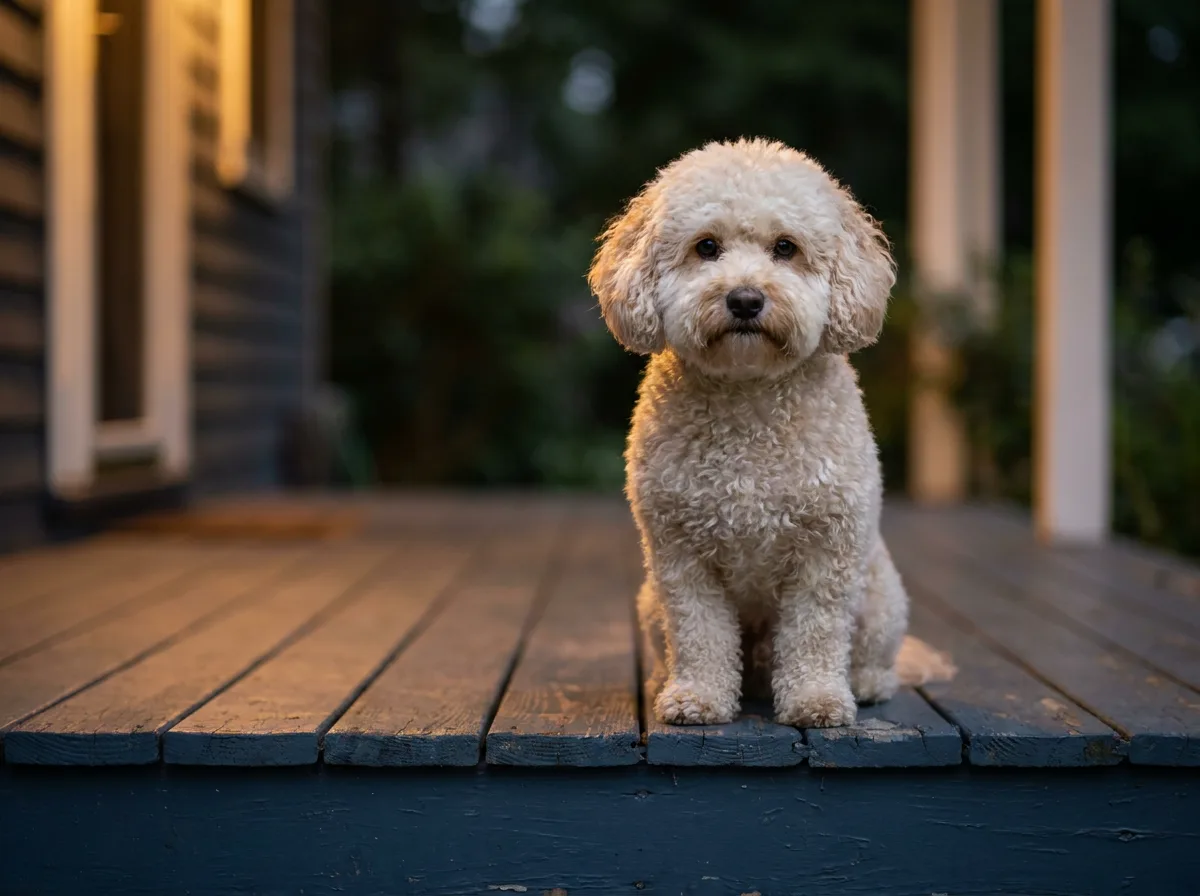
The Poochon, also sold as a Bichpoo, crosses a Bichon Frise with a Toy or Miniature Poodle and usually weighs 7 to 15 pounds at 9 to 14 inches, according to Pooch & Mutt. Because both parents have curly, low-shedding coats, Poochons are among the more predictable small mixes in coat type, though never allergy-proof or low-maintenance. They are cheerful dogs that prefer company most of the day. Price data are thin: Canine Journal gives an average of about $1,000, while our Poochon guide found one Canadian breeder asking $3,000.
11. Chipoo (Chihuahua and Poodle)
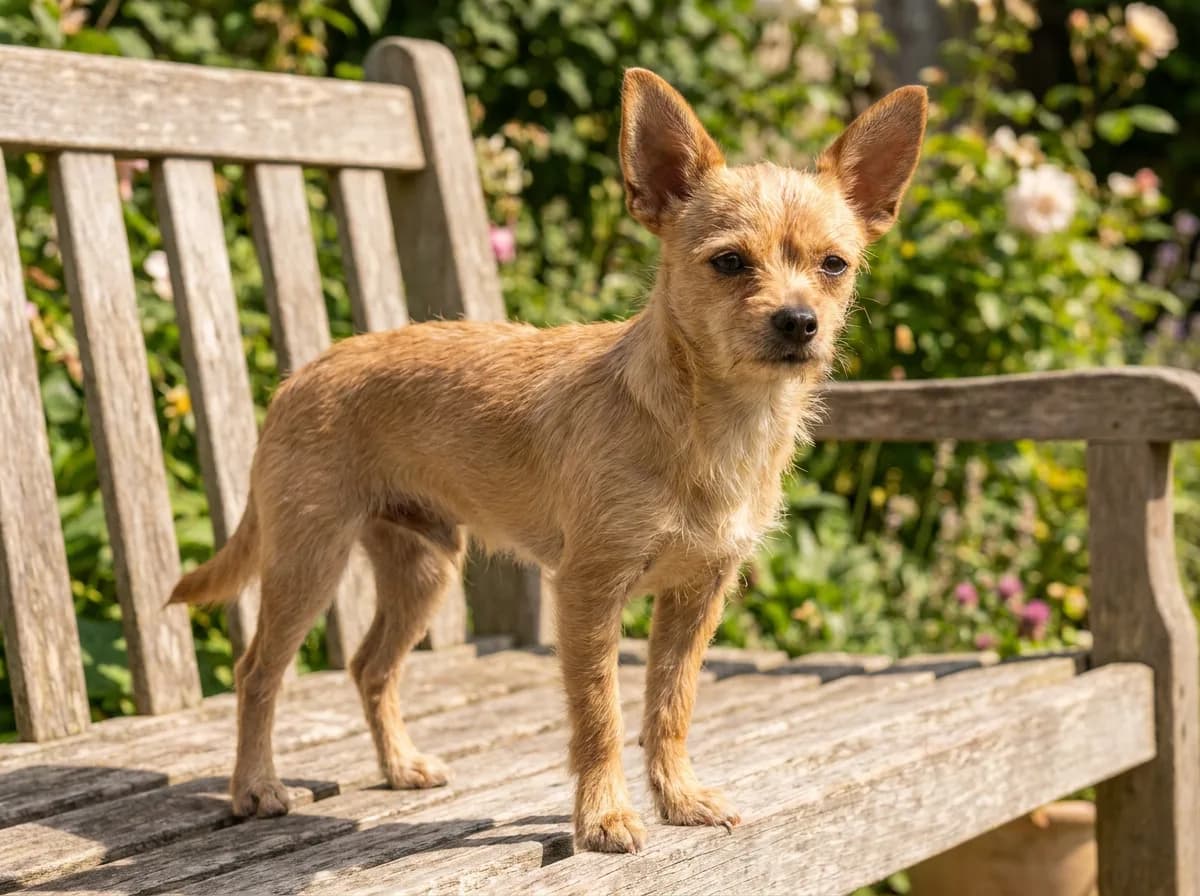
The Chipoo ties the Yorkipoo as the smallest mix here: PetMD gives 4 to 15 pounds and 5 to 15 inches, with a lifespan estimate of 10 to 18 years. Coats run from smooth and shedding to curly, so it is a poor bet for allergies, and pictures of Chihuahua Poodle mixes vary widely because the ears and coat can follow either parent. Chipoos are lively and loyal but can be wary of strangers and snappy when handled roughly, which makes them better companions for adults than for toddlers. Short walks and indoor play cover most of their exercise, and Canine Journal puts puppies at about $600 to $900.
Medium Poodle mixes
Medium Poodle mixes usually weigh about 15 to 45 pounds, with standard Bordoodles reaching 65, a size that handles hiking and car trips without needing a giant crate. Most come from a Miniature Poodle or a Standard Poodle crossed with a medium breed, and body type varies more than in any other group: compare the square, terrier-built Whoodle with the long, low Corgipoo in the photos below. Mini versions of the large doodles, such as mini Goldendoodles, Bernedoodles, and Aussiedoodles, also land in this medium-sized band; their size classes are in the large-mix profiles.
12. Whoodle (Soft Coated Wheaten Terrier and Poodle)
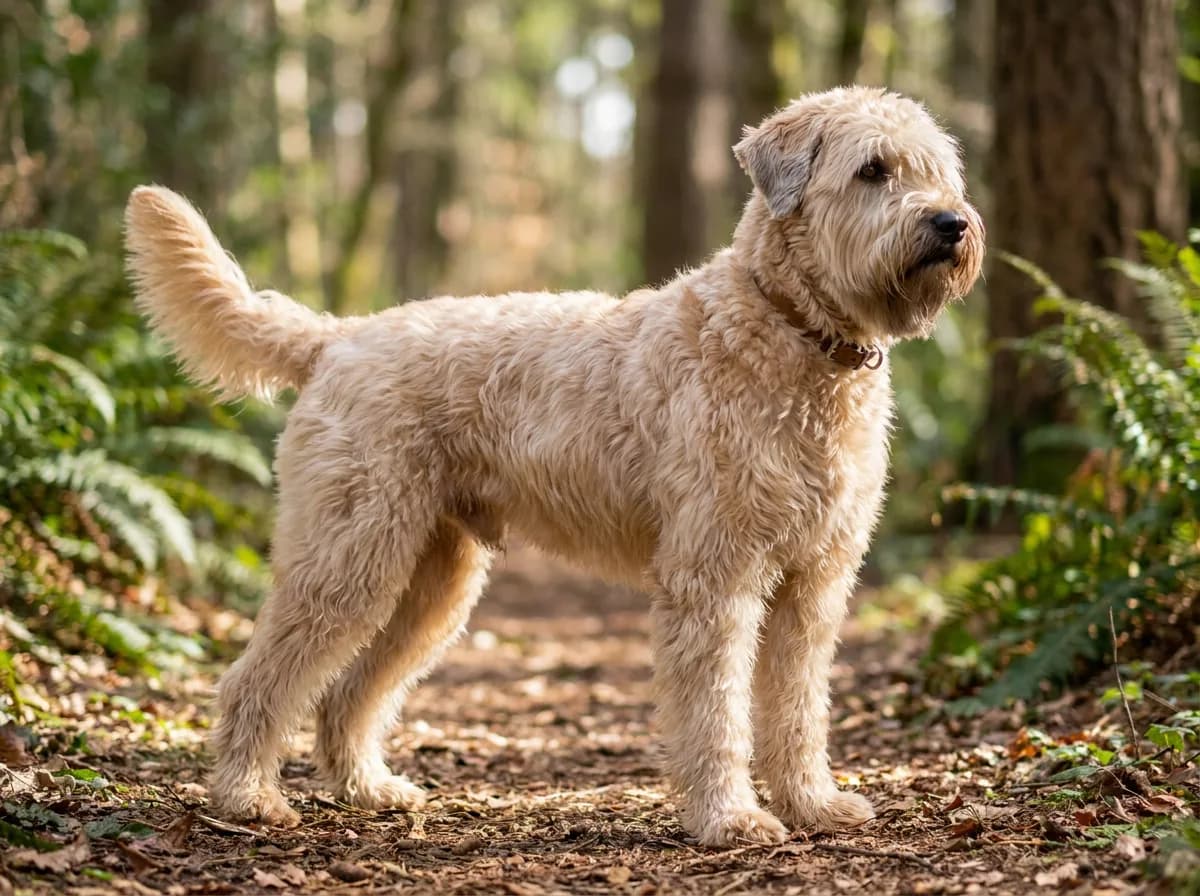
The Whoodle, also sold as a Wheatendoodle or Wheatenpoo, lands at about 20 to 45 pounds and 14 to 20 inches (PetMD). Neither parent has a shedding double coat, so Whoodles are among the lower-shedding crosses, but PetMD notes that their soft coat needs brushing and combing down to the skin every day. Expect terrier bounce: playful, clever, a little independent, and energetic enough for long daily walks or a dog sport. The Soft Coated Wheaten Terrier's breed club tracks inherited kidney and gut diseases that cause protein loss, so ask about the Wheaten parent's family health. PetMD says to expect to pay more than $1,000.
13. Bordoodle (Border Collie and Poodle)
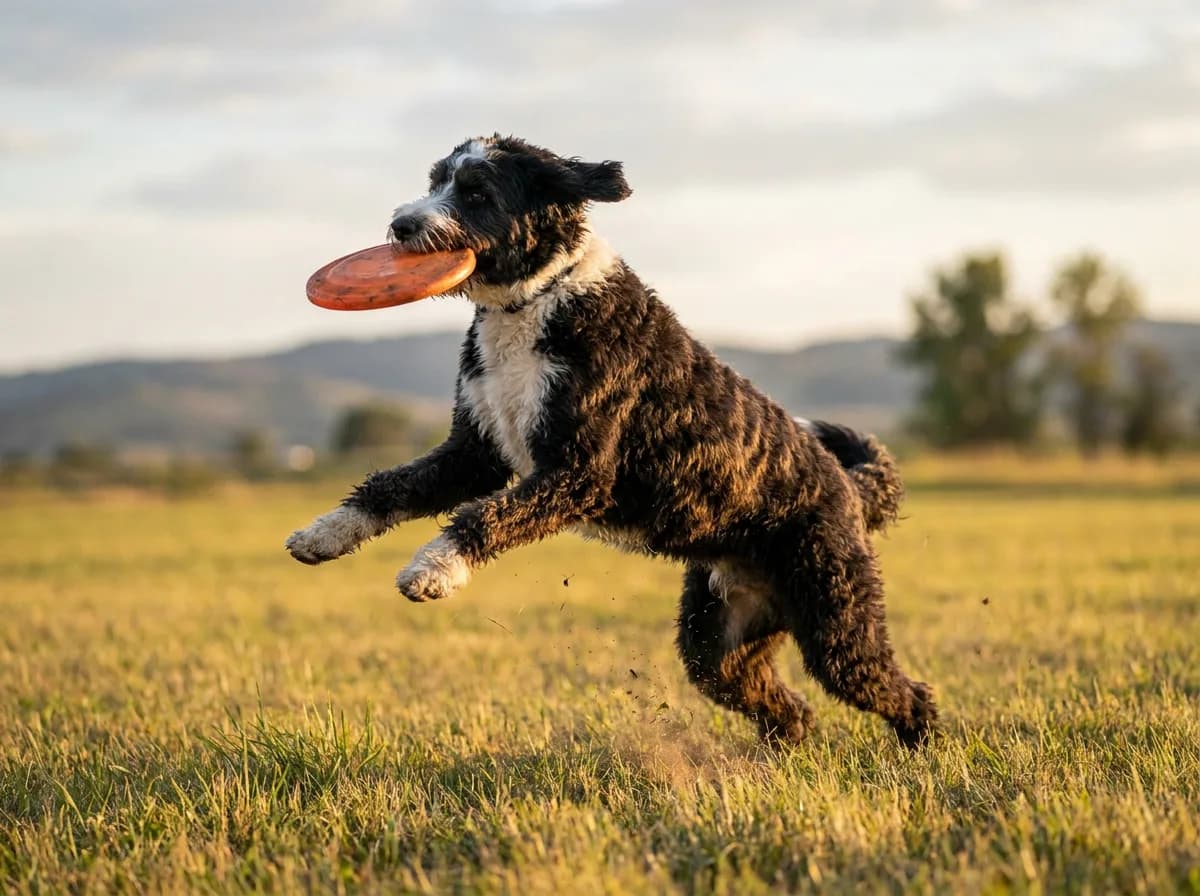
A Bordoodle, also called a Border Doodle or Border Collie doodle, crosses the two breeds that top psychologist Stanley Coren's ranking of working intelligence, and it acts like it. With a Standard Poodle parent it weighs about 35 to 65 pounds and stands 16 to 22 inches (Canine Journal). It is a superb sports and trick dog and a poor fit for a quiet home: plan on 45 minutes to an hour of exercise plus daily training games, or expect it to herd children and invent its own jobs. Shedding runs light to moderate. Canine Journal cites $700 to $1,500, and our Border Collie mixes guide compares other herding crosses.
14. Corgipoo (Corgi and Poodle)
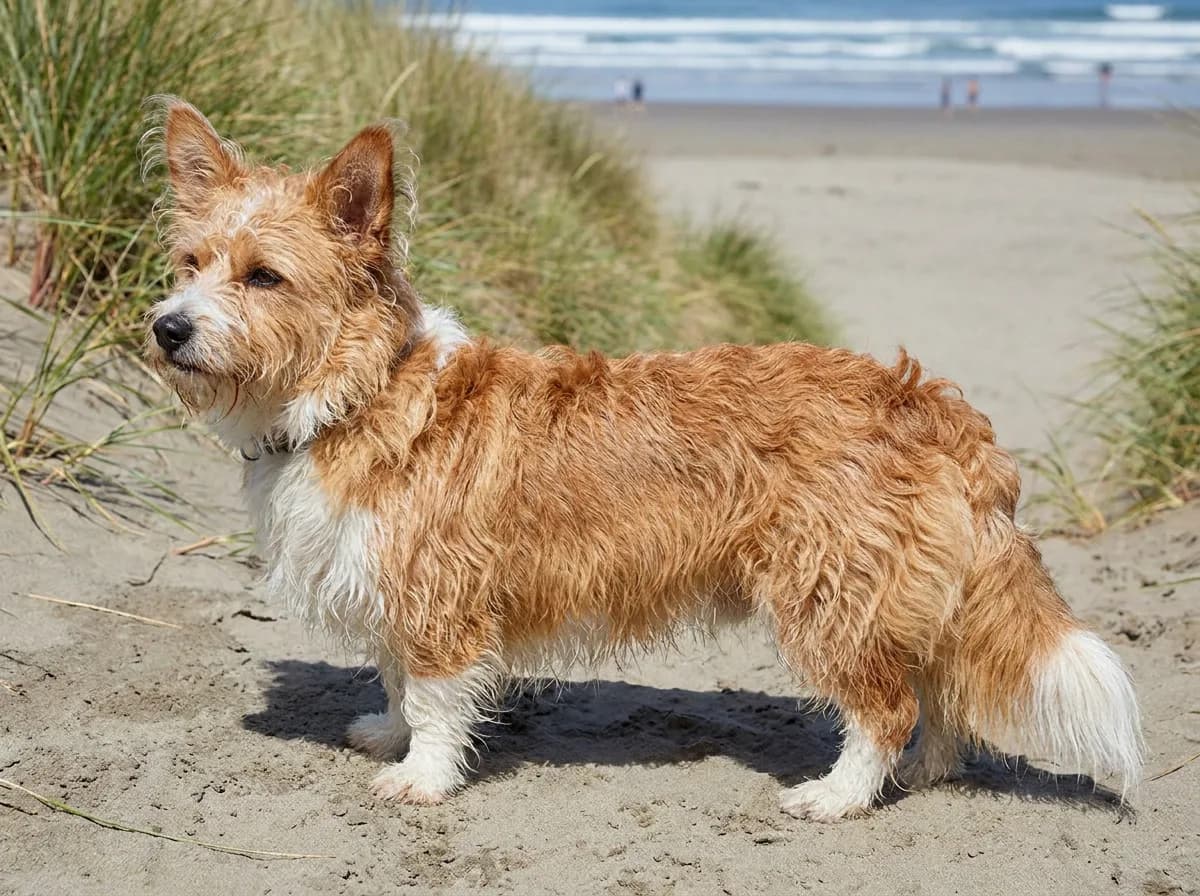
Most Corgipoos have a Miniature Poodle parent and weigh about 10 to 28 pounds at roughly 10 to 12 inches (Canine Journal), often with the Corgi's long back and short legs. They are smart and sociable, with a herding streak that can show up as heel nipping. Unlike most crosses here, many shed quite a bit, because the Corgi's double coat often wins. Canine Journal cites $500 to $1,500 or more, and our Corgi mixes guide covers the Corgipoo, also called a Corgidoodle, alongside other Corgi crosses.
15. Poogle (Beagle and Poodle)
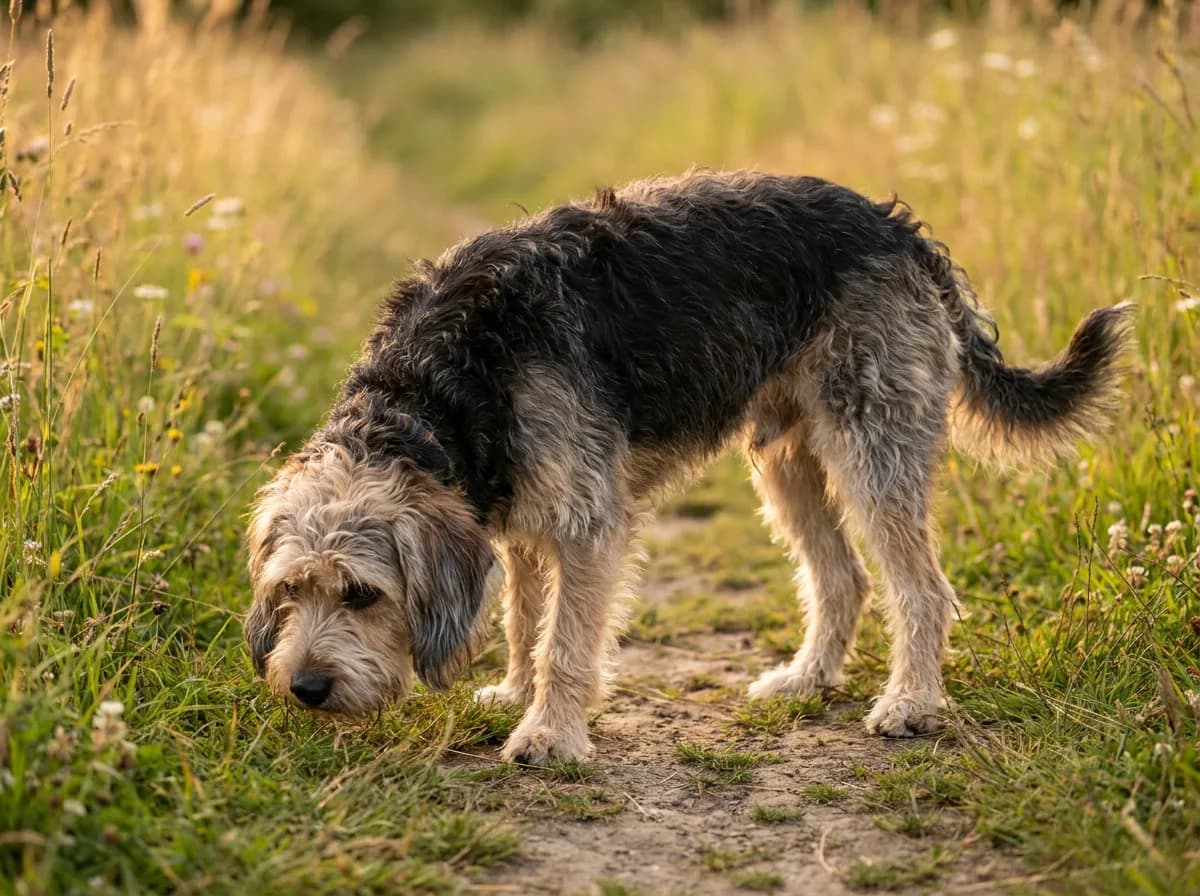
The Poogle usually weighs 15 to 30 pounds and stands 10 to 15 inches (Canine Journal). It is friendly and merry, with a hound nose that can override recall, and many Poogles bay or howl like their Beagle parent. Plan on about an hour of activity a day and a secure fence. Coats vary, and some Poogles shed like Beagles, so this is not a cross to choose for allergies. Canine Journal puts puppies at around $700 and up; our Beagle breed guide explains the scent drive and vocal behavior a Poogle may inherit.
Large and giant Poodle mixes
Large and giant Poodle mixes come from a Standard Poodle crossed with a large breed, and standard-size adults typically weigh 40 to 90 pounds; the giant crosses (Saint Berdoodle, Newfypoo, and Pyredoodle) can reach 100 to 150. A big doodle is still a big dog: it needs space, a vehicle it fits in, and an owner who can hold 70-plus pounds on a leash. The largest Poodle mix breeds also have the shortest lives, with published estimates around 8 to 13 years for the giant crosses.
Mini versions change the math. Most large doodles are now also bred from Miniature or Toy Poodle parents, so a Bernedoodle, Goldendoodle, Aussiedoodle, or Sheepadoodle can range from about 10 pounds to 90 depending on its size class. Ask which Poodle parent was used, and how big the parents are, before you trust a size label.
16. Bernedoodle (Bernese Mountain Dog and Poodle)
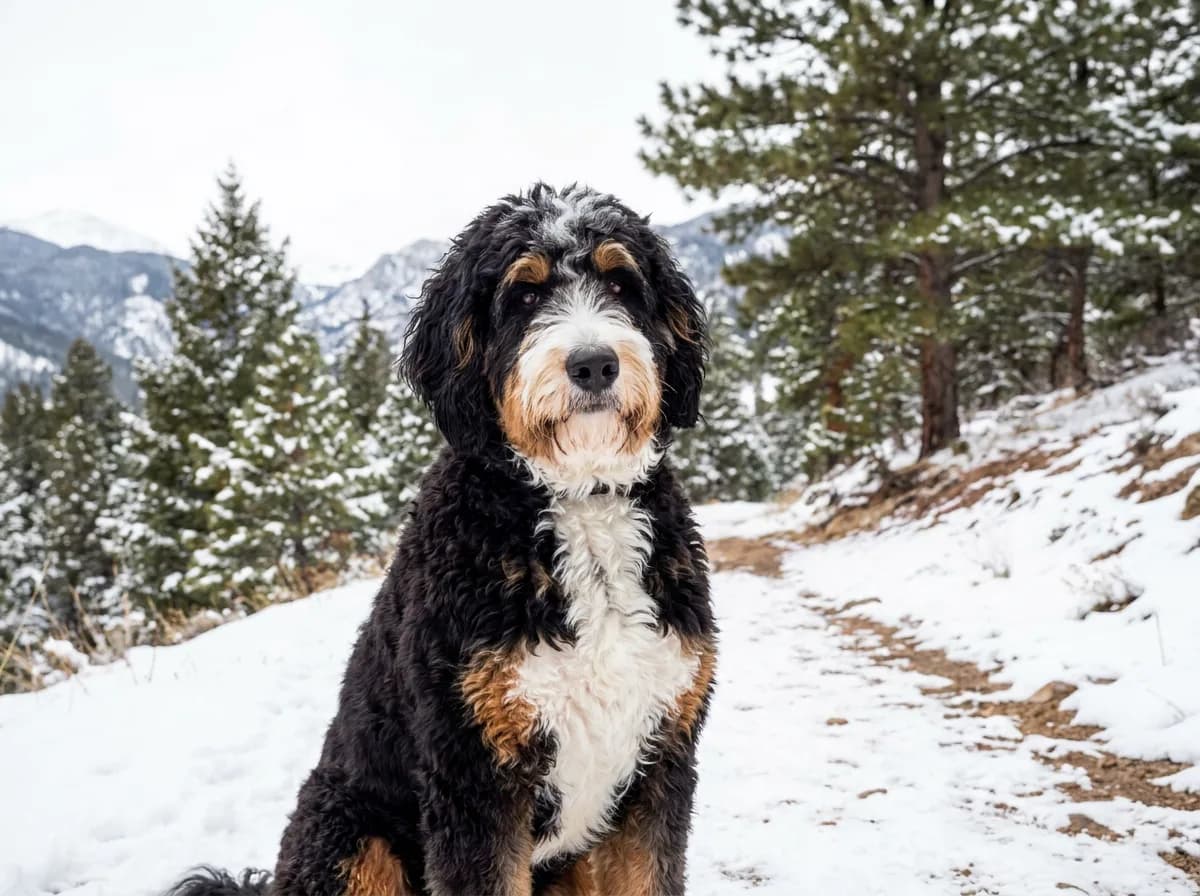
The Bernedoodle is the second most searched Poodle mix and comes in three main size classes: tiny at 10 to 24 pounds, mini at 25 to 49, and standard at 50 to 90 pounds and 23 to 29 inches. It is usually an affectionate, moderately active family dog, goofy as a youngster and calmer than most large doodles as an adult. The Bernese side is the health concern: purebred Bernese Mountain Dogs average only about 7 to 10 years and cancer is common in the breed, so ask for hip, elbow, and eye clearances on both parents. Well-bred puppies cost $2,000 to $5,000; see our Bernedoodle guide.
17. Goldendoodle (Golden Retriever and Poodle)
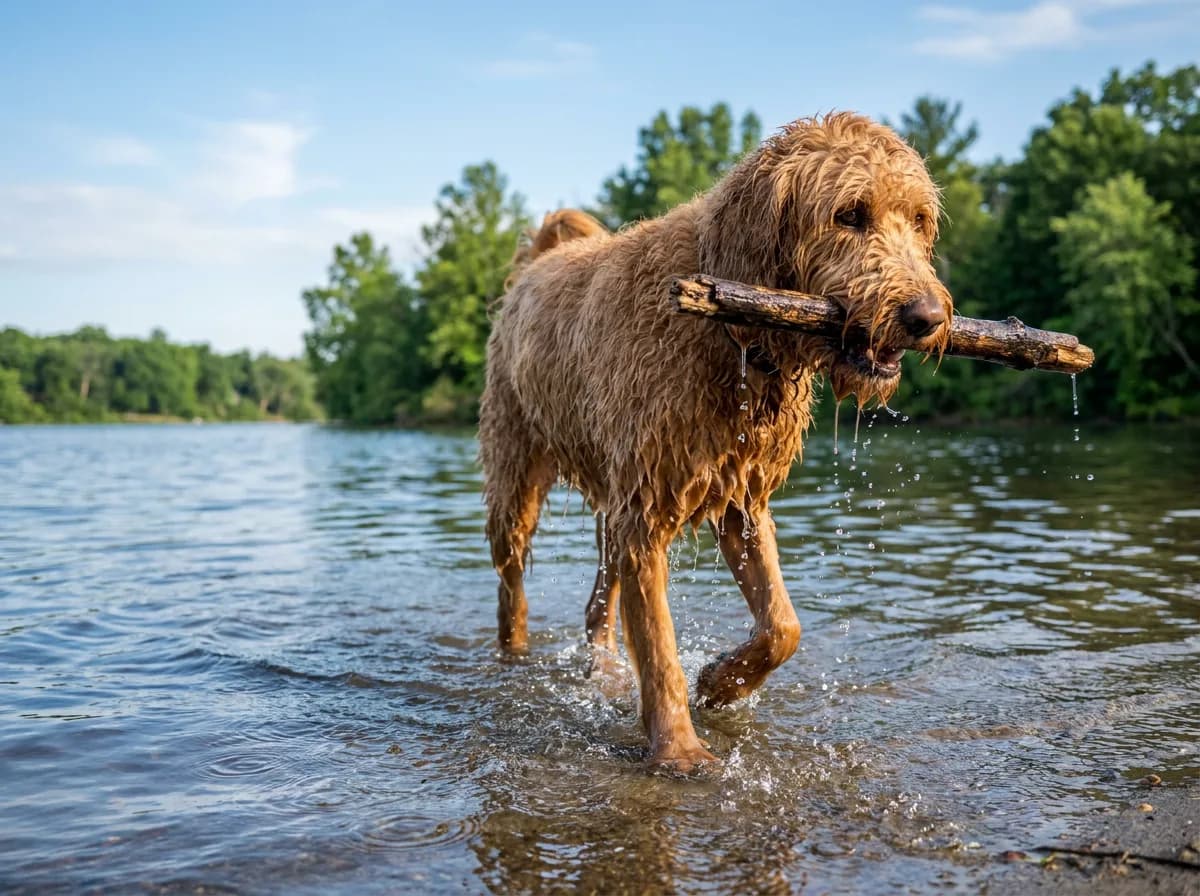
Goldendoodles come in four broad sizes set by the Poodle parent, from petite dogs of 15 to 25 pounds to standards of 50 to 90 pounds and 20 to 24 inches, with minis and mediums in between. They are sociable, eager to please, and energetic, with retriever habits such as carrying things and jumping up that need early training. F1 dogs shed a little more and vary the most, while F1B and multigen dogs are usually curlier. Hepper puts breeder prices at $2,000 to $4,000, and our Goldendoodle sizes guide covers each size and generation.
18. Labradoodle (Labrador Retriever and Poodle)
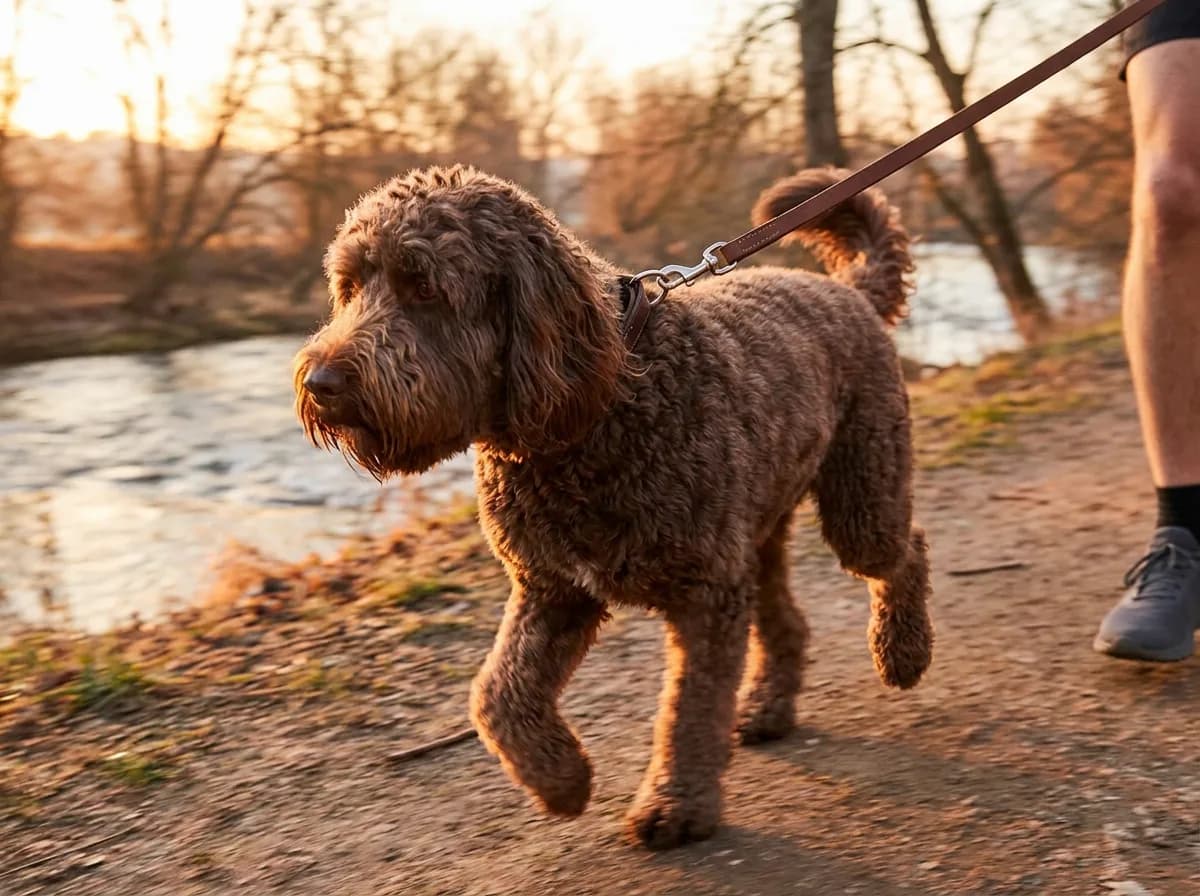
The original doodle comes in three sizes: mini at 15 to 25 pounds, medium at 30 to 45, and standard at 50 to 65 pounds and 21 to 24 inches, with some oversized standards reaching 90. Labradoodles are friendly and smart but busy, and most need an hour or more of exercise a day. Don't confuse a first-generation cross with the Australian Labradoodle, a multigenerational line bred for a consistent fleece or wool coat. Puppies typically cost $1,500 to $4,000, and our Labradoodle guide explains the types.
19. Aussiedoodle (Australian Shepherd and Poodle)
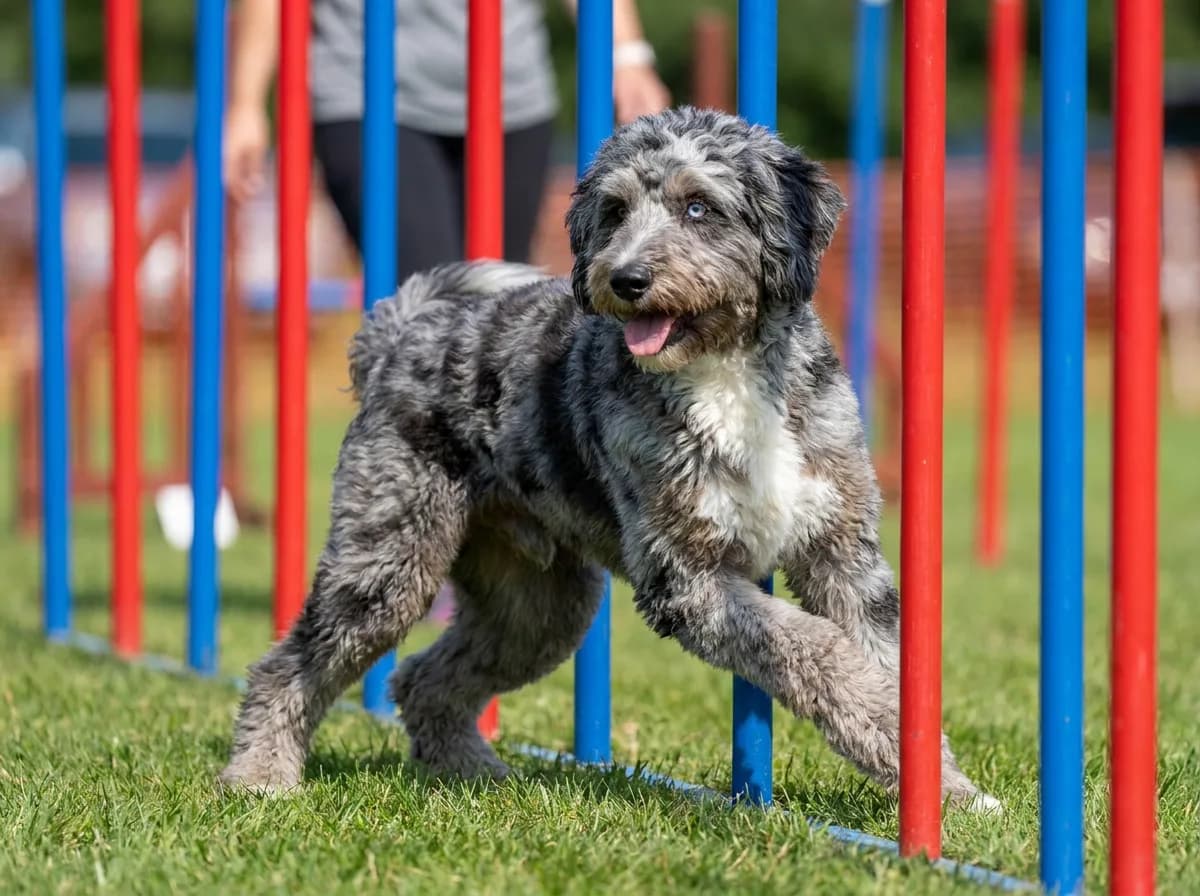
Aussiedoodles run from toy (10 to 15 pounds) to standard (45 to 70 pounds, 19 to 25 inches), and every size is a working dog in a soft coat that needs 60 to 90 minutes of exercise a day. They are brilliant and loyal, and they can be wary of strangers or nippy without early socialization. The Australian Shepherd parent should be DNA tested for MDR1, a gene variant that makes some herding dogs dangerously sensitive to certain common drugs. Puppies cost $1,500 to $5,000, with merle coats priced higher; see our Aussiedoodle guide.
20. Sheepadoodle (Old English Sheepdog and Poodle)
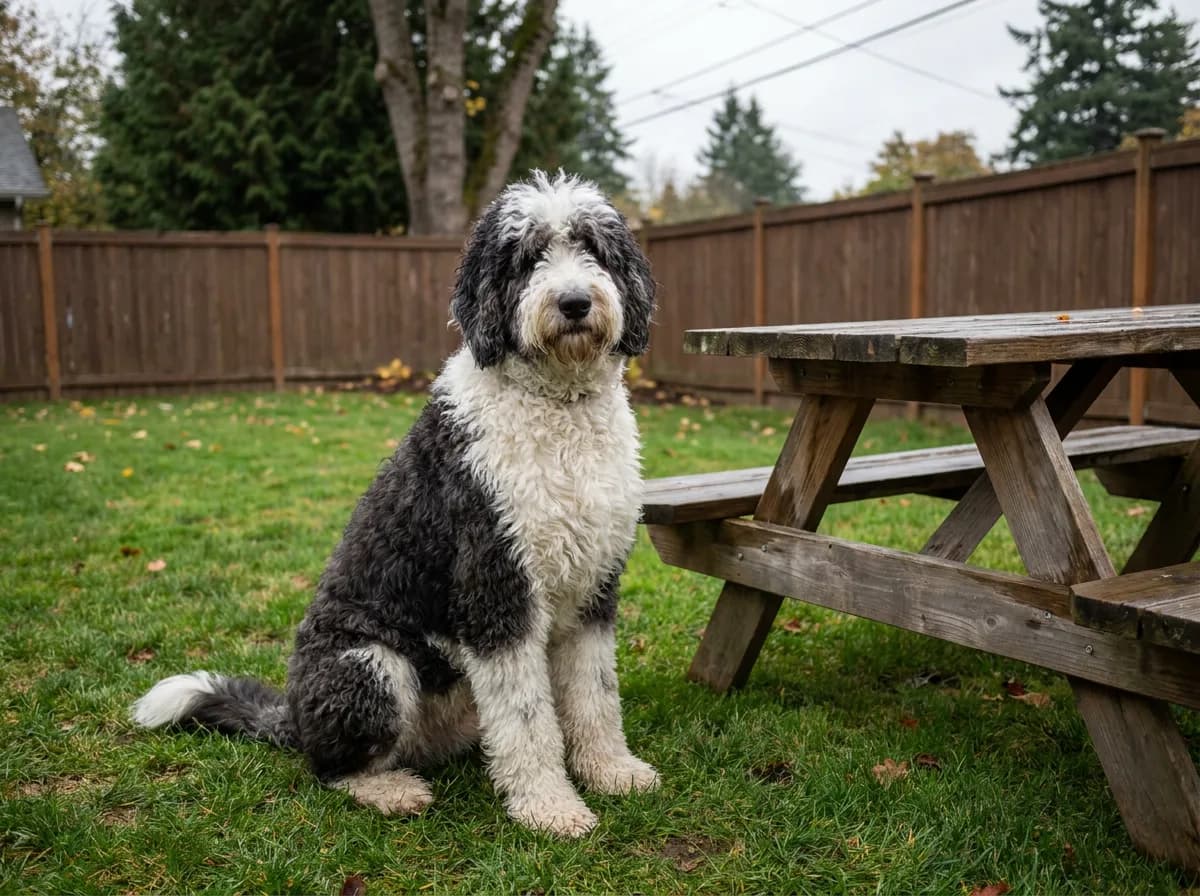
A standard Sheepadoodle finishes at 55 to 85 pounds and 20 to 27 inches, while micro and mini versions start around 10 to 25 pounds. It is typically a playful, clownish family dog with a big, shaggy coat, often black and white, that mats easily and needs professional grooming. The F1B generation usually sheds least. Health-testing breeders typically charge $1,500 to $3,500, and our Sheepadoodle guide compares the sizes; if you are choosing between the two big bicolor doodles, see our Sheepadoodle vs Bernedoodle comparison.
21. Irish Doodle (Irish Setter and Poodle)
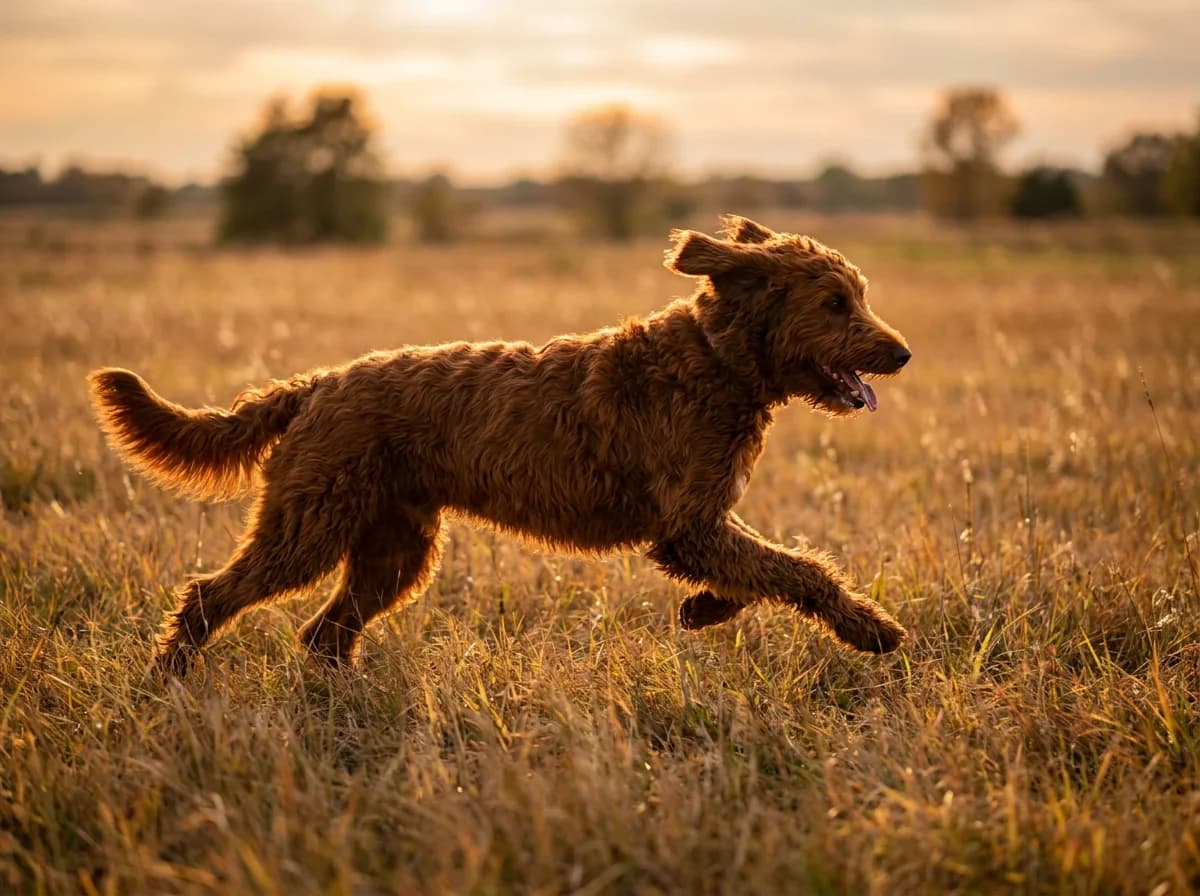
The Irish Doodle, sometimes called an Irish Setter doodle, usually pairs an Irish Setter with a Standard Poodle and produces an athletic dog of about 40 to 70 pounds and 22 to 26 inches (PetMD), often red like the Setter, though colors vary. Both parents are sporting dogs, so it needs around an hour of exercise a day and has a real prey drive; PetMD notes that under-exercised Irish Doodles may dig to entertain themselves. Mini Irish Doodles from a Miniature Poodle are roughly half the size. Hepper puts breeder prices at $1,350 to $3,000.
For a closer comparison, explore our Irish Doodle guide, Mini Irish Doodle guide, puppy guide, haircut guide, and Irish Doodle versus Goldendoodle comparison.
22. Saint Berdoodle (Saint Bernard and Poodle)
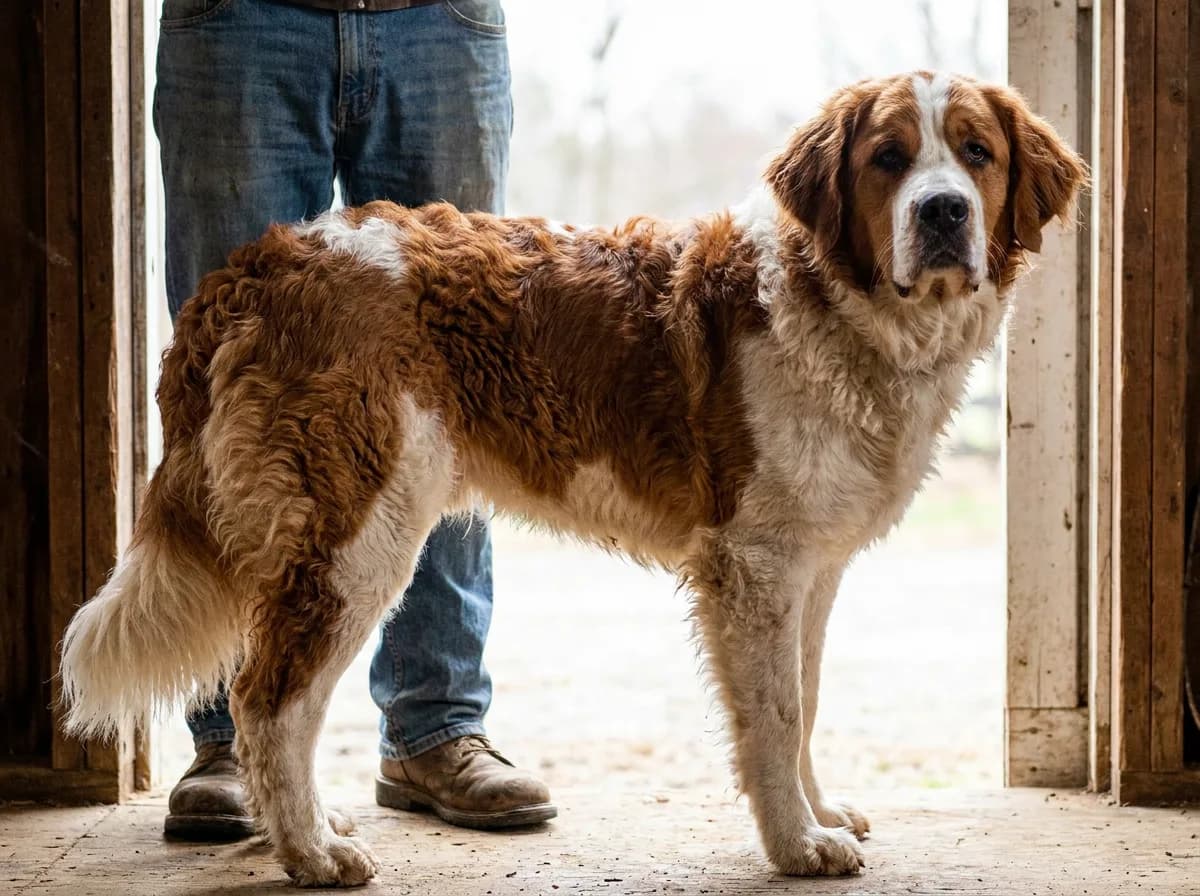
The Saint Berdoodle is a true giant: Canine Journal lists 70 to 150 pounds and 20 to 26 inches, with a lifespan of 9 to 13 years. It is usually calm and gentle, needing only about 45 minutes of easygoing exercise a day, but everything from food to medication doses costs more at this size. The coat sheds moderately when it leans toward the Saint Bernard side. Canine Journal cites $1,500 to $3,000 from a reputable breeder, and hip and elbow clearances on both parents are essential, since giant dogs are prone to hip dysplasia.
23. Shepadoodle (German Shepherd and Poodle)
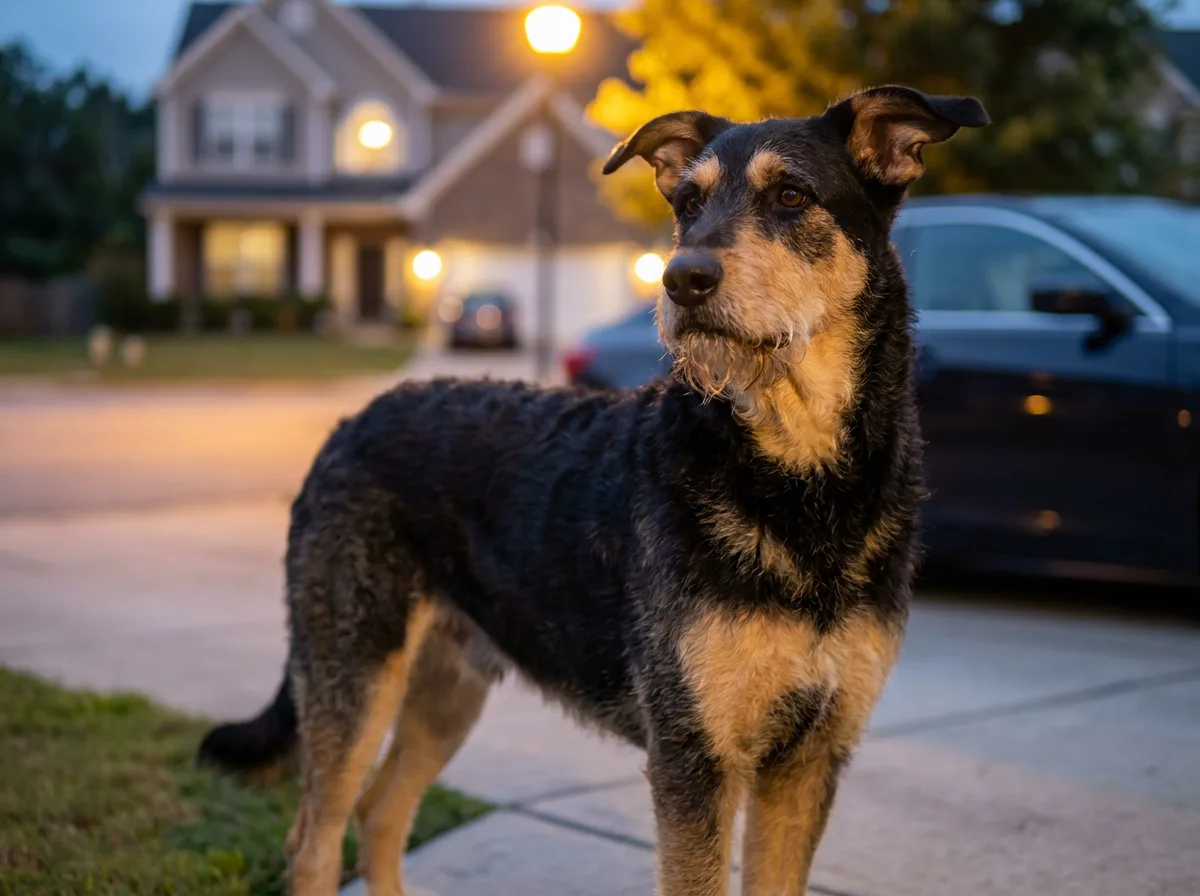
The Shepadoodle, sometimes called a German Doodle or Shepherd doodle, pairs a German Shepherd with a Standard Poodle and weighs about 40 to 90 pounds at 22 to 28 inches (PetMD). It is intelligent, loyal, and protective, and it suits an experienced owner: Canine Journal recommends 60 minutes of intense exercise a day. Ask for hip and elbow ratings and a degenerative myelopathy DNA test on the German Shepherd parent. Canine Journal says prices start around $800.
24. Pyredoodle (Great Pyrenees and Poodle)
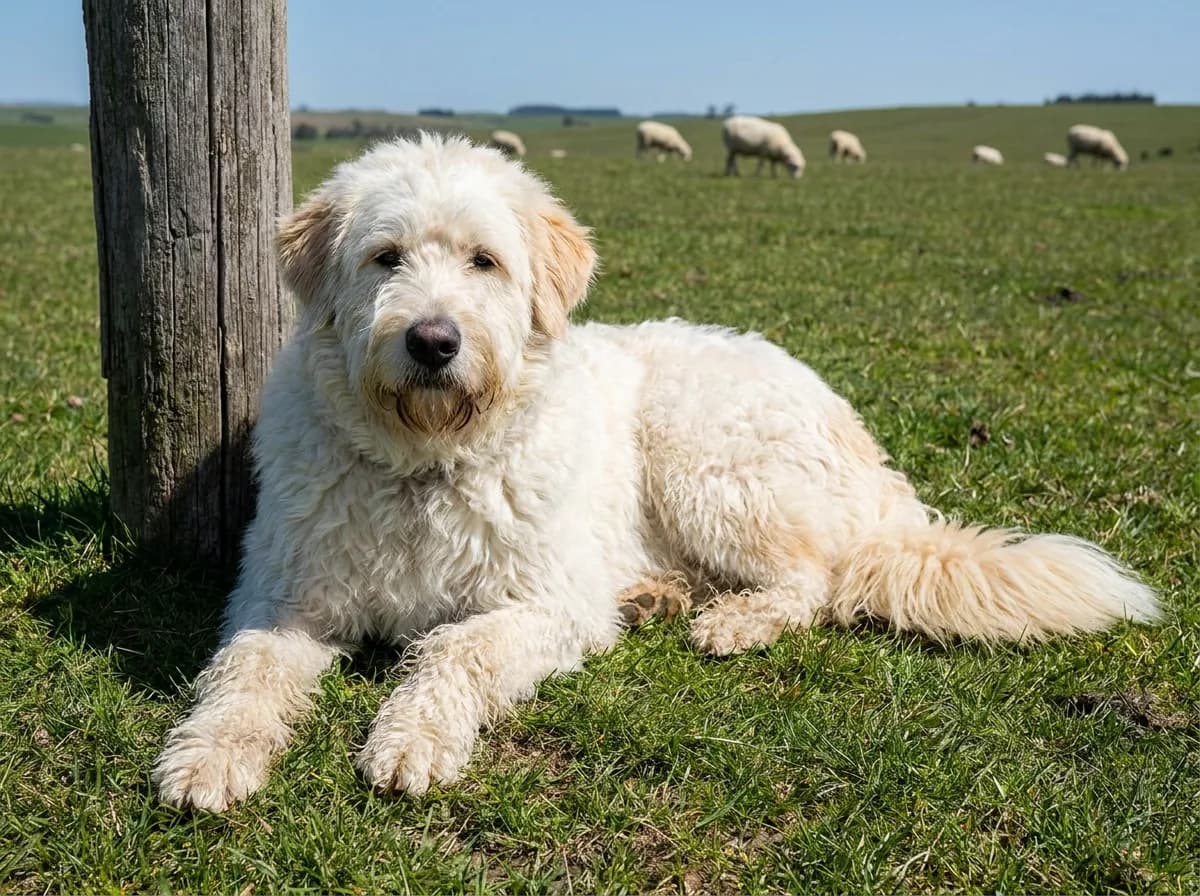
A Pyredoodle crosses the Great Pyrenees, a livestock guardian, with a Standard Poodle and usually weighs 85 to 100 pounds at 20 to 30 inches (Hepper). Expect a calm but independent dog that guards its territory, barks at night noises, and may not come when called, so it needs about an hour of exercise a day and a well-fenced yard. The Great Pyrenees sheds heavily twice a year, so even a Poodle-leaning Pyredoodle may shed more than its label suggests. Wag!'s breed profile puts puppies from reputable breeders at $700 to $2,800. Our Great Pyrenees mixes guide covers household-fit checks.
25. Newfypoo (Newfoundland and Poodle)
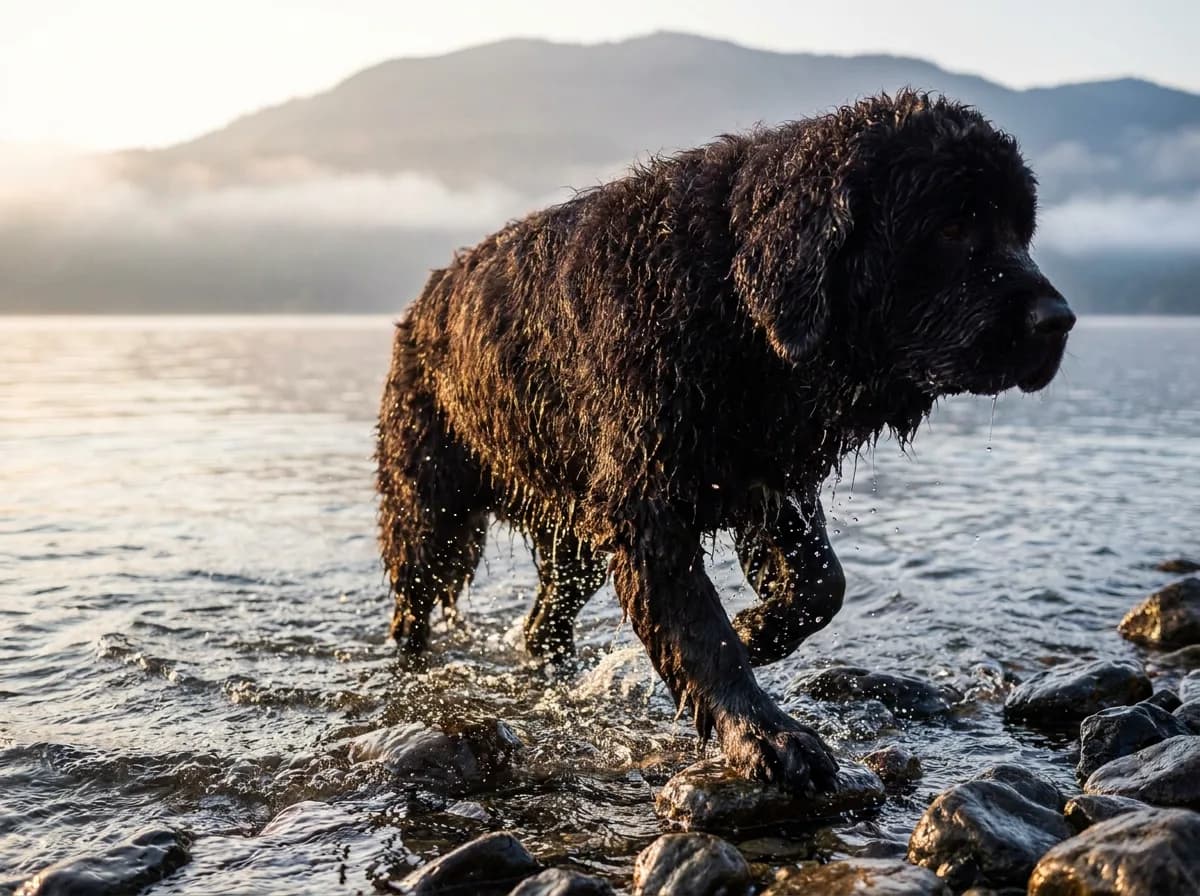
The Newfypoo, also called a Newfiedoodle, blends the gentle Newfoundland with a Standard Poodle and can weigh 70 to 150 pounds at 22 to 30 inches (Dogster). It is usually sweet and patient with children and loves water, but published lifespans are short, at 8 to 12 years, and Dogster recommends at least an hour of walking a day. Newfoundlands are prone to a heart defect called subaortic stenosis, so ask for a cardiac exam on the Newfoundland parent. Doodle Doods puts most puppies at $1,500 to $2,500, with some breeders asking up to $3,000; our Newfoundland mixes guide compares the Newfoundland Poodle mix with other Newfoundland crosses.
Controlling a strong, excitable adolescent is the first practical hurdle with any large doodle. A front-clip harness such as the PetSafe Easy Walk Dog Harness discourages pulling while you teach loose-leash walking; check the maker's size chart against your dog's chest measurement as it grows.

Petful may earn a commission when you click through to Chewy, at no extra cost to you.
Doodle generations explained: F1, F1B, F2, and multigen
Doodle generation codes tell you what type of cross a puppy is and roughly how much Poodle it carries, which mainly changes the odds of a low-shedding coat rather than size or temperament. F stands for filial (a hybrid generation), the number counts generations from the original cross, and B means a backcross to a purebred Poodle. So an F1 is a Poodle crossed with another purebred, an F1B is an F1 doodle bred back to a Poodle, and an F2 is two F1 doodles bred together.
Two practical points follow. An F1B is the usual pick for people who mainly want less hair around the house, but its coat is only more likely to be low-shedding, not certain. And the Poodle percentage says nothing about adult size; the Poodle parent's size does that. Our Goldendoodle generations guide walks through each code with Goldendoodle examples.
| Generation | How it is bred | Approximate percent Poodle | Shedding predictability |
|---|---|---|---|
| F1 | Purebred Poodle x purebred other breed | 50% | Low to moderate shedding, with the widest coat variety |
| F1B | F1 doodle x purebred Poodle | 75% | Usually the curliest, lowest-shedding coats |
| F1BB | F1B doodle x purebred Poodle | About 87.5% | Very low shedding and the most Poodle-like coat |
| F2 | F1 doodle x F1 doodle | 50% | Least predictable; some puppies shed like the other parent |
| F2B | F1 doodle x F1B doodle | About 62.5% | Wavy to curly and fairly predictable |
| Multigen | Doodle x doodle for three or more generations | Varies, often 60 to 75% | Most consistent when the breeder tests and selects for coat |
Some doodle names describe crosses between doodles:
- Double Doodle: usually a Goldendoodle bred to a Labradoodle, mixing three breeds; mini versions use smaller Poodle lines, and whether one makes a good dog depends on its parents.
- Triple doodle: a loose label with no fixed meaning, so ask exactly which breeds are in the pedigree.
- Australian Labradoodle: a multigenerational line developed in Australia, with breeds such as the Cocker Spaniel added for a consistent fleece or wool coat; the Australian doodle name is often confused with the Aussiedoodle, an Australian Shepherd and Poodle cross.
Which Poodle mix is best for you?
The best Poodle mix for you is the one that fits your household's limits, so match them to the mixes before you fall for a photo:
- Dog size you can handle: if a 25-pound dog is your ceiling, choose a small cross with a Toy or Miniature Poodle parent, such as a Maltipoo, Yorkipoo, Shih-Poo, or Poochon.
- Home and household: in an apartment, the Havapoo, Shih-Poo, and Cavapoo adapt well; with young children, a sturdy mid-size Cockapoo or Cavapoo is the usual compromise.
- Exercise you can give: about 30 to 45 minutes a day suits companion crosses such as the Cavapoo, Shih-Poo, and Havapoo, while an hour or more opens up retriever and herding crosses such as the Labradoodle, Goldendoodle, and Bordoodle.
- Grooming budget: if a professional groom every six to eight weeks (roughly $360 to $1,200 a year for a small cross) is out of reach, a curly doodle is the wrong dog; smooth-coated crosses such as the Chipoo need less clipping but shed more.
- Purchase budget: under about $1,500 points to the Chipoo or Bordoodle, or to adoption at $150 to $700; mini and micro versions of the big doodles cost the most.
- Allergies: start with low-shedding crosses whose other parent also has a hair coat (Maltipoo, Poochon, Schnoodle) and test your own reaction first.
Put together, most households with moderate time and budget land on a Cockapoo, Cavapoo, or Havapoo; active households with space and a bigger budget on a Goldendoodle or Labradoodle; and allergy-sensitive homes on a Maltipoo, Poochon, or Schnoodle.
Best Poodle mix overall
The Cavapoo fits most households best: it is small (12 to 25 pounds), gentle with children and visitors, moderately active, and easier to groom than the big shaggy doodles. Choose a different mix if you want a running or hiking partner, where a Labradoodle, Goldendoodle, or Bordoodle suits better, or if the breeder cannot show a heart exam for the Cavalier parent, in which case a Havapoo or Poochon gives a similar lap-dog fit.
Calmest Poodle mixes
The calmest Poodle mixes are usually crosses with calm companion or giant breeds: the Shih-Poo and Cavapoo among small dogs, and the Bernedoodle and Saint Berdoodle among large ones. No doodle is truly lazy and all are bouncy as adolescents, but these crosses settle sooner than herding or terrier mixes. No Poodle size is reliably calmer: our Poodle breed guide notes the AKC rates each 4 out of 5 for energy.
Smartest Poodle mixes
The Bordoodle is the best bet for the smartest Poodle mix, because it crosses the Border Collie and the Poodle, first and second in Stanley Coren's ranking of working intelligence (our smartest dog breeds list explains the ranking). The Shepadoodle (the German Shepherd ranks third) and herding crosses such as the Aussiedoodle are close behind. Smart cuts both ways: these dogs learn bad habits as fast as good ones and invent their own jobs when bored.
Healthiest Poodle mixes
The healthiest Poodle crosses are usually small or medium mixes from long-lived parent breeds, such as the Cockapoo (Chewy lists 14 to 18 years) and the Havapoo (13 to 16 in Dogster's estimate), bred from health-tested parents. The mix name alone guarantees nothing: a 2024 Royal Veterinary College survey of 9,402 UK dogs found that Cavapoos, Cockapoos, and Labradoodles had health odds no different from their purebred parent breeds in 86.6% of comparisons. The riskier picks are crosses with a parent breed known for a serious inherited problem, such as heart disease in Cavaliers or cancer in Bernese, and giant crosses, whose published lifespans top out around 12 to 13 years.
Best Poodle mixes for seniors
The best Poodle crosses for older people are calm, small ones such as the Shih-Poo, Cavapoo, Maltipoo, or Poochon, ideally adopted as an adult dog whose size and temperament are already known. Choose a dog you can comfortably lift and carry to the car or onto the vet's table. Brushing a curly coat to the skin is hard work for stiff hands, so ask the groomer for a short clip that needs less daily care. Skip adolescent large doodles, since a 60-pound jumper is a fall risk.
Poodle mixes that stay small
Poodle mixes that stay small for life are crosses between a Toy Poodle parent and a toy breed: Chipoos, Yorkipoos, Pomapoos, Maltipoos, and Shih-Poos usually finish under 15 pounds. A Miniature or Standard Poodle parent changes the answer, so a mini Cavapoo or mini Goldendoodle can grow well past 20 pounds. Ask for both parents' adult weights; our Maltipoo size chart shows how to estimate adult weight from a puppy's growth.
Poodle mixes for quiet homes, time alone, and service work
- Quiet homes: no Poodle mix is silent, but companion crosses such as the Cavapoo and Shih-Poo usually bark less than terrier crosses such as the Yorkipoo and Schnoodle.
- Time alone: none suit being left alone for full workdays, and the Maltipoo is especially prone to distress, so plan for a walker or daycare.
- Service and therapy work: Labradoodles began as guide dogs, but fitness for service or therapy work depends on the individual dog and its training, not the mix.
Best Poodle mixes for families and first-time owners
For families with children, the Cockapoo, Cavapoo, Labradoodle, and Goldendoodle have the steadiest reputations, but match the dog's size to your children's ages: a toddler can injure a tiny mix, and a big adolescent doodle can knock a toddler over. First-time owners do best with a moderate-energy cross that is eager to please, such as the Cockapoo or Havapoo. Leave herding crosses such as the Bordoodle and Aussiedoodle to experienced owners.
Are Poodle mixes hypoallergenic?
No Poodle mix is hypoallergenic, whatever a seller promises. The main dog allergen, Can f 1, comes from saliva, dander, and urine rather than long hair, and a 2012 study in the Journal of Allergy and Clinical Immunology found that breeds sold as hypoallergenic, Labradoodles included, carried higher Can f 1 levels in their coats than other dogs.
- Before you commit, spend time with the dog you plan to bring home, ideally over several long indoor visits, because a reaction can build over hours. If you have asthma or severe allergies, talk to an allergist first, and never rely on a hypoallergenic label, a generation code, or a coat test alone.
In that study, airborne allergen in the dogs' homes was no different, and only Labradoodle homes showed lower levels in settled floor dust. A 2011 study in the American Journal of Rhinology and Allergy measured dog allergen levels in household dust and found no difference between homes with hypoallergenic dogs and homes with other breeds. The American College of Allergy, Asthma and Immunology puts it plainly: there are no non-allergenic dog breeds.
What a Poodle-type coat can do is drop less hair on floors and furniture, and coat type is genetic. Three genes explain most dog coats, according to a 2009 study in Science: RSPO2, the furnishings gene behind the beard and eyebrows; FGF5 for coat length; and KRT71 for curl. A doodle without the furnishings variant has an improper coat, with short, flat hair on the face and legs and more shedding, and it mostly turns up in F2 and later litters. The UC Davis Veterinary Genetics Laboratory tests for all three genes plus shedding-related MC5R and RSPO2 variants, but no gene test measures allergen output, so a non-shedding result is not an allergy guarantee.
If you have mild allergies and still want a doodle, stack the odds rather than trusting a label:
- Choose an F1B or multigen puppy from parents with curly, furnished coats, or an adult dog whose coat is already set.
- Favor crosses whose other parent also has a low-shedding hair coat, which makes the Maltipoo, Poochon, Shih-Poo, Yorkipoo, Schnoodle, and Whoodle the best small and medium candidates.
- Expect curly and tight wavy coats to shed least, while shaggy, wire, and flat coats shed more.
- Keep the dog out of the bedroom, wash its bedding weekly, and run a HEPA air filter.
Poodle mixes that don't shed at all don't exist: low-shedding coats still lose hair, they just trap it in the coat, which is why they mat. For options beyond doodles, see our hypoallergenic dog breeds guide and our list of the best hypoallergenic dogs for allergy sufferers.
Grooming and caring for a Poodle mix
Most Poodle mixes need brushing to the skin several times a week and professional grooming every six to eight weeks, because a wavy or curly coat traps loose hair instead of dropping it, and trapped hair turns into mats. Petful's Cavapoo and Cockapoo cost guides put professional grooming at roughly $360 to $1,200 a year for small crosses, and large doodles cost more per visit. Doodle dog grooming at home comes down to four habits:
- Slicker brush: work through the outer coat; a self-cleaning model such as the aumuca Self Cleaning Slicker Brush is quicker to clear.
- Line brushing and a metal comb: part the coat in sections, brush from the skin outward, then comb; a snag means the brush missed a mat.
- Clippers: tidy the face, feet, and sanitary area between groomer visits.
- Shampoo and drying: use a dog shampoo such as Earthbath Oatmeal & Aloe Fragrance Free Shampoo, rinse well, and dry completely, since damp coats mat quickly.
A matted doodle is a welfare problem, not a cosmetic one: tight mats pull on the skin and hurt to work out, so most groomers shave a badly matted dog down and start over. Style is a separate choice, and our Poodle haircut styles guide shows the teddy bear, puppy, and lamb cuts that suit curly doodle coats.
Feed for the dog's expected adult size, not the doodle label: small-breed formulas for small crosses, and for puppies expected to reach 70 pounds or more, food made for the growth of large-size dogs, the AAFCO category that caps calcium. Ask your veterinarian before switching to a special diet for itchy skin, since doodles with allergies need a diagnosis rather than a guess.
Exercise runs from about 30 minutes a day for companion crosses to 60 to 90 minutes for herding and retriever crosses. Recheck harness fit monthly on a growing or long-coated doodle, because thick hair hides rubbing.
Poodle mix health and lifespan
Most Poodle mixes live about 10 to 15 years, with small crosses often reaching their mid-teens and giant crosses closer to 8 to 13. Published estimates include 12 to 15 years for the Cavapoo and Maltipoo (Petful's guides), 10 to 15 for the Yorkipoo, a Poodle terrier mix (PetMD), 10 to 18 for the Chipoo (PetMD), 9 to 13 for the Saint Berdoodle (Canine Journal), and 8 to 12 for the Newfypoo (Dogster). Size is the strongest predictor: smaller dogs usually outlive larger ones.
Are Poodle mixes healthy? Mixed ancestry is not a health guarantee. In the Royal Veterinary College survey, the three designer crosses had higher odds than their parent breeds for 7.0% of disorder comparisons, lower odds for 6.4%, and no significant difference for the other 86.6%. A doodle can inherit problems from either side, which is why health testing on both parent breeds matters more than the word hybrid. Ask a breeder for these results:
- Poodle parent: a yearly eye exam by a veterinary ophthalmologist for every size; for a Toy or Miniature Poodle, a DNA test for progressive retinal atrophy (prcd-PRA) and a patella exam, plus hip scores for a Miniature; for a Standard Poodle, hip scores and at least one of a thyroid, sebaceous adenitis (skin), or heart evaluation.
- Large breeds: hip and elbow ratings from the Orthopedic Foundation for Animals for retrievers, Bernese, Saint Bernards, Newfoundlands, Great Pyrenees, and German Shepherds, all prone to hip dysplasia.
- Breed-specific tests: a heart exam for Cavaliers (mitral valve disease) and Newfoundlands (subaortic stenosis), an MDR1 DNA test for Australian Shepherds, and a degenerative myelopathy DNA test for German Shepherds.
- Toy breeds: patella exams for Chihuahuas, Pomeranians, Yorkshire Terriers, Maltese, and Shih Tzus, plus an honest account of dental and airway problems in the line.
Older doodles need the same senior care as any dog: regular checkups, weight control, and softer footing as joints stiffen. For purebred life expectancy by size, see our Poodle lifespan guide, and for the wider designer-dog health debate, our article on Labradoodle health issues.
Poodle mix downsides to weigh first
The biggest downsides of Poodle mixes are unpredictability and upkeep: you can't be sure of a puppy's adult coat, size, or temperament, and most need grooming that costs hundreds of dollars a year. Poodle mixes are not bad dogs, and many make excellent pets, but dedicated doodle rescues exist because some owners are surprised by the dog they actually get.
- Low-shedding potential, especially in F1B and multigen dogs
- Usually friendly, social, and eager to learn
- Sizes from about 5 to 150 pounds, so there is a mix for most homes
- Poodle intelligence makes training rewarding
- Crossbreeding can lower the odds of some recessive diseases
- No coat guarantee: F1 and F2 puppies can shed like the other parent
- Grooming cost of hundreds of dollars a year, and painful mats if you skip it
- Adult size is hard to predict when a seller is vague about the Poodle parent
- Bright, energetic crosses get bored and destructive without daily work
- Fashion inflates prices and draws puppy mills and brokers
Which are the worst Poodle mixes? None is bad in itself, but some are hard matches for typical homes: giant crosses with short lives and big bills, high-drive herding crosses in quiet households, and toy crosses bred down to teacup size, which are the most fragile. When something is wrong with a Poodle mix, the cause is usually the breeding behind it rather than the cross.
Doodle brain is owner slang for the excitable, easily distracted behavior of a young doodle, not a diagnosis. It usually describes an adolescent dog with two energetic, clever parents that needs more exercise, training, and rest, and it fades with maturity. Jealousy or sibling rivalry between two dogs is competition for attention, food, or space, so feed them separately and train each dog on its own.
Are Poodle mixes ethical? The doodle controversy is about breeding practices, not the dogs. Demand rewards volume breeders and puppy mills that skip health testing and sell online, and critics argue that crossing two breeds adds unpredictability without a proven benefit. Buying from a transparent breeder who health-tests both parents, or adopting a doodle from a rescue, sidesteps most of the ethical problem.
How much do Poodle mixes cost?
A doodle dog from a breeder usually costs $1,000 to $4,000, and adoption fees for doodles run about $150 to $700 through a shelter or rescue. The cheapest mixes on this list are less-hyped crosses such as the Chipoo and Bordoodle, which Canine Journal prices at $1,500 or less. The most expensive are the smallest versions of big doodles: Petful's guides put toy and micro Bernedoodles at $3,500 to $8,000 or more.
Why are Poodle mixes so expensive? Four things push prices up:
- Demand: breeders of popular mixes often keep waiting lists, so they have little reason to cut prices.
- Size: a mini doodle dog usually costs more than a standard from the same program; Petful's Labradoodle guide lists minis at $2,000 to $3,500 against $1,500 to $3,000 for standards.
- Coat and color: F1B and multigen coats cost more, and in our Maltipoo price guide cream, apricot, and white are baseline colors while chocolate, parti, phantom, and merle carry the highest premiums.
- Health testing: hip, eye, heart, and DNA tests on both parents are a real cost, and they are the part of the price worth paying for.
The purchase price is the smaller number. Petful's cost guides put the first year at roughly $2,500 to $6,000 including the puppy and a lifetime at $20,000 to $40,000. Typical yearly costs for a small doodle, from our Cockapoo price guide:
- Professional grooming: $360 to $720
- Food: $300 to $600
- Routine vet care and preventives: $250 to $500
- Pet insurance (optional): $300 to $700
A cheap Poodle mix from a seller without health testing often costs more later in vet bills; our Cavapoo guide lists such bargain sellers at $800 to $1,500. For purebred prices by size, see our Poodle price guide, and for one doodle's full budget, our Cockapoo price breakdown.
How to choose a Poodle mix responsibly
Choose a Poodle mix by meeting the puppy's mother (ideally both parents), seeing health tests on both parent breeds, and walking away from any seller who ships sight unseen or always has puppies ready. Adoption is just as good a route: doodle rescues and general shelters rehome many Poodle mixes, often as adults whose size, coat, and manners are already known, with adoption fees typically in the low hundreds.
Before paying a deposit on Poodle mix puppies, work through this checklist:
- Meet the mother and see where the litter lives, in person or at least on a live video call.
- Get health results for both parents and look them up in the OFA database yourself.
- Confirm the Poodle parent's size and the generation, which predict adult size and coat.
- Expect a written contract, a health guarantee, and a promise to take the dog back at any age.
- Bring the puppy home at 8 weeks or older, with first vaccines, a vet record, and early socialization to household sounds and handling.
- Walk away if a seller can't show health tests on both parents, sells many breeds or rare teacup sizes, always has puppies available, won't let you see where the dogs live, wants to meet in a parking lot, or asks for payment by wire transfer or gift card. Be equally wary of a so-called rescue that always has young designer puppies at breeder prices, no foster notes, and no vet records.
Where can you get a doodle dog responsibly? National adoption sites let you search by breed and size, and doodle rescues list small, mini, and standard dogs that need new homes. When you adopt, ask for the foster's notes on house training, behavior with children and other pets, and how the dog tolerates grooming, and confirm the rescue will take the dog back if the match fails. For a breeder, ask your veterinarian or a local groomer whom they trust, and expect a waiting list.
Set up a crate sized for the adult dog, with a divider while it is small; for a standard doodle, that means a large crate such as the Frisco Heavy Duty Fold & Carry Single Door Collapsible Wire Dog Crate, X-Large.
Are boy or girl Poodles better? Neither, in Poodles or Poodle mixes: the individual puppy matters more than its sex, so choose the one whose energy fits your home. The clearest difference is size in Standard Poodles, where the AKC gives 60 to 70 pounds for males and 40 to 50 for females; for Toys and Miniatures it gives one weight range for both sexes. Beyond size, an unspayed female usually comes into heat about twice a year, and an intact male is more likely to urine-mark, which neutering can reduce. Our Poodle breed guide covers male versus female Poodle differences if you want the breed-level view.
Poodle mix FAQs
For most 70-year-old women living independently, the best dog is small, calm, and already grown. An adult dog from a rescue shows its true size, energy, and house manners before you commit, and it skips puppy chewing and house-training. Poodle crosses such as the Shih-Poo and Cavapoo fit that profile, but so do many purebreds and mixed breeds. Before choosing, check three practical things: a grooming budget that covers a professional groom every six to eight weeks, leash manners that won't pull you off balance, and a named backup caregiver in case of illness or a move.
No. Poodle mixes are not recognized by the American Kennel Club, and none has a breed standard, so appearance and size can vary widely even within a litter. When a seller advertises a registered doodle, the registration comes from a private club that records pedigrees; it says nothing about health or quality. Mixed-breed dogs, doodles included, can still compete in AKC sports through the Canine Partners program.
Usually, yes. A breed-ancestry DNA test compares your dog's DNA with reference panels that include the Poodle, so it can typically identify evidence of Poodle ancestry and estimate its share. Results come as percentage estimates, such as roughly half Poodle for a first-generation cross, and they can't verify a seller's generation label or predict temperament. Some kits, including Embark's, also report coat genes such as coat length and curl and add a predicted adult weight, but those are estimates, not guarantees. Kits that add health screening also flag inherited disease variants worth discussing with your veterinarian.
Yes. Most Poodle mix puppies go through a puppy coat transition in their first year, when the soft puppy coat gives way to an adult coat that may be curlier, wavier, or more prone to matting, and facial furnishings often fill in at the same time. Color can change too: color fading is common in Poodle lines, so a black puppy may clear to blue or gray and a red or apricot puppy may lighten toward cream. Ask the breeder what the parents looked like as adults.

Coreen Saito is a pet writer and longtime shelter volunteer with more than a decade in animal rescue. She covers cat behavior, breed care, and the small, ordinary science of sharing a life with companion animals, with a particular focus on honest takes about the products and decisions that actually matter. At home in Arizona, she's outranked by Mac (a dog with the loudest opinion in the house), Rebel (a cat who governs by quiet authority), and Meri (an orange tabby who runs the late shift and the laundry basket). She writes about all three, plus the rescues that keep coming through her life, at LifeWithMinty.com.
Sign up for expert-backed reviews and safety alerts all in one place.