Beagle Breed Guide: Size, Temperament, Pros and Cons
The Beagle is a friendly, food-loving scent hound in two sizes, under 13 and 13 to 15 inches. Get the facts on temperament, barking, shedding, training, family fit and the honest downsides.
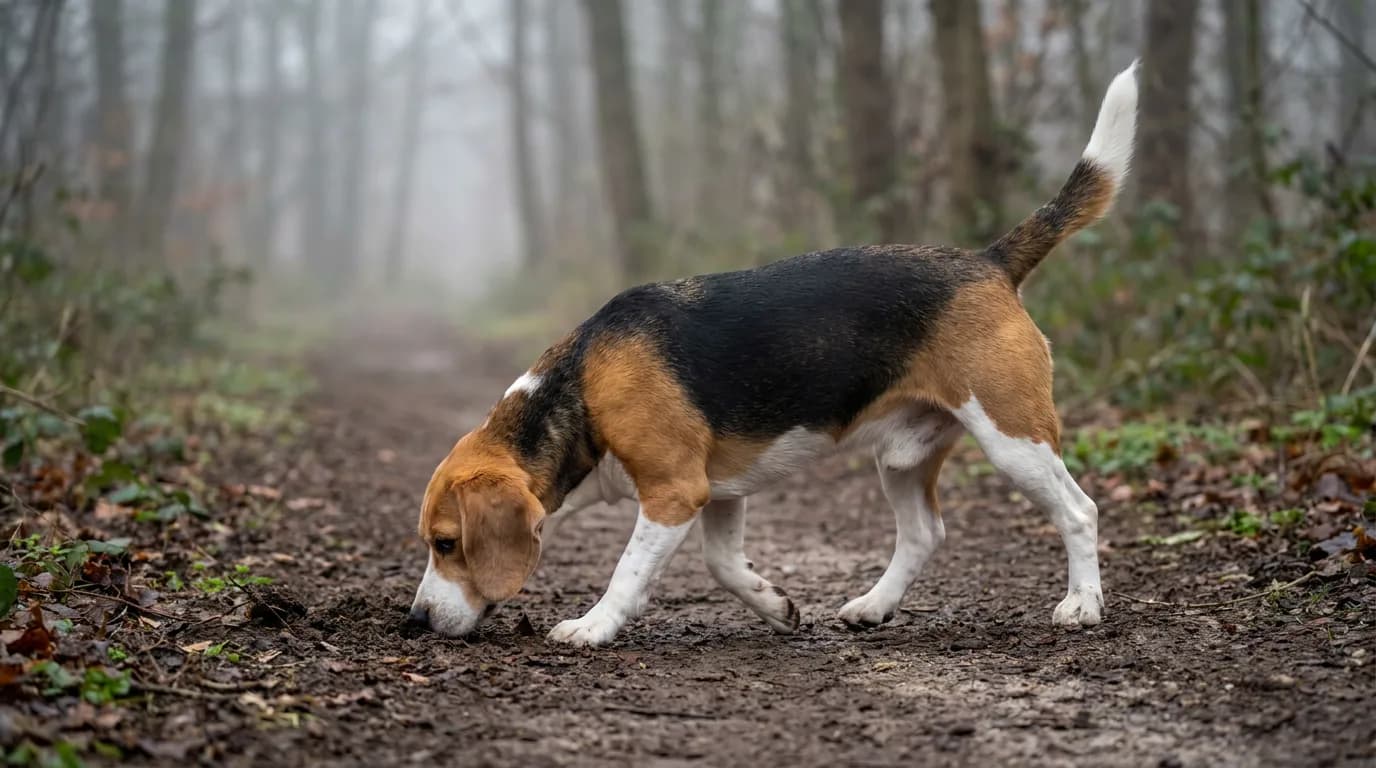
Nose down and tail up on a woodland trail: once a Beagle locks onto a scent, everything else becomes background noise.
Petful is reader supported. As an affiliate of platforms like Amazon and Chewy, we may earn a commission when you buy through links on this page. There is no extra cost to you.
The Beagle is a small, sturdy scent hound bred in England to hunt rabbits and hare by nose, and it is one of the friendliest dogs you can bring home: great with children, happy with other dogs and not known for aggression. It is also loud, food-obsessed and ruled by its nose, so whether a Beagle suits you depends less on its size than on whether you can live with baying, escape attempts and a dog that dislikes long days alone.
Beagles fit active, sociable households that are home a lot, don't mind some noise and will keep food and fences secure. They are a hard match for anyone who wants a quiet apartment dog, an off-leash hiking partner or a dog that can spend a full workday alone.

Sign up for expert-backed reviews and safety alerts all in one place.
What is a Beagle? Breed overview at a glance
A Beagle is a scent hound bred to hunt rabbits and hare in packs, following the trail by nose while hunters walked behind. In the United States it comes in two size varieties, under 13 inches and 13 to 15 inches at the shoulder, and the American Kennel Club lists the smaller variety at under 20 pounds and the larger at 20 to 30 pounds.
Here is how the AKC scores the traits owners ask about most, on its 1-to-5 scales:
- Good with young children: 5 of 5
- Good with other dogs: 5 of 5
- Barking level: 4 of 5, toward the "very vocal" end
- Energy level: 4 of 5
- Shedding level: 3 of 5
- Trainability: 3 of 5, halfway between "self-willed" and "eager to please"
- 1Size: the AKC recognizes a 13-inch variety (under 13 inches) and a 15-inch variety (13 to 15 inches).
- 2Weight: under 20 pounds for the smaller variety and 20 to 30 pounds for the larger one.
- 3Temperament: a friendly, merry scent hound that follows its nose, bays and lives for food.
- 4Exercise: at least an hour a day, much of it spent sniffing on a leash or inside a secure fence.
- 5Family fit: excellent with children and other dogs, a poor fit for long days alone.
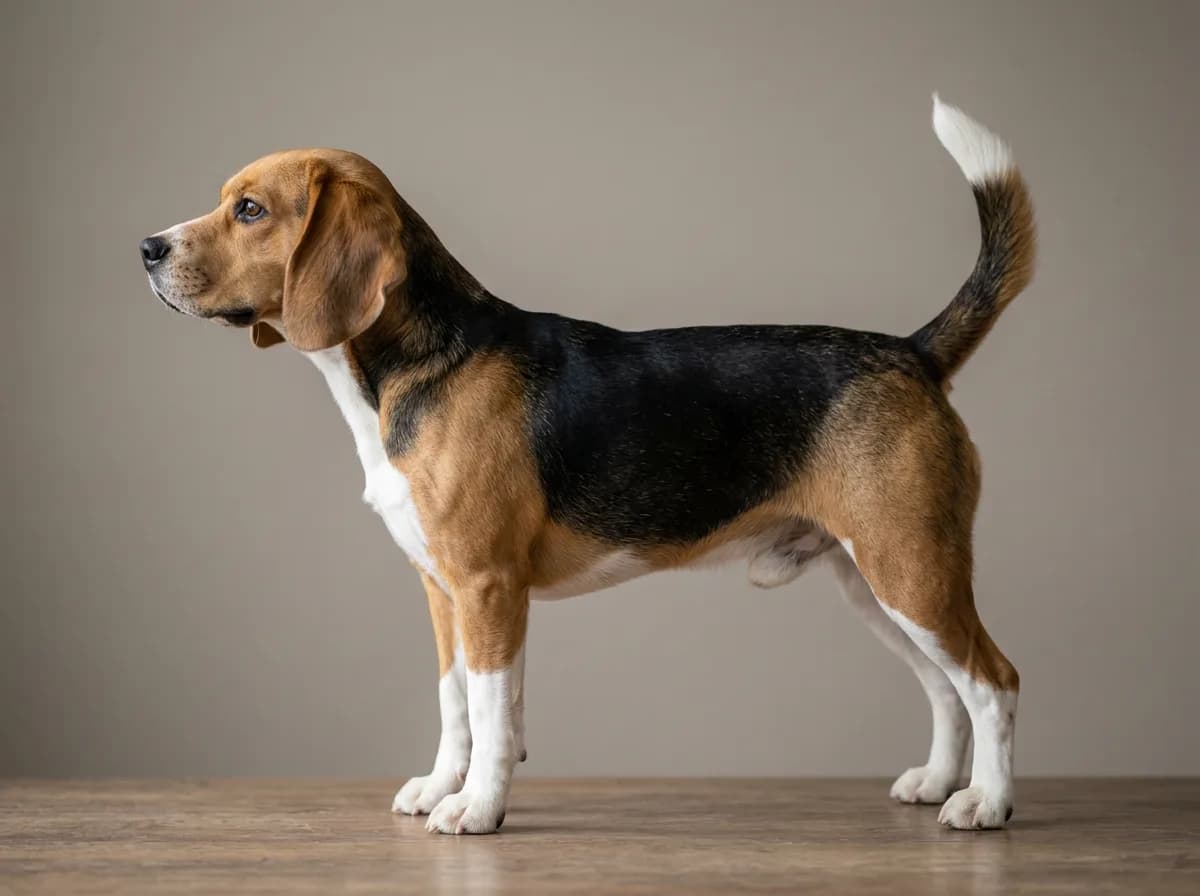
The AKC breed standard defines the ideal Beagle as "a miniature Foxhound, solid and big for his inches." In practice, that looks like:
- A compact, well-boned body with a deep chest and a level back
- Long, low-set ears that reach nearly to the tip of the nose when drawn forward
- Large brown or hazel eyes with a gentle, pleading expression
- A white-tipped tail carried gaily, with a slight curve
- A close, hard coat, which the Royal Kennel Club standard describes as short, dense and weatherproof, well suited to cool, wet English hunting country
What type of dog is a Beagle? Both the AKC and the UK's Royal Kennel Club place it in the Hound Group, alongside breeds that hunt by scent, such as the Bloodhound, and by sight, such as the Greyhound. Our guide to hound dog breeds compares the whole group, but the Beagle's profile is simple: a pack dog with a powerful nose, a merry outlook and a voice built to carry across open fields.
Beagle colors and markings
Tricolor, a mix of black, tan and white, is the classic Beagle coat, but it is far from the only one. The Royal Kennel Club standard lists these colors:
- Tricolor: black, tan and white
- Blue, white and tan
- Two-color coats: lemon and white, red and white, tan and white, and black and white
- Pied patterns: badger pied, hare pied and lemon pied
- All white, the only color on the list that doesn't also come in a mottled version
The AKC is looser: its standard accepts any allowed hound color and disqualifies only merle and brindle patterns, which answers the most common question about which colors are not accepted. What is the rarest color of a Beagle? Most likely lilac, a diluted chocolate that appears only when a puppy inherits two copies of both the brown gene and the dilution gene, with blue and chocolate tricolors next. That ranking is an estimate based on genetics, not on registration counts. Among the standard colors, a rarer shade has no known health or temperament advantage, so treat a premium price for a "rare" shade as marketing. Our full guide to Beagle colors and markings covers every standard coat, the genuinely rare shades and how puppy coats change as they mature.
Because the standard disqualifies merle and brindle, a "Beagle" with either pattern very likely has another breed in its background. If you adopted a Beagle-looking dog and want to know what you actually have, a breed-identification DNA test such as the Embark Breed Identification Dog DNA Test Kit reports your dog's breed ancestry from a cheek swab, which tells you far more than coat color alone.

Petful may earn a commission when you click through to Chewy, at no extra cost to you.
Fun facts about Beagles
A few interesting things about the breed that surprise even longtime owners:
- The white tip on the tail was bred in on purpose, so hunters could spot a Beagle working with its head down in tall cover.
- Queen Elizabeth I kept tiny Beagles that, according to the Royal Kennel Club, were reputedly small enough to be carried in a saddle pannier or even a pocket.
- Snoopy, the world's most famous Beagle, has been part of Charles Schulz's Peanuts since 1950.
- President Lyndon B. Johnson kept Beagles at the White House.
- The first Beagle registered with the AKC, in 1885, was a dog named Blunder.
- Beagles remain one of America's favorite breeds; the AKC's breed page currently ranks them 7th of 210 breeds in popularity.
How big do Beagles get? Size, weight and the 13-inch vs 15-inch varieties
A full-grown Beagle stands up to 15 inches tall at the shoulder and weighs roughly 20 to 30 pounds, while dogs in the smaller variety stay at 13 inches or under and usually weigh less than 20 pounds. The AKC divides the breed into two varieties by height: the 13-inch variety for hounds not exceeding 13 inches, and the 15-inch variety for hounds over 13 but not over 15 inches. Those two varieties are the only official types of Beagle, and any hound taller than 15 inches is disqualified from AKC shows, though it can make a perfectly good pet.
| Size label | Who defines it | Height at the shoulder | Typical adult weight | What it means for a buyer |
|---|---|---|---|---|
| 13-inch variety | American Kennel Club | 13 inches or under | Under 20 pounds | The smaller recognized Beagle, with the same temperament and exercise needs |
| 15-inch variety | American Kennel Club | Between 13 and 15 inches | Between 20 and 30 pounds | The larger recognized Beagle; over 15 inches is a show disqualification |
| UK Kennel Club standard | Royal Kennel Club | 13 to 16 inches (33 to 40 cm); 16 inches is the desirable maximum height | No weight set | One height range and no varieties, so a 16-inch dog is standard in the UK |
| Pocket or mini Beagle | A sales label, not a recognized variety | No official height; ask the seller to define it | Varies | Ask for the measured heights of both parents and their health records |
| Beagle over 15 inches | Outside both AKC varieties | Over 15 inches | Depends on build | A fine pet, but not eligible for AKC conformation shows |
The UK standard works differently from the American one. The Royal Kennel Club sets a desirable minimum height of 13 inches (33 cm) and a desirable maximum height of 16 inches (40 cm), with no varieties, and it reminds puppy buyers that a breed standard describes an ideal rather than guaranteeing any individual dog's size. So the AKC and Kennel Club height standards overlap but don't match: a 16-inch Beagle can be correct in Britain and oversized in an AKC ring.
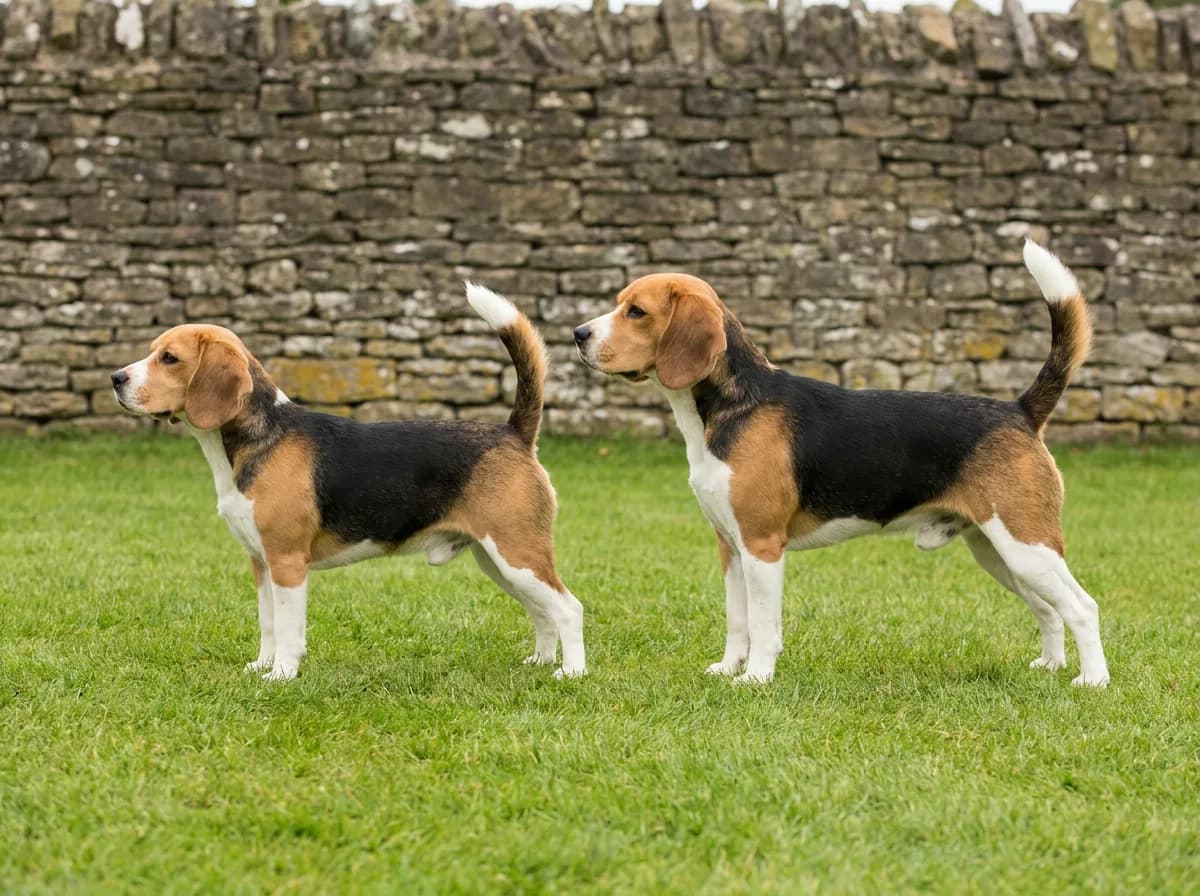
The photo shows the difference in practice: the smaller 13-inch variety beside the taller 15-inch variety. Both have the same compact appearance; the 15-inch dog simply carries more height and bone. Before you trust a listing's size claim, ask the seller:
- How tall are both parents at the withers, measured rather than estimated?
- Are the parents registered, and in which AKC variety were they shown or entered?
- Which health screenings do the parents have, and can you see the results?
- Is a "pocket," "mini" or "rare size" label adding to the price?
A seller who guarantees an exact adult size, or charges extra for a smaller one, is selling a label. Size is inherited, so the parents' measurements are the best forecast you'll get.
Are Beagles small or medium dogs? It depends on who is counting. The Royal Kennel Club lists the Beagle as a small breed, the UK veterinary charity PDSA files it under medium dogs, and at 20 to 30 pounds most Beagles sit right on the boundary. For collars, harnesses and crates, measure your own dog rather than buying by breed label.
What about big Beagles? The tallest Beagle that can be shown in the United States stands 15 inches, and the Royal Kennel Club's upper guideline is 16 inches. There is no separate large Beagle breed, so the biggest "Beagles" in listings are either oversized purebreds or mixes. Beagles are strong for their size ("big for his inches," in the AKC standard's words), and a well-built one holds a balanced stance on straight forelegs, with a level back and its tail carried gaily. The average adult sits in the middle of the ranges above, and the ideal weight for any individual is the one at which you can easily feel its ribs, which the feeding section below turns into a calorie plan.
When is a Beagle full grown?
Most Beagles reach adult height by about 9 to 12 months, in line with AKC and VCA Animal Hospitals guidance for dogs of this size, then keep filling out with muscle for a few more months. A puppy's paws and current weight are poor predictors of how big it will grow. The parents' measured heights are the best guide, and a sudden stall or spurt in growth is worth mentioning at the next vet visit.
Pocket and miniature Beagles
"Pocket Beagle" and "miniature Beagle" are sales labels, not recognized varieties. The idea is old: the Royal Kennel Club notes that Queen Elizabeth I kept a pack of miniature Beagles, and that the smaller American variety is commonly called the pocket Beagle. Today, though, neither the AKC nor the Royal Kennel Club registers a separate pocket or mini size, so a dog sold under that name should come with the same parent heights, registration papers and health tests as any other Beagle.
Very small size can come from breeding the smallest dogs together or from mixing in another breed, and a smaller Beagle is not automatically calmer or healthier. Our guide to pocket Beagles covers their real adult size, price and the health questions to ask before you buy one.
Beagle temperament and personality
Beagle temperament comes down to three drives: people, food and scent. The Royal Kennel Club standard calls the Beagle "a merry hound" whose essential function is to hunt by following a scent, and asks for a temperament that is "amiable and alert, showing no aggression or timidity." The AKC describes the breed as happy-go-lucky, funny and companionable. Many owners would add stubborn, clever and permanently hungry.
The personality traits and characteristics you'll live with every day:
- Friendly with almost everyone. Bred to work in packs, most Beagles love company, greet visitors happily and get along with other dogs. That also makes them poor guard dogs; the AKC scores their watchdog instinct 2 of 5.
- Nose first. Once a Beagle locks onto a scent, your voice becomes background noise. This is the root of the breed's reputation for stubbornness and escaping.
- Food-driven. Treats make training easier, but the same drive leads to counter surfing, trash raiding and weight gain.
- Vocal. Beagles bark, bay and howl, especially when bored, lonely or on a trail.
- Social, not independent. A Beagle left alone for long stretches is more likely to howl, chew or dig than to nap quietly.
Are Beagles aggressive? Not as a breed, and aggression counts as a fault under the UK standard. Any dog can bite, though, and when a Beagle does, the behavior usually follows a predictable script: a dog guarding food or a stolen treasure, or a puppy mouthing hands during play. Teach children never to take food or chews from a Beagle, feed it in a quiet spot and trade for stolen items instead of chasing. You may see bite-force figures for Beagles online, but there is no reliable published measurement, and prevention matters far more than jaw strength.
Beagles are pack hounds, and their social needs are real: they want to be where the family is. What Beagles love most is food, a good scent trail and company, which is why food and sniffing time are the best rewards you have. Do Beagles pick a favorite person? Many spread their affection around the household, but many also gravitate toward whoever feeds, walks and trains them, which is one more reason to share those jobs if you want a dog that listens to everyone.
What calms a Beagle down?
What calms most Beagles fastest is letting the nose work, then giving the dog a predictable place to rest. A bored or overstimulated Beagle usually needs a sniff walk, a chew or a food puzzle more than another round of fetch. There is some science behind that: a small 2019 study of 20 pet dogs, published in Applied Animal Behaviour Science, found that dogs given regular nosework sessions became more optimistic on a judgment-bias test than dogs doing heelwork.
- Start with a sniff walk of 10 to 15 minutes on a long leash, letting your Beagle set the pace and investigate freely. Next, offer part of the next meal in a food puzzle, lick mat or stuffed chew toy. Then practice a settle cue: reward your dog for lying on its bed or mat, starting with a few seconds and building up. Finally, give it a quiet resting space away from the front window and door, where nobody disturbs a sleeping dog.
The settle cue works best on a bed your Beagle actually likes, in a low-traffic corner. A bolstered bed such as the FurHaven Velvet Waves Perfect Comfort Orthopedic Sofa Bed gives a curled-up Beagle sides to lean against; choose a size that lets your dog stretch out, reward calm lying there and the bed itself becomes a signal to switch off.
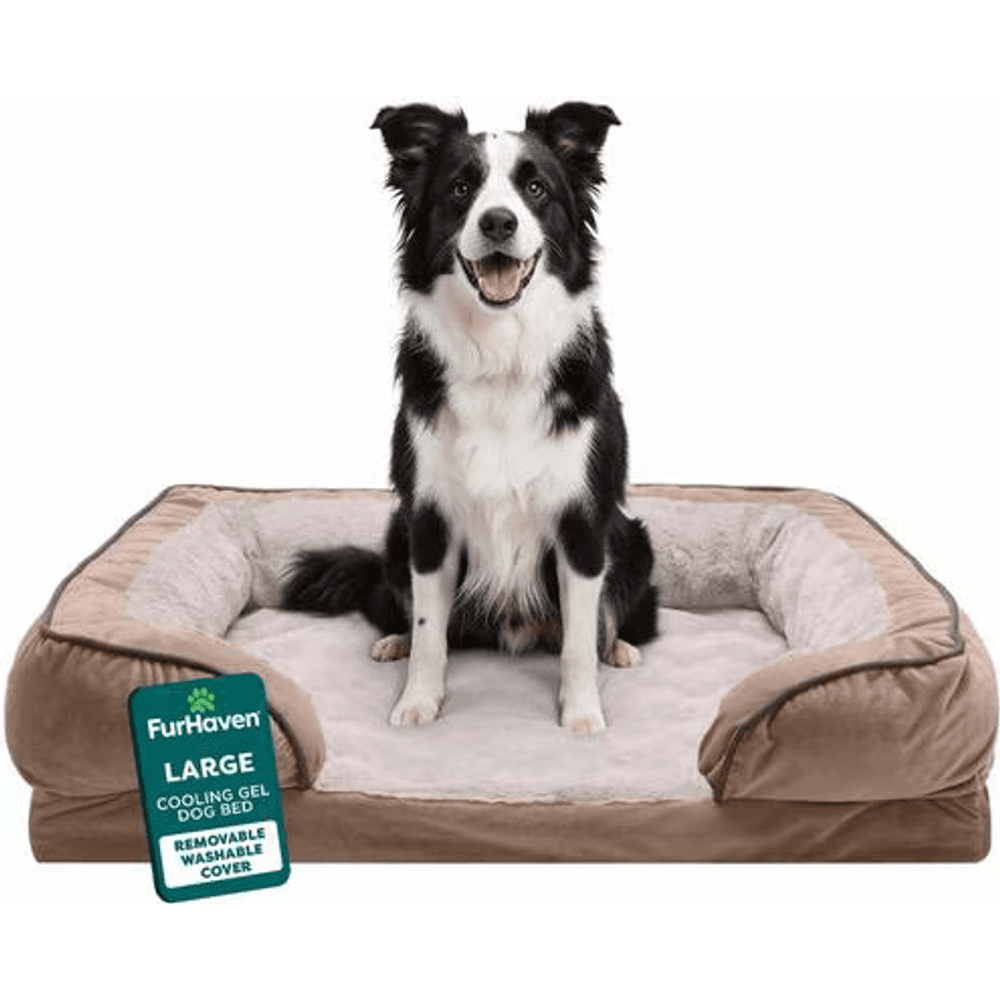
An orthopedic sofa bed with three bolstered sides for dogs who like to rest their head and joints against a cushion. The supportive foam base cradles hips and elbows, a comforting spot for an older or shaky dog to settle.
Petful may earn a commission when you click through to Chewy, at no extra cost to you.
Do Beagles like to be cuddled?
Yes, most Beagles are cuddly with their own people, especially after exercise, but they like cuddling on their terms: leaning against you on the sofa, burrowing under a blanket or resting a head on your lap. Like most dogs, many dislike tight hugs, being held down or having a face pressed against theirs.
Watch for signs that a cuddle has gone on too long: turning the head away, lip licking, yawning, stiffening or showing the whites of the eyes. Stop, let the dog move away and let it come back if it wants more. Children in particular should learn to invite a Beagle over rather than wrap their arms around it.
Do Beagles like to cuddle at night? Many do, and sharing a bed with a healthy, house-trained adult is fine if everyone sleeps well. Puppies do better in a crate or pen beside your bed until toilet training is reliable.
Do Beagles like to be picked up?
Some Beagles tolerate being picked up and a few enjoy it, but many would rather keep four feet on the ground, and dogs handled gently and briefly from puppyhood accept it best. Do Beagles like to be carried? Usually only for short, predictable trips, such as into the car. Warn your dog with a cue like "lift" followed by a treat, and set it down if it stiffens or squirms, since being scooped up without warning is unsettling for a dog. Beagles are also among the breeds with a higher risk of intervertebral disc disease, so how you lift matters as much as whether your dog likes it. Here is how to lift a Beagle safely:
- Crouch beside your dog and let it see your hands coming.
- Slide one arm under the chest, just behind the front legs.
- Put your other arm under the rump so the hind legs are supported.
- Stand up using your knees, keeping the back level and the dog close to your body.
- Lower it the same way until all four feet are on the floor.
Never lift a Beagle by the front legs, the scruff or the belly alone, and don't let small children carry one. If a Beagle that used to accept being lifted starts to yelp, tremble or resist, that change is worth a vet visit.
Are Beagles good family dogs? Kids, cats, apartments and time alone
Yes, a Beagle is a good family dog for most households with children, as long as someone is home much of the day and adults supervise young children around food and play. The AKC scores the breed 5 out of 5 for getting along with young children and with other dogs, and its sturdy size makes it less fragile than a toy breed and less overwhelming than a large one.
The conditions that decide whether a Beagle fits your household:
- Young children: supervise every interaction with toddlers, keep food and chews away from play areas, and teach kids not to hug, chase or disturb a sleeping or eating dog. With babies or toddlers, an adult Beagle with a known temperament is usually an easier start than a mouthy puppy.
- Cats: a Beagle raised with a cat, or introduced slowly with a gate between them, often lives peacefully with it, but a cat that runs invites a chase. Feed the cat where the Beagle can't reach, because cat food is a Beagle magnet.
- Small pets: rabbits, guinea pigs and other small animals look like quarry to a scent hound, so keep them in a separate, secure room.
- Apartments: workable if you can provide long daily walks, but the voice is the problem. Baying carries through shared walls, and no amount of training removes it completely, so talk to your neighbors or landlord honestly before you commit.
- First-time owners: a good choice for a realistic first-timer, since grooming is easy and the dog is forgiving, but fencing, training and noise management take more effort than many new owners expect.
- Time alone: Beagles are social dogs, and a long, empty day is the most common deal-breaker.
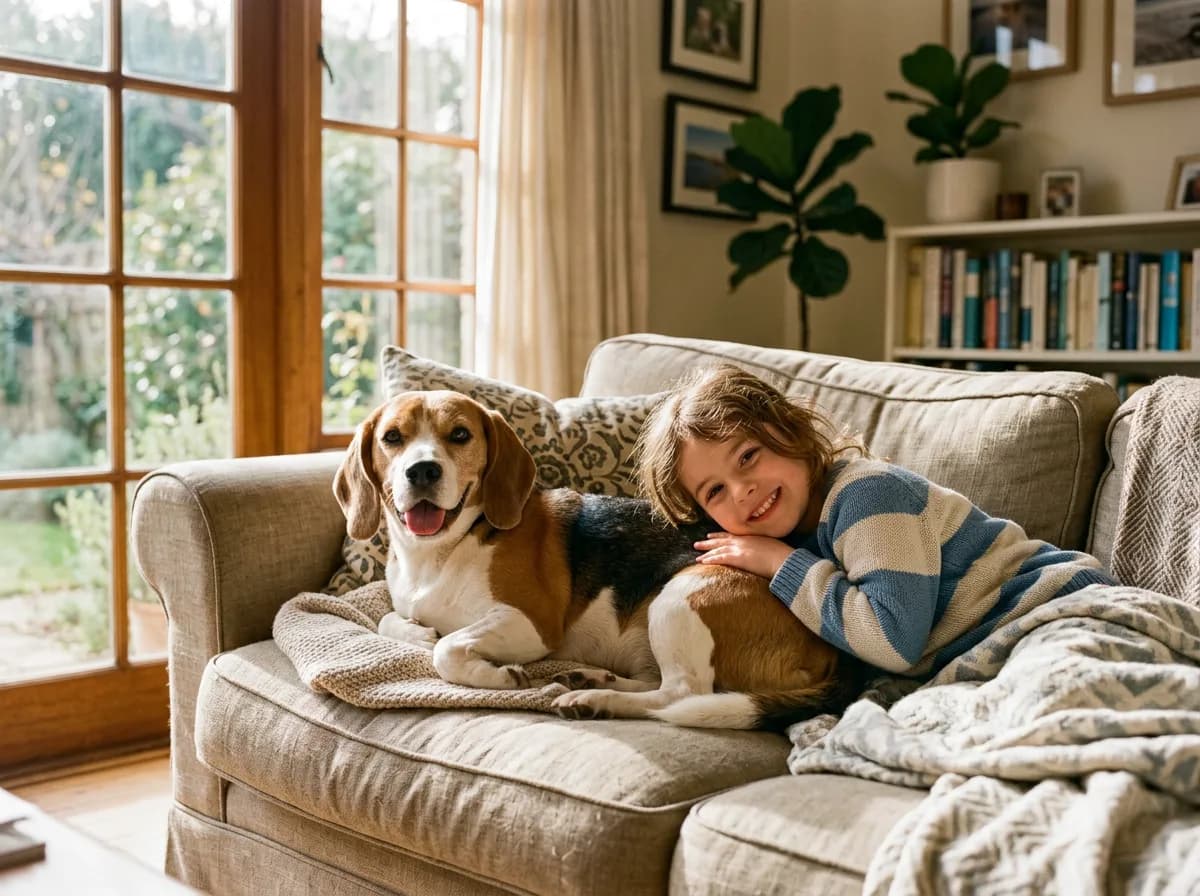
Can Beagles be left alone for 8 hours? Not comfortably, for most. The UK veterinary charity PDSA advises never leaving a dog alone for more than four hours and notes that Beagles can be more vocal than other dogs when left alone, while Orvis's breed guide suggests a dog walker if a Beagle will be alone for more than five hours. A full workday usually needs a midday walk, a trusted neighbor or doggy daycare, plus a gradual training plan so your Beagle learns that being alone is safe.
Separation anxiety is a real risk in this breed; Orvis's guide calls it common. Signs of separation distress include howling or baying soon after you leave, destruction aimed at doors and windows, and toilet accidents that only happen when the dog is alone. Build absences up from a few minutes, leave a food puzzle as you go, and ask your vet or a certified behavior consultant for help if the distress is severe, because punishment makes it worse.
If your schedule is fixed at nine to five with no midday help, be honest with yourself: a Beagle is one of the harder breeds to fit into that life. What dog is best if you work all day? Usually a calmer, more independent breed with modest exercise needs, such as a Basset Hound, a retired Greyhound or a Chow Chow, and even those still need a midday break or a dog walker on a full workday. Our list of dog breeds that cope with long workdays compares more independent options.
Is a Beagle a good house dog?
Yes, a Beagle is a good house dog, and it should be an indoor dog rather than an outside one. Beagles are pack animals that want to live with their people, and the AKC warns that a Beagle left alone inside or outside for long periods tends to become destructive, so treat the yard as a place for supervised sniffing, not a place to live. Indoors, most Beagles are relaxed once their exercise needs are met and happy to nap on the sofa for hours. Is a Beagle a good house pet? Yes for most homes, provided someone is around for much of the day, the dog gets at least an hour of exercise a day and the household can live with a vocal hound that raids unguarded counters and trash.
House life does take some Beagle-proofing:
- Store food in closed cupboards and use a trash can with a locking lid.
- Keep counters, tables and bags clear, because a determined Beagle will climb to reach food.
- Pick up shoes, socks and kids' toys during the puppy and adolescent months.
- Use a gate or crate for the times you can't supervise.
Do Beagles bark a lot? Barking, baying and howling
Yes. Beagles bark a lot compared with most breeds, and they have more than one kind of voice. The AKC rates the breed 4 out of 5 for barking, toward its "very vocal" end, and the Oregon Humane Society's Beagle guide notes that baying is nearly impossible to train out of Beagles. Training can reduce nuisance noise, but it will not turn a Beagle into a quiet dog.
The three sounds you'll hear:
- Bark: short and sharp, used for alerts, excitement and demands such as the doorbell, a squirrel or a late dinner.
- Bay: a drawn-out, musical half-bark, half-howl that told hunters where the pack was on a scent trail. Many Beagles bay at wildlife, scents on the wind and other dogs.
- Howl: a long, sustained note, often set off by sirens or music, or by loneliness when the family leaves.
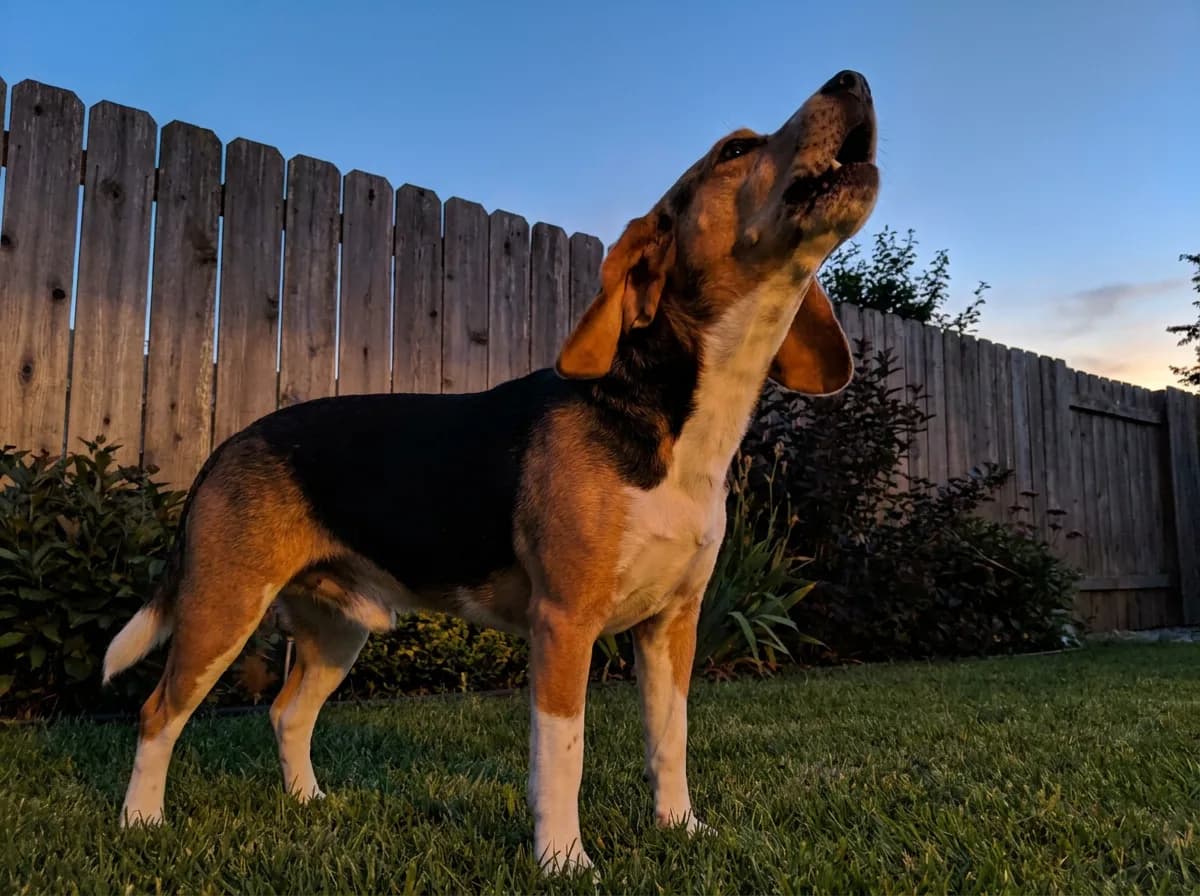
Why do Beagles howl and bay so much? They were bred to. A pack's voices told hunters on foot where the hounds were and when they had found a trail, which is why the Royal Kennel Club still counts the breed's musical voice among its traditional strengths. Today the usual triggers are boredom, loneliness, frustration behind a window and anything that smells interesting.
- Keep a simple log for a week: when your Beagle bays, what set it off and how long it lasted. Most nuisance noise has one or two triggers, such as a street-facing window, the delivery driver or being left alone. Block the trigger with frosted window film, a moved sofa or a white-noise machine, and reward quiet before the noise starts rather than scolding once it has.
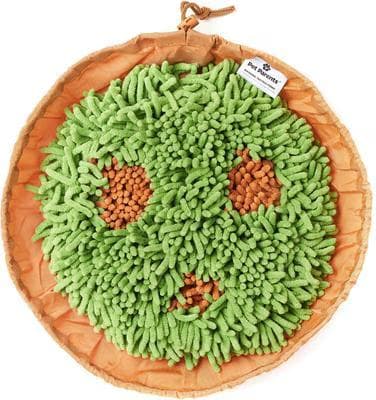
Prevention is quieter than correction. A Beagle that starts the day with a sniff walk and has to hunt for its breakfast has less energy left for guarding the window. A snuffle mat such as the Pet Parents Forager Snuffle Mat & Slow Feeder Dog Bowl turns a portion of kibble into a few minutes of searching, a useful job to hand a Beagle before you leave the house or sit down to work.
Petful may earn a commission when you click through to Chewy, at no extra cost to you.
For persistent barking, our guide to a dog barking too much walks through cause-by-cause fixes. Skip shock collars and other punishment-based bark collars: the American Veterinary Society of Animal Behavior recommends reward-based methods only and opposes aversive tools, and punishing a hound for using its voice does nothing about the reason it is baying.
Are Beagles smart and easy to train?
Beagles are smart, but they are not easy to train in the way a Border Collie is. Their intelligence is the independent, problem-solving kind a pack hound needs to work a trail without a handler giving directions. Stanley Coren's well-known ranking of working and obedience intelligence in The Intelligence of Dogs placed the Beagle 72nd, near the bottom, but that list measures how quickly a dog learns and obeys commands, not how clever it is. The AKC rates Beagle trainability 3 out of 5.
Are Beagles stubborn? They can look it. A Beagle that ignores a cue is usually weighing it against a better offer, such as a smell or a crumb, so the fix is to make your offer better and the setting less distracting, not to get louder. Harsh corrections backfire: the AKC notes that Beagles do not respond well to harsh techniques and that patience and positive reinforcement win out, and the AVSAB recommends reward-based training for every dog.
What works for training a Beagle:
- Reward the instant it happens: positive reinforcement works when the reward lands within a second or two, so mark the right behavior with a word like "yes" and deliver the treat before your Beagle's nose finds something else to credit.
- Short, frequent sessions: a few 5- to 10-minute sessions a day beat one long one for a distractible hound.
- Tiny, high-value treats: a food-driven dog works hard for them, but count them toward daily calories. Soft, pea-sized rewards such as Zuke's Mini Naturals Chicken Recipe dog treats can be broken smaller still.
- Distance before distraction: teach cues indoors first, then in the yard, then on quiet streets, adding one distraction at a time.
- Recall on a long line: practice "come" on a long line of 15 to 30 feet in open areas, and never test it off leash near roads.
- Leave it: the most useful cue a Beagle owner can teach, for dropped food, trash and wildlife scents.
- A trainer who uses rewards: look for a certified trainer or behavior consultant who relies on positive reinforcement.
Are Beagles hard to potty train? Often, yes; Orvis's breed guide says they may be slower to housebreak than other breeds. That nose can also lead a puppy back to old accident spots, so clean accidents with an enzymatic cleaner, take your Beagle out after every meal, nap and play session, and reward success outdoors on the spot.
Exercise, sniff walks and escape-proofing a Beagle
How much exercise does a Beagle need? Most sources land between one and one and a half hours a day, and they don't agree exactly: the AKC says at least an hour, the Royal Kennel Club says up to an hour and the UK's PDSA says at least an hour and a half. Young, fit Beagles belong at the top of that range and seniors at the bottom, and what matters as much as the minutes is how many of them the nose gets to use.
A sniff walk is a slow walk on a long leash or long line where your Beagle chooses the pace and stops to investigate. For a scent hound, sniffing is mental work as well as exercise, which is why a slow, sniff-heavy walk often settles a Beagle better than a brisk one of the same length. Save faster walking, jogging or fetch for the rest of the budget; Orvis reports that a fit Beagle can run about six miles at a moderate pace or hike up to 10 miles when conditioned.
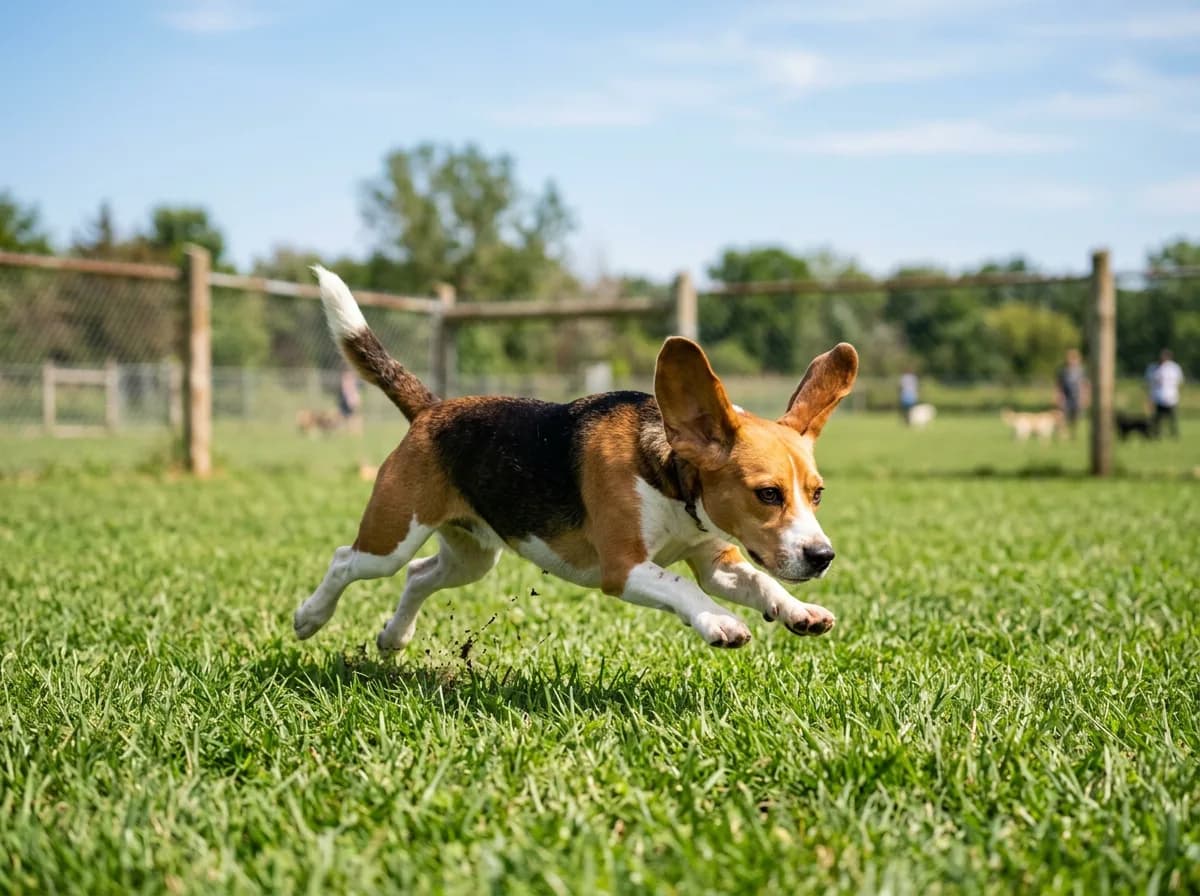
Are Beagles high energy or lazy? Both, depending on age and routine. The AKC scores their energy 4 out of 5 and young Beagles can go for miles, yet many adults become champion nappers indoors once their exercise is done, and seniors slow down further. A lazy Beagle that is also gaining weight isn't relaxed; it is under-exercised or overfed.
Games and toys that put the nose to work:
- Hide pieces of kibble around a room and teach a "find it" cue.
- Scatter part of a meal in the grass of a fenced yard.
- Offer food puzzles and stuffed rubber chew toys on quieter afternoons.
- Try a nose work or scent work class, a dog sport built on exactly what Beagles were bred to do.
Beagles are escape artists for the same reason they are good hunters: their sense of smell pulls them forward and nothing else matters. That scent drive is also the breed's biggest escape risk. The AKC recommends a fence at least five feet tall that extends underground to prevent tunneling, and the Oregon Humane Society describes Beagles as tenacious diggers and even agile climbers. A Beagle on a fresh trail will ignore recall, cross roads and keep going, so escape-proofing a fenced yard is a safety job, not a nicety.
- Walk the fence line every month and fix any gap wider than your Beagle's head. Add a dig barrier, such as an L-shaped wire footer or buried mesh along the base of the fence. Fit gates with self-closing, lockable latches so visitors can't leave them open. Teach a door routine in which your Beagle waits behind a gate or on a mat while outside doors open. Practice recall on a long line before trusting it anywhere unfenced. Keep your dog's microchip registration current and a tag with your phone number on its collar.
If digging is already a habit, our guide on how to stop a dog from digging covers redirecting it, and our pet microchipping guide explains how to check that your contact details are actually on file.
Do Beagles shed? Coat care, grooming and odor
Yes, Beagles shed moderately all year, with seasonal shedding heavier in spring. The AKC describes a smooth, dense double coat that grows heavier in winter, which makes spring the main shedding season, and it scores the breed 3 out of 5 for shedding. Expect short hairs on furniture and dark clothes; they're easy to manage with weekly brushing, but they never fully stop.
Are Beagles hypoallergenic? No, and no dog is. The American Academy of Allergy, Asthma & Immunology notes that all dogs produce allergenic proteins in saliva, dander and urine, and that dogs that shed less can still trigger significant reactions. If someone in your home has dog allergies, spend time with adult Beagles before committing, and see our guide to hypoallergenic dogs for what that label does and doesn't mean.
A realistic grooming routine:
- Brushing: once a week with a rubber curry mitt, hound glove or medium-bristle brush, and daily during the spring shed. Weekly grooming is also what the Royal Kennel Club lists for the breed.
- Bathing: only when your dog is dirty or has rolled in something foul, because frequent baths strip the coat's natural oils.
- Ears: check weekly and wipe the visible outer ear with a dog ear wipe such as Pet MD Aloe Vera & Eucalyptus Dog Ear Wipes, never pushing anything into the canal. Long, low-set ears trap moisture, so dry them after baths and swims.
- Nails: trim roughly monthly, or whenever you hear clicking on hard floors.
- Teeth: brush several times a week with a toothpaste made for dogs.
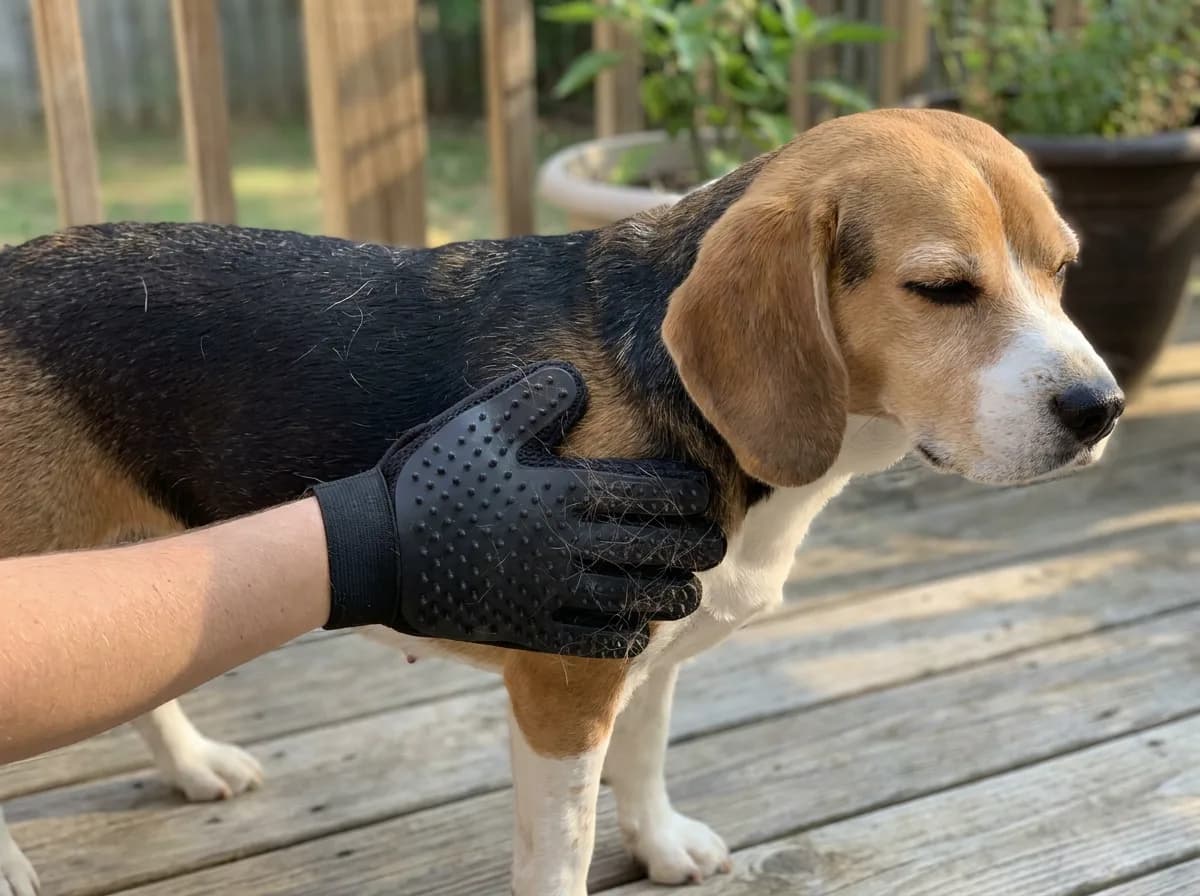
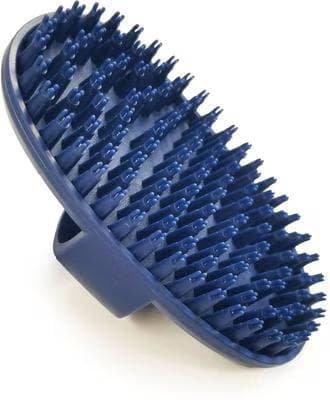
The easiest tool for a short hound coat is one you wear. A rubber grooming glove such as the Four Paws Magic Coat Professional Series All-In-One Wet & Dry Dog Glove & Curry Brush lifts loose undercoat in a few minutes and feels like petting to many dogs, so the weekly session becomes attention rather than a chore.
Petful may earn a commission when you click through to Chewy, at no extra cost to you.
Do Beagles smell bad? Some owners notice a mild "houndy" smell and others notice almost none. Orvis attributes the hound odor to skin oils, the coat and the anal glands, plus the breed's love of rolling in anything interesting. If your Beagle suddenly smells stronger, check the ears first: a yeasty or sour smell from the ears is a common sign of infection and a reason to see your vet.
What about a long-haired Beagle? Neither standard allows one: the AKC calls for a close, hard coat of medium length and the Royal Kennel Club for a short, dense, weatherproof one. A fluffy or long-coated "Beagle" is worth asking questions about, starting with the parents' registration.
Feeding a Beagle and keeping weight in check
Feed a Beagle a complete and balanced diet in measured portions, and assume it will always act hungry. Food motivation is the breed's superpower in training and its biggest weight control problem: the AKC's Beagle care guidance tells owners to watch calories and warns that too many treats can cause obesity, and a Beagle's appetite tells you nothing about how much food it actually needs. A fat Beagle is common, and it is not a healthy one.
To set a starting portion, veterinarians use the resting energy requirement (RER): 70 multiplied by your dog's ideal body weight in kilograms raised to the 0.75 power. That number is then multiplied by a life-stage factor. The Merck Veterinary Manual lists 1.6 times RER for a typical neutered adult, 1.8 for an intact adult and 1.4 for an obesity-prone dog, and it stresses that individual dogs can need as much as 30 percent more or less than any formula predicts. The table converts that math into starting daily calories for adult Beagles:
| Adult Beagle | Resting energy requirement | Weight-prone or less active adult (1.4 x RER) | Typical spayed or neutered adult (1.6 x RER) | Intact adult (1.8 x RER) |
|---|---|---|---|---|
| 20-pound adult | About 365 calories | About 510 daily calories | About 585 daily calories | About 660 daily calories |
| 25-pound adult | About 435 calories | About 605 daily calories | About 690 daily calories | About 780 daily calories |
| 30-pound adult | About 495 calories | About 695 daily calories | About 795 daily calories | About 895 daily calories |
Treat those figures as a starting point, then adjust by body condition score rather than by the scale alone. On the 9-point body condition score charts in the WSAVA global nutrition guidelines, the ideal is 4 to 5: you can feel the ribs easily under a thin layer of fat, you can see a waist from above and the belly tucks up when viewed from the side. Weigh your Beagle monthly, and if the score creeps up, ask your vet how much to trim the daily amount.
Signs your Beagle is overweight:
- You have to press to feel the ribs.
- There is no visible waist when you look down from above.
- The belly hangs level or sags instead of tucking up.
- Fat pads sit over the hips and at the base of the tail.
- Your dog is less willing to walk, or pants sooner than it used to.
If your Beagle is already overweight, skip crash dieting: ask your vet for a target weight and a plan, and see our guide to obese dogs for what safe weight loss looks like.
Which food is best for a Beagle? You don't need a Beagle-specific formula, and no single brand is best. Choose a dry or wet dog food whose label says it is complete and balanced for your dog's life stage, one your Beagle does well on, and measure every meal with a cup or a kitchen scale. Keep treats, training rewards and chews under about 10 percent of daily calories, and consider a slow feeder or puzzle bowl so a two-minute meal lasts longer.
Homemade Beagle food charts are riskier than they look. A 2013 UC Davis study of 200 home-prepared dog food recipes found that 95 percent were short of at least one essential nutrient. If you want to cook for your Beagle, get a recipe from a board-certified veterinary nutritionist rather than from a chart online.
Beagle health and lifespan at a glance
Beagles are a generally healthy, long-lived breed. The AKC gives a life expectancy of 10 to 15 years, and the Royal Kennel Club and PDSA both list "over 12 years." Weight gain and ear infections are the everyday problems, while the inherited conditions responsible breeders screen for include hip dysplasia, hypothyroidism, epilepsy, luxating patella and eye disorders, according to the AKC. The breed also carries a higher-than-average risk of intervertebral disc disease. WebVet's dog ear-infection guide explains the signs that need an examination and how treatment differs from routine cleaning.
"Beagle syndrome" usually means Musladin-Lueke syndrome (MLS), an inherited disorder that causes tight, thick skin, stiff joints and a tiptoe gait. It is recessive, so DNA testing the parents lets a breeder avoid producing affected puppies. Our veterinarian-written guide to how long Beagles live covers each condition, senior care and what shortens or lengthens a Beagle's life.
- The National Beagle Club recommends these screenings for breeding dogs, as listed on the AKC's Beagle page: a hip evaluation, a cardiac exam, an ophthalmologist evaluation, a thyroid evaluation and a DNA test for Musladin-Lueke syndrome (MLS). Ask to see the results for both parents rather than accepting a statement that the tests were done. In the UK, the Royal Kennel Club asks breeders to DNA test for Lafora's disease and neonatal cerebellar cortical degeneration at a minimum, and for Factor VII deficiency, Imerslund-Grasbeck syndrome and MLS as best practice.
Where Beagles come from: scent-hound history and hunting heritage
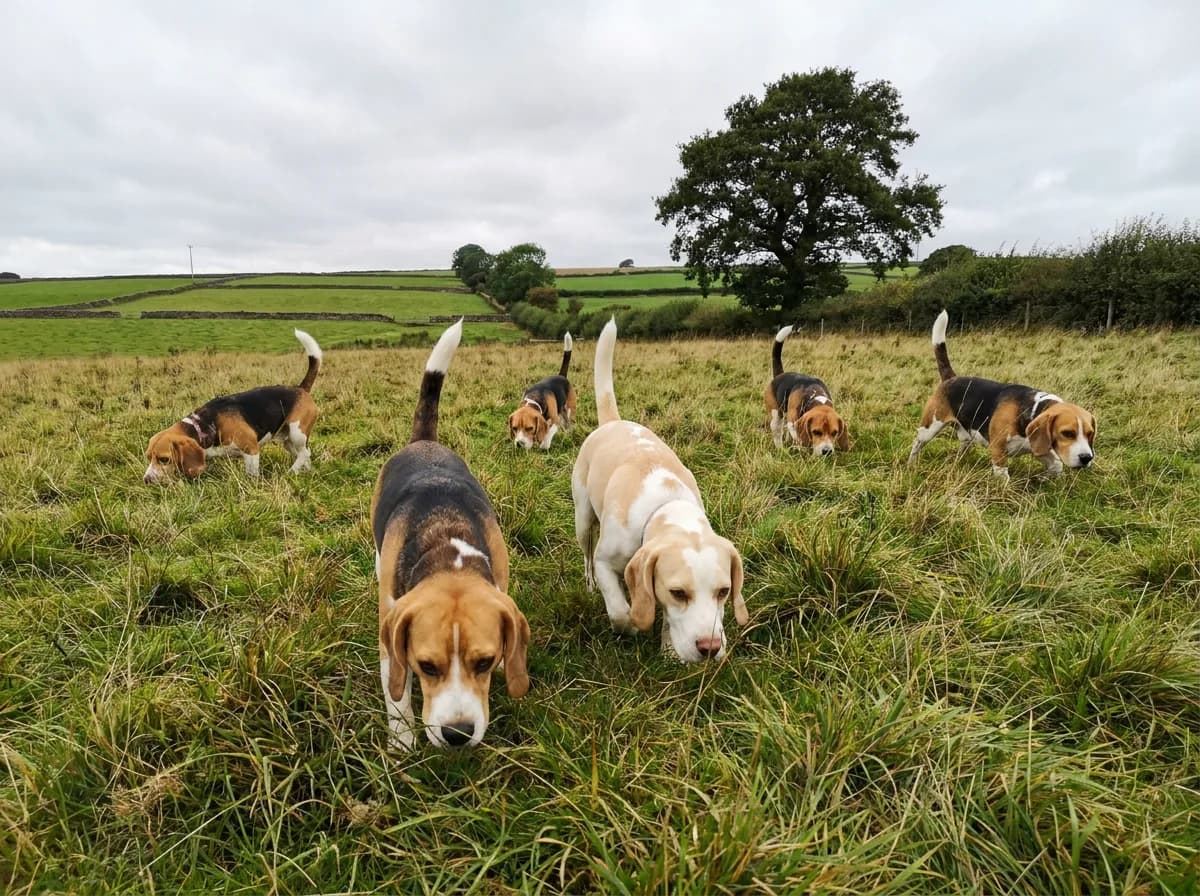
Where did Beagles originate, and which country do they come from? England. The Royal Kennel Club describes the Beagle as the smallest of the British pack hounds, established by the 15th century and bred to hunt small game, mainly hare, with hunters following on foot rather than on horseback. The origin of the name is disputed; the AKC notes that some trace it to the Gaelic beag, meaning little.
Key moments in the breed's history:
- By the 1400s: the Beagle is established in England as a pack hound for hunting on foot.
- 1830s: a pack kept in Essex by the Reverend Phillip Honeywood is widely credited as a foundation of the modern breed.
- After the Civil War: Beagles reach the United States, where American rabbit hunters adopt them quickly.
- 1885: the AKC recognizes the breed.
- Late 1800s: the National Beagle Club of America forms; it remains the breed's AKC parent club.
- 1916: the club makes Institute Farm in Aldie, Virginia, its headquarters.
- 1984: the USDA opens the detector dog training center behind today's Beagle Brigade.
Are Beagles still hunting dogs? Yes. Many American Beagles still run rabbits for hunters, and the breed has its own AKC field trials, where hounds are judged on how they work a scent line. What do Beagles hunt? Traditionally hare in Britain and cottontail rabbits in the United States, always by scent and usually in pairs or packs.
The same nose explains the USDA Beagle Brigade: according to the USDA's Animal and Plant Health Inspection Service, its detector Beagles find fruits, vegetables and meats in baggage, mailed packages and vehicles entering the United States, and many of them are recruited from shelters and rescue groups.
You may also see breeders advertise English Beagles or American Beagles. They are the same breed; the kennel clubs recognize one Beagle, and the names don't mark separate breeds. For a taller pack-hound cousin, see our American Foxhound breed profile; the AKC standard itself describes the Beagle as a miniature Foxhound.
Beagle pros and cons: the honest downsides
The biggest downside of a Beagle is its nose: the strong scent drive behind its escaping, its selective hearing and its food theft. Close behind are the noise and the dislike of being alone. The upside is one of the friendliest, sturdiest and easiest-to-groom family dogs you can find.
- Friendly with people, children and other dogs
- Sturdy, compact size that suits most homes
- Short coat that needs only weekly brushing
- Food-motivated, so treats work well in training
- Playful, funny and patient with kids
- Long-lived, with an AKC life expectancy of 10 to 15 years
- Strong scent drive: poor off-leash recall and a talent for escaping
- Loud: barks, bays and howls, which is hard on shared walls
- Sheds moderately all year and is not hypoallergenic
- Steals food and gains weight easily
- Dislikes long hours alone and is prone to separation distress
- A stubborn, distractible student that needs patient training
Are Beagles high maintenance? For grooming, no. For supervision, exercise and training, yes: owning a Beagle means secure fencing, locked-up food, an hour or more of daily exercise and years of recall practice. If three or more of the cons would be deal-breakers in your home, look at a less vocal, less scent-driven breed, or at an adult rescue Beagle whose habits are already known.
Male vs female Beagles: is a boy or girl better?
Neither a boy nor a girl Beagle is better. No study shows a consistent temperament difference between male and female Beagles, and the individual dog, its socialization and whether it is spayed or neutered matter far more than sex. Pick the puppy or adult whose energy and confidence fit your home.
The practical differences between sexes:
- Size: males are often slightly larger and heavier, but both sexes fall within the same two height varieties.
- Intact females: come into heat roughly twice a year, with bleeding and the need to keep them away from intact males.
- Intact males: are more likely to roam after a female in heat, which is dangerous in a breed already prone to escaping. Urine marking is also most common in intact males, according to VCA Animal Hospitals, though intact females and many spayed or neutered dogs mark too, and VCA cites studies showing that neutering can reduce marking by up to 80 percent in male dogs.
- Spay and neuter timing: affects both, so discuss the right age with your veterinarian.
Owners often describe female Beagles as more independent and males as more clingy or playful, but those are anecdotes, not data. If you already have a dog, choose by the two dogs' personalities and let them meet first. Our general guide to male vs female dogs covers the cross-breed evidence in more detail.
Beagle puppies: what the first year involves
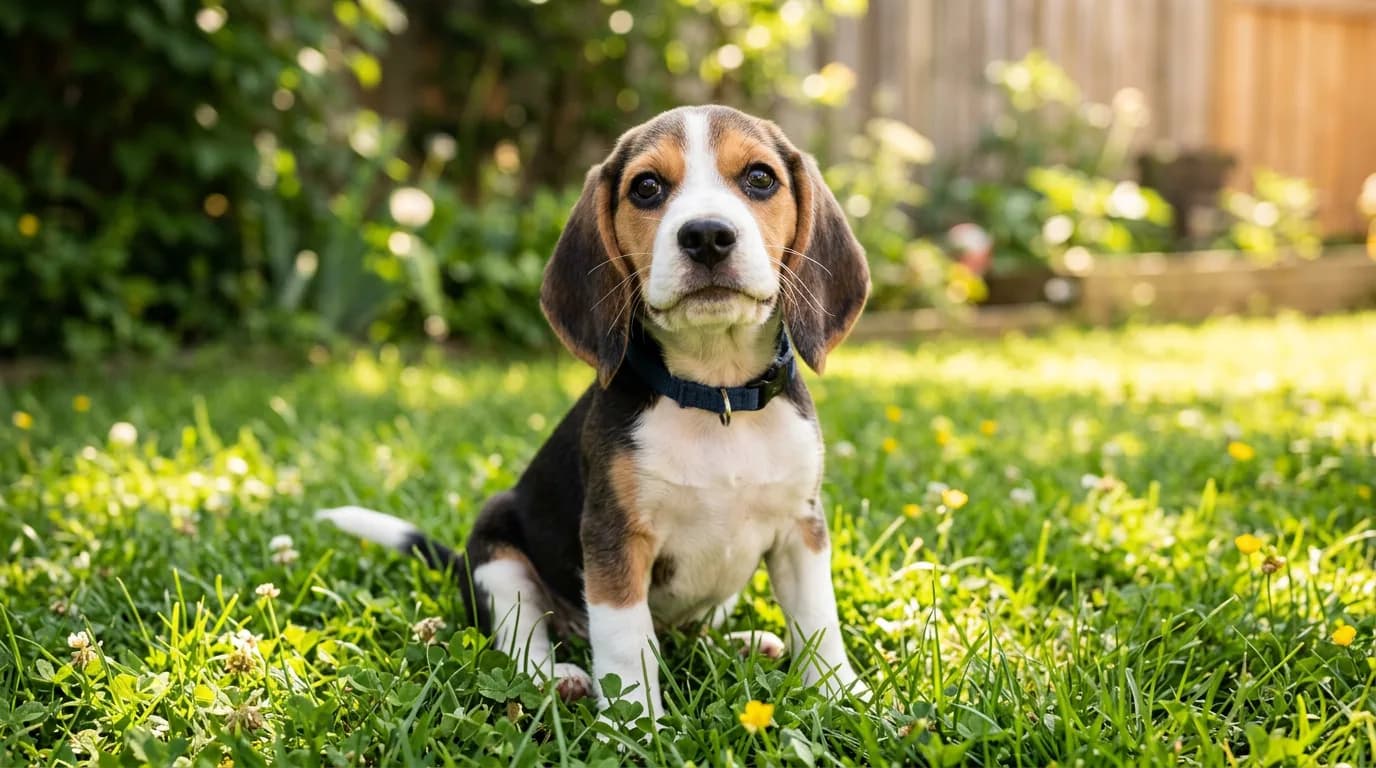
A Beagle puppy is a big first-year commitment: toilet training that can take months, a chewing phase, socialization during a short early window, and the start of lifelong recall and leave-it training. Most puppies go home at around 8 weeks, looking much like the tricolor Beagle puppy pictured here, floppy ears and all, and the first week sets the routine.
- 1Toilet routine: take your puppy out after every meal, nap and play session, and reward success outdoors on the spot.
- 2Safe space: set up a crate or pen near you for naps and nights.
- 3Food security: puppy-proof counters, trash and bags from day one.
- 4Early handling: touch paws, ears and mouth for a few seconds each day, with treats.
- 5Puppy class: enroll early, since puppies can start classes as young as 7 to 8 weeks.
Socialization can't wait for the last vaccine. The American Veterinary Society of Animal Behavior's puppy socialization position statement calls the first three months the most important socialization period and says puppies can start classes as early as 7 to 8 weeks, after at least one set of vaccines given a week before the first class and a first deworming. Our guide to when to start puppy training classes explains what a good class looks like.
Feed a puppy food labeled complete and balanced for growth or for all life stages, split into three or four meals a day at first and two by about six months. Puppies need two to three times their resting energy requirement, according to the Merck Veterinary Manual, but a chubby Beagle puppy is not a healthy one; aim for the same visible waist you want in an adult dog.
Crate training helps with house training and gives a Beagle puppy a safe place to chew and nap; our step-by-step plan for crate training a puppy covers the first nights. For teething, rotate a few puppy-safe rubber chew toys and food puzzles, and take away anything small enough to swallow.
Finding a responsible breeder or rescue
If you're buying a Beagle puppy, a responsible breeder shows you the health results for both parents, lets you meet the mother, raises the litter in a home, asks you as many questions as you ask them and will take the dog back at any age. Be wary of anyone selling "pocket," "rare color" or guaranteed-size puppies at a premium, or offering to ship a puppy you have never seen.
Adopting a Beagle is often the better route, especially for families who need to know up front how a dog handles time alone, cats or children. Beagles and Beagle mixes are common in shelters and breed rescues, and a foster home can tell you how an adult dog actually behaves. Our guide to adopting a shelter dog walks through the process.
What does a Beagle cost?
The purchase price is the smaller part of what a Beagle costs. CareCredit's 2024 Beagle guide, citing AKC Marketplace listings, put AKC-registered puppies from reputable breeders at about $1,000 to $2,500 or more, while SOS Beagle Rescue's adoption guidelines currently require a $220 adoption fee. After that, budget every year for:
- Food and treats
- Routine checkups, vaccines and a reserve for emergency vet care
- Flea, tick and heartworm prevention
- Training classes and replacement gear
- Pet insurance, if you choose to carry it
Our full breakdown of what a Beagle costs covers puppy prices by source, first-year setup and lifetime costs, so you can budget before you commit.
Living with a Beagle: a realistic daily care routine
How do you care for a Beagle day to day? Budget about two hours, most of it spent on the nose: two sniff walks, meals that make the dog search, short training sessions, a midday break if you work away from home and a few minutes of grooming. Use this daily time budget to test your real schedule before you commit:
| When | What to do | Time budget | Why it matters |
|---|---|---|---|
| Morning | First of two sniff walks, on a harness and long leash | 30 to 45 minutes | Burns energy and satisfies the nose before a quiet stretch |
| Morning | Breakfast in a puzzle feeder or snuffle mat | 10 to 15 minutes | Slows a fast eater and adds brain work |
| Midday | Toilet break and short walk, or a walker or daycare if you work away | 15 to 30 minutes | Keeps time alone to about four hours, as PDSA advises |
| Evening | Second of the day's sniff walks, or scent games in a secure yard | 30 to 45 minutes | Completes the one to one and a half hours most sources recommend |
| Evening | Training practice: recall, leave it and settle | 10 to 15 minutes in short bursts | Short sessions suit a distractible hound |
| Daily | Ear check and a quick brush | About 5 minutes, more in spring | Catches ear problems early and controls shedding |
| Total | Daily time budget for sniff walks, meals, training and care | About 1.5 to 2.5 hours | Compare this with your real weekday schedule |
If the total doesn't fit, look for places to buy time, such as a walker, daycare or a reliable neighbor, rather than cutting the sniffing. An under-exercised Beagle finds its own jobs, and most of them are loud or destructive.
Beagle mixes and related hounds
Beagle mixes are everywhere in shelters, and a Beagle mix can inherit any blend of its parents' traits, so meet the individual dog rather than trusting a breed label. Orvis's breed guide notes that shelter breed labels are usually based on appearance, while a breed-ancestry DNA test can provide a more informative estimate of ancestry, without proving a pedigree or predicting temperament. Our guide to Beagle mixes profiles the most popular crosses, including their size, temperament and care needs.
The best-known cross is the Puggle, a Pug and Beagle mix that can combine a Beagle's nose and voice with a Pug's shorter muzzle and companion-dog habits, in proportions no seller can guarantee.
The Beagle Dachshund mix (Doxle)
The Doxle crosses a Beagle with a Dachshund, another scent-driven, vocal breed, so expect a determined nose and a voice to match. Size and build vary with the parents, and many Doxles inherit the Dachshund's longer back and shorter legs, which makes the back-friendly lifting described above even more important. Our Beagle Dachshund mix guide covers Doxle size, temperament and care.
Beagle vs Basset Hound
Both are vocal, food-loving scent hounds, but the Basset Hound is built very differently: the AKC lists it at up to 15 inches and 40 to 65 pounds, roughly twice the weight of a larger-variety Beagle on a longer, lower frame. Bassets are generally slower-paced, while Beagles are quicker and more agile, which also makes them better at getting over or under a fence. Our Basset Hound vs Beagle comparison goes trait by trait.
Beagle FAQs
Rarely, and only in a securely fenced area. A Beagle's recall can be excellent in the kitchen and useless the moment it hits a fresh rabbit trail, and it may run for miles without looking back. Practice recall for months on a long line, use fenced dog parks or rented fields for off-leash running, and treat every unfenced area as leash-only, no matter how reliable your dog seems at home.
Many do, especially when something on the other side smells more interesting than the yard. Stop it before it becomes a habit: bury a dig barrier of wire mesh or an L-shaped footer along the base of the fence, fill existing holes, and keep yard time supervised so you can interrupt digging and redirect it to a scent game or a permitted digging spot.
Management first, training second. Keep food off counters and tables, use a locking trash can, close pantry doors and never leave bags on the floor, because every successful raid rewards counter surfing. Then teach a strong leave it cue with high-value treats and practice it around dropped food. Chocolate, grapes, raisins, onions and anything with xylitol are toxic to dogs, so call your vet or an animal poison hotline right away if your Beagle eats any of them.
Usually, yes. As a pack hound bred to work alongside other dogs, the Beagle is one of the more dog-friendly breeds, and the AKC scores it 5 out of 5 for getting along with other dogs. Individuals still vary, so make gradual introductions on neutral ground, feed dogs separately and pick up high-value chews when they are together, since food is the most common trigger for squabbles.
Not reliably. A second dog can help a Beagle that simply dislikes an empty house, but separation distress is usually about being apart from its people, and a canine companion doesn't fix that; you can end up with two dogs howling instead of one. Work on the distress first with gradual absences and professional help if needed, and add a second dog only if you want two dogs for their own sake.
Often because normal Beagle behavior clashes with the home. The American Veterinary Society of Animal Behavior notes that behavior problems are the number one cause of dogs being relinquished to shelters, and the Oregon Humane Society's Beagle guide warns adopters about the Beagle versions of those problems: Beagles escape poorly secured yards, become destructive when left alone too much and raid trash and counters, and owning one without preparing can be chaotic and frustrating. That is why choosing the breed with your eyes open matters, and why an adult Beagle from one of the breed's rescue groups, whose habits around baying and escaping are already known, can be a great match.

Kristine Lacoste has been researching dog and cat breeds for nearly a decade and has observed the animals up close at dog shows in both the United States and the United Kingdom. She is the author of the book One Unforgettable Journey, which was named as a finalist for a Maxwell Award from the Dog Writers Association of America, and was host of a weekly pet news segment on the National K-9 Academy Radio Show. In addition, she was the New Orleans coordinator for Dogs on Deployment, a nonprofit that helps military members and their pets, for 3 years. Kristine has researched and written about pet behaviors and care for many years. She holds a bachelor’s degree in psychology, another bachelor’s degree in English and a Master of Business Administration degree.
Sign up for expert-backed reviews and safety alerts all in one place.