Pembroke Welsh Corgi vs Cardigan Welsh Corgi
Pembroke and Cardigan Welsh Corgis are distinct breeds. Compare their size, ears, tails, colors, temperament, training, care, health, and household fit.

Petful is reader supported. As an affiliate of platforms like Amazon and Chewy, we may earn a commission when you buy through links on this page. There is no extra cost to you.
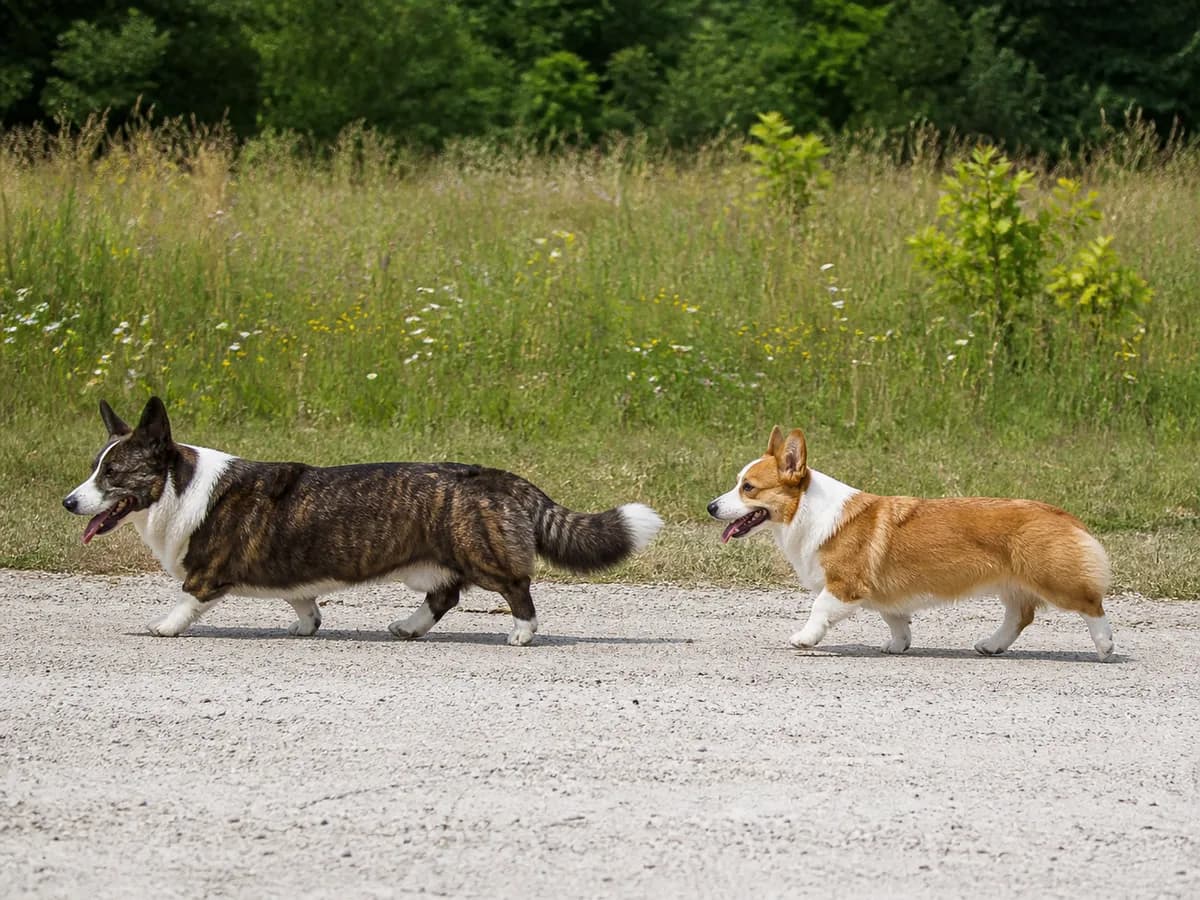
A pembroke welsh corgi vs cardigan welsh corgi comparison starts with one important fact: these are two separate breeds, not long-tailed and short-tailed versions of the same dog. Both are low-set Welsh herding dogs, but the Cardigan is generally a little larger and more rounded in outline, while the Pembroke is usually lighter and more foxlike through the head.
The right choice depends less on which breed is "better" and more on which dog's typical energy, build, social style, and availability fit your household. This guide separates reliable physical identifiers from behavioral tendencies so you can compare the breeds without treating every dog as a stereotype.

Sign up for expert-backed reviews and safety alerts all in one place.
Pembroke Welsh Corgi vs Cardigan Welsh Corgi at a glance
Neither Corgi breed is universally better. A Pembroke is usually a little smaller and lighter, with smaller pointed-to-rounded ears and a naturally short, docked, or full tail. A Cardigan usually has larger rounded ears, a longer fox-brush tail, and a broader range of accepted colors, including blue merle. Individual temperament still matters more than a label such as "calmer."
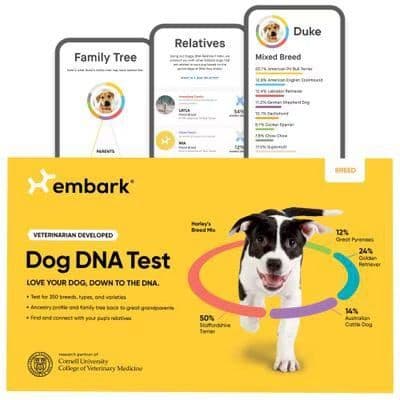
The quickest way to identify an adult is to examine several traits together. Cardigans generally have a long, low-set tail, larger rounded ears, heavier bone, and a slightly longer body. Pembrokes generally have smaller ears that taper toward rounded points and a more compact, lighter outline. Tail length alone is not definitive because a Pembroke may be born with a natural bobtail or a full tail, and docking practices vary. An Embark Breed Identification Dog DNA Test Kit can estimate breed ancestry in a mixed or unknown dog, but it cannot replace pedigree records or prove purebred status.
Petful may earn a commission when you click through to Chewy, at no extra cost to you.
The official U.S. breed standards place Pembrokes at 10 to 12 inches at the withers, with maximum weights of 30 pounds for males and 28 pounds for females. Cardigans are 10.5 to 12.5 inches, with 30 to 38 pounds ideal for males and 25 to 34 pounds ideal for females. The difference is real but modest, not a dramatic jump from a small dog to a large one. For identification on walks, a GoTags Nylon Personalized Dog Collar can carry contact details, but select its size from the dog's measured neck rather than breed weight.
Neither breed is guaranteed to be calmer. Cardigans are sometimes described as more reserved and Pembrokes as more outgoing, but socialization, age, health, breeding, and the individual dog can outweigh that tendency. Meet the dog in front of you and ask the breeder or rescue for specific observations.
They are two separate Corgi breeds

The American Kennel Club and the breeds' parent clubs maintain separate standards for the Pembroke Welsh Corgi and Cardigan Welsh Corgi. The breeds share a country of origin and a low, sturdy herding form, yet they have different histories, acceptable colors, proportions, and hallmark features. A Cardigan is not a Pembroke mix, and a Pembroke with a full tail does not become a Cardigan. If ancestry is uncertain, an Embark Breed Identification Dog DNA Test Kit may provide an estimate for mixed dogs, but registered pedigree remains the evidence for purebred identity.
If you want the complete breed picture rather than a head-to-head decision, visit the Pembroke Welsh Corgi profile. That guide covers Pembroke daily life while this page keeps the comparison focused.
History and original purpose

Both breeds developed as practical farm dogs in Wales. Their low stature helped them work near cattle while their agility let them move away from hooves. They also served as versatile homestead companions, helping with stock and alerting families to activity around the farm.
Their similar jobs help explain their shared intelligence, watchfulness, and instinct to control movement. It also explains why a modern Corgi may chase, circle, bark, or nip at heels when overexcited. Those behaviors are not proof of a bad temperament, but they do require training and an appropriate outlet.
| Feature | Pembroke Welsh Corgi | Cardigan Welsh Corgi |
|---|---|---|
| Breed identity | A distinct Welsh herding breed | A distinct Welsh herding breed |
| Adult height | 10 to 12 inches | 10.5 to 12.5 inches |
| Typical standard weight | Up to 30 pounds for males and 28 pounds for females | Ideally 30 to 38 pounds for males and 25 to 34 pounds for females |
| Ears | Smaller, firm, and tapered toward rounded points | Larger, prominent, and more rounded |
| Tail | Naturally short, docked, or full, depending on the dog and local practice | Long, low-set, and fox-brush shaped |
| Accepted color distinction | Red, sable, fawn, or black and tan, with or without white; merle is not in the standard | Red, sable, brindle, black with or without points, and blue merle, with or without white |
| Common social tendency | Often described as outgoing and animated | Often described as observant and initially reserved |
| Best evidence for fit | The individual dog's behavior, health, and needs | The individual dog's behavior, health, and needs |
Size, build, and movement
The Cardigan tends to be the larger, heavier-boned dog. Its body is long in proportion to height, with a deep chest and substantial frame. The Pembroke is also long and low, but the standard calls for a lighter maximum weight and a somewhat more compact impression. Both should look balanced and capable of sustained movement, not exaggerated or fragile.

Petful may earn a commission when you click through to Chewy, at no extra cost to you.
Short legs do not mean low exercise needs. Healthy adults commonly enjoy brisk walks, training, sniffing, and games, although intensity must match the dog's age, conditioning, and health. For measurements, growth expectations, and a practical chart, use the dedicated Corgi size and full-grown guide rather than assuming every dog reaches the top of a breed-standard range. Recheck the actual neck before ordering a GoTags Nylon Personalized Dog Collar; height and body weight do not determine collar fit.
Movement offers another useful clue when the dog is mature and fit. A Cardigan's substantial frame should still move freely and efficiently, with balanced reach and drive. A Pembroke should also cover ground smoothly without looking weak, restricted, or excessively short through the leg. Extreme body shape is not a breed virtue in either dog.
Head, ears, and tail

The Pembroke's head is often called foxlike, with oval eyes and erect ears that are firm, mobile, and moderately pointed while still rounded at the tip. The Cardigan has large, prominent ears with distinctly rounded tips. A Cardigan's head should still be refined and proportional, not coarse.
The tail is the most familiar clue, but use it carefully. The Cardigan standard calls for a long, fox-brush tail set low on the body. In the U.S. Pembroke standard, a short tail may be naturally bobbed or docked. Full-tailed Pembrokes also exist, especially where docking is restricted or owners choose not to dock. Check the ears, bone, color, and overall outline along with the tail.
Colors and coat
Pembroke colors in the AKC standard are red, sable, fawn, and black and tan, with or without white markings. Blue merle is not an accepted Pembroke color. A dog advertised as a "merle Pembroke" may have ancestry outside the recognized breed standard, so buyers should not treat a fashionable color label as proof of responsible breeding.
Cardigans have a broader accepted palette. The standard includes red, sable, brindle, black with or without tan or brindle points, and blue merle, all with or without white. Color cannot confirm ancestry on its own, but blue merle strongly points away from a standard-bred Pembroke. See Corgi colors for pattern terminology, genetics, and identification examples.
Temperament without stereotypes
For a Cardigan Welsh Corgi vs Pembroke temperament comparison, begin with individual behavior rather than a breed slogan. The same rule applies to Cardigan Welsh Corgi vs Pembroke personality searches: broad tendencies can frame questions, but they cannot predict one dog's response to people, handling, novelty, or activity.
Both breeds are intelligent herders that tend to notice movement, learn patterns quickly, and stay engaged with their people. Pembrokes are often portrayed as especially social and animated. Cardigans may take more time to assess unfamiliar people or situations. These are broad tendencies, not promises about a puppy or adult dog.

Petful may earn a commission when you click through to Chewy, at no extra cost to you.
- "Cardigans are calm" and "Pembrokes love everyone" are shortcuts, not temperament tests. Ask about the individual dog's recovery from surprises, response to handling, comfort around children or pets, and ability to settle after activity.
Good breeders select for stable temperament and raise puppies with thoughtful exposure. Rescues and foster homes can often describe an adult dog's real household behavior. If predictability matters, those observations are more useful than social-media clips or a single breed adjective.
Exercise and training
Both Corgis need daily physical activity and mental work. Their bodies are low, but their minds and working heritage are active. A routine might combine a controlled walk, short skill sessions, sniffing time, and low-impact play.
Use reward-based training for recall, loose-leash walking, calm greetings, and a reliable settle. Herding behaviors should be redirected before they become a game of chasing ankles. A Hunger for Words Talking Pet Starter Set can add a communication exercise for dogs that enjoy target training, but buttons do not replace careful observation of body language.
For fetch or tug, keep the game controlled and the footing secure. The Frisco Fetch Colorful Ball Knot Rope Dog Toy can support interactive play, but avoid repeated high jumps or sharp pivots. Puppies need shorter, age-appropriate sessions rather than forced distance exercise.

Petful may earn a commission when you click through to Chewy, at no extra cost to you.
Children, pets, and household fit
A well-socialized Pembroke or Cardigan can live successfully with respectful children, dogs, and other pets. The main challenge is often arousal around fast movement. Supervise interactions, teach children not to climb on or chase the dog, and give the Corgi a quiet place where nobody follows.
Introductions to cats and smaller animals should be gradual. Reward disengagement and calm observation, and use gates or leashes while everyone learns the routine. Feeding stations should stay separate in multi-pet homes.
Before choosing either breed, ask the breeder, rescue, or foster about behaviors that matter in your actual home:
- response to running children, bicycles, cats, and unfamiliar dogs
- comfort with grooming, lifting, veterinary handling, and touch
- recovery after a loud sound or unexpected visitor
- ability to rest while people work, cook, or watch television
- history of guarding food, toys, resting places, or people
These observations cannot guarantee future behavior, but they are more useful than assuming every Pembroke is instantly friendly or every Cardigan is naturally quiet.
Grooming and shedding
Both breeds have weather-resistant double coats and shed throughout the year, with heavier seasonal shedding possible. Brush to remove loose undercoat and inspect the skin, ears, nails, and paws. Neither coat should be shaved as a routine way to control shedding because clipping does not stop the natural coat cycle.
Cardigans may show more variation in coat color, but color does not create a fundamentally different grooming schedule. Bathing frequency depends on activity, skin health, and how dirty the dog becomes. Ask a veterinarian about sudden hair loss, persistent itching, odor, or inflamed skin.
Teach grooming as a cooperative skill. Begin with brief touches, reward calm participation, and stop before the dog becomes frustrated. A nonslip surface and predictable sequence can make brushing, nail care, and ear checks easier. Coat care is a lifelong requirement for both breeds, not a reason to prefer one over the other.
Health screening
Responsible selection starts with health evidence, not a claim that one breed is healthier. Ask breeders for the registered names of the parents and verify testing through the Orthopedic Foundation for Animals. OFA's CHIC designation means the parent club's required tests were completed and made public. It does not mean every result was normal or that a puppy is guaranteed to stay healthy.
Discuss orthopedic, eye, and other breed-relevant screening with the breeder and your veterinarian. Keep a Corgi lean, build fitness gradually, use traction on slippery floors, and seek veterinary care for pain, weakness, reluctance to move, or a sudden change in gait. For longevity ranges and the factors owners can influence, read the Corgi lifespan guide.
- For either breed, match every screening result to the registered parent, test date, and parent-club recommendation. A breed reputation, a “vet checked” puppy, or a CHIC number without reviewing the underlying results cannot predict one dog's future health.
How to verify a screening claim
Ask to see the result itself, not only a logo or a statement that a dog was "vet checked." A routine examination and a formal screening test answer different questions. Review the parent club's current recommendations, confirm the dog's identity in the public database, and ask what the breeder learned from the results when planning the litter.
Owners cannot screen away every future problem, but they can reduce avoidable strain. Measure food, keep nails short enough for sound footing, use ramps or steps when appropriate, and avoid asking an unconditioned dog to repeat high-impact jumps. Sudden weakness, severe pain, or loss of bladder or bowel control needs urgent veterinary guidance.
Cost and availability
Price varies with region, breeder practices, health testing, age, and whether the dog comes through a breeder or rescue. Cardigans are less common in many areas, so a well-planned search may take longer. Scarcity is not a reason to skip verification or accept a breeder who will not discuss health and temperament.
The complete Corgi price guide separates the purchase or adoption fee from first-year supplies, veterinary care, training, insurance, and ongoing ownership costs. A higher asking price alone does not prove quality.
Which Corgi breed fits your home?

Choose a Pembroke if the individual dog's generally lighter build, social style, and activity needs fit your household. Choose a Cardigan if you prefer its somewhat heavier frame, long tail, wider standard color range, and often more observant social approach. In either case, prioritize verified health screening, stable behavior, and a realistic plan for exercise, shedding, training, and veterinary care.
If you are open to mixed ancestry, review Corgi mixes with the understanding that a mix can inherit any combination of its parents' size, coat, behavior, and health risks. The Hunger for Words Talking Pet Starter Set may suit a dog that enjoys target training, and the Frisco Fetch Colorful Ball Knot Rope Dog Toy may suit supervised interactive play, but products should support, not determine, your fit decision.
Use a normal weekday, not a vacation day, as the final test. Map who provides the morning walk, midday break, evening activity, grooming, training, and backup care. If that plan works only when the dog is unusually quiet, tolerant, or low energy, neither breed is a safe assumption. An adult in a foster home may offer more known behavior than a young puppy.
- Use the related Corgi guides below for each exact size, color, price, lifespan, mix, and breed-profile question instead of stretching this comparison beyond its intent.
Related Corgi guides
- Compare Corgi mixes.
- Understand Corgi price.
- Review Corgi lifespan.
- Identify Corgi colors.
- Check the Corgi size and full-grown chart.
- Explore the Pembroke Welsh Corgi profile.
Frequently asked questions
Whether Pembroke or Cardigan Corgis are better depends on the individual dog and household. Pembrokes are generally a little smaller and are often described as outgoing, while Cardigans are usually heavier, have long tails, and may be more reserved with unfamiliar people. Those are tendencies, not guarantees. Compare the individual dog's health, behavior, exercise needs, and response to your children or pets before deciding.
To know if a Corgi is Pembroke or Cardigan, look at several traits together. Cardigans usually have larger rounded ears, heavier bone, a longer body, and a long fox-brush tail. Pembrokes usually have smaller ears that taper toward rounded points and a lighter outline. Blue merle is accepted in Cardigans but not Pembrokes. Because full-tailed Pembrokes exist, pedigree records or a reputable DNA ancestry test may be needed when appearance is ambiguous.
Neither breed is guaranteed to be calmer. Cardigans are often described as more thoughtful or reserved with unfamiliar people, while Pembrokes are often described as more outgoing, but both are alert herding dogs that need exercise, training, and mental work. Judge the individual dog by health, history, behavior, and recovery after excitement rather than relying on a breed stereotype.

Coreen Saito is a pet writer and longtime shelter volunteer with more than a decade in animal rescue. She covers cat behavior, breed care, and the small, ordinary science of sharing a life with companion animals, with a particular focus on honest takes about the products and decisions that actually matter. At home in Arizona, she's outranked by Mac (a dog with the loudest opinion in the house), Rebel (a cat who governs by quiet authority), and Meri (an orange tabby who runs the late shift and the laundry basket). She writes about all three, plus the rescues that keep coming through her life, at LifeWithMinty.com.
Sign up for expert-backed reviews and safety alerts all in one place.