Pembroke Welsh Corgi: Temperament and Care
Meet the Pembroke Welsh Corgi and learn about temperament, exercise, training, shedding, puppy care, health screening, family fit, and responsible sourcing.

Petful is reader supported. As an affiliate of platforms like Amazon and Chewy, we may earn a commission when you buy through links on this page. There is no extra cost to you.
The pembroke welsh corgi is a low, athletic herding breed known for intelligence, alertness, and a close working relationship with people. This profile explains the breed's temperament and everyday care, including the practical trade-offs that matter before you bring home an adult or puppy.
Pembrokes are compact, not delicate. They need purposeful activity, reward-based training, weight management, coat care, and supervision around fast-moving children or pets. They can be affectionate and funny companions, but no breed label guarantees that an individual dog will be cuddly, quiet, or easy to leave alone.

Sign up for expert-backed reviews and safety alerts all in one place.
Pembroke Welsh Corgi at a glance
A Pembroke Welsh Corgi can be a rewarding fit for an active household that enjoys training and can manage shedding, barking, herding behavior, and a strong appetite. The breed may be social and affectionate, but each dog's handling tolerance, independence, and ability to settle must be evaluated individually.
The Pembroke is a distinct Welsh herding breed, not simply a small Cardigan Welsh Corgi. The official U.S. standard places adults at 10 to 12 inches at the withers, with maximum weights of 30 pounds for males and 28 pounds for females. For a more detailed measurement guide, use the Corgi size and full-grown chart.
Practical trade-offs
Why might someone decide not to get a Pembroke? The breed can shed heavily, bark when alert or excited, chase movement, nip at heels, gain excess weight, and become bored without mental work. Its long-backed, short-legged structure also makes lean body condition, sensible exercise, and prompt attention to pain or weakness especially important.
The advantages are equally concrete. Many Pembrokes learn quickly, participate enthusiastically in family activities, and thrive with clear routines. The trade-off is that intelligence does not equal automatic obedience. A bright dog can also rehearse barking, chasing, or attention-seeking behaviors when those actions keep working.
Affection varies. Some Pembrokes seek close physical contact, while others prefer to rest nearby or dislike prolonged restraint. A dog that is not constantly cuddly may still be deeply bonded to the family. Respecting body language and allowing the dog to choose contact builds more trust than forcing hugs.
History and original purpose

Pembroke Welsh Corgis developed as versatile farm dogs in Wales. Their low stature helped them work close to cattle while staying agile enough to avoid hooves. Farm work also rewarded alertness, quick responses, persistence, and attention to people.
Those traits still appear in modern homes. A Pembroke may notice every delivery, follow household movement, attempt to gather running children, or become intensely interested in a rolling ball. The behavior makes sense in context, but owners must provide acceptable outlets rather than expecting a former stock dog to ignore motion all day.
The breed's working history is also why mental activity matters. A short training game, scent search, or controlled retrieve can be more satisfying than unstructured yard time, with repeated high jumps and abrupt turns kept to a minimum.
Appearance and movement
A Pembroke should look low, strong, and capable of work. The head is foxlike without appearing coarse, and the erect ears are firm, mobile, and moderately pointed with rounded tips. The body is longer than it is tall, but the dog should not look fragile, excessively low, or restricted in movement.
Tail appearance varies. The U.S. standard describes a short tail that may be naturally bobbed or docked, yet full-tailed Pembrokes also exist where docking is restricted or owners choose not to dock. Tail length alone cannot identify a Corgi breed. The ears, bone, proportions, color, pedigree, and full outline all provide context. An Embark Breed Identification Dog DNA Test Kit can estimate ancestry in a mixed or unknown dog, but it cannot replace pedigree records or prove purebred status.

Petful may earn a commission when you click through to Chewy, at no extra cost to you.
The official standard recognizes red, sable, fawn, and black and tan, with or without white markings. Merle is not a standard Pembroke color. The separate colors guide handles pattern identification so this profile can stay focused on living with the breed. If a dog's background is uncertain, an Embark Breed Identification Dog DNA Test Kit may provide an ancestry estimate, but coat color and consumer DNA results are not pedigree documentation.
Temperament and family fit
Pembrokes are often described as outgoing, alert, and eager to participate. A well-socialized dog may enjoy visitors and family activities, but temperament differs by genetics, early experiences, health, age, and learning history. Ask a breeder or rescue how the individual responds to handling, unfamiliar people, noises, frustration, and quiet time.
The downside to Corgis is not one single flaw. It is the combination of a working dog's energy and voice in a compact body that people may mistakenly treat as low-maintenance. Common pressure points include:
- barking at movement, sounds, or changes in routine
- chasing, circling, or heel-nipping when overexcited
- heavy shedding from a double coat
- rapid weight gain when food is not measured
- frustration or destructive behavior when daily needs are unmet
- reluctance to settle if activity and calm behavior are not both taught
| Daily question | Stronger fit | Warning sign |
|---|---|---|
| Exercise | The household can provide walks, sniffing, and controlled play every day | The dog would rely only on brief yard access |
| Training | Family members will use consistent, reward-based cues | Different people encourage chasing or barking for fun |
| Alone time | The dog can be prepared gradually and receives a midday break when needed | Eight hours alone would be the routine without relief |
| Children and pets | Adults can supervise movement and teach calm interactions | Running, grabbing, or unsupervised pursuit is common |
| Grooming | Regular brushing and seasonal shedding are acceptable | Loose hair or routine coat care will cause conflict |
| Health | Weight, mobility, and preventive care fit the budget and routine | Pain signs or weight gain are likely to be dismissed |
A Pembroke should not routinely be expected to stay alone for eight hours without a break. Adult dogs differ in bladder capacity and tolerance, while puppies need far more frequent toileting, feeding, and social contact. Build alone-time skills in small steps and arrange a trusted walker, sitter, or family visit when the day exceeds the dog's demonstrated comfort.
Test a real weekday
Map a real weekday before deciding the breed fits. A workable morning includes toileting, movement, food, and a chance to settle before the household leaves. Midday coverage should match the dog's age and demonstrated comfort. The evening needs more than an open yard: include a walk or controlled activity, a short training session, social time, and a quiet transition toward rest. Write down who owns each task and what happens when that person is sick, traveling, or working late.
Alternate activation with recovery. A Pembroke that moves from fetch to visitors to a busy walk without a quiet interval may appear to need still more exercise when the real problem is overarousal. Watch whether the dog can eat normally, respond to easy cues, lie down, and sleep after activity. A correctly sized FurHaven Calming Cuddler Donut Bolster Dog Bed can provide one designated resting surface, but it will not teach settling by itself. If the dog cannot recover, shorten the session, lower the environmental difficulty, and reward calm behavior before adding intensity.
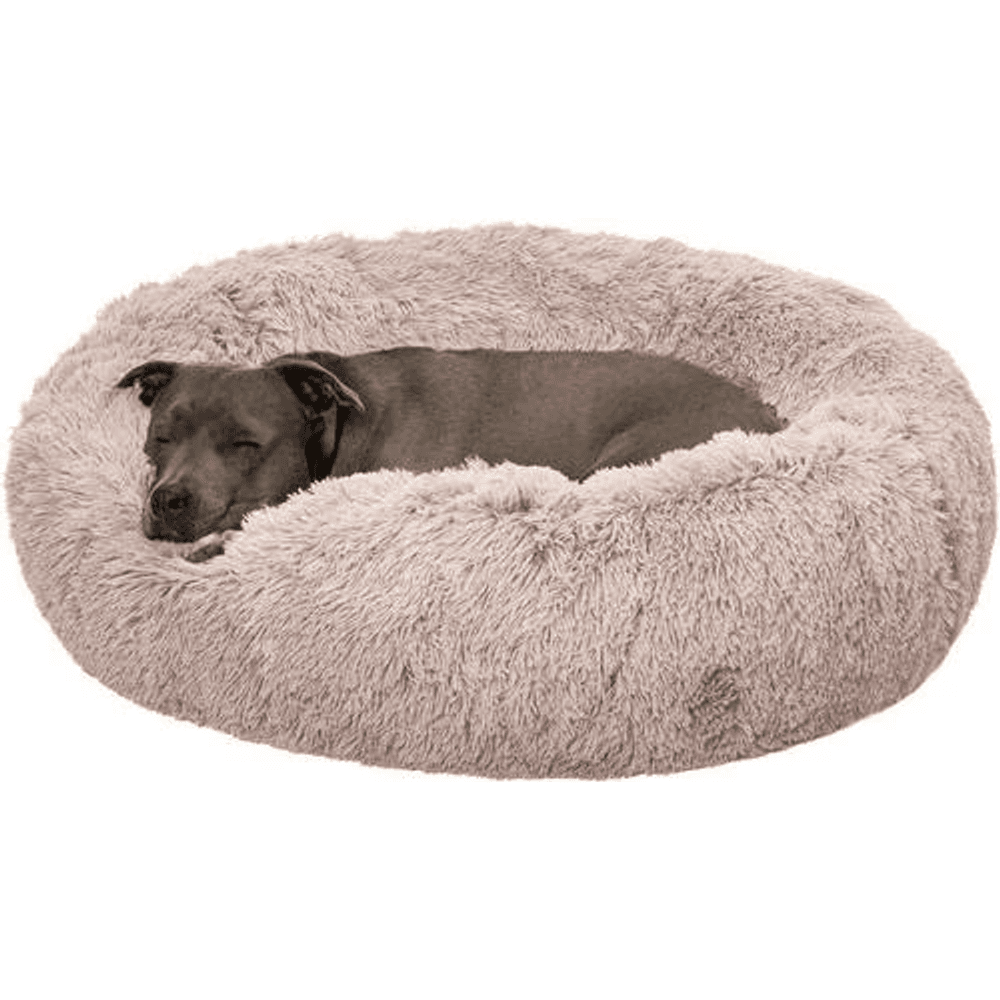
A plush, long-fur donut bolster bed with a raised rim that gives a recovering pet a secure, cushioned place to curl up during the crucial 10 to 14 days after surgery.
Petful may earn a commission when you click through to Chewy, at no extra cost to you.
The schedule should also protect the human household. Decide how barking at windows will be managed, where the dog rests during children's active play, and how gates or leashes will prevent rehearsal of chasing. A MidWest Wire Dog Exercise Pen can support supervised management when sized and configured safely, but it does not replace training or daily contact. A family that can meet exercise needs but cannot maintain consistent boundaries may still struggle. Fit is the repeatable routine, not the most ambitious weekend.
Exercise and herding behavior

Healthy adult Pembrokes usually need daily aerobic movement plus mental work, but there is no universal minute count for every dog. Age, conditioning, weather, body condition, and medical history change the plan. Puppies need short, self-paced activity and should not be pushed through repetitive distance exercise while their bodies are developing.
Useful outlets include:
- sniff-focused walks with time to investigate
- short retrieve or tug sessions on nonslip ground
- beginner scent games using part of a measured meal
- low-impact training for targeting, recall, and place cues
- carefully selected dog sports after veterinary and instructor guidance
Herding behavior can emerge as staring, stalking, circling, chasing, barking, or nipping at moving heels. Interrupt early, create distance from the trigger, and reward an incompatible behavior such as returning to the handler or settling on a mat. The Petmate Two Door Top Load Kennel is listed for pets up to 15 pounds, so it may provide a protected resting or transport area only for a small puppy that fits comfortably and will be outgrown; a kennel should never substitute for exercise or social contact.
Reward-based training priorities

Pembrokes learn patterns fast, including patterns people did not intend to teach. If barking makes a person throw a toy, barking has worked. If pulling always reaches an interesting smell, pulling has worked. Set up short sessions in which the desired response is easy and rewarding.
Prioritize skills that improve daily life:
- name response and recall around mild distractions
- loose-leash walking without pressure on the neck
- a settle cue for meals, visitors, and family downtime
- cooperative handling for paws, ears, teeth, and grooming
- trading objects instead of chasing or prying them away
- calm behavior around doors, children, bicycles, and other dogs
Supervised food-search games can add problem-solving with part of the dog's normal food allowance. Start easy, watch for chewing or frustration, and end the session before the dog becomes overwhelmed. Enrichment complements training and exercise, but it does not replace either one.
Teach the transition back to calm
Teach arousal and settling as a sequence. Begin with an easy cue in a quiet room, reward the dog for orienting back to the handler, then release to sniff or play. After a brief activity, guide the dog to a mat and reinforce soft body language, slower breathing, and remaining in place for a few seconds. Increase duration before adding a doorbell, visitor, running child, or outdoor distraction. That progression gives the dog a practiced route from excitement back to calm.
If the dog barks, nips, or pulls, identify what happened immediately before it. Distance, duration, speed, hunger, fatigue, or a moving trigger may have made the task too difficult. Change one variable and try an easier repetition instead of repeating a cue the dog cannot perform. Consistent management prevents the unwanted behavior from paying off while reward-based practice builds the replacement skill.
Keep a short training log with the setting, distraction, response, and reward used. Progress means the Pembroke can perform in gradually more realistic contexts, not merely complete many repetitions in the kitchen. A qualified reward-based trainer can help when chasing, guarding, fear, reactivity, or frustration is escalating, especially before children or other pets are placed in the situation.
Living with children and other pets

A Pembroke can live well with children when adults supervise, protect the dog's rest, and teach everyone how to interact. Children should not ride, hug tightly, disturb meals, or chase the dog. The dog should have an exit route and a quiet zone where nobody follows.
Why are Corgis not cuddly? Some Pembrokes enjoy close contact and others prefer shorter interactions or more personal space. Affection is individual, and a child-safe plan should respect the dog's body language rather than force hugging, lifting, or contact with a resting dog.
Fast movement may trigger herding behavior, especially in a young or under-stimulated dog. Teach children to stop moving and call an adult rather than squeal and run if the dog begins to chase. Reward the Pembroke for checking in with an adult, moving to a mat, or disengaging from play.
Introduce other pets gradually
Introductions to cats and other dogs should be gradual. Use gates, leashes, distance, and separate feeding areas while relationships develop. A MidWest Wire Dog Exercise Pen can create one supervised management boundary when assembled and anchored safely, but animals still need gradual introductions and escape-free separation when nobody is watching.

Petful may earn a commission when you click through to Chewy, at no extra cost to you.
Puppy care and socialization
Pembroke Welsh Corgi puppy socialization means creating positive, controlled experiences, not overwhelming a puppy with every possible sight and sound in one week. Pair new surfaces, people, handling, travel, and household noises with choice and rewards. Stop while the puppy is still comfortable.
- Avoid forced running, repeated jumping from furniture, slippery floors, and uncontrolled play with much larger dogs. Ask your veterinarian about vaccination timing, safe socialization in your area, body condition, pain, or an unusual gait.
A predictable routine should cover sleep, meals, toileting, play, training, and quiet time. Young puppies need frequent bathroom trips, especially after waking, eating, drinking, and active play. Clean accidents thoroughly, then adjust supervision and timing rather than punishing the puppy.
Crate or kennel training should be gradual and positive. The Petmate Two Door Top Load Kennel is listed for pets up to 15 pounds and may help with travel or short rest periods only while a small puppy fits; most Pembrokes will need a larger setup as they grow. The puppy must be able to stand, turn, and lie comfortably, and confinement must never be used to force a full workday without care.

Petful may earn a commission when you click through to Chewy, at no extra cost to you.
Can Corgis be left alone for 8 hours? A young puppy cannot safely or humanely be expected to manage eight hours without toileting, movement, and social care. Adult tolerance varies, but a routine eight-hour absence still requires a realistic plan for a midday break, enrichment, and the individual dog's needs.
Rest and safe learning
Sleep is part of puppy development. An overtired puppy may become mouthy, frantic, or unable to respond to familiar cues. Alternate brief activity with protected rest, and keep the puppy's quiet area away from constant household traffic. If sudden behavior changes accompany appetite loss, vomiting, diarrhea, pain, or lethargy, contact a veterinarian instead of assuming the puppy is misbehaving.
Choose a puppy class that uses reward-based methods, controls interactions, and does not force frightened puppies into contact. Socialization is about safe learning, not unrestricted play. A calm experience watching another dog from a comfortable distance may be more valuable than a chaotic group greeting.
Build development in stages
Plan development in stages instead of trying to finish puppy training in a few weeks. Early priorities are safe attachment, toileting, sleep, name response, gentle handling, and positive exposure at the puppy's pace. As confidence grows, add short separations, leash foundations, recall, object trades, and calm observation around movement. Later, practice those skills in new places with carefully controlled distractions.
Keep the success criteria small. One comfortable car ride, a voluntary paw touch, or a quiet minute watching a bicycle can be a complete session. End before the puppy becomes frantic, shuts down, or repeatedly tries to escape. Record what the puppy chose to approach, what distance felt safe, and which recovery activities helped. That history is more useful than a checklist of exposures with no information about the puppy's emotional response.
Coordinate the plan with vaccination guidance and local disease risk from the veterinarian. Safe socialization can include being carried, observing from a clean surface, meeting known healthy dogs, hearing recorded sounds at low volume, and exploring household textures. It does not require placing an incompletely protected puppy on every public dog surface. The veterinary and training plans should support each other rather than forcing a choice between health and learning.
How many puppies do Corgis have?
Pembroke Welsh Corgi litter size varies, so no ethical breeder can promise an exact number before veterinary evaluation. The familiar estimate of 6 to 8 puppies may describe many litters, but smaller and larger litters occur. A peer-reviewed study of 10,810 litters across 224 breeds found that breed, body size, maternal age, and reproductive method influenced litter size, which is why one fixed number should be treated as a rough expectation rather than a rule.
Pregnancy and whelping require veterinary oversight. This section preserves the practical answer for readers asking how many puppies Corgis have, but it is not a breeding guide. A breeder should discuss prenatal care, emergency planning, puppy health, and the mother dog's welfare with a veterinarian before a mating is considered.
Litter size also says nothing about the quality of a breeder or the future health of a puppy. A small litter can be responsibly planned, and a large litter can create additional demands for monitoring and care. Buyers should focus on the parents' health evidence, the breeder's veterinary support, and how every puppy is raised and matched.
Coat, grooming, and shedding
The Pembroke has a short to medium-length double coat with a weather-resistant outer layer and a dense undercoat. Regular brushing removes loose hair and helps owners inspect the skin, paws, ears, and nails. Shedding occurs year-round and can increase seasonally.
Use a nonslip surface and teach cooperative grooming in short sessions. Bathing frequency depends on activity and skin condition. Routine shaving is not a solution for shedding because it does not stop the coat cycle and can alter the protective coat. Persistent itching, odor, hair loss, redness, or recurrent ear debris deserves veterinary attention.
Official Pembroke colors are red, sable, fawn, and black and tan, with or without white markings. Color deserves only a concise profile summary here. The dedicated Corgi colors guide owns coat identification and pattern depth.
Health and screening overview
No Pembroke is guaranteed to develop a particular condition, and no breeder can guarantee lifetime health. Ask breeders which parent-club tests they complete and verify the registered parents in the Orthopedic Foundation for Animals database. A CHIC number means the required results were completed and made public, not that every result was normal.
Because Pembrokes have a long-backed, short-legged build, owners should pay attention to mobility. Keep the dog lean, build fitness progressively, improve traction on slick floors, and contact a veterinarian for back pain, weakness, wobbling, reluctance to jump, or changes in bladder or bowel control. Cornell's canine health guidance explains the relationship between chondrodystrophy and intervertebral disc disease without implying that every Corgi will be affected.
Verify the screening evidence
Ask to see individual screening results rather than accepting "health tested" as a complete answer. A routine wellness exam, a DNA result, an eye examination, and an orthopedic evaluation measure different things. Review the parent club's current recommendations and ask how the breeder used the information when selecting the pairing.
Daily management matters after placement. Measure meals, keep nails short enough for stable footing, use nonslip rugs where needed, and increase exercise gradually. Sudden paralysis, severe pain, or loss of bladder or bowel control requires urgent veterinary attention.
- Match each result to the registered parent, test date, and current parent-club recommendation. A routine examination, DNA result, eye examination, and orthopedic evaluation answer different questions, and no single badge guarantees a healthy puppy.
Lifespan belongs in the Corgi lifespan guide, which covers ranges and modifiable care factors. In this profile, the practical priorities are preventive care, dental care, parasite control, appropriate nutrition, weight management, and prompt evaluation of changes.
Responsible sourcing and adoption
Responsible Pembroke Welsh Corgi breeders should be able to explain why a pairing was chosen, show verifiable health results, discuss temperament, allow questions, and provide a contract that addresses the dog's lifetime welfare. A reputable Pembroke Welsh Corgi breeder should also identify both parents and explain how the puppies are raised. Registration alone does not prove health or good rearing. Avoid sellers who always have puppies available, refuse to identify the parents, or use rare-color marketing in place of health evidence.
Rescue is another path. Breed clubs, foster-based rescues, and shelters may place puppies or adults, although availability varies. An adult can be a strong choice because foster caregivers may already know how the dog behaves around children, pets, visitors, grooming, and alone time.
Evaluate how puppies are raised
Ask how puppies are raised before pickup. Useful evidence includes age-appropriate veterinary care, clean living areas, exposure to normal household experiences, time with the mother and littermates, and a matching process based on behavior rather than coat color. A responsible source will also want to know whether your routine fits the breed.
Match records to the parents and puppy
Request the registered names of both parents before committing, then check each public screening result against that identity and the date performed. Ask which tests follow the parent club's current recommendations, what the actual results were, and how those results influenced the pairing. A screenshot of a generic “clear” badge or a statement that puppies were vet checked does not replace parent-specific orthopedic, eye, or DNA evidence where those tests are recommended.
Evaluate the raising environment through specific observations. Ask where puppies sleep and eliminate, what surfaces and household sounds they experience, how adults handle grooming and restraint, and how individual behavior is recorded. If an in-person visit is not possible, request a live view that shows the named puppy with littermates and the mother in the stated environment. Polished photos alone cannot demonstrate everyday care.
Review the contract before pickup
Read the contract before the pickup day. Confirm the puppy identity, health and vaccination records, payment terms, veterinary-exam requirement, registration terms, and the process if the home cannot keep the dog. Ask who provides support after placement and whether the breeder will accept the dog back at any age. Responsible sourcing is an evidence trail that continues after payment, not a single reassuring conversation.
The purchase or adoption fee is only one ownership cost. The Corgi price guide covers initial and ongoing expenses without turning this protected profile into a price page.
Is a Pembroke right for you?

A Pembroke is a stronger fit when the household wants an involved, intelligent companion and can provide daily activity, consistent training, regular brushing, controlled food portions, and supervised interactions. It may be a poor fit when quiet is essential, loose hair is unacceptable, the dog will routinely spend long days alone, or nobody wants to manage chasing and barking.
Stress-test the commitment
Try a realistic weekday test before committing. Decide who handles the morning walk, midday break, evening training, grooming, veterinary appointments, and backup care. A correctly sized FurHaven Calming Cuddler Donut Bolster Dog Bed can provide a consistent resting place, but no product can compensate for a schedule that does not meet the dog's social and physical needs.
Run that test for a full week on paper, including the busiest workday and a bad-weather day. Add travel time, cleanup, coat care, and the quiet supervision needed around children or pets. If the plan depends on perfect attendance and no unexpected events, arrange backup help before placement. A resilient routine is stronger evidence of fit than enthusiasm alone.
If your interests extend beyond one purebred profile, the Corgi mixes guide explains why mixed-breed traits remain variable. For the two recognized Corgi breeds, use Pembroke Welsh Corgi vs Cardigan Welsh Corgi rather than expecting this Pembroke page to own those questions.
Explore the Corgi guides
- Use the guides below for each exact mix, price, lifespan, color, size, comparison, and Cardigan-profile question instead of duplicating those answers here.
- Explore Corgi mixes.
- Compare Corgi price.
- Review Corgi lifespan.
- Identify Corgi colors.
- Use the Corgi size and full-grown chart.
- Read Pembroke Welsh Corgi vs Cardigan Welsh Corgi.
Frequently asked questions
The downside to Corgis can include substantial management needs despite their compact size. A Pembroke Welsh Corgi may need daily exercise and training, shed heavily, alert-bark, and chase or nip at movement. The breed can also gain weight easily. A household prepared for those traits may find them manageable, but buyers expecting a quiet, low-effort lapdog may struggle.
Do not get a Pembroke Welsh Corgi solely because the breed looks cute or small. A responsible choice requires time for activity, reward-based training, coat care, social contact, and weight and mobility management. Individual Pembrokes also differ in affection, noise, prey interest, and tolerance for children or pets, so meet the actual dog and verify health and temperament evidence.
The pros and cons of a Pembroke Welsh Corgi reflect the same working-dog traits. Pros can include intelligence, engagement, compact size, quick learning, and enthusiasm for family activities. Cons can include heavy shedding, alert barking, chasing or heel-nipping, rapid weight gain, and boredom without purposeful activity. The breed's long-backed build also makes lean body condition and sensible movement important.
Some Corgis are cuddly and others are not, even when they are strongly bonded to their families. A Pembroke may seek close physical contact or prefer to rest nearby without hugs or prolonged restraint. Genetics, socialization, prior experience, health, and handling affect that preference. Let the dog approach, watch body language, and ask a veterinarian about any sudden avoidance of touch.
Corgis should not routinely be left alone for eight hours without a break. Adult Pembrokes differ in bladder capacity and comfort, and puppies need much more frequent toileting, feeding, and social contact. Build alone-time skills gradually, monitor the individual response, and arrange suitable midday coverage when the household schedule requires a long absence.

Carol Bryant is the founder FidoseofReality.com and SmartDogCopy.com. A pet product expert, Carol is the Past President of the Dog Writers Association of America (DWAA) and winner of Best Dog Blog. A dog lover of the highest order is how Gayle King introduced Carol when she appeared with her Cocker Spaniel on Oprah Radio’s Gayle King Show to dish dogs. She helps pet, animal, and lifestyle brands achieve copywriting and content marketing success using well-trained words that work and is well-known in the pet industry.
Sign up for expert-backed reviews and safety alerts all in one place.