Corgi Price: Puppy Cost and Lifetime Expenses
Corgi price includes more than a puppy listing. Compare a dated Pembroke asking-price snapshot, adoption costs, first-year setup, annual care, and lifetime planning.

Petful is reader supported. As an affiliate of platforms like Amazon and Chewy, we may earn a commission when you buy through links on this page. There is no extra cost to you.
Corgi price is more than the amount on a puppy listing. A useful budget separates the acquisition fee from first-year setup, recurring care, professional services, and an emergency plan, because each category varies by source, location, and the individual dog.
This guide includes a dated snapshot of visible Pembroke marketplace asking prices, not a national average or a promise of what a responsibly bred puppy should cost. It then gives you a fill-in framework for comparing breeder quotes, adoption fees, initial supplies, annual care, and long-term risk without inventing one universal total.

Sign up for expert-backed reviews and safety alerts all in one place.
Corgi price: the short answer
- 1A dated sample of 254 visible US Pembroke marketplace asking prices captured August 5, 2026 ranged from $100 to $2,000, with a $750 median. These were asking prices, not completed sales or a responsible-breeder sample.
- 2Do not apply that Pembroke-heavy snapshot to Cardigan Welsh Corgis, and do not treat a high price as proof of health testing, responsible breeding, or seller quality.
- 3Build a local first-year and annual budget from written quotes, then protect a separate emergency reserve or insurance plan.
How much is a normal Corgi? There is no single quality-assured national price. In Petful's August 5, 2026 snapshot, 254 exact prices visible in the initially fetched US Pembroke marketplace pages ranged from $100 to $2,000, with a median of $750. That figure describes those visible asking prices on that date only. It is not a breeder quote, completed-sale dataset, adoption fee, Cardigan sample, or total cost of ownership.
Why are Corgis so expensive? A responsible breeder may pay for parent health screening, veterinary care, breeding and whelping support, puppy raising, identification, socialization, records, contracts, and lifetime return support. Supply, geography, age, pedigree, and what is included can also affect a quote. None of those possibilities means that every costly puppy comes from a responsible source, so verify evidence instead of judging by price alone.
The first decision is which recognized breed you mean. A Pembroke Welsh Corgi and a Cardigan Welsh Corgi are separate breeds with different populations and breeder networks. Our measured listing sample was Pembroke-marketplace-heavy, so a prospective Cardigan buyer should obtain current Cardigan-specific quotes rather than transferring the number.

Petful may earn a commission when you click through to Chewy, at no extra cost to you.
Current breeder asking prices
The table below is best read as a dated visibility check on two ranking marketplaces, not as a market-value guide. Petful captured every exact dollar amount rendered in the initial fetched HTML for the selected US Pembroke breed-results pages at 9:10 p.m. Pacific time on August 4, 2026, corresponding to August 5, 2026 UTC. The sites could change prices, cards, filters, or inventory at any time.

| Source | Exact visible prices captured | Visible range | Visible median | Limitation |
|---|---|---|---|---|
| Greenfield Puppies | 212 | $100–$1,895 | $700 | Exact asks rendered in the fetched initial HTML; seller quality, completed sales, and listing circumstances were not audited |
| Lancaster Puppies | 42 | $250–$2,000 | $1,000 | The page labeled 346 results, but only 42 exact-price cards rendered in the fetched initial HTML |
| AKC Marketplace | 0 | Not calculated | Not calculated | The fetched client-rendered page exposed no exact dollar asking prices, so it was excluded from calculations |
| Combined visible sample | 254 | $100–$2,000 | $750 | Unweighted snapshot of visible US Pembroke marketplace asking prices captured August 5, 2026, not a national average or representative responsible-breeder sample |
The combined sample was not normalized for puppy age, discounting, geography, registration, parent testing, included veterinary work, seller practices, or listing quality. A very low or high card may reflect one or several of those factors. The snapshot also does not show what buyers ultimately paid, whether the puppies were delivered, or whether any source met a responsible-breeder standard.
Use the sample to understand that public asking prices vary widely, then collect current written quotes from the actual sources you are considering. Ask each source to itemize what is included so you compare the same categories, not just the largest number on the page.
Record these quote details:
- Puppy or dog identity, age, breed, and registered parent names when applicable
- Source location and any travel, transport, or delivery terms
- Parent health-screening records and where results can be verified
- Veterinary records, identification, registration, and supplies included
- Contract, health terms, spay or neuter conditions, and return support
- Deposit amount, payment recipient, refund terms, and final balance date
Compare the same package and timeline
Compare quotes line by line instead of ranking them by the final total. One source may include a veterinary examination, age-appropriate vaccines, microchip registration, pedigree documents, starter food, and lifetime return support; another may quote the puppy alone. Write “not included,” “not stated,” or “not yet verified” in every blank so missing information does not disappear from the comparison. Then request the document or current local price needed to fill that gap.
The comparison should also use the same time horizon. A deposit-only number is not comparable with a full purchase balance, and neither captures travel, an initial veterinary visit, local licensing, or equipment the puppy still needs. Calculate the amount due before pickup, the amount due at pickup, and the likely first 30 days separately. That makes cash-flow pressure visible before a nonrefundable payment is made.
Do not count a verbal promise as an included service. Ask which veterinarian performed care, which registered dog appears on each screening result, who will register the microchip, and what the contract requires if a health or placement problem develops. The goal is not to demand identical packages from every source. It is to know exactly what each Corgi price buys and which costs and risks remain with the buyer.
Adoption and rescue fees

An orthopedic sofa bed with three bolstered sides for dogs who like to rest their head and joints against a cushion. The supportive foam base cradles hips and elbows, a comforting spot for an older or shaky dog to settle.
Petful may earn a commission when you click through to Chewy, at no extra cost to you.
An adoption fee is a different acquisition route, not a discounted breeder price. A shelter or rescue may include some veterinary services, identification, or supplies, but the bundle varies. Ask for the current fee and the exact records that transfer with the dog. An adult foster dog may also come with valuable observations about behavior, house routines, handling, and other animals.

| Decision | Responsible breeder route | Rescue or shelter route | What to verify before paying |
|---|---|---|---|
| Current amount | Written quote for the named puppy and included services | Published or written adoption fee for the named dog | Date, recipient, refund terms, and total due |
| Identity evidence | Registered parent identities, litter records, and pedigree when represented | Intake history, known identity, microchip, and records available | Match every document to the actual dog |
| Health evidence | Original parent screening results plus puppy veterinary record | Current veterinary record and any known prior history | Review original records; a verbal summary is not enough |
| Behavior evidence | Parent temperament, raising environment, and repeated puppy observations | Foster or staff observations in relevant settings | No source can guarantee future behavior |
| Support | Written contract, return policy, and source contact | Adoption agreement and return or support policy | Read the terms before the deposit or fee is paid |
The route affects which uncertainties you can reduce. A responsibly bred puppy may have documented parentage and screening, while an adult foster dog may offer a clearer view of current size and everyday behavior. Neither route guarantees future health or temperament. If the organization uses a breed label based only on appearance, treat it as an estimate unless records support it.
Compare timing as well as fees. A rescue may require an application, household meeting, landlord approval, or introduction to resident pets. A responsible breeder may maintain a waitlist and match puppies after observing their development. Those steps can take time, but urgency by itself is not evidence that a source is legitimate. Keep temporary care, travel, and scheduling needs in the plan without paying an unfamiliar party simply to “hold” a dog.
Budget separately for any care not included. That may mean a prompt veterinary visit, preventives, medication, training help, grooming, identification updates, or supplies appropriate to the dog's current dimensions. The fee alone cannot tell you whether a specific dog fits your household or whether the total first month is affordable. When comparing starter supplies, price a MidWest Wire Dog Exercise Pen and a FurHaven Velvet Waves Orthopedic Sofa Bed separately from the acquisition fee and use the dog's current measurements rather than assuming bundled equipment will fit.
Why Corgi prices vary
Corgi dog cost varies because sources, dogs, regions, and included services are not interchangeable. A written quote should let you trace the price to concrete work and records. It should not rely on urgency, vague exclusivity, or a claim that expense automatically signals quality.

Legitimate differences may include:
- Whether recommended parent health screenings were completed and results made available
- Veterinary support before, during, and after the litter
- Puppy rearing, socialization, identification, records, and early care
- The breeder's contract, matching process, and lifetime return policy
- The dog's age and what services or supplies are included
- Regional availability and the buyer's travel or transport choices
Some sellers charge premiums for color labels or supposed rarity. Color does not prove breed identity, health, or value. Before paying more for a coat description, use the dedicated Corgi colors guide to check what the official Pembroke and Cardigan standards actually recognize.
Price is not proof of a responsible source

Petful may earn a commission when you click through to Chewy, at no extra cost to you.
A high Corgi price can coexist with poor records, weak health practices, or a misleading sales pitch. A low price can also carry risk, but the amount alone cannot diagnose the source. The better test is whether the seller can provide verifiable identities, original results, a clear contract, appropriate living conditions, and support that does not disappear after payment.

The American Kennel Club's signs of a responsible breeder emphasize direct contact, questions in both directions, records, and a contract rather than a quick anonymous transaction. The Pembroke Welsh Corgi Club of America and Cardigan Welsh Corgi Club of America are the relevant national parent clubs for breed-specific education.
Ask to see original health results and confirm the dog or parent identity attached to each result. The Orthopedic Foundation for Animals CHIC program helps organize breed-recommended screening information. A CHIC number means the required tests were completed and made public, not that every result was normal or that a future dog is guaranteed disease-free.
Verify the contract, recipient, and payment
Before sending a deposit, match four things: the legal or business name in the contract, the person receiving payment, the named puppy or planned litter, and the refund or transfer terms. If any name changes during the transaction, stop and verify it through a contact method you independently obtained. Save the listing, written quote, contract version, receipts, and correspondence in one folder. Screenshots can document what was represented, but they do not replace original health records or an enforceable written agreement.
Read every clause that controls what happens next. Check whether a deposit is refundable, transferable to another litter, or forfeited; whether pickup or transport has a deadline; whether the buyer must complete a veterinary examination; and whether a return provision requires contacting the source before rehoming. Ask for unclear language to be explained in writing before payment. A contract can reveal expectations, but the existence of paperwork alone does not prove that the dog, records, or seller are genuine.
Use a payment method with terms you understand and verify the recipient before authorizing it. Never send additional money because a stranger claims that an unexpected shipping crate, insurance certificate, temperature permit, or airport release must be paid immediately. Independently contact the carrier or professional named in the request. A legitimate expense should be itemized, attributable to the actual dog, and confirmable without relying only on the seller's message.
Transaction warning signs
Pause the transaction if you encounter any of these warning signs:
- Pressure to pay immediately by gift card, cryptocurrency, wire, or an unfamiliar recipient
- Refusal to show the puppy or adult dog live with its actual environment
- Parent names or screening reports that cannot be verified
- A health promise with no original veterinary record or written contract
- Surprise shipping, insurance, crate, or permit fees after an initial payment
- A "rare" coat premium used as a substitute for health and source evidence
- No return policy, or a seller who will not take back a dog if the home fails
First-year setup costs
Corgi first year cost begins with what the individual dog actually needs, not a viral shopping list. Measure the dog and inventory what the source already provides before buying. An adult may arrive with a fitted collar and established bed preference, while a puppy may outgrow early gear quickly.
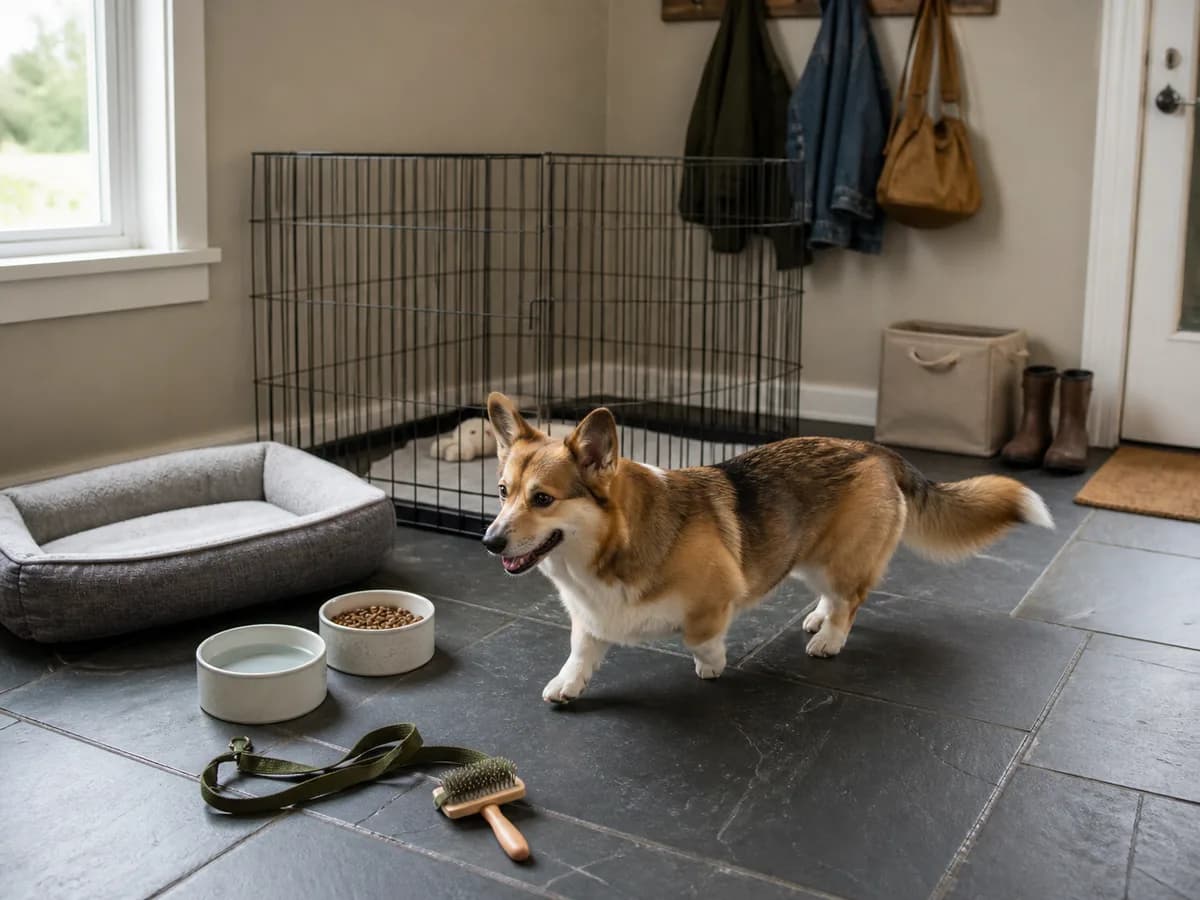
Start a local worksheet with written prices for:
- Veterinary exam, vaccines or boosters, parasite plan, identification, and preventives based on records
- Food and measured training treats appropriate to the dog's life stage
- Secure rest and management, such as a gate, crate, or MidWest Wire Dog Exercise Pen when that setup fits the dog
- A washable sleep surface such as a FurHaven Velvet Waves Orthopedic Sofa Bed, sized from the current product chart and the dog's measurements
- Fitted collar or harness, leash, identification tag, bowls, and vehicle restraint
- Grooming tools, including an aumuca Self Cleaning Slicker Brush if that brush suits the coat and handling plan
- Training class, private help if needed, pet care, travel, and local licensing
Do not force every purchase into week one. Prioritize safety, identification, food continuity, veterinary needs, rest, and handling. Save optional duplicates, premium upgrades, and size-dependent equipment until you know what the dog uses comfortably.
Monthly and annual care
Annual cost of a Corgi should be built from recurring local categories, then divided only if a monthly view helps cash flow. Food, veterinary care, parasite prevention, grooming, training, pet care, licensing, and replacement equipment can change with age, health, schedule, and region. Re-price the worksheet at least yearly rather than treating the first estimate as permanent.

- Do not reduce food, prescribed care, parasite prevention, or veterinary follow-up solely to hit an online annual-cost estimate. If the budget no longer works, ask the veterinarian and local service providers about safe options before changing the dog's care.
Build the recurring plan from real frequencies and quotes:
- Food amount from the chosen product and the dog's veterinary-guided body-condition plan
- Routine veterinary and preventive schedule based on age, location, lifestyle, and medical history
- Training or behavior support needed for this individual dog
- Home grooming supplies and any professional grooming appointments
- Dog walking, daycare, boarding, or pet sitting required by the household schedule
- Replacement of worn leashes, bedding, identification, and other safety equipment

Petful may earn a commission when you click through to Chewy, at no extra cost to you.
Stress-test the monthly average
Turn those categories into three household views. The ordinary-month view contains predictable food, prevention, routine services, and any regular pet-care help. The lumpy-year view places annual examinations, licensing, training blocks, boarding, grooming, and equipment replacement in the months when they are likely to occur. The disruption view asks what happens if the dog needs several appointments, the owner travels, or the household loses income. This prevents an apparently affordable average month from hiding a difficult renewal or travel month.
Use two current local quotes when a service could materially affect the plan, and note the quote date. Ask what the base fee includes and what commonly adds to it. For boarding or walking, include trial visits, holiday rates, medication administration, or cancellation terms when relevant. For veterinary care, separate preventive care from diagnostics and treatment. The point is not to predict every invoice; it is to avoid treating unlike services as one vague annual estimate.
Review the plan after the dog arrives. Actual food intake, training needs, grooming tolerance, transportation, and medical history may differ from the assumptions made before placement. Replace estimates with receipts and current quotes, but do not let a favorable month erase the emergency line. A budget is useful only when it reflects the dog now living in the home.
Keep incidental purchases visible
Small cleanup supplies can belong in the household line rather than a vague pet-products total. For example, Earth Rated Thick Hypoallergenic 3-in-1 Dog Grooming Wipes may fit a between-bath cleanup routine, but they do not replace bathing, veterinary skin care, or checking the current label for the individual dog.
Training and grooming expenses
Training and grooming costs depend on the dog, the owner's skill and time, and the type of support chosen. A group class, private session, behavior consultation, home brush, bath, nail service, and professional groom are different services. Obtain quotes for the services you expect to use, then leave room for a change if the dog needs more help than planned.
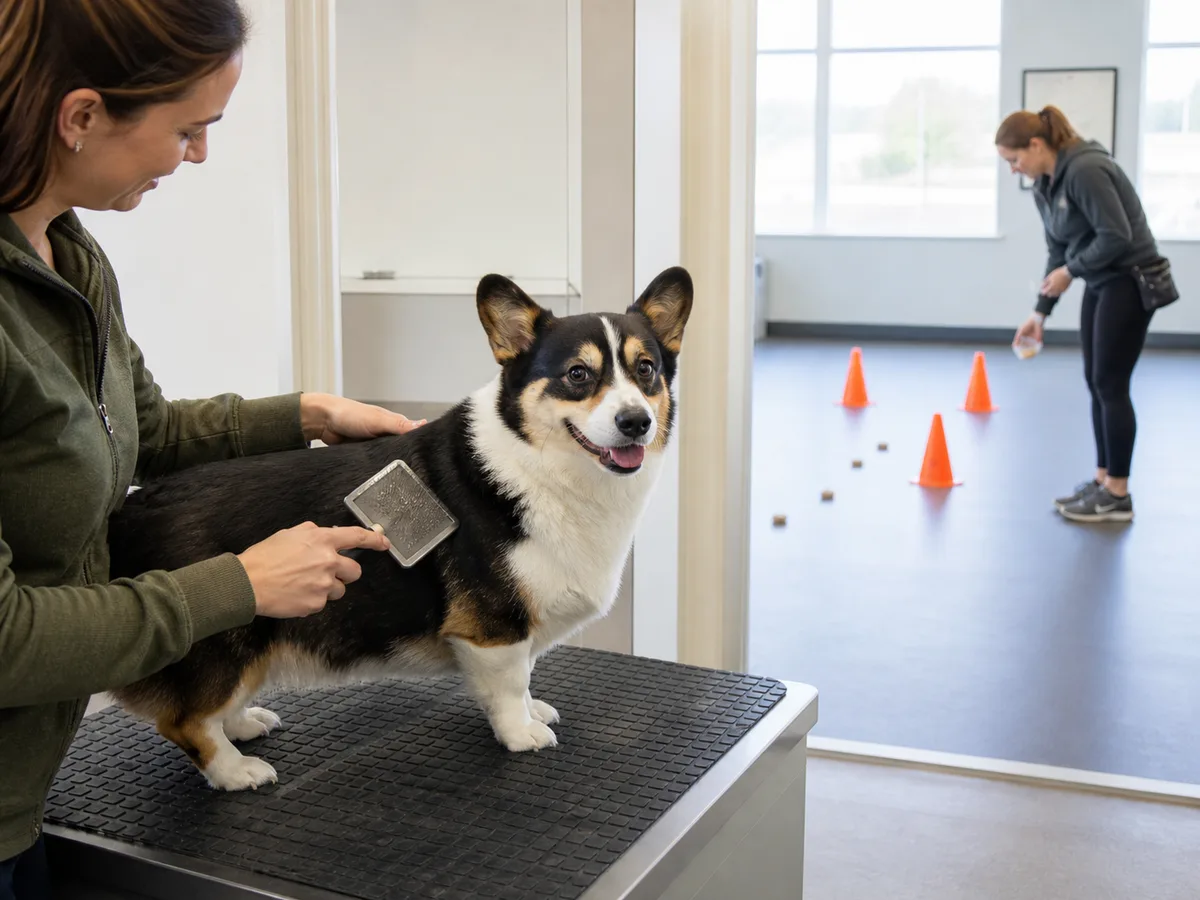
The double coat makes regular coat care part of the time budget even when the owner handles it at home. An aumuca Self Cleaning Slicker Brush can be one item in that routine if it suits the coat and the dog accepts it comfortably. Stop if brushing pulls, catches, or causes pain, and seek appropriate grooming or veterinary help instead of forcing the tool.
Management equipment may also support training. A MidWest Wire Dog Exercise Pen can define a rest or puppy-management area when correctly sized and safely placed, but it is not a substitute for exercise, social contact, housetraining, or supervision. Add class and professional-support quotes based on your real weekday schedule, not on the assumption that a compact dog is automatically easy.
Veterinary care, insurance, and emergencies
Veterinary costs cannot be responsibly collapsed into one Corgi number. Routine care, diagnostics, medication, surgery, rehabilitation, emergency treatment, and chronic management are different risks. Ask a local clinic what common preventive visits cost, then choose an emergency strategy before the dog comes home.
Common planning routes include:
- A dedicated emergency reserve that remains available
- Pet insurance selected after comparing exclusions, waiting periods, deductibles, reimbursement, limits, and current premiums
- A combined plan with insurance plus savings for deductibles, excluded care, and immediate payment
- A written household limit and backup funding plan for urgent decisions
Do not count a credit offer or hoped-for fundraiser as the only emergency plan. If considering insurance, obtain a quote for the exact breed, age, and location, then read the current policy. Premiums and terms can change, and a general online average does not replace the contract offered to you.
A realistic lifetime budget
Corgi lifetime cost is not one purchase price multiplied by a lifespan. Costs change as the dog moves through puppy, adult, and senior years, and unexpected care rarely arrives on an even monthly schedule. The practical model is to maintain four separate totals: acquisition, one-time setup, recurring annual care, and risk reserves or insurance.
Use this fill-in calculation with current local quotes:
- Write the acquisition fee and every service included.
- Add only the setup items and initial care the dog still needs.
- Total one ordinary year of food, prevention, veterinary care, services, licensing, and replacements.
- Record the emergency reserve or annual insurance premiums plus deductible savings separately.
- Revisit the numbers after adoption, at renewal, after a medical change, and at least once each year.
Model more than one ownership year
Build a low, expected, and high-use scenario from the same categories without pretending any one scenario is a prediction. The low-use scenario can reflect routine care and owner-provided grooming or training. The expected scenario can include the professional services the household realistically anticipates. The high-use scenario can test whether added training, pet care, diagnostics, medication, or mobility support would break the plan. Use actual quotes or policy terms for every dollar entered; if an amount is unknown, mark it unknown rather than borrowing a national average.
Keep purchase price separate in all three scenarios. A lower acquisition fee does not reduce food, preventive care, emergency exposure, or the time required for training and grooming. A higher acquisition fee does not prepay future health. Comparing the scenarios shows which obligations remain after the exciting first transaction and whether the household has enough monthly cash flow and accessible reserves to meet them.
Finally, decide what would trigger a budget review. Useful triggers include a food change, insurance renewal, new medication, a change in work schedule, regular daycare or walking, a move, or transition into senior care. Revisit the worksheet at those points and at least annually. That turns Corgi lifetime cost into an ongoing planning process instead of a single total that becomes stale immediately.
Keep the planning assumptions separate
A comfortable rest setup can last longer when sized from the current chart and the dog rather than from the breed name. A FurHaven Velvet Waves Orthopedic Sofa Bed is one product to compare, but durability, washability, dimensions, and the dog's use matter more than putting a premium label into the worksheet.
The expected time horizon belongs on the worksheet, but it should come from the dedicated Corgi lifespan guide rather than a marketplace estimate. Likewise, use the Corgi size and full-grown chart for measurement planning, and use the Pembroke Welsh Corgi vs Cardigan Welsh Corgi comparison before transferring assumptions between the breeds.
If you are considering a crossbreed instead of a recognized breed, the Corgi mixes guide explains why a mix label cannot guarantee adult size, coat, behavior, or health. That uncertainty belongs in the equipment, training, grooming, and veterinary portions of the budget rather than in a promised type-specific total.
- Related Corgi guides cover each sibling intent in depth. Use them for breed identity, color, size, lifespan, comparisons, and mixes rather than asking one price page to duplicate every answer.
Related Corgi planning guides:
- Compare recognized coats in Corgi colors.
- Review the full Pembroke Welsh Corgi profile.
Frequently asked questions
Corgis can seem expensive because a responsibly bred puppy's quote may reflect parent health screening, veterinary care, breeding and whelping support, puppy raising, identification, socialization, records, contracts, and lifetime return support. Geography, age, availability, and included services can also affect the amount. Price is not proof of quality, so verify parent identities, original screening results, living conditions, veterinary records, the contract, and the payment recipient before buying.
How much a normal Corgi costs cannot be reduced to one quality-assured amount. In a dated snapshot captured August 5, 2026, 254 exact asking prices visible on selected US Pembroke marketplace pages ranged from $100 to $2,000, with a $750 median. That was not a national average, completed-sale dataset, Cardigan sample, or responsible-breeder sample. Compare current itemized quotes and total first-year costs instead.
There is no universal package. A written quote may include age-appropriate veterinary care, identification, registration or pedigree records, starter food, socialization, a contract, and lifetime return support. Ask the source to itemize every inclusion, identify the veterinarian and parents tied to the records, and explain deposits, refunds, pickup, and transport before you compare totals.
Budget separately for the initial veterinary visit, licensing and identification, food, preventives, training, grooming, fitted equipment, replacement supplies, routine veterinary care, and an emergency plan. Insurance or a dedicated savings fund may also belong in the plan. Keep first-year setup costs separate from monthly and annual expenses so the acquisition fee does not hide the true ownership budget.
The best Corgi budget is local, dated, and honest about uncertainty. Keep the asking price separate from source evidence, ongoing care, and emergency capacity, then choose the dog and source only when all four parts work for your household.

Coreen Saito is a pet writer and longtime shelter volunteer with more than a decade in animal rescue. She covers cat behavior, breed care, and the small, ordinary science of sharing a life with companion animals, with a particular focus on honest takes about the products and decisions that actually matter. At home in Arizona, she's outranked by Mac (a dog with the loudest opinion in the house), Rebel (a cat who governs by quiet authority), and Meri (an orange tabby who runs the late shift and the laundry basket). She writes about all three, plus the rescues that keep coming through her life, at LifeWithMinty.com.
Sign up for expert-backed reviews and safety alerts all in one place.