Corgi Lifespan: How Long Do Corgis Live?
Corgis typically live 12–13 years for Pembrokes and 12–15 years for Cardigans. Learn what those ranges mean, how senior care changes, and when to call a vet.

BVMS, MRCVS

Petful is reader supported. As an affiliate of platforms like Amazon and Chewy, we may earn a commission when you buy through links on this page. There is no extra cost to you.
Corgi lifespan is 12–13 years for the Pembroke Welsh Corgi and 12–15 years for the Cardigan Welsh Corgi, according to the American Kennel Club. Those are breed-level planning ranges, not a forecast for an individual dog. Genetics, body condition, preventive care, injuries, illness, environment, and chance all affect what one Corgi experiences.

Sign up for expert-backed reviews and safety alerts all in one place.
Corgi lifespan: the short answer
- 1Corgi lifespan is typically 12–13 years for a Pembroke and 12–15 years for a Cardigan
- 2No authoritative breed-specific dataset identifies one leading cause of death in Corgis
- 3A genetic result can describe risk but cannot diagnose disease or predict lifespan
- 4Gradual aging changes deserve discussion, while sudden pain, weakness, or loss of function needs prompt veterinary care
The best direct answer to how long do Corgis live starts by separating the two recognized breeds. The AKC Pembroke Welsh Corgi profile lists 12–13 years. The AKC Cardigan Welsh Corgi profile lists 12–15 years. An average lifespan of a Corgi cannot be reduced to one equally precise number without erasing that distinction.
There is also no reliable evidence-based answer naming one leading cause of death in Corgis. We did not find a current authoritative Corgi-specific mortality dataset that ranks causes of death across both breeds. Lists of conditions associated with Corgis are not the same as mortality statistics, and an individual dog's diagnosis does not establish a breed-wide leading cause.
Could a Corgi live 20 years? An exceptionally old dog may be reported by an owner, but we did not find a verified authoritative 20-year breed record. Twenty years should not be presented as a normal expectation, a record, or a care outcome. The AKC's separate 12–13 and 12–15 year ranges are the more defensible starting point for planning.

Petful may earn a commission when you click through to Chewy, at no extra cost to you.
- The Corgi lifespan answer is a population estimate, not a promise. Use the separate AKC breed ranges for planning, and use the dog's current health and function for care decisions.
There is no official birthday when every Corgi becomes old. A senior label is a cue to individualize care, not a diagnosis. With a breed expectation in the low to mid teens, many veterinary teams begin discussing later-life monitoring around 7–9 years, then adjust for the dog's health, function, and history. AAHA's dog life-stage guidance emphasizes matching visits and preventive decisions to the individual life stage.
Corgis do not all slow down at one age. A gradual change in stamina during later adulthood can be part of aging, but pain, reluctance to move, stumbling, weakness, or a sudden loss of activity should not be dismissed as age. Record what changed and when, then contact the dog's veterinarian for appropriate evaluation.
A breed and health dog DNA test kit can give an owner information to organize and discuss with a veterinarian. It cannot diagnose degenerative myelopathy, determine whether symptoms come from a particular condition, or predict how long a Corgi will live.
Pembroke and Cardigan lifespan ranges

The Pembroke and Cardigan lifespan ranges overlap, but they are not interchangeable. The Pembroke's AKC estimate is 12–13 years, while the Cardigan's is 12–15 years. The two-year difference at the upper end is useful when setting expectations, yet it does not mean a Cardigan is guaranteed to outlive a Pembroke.
| Breed | AKC planning range | What the range means | What it cannot tell you |
|---|---|---|---|
| Pembroke Welsh Corgi | 12–13 years | A population-level expectation for planning routine care and later-life needs | The exact age one Pembroke will reach |
| Cardigan Welsh Corgi | 12–15 years | A separate population-level expectation for the Cardigan breed | Whether one Cardigan will outlive one Pembroke |
| Either breed | Individual results vary | Current health, function, veterinary findings, and history guide today's decisions | A guaranteed outcome from pedigree, testing, food, supplements, or equipment |
Breed identity matters for other questions too. The Pembroke Welsh Corgi profile covers the Pembroke's broader temperament and care. If you are unsure which breed you are looking at, the dedicated Pembroke Welsh Corgi vs Cardigan Welsh Corgi comparison explains their structural and historical differences.
Size can influence practical care without predicting lifespan. A Corgi's weight should be interpreted against breed, sex, frame, muscle, and body condition, not a generic internet range. Our Corgi size and full-grown chart owns that measurement question and keeps it separate from longevity.

 Sponsored
Have a health question about your dog?
Talk to a licensed vet at Dutch over video or message, including nights and weekends.
Use code Pets60
Plans start at $12/month · covers up to 5 pets
- Licensed vets in most states
- Rx for 150+ conditions
- 4.7 on Trustpilot
What lifespan estimates can and cannot predict

A lifespan range is useful for budgets, preventive planning, and thinking ahead about accessibility. It is not a countdown clock. It cannot convert a genetic result, a normal checkup, a particular diet, or a product purchase into a predicted age at death.
The sources reviewed do not support separate male Corgi lifespan or female Corgi lifespan promises. Sex may be one part of an individual medical history, but it does not replace the breed-level ranges, current health findings, daily function, or veterinary assessment.
The safer framework is to separate evidence into five different jobs. Each tells you something useful, but none can answer every question.
| Evidence | What it can support | What it cannot establish | Best next use |
|---|---|---|---|
| Pembroke and Cardigan lifespan ranges | Long-range planning for two distinct breeds | One dog's exact lifespan | Plan care, savings, and home access without treating the number as a deadline |
| Screening records | Whether recommended tests were completed and what was reported | Freedom from all inherited disease or a guaranteed lifespan | Review the original result with the breeder and veterinarian |
| Daily function notes | Changes in appetite, activity, sleep, comfort, toileting, and interaction | A diagnosis by themselves | Give the veterinary team a dated, concrete history |
| Routine veterinary findings | An individualized picture at that visit | Permanent protection from future illness | Follow the veterinarian's monitoring and prevention plan |
| Sudden or severe signs | A reason to seek prompt or emergency help | The cause or outcome without examination | Contact a veterinarian rather than waiting for the next routine visit |
This is the article's central decision framework: use breed ranges for population planning, health screening before breeding for documented risk information, routine veterinary care for individual assessment, daily function for early observations, and urgent signs for triage. Keeping those evidence types separate prevents a Corgi lifespan estimate from becoming a false diagnosis or promise. Routine products can support one part of care without changing that boundary: a Virbac C.E.T. Dual-Ended Dog and Cat Toothbrush can support brushing, and DentaLife Daily Oral Care Small and Medium Adult Dental Dog Treats is a chew to compare, but neither replaces veterinary assessment or proves a longer lifespan.
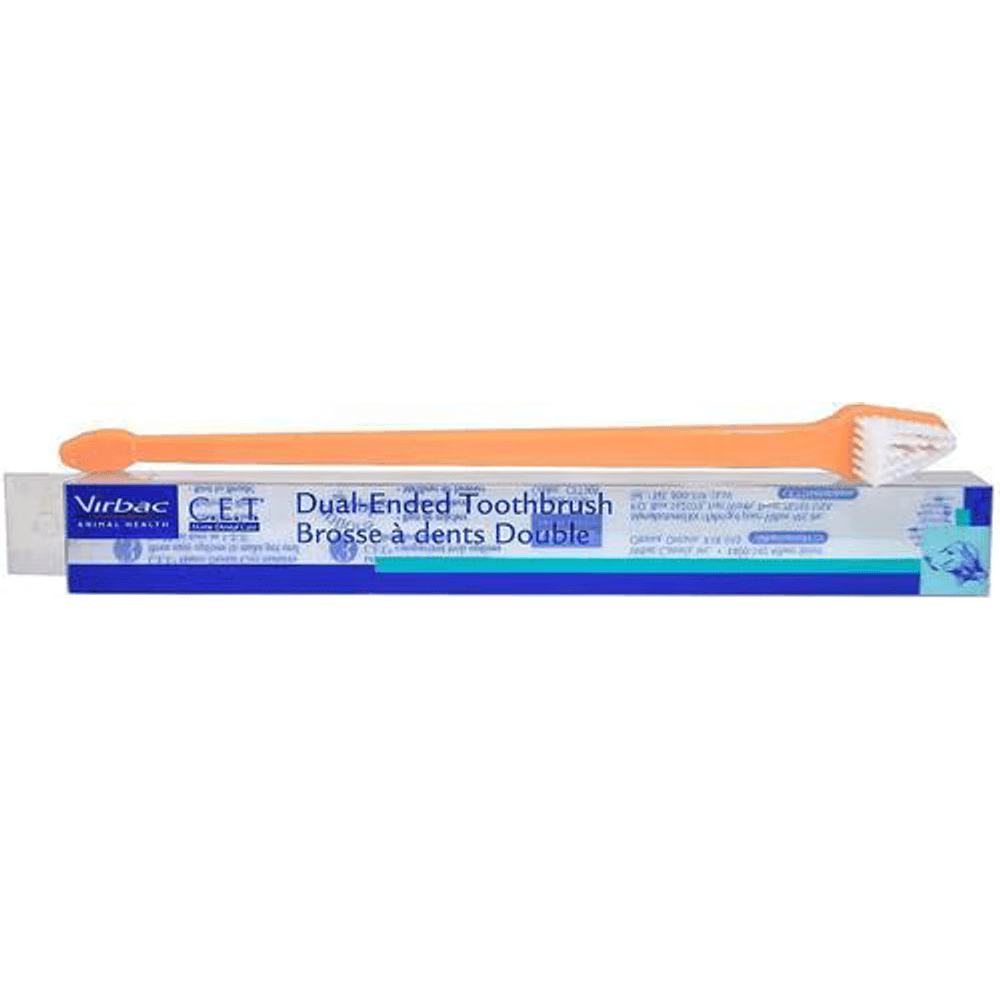
A dual-ended toothbrush with a large and a small head to fit different mouth sizes and reach the back molars where plaque hides. Soft bristles angled for the gumline.
Petful may earn a commission when you click through to Chewy, at no extra cost to you.
The framework also changes how owners interpret a normal day. One long nap means little by itself. A repeated pattern of shorter walks, difficulty rising, changed toileting, weight loss, or reduced social response gives the veterinary team more useful context. The same observation may have different importance depending on how quickly it appeared and what else changed.
Before an appointment, prepare a concise record:
- Date the change was first noticed and whether it is stable or progressing
- Note appetite, water intake, toileting, activity, sleep, and interaction
- Record current food, treats, medications, and supplements accurately
- Bring original screening and laboratory reports rather than screenshots alone
- Capture a short video when movement or breathing can be recorded safely
These notes improve communication. They do not tell an owner what disease is present, whether a condition is curable, or how long the dog will live. That boundary keeps a life expectancy article useful without turning it into remote diagnosis.
When is a Corgi considered senior?

Senior status is better understood as a care phase than a precise age. Two 9-year-old Corgis may have very different mobility, dental health, body condition, hearing, vision, stamina, and chronic-disease histories. One may still handle normal outings comfortably, while the other may need a slower pace and closer follow-up.
Useful later-life observations include:
- Whether usual walks, stairs, getting up, and settling down look comfortable
- Whether appetite, thirst, urination, bowel habits, or body weight change
- Whether sleep, interaction, orientation, or response to familiar cues changes
- Whether coughing, breathing effort, fainting, wobbliness, or weakness appears
- Whether a change is gradual, intermittent, or sudden
Bring a short dated log or video to the veterinary visit when possible. That record does not diagnose the problem, but it can show timing and movement more clearly than memory alone. A veterinarian can then decide what physical examination, testing, or follow-up is appropriate.
- A senior label should prompt better observation and individualized veterinary planning. It should never be used to explain away a sudden change in movement, breathing, appetite, awareness, or toileting.
The phrase oldest Corgi is tempting because a record sounds more concrete than a range. Yet record claims are often copied from owner posts without registry verification, consistent identity records, or documented birth dates. This guide does not use an anecdote as a benchmark. Corgi senior care should focus on the dog in front of you, not on competing with an exceptional age reported online.
A later-life plan may include more frequent check-ins when the veterinarian recommends them, plus home routines that reveal change early. Ask what findings should be watched between visits and which signs should trigger a same-day call. Write those instructions down so everyone in the household responds consistently.
Health screening before breeding

Health screening before breeding is meant to inform breeding decisions and make results visible, not certify that a dog will never develop disease. The OFA Canine Health Information Center works with parent clubs to define breed-specific screening protocols and publish results.
A CHIC number generally indicates that the required screenings for that breed were completed and made public. It does not mean every result was normal. Read the individual test names, dates, methods, and findings. Requirements can change, so verify the current Cardigan or Pembroke protocol directly instead of relying on an old checklist copied into an advertisement.

Daily dental chews with a porous, ridged texture designed to help clean teeth and reduce tartar buildup as part of an at-home oral-care routine.
Petful may earn a commission when you click through to Chewy, at no extra cost to you.
For a prospective puppy, ask the breeder for the registered names or numbers of both parents and look up the records yourself. Questions should include:
- Which current parent-club screenings were completed for each parent?
- Are the actual results public and linked to the correct dog?
- Which findings affect the planned pairing, and how did the breeder interpret them?
- What health history is known in close relatives beyond the parents?
- What written veterinary records come with the puppy?
The Pembroke Welsh Corgi Club of America's genetics and health guidance provides breed-specific context for Pembrokes. A consumer dog health DNA test may add owner-held information later, but it is not a substitute for verified parental screening, a clinical examination, or a veterinarian's diagnostic process.
Screening also has a time and identity component. A result belongs to the named dog tested on the recorded date. It should not be generalized to untested relatives, copied to a different dog with a similar name, or treated as permanent proof that no future problem can develop. Confirm identifiers and keep the complete report.
For buyers, transparency is more useful than a vague claim that a line is healthy. A responsible discussion should acknowledge which risks were screened, what the results were, which risks lack a screening test, and what the breeder has observed in relatives. No combination of screening results can promise a particular Corgi lifespan.
Back and mobility health
Corgis have short limbs because of chondrodystrophic body structure. Cornell's overview of chondrodystrophy and intervertebral disc disease explains that this inherited skeletal form is associated with early changes in spinal discs and increased IVDD risk in affected breeds.
Risk is not destiny, and owners cannot diagnose a disc problem from body shape. The American College of Veterinary Surgeons IVDD overview describes signs that can include pain, an abnormal gait, weakness, and loss of walking. The urgency depends on the sign and severity, so sudden weakness, dragging, inability to stand, or loss of bladder control warrants immediate veterinary contact.
Routine home choices can support comfort and observation without promising prevention or longer life:
- Keep nails at a length that allows stable footing
- Use nonslip surfaces where the dog commonly turns, rises, or eats
- Keep activity regular and appropriate to the individual dog's veterinary guidance
- Notice hesitation, asymmetry, paw scuffing, or a change in willingness to move
- Ask before changing exercise after pain, injury, surgery, or a neurologic concern
An appropriately fitted harness may help with ordinary leash control, but no harness, ramp, bed, or supplement can guarantee prevention of IVDD or extend a Corgi's lifespan. Equipment decisions should fit the dog, the home, and any instructions from the treating veterinary team.
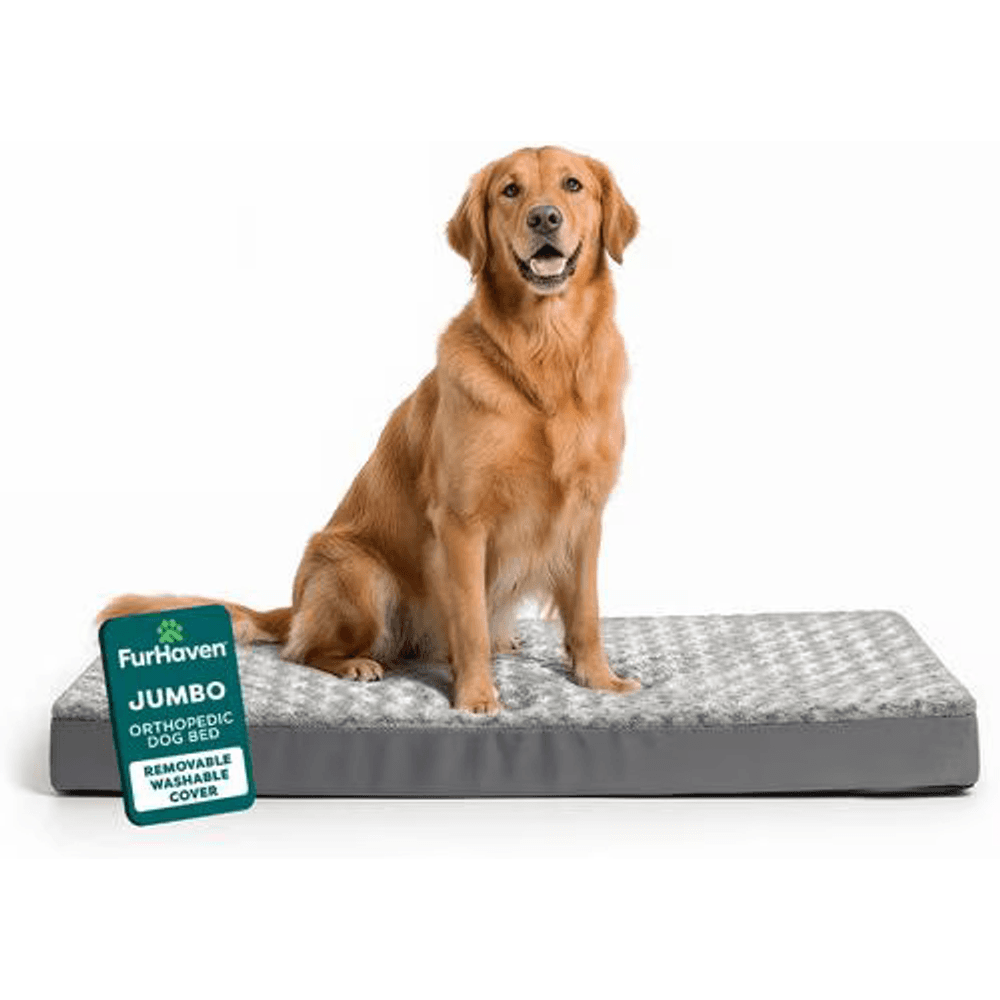
A plush orthopedic foam mattress that cushions aging joints and pressure points, giving a stiff or trembling senior dog warm, supportive rest.
Petful may earn a commission when you click through to Chewy, at no extra cost to you.
Degenerative myelopathy and genetic risk
Degenerative myelopathy is a progressive neurologic disease considered in some Corgi health discussions. A test for a variant in the SOD1 gene can report genotype-based risk information. An at-risk result does not prove that a dog has degenerative myelopathy, predict whether clinical signs will occur, or establish when they would begin.
- A SOD1 result is genetic-risk information, not a clinical diagnosis and not a lifespan forecast. Weakness or gait changes can have several causes, so a symptomatic dog needs veterinary evaluation rather than diagnosis from a DNA result.
That distinction matters because several orthopedic and neurologic problems can look similar to an owner. If a dog's gait changes, bring the original laboratory report plus dated videos or notes to the veterinarian. Do not use a consumer result to choose treatment, rule out another condition, or delay an examination.
Genetic results also need family context. One tested dog does not establish the genotype or future health of every sibling, parent, or offspring. For breeding decisions, review the result with the current parent-club recommendations and the wider pedigree information available. For a pet showing signs, the priority is a veterinary examination, because the clinical question is what is affecting that dog now.
Owners may hear the terms clear, carrier, or at risk used for a particular variant. Those labels describe the reported genotype under that test's method. They do not summarize the dog's entire neurologic health, all possible variants, or every cause of weakness. Keep the report wording intact rather than translating it into a disease label.
 Sponsored
Vet care that's always there
Unlimited video calls and messaging with licensed vets for less than a typical vet visit. One membership covers up to five pets.
Use code Pets60
Plans start at $12/month · covers up to 5 pets
- Licensed vets in most states
- Rx for 150+ conditions
- 4.7 on Trustpilot
Weight, dental care, and preventive visits
Body weight by itself is an incomplete health measure. Cornell's obesity and weight loss guidance for dogs explains that veterinarians use body-condition assessment along with weight and the dog's individual needs. For a low, long-backed dog, maintaining an appropriate condition also helps the veterinary team evaluate changes without confusing frame, muscle, and fat.
At home, track trends instead of chasing an internet target:
- Weigh the dog in a consistent way when practical
- Note changes in rib coverage, waist, appetite, and activity
- Count treats and chews within the day's food plan
- Ask the veterinarian for the dog's target body-condition range
- Recheck unexplained gain or loss instead of assuming it is normal aging
Dental care is another repeatable observation point. A dual-ended pet toothbrush can be part of a brushing routine if the veterinarian has shown you a suitable method. A daily dental chew for small and medium adult dogs is a convenience item, not a substitute for brushing, professional assessment, or a calorie-aware feeding plan.
Preventive visit frequency should match life stage, health status, medications, and veterinary advice. A checkup is not a longevity guarantee. Its value is the opportunity to compare current findings with prior findings, update preventive decisions, and investigate changes while they are still specific enough to describe.
What to record between visits
Ask the veterinary team to record both the scale weight and body-condition assessment so future visits have comparable reference points. Also report changes in eating speed, chewing preference, bad breath, drooling, or reluctance to take hard food. Those observations may justify an oral examination, but they do not establish the cause at home.
Preventive care decisions change with the individual. Vaccination plans, parasite control, laboratory screening, dental procedures, medications, and nutrition should reflect medical history, exposure, geography, and examination findings. A general lifespan guide cannot safely choose those details for a particular dog.
Healthy aging at home

Healthy aging at home means making daily life observable, accessible, and consistent. It does not mean trying to control an exact lifespan. The most useful routines are ordinary enough to repeat and concrete enough to notice when they change.
At what age do Corgis slow down? There is no single age, because health, conditioning, pain, environment, and individual variation all matter. A gradual change deserves discussion at a routine visit, while sudden slowing, weakness, pain, or loss of function calls for prompt veterinary advice.
Build the routine around the individual dog:
- Offer regular activity at a pace the dog can handle comfortably
- Keep food portions and treats consistent enough to spot appetite changes
- Provide stable footing and easy access to water, rest, and toileting areas
- Keep grooming, nail, ear, and mouth checks predictable and low stress
- Maintain social contact and enrichment that the dog still enjoys
- Review new limitations with the veterinarian before improvising a medical solution
A plush orthopedic-style dog bed may give an older dog a comfortable resting option, but it should not be described as treating disease or extending life. Likewise, a dual-ended pet toothbrush is simply a tool for a routine. The result depends on whether the routine suits the dog and follows veterinary guidance.
- Food, supplements, beds, ramps, harnesses, tests, and dental products can serve practical roles, but none can guarantee disease prevention or a longer Corgi lifespan.
Revisit the home setup as the dog changes. A water bowl that was easy to reach, a slippery turn into the kitchen, or a tall step into the yard may become more relevant over time. The goal is not to confine an older dog unnecessarily. It is to preserve safe access to valued activities while giving the veterinary team a clear picture of any new limitation.
Quality of life is also broader than mobility. Appetite, social engagement, rest, toileting, interest in familiar activities, and the balance of comfortable versus difficult periods all deserve attention. Your veterinarian can help choose an appropriate monitoring approach when concerns arise. No single checklist score should be used as a diagnosis or an automatic end-of-life decision without that conversation.
Urgent signs that need veterinary care
Seek prompt veterinary advice for a sudden or significant change rather than waiting to see whether it is simply old age. Emergency availability varies, so call the regular clinic or nearest emergency service and describe the signs clearly.
Examples that can require urgent or emergency assessment include:
- Collapse, fainting, severe breathing difficulty, or blue, gray, or very pale gums
- Sudden inability to stand or walk, dragging limbs, or rapidly worsening weakness
- Severe pain, repeated crying out, or inability to settle
- Loss of bladder control paired with weakness or back pain
- Repeated vomiting, marked abdominal swelling, or inability to keep water down
- Seizure activity, severe disorientation, or loss of responsiveness
This list cannot diagnose the cause and is not exhaustive. If you are unsure whether a change is urgent, contact a veterinary professional who can ask follow-up questions and direct the next step.
- The related guides own corgi mixes, corgi price, corgi colors, corgi size, pembroke welsh corgi vs cardigan welsh corgi, pembroke welsh corgi, and cardigan welsh corgi questions so this page can stay focused on longevity.
For the next exact question, use the matching guide:
- Compare Corgi mixes without assuming a mix label predicts health or lifespan.
- Plan acquisition and ownership costs with the Corgi price guide.
- Identify accepted coats and markings in the Corgi colors guide.
- Check adult measurements in the Corgi size and full-grown chart.
- See the full Pembroke Welsh Corgi vs Cardigan Welsh Corgi comparison.
- Read the broad Pembroke Welsh Corgi profile.
Frequently asked questions
No current authoritative Corgi-specific mortality dataset was found that supports naming one leading cause of death across both recognized breeds. Condition lists, individual cases, and social reports are not mortality rankings. Use the separate Corgi lifespan ranges for planning, discuss breed-related risks with a veterinarian, and seek care for changes in the individual dog rather than assuming one breed-wide cause.
Corgis can live to unusually old ages, but 20 years should not be treated as a normal expectation. A 20-year-old Corgi may be described in an owner story, but no authoritative verified 20-year breed record was found in the sources reviewed for this guide. The AKC lists 12–13 years for Pembroke Welsh Corgis and 12–15 years for Cardigan Welsh Corgis.
A Corgi is not considered old at one official age. With expected lifespans in the low to mid teens, many veterinary teams begin discussing later-life monitoring around ages 7 to 9, then adjust the plan to the individual dog. Mobility, dental health, body condition, senses, stamina, and chronic conditions matter more than the senior label alone.
Corgis do not all slow down at one age. A gradual change in stamina may occur during later adulthood, but pain, weakness, stumbling, reluctance to move, or a sudden drop in activity should not be dismissed as normal aging. Record when the change began and contact a veterinarian so the individual dog can be assessed.
BVMS, MRCVS
Dr. Pippa Elliott, BVMS, MRCVS, is a veterinarian with nearly 30 years of experience in companion animal practice. Dr. Elliott earned her Bachelor of Veterinary Medicine and Surgery from the University of Glasgow. She was also designated a Member of the Royal College of Veterinary Surgeons. Married with 2 grown-up kids, Dr. Elliott has a naughty Puggle named Poggle, 3 cats and a bearded dragon.
Sign up for expert-backed reviews and safety alerts all in one place.