Labradoodle: The Complete Breed Guide
A Labradoodle is a Labrador Retriever crossed with a Poodle, prized for a smart, friendly nature and low shedding coat. This complete guide covers generations, sizes, colors, temperament, care, lifespan, health, and cost.
Petful is reader supported. As an affiliate of platforms like Amazon and Chewy, we may earn a commission when you buy through links on this page. There is no extra cost to you.
The labradoodle is one of the best known crossbreeds in the world, a deliberate mix of the Labrador Retriever and the Poodle that has grown from a single guide dog experiment into a global favorite. If you have landed here, you probably want the honest, full picture before you commit: what this dog actually is, how the different generations and sizes differ, whether the coat lives up to its low shedding reputation, how long these dogs live, and what one really costs.
This guide is the pillar for everything Labradoodle. It gives you the complete overview in one place, then points you to a dedicated deep dive whenever you want more on a single topic like sizes, colors, grooming, price, the Mini Labradoodle, or the classic Labradoodle vs Goldendoodle decision. Read it top to bottom to decide whether the breed fits your life, or jump straight to the section that matters most to you right now.
- 1A Labradoodle is a Labrador Retriever crossed with a Poodle, first bred by Wally Conron in 1989 to be a lower shedding guide dog
- 2Coat, size, and temperament vary a lot by generation (F1, F1B, F2, multigen) and by which Poodle size was used, so no two are identical
- 3They are smart, friendly, and often family friendly, but they need real exercise, consistent grooming, and early training
- 4Most live 12 to 15 years, with size playing a big role in both lifespan and health risk

Sign up for expert-backed reviews and safety alerts all in one place.
What is a Labradoodle?
The origin story matters because it explains the breed's purpose: the Labrador x Poodle cross began as Wally Conron's 1989 guide-dog experiment in Australia, not a fashion statement. This guide is built as a true hub, so each modifier, from size, color, and grooming to price, the Mini Labradoodle, and the vs Goldendoodle question, routes to a dedicated deep-dive guide instead of one shallow all-in-one page.
Use the clear generation-by-generation framework below, F1, F1B, F2, multigen, and the Australian Labradoodle, whenever you compare breeders; most ranking guides gloss over generations entirely, yet generation predicts coat type and shedding odds better than any other single factor, which is why serious buyers ask about it before anything else in the first conversation.
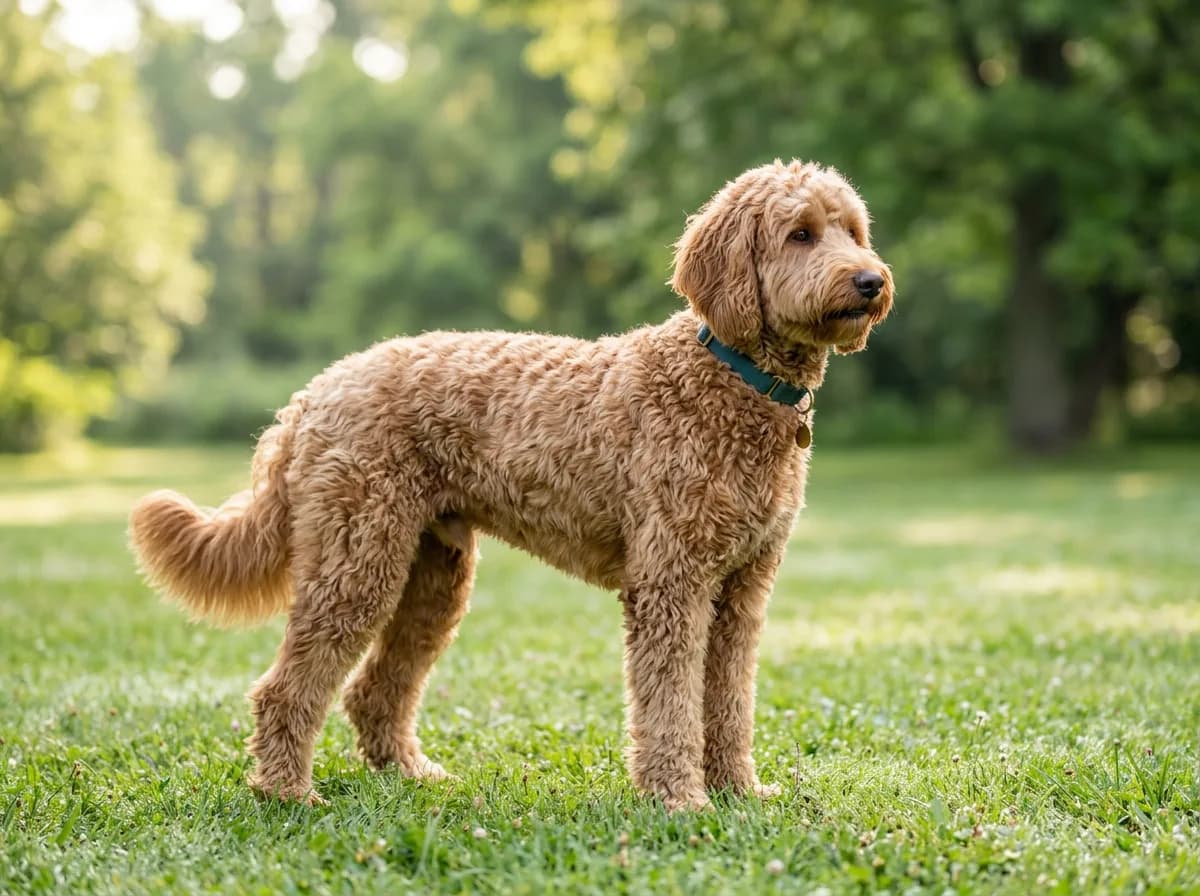
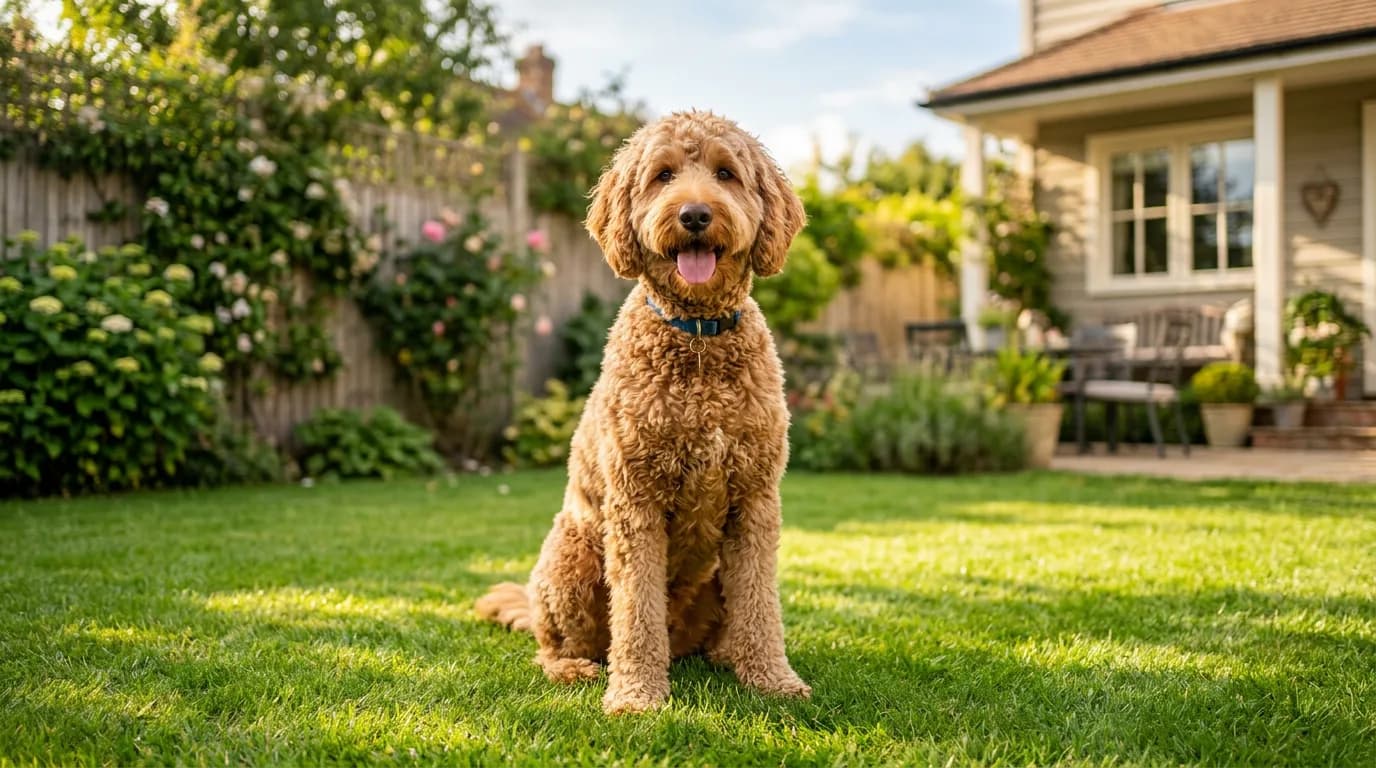
A Labradoodle is a crossbreed created by mating a Labrador Retriever with a Poodle. The goal was to blend the Labrador's easygoing, people loving nature with the Poodle's intelligence and low shedding coat. Because it is a cross and not a fully standardized purebred, the Labradoodle is best understood as a spectrum rather than a single fixed look. One dog might have a loose wavy coat and a blocky Labrador head, while its own littermate carries tighter curls and a finer Poodle muzzle.
Both parent breeds bring a lot to the table. The Labrador Retriever is famous for being gentle, trainable, and endlessly sociable, which is exactly why Labs dominate family homes and service work. The Poodle, often unfairly stereotyped as a fussy show dog, is one of the most intelligent and athletic breeds there is, and its dense curly coat sheds very little. When breeders talk up the Labradoodle, they are really selling this combination: a bright, biddable dog wrapped in a coat that many allergy sensitive families can tolerate better than a heavy shedding breed.
It is worth saying clearly that "Labradoodle" covers a wide range of dogs. A Labradoodle puppy from a Standard Poodle parent can mature past 60 pounds, while one from a Miniature Poodle line may top out under 30. Coat, color, and even temperament shift depending on which parent a given puppy takes after. That variability is the single most important thing to understand before you fall for a photo online, and it is the reason this pillar exists: to set expectations honestly before you start shopping for Labradoodle puppies.
Where the Labradoodle came from: the Wally Conron origin story
The modern Labradoodle traces back to a specific person and year. In 1989, Wally Conron, who worked for the Royal Guide Dog Association of Australia, was asked to create a guide dog for a blind woman whose husband was allergic to dog hair. Conron crossed a Labrador Retriever with a Standard Poodle to try to combine the Labrador's guide dog temperament with the Poodle's lower shedding coat, and he coined the name "Labradoodle" to market the resulting litter.
The experiment worked well enough that the idea spread far beyond guide work, and within a couple of decades the Labradoodle had become one of the most requested designer dogs on the planet. Interestingly, Wally Conron later voiced regret about what he had started, worried that careless breeders chasing the trend were producing unhealthy, poorly socialized dogs. That tension, between a genuinely appealing crossbreed and a marketplace that sometimes cuts corners, runs through this whole guide.
Labradoodle generations explained: F1, F1B, F2, and multigen
If you only remember one technical thing about this breed, make it this: generation matters. The label tells you how far removed a dog is from its original Labrador and Poodle parents, which in turn predicts coat type, shedding, and consistency. Use the generation comparison table below as your cheat sheet, then read the notes so the shorthand actually makes sense.
| Generation | What it is | Approx. Poodle influence | Coat and shedding tendency |
|---|---|---|---|
| F1 | Labrador crossed directly with Poodle | About 50 percent | Wavy, more likely to shed, most variable litter to litter |
| F1B | An F1 Labradoodle bred back to a Poodle | About 75 percent | Curlier, lower shedding, favored by allergy sensitive homes |
| F2 | Two F1 Labradoodles bred together | About 50 percent | Least predictable, coats range widely across a litter |
| Multigen | Later crosses of Labradoodle to Labradoodle | Varies, often 60 to 75 percent | Most consistent coat and shedding when bred carefully |
| Australian Labradoodle | Multigen line that may include other infused breeds | Varies by program | Fleece or wool coat bred for consistency |
The first cross is the F1 generation: one purebred Labrador Retriever bred to one purebred Poodle. F1 dogs often show the most hybrid variety, meaning a single litter can include a range of coat types from nearly straight to loosely curled. When breeders want more curl and lower shedding, they breed an F1 back to a Poodle to create the F1B generation, which is roughly three quarters Poodle and tends to be the safest bet for allergy sensitive households. Breed two F1 dogs together and you get the F2 generation, which is the least predictable of all. Petful’s separate guide to fox red Labradors covers where the color comes from and what it costs.
Once you go beyond those first crosses, you reach the multigenerational Labradoodle, produced by breeding later generation Labradoodles to each other over several rounds. Good multigen programs select for coat and temperament so the puppies come out far more uniform than an F1 litter. This is the foundation of the Australian Labradoodle, a carefully developed multigen line. In breeder shorthand you will often see these dogs described as an australian labradoodle multigen line, signaling a program that has been selecting for a consistent fleece coat and steady temperament across many generations.

Petful may earn a commission when you click through to Chewy, at no extra cost to you.
The Australian Labradoodle
The Australian Labradoodle deserves its own note because it is not simply a Labradoodle bred in Australia. It is a distinct, multigenerational type that some breed associations have worked to standardize, and reputable programs may have infused small amounts of other breeds (such as spaniels) early in the line to lock in coat quality and temperament. The result is a dog bred for a soft, consistent fleece coat and a reliably gentle personality, which is why Australian Labradoodles often command higher prices than a first generation cross.
For most pet buyers the practical takeaway is simple. If you want maximum predictability in coat and shedding, a well bred multigen or Australian Labradoodle from a transparent breeder is usually the surest route. If you are more flexible and want a wider range at a lower price, an F1 or F1B can be a wonderful pet. Neither choice is wrong, but knowing the difference protects you from paying a premium for a label you did not understand.
Why Labradoodles became so popular
Beyond the allergy angle, the Labradoodle rode a wave of broader appeal. The blend of a family friendly Labrador and a clever Poodle produced a dog that photographs beautifully, learns fast, and slots neatly into busy, active households, which is catnip for social media and word of mouth alike. Labradoodles also proved themselves far beyond the guide dog role that started it all, working as therapy dogs in hospitals and schools, as service and assistance dogs, and as emotional support companions, thanks to their trainability and gentle, intuitive nature.
That versatility is a big part of why demand exploded. A single well behaved doodle at the dog park can sell a dozen neighbors on the breed, and the low shedding reputation gave allergy prone families a reason to choose one over a heavy shedding breed. The popularity is a double edged sword, though, because runaway demand is exactly what pulls in careless breeders, a theme we return to later in this guide.
Labradoodle temperament and personality
As a family suitability summary: the temperament blends the Labrador's people-focus with the Poodle's quick mind, a combination that suits most households that can meet the exercise bar, including first-time owners, active retirees, and families with school-age kids who want a social dog that joins everything the household does, every single day.
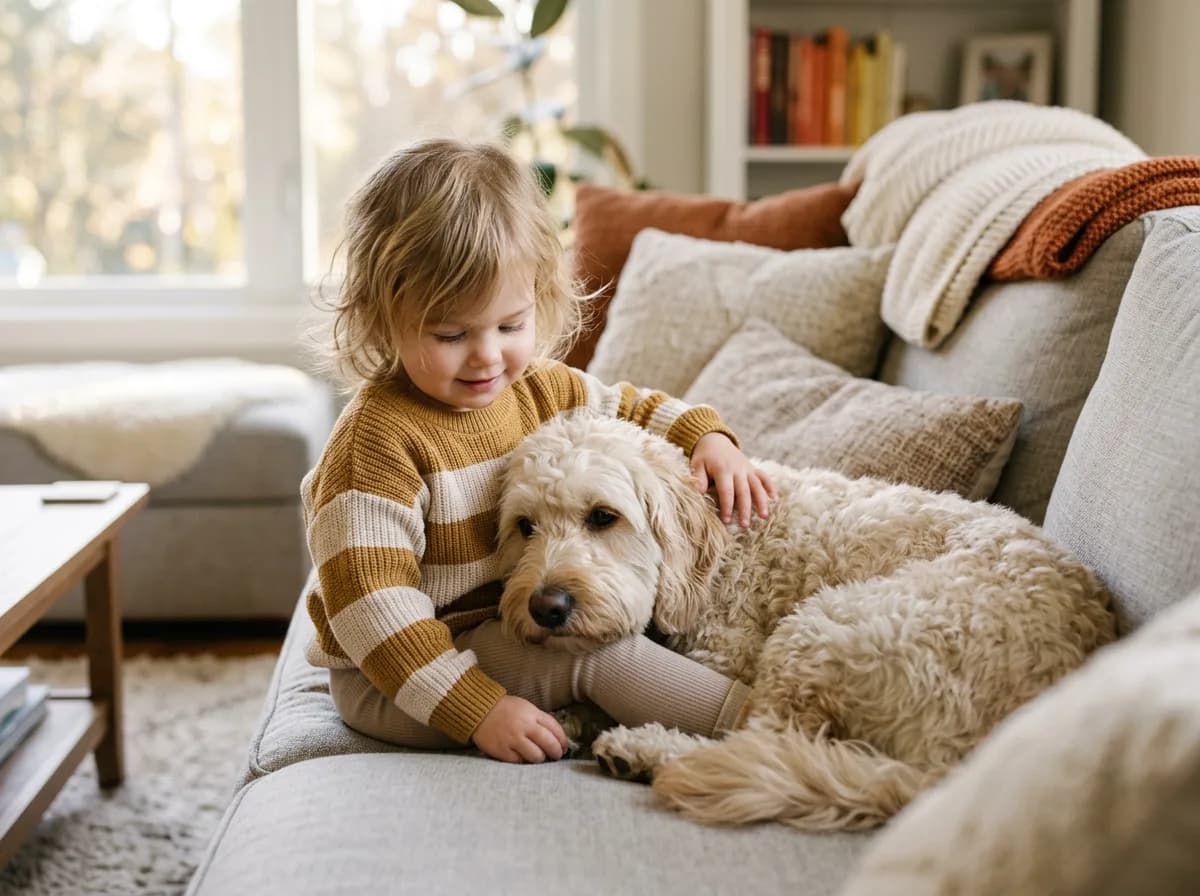
Temperament is where the Labradoodle earns most of its fans. Blend the Labrador's affectionate, eager to please character with the Poodle's sharp intelligence and you usually get a dog that is friendly, playful, highly trainable, and deeply bonded to its people. Most Labradoodles are social butterflies that thrive on company, do well with children when raised properly, and pick up cues quickly because they genuinely want to work with you.
Typical Labradoodle traits that owners report include:
- Highly social and affectionate, happiest when they are near their people.
- Intelligent and quick to learn, especially with reward based training.
- Playful and energetic, often staying puppyish well into adulthood.
- Generally good with children and other pets when socialized early.
- Sensitive souls that respond poorly to harsh handling or long isolation.
That people focus has a flip side worth flagging. Because these dogs attach so strongly, many do not cope well with being left alone for long stretches, and boredom can curdle into barking, chewing, or anxiety. They are also energetic, especially the larger lines, so a Labradoodle that does not get enough physical and mental exercise will often invent its own entertainment at your expense.
- A Labradoodle is smart and active, so plan on daily walks, play, and training games rather than expecting a couch potato out of the box.
If you are wondering whether a Labradoodle is a good house dog, the short answer is yes for most active households, with the caveat that they want to be part of the family rather than left in a yard. Personality, barking tendencies, trainability, and how the breed behaves with kids and other pets all deserve a deeper look than a pillar can give, so for the full picture read our dedicated guide to Labradoodle temperament.
Labradoodle sizes: mini, medium, and standard
Treat these size varieties as a quick overview of the mini, medium, and standard ranges rather than the final word: heights, weights, and full-grown timelines vary by generation and parent size, so for the full charts by age, the route to the dedicated size guide is worth the click before you talk to a breeder.
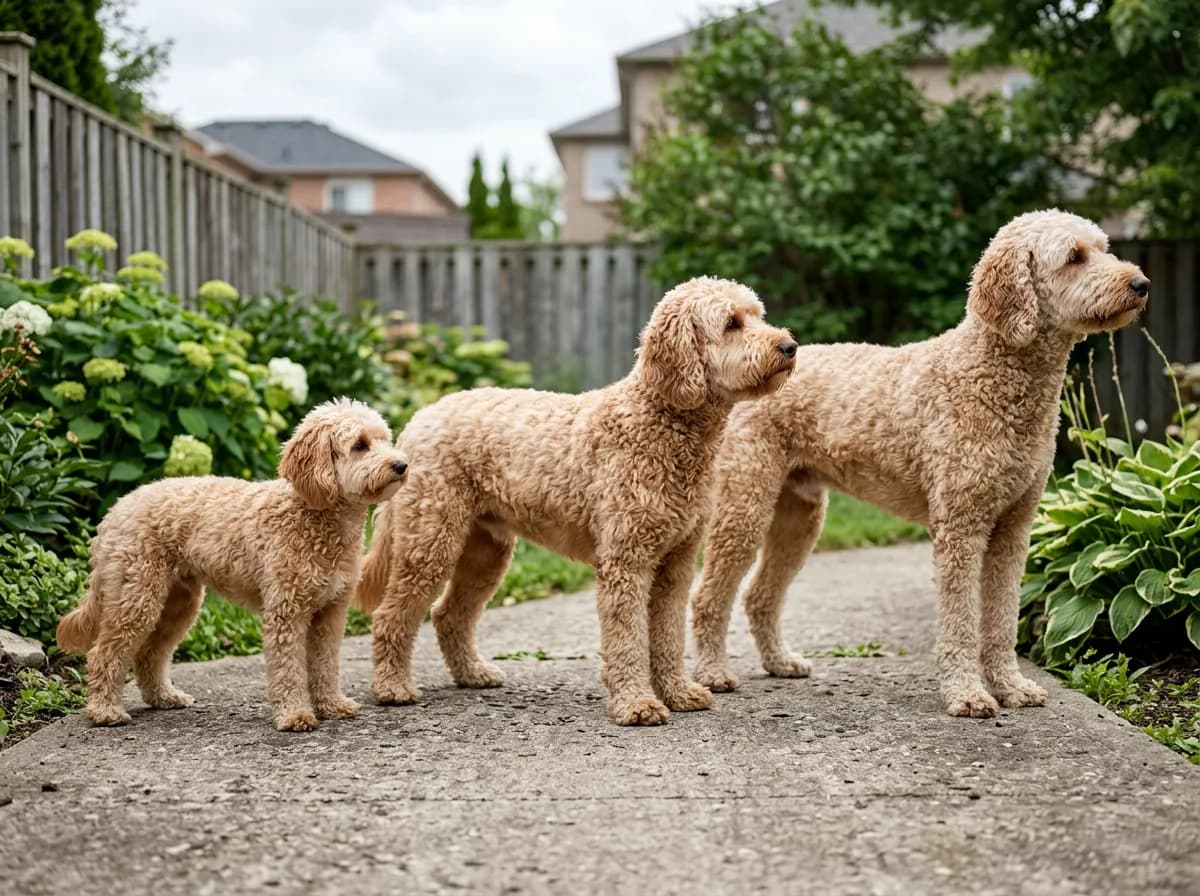
One of the most confusing parts of shopping for this breed is size, because a Labradoodle can range from a lap sized companion to a dog that fills a doorway. The size a puppy grows into depends almost entirely on which Poodle was used: a Toy or Miniature Poodle produces smaller dogs, while a Standard Poodle produces the big ones. Breeders generally sort them into three buckets, mini, medium, and standard.
Here is a quick reference. Treat these as typical ranges rather than guarantees, since an individual dog can land above or below its bracket, and the numbers below are the kind of detail a labradoodle size chart is built to capture.
| Size | Typical height at shoulder | Typical adult weight |
|---|---|---|
| Mini | 14 to 16 inches | 15 to 30 pounds |
| Medium | 17 to 20 inches | 30 to 45 pounds |
| Standard | 21 to 24 inches | 45 to 65 pounds |
A few practical notes on sizing:
- Mini Labradoodles suit apartments and smaller homes, but they are still active dogs, not toys, and many are surprisingly bouncy.
- A medium labradoodle size hits a sweet spot for a lot of families: big enough to be sturdy with kids, small enough to manage on a leash.
- A large labradoodle size (the standard variety) means more strength, more food, and more space, so be honest about whether your home and routine can handle it.
- Weight matters for health, because larger dogs tend to carry higher risk of joint problems and shorter average lifespans.
Because sizing drives so many other decisions (crate size, food budget, exercise needs, even lifespan), we cover growth charts, full grown expectations, and how to predict adult size in a separate guide. For the complete breakdown, see our full guide to Labradoodle sizes.
Petful may earn a commission when you click through to Chewy, at no extra cost to you.
Labradoodle colors and coat types
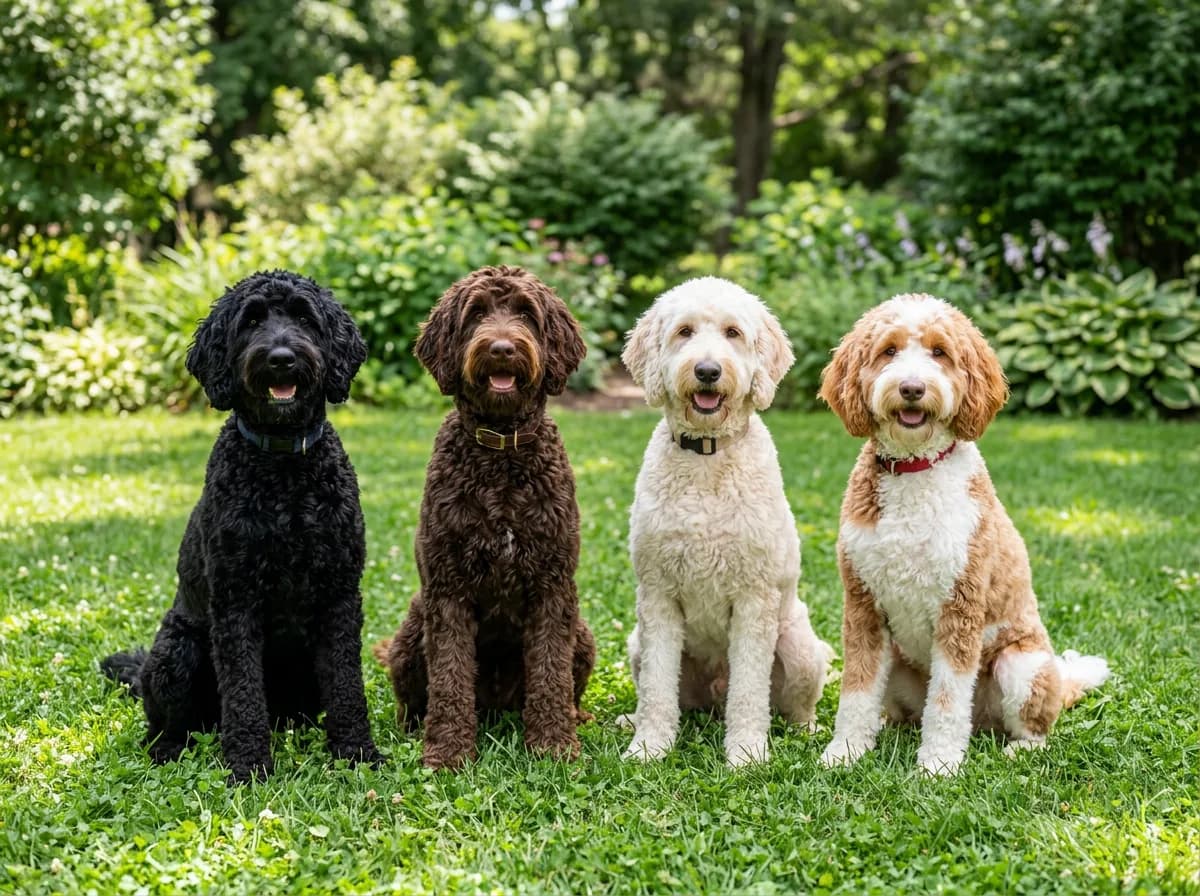
Color is one of the most searched aspects of the breed, and Labradoodles come in a genuinely wide palette. The most common shades include cream, gold, apricot, chocolate, and black, but you will also find red, silver, and multi color patterns. A solid labradoodle black is one of the most striking and popular looks, while a labradoodle white or cream dog reads softer and more teddy bear like. Chocolate is a perennial favorite too, and searches for chocolate labradoodle puppies climb every spring as buyers hunt for that rich brown coat. Parti and abstract patterns, such as labradoodle black and white coats, mix a base color with white markings and have a devoted following.
Coat type matters even more than color, because it drives shedding, grooming, and how allergy friendly a given dog really is. Labradoodle coats generally fall into three categories:
- Hair coat: the most Labrador like, straighter, and the most likely to shed. Easiest to brush but the least allergy friendly.
- Fleece coat: soft, wavy, and low shedding. This is the coat many buyers picture and it balances looks with manageable upkeep.
- Wool coat: dense, curly, and closest to a Poodle. It sheds the least but mats fast and needs the most disciplined grooming.
This is the right place to be honest about the word "hypoallergenic." No dog is truly allergen free, and a Labradoodle is not a guaranteed fix for allergies. What a low shedding, curlier coat can do is release less dander and hair into your home, which many allergy sufferers tolerate better. A tighter fleece or wool coat, especially from a higher Poodle percentage line like an F1B, gives you the best odds. A straighter hair coat gives you the worst. The promise of a fully hypoallergenic coat is marketing shorthand, not biology, so meet the actual dog and spend time with it before you count on it.
- Even a curly coated Labradoodle produces some dander and saliva allergens, so an allergy sensitive buyer should spend real time with the specific dog before committing.
People often ask whether a Labradoodle is a high maintenance dog, and coat is the honest answer: yes, the grooming commitment is real. A fleece or wool coat needs regular brushing to prevent matting plus professional grooming every six to ten weeks. For the full color genetics rundown, browse our guide to Labradoodle colors, and for coat maintenance, shedding, and grooming schedules, see our Labradoodle grooming and shedding guide.
The Mini Labradoodle
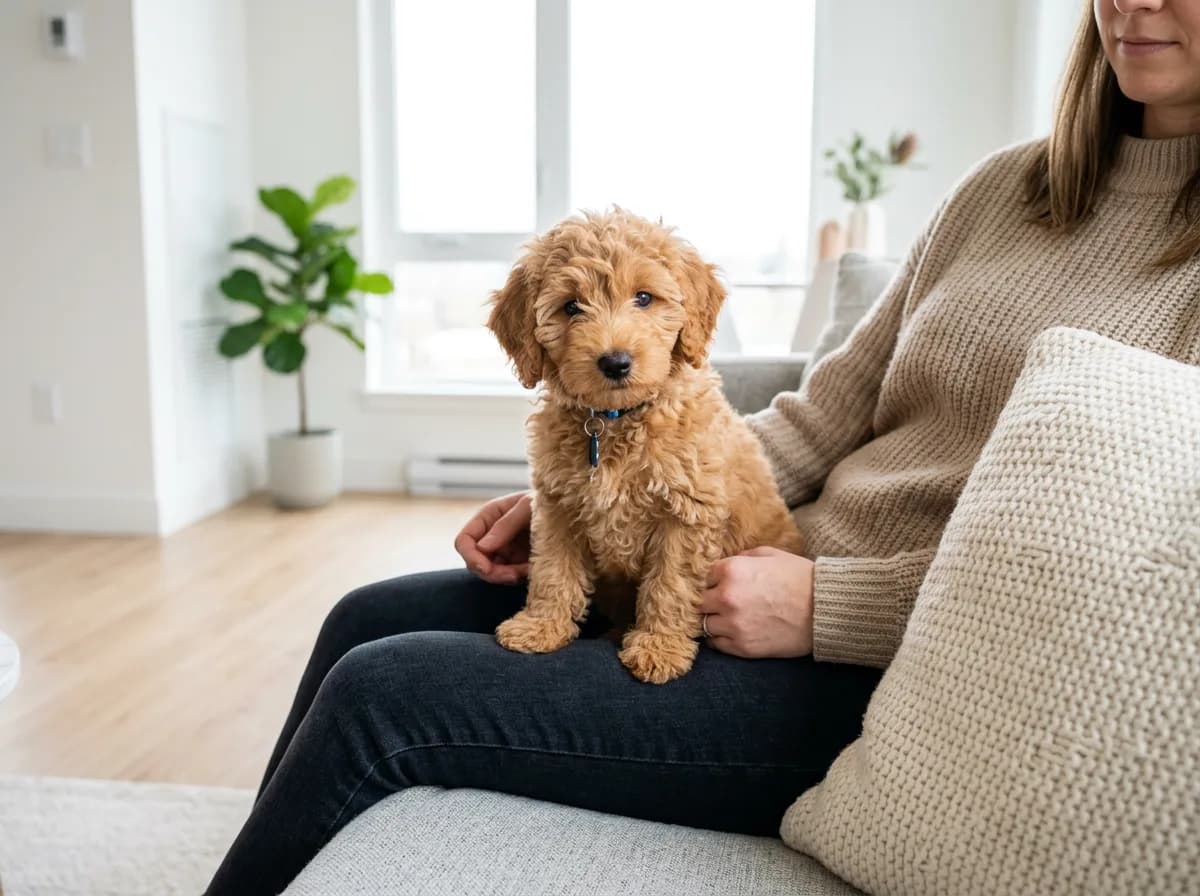
The Mini Labradoodle is popular enough to deserve its own spotlight. A mini labradoodle is simply a Labradoodle bred down in size, usually by using a Miniature or Toy Poodle as one parent, and it typically stands 14 to 16 inches and weighs 15 to 30 pounds full grown. Buyers love the format because it keeps the friendly, trainable doodle personality in a body that fits condos, smaller yards, and easier handling.
Search demand around this variety is huge, and it comes in a few flavors. Some people simply search labradoodle mini, others look for the labradoodle mini australian type (a smaller Australian Labradoodle line), and many want to know about a labradoodle mini full grown so they can predict the adult size before buying. A related question, mini labradoodle size, comes up constantly because growth can be hard to predict when Toy Poodle genetics are involved.
- Great for apartments and first time owners who still want an active companion.
- Still needs daily exercise and grooming, just in a smaller package.
- Growth can be less predictable, so ask the breeder about both parents' sizes.
Because the mini has its own sizing quirks, health notes, and buying considerations, we go deeper in the dedicated Mini Labradoodle guide.
Caring for a Labradoodle: exercise, grooming, and training
The care basics never change no matter which size or generation you bring home: daily exercise that genuinely tires the dog, a consistent grooming cadence of several brushing sessions a week plus a professional clip every six to eight weeks, and short, positive training sessions that start in puppyhood and never really stop through adulthood.
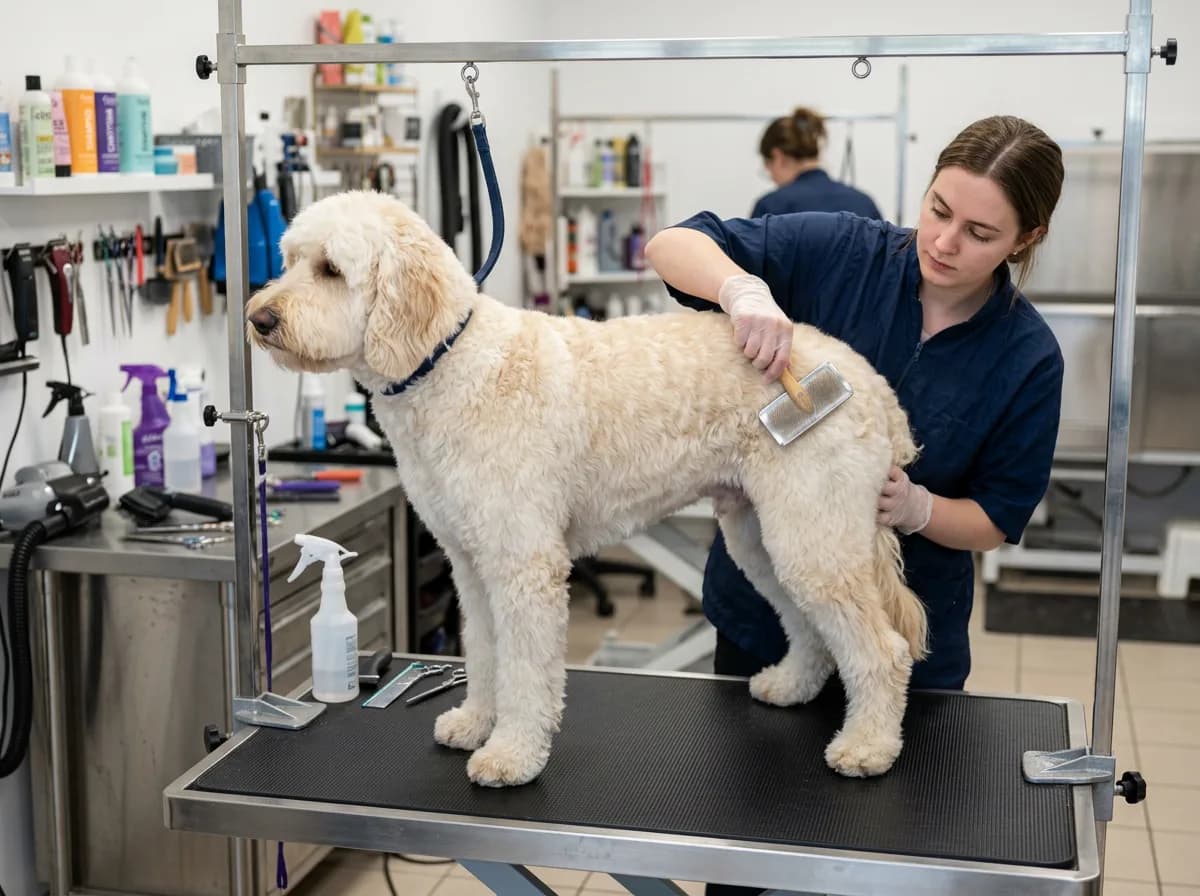
A Labradoodle is not a low effort dog, and going in clear eyed here will save you a lot of frustration. These are intelligent, athletic animals that need a real daily outlet, consistent coat care, and early, positive training to become the easygoing companions people hope for. Skimp on any of the three and you get a bored, unkempt, or unruly dog, none of which is the dog's fault.
On exercise, plan for at least 30 to 60 minutes of real activity per day for most dogs, scaling up for standard sized, higher energy individuals. Walks are a baseline, but Labradoodles thrive when you add fetch, swimming, puzzle toys, and training games that work their clever brains as hard as their legs. A tired Labradoodle is a well behaved Labradoodle.
Grooming is the ongoing commitment many new owners underestimate:
- Brush the coat several times a week (daily for wool coats) to prevent painful mats.
- Book a professional groom every six to ten weeks for trimming and a full clean up.
- Keep ears clean and dry, since drop ears plus moisture can invite infections.
- Trim nails regularly and keep up with dental care like any breed.
Training should start early and lean on reward based methods, which suit this sensitive, eager to please breed far better than heavy handed correction. Prioritize socialization with people, dogs, and everyday sights and sounds while your puppy is young, and build in calm alone time from the start so your dog learns that being by itself is normal and safe.
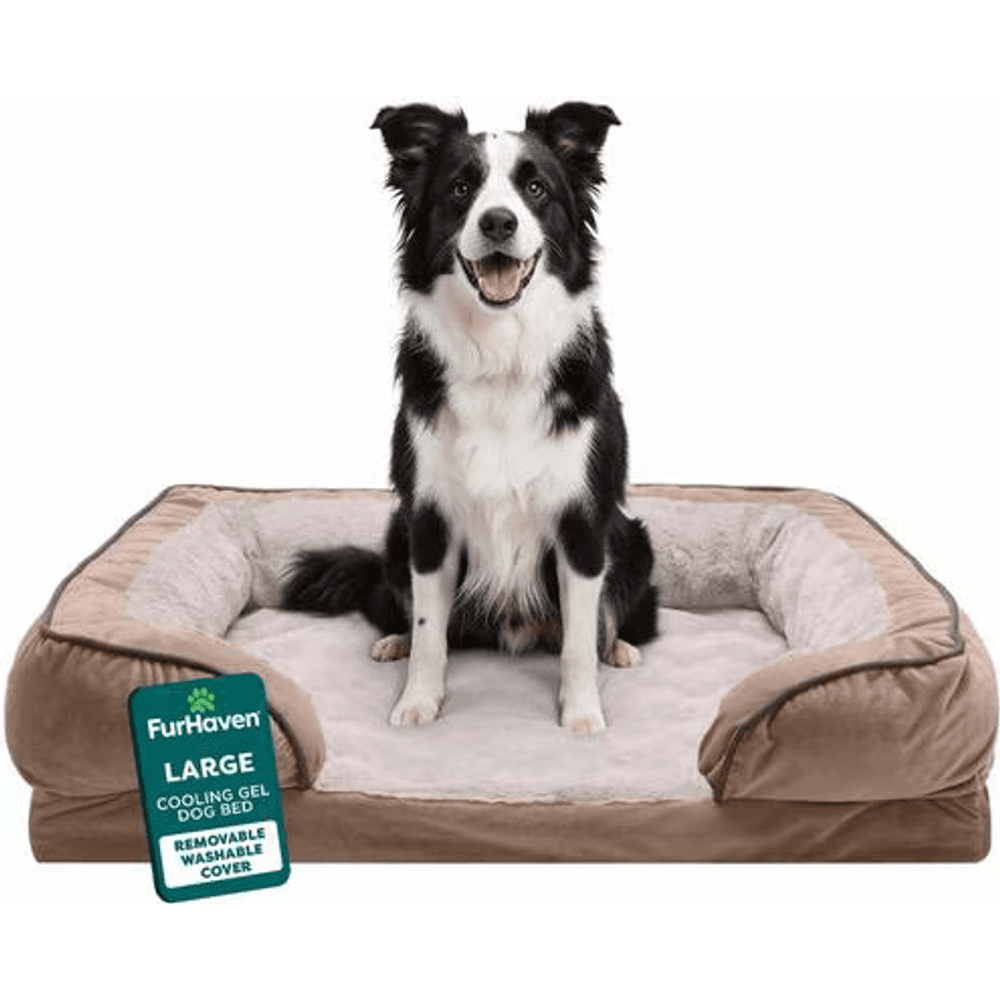
An orthopedic sofa bed with three bolstered sides for dogs who like to rest their head and joints against a cushion. The supportive foam base cradles hips and elbows, a comforting spot for an older or shaky dog to settle.
Petful may earn a commission when you click through to Chewy, at no extra cost to you.
Coat care is the part owners underestimate on every doodle. Our Sheepadoodle grooming guide covers the denser Old English Sheepdog coat and what it demands.
Training and socialization
Early, consistent training is the difference between a delightful Labradoodle and a frustrating one. These dogs are smart enough to learn quickly and sensitive enough to shut down under harsh correction, so keep sessions short, frequent, and upbeat, and reward the behavior you want rather than punishing the behavior you do not. Puppy classes are worth every penny, both for the obedience foundation and for the structured, supervised socialization they provide.
Socialization should be a deliberate project in the first few months, not an afterthought. Introduce your puppy to a wide variety of people, friendly vaccinated dogs, surfaces, sounds, car rides, and gentle handling of paws, ears, and mouth while it is young and impressionable. A well socialized Labradoodle grows into a confident, easygoing adult, while an under socialized one can become nervous or reactive. Pair that groundwork with crate training and gradually longer stretches of alone time, and you set the stage for the calm, adaptable companion the breed is known for at its best.
- Because Labradoodles bond so hard, teaching a puppy to settle calmly on its own from day one is the best insurance against separation problems later.
What (and what not) to feed a Labradoodle
Feeding a Labradoodle is mostly straightforward: a complete, high quality dog food appropriate for the dog's size, age, and activity level, portioned to keep a lean body condition. Because so many Labradoodles are food motivated (thank the Labrador side), it is easy to overfeed them, and excess weight is one of the most avoidable health risks in the breed. Measure meals, go easy on treats, and adjust portions to the individual dog rather than the bag's generic chart.
For a size-by-size feeding plan covering mini, medium and standard dogs, see our guide to the best dog food for Labradoodles.
To keep your Labradoodle lean and healthy at the bowl:
- Feed a life stage appropriate food (puppy, adult, or senior) and switch on your vet's timeline, not on a whim.
- Measure every meal with a proper cup or scale instead of eyeballing it.
- Count treats and table scraps as part of the daily calories, capping them at roughly ten percent.
- Split the food into two meals a day rather than one big bowl, which also helps reduce bloat risk in larger dogs.
- Check body condition monthly: you should feel the ribs easily and see a waist from above.
What you should not feed a Labradoodle is where owners get caught out. Several common human foods are genuinely dangerous to dogs, and the list below is not exhaustive but covers the big offenders:
- Chocolate, coffee, and anything with caffeine: toxic and potentially fatal.
- Grapes and raisins: can cause sudden kidney failure even in small amounts.
- Onions, garlic, chives, and leeks: damage red blood cells and cause anemia.
- Xylitol (a sweetener in gum, some peanut butters, and baked goods): triggers dangerous blood sugar crashes and liver damage.
- Macadamia nuts, alcohol, and raw bread dough: all toxic or seriously harmful.
- Cooked bones and heavily fatty scraps: choking, blockage, and pancreatitis risks.
Because the larger lines can be prone to bloat, it also helps to avoid one giant daily meal, discourage gulping, and skip hard exercise right around mealtimes. When in doubt about a specific food or a suspected toxin, call your veterinarian or an animal poison control line right away rather than waiting to see what happens.
- If your Labradoodle eats chocolate, grapes, raisins, or anything with xylitol, treat it as urgent and contact your vet or a pet poison control line immediately.
How long do Labradoodles live? Lifespan and health
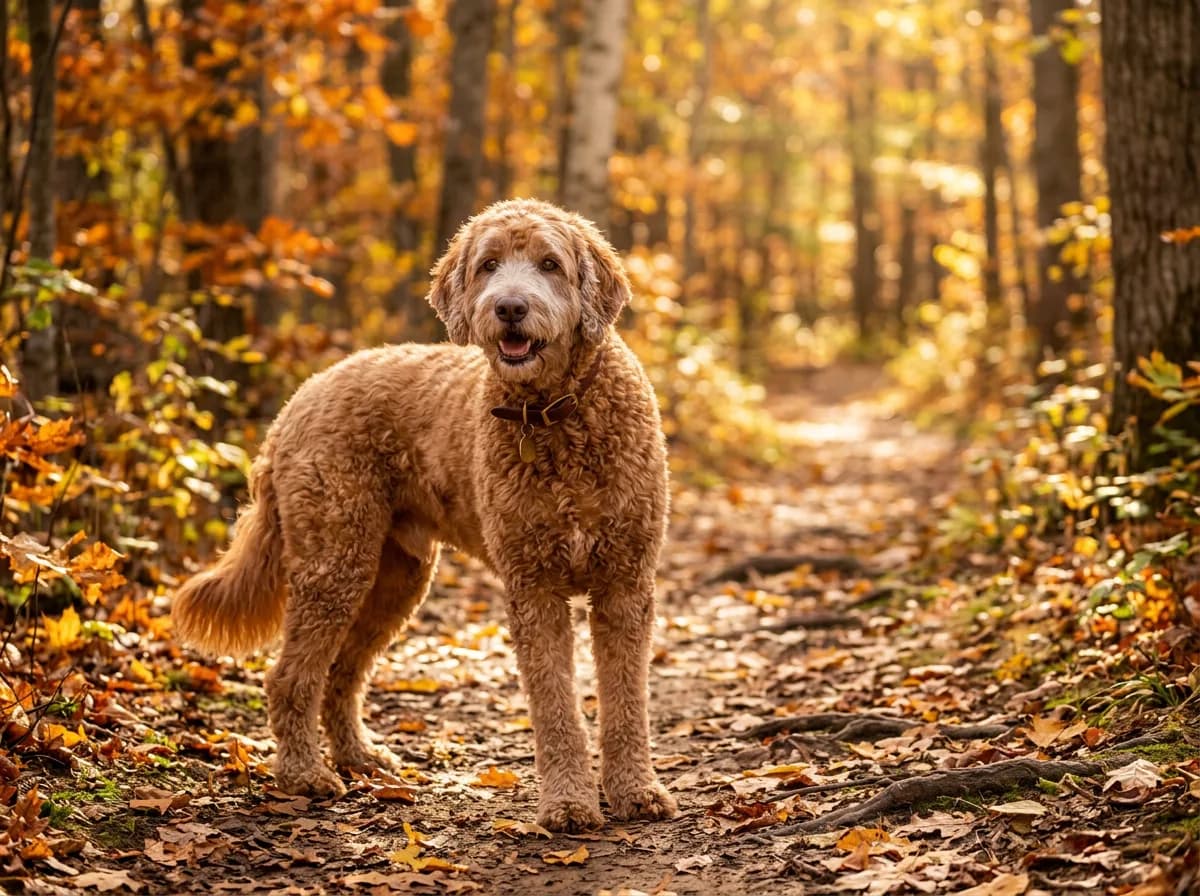
Most Labradoodles live 12 to 15 years, and size is the single biggest predictor within that range: smaller minis tend toward the upper end while big standards often sit lower. When people ask what do most labradoodles die from, the honest, evidence based answer is that the leading cancer bloat causes of death mirror what shortens the lives of the parent breeds, alongside age related organ decline. In plain terms, cancer is a common end of life diagnosis, and in larger, deep chested dogs, bloat (gastric torsion) is a fast moving emergency that can be fatal without immediate surgery.
- 1Typical Labradoodle lifespan is 12 to 15 years
- 2Smaller dogs generally live longer than large standards
- 3The most common serious causes of death are cancer and, in big dogs, bloat
- 4Good breeding, healthy weight, and routine vet care meaningfully improve the odds
Put in average lifespan years, that means a well cared for Labradoodle often gives you well over a decade of companionship. Variety specific expectations differ a little: buyers researching australian labradoodle lifespan will find these carefully bred multigen dogs frequently reach the higher end of the range, while a miniature labradoodle lifespan can stretch toward 15 or 16 years thanks to smaller body size. Whatever the size, the labradoodle lifespan you actually get is shaped as much by weight, exercise, and preventive care as by genetics.
Because both parent breeds carry known inherited conditions, Labradoodles can be prone to several health issues worth screening for:
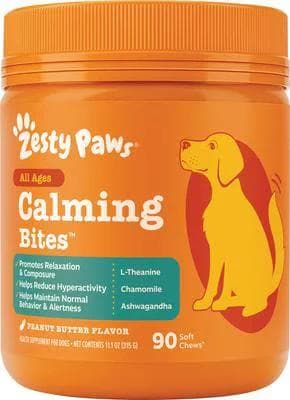
Peanut butter soft chews with L-theanine, chamomile, and ashwagandha to ease hyperactivity and support calm, relaxed behavior.
Petful may earn a commission when you click through to Chewy, at no extra cost to you.
- Hip and elbow dysplasia: joint malformations more common in larger dogs.
- Progressive retinal atrophy and other eye conditions: inherited vision problems the Poodle side can pass on.
- Ear infections: the floppy, hairy ears trap moisture and need routine care.
- Allergies and skin issues: fairly common and sometimes lifelong to manage.
- Bloat (gastric dilatation volvulus): an acute emergency in deep chested standards.
- Addison's disease and epilepsy: less common but documented in the lines.
Preventive care does a lot of the heavy lifting here. Keeping your Labradoodle at a healthy weight takes direct pressure off the hips and joints, routine dental care prevents the slow burning infections that quietly shorten lives, and regular veterinary checkups (annual for young dogs, twice yearly as they age) catch problems like cancer early, when they are most treatable. For deep chested standards, ask your vet whether a preventive gastropexy, a procedure that tacks the stomach in place to reduce the risk of a fatal bloat, makes sense to do at the same time as a spay or neuter. For more, see Petful’s guide to Labradoodle health problems.
The best defense is choosing a breeder who health tests both parents (hips, eyes, and relevant genetic panels), then keeping your own dog lean, active, and current on veterinary care. Health testing is exactly the kind of corner that careless "designer dog" breeders skip, which is the perfect bridge to the next section.
Why some vets are cautious about doodles
Doodles are wildly popular, but it is worth understanding why some veterinarians and breed experts urge caution rather than pure enthusiasm. The most important reason is the hybrid vigor myth. The comforting idea is that crossing two breeds automatically produces a healthier dog, but genetics does not work that neatly. Crossbreeding can reduce the odds of some breed specific problems, yet a Labradoodle inherits from two breeds that each carry their own genetic conditions, so it can just as easily inherit health issues from both sides if the parents were not screened.
There is a real strand of veterinary caution doodles buyers rarely hear from a breeder's sales pitch, and it is not anti doodle so much as anti hype. The explosive demand for these dogs pulled in a wave of profit driven and puppy mill breeders who skip health testing, breed unstable temperaments, and market unproven "hypoallergenic" guarantees. Even Wally Conron, who created the first litter, has publicly worried about the poorly bred, unhealthy dogs the trend produced. None of this means a Labradoodle is a bad choice. It means the label alone guarantees nothing, and the breeder behind the dog matters enormously.
- A Labradoodle from a health testing, temperament focused breeder is a very different dog from a mill puppy sold on the hypoallergenic promise alone, even though both wear the same label.
The practical antidote is simple: insist on proof of health testing for both parents, ask to meet the mother and see the environment, walk away from anyone who dodges questions or pressures you, and be skeptical of any breeder who leans hard on hybrid vigor or a hypoallergenic guarantee. Do that, and most of the legitimate concerns melt away.
Before you buy, expect a responsible breeder to happily do all of the following:
- Show current health testing results (hips, elbows, eyes, and relevant genetic panels) for both parents.
- Let you meet the mother and see where the puppies are actually being raised.
- Explain the generation of the litter and why they chose this particular pairing.
- Talk openly about the breed's downsides, not just its selling points.
- Provide a written health guarantee and agree to take the dog back if things ever do not work out.
How much do Labradoodles cost? Buying and adoption
- Knowing what Labradoodles cost is only half the decision; the other half is choosing to buy or adopt responsibly, which means a health-testing breeder with published results or a doodle rescue, never the cheapest listing you can find. Responsible sourcing costs more up front and saves multiples of that figure in veterinary bills later.
Cost is one of the first practical questions buyers ask, and the honest answer is that it spans a wide band. Most Labradoodle puppies from a responsible breeder land somewhere in the low to mid thousands, with well bred multigen and Australian Labradoodle lines sitting at the top of the range because of the health testing and generations of careful selection behind them. When people search labradoodle price, they are usually surprised by both the ceiling and by how much the upfront number understates the true lifetime cost.
You will see plenty of listings advertising a labradoodle for sale, and a lot of local searches for labradoodle for sale near me, but price alone is a poor filter. A suspiciously cheap puppy often signals skipped health testing, poor socialization, or a mill operation, while a fair price from a transparent, health testing breeder is money well spent. Adoption is also very real for this breed: doodles turn up in shelters and breed specific rescues more often than people expect, so searching for labradoodle puppies for adoption or contacting a doodle rescue is a genuine, lower cost, and rewarding route.
Whichever way you go, budget for the ongoing costs too:
- Professional grooming every six to ten weeks, which adds up fast over a dog's life.
- Quality food scaled to the dog's size.
- Routine and emergency veterinary care, plus optional pet insurance.
- Training, supplies, boarding, and the occasional surprise.
Because pricing, breeder vetting, and adoption deserve a full walkthrough (including how to spot a mill and what questions to ask), we cover it all in the dedicated Labradoodle price and cost guide.
Labradoodle vs Goldendoodle: how to choose
The most common comparison shoppers wrestle with is labradoodle vs goldendoodle, since both are Poodle crosses with a lot of overlap. The core difference is the non Poodle parent: a Labradoodle is half Labrador Retriever, while a Goldendoodle is half Golden Retriever. That single swap nudges everything else. On looks, Goldendoodles often trend a touch softer and more uniformly "teddy bear," which is the heart of the labradoodle vs goldendoodle looks question, while Labradoodles show a bit more range.
The two are close enough on labradoodle vs goldendoodle size that generation and Poodle parent matter more than the breed label. Temperament is where fans argue hardest: the labradoodle vs goldendoodle temperament debate usually paints Goldendoodles as slightly softer and more consistently eager to please, and Labradoodles as a bit more independent and sometimes higher energy, though individual variation swamps these generalizations. On labradoodle vs goldendoodle price, the two overlap heavily, with well bred multigen lines of either commanding the most.
- Choose a Labradoodle if you like a touch more variety and the Labrador's playful, sturdy character.
- Choose a Goldendoodle if you want the Golden's famously mellow, uniformly friendly reputation.
- Either way, the breeder and generation matter more than the crossbreed name.
If you are genuinely torn between the two, the head to head decision (which one is better for your family, home, and lifestyle) gets a full side by side treatment in our Labradoodle vs Goldendoodle comparison.
The downsides of owning a Labradoodle
- It is also why some vets are cautious about doodles as a group. The hybrid-vigor myth oversells the health of any cross, and an honest section addresses that myth head-on instead of only marketing the breed: Labradoodles inherit the same joint, eye, and skin risks their parent breeds carry, exactly as laid out above.
Every honest breed guide owes you the cons, and the Labradoodle has real ones. If you are asking what the cons of a Labradoodle are, or what the downside to a Labradoodle really is, the biggest issues cluster around upkeep, unpredictability, and temperament needs rather than any single deal breaker.
Start with the coat, because the grooming maintenance costs are the downside owners most often underestimate. A fleece or wool coat needs frequent brushing plus professional grooming every six to ten weeks, and over a 12 to 15 year life that is a serious, recurring expense in both time and money. Next is unpredictability: because the Labradoodle is a cross and not a standardized breed, coat, size, shedding, and even temperament vary from dog to dog, so the "hypoallergenic" or "low shedding" promise is never guaranteed for an individual puppy.
The third major downside is emotional. These dogs bond intensely and can carry a real separation anxiety risk if they are left alone too much or never taught to settle on their own, which can show up as barking, chewing, or distress. Add in genuine daily exercise needs, the potential for inherited health issues when breeding is careless, and a purchase price that runs high, and you have a dog that rewards prepared owners and frustrates unprepared ones.
- Grooming is nonstop: brushing plus regular professional grooms for the life of the dog.
- No guarantees: coat, size, and shedding vary, and hypoallergenic is not assured.
- Prone to separation issues: they need company and early alone time training.
- High demand, high cost: upfront price and lifetime costs are both significant.
- Health depends on the breeder: poor breeding can pass on conditions from both parent breeds.
None of these are reasons to avoid the breed. They are reasons to go in prepared, and each of the deeper spoke guides linked throughout this page exists to help you do exactly that.
Living with a Labradoodle day to day
So what is it actually like to share your home with one of these dogs? Expect a shadow. Labradoodles are people first dogs that will follow you from room to room, lean into any attention on offer, and want to be included in whatever you are doing. In an active household that is a joy, but in a home where the dog is regularly left alone for a full workday, it can curdle into anxiety and destructive habits. Plan your days, or your dog walker and daycare budget, with that need for company in mind.
A typical good day for a happy Labradoodle looks something like this:
- A morning walk or run, with plenty of time to sniff and explore.
- A training game or puzzle feeder to work the brain as well as the body.
- Downtime and cuddles woven through the family's day.
- A second walk or play session, especially for higher energy standards.
- A quick brush out to stay ahead of mats, plus a little settled alone time practice.
They are also enthusiastically messy in the best possible way. That fleece coat picks up burrs, leaves, and pond water, the beard drips across the kitchen floor after every drink, and muddy paws are simply a fact of life. Keep a stack of towels by the door and build grooming into the weekly routine rather than treating it as an occasional emergency. Do all of that, and a Labradoodle repays you with years of affectionate, funny, and deeply loyal company that is hard to match.
Is a Labradoodle right for you?
Pulling it all together, a Labradoodle is an excellent choice for an active, engaged household that wants a smart, affectionate, often lower shedding companion and is ready to commit to grooming, exercise, training, and a responsible breeder or rescue. It is a poor choice for someone who wants a hands off, low grooming, low exercise dog, or who expects a crossbreed to be automatically healthy and allergen free.
Be realistic about the commitment, too. Beyond the purchase price, the first year alone brings vaccinations, spay or neuter surgery, training classes, supplies, food, and several grooming appointments, and the grooming and veterinary costs never really stop after that. A Labradoodle is a 12 to 15 year relationship with a dog that genuinely wants your time and attention, not just your money. If that sounds less like a burden and more like the kind of companionship you are after, the payoff is one of the most rewarding dogs you can bring home. For more, see Petful’s guide to PetSmart dog training cost.
| A Labradoodle may suit you if | A Labradoodle may not suit you if |
|---|---|
| You have time for daily exercise and play | You want a low energy, hands off dog |
| You can budget for regular professional grooming | You do not want ongoing grooming costs |
| You want a trainable, people focused companion | You are away from home for long stretches |
| You will buy from a health testing breeder or adopt | You are shopping purely on lowest price |
If the fit looks right, use this pillar as your map. Start with the topic that matters most to you now, whether that is sizing, color, grooming, price, the mini, or the Goldendoodle comparison, and each linked guide will take you the rest of the way.
Frequently asked questions
No dog is fully hypoallergenic, but a low shedding, curlier coated Labradoodle (especially a higher Poodle percentage line like an F1B) releases less dander and is often better tolerated by allergy sufferers. Spend time with the specific dog before committing.
It depends on the coat. Wool and fleece coats shed very little, while a straighter hair coat sheds more. Generation matters too, since more Poodle influence usually means less shedding.
Anywhere from about 15 pounds for a mini to 65 pounds for a standard, driven mainly by which Poodle size was used. Minis stand 14 to 16 inches and standards reach 21 to 24 inches.
Most are friendly, playful, and good with children when properly socialized, which makes them popular family dogs. They do best in active homes that can meet their exercise and companionship needs.
Typically 12 to 15 years, with smaller dogs often living longer than large standards. Healthy weight, exercise, and preventive veterinary care help them reach the upper end.
In grooming terms, yes. The coat needs frequent brushing plus professional grooming every six to ten weeks, and the breed also needs real daily exercise and mental stimulation.

Coreen Saito is a pet writer and longtime shelter volunteer with more than a decade in animal rescue. She covers cat behavior, breed care, and the small, ordinary science of sharing a life with companion animals, with a particular focus on honest takes about the products and decisions that actually matter. At home in Arizona, she's outranked by Mac (a dog with the loudest opinion in the house), Rebel (a cat who governs by quiet authority), and Meri (an orange tabby who runs the late shift and the laundry basket). She writes about all three, plus the rescues that keep coming through her life, at LifeWithMinty.com.
Sign up for expert-backed reviews and safety alerts all in one place.