Tibetan Mastiff: Temperament, Size, Health, and Care
The Tibetan Mastiff is a powerful, independent guardian. Learn about temperament, adult size, training, visitors, shedding, health, costs, and the households best prepared for this breed.

Petful is reader supported. As an affiliate of platforms like Amazon and Chewy, we may earn a commission when you buy through links on this page. There is no extra cost to you.
The Tibetan Mastiff is a large, independent guardian dog developed to notice change and make decisions without waiting for constant direction. That history can produce a devoted family companion, but it also explains the breed's reserve with strangers, territorial awareness, nighttime alert barking, and resistance to repetitive training. The right home values those traits and manages them. The wrong home expects a giant, universally social pet.
This guide turns the breed description into practical decisions:
- Whether the property and household can manage an adult guardian.
- How visitors, children, neighbors, and other animals will be protected.
- Which training, grooming, health, cost, and backup-care commitments begin before pickup.
These are common tendencies, not a promise about one dog. Temperament, health, and adult size vary, so buyers and adopters still need direct records, current observations, and qualified advice.

Sign up for expert-backed reviews and safety alerts all in one place.
Tibetan Mastiff at a glance
A Tibetan Mastiff combines independent guardian temperament with immense adult strength, slow maturity, and a dense double coat. Success depends on secure containment, planned visitor routines, early cooperative handling, realistic noise tolerance, seasonal grooming, and adults who can manage the normal dog rather than hoping for an unusually easy one.
The American Kennel Club describes a powerful, watchful breed with a natural guardian role. The American Tibetan Mastiff Association is even more useful for prospective owners because its breed education emphasizes the realities behind the impressive appearance. A thoughtful decision starts with normal adult behavior, not a puppy photograph or a dramatic size claim.
Breed snapshot
- Temperament: loyal with family, independent, watchful, and often reserved with unfamiliar people.
- Maturity: slow physical and behavioral maturity, with adolescence lasting longer than many buyers expect.
- Home: secure boundaries, controlled entrances, and enough separation options for visitors and household activity.
- Training: short reward-based sessions, early handling practice, and consistent rules without harsh confrontation.
- Exercise: regular walks and purposeful activity without assuming endless repetition will satisfy an independent dog.
- Coat: a dense double coat with significant seasonal coat care during the annual undercoat release.
- Health: breed-informed health screening plus lifelong attention to weight, mobility, thyroid function, eyes, and urgent bloat signs.
Size changes every ordinary task
Adult Tibetan Mastiffs are not merely tall. Their mass, coat, strength, and broad body affect vehicles, doorways, veterinary handling, boarding, grooming, and emergency transport. Petful's Tibetan Mastiff size and weight guide provides the detailed ranges and growth-tracking process. This breed guide focuses on what that scale means in daily life.
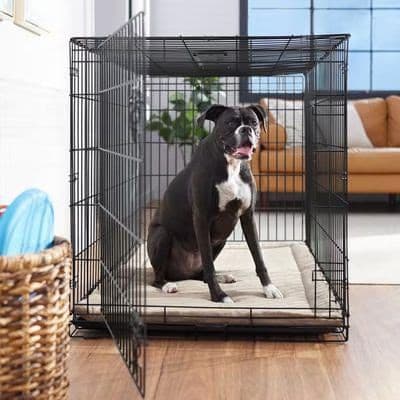
A puppy that fits under a chair may become an adult who cannot turn comfortably in the planned crate or vehicle. Measure usable space before purchase, and rehearse loading while the dog is still manageable. The Frisco Heavy Duty Fold & Carry X-Large Dog Crate is one crate to compare by actual interior dimensions, door placement, vehicle fit, and the individual dog's behavior. Many adults may need a different travel solution.
A guardian, not a decoration
Independent guardian does not mean untrainable, dominant, or automatically dangerous. It means the dog may notice a sound, person, animal, or boundary change and form its own response. Owners need to shape safe habits early, interrupt escalation before the dog is fully aroused, and use physical management that does not depend on perfect obedience.
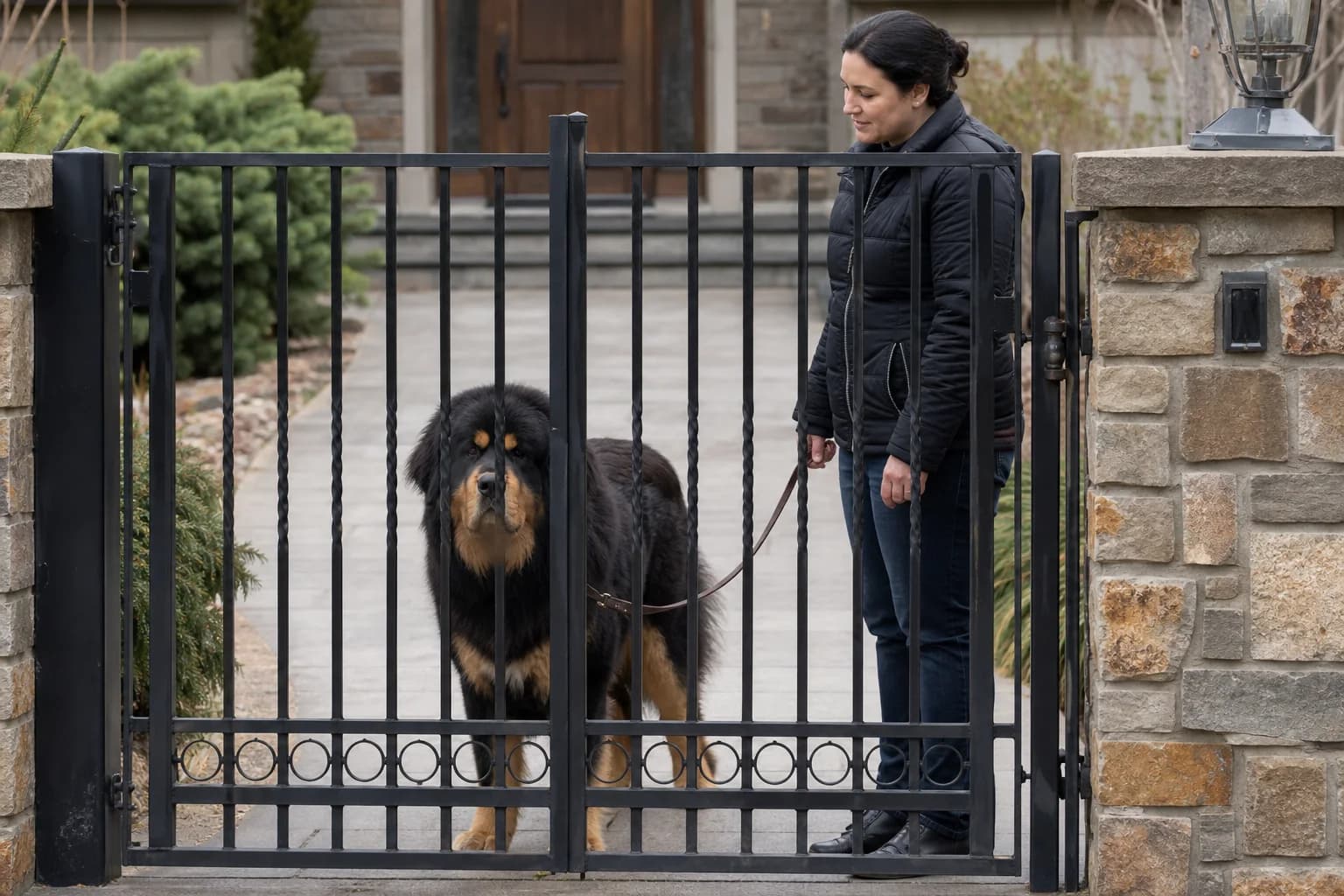
Secure containment and visitor management are therefore daily care, not optional extras. A closed door, latched gate, leash, resting area, and written family routine provide layers of protection when someone arrives. Voice control alone is not a containment plan for a powerful adult.
Why the original job still matters
Tibetan Mastiffs developed around people who needed dogs to notice threats, guard boundaries, and work with less moment-to-moment direction than a modern obedience competitor. That background helps explain why the breed can appear calm while constantly monitoring its environment. The dog does not need to be moving quickly to be making decisions.
History should inform expectations without becoming an excuse. A modern companion cannot be allowed to threaten every unfamiliar person because guardians once protected remote property. Owners must translate useful traits into lawful, humane household behavior: alert, then orient to the handler; observe, then settle; maintain distance, rather than advance.
This is how to show normal guardian behavior without romanticizing it. The dog may be loyal, imposing, and perceptive, but none of those qualities removes the owner's duty to prevent rehearsed aggression, nuisance barking, escape, or uncontrolled territorial access. A breed story should never be used to justify avoidable risk.
Slow maturity changes the timeline
Slow physical and behavioral maturity means the dog can look enormous while still making adolescent decisions. Owners sometimes reduce supervision because a one-year-old resembles an adult, then discover that impulse control, social judgment, and handling tolerance are still developing. Management should become more reliable as the dog grows, not disappear because the puppy coat is gone.
Plan development in stages:
Petful may earn a commission when you click through to Chewy, at no extra cost to you.
- Early puppyhood: build trust, handling, confinement, toilet habits, and calm exposure.
- Later puppyhood: strengthen leash skills, boundary routines, trading, and recovery after surprise.
- Adolescence: expect testing, renewed sensitivity, territorial interest, and rapid physical power.
- Social maturity: reassess dog compatibility, visitor tolerance, nighttime behavior, and freedom.
A previous success does not grant permanent permission. A dog that welcomed every visitor at six months may become selective later. Keep gates and routines in place while collecting evidence about the maturing individual.
Tibetan Mastiff temperament and family life
Many Tibetan Mastiffs show deep family affection while remaining selective about unfamiliar people. They may rest near household members, monitor entrances, and respond strongly to unusual nighttime activity. Some are demonstrative; others prefer quiet proximity. Neither style proves the dog will welcome strangers into the home.
The most honest description is conditional. A stable individual in a well-managed home can be calm and deeply attached. The same dog may become difficult if allowed to patrol uncontrolled property, rehearse fence charging, decide who may enter, or reach adulthood without handling and visitor practice.
The independent guardian mind
This breed was not designed for endless cue repetition. A Tibetan Mastiff may understand a request and still decide that something else deserves attention. Training works best when the behavior has a clear purpose, rewards are meaningful, sessions are brief, and the environment is arranged so the dog cannot practice the opposite response.
Harsh corrections can create conflict without teaching the desired behavior. Reward-based training is not permissive. It combines reinforcement with gates, leashes, distance, predictable routines, and a prompt end to situations the dog cannot yet handle. The owner controls access while the dog learns.
Is a Tibetan Mastiff friendly?
Friendly is too broad to answer with a simple yes. Family affection can be strong, while stranger reserve remains normal. A well-socialized Tibetan Mastiff may stand calmly at a distance, accept a planned introduction, or choose to disengage. The goal is safe neutrality and recoverability, not compulsory greeting or indiscriminate sociability.
Watch the individual dog's body language. Stiff posture, a fixed stare, closed mouth, forward weight, blocking, or escalating vocalization means the introduction needs more distance and management. A sudden behavior change also deserves veterinary assessment because pain or illness can lower tolerance.
Children and household activity
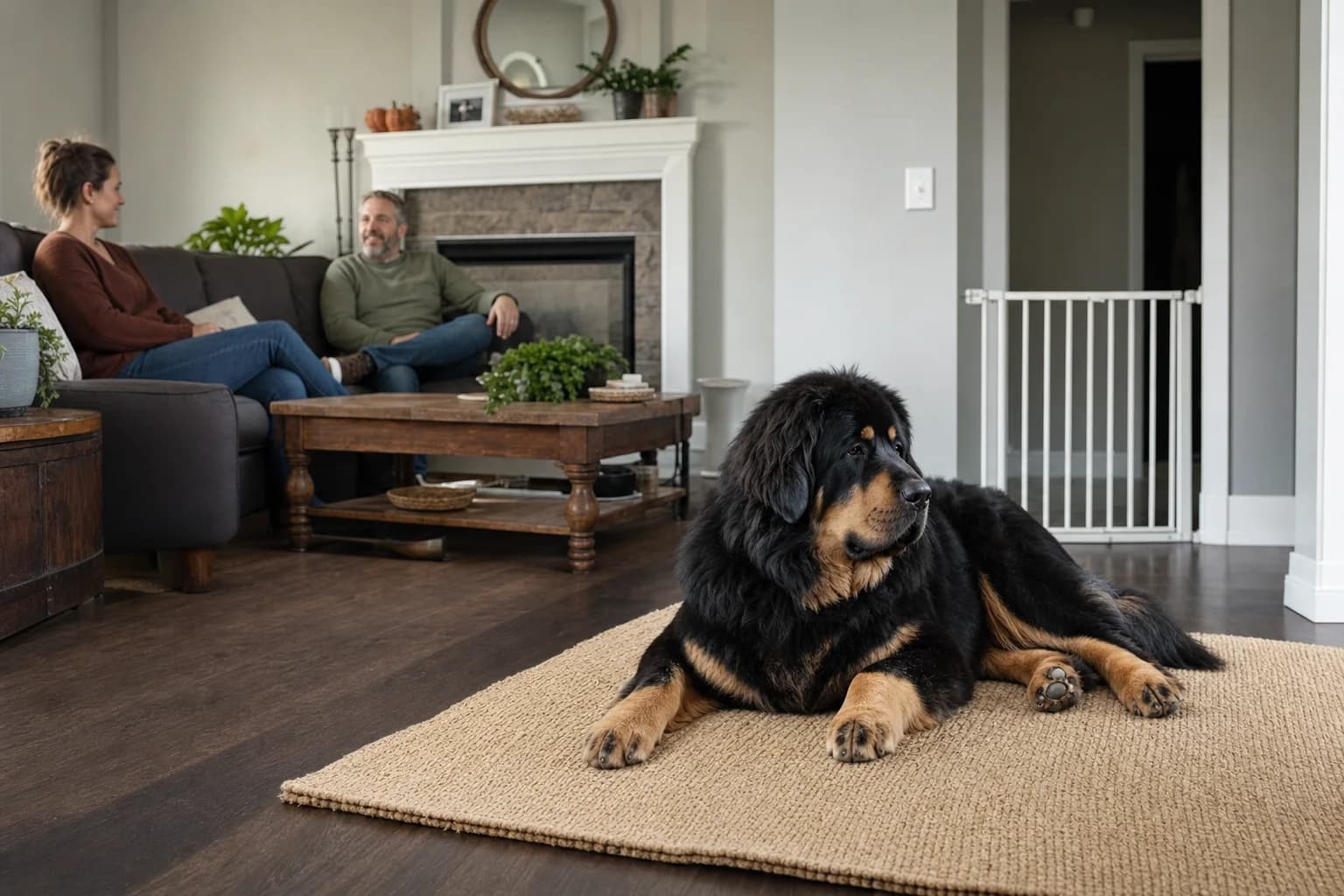
Large size makes ordinary accidents consequential. A friendly adolescent can knock down a child, guard a doorway, or become overexcited during running and shouting. Adults should supervise, protect the dog's rest and food, and give children rules that do not require them to control the dog.
Useful household rules include:
- Children do not climb on, hug, corner, or wake the dog.
- Adults manage meals, chews, gates, and introductions.
- The dog has a resting area that no child enters.
- Rough play stops before arousal becomes difficult to interrupt.
- Visiting children remain separated until an adult has a specific plan.
Other dogs and animals
Some Tibetan Mastiffs live successfully with compatible dogs, especially when introductions are gradual and resources are managed. Others become less tolerant as they mature. Puppy friendliness does not guarantee adult compatibility, and sex, history, arousal, space, and individual temperament all matter.
Introductions should begin on neutral ground with skilled adults, loose movement, and enough distance for both dogs to disengage. Inside the home, separate food, high-value chews, resting spaces, and unsupervised time until behavior is well understood. Cats and livestock require the same individual assessment; breed history is not proof of safety with a particular animal.
Nighttime alert barking
Nighttime alert barking is one of the most underestimated breed traits. A Tibetan Mastiff may react to wildlife, vehicles, voices, neighboring dogs, or movements that people barely notice. A large yard does not solve the issue if outdoor access lets the dog rehearse barking for hours.
Before choosing the breed, stand at the property line after dark. Listen for neighboring activity and identify where the dog would sleep. A workable plan often includes indoor nights, covered sight lines, prompt interruption, white noise, and enough distance from shared walls. If the household needs a dog that can be left outside quietly, this is a serious mismatch.

Petful may earn a commission when you click through to Chewy, at no extra cost to you.
Is a Tibetan Mastiff right for your household?
| Decision | Ready now | Pause and solve first |
|---|---|---|
| Boundaries | Secure fencing, latched interior barriers, and a closed-door visitor plan are installed | The plan depends on voice control, an invisible boundary, or an unfinished fence |
| People | Adults accept stranger reserve and can supervise children and guests | Frequent visitors expect free access or children must manage the dog |
| Noise | Indoor nights and neighbor impact have been tested | Nighttime alert barking could threaten housing or relationships |
| Handling | The dog can be transported, restrained, groomed, and examined safely | No vehicle, clinic, groomer, or backup handler can manage an adult |
| Time and cost | Daily care, training, grooming, food, and emergencies fit the budget | The plan works only if the dog stays unusually easy and healthy |
Use the household fit scorecard twice: once against an ordinary week and once against a disruption week. The disruption might be an injured owner, a broken gate, a visiting relative, wildfire smoke, travel, or a sudden veterinary appointment. A home that works only when every routine is perfect is not ready for this breed.
Strong-fit households
A stronger fit usually has adults who enjoy a thoughtful, reserved guardian and are comfortable managing access rather than showcasing the dog to everyone. They have secure property, realistic neighbors, a vehicle that works, and money for giant-dog care. They can keep rules consistent without turning every disagreement into a contest.
Experience with large dogs helps, but humility matters more than a résumé. Owners must be willing to involve a qualified trainer early, change the setup when behavior shows strain, and accept that a beloved dog may never enjoy crowded social events or casual visitors.
Households that should pause
Pause if any of these conditions are unresolved:
- The lease, homeowners association, local rule, or insurer has not approved the exact dog and address.
- The fence is low, damaged, shared, or dependent on an electronic boundary.
- Children or older relatives would need to restrain the dog.
- The home receives frequent unplanned visitors or service workers.
- Close neighbors cannot tolerate nighttime vocalization.
- The dog would spend long periods outdoors without active supervision.
- Backup care, veterinary transport, or competent boarding is unavailable.
These are not moral judgments. They are predictable pressure points. A different breed or an adult dog with known behavior may fit the same family better.
Translate traits into household logistics
Do not stop at adjectives such as loyal, aloof, protective, or intelligent. Translate breed traits into household logistics that someone can test. If the dog is reserved, identify the room and barrier used during repairs. If the dog is large, measure the vehicle. If the coat is dense, locate a groomer who accepts the breed. If the dog alerts at night, decide where it sleeps.
The same process helps define who should pause before choosing the breed. A household is not ready when the proposed solution is "we will figure it out" for several high-consequence needs at once. Name the unsolved need, identify the responsible adult, estimate cost, and set a deadline before contacting a breeder or rescue.
The PetSafe Easy Walk Dog Harness is one harness to compare for current chest measurement, range of motion, strap placement, and escape resistance. A front attachment may help management for some dogs, but equipment does not replace training, and no harness guarantees control of a determined adult.
Skills the adults need
The primary adults do not need to be professional trainers, but they do need physical and emotional steadiness. They must close gates every time, notice early signs of tension, reward desired choices, and step away from conflict. They also need to accept advice when their preferred plan is not working.
Practice these owner skills before acquisition:
- Giving instructions to visitors without apologizing for safety.
- Handling leashes and barriers without wrapping equipment around hands.
- Ending an interaction while the dog is still successful.
- Recording behavior objectively rather than labeling the dog stubborn or dominant.
- Coordinating rules so one adult does not undo another's management.
- Calling veterinary or training support before a problem becomes a crisis.
Consistency does not mean rigidity. The routine should change when age, health, environment, or observed behavior changes the risk.
Training and socialization that respect the breed
Socialization should teach the puppy that novelty can be observed safely and left behind. It does not mean being touched by every stranger or forced into crowded environments. Quality matters more than volume: calm exposure, choice, distance, recovery, and reinforcement create useful learning.
Keep a simple record of people, surfaces, sounds, animals, handling, and locations. Note the puppy's response and how quickly it recovered. Repeating an overwhelming exposure can sensitize rather than socialize, so reduce intensity when the dog cannot eat, orient back to the handler, or settle afterward.
Foundation behaviors
Prioritize behaviors that make a powerful adult safer:
- Responding to name and moving with the handler.
- Settling on a mat behind a barrier.
- Entering a crate or vehicle without force.
Petful may earn a commission when you click through to Chewy, at no extra cost to you.
- Wearing a muzzle after gradual positive conditioning.
- Allowing paws, ears, mouth, coat, and body to be examined.
- Trading objects rather than guarding them.
- Turning away from a trigger and leaving with the handler.
The purpose is not a performance title. It is cooperative control during everyday care and emergencies.
Cooperative care is part of training
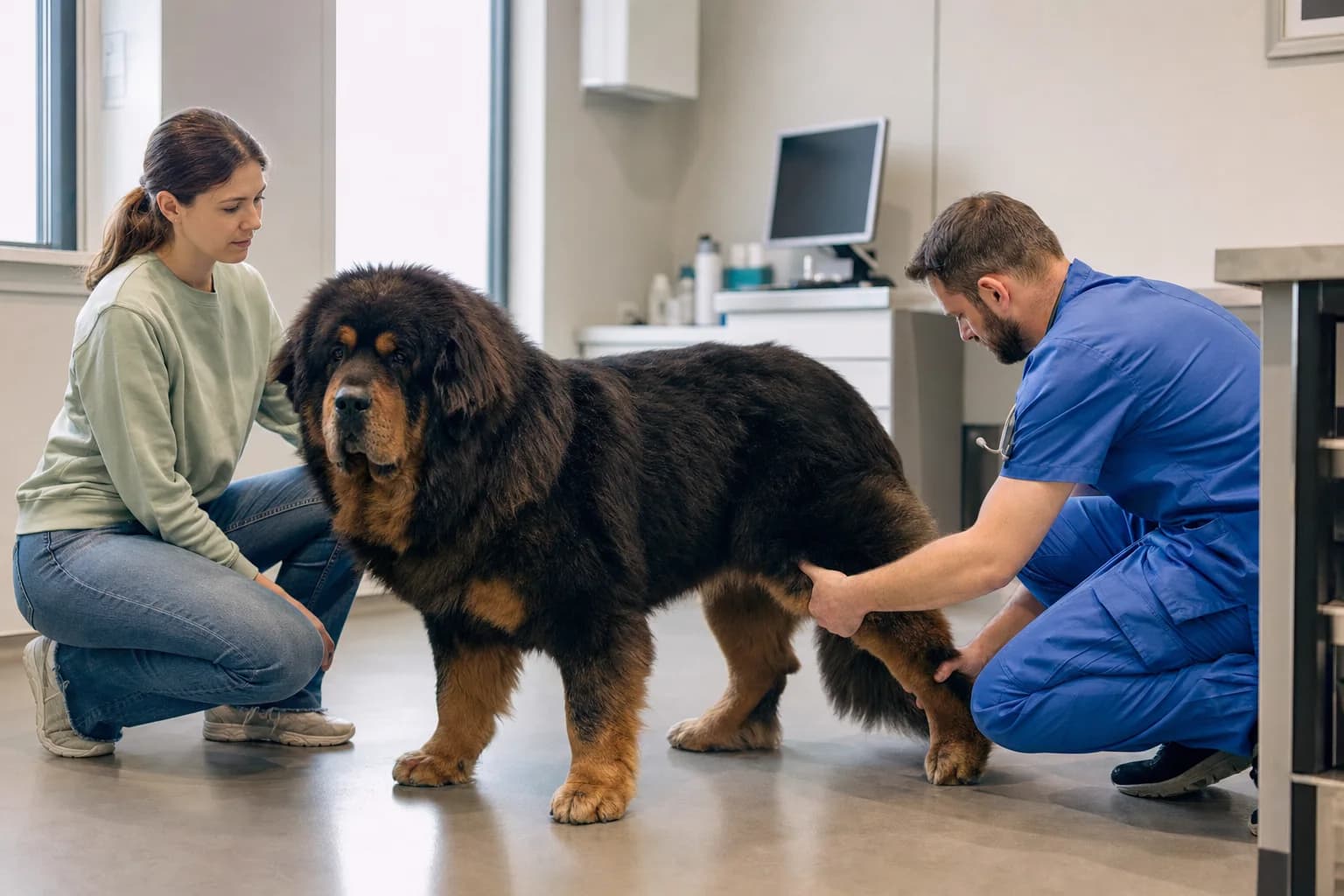
An adult Tibetan Mastiff may need blood drawn, hips positioned for imaging, nails trimmed, ears examined, mats removed, or a painful limb assessed. Waiting until the procedure is necessary leaves the dog and professionals with fewer safe options. Teach the component behaviors while the puppy is healthy.
Start with one-second touches followed by a reward. Progress to holding a paw, lifting the lip, parting the coat, standing on a nonslip mat, and resting the chin in a hand or towel. Add duration in tiny increments. If the puppy pulls away, reduce difficulty rather than restraining harder.
Muzzle training belongs in the same preventive toolkit. A basket muzzle introduced with food and voluntary participation is not a punishment or admission that the dog is bad. It can protect everyone during an injury, emergency transport, or unfamiliar procedure. The dog must still be able to pant, and the muzzle must be fitted and supervised.
Leash skills before adult strength
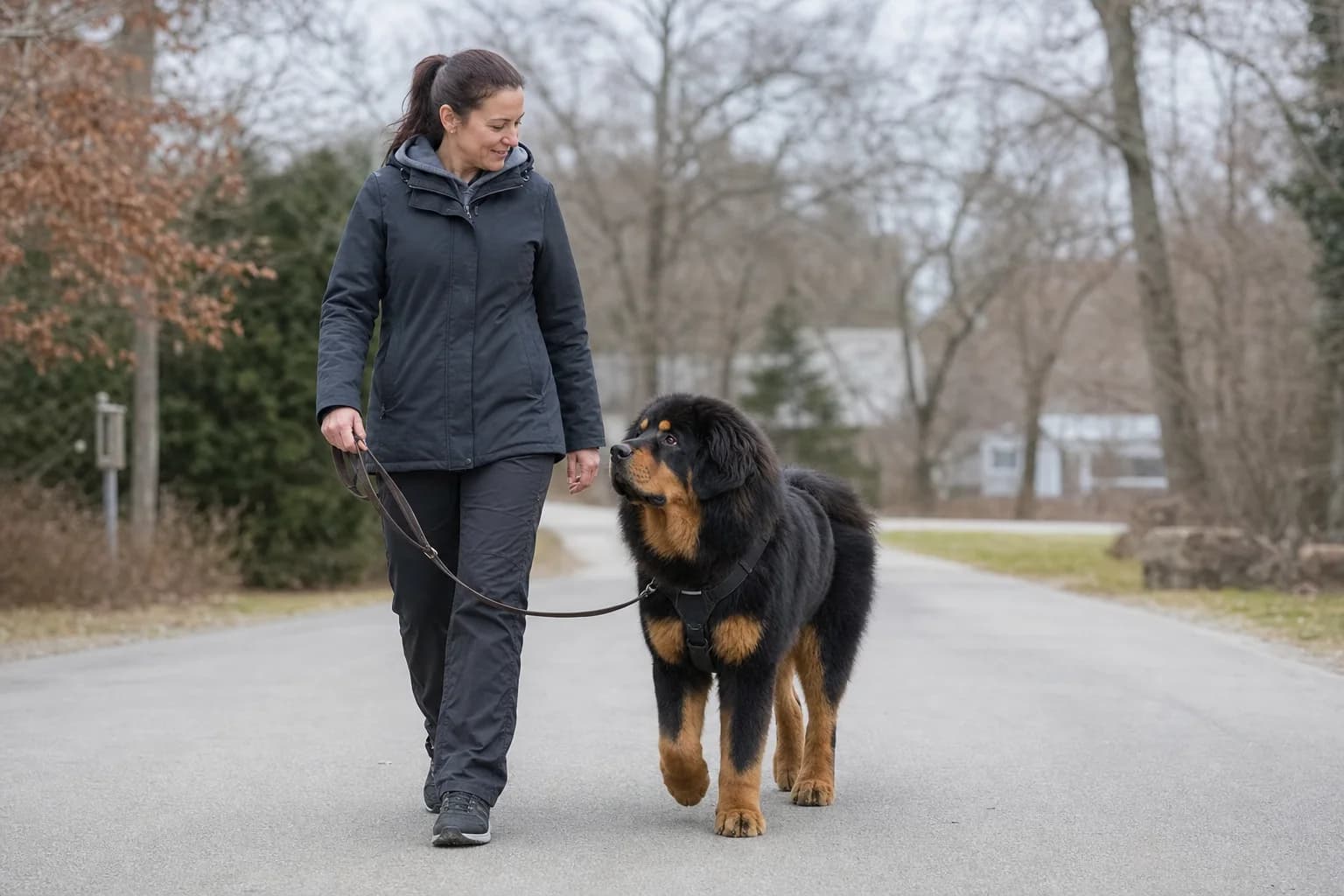
Loose-leash walking should begin while the puppy is small enough that mistakes are manageable. Use quiet routes, reward check-ins and slack leash, and increase difficulty slowly. Pulling toward dogs or people should not be rehearsed as the default way to gain access.
Recall and off-leash decisions
Build recall with high-value reinforcement in low-distraction spaces, then progress on a long line. Even a trained Tibetan Mastiff may make an independent decision when territory, wildlife, or an unfamiliar dog is involved. Off-leash freedom belongs only in securely enclosed areas where one mistake cannot reach a road, animal, or visitor.
An electronic fence does not prevent another animal or person from entering, and pain or excitement may carry a dog through it. Physical fencing with inspected gates is the safer foundation. Check the bottom edge, latch height, dig points, and objects that could become climbing aids.
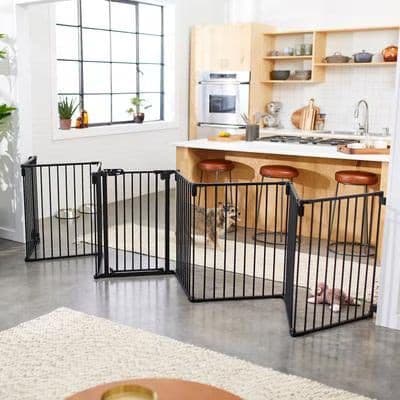
The Frisco Steel 8-Panel Configurable Dog Gate and Playpen is one indoor barrier to compare by opening width, height, panel spacing, latch design, anchoring, and the individual dog's behavior. It can support a planned visitor routine, but it is not a permanent outdoor fence and must not be trusted beyond its tested use.
When to involve a trainer
Seek qualified, reward-based help early if the puppy freezes around strangers, guards space or objects, escalates at the fence, cannot recover after a trigger, or overpowers the handler. Early help can be a short prevention plan; waiting may turn the same issue into a high-stakes adult behavior case.
Ask how the trainer works with guardian breeds and whether they will observe the home setup. Avoid anyone who promises guaranteed protection, instant submission, or a cure based on force. Training should leave the household with clearer management, observable goals, and an escalation plan if safety worsens.
Behavior change can have a medical component. Pain, endocrine disease, sensory change, or neurological problems may alter tolerance or responsiveness. A veterinarian should be part of the team when behavior changes suddenly, appears alongside physical signs, or does not match the dog's established pattern.
Exercise, enrichment, and daily rhythm
Tibetan Mastiffs need regular movement and mental engagement, but more intensity is not always better. Long forced runs, repetitive jumping, and hard impact are poor choices for a growing giant-breed puppy. Adults often benefit from purposeful walks, sniffing, property routines under supervision, training, and food-based enrichment.
Exercise should leave the dog able to settle. If an activity produces hours of pacing, fence running, demand barking, or irritability, it may be increasing arousal rather than meeting a need. Adjust duration, location, and difficulty instead of simply adding more.
Enrichment for an independent dog
Useful enrichment gives the dog a job without encouraging uncontrolled guarding. Scatter feeding in a secure area, scent searches, shredding safe packaging under supervision, food toys, and short problem-solving sessions can add variety. Rotate activities so novelty remains useful, and stop if the dog guards the item or ingests material.
Property walks can become a controlled ritual. The dog accompanies an adult on leash, checks ordinary features, and returns indoors to settle. That differs from leaving the dog outside to patrol alone, where every passerby can reinforce barking and territorial arousal.
Rest is equally important. Growing dogs and adults need uninterrupted sleep, especially after travel, visitors, training, or veterinary care. A quiet room or gated resting area lets the nervous system recover. Constant entertainment can create a dog that never practices doing nothing.
A realistic weekday
A workable day might include:
- A quiet morning toilet trip and sniff walk.
- Measured meals used partly for training or enrichment.
- Rest away from household traffic.
- A short handling or boundary session.
- An evening walk before neighborhood activity peaks.
- Indoor nighttime management with outdoor alerts interrupted promptly.
The exact schedule varies, but the owner should control access and provide recovery time. A yard is useful space, not a substitute for interaction.
Weather and heat
The dense coat and large body require conservative decisions in warm weather. Exercise during cooler hours, provide shade and water, and watch the individual dog rather than relying on a temperature cutoff. Heavy panting that does not settle, weakness, confusion, vomiting, collapse, or abnormal gum color needs urgent action.
WebVet's guide to dog heatstroke signs and what to do explains emergency warning signs. Move the dog out of heat, begin safe cooling, and contact a veterinarian; do not delay because the breed is historically associated with a cold climate.
Visitor safety is a system
- Use layered visitor management | A planned visitor routine starts with a closed boundary before the door opens. Keep the dog behind that boundary or on leash with a capable adult, tell visitors what to do, and end the interaction if the dog cannot remain comfortable. Familiarity never makes an open front door or unsupervised greeting safe.
Visitor work begins before anyone arrives. Exercise and toilet the dog, prepare a separate resting area, secure exterior gates, and decide whether an introduction is even necessary. Delivery workers, repair technicians, and children do not need to meet the dog.
Petful may earn a commission when you click through to Chewy, at no extra cost to you.
A controlled introduction
When an introduction is appropriate:
- Place the dog behind a secure barrier before admitting the visitor.
- Let the visitor settle and ignore the dog.
- Bring the dog out on leash with enough distance to observe.
- Reward calm orientation and voluntary disengagement.
- Return the dog to its resting area before tension rises.
Do not ask the visitor to stare, reach over the head, or lure a worried dog closer with food. The handler should read the dog, not make the guest prove confidence.
Grooming and seasonal shedding
The Tibetan Mastiff's double coat includes protective outer hair and a dense undercoat. Routine shedding may be moderate, followed by a much heavier seasonal release. Petful's Tibetan Mastiff shedding guide provides the detailed tools, mat-prone zones, bathing, and drying routine. For breed-standard colors, markings, and the difference between coat color and skin pigment, use the Tibetan Mastiff colors guide.
Coat care and seasonal shedding
Weekly hands-on checks help owners find tangles, damp skin, debris, parasites, or tender areas hidden by the coat. During a coat blow, sessions may need to be more frequent. Work in small sections to the skin rather than polishing only the visible surface.
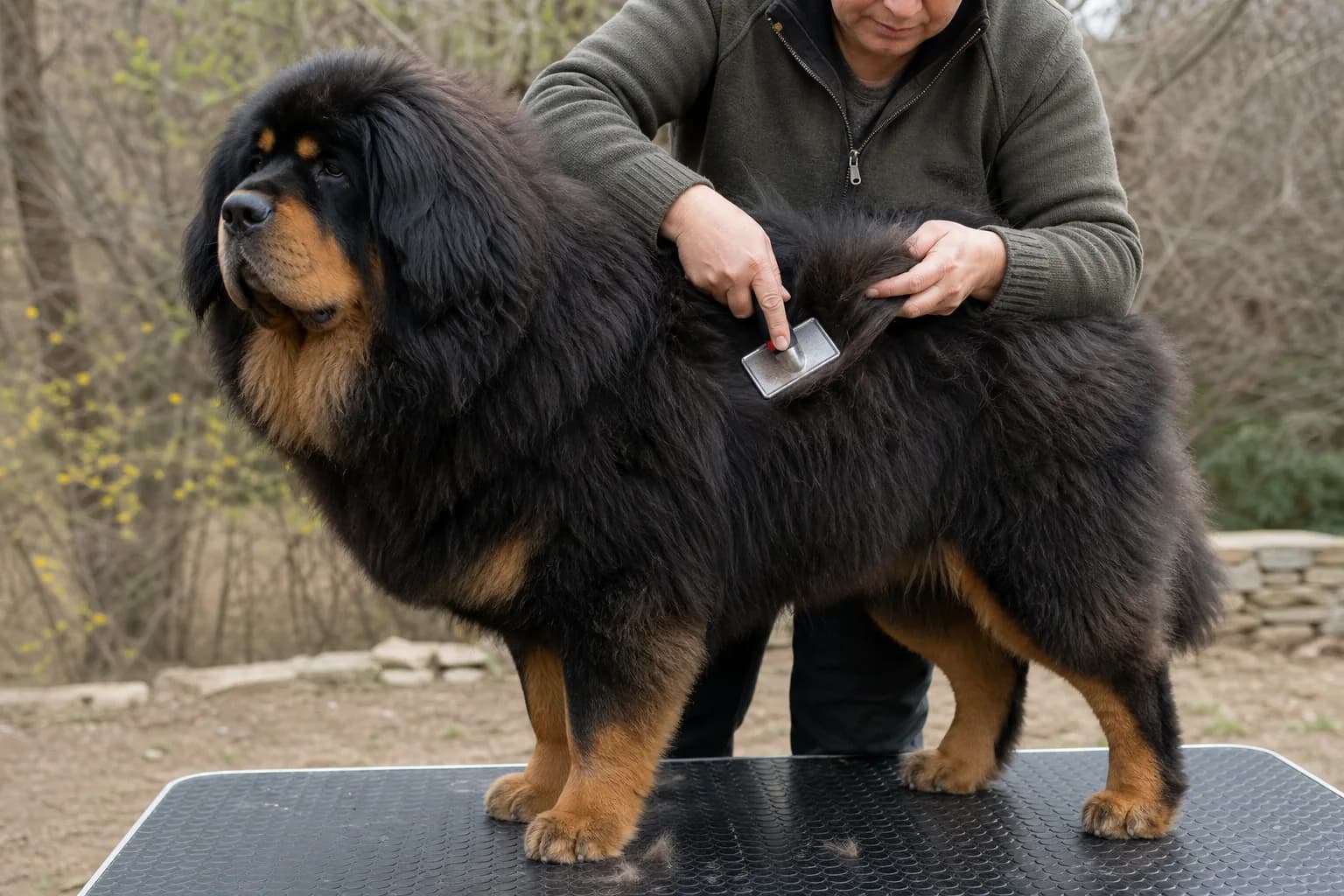
Teach grooming as cooperative care from puppyhood. Use a nonslip surface, brief sessions, and rewards for standing, turning, and accepting touch. A professional groomer should be selected before the dog is fully grown, with honest disclosure about size, handling history, and tolerance.
Shaving a healthy double coat is not a routine answer to heat or shedding. Mats, skin disease, surgery, or medical needs may require a veterinarian or qualified groomer's plan. Complete drying after bathing matters because retained moisture can irritate skin beneath a dense coat.
Health screening and preventive care
No breed guide can predict an individual dog's health. Breed-informed health screening reduces uncertainty but does not create a guarantee. Ask for parent identities and verifiable results rather than accepting a statement that the line is healthy.
The American Tibetan Mastiff Association and current health-program guidance can help frame discussions about hips, elbows, thyroid function, and eyes. OFA and CHIC records are useful when applicable, but a CHIC number means the listed testing requirements were completed, not that every result was normal. Read each result.
Health screening and preventive care
Petful's Tibetan Mastiff health and lifespan guide covers screening, healthy aging, weight and mobility trends, thyroid concerns, and bloat warning signs. Owners should establish a veterinary relationship before an emergency and confirm that the clinic can examine, image, anesthetize, and hospitalize a dog of this size.
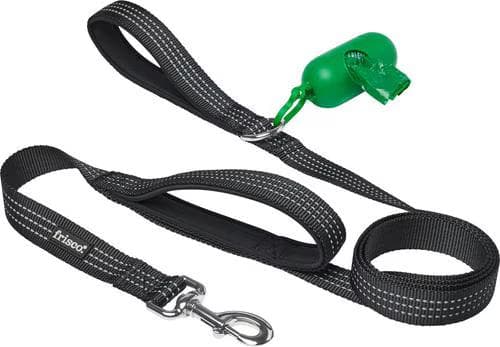
A simple six-foot leash should be part of the clinic and backup-care kit. The Frisco Traffic Leash with Dual Padded Handles and Poop Bag Dispenser is one leash to compare for width, clasp condition, hand comfort, and the individual dog's strength. Inspect any leash regularly, use it with correctly fitted equipment, and keep a backup. A leash is a management layer, not a substitute for secure doors and gates.
Keep a baseline record that includes:
- Weight and body condition.
- Ease of rising, stairs, walks, and vehicle loading.
- Appetite, thirst, stool, and urination.
- Skin, coat, eyes, ears, and mouth.
- Breathing, sleep, energy, and behavior.
- Medications, supplements, and adverse reactions.
Trends are more useful than a vague memory that the dog has slowed down. Sudden pain, weakness, breathing difficulty, repeated unproductive retching, a swollen abdomen, pale gums, collapse, or severe behavior change needs prompt veterinary care.
What screening can and cannot tell you
Breed-informed health screening asks whether breeding dogs completed relevant evaluations and what the actual results were. OFA and CHIC can help organize records, while the American Tibetan Mastiff Association can identify current breed-club recommendations. Buyers should match registered names, dates, and test types to the parents being represented, read every listed result, and ask what was not tested. A logo, membership, or database number alone is not an interpretation.
Screening estimates risk; it does not erase it. A normal hip result does not prevent every later injury, and a completed thyroid test does not predict every future endocrine change. Family longevity, causes of death when known, structure, temperament, and honest disclosure add context that a single certificate cannot supply.
After acquisition, prevention shifts to the individual dog. Keep body condition lean, build strength without excessive impact, maintain dental and parasite care, and attend scheduled examinations. Ask the veterinarian what should change as the dog ages rather than applying one puppy plan for life.
Feeding and body condition
There is no single "Tibetan Mastiff food" that is best for every dog. Choose a complete and balanced diet for the appropriate life stage, then adjust measured calories from weight, body condition, activity, tolerance, and veterinary advice. Petful's guide to the best food for Tibetan Mastiffs explains the full comparison process.
Large-breed puppies need controlled growth, not maximal growth. Do not add calcium, phosphorus, vitamins, or other supplements to a complete diet unless the veterinarian directs it. For adults, the dense coat can hide weight change, so hands-on rib and waist checks matter.
Cost, legality, and responsible sourcing
The Tibetan Mastiff price is only one expense, and a Tibetan Mastiff puppy is the least physically demanding stage of ownership. Routine care becomes more expensive when food quantities, equipment strength, professional handling, and medication doses increase with size. Property work and emergency transport can add costs that a small-dog budget never considered. Petful's Tibetan Mastiff price and sourcing guide separates ordinary prices from sensational status sales and provides a breeder or rescue checklist.
Build the budget around adult reality
Price the products and services available near the actual home, not a generic small-dog estimate. Ask a local clinic about giant-dog handling and emergency access. Request insurance quotes for the exact breed and address. Confirm that a groomer, boarding provider, and trainer will accept the adult dog before treating those services as available.
Separate the budget into:
- Acquisition or adoption and transport.
- First-year setup, property work, training, and veterinary care.
- Recurring food, grooming, prevention, insurance, and licensing.
- Replacement equipment and vehicle needs.
- An emergency reserve that remains after the dog comes home.
- Backup care during travel, illness, housing loss, or owner incapacity.
Time belongs in the budget too. Daily walks, gates, introductions, coat care, training practice, clinic travel, and arranging competent coverage are real commitments even when no invoice appears.
Check the exact address
Legality is not one national yes or no. Public law, a lease or homeowners association, and an insurance policy can impose separate requirements. Petful's guide to whether Tibetan Mastiffs are legal shows how to obtain dated written answers before paying a deposit.
Do not rely on a seller's statement that the breed is allowed everywhere. Verify the exact address, adult size, fence requirements, licensing, travel plans, and insurance acceptance. Recheck after a move or policy renewal.
Housing and neighbor fit
Permission alone does not guarantee that the setting works. A legal dog can still create conflict in a building with thin walls, shared entrances, uncontrolled elevators, or no secure place to separate from maintenance workers. Walk the route from home to vehicle and identify every point where an unfamiliar person or loose dog could appear.
For a detached home, inspect all boundary lines from the dog's level. Shared fences, climbable objects, delivery gates, drainage gaps, and latches accessible from outside deserve attention. Decide who checks the fence after storms, repairs, landscaping, or utility work.
Neighbors should not be asked to tolerate preventable nighttime barking or fence charging because the breed is a guardian. Indoor nights, sight-line management, and prompt intervention protect the dog's housing stability. Repeated complaints can become a legal or insurance problem even where the breed itself is allowed.
Choose a breeder or rescue
Responsible sourcing looks beyond appearance and price. Ask for verifiable health screening, family history, rearing details, observed temperament, a written contract, and a return commitment. Meet adult dogs when possible and look at how they live.
Avoid sellers who promise:
- An exact giant adult weight.
- Guaranteed protection or friendliness.
- Health based only on a general veterinary check.
- Rarity based on an invented color name.
- Immediate availability if the buyer sends money before verification.
An adult through a reputable rescue may provide more observable information about size, coat, activity, and household behavior. Adoption does not remove the need for legal, insurance, transport, training, and medical planning.
Evaluate the individual, not the sales story
Meet the dog more than once when possible. Observe recovery after a mild surprise, comfort with the caregiver, movement, handling, and the ability to settle. Ask which behaviors were directly observed, which came from a prior home, and which remain unknown.
For a breeder, ask why the pairing was chosen and how puppies are matched. A responsible answer discusses strengths, limitations, health records, temperament, and the homes most likely to succeed. It does not guarantee adult weight, color, protection, or universal friendliness.
For a rescue, request veterinary records and foster notes, then discuss containment, visitors, other animals, grooming, transport, and return support. A mature dog with known limits may be a better match than an eight-week-old puppy whose adult behavior is still uncertain.
Build the backup-care plan
Every large guardian household needs a second capable adult or professional who can safely enter, leash, transport, and care for the dog. Write the plan before illness or travel. Include clinic contacts, feeding instructions, medication, gate routines, visitor rules, and where the dog can stay if the home becomes unavailable.
Rehearse one disruption week on paper. If the primary owner is injured, can the backup person manage the dog? If the vehicle fails, how does the dog reach emergency care? If a gate breaks, where is the secure secondary area? The answers reveal whether the plan exists outside ideal conditions.
Tibetan Mastiff FAQs
A Tibetan Mastiff can show deep family affection while maintaining normal stranger reserve. Friendly should not be interpreted as eager to greet everyone. Safe socialization builds calm observation, recovery, and handler trust; it does not force contact. Use secure boundaries and planned introductions, respect the individual dog's comfort, and seek veterinary or qualified behavior help for a sudden or serious change.
Final decision
Choose a Tibetan Mastiff only if the normal adult dog fits the household. That means an independent guardian with immense strength, slow maturity, stranger reserve, nighttime awareness, seasonal grooming, substantial costs, and a lifetime need for deliberate management.
The breed's loyalty and presence can be extraordinary in the right home. The best preparation is not confidence alone. It is secure infrastructure, humane training, verifiable health information, written permission, capable backup care, and a willingness to protect both the dog and the people around it.

Kristine Lacoste has been researching dog and cat breeds for nearly a decade and has observed the animals up close at dog shows in both the United States and the United Kingdom. She is the author of the book One Unforgettable Journey, which was named as a finalist for a Maxwell Award from the Dog Writers Association of America, and was host of a weekly pet news segment on the National K-9 Academy Radio Show. In addition, she was the New Orleans coordinator for Dogs on Deployment, a nonprofit that helps military members and their pets, for 3 years. Kristine has researched and written about pet behaviors and care for many years. She holds a bachelor’s degree in psychology, another bachelor’s degree in English and a Master of Business Administration degree.
Sign up for expert-backed reviews and safety alerts all in one place.