Are Tibetan Mastiffs Legal? U.S. Rules and Ownership
Tibetan Mastiffs are generally legal in the United States, but local law, housing agreements, and insurance rules can still restrict one at a specific address. Here is how to verify every layer.

Petful is reader supported. As an affiliate of platforms like Amazon and Chewy, we may earn a commission when you buy through links on this page. There is no extra cost to you.
If you are asking, "are Tibetan Mastiffs legal in the United States," the national answer is generally yes. There is no blanket federal U.S. ban that specifically prohibits this breed. That answer is only the beginning, however. A city or county rule, a landlord or homeowners association policy, and an insurance company's underwriting rules can each affect whether one may live at a particular address.
The safest approach is to verify every layer before paying a breeder, rescue, transporter, or landlord deposit. This guide provides a repeatable process for doing that. It is general information, not legal advice, and it cannot confirm the rules for an individual home.

Sign up for expert-backed reviews and safety alerts all in one place.
Are Tibetan Mastiffs legal in the United States?
There is no blanket nationwide U.S. ban specifically naming Tibetan Mastiffs. Permission still depends on current state and local rules, the exact housing agreement, and the insurance carrier for the address. Get dated written answers before acquiring or moving with the dog.
Most people can lawfully own a Tibetan Mastiff somewhere in the United States because there is no blanket nationwide ban specific to the breed, but no national article can give a final yes or no for every exact address. Public law and private contracts are different sources of authority. A dog can be lawful under a municipal code while still being excluded by a lease, homeowners association covenant, or insurance policy.
This national starting point means there is no blanket nationwide ban, not that every exact address has been approved. Current local rules and written verification still control the practical decision about Tibetan Mastiff ownership.

The phrase "legal to own" can also hide several separate questions. A jurisdiction may allow the breed but regulate licensing, vaccination, leash use, nuisance barking, confinement, bite incidents, or dogs classified as dangerous based on behavior. Those rules may apply to every dog rather than naming a breed.
Start with the exact street address where the dog will live. Then identify the public agencies, private housing documents, and insurance policy that govern that address. A seller's assurance that the breed is "legal everywhere" is not evidence, and an old online list can become inaccurate after a rule or policy changes.
Petful may earn a commission when you click through to Chewy, at no extra cost to you.
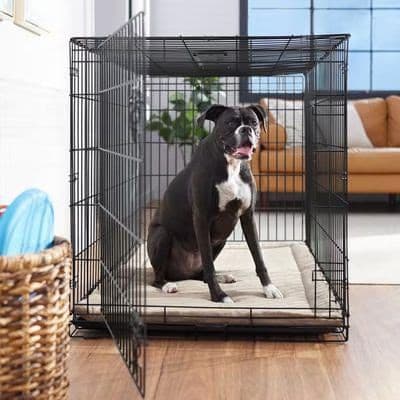
Crate training can support transport and short periods of calm separation, although no crate makes ownership lawful or replaces secure property management. If the dog is correctly measured and trained gradually, the Frisco Heavy Duty Fold & Carry X-Large Dog Crate is one sturdy option to compare. A Tibetan Mastiff still needs room to stand, turn, rest naturally, and leave the crate for normal activity.
What the national answer does and does not prove
The absence of a federal breed ban does not override a valid local rule or private agreement. It also does not guarantee that a future address, boarding facility, airline, or insurer will accept the dog. Treat the national answer as permission to begin checking, not as a document that ends the inquiry.
The same distinction applies to broad Mastiff language. A rule may name a particular breed, use a wider category, describe physical traits, or regulate any dog after documented behavior. Search the exact text rather than assuming that "Mastiff" and "Tibetan Mastiff dog" are always treated alike.
For the breed's normal temperament, adult care needs, and owner fit, read Petful's complete Tibetan Mastiff guide. Understanding an independent guardian breed is part of making a responsible permission request, especially when a landlord or insurer asks how the dog will be managed.
Check the rules that apply to your address
| Layer | Who to ask | Evidence to keep |
|---|---|---|
| State and local law | State code source, municipal clerk, or county animal control | Current code text or a dated written agency response |
| Housing | Landlord, property manager, or homeowners association | Signed pet addendum or written approval tied to the dog and address |
| Insurance | The carrier or licensed agent for the policy | Written confirmation of coverage, exclusions, and conditions |
| Travel or move | Destination agencies, housing provider, carrier, and insurer | New dated approvals before the trip or move |
An address verification ladder prevents one favorable answer from being mistaken for complete approval. This address-specific rule verification works only when each layer has a current source. Save the source and date, record the department that supplied the answer, and ask the organization with actual authority to clarify conflicts in writing.
1. Read current state and local sources
Begin with the current state statutes and the official municipal or county code for the address. Search for animal control, dog licensing, dangerous dogs, breed restrictions, nuisance rules, leash requirements, confinement, and vaccination. A search result snippet or secondary article can point toward a source, but the current official text is what matters.
Petful may earn a commission when you click through to Chewy, at no extra cost to you.
If the language is unclear, contact the municipal clerk or county animal control office. Ask a narrow question: whether a Tibetan Mastiff may be kept at the address and whether any permit, registration, enclosure, sign, liability coverage, or other condition applies. Give the exact address because city limits and unincorporated county areas can follow different rules.
Keep a screenshot or PDF of the relevant code page along with the access date. If an employee answers by phone, request an email or note the date, department, name, and summary. A phone conversation is useful for direction, but written evidence is easier to revisit if the household moves or an interpretation is questioned.
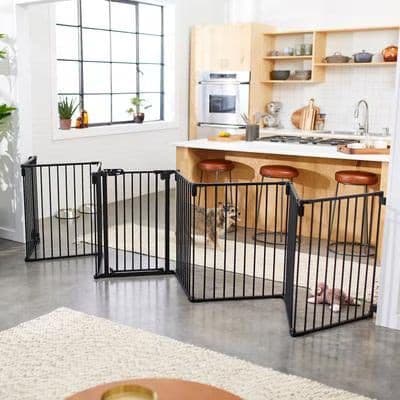
A configurable barrier may help create a controlled interior buffer at doors, but it is not a legal enclosure and should not be relied on for unsupervised outdoor containment. The Frisco Steel 8-Panel Configurable Dog Gate and Playpen can be compared for an indoor management plan only after checking its dimensions, stability, and the dog's behavior.
2. Get housing permission in writing
Renters should read the lease, pet addendum, building rules, and any application criteria. Do not rely on a listing that merely says "pets allowed." The lease may limit breed, adult weight, number of animals, or approval to named pets. A property manager's verbal yes may also conflict with the signed agreement.
Homeowners should review homeowners association declarations, covenants, rules, and architectural requirements that affect fencing. Ownership of the home does not automatically cancel association restrictions. If the documents use broad terms such as guard dog, Mastiff, aggressive breed, or animal subject to insurer restrictions, request clarification before committing to the dog.
Written landlord and HOA permission should identify the property, the dog or breed when possible, and any conditions. Save the signed pet addendum, approval email, fees, deposit receipt, and renewal terms. Ask what happens if management or the association's insurer changes. An answer that lasts only until the next policy renewal is different from durable permission.
3. Confirm insurance acceptance
A landlord may approve the dog while the property insurer or renter's insurer does not. Contact the insurance carrier or a licensed agent with the exact breed, address, and intended coverage. Ask whether the dog creates an exclusion, surcharge, coverage limit, inspection requirement, or refusal to issue or renew the policy.

Petful may earn a commission when you click through to Chewy, at no extra cost to you.
Do not describe the dog as a generic mixed breed to get a favorable answer. Inaccurate information can create a serious coverage dispute later. If the dog's ancestry is genuinely unknown, describe what is known and ask the carrier how it wants the animal documented.
Request dated written confirmation. Keep the policy declaration page and any animal-related endorsement or exclusion. Recheck at renewal because underwriting rules can change even when public law and the lease remain the same.
Insurance and risk-control questions
Permission and responsible management are related but not interchangeable. A secure routine can make a household a better risk, yet a fence, training class, or product does not erase a rule or guarantee coverage. Ask what the decision-maker requires, then decide whether the household can sustain those conditions for the dog's life.

Useful management questions include:
- Is the outdoor area fully enclosed with gates that latch reliably?
- Can delivery workers and visitors reach the front door without entering the dog's space?
- Is there a second barrier for high-traffic entries?
- Can every adult handler control the dog on leash without depending on strength alone?
- Is there a written plan for contractors, children visiting, emergencies, and pet care?
- Does the household have access to reward-based training and veterinary care?
Tibetan Mastiffs are large, independent guardians. They may be reserved with unfamiliar people and attentive to property boundaries. Those normal tendencies make planned entrances, secure fencing, early socialization, and calm handling important even where no special breed rule applies.
A front-attachment harness may help some dogs learn loose-leash skills, but fit and training matter more than the label. The PetSafe Easy Walk Dog Harness is one option to evaluate with a qualified trainer. It is not escape-proof, does not replace a collar and identification plan, and cannot make an unsafe handler-dog match safe.
Create a written ownership file
- Verify before money changes hands | Save dated written answers from the public agency, housing authority, and insurance carrier before paying a puppy, transport, or housing deposit. An online article, seller statement, product, or verbal assurance cannot replace approval from the party that controls the decision.
An organized ownership file turns scattered answers into evidence the household can update. These dated ownership records should have both digital and paper copies when possible, stored where another adult can find them during travel, a move, or an emergency. Label each record with the address, source, decision date, renewal date, and any condition that the household must continue to meet so an old approval is not mistaken for current permission.
The file should include:
- The current municipal code section or agency response, with the date accessed.
- License, rabies vaccination, microchip, and identification records.
- The signed lease addendum or homeowners association approval.
- Insurance confirmation, declarations, endorsements, exclusions, and renewal date.
- Breeder or rescue records, health documents, and emergency contacts.
- Training and behavior support contacts.
- Clear photographs and identifying details for the dog.
- A calendar reminder to recheck time-sensitive approvals.
Petful may earn a commission when you click through to Chewy, at no extra cost to you.
Keep facts separate from assumptions. "The city code did not name Tibetan Mastiffs when checked on this date" is a fact that can be documented. "The landlord probably will not care because another tenant has a big dog" is an assumption and should not drive an acquisition decision.
When an answer is unclear or unfavorable
If a rule appears to prohibit the dog, do not attempt to evade it by changing a breed label, hiding the animal, or relying on a seller's interpretation. Ask the responsible agency, housing provider, or insurer for the exact text, any definitions, and any lawful process for clarification or appeal.
When the consequences could include eviction, loss of insurance, seizure, fines, or a forced rehoming, consult a qualified attorney in the relevant jurisdiction. A national pet website cannot interpret a disputed local rule or private contract for an individual case.
An unfavorable answer before acquisition is painful but useful. It prevents a puppy or adult dog from entering a home that cannot legally and sustainably keep the animal. The humane response is to change the plan, address, timing, or breed choice before a dog is placed at risk.
Equipment for controlled transitions
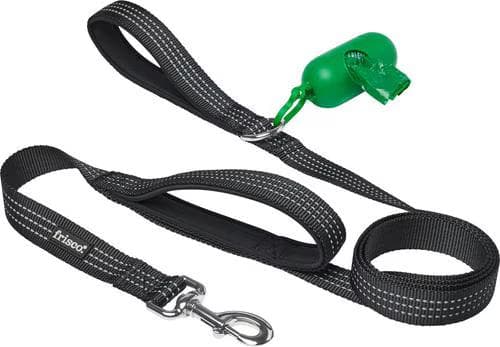
For close control during planned transitions, a dual-handle leash can give a handler a shorter grip without wrapping the line around a hand. The Frisco Traffic Leash with Dual Padded Handles is one option to compare for fit and condition. It does not replace training, secure barriers, or a handler who can safely manage the dog's normal adult strength.
Travel, relocation, and changing rules
Approval at home does not automatically travel with the dog. Before a trip, check each relevant destination requirement:
- Current animal rules for the destination.
- The transport carrier's current pet policy.
- The lodging or temporary housing agreement.
- Insurance coverage while away from home.
International travel can add import, vaccination, identification, quarantine, and breed rules that are outside this U.S.-focused guide.
Run the full address verification ladder again before moving. Even a nearby move can change the municipality, county authority, lease, association, and insurer. Save the new dated written answers before signing a lease that depends on the dog being accepted.

Recheck after a bite allegation, dangerous-dog designation, insurance renewal, housing policy change, or major modification to fencing. Rules based on an individual dog's behavior can apply regardless of whether Tibetan Mastiffs appear on any breed list.
Price and sourcing after permission is confirmed
Only begin acquisition research after the public, housing, and insurance layers are reasonably settled. Petful's guide to Tibetan Mastiff price and responsible sourcing explains ordinary puppy costs, rescue routes, health records, and seller red flags without treating sensational auction stories as a normal market.
A Tibetan Mastiff puppy will grow into a powerful adult, so permission for a small puppy is not enough if a policy has adult weight limits or if the household cannot manage the mature dog. Share the expected adult breed, not merely the puppy's current size, with the landlord and insurer.
Verify permission before shopping
Health planning also affects the household's ability to meet any care conditions. Petful's Tibetan Mastiff health and lifespan guide covers screening, preventive care, and warning signs that belong with a veterinarian rather than a legal checklist.
Price and puppy sourcing require a separate set of checks. The practical rule here is narrower: do not contact sellers or commit money until the exact-address permission work is complete.
A final pre-acquisition check
Before bringing the dog home, answer each question with evidence:
- What current public rule allows the dog at this exact address?
- What signed housing document permits the mature dog?
- What written insurance response confirms the policy's treatment of the dog?
- Which conditions must be maintained, and who is responsible for them?
- When will each answer be checked again?
- What is the backup plan if a move, renewal, or behavior-related rule changes the situation?
If any answer depends on secrecy, a vague promise, an expired screenshot, or the hope that no one notices, the plan is not ready. Dated written answers protect the household, the property owner, neighbors, and the dog.
Tibetan Mastiff legality FAQs
In most of the United States, yes, because there is no blanket federal ban that specifically prohibits Tibetan Mastiffs. Responsible Tibetan Mastiff ownership still depends on current state and local rules, the lease or homeowners association, and the insurance carrier for the exact address. Complete written verification for each layer before acquiring or moving with the dog. This is general information, not legal advice.
Final answer
Tibetan Mastiffs are generally legal to own in the United States, but legality alone is not complete permission. Current local law, housing documents, and insurance rules can reach different answers for the same dog. Use the address verification ladder, keep dated written answers, and repeat the process whenever the household moves or a policy changes.
The best time to discover a restriction is before money changes hands and before a dog forms a bond with the household. A careful pause now is far kinder than an avoidable eviction, coverage dispute, or forced rehoming later.

Coreen Saito is a pet writer and longtime shelter volunteer with more than a decade in animal rescue. She covers cat behavior, breed care, and the small, ordinary science of sharing a life with companion animals, with a particular focus on honest takes about the products and decisions that actually matter. At home in Arizona, she's outranked by Mac (a dog with the loudest opinion in the house), Rebel (a cat who governs by quiet authority), and Meri (an orange tabby who runs the late shift and the laundry basket). She writes about all three, plus the rescues that keep coming through her life, at LifeWithMinty.com.
Sign up for expert-backed reviews and safety alerts all in one place.