Tibetan Mastiff Price, Puppies, and Responsible Sourcing
Tibetan Mastiff puppies commonly cost thousands, not millions. Learn ordinary U.S. price ranges, breeder and rescue checks, first-year expenses, recurring costs, and red flags before paying a deposit.

Petful is reader supported. As an affiliate of platforms like Amazon and Chewy, we may earn a commission when you buy through links on this page. There is no extra cost to you.
Tibetan Mastiff price discussions often start with million-dollar headlines, but those historic status-market sales do not describe an ordinary U.S. puppy. A commonly published breeder range is roughly $2,000 to $6,000, with individual prices varying by region, pedigree, demand, breeder investment, and what is included. Adoption may cost much less up front, while responsible lifetime care remains substantial through either route.
The useful question is not simply, "How much is the puppy?" A sound decision checks four separate things:
- The seller or rescue is transparent.
- The household fits an independent guardian.
- The exact address permits the adult dog.
- The budget can absorb setup, training, food, grooming, insurance, veterinary care, and emergencies.

Sign up for expert-backed reviews and safety alerts all in one place.
What a Tibetan Mastiff puppy really costs
An ordinary puppy price in the United States is usually measured in thousands, not the seven figures attached to a few sensational status sales. Compare health records, temperament, rearing, contract terms, support, and total ownership cost before comparing prestige.
Published U.S. guides commonly place Tibetan Mastiff puppies from breeders in the low thousands, with about $2,000 to $6,000 often cited as a working range. That is a planning estimate, not a price guarantee. A well-documented puppy can cost more or less, and a high price alone does not prove responsible breeding. Use this ordinary puppy price only as a starting point for responsible sourcing, not as evidence that one seller or litter is trustworthy.
Why puppy prices vary
Price can reflect veterinary care, parent health screening, travel, litter size, registration, early socialization, location, and the cost of raising a giant-breed litter. Some of those expenses support better care; others are merely marketing. Ask what the quoted price includes and request evidence for every claim that is supposed to justify a premium.
Coat color, sex, or a promise of extreme adult size may influence what a seller asks, but those traits do not automatically improve health or temperament. A responsible breeder should be able to discuss limitations, uncertainty, and household fit without turning the puppy into a luxury object.
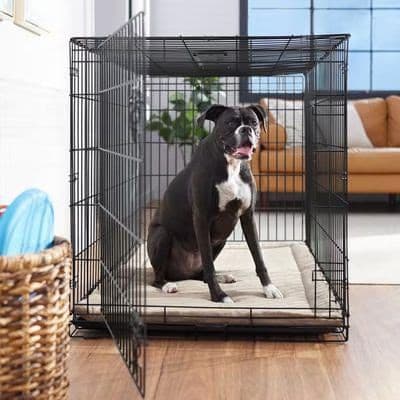
A large crate is a real setup cost, although the correct size depends on the individual dog and many adults outgrow common products. The Frisco Heavy Duty Fold & Carry X-Large Dog Crate is one option to compare after measuring the dog and usable home or vehicle space. Crate training must be gradual, and a crate is not an all-day housing plan.
Adoption and breed rescue
A breed rescue or large-dog rescue may place an adult Tibetan Mastiff, adolescent, or mix for an adoption fee that is far below a breeder purchase price. Availability is limited and the dog may have specific housing, handling, or medical needs. A lower acquisition fee should never be treated as a low lifetime commitment.
Petful may earn a commission when you click through to Chewy, at no extra cost to you.
Ask what the organization knows directly, what came from a prior owner, and what remains uncertain. Review veterinary records, observed behavior, foster-home notes, containment needs, and any return policy. A transparent rescue will not guarantee behavior it has not observed in the relevant setting.
Rescue and adoption routes deserve the same address and budget checks as a breeder purchase. The dog may be physically mature on day one, which makes transport, gates, training support, and safe introductions immediate rather than future costs.

Deposits and payment safety
Do not send a nonrefundable deposit merely because a seller claims several other buyers are waiting. Confirm identity, location, contract terms, health records, and the exact puppy before money changes hands. Use a payment method with an understandable record and never assume a social-media profile proves a real breeding program.
The contract should explain what happens if a veterinary finding changes placement, the puppy cannot travel, or the buyer cannot proceed. Read health-guarantee language closely. A narrow promise that requires returning a bonded dog may offer less practical protection than transparent records and lifelong breeder support.
Compare the same package, not just the asking price
Two puppies with different asking prices may not represent the same purchase. Create one worksheet for every candidate and record what is included, what still has to be arranged, and which claims can be checked independently. Keep blank cells blank until the seller provides evidence instead of filling them with assumptions.
Compare the same categories for every candidate:
- Veterinary examination, vaccinations, deworming, and microchip status.
- Registration and pedigree paperwork, with parent identities that match the health records.
- Transport, travel documents, and any carrier or lodging expenses.
- Written return terms, continuing support, and supplies included at pickup.
A seller may say that a puppy is "vet checked," but the useful record identifies the veterinarian, date, findings, and puppy. A pedigree shows ancestry; it does not substitute for the actual health results of the parents. Registration records identity and lineage within a registry; it does not certify that the breeder made a sound match or that the puppy will be healthy.
Travel deserves its own comparison. A distant puppy may add ground transport, an airline-approved carrier, lodging, time away from work, and an examination after arrival. The cheapest advertised puppy can therefore become the more expensive and less verifiable choice. Distance also makes it harder to observe the environment, meet adult dogs, and use continuing breeder support.
Finally, write down what happens after payment. Strong support can include honest answers as the dog matures, help interpreting normal guardian behavior, and a contractual commitment to take the dog back if the home cannot keep it. Those responsibilities have value even though they do not fit neatly on a receipt. Compare them without treating any promise as a guarantee.
Petful may earn a commission when you click through to Chewy, at no extra cost to you.
How to evaluate a breeder or rescue
| Evidence | Green light | Walk away or pause |
|---|---|---|
| Parent health | Named, verifiable health screening and honest family history | Vague claims that all dogs are healthy without records |
| Environment | Safe conditions, adult dogs available to observe, and questions about your home | Refusal to show how dogs live or pressure to meet in a parking lot |
| Temperament | Realistic discussion of guardian behavior and individual variation | Guaranteed friendliness, protection, or perfect behavior |
| Contract and support | Written terms, return plan, contacts, and time to review | Urgency, secrecy, wire-only payment, or no return responsibility |
Start with the American Tibetan Mastiff Association and its breeder-education resources for breed-specific questions, then verify rather than assuming membership or a directory listing guarantees quality. A responsible breeder should welcome informed questions and should ask equally serious questions about the buyer's property, visitors, experience, containment, training plans, and long-term plan. A directory is a research starting point, not an endorsement or substitute for direct evidence.
Meet adults and see how puppies are raised
An in-person visit or a live, verifiable remote tour can show housing, cleanliness, adult temperament, puppy movement, and the relationship between the dogs and caregiver. One calm moment is not a temperament test, but it provides more context than polished portraits.
Observe whether adults can settle, accept routine handling from their caregiver, and move without obvious pain. Ask how puppies experience household sounds, surfaces, people, confinement, grooming, and car travel. Socialization should create safe exposure and recovery, not forced contact with everything.
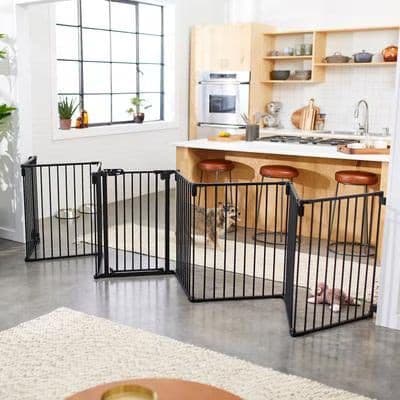
An indoor barrier can support puppy management while house-training and visitor routines are taught. The Frisco Steel 8-Panel Configurable Dog Gate and Playpen is one option to compare for opening width, panel spacing, latch design, stability, and the puppy's behavior. It is not a permanent outdoor fence or proof that a powerful adult cannot push or climb it.
Verify parent health screening
Ask for registered names or identifiers that let you verify results rather than accepting a photograph of an unlabeled certificate. Breed-informed screening discussions may include hips, elbows, thyroid, eyes, and other risks identified through current club and veterinary guidance. The exact recommended program can change, so confirm it with current sources.

OFA and CHIC records can make specific screening information easier to verify when the dogs participate in those systems. A CHIC number documents completion of a program's listed tests; it does not mean every result was normal or guarantee that a puppy will never develop disease. Read the actual results and discuss them with a veterinarian.
A plush orthopedic foam mattress that cushions aging joints and pressure points, giving a stiff or trembling senior dog warm, supportive rest.
Petful may earn a commission when you click through to Chewy, at no extra cost to you.
Verifiable parent health screening is one layer, not the entire decision. Family longevity, cause-of-death information when known, temperament, structure, care, and honest disclosure also matter. No breeder can promise a perfectly healthy dog.
Questions worth asking
Use questions that require more than yes or no:
- Which health tests were completed on both parents, and where can each result be verified?
- What health, temperament, or longevity patterns appear in related dogs?
- Why was this pairing chosen?
- How are puppies matched to homes?
- What has each puppy experienced before placement?
- What support and return responsibility continue after the sale?
- What would make the breeder decline this home?
A seller who responds thoughtfully may still not be the right match. The goal is enough reliable information to make a decision, not to reward someone for answering a checklist.
A written walk-away checklist
Pause when the seller will not verify identity, location, parent records, or the puppy. Walk away from guaranteed giant size, guaranteed temperament, invented rare-color urgency, cash pressure, unsafe living conditions, or a contract that removes all responsibility at pickup.
These seller red flags include hype about coat appearance and predicted adult size, not just obvious payment pressure. Treat unsupported seller premiums and guarantees as reasons to stop and verify. The written walk-away checklist should be completed before emotion and scarcity take over. Record the evidence seen, questions still open, and the independent source that can resolve each one. A beautiful puppy does not make missing information less important.
Build a realistic ownership budget
- Price the whole commitment | A true-cost worksheet should separate acquisition, first-year setup, annual recurring care, and an emergency reserve. If one category works only under perfect conditions, the household is not financially ready for this dog.
Purchase price is usually not the largest cost over a Tibetan Mastiff's life. The dog eats, needs preventive and urgent veterinary care, sheds heavily, requires strong correctly sized equipment, and may need professional training, boarding, or grooming options capable of handling a guardian breed.
Budget beyond the purchase price by using the true-cost worksheet before contacting a seller. Separate acquisition, setup, recurring care, and contingency reserves while the decision is still reversible. First-year equipment and training should have their own lines, as should recurring food, grooming, insurance, and veterinary costs. A written walk-away checklist then turns any unfunded essential or missing evidence into a reason to pause rather than a surprise after pickup.
Acquisition and first-year setup
List the puppy or adoption fee, transport, initial veterinary examination, vaccinations, licensing, microchip, crate or travel restraint, gates, bowls, bedding, grooming tools, leash equipment, training, and property work. Some items will be replaced as the puppy grows.
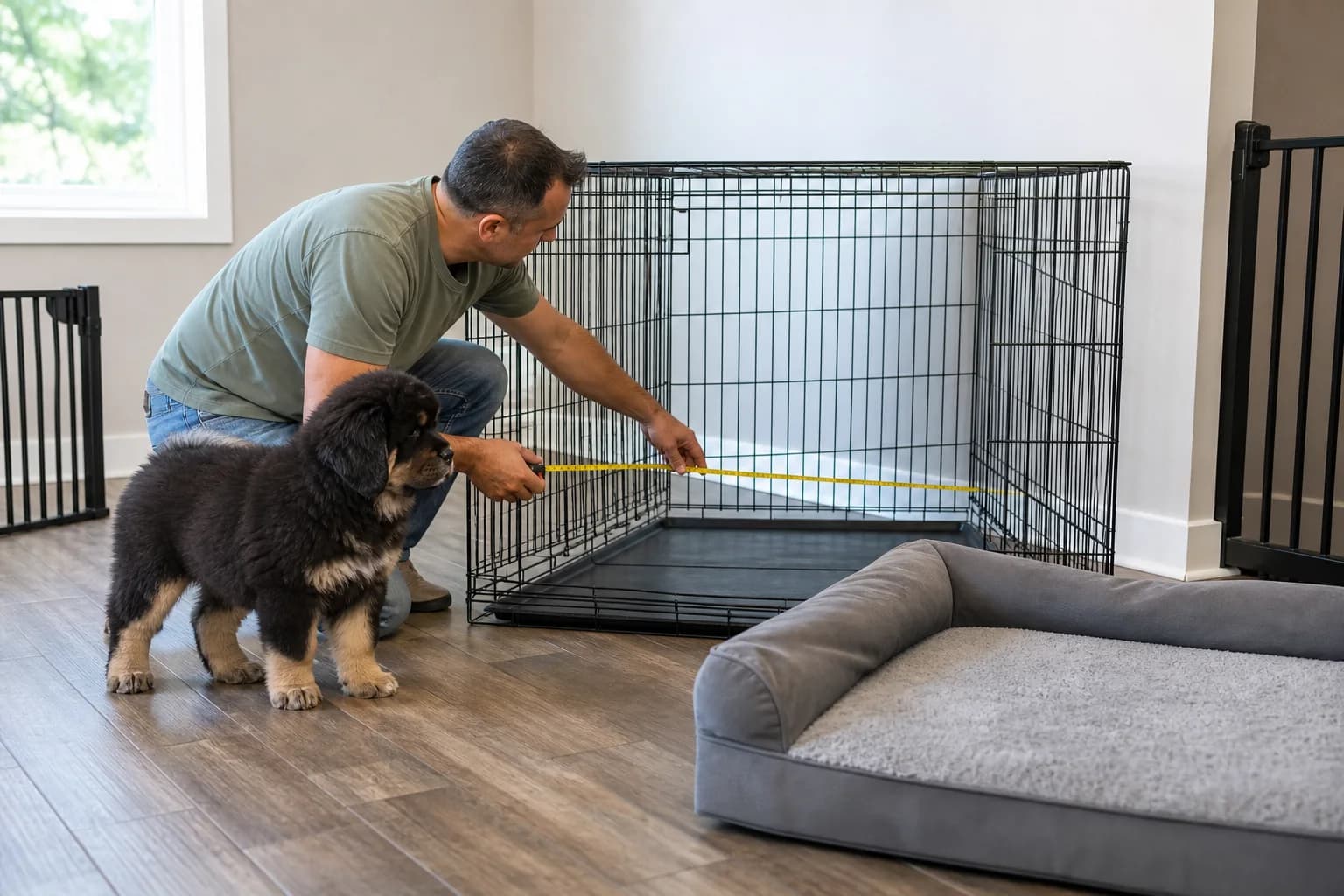
Fencing repairs and vehicle changes can cost more than small pet supplies. Measure first, price real solutions, and include installation or professional help. A budget line that says only "crate and food" will understate the setup for many homes.
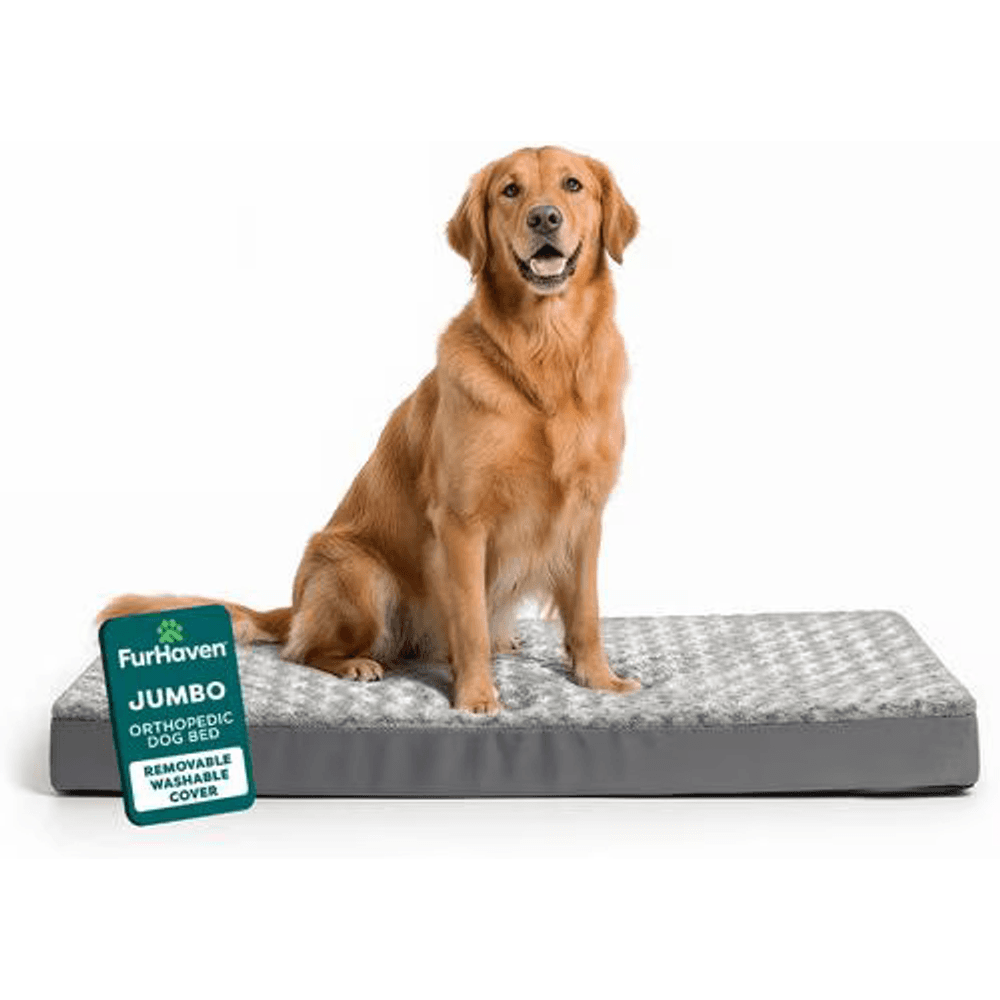
A supportive bed may become part of the adult setup, but size and durability determine whether it is useful. The FurHaven NAP Ultra Plush Orthopedic Deluxe Bed is one jumbo option to compare by sleeping area, support, cover care, and chewing behavior. A bed cannot treat pain, and damaged foam should not be swallowed.
Recurring costs
Estimate recurring expenses from local prices and the actual services the household would use:
- Food and routine coat care.
- Insurance and preventive or urgent veterinary care.
- Parasite prevention, dental care, and licensing.
- Replacement equipment and training refreshers.
- Boarding, transport, or in-home care during travel.

A durable rubber dog toy that can be stuffed with treats and selected by the manufacturer's size guide; supervise use and retire it when damaged.
Petful may earn a commission when you click through to Chewy, at no extra cost to you.
A giant dog can increase medication doses, boarding constraints, transport needs, and procedure costs, so a small-dog household estimate is not a reliable substitute.
Insurance quotes should be requested for the specific address and breed before acquisition. Policies differ in exclusions, reimbursement, limits, waiting periods, and whether the carrier will cover the dog at all. Savings can complement insurance, but neither eliminates the need for an emergency plan.
The household should also price time. Daily management, training practice, coat care, veterinary transport, and arranging competent backup care all consume hours even when no invoice arrives.
Model the first month before committing
The first month exposes whether the budget and logistics work in practice. Before pickup, schedule the initial veterinary visit, confirm how the puppy will travel, choose a quiet confinement area, and identify who handles nighttime trips, feeding, cleaning, training, and introductions. If several adults share care, assign each task instead of assuming someone will notice it.
Keep part of the setup budget unspent until the puppy has been measured and observed. Buying every adult-size item in advance can waste money. Purchase safety-critical basics first, then replace or add equipment from actual measurements:
- Confirm that a crate fits both the dog and the vehicle.
- Measure the opening before choosing a gate.
- Fit a harness to the puppy's current proportions.
- Recheck every item as growth changes fit and strength.
Ask the breeder or rescue for the current food name, daily amount, meal schedule, and several days of transition food. Abrupt food and routine changes can complicate the adjustment period and create avoidable expenses. Record the puppy's weight and body condition with the veterinarian rather than guessing future food use from an adult breed average.
The plan also needs a failed-assumption column. Price a realistic alternative if any high-impact dependency fails:
- The puppy cannot use the planned daycare.
- The insurer excludes a condition.
- The landlord requests additional documentation.
- The nearest trainer will not accept guardian breeds.
This is not pessimism. It prevents a single unavailable service from turning a manageable placement into an urgent rehoming problem.
Emergency and contingency reserve
An emergency reserve should be separate from the money used to purchase the puppy. Consider how the household would pay for urgent imaging, surgery, hospitalization, orthopedic evaluation, a behavior consultation, fence repair, or temporary boarding after a housing disruption.
The reserve amount is personal, but the access plan should be concrete. Identify the available funds, insurance process, credit limit if used, emergency hospital, transportation, and the person authorized to make decisions. A theoretical resource that cannot be reached at night is not a complete plan.
First-year costs people underestimate
Professional help early can be cheaper and safer than waiting for a powerful adolescent to rehearse pulling, door rushing, or territorial behavior. Budget for reward-based training that understands guardian breeds, plus practice time between appointments.
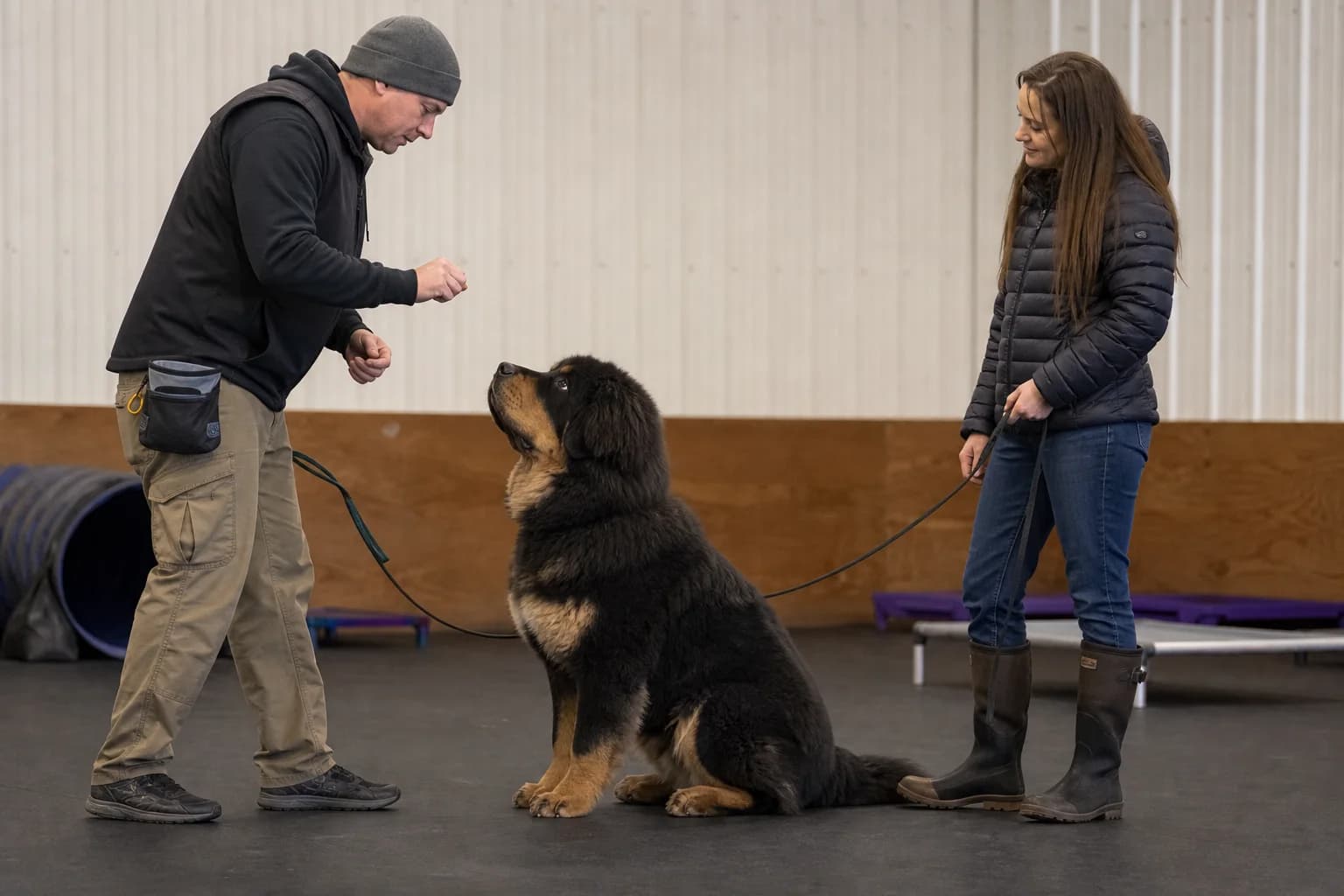
Other underestimated items include repeated equipment sizing, secure gates, flooring traction, vehicle access, grooming instruction, and a veterinarian or groomer able to handle a very large dog. Price the normal breed, not an unusually easy individual who never needs support.
A durable food toy can provide supervised enrichment and help a puppy practice settling. The KONG Classic Dog Toy, Large is one option to compare with the manufacturer's size guidance and the individual dog's chewing style. Supervise first use and replace it if pieces loosen; no toy substitutes for exercise, training, or social needs.
Are Tibetan Mastiffs the most expensive dogs?
The Tibetan Mastiff became associated with the phrase "most expensive dog" after a few extraordinary status-market sales, particularly highly publicized transactions in China. Those cases were not ordinary puppy purchases and do not define the current U.S. market.
The honest answer is that no breed holds one stable title across every seller, year, and individual dog. A rare auction, imported show prospect, or celebrity purchase can exceed ordinary prices in many breeds. For a family buyer, the meaningful comparison is an ordinary puppy price plus responsible sourcing and lifetime care.
Treat any seller who uses a million-dollar story to justify an ordinary litter's price with caution. Ask what concrete care, screening, rearing, and support the buyer receives. Prestige is not a health test.
Check breed fit before shopping
A Tibetan Mastiff is a large, independent guardian, not merely an expensive fluffy dog. Normal traits can include reserve with strangers, nighttime alerting, territorial behavior, slow maturity, and a need for secure boundaries. Petful's complete Tibetan Mastiff guide explains the broader temperament and household-fit decision.
The exact address should also be cleared before a deposit. Petful's guide to Tibetan Mastiff legality explains why local law, the lease or homeowners association, and the insurer can reach separate answers.
Health planning continues after parent screening. Petful's Tibetan Mastiff health and lifespan guide covers preventive care and warning signs. The cost article does not diagnose an individual puppy or replace a pre-purchase veterinary conversation.
A buyer's final decision
Before committing, the household should be able to show:
- Verified parent or dog-specific health records.
- A realistic account of temperament and rearing.
- Written permission for the exact address.
- A signed contract reviewed without pressure.
- A true-cost worksheet with an emergency reserve.
- A return and backup-care plan.
If the plan depends on hiding the breed, skipping records, financing the entire setup without a reserve, or believing a guaranteed size or temperament, pause. A responsible breeder or rescue would rather delay placement than create a predictable crisis.
Tibetan Mastiff price FAQs
The Tibetan Mastiff is not consistently the most expensive dog. A few sensational status-market sales reached extraordinary prices, but they do not define an ordinary puppy price in the United States. Typical breeder discussions are usually in the low thousands. Buyers should compare verifiable health screening, temperament, rearing, contract terms, support, and lifetime fit rather than paying for a prestige story.
Final price perspective
Use the purchase price as one line in a much larger plan. Verify the source, protect the dog from color and size hype, price the first year and recurring years, and keep an emergency reserve that still exists after the puppy comes home.
The right Tibetan Mastiff is not the puppy with the largest number attached. It is the responsibly sourced individual whose normal adult needs fit the household for life.

Coreen Saito is a pet writer and longtime shelter volunteer with more than a decade in animal rescue. She covers cat behavior, breed care, and the small, ordinary science of sharing a life with companion animals, with a particular focus on honest takes about the products and decisions that actually matter. At home in Arizona, she's outranked by Mac (a dog with the loudest opinion in the house), Rebel (a cat who governs by quiet authority), and Meri (an orange tabby who runs the late shift and the laundry basket). She writes about all three, plus the rescues that keep coming through her life, at LifeWithMinty.com.
Sign up for expert-backed reviews and safety alerts all in one place.