Best Food for Tibetan Mastiffs: How to Choose
Learn how to choose food for a Tibetan Mastiff by nutritional adequacy, life stage, calories, body condition, controlled puppy growth, meal pacing, tolerance, and veterinary guidance.

BVMS, MRCVS
Petful is reader supported. As an affiliate of platforms like Amazon and Chewy, we may earn a commission when you buy through links on this page. There is no extra cost to you.
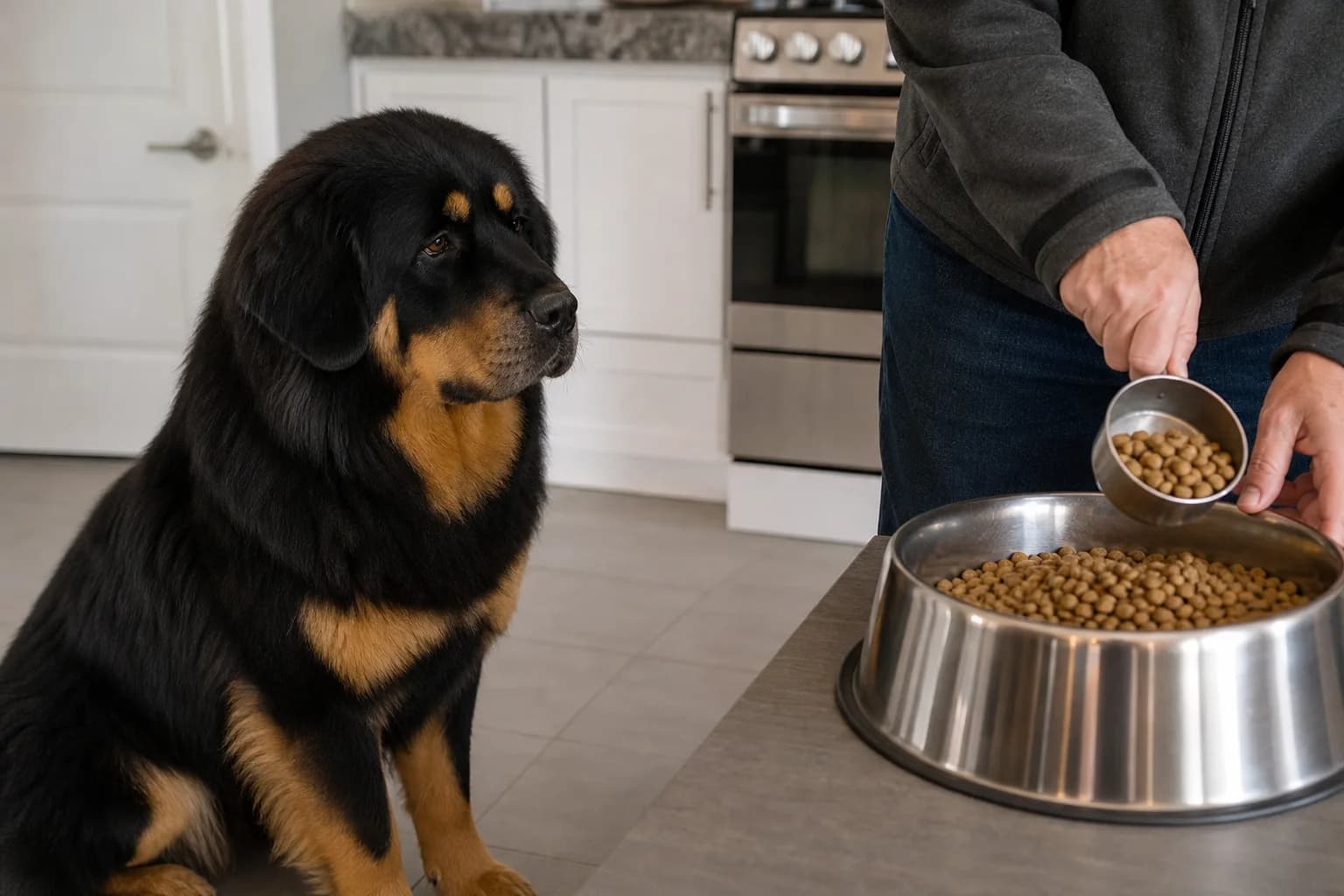
The best food for Tibetan Mastiffs is not one universal brand or recipe. It is a complete and balanced diet matched to the individual dog's life stage, body condition, health, activity, tolerance, and measured calorie needs. Large-breed puppies also need controlled growth rather than the fastest possible weight gain.
Use the product label, manufacturer information, weight and body-condition trends, and veterinary guidance together. This article provides a selection and monitoring process. It does not prescribe a therapeutic diet or diagnose food allergy, digestive disease, obesity, or another medical condition.

Sign up for expert-backed reviews and safety alerts all in one place.
Choose a complete diet for life stage
Start with complete and balanced life-stage food, then compare calories, manufacturer transparency, format, cost per day, and the individual dog's response. Measure every meal, track body condition and weight, support controlled large-breed puppy growth, change foods gradually, and involve a veterinarian when health or tolerance changes the decision.
The best food for Tibetan Mastiffs is a complete and balanced diet that fits life stage and supports an appropriate body condition. Tibetan Mastiff health problems may change the decision, but a breed risk list cannot prescribe one recipe. Start with nutritional adequacy, then use measured calories and veterinary guidance to fit the food to the individual dog.
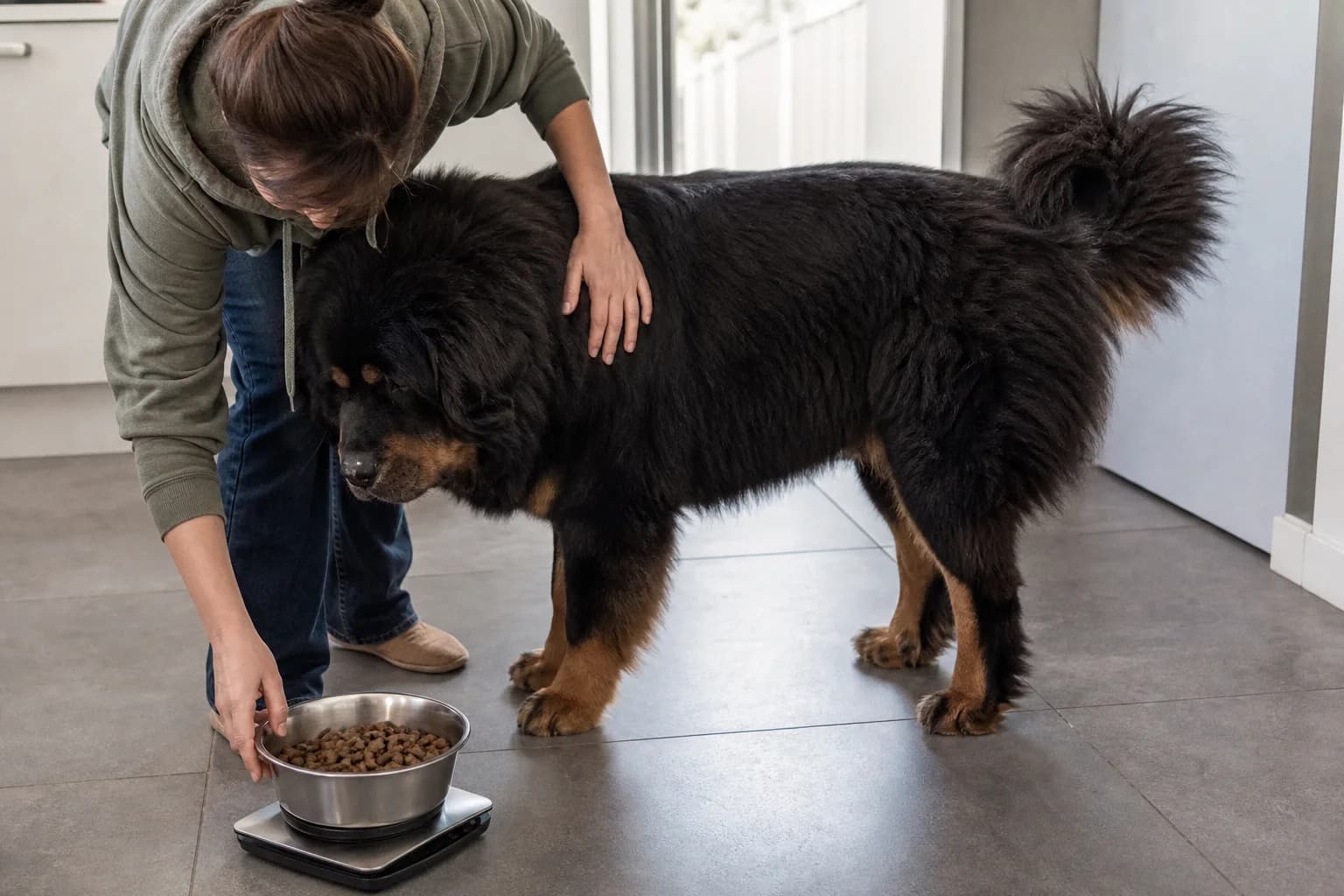
Food selection begins with nutritional adequacy, not a photograph of meat or a breed name on the bag. In the United States, look for the nutritional adequacy statement that explains whether the food is complete and balanced, which life stage it supports, and how that claim was established. Body condition then tests whether the measured starting plan fits the dog.
Read the nutritional adequacy statement
AAFCO develops model nutrient profiles and feeding-test protocols used by states and the pet food industry. AAFCO does not approve, certify, or endorse individual dog foods. The label statement is therefore more useful than an "AAFCO approved" marketing phrase. Read the exact words on the current package because a brand can sell several products with different life-stage claims.
The statement should help answer:
- Is the product intended for intermittent or supplemental feeding only?
- Is it complete and balanced for adult maintenance, growth, or another stated life stage?
- Does a growth claim include or exclude the growth of large-size dogs?
- Was adequacy established through formulation or an animal feeding test?
The correct wording depends on the dog's stage. A complete adult-maintenance food is not automatically appropriate for a growing giant-breed puppy. A topper or treat does not become a complete diet because it contains nutritious ingredients.
WebVet explains the label concept in what makes dog food complete and balanced. Use that standard as the first filter, then compare the dog and manufacturer.
Ask who made the food
WSAVA nutrition resources encourage owners and veterinary teams to ask practical questions about manufacturer expertise and quality control. Useful information includes who formulates the food and what qualifications that person holds. Ask where the food is made, how finished products are tested, and how nutrient or quality concerns are handled. The purpose is transparent process, not a simple endorsed-brand list.
Marketing language is not the same as transparency. A company can use appealing ingredient terms while providing little information about formulation, testing, or calorie content. Record the answer and source rather than deciding from packaging tone.
Compare calories in the format you feed
Calorie density may be listed per cup, can, tray, or kilogram. Use the unit actually measured at home. Two dry foods can have very different calories in the same volume, so keeping the number of cups unchanged during a switch can unintentionally raise or lower energy intake.
For mixed feeding, count every source:
- Dry food.
- Canned or fresh food.
- Training treats.
- Chews and food toys.
- Table food approved for the dog.
- Calorie-containing supplements.
The calorie total is a starting estimate, not proof that the portion is right. Weight and body condition show how the individual responds.
Ingredient lists have limits
Ingredients are listed by weight before processing, which can make direct comparisons difficult when moisture differs. The list can identify an ingredient the dog must avoid, but it does not show nutrient digestibility, quality control, calorie suitability, or whether the final diet meets the dog's needs.
Terms such as natural, premium, ancestral, holistic, or breed-specific do not replace the adequacy statement. Neither does a long list of fashionable additions. Ask what decision each feature is supposed to improve and whether evidence supports it.
The Orijen Original Grain Free Dry Dog is one existing formula to compare by its current adequacy statement, life-stage claim, calories, manufacturer information, price per day, and the dog's response. Grain-free status is not a universal advantage, so discuss diet history and health questions with the veterinarian.
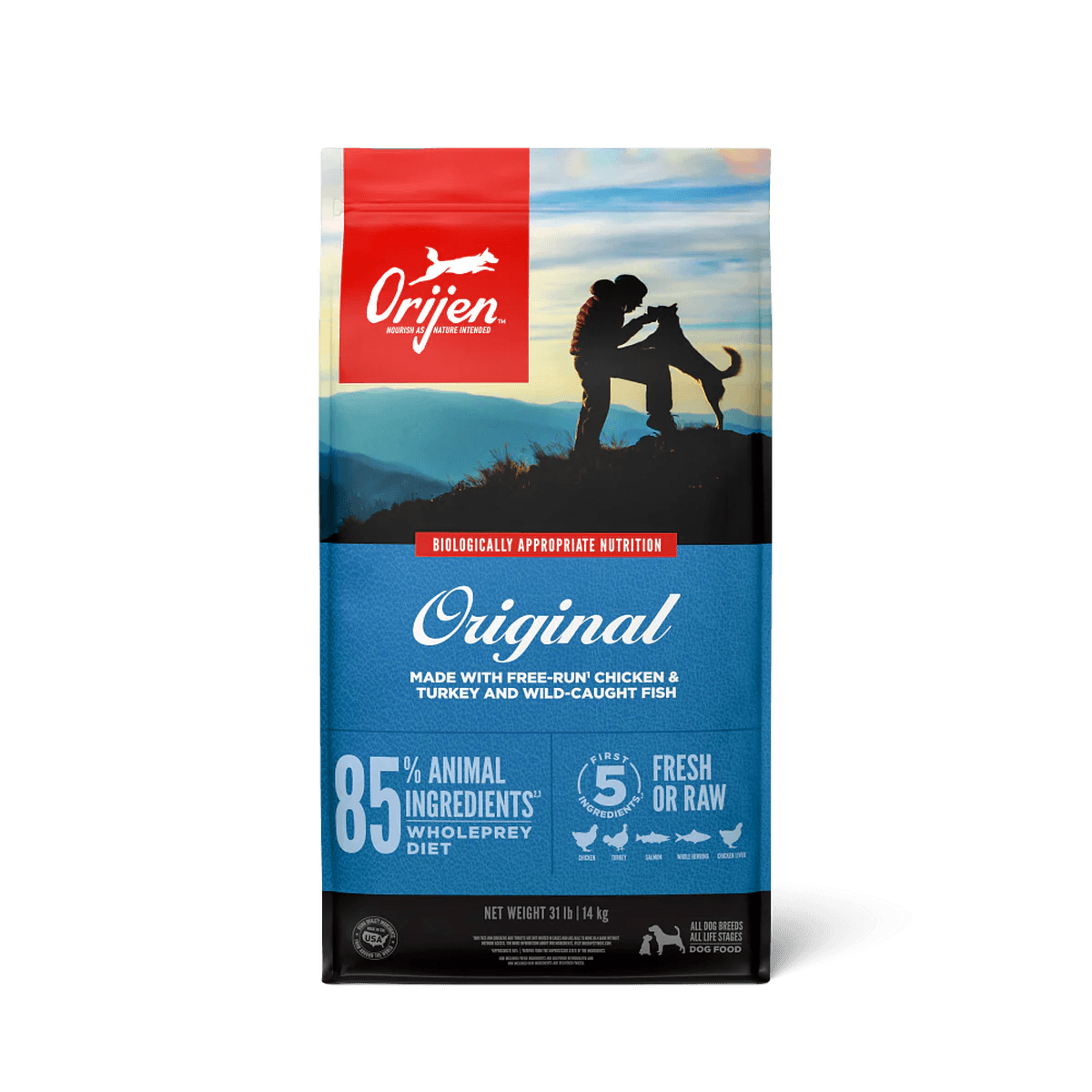
A grain-free kibble built around named whole-protein sources. Best for active adult dogs; the high fat content is more than many sedentary pets need.
Petful may earn a commission when you click through to Chewy, at no extra cost to you.
Compare foods with the same evidence
| Criterion | What to record | Why it matters |
|---|---|---|
| Adequacy | Exact nutritional adequacy statement and life-stage claim | Establishes whether the product is intended as a complete diet for this dog |
| Calories | Calories per measured cup, can, tray, or gram | Allows an honest portion and cost comparison |
| Manufacturer | Formulation expertise, quality controls, contact process, and lot traceability | Tests transparency beyond marketing language |
| Dog response | Body condition, weight trend, stool, appetite, skin, coat, and energy | Connects the label to the individual without diagnosing at home |
| Practical fit | Availability, storage, measuring method, feeding time, and cost per day | Determines whether the plan can be followed consistently |
Create one row per candidate before buying the largest package. Keep the fields identical. If a value is unavailable, write "not found" rather than assuming it matches a competitor.
Compare cost per day, not package price
A larger bag may cost more but feed for more days. A calorie-dense food may use less volume. Wet food and dry food cannot be compared by package weight alone because moisture differs.
Calculate the amount the dog would actually receive, then divide package cost by expected feeding days. Add recurring toppers or supplements only if they are truly part of the plan. A low package price can become expensive when the portion is large or products are repeatedly discarded after poorly planned switches.
Compare convenience honestly
The household has to store, measure, serve, and reorder the food safely. A product available only through unreliable shipping may fail during travel or weather disruptions. A very large bag may lose freshness before one dog finishes it.
Record:
- Where the food can be purchased.
- Typical delivery or pickup time.
- Package size the household can lift and store.
- Equipment needed for accurate measuring.
- A short backup plan if the product is unavailable.
Convenience should not override nutritional fit, but it affects whether the plan remains consistent.
Trial size before commitment
Buy enough for a gradual transition and observation period, not a warehouse supply before tolerance is known. Keep the receipt and lot information. If the dog has a medical history or previous reaction, ask the veterinarian before starting.
One poor stool after an unrelated stressor does not prove the food caused disease. A repeated pattern still deserves documentation. Control what can be controlled, record timing, and avoid changing several products at once.
Compare dry, wet, fresh, and mixed feeding
Format changes water content, storage, measuring, cost, and feeding experience. It does not remove the need for a complete and balanced life-stage claim. Compare products on a dry-matter basis only when a veterinary or nutrition question actually requires it; routine owners can begin with the label and calories in the served unit.
Dry food can be convenient for measuring and training, but cup volume varies. Weighing grams improves repeatability. Wet food adds moisture and may be easier for some dogs to eat, but cans or trays have different calories and refrigeration rules.
Perishable formats
Fresh or frozen commercial food needs the same adequacy check. The word fresh does not prove nutritional balance or safety. Follow thawing and storage instructions, and include the containers and freezer capacity in cost planning.
Mixed feeding can work when each component is intentional. Calculate the combined calories before serving. A half ration of dry plus an unmeasured can is not a plan. If one component is supplemental only, the complete portion must still carry the diet's nutritional foundation.
Evaluate the household, not only the label
A feeding plan should survive ordinary disruptions. Ask who can lift and open the package, whether a backup caregiver can measure the portion, and what happens during travel or a delivery delay. A plan requiring complex preparation may fail when the primary owner is ill.
Test the routine for one week:
- Measure the full daily ration each morning.
- Separate training food before filling the bowl.
- Record leftovers instead of topping up.
- Clean bowls and preparation surfaces on schedule.
- Check that reorder timing leaves a safe transition buffer.
This trial reveals whether the advertised convenience is real. If the process is inconsistent, simplify before changing nutrition.
Set portions by body condition and trend
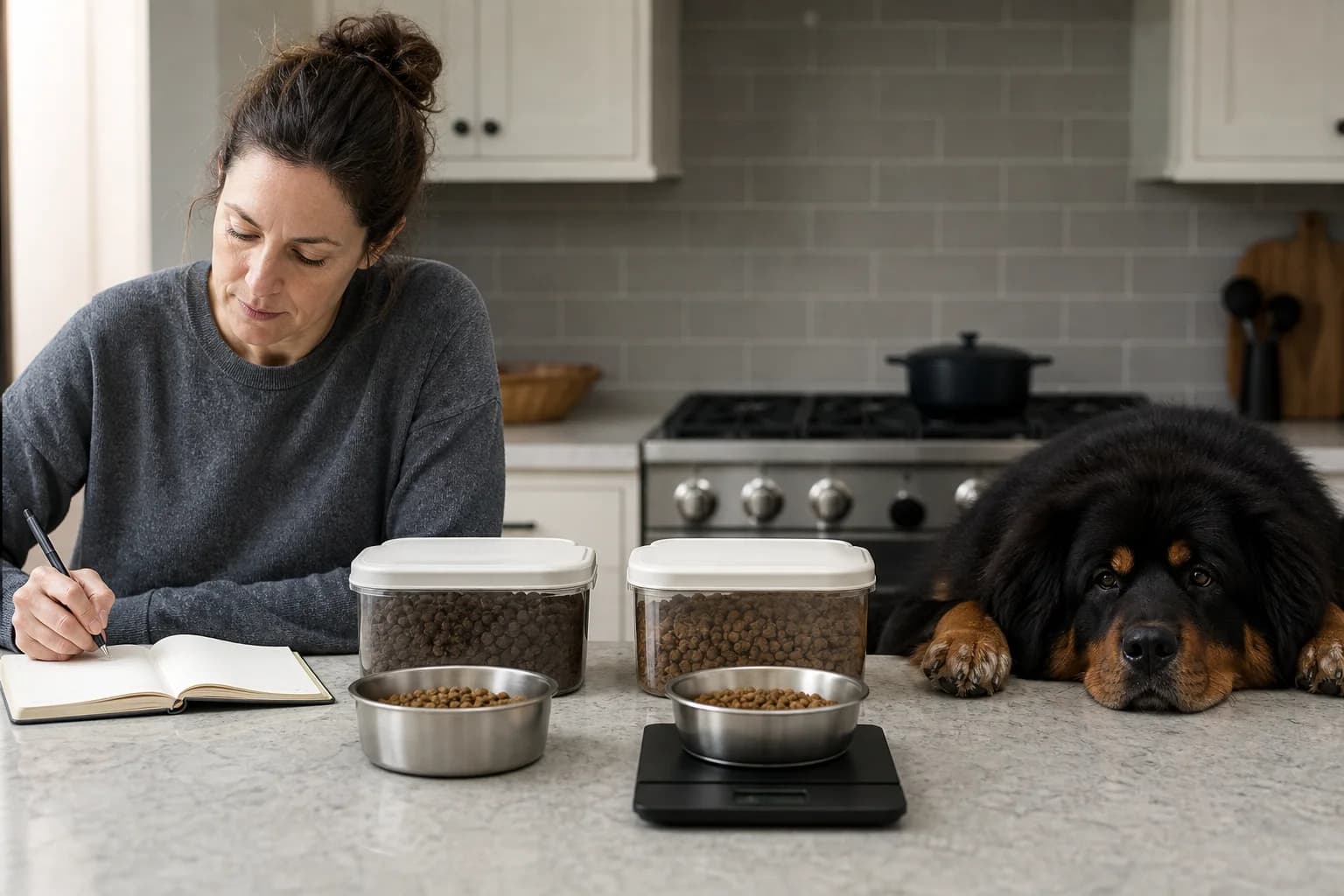
Package feeding guides are broad starting points. They cannot account for every difference in metabolism, neuter status, climate, activity, treats, health, or calorie measurement. The correct portion is the amount that supports an appropriate body condition and stable or planned weight trend.
Learn the dog's body condition
The dense coat can hide shape. Use hands to assess the ribs and compare the waist and abdominal contour with the veterinarian's body condition score method. Agree on a target for the individual dog rather than pursuing the heaviest possible Mastiff dog.
Take consistent measurements:
- Body weight on the same suitable scale.
- Body condition score using the same system.
- Photographs from the side and above on level footing.
- Actual food weight or volume served.
- Daily treat and chew calories.
- Activity, stool, appetite, and relevant medication changes.
The numbers gain meaning as a trend. One scale reading can be affected by equipment, timing, and measurement error.
Convert calories into a starting portion
Begin with the veterinarian's calorie target or a reasoned label starting point. Divide that target by the food's calories per unit. Use grams when a kitchen scale is practical because cups can vary with scoop shape and packing.
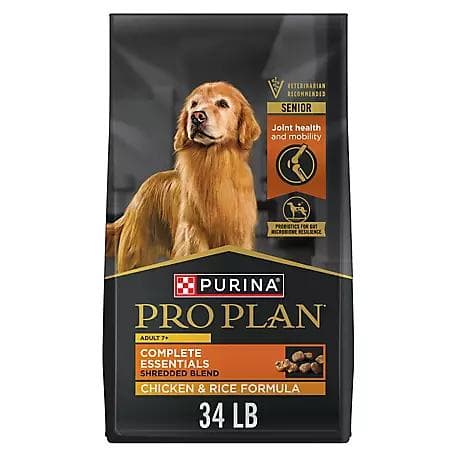
A vet-backed adult kibble with full WSAVA alignment and AAFCO feeding trials. Budget-friendly, though corn gluten and soybean meal sit in the top ingredients.
Petful may earn a commission when you click through to Chewy, at no extra cost to you.
For mixed feeding, assign calories to each component before serving. Do not fill the bowl by eye and subtract treats later. Training rewards can come from the measured daily ration when the food is suitable for that use.
The Purina Pro Plan Adult Chicken & Rice Formula is one adult formula to compare by its current label, calorie density, package size, manufacturer information, and the dog's tolerance. Product naming does not determine the portion; the measured calories and body-condition trend do.
How often to reassess
Recheck more often during puppy growth, a deliberate weight change, illness recovery, medication change, or a new activity level. A stable healthy adult may need less frequent adjustment, but routine hands-on checks should continue beneath the coat.
Contact the veterinarian for unexplained weight loss or gain, appetite change, increased thirst, persistent digestive signs, or loss of muscle. WebVet's guide to dog weight loss or gain explains why the direction alone does not identify the cause.
Convert package calories into a measurable feeding plan
To convert package calories into a measurable feeding plan, start with the total daily calorie target and reserve a defined share for treats or training. The remaining calories belong to meals. Divide by the product's calories per cup, can, tray, or gram, then choose the measuring method that the household can repeat.
- Turn the calorie target into a portion | Write the daily calorie target, subtract planned treat calories, and divide the remainder across meals. Convert each meal to grams or another repeatable unit. That measured portion is the starting point, not a permanent prescription; review it against body condition and weight.
The process is:
- Write the daily calorie starting target.
- Subtract planned treat and chew calories.
- Divide meal calories among the day's feedings.
- Convert each meal to grams or another reliable unit.
- Record what was actually served and left.
- Review weight and body condition on the scheduled date.
Do not copy a calorie target from another Tibetan Mastiff. A target may be estimated from body weight, but the veterinarian adjusts for growth, body condition, activity, neuter status, illness, and response.
Measure volume against a scale once
If the household prefers a cup, weigh several level cups from the actual food. Kibble shape and handling can change packing. Record the average grams per cup and compare it with the manufacturer's reference when available.
Use the same scoop and leveling method. A coffee mug, heaped cup, and loosely filled cup do not represent the same portion. Recheck when the food changes shape or the product changes.
Account for treats before they disappear
Treats are easy to underestimate because they arrive one at a time. Count them at the beginning of the day. Break larger rewards into small pieces when that is safe, or reserve part of the complete food for training.
Chews may add significant calories and last across several sessions. Record the product and amount consumed, not just the number offered. If a chew is primarily enrichment, the calorie allocation still belongs in the daily plan.
Run a two-week feeding adjustment loop
- Change one variable, then review | A two-week feeding adjustment loop starts with measured calories and a recorded body-condition trend. Keep treats and activity reasonably stable, make one small change at a time, and set the review date before changing the portion. Stop the home trial and contact the veterinarian if health signs or rapid change appear.
Use a two-week adjustment loop instead of chasing appetite when a stable adult needs a small portion change. Appetite can rise or fall for reasons that do not match energy need, so the loop begins with measured calories and ends with the scheduled body-condition review. The interval is a practical window, not a rule for every dog. Puppies, medically fragile dogs, rapid weight change, or significant symptoms need veterinary direction sooner.
Step 1: Establish the baseline
Record the exact product, lot, calories per unit, daily amount, treats, current weight, and body condition. Note the dog's usual activity and any medication that affects appetite or weight.
Step 2: Define one goal
The goal might be stable condition, gradual weight loss, gradual gain, or improved measuring consistency. Write one goal with the veterinarian's target when medical or substantial weight change is involved.
Step 3: Make one small change
Adjust the measured food or treat allocation, not both without recording the difference. Avoid adding a topper at the same time, because several changes make the result difficult to interpret.
Step 4: Review the same evidence
Use the same scale and body-condition method. Review stool, appetite, energy, and adherence. The plan failed if the household could not measure consistently, even if the dog appears unchanged.
Step 5: Continue, revise, or escalate
Continue when the trend and tolerance fit the goal. Revise one variable when the response is safe but insufficient. Contact the veterinarian when the direction is unexpected, change is rapid, or signs of illness appear.
Feeding a Tibetan Mastiff puppy
Petful may earn a commission when you click through to Chewy, at no extra cost to you.
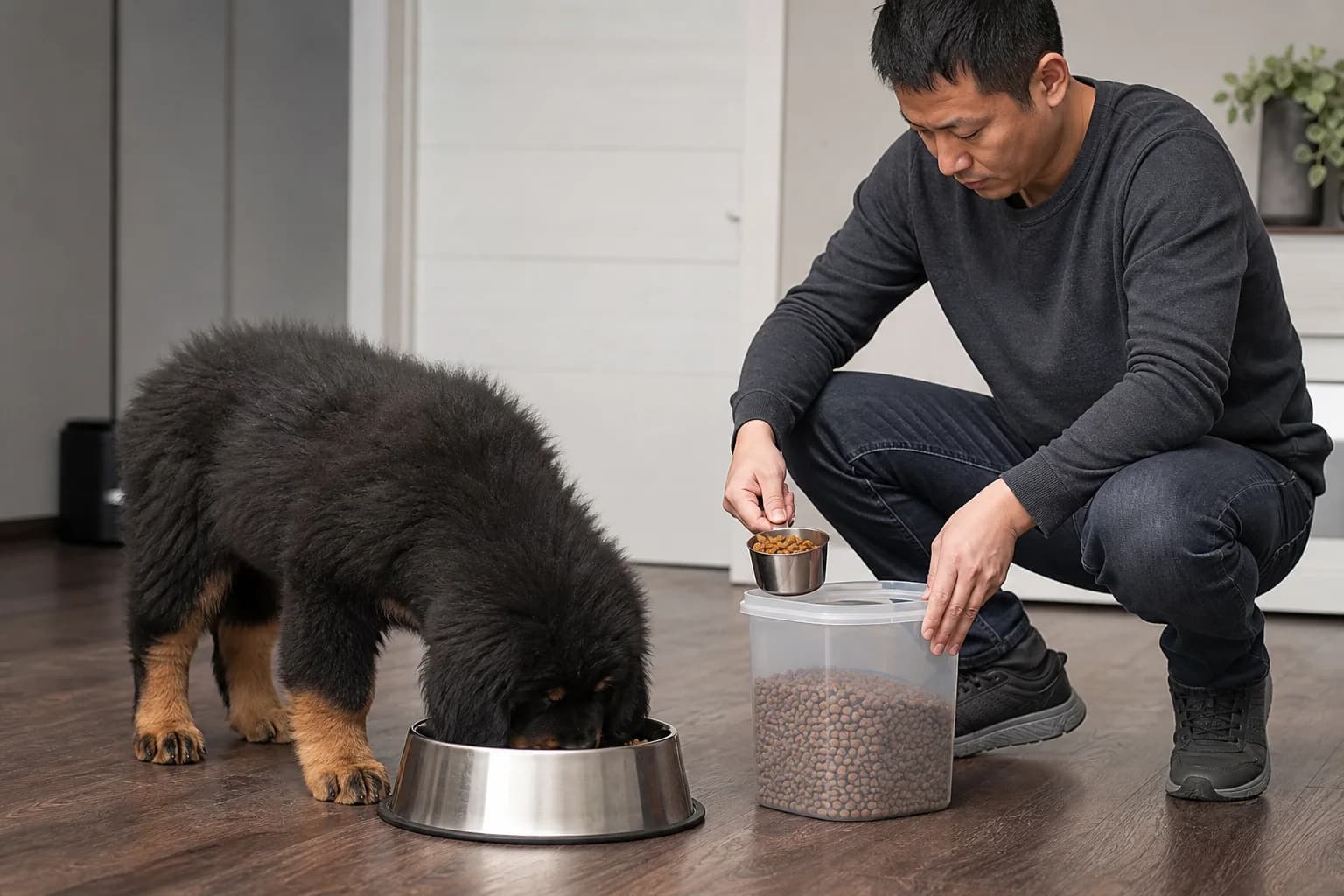
A Tibetan Mastiff puppy grows toward a very large adult over a long period. The goal is controlled large-breed puppy growth with adequate nutrition, not maximum size at the earliest age.
Choose the correct growth statement
Read the full adequacy statement and confirm whether the growth claim is appropriate for large-size dogs. Do not assume that "all life stages" or a giant dog on the package answers the question. Ask the veterinarian to review the exact product when uncertain.
Do not add minerals casually
Calcium, phosphorus, vitamin D, and overall energy intake interact with skeletal growth. Adding mineral supplements to a complete and balanced growth diet can disrupt the intended nutrient balance. Use a supplement only when the veterinarian has identified a specific need and chosen the product and dose.
High-calorie extras can also accelerate weight gain without improving balanced nutrition. Keep treats within the planned daily intake and choose sizes that do not create a swallowing hazard.
Track the growth trend
Weigh the puppy at regular intervals appropriate to age and veterinary advice. Pair weight with body condition and movement. A single breed chart cannot account for sex, line, frame, or individual growth timing.
Petful's Tibetan Mastiff size and weight guide explains why monthly trends and healthy condition matter more than an extreme target number.
Mealtime training
Use puppy meals to teach waiting, release, gentle handling near the bowl, and trading without creating conflict. Children should not test the puppy by touching food or taking the bowl. Adults manage meals and protect the dog from interruption.
Feed puppies in a calm space away from other animals. Separate bowls and remove leftovers before dogs share space again. Competition can increase speed and conflict.
Get a written breeder or rescue handoff
Ask for the exact product name, formula, daily amount, meal times, treats, and several days of food. Record whether the amount is measured by grams or volume. A photograph of the current label protects against confusing two similarly named formulas.
The handoff should also include:
- The puppy's recent weights and dates.
- Appetite and stool pattern in the prior home.
- Deworming, medication, and supplement history.
- Known vomiting, diarrhea, itching, or ear problems.
- Any reason the current food was chosen.
Keep the first days calm. Travel and a new home already change several variables, so an immediate food switch can make digestive signs harder to interpret.
Review growth without comparing littermates
Puppies from the same litter can grow at different rates. Compare the puppy with its own body-condition and movement trend. A heavier sibling does not prove the smaller puppy needs more food, and a dramatic online giant does not set a healthy target.
Ask the veterinarian whether the puppy is maintaining an appropriate condition. Review the calorie density and actual amount served. When growth or movement is concerning, assessment comes before adding calories or supplements.
Transition to adult food deliberately
There is no single birthday that fits every dog. The veterinarian can help decide when growth needs have changed enough to move from a large-breed growth diet to adult maintenance. The decision should consider skeletal maturity, condition, current product, and the dog's overall development.
Once the plan is set, use a gradual food transition. Recalculate calories because the adult formula may differ from the puppy food. Continue close condition checks while the growth rate slows. One product-specific label to compare is Orijen Original dry dog food; verify the current adequacy statement, calories, and fit for the individual dog.
Adult and senior feeding changes
Adult energy needs can shift with activity, season, neuter status, environment, and health. Keep measuring after the dog appears fully grown. The dense coat can conceal gradual gain until movement is affected.
Senior dogs do not all need the same senior label. Some benefit from a different calorie density or nutrient profile; others remain appropriate on an adult product. Dental disease, reduced activity, muscle loss, kidney or heart disease, and medication can change the decision.
Preserve muscle while controlling excess fat
Weight alone cannot distinguish fat from muscle. Ask the veterinarian to assess both body condition and muscle condition. A senior dog losing muscle while gaining fat may need a different plan than a healthy adult with simple calorie excess.
Track strength-related function:
- Ease of rising.
- Ability to use stairs or a ramp.
- Comfortable walk duration.
- Recovery after normal activity.
- Stability on familiar flooring.
A feeding change should support the medical and movement plan. It cannot replace pain control, rehabilitation, or diagnosis.
Adapt texture when needed
Oral pain, missing teeth, swallowing difficulty, or medication needs may change food texture. Do not assume soft food solves the underlying problem. Arrange examination and follow the veterinarian's advice on safe consistency.
When adding water or changing format, update calorie measurement and food-safety timing. Discard perishable leftovers according to product and veterinary guidance.
Meal pacing and slow feeders
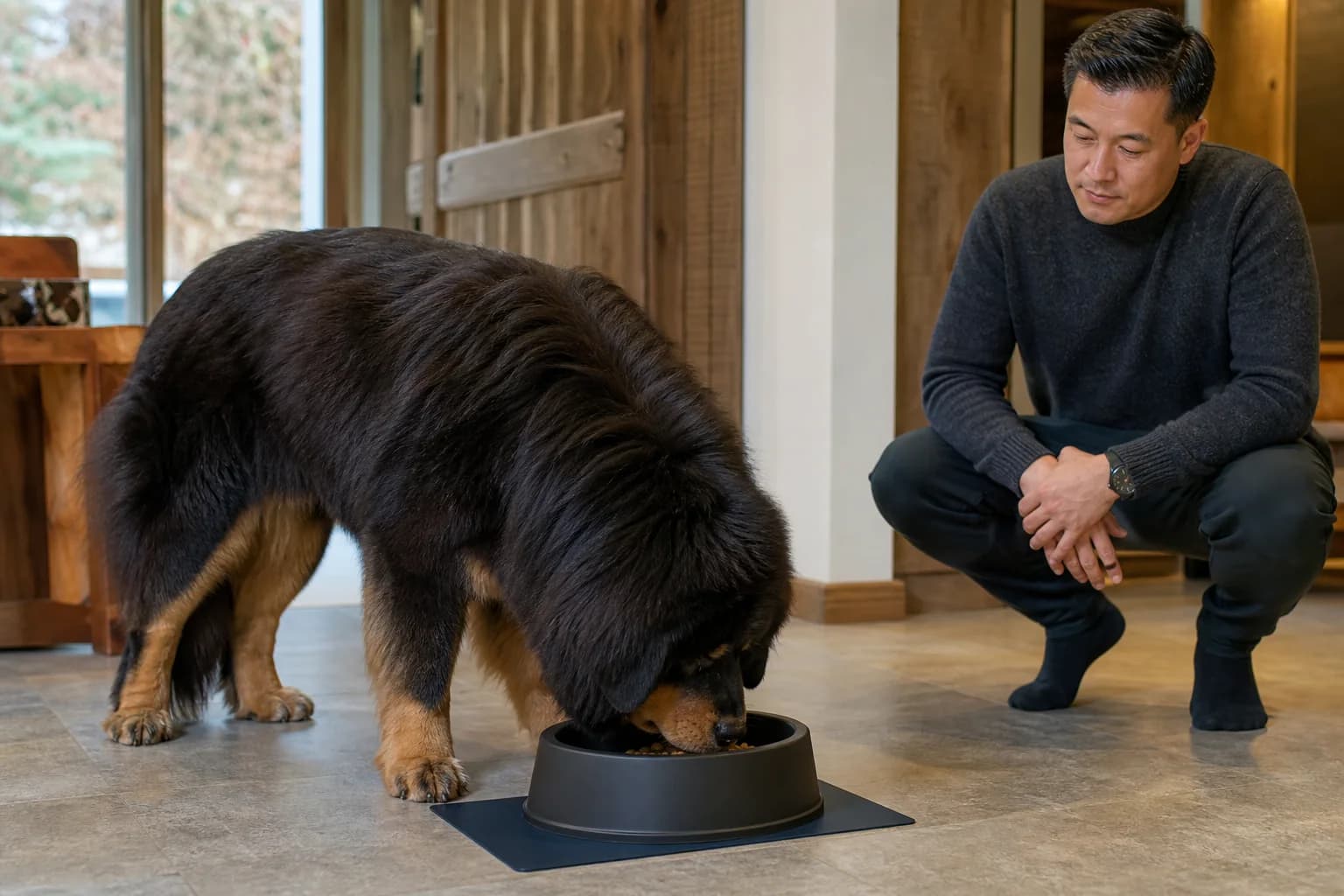
Some Tibetan Mastiffs finish meals rapidly. Meal pacing may reduce gulping or make enrichment last longer, but no slow feeder prevents gastric dilatation-volvulus. The bowl is one management choice, not an emergency guarantee.
Choose a safe design
Compare:
- Capacity for the full measured meal.
- Channel size relative to muzzle and tongue.
- A stable nonslip base.
- Material condition and cleaning access.
- The dog's frustration, chewing, or pawing.
Supervise the first uses. Stop if the dog bites the bowl, damages material, guards it, or becomes more frantic.
Comparing a slow feeder
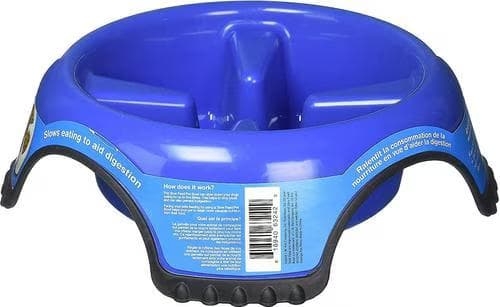
The JW Pet Skid Stop Non-Skid Plastic Slow Feeder Dog Bowl is one bowl to compare for capacity, stability, cleaning instructions, and whether it slows the individual dog safely.
It cannot eliminate bloat risk or substitute for emergency recognition.
WebVet's review of slow feeder dog bowls can help owners compare formats. Use any recommendation as a shortlist, then measure the actual food and observe the dog.
Bloat awareness and meal pacing
Bloat awareness and meal pacing belong in the same routine without being confused. Pacing tools can change how quickly a dog eats. Emergency awareness determines what the household does when the abdomen distends, retching produces nothing, or the dog becomes weak.
Keep a short feeding record when speed is a concern. Time the meal from first bite to finish, note interruptions, and observe chewing or bowl biting. Compare the same amount in a standard bowl and safe pacing setup on different days rather than creating a competitive side-by-side test.
Feed multiple dogs separately
Competition can increase speed and guarding. Use closed doors or secure barriers so each dog can eat without another approaching. Pick up bowls before reuniting the dogs and supervise any food toy or chew.
Do not let children retrieve a bowl or test tolerance. Adults should manage food, clean the area, and trade safely when an item must be removed. Behavior support is appropriate when guarding creates risk.
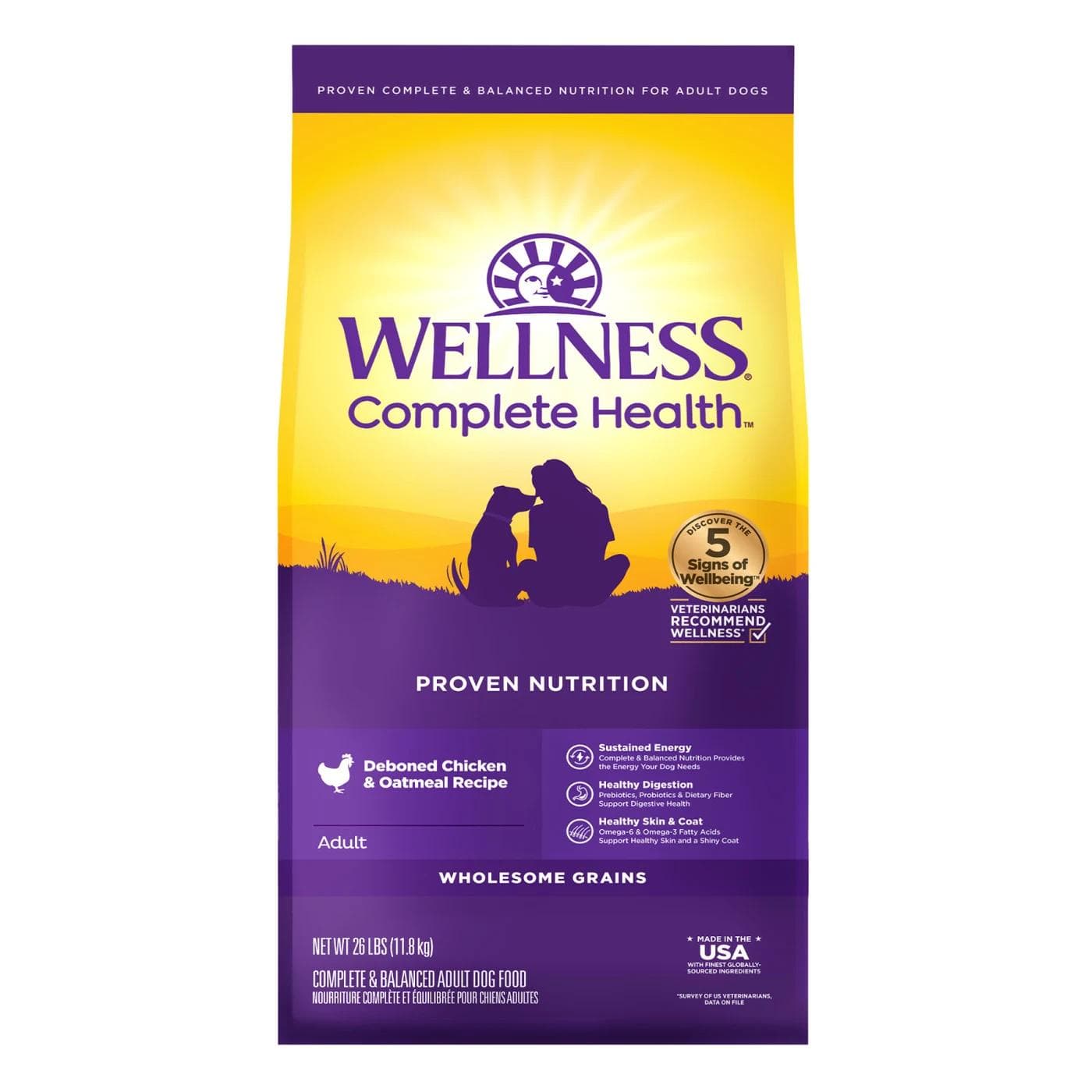
Deboned chicken and whole grains with guaranteed probiotics, taurine, and omegas. The sensible middle of the premium aisle for everyday adult dogs.
Petful may earn a commission when you click through to Chewy, at no extra cost to you.
Bloat risk is not solved by one bowl
- Know the bloat warning signs | Repeated unproductive retching, a swollen or tight abdomen, restless pacing, drooling, pale gums, weakness, or collapse can signal gastric dilatation-volvulus. Emergency care cannot wait for every sign. Call an emergency veterinarian and leave immediately. Meal size, schedule, bowl choice, or slow feeding cannot rule out GDV or make home observation safe.
Identify the emergency hospital and route before a problem. Confirm that the vehicle can transport the adult dog, keep payment or insurance information accessible, and practice loading when the dog is well.
Owners can discuss meal frequency, activity around feeding, family history, and preventive options with the veterinarian. Online rules vary and cannot account for the individual dog's health.
Change foods gradually and track tolerance
A gradual transition lets the digestive system adapt and makes the timeline easier to interpret. The pace depends on the dog, foods, and veterinary advice. A stable dog may transition over several days, while a history of digestive disease may require a different plan.
Build the transition by calories
Replacing one cup with one cup can change total calories when densities differ. Calculate the old and new food portions so the combined daily total remains near the intended target, unless the veterinarian is also changing energy intake.
Record:
- Percentage or grams of old and new food.
- Total estimated calories.
- Stool quality and frequency.
- Appetite, vomiting, and signs of discomfort.
- Skin or ear changes.
- Treats, chews, medication, and unusual stress.
Change only the planned variable when possible. A new food, shampoo, supplement, and boarding stay started together create an unclear result.
When to slow or stop
Mild stool change may support a slower transition, but persistent vomiting or diarrhea, blood, marked lethargy, pain, dehydration, refusal to eat, or rapid decline needs veterinary guidance. Puppies and medically vulnerable dogs have less room for delay.
Keep a sample or photograph only if the veterinarian requests it and it is safe. More importantly, report timing, frequency, amount, and related signs.
Review the pattern, not one isolated event
Digestive tolerance should be read across several observations when the dog is otherwise stable. Record stool consistency with a simple scale, but also note frequency, urgency, straining, gas, appetite, and comfort. A normal-looking stool does not erase repeated vomiting or pain.
Context matters. Travel, boarding, scavenging, a new chew, medication, parasites, infection, and stress can overlap with a food change. Write those events on the same timeline instead of assigning every sign to the new recipe.
Preserve the old and new labels
Photograph both adequacy statements and calorie declarations. Save ingredient lists, lot codes, and opening dates. If the transition fails, those records help compare products and report a possible quality issue.
The product name alone may be ambiguous because packaging can contain several recipes and life-stage versions. Record the full formula. If the manufacturer changes a recipe, treat it as new information and monitor accordingly.
Rechallenge only with veterinary direction
Do not deliberately feed a suspected trigger again to prove a reaction without veterinary guidance. Rechallenge can be part of a structured elimination-diet process, but it has a purpose and safety plan. It is not appropriate when the prior reaction was severe.
For ordinary intolerance without danger signs, the veterinarian may recommend a slower transition, return to the previous diet, or a different evaluation. Follow the selected path rather than cycling through several foods.
Food allergy questions
Food allergy cannot be diagnosed reliably by switching among many retail recipes or by reading an ingredient list. A veterinarian may recommend a structured elimination diet with a specific product and strict control of every edible exposure.
Over-the-counter foods can have different cross-contact controls than a veterinary therapeutic diet. Flavored medications, chews, treats, and scavenged food can invalidate a trial. Do not improvise substitutions without asking the supervising veterinarian.
The Wellness Complete Health Adult Chicken & Oatmeal Dry Dog Food is one retail adult food to compare by its current adequacy statement, calories, manufacturer information, ingredients relevant to this dog, and tolerance. It is not a substitute for a veterinarian-prescribed elimination diet.
Food safety and storage
Safe storage protects quality and preserves the information needed for a complaint or recall. Keep the original bag or label even when using a storage bin. The lot code, best-by date, and manufacturer contact can be lost when food is poured into an unlabeled container.
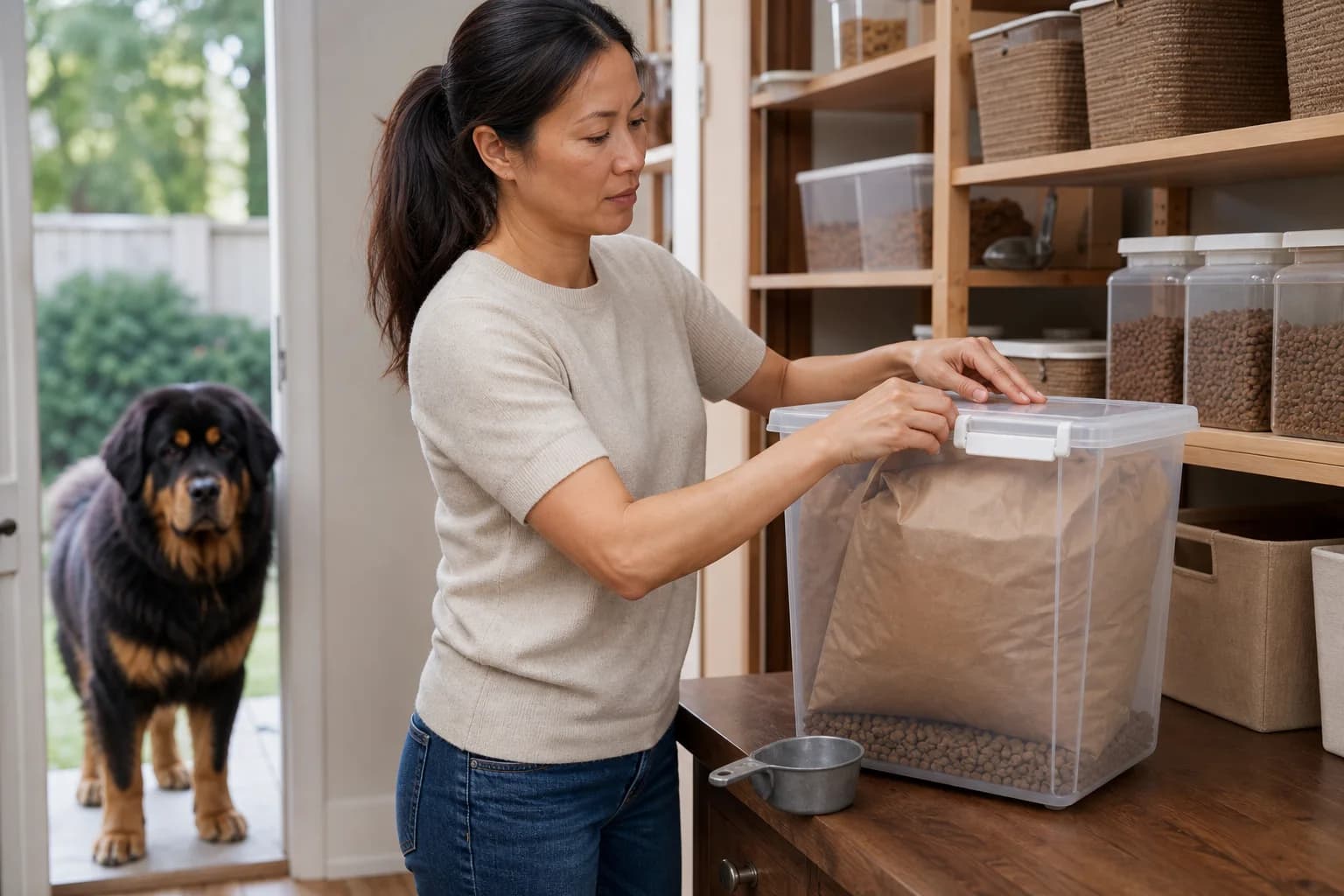
Dry food
Store dry food in a cool, dry area protected from pests and moisture. Place the original closed bag inside a clean sealed bin when practical. Do not repeatedly top off a container without washing and drying it, because old fats and crumbs remain.
Use a clean scoop that is not left buried in damp food. Check smell, appearance, and package integrity. If the food seems abnormal, stop feeding it, preserve the package and a sample, and contact the manufacturer and veterinarian as appropriate.
Wet, fresh, and frozen food
Follow label refrigeration, thawing, and discard instructions. Use clean utensils and do not leave perishable food at room temperature beyond safe guidance. Household freezers and refrigerators vary, so a product's instructions matter.
Prevent cross-contamination between raw animal products and human food areas. Raw diets can expose the dog and household to pathogens and are not automatically balanced. Discuss risks, formulation, and household vulnerability with the veterinarian or a board-certified veterinary nutritionist.
Recall readiness
Maintain:
- Brand and exact product name.
- Package size and purchase source.
- Lot code and best-by date.
- Purchase and opening date.
- Photographs of the label.
- Notes about any suspected reaction.
A recall affecting one lot does not necessarily affect every product from a company. Follow the manufacturer and regulator instructions for the identified product.
Report a suspected food problem
Stop using a product that smells rancid, contains foreign material, shows moisture or pests, or appears meaningfully different from its usual state. Preserve the package, remaining food, receipt, and photographs. Keep the material away from pets and children.
If the dog is ill, contact the veterinarian first. Report:
- When the package was opened.
- How it was stored and served.
- Which animals ate it.
- Signs and onset for each animal.
- Lot, best-by date, and purchase source.
- Whether another food or exposure changed at the same time.
Contact the manufacturer through its official channel. A regulator report may also be appropriate. Do not rely only on a social-media post, which may omit the information needed to investigate.
Rotate stock without constant diet rotation
Using the oldest safe package first is stock rotation. Changing formulas repeatedly for variety is diet rotation. The first protects freshness; the second changes nutrition and tolerance.
If the household chooses planned recipe rotation, compare adequacy and calories for every product and discuss the approach with the veterinarian. Transition deliberately. Variety is not automatically beneficial, and frequent changes can complicate a medical history.
Health conditions that change the food decision
Kidney, liver, urinary, gastrointestinal, endocrine, cardiac, orthopedic, skin, and other diseases may change nutrient or calorie needs. A retail "sensitive" or "healthy weight" label does not diagnose the condition or replace a therapeutic plan.
Therapeutic diets
Veterinary therapeutic diets are selected for a specific clinical goal and may require authorization. Follow the feeding and monitoring plan, including rechecks. Do not blend in another food because the dog seems bored without asking whether that changes the therapeutic nutrient profile.
Supplements
More ingredients do not create a more complete diet. Supplements can duplicate nutrients, add calories, interact with medication, or interfere with a diagnostic diet. Keep an exact list and ask what evidence supports each product for this dog.
Appetite change
A guardian breed can be selective, but a new or persistent appetite change may reflect dental pain, gastrointestinal disease, medication effect, stress, or another problem. Do not normalize ongoing refusal because an internet source says Tibetan Mastiffs eat lightly.
Record what was offered, how much was eaten, associated signs, and how long the change has lasted. Contact the veterinarian based on age, health history, severity, and progression.
When a veterinary nutritionist can help
A board-certified veterinary nutritionist can assist when several diseases create competing needs, a balanced home-prepared diet is desired, growth is abnormal, or a dog cannot tolerate standard options. The consultation should use the medical record and coordinate with the primary veterinarian.
Home-prepared recipes need exact ingredients and supplements. Substituting a meat, oil, mineral product, or amount can change the nutrient profile. Follow the recipe by weight and return for recommended monitoring.
Be cautious with people using the title nutritionist without veterinary credentials or transparent training. Ask what qualification is held, whether recommendations are individualized from medical records, and how the plan is monitored.
Breed care beyond the bowl
Food does not solve the Tibetan Mastiff's independent guardian temperament, secure-boundary needs, grooming workload, or visitor management. A Tibetan Mastiff dog needs a household plan that works beyond meals. Petful's complete Tibetan Mastiff guide explains those broader care decisions.
Tibetan Mastiff health problems can affect feeding, but diagnosis and preventive monitoring require veterinary context. See Petful's Tibetan Mastiff health and lifespan guide for screening, mobility, weight change, and urgent warning signs.
How much food does a Tibetan Mastiff need?
There is no universal cup amount. The answer depends on calorie density, life stage, body condition, weight trend, activity, treats, health, and individual metabolism. Start with the label or veterinary target, measure meals, and adjust from the same body-condition trend.
A cup is a volume, not a fixed calorie unit. Record calories per cup or can and recalculate when the product changes. Large-breed puppies need a veterinarian-guided growth plan rather than an adult breed estimate.
What dog food is best for Mastiffs?
The best dog food for Mastiffs is a complete and balanced diet appropriate to the life stage and individual health. Compare nutritional adequacy, calories, manufacturer transparency, practical fit, and the dog's measured response. No brand is automatically best for every Mastiff.
Use veterinary guidance for rapid growth, meaningful weight change, persistent digestive or skin signs, and any disease that changes nutrient needs. A body condition trend is more useful than appetite alone.
Tibetan Mastiff feeding FAQs
How much food a Tibetan Mastiff eats each day depends on the complete and balanced diet's calorie density, life stage, body condition trend, activity, treats, health, and individual metabolism. There is no universal cup amount. Start with the label or veterinary calorie target, measure the full daily intake, and adjust gradually from weight and body condition rather than appetite alone.
The best dog food for Mastiffs is a complete and balanced diet matched to life stage, health, tolerance, and measured calorie needs. Compare the adequacy statement, manufacturer transparency, calories, cost per day, and the individual dog's body condition trend. Large-breed puppies need controlled growth, while disease or persistent signs require veterinary nutrition guidance.
Final feeding perspective
Choose the food with a repeatable process. Verify adequacy, measure calories, assess body condition beneath the coat, track tolerance, and change one variable at a time.
Write the next review date on the feeding record. At that review, compare the same weight source and body-condition method, then check whether the household actually served the intended portion. A plan should be judged by both the dog's response and the consistency of execution. When either one changes, update the measured amount with veterinary guidance rather than drifting through unrecorded extras.
The best result is not the most impressive ingredient list. It is a dog maintaining appropriate growth or adult condition on a safe, practical diet that the household can serve consistently and the veterinary team can evaluate.
BVMS, MRCVS
Dr. Pippa Elliott, BVMS, MRCVS, is a veterinarian with nearly 30 years of experience in companion animal practice. Dr. Elliott earned her Bachelor of Veterinary Medicine and Surgery from the University of Glasgow. She was also designated a Member of the Royal College of Veterinary Surgeons. Married with 2 grown-up kids, Dr. Elliott has a naughty Puggle named Poggle, 3 cats and a bearded dragon.
Sign up for expert-backed reviews and safety alerts all in one place.