Labradoodle Temperament: The Honest Owner's Guide
A both-sides look at Labradoodle temperament, from the affectionate, trainable upside to the real downsides like high energy, separation anxiety, and behavior problems, plus how personality shifts by sex, size, and generation.

Petful is reader supported. As an affiliate of platforms like Amazon and Chewy, we may earn a commission when you buy through links on this page. There is no extra cost to you.
If you are researching the Labradoodle temperament before you bring one home, you are already doing the single most useful thing a future owner can do. Most breed pages you will find are either a flattering breeder pitch or a thin paragraph buried inside a broad breed profile, and neither one tells you what these dogs are genuinely like at 6 a.m. on a rainy Tuesday when they have not been walked. This guide does the opposite. It pairs every strength with its matching catch, so you get an accurate, both-sides picture of Labradoodle behavior before you commit to 12 to 15 years with one of these dogs.
The short version is that a well-bred, well-raised Labradoodle is affectionate and social, highly trainable, and genuinely fun to live with. The longer version is that the same dog is high energy, prone to separation anxiety, and capable of real behavior problems when its needs go unmet. Both things are true at once. Below we walk through personality, energy, trainability, barking, family fit, the honest downsides, and how temperament shifts by sex, size, and generation, with links out to the Labradoodle breed overview and the sibling guides that own the questions this page does not.
- 1Labradoodles are affectionate, social, and highly trainable, which is exactly why they are so popular
- 2The same intelligence and energy that make them fun become behavior problems when they are under-exercised or left alone too long
- 3Temperament is shaped as much by the breeder, the individual dog, and your training as it is by the breed label

Sign up for expert-backed reviews and safety alerts all in one place.
What a Labradoodle Is Really Like to Live With
This is a temperament-first guide, so it pairs the affectionate upside with the real downsides, separation anxiety, high energy, and the behavior problems that follow boredom, instead of reading like a breeder pitch. The core personality is affectionate and social, and the affection level runs high enough that "velcro dog" is the standard description.
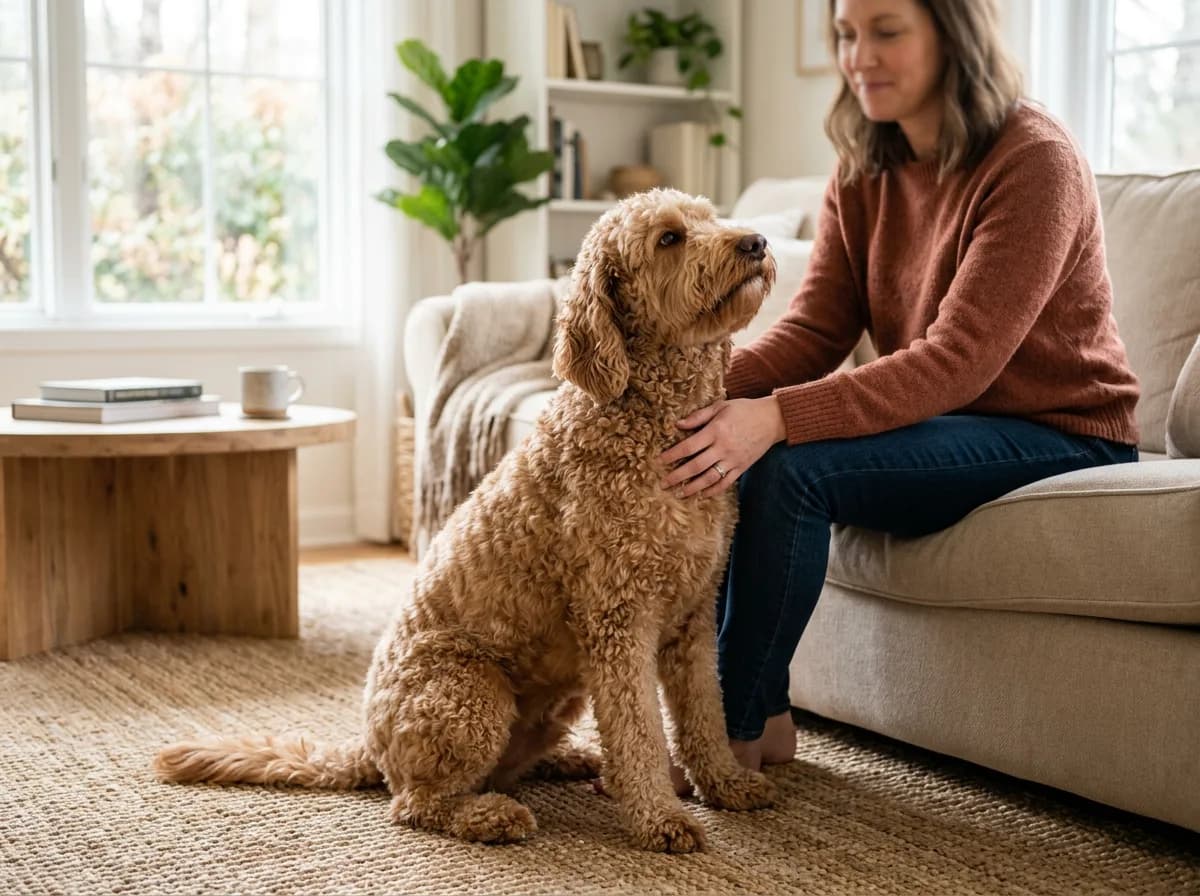
Living with a Labradoodle is, for most owners, a warm and slightly chaotic experience. The core of the Labradoodle temperament is a friendly, people-oriented dog that wants to be near you, wants to be doing something, and rarely wants to be ignored. They are affectionate and social to the point that many are described as velcro dogs, following their person from room to room. They are also smart, curious, and quick to learn, which is a gift when you channel it and a liability when you do not.
Labradoodles were first bred in the late 1980s as a cross between the Poodle and the Labrador Retriever, originally with the goal of a lower-shedding guide dog. That parentage is the key to understanding the breed. From the Labrador side you get the sociability, the food motivation, the love of water and fetch, and the eager-to-please attitude. From the Poodle side you get the sharp intelligence, the sensitivity, and a slightly more watchful, thoughtful streak. A Labradoodle is essentially a high-drive Labrador wrapped in a Poodle's brain, and that combination is where both the joy and the challenges come from.
Day to day, that translates into a dog that is:
- Highly social, greeting family, guests, and often strangers with obvious enthusiasm rather than suspicion.
- High energy, needing real physical and mental work, not just a stroll around the block.
- Emotionally tuned in, reading your mood and reacting to household tension or your absence.
- Playful well into adulthood, often keeping a puppyish, goofy streak until 3 years old or later.
- Eager to please but easily bored, which makes training fast and repetition-heavy drills counterproductive.
So why are Labradoodles so popular? It is this exact package. They combine the loyal, family-friendly nature people love in a Labrador with a coat that sheds less and a level of trainability that suits first-time owners who are willing to put in the work. Add their photogenic teddy-bear looks and it is easy to see why demand exploded. Popularity, though, is not the same as easy, and the rest of this guide is about the difference.
How Labradoodle Temperament Changes From Puppy to Adult
A Labradoodle's personality is not fixed at 8 weeks; it matures in fairly predictable stages, and knowing them prevents a lot of unnecessary panic. The young puppy stage, up to about 16 weeks, is soft, sponge-like, and all about socialization. Adolescence, from roughly 6 to 18 months, is the wild card: energy peaks, boundaries get tested, and the sweet puppy can look like it forgot every rule it ever learned. Social maturity then arrives gradually from around 2 to 3 years, when most Labradoodles finally grow into the steady, affectionate adult the breed is known for. The practical lesson is that the dog you have at 9 months is not the dog you will have at 3 years, so judge the breed by its mature temperament and commit to steering the dog through the messy middle rather than giving up on it during adolescence.

Petful may earn a commission when you click through to Chewy, at no extra cost to you.
- A Labradoodle from a health-tested, temperament-focused breeder raised with early socialization is a very different dog from a puppy-mill import, even though both wear the same breed name.
Personality: Are Labradoodles Affectionate and Cuddly?
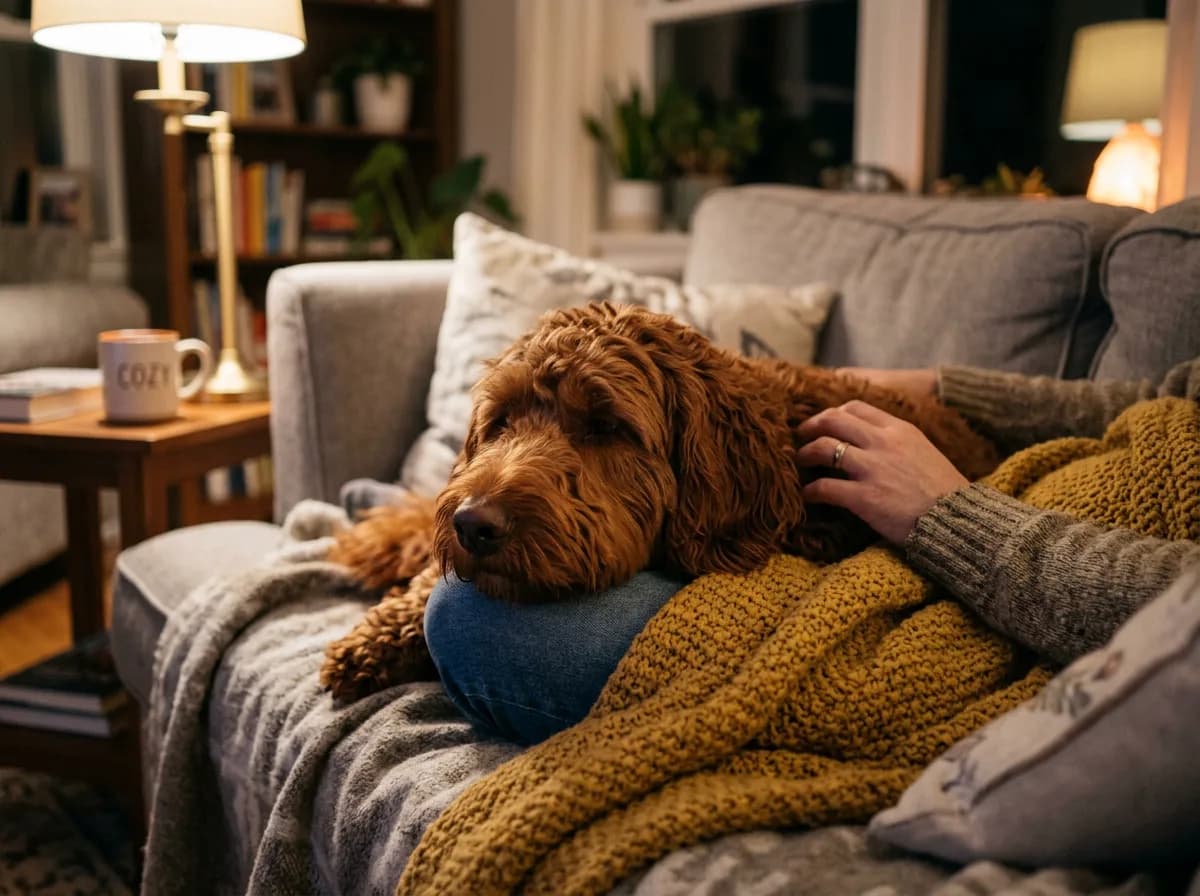
Yes, Labradoodles like to cuddle, and most are enthusiastically affectionate. This is one of the breed's defining traits and a big reason families choose them. A typical Labradoodle wants physical closeness: leaning on your legs, pressing into the couch beside you, resting a chin on your knee, and, if allowed, sleeping in or on the bed. The affection is not subtle. These are not aloof, independent dogs that tolerate you. They are dogs that actively seek you out and are happiest when the whole family is in one room.
That said, cuddliness sits on a spectrum, and individual personality matters more than the breed average. Some Labradoodles are lap dogs at heart who melt into any available human. Others are affectionate but busy, offering a quick snuggle and then popping up to see what everyone else is doing. A few, particularly those with a stronger Poodle streak, are loving but a little more reserved and prefer to be near you rather than on you. Coat, color, and size have nothing to do with it; the warmth comes from breeding for temperament and from how the puppy was raised.
Here is how affection tends to show up across the day:
- Morning: an excited, wiggly greeting and a lean-in for contact before anything else happens.
- Work or school hours: this is the hard part, because the same affectionate nature makes time alone stressful for them.
- Evening: peak cuddle time, when a tired, exercised Labradoodle will happily settle against you for an hour.
- Bedtime: many gravitate to wherever their people sleep and will negotiate hard for couch or bed access.
The catch to all this devotion is that a dog this bonded does not cope well with being left. The cuddliness and the separation anxiety are two sides of the same coin, which we cover in detail below. If you want a dog that shadows you and showers you with affection, the Labradoodle delivers. Just know that the same wiring means it will genuinely miss you when you go, and a household that is empty 10 hours a day is a poor match for this temperament.
- If you only give attention when your Labradoodle is bouncing and demanding, you train a pushy cuddler. Rewarding settled, quiet closeness builds a dog that is affectionate without being frantic.
How Much Energy Does a Labradoodle Have? Exercise and Daily Needs
This is the trait most new owners underestimate, and it is the root of the majority of Labradoodle behavior problems. Labradoodles are high energy dogs bred from two working breeds. A standard Labradoodle in good health needs a real workout every single day, not a token walk. Meeting their daily exercise needs is not optional enrichment, it is the difference between a calm companion and a destructive, anxious, over-aroused dog.
As a working baseline, plan for the following, adjusted for the individual dog, age, and health:
| Type | Daily Active Exercise | Good Activities |
|---|---|---|
| Standard Labradoodle | 60 to 90 minutes | Running, fetch, swimming, long hikes, dog sports |
| Medium Labradoodle | 45 to 60 minutes | Brisk walks, fetch, off-leash play, training games |
| Mini Labradoodle | 30 to 45 minutes | Walks, indoor games, puzzle work, short runs |
| Senior (any size) | 20 to 40 minutes | Gentle walks, sniffing outings, light swimming |
Physical exercise is only half the equation. Because Labradoodles are so intelligent, they need mental exercise too, and a dog that is walked but never made to think is still a bored dog. Puzzle feeders, scent games, training sessions, chew projects, and rotating toys all drain mental energy in a way that a walk alone does not. A useful rule of thumb: 10 minutes of hard thinking can tire a Labradoodle as much as 30 minutes of walking, and the best days combine both.
The honest downsides of this energy level show up when life gets busy:
- Skipped exercise compounds fast. One quiet day is fine. A week of under-exercise produces pacing, whining, counter-surfing, and destruction.
- A bored Labradoodle invents its own job, and it will not be the job you wanted, whether that is unstuffing the couch or barking at the window.
- Puppies and adolescents are the most demanding, roughly from 6 months to 2 years, when energy peaks and impulse control is still developing.
- They do not self-regulate well. Unlike some breeds that will nap the day away, a Labradoodle will often keep pushing for stimulation until you provide an outlet.
- Before blaming a Labradoodle for chewing, barking, or hyperactivity, look honestly at whether it is getting enough hard physical and mental work each day. Most so-called behavior problems are unmet needs.
If your lifestyle is genuinely active, this energy is a feature: Labradoodles make superb running, hiking, and dog-sport partners, and they thrive with a job to do. If your household is quieter or your days are long and unpredictable, be honest with yourself now. This is the single biggest fit question with the breed, and we return to it in the household fit checklist near the end.
Trainability and Intelligence: Are Labradoodles Easy to Train?
Labradoodles are one of the more trainable companion breeds, and for a motivated owner they are a pleasure to teach. The Poodle side contributes serious problem-solving intelligence, and the Labrador side contributes a strong desire to please and heavy food motivation. Put those together and you get a dog that learns new cues quickly, retains them well, and often seems to anticipate what you want. Basic obedience, house manners, recall, and even advanced tricks or dog-sport skills are all well within reach.
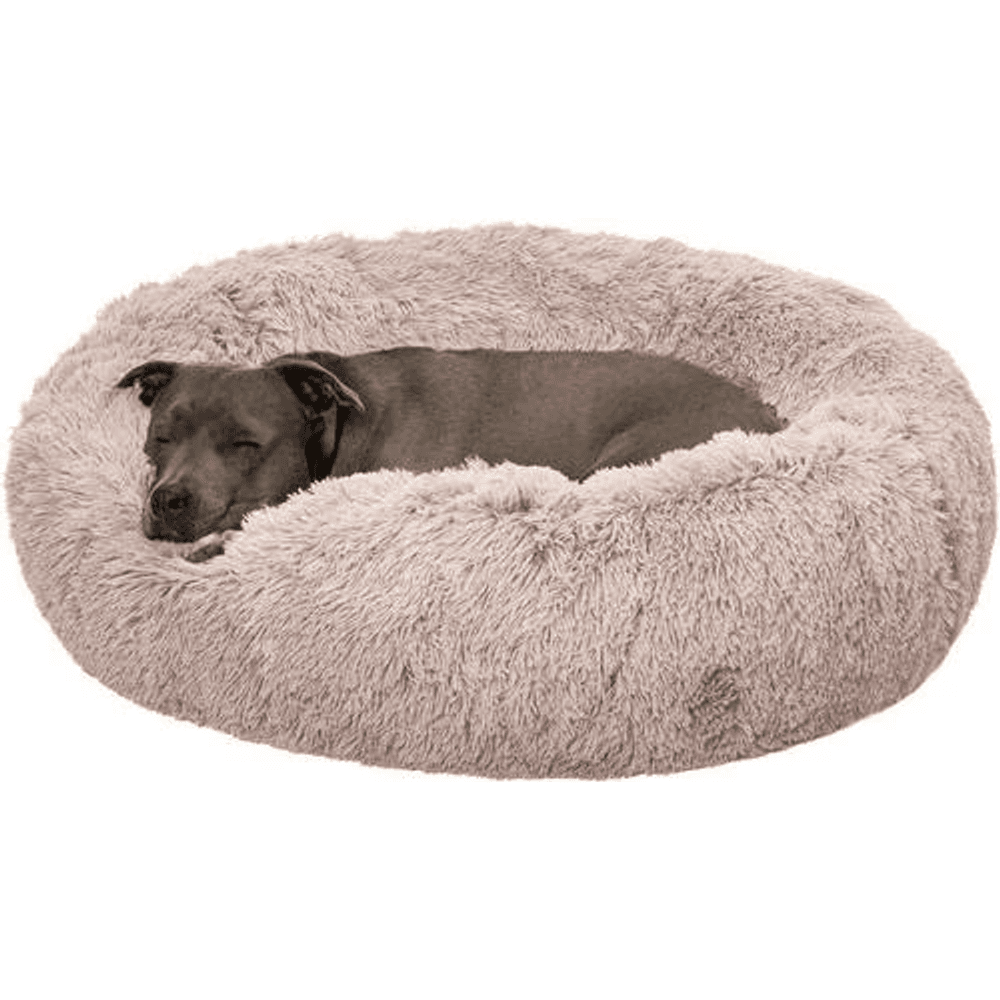
A plush, long-fur donut bolster bed with a raised rim that gives a recovering pet a secure, cushioned place to curl up during the crucial 10 to 14 days after surgery.
Petful may earn a commission when you click through to Chewy, at no extra cost to you.
That intelligence cuts both ways, though, and it changes how you must train them. A smart, sensitive dog learns the wrong lessons just as fast as the right ones. If jumping up gets attention, they learn to jump. If barking makes you open the door, they learn to bark. And because Poodles in particular are sensitive, harsh corrections tend to backfire, producing a shut-down or anxious dog rather than a compliant one. Positive reinforcement training, using food, play, and praise to reward the behavior you want, is not just the kind option with this breed, it is the effective one.
A few principles make training a Labradoodle go smoothly:
- Start early and socialize hard. The window from 8 to 16 weeks is critical. Expose the puppy calmly to people, dogs, sounds, surfaces, and handling so the confident, friendly temperament has a foundation.
- Keep sessions short and upbeat. Five to ten focused minutes beats a long, repetitive drill that bores a clever dog.
- Reward generously, correct gently. Mark and pay the behavior you want; interrupt and redirect what you do not, rather than punishing.
- Proof against distraction. A Labradoodle that is perfect in the kitchen may forget everything at the park until you practice in gradually harder settings.
- Train the off switch. Actively reward calm settling on a mat so the dog learns that relaxing is a behavior too, not just a thing that happens when it finally crashes.
- A good positive-reinforcement puppy class does double duty for a Labradoodle: it builds obedience and delivers the structured socialization this sensitive, social breed needs to become a stable adult.
The adolescent stage, roughly 6 to 18 months, is where many owners feel like training fell apart. It did not. Adolescent Labradoodles test boundaries and appear to forget known cues as hormones and independence surge. Consistency through this stage, rather than giving up, is what produces the well-mannered adult. Owners who stay the course almost always end up with the easy, responsive dog the breed is known for.
Socialization: The Real Foundation of a Good Temperament
No amount of obedience drilling substitutes for early socialization, and with a sensitive breed like the Labradoodle it is the single biggest predictor of a stable adult temperament. Socialization does not mean flooding a puppy with chaos; it means calm, positive, gradual exposure that teaches the dog the world is safe. Aim to introduce your puppy, at its own pace and always paired with good things, to a wide range of people, friendly vaccinated dogs, everyday household noises, car rides, different walking surfaces, gentle handling of paws and ears, and new environments. A Labradoodle that meets the world confidently in its first few months grows into the friendly, unflappable dog the breed promises. One that misses that window is far more likely to develop the fear and reactivity that later get mislabeled as stubbornness or a bad temperament.
Barking, Alone Time, and Separation Anxiety
Labradoodles are moderate barkers by nature, not silent and not incessant. They will typically sound off at the doorbell, at a stranger approaching, at another dog, or out of excitement, but they are not bred to be watchdogs and most settle once they understand a situation is safe. The bigger noise problem is not territorial barking, it is distress barking, and that comes from the breed's real Achilles heel: separation anxiety.
Because Labradoodles bond so tightly and are so social, being left alone is genuinely hard for many of them. Separation anxiety in this breed can range from mild unease to severe panic, and it commonly shows up as:
- Vocalizing when alone: barking, whining, or howling that neighbors notice even when you do not.
- Destruction near exits: chewing door frames, scratching at doors, or shredding items that smell like you.
- House-training regression: accidents that only happen when the dog is left, despite being reliable when you are home.
- Pacing, drooling, or refusing food while alone, and frantic over-greeting when you return.
The good news is that separation tolerance is trainable, especially if you start on day one and never assume a social breed will simply cope. Practical steps that work:
- Build alone time gradually. Start with seconds, then minutes, rewarding calm, rather than jumping straight to a full workday.
- Make departures and arrivals boring. No emotional goodbyes or frantic hellos; keep the energy flat so leaving is not a big event.
- Exercise before you leave. A physically and mentally tired dog rests instead of stewing.
- Use enrichment as a bridge. A stuffed chew or puzzle given only at departure gives the dog a positive job during the first, hardest minutes.
- Get help early for true panic. Severe separation anxiety is a welfare issue and responds best to a structured plan, sometimes with a veterinary behaviorist, not to being left to cry it out.
- This is the mismatch that fills rescues. A breed this bonded needs company, a dog walker, daycare, or a work-from-home household. Long, regular solo days are where anxiety and destruction are born.
If barking itself is the concern, address the cause rather than the noise. Boredom barking is solved with exercise and enrichment. Alert barking is managed with training and by not rewarding it with attention. Anxiety barking is solved by treating the anxiety. Suppressing the sound with punishment while ignoring the underlying feeling almost always makes a sensitive Labradoodle worse.

Peanut butter soft chews with L-theanine, chamomile, and ashwagandha to ease hyperactivity and support calm, relaxed behavior.
Petful may earn a commission when you click through to Chewy, at no extra cost to you.
Labradoodles With Kids, Strangers, and Other Pets
The fit with children and families is one of the breed's strongest cards: patient with kids who respect a dog's space, social with visiting strangers after a polite hello, and happiest when included in every part of the household routine, from school pickup to weekend errands, exactly what a people-focused cross was bred to do.
For the right household, Labradoodles are excellent family dogs, and this is one of the breed's strongest selling points. Their friendly, patient, people-loving nature usually makes them wonderful with children, and their sociability tends to extend to guests and other pets. A well-socialized Labradoodle greeting a house full of visitors is a picture of happy chaos: tail going, toy in mouth, delighted that so many people showed up.
The nuances that matter for real families:
- With children: Labradoodles are typically gentle and playful with kids, but their size and exuberance mean a big adolescent can knock a toddler over by accident. Supervise, and teach both dog and child calm manners.
- With strangers: most are friendly rather than protective, so do not expect a guard dog. They are more likely to invite a burglar in for a game than to warn you.
- With other dogs: early socialization makes them confident and playful at the park. An under-socialized one can be over-the-top or nervous, not aggressive but hard to manage.
- With cats and small pets: many Labradoodles live happily with cats, though the Labrador retrieving drive means some will chase. Introductions should be slow and managed.
| Household | Typical Fit | Watch For |
|---|---|---|
| Families with kids | Excellent with supervision | Knock-overs from an excited adolescent |
| Multi-pet homes | Usually good | Chase drive toward cats and small pets |
| Frequent guests | Very good | Overexcited jumping greetings |
| First-time owners | Good with commitment | Underestimating exercise and training needs |
The recurring theme is that the friendly temperament is a starting point, not a guarantee. Socialization during puppyhood and consistent manners training are what turn a naturally sociable dog into a genuinely easy family member. Skip that work and you can end up with a friendly but unruly dog that jumps, mouths, and bowls people over out of pure enthusiasm. The raw material is wonderful; it still needs shaping.
The Real Downsides of Owning a Labradoodle
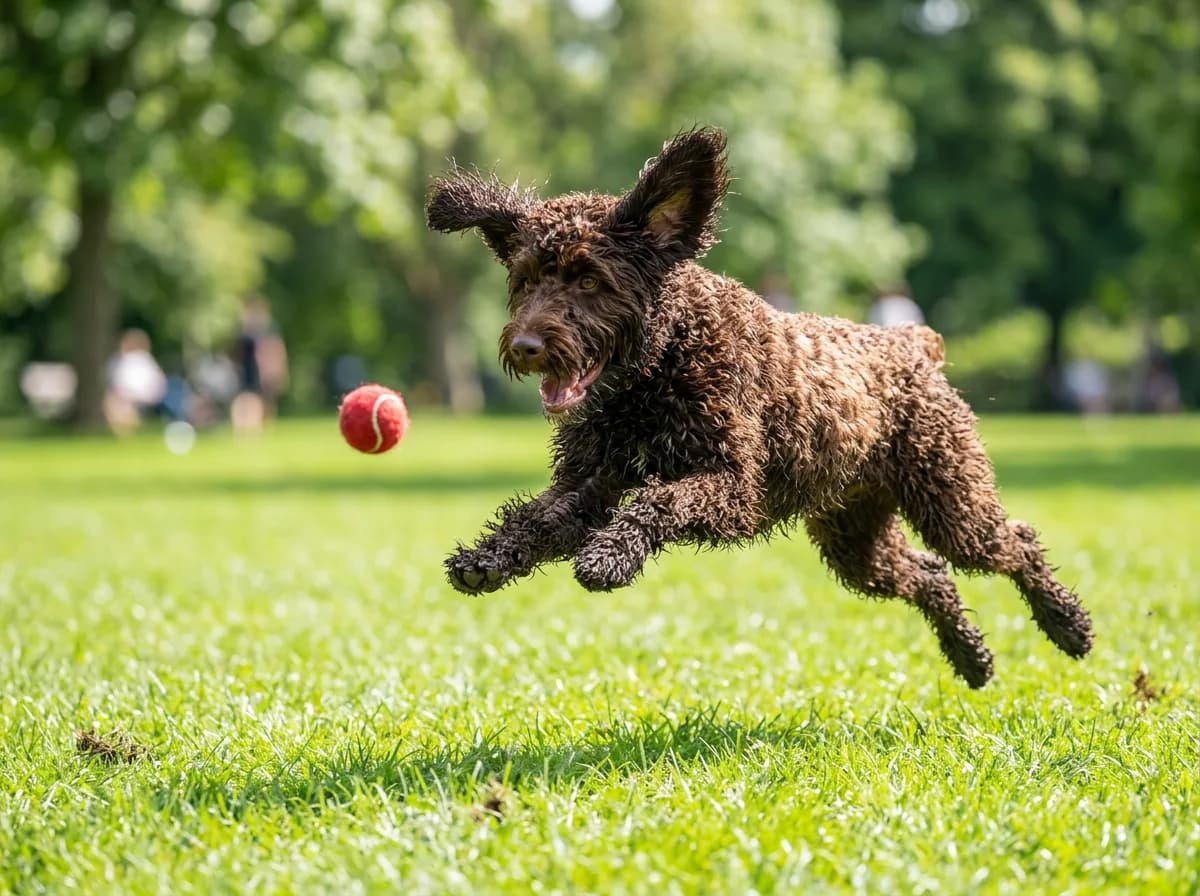
The main downside of a Labradoodle is that its best traits become its worst problems the moment its needs are not met: the high energy turns into destructiveness, the tight bonding turns into separation anxiety, and the intelligence turns into stubborn, self-rewarding mischief. On top of that, the breed carries practical burdens that breeder pages rarely dwell on, including demanding grooming, real cost, and genuinely unpredictable coats and temperaments because so many are poorly bred. These are the real downsides, and you deserve to weigh them honestly before you fall for the teddy-bear face.
You have probably seen forum threads and videos asking, bluntly, why are Labradoodles bad? They are not bad dogs. But there are real reasons a Labradoodle can be the wrong dog for a particular home, and it is fairer to you and to the dog to name them:
- They are a lot of dog. High energy plus high intelligence plus high sociability equals high maintenance. This is not a low-effort breed.
- Separation anxiety is common. The same devotion that makes them lovable makes many of them struggle to be left, which does not suit long or unpredictable work schedules.
- Grooming is relentless. That non-shedding-ish coat mats without frequent brushing and needs professional grooming every 6 to 8 weeks. Neglect it and you get painful matting and expensive shave-downs. See the dedicated grooming guide for the full routine.
- Breeding is wildly inconsistent. Because Labradoodles are not a standardized breed, temperament and coat vary enormously, and the popularity has drawn in careless breeders whose puppies can be anxious, reactive, or unhealthy.
- They can be costly. Purchase price, grooming, food, training, and healthcare add up, and doodles are not a budget breed.
- Health is not automatically better. Hybrid vigor is real but oversold; Labradoodles can inherit hip dysplasia, eye conditions, and other issues from both parent breeds.
- A Labradoodle in an active, present, committed home is a joy. The same dog in a busy, absent, or under-committed home is where the horror stories come from. Match the dog to your real life, not your aspirational one.
None of this is meant to scare you off. It is meant to make sure that if you get one, you get one with your eyes open. Every downside above has a matching upside we have already covered, and owners who understand the tradeoffs going in are the ones who end up delighted. To make that judgment concrete, use the household fit checklist further down this page.
Common Labradoodle Behavior Problems
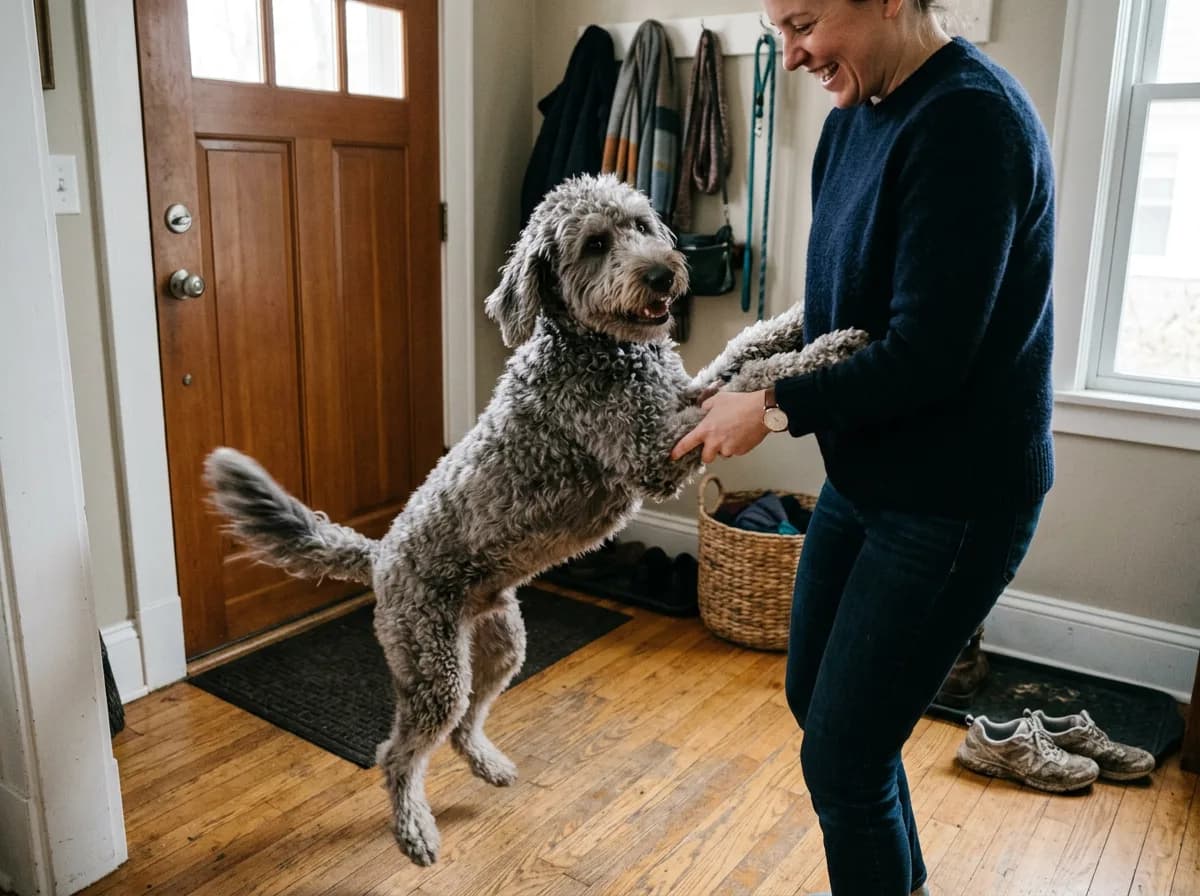
Yes, Labradoodles can be prone to behavioral issues, but it is important to be precise about why. The breed is not genetically wired for aggression or instability. The behavior problems you see are almost always the predictable result of an intelligent, high-energy, highly bonded dog whose needs for exercise, mental work, training, and companionship are going unmet. In other words, most Labradoodle behavior problems are made, not born, which is good news because it means they are largely preventable and fixable.
The most common Labradoodle temperament problems owners report, and what is really driving each:

A vet-recommended probiotic supplement that helps dogs manage anxious behaviors and stay calm during stressful events like fireworks.
Petful may earn a commission when you click through to Chewy, at no extra cost to you.
- Jumping up: an excited, social dog rehearsing a greeting that gets rewarded with attention. Fixed by rewarding four-on-the-floor and ignoring the jump.
- Excessive barking: usually boredom, alert-barking, or anxiety. Fixed by addressing the underlying cause, not the noise.
- Chewing and destruction: under-exercise, under-stimulation, or separation distress. Fixed with outlets, management, and enrichment.
- Mouthing and nipping: normal puppy behavior that persists when not redirected, worse in an over-tired or over-aroused dog.
- Pulling on leash: high enthusiasm plus insufficient training, not dominance. Fixed with reward-based loose-leash work.
- Counter-surfing and stealing: a food-motivated, tall, clever dog doing exactly what works. Fixed with management and impulse-control training.
- Reactivity or over-arousal: most often from under-socialization or chronic over-stimulation rather than true aggression.
The through-line is unmistakable. Nearly every item on that list traces back to one of three root causes: not enough physical exercise, not enough mental stimulation, or too much time alone. Fix those three and the behavior problems shrink dramatically, often without any dedicated behavior training at all. This is why an honest conversation about your daily routine matters more than any list of tips.
- Chasing individual behaviors with corrections is exhausting and slow. Meeting the dog's core needs first, then training specific manners, resolves most Labradoodle behavior problems at the source.
When behavior problems are severe, persistent, or involve any hint of aggression or genuine panic, do not muddle through alone. A qualified positive-reinforcement trainer or, for anxiety and reactivity, a veterinary behaviorist can change the outcome. Early intervention is far easier than undoing months of a rehearsed problem, and it is the responsible move for a dog that will live with you for well over a decade.
Why Do Some Vets Warn Against Doodles?
So when people ask why some vets don't recommend doodles, the answer is rarely about temperament; it is the marketing. Vets recommend the same fix owners can apply: choose health-tested parents, plan for real coat care, and treat "hypoallergenic" as a probability, not a guarantee.
Some vets are cautious about doodles for two honest reasons, and neither is about the dogs being bad pets. The first is unregulated breeding: because doodles are enormously popular and are not overseen by a breed standard or a single registry, the market has filled with careless and outright irresponsible breeders. That produces puppies with inconsistent temperaments and inherited health problems, and vets are the ones who see the anxious, reactive, or sick outcomes. The second reason is grooming-related suffering: many doodle owners underestimate the coat, and vets and groomers regularly deal with severely matted dogs that need sedated shave-downs, which is painful and preventable.
Put plainly, the caution is aimed at the industry and at owner preparation, not at the temperament of a well-bred, well-cared-for doodle. The concerns vets most often raise:
- Coat maintenance is a real welfare issue. Matting is not cosmetic; it pulls skin, hides infections, and traps moisture. Doodles need committed grooming or a maintainable clip.
- Health testing is inconsistent. Reputable breeders screen both parents for hip, elbow, eye, and genetic conditions. Many volume breeders do not, and the puppies pay for it.
- Temperament is a lottery from bad sources. Poorly bred, poorly socialized doodles can be anxious or reactive, which strains the human-dog bond and lands dogs in rescue.
- Buyers are often unprepared for the exercise, training, grooming, and cost, and an unmet doodle becomes a behavior case.
- You can sidestep almost every concern vets raise by buying from a health-testing, temperament-focused breeder or adopting a known-history rescue, then committing to grooming, exercise, and training. The warning is really a warning about how you get the dog.
So the takeaway is not that you should avoid a Labradoodle. It is that you should be the owner and buyer who makes the vet's concerns irrelevant: choose a responsible source, insist on health testing, budget for grooming, and commit to the exercise and training this breed needs. Do that and your vet is far more likely to meet a happy, stable, well-kept dog than a cautionary tale.
Male vs. Female Labradoodle Temperament
This male-vs-female and generation/size temperament breakdown is exactly what most broad ranking breed pages omit, so use it as a tiebreaker only after you have settled on the breed itself: sex differences stay small and training-dependent, while generation and size shift energy, coat, and intensity far more than most first-time buyers expect.

Are boy or girl Labradoodles better? Honestly, neither sex is better, and the individual dog and its upbringing matter far more than whether it is male or female. That said, owners and breeders do report some soft, general tendencies, so it is fair to ask whether the male female temperament differences actually change daily life. The differences are averages with huge overlap, not rules, and a confident female can be pushier than a mellow male or vice versa.
The commonly described tendencies, offered as loose patterns rather than guarantees:
| Trait | Males often | Females often |
|---|---|---|
| Affection style | Openly goofy and constantly seeking attention | Affectionate but a bit more independent |
| Maturity | Slower to mentally mature, puppyish longer | Tend to settle and focus a little earlier |
| Training | Very food-driven and eager, easily distracted | Focused but can be more selective |
| Size | Usually larger and heavier | Usually slightly smaller |
| Social style | Exuberant with everyone | Sometimes more discerning about dogs and people |
In plain terms, many owners describe male Labradoodles as slightly larger, goofier, more openly affectionate, and a touch slower to grow up, while females are often described as a little more independent and quicker to settle. These temperament differences are subtle and heavily outweighed by genetics, early socialization, training, and whether the dog is spayed or neutered. Neutering timing and status can influence some behaviors more than sex itself, and that is a conversation to have with your veterinarian based on the individual dog.
- When you meet a breeder's litter or a rescue, evaluate the individual puppy or dog in front of you: its confidence, its recovery from a startle, its interest in people. That tells you far more about your future than the male-versus-female label ever will.
If you already have a dog at home, the more useful question than male versus female is often about pairing. Opposite-sex pairings sometimes coexist more smoothly than two dogs of the same sex, though again this is a tendency and not a law. When in doubt, prioritize temperament match and a good introduction over a rule about sex.
Mini, Standard, and Australian Labradoodle Temperament

Temperament also shifts with size and generation, and this is where a lot of buyer confusion lives. The core friendly, smart, energetic Labradoodle temperament runs through all of them, but the details differ. The mini labradoodle temperament, driven by the Miniature Poodle cross, is often described as slightly more sensitive, sometimes a touch more vocal, and just as bright, in a smaller, more apartment-friendly package with lower absolute exercise needs than a standard. Size does not lower intelligence or drive proportionally, so a mini is still a busy, clever dog, just one that can burn its energy in less space.
The Australian Labradoodle is worth understanding as its own thing. Unlike a first-cross F1 generation Labradoodle (a straight Poodle to Labrador cross), the Australian Labradoodle is a more established multi-generational breed that includes other parent breeds in its history and has been bred over many generations for consistent temperament and coat. Owners often report that a well-bred Australian Labradoodle is a little more predictable and even-tempered than a random F1, precisely because the breeding is more standardized. Questions about mini australian labradoodle temperament, size-specific quirks, and australian labradoodle behavior problems get into detail that deserves its own page.
- Generation shorthand: an F1 is a 50/50 first cross with the most variability; multigen and Australian lines are bred for more consistency.
- Size shorthand: miniature, medium, and standard describe the Poodle parent used and change exercise capacity and living-space fit more than core personality.
- Consistency shorthand: the more established and carefully bred the line, the more reliable the temperament tends to be.
Because the size and generation questions carry their own nuances, we keep the deep breakdown on the dedicated spoke. For a full treatment of the mini Labradoodle temperament, including size-specific energy, sensitivity, and behavior notes, see that guide, and use the Labradoodle breed overview for the full history and care picture across every variety.
- Do not assume a standard is mellow and a mini is hyper, or vice versa. Within every size, the individual dog, its breeding line, and its exercise routine decide the energy level far more than the size label does.
Labradoodle vs. Goldendoodle: Which Is Calmer?
This is one of the most-searched doodle questions, and it deserves a careful answer rather than a hot take, which is why it lives on its own dedicated page. In broad strokes, the Goldendoodle's Golden Retriever parent tends to contribute a slightly softer, mellower, more eager-to-please default, while the Labradoodle's Labrador parent can bring a touch more drive, athleticism, and boisterous energy. On average, many owners find Goldendoodles a shade calmer and Labradoodles a shade more athletic and intense, but the overlap is enormous and a lazy Labradoodle and a wild Goldendoodle both absolutely exist.
The honest reality is that within-breed variation, driven by the individual dog, the breeding line, the generation, and the exercise it gets, dwarfs the average difference between the two crosses. Choosing on the labradoodle vs goldendoodle calmness question alone is shakier than choosing on breeder quality and the specific puppy's temperament. The same logic applies to comparisons like australian labradoodle vs labradoodle, where the breeding program matters more than the label.
Because the head-to-head deserves a full side-by-side on energy, trainability, grooming, and family fit, we keep it on the comparison spoke:
- For the complete calmer-doodle breakdown, see Labradoodle vs Goldendoodle, which owns that head-to-head and ranks the doodles on calmness.
- If you are weighing the broader field of doodles, the live guide to other doodle breeds is a useful next read, and the Cockapoo profile covers a smaller, often calmer alternative.
- Whichever doodle you choose, a calm adult is mostly the product of exercise, training an off switch, and steady routine. Do not count on breed choice alone to deliver a mellow dog.
Is a Labradoodle Right for You? A Household Fit Checklist
Everything above comes down to fit, so before you commit, run your real life against this household fit checklist. Be honest about the household you actually have, not the one you wish you had. A Labradoodle rewards an active, present, committed owner and punishes an absent, under-committed one, and this quick self-audit will tell you which you are before a living animal pays for the mismatch.
You are likely a great match for a Labradoodle if:
- You can commit to meeting the daily exercise needs, roughly 30 to 90 minutes of real activity depending on size, every day, in all weather.
- Someone is home for much of the day, or you can provide a dog walker, daycare, or a flexible schedule so the dog is not alone for long stretches.
- You are ready to invest in training and socialization, especially through the first two years, using positive reinforcement.
- You can budget for professional grooming every 6 to 8 weeks plus daily brushing, or you will keep the coat in a low-maintenance clip.
- You want an affectionate, involved, velcro companion and you genuinely like a dog that is always around.
You may want to reconsider, or choose a different breed, if:
- Your days are long, absent, and unpredictable, and no one can cover the dog's need for company.
- You want a low-energy, independent dog that entertains itself and is happy with a short daily walk.
- Grooming time and cost are dealbreakers, or your budget is tight across purchase, grooming, and healthcare.
- You are not able to source from a responsible, health-testing breeder or a known-history rescue, and would be gambling on temperament and health.
- You want a natural guard dog, since Labradoodles are far more likely to greet an intruder than deter one.
- The teddy-bear photos are real, but so are the 6 a.m. walks, the grooming bills, and the anxious pacing of a bored dog. If your honest answers line up with the first list, a Labradoodle can be one of the best dogs you will ever own.
If you land firmly in the good-match column, your next steps are to read the full Labradoodle breed overview for history, appearance, and complete care, then choose a responsible source and commit to the exercise, training, and grooming that turn this breed's wonderful raw material into a genuinely easy dog to live with.
Frequently Asked Questions About Labradoodle Temperament
Yes, with a realistic commitment. Their trainability and friendly nature suit beginners, but only if the owner can meet the high exercise needs, invest in training, and avoid leaving the dog alone for long stretches. A first-timer who is present and active does very well; one who underestimates the breed does not.
Most do. Energy typically peaks from about 6 months to 2 years, then gradually settles, with many Labradoodles becoming noticeably calmer around 3 years old. Consistent exercise and training an off switch speed this up; under-exercise keeps a dog frantic well into adulthood.
Aggression is not typical of the breed. Well-bred, well-socialized Labradoodles are friendly and non-aggressive. When aggression or reactivity appears, it usually traces to poor breeding, missed socialization, fear, or chronic unmet needs, and it warrants help from a qualified trainer or veterinary behaviorist.
Not comfortably for a full day on a regular basis. The breed bonds tightly and is prone to separation anxiety, so long, routine solo days are a poor match. Build alone time gradually and arrange a walker, daycare, or company for anything approaching a full workday.
They combine a friendly, family-oriented Labrador nature with a smart, lower-shedding Poodle influence and a photogenic teddy-bear look, all in a highly trainable package. That mix appeals strongly to families and first-time owners, though popularity has also drawn careless breeders, so buyer diligence matters.
They are moderate barkers, not excessive by nature. Most bark at doorbells, strangers, or in excitement, then settle. Persistent barking is usually boredom, alert-barking, or anxiety rather than a breed trait, and it responds to exercise, training, and addressing the underlying cause.

Coreen Saito is a pet writer and longtime shelter volunteer with more than a decade in animal rescue. She covers cat behavior, breed care, and the small, ordinary science of sharing a life with companion animals, with a particular focus on honest takes about the products and decisions that actually matter. At home in Arizona, she's outranked by Mac (a dog with the loudest opinion in the house), Rebel (a cat who governs by quiet authority), and Meri (an orange tabby who runs the late shift and the laundry basket). She writes about all three, plus the rescues that keep coming through her life, at LifeWithMinty.com.
Sign up for expert-backed reviews and safety alerts all in one place.