Mini Labradoodle: Size, Temperament & Price Guide
A mini Labradoodle is a Labrador crossed with a Miniature Poodle. See full-grown size and weight, toy and micro types, temperament and barking, grooming needs, health, lifespan, and what a puppy really costs to buy and own.
Petful is reader supported. As an affiliate of platforms like Amazon and Chewy, we may earn a commission when you buy through links on this page. There is no extra cost to you.
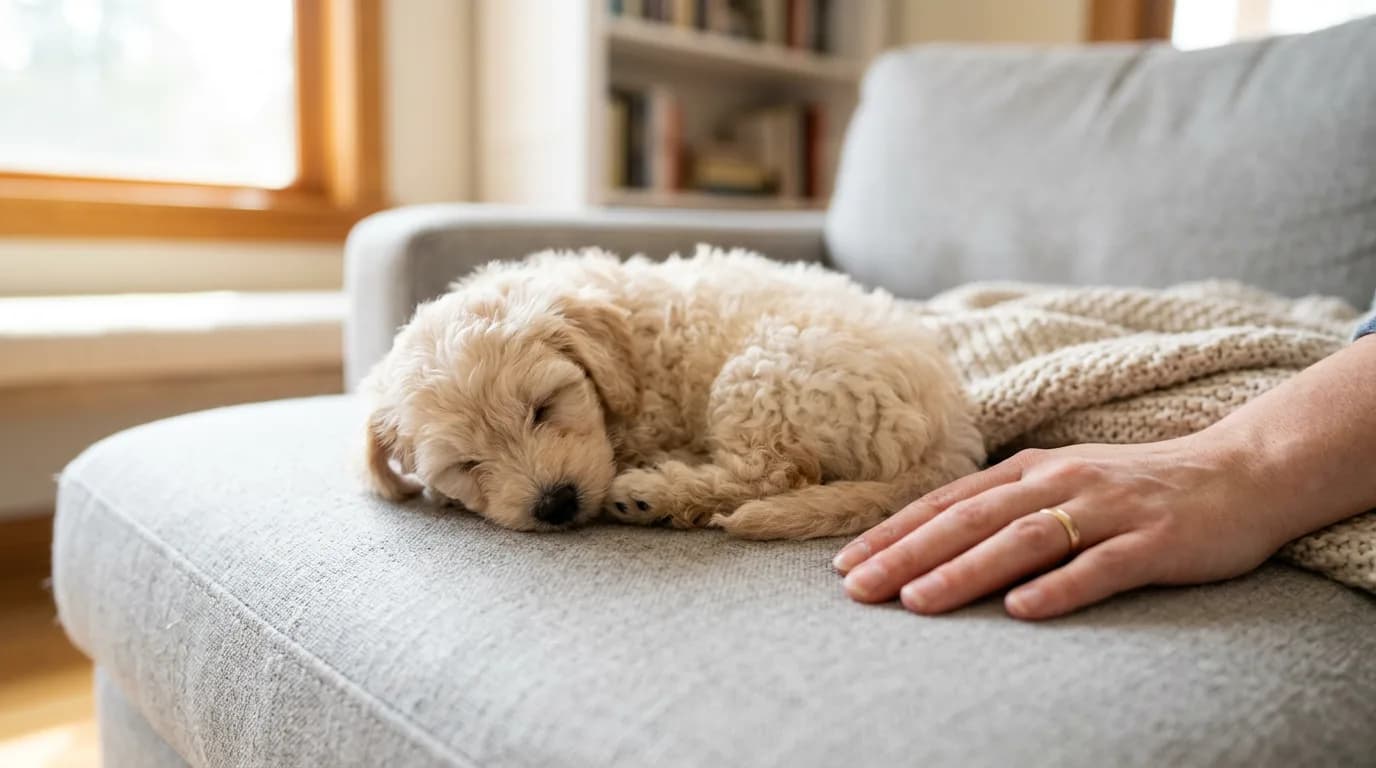
The mini Labradoodle is the small version of the Labradoodle: a cross between a Labrador Retriever and a Miniature Poodle that gives you most of the standard Labradoodle personality in a body that tops out around a small-to-medium dog. Because "mini labradoodle" covers several different generation types and adult sizes, the same name can describe a 15-pound apartment companion or a sturdy 28-pound family dog, and that gap is exactly what trips up first-time buyers.
This guide answers the questions people actually search before they commit: how big does a mini Labradoodle get, what is the temperament and barking like, how much grooming the coat needs, and what one realistically costs to buy and to own in year one. It is the mini-focused spoke of our full Labradoodle breed guide, so you get the small-dog specifics here and the whole-breed picture there.
- 1A mini Labradoodle is a Labrador Retriever crossed with a Miniature Poodle, and most adults stand 13 to 17 inches and weigh 15 to 30 pounds.
- 2"Mini," "toy," "micro," and "teacup" are marketing labels for a size spectrum, not separate breeds, so confirm the parents before you pay.
- 3Expect a friendly, trainable, moderately vocal dog with a low-shedding coat that needs professional grooming every 6 to 8 weeks.
- 4Budget roughly $1,500 to $3,500 for a puppy and $2,500 to $4,000 for the first year of ownership.

Sign up for expert-backed reviews and safety alerts all in one place.
Mini, toy, micro, and Australian: the mini Labradoodle types
A mini Labradoodle is a deliberate cross between a Labrador Retriever and a Miniature Poodle, and that Labrador Retriever Miniature Poodle pairing is what gives the dog its size ceiling, its low-shedding coat, and its people-focused brain. Standard Labradoodles use a full-size Standard Poodle instead, which is why they finish so much larger. When breeders talk about "the mini," they are really talking about a small Labradoodle produced through several different generation types, and understanding those generation types is the single most useful thing you can do before buying.
The words toy, micro, mini, and teacup describe a size spectrum, not four separate breeds. Here is how the labels are typically used, from smallest to largest:
- Teacup or micro mini Labradoodle: the smallest marketing tier, usually 10 to 13 inches and 10 to 15 pounds, often produced by breeding down to a Toy Poodle line. A "micro mini labradoodle" or "teacup mini labradoodle" is not an official category, so ask what the parents actually weigh.
- Toy Labradoodle: a toy labradoodle overlaps heavily with the teacup tier at roughly 10 to 14 inches and 12 to 20 pounds, and the term is used inconsistently between breeders.
- Mini Labradoodle: the most common tier, about 13 to 17 inches and 15 to 30 pounds. This is what most people mean when they type "labradoodle mini."
- Medium and standard: larger dogs that belong to the broader breed rather than the mini category.
Generation types matter just as much as size, because they predict coat and shedding. The most common labels you will see are:

Petful may earn a commission when you click through to Chewy, at no extra cost to you.
- F1 generation: a first cross of a purebred Labrador and a purebred Miniature Poodle. F1 dogs are 50/50 and can vary a lot in coat.
- F1B generation: an F1 Labradoodle bred back to a Poodle, so the dog is about 75% Poodle. F1B litters lean toward a curlier, lower-shedding, more hypoallergenic coat, which is why allergy-sensitive buyers often prefer them.
- Multigenerational and Australian mini: a multigenerational (or "multigen") dog comes from several generations of Labradoodle-to-Labradoodle breeding. The Australian Labradoodle is a specific multigenerational line that also folds in Cocker Spaniel ancestry, and a mini australian labradoodle is simply that line bred to a smaller size.
A mini Labradoodle's coat is often described as a hypoallergenic coat, but no dog is truly allergen-free. The practical takeaway is that the more Poodle in the mix, the more consistently low-shedding the coat tends to be. If you want the full breakdown of how the Lab-and-Poodle cross behaves across every size, the Labradoodle breed guide covers the parent breeds in depth.
Which mini Labradoodle generation should you choose?
Pick the generation for the outcome you care about most, not for the fanciest label. Coat consistency and shedding are the traits that vary most between an F1 and an F1B, so let those drive the decision. Size preference comes next, and pedigree or program reputation matters most if you want a predictable, temperament-tested dog.
- Want the lowest shedding and most allergy-friendly coat: choose an F1B or a multigenerational line, which carry more Poodle.
- Want a slightly more Lab-like look and are relaxed about some shedding: an F1 is fine and often less expensive.
- Want the most predictable temperament and health testing: an Australian mini or an established multigen program is worth the premium.
- Want the smallest possible dog: confirm a Toy Poodle parent, but accept the higher price and closer health monitoring that come with the toy and micro tiers.
Remember that these are still designer crosses, not standardized purebreds, so no registry guarantees a size or coat. A single litter can produce puppies that finish at noticeably different weights, which is why the parents' measurements and previous litters tell you far more than the label on the listing.
How big does a mini Labradoodle get? Full-grown size and weight
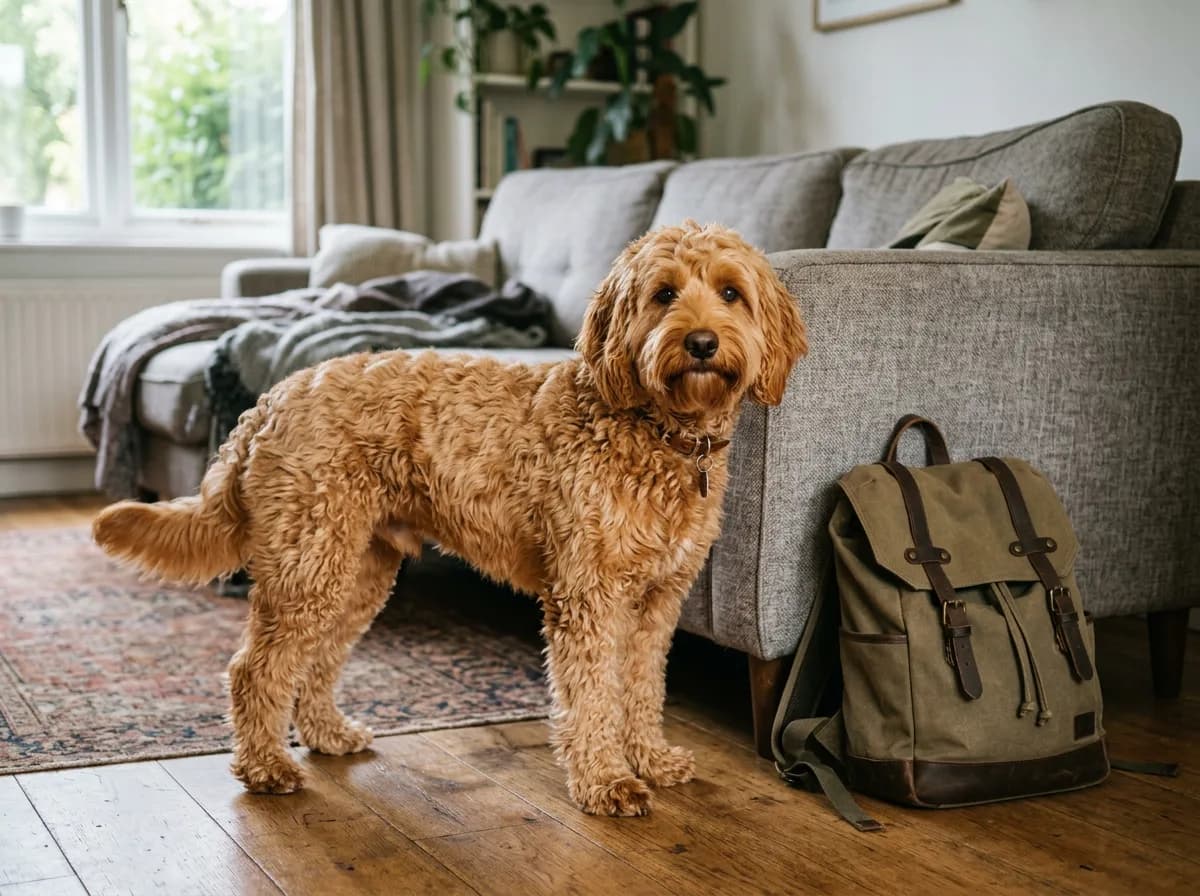
How big do mini Labradoodles get? A full-grown mini Labradoodle usually stands 13 to 17 inches at the shoulder and weighs 15 to 30 pounds, with most landing near 20 pounds. That is the honest full-grown size range, and the adult weight in pounds depends mostly on which parent the dog favors and which generation tier it came from. Smaller toy and micro lines finish lighter, around 12 to 20 pounds, while a mini from bigger parents can push toward 30.
Most ranking pages scatter mini Labradoodle size data across paragraphs, and none give a single full-grown matrix mapping toy, micro, mini, and medium generations to height, weight, and adult age. So here is that matrix. Reading the numbers as full-grown size by generation makes it easy to compare toy micro mini height and weight side by side instead of guessing from photos.
| Type | Height (at shoulder) | Adult weight | Reaches full size |
|---|---|---|---|
| Teacup / micro mini | 10-13 in | 10-15 lb | 11-12 months |
| Toy Labradoodle | 10-14 in | 12-20 lb | 11-12 months |
| Mini Labradoodle | 13-17 in | 15-30 lb | 12-13 months |
| Medium Labradoodle | 17-20 in | 30-45 lb | 12-14 months |
Because the numbers live in a table, here they are again in plain language so the size picture is unmistakable: a teacup or micro mini height sits around 10 to 13 inches, a toy is close behind, and a true mini reaches 13 to 17 inches. In terms of adult weight in pounds, plan for the low teens at the smallest and the high twenties at the largest. A mini Labradoodle full grown is essentially done growing in height by 11 to 13 months, then fills out in muscle and weight for another month or two.
- Full-grown timeline: height first (11 to 13 months), then weight (up to about 14 months).
- Rule of thumb: many minis roughly double their four-month weight to estimate their adult weight.
- Biggest variable: the Poodle parent. A mini from a Toy Poodle line stays smaller than one from a larger Miniature Poodle.
Mini Labradoodle growth stages
Knowing the stages helps you feed and exercise a mini correctly while it grows, and it stops you from panicking when a leggy adolescent looks nothing like the finished dog. Growth plates in a small dog close relatively early, so most of the height is set before the first birthday, with weight catching up afterward.
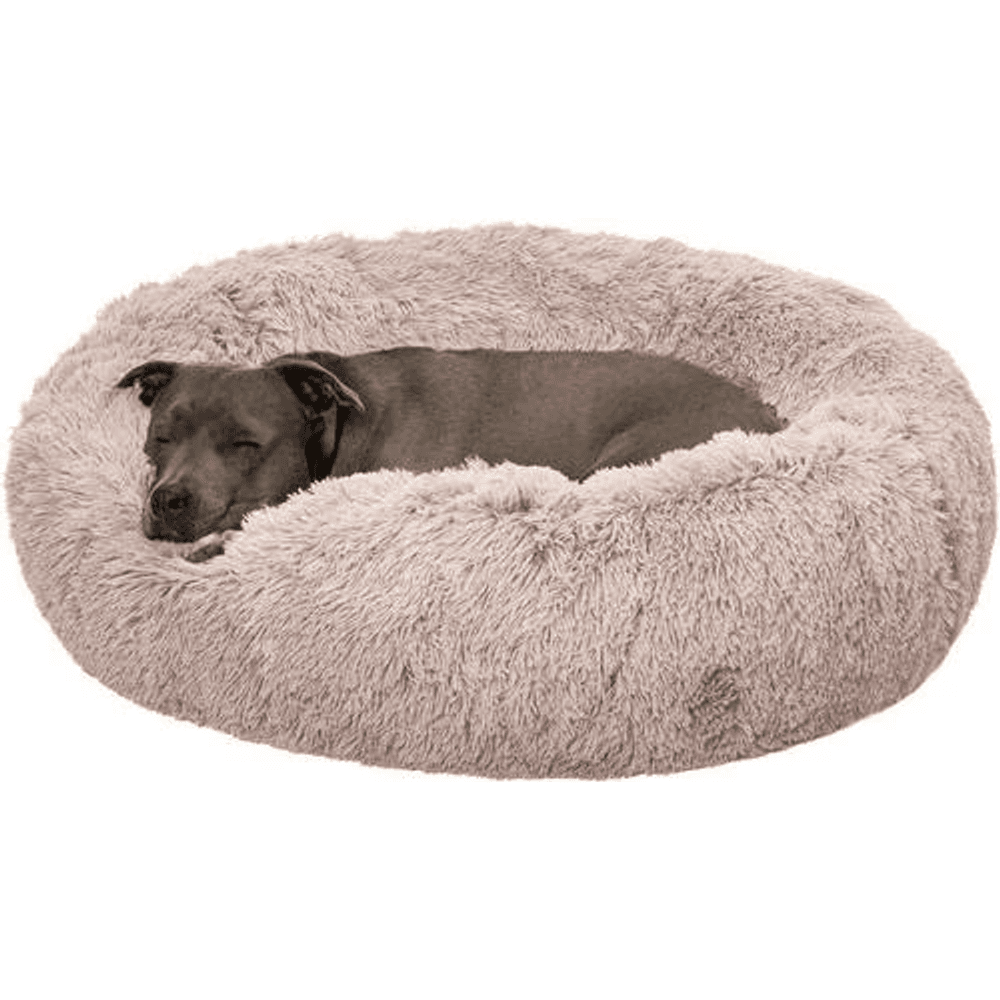
A plush, long-fur donut bolster bed with a raised rim that gives a recovering pet a secure, cushioned place to curl up during the crucial 10 to 14 days after surgery.
Petful may earn a commission when you click through to Chewy, at no extra cost to you.
- 8 to 16 weeks: rapid early growth; feed a quality puppy diet and avoid over-exercising soft joints.
- 4 to 8 months: the fastest visible growth spurt, often awkward and lanky, and the start of the coat change.
- 8 to 12 months: height slows and nears the adult ceiling; keep the dog lean to protect developing joints.
- 12 to 18 months: filling out in muscle and chest; a mini is usually at its adult weight by 13 to 14 months.
Keeping a growing mini at a healthy weight is one of the most valuable things you can do, because excess weight during growth stresses the joints and raises the lifetime risk of the patella and hip issues the breed is prone to. Ask your veterinarian to score body condition at each puppy visit so you can adjust portions early rather than correcting obesity later.
Want the mini Labradoodle size chart in the context of every Labradoodle tier, including standard and giant lines? The dedicated full Labradoodle size chart maps the entire range so you can see where the mini fits.
- Ask the breeder for the weight of both parents and any full-grown siblings from previous litters. Parent and sibling weights predict a mini Labradoodle's full-grown size far more reliably than how a puppy looks at eight weeks.
Mini vs. standard Labradoodle: what's the difference?
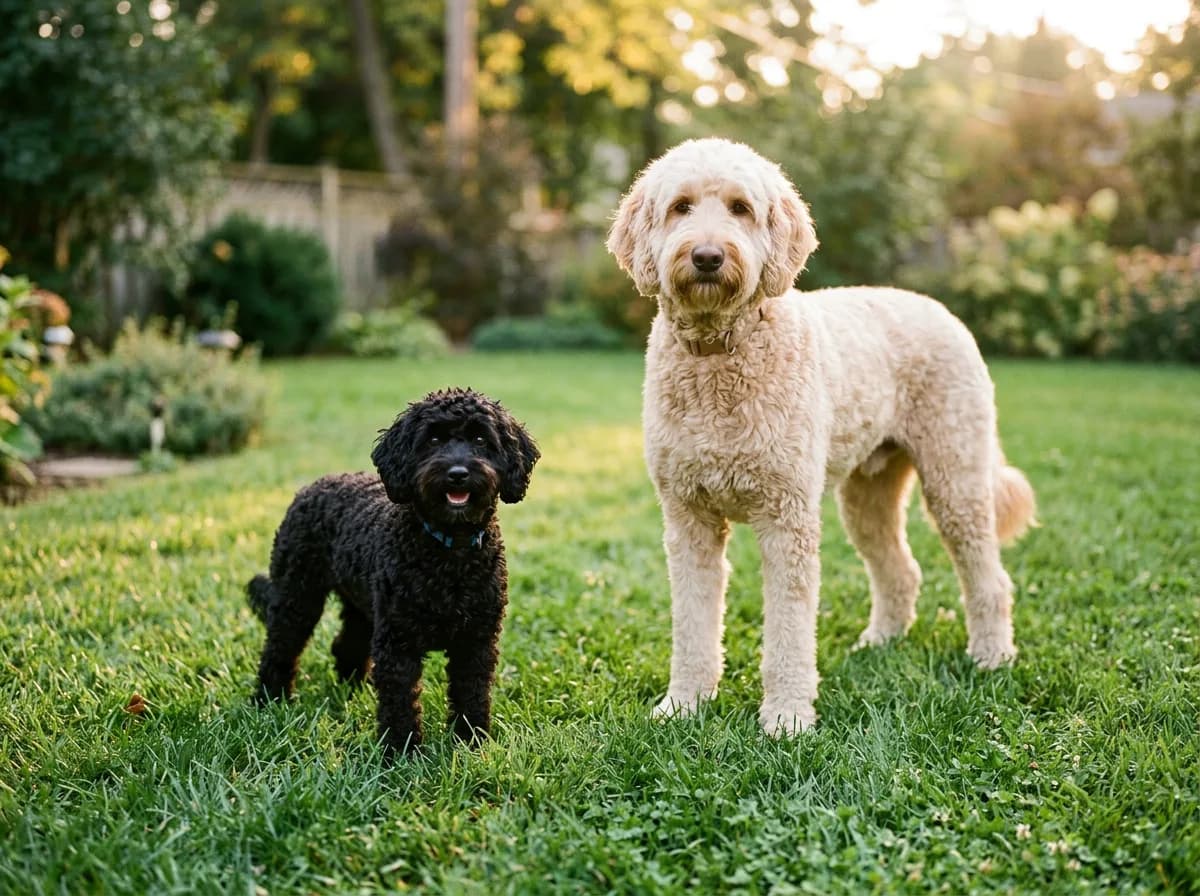
The difference between a Labradoodle and a mini Labradoodle comes down to the Poodle parent and, therefore, the finished size. A standard Labradoodle uses a Standard Poodle and grows to 21 to 24 inches and 50 to 65 pounds. A mini uses a Miniature Poodle and stays at 13 to 17 inches and 15 to 30 pounds. Temperament, coat type, and trainability are broadly similar across the sizes; what changes is the footprint, the exercise load, and the cost to feed.
Between the two extremes sits a whole size ladder. A medium labradoodle size falls around 17 to 20 inches and 30 to 45 pounds, a large labradoodle size is bigger still, and a miniature australian labradoodle size overlaps the mini tier while following the multigen Australian line. Those broader tiers are their own topic, so we hand the complete standard-and-medium comparison to the full Labradoodle size chart rather than repeat it here.
Which size is "better" depends entirely on your home. Here is the quick decision cut:
- Choose a mini for apartments, easier handling, lower food bills, and a lap-sized companion.
- Choose a standard for active households, running partners, and families who want a bigger, sturdier dog.
- Consider a medium if you want a middle ground that is still portable but more robust.
The practical gaps between the sizes add up over a lifetime. A mini eats a fraction of what a standard does, is far easier to lift into a car or bathtub, and fits in a cabin carrier for travel, while a standard needs more yard, more exercise, and larger everything from crates to beds. Grooming cost scales with coat area too, so a full clip on a standard runs noticeably more than on a mini. Temperament, however, stays remarkably consistent across the range, so you are choosing a size and a budget more than a personality.
Every size shares the same headline downsides, which is a common search: grooming cost, potential for separation anxiety, and health issues tied to both parent breeds. Those breed-wide cons apply to minis and standards alike, and we cover them fully in the Labradoodle breed guide so this spoke can stay focused on the mini.
Mini Labradoodle temperament and barking
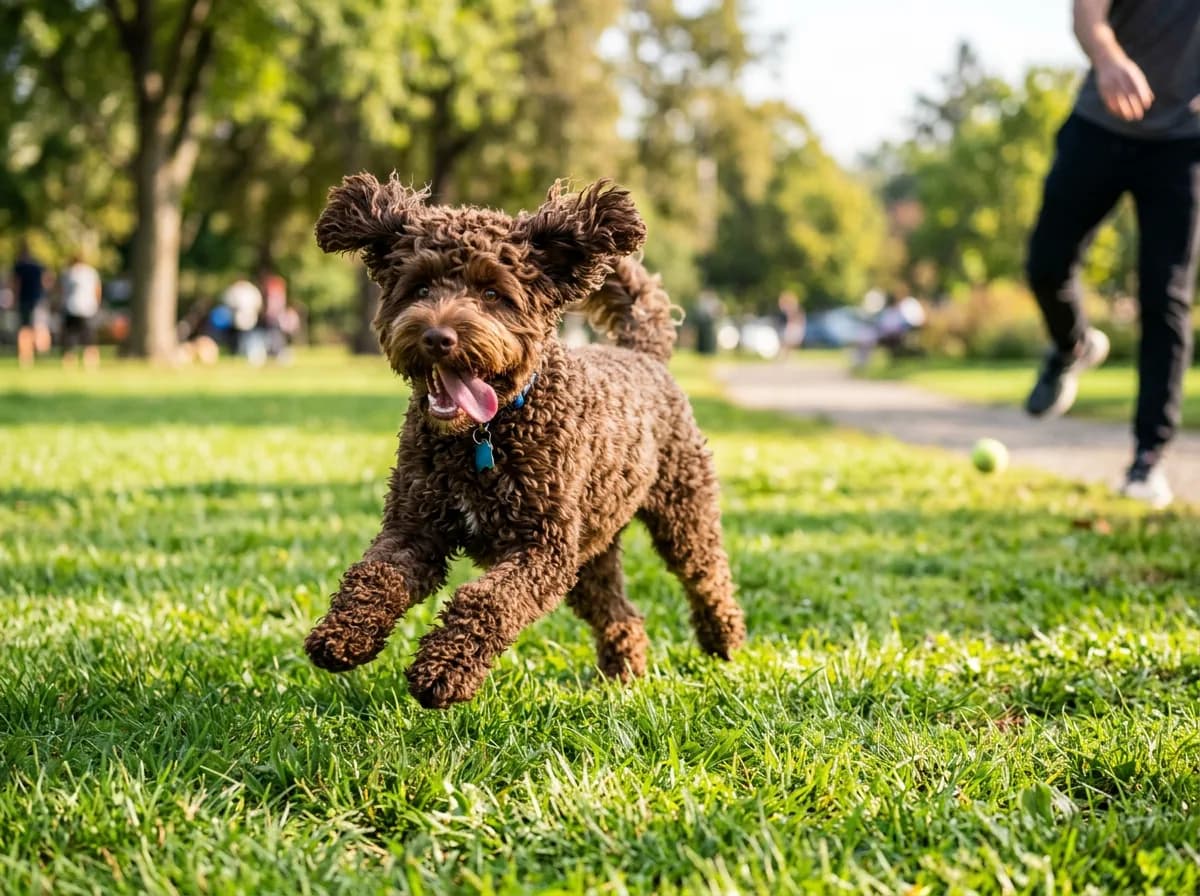
Mini Labradoodle temperament is the reason the breed exploded in popularity. These dogs are friendly, affectionate, quick to learn, and deeply people-oriented, blending the Labrador's easygoing sociability with the Poodle's intelligence. A well-bred mini australian labradoodle temperament is often described as intuitive and gentle, which is part of why the Australian line was originally developed with therapy and assistance work in mind. Expect a dog that wants to be with you, thrives on training games, and does best when it is not left alone for long stretches.
Do mini Labradoodles bark a lot? Do labradoodles bark a lot in general? The honest answer is that they are moderate barkers, not silent and not yappy by default. A mini will typically alert-bark at the doorbell, at visitors, and at novel sounds, and smaller toy-leaning dogs can be a little more vocal than larger ones. Barking usually becomes a real problem only when it is driven by boredom, under-exercise, or separation anxiety, all of which are preventable with routine, enrichment, and early training. With consistent rules, most minis settle into a calm household voice. Petful’s guide to dog barks at men has the full breakdown.
- Teach a "quiet" cue early, reward calm behavior at the window, and make sure your mini gets daily physical and mental exercise. A tired, mentally satisfied mini Labradoodle barks far less than a bored one.
Key personality traits to plan for:
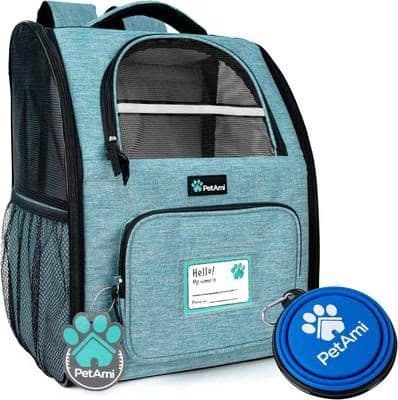
A ventilated backpack carrier that keeps your cat secure and close, ideal for walks, vet trips, and travel.
Petful may earn a commission when you click through to Chewy, at no extra cost to you.
- High trainability: food-motivated and eager to please, which makes basic obedience fast.
- Strong social needs: prone to separation anxiety if isolated; better suited to homes where someone is around often.
- Moderate-to-high energy: needs 45 to 60 minutes of activity a day, plus puzzle toys or scent games.
- Great with kids and other pets: generally gentle and adaptable when socialized young.
Are mini Labradoodles good for families and first-time owners?
Yes on both counts, with one honest caveat. A mini Labradoodle's trainability and gentle nature make it forgiving for a first-time owner, and its patience and playfulness suit families with children. The caveat is companionship: this is not a breed that thrives being left alone all day, so it fits a busy family better than an empty house.
- With young kids: supervise play and teach children to respect the dog's space; the mini's small size means gentle handling matters.
- With other dogs and cats: early, positive socialization usually produces an easy housemate.
- For first-time owners: start puppy classes early, since the mini's intelligence makes it easy to accidentally train bad habits too.
- For busy households: arrange midday company, a walker, or daycare if everyone is out for long stretches.
For the breed-wide personality deep dive, including energy by generation and how the Lab and Poodle traits blend, see our Labradoodle temperament guide.
Grooming and coat care for a mini Labradoodle
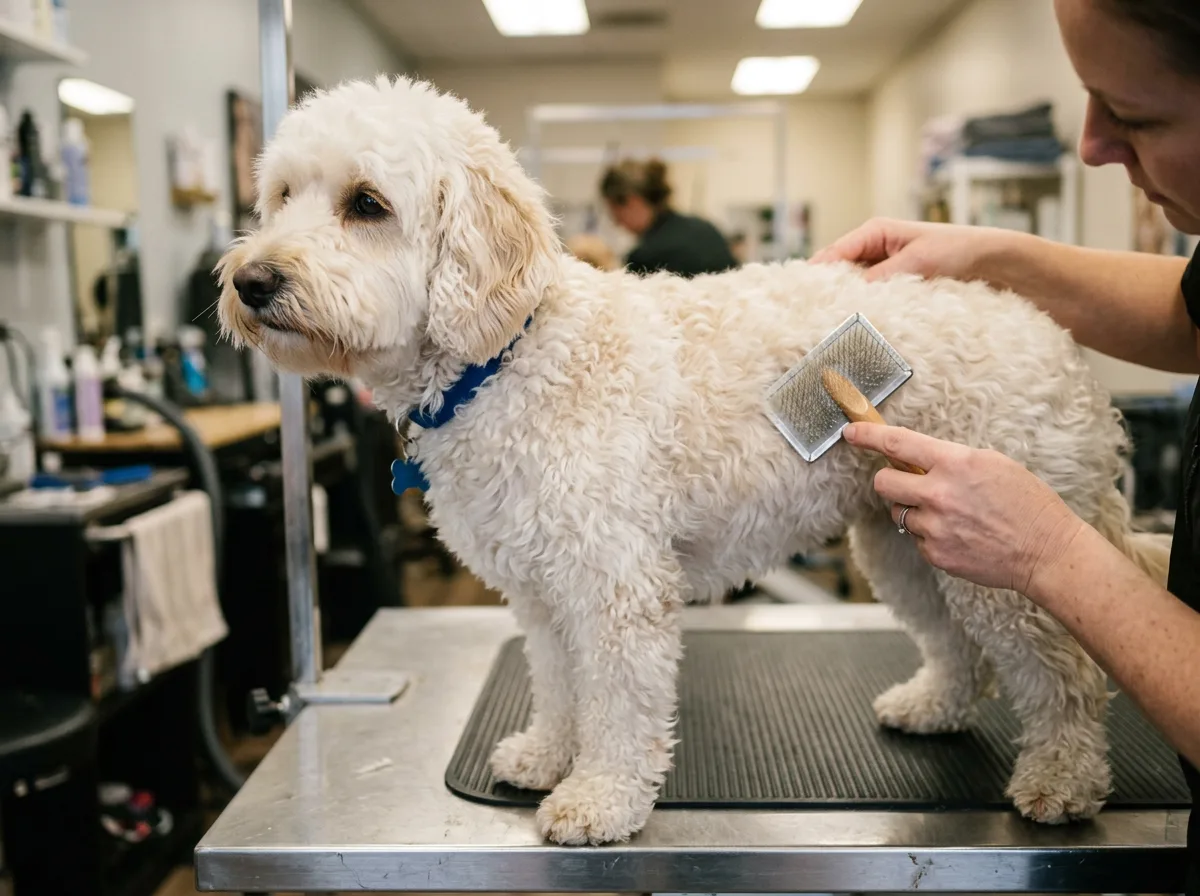
Do mini Labradoodles shed? In most cases, very little. The Poodle influence gives the mini a low-shedding coat that traps loose hair instead of dropping it around your home, which is a large part of the breed's appeal for tidy households and mild allergy sufferers. That low-shed coat is not low-maintenance, though. Because the hair keeps growing and does not fall out, it mats quickly without regular care, so grooming effort is the trade-off you accept in exchange for less vacuuming.
A common question is whether one doodle sheds less than another, specifically do labradoodles shed more than goldendoodles. In practice the two are very close: shedding in both is driven by coat type and generation rather than by the Lab-versus-Golden parent, so an F1B of either cross tends to shed less than an F1. If you are weighing the two crosses head to head, our Labradoodle vs. Goldendoodle comparison breaks down the real differences.
Coat types and the care each one needs:
- Wool coat: tight, Poodle-like curls; lowest shedding, highest matting risk, needs the most brushing.
- Fleece coat: soft, wavy, and the most common mini texture; a good low-shed middle ground.
- Hair coat: straighter and more Lab-like; sheds the most and feels coarser.
A realistic grooming routine for a mini Labradoodle looks like this:
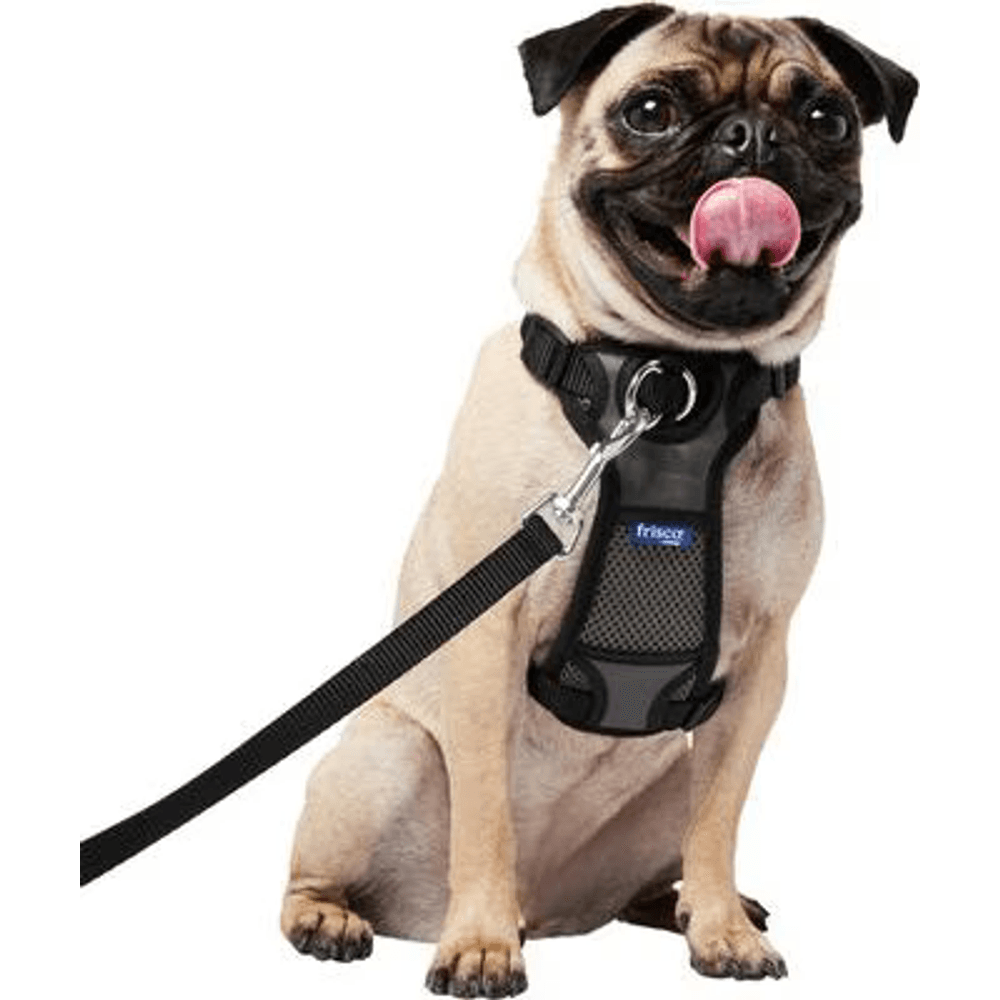
A budget-friendly padded no-pull harness that keeps leash pressure off a coughing dog's neck and windpipe by distributing it across the chest. A simple, affordable way to protect an irritated airway or a collapsing trachea on every walk.
Petful may earn a commission when you click through to Chewy, at no extra cost to you.
- Brush thoroughly 3 to 4 times a week (daily during coat change around 8 to 12 months) with a slicker brush and metal comb to the skin.
- Professional groom every 6 to 8 weeks for a full bath, clip, and tidy, at roughly $60 to $100 a visit.
- Maintain ears, nails, and teeth between visits, since doodle ears trap moisture and need regular checks.
Bathing, tools, and seasonal coat change
The single biggest cause of a painful, expensive "shave-down" groom is skipped brushing during the adolescent coat change, when a puppy coat blows out and the adult coat comes in around 8 to 12 months. Brush more often during that window, and line-brush all the way to the skin instead of skimming the surface, where hidden mats form near the armpits, ears, and collar.
- Bathe every 3 to 4 weeks, or when dirty, with a gentle dog shampoo, then dry and brush fully so a damp coat does not mat.
- Kit essentials: a quality slicker brush, a metal greyhound comb, a detangling spray, and blunt-tip scissors for sanitary trims.
- Between grooms: keep the hair around the eyes and paw pads tidy so it does not irritate or slip.
- Ears: check and clean weekly, since trapped moisture is the top driver of doodle ear infections.
Doing light maintenance at home stretches the interval between professional visits and keeps your total grooming spend down without letting the coat get out of control.
For a full clip-schedule and matting-prevention walkthrough by coat type, use our dedicated Labradoodle grooming guide.
Mini Labradoodle health and lifespan
What is the lifespan of a mini Labradoodle? A healthy mini Labradoodle typically lives 12 to 15 years, which is longer than the standard Labradoodle average and reflects the general pattern that smaller dogs outlive larger ones. Good breeding, a healthy weight, dental care, and routine veterinary checkups are the levers that push a dog toward the top of that range. Because the mini draws from two parent breeds, its health outlook is a blend of Labrador and Miniature Poodle tendencies.
The conditions responsible owners watch for include:
- Eyes: progressive retinal atrophy, an inherited condition that gradually reduces vision, is the most important reason to buy from a breeder who does eye testing on both parents.
- Joints: hip and elbow dysplasia and luxating patellas (slipping kneecaps), which are more common in smaller lines.
- Ears: chronic ear infections, thanks to floppy, hair-filled ear canals.
- Other: epilepsy and certain heart conditions appear in the parent breeds and occasionally in the cross.
- Choose a breeder who provides written health clearances for both parents, including hip, elbow, and eye testing (for progressive retinal atrophy). Health-tested parents are the strongest predictor of a long, low-cost life for your mini Labradoodle.
None of this should scare you off. A mini from health-tested parents, kept lean and well cared for, is a genuinely robust dog. The reason progressive retinal atrophy gets singled out is that it is inherited and preventable at the breeding stage: a breeder who screens both parents for progressive retinal atrophy, hips, and elbows dramatically lowers the odds your dog develops the condition. That upfront diligence is exactly why a well-bred puppy pays for itself across a 12-to-15-year life.
Preventive care that protects the lifespan
Most of what determines whether your mini reaches the top of that 12-to-15-year range is routine, not luck. Keeping the dog at a lean body weight, staying current on dental care, and feeding an appropriate diet do more for longevity than any supplement. Because minis are small, a few extra pounds is a large percentage of body weight and a real strain on knees and hips.
- Weight: you should feel the ribs easily; ask for a body-condition score at every checkup.
- Dental: brush teeth several times a week, since small dogs are prone to periodontal disease.
- Diet: feed a complete diet sized for a small dog and measure portions rather than free-feeding.
- Vet cadence: annual wellness visits (twice yearly for seniors) catch eye, joint, and heart issues early.
How much does a mini Labradoodle cost?
How much do mini Labradoodles cost? A mini Labradoodle puppy from a reputable breeder generally costs $1,500 to $3,500, and rarer or specialty lines run higher. Because so many people search for mini labradoodle puppies expecting one flat number, it helps to separate what the puppy costs from what the first year costs, and to understand why some minis are priced well above others. No ranking editorial page separates the breeder price from first-year ownership cost or explains the Australian mini price premium, so this section does both.
The purchase price varies with generation, size, color, and pedigree:
- Standard mini (F1 or F1B): roughly $1,500 to $3,000 from a health-testing breeder.
- Toy or micro lines: a toy labradoodle price and toy labradoodle cost often run $2,000 to $4,000 because the smallest sizes are harder to produce.
- Australian mini: an australian labradoodle mini price frequently reaches $3,000 to $5,000-plus. That Australian mini premium reflects multigenerational breeding, health testing, and established program reputation.
The bigger surprise for most buyers is the first-year ownership cost, which stacks on top of the purchase price:
| Expense | Typical first-year cost |
|---|---|
| Spay or neuter | $200-$500 |
| Vaccines and vet visits | $300-$600 |
| Food and treats | $400-$700 |
| Grooming (6-8 visits) | $400-$800 |
| Supplies (crate, beds, gear) | $300-$600 |
| Training classes | $150-$400 |
| Pet insurance | $300-$600 |
| First-year total | roughly $2,500-$4,000 |
In plain terms, plan on a realistic price of $1,500 to $3,500 for the puppy plus about $2,500 to $4,000 in first-year ownership cost, then roughly $1,500 to $3,000 a year after that. Grooming every 6 to 8 weeks is the recurring line item people underestimate most. For the full pricing model across every Labradoodle size, region, and lifetime expenses, see our Labradoodle price breakdown.
Adoption, rescue, and breeder red flags
Buying from a breeder is not the only route. Doodle-specific rescues and shelters do place mini Labradoodles, usually for a $200 to $600 adoption fee that often includes spay or neuter and initial vaccines, which trims the first-year total considerably. Adopting an adult also lets you see the finished size and temperament instead of gambling on a puppy.
If you do buy, screen the breeder hard, because the mini's popularity attracts puppy mills and backyard operations. Walk away when you see these red flags:
- No health testing: a refusal to show written hip, elbow, and eye clearances for both parents.
- Always available: multiple litters on the ground year-round and no waitlist.
- Won't let you visit: no willingness to show where the puppies are raised or to meet the mother.
- Too cheap or too pushy: a suspiciously low price, pressure to pay a deposit fast, or shipping a puppy sight unseen.
- The cheapest puppy is rarely the cheapest dog. Paying more for health-tested parents up front usually lowers your lifetime vet bills, while a bargain puppy from an untested line can cost far more in eye, joint, and ear problems later.
Is a mini Labradoodle right for you?
If the mini Labradoodle appeals but you want more drive and a sharper working brain, the mini Aussiedoodle is the closest comparison. It is an Australian Shepherd crossed with a Poodle rather than a Labrador, so it lands in a similar size bracket with noticeably more herding instinct and a higher enrichment requirement.
A mini Labradoodle rewards owners who want a small, smart, affectionate dog and who can commit to grooming and companionship. It is a poor fit for anyone who is away from home for long stretches, wants a wash-and-go coat, or is shopping purely on lowest price. Weigh it honestly:
- Pros: compact size, low-shedding coat, high trainability, friendly with kids and pets, long lifespan.
- Cons: frequent grooming, prone to separation anxiety, moderate barking, and a real upfront and ownership cost.
The ideal mini Labradoodle owner is home often, enjoys training and daily walks, and would rather brush a dog every few days than vacuum hair every day. If you want a similar temperament in a different look, other small doodles fill the same niche, but within the Labradoodle family the mini is the sweet spot for people who love the breed's brains and affection but do not have the space, budget, or muscle for a 60-pound standard.
If that trade sounds right, your next steps are to confirm the parents' size and health testing, pick the generation that matches your shedding tolerance, and read the whole-breed Labradoodle breed guide before you put down a deposit. A mini Labradoodle bought thoughtfully is one of the most rewarding small companions you can bring home.
For a similar size in a shaggier, black and white package, the mini Sheepadoodle is the closest comparison to a mini Labradoodle.
Mini Labradoodle FAQ
No dog is fully hypoallergenic, but a mini Labradoodle's low-shedding, Poodle-influenced coat produces and spreads less dander than most breeds, so many mild allergy sufferers tolerate them well. F1B and multigenerational dogs, which carry more Poodle, tend to be the safest bet for sensitive owners. Always spend time with the specific dog before committing.
Yes. Mini Labradoodles are highly intelligent and food-motivated, which makes basic obedience and house-training relatively quick with positive, consistent methods. Their main training challenge is not stubbornness but sensitivity and social need, so they respond best to reward-based training and can struggle if left alone too long.
Plan on 45 to 60 minutes of activity a day, split between a walk or play session and some mental work like puzzle toys, training games, or scent work. Minis are moderate-to-high energy, and a dog that is both physically and mentally tired is calmer, quieter, and far less likely to develop nuisance barking or destructive habits.
They can be excellent apartment dogs thanks to their small size and low shedding, provided their exercise and companionship needs are met. The two things to manage in close quarters are barking, which responds well to early training, and separation anxiety, which means an apartment mini does best in a home where someone is around for much of the day.

Coreen Saito is a pet writer and longtime shelter volunteer with more than a decade in animal rescue. She covers cat behavior, breed care, and the small, ordinary science of sharing a life with companion animals, with a particular focus on honest takes about the products and decisions that actually matter. At home in Arizona, she's outranked by Mac (a dog with the loudest opinion in the house), Rebel (a cat who governs by quiet authority), and Meri (an orange tabby who runs the late shift and the laundry basket). She writes about all three, plus the rescues that keep coming through her life, at LifeWithMinty.com.
Sign up for expert-backed reviews and safety alerts all in one place.