Labradoodle Size Chart: Mini, Medium & Standard
Labradoodles range from a 15-pound mini to a 65-pound standard. This size chart breaks down height and weight for every class, shows when each is full grown, and explains how Australian Labradoodles compare.
Petful is reader supported. As an affiliate of platforms like Amazon and Chewy, we may earn a commission when you buy through links on this page. There is no extra cost to you.
Before you fall for a curly puppy, the single most useful number to nail down is labradoodle size, because it decides everything from the crate you buy to the car you need and the yard you should have. Labradoodles are not one fixed size. They come in a range that runs from a lap-friendly 15 pounds to a knee-height 65-pound companion, and the difference traces straight back to which Poodle was used in the cross.
This guide gives you the concrete height and weight range for every size class, a full growth timeline so you know when the growing stops, and a clear look at how the Australian Labradoodle standard differs from the American one. If you want the broader picture on personality, coat, and care, our full Labradoodle breed guide covers the rest. Here, we stay focused on size.
- 1Labradoodles come in three main sizes: mini (14 to 16 in, 15 to 25 lbs), medium (17 to 20 in, 30 to 45 lbs), and standard (21 to 24 in, 50 to 65 lbs)
- 2Most Labradoodles reach their full-grown height by 11 to 14 months, with larger dogs filling out in weight until 18 to 24 months
- 3The size a puppy becomes is set mostly by its Poodle parent, so always ask a breeder about both parents' adult weights

Sign up for expert-backed reviews and safety alerts all in one place.
Labradoodle Sizes: Mini, Medium, and Standard
Breeder pages split each size onto separate pages, and no editorial source gives one comparative height plus weight plus full-grown-age table, while even PetMD's breed page never breaks size into the three named categories buyers actually search for. The comparative table below fixes that for the mini, medium, and standard in one place.
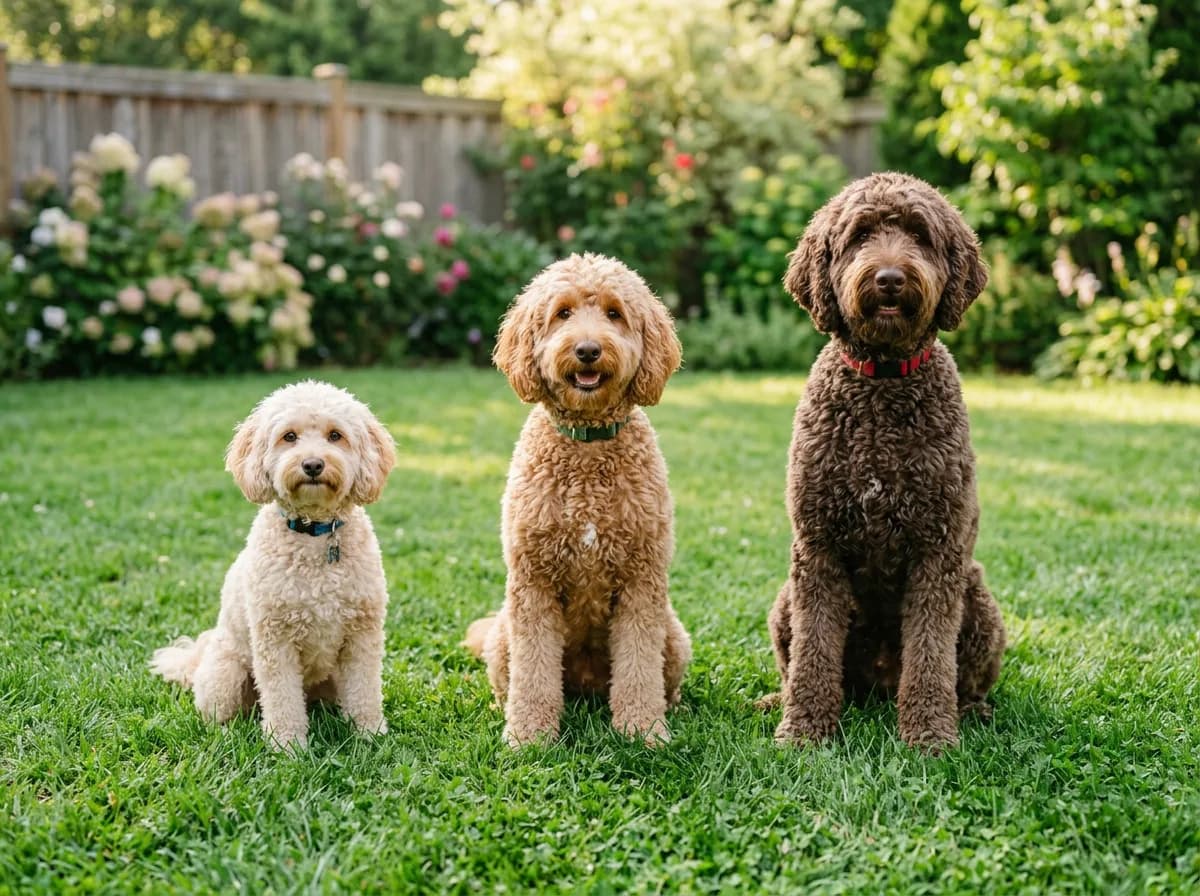
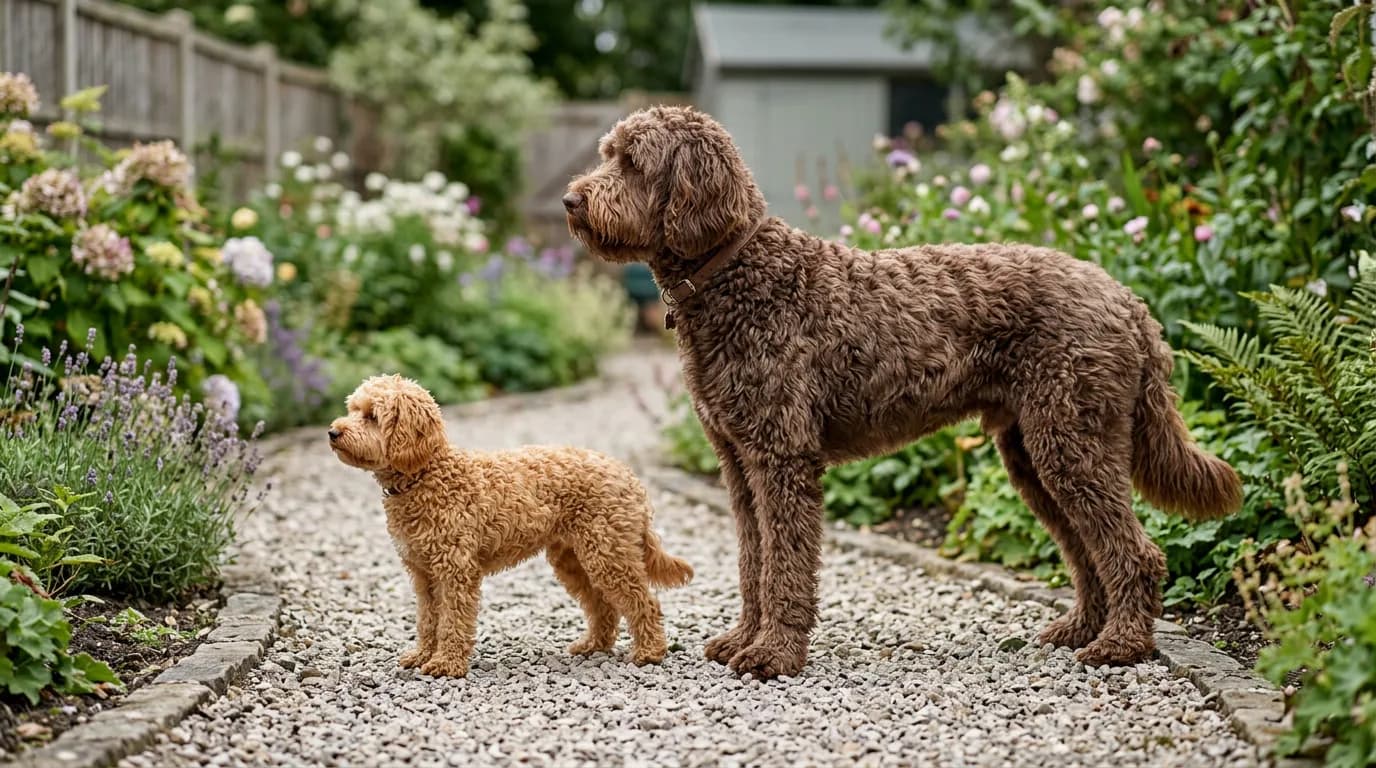
There are three sizes of Labradoodle recognized across most breeders and registries, and every one of them starts with the same Labrador Retriever crossed onto a Poodle of a different size. Breeders sort the results along a mini medium standard ladder, and knowing where a puppy sits on it is the first thing to settle. The quick answer: a mini stays under knee height and travels easily, a medium lands in the middle for families who want a sturdy but not huge dog, and a standard is a full-sized retriever-shaped companion.
Each of the three sizes carries its own height and weight range, and the gap between the smallest and largest is wide enough that they can feel like different breeds. In short: a mini runs 14 to 16 inches and 15 to 25 pounds, a medium 17 to 20 inches and 30 to 45 pounds, and a standard 21 to 24 inches and 50 to 65 pounds. That is exactly why searching plain "labradoodle size" without a size word attached leaves so many buyers confused. The table below puts all three next to each other, with the full-grown age for each, so you can compare at a glance instead of hunting across separate breeder pages.
| Size | Height (at shoulder) | Adult Weight | Full-Grown Age |
|---|---|---|---|
| Mini | 14 to 16 in (36 to 41 cm) | 15 to 25 lbs (7 to 11 kg) | 11 to 13 months |
| Medium | 17 to 20 in (43 to 51 cm) | 30 to 45 lbs (14 to 20 kg) | 12 to 14 months |
| Standard | 21 to 24 in (53 to 61 cm) | 50 to 65 lbs (23 to 29 kg) | 12 to 14 months (weight to 18 to 24 mo) |
| Large / oversized | 24 to 26 in (61 to 66 cm) | 65 to 90 lbs (29 to 41 kg) | 14 to 24 months |
Note that height is always measured at the withers (the top of the shoulder blades), not to the top of the head, so a dog that looks taller because of its neck and coat still measures at the shoulder. Weight is the more variable of the two, because coat, build, and body condition all move the number.
Mini Labradoodle size
The mini labradoodle size class is the crossing of a Labrador with a Miniature Poodle, and it is the most popular of the three for apartment and travel-minded owners. A typical mini stands 14 to 16 inches at the shoulder and weighs 15 to 25 pounds when fully grown. Some breeders market a smaller "petite" or "toy" tier below this, but those are not separate size standards, just the lighter end of the mini range.
Petful may earn a commission when you click through to Chewy, at no extra cost to you.
- Height: 14 to 16 inches at the shoulder
- Adult weight: 15 to 25 pounds
- Best for: apartments, frequent travel, owners who want a dog they can lift
In daily life, a mini fits comfortably in a 30-inch crate, rides on the floor of a car or in a carrier, and can get much of its exercise indoors on a rainy day. That does not make it a low-energy dog. Minis carry the same working-breed drive as their bigger siblings, so they still need a solid daily walk and some brain work. What changes is the footprint: a mini leaves you more room in a small home and costs less to feed.
Medium Labradoodle size
The medium labradoodle size sits between the mini and the standard and is the sweet spot for a lot of families: big enough to be a sturdy playmate for kids, small enough to still fit in most homes without dominating the space. A medium stands 17 to 20 inches and weighs 30 to 45 pounds. Females often land at the lower end of that band and males at the upper end.
- Height: 17 to 20 inches at the shoulder
- Adult weight: 30 to 45 pounds
- Best for: families with a yard, active households, first-time doodle owners
A medium is the size most people picture when they imagine a Labradoodle: substantial enough to keep up on a hike or a beach day, but not so large that it overwhelms a mid-sized home or a compact car. It needs a 36-inch crate, a decent stretch of daily exercise, and space to stretch out. For a family that wants one dog to grow alongside young kids, the medium hits the balance most reliably.
Standard and large Labradoodle size
The standard labradoodle size comes from a Labrador crossed with a Standard Poodle, and it is a genuinely large dog: 21 to 24 inches at the shoulder and 50 to 65 pounds. Some breeders also advertise a large labradoodle size or "oversized" tier that pushes past 65 pounds toward 90, usually when both parents were on the heavy side. If you want a running or hiking partner with real presence, this is the class to look at, but plan your space and budget for a big dog.

Petful may earn a commission when you click through to Chewy, at no extra cost to you.
- Height: 21 to 24 inches (large: up to 26 inches)
- Adult weight: 50 to 65 pounds (large: 65 to 90 pounds)
- Best for: houses with space, active owners, service or therapy prospects
A standard needs a 42-inch crate, room to move without knocking things over, and real daily exercise: think a long walk plus off-leash running or fetch, not just a stroll around the block. This is also the size most often trained as a guide, therapy, or service dog, because the frame is big enough to do physical tasks. If you rent, check your lease and any breed-and-weight limits before you commit to a dog that may top 60 pounds.
- The single biggest predictor of a puppy's adult size is the Poodle used in the cross, so ask any breeder for the recorded adult weight of both the sire and the dam before you commit.
Labradoodle Size and Weight Chart
If you want the numbers in one place, this labradoodle size chart is built to be scannable, which is also what makes it eligible to show up as a table snippet in search. It maps weight by age for each size class so you can check a growing puppy against a realistic curve instead of guessing. A young Labradoodle that is tracking a little above or below the line is usually fine, because these are averages, not hard rules.
The chart below is the growth version: it maps approximate weight by age from 8 weeks up to the point each size reaches its adult weight. Use it as a sanity check at vet visits, not as a target to hit exactly.
| Age | Mini | Medium | Standard |
|---|---|---|---|
| 8 weeks | 4 to 6 lbs | 7 to 10 lbs | 10 to 14 lbs |
| 3 months | 8 to 10 lbs | 13 to 17 lbs | 22 to 28 lbs |
| 6 months | 13 to 17 lbs | 23 to 28 lbs | 38 to 46 lbs |
| 9 months | 16 to 20 lbs | 29 to 34 lbs | 48 to 56 lbs |
| 12 months | 18 to 24 lbs | 32 to 40 lbs | 55 to 62 lbs |
| 18 months | 18 to 25 lbs | 33 to 44 lbs | 58 to 65 lbs |
A few owners search in metric because their breeder or vet works that way. If you have looked up a labradoodle weight chart kg breakdown, a labradoodle size cm figure, or a labradoodle size kg number, the metric equivalents sit right beside the imperial ones in the comparison table above: a mini tops out near 11 kg and 41 cm, a medium near 20 kg and 51 cm, and a standard near 29 kg and 61 cm.
The chart is also a practical feeding tool. Puppy food portions are set by projected adult weight, so knowing whether you are raising a 20-pound mini or a 60-pound standard changes how much goes in the bowl from week one. Overfeeding a fast-growing large-breed puppy is a real risk, because pushing weight on too quickly stresses the joints during the very months the frame is still forming. When your puppy sits at the top or bottom edge of its band, use that as a cue to check portions with your vet rather than to worry.
- A mini reaches roughly 75 percent of its adult weight by 6 months.
- A standard is still adding chest and weight well after it hits full height.
- Rapid, lumpy growth spurts are normal; steady month-over-month gain matters more than any single reading.
- Coat weight, build, and body condition all shift the scale. A lean, well-muscled Labradoodle at the low end of its band is healthier than an overweight one at the top. When in doubt, ask your vet to score body condition rather than chasing a number.
When Is a Labradoodle Full Grown?

How big are Labradoodles full grown? A mini Labradoodle is usually done growing in height by 11 to 13 months and settles at 15 to 25 pounds; a medium finishes around 12 to 14 months at 30 to 45 pounds; and a standard reaches its full height by about 12 to 14 months but keeps filling out in the chest and weight until 18 to 24 months, landing at 50 to 65 pounds. The rule that holds across all three: the bigger the dog, the longer it takes to finish.
Petful may earn a commission when you click through to Chewy, at no extra cost to you.
- Mini: full height by 11 to 13 months, final weight 15 to 25 pounds
- Medium: full size by 12 to 14 months, final weight 30 to 45 pounds
- Standard: full height by 12 to 14 months, final weight (50 to 65 pounds) by 18 to 24 months
Height comes first and weight comes second. Most Labradoodles reach close to their adult height months before they reach their adult weight, which is why a lanky, leggy "teenager" phase around 8 to 12 months is completely normal. During that stretch the dog looks tall and thin, then gradually broadens.
Our labradoodle growth chart above shows the weight side of that story, and if you prefer to track progress month by month, a labradoodle size chart by age is the tool to use: check the puppy at each vet visit and confirm it is trending along its size band rather than jumping tiers.
| Size | Full height reached | Full weight reached |
|---|---|---|
| Mini | 10 to 12 months | 11 to 13 months |
| Medium | 11 to 13 months | 12 to 14 months |
| Standard | 12 to 14 months | 18 to 24 months |
Spaying or neutering timing can nudge these windows slightly, and so can nutrition, but the ranges above hold for the large majority of dogs. If your Labradoodle is well past the top of its window and still gaining fast, that is a conversation to have with your vet rather than something to expect.
Why the finish date matters beyond curiosity: a dog's growth plates (the soft areas at the ends of the long bones) stay open until it is done growing, and high-impact exercise on open plates can strain developing joints. That window is short in a mini and much longer in a standard, which is exactly why big Labradoodles need their jumping and hard running dialed back for longer.
- Until your Labradoodle finishes growing, favor swimming, walking, and controlled play over repeated jumping or long runs on hard ground. Bigger dogs stay in this careful phase months longer than minis do.
How to Estimate Your Labradoodle Puppy's Adult Size
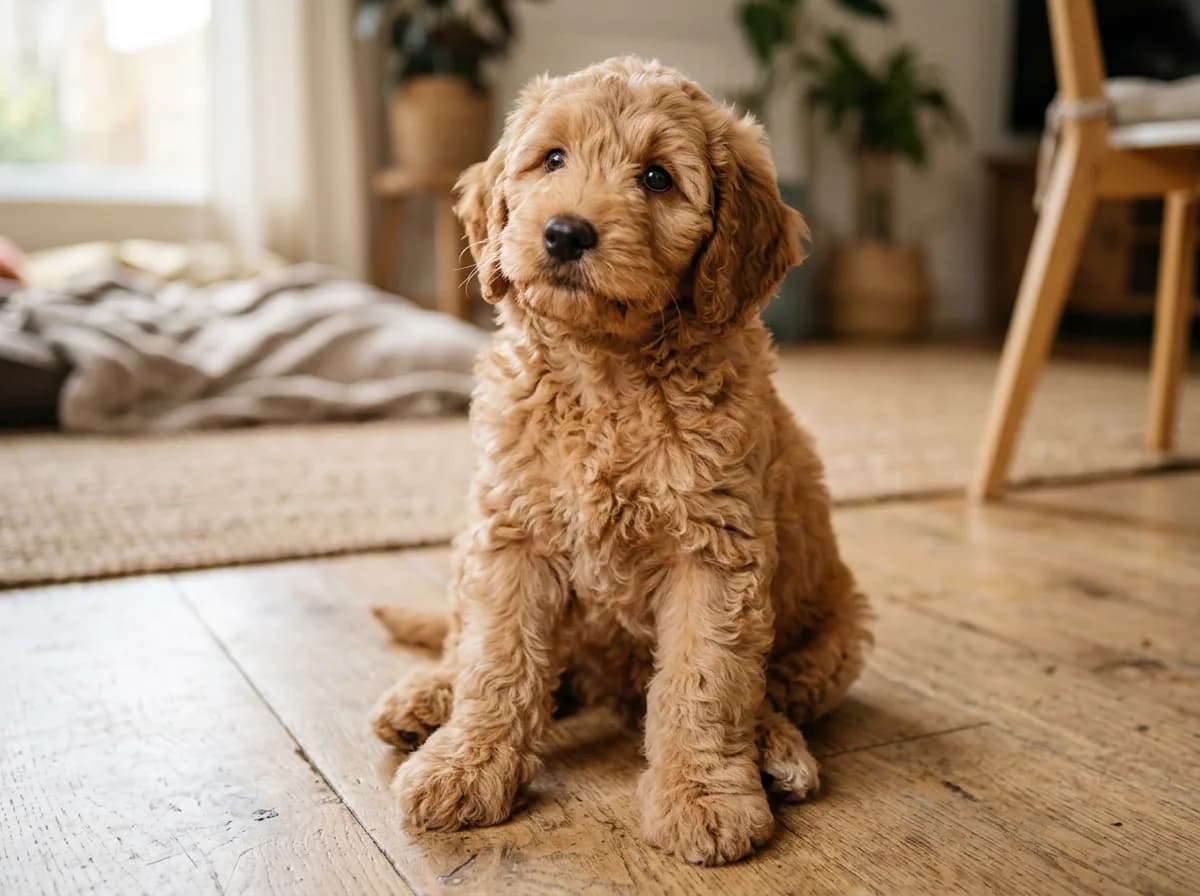
You do not have to wait a year to get a good sense of how big your puppy will be. A few simple methods get you close, and together they beat any single guess.
The most reliable predictor is not the puppy at all, it is the parents. A responsible breeder can tell you the recorded adult weight of both the sire and the dam, and the puppy almost always lands between the two. Generation matters here too: an F1 generation Labradoodle (a first cross of a purebred Labrador and a purebred Poodle) tends to fall in the middle, while an F1b (a Labradoodle bred back to a Poodle) usually leans toward the Poodle parent's size and coat.
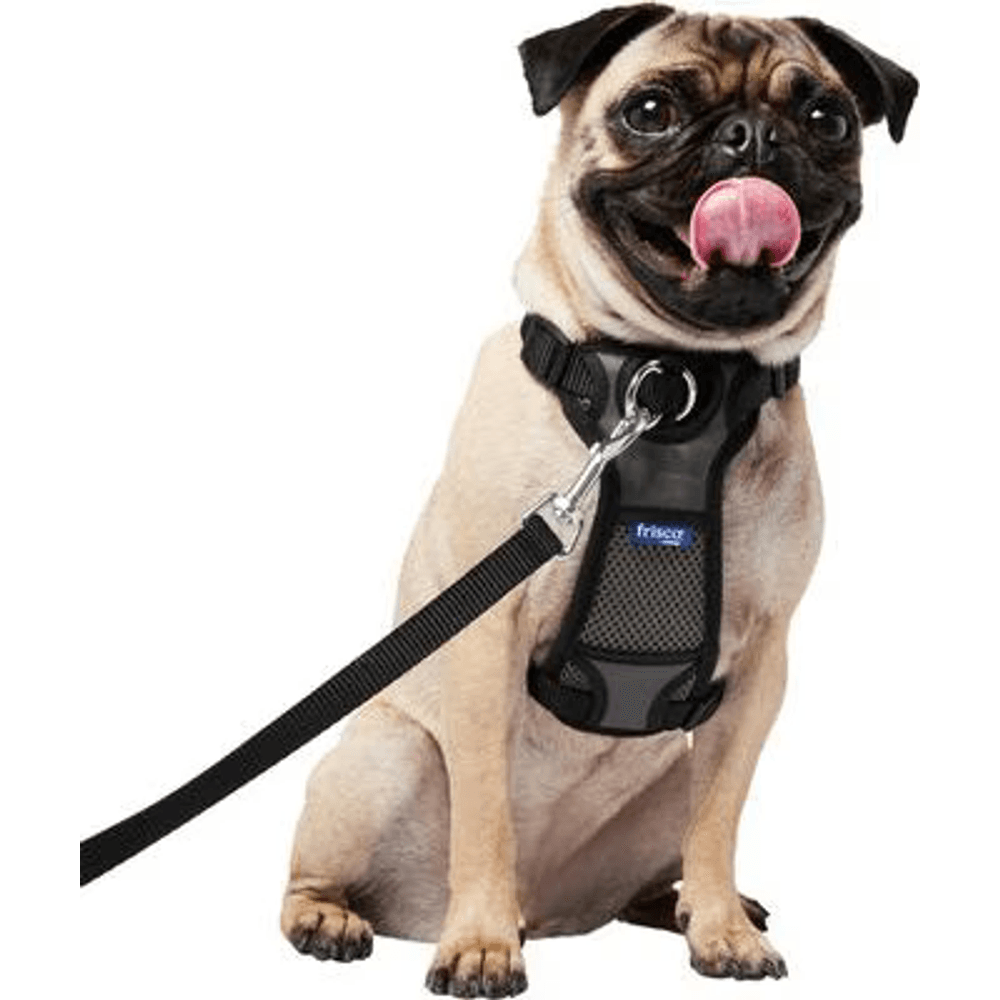
A budget-friendly padded no-pull harness that keeps leash pressure off a coughing dog's neck and windpipe by distributing it across the chest. A simple, affordable way to protect an irritated airway or a collapsing trachea on every walk.
Petful may earn a commission when you click through to Chewy, at no extra cost to you.
- Parent average: add the sire's and dam's adult weights and take the midpoint for a strong starting estimate.
- The doubling rule: for minis and mediums, a puppy's weight at 4 months is often about half its adult weight, so doubling it gives a rough target.
- Paws and frame: oversized paws and loose skin on a young puppy hint that there is still growing to do.
- If a breeder cannot or will not tell you how much the sire and dam weigh, treat that as a warning sign. Adult parent size is the closest thing to a guarantee you will get on a doodle's final size.
Keep in mind that any early estimate carries a margin of error of a few pounds in either direction. It is a planning tool for crate and food choices, not a promise.
Generation is worth understanding because it shifts the odds. An F1 is the most variable, since it splits the difference between two very different parents, while later and back-crossed generations tend to be more predictable in both size and coat. The quick reference below shows how the common labels map to size expectations.
| Generation | What it is | Size tendency |
|---|---|---|
| F1 | Labrador x Poodle (first cross) | Most variable; often mid-range between parents |
| F1b | F1 Labradoodle x Poodle | Leans toward the Poodle parent's size and coat |
| F2 | Labradoodle x Labradoodle | Variable, can favor either parent line |
| Multigen / Australian | Several Labradoodle generations bred together | Most consistent and predictable size |
Australian Labradoodle vs. American Labradoodle Sizes
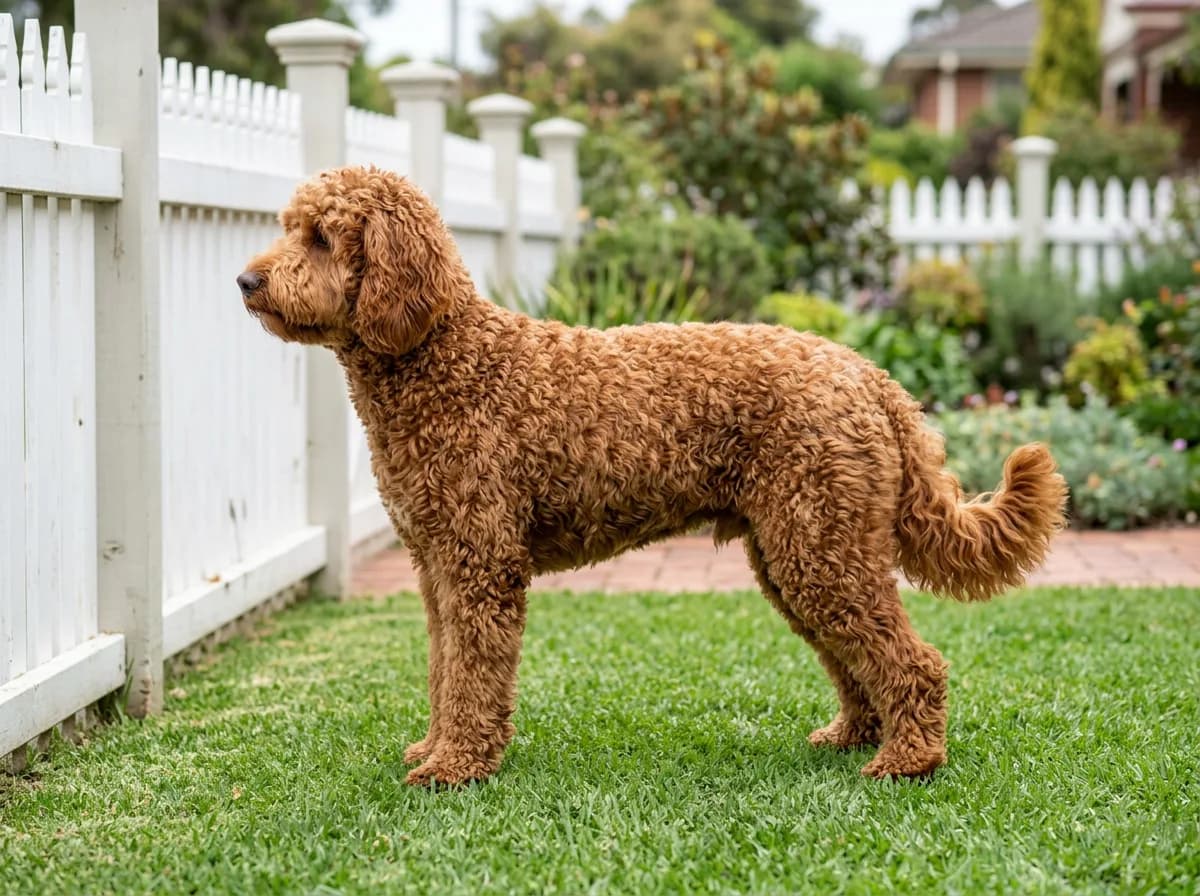
Not every Labradoodle is bred the same way, and the difference changes how you should read a size chart. The American Labradoodle is usually a first-generation or early-generation cross of a Labrador and a Poodle, so its size can vary more from puppy to puppy. The Australian Labradoodle is a distinct, multi-generational breed developed with additional parent breeds infused early on, and it is bred to a tighter written standard, which means its sizes are more consistent.
Those extra parent breeds, infused into the line decades ago, are what set the Australian Labradoodle apart from a plain Labrador-Poodle cross. Beyond the Labrador Retriever and Poodle, recognized Australian Labradoodle programs historically drew on a small set of additional breeds to lock in coat and temperament:
- Labrador Retriever and Poodle (the foundation)
- English and American Cocker Spaniel
- Irish Water Spaniel
- Curly Coat Retriever
If you are comparing an australian labradoodle size chart to an American one, the height and weight bands look similar on paper, but the Australian version is measured and enforced more strictly by breed associations. That consistency is a big part of why buyers pay a premium for Australian lines.
- Miniature Australian Labradoodle: 14 to 16 inches, 15 to 25 pounds
- Medium Australian Labradoodle: 17 to 20 inches, 30 to 45 pounds
- Standard Australian Labradoodle: 21 to 24 inches, 50 to 65 pounds
The miniature australian labradoodle size in particular is the one buyers ask about most, because it is marketed as the small, allergy-friendlier companion. On paper it matches the American mini, but you are more likely to actually get a dog at the predicted adult size from an Australian line, since generations of selective breeding have narrowed the range.
- An Australian Labradoodle is not automatically "better," but if hitting a specific adult size matters to you (for a small apartment or a service role, say), the tighter standard makes the outcome easier to plan around.
Mini Labradoodle: A Closer Look

The mini labradoodle is by far the most searched of the three sizes, and for good reason: it packs the friendly, low-shedding Labradoodle personality into a body most people can lift and travel with. Beyond the standard mini, you will see breeders advertise a micro mini labradoodle (an even smaller tier, often under 15 pounds) and specific coat colors like a mini labradoodle black, which is one of the most requested looks.
Size is only part of the mini story, though. Coat type, energy level, grooming needs, and price all shift once you go this small, and those details deserve more room than a size guide can give. For the full breakdown of the smallest Labradoodle, including temperament and care, see our dedicated Mini Labradoodle guide.
How Size Affects Labradoodle Cost
Size and price are linked, though not in the way many buyers expect. Smaller is often more expensive, not less: a mini labradoodle for sale frequently costs more than a standard because the demand for compact doodles outstrips supply. Expect the search results for mini labradoodle breeders and mini labradoodle puppies to skew toward higher prices, especially for Australian lines and sought-after colors.
Ongoing costs move the other way. A standard eats more food, needs larger doses of preventatives, and costs more to groom and board, so the lifetime cost of a big Labradoodle usually runs higher even when the purchase price is lower. The size-driven cost gaps that add up over a dog's life include:
- Food: a 60-pound standard can eat two to three times what a 20-pound mini does.
- Flea, tick, and heartworm preventatives: dosed and priced by weight.
- Grooming: a bigger coat takes more time and a higher fee per visit.
- Boarding and daycare: many facilities charge more for large dogs.
We break the full picture down, from breeder price ranges to lifetime spend, in our Labradoodle price guide.
Which Labradoodle Size Is Right for You?
Picking a size is really about matching the dog to your space, your activity level, and your budget. A mini suits small homes and lighter routines; a medium fits active families; a standard needs room and exercise to match. Whichever way you lean, size interacts with personality, so it is worth reading up on both.
- Worried a Labradoodle might be too much dog for your home? Household-fit and whether the breed makes a good house dog are covered in our Labradoodle temperament guide, which also answers whether Labradoodles bark a lot.
- Still weighing the breed's overall pros and cons? The trade-offs and downsides live on the main Labradoodle breed guide.
- Torn between two doodles? Our Labradoodle vs Goldendoodle comparison settles the better-breed question, and if you are shopping on size specifically, the parallel Goldendoodle sizes chart lets you line the two breeds up side by side.
Once you have settled on a size class, the rest of the decision (coat, color, breeder vetting, and cost) gets much easier, because so much of a Labradoodle's care follows directly from how big it is going to be.
A standard Labradoodle is the largest common size, at 21 to 24 inches and 50 to 65 pounds. Some breeders offer an oversized or large tier that reaches 26 inches and up to 90 pounds when both parents are large.
A full-grown mini Labradoodle stands 14 to 16 inches at the shoulder and weighs 15 to 25 pounds, usually reaching adult height by 11 to 13 months.
Most Labradoodles reach adult height by 11 to 14 months. Minis finish first, while standards keep adding weight and chest until 18 to 24 months.
Yes. A medium runs 30 to 45 pounds and a standard runs 50 to 65 pounds, so a standard is often 20 or more pounds heavier and needs noticeably more space, food, and exercise.
No matter which size you choose, the healthiest Labradoodle is one kept lean and well-exercised for its build. Use the charts here as your planning baseline, confirm the parents' adult weights with your breeder, and lean on your vet's body-condition scoring to keep your dog on track as it grows. For everything beyond size, our full Labradoodle breed guide is the place to start. There is more on this in Petful’s guide to Labradoodle health problems.

Coreen Saito is a pet writer and longtime shelter volunteer with more than a decade in animal rescue. She covers cat behavior, breed care, and the small, ordinary science of sharing a life with companion animals, with a particular focus on honest takes about the products and decisions that actually matter. At home in Arizona, she's outranked by Mac (a dog with the loudest opinion in the house), Rebel (a cat who governs by quiet authority), and Meri (an orange tabby who runs the late shift and the laundry basket). She writes about all three, plus the rescues that keep coming through her life, at LifeWithMinty.com.
Sign up for expert-backed reviews and safety alerts all in one place.