Goldendoodle Sizes and Generations: The Complete Guide
Goldendoodle sizes range from 15-pound teacups to 90-pound standards. This complete guide breaks down all four size categories, the F1, F1b, and F2 generations, and how each affects coat, shedding, and which dog fits your home.
Petful is reader supported. As an affiliate of platforms like Amazon and Chewy, we may earn a commission when you buy through links on this page. There is no extra cost to you.
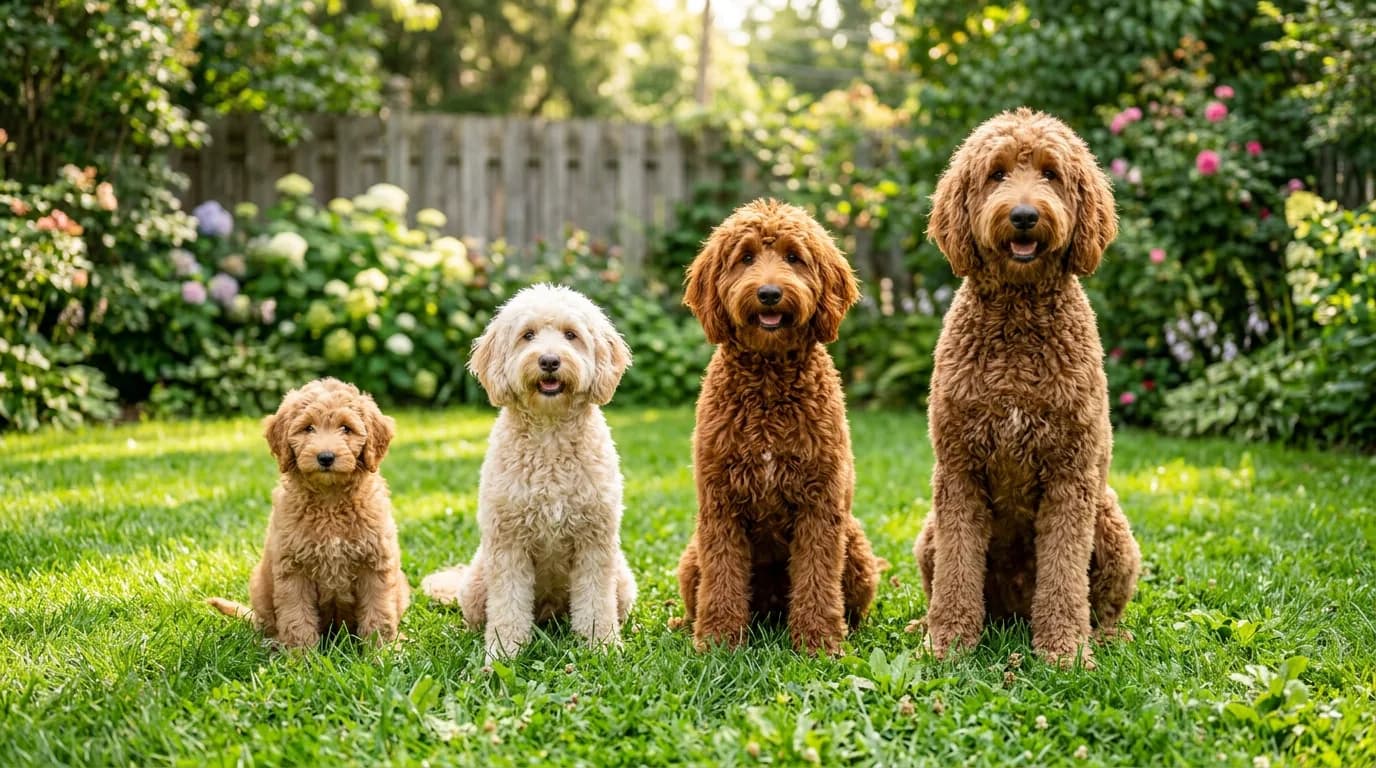
Goldendoodle sizes span an enormous range, from a 15-pound lap dog you can carry through an airport to a 90-pound standard that leans its full weight against your legs. That spread is not an accident. It comes from which Poodle variety sits on the family tree (toy, miniature, or standard) and how the breeding generation (F1, F1b, F2, and beyond) was planned. Because the Goldendoodle is a cross and not a purebred with a single written standard, there is no one "correct" adult size. Instead, breeders sort litters into recognized weight bands, and understanding those bands is the single most useful thing you can do before choosing a puppy.
This guide walks through all four Goldendoodle size categories (petite/teacup, mini, medium, and standard), then explains what each generation label actually means for adult size, coat texture, and shedding. By the end you will know exactly how to read a breeder's listing and match a dog to your home, your allergies, and your lifestyle.
- 1Goldendoodles come in four broad sizes, driven by the Poodle parent: petite/teacup (15-25 lb), mini (20-35 lb), medium (35-50 lb), and standard (50-90 lb)
- 2Generation labels (F1, F1b, F2) describe the cross, and they predict coat and shedding far better than they predict size
- 3F1b and multigen dogs are typically the curliest and most allergy-friendly, while F1 dogs shed a little more and vary the most
- 4"Teacup" and "teddy bear" are marketing terms, not official categories, so always confirm the adult weight range in writing before you commit

Sign up for expert-backed reviews and safety alerts all in one place.
The Four Goldendoodle Sizes at a Glance
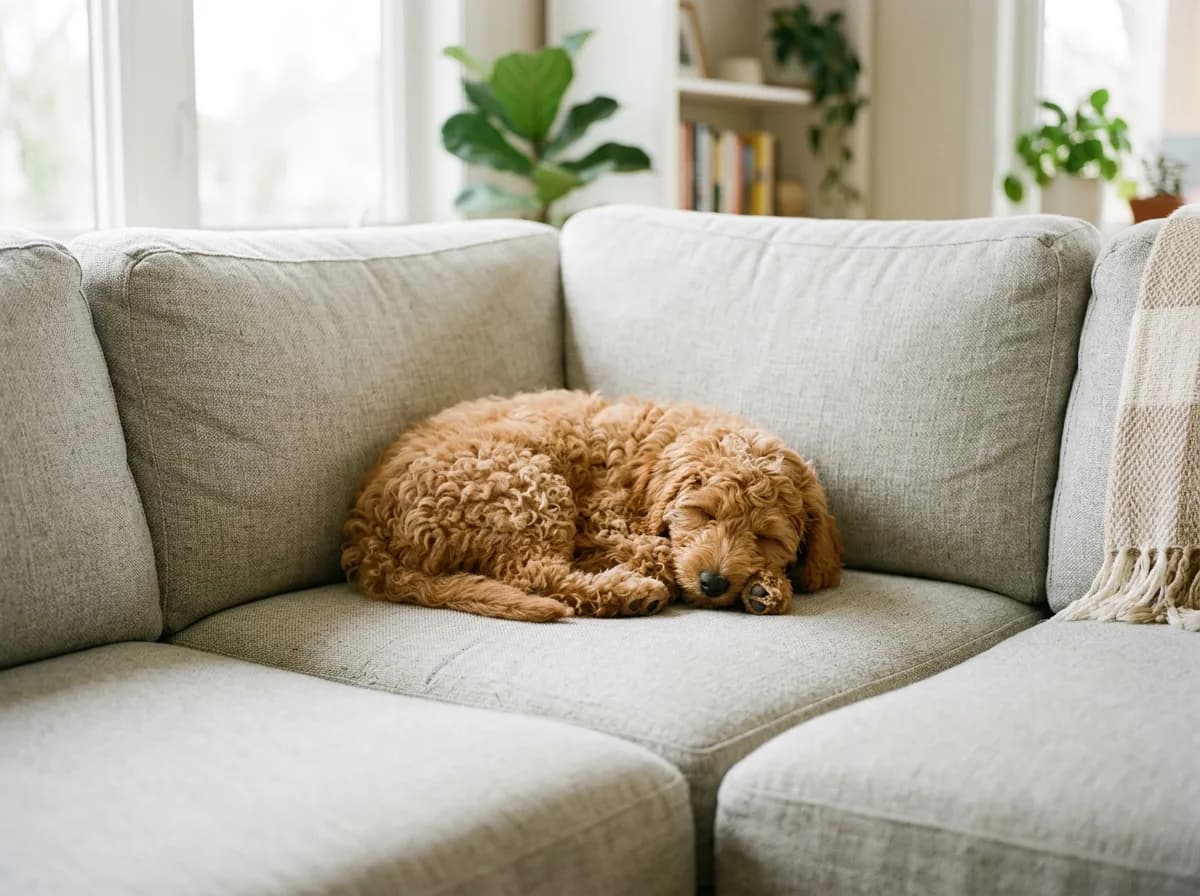
Most reputable breeders and the Goldendoodle Association of North America (GANA) sort dogs into size bands by adult weight and shoulder height. The exact cutoffs vary a little from breeder to breeder, but the four-tier system below is the one you will see most often. Size is set mainly by the Poodle parent, because Golden Retrievers are fairly uniform in size while Poodles come in toy, miniature, and standard varieties recognized by the American Kennel Club (akc.org).
Petful may earn a commission when you click through to Chewy, at no extra cost to you.
| Size Category | Adult Weight | Height at Shoulder | Poodle Parent Used |
|---|---|---|---|
| Teacup / Petite | 15-25 lb | 11-14 in | Toy or small Miniature Poodle |
| Miniature (Mini) | 20-35 lb | 14-17 in | Miniature Poodle |
| Medium | 35-50 lb | 17-20 in | Small Standard Poodle |
| Standard | 50-90 lb | 20-24 in | Standard Poodle |
A few honest caveats before you fall in love with a number. Predicted adult weight is an estimate, especially in the smaller categories, and a mini can finish anywhere across a 15-pound spread depending on which parent it favors. Cross-generation dogs (an F2 or multigen litter) are the least predictable, because two mid-sized parents can throw both larger and smaller pups. Always ask a breeder for the actual adult weights of the sire, the dam, and previous litters rather than trusting the marketing label alone.
Teacup and Petite Goldendoodles
The smallest Goldendoodles are produced by crossing a Golden Retriever line (usually already downsized through prior generations) with a toy or very small miniature Poodle. Expect a finished adult of roughly 15 to 25 pounds, standing 11 to 14 inches at the shoulder. "Teacup" is a marketing word rather than a recognized category, and dogs sold under it are simply the lightest petites, so the term deserves extra scrutiny: confirm the parents' weights and ask whether the breeder is achieving small size through healthy toy-Poodle genetics or through breeding runts, which can carry health risks. Our dedicated guide to the teacup Goldendoodle covers what is realistic and what to watch for. These dogs suit apartments and travel, but their fine bones need gentle handling around small children.
Mini Goldendoodles
The mini is the breed's most popular size, and for good reason: it delivers most of the Goldendoodle personality in a 20 to 35 pound package that fits condos, smaller yards, and families who want a dog they can still lift into a bathtub. A mini stands about 14 to 17 inches tall and is produced by crossing a Golden Retriever with a miniature Poodle. Minis tend to mature faster than standards, reaching adult size around 11 to 13 months. They are energetic and quick to learn, which makes them a joy to train but also means they need real daily activity rather than a couple of hallway laps. If this is the size you are weighing, the full mini Goldendoodle profile breaks down temperament, exercise needs, and typical cost.
Medium Goldendoodles
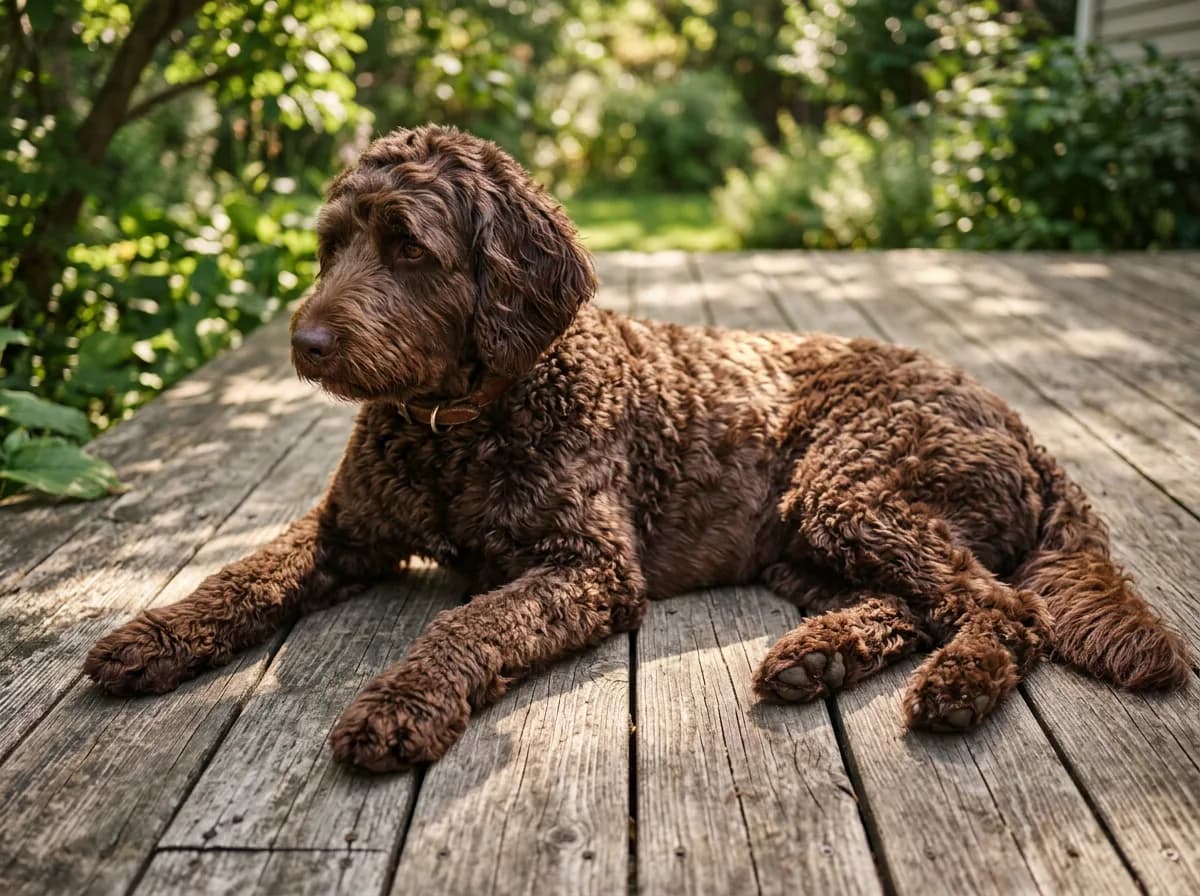
Medium Goldendoodles bridge the gap for buyers who find minis a touch small and standards a touch large. At 35 to 50 pounds and 17 to 20 inches, a medium is sturdy enough for active families and hiking, yet still manageable in a mid-sized home. Mediums usually come from a Golden Retriever crossed with a smaller standard Poodle, or from multigen breeding aimed at holding a middle weight. This is often the most athletic, do-anything size in the breed: big enough to keep up on a trail or in a lake, small enough to still curl up on the couch without taking the whole thing.
Petful may earn a commission when you click through to Chewy, at no extra cost to you.
Standard Goldendoodles
The standard is the original Goldendoodle and the closest in stature to the Golden Retriever parent. Adults run 50 to 90 pounds and stand 20 to 24 inches or more, with some large males pushing past 90 pounds. Standards are produced from a Golden Retriever crossed with a standard Poodle, and they take the longest to mature, often not filling out fully until 18 to 24 months. Their size makes them outstanding service and therapy candidates, but it also means bigger food bills, more exercise, larger crates, and orthopedic support for their joints as they age. Because large-breed dogs are more prone to hip and elbow issues, a supportive bed and joint-conscious feeding matter more for standards than for any other size in the breed.
What Are the Three Types of Goldendoodles?
The short answer: when people ask about the "three types of Goldendoodles," they are almost always talking about size (mini, medium, and standard), not three separate breeds. There is one Goldendoodle, and it is a Golden Retriever crossed with a Poodle. The apparent "types" come from two different axes that buyers tend to blur together: the size category (driven by the Poodle variety) and the generation (driven by how far back the cross goes).
So the cleanest way to answer the question is this. By size, the three core types most breeders list are mini, medium, and standard, with the petite/teacup as a fourth, smaller tier. By generation, the three you will see most are F1, F1b, and F2 (plus multigen). Neither axis creates a different animal; both simply describe how a given litter was planned. A "mini F1b" and a "standard F1," for example, are the same breed built two different ways. Keeping size and generation separate in your head is the key to reading any breeder's listing without getting confused.
Goldendoodle Generations Explained: F1, F1b, and F2
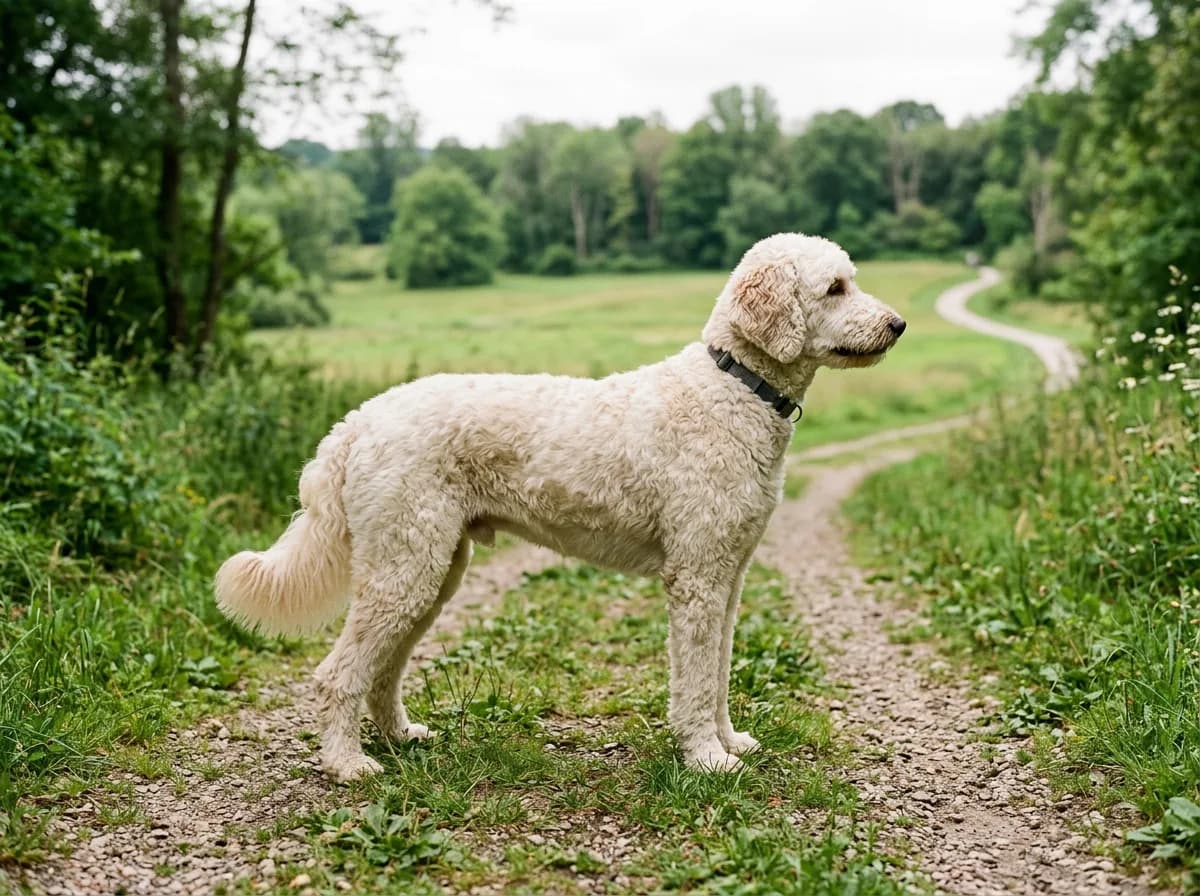
Generation labels describe the genetic recipe of a litter. The letter "F" stands for filial (offspring), the number is how many generations removed the dog is from the original purebred cross, and a "b" means "backcross" to a Poodle. These labels tell you very little about final size, but they are the best available predictor of coat texture and shedding, which is exactly what most Goldendoodle buyers care about. Our deep-dive on Goldendoodle generations unpacks every combination, but here is the working summary.
| Generation | What the Cross Is | Coat Tendency | Shedding Level |
|---|---|---|---|
| F1 | Golden Retriever x Poodle (50/50) | Wavy, some variation litter to litter | Low to moderate |
| F1b | F1 Goldendoodle x Poodle (about 75% Poodle) | Curlier, more consistent | Lowest, most allergy-friendly |
| F2 | F1 x F1 Goldendoodle | Highly variable across the litter | Unpredictable, low to moderate |
| F1bb | F1b x Poodle (about 87.5% Poodle) | Very curly | Minimal |
| F2b | F1b x F1 Goldendoodle | Curly, fairly consistent | Low |
| Multigen | Doodle x Doodle over several generations | Consistent curl, bred for coat | Low and reliable |
F1 Goldendoodles
An F1 is the first-generation, 50/50 cross: one purebred Golden Retriever parent and one purebred Poodle parent. F1s benefit most from hybrid vigor (the tendency of a first cross to be robust and healthy), and they typically have a wavy, shaggy coat. The trade-off is variability. Because the genes have not been "sorted," an F1 litter can range from flatter, more Golden-like coats that shed noticeably to looser curls that barely shed at all. If a low-shedding coat is non-negotiable, an F1 is the riskiest bet.
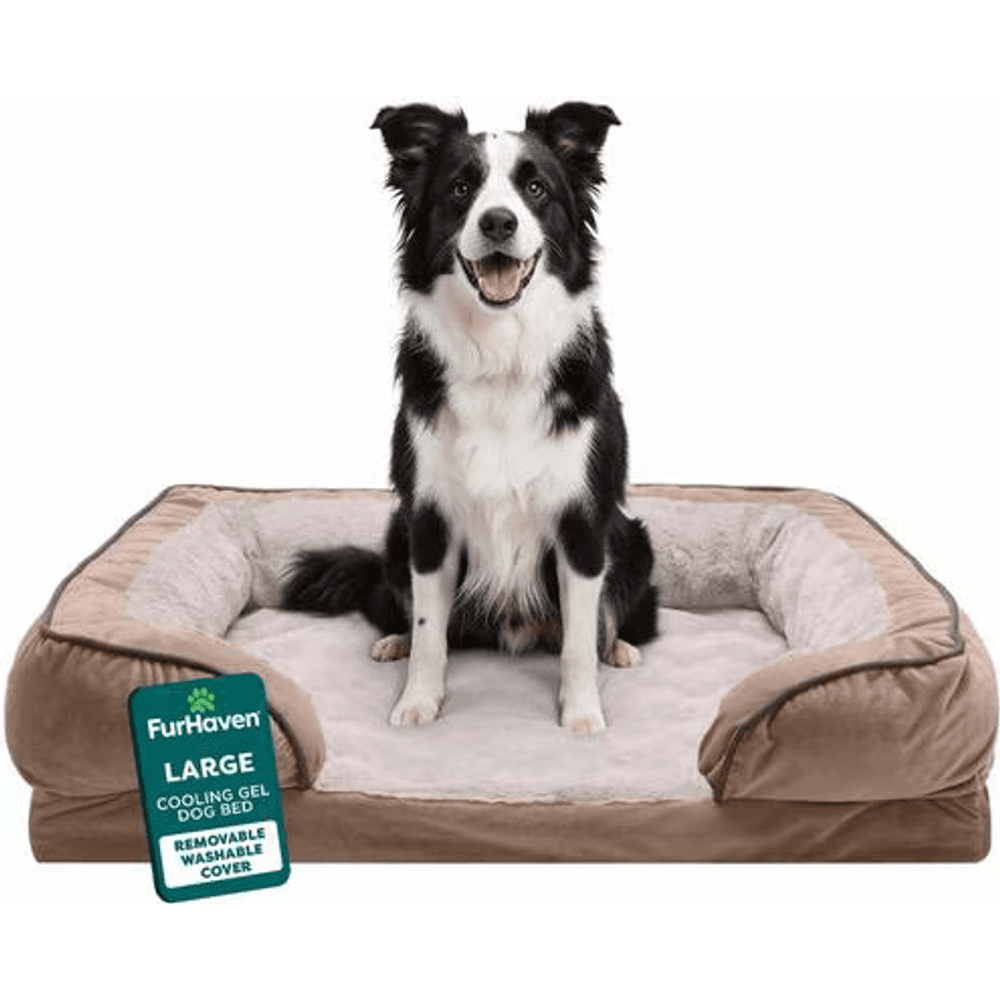
An orthopedic sofa bed with three bolstered sides for dogs who like to rest their head and joints against a cushion. The supportive foam base cradles hips and elbows, a comforting spot for an older or shaky dog to settle.
Petful may earn a commission when you click through to Chewy, at no extra cost to you.
F1b Goldendoodles
An F1b is an F1 Goldendoodle bred back to a Poodle, making the puppy roughly 75% Poodle. That extra Poodle influence pushes the coat curlier and the shedding lower, which is why F1b is the generation most often recommended for people with mild to moderate allergies. The curlier coat is more allergy-friendly, but it also mats faster and needs more disciplined grooming.
F2 and Multigen Goldendoodles
An F2 is an F1 crossed with another F1. On paper it is still about 50% Poodle, but genetically it is the wild card of the breed: F2 litters show the widest spread of coat types, from nearly flat to tightly curled, because recessive traits from both grandparents can resurface. Multigen dogs (the product of several generations of Doodle-to-Doodle breeding, selected deliberately for coat) are the opposite. Good breeders use multigen programs to lock in a consistent, low-shedding, curly coat, which is why serious allergy households often seek them out.
Which Is Better, F1 or F2 Goldendoodle?
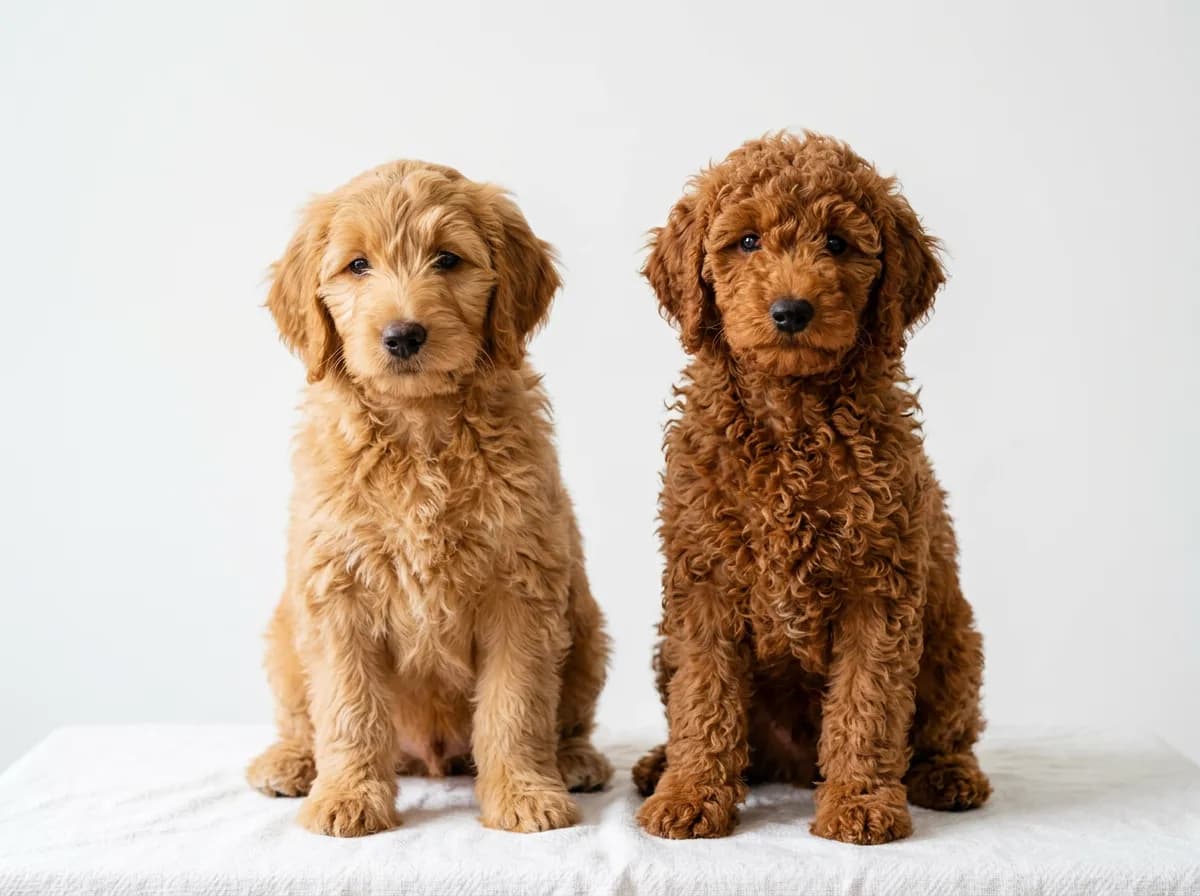
For most buyers, an F1 is the safer, more predictable choice than an F2, but "better" genuinely depends on your priority. An F1 gives you maximum hybrid vigor and a fairly reliable wavy coat, while an F2 offers more coat variety within a single litter at the cost of predictability. If you want the strongest first-cross health advantage and a known coat pattern, choose an F1. If you are working with an experienced breeder who has hand-selected an F2 pairing to produce a specific curly, low-shedding result, an F2 can be excellent, but you are relying much more heavily on that breeder's skill.
Put simply: F1 wins on predictability and hybrid vigor for the average family, and F2 only pulls ahead when a knowledgeable breeder is targeting a particular coat and can show you consistent results from past litters. For allergy households specifically, most experts steer toward F1b or multigen over a raw F2, because those crosses concentrate the low-shedding coat far more reliably.
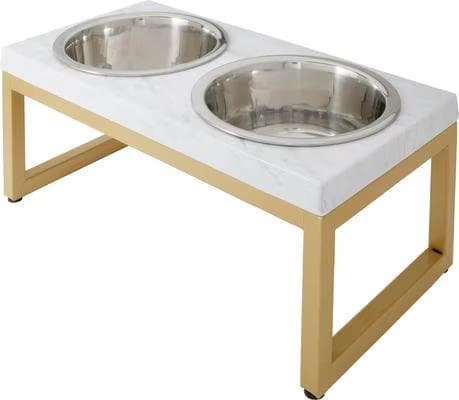
Raised stainless steel double bowl on a marble-look stand. Easier on the neck and joints and a clean, tip-resistant way to keep fresh water available all day.
Petful may earn a commission when you click through to Chewy, at no extra cost to you.
- Generation labels say nothing about whether the parents were screened for hips, elbows, eyes, and heart. Ask any breeder for Orthopedic Foundation for Animals (OFA) clearances on both the Golden Retriever and Poodle parent. A well-bred F1 from health-tested parents beats a poorly bred F1b every single time.
How Generation Affects Coat, Shedding, and Grooming
Here is the rule of thumb that ties it all together: the more Poodle in the mix, the curlier the coat and the less the dog sheds, but the more grooming it needs. Coat type in Goldendoodles generally falls into three buckets, straight/flat (rare, sheds most), wavy (the classic teddy-bear look, moderate care), and curly (most Poodle-like, lowest shedding, highest maintenance). No Goldendoodle is truly 100% hypoallergenic, a point veterinary sources including the Cornell University College of Veterinary Medicine make clearly: allergens live in dander and saliva, not just shed hair, so a low-shedding curly coat reduces but does not eliminate reactions.
Whatever the coat, all three types need regular brushing to prevent painful matting, and most need a professional groom every six to ten weeks. Curlier F1b and multigen dogs mat the fastest and demand the most upkeep. Our Goldendoodle grooming guide covers brushing tools and clip styles, and if shedding is your main concern, the honest breakdown in do Goldendoodles shed is worth reading before you commit. Coat color does not affect shedding, though it does affect how visible loose hair is around the house; the full palette is covered in our Goldendoodle colors guide.
- A common myth is that smaller Goldendoodles shed less than standards. Shedding is driven by coat genetics (the generation and the luck of the litter), not by body size. A curly standard can shed far less than a wavy mini. Judge shedding by coat type and generation, never by how big the dog is.
What Is a Teddy Bear Goldendoodle?
A "teddy bear Goldendoodle" is not a size or a separate type. It is a grooming style and a look, a wavy or loosely curled coat clipped to an even, plush, rounded length that makes the dog resemble a stuffed teddy bear. The look is most associated with English Cream Goldendoodles and with wavy F1 and F1b coats, because those textures hold the soft, fluffy shape best. Any size can wear the teddy bear clip: you will see teddy bear minis and teddy bear standards alike.
The term is popular in breeder marketing precisely because it sells an image, so treat it the way you would treat "teacup." It describes appearance, not health, temperament, or guaranteed adult size. If a listing leads with "teddy bear" but will not state the parents' weights, the generation, and the health testing, keep asking questions. The face you fall for at eight weeks needs the substance behind it to become a healthy adult.
What Is the Calmest Doodle Breed?
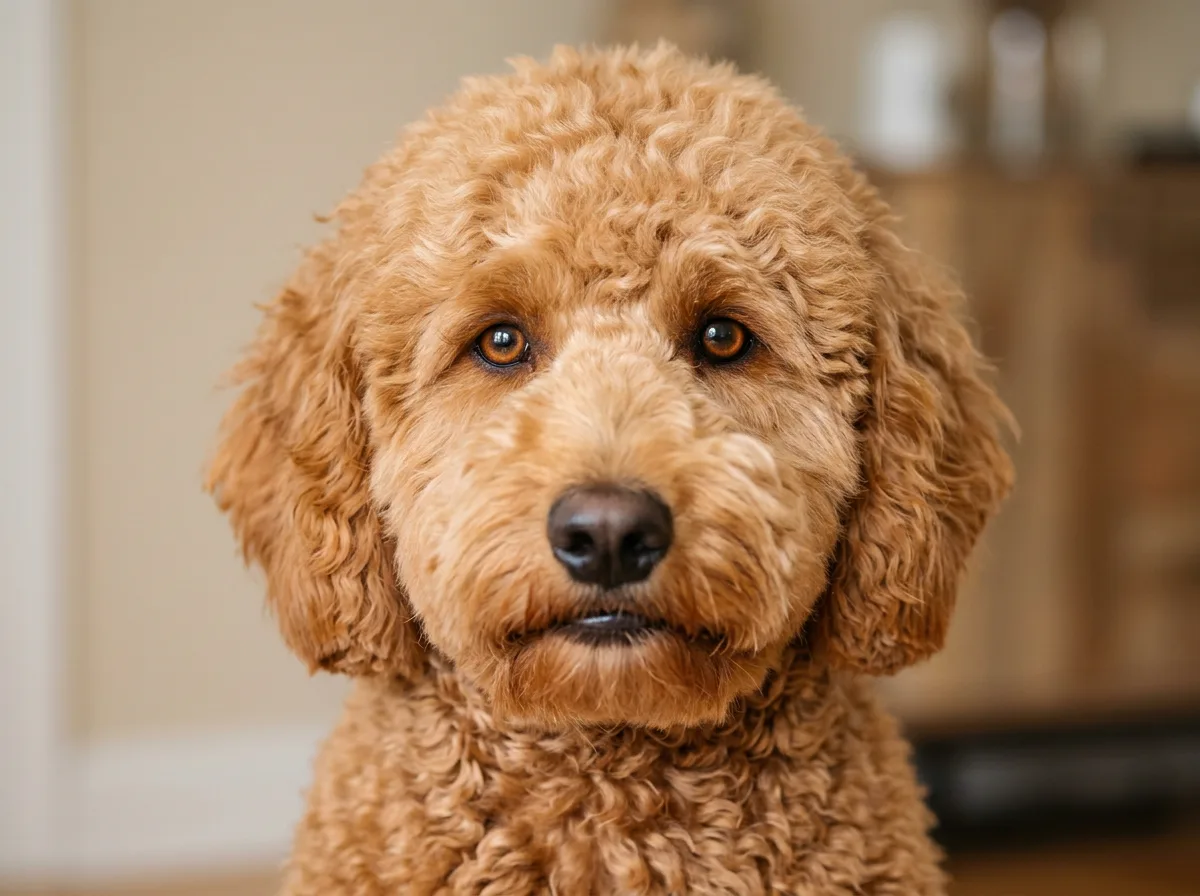
Among the popular doodles, the Goldendoodle is frequently ranked as one of the calmest, gentle, affectionate, and eager to please, which is why the breed is a mainstay in therapy and service work. Within Goldendoodles, calmness tends to track more with individual temperament, training, and exercise than with size, though many owners report that standards often settle into a mellow adulthood while minis can stay springy and energetic for longer. The Golden Retriever half of the equation contributes the easygoing, people-focused nature; the Poodle half adds intelligence and trainability.
That said, no doodle is calm without enough exercise and mental stimulation. An under-exercised Goldendoodle of any size will find its own (usually unwelcome) ways to burn energy. If a low-key companion is your top priority, look at the parents' temperaments in person and ask the breeder which pups in the litter are the settled ones. Our Goldendoodle temperament guide goes deeper on personality by generation and size. Buyers cross-shopping smaller, typically calm doodles also often consider the Cavapoo, a Cavalier King Charles Spaniel and Poodle cross known for its gentle, low-energy disposition.
- A calm Goldendoodle is usually the product of three things: parents with steady temperaments, consistent early training and socialization, and daily physical plus mental exercise. Get those right and size becomes almost irrelevant to how relaxed your dog is at home.
Living With Each Goldendoodle Size: Space, Cost, and Exercise
Size is not just a number on the adoption listing; it shapes daily life for the next decade or more, so it is worth thinking past the puppy stage. Space is the first practical filter. A teacup or mini genuinely thrives in an apartment and can meet a lot of its exercise needs indoors and on neighborhood walks. A standard, by contrast, wants room to move and does best with a yard or a committed owner who provides two solid outings a day. Mediums sit comfortably in between and adapt to most suburban homes.
Cost scales with size in ways buyers often underestimate. A 25-pound petite eats a fraction of what a 75-pound standard puts away, and that gap compounds across food, monthly heartworm and flea prevention (dosed by weight), boarding fees, and even the price of a crate or car harness. Veterinary procedures that are priced by body weight, from anesthesia to certain medications, also cost more for a large dog. If budget is tight, a smaller Goldendoodle is the more forgiving long-term choice.
Exercise needs follow size and energy together. Every Goldendoodle, regardless of size, needs a genuine outlet for both body and brain, but the shape of that outlet changes. A mini is often content with 45 to 60 minutes of activity plus training games; a standard frequently wants 60 to 90 minutes of harder exercise, including running, fetch, or swimming, to stay balanced. Skimp on this and you get chewing, digging, and barking rather than the calm companion you pictured.
Grooming time is the last hidden cost, and it tracks coat more than size, but a bigger dog simply has more coat to brush and a larger grooming bill. Whatever size you choose, budget for a brush-out several times a week and a professional groom every six to ten weeks. Going in with clear expectations on space, money, exercise, and coat care is how you make sure the size you fall for at eight weeks is still the right fit at eight years.
How to Choose the Right Goldendoodle Size and Generation
Matching a Goldendoodle to your life comes down to stacking two decisions: pick the size that fits your space and strength, then pick the generation that fits your allergy tolerance and grooming appetite. Use the quick-match guide below as a starting point, then confirm every prediction against the actual parents.
| Your Situation | Best Size | Best Generation | Why |
|---|---|---|---|
| Apartment, frequent travel | Teacup or Mini | F1b or Multigen | Portable, low-shedding, fits small spaces |
| First-time owner, mild allergies | Mini or Medium | F1b | Manageable size plus the most allergy-friendly coat |
| Active family, yard, hiking | Medium or Standard | F1 or Multigen | Athletic, sturdy, robust hybrid vigor |
| Service or therapy prospect | Standard | Multigen | Size, biddable temperament, predictable coat |
| Budget-conscious, low grooming | Mini | F1 | Faster to groom wavy coat, popular and available |
Two final pieces of advice. First, meet the parents (or at least see verified photos and adult weights), because they are the best predictor of what your puppy will become. Second, prioritize a breeder who does OFA health testing and is transparent about generation over any breeder leaning hard on trendy labels like "teacup" or "teddy bear." A healthy, well-matched dog of the "wrong" size will make you far happier than a poorly bred one that hit your ideal number on the scale.
- Be cautious of any breeder who guarantees an exact adult weight, especially at the very small end. Genetics in a cross are not that precise, and promises of a fixed "teacup" weight are often a red flag for runt breeding or simply for setting up a refund dispute. A trustworthy breeder gives you a realistic range, not a single guaranteed number.
Frequently Asked Questions
Goldendoodle Size Chart by Age: How Big They Get and When
Most goldendoodles reach close to their adult weight between 11 and 16 months, with the smaller varieties finishing first and standards filling out last. Use these approximate ranges as a guide, then ask your breeder for the parents' weights, which predict adult size far better than any average.
Approximate weight by age
- Mini goldendoodle (adult roughly 15–35 lbs): about 5–6 lbs at 8 weeks, 9–12 lbs at 3 months, 17–22 lbs at 6 months, and near-final by 11–13 months.
- Medium goldendoodle (adult roughly 30–45 lbs): about 8–10 lbs at 8 weeks, 18–24 lbs at 3 months, 28–36 lbs at 6 months, and near-final by 12–14 months.
- Standard goldendoodle (adult roughly 45–90 lbs): about 10–14 lbs at 8 weeks, 22–30 lbs at 3 months, 40–50 lbs at 6 months, and still filling the chest and legs until 14–18 months.
When each size is full grown
- Petite and mini: essentially done growing by 11–13 months.
- Medium: full height by about 12 months, final weight by roughly 14 months.
- Standard: adult height near 14 months, but muscle and weight can keep building toward 18 months.
Males often finish a few pounds heavier than females from the same litter.
How to Predict Your Goldendoodle's Adult Size
The single most reliable predictor is the parents. A puppy usually lands near the average of the sire and dam's adult weights, so ask the breeder for both before you commit. When all you have is the puppy in front of you, these methods narrow it down.
Practical estimation methods
- Parent average: add the mother's and father's adult weights and divide by two for a working target.
- Four-month doubling: minis and mediums are often near half their adult weight around 4 to 4.5 months, so doubling the weight then gives a rough adult figure. Standards mature more slowly, so this tends to underestimate them.
- Six-month checkpoint: many goldendoodles are about 75% of their adult weight by 6 months.
- Generation clue: the poodle parent sets the size class, so an F1b bred back to a miniature poodle usually stays on the small side.
Online size, height, and weight calculators apply these same rules. Treat any figure they return as an estimate with a several-pound margin, not a guarantee, since diet, sex, and individual genetics all shift the final result.
Does a Goldendoodle's Size Affect Its Lifespan?
Yes, size is one of the clearer influences on how long a goldendoodle lives, and smaller generally means longer. The breed averages roughly 10 to 15 years, and within that band the petite and mini varieties tend to sit near the top while standards sit lower, mirroring the well-documented pattern that smaller dogs outlive larger ones.
Typical ranges by size
- Petite and mini goldendoodle: often around 13–16 years.
- Medium goldendoodle: often around 12–14 years.
- Standard goldendoodle: often around 10–13 years.
Size is only part of the picture. Buying from a breeder who health-tests for hip dysplasia, eye disease, and heart conditions, keeping your dog at a lean weight, and staying current on dental and veterinary care all push a goldendoodle toward the upper end of its range regardless of build.
- A well-bred, healthy-weight standard can outlive a poorly bred mini. These ranges are averages, so daily care and genetics matter as much as body size.
When people say "three types," they usually mean the three main sizes: mini (20-35 lb), medium (35-50 lb), and standard (50-90 lb), with petite/teacup as a smaller fourth tier. There is only one Goldendoodle breed (Golden Retriever x Poodle); the "types" are size categories set by the Poodle parent, not separate breeds.
For most families, an F1 is the safer choice because it offers strong hybrid vigor and a fairly predictable wavy coat. An F2 (F1 x F1) produces more coat variety within one litter but is much less predictable, so it is best only when an experienced breeder has hand-selected the pairing for a specific result. For allergy households, F1b or multigen usually beat both.
A teddy bear Goldendoodle is a grooming style and look, not a size or separate type. It is a wavy or loosely curled coat clipped to an even, plush, rounded length so the dog resembles a stuffed teddy bear. Any size or generation can wear the teddy bear clip, and the term is marketing rather than an official category.
The Goldendoodle is often ranked among the calmest doodles thanks to the gentle, people-focused Golden Retriever influence, which is why it is popular for therapy and service work. Within the breed, calmness depends more on individual temperament, training, and daily exercise than on size. Smaller doodles like the Cavapoo are also known for a low-energy, gentle nature.
Goldendoodles range widely by size category: teacup/petite dogs finish at 15-25 lb, minis at 20-35 lb, mediums at 35-50 lb, and standards at 50-90 lb (occasionally more). Final size is driven mainly by the Poodle parent (toy, miniature, or standard), so always confirm the sire and dam weights.
No. Shedding is driven by coat genetics (generation and coat type), not by body size. A curly F1b standard can shed far less than a wavy mini. To predict shedding, look at the generation and coat texture, not the dog's weight.
Minis usually finish growing around 11-13 months, mediums around 12-14 months, and standards take longest at roughly 18-24 months. Smaller dogs mature faster, while large standards keep filling out their frame well into their second year.
No dog is truly 100% hypoallergenic. Curlier, higher-Poodle-percentage Goldendoodles (F1b, F1bb, multigen) shed the least and are the most allergy-friendly, but allergens live in dander and saliva as well as hair. Allergy sufferers should spend time with a specific dog before committing.

Coreen Saito is a pet writer and longtime shelter volunteer with more than a decade in animal rescue. She covers cat behavior, breed care, and the small, ordinary science of sharing a life with companion animals, with a particular focus on honest takes about the products and decisions that actually matter. At home in Arizona, she's outranked by Mac (a dog with the loudest opinion in the house), Rebel (a cat who governs by quiet authority), and Meri (an orange tabby who runs the late shift and the laundry basket). She writes about all three, plus the rescues that keep coming through her life, at LifeWithMinty.com.
Sign up for expert-backed reviews and safety alerts all in one place.