Goldendoodle Temperament: Personality and Behavior
Goldendoodles are friendly, brilliant, and deeply people-bonded, which makes them superb family and service dogs. Here is the full picture of their temperament, energy, trainability, and the separation anxiety and grooming demands to plan for.
Petful is reader supported. As an affiliate of platforms like Amazon and Chewy, we may earn a commission when you buy through links on this page. There is no extra cost to you.
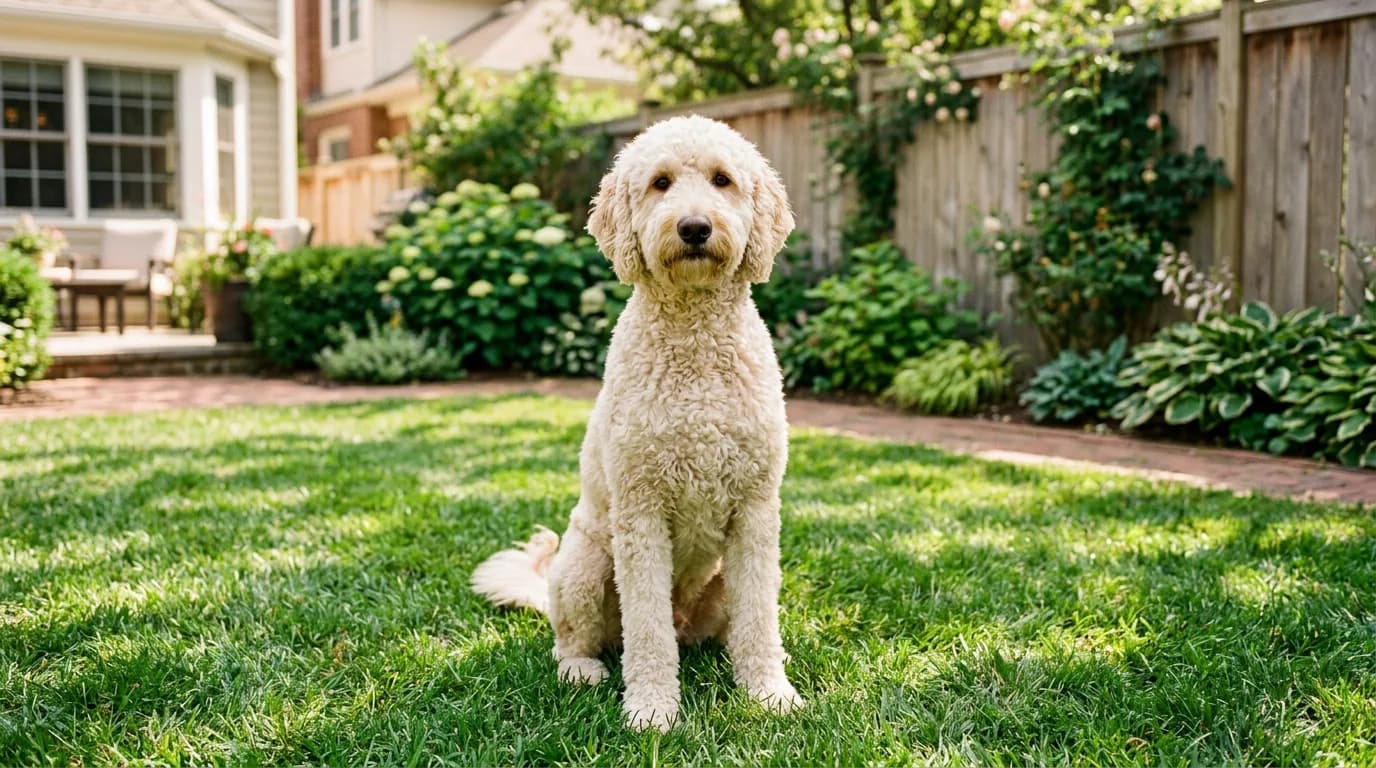
The goldendoodle temperament is the single biggest reason this crossbreed has become one of the most popular family and service dogs in North America. Bred from the Golden Retriever and the Poodle, goldendoodles inherit an easygoing, people-first personality from one parent and quick intelligence from the other. The result is a dog that tends to be friendly, eager to please, playful with kids, and genuinely happiest when it is glued to its humans. That devotion is a gift and a caution at the same time: the same dog that makes a flawless therapy visitor can also struggle with being left alone. This guide walks through every side of the goldendoodle personality, the traits that show up in most dogs, the ones that vary by generation and size, and the honest downsides worth knowing before you commit.
- 1Goldendoodles are friendly, highly trainable, and deeply bonded to their people, which makes them excellent family and service dogs
- 2Their intelligence and energy demand daily mental and physical work, or boredom behaviors appear
- 3The most common temperament challenge is separation anxiety, because these dogs are bred to want constant human company

Sign up for expert-backed reviews and safety alerts all in one place.
What Shapes the Goldendoodle Temperament
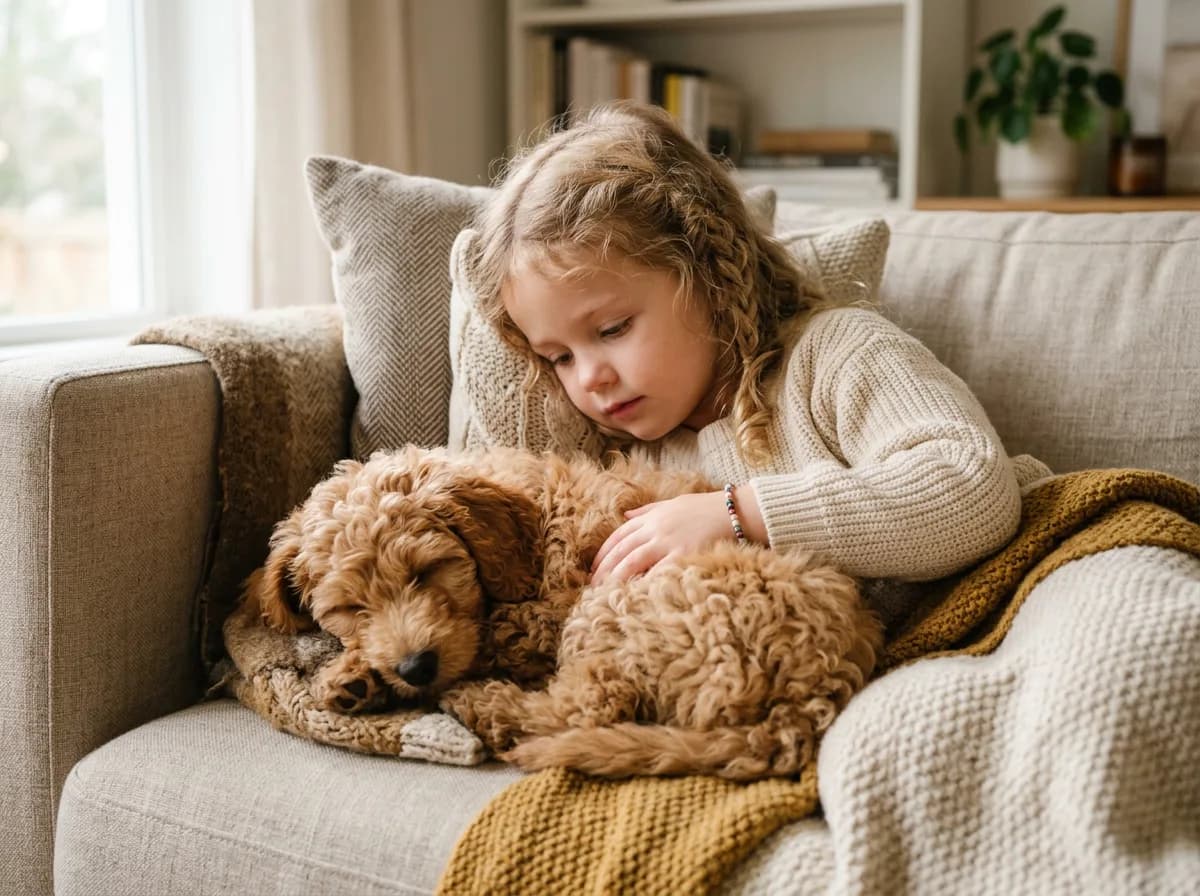
A goldendoodle is not a purebred with a fixed standard. It is a cross, so its personality is a blend of two well-documented parent breeds, plus the individual luck of the genetic draw. Understanding the parents tells you most of what you need to know about what to expect.
The Golden Retriever contributes the soft, sociable, endlessly patient side. Goldens were developed to work closely with people, retrieve gently, and tolerate noise, chaos, and small hands. The American Kennel Club (akc.org) consistently ranks the Golden among the top breeds for family suitability because of that gentle, biddable nature.
The Poodle contributes brains, athleticism, and a low-shedding coat. Standard Poodles are among the most trainable dogs in the world, with a sharp working intelligence that shows up as fast learning and, when under-stimulated, as clever mischief. Poodles also tend to be a touch more sensitive and alert than Goldens, which is why some goldendoodles are more velcro-like or more reactive to household tension than others.
When you combine the two, the typical goldendoodle lands in a sweet spot: warmer and goofier than a Poodle, sharper and more athletic than a Golden. But because it is a cross, not every dog lands in the middle. Some lean Golden (mellower, more food-motivated, a little less independent), some lean Poodle (busier, more sensitive, more prone to boredom). Knowing which way your dog leans matters more than any breed-average description.
Generation and coat both influence personality
The "generation" label on a goldendoodle (F1, F1B, F2, multigen) describes how far back the Poodle and Golden crosses go. It is usually discussed in terms of coat and shedding, but it also nudges temperament, because it changes how much Poodle is in the mix.
| Generation | Parent Cross | Coat and Shedding | Temperament Notes |
|---|---|---|---|
| F1 | Golden Retriever x Poodle | Wavy, low to moderate shedding | Balanced and outgoing, benefits from hybrid vigor |
| F1B | F1 Goldendoodle x Poodle | Curlier, lowest shedding | Slightly more sensitive and poodle-leaning, very trainable |
| F2 | F1 x F1 | Variable coat | Least predictable coat and personality of the group |
| Multigen | Multigen x Poodle or Doodle | Consistent, low shedding | Reliable and even, often chosen for allergy homes and service work |
None of these labels guarantee a personality. A well-socialized F1 raised with structure will be steadier than a poorly socialized multigen. Generation is a probability nudge, not a promise. For a full breakdown of how the crosses map to adult body types, see our companion guide on goldendoodle sizes.

Petful may earn a commission when you click through to Chewy, at no extra cost to you.
Core Goldendoodle Personality Traits
Across the vast majority of goldendoodles, a handful of traits show up again and again. These are the ones that define daily life with the breed.
Friendly and people-oriented
If there is one word owners use most, it is "friendly." Goldendoodles are typically warm with strangers, gentle with children, and quick to make friends at the dog park. They are not natural guard dogs. Most will greet an intruder with a wagging tail and a toy. That sociability is exactly what makes them poor watchdogs and wonderful companions. They want to be part of everything: the school run, the couch, the kitchen while you cook, the bathroom while you shower. This is a breed that follows you room to room.
Intelligent and quick to learn
Thanks to the Poodle side, goldendoodles are genuinely smart. They pick up basic obedience fast, learn household routines within weeks, and can master advanced tricks and tasks that many breeds never touch. That intelligence is a double-edged sword. A bored, under-worked goldendoodle will invent its own entertainment, and it is smart enough to open trash cans, unlatch crates, counter-surf, and learn that barking gets attention. Mental stimulation is not optional with this breed. It is a daily requirement on par with the walk.
Playful and enthusiastic
Goldendoodles hold onto their puppy playfulness well into adulthood, often to age three or beyond. They love fetch, tug, water, puzzle toys, and roughhousing. That exuberance is joyful, but it can also mean jumping, mouthing, and knocking over toddlers if the dog has not been taught manners. The good news is that the same enthusiasm makes training fun, because these dogs treat learning as a game.
Sensitive and emotionally attuned
Goldendoodles read human emotion well. They notice when you are sad, tense, or excited, and they respond. This sensitivity is part of why they excel as therapy and emotional-support dogs. It also means harsh training methods backfire badly. Yelling or heavy corrections can make a goldendoodle shut down or grow anxious. They thrive on positive reinforcement, praise, and clear, consistent rules delivered kindly.
Gentle and low in aggression
For all their size and energy, goldendoodles are among the least aggressive companion dogs you will meet. Both parent breeds were selected for soft mouths and cooperative dispositions, so guarding, resource aggression, and dog-directed hostility are uncommon and usually point to poor breeding or a lack of socialization rather than a breed trait. This gentleness is precisely why hospitals, schools, and reading programs welcome goldendoodle therapy teams. It is also why the breed forgives the chaos of a busy household. A confident, well-raised goldendoodle tends to defuse tension rather than escalate it, choosing to walk away from conflict with other dogs and to tolerate the pokes and tail-pulls of small children with remarkable patience.
Adaptable to many kinds of homes
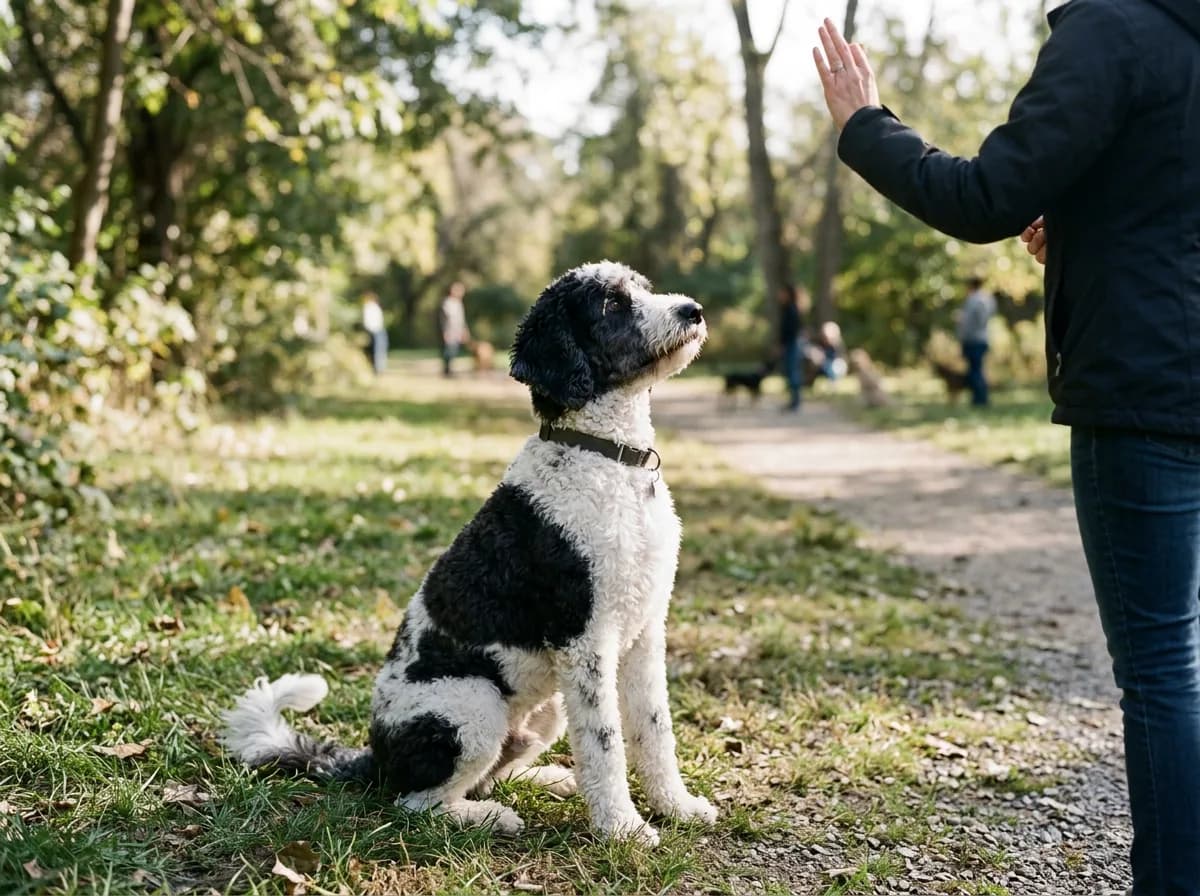
Within the limits of their exercise and companionship needs, goldendoodles are flexible. They do well in houses with yards and in apartments with committed walkers, in single-person homes and in big families, in quiet households and loud ones. The smaller sizes suit tighter spaces, while standards want more room to move. What they cannot adapt to is neglect of their core needs: skip the exercise, the training, or the company, and no living situation will make the dog happy. Meet those needs and the goldendoodle slots into a surprising range of lifestyles.
- Because goldendoodles feed off your energy, greet them calmly and reward settled behavior instead of amping them up at the door. A dog that is rewarded for four-on-the-floor and a quiet mouth learns that calm, not chaos, is what earns your attention.
Are Goldendoodles Good With Kids and Other Pets?
Yes, and this is one of the breed's strongest selling points. The Golden Retriever heritage makes most goldendoodles patient, tolerant, and gentle with children. They tend to accept the noise, unpredictability, and clumsy handling that come with young kids far better than more sensitive or territorial breeds. Many families choose the goldendoodle specifically because it can be a soft landing for a first family dog.
That said, "good with kids" is never automatic. A few ground rules keep it safe and positive:
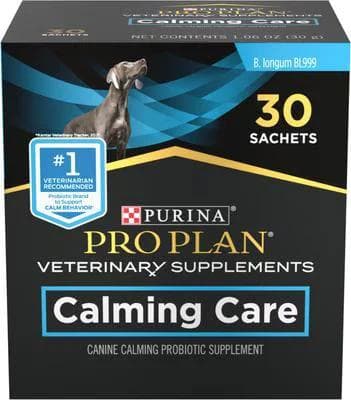
A vet-recommended probiotic supplement that helps dogs manage anxious behaviors and stay calm during stressful events like fireworks.
Petful may earn a commission when you click through to Chewy, at no extra cost to you.
- Supervise all interactions between dogs and toddlers, no matter how gentle the dog.
- Teach children to respect the dog's space during meals and sleep.
- Channel the goldendoodle's jumping and mouthing early, because an 60-pound standard that jumps in greeting can flatten a small child by accident, not aggression.
- Give the dog a quiet retreat (a crate or bed) where kids are taught not to follow.
With other pets, goldendoodles are usually excellent. Their low prey drive and social nature mean they generally coexist happily with other dogs and often with cats, especially when raised together. Early, positive introductions and proper socialization during the first four months set the tone. A goldendoodle that meets many friendly dogs, cats, and people as a puppy grows into a confident, easygoing adult.
Trainability: One of the Breed's Superpowers
Goldendoodles are among the easier dogs to train, which is a big part of why they dominate the service and therapy world. They combine the Golden's desire to please with the Poodle's problem-solving speed. For a first-time owner, that means basic commands, house-training, and crate-training tend to come together relatively quickly compared with more independent or stubborn breeds.
A few things make training click with this breed:
- Use positive reinforcement. Treats, praise, and play get far more out of a goldendoodle than corrections. They are sensitive dogs that learn best when learning feels good.
- Keep sessions short and frequent. Five to ten minutes several times a day beats one long, dull session. Their attention is sharp but their patience for repetition is not.
- Start early and stay consistent. Puppy classes and early manners training prevent the jumping and mouthing habits that are much harder to undo later.
- Add a job. Scent games, trick training, agility, and food puzzles satisfy the working intelligence and prevent boredom behaviors.
Because they are so trainable, goldendoodles frequently work as guide dogs, mobility-assistance dogs, diabetic-alert dogs, and therapy visitors in hospitals and schools. The crossbreed was originally popularized in the late 1980s specifically as a low-shedding guide-dog candidate for people with allergies, and that service pedigree still shows in the breed's temperament today.
Energy Levels and Exercise Needs
Do not let the teddy-bear looks fool you. Goldendoodles are active, athletic dogs with real exercise requirements. Both parent breeds were bred to work, and that drive carries through. A goldendoodle that does not get enough physical and mental output will find an outlet you did not choose: chewing, digging, barking, or bouncing off the walls.
Energy does vary by size and generation. Smaller goldendoodles are often bouncier and more frenetic, while larger standards tend to settle into a steadier adult rhythm, though every standard still needs a solid daily workout.
| Size | Typical Height | Typical Weight | Energy Level |
|---|---|---|---|
| Petite or Toy | Under 14 in | 10-25 lb | High and bouncy |
| Miniature | 14-17 in | 26-35 lb | High |
| Medium | 17-21 in | 36-50 lb | Moderate to high |
| Standard | 21-24 in | 51-90 lb | Moderate, steadier as an adult |
As a rule of thumb, plan on 60 minutes or more of activity a day for an adult goldendoodle, split between physical exercise (walks, fetch, swimming, hikes) and mental work (training, scent games, puzzle feeders). Puppies need less sustained exercise to protect growing joints but more frequent short bursts and socialization outings. Match the workload to the individual dog, and remember that a tired goldendoodle is a well-behaved goldendoodle.
How Goldendoodle Temperament Changes With Age
Temperament is not static. A goldendoodle's personality shifts noticeably as it matures, and knowing the arc helps you set fair expectations at every stage instead of panicking when the dog in front of you does not match the breed-average description.
Puppy (8 weeks to 6 months)
Goldendoodle puppies are curious, mouthy, and busy soaking up the world. This is the critical socialization window, when exposure to new people, dogs, sounds, and surfaces shapes the adult dog more than anything else you will ever do. Expect nipping, boundless energy in short bursts, and a short attention span. It is also the easiest time to build good habits, so front-load training, gentle handling, and crate work now while the slate is clean.

Petful may earn a commission when you click through to Chewy, at no extra cost to you.
Adolescent (6 to 18 months)
This is the hardest stage for many owners. The sweet puppy hits a teenage phase marked by testing boundaries, selective hearing, and a spike in energy and impulsiveness. Manners that seemed locked in appear to evaporate overnight. Consistency, patience, and continued training carry you through it. A large share of goldendoodle surrenders to rescues happen right here, from owners who were not ready for the adolescent surge. It does pass, and the dog on the other side is worth it.
Adult (18 months to 7 years)
The goldendoodle you were promised finally arrives. Adults are settled, affectionate, and reliable, at their best as family companions and working dogs. Energy is still real but far more manageable, and all that early training pays off in a dog that is genuinely a pleasure to live with. This is the breed's long, rewarding prime.
Senior (7 years and older)
Older goldendoodles mellow further, sleep more, and lean harder into companionship. They stay devoted and gentle to the end. Watch for age-related changes such as reduced hearing or vision, joint stiffness, and slower recovery, and adjust exercise to keep them comfortable while protecting the closeness they treasure.
- If your once-perfect puppy turns into a defiant teenager around eight or nine months, you did nothing wrong. It is a normal developmental stage every goldendoodle passes through. Keep training gently and consistently, and the steady adult on the other side is worth the patience.
Goldendoodles as Service and Therapy Dogs
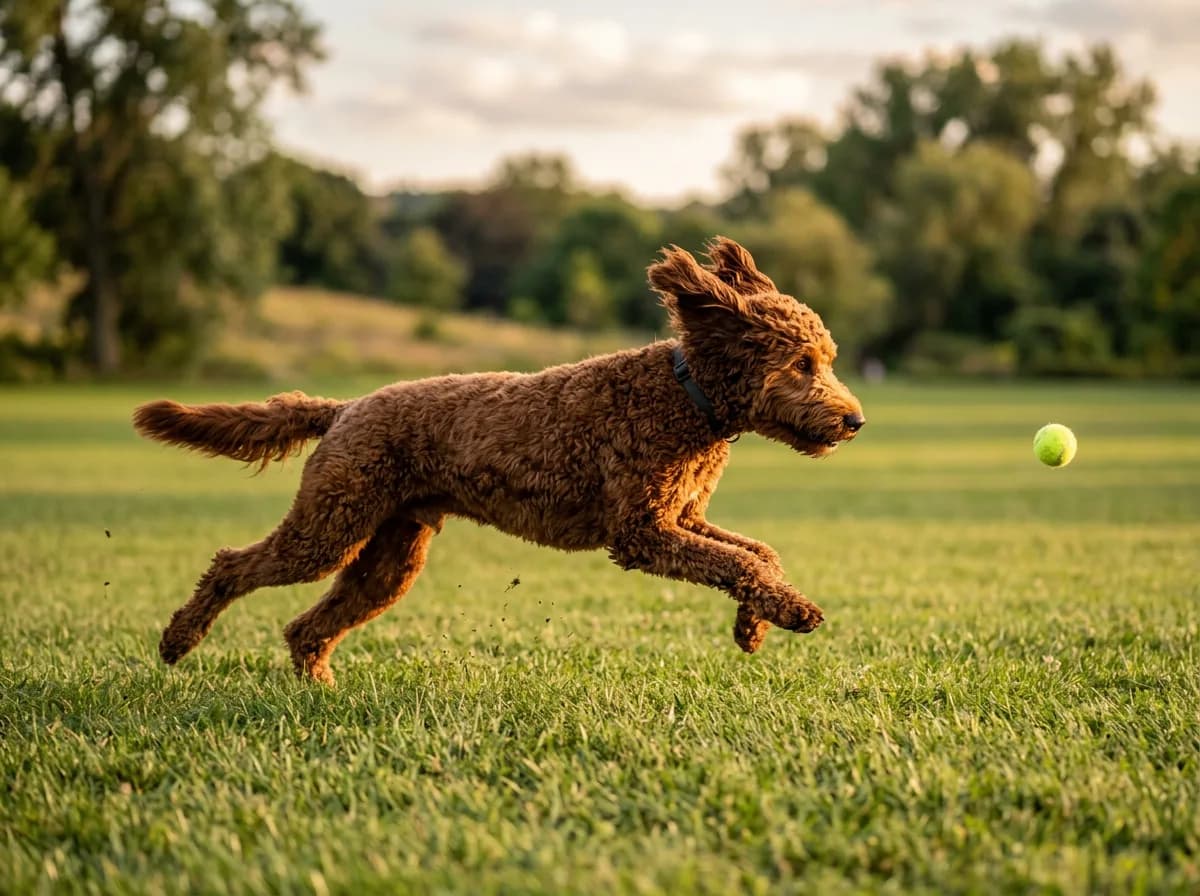
The goldendoodle's temperament reads like a job description for assistance work. They are calm under pressure once mature, tolerant of handling, highly trainable, motivated by human connection, and low-shedding enough to suit handlers and facilities with allergy concerns. You will find goldendoodles guiding people with low vision, alerting to medical events, providing mobility support, and making rounds as registered therapy dogs in hospitals, hospices, and classrooms.
What makes them so suited to it is the combination of biddability and emotional sensitivity. A good service dog has to want to work with a person, read that person closely, and stay unflappable in busy environments. Well-bred, well-socialized goldendoodles check those boxes more reliably than most crossbreeds. It is worth stressing "well-bred and well-socialized," because a poorly bred, under-socialized doodle can be anxious or reactive, which disqualifies it from that kind of work. Temperament for service is roughly half genetics and half careful raising.
Separation Anxiety: The Flip Side of All That Devotion
Here is the trait that surprises new owners most. The very thing that makes goldendoodles so lovable, their intense bond with their people, is also their biggest behavioral risk. Goldendoodles are prone to separation anxiety. They are bred to want constant human company, so being left alone for long stretches can genuinely distress them.
Signs of separation anxiety include:
- Excessive barking, whining, or howling when left alone
- Destructive chewing or scratching, often near doors and windows
- House-training accidents in an otherwise reliable dog
- Pacing, drooling, or refusing to eat when the owner is gone
- Frantic, over-the-top greetings that never seem to settle
This is not the dog being spiteful. It is real anxiety, and it responds to management and training, not punishment. Board-certified veterinary behaviorists, including those at veterinary teaching hospitals such as Cornell (vet.cornell.edu), recommend building alone-time tolerance gradually from puppyhood: short absences that slowly lengthen, a positive association with a crate or safe space, food puzzles that make solo time rewarding, and avoiding dramatic departures and reunions. In stubborn cases, a behaviorist and, occasionally, medication can help.
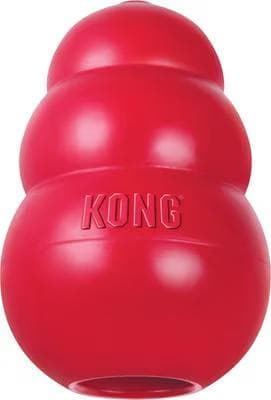
A durable rubber dog toy that can be stuffed with treats and selected by the manufacturer's size guide; supervise use and retire it when damaged.
Petful may earn a commission when you click through to Chewy, at no extra cost to you.
- This breed is a poor fit for a household where everyone is out ten hours a day with no plan. If long absences are unavoidable, arrange a midday walker, doggy daycare, or a companion, and train independence deliberately from day one. Ignoring this trait is the single most common way goldendoodle ownership goes wrong.
What Is the Downside of a Goldendoodle?
The main downsides of a goldendoodle are the flip sides of its best traits, plus the practical costs of the coat. First, the devotion that makes them so affectionate also makes them prone to separation anxiety, so they do poorly when left alone for long hours. Second, their intelligence and energy mean they get bored and destructive without daily physical and mental work. Third, the low-shedding coat that draws so many buyers is high-maintenance: it mats fast and needs brushing several times a week plus professional grooming every six to eight weeks. Fourth, because they are a crossbreed with unpredictable genetics, personality and coat can vary widely between individuals, even within one litter. And fifth, high demand has drawn irresponsible breeders, so health and temperament problems slip through when buyers do not vet the breeding carefully.
None of these are dealbreakers for a prepared owner. They are simply the reality behind the teddy-bear marketing.
Do Goldendoodles Have Behavioral Issues?
Goldendoodles are not an inherently problem-prone breed, but they do have predictable behavior risks when their needs are not met. The most common issues are separation anxiety, hyperactivity, jumping, mouthing, and nuisance barking. Almost all of these trace back to two causes: too little exercise or mental stimulation, and too little early training and socialization. A goldendoodle that gets a real job, daily activity, and consistent, kind training rarely develops serious behavior problems.
True aggression is uncommon in the breed and is usually a red flag for poor breeding, pain, fear, or a lack of socialization rather than a breed trait. If a goldendoodle shows aggression, the right response is a veterinary exam to rule out pain followed by work with a qualified behaviorist. For the everyday nuisance behaviors, prevention is far easier than correction: start manners training young, reward calm, and never let a cute puppy habit (jumping up, nipping hands) become an adult one.
Which Is the Calmest Doodle Breed?
Among the popular doodles, the cavapoo and the calmer lines of larger goldendoodles are often cited as the most laid-back, while the goldendoodle itself sits in the moderate-to-active range rather than the calm end. Within goldendoodles, adult standard-size dogs from mellow, Golden-leaning lines tend to be the calmest, and they usually settle noticeably as they mature past their third year. Smaller goldendoodles and puppies of any size are typically busier and more excitable.
If a low-key temperament is your top priority, focus less on the label and more on the individual: meet the parents, ask the breeder to point you toward the calmest puppy in the litter, and consider an adult rather than a puppy so you can see the settled personality directly. A closely related cross worth comparing is the cavapoo, which is often smaller and gentler in energy. The calmest dog in any doodle group is the one whose parents are calm and whose owner meets its exercise and enrichment needs, because an under-exercised dog of any breed will read as hyper.
Is a Goldendoodle a High-Maintenance Dog?
In terms of care, yes, a goldendoodle is a fairly high-maintenance dog, mostly because of the coat and the exercise and companionship needs. The famous low-shedding coat does not clean itself. It needs brushing several times a week to prevent painful mats, professional grooming every six to eight weeks, and regular ear cleaning because the hairy, floppy ears trap moisture and are prone to infection. On top of grooming, the dog needs an hour or more of daily activity, ongoing mental enrichment, and company for most of the day.
To put the ongoing commitment in perspective, here is what the coat and enrichment side of ownership realistically demands:
- Brushing: three to five times a week, more during coat changes, to stay ahead of matting.
- Professional grooming: every 6 to 8 weeks, at a recurring cost most owners underestimate.
- Ear care: regular checks and cleaning to prevent moisture-related infections.
- Exercise: 60 minutes or more of physical activity daily for a healthy adult.
- Enrichment: daily training, puzzle feeders, or scent work to occupy the working brain.
- Companionship: company for most of the day, or a concrete plan to manage alone time.
Where goldendoodles are low-maintenance is temperament and trainability: they are eager, forgiving learners who want to do the right thing. So the honest answer is that they are easy to live with emotionally and demanding to keep up with physically and in grooming. For a deeper look at the coat and what "hypoallergenic" really means, read our guide on whether goldendoodles shed.
Why Do People Say Not to Get a Goldendoodle?
People warn against goldendoodles for a few honest reasons, and every one is worth weighing. The loudest reason is the separation anxiety and the need for near-constant company, which makes the breed a bad match for people who work long hours away from home. The second is the grooming: buyers lured by "low-shedding" are often blindsided by the brushing schedule and the recurring grooming bill. The third is unpredictability, since a crossbreed's coat, size, and personality can vary a lot, so you do not always get what the photos promised. The fourth, and arguably the most important, is the breeding market. Goldendoodle popularity has attracted volume breeders and puppy mills that skip health testing and early socialization, producing dogs with health issues or anxious, poorly adjusted temperaments.
The takeaway is not that goldendoodles are bad dogs. It is that they are frequently sold on a fantasy (a low-effort, non-shedding, always-happy teddy bear) that does not match the real dog. The real dog is a smart, active, deeply attached animal that needs grooming, training, exercise, and company. Buyers who understand that and choose a responsible breeder who health-tests the parents (hip, elbow, eye, and cardiac clearances documented through the Orthopedic Foundation for Animals at ofa.org) tend to be thrilled. Buyers who expected a low-maintenance ornament are the ones who end up warning others off.
Bringing It Together
The goldendoodle temperament is, at its core, a friendly, brilliant, affectionate personality wrapped around a real working dog's needs. These are companions that want to be with you, learn from you, and work alongside you, which is exactly why they shine as family pets and service dogs. The trade-off is that they cannot be treated as low-effort. Give a goldendoodle daily exercise, steady mental work, early training and socialization, a plan for alone time, and consistent grooming, and you get one of the most rewarding dogs you can own. Skip those, and the same intelligence and devotion turn into anxiety and mischief. Understand the breed honestly, choose a responsible breeder, and the goldendoodle will very likely live up to its reputation.
Frequently Asked Questions
Male vs. Female Goldendoodle Temperament
One of the most common questions before choosing a puppy is whether males or females make better-tempered pets. The honest answer is that the differences are subtle and heavily outweighed by the individual dog, the quality of the breeding, and whether the dog is spayed or neutered. Sex tendencies are a faint nudge, not a rule.
That said, breeders and long-time owners do report some soft patterns worth knowing.
| Trait | Males Often Lean | Females Often Lean |
|---|---|---|
| Affection | Overtly goofy and cuddly, in your lap | Affectionate but slightly more independent |
| Maturity | Stay puppyish and silly a bit longer | Settle and mature a touch earlier |
| Focus in training | Eager but more easily distracted | Sometimes more focused and businesslike |
| Same-sex dogs | Intact male pairs can compete | Intact female pairs can clash too |
Two points matter more than sex. First, spaying or neutering softens most hormone-driven behaviors, so a fixed male and a fixed female of the same line often behave more alike than two intact dogs. Second, if you already have a dog at home, an opposite-sex pairing tends to reduce friction more reliably than matching two of the same sex. Meet the actual puppy, watch how it interacts, and let personality decide over sex.
Everyday Goldendoodle Quirks Owners Notice
Beyond the big-picture traits, goldendoodles come with a set of endearing, harmless habits that surprise first-time owners. None of these are problems to fix. They are just the breed being itself.
- The zoomies. Sudden bursts of frantic, joyful running (formally called FRAPs) are classic goldendoodle, especially in the evening or right after a bath.
- Water obsession. The retriever heritage shows up as a love of splashing water bowls, digging in kiddie pools, and diving into any lake or sprinkler within reach.
- The doodle "smile." Many pull their lips back into a submissive grin when greeting people, a happy appeasement gesture that is easy to mistake for a snarl.
- Talking and grumbling. Groans, sighs, and low chatty grumbles are common, particularly when they want attention or are settling into a comfy spot.
- Leaning. A goldendoodle that presses its full body weight against your legs is asking for contact and reassurance, not being pushy.
- Nesting. Burrowing under blankets and gathering toys into a chosen pile are normal comfort behaviors, not signs of anxiety on their own.
- Knowing what is normal for your individual goldendoodle makes it far easier to spot when something is genuinely off. A dog that suddenly stops the happy grumbling, quits nesting, or loses interest in water may be telling you it feels unwell.
How to Read Temperament in a Goldendoodle Puppy
Because a goldendoodle is a cross, you cannot rely on a breed standard to predict personality. You have to read the individual puppy. A short, low-pressure evaluation at the breeder tells you more than any pedigree.
Look for a puppy that:
- Approaches you with curiosity rather than freezing or bolting.
- Recovers quickly after a startling sound, shaking it off within seconds instead of staying panicked.
- Tolerates gentle handling, including being cradled briefly on its back and having its paws and ears touched.
- Follows you a few steps and re-engages after a little play.
Treat two extremes as cautions: a puppy that shuts down, cowers, and cannot recover, and a puppy that is so frantically over-aroused it cannot settle at all. Ask the breeder what early socialization program they follow (structured protocols like early neurological stimulation and deliberate exposure work make a measurable difference), and always meet the mother, since puppies learn a great deal of their emotional style from her. If you want the surest read of settled adult temperament, consider adopting a young adult rather than a puppy so the personality is already visible.
Do Mini and Standard Goldendoodles Have the Same Temperament?
Answer first: the core Goldendoodle personality (friendly, people-focused, eager to please) holds across every size, but the Poodle side shifts the details. Mini and toy Goldendoodles pull from a Miniature or Toy Poodle parent, which tends to add more alertness, quicker reactivity, and a stronger "velcro" streak. Standard Goldendoodles, bred from a Standard Poodle, more often read as steady and unflappable once mature.
What that looks like day to day:
- Minis (roughly 15–35 lb) can be bouncier per pound and a touch more vocal, and some are more prone to nuisance barking at doorbells or passersby if they are not socialized early.
- Mediums (about 35–50 lb) usually land in the middle: lively but easier to settle.
- Standards (about 50–90 lb) tend to be the calmest and most tolerant of household chaos, though they still want company and a job.
Size does not decide affection or trainability. It mainly nudges energy expression, sensitivity, and how much a dog leans on you. Early socialization and a consistent routine matter far more than pounds.
- A well-socialized mini can be calmer than a poorly-exercised standard. Judge the individual puppy and its parents, not just the size label on the listing.
Goldendoodle vs. Labradoodle Temperament
Answer first: both are affectionate Poodle crosses, but the retriever parent tips the scales. Goldendoodles, from a Golden Retriever, tend to be gentler, softer, and more consistently eager to please, which makes them a little more forgiving for first-time owners. Labradoodles, from a Labrador, often run more energetic, bold, and independent, with a stronger working drive.
Where they usually differ:
- Sensitivity: Goldendoodles are more emotionally sensitive and can wilt under harsh corrections. Labradoodles are typically more resilient and less rattled by a firm tone.
- Energy: Labradoodles often bring more raw drive and stamina, while Goldendoodles are enthusiastic but usually easier to tire out and settle.
- Focus: Goldendoodles lean hard into people-pleasing. Labradoodles can be more distractible and food-motivated, which is actually handy for treat-based training.
Both are highly trainable, deeply social, and poorly suited to being left alone for long stretches. If you want a companion that mirrors your mood and shadows you room to room, the Goldendoodle edge is real. If you want an active partner for hiking and dog sports, a Labradoodle often has more engine. Breeding line and generation still outweigh the breed label.
Goldendoodle vs. Bernedoodle Temperament
Answer first: Goldendoodles are the more outgoing and uniformly social of the two, while Bernedoodles trade some of that eagerness for a calmer, more reserved nature. Bernedoodles inherit the Bernese Mountain Dog's laid-back, deeply loyal streak, and they often bond hardest to one person rather than greeting the whole world.
Key differences owners notice:
- Sociability: Goldendoodles tend to love everyone on sight. Bernedoodles can be politely aloof with strangers, especially as puppies, then warm up over time.
- Stubbornness: Bernedoodle puppies often show an early stubborn phase that takes patience, whereas Goldendoodles are usually easier to train right from the start.
- Energy: Goldendoodles generally carry a bit more day-to-day energy. Bernedoodles, once past puppyhood, are frequently the mellower couch companion.
Both are gentle, family-friendly, and sensitive to their owner's tone, so neither responds well to heavy-handed correction. A Bernedoodle can be the better fit for a quieter home that wants a steady shadow, while a Goldendoodle suits a busy, social household that wants a dog to match its extroversion. As always, the parents' temperaments and early socialization predict more than the cross itself.
The main downsides are separation anxiety from being so people-bonded, boredom-driven destructiveness without enough exercise and mental work, a high-maintenance coat that mats and needs frequent grooming, unpredictable coat and personality because it is a crossbreed, and a crowded breeding market where irresponsible breeders produce dogs with health or temperament problems.
They are not inherently problem-prone, but they can develop separation anxiety, hyperactivity, jumping, mouthing, and nuisance barking when under-exercised or under-trained. Daily activity, mental enrichment, and early consistent training prevent nearly all of it. True aggression is uncommon and usually signals poor breeding, pain, or fear rather than a breed trait.
Among popular doodles, the cavapoo and calmer, Golden-leaning lines of standard goldendoodles are often the most laid-back, while goldendoodles overall sit in the moderate-to-active range. Adult dogs settle more than puppies, so meeting the parents and choosing a mellow individual matters more than the label.
In care, yes. The low-shedding coat needs brushing several times a week, professional grooming every 6 to 8 weeks, and regular ear cleaning, and the dog needs an hour or more of daily exercise plus company for most of the day. In temperament they are easy, because they are eager, forgiving learners.
Because the breed is often sold as a low-effort, non-shedding teddy bear when the real dog needs grooming, training, exercise, and near-constant company. The most common warnings are about separation anxiety, surprise grooming demands, unpredictable crossbreed traits, and the many irresponsible breeders cashing in on the breed's popularity.

Coreen Saito is a pet writer and longtime shelter volunteer with more than a decade in animal rescue. She covers cat behavior, breed care, and the small, ordinary science of sharing a life with companion animals, with a particular focus on honest takes about the products and decisions that actually matter. At home in Arizona, she's outranked by Mac (a dog with the loudest opinion in the house), Rebel (a cat who governs by quiet authority), and Meri (an orange tabby who runs the late shift and the laundry basket). She writes about all three, plus the rescues that keep coming through her life, at LifeWithMinty.com.
Sign up for expert-backed reviews and safety alerts all in one place.