Do Goldendoodles Shed? Coat Types and Allergy Facts
Do Goldendoodles shed? Most shed very little, but it depends on coat type and generation. Learn which Goldendoodles shed least, whether they're truly hypoallergenic, and how to manage shedding and allergies at home.
Petful is reader supported. As an affiliate of platforms like Amazon and Chewy, we may earn a commission when you buy through links on this page. There is no extra cost to you.
Do Goldendoodles shed? Yes, they do, but usually far less than a Golden Retriever and rarely enough to blanket your furniture in fur. How much a Goldendoodle sheds comes down to two things: the texture of its coat and how much Poodle is in its genetics. Some Goldendoodles drop almost no visible hair, while others leave a light dusting that surprises new owners who were promised a "non-shedding" dog. This guide breaks down exactly what to expect by coat type and generation, whether these dogs are truly hypoallergenic, and how to keep shedding and allergens under control at home.

Sign up for expert-backed reviews and safety alerts all in one place.
Do Goldendoodles Shed? The Honest Answer
Every dog with hair sheds to some degree, and the Goldendoodle is no exception. What makes the breed appealing is that most Goldendoodles shed at a low level, meaning loose hairs tend to stay trapped in the coat rather than falling onto your floors and clothes. That trapped hair is the trade-off: it has to be brushed out regularly or it mats.
The reason for the low shedding is the Poodle side of the family. Poodles have a continuously growing, single-layer coat that releases very little hair. Golden Retrievers, by contrast, have a dense double coat that sheds heavily twice a year and steadily in between. A Goldendoodle inherits a blend of both, so the outcome sits on a spectrum. A curly, Poodle-dominant Goldendoodle can be nearly non-shedding, while a straighter, Retriever-leaning one sheds noticeably more.
The honest takeaway: no Goldendoodle is guaranteed to be zero-shed. Reputable breeders and the American Kennel Club both note that coat outcomes in mixed and designer breeds are variable, especially in early generations. If a breeder promises a completely shed-free puppy, treat that as a red flag rather than a guarantee.

Petful may earn a commission when you click through to Chewy, at no extra cost to you.
How Coat Type Affects Goldendoodle Shedding
Goldendoodle coats fall into three broad categories, and coat type is the single biggest predictor of how much your dog will shed.
Curly (wool) coat
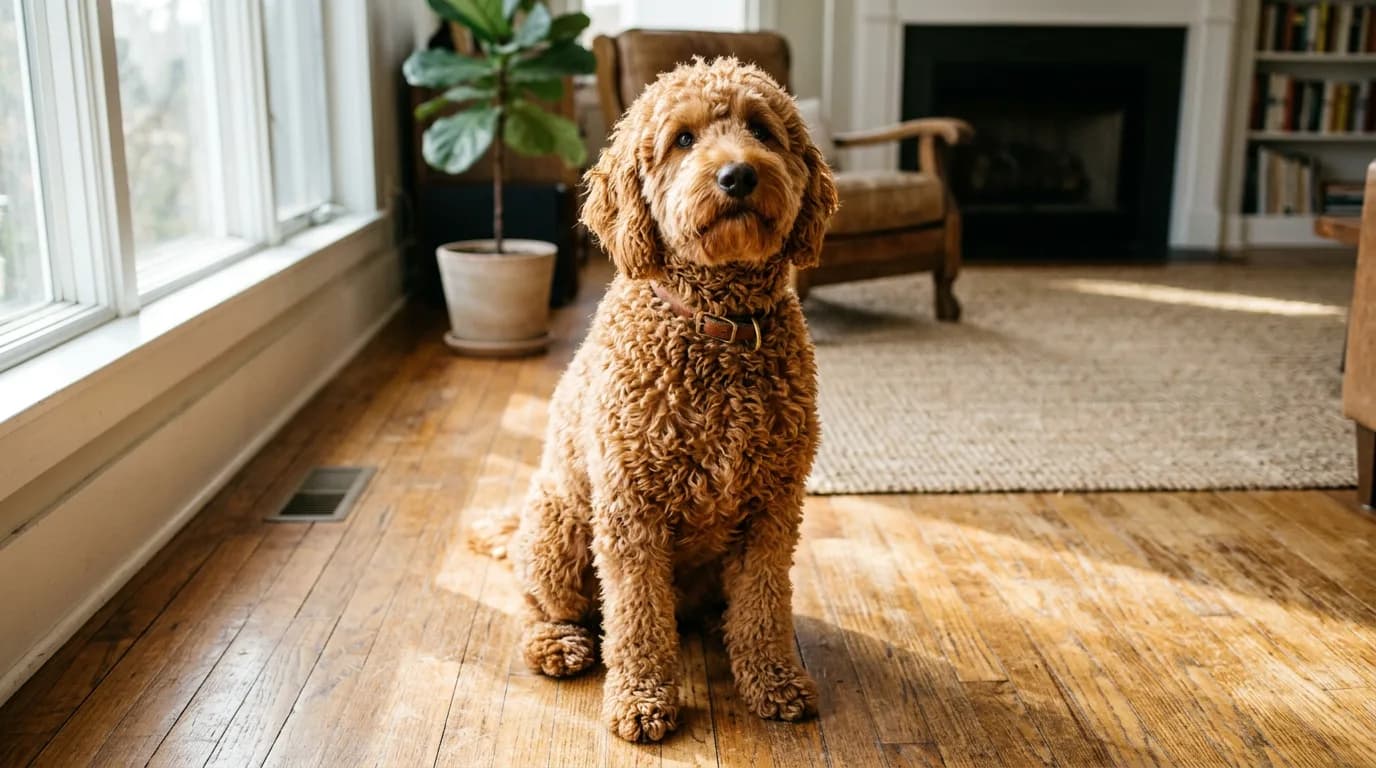
The curly or wool coat is the most Poodle-like: tight ringlets that hold loose hair tightly against the body. This is the lowest-shedding coat type and the best bet for allergy-sensitive households. The trade-off is intensive grooming, because those same curls that trap hair also trap dirt and mat quickly without frequent brushing.
Wavy (fleece) coat
The wavy or fleece coat is the classic "teddy bear" Goldendoodle look and the most common. It sheds very little, sits between the Poodle and Retriever textures, and is easier to maintain than a tight wool coat while still needing regular brushing.
Straight (flat) coat
The straight or flat coat, sometimes called a "hair" coat, leans toward the Golden Retriever side. These dogs shed the most of the three types, though still typically less than a purebred Retriever. Straight coats are the easiest to brush but the least suited to allergy sufferers.
| Coat Type | Texture | Typical Shedding | Grooming Need |
|---|---|---|---|
| Curly (wool) | Tight ringlets | Very low | High, brush 4 to 5 times weekly |
| Wavy (fleece) | Loose waves | Low | Moderate, brush 3 to 4 times weekly |
| Straight (flat) | Flat, hair-like | Low to moderate | Moderate, brush 2 to 3 times weekly |
How Generation Affects Shedding
Breeders label Goldendoodles by generation, and those labels tell you roughly how much Poodle genetics a puppy carries. More Poodle usually means less shedding, but also a less predictable coat until you reach the later, more stabilized generations.
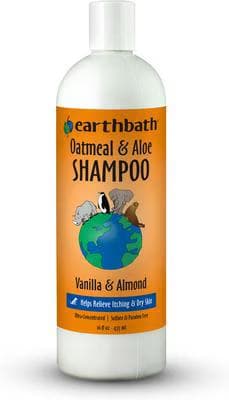
Petful may earn a commission when you click through to Chewy, at no extra cost to you.
- F1 is a first cross between a purebred Golden Retriever and a purebred Poodle, so the puppy is about 50 percent Poodle. F1 Goldendoodles are healthy and popular but have the widest range of coat outcomes, from wavy and low-shedding to straighter and moderate-shedding.
- F1B is an F1 Goldendoodle bred back to a Poodle, pushing the puppy to roughly 75 percent Poodle. This is the generation most often recommended for allergy sufferers because it reliably produces curlier, lower-shedding coats.
- F2 is two F1 Goldendoodles bred together. Coat results here are the least predictable, since Retriever traits can reappear.
- Multigen (F3 and beyond) comes from breeding two Goldendoodles across several generations, which lets breeders select for stable, consistently low-shedding coats.
| Generation | Approx. Poodle % | Coat Predictability | Shedding Tendency |
|---|---|---|---|
| F1 | 50% | Low | Low to moderate |
| F1B | 75% | Moderate | Lowest |
| F2 | 50% | Lowest | Variable |
| Multigen | 62 to 75%+ | High | Low |
For a deeper look at how these generations also affect adult body size and weight, see our guide to Goldendoodle sizes.
Goldendoodle Shedding vs. Its Parent Breeds
It helps to see where the Goldendoodle sits between the two breeds that created it, because that spectrum explains why owner experiences vary so much. On one end is the Golden Retriever, a heavy year-round shedder with a dense double coat that blows out seasonally and leaves visible hair on floors, clothing, and furniture. On the other end is the Poodle, whose curly, single-layer coat sheds so little that loose hair stays caught in the curls until it is brushed or combed out.
A Goldendoodle inherits a blend of these two coats, and where it lands depends on which parent's genetics dominate. A Poodle-leaning Goldendoodle behaves much like a Poodle: very low visible shedding, but a coat that mats if it is not maintained. A Retriever-leaning Goldendoodle behaves more like a Golden: easier to brush, but more loose hair around the house. Most Goldendoodles fall somewhere in the middle, shedding noticeably less than a Golden Retriever while still dropping more hair than a purebred Poodle. Understanding that range is the best defense against the disappointment of expecting a completely hair-free dog.
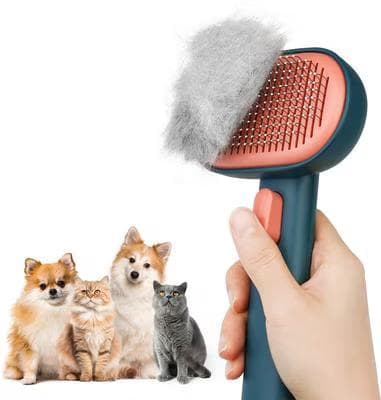
Petful may earn a commission when you click through to Chewy, at no extra cost to you.
Are Goldendoodles Hypoallergenic?
Goldendoodles are frequently marketed as hypoallergenic, but that word is misleading. The American Veterinary Medical Association is clear that no dog breed is truly hypoallergenic, because the allergens that trigger reactions are not hair. They are proteins found in a dog's dander (dead skin flakes), saliva, and urine. Every dog produces them.
What a low-shedding dog like a Goldendoodle does offer is less allergen spread. When a dog sheds less hair, less dander-carrying fur circulates through your home and settles on surfaces. A curly-coated, Poodle-heavy Goldendoodle can therefore be genuinely easier to live with for someone with mild to moderate dog allergies, even though it still produces allergens.
The key word is "can." Allergy responses are highly individual, and two Goldendoodles from the same litter can affect a sensitive person differently. Before committing, spend extended time with the specific dog, ideally across two separate visits, and watch how your body reacts. That real-world test tells you far more than a breeder's hypoallergenic label ever will.
Do Goldendoodles produce dander?
Yes. Every dog produces dander, the tiny flakes of dead skin that carry the proteins most people are actually allergic to. A Goldendoodle is no different, and its skin sheds these microscopic flakes whether the coat is curly or straight. What changes between breeds is not whether dander is produced, but how widely it travels. In a heavy-shedding dog, dander hitches a ride on the fur that falls throughout your home. In a low-shedding Goldendoodle, more of that dander stays trapped in the coat until grooming removes it, which means less allergen settling on your sofa and bedding.
That is why grooming is an allergy tool, not just a cosmetic one. Regular brushing, bathing, and professional trims physically remove dander-laden hair from the dog before it disperses. Owners who keep up a disciplined grooming routine often report noticeably milder symptoms than those who let the coat go, even with the same dog.
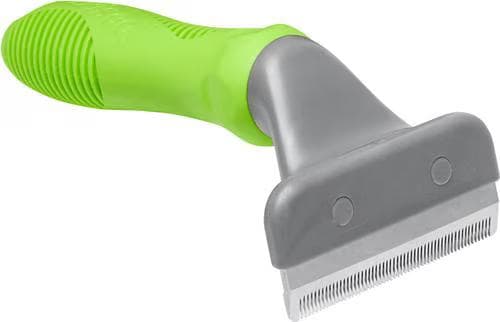
Petful may earn a commission when you click through to Chewy, at no extra cost to you.
- Spend at least an hour with the individual dog on two separate days before adopting. Personal reactions vary far more than breed marketing suggests, and a trial visit is the only reliable way to know if a specific Goldendoodle works for your household.
Which Goldendoodle Sheds the Least?
If minimal shedding is your top priority, the lowest-shedding Goldendoodle is a curly, wool-coated dog from a Poodle-dominant generation, specifically an F1B or a multigen. That combination stacks the two factors that reduce shedding: a tight curly coat that holds loose hair, and a genetic mix weighted toward the Poodle's single-layer, low-shed coat.
No Goldendoodle sheds literally nothing, so a truly shed-free dog does not exist. But an F1B curly Goldendoodle comes as close as the breed gets. If you are choosing a puppy sight-unseen, ask the breeder about the parents' coats and the litter's generation rather than relying on the puppy's fluffy appearance, which changes dramatically as the adult coat comes in.
Coat type and generation are the two biggest levers, but a few other factors nudge how much an individual Goldendoodle sheds:
- Sex and hormones play a minor role, and any dog will shed more heavily when stressed or unwell, which is worth mentioning to your veterinarian if shedding suddenly spikes.
- Skin and coat health matter: a dog on a poor diet or with an untreated skin condition sheds more than a healthy one, so shedding changes can be an early health signal.
- Grooming consistency does not change how much hair the coat releases, but it determines how much of that hair ends up on your floors versus caught in the brush.
For families weighing similar low-shedding designer crosses, the Cavapoo is a smaller Poodle mix worth comparing on shedding and grooming needs.
The Puppy Coat Change and Seasonal Shedding
One surprise for new owners is the coat transition. Goldendoodle puppies are born with a soft, fluffy coat that is replaced by the adult coat somewhere between 6 and 12 months of age. During this "coat blowout," matting can accelerate quickly and you may notice more loose hair than usual. This is temporary and normal, but it is the period when consistent brushing matters most.
Unlike double-coated breeds that "blow" their undercoat every spring and fall, most Goldendoodles do not have a dramatic seasonal shed. Because the Poodle influence reduces or eliminates the dense undercoat, shedding tends to stay relatively steady year-round rather than spiking with the seasons. Straight-coated, Retriever-leaning Goldendoodles are the exception and may show mild seasonal changes.
How to Manage Goldendoodle Shedding and Allergies
Managing a Goldendoodle's coat is less about fighting shedding and more about staying ahead of the loose hair the coat traps. A consistent routine keeps the coat healthy, cuts down on mats, and reduces the dander that aggravates allergies.
- 1Brush several times a week with a slicker brush and a metal comb, working down to the skin to prevent hidden mats
- 2Schedule professional grooming every 6 to 8 weeks to keep the coat manageable, especially for curly and wavy coats
- 3Bathe every 4 to 6 weeks with a gentle dog shampoo, since over-bathing dries the skin and can increase dander
- 4Run a HEPA air purifier and vacuum regularly to capture airborne dander and loose hair
- 5Feed a complete, balanced diet with adequate omega-3 fatty acids to support skin and coat health
The right tools make brushing far more effective. A slicker brush lifts and separates the coat, while a stainless-steel comb is the honest test: if the comb glides from skin to tip without catching, the coat is mat-free, and if it snags, there is a hidden tangle forming close to the skin. For heavier or straighter coats that shed a bit more, a de-shedding tool used gently can pull loose undercoat before it lands on your floors. Work in sections down to the skin rather than skimming the surface, since the mats that cause the most trouble start where you cannot see them.
Beyond the daily routine, a few habits make a real difference for allergy-prone households. Keep the dog out of bedrooms to protect the space where you spend the most hours. Wash the dog's bedding weekly, and wipe the coat with a damp cloth or grooming wipe after outdoor time to lift dander before it spreads. If anyone in the home has significant allergies or asthma, talk to an allergist before adopting, since immunotherapy and other treatments can meaningfully expand your options. For coat-specific care, our Goldendoodle grooming guide covers brushing tools and trimming schedules in detail.
What Is the Downside of a Goldendoodle?
The biggest downside of a Goldendoodle is that its low-shedding coat is high-maintenance. That trapped hair does not fall out on its own, so it mats against the skin without frequent brushing and professional grooming every six to eight weeks. Grooming costs add up quickly, and a neglected coat can become painfully matted, sometimes requiring a full shave-down.
Coat unpredictability is the second drawback. Especially in F1 and F2 generations, you cannot fully guarantee how much a puppy will shed until the adult coat comes in, which frustrates buyers who chose the breed specifically to avoid hair. Because Goldendoodles are a designer cross rather than a standardized breed, quality also varies widely between breeders. Poorly bred dogs can inherit health problems from both parent breeds, including hip dysplasia and certain eye conditions. The Orthopedic Foundation for Animals recommends that breeding dogs be screened for hip, elbow, and eye health, so always ask to see the parents' health-testing results.
Why Do Vets Say Not to Get a Doodle?
Some veterinarians caution against doodles for two main reasons, and neither is about the dogs being bad pets. First, the "hypoallergenic" marketing sets unrealistic expectations, leading allergy sufferers to adopt a dog they ultimately react to, which can end in rehoming. Second, the explosive popularity of doodle crosses has drawn in high-volume, low-standard breeders who skip the health screening that protects against inherited disease.
Vets also see the consequences of neglected coats firsthand: severely matted dogs arriving for grooming under sedation, and skin infections that develop underneath tight mats. The concern is rarely the Goldendoodle itself. It is that too many owners underestimate the grooming commitment and buy from breeders who do not test for health. Choosing a responsible breeder who screens the parents, and budgeting for professional grooming from day one, resolves most of what those vets worry about.
Do Mini and Toy Goldendoodles Shed?
Yes, mini and toy Goldendoodles shed, and at roughly the same rate as standard Goldendoodles, because size does not change the biology of the coat. Shedding is driven by coat type (curly, wavy, or straight) and generation (how much Poodle the dog carries), not by how big the dog is. What size does change is the total volume of loose hair. A smaller dog has less coat overall, so even a moderate-shedding mini leaves less hair on your floors and clothes than a standard Goldendoodle of the exact same coat type.
Many mini and toy Goldendoodles are bred using a Toy or Miniature Poodle, often in an F1B cross, which pushes Poodle genetics higher and tends to produce curlier, lower-shedding coats. That is one reason minis are so often marketed as low-shed. But the same rules still apply:
- A straight-coated mini sheds more than a curly-coated mini.
- No size is guaranteed to be shed-free.
- A toy Goldendoodle follows the identical pattern at an even smaller scale.
Judge an individual mini or toy by its coat texture and generation, not by its size label.
Do Goldendoodles Shed More Than Labradoodles or Bernedoodles?
In practice, Goldendoodles, Labradoodles, and Bernedoodles shed at very similar low levels, because all three are Poodle crosses and the Poodle side is what suppresses shedding in each one. The deciding factor across every doodle is the same lever that decides it within Goldendoodles: coat type and Poodle percentage, not which non-Poodle breed is in the mix.
- Labradoodle vs. Goldendoodle: A standard Labradoodle (Labrador crossed with Poodle) sheds about the same as a comparable Goldendoodle at the same coat type and generation. Australian Labradoodles, a more standardized multigen line, are often the lowest-shedding of this group because breeders have selected hard for consistent fleece and wool coats.
- Bernedoodle vs. Goldendoodle: The Bernese Mountain Dog parent is a heavy double-coated shedder, much like the Golden Retriever, so an F1 Bernedoodle can shed similarly to an F1 Goldendoodle. Higher-Poodle Bernedoodles, such as F1B, drop very little.
The bottom line: no doodle reliably out-sheds another by breed name alone. Compare the specific dog's coat and generation instead. A curly F1B of any of the three will shed less than a straight-coated F1 of any of the three.
Why Is My Goldendoodle Suddenly Shedding More Than Usual?
If an adult Goldendoodle that normally sheds very little starts leaving noticeably more hair, the cause is usually one of a handful of things, and most are fixable. In a young dog, the most common reason is the puppy coat change between about 6 and 12 months, when the soft puppy fur is replaced by the adult coat and loose hair spikes temporarily. In an older dog, a sudden increase points more often to skin or health issues than to the coat itself.
Common triggers to check:
- Skin problems: fleas, mites, allergies, or a bacterial or fungal infection irritate the skin and loosen hair.
- Diet: a food low in omega-3 fatty acids or protein weakens the coat, and a recent diet change can show up in the coat weeks later.
- Stress: a move, a new pet, or a disrupted routine can trigger a short-term jump in shedding.
- Hormonal or medical issues: thyroid disease, and hormonal cycles in unspayed females, both affect coat turnover.
- If shedding jumps sharply, comes with bald patches, redness, itching, or odor, or does not settle within a few weeks, have your veterinarian check for an underlying cause instead of assuming it is normal coat turnover.
The main downside is that the low-shedding coat is high-maintenance. It traps loose hair, so it mats without frequent brushing and needs professional grooming every 6 to 8 weeks, which adds ongoing cost. Coat and shedding levels are also unpredictable in early generations, and poorly bred dogs can inherit health issues from either parent breed.
Vets who caution against doodles usually point to two things: hypoallergenic marketing that leads allergy sufferers to adopt dogs they later react to, and the surge of low-standard breeders who skip health screening. They also treat many severely matted dogs whose owners underestimated the grooming commitment. A responsible breeder and a real grooming budget address most of these concerns.
Among doodles, English or "teddy bear" Goldendoodles are often described as calmer and more laid-back than standard Goldendoodles, and smaller crosses like the Cavapoo tend to be mellow companions. Temperament still depends on the individual dog, its parents, training, and exercise, so meet the parents when you can.
No Goldendoodle is completely shed-free, but a curly, wool-coated F1B or multigen Goldendoodle sheds the least. Those dogs carry more Poodle genetics (around 75 percent or more) and a tight curly coat that holds loose hair, making them the closest thing to a non-shedding Goldendoodle and the best fit for allergy-sensitive homes.

Coreen Saito is a pet writer and longtime shelter volunteer with more than a decade in animal rescue. She covers cat behavior, breed care, and the small, ordinary science of sharing a life with companion animals, with a particular focus on honest takes about the products and decisions that actually matter. At home in Arizona, she's outranked by Mac (a dog with the loudest opinion in the house), Rebel (a cat who governs by quiet authority), and Meri (an orange tabby who runs the late shift and the laundry basket). She writes about all three, plus the rescues that keep coming through her life, at LifeWithMinty.com.
Sign up for expert-backed reviews and safety alerts all in one place.