Best Food for Giant Schnauzers: How to Choose
The best food for a Giant Schnauzer is complete for the dog's life stage, made with credible quality controls, portioned to body condition, and adjusted with veterinary guidance.

BVMS, MRCVS
Petful is reader supported. As an affiliate of platforms like Amazon and Chewy, we may earn a commission when you buy through links on this page. There is no extra cost to you.
The best food for Giant Schnauzers is not one universally superior brand or protein. It is a diet that is complete and balanced for the dog's life stage, produced with credible formulation and quality-control practices, measurable in calories, and successful for the individual dog's body and muscle condition, stool, appetite, and health.
This veterinarian-led guide uses a five-gate label-to-bowl screen. It also explains large-dog growth statements, portion measurement, treats, feeding speed, diet transitions, allergy claims, and the point where food choice becomes a clinical decision.
A breed picture on a bag is not a prescription. The useful question is whether the food's adequacy statement, calorie density, formulation evidence, and measured results fit this Giant Schnauzer.

Sign up for expert-backed reviews and safety alerts all in one place.
How to choose food for a Giant Schnauzer
- 1Use a five-gate food check: AAFCO complete-and-balanced nutritional adequacy, correct life stage, manufacturer expertise and quality control, measured calories and portions, and the individual dog's response.
- 2For a growing puppy expected to reach 70 pounds or more, check the large-size growth wording.
- 3Compare calories in the unit actually fed and measure every meal and training reward.
- 4Reassess body and muscle condition, stool, appetite, energy, and health through veterinary assessment.
- 5Ask a board-certified veterinary nutritionist for help when a home-prepared diet or complex medical need requires formulation.
| Gate | Evidence to find | Reject or pause when |
|---|---|---|
| Nutritional adequacy | Complete-and-balanced statement for the intended life stage | Product is for intermittent or supplemental feeding only as the main diet |
| Growth suitability | Appropriate statement for growth including large-size dogs when applicable | Puppy is expected to be large and exclusion wording is unclear |
| Manufacturer evidence | Qualified formulation, quality control, nutrient analysis, contact process | Company will not answer basic nutrition and safety questions |
| Calories and portion | Calories per cup, can, gram, piece, or package and measured daily total | Household cannot translate the label into a consistent amount |
| Individual response | Stable condition, muscle, stool, appetite, skin and activity | Symptoms, unwanted weight trend, or medical need remains unexplained |
A five-gate Giant Schnauzer food screen for adequacy, growth suitability, manufacturer evidence, calories, and individual response keeps growth and adult maintenance decisions tied to evidence instead of package design. Start with nutritional adequacy for the intended life stage and growth category. Treat calories and portion as measured inputs, then record the dog's body and muscle condition, stool, appetite, and energy so the same five gates can be reviewed after feeding begins.
The FDA complete-and-balanced explanation, AAFCO food-selection guidance, and WSAVA manufacturer questions are more useful than a front-label claim such as premium, natural, ancestral, breed-specific, or veterinarian recommended.
What is the best food to feed Schnauzers, and what is the best dog food for Giant Schnauzers? The answer begins with the same nutritional adequacy, life-stage, evidence, calorie, and measured-response checks.
Test every candidate with the same evidence
WebVet's guide to what makes dog food complete and balanced adds a plain-language walkthrough of the adequacy statement before you compare individual formulas.
A vet-backed adult kibble with full WSAVA alignment and AAFCO feeding trials. Budget-friendly, though corn gluten and soybean meal sit in the top ingredients.
Petful may earn a commission when you click through to Chewy, at no extra cost to you.
What a Giant Schnauzer diet needs
Gate 1: nutritional adequacy and life stage
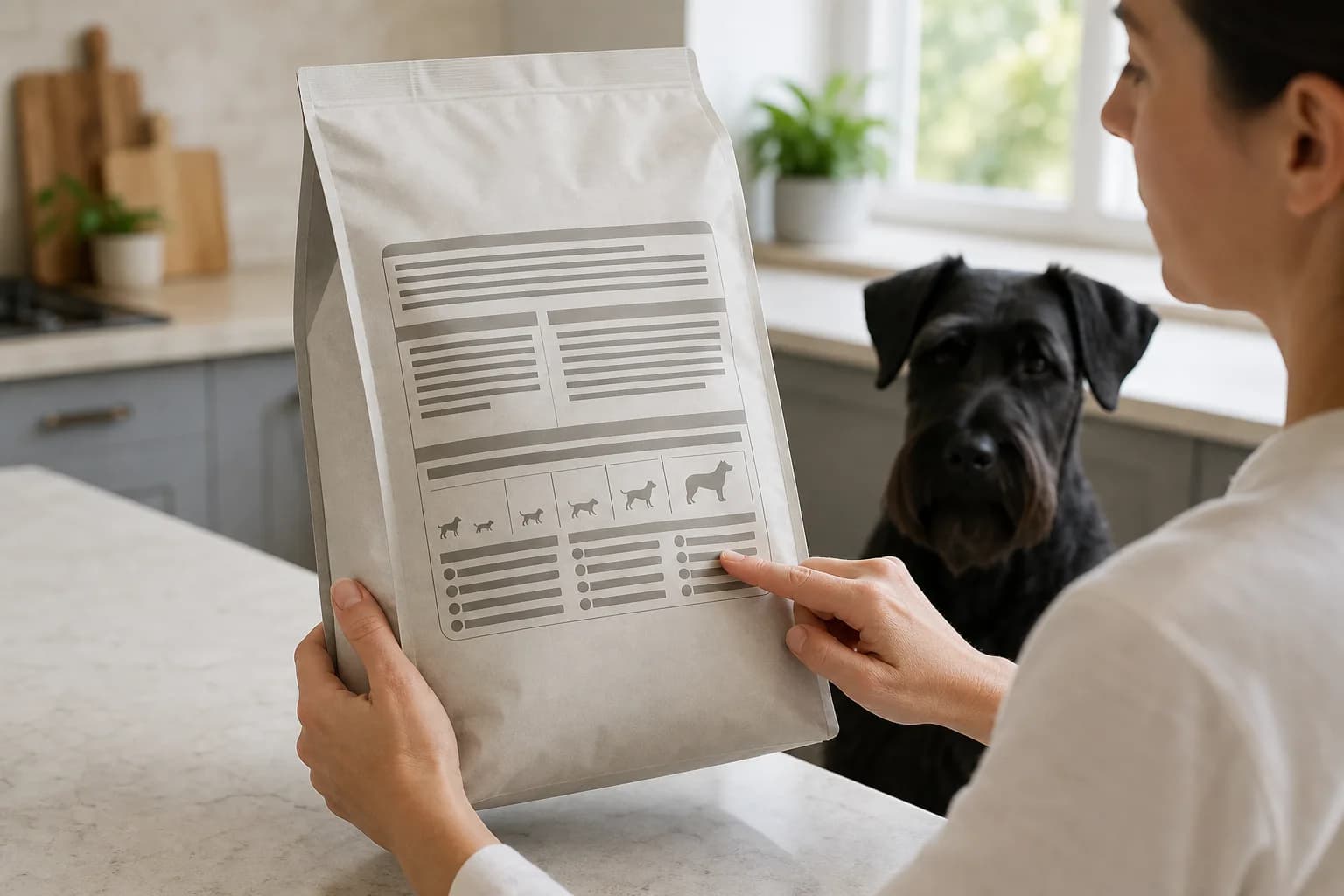
The nutritional adequacy statement tells you whether the food is intended to provide complete nutrition for a named life stage or only intermittent or supplemental feeding. Treats, toppers, and many supplements are not complete main diets.
Find the statement on the label and match it with puppy growth, adult maintenance, gestation or lactation, or another intended use. Ask the veterinarian when the dog should change life stage.
- The statement applies to dogs, not another species.
- The intended life stage matches the dog.
- A topper does not displace a nutritionally complete meal.
- Homemade feeding has a qualified formulation rather than an internet recipe.
A beautiful ingredient list cannot substitute for a complete nutrient profile. Disease-specific restriction also requires individualized guidance.
Gate 2: large-dog puppy growth
Giant Schnauzer males may reach 75 to 95 pounds, and some females enter large-size thresholds. For growth, read whether the adequacy statement includes or excludes growth of large-size dogs, generally defined on the label as 70 pounds or more as an adult.
Choose the puppy's food with the veterinarian and breeder, preserve the product and lot information, measure portions, and track steady body condition rather than pushing rapid growth.
- The exact large-size growth wording is visible.
- Extra calcium or mineral supplements are not added to a complete diet.
- Treats remain a small part of daily calories.
- Growth, gait, stool, and condition are reviewed at visits.
Do not use maximum weight gain as a quality goal. Overfeeding and unbalanced supplementation can create avoidable developmental risk.
Questions to ask a pet-food company
Marketing copy cannot show whether a company employs qualified nutrition expertise, controls ingredient and finished-product quality, conducts useful feeding or digestibility work, owns or closely oversees manufacturing, or can provide a typical nutrient analysis.
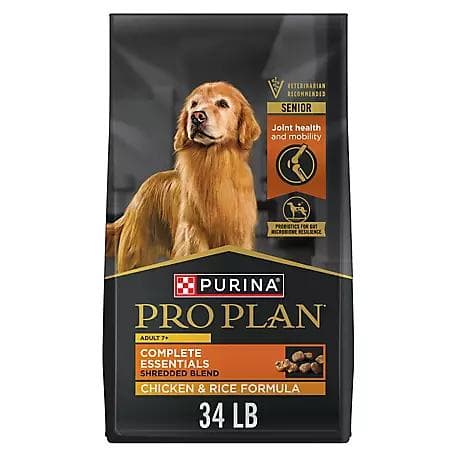
For an adult-food comparison, a product such as Purina Pro Plan Adult Chicken and Rice Formula can be run through the same five gates as any other candidate. Its presence here is an example to evaluate for an adult dog, not a puppy-growth recommendation or a universal choice.
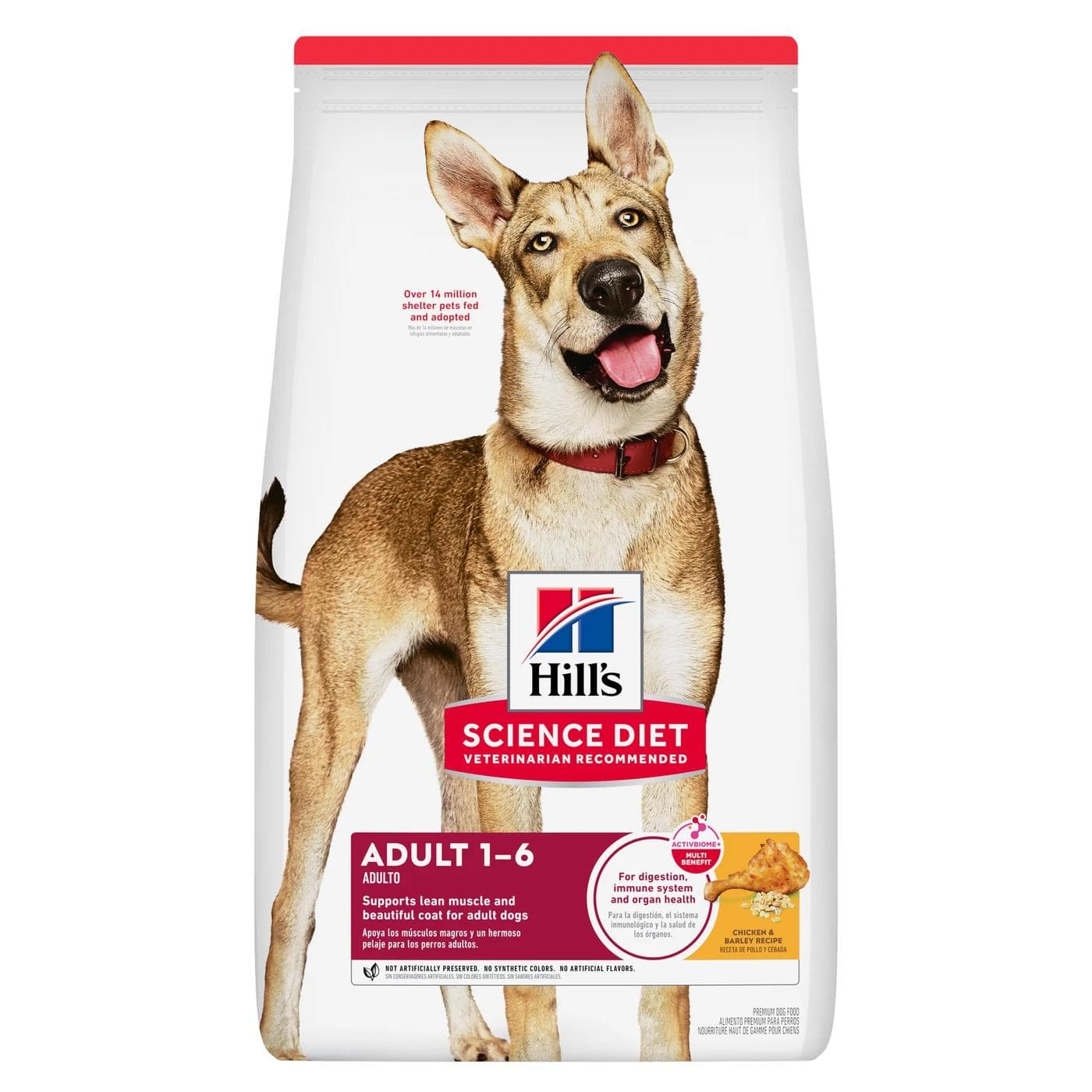
Apply the questions to a candidate such as Hill's Science Diet Adult Chicken and Barley Recipe and save the answers. Brand familiarity does not remove the need to match life stage, calories, and individual response.

Gate 3: manufacturer evidence
Ask who formulates the food and what their qualifications are, where it is made, how suppliers and finished products are tested, how recalls and complaints are handled, and whether the company can provide nutrient information beyond the minimum guaranteed analysis.
Use the contact information on the label or official website and save the response. Compare answers with the dog's needs rather than converting one credential or factory claim into an automatic endorsement.
- A named qualified nutrition expert is involved.
- Quality-control steps are specific rather than promotional.
- Nutrient and calorie questions receive usable answers.
- The company can trace product and lot information.
A vet-channel adult-maintenance kibble backed by AAFCO feeding trials. Leaner protein and fat than many competitors at a comparable price.
Petful may earn a commission when you click through to Chewy, at no extra cost to you.
Silence, vague slogans, or an influencer testimonial is weak evidence. A company's size alone also does not answer every quality question.
Why a breed name on the bag is not a prescription
A Schnauzer picture or breed label may describe kibble shape, calorie density, or marketing position. It does not know the individual dog's age, body condition, activity, laboratory results, medications, or symptoms.
Apply the same five gates to breed-labeled and general foods. Compare calories, adequacy, manufacturer evidence, and response before deciding whether the label adds practical value.
- The formula's life stage matches the dog.
- Calories fit the measured plan.
- No health outcome is assumed from breed imagery.
- The price difference is evaluated against actual evidence.
Do not treat a retail breed formula as a therapeutic diet or use it to manage symptoms without a diagnosis.
Portions, calories, and body condition
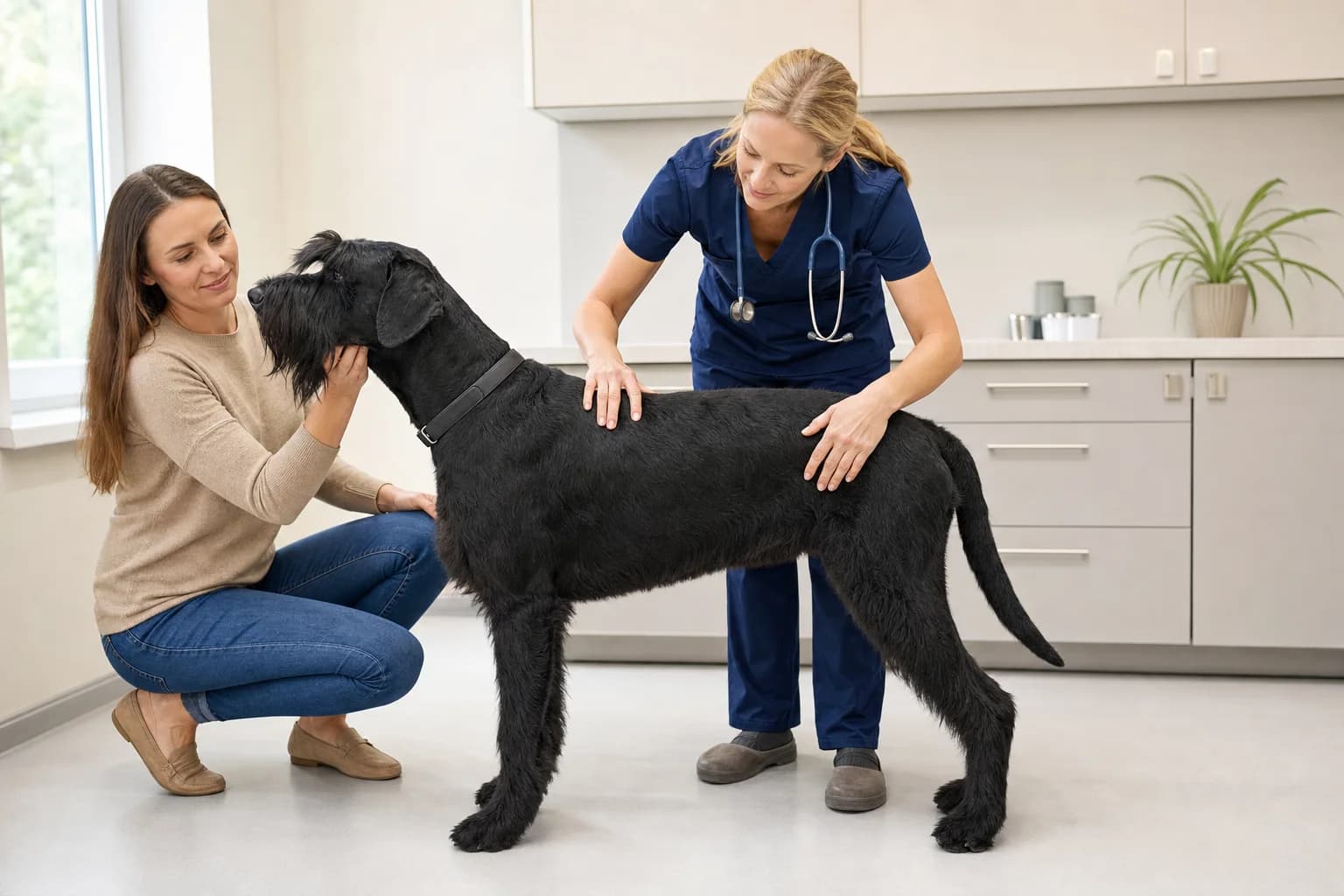
Feeding directions are a starting estimate. The individual dog may need more or less depending on life stage, reproductive status, body condition score, muscle condition, activity, environment, illness, and calorie density. The Giant Schnauzer size guide explains why a big Giant Schnauzer needs individual body-condition review rather than a breed-wide cup amount.
Because a big Giant Schnauzer can hide ribs and waist beneath a dense coat, combine hands-on body and muscle condition checks with a same-scale weight trend. The Giant Schnauzer size guide explains official adult ranges and why the actual dog's condition matters more than a target copied from another dog.
If considering Wellness Complete Health Adult Chicken and Oatmeal, compare its calories in the unit fed with the current food before changing the cup amount. Equal volume does not mean equal calories.
| Step | Record | Review point |
|---|---|---|
| Daily calorie total | Meals, treats, chews, toppers, and training rewards in calories or measured units | Confirm every feeder follows one daily allowance |
| Body-condition review | Weight trend, rib cover, waist, abdominal tuck, and muscle condition | Recheck on the scheduled date and investigate unexpected change |
Gate 4: translate the label into a daily total
Find calories per cup, can, gram, treat, or package. Decide how many calories come from meals and how many are reserved for training and other extras. Measuring by weight can be more repeatable than an unlevel cup.
Write the starting amount, feed it consistently, and schedule a condition review. Adjust gradually with veterinary input and recalculate whenever the product or life stage changes.
- Every household member knows the daily total.
- Training rewards come from the allowance when practical.
- Cup size and scoop technique are consistent.
- The dog is weighed under comparable conditions.
Do not make repeated large portion changes for rapid weight loss or gain. Unexpected change can be medical.
Gate 5: measure the dog's response
A suitable food should support the intended body and muscle condition, comfortable stool, normal appetite, usable energy, skin and coat health, and any clinical goals established by the veterinarian.
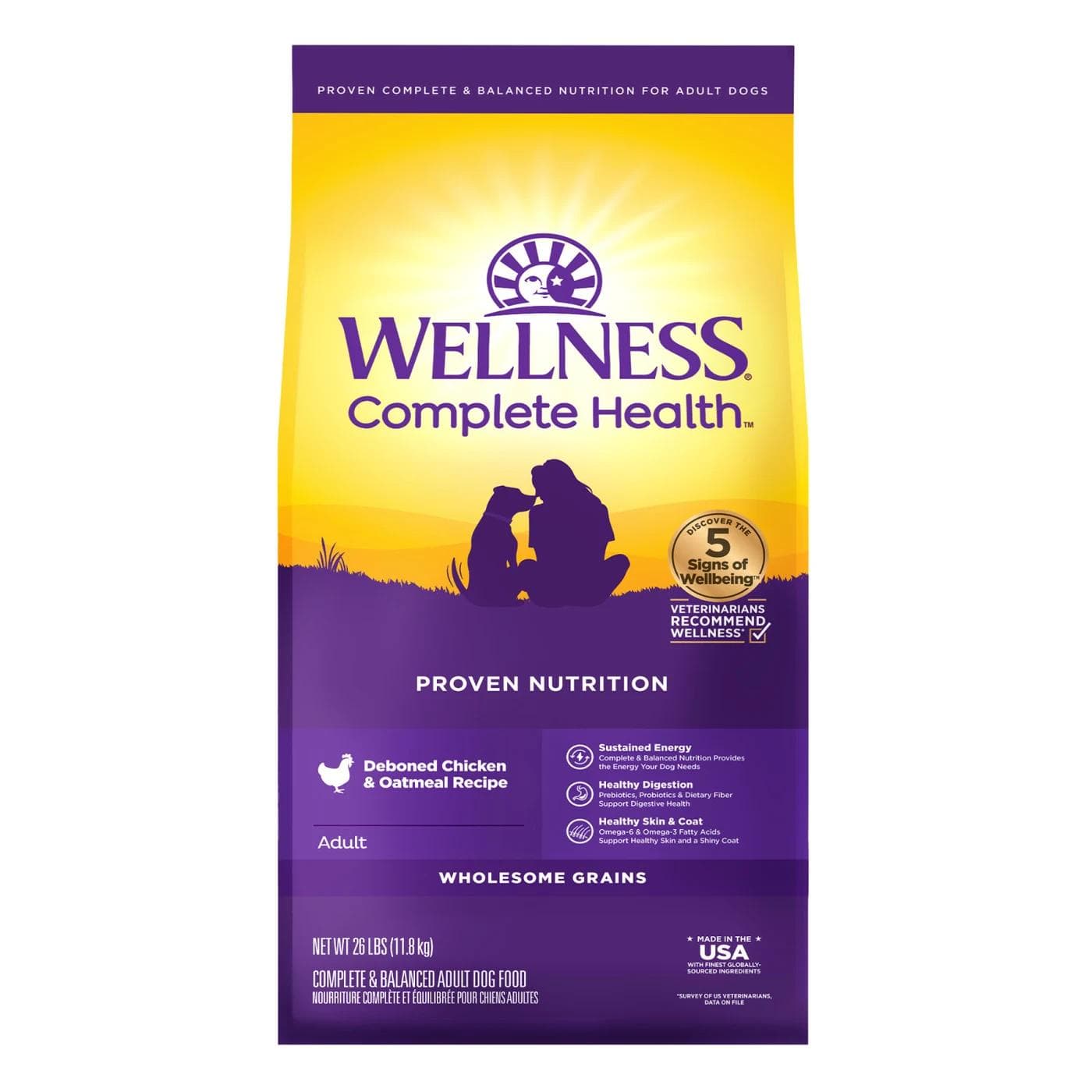
Deboned chicken and whole grains with guaranteed probiotics, taurine, and omegas. The sensible middle of the premium aisle for everyday adult dogs.
Petful may earn a commission when you click through to Chewy, at no extra cost to you.
Record product, flavor, lot when relevant, grams or measured units, treats, stool, weight, condition, and symptoms. Change one major variable at a time so the result remains interpretable.
- Ribs and waist are assessed beneath the coat.
- Muscle is considered separately from weight.
- Stool changes are tracked with duration and severity.
- The review date is set before leaving the clinic.
Anecdotal improvement after several simultaneous changes cannot identify which change mattered. Serious symptoms should not wait for a food trial.
Food safety and recordkeeping
The final part of a good feeding plan is traceability: knowing exactly what was fed, how it was stored, and what changed before a symptom or recall.
Readers asking what foods should a Schnauzer avoid or what not to feed Schnauzers should separate known dog toxins from a suspected individual intolerance. Are Giant Schnauzers allergic to chicken? Not as a breed; persistent signs need veterinary assessment.
Storage, lot codes, and recalls
Heat, moisture, pests, dirty containers, damaged cans, and lost lot information can turn a suitable food into a handling problem. Keep the original package or its label even when using a storage bin.
Store as directed, clean and dry containers between bags, avoid mixing old remnants into new food, and photograph product name, lot, best-by date, and receipt.
- Packaging remains sealed from moisture and pests.
- Cans and fresh foods follow refrigeration directions.
- Bowls and scoops are cleaned regularly.
- Recall information can be matched to the lot.
Stop using food that smells abnormal, is contaminated, has damaged packaging, or is included in a recall, and contact the company and veterinarian as appropriate.
Treats, chews, and supplements
Extras can unbalance calories, complicate elimination trials, create choking or obstruction risk, damage teeth, or add active ingredients that interact with medication.
List every edible item, choose size-appropriate supervised chews, keep extras within the veterinary calorie plan, and ask before adding vitamins, oils, botanicals, or joint products.
- Pieces cannot be swallowed whole.
- Hardness does not risk tooth fracture.
- Ingredients are included during a diet trial.
- Dose and product lot are documented.
Vomiting, repeated retching, abdominal pain, choking, severe diarrhea, weakness, or suspected obstruction needs urgent veterinary direction.
Make portions measurable in daily life
A suitable product can still fail when portions drift, training rewards are invisible, or several people feed the same dog. The system should make the daily total easy to reconstruct.
Compare calories, not equal cup volumes
Dry foods vary in calories per cup and cup shapes vary in actual volume. Switching scoop for scoop can unintentionally raise or lower energy intake even when the bowl looks unchanged. One product-specific label to compare is Purina Pro Plan Adult Chicken & Rice; verify the current adequacy statement, calories, and fit for the individual dog.
Record calories per cup or per unit, weigh a typical portion when practical, and calculate the full daily amount before a transition. Recheck weight and body condition on a defined schedule. One product-specific label to compare is Hill's Science Diet Chicken & Barley; verify the current adequacy statement, calories, and fit for the individual dog.
- The measuring tool has a known volume.
- Every feeder uses the same daily plan.
- Treat and chew calories are included.
- Portion changes respond to trend rather than one appetite cue.
Online calculators provide a starting estimate, not a prescription. Unexpected weight change, poor growth, excessive hunger, or appetite loss needs veterinary review.
Reserve part of the ration for training
A working breed may earn many rewards during handling, walking, grooming, and cooperative care. Adding all rewards on top of meals can distort calories and make gastrointestinal reactions harder to trace.
Set aside part of the measured daily ration before breakfast, use small rewards appropriate to the task, and record any separate high-value food used during difficult sessions.
- Rewards remain small enough for frequent practice.
- Training food is stored safely during outings.
- Household members know what remains for dinner.
- Diet-trial restrictions include every reward.
Do not reduce a growing puppy's complete meal substantially to offset poorly tracked extras. Ask the veterinarian how to preserve nutritional balance.
Separate feeding in multi-dog homes
Different body sizes, life stages, medications, and eating speeds make shared bowls unreliable. Competition can also increase speed, guarding, or unnoticed food theft.
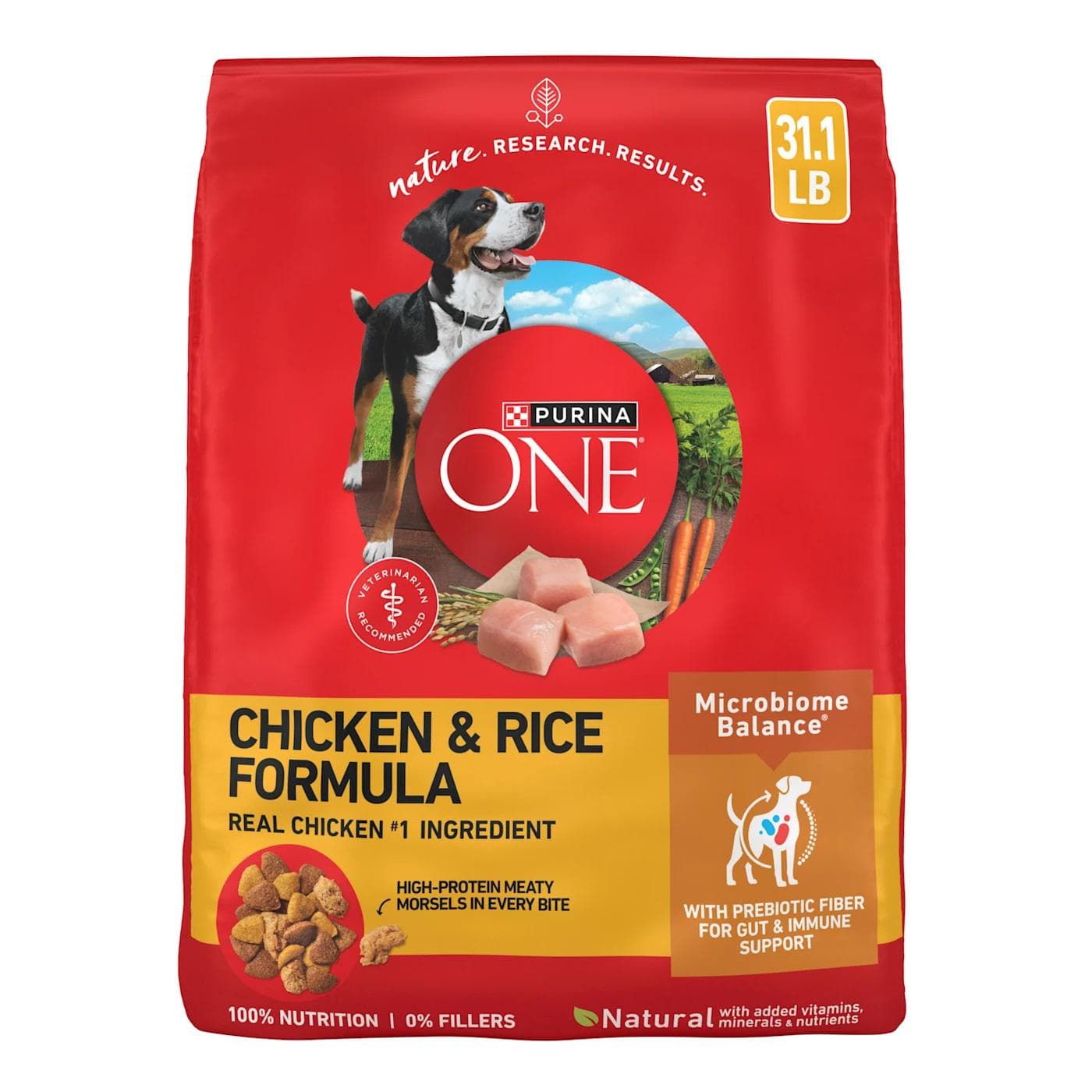
Real chicken first and Purina's feeding-trial science at a budget price. The economical deck is the honest trade-off.
Petful may earn a commission when you click through to Chewy, at no extra cost to you.
Feed in separate closed or gated spaces, collect bowls after a defined interval, supervise access to chews, and record each dog's appetite and leftovers independently.
- Every dog receives the intended product and dose.
- Children do not retrieve guarded bowls.
- Slow eating is not hidden by another dog finishing the food.
- Medication cannot move between bowls.
Growling, freezing, blocking, rushing, or fighting around food needs immediate management. Do not stage conflict to see whether the dogs can work it out.
When food choice becomes a clinical decision
- Persistent itch, ear or skin disease, vomiting or diarrhea, weight loss, poor growth, urinary signs, pancreatitis history, kidney or liver disease, diabetes, cancer, difficulty swallowing, or other illness needs veterinary assessment. Do not remove major nutrients or begin a therapeutic diet from a breed forum.
Therapeutic foods are designed for defined clinical goals and may be inappropriate for a healthy dog or another disease. Over-the-counter packaging that resembles a veterinary diet is not the same as a prescription and monitoring plan.
Food can support health, but it cannot promise a longer Giant Schnauzer lifespan or replace diagnosis. The Giant Schnauzer health and lifespan guide covers screening, urgent warning signs, and the preventive record that gives diet changes their clinical context.
The health guide owns Giant Schnauzer health problems and Giant Schnauzer lifespan planning; this section limits food claims to the individual clinical decision.
Food allergy and chicken claims
There is no evidence that every Giant Schnauzer is allergic to chicken. Food allergy is an individual diagnosis. Skin and digestive signs have many possible causes, and random ingredient rotation can make a later diet trial harder to interpret.
If the veterinarian suspects food allergy, follow the prescribed elimination and challenge protocol exactly, including treats, flavored medications, chews, scavenging, and the full duration.
- The test diet is appropriate for the diagnostic goal.
- All household members follow the same rules.
- Symptoms are scored and dated.
- Rechallenge occurs only under veterinary guidance.
A temporary improvement, mail-order sensitivity panel, or preference for one meat does not confirm allergy.
Home-cooked, raw, grain-free, and boutique choices
Feeding format is not a quality score. Home-prepared diets can be complete when formulated and followed under qualified guidance, while improvised recipes can be deficient. Raw diets carry nutritional and pathogen considerations for the dog and household.
Discuss goals and risks with the veterinarian or a board-certified veterinary nutritionist. Ask how the complete nutrient profile, contamination control, calorie density, storage, and household vulnerability are addressed.
- The recipe is formulated for the exact dog and life stage.
- Supplements and ingredient weights are followed precisely.
- Children, older adults, and immunocompromised people are considered.
- Grain exclusion has a medical reason rather than a marketing assumption.
Do not use unconventional feeding to delay diagnosis or replace a proven therapeutic plan.
When a home-prepared or therapeutic plan is appropriate, a board-certified veterinary nutritionist can formulate or evaluate it for the individual dog. Follow the exact ingredient weights, supplements, storage rules, and monitoring schedule rather than borrowing a recipe from another pet.
Meal timing, speed, and training treats
Many healthy adults do well with the measured daily amount divided into two meals, while puppies may need more frequent feeding. The correct schedule depends on age, health, medication, household routine, and veterinary guidance.
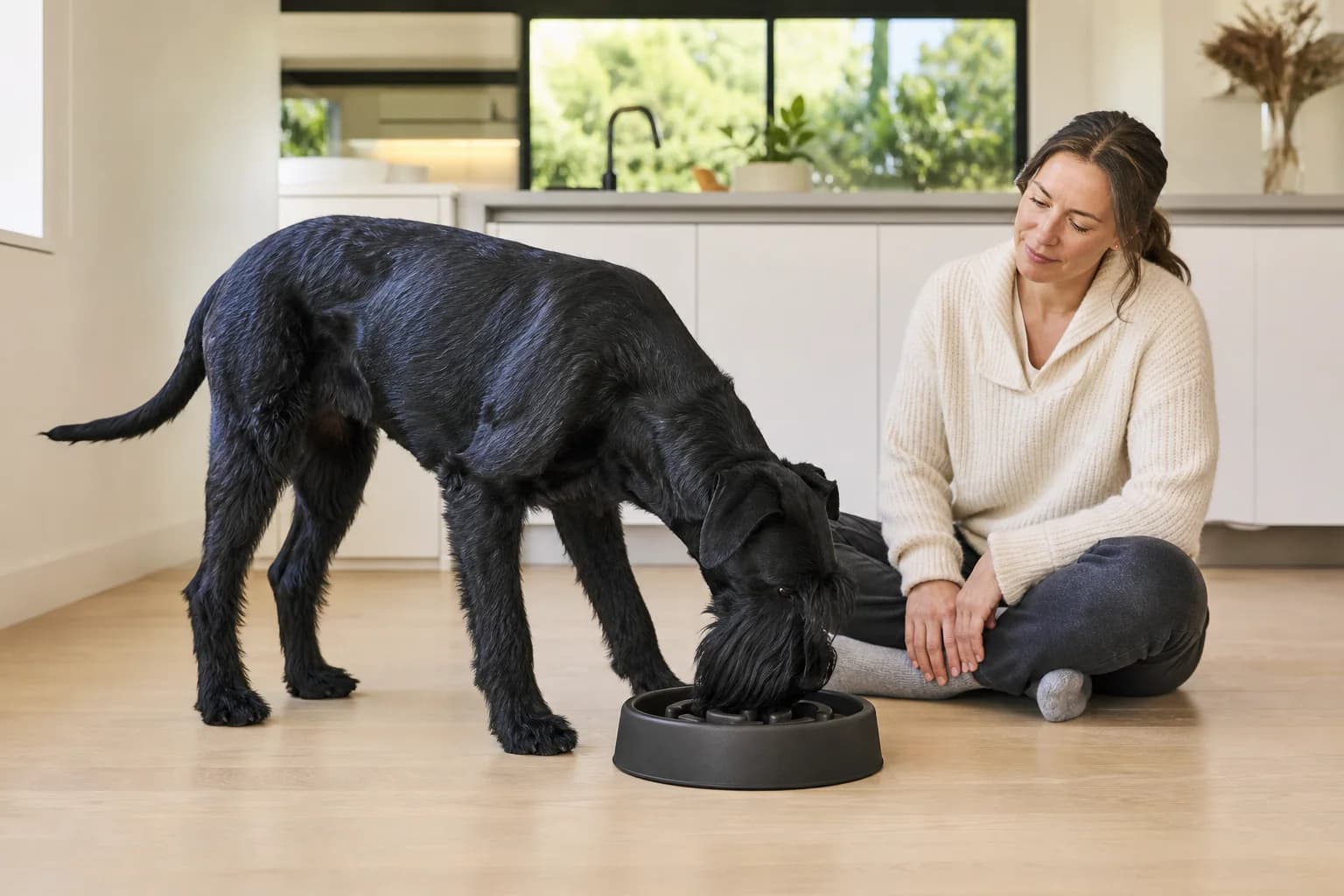
A slow feeder can help some dogs eat more calmly, but it does not guarantee prevention of gastric dilatation-volvulus. Choose a stable, appropriately sized device without chewable parts and supervise until the dog's use is known.
Use food in training without losing the diet
Giant Schnauzers often work enthusiastically for food, which makes meals useful for reinforcement. The nutritional problem begins when training calories become invisible extras.
Set aside part of the measured meal, use very small pieces, match reward value to difficulty, and record higher-calorie extras. Keep novel chews and table food out of sessions when digestive tolerance is unknown.
- Rewards are small enough for rapid training.
- The daily calorie budget remains visible.
- Multiple caregivers do not each feed a full allowance.
- High-fat or unsafe human foods are excluded.
Food guarding, frantic eating, vomiting, repeated regurgitation, swallowing difficulty, or significant digestive change needs assessment rather than a more difficult puzzle.
Changing foods safely
When there is no urgent medical reason to change faster, transition gradually by increasing the new food while decreasing the old. The exact pace should reflect the dog's history and veterinary advice. Keep total calories in mind because equal cup volumes can contain different calories.
Preserve the old and new product names, lot codes, feeding amounts, and symptom dates if a problem develops. Contact the veterinarian promptly for:
- Repeated vomiting or significant diarrhea
- Blood, pain, or lethargy
- Refusal to eat or concern about dehydration
- Any significant change in a vulnerable puppy or senior
The same transition rule applies to a product such as Purina ONE Chicken and Rice Formula. A linked product is a candidate for the evidence screen, not proof that it fits the individual.
Giant Schnauzer food FAQs
Giant Schnauzers should eat a complete and balanced diet appropriate for their life stage, health, and individual energy needs. A puppy expected to reach a large adult size needs the applicable large-dog growth wording on the adequacy statement. Measure meals and rewards, then review body and muscle condition, stool, appetite, and weight trend with the veterinary team instead of choosing by breed picture or ingredient trend.
The best food to feed Schnauzers is not one universal product; there is no single best food for every Schnauzer. Compare nutritional adequacy, intended life stage, manufacturer expertise and quality control, calorie density, and the individual dog's measured response. A sound choice supports stable body and muscle condition, comfortable stool, normal appetite, and the dog's clinical needs. Breed marketing, price, and a familiar ingredient list do not replace those checks or individualized veterinary guidance.
Foods a Schnauzer should avoid include known dog toxins; keep them out of reach, including xylitol, chocolate, grapes and raisins, alcohol, caffeine, and harmful amounts of onion or garlic. Also avoid unsafe bones, spoiled food, and unprescribed medications or supplements. If ingestion may have occurred, record the product, amount, time, and dog's weight, then contact a veterinarian or animal poison service promptly instead of waiting for symptoms or inducing vomiting without direction.
Giant Schnauzers are not allergic to chicken as a breed. An individual dog can react to a food protein, but itching or digestive signs have many possible causes. Diagnosis usually requires a veterinarian-directed elimination and challenge trial with every treat, chew, and flavored medication controlled. Randomly removing chicken, changing several foods at once, or relying on a mail-order sensitivity panel cannot confirm a food allergy.
Primary nutrition sources
BVMS, MRCVS
Dr. Pippa Elliott, BVMS, MRCVS, is a veterinarian with nearly 30 years of experience in companion animal practice. Dr. Elliott earned her Bachelor of Veterinary Medicine and Surgery from the University of Glasgow. She was also designated a Member of the Royal College of Veterinary Surgeons. Married with 2 grown-up kids, Dr. Elliott has a naughty Puggle named Poggle, 3 cats and a bearded dragon.
Sign up for expert-backed reviews and safety alerts all in one place.