Giant Schnauzer Health Problems and Lifespan
Giant Schnauzer health planning starts with verified parent screening, preventive care, and early response to change. Review lifespan context and urgent warning signs.

BVMS, MRCVS
Petful is reader supported. As an affiliate of platforms like Amazon and Chewy, we may earn a commission when you buy through links on this page. There is no extra cost to you.
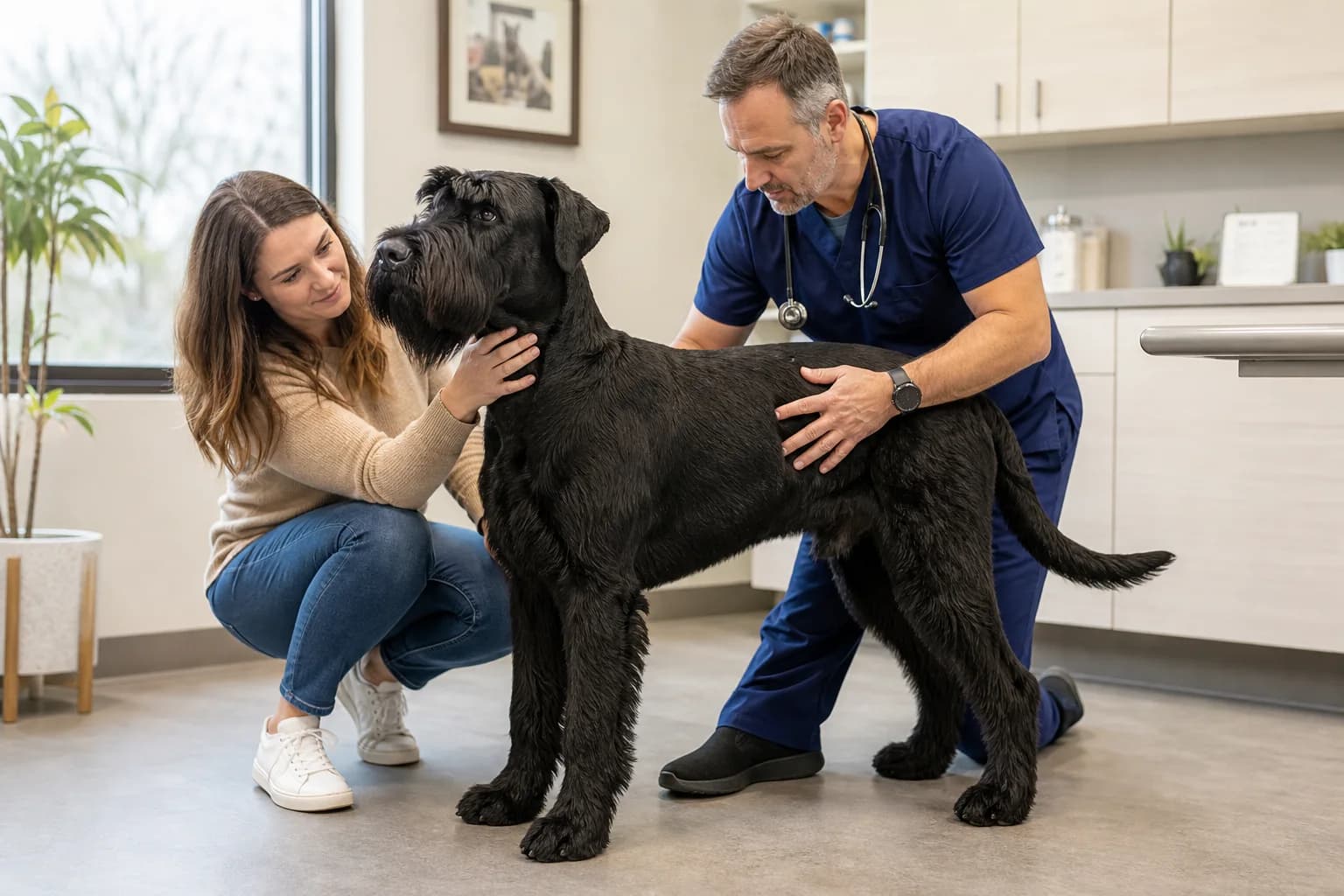
The most useful way to understand Giant Schnauzer health problems is to connect each risk with an action: what a breeder should test before a mating, what an owner can monitor at home, what deserves a scheduled examination, and what needs urgent care. A disease list without those boundaries encourages either false reassurance or unnecessary alarm.
The AKC currently publishes a Giant Schnauzer life-expectancy estimate of 10 to 13 years. That range is useful for planning but cannot predict an individual dog's future. Genetics, screening, environment, preventive care, body condition, injury, disease, and chance all affect outcome.
Giant Schnauzer lifespan planning starts with ordinary observations and a documented baseline. Weight, movement, breathing, appetite, thirst, eyes, skin, toes, nails, and behavior are more useful when caregivers know what is normal for that individual dog.

Sign up for expert-backed reviews and safety alerts all in one place.
Giant Schnauzer health problems and lifespan
- 1Treat 10 to 13 years as a planning estimate, not a promise.
- 2Verify current parent-club health testing for the actual sire and dam before acquisition.
- 3A CHIC number records completion and public disclosure of required tests, not universally normal results.
- 4Connect screening to action: use hips and eyes results to guide breeding decisions, monitoring, and veterinary follow-up.
- 5Monitor weight, movement, eyes, skin, toes, nails, appetite, thirst, and behavior for change.
- 6Collapse, breathing difficulty, repeated unproductive retching, abdominal enlargement, seizure, severe weakness, or suspected poisoning requires urgent veterinary direction.
Most Giant Schnauzers will not experience every condition associated with the breed. Risk information is not a diagnosis. It helps owners choose responsible sources, establish baselines, notice meaningful changes, and seek care at the right time.
When readers ask what is the most common cause of death in Schnauzers, the responsible answer is that no single current breed-wide ranking in the cited sources can predict one dog; use verified family history and individual findings instead.
The AKC breed page identifies hip dysplasia, eye disease, and autoimmune thyroiditis among screening concerns. The current Giant Schnauzer Club of America health guidance and OFA CHIC program should be checked directly because program requirements can change.
Use four levels of evidence
Organize health decisions into four levels: pre-acquisition records, routine preventive care, prompt appointments for a new change, and emergency response. Each level has a different purpose and time horizon.
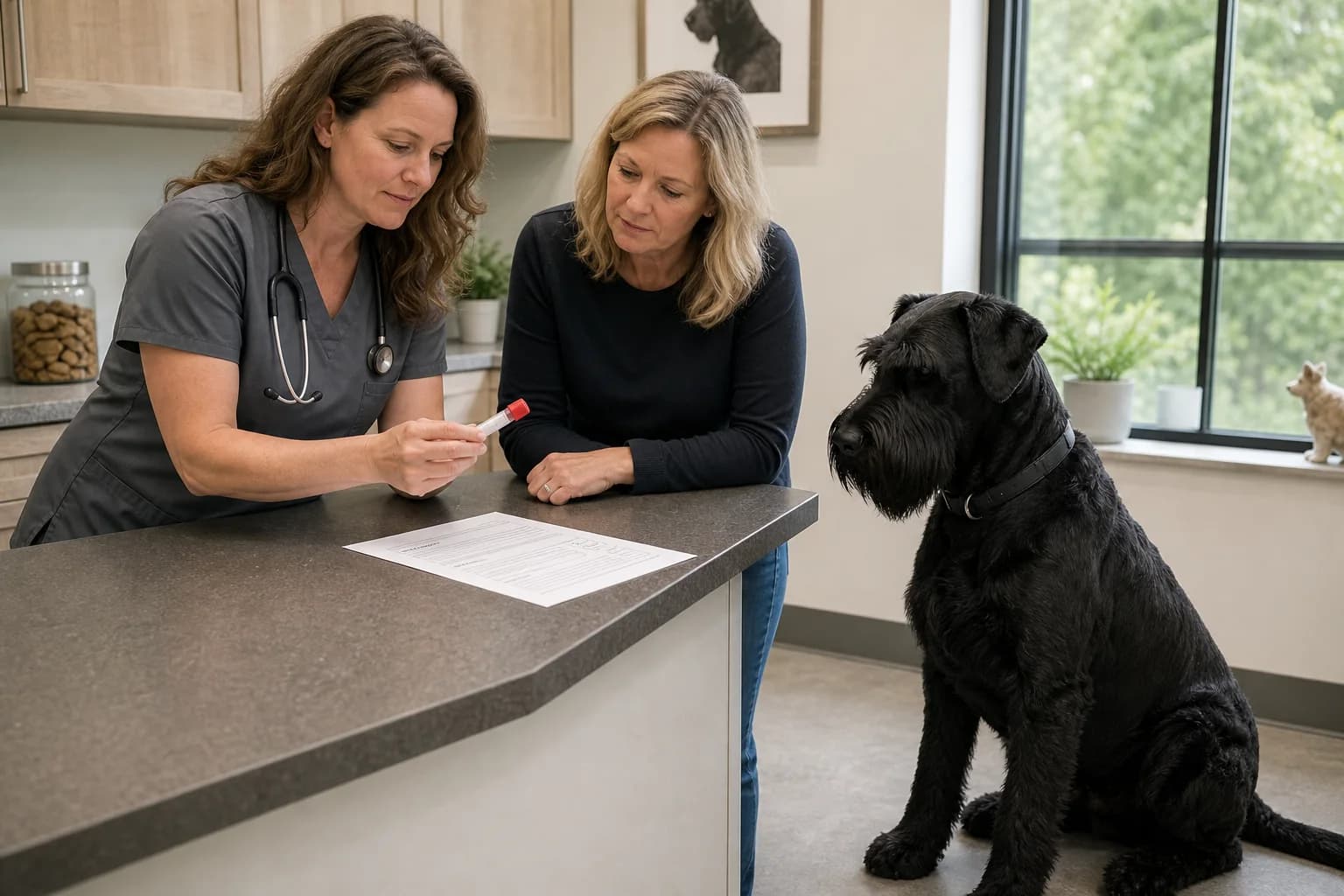
Keep parent records and the purchase contract, maintain a current medication and diet list, record normal weight and mobility, and save the regular clinic and emergency hospital numbers before they are needed.
- Parent identities and test results are independently verifiable.
- The dog has a documented normal baseline.
- New changes are dated with photos or video when useful.
- Every caregiver knows which signs are urgent.
Do not use a normal screening result to dismiss a symptomatic dog, and do not treat a breed association as proof that a current symptom is caused by that condition.
Interpret lifespan without false precision
A range describes a population, not a countdown. Some dogs die younger and some live longer. The number cannot account for the individual dog's family history, accidents, access to care, body condition, or future disease.
Plan finances, preventive visits, mobility support, home access, and senior care early. Revisit quality of life with the veterinarian as function changes rather than comparing the dog with a published birthday.
- Weight and muscle trends are reviewed across years.
- Home surfaces and transport adapt before mobility becomes poor.
- Pain, sleep, appetite, social engagement, and favorite activities are tracked.
- Emergency and end-of-life preferences are discussed before crisis.
Longevity supplements, foods, and screening packages cannot guarantee a lifespan. Ask what evidence supports a claim and what tradeoffs or risks it carries.
What's the life expectancy of a Giant Schnauzer? The published planning estimate is 10 to 13 years, while individual Giant Schnauzer lifespan varies.
Owners who want risk transfer can compare an insurance option for older dogs before relying on it in a crisis. Eligibility, waiting periods, pre-existing-condition rules, reimbursement, and limits belong in the decision.
Hips, joints, and mobility
Mobility changes deserve context. A dog may slow because of pain, soft-tissue injury, orthopedic disease, neurologic disease, poor conditioning, excess weight, medication effects, or another problem. The breed association guides attention, not diagnosis.
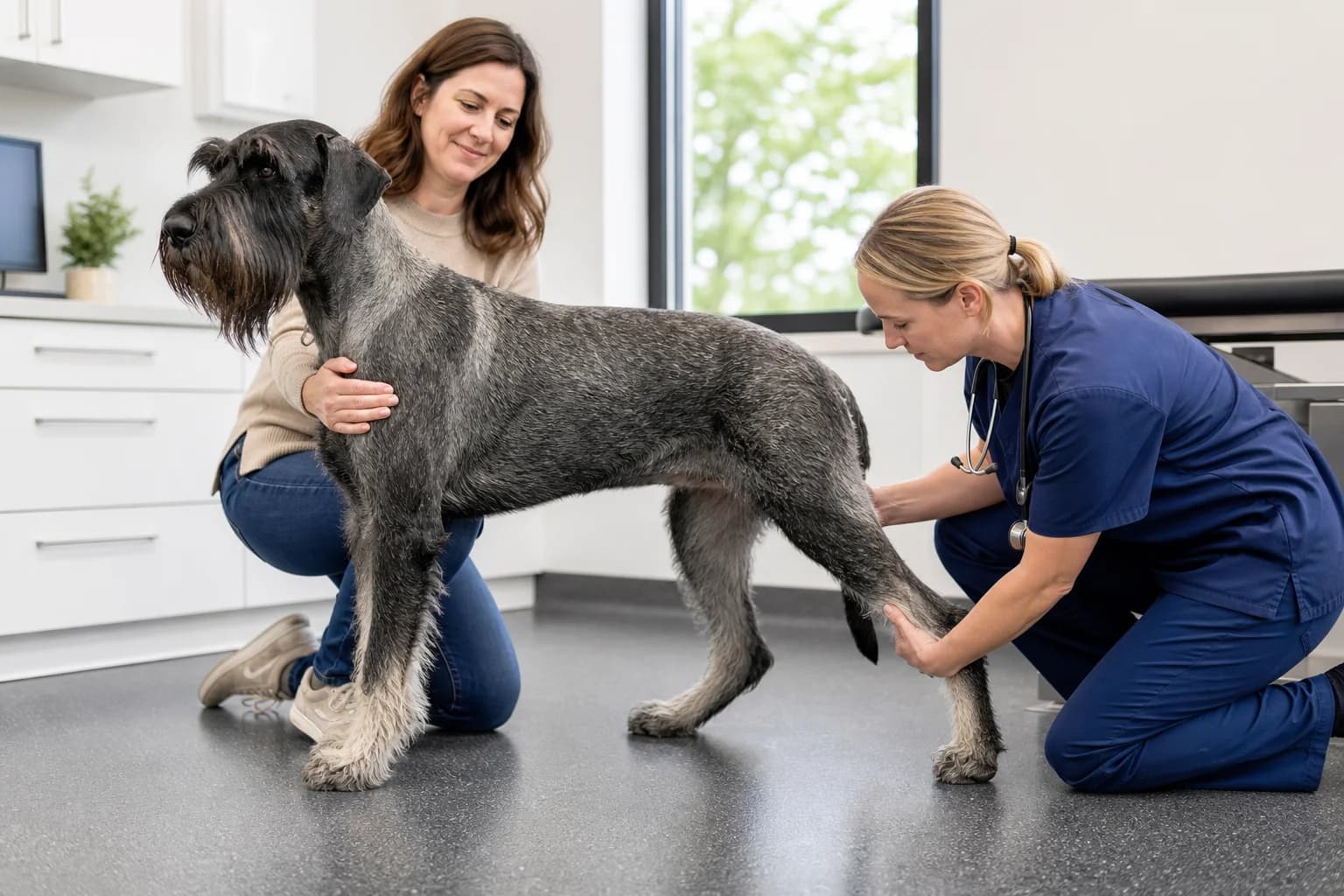
Build a mobility baseline
Record how the dog rises, lies down, uses stairs, turns, trots, jumps into the vehicle, and recovers after activity when healthy. Ordinary video is valuable because clinic adrenaline can mask or change movement.
Use a consistent flat route and film from the side, front, and rear without forcing speed. Note surface, distance, weather, recent activity, and whether the change improves or worsens after rest.

Petful may earn a commission when you click through to Lemonade, at no extra cost to you.
- Nails are kept short enough for traction.
- Slippery routes have runners or mats.
- Vehicle access has a trained low-impact option.
- Exercise increases gradually after rest or illness.
Inability to bear weight, major trauma, severe pain, sudden paralysis, dragging limbs, or loss of bladder or bowel control needs urgent care.
 Sponsored
Have a health question about your pet?
Talk to a licensed vet at Dutch over video or message, including nights and weekends.
Use code Pets60
Plans start at $12/month · covers up to 5 pets
- Licensed vets in most states
- Rx for 150+ conditions
- 4.7 on Trustpilot
Weight and muscle are not interchangeable
A stable scale number can hide fat gain and muscle loss, especially beneath a dense coat. Ribs, waist, abdominal tuck, spine, shoulder, and thigh muscle provide information the scale alone cannot.
Ask the veterinary team to assign and explain a body condition score and muscle condition score. Measure food, count treats, and adjust calories with follow-up rather than using an ideal weight copied from another dog.
- Hands reach the body beneath the coat.
- Weekly or monthly trends use comparable conditions.
- Activity and calorie changes happen together thoughtfully.
- Unexplained muscle loss is investigated.
Rapid weight change, marked appetite or thirst change, weakness, abdominal enlargement, or persistent digestive signs needs examination rather than a home diet correction alone.
Health screening before breeding
| Evidence | What it can do | What it cannot do |
|---|---|---|
| Public parent-club test result | Document the evaluated dog, date, method, and result | Guarantee every puppy will be unaffected |
| CHIC number | Show that required results were completed and made public | Mean every result was normal |
| DNA result | Identify a tested variant when the assay is valid | Replace hip, eye, thyroid, cardiac, or other phenotype exams |
| Routine wellness exam | Assess the individual on that date | Substitute for breed-specific breeding screens |
| Family health history | Add context across relatives and ages | Predict one puppy with certainty |
Ask the breeder for registered names before discussing a deposit, then search the official database yourself. Match microchip or registration identifiers where available. Read dates, ages, grades, and specialist reports rather than accepting a screenshot labeled "clear."
The screening-to-action map links hips and eyes, thyroid, public results, and family history to the next decision rather than treating a CHIC number as a guarantee.
Every Giant Schnauzer puppy should be tied to verifiable parent records, and responsible Schnauzer puppy breeders should explain those results without turning a CHIC number into a health guarantee. The puppy and price guide supplies the buyer-facing checklist, while the complete Giant Schnauzer guide covers nonclinical household fit.
How to read a CHIC record
The Canine Health Information Center encourages breed-relevant testing and public disclosure. A number means the breed's required evaluations were completed and released under the program rules in effect. Abnormal results can still receive a number.
Open each underlying result, confirm the dog's identity and age, and compare the list with the parent club's current requirement. Ask the breeder how each finding affected the mating decision.
- Both sire and dam are searched independently.
- The result belongs to the correct dog, not a similarly named relative.
- Dates and ages meet the relevant requirement.
- Missing or abnormal results are discussed without evasion.
A CHIC number is a transparency tool, not a health warranty. Lack of a number also requires explanation rather than an automatic conclusion when rules or timing differ.
Hip and elbow evaluation
A formal hip evaluation and other orthopedic screening assess breeding dogs for joint phenotype, while an owner's veterinary examination evaluates the dog in front of them. Neither predicts every future injury, pain episode, or developmental outcome.
Verify the official parent results. During life, maintain appropriate body condition and muscle, condition exercise gradually, use traction, and seek assessment for persistent lameness, stiffness, reluctance, or altered gait.
- Parent imaging result and age are public.
- Puppy growth is not accelerated by overfeeding.
- Exercise matches development and conditioning.
- Videos capture intermittent gait change from several angles.
Do not diagnose hip or elbow disease from a sitting posture, online video, or breed label. Pain and lameness require a veterinary examination and sometimes imaging.
Eye examination
A specialist ophthalmology examination can identify findings relevant to breeding at that time. Eyes also change with age, injury, inflammation, pressure, and systemic disease, so parent screening and lifelong observation answer different questions.
Verify current parent eye records and ask the veterinarian what routine checks the individual needs. Notice redness, squinting, discharge, cloudiness, unequal pupils, collision with objects, or reluctance in dim light.
- The exam was performed by the appropriate specialist.
- Results and dates are visible in the public record.
- Home observations compare both eyes.
- Contact lenses, drops, or human products are never improvised.
Sudden vision loss, severe eye pain, trauma, a bulging eye, or marked squinting is urgent. Eye problems can worsen quickly.
Thyroid evaluation
Autoimmune thyroiditis is among the conditions associated with Giant Schnauzers. Screening breeding dogs can identify information relevant to breeding, but vague symptoms in a pet cannot be assigned to thyroid disease without veterinary testing and interpretation.
Verify the parent result and ask whether repeat evaluation was recommended. For the pet, report sustained weight, skin, coat, energy, temperature tolerance, reproductive, or behavior changes with a complete timeline.
- The laboratory result belongs to the named parent.
- Medication and illness context is disclosed to the veterinarian.
- Weight and coat changes are measured rather than guessed.
- Testing decisions are based on the whole clinical picture.
Do not start thyroid hormone, iodine, glandular supplements, or restrictive diets from symptoms alone. Treatment requires diagnosis and follow-up.
Eyes and inherited screening
Home eye checks are simple: compare both eyes in the same light and notice comfort, clarity, discharge, pupil size, and navigation. They do not replace specialist screening or a veterinary examination.
Keep facial furnishings from rubbing the eye and avoid using old prescription drops on a new problem. The same red-eye appearance can have causes with very different treatments and urgency.
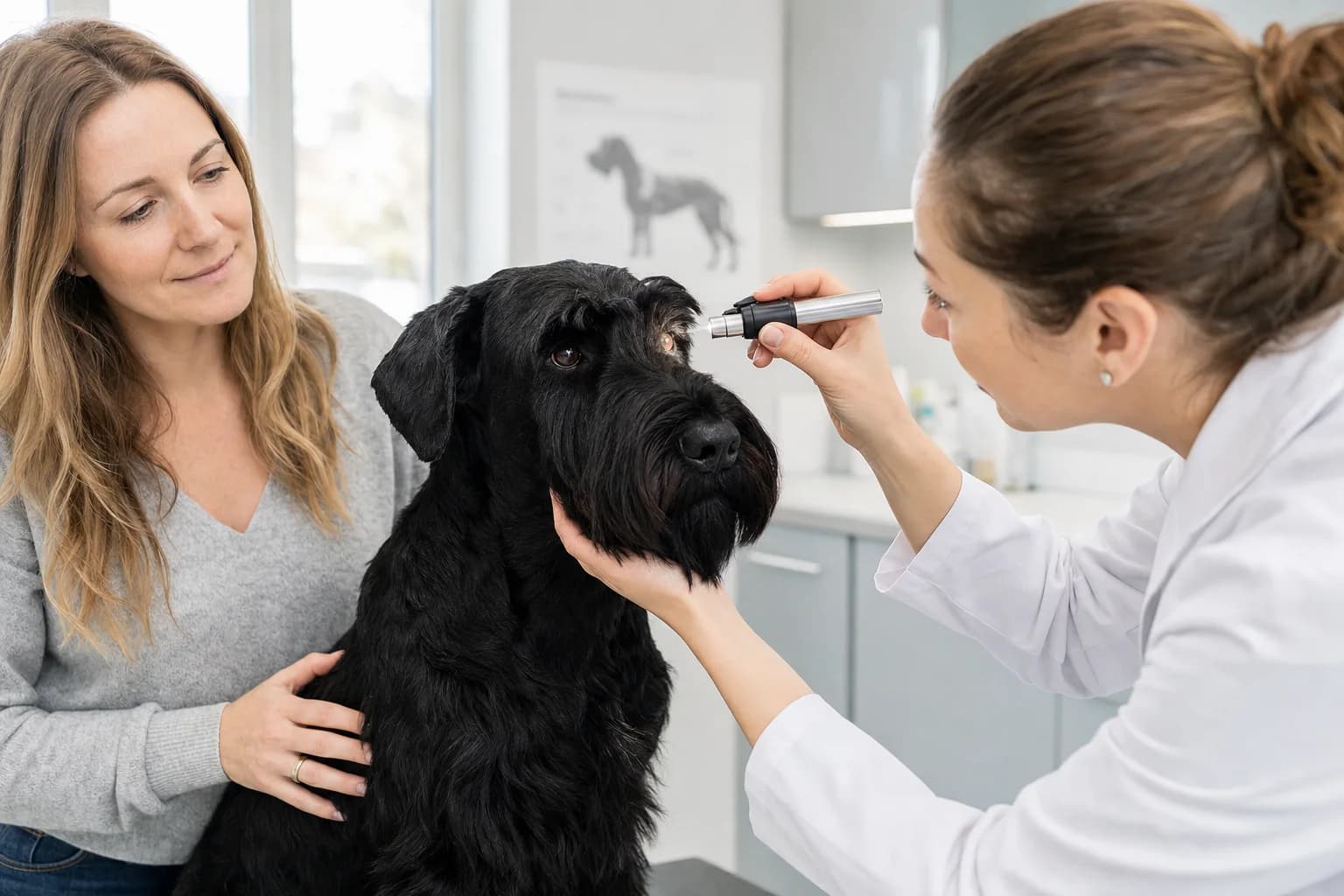
What needs prompt eye care
Squinting, holding an eye closed, sudden redness, thick discharge, obvious injury, cloudiness, unequal pupils, or abrupt vision change can signal pain or a threat to vision.
Prevent rubbing with veterinary guidance, keep the dog from further trauma, and contact a clinic. Bring the time of onset, known exposure, medications, and a photo from before the change when available.
- Both eyes are compared.
- No human redness-relief product is used.
- The dog cannot scratch or rub against furniture.
- Travel to urgent care is planned if the clinic advises it.
Eye pain is not a wait-for-the-next-wellness-visit problem. Delayed treatment can reduce options.
Thyroid and metabolic monitoring
Owners sometimes attribute low energy or weight gain to aging, thyroid disease, or food without measurement. Start with a timeline and a veterinary examination.
Provide the food amount, treats, medication and supplement list, activity, appetite, thirst, urination, skin and coat change, and reproductive history.
Laboratory tests require clinical interpretation. One value can be influenced by other illness, medication, timing, and the laboratory method. Follow-up should be based on the treating veterinarian's plan.
A large washable water fountain may make intake easier to observe in some homes, but it must be cleaned as directed and does not diagnose thirst change. Measure actual intake when the veterinarian asks.
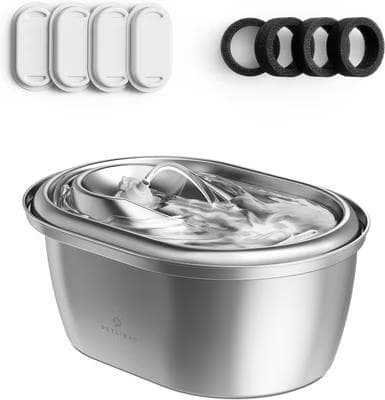
304 food-grade stainless steel pet water fountain, 101 oz. The circulating, filtered water encourages cats to drink more, which supports urinary tract and kidney health.
Petful may earn a commission when you click through to Chewy, at no extra cost to you.
Additional preventive-health decisions
These systems do not prevent every illness. They reduce avoidable uncertainty and help the veterinary team act on a clear history. Bring the same discipline to normal days as to symptoms by recording a brief baseline:
- Current food and measured amount
- Weight and body condition
- Ordinary water intake
- Medications and supplements
- Comfortable walking and stair behavior
- Typical sleep
- Places the dog likes to be touched
Baselines make subtle change easier to describe. They also reduce the temptation to explain every new sign with the breed's reputation. A veterinarian still needs to examine the individual, choose the differential diagnoses, and decide which test or treatment can change care.
Keep records short, dated, and accessible to every caregiver. A useful log supports timely care; it should not become a reason to watch a deteriorating dog at home when the clinic has advised examination. Review the file after each diagnosis, medication change, emergency visit, or annual preventive appointment so stale instructions do not travel forward.
Oral health and eating behavior
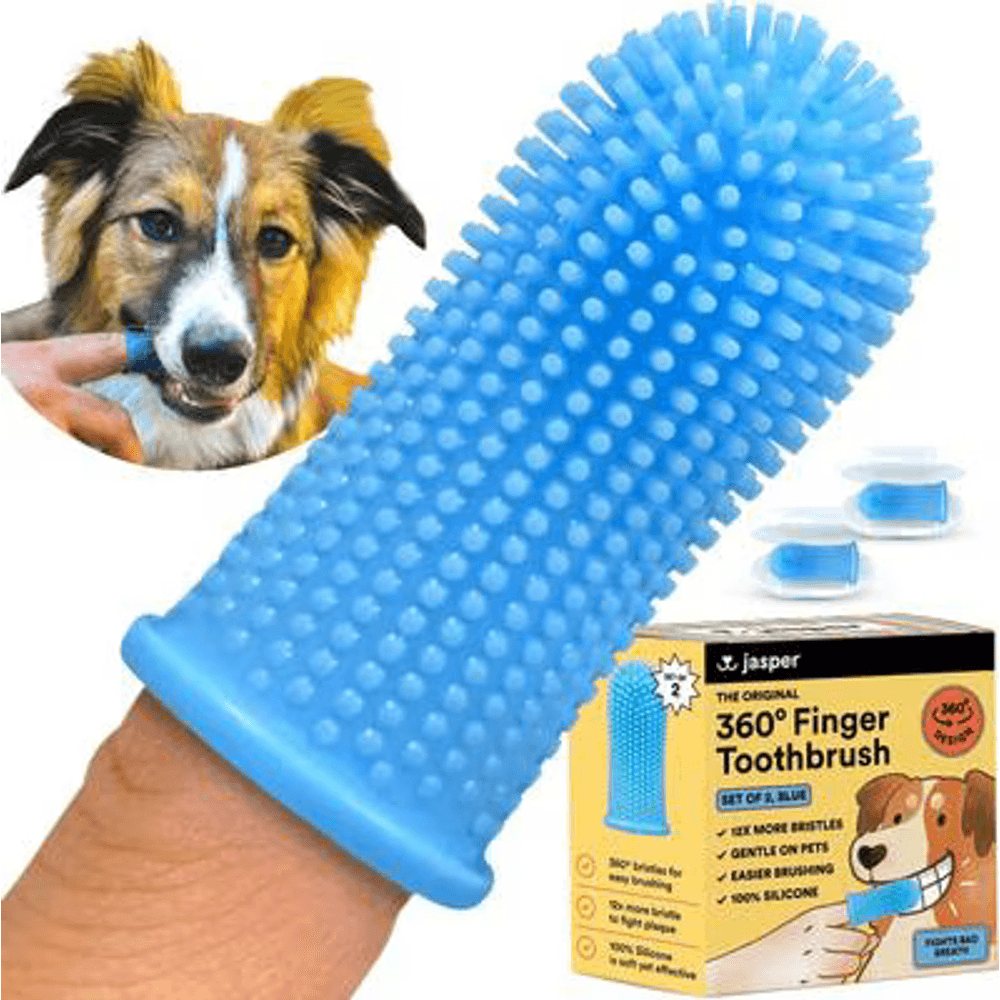
A 360-degree silicone finger toothbrush that brushes every side of a tooth at once. Gentle on gums and ideal for dogs new to brushing or owners who find a handled brush awkward.
Petful may earn a commission when you click through to Chewy, at no extra cost to you.
Dental pain can appear as slower eating, dropping food, chewing on one side, bad breath, facial rubbing, irritability, or reluctance to take hard rewards. A dog may continue eating despite significant disease.
Arrange regular oral assessment, use home care the veterinary team recommends, and report behavior or appetite changes. Professional cleaning and dental imaging decisions belong with the clinician.
- Gums, teeth, lips, and beard skin are observed.
- A veterinary-approved canine dental paste is used.
- Hard objects that fracture teeth are avoided.
- Facial swelling or bleeding is addressed promptly.
Do not scrape tartar, use human toothpaste, or rely on a chew to treat pain or infection.
Vaccines, parasites, and regional risk
Preventive plans should reflect age, health, travel, wildlife, boarding, climate, and local disease. A breed article cannot specify one product or schedule for every Giant Schnauzer.
Review core and risk-based vaccines, heartworm and vector-borne disease risk, intestinal parasites, flea and tick exposure, and travel requirements with the veterinarian.
- Products match the dog's current weight and species.
- Doses are recorded with date and lot when available.
- Travel plans are disclosed before departure.
- Adverse events are reported and documented.
Never use a product labeled only for another species or split medication without veterinary direction.
Diet, body condition, and supplements
Nutrition supports health but cannot override genetics or diagnose disease. Dense coat can hide fat gain and muscle loss, and supplements can add calories, nutrients, contaminants, or drug interactions.
Feed a complete diet for life stage, measure the daily total, review body and muscle condition, and ask what evidence and monitoring supports any supplement.
- Treats and chews are counted.
- Product lot and dose are known.
- Unexplained weight change is investigated.
- Therapeutic diets are used for a defined clinical goal.
Do not add calcium to a complete growth diet or use supplements to delay evaluation of pain, skin disease, digestive signs, or weakness.
Make the health plan usable under pressure
Good preventive advice fails if records, transport, consent, or observation disappear during a crisis. These systems preserve useful information without asking an owner to diagnose the dog.
| Observation | Useful record | Escalation boundary |
|---|---|---|
| Weight and appetite | Same-scale weight, measured food, appetite, and date | Rapid or unexplained change needs veterinary assessment |
| Movement and breathing | Short video at rest and during ordinary movement | Distress, collapse, severe weakness, or inability to rise is urgent |
| Eyes, skin, toes, and nails | Date-stamped change with location and duration | Pain, rapid progression, discharge, or tissue damage needs examination |
| Medication and diet | Current product, dose or amount, start date, and response | Do not improvise prescription changes |
| Behavior | Trigger, body area, context, and recovery | Sudden serious change requires safety management and medical review |
Rehearse emergency transport and triage
A weak, painful, bloated, or collapsed Giant may not be able to walk and may react differently when moved. The nearest clinic may also have a different after-hours entrance or intake procedure.
Save emergency numbers, identify the route, ask how to announce arrival, and keep a stable ramp, blanket, muzzle plan, and second helper available. Call while preparing to leave.
- The vehicle has clear floor space and traction.
- Current weight and medication list are accessible.
- Two adults know the movement plan.
- The clinic can receive a large nonambulatory dog.
Do not delay urgent care to assemble perfect records or attempt repeated home treatment. Breathing difficulty, collapse, severe weakness, repeated unproductive retching, major trauma, or uncontrolled bleeding needs immediate direction.
Prepare for anesthesia and recovery logistics
Procedure planning includes more than the operation. Large-dog transport, fasting instructions, medication timing, traction, stairs, toileting, incision protection, and safe separation from other animals affect recovery.
Request written preoperative and discharge instructions, clarify which medications continue, prepare a one-level recovery area, and confirm who can lift or support the dog if mobility is limited.
- Fasting and water instructions are procedure-specific.
- A correctly sized recovery collar or alternative is ready.
- Pain and emergency contact instructions are written.
- Follow-up timing and activity limits are understood.
Never substitute another pet's medication or change a prescribed dose because the dog seems large, painful, sleepy, or restless. Contact the clinical team.
Maintain one longitudinal medical record
Patterns across years can matter more than one isolated value. Weight trend, body and muscle condition, laboratory results, medication response, toe lesions, skin changes, behavior, and family history should remain connected when providers change.
Request complete records after referral or emergency care, keep a current one-page summary, and reconcile diagnoses, allergies, medications, supplements, and pending follow-up at each preventive visit.
- Laboratory reports include dates and reference intervals.
- Images identify the body site and date.
- Every abnormal result has a follow-up owner.
- The new clinic receives records before the appointment.
An owner summary helps communication but does not replace original imaging, pathology, laboratory data, or the clinician's interpretation.
 Sponsored
Vet care that's always there
Unlimited video calls and messaging with licensed vets for less than a typical vet visit. One membership covers up to five pets.
Use code Pets60
Plans start at $12/month · covers up to 5 pets
- Licensed vets in most states
- Rx for 150+ conditions
- 4.7 on Trustpilot
Use repeatable photographs for visible changes
Memory is unreliable for a slowly changing lump, nail bed, eye, gait, or skin area. Comparable images can show direction and help the clinic identify the exact site, but photographs cannot determine cell type or internal disease.
Use the same light, distance, angle, and body position; include a clean ruler when safe; and label the date and location. Preserve the original files rather than applying filters.
- The dog is not restrained painfully for a picture.
- Paired sites are not confused.
- Rapid change prompts care rather than more photography.
- The clinician receives the full timeline.
Do not squeeze, cut, drain, or repeatedly manipulate a lesion to document it. Pain, bleeding, discharge, swelling, lameness, or rapid growth warrants veterinary assessment.
Report behavior as medical information
Withdrawal, irritability, sleep disruption, guarding of a body area, reluctance to jump, house-soiling, or a changed response to handling can be an early sign of pain, sensory loss, neurologic disease, or systemic illness.
Describe what changed, when, in which contexts, and what the dog could do previously. Record medication, appetite, toileting, sleep, gait, and recovery without provoking the behavior for a video.
- Safety barriers prevent another incident.
- Pain and disease are considered before labels.
- Videos are taken only from a safe distance.
- The veterinary and behavior teams share relevant records.
Medical evaluation and behavior management can proceed together. Neither a possible medical cause nor a training explanation justifies exposing people or animals to avoidable risk.
Discuss aging goals before a crisis
Lifespan planning includes what the dog values, which treatments the household can provide, how mobility support will work, and where urgent or end-of-life care can occur. Early discussion protects choices when emotions are high.
Ask the veterinarian how to monitor comfort, appetite, hydration, mobility, breathing, sleep, elimination, interaction, and favorite activities. Agree on recheck triggers and who can authorize care.

An orthopedic sofa bed with three bolstered sides for dogs who like to rest their head and joints against a cushion. The supportive foam base cradles hips and elbows, a comforting spot for an older or shaky dog to settle.
Petful may earn a commission when you click through to Chewy, at no extra cost to you.
- Good and difficult days are recorded consistently.
- Pain and nausea plans have escalation instructions.
- Transport and home access remain feasible.
- All decision-makers know the dog's current status.
A numerical score supports discussion but cannot make the decision alone. Sudden suffering or respiratory distress needs immediate veterinary guidance rather than waiting for a scheduled review.
Bloat, stomach dilation, and emergency signs
Large, deep-chested dogs can develop gastric dilatation-volvulus, commonly called GDV or bloat. It is a rapidly life-threatening emergency in which the stomach distends and may twist. No feeding gadget or home remedy can make a symptomatic dog safe.
- Repeated unproductive retching, a rapidly enlarging or tense abdomen, pacing or inability to settle, drooling, weakness, pale gums, breathing difficulty, or collapse requires immediate emergency-veterinary direction. Call while leaving. Do not wait for the abdomen to become dramatic.
Ask the veterinarian about the individual's risk and whether preventive gastropexy is appropriate, particularly when another abdominal procedure is planned. Evidence and recommendations should be individualized.
Feeding practices without false promises
Measured meals, a calm eating environment, normal access to water, and avoiding one enormous daily meal may make routines easier to observe. A slow feeder can change speed for some dogs but is not proven protection against every cause of GDV. One product-specific feeding option to compare is Petlibro stainless-steel fountain; confirm capacity, stability, cleaning access, and muzzle fit.
Note the dog's ordinary eating speed, post-meal comfort, and activity pattern. Discuss sudden changes, recurrent distention, vomiting, or swallowing problems with the veterinarian.
- The bowl or feeder is stable and safe for the dog's muzzle.
- The dog is not frantic or guarding around meals.
- No object can break off and be swallowed.
- Emergency signs remain posted for all caregivers.
Never try to induce vomiting, pass a tube, massage a distended abdomen, or drive around to see whether symptoms improve.
Cancer, lumps, and skin change
Most lumps are not diagnosed by touch. Record location, date first noticed, approximate dimensions, surface, mobility, and whether the dog bothers the area. A photograph with a ruler can help the clinic compare, but sampling is often the way to learn what cells are present.
New pigment, bleeding, ulceration, rapid growth, fixation, pain, discharge, or a lesion that returns after treatment deserves prompt follow-up. Normal appetite does not rule out a significant localized problem.
A lump map for a coated dog
A dense jacket can hide small lesions. Use weekly grooming as a systematic examination, moving from head and mouth to neck, trunk, limbs, feet, tail, and underside in the same order.
Create a body diagram or numbered photo map so two similar lumps are not confused. Bring the record to the examination and ask whether sampling, monitoring, or removal is recommended.
- Measurements use the same unit and landmarks.
- The skin surface and tissue beneath are both considered.
- Mouth, lips, nail beds, and between-toe spaces are included.
- Follow-up intervals are written rather than remembered.
Do not squeeze, puncture, burn, freeze, or apply caustic products to an undiagnosed mass.
Toes, nails, and digital tumors
Dark-coated Schnauzers have been reported in veterinary literature as overrepresented for digital squamous cell carcinoma. That association does not mean every broken nail, lick, or swollen toe is cancer. It means a persistent or unexplained toe and nail-bed change deserves examination and should not be repeatedly treated as a grooming nuisance.
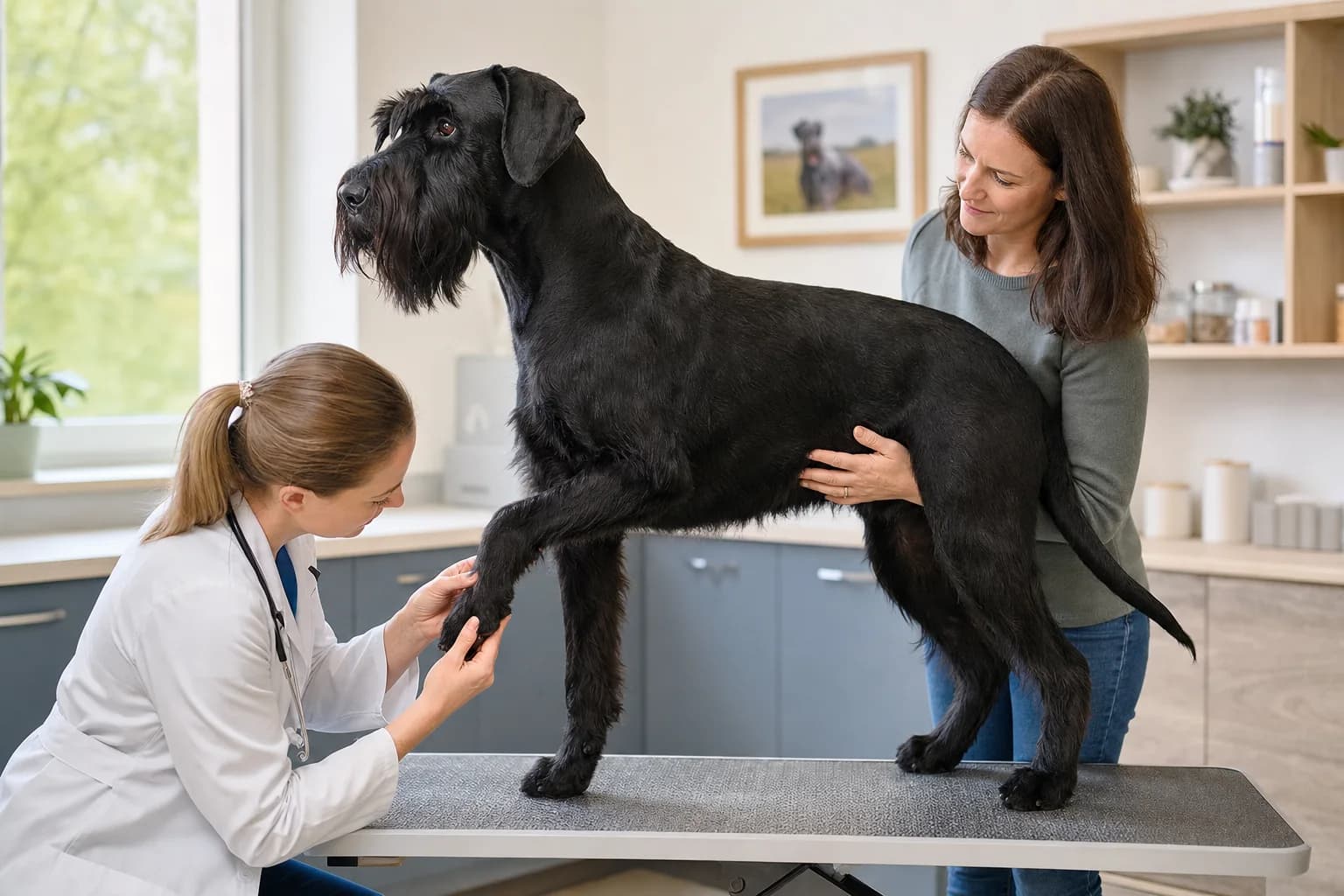
A non-graphic toe check
During grooming, compare all feet for nail breakage, swelling, redness, discharge, odor, pigment or surface change, pain, and repeated licking. Look between toes and where the nail enters the skin.
Photograph a new finding with the date and a scale reference, prevent persistent licking if the veterinarian advises, and arrange an examination when the change does not resolve promptly or is painful.
- Every toe is inspected in good light.
- The dog is not forced through painful handling.
- Nail trauma history and duration are recorded.
- A recurring problem is not treated indefinitely with home antiseptics.
Bleeding that will not stop, severe pain, a dangling or deeply torn nail, rapidly growing swelling, tissue destruction, or inability to bear weight needs prompt veterinary care.
What a veterinary workup may involve
The veterinarian may examine the full limb and lymph nodes, evaluate infection or trauma, recommend imaging, collect cells or tissue, or refer to surgery or oncology depending on the finding. The visible change alone cannot determine the cause.
Ask what question each test answers, whether pain relief or infection control is needed, when results are expected, and which changes should trigger faster follow-up.
- The exact digit and nail are documented.
- Samples are labeled and submitted appropriately.
- Medication response is not mistaken for a final diagnosis.
- Follow-up dates and activity restrictions are written.
Online photographs cannot rule cancer in or out. Early assessment preserves diagnostic and treatment choices.
Heart, breathing, neurologic, and behavior changes
Exercise intolerance, coughing, fainting, abnormal breathing, weakness, seizure, disorientation, loss of balance, or sudden behavior change can arise from many systems. The safest first step is triage based on severity, not choosing a breed-associated diagnosis.
Breathing and collapse
Observe respiratory effort as well as rate. Abdominal effort, neck extension, inability to lie comfortably, blue or very pale gums, repeated collapse, or distress at rest is urgent.
Keep the dog calm, minimize heat and exertion, call the clinic or emergency hospital, and follow transport instructions. If safe, capture a short video without delaying departure.
- The emergency destination and route are known.
- The dog is not muzzled if breathing or vomiting is compromised.
- Medications and known diagnoses travel with the dog.
- A second person calls while the driver focuses on transport.
Do not give leftover heart, pain, sedative, or human medication unless a veterinarian specifically directs it for this episode.
Seizure and neurologic change
During a seizure, protect the dog from stairs, water, sharp objects, and heat without putting hands near the mouth. Time the event and observe recovery. Many events that look like seizures require veterinary interpretation.
Contact a veterinarian promptly. Emergency urgency increases with prolonged activity, repeated events, incomplete recovery, toxin exposure, injury, pregnancy, or a first event in an at-risk dog.
- Start and stop times are recorded.
- A safe video is captured only if another person can protect the dog.
- Possible toxins and medications are identified.
- Post-event behavior and temperature concerns are reported.
Do not restrain the tongue, force water, or place objects in the mouth. Follow veterinary emergency instructions.
Behavior change can be medical
Pain, sensory loss, endocrine disease, neurologic change, medication effects, sleep disruption, and other illness can appear as irritability, withdrawal, house-soiling, restlessness, touch sensitivity, or reduced training performance.
Document the first date, triggers, body areas involved, daily pattern, and accompanying physical change. Manage safety while arranging examination, then coordinate trainer or behavior support with the medical findings.
- Children and visitors are separated from new risk.
- Warnings are not punished.
- Medication and supplement changes are disclosed.
- Video is taken without provoking the behavior.
A sudden serious behavior change should not be framed as dominance or stubbornness before pain and disease are considered.
Preventive care across life stages
Preventive priorities change with life stage:
- Puppies need developmentally appropriate nutrition, vaccines and parasite prevention based on risk, safe socialization, oral and handling foundations, and follow-up of growth and movement.
- Adults need stable body and muscle condition, dental care, grooming-based skin and toe checks, and preventive examinations.
- Seniors may need more frequent assessment, mobility adaptations, pain evaluation, and closer monitoring of appetite, thirst, elimination, sleep, and cognition.
The best food for Giant Schnauzers guide owns general diet selection and body-condition monitoring. This health page owns symptoms, diagnosis, and therapeutic decisions, so food changes should not delay veterinary assessment of a new clinical pattern.
Home care that supports preventive visits
Use the orthopedic bed category only after checking actual dimensions, support, washable construction, and the dog's ability to get on and off. A product cannot diagnose or treat pain.
A dog toothbrush can support home oral care after the veterinary team shows a safe technique. Use dog-safe dental paste, introduce handling gradually, and seek care for pain, bleeding, facial swelling, or eating change.
Prepare a one-page medical handoff
Emergencies are easier when another caregiver can find the essentials. Keep the dog's identifying details, clinic contacts, diagnoses, medications, allergies, diet, insurance information, and preferred emergency hospital in one current place.
Add handling notes, muzzle conditioning status, transport needs, and which person can authorize care. Review the sheet after every medication or diagnosis change.
- Drug names include dose and schedule.
- The current veterinarian and emergency numbers are correct.
- The dog's weight and microchip are included.
- A copy is accessible without the owner's phone password.
The sheet supports communication but never replaces the original medical record or direct veterinary instructions.
Giant Schnauzer health FAQs
The life expectancy of a Giant Schnauzer is commonly planned around the AKC estimate of 10 to 13 years. The published 10 to 13 year range is a planning range, not a prediction for one dog. Family history, preventive care, body and muscle condition, accidents, disease, access to treatment, and chance affect individual lifespan. Use the range to plan finances, mobility support, and senior care, then follow the health and quality-of-life changes of the individual rather than treating a birthday as a countdown.
Giant Schnauzer parents should have the current Giant Schnauzer Club of America and OFA CHIC health tests; check those requirements directly, then verify the actual sire and dam in the public database. Current requirements can change, and a CHIC number means completion and disclosure rather than universally normal results. Open each underlying record, match the dog's identity and age, and ask how an abnormal or missing result affected the mating decision. DNA panels do not replace required orthopedic or ophthalmology examinations.
Giant Schnauzers can be prone to toe cancer in the sense that veterinary literature reports an association between dark-coated Schnauzers and digital squamous cell carcinoma. That does not mean every toe problem is cancer. Persistent swelling, pain, a recurring nail-bed lesion, broken nail, discharge, or lameness deserves veterinary examination and sometimes sampling. Photograph a new change, record its duration, and avoid treating it indefinitely as a grooming problem because an online image cannot confirm or exclude a diagnosis.
Signs that require emergency care include collapse, breathing difficulty, repeated unproductive retching, a rapidly enlarging abdomen, severe weakness, seizure emergencies, uncontrolled bleeding, major trauma, sudden paralysis, or suspected toxin exposure. Any of these requires immediate veterinary direction. Call an emergency hospital while preparing to leave, keep the dog calm, and follow transport instructions. Do not wait for a dramatic appearance, give leftover medication, or delay departure to collect perfect photos or online opinions.
Primary sources
- AKC Giant Schnauzer health and lifespan information
- Giant Schnauzer Club of America health testing guidance
- Giant Schnauzer Club of America health statement
- OFA CHIC program explanation
- Peer-reviewed study of canine digital squamous cell carcinoma
- Current PubMed-indexed digital squamous cell carcinoma evidence
- AAHA nutrition and weight management guidelines
BVMS, MRCVS
Dr. Pippa Elliott, BVMS, MRCVS, is a veterinarian with nearly 30 years of experience in companion animal practice. Dr. Elliott earned her Bachelor of Veterinary Medicine and Surgery from the University of Glasgow. She was also designated a Member of the Royal College of Veterinary Surgeons. Married with 2 grown-up kids, Dr. Elliott has a naughty Puggle named Poggle, 3 cats and a bearded dragon.
Sign up for expert-backed reviews and safety alerts all in one place.