Giant Schnauzer: Temperament, Size, Health, and Care
The Giant Schnauzer is an intelligent, powerful working dog with substantial exercise, training, and grooming needs. Use this guide to assess fit and plan care.
Petful is reader supported. As an affiliate of platforms like Amazon and Chewy, we may earn a commission when you buy through links on this page. There is no extra cost to you.
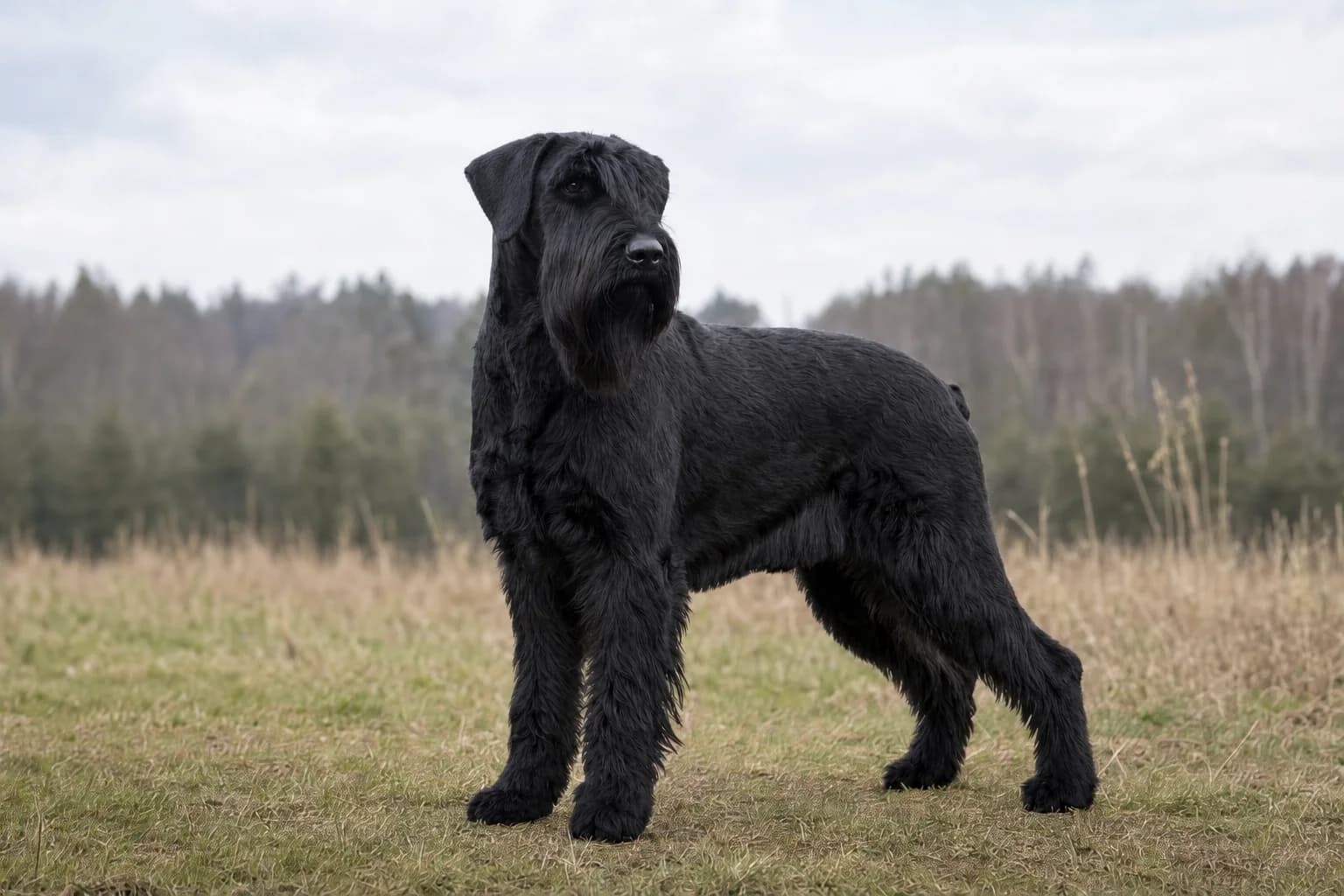
The Giant Schnauzer is a powerful German working dog, not an oversized version of an easy companion breed. As a working breed, it was selected to notice, learn, move, and persist. A well-bred adult can be deeply loyal and quick to learn.
That same dog is athletic, watchful, and strong, so daily training, purposeful exercise, grooming, and calm social exposure cannot be optional.
This guide is designed as a household-fit test. It covers the breed's origin, adult scale, temperament, guarding behavior, training, exercise, coat care, family life, sourcing, food, health screening, and the practical systems that make ownership sustainable.

Sign up for expert-backed reviews and safety alerts all in one place.
Giant Schnauzer at a glance
- 1The Giant Schnauzer is a powerful working dog with intelligence, energy, and real guarding ability.
- 2AKC publishes adult ranges of 25.5 to 27.5 inches and 75 to 95 pounds for males, and 23.5 to 25.5 inches and 55 to 80 pounds for females.
- 3The wiry double coat sheds but releases less loose hair when maintained.
- 4A realistic home provides daily structured work, training, coat and beard care, secure management, and verified health planning.
- 5This household-fit test is a six-part readiness test for time, handling, training access, visitor management, grooming, and health finances.
- 6The Riesenschnauzer responds best to positive reinforcement.
What is a Schnauzer? The useful Schnauzers 101 answer is that the name covers three distinct bearded breeds, not one breed in three sizes. This page owns Giant Schnauzer temperament and the real Giant Schnauzer guard dog decision; broader Schnauzer temperament claims should never erase the individual dog's line, history, health, and learning.
This working breed developed in the Bavarian Alps as a versatile Bavarian cattle dog and farm worker, then later gained work in guarding and police roles. That history still matters. A modern Giant may notice movement, control space, investigate visitors, and persist at a task in ways that feel very different from a dog selected mainly for easy companionship.
The German name, Riesenschnauzer, means giant Schnauzer, but the dog is not in the very largest weight class. "Giant" identifies the largest of three distinct Schnauzer breeds. The Giant, Standard Schnauzer, and Miniature share a recognizable bearded outline, but they are not one breed offered in three sizes.
Size and three-breed context
A big Giant Schnauzer next to a person can look dramatically larger than a photograph suggests, so use measured clearance and handling needs rather than visual impression alone. Readers comparing types of Schnauzers should also treat each one as a distinct breed rather than scaling one temperament up or down.
Use the Giant Schnauzer size and weight guide for transport and handling measurements, and the Giant vs. Standard vs. Miniature Schnauzer comparison when the household is still deciding which distinct breed fits.
- Working Group breed with a nearly square, substantial frame.
- Harsh, dense outer coat over a softer undercoat.
- Breed-standard colors of solid black and pepper and salt.
- Published life-expectancy estimate of 10 to 13 years.
- Strong need for training, purposeful activity, and close household participation.
The official Giant Schnauzer breed page supplies the published size and life-expectancy ranges. The breed standard is the better source for ideal structure, coat, color, and temperament.
Temperament, guarding, and trainability
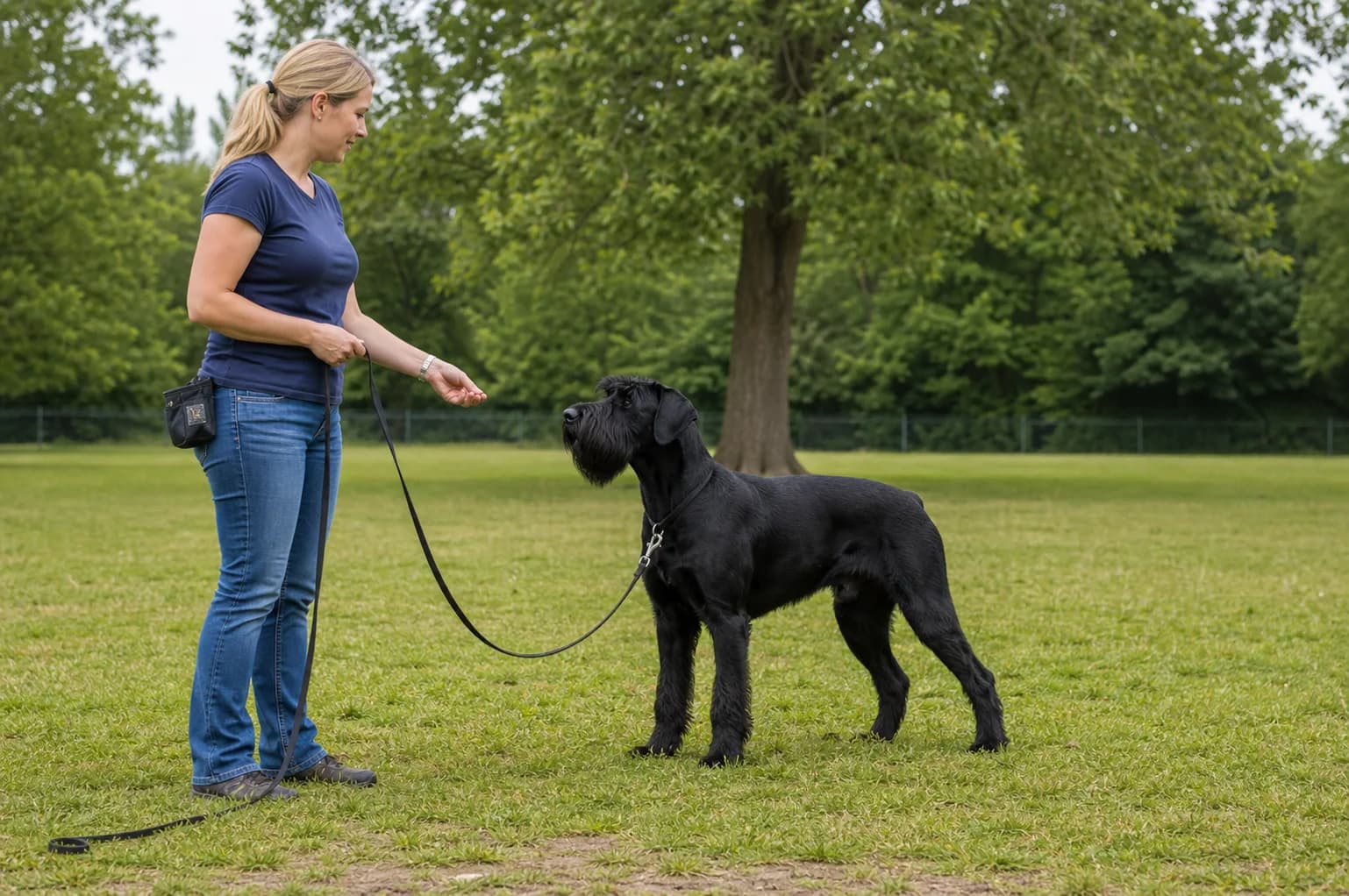
The ideal Giant Schnauzer is alert, composed, courageous, intelligent, and loyal. Protective does not mean indiscriminately aggressive. The practical goal is a dog that notices a change, checks in with the handler, and can move away or settle when asked. Lunging, inability to recover, frantic fence running, and biting are not desirable proof of guardian quality.
Giant Schnauzer temperament and broader Schnauzer temperament both require evaluation of the individual dog's line, history, health, recovery, and learned behavior.
This breed often learns patterns after very few repetitions, including patterns owners did not intend to teach. If barking makes a visitor retreat, pulling reaches an odor, or stealing an object starts a chase, the behavior has been rewarded. Management prevents rehearsal while training builds a better response.
- Do not attempt bite work or protection exercises with online instructions. A family dog needs neutral public behavior, recall, stationing, safe handling, and dependable disengagement. Specialized working-dog work requires a qualified trainer, local supervision, and a suitable individual dog.
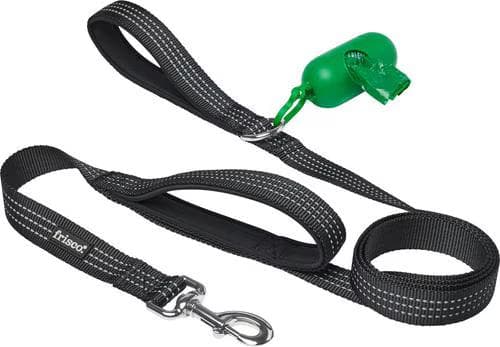
A secure traffic-handle leash can make close transitions easier when it fits the handler and dog, but no leash creates trained behavior. Inspect stitching and hardware, avoid wrapping it around a hand, and practice before entering crowded places.
Reward-based training that holds up under pressure
Food, toys, access, movement, and social contact can all reinforce behavior. The lesson becomes durable when the reward is clear, the environment is easy enough for success, and difficulty rises one variable at a time.
Teach name response, hand target, recall, loose-leash walking, leave it, drop, place, door waits, and cooperative body handling. Practice first at home, then with distance from distractions, then in carefully chosen public settings.
- Keep sessions short enough that attention remains available.
- Reward voluntary orientation before asking for prolonged control.
- Use distance and barriers when the dog cannot eat or respond.
Petful may earn a commission when you click through to Lemonade, at no extra cost to you.
- End with a calm decompression period rather than repeated high arousal.
A cue is not trained merely because the dog performs it in the kitchen. Treat every new location, person, dog, surface, and level of excitement as a separate step in generalization.
Socialization without forced greetings
Socialization means building safe, neutral expectations about the world. It does not require every person to touch the puppy or every dog to play. Forced interaction can teach a cautious puppy that avoidance signals will be ignored.
Pair manageable sights and sounds with food, play, or calm observation. Let the puppy watch delivery people, children, hats, mobility devices, traffic, veterinary surfaces, and friendly adult dogs from a distance where the body remains loose.
- The puppy can disengage and return attention to the handler.
- Exposure includes surfaces, sounds, restraint, transport, and quiet recovery.
- Dog partners are healthy, behaviorally appropriate, and carefully selected.
- Visitors follow one calm routine instead of improvising at the door.
Freezing, tucked posture, frantic scanning, repeated barking, refusal of normally valued food, or escape attempts mean the setup is too difficult. Add distance rather than insisting the dog confront it.
Adolescence and impulse control
During adolescence, physical power can arrive before judgment and emotional regulation. A cue that looked finished at six months may weaken around wildlife, dogs, visitors, or territorial triggers.
Keep the long line, gates, and structured routines in use while reinforcing check-ins and calm choices. Increase freedom only when repeated behavior shows the dog can handle it, and reduce difficulty promptly after a setback.
- Recall is practiced away from danger and paid generously.
- Door and vehicle exits happen on a release cue.
- Rest days balance intense sport or social activity.
- Body handling continues after puppyhood.
Sudden behavior change, irritability with touch, exercise intolerance, or loss of learned skills can have a medical component. Arrange veterinary assessment instead of assuming every change is defiance.
Who should and should not get a Giant Schnauzer
| Decision | Promising fit | High-risk mismatch |
|---|---|---|
| Daily work | You enjoy structured walks, training, scent games, and dog sports | You expect a yard to exercise the dog for you |
| Handling | Every adult can manage a strong dog and practice cooperative care | The primary caregiver cannot safely hold or transport the dog |
| Visitors | You can use gates, leashes, place training, and calm introductions | You want an automatically social greeter with no management |
| Grooming | Weekly coat work and periodic skilled trimming fit the calendar | You want a wash-and-wear coat because shedding looks low |
| Children and pets | Adults supervise, protect rest spaces, and read body language | Children are expected to climb on, hug, or discipline the dog |
| Health and cost | Screening records, insurance or savings, and preventive care are realistic | An unexpected veterinary, training, or grooming bill would destabilize the household |
The best owner is not necessarily an expert athlete or professional trainer. It is someone who enjoys routine, can learn timing and body language, and is willing to manage the environment while skills develop. The breed is a poor impulse purchase for someone attracted mainly to its formidable appearance.
An apartment is not an automatic rejection, and a large property is not an automatic approval. Indoor behavior depends on whether the dog receives enough planned work, can settle after activity, and is managed around doors, hallways, elevators, and visitors. A fenced yard is useful for training and play, but unsupervised patrol time can rehearse barking and barrier frustration.
Budget and physical access
A big Giant Schnauzer next to a person also changes doorway, vehicle, leash-leverage, and emergency-handling decisions; use the Giant Schnauzer size guide to measure the adult route instead of judging scale from puppy photos.
As part of advance financial planning, compare a pet insurance option alongside household savings and other budget choices.
Read any policy's waiting periods, reimbursement terms, limits, and exclusions before deciding. Keep separate savings for uncovered costs and routine preventive care.
A six-part readiness test
A six-part readiness test for time, handling, training access, visitor management, grooming, and health finances turns general enthusiasm into an ordinary-week plan.
Use a six-part readiness test for the ordinary week. Before contacting a breeder or rescue, score the household on time, physical handling, training access, visitor management, grooming, and health finances. Include structured walks in the time plan and weekly coat work in the grooming plan. One weak area can be improved; several unresolved areas predict daily conflict.
Write the ordinary-week plan, not the vacation-week plan. Name who provides the morning walk, midday break, evening work, coat care, classes, transport, and backup care when the usual person is ill or away.
- At least two adults know the management rules and emergency contacts.
- The vehicle, housing rules, gates, and sleeping area fit an adult dog.
- A reward-based trainer and Giant-experienced groomer are available locally.
- The budget includes preventive care, training, grooming, and emergencies.
If the plan depends on children walking the dog, an invisible fence containing it, or a future promise to become more active, solve that mismatch before acquisition.
First-time owners
A diligent first-time owner can succeed, but the learning curve is steeper because mistakes involve a large, fast, observant guardian. Sweet puppy behavior does not predict how easy adolescent strength and territorial awareness will feel.
Petful may earn a commission when you click through to Chewy, at no extra cost to you.
Arrange class and private-trainer support before problems appear. Practice positive reinforcement, stationing, leash skills, muzzle conditioning, body handling, and visitor routines while the puppy is small enough that management is simple.
- Choose instructors who use rewards and can explain arousal and threshold.
- Meet stable adult Giants, not only puppies or show-ring portraits.
- Ask the breeder or rescue how the dog behaves after excitement, not just during it.
- Plan safe care if boarding, grooming, or veterinary handling becomes difficult.
Avoid anyone selling dominance contests, intimidation, or protection training as a shortcut to control. Fear and conflict can make a powerful dog less predictable, not safer.
Exercise and mental work
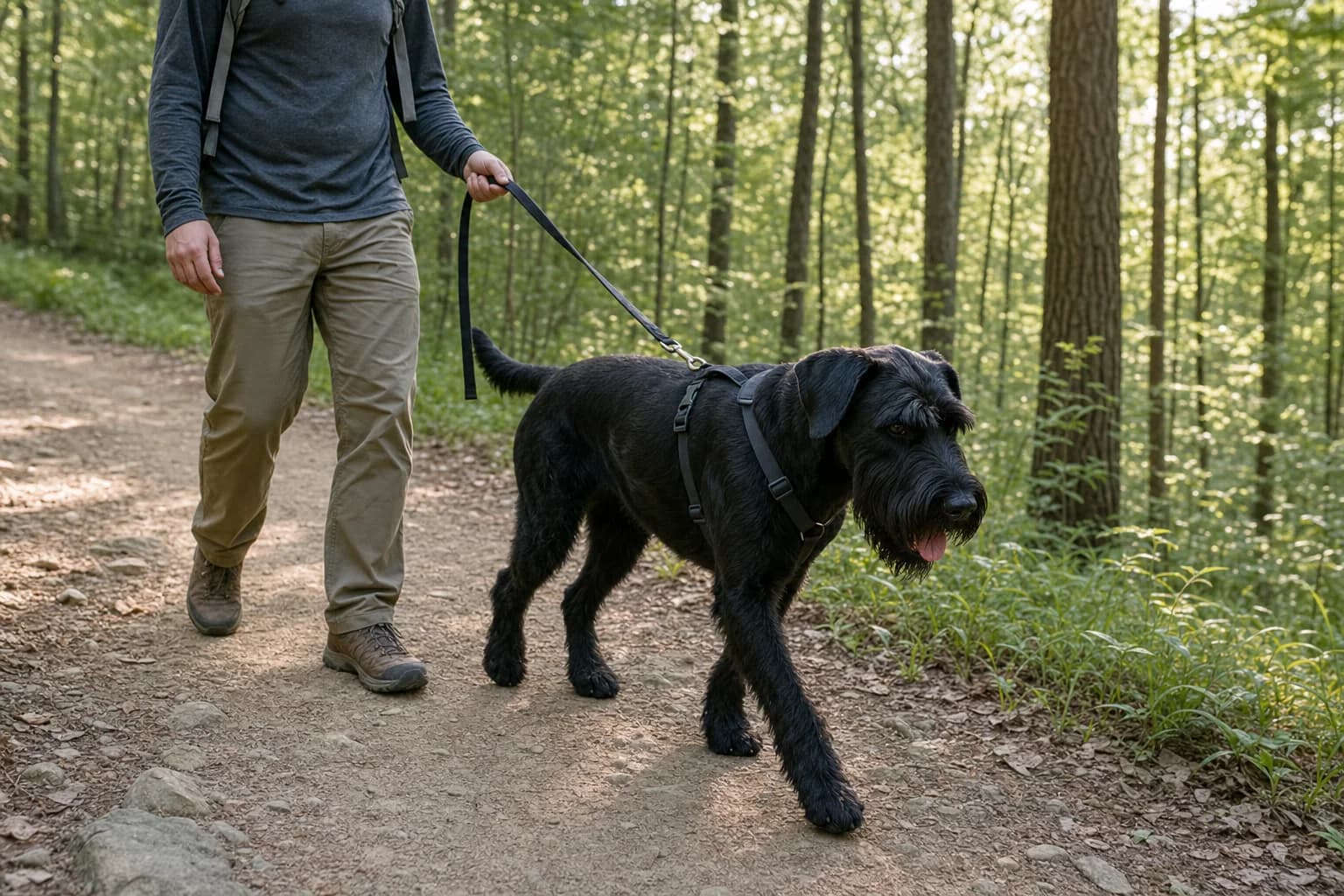
Giant Schnauzers need more than a slow walk around the block, but more intensity is not always better. Repetitive ball chasing, uncontrolled running, and constant high-arousal play can create a fitter dog who struggles to settle. A balanced plan combines aerobic movement, strength and coordination, sniffing, training, problem solving, and real rest.
For a practical way to distribute short sessions across the day, WebVet's guide to building a dog training schedule can help turn those needs into a repeatable household routine.
Build a sustainable weekday
A useful adult routine might include a purposeful morning outing, several minutes of skill work, a midday break, an evening walk or sport session, and quiet enrichment. The exact duration depends on age, conditioning, weather, and health.
Track the dog's behavior after activity. The goal is relaxed recovery, normal appetite, comfortable movement, and the ability to sleep. Persistent pacing, destructive behavior, stiffness, or escalating arousal means the plan needs adjustment.
- Include sniffing and choice instead of marching for the entire walk.
- Rotate training, search games, hiking, tracking, obedience, and controlled play.
- Use non-slip surfaces and age-appropriate impact for growing puppies.
- Schedule recovery after unusually demanding work.
Do not use exhaustion as the only behavior strategy. Pain, anxiety, insufficient sleep, unclear routines, and rehearsed guarding cannot be fixed by simply adding more miles.
Mental work with an off switch
The Giant's intelligence benefits from jobs that have a beginning, clear rules, and an end. Search games, object discrimination, trick chains, tracking, and food puzzles can satisfy problem solving without encouraging the dog to police the household.
Use a release cue when the task ends, put equipment away, offer water, and reinforce settling on a mat. A durable food puzzle can support quiet enrichment when its size and construction suit the dog and use is supervised.
- Choose tasks that reward cooperation rather than frantic repetition.
- Count training treats inside the daily calorie total.
- Rotate difficulty before the dog becomes frustrated.
- Supervise any item that could be torn or swallowed.
Resource guarding, repeated destruction, distress when the puzzle is removed, or ingestion of pieces requires a different setup and professional guidance where appropriate.
Home life, children, and other animals
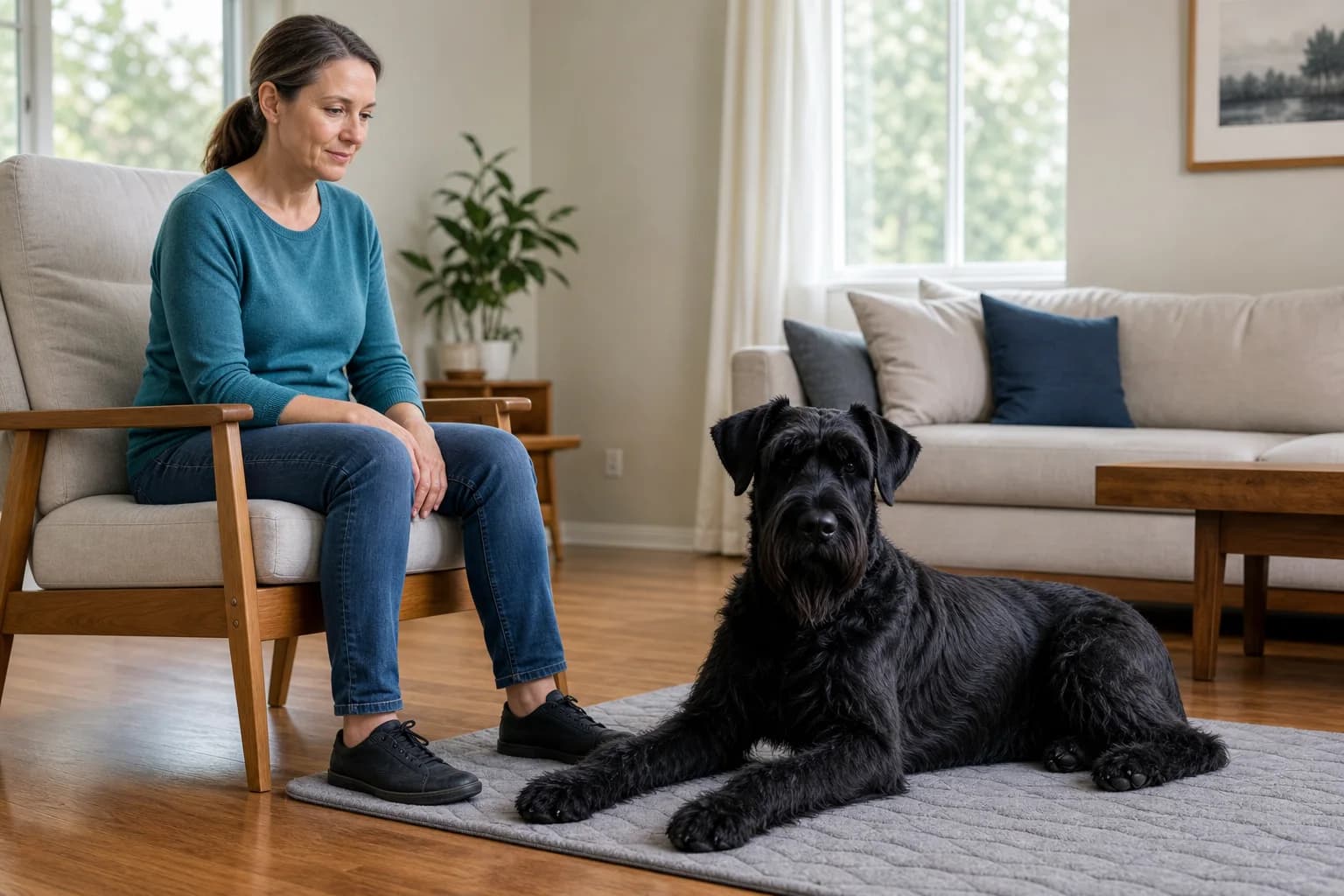
Household harmony comes from protected rest, predictable rules, and active supervision. A Giant should have a quiet place where children and visitors do not follow. Gates and closed doors are responsible tools, not evidence that the dog has failed.
Children and consent
A well-socialized Giant may be affectionate with children, but size alone makes collisions consequential. Running, squealing, food, toys, and visiting friends can raise arousal quickly.
Adults control greetings, prevent climbing and hugging, separate dog and child during meals or rough play, and teach both to leave sleeping spaces alone. Reward the dog for choosing a mat at a comfortable distance.
- The dog can leave every interaction without being followed.
- Children never take food, toys, or stolen objects from the mouth.
- An adult, not an older child, holds the leash in public.
- Barriers are in place before play becomes chaotic.
Freezing, hard staring, lip lifting, growling, hiding, repeated escape, or snapping requires immediate separation and qualified help. Never punish a warning signal.
Other dogs, cats, and small animals
Breed averages cannot predict one dog's compatibility. Early history, prey interest, social skill, sex, health, and the resident animal all matter. A pleasant meeting does not prove safe unsupervised living.
Use parallel movement, generous space, short sessions, separate feeding, and individual rest areas. For cats, provide vertical escape routes and prevent all chasing from the first day.
- Introductions occur on neutral or low-pressure ground when possible.
- High-value chews and food are managed separately.
- The smaller animal always has a dog-free route and room.
- Freedom increases only after calm behavior is consistent.
Predatory stalking, fixation, repeated pinning, severe guarding, or large size mismatch may make cohabitation unsafe even when training improves manners.
Visitors, deliveries, and service access
A guardian breed does not need to make every decision at the front door. Management should happen before the bell, not after the dog is already charging, barking, and unable to process cues.
Create a repeatable arrival routine using a secure gate or closed room, leash, station cue, and prepared rewards. Tell visitors whether to ignore the dog, toss food away from themselves, or avoid interaction entirely.
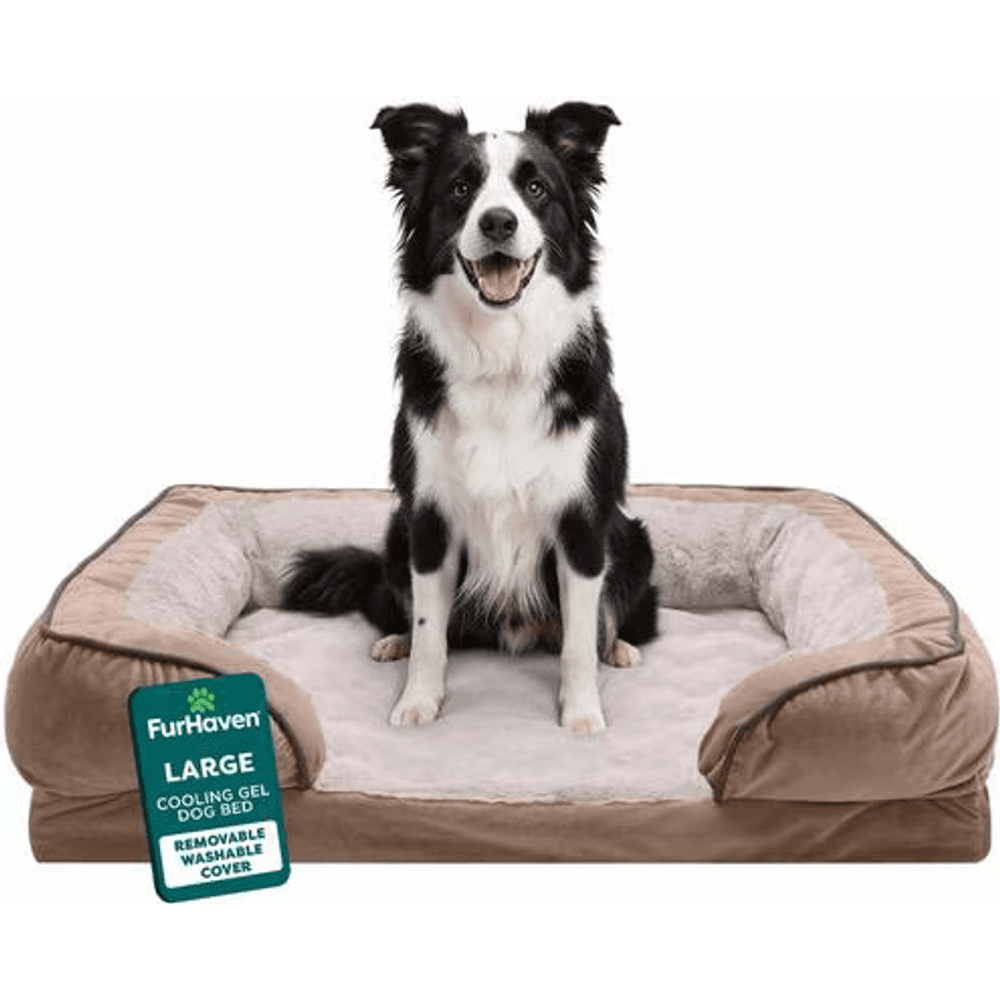
An orthopedic sofa bed with three bolstered sides for dogs who like to rest their head and joints against a cushion. The supportive foam base cradles hips and elbows, a comforting spot for an older or shaky dog to settle.
Petful may earn a commission when you click through to Chewy, at no extra cost to you.
- Delivery notes prevent surprise entry into the yard.
- Contractors know where the dog will be secured.
- The station is practiced when no visitor is present.
- Emergency contacts understand the same routine.
A dog with a bite history or serious stranger-directed behavior needs an individualized safety plan from qualified professionals. Do not use unsuspecting visitors as training setups.
Shedding and grooming workload
The Giant's coat is a double coat: a hard, wiry outer layer and softer undercoat. It does shed, although maintained coats often release less hair into the home than many smooth or fluffy double coats. Low visible shedding is not low maintenance.
Weekly combing to the skin, beard cleaning, nail care, ear and skin checks, and periodic clipping or hand stripping are part of ordinary care. Show-coat preparation is specialized. Many companion owners choose a practical clip, understanding that repeated clipping can soften or lighten the appearance of the jacket.
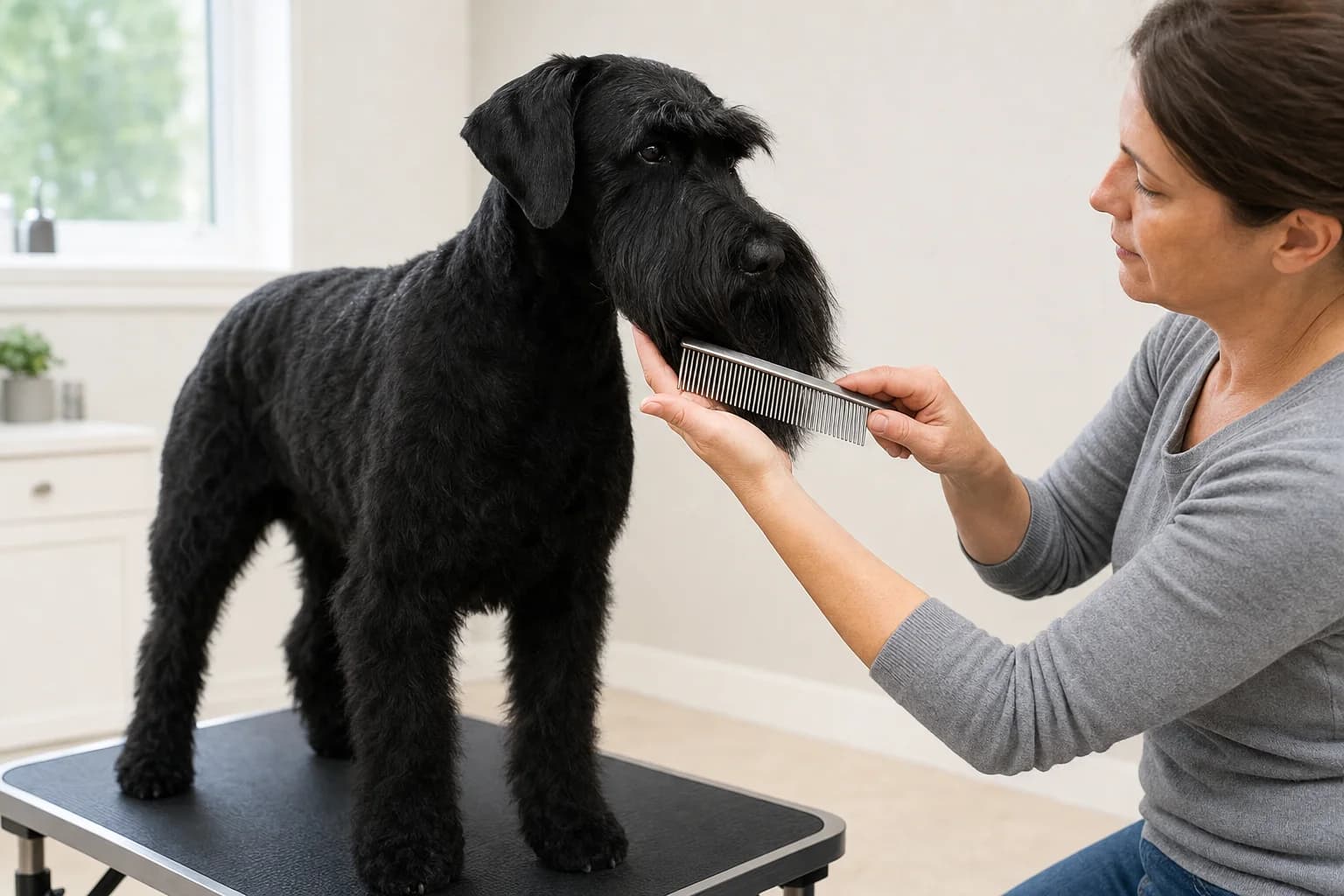
A weekly coat-and-skin check
Work in small sections so the comb reaches the skin rather than polishing only the surface. Common friction areas include the beard, behind the ears, armpits, legs, belly furnishings, and places where equipment rubs.
Use a suitable brush followed by a metal comb as the check. Clean and dry the beard after food and water, inspect toes and nail beds, and note any new lump, odor, redness, broken hair, or tenderness.
- The comb passes from skin to tip without snagging.
- Tools are appropriate for a wiry coat and used without scraping skin.
- Nails remain short enough for comfortable stance and traction.
- A groomer explains the home schedule between appointments.
Persistent itching, hair loss, odor, sores, sudden coat change, painful mats, or a toe or nail-bed lesion needs veterinary attention rather than repeated cosmetic products.
Record whether a black Giant Schnauzer or salt and pepper Giant Schnauzer shows a new coat or skin change in neutral light, then use the Giant Schnauzer color guide for appearance claims.
Allergy expectations
No dog is allergen-free. People may react to proteins from dander, saliva, or urine, and the amount of loose hair is not a reliable allergy test. One person may tolerate one individual dog and react strongly to another.
Before acquisition, spend repeated time indoors with adult Giants, involve an allergist when symptoms are important, and plan cleaning controls. Wash bedding, reduce upholstered reservoirs, and keep the dog out of the allergic person's bedroom.
- The decision is based on real exposure rather than a hypoallergenic label.
- Grooming is done by a less-sensitive person where possible.
- The home uses practical ventilation and cleaning measures.
- A return plan exists if symptoms become unmanageable.
Do not ask a child or adult to endure worsening asthma or severe allergy symptoms to prove commitment. Human medical advice belongs with a qualified clinician.
Loose hair can be especially visible on a black Giant Schnauzer and less obvious against some fabrics with a salt and pepper Giant Schnauzer, but color does not change the underlying grooming workload. For the full routine, clipping and hand-stripping tradeoffs, see do Giant Schnauzers shed?. The Giant Schnauzer colors guide explains how pepper-and-salt banding, coat length, and light change appearance. These specialist guides keep the detailed coat decisions with the pages built to answer them.
Stress-test the ownership fit
A breed profile is most useful when it exposes the ordinary situations that can strain a plan. Work through these cases with every adult in the home before acquisition, then revisit them as the dog matures.
Plan for adolescence, not only the finished adult
A socially appealing puppy may become a physically powerful adolescent before judgment, impulse control, and recovery are mature. During that interval, door behavior, leash handling, visitor routines, and dog interactions can change quickly.
Keep management ahead of strength. Refit equipment, shorten the distance from triggers, rehearse stationing and recalls, and schedule training support before a difficult pattern has months of practice.
- Every handler can secure the leash and open doors safely.
- Freedom expands only after comparable situations are reliable.
- Sleep and recovery remain part of the weekly plan.
- Sudden behavior change triggers a pain and health review.
Adolescent testing is not an excuse for intimidation or forced exposure. Escalating fear, aggression, guarding, or inability to recover calls for qualified help and tighter management.
Design the visitor and delivery route
A watchful Giant can learn that the door predicts charging, barking, or physical restraint if the household improvises every arrival. The safest routine begins before the bell rings and does not require a guest to train the dog.
Choose a gated station away from the entry, store rewards and a leash there, and practice staged arrivals with known adults. Give delivery instructions that prevent an unexpected open-door encounter.
- The barrier remains secure when the exterior door opens.
- Children do not manage the dog or admit visitors.
- Guests receive simple instructions before entering.
- The dog has a quiet option for the entire visit.
Do not test a tense dog by asking a visitor to reach, stare, or take food. A history of snapping, biting, or barrier escalation needs a professional safety assessment.
Audit local professional capacity
Ownership becomes harder when the nearest groomer will not handle a large bearded dog, the trainer uses methods the household rejects, or the emergency clinic cannot safely move a nonambulatory patient.
Call prospective veterinary, grooming, training, boarding, and emergency providers. Ask about Giant Schnauzer experience, handling policies, wait times, physical limits, and what records or cooperative-care skills they expect.
- A regular clinic and emergency hospital are identified.
- A groomer can maintain the chosen coat plan.
- Training help is available before a crisis.
- Backup care has completed a calm trial.
A provider's willingness is not proof of humane or evidence-based practice. Observe methods, ask questions, and leave when safety or welfare standards do not match.
Build alone time without creating isolation
Daily work and companionship do not mean a Giant should be unable to rest when people leave. Abrupt long absences can produce distress, while constant access can prevent the dog from learning a predictable independent routine.
Begin with short, uneventful separations after needs are met. Use a safe area, monitor behavior, vary duration gradually, and preserve departures and returns as calm events.
- The dog settles rather than pacing or vocalizing continuously.
- Confinement does not trigger panic or injury.
- A midday plan exists for longer workdays.
- Camera footage is reviewed instead of guessed from silence.
Destruction at exits, escape attempts, sustained distress, self-injury, or inability to eat when alone deserves veterinary and behavior support, not longer forced absences.
Run a bad-week capacity check

Petful may earn a commission when you click through to Chewy, at no extra cost to you.
The real fit appears when weather is poor, a caregiver is ill, work runs late, and the dog still needs exercise, training, coat care, medication, and safe management.
Write a seven-day backup version of the routine. Assign alternate handlers, indoor enrichment, transport, emergency funds, and a minimum grooming cadence that can continue during disruption.
- One unavailable person does not collapse the care plan.
- Physical exercise has safe lower-intensity substitutes.
- Food and medication instructions are written.
- The backup caregiver can control the adult dog.
If the household can meet the breed's needs only when every day goes perfectly, the mismatch is practical rather than personal and should be resolved before acquisition.
A practical Giant Schnauzer ownership plan
Breed knowledge becomes useful only when it changes the calendar, environment, and backup plan. These final checks turn the profile into routines that can be rehearsed before they become urgent.
| Cadence | Owner commitment | Success check |
|---|---|---|
| Daily | Purposeful movement, training, settling practice, beard care, and daily enrichment | The dog can work and then recover calmly |
| Weekly | Coat-to-skin combing, weekly coat check, nail and toe review, and routine audit | Skin and coat changes are found early |
| Monthly | Recheck equipment fit, emergency supplies, and backup-care readiness | Every caregiver can use the current plan |
| Veterinary schedule | Preventive exams, risk-based care, and documented health trends | Records support timely clinical decisions |
The first 30 days
An appropriately sized washable supportive bed can define the station and support rest when the dog can step on and off comfortably. Measure the adult dog and available floor space instead of relying on a generic large label.
A newly placed adult or puppy needs a smaller world than many excited households provide. Too much access can create door rushing, patrol behavior, conflict over objects, and repeated mistakes before the dog understands the routine.
Use gates, a quiet rest area, supervised rooms, consistent toileting and feeding, short local walks, and low-pressure introductions. Add one freedom at a time when sleep, appetite, recovery, and behavior remain stable.
- Visitors are postponed or managed during decompression.
- Food, chews, toys, and resident pets have separate systems.
- The dog learns the route to rest, toilet, vehicle, and exit.
- The veterinary and training appointments are already scheduled.
Decompression is not isolation and should not be used to ignore illness, severe fear, aggression, or distress. Bring in the appropriate professional when the baseline is not safe.
Barking, windows, and property lines
Alert barking is expected in a watchful breed, but repeated fence and window rehearsal can make the trigger more important and recovery slower. The goal is a brief alert followed by disengagement, not silence through punishment.
Block high-value sight lines, supervise yard access, call the dog away before escalation, reward orientation and quiet, and provide a station away from the door. Practice when trigger intensity is low.
- The dog is not left to patrol the fence for long periods.
- Window film or furniture placement reduces visual rehearsal.
- A recall from the yard is reinforced generously.
- Neighbors and delivery people are not used as surprise training helpers.
Barrier aggression, redirected biting, inability to recover, or escalating stranger risk needs qualified behavior help and a tighter safety plan.
Recall and off-leash decisions
Intelligence does not make a dog safe off leash. Wildlife, livestock, unfamiliar dogs, territorial context, and one startling event can overpower a cue that looked reliable in easier settings.
Use a long line in legal open areas, reward check-ins and recalls, and practice emergency turns. Reserve off-leash freedom for securely fenced spaces unless the individual has extensive proof under comparable distraction.
- Recall succeeds without repeating the cue.
- The dog can disengage from movement at a distance.
- Local leash laws and land rules are followed.
- Identification and microchip details are current.
Do not test recall beside traffic, livestock, cliffs, frozen water, or an unknown dog. Management is part of training, not evidence that training failed.
Heat, weather, and conditioning
A black coat, dense undercoat, high drive, humidity, age, disease, and poor conditioning can reduce heat tolerance. Motivated working dogs may continue long after an owner should stop the session.
Shift activity to cooler hours, provide water and shade, build conditioning gradually, check surfaces, and learn the dog's normal breathing and recovery. Shorten work before performance visibly falls.
- The route has a safe turnaround and cooling option.
- Vehicle temperature is controlled before loading.
- The dog is fully recovered before another intense task.
- Winter ice and deicers are checked during toe care.
Marked distress, weakness, confusion, collapse, vomiting, or abnormal breathing after heat or exertion is an emergency.
Cooperative grooming and veterinary care
A Giant who can place the chin, offer a paw, stand on a scale, accept a muzzle, and pause during coat work is safer to care for across life. These skills should be maintained when the dog is healthy.
Break each procedure into seconds, reinforce voluntary participation, and stop before restraint becomes a fight. Coordinate medication or sedation with the veterinary team when it is the humane safe choice.
- The dog can approach and leave the station.
- Tools are introduced before they touch the body.
- Painful areas are not used for training practice.
- Every caregiver knows the conditioned cues.
Cooperative care is not consent to skip medically necessary treatment. It is a way to reduce fear while professionals make safe clinical decisions.
Travel, boarding, and backup care
A working guardian may not fit every boarding kennel, pet sitter, or family home. Waiting until a funeral, evacuation, or hospitalization can leave no safe option.
Identify two experienced caregivers, complete trial visits, provide written visitor and handling rules, and keep food, medication, equipment, contacts, and veterinary authorization ready.
- The facility can physically contain and transport the dog.
- Group play is optional rather than mandatory.
- The caregiver understands resource and stranger management.
- A failed trial has a safe retrieval plan.
Do not conceal bite history, escape behavior, medical needs, or dog incompatibility to secure a booking. Accurate disclosure protects everyone.
Health screening and lifespan
AKC currently publishes a 10 to 13 year life-expectancy estimate. It is a population-level planning range, not a prediction for one dog. Genetics, screening, preventive care, body condition score, injury, disease, and chance all influence an individual outcome.
Before buying a puppy, verify public records for the actual sire and dam and compare the completed tests with current Giant Schnauzer Club of America guidance. A CHIC number means the program's required tests were completed and made public; it does not mean every result was normal or guarantee a healthy puppy.
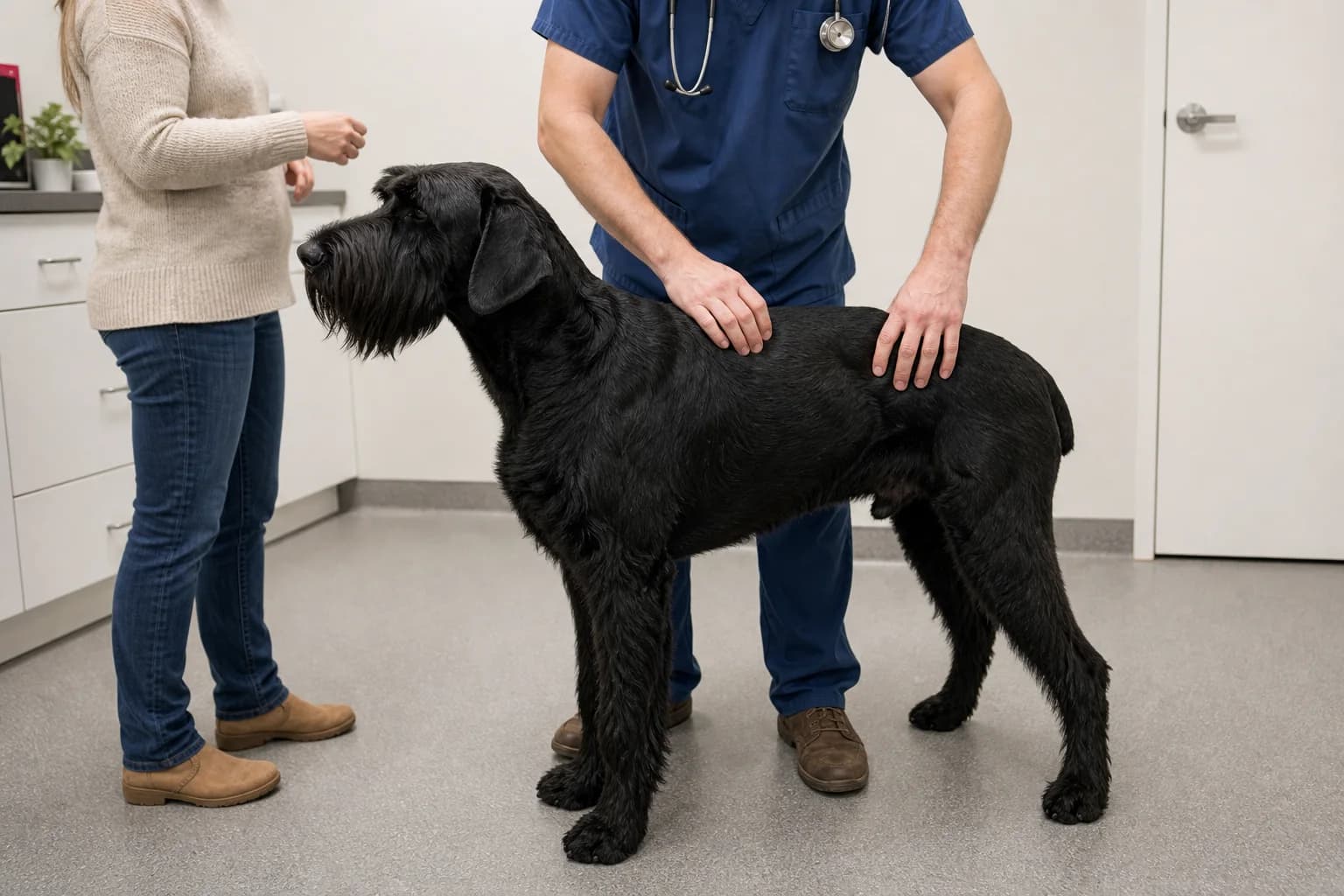
Preventive care that owners can measure
Routine care is most useful when it creates a baseline. Weight, body condition, muscle condition, gait, appetite, thirst, stool, skin, eyes, teeth, toes, and behavior are easier to interpret when change is documented.
Schedule preventive examinations at the interval the veterinarian recommends, keep vaccines and parasite prevention risk-based, maintain oral care, and bring dated photos or videos of intermittent changes.
- Use the same scale and similar conditions for weight trends.
- Check each toe and nail bed during grooming.
- Record medication, supplement, and diet changes.
- Ask when age or history should change screening frequency.
Collapse, breathing difficulty, repeated unproductive retching, a rapidly enlarging abdomen, uncontrolled bleeding, seizure, severe weakness, or suspected toxin exposure needs urgent veterinary direction.
Health claims and screening limits
A breeder's statement that the parents are healthy is not a substitute for named, verifiable results. A consumer DNA panel also does not replace orthopedic, eye, thyroid, cardiac, or other phenotype-based evaluation where the parent club requires it.
Match registered names, microchip or registration identifiers, test dates, ages, results, and the litter's relationship to each dog. Ask the breeder to explain an abnormal or missing result without treating any single number as a complete verdict.
- Both parents can be found under the identities used in the contract.
- Tests were performed at the required age by the appropriate examiner.
- Results are public rather than shown only in a screenshot.
- The contract explains return support and disclosure responsibilities.
Screening reduces uncertainty but cannot eliminate disease. Walk away from pressure to pay before records can be checked or from promises that a puppy is guaranteed never to become ill.
The veterinarian-authored Giant Schnauzer health and lifespan guide covers the parent-club screen, digital toe tumors, urgent signs, and monitoring in more depth.
The dedicated guide explains Giant Schnauzer health problems and Giant Schnauzer lifespan evidence in depth.
Puppies, price, and responsible sourcing
Start with evidence and fit, not color, urgency, or a for-sale headline. Responsible breeders can explain why a mating was planned, provide public health information for both parents, discuss temperament candidly, raise puppies in a clean and developmentally rich environment, screen homes, and take back a dog if the placement fails.
Price by itself does not establish quality. Compare what is documented: parent testing, veterinary care, socialization, contract terms, support, and the breeder's willingness to answer hard questions. Rescue and adult rehome routes can be excellent choices when behavior and medical information are evaluated honestly.
Use the Giant Schnauzer puppy and price guide for the evidence checklist, seller-verification process, and first-year budget. A Schnauzer puppy deserves the same verification regardless of a polished listing, and responsible Schnauzer puppy breeders should make the underlying records easy to check.
Food, portions, and body condition
Choose a complete and balanced diet for the dog's life stage and, during growth, an adequacy statement appropriate for large-size dogs when applicable. Compare manufacturer expertise and quality control, calories in the unit actually fed, and the dog's body and muscle condition. A breed name on a bag is not a prescription.
Measure meals and training rewards together. Adjust gradually based on trend rather than chasing a package chart or a dramatic adult weight. Symptoms, recurrent digestive problems, suspected food allergy, obesity, or therapeutic diets belong with the veterinary team.
The veterinarian-led best food for Giant Schnauzers guide provides a label-to-bowl screening method.
Giant Schnauzer owner FAQs
A Giant Schnauzer can be a good family dog in a well-bred, well-trained household that provides adult supervision, daily structured work, secure management, grooming, and respectful interactions. The breed's size and guarding tendency make it a poor choice for chaotic handling or a home that wants an automatically social dog. Individual temperament, history, and the adults' willingness to manage children and visitors all matter.
The cons of a Giant Schnauzer include physical strength, high exercise and mental-work needs, adolescent intensity, territorial behavior, substantial grooming, and a real health and grooming budget. Those commitments are manageable for a prepared household, but they become serious mismatches when the dog is chosen mainly for appearance. Owners must also plan safe visitor routines, professional support, transport, and backup care before those needs become urgent.
Many Giant Schnauzers like to cuddle and enjoy affectionate contact with their own people, but individual preference matters more than a breed promise. Let the dog choose contact, pause when body language tightens, and provide a quiet place to move away. A sudden reluctance to be touched, especially with stiffness, irritability, or behavior change, deserves veterinary attention because pain can alter social behavior.
A Giant Schnauzer can be good for an unusually prepared first-time owner who arranges skilled reward-based training, meets stable adults, uses management early, and has backup help. It is not a forgiving learn-as-you-go choice when handling, visitors, or socialization are improvised. The owner should budget for classes, grooming, veterinary care, and private support, and should have another capable adult who can safely handle the full-grown dog.
Primary sources
- AKC Giant Schnauzer breed information
- Official Giant Schnauzer breed standard
- AKC Giant Schnauzer history and working facts
- AKC Giant Schnauzer breed history
- Giant Schnauzer Club of America health testing guidance
- OFA CHIC program explanation
- American College of Allergy, Asthma and Immunology pet allergy guidance

Coreen Saito is a pet writer and longtime shelter volunteer with more than a decade in animal rescue. She covers cat behavior, breed care, and the small, ordinary science of sharing a life with companion animals, with a particular focus on honest takes about the products and decisions that actually matter. At home in Arizona, she's outranked by Mac (a dog with the loudest opinion in the house), Rebel (a cat who governs by quiet authority), and Meri (an orange tabby who runs the late shift and the laundry basket). She writes about all three, plus the rescues that keep coming through her life, at LifeWithMinty.com.
Sign up for expert-backed reviews and safety alerts all in one place.