Giant vs Standard vs Miniature Schnauzer: Key Differences
Giant, Standard, and Miniature Schnauzers share a recognizable outline but are distinct breeds. Compare size, work, temperament, care, and household fit.
Petful is reader supported. As an affiliate of platforms like Amazon and Chewy, we may earn a commission when you buy through links on this page. There is no extra cost to you.
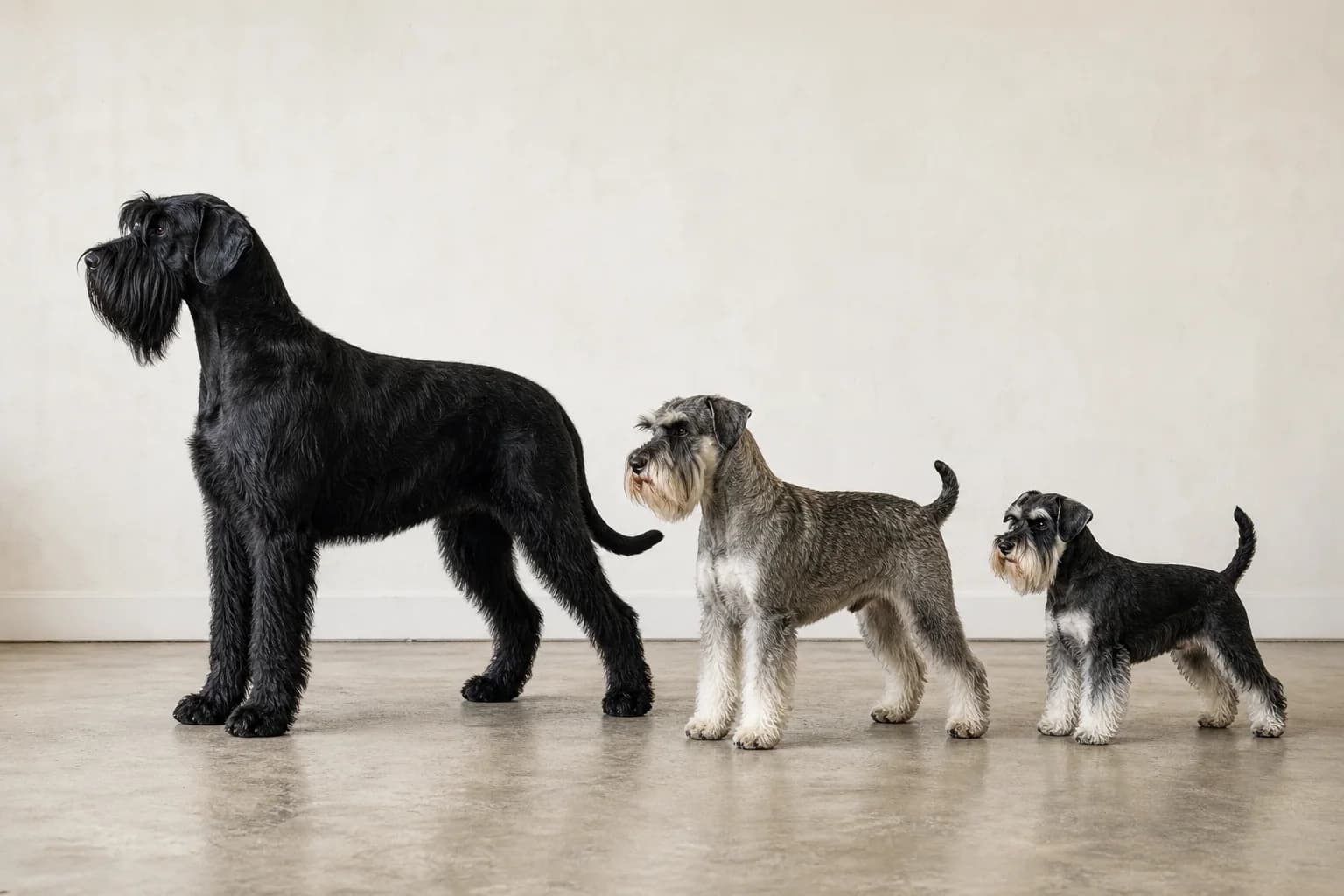
A Giant vs Standard vs Miniature Schnauzer comparison is not a choice among three sizes of the same dog. These are distinct breeds with separate standards and selection histories. Shared beards and wiry coats create a family resemblance, but physical scale, original work, and daily management differ. There is more on this in Petful’s guide to giant Schnauzer colors.
Use this guide in two stages:
- Rule out unsafe mismatches in physical handling, housing, daily work, prey interest, guarding, grooming, or veterinary logistics.
- Compare the individual dogs and responsible sources that remain after those hard limits.

Sign up for expert-backed reviews and safety alerts all in one place.
Giant, Standard, and Miniature at a glance
- 1Giant, Standard, and Miniature Schnauzers are three distinct breeds.
- 2The Giant is a powerful Working Group dog, the Standard is a medium original farm and utility breed, and the Miniature is a small Terrier Group breed.
- 3Compare height at the withers and working drive instead of treating the breeds as one dog in three sizes.
- 4Smaller does not automatically mean quieter, calmer, or easier.
- 5All three need training and wiry-coat care, but size changes leverage, space, cost, and risk.
- 6Choose by sustainable household capacity and the individual dog, not beard shape alone.
| Breed | AKC adult size | Original-work context | Daily-life emphasis |
|---|---|---|---|
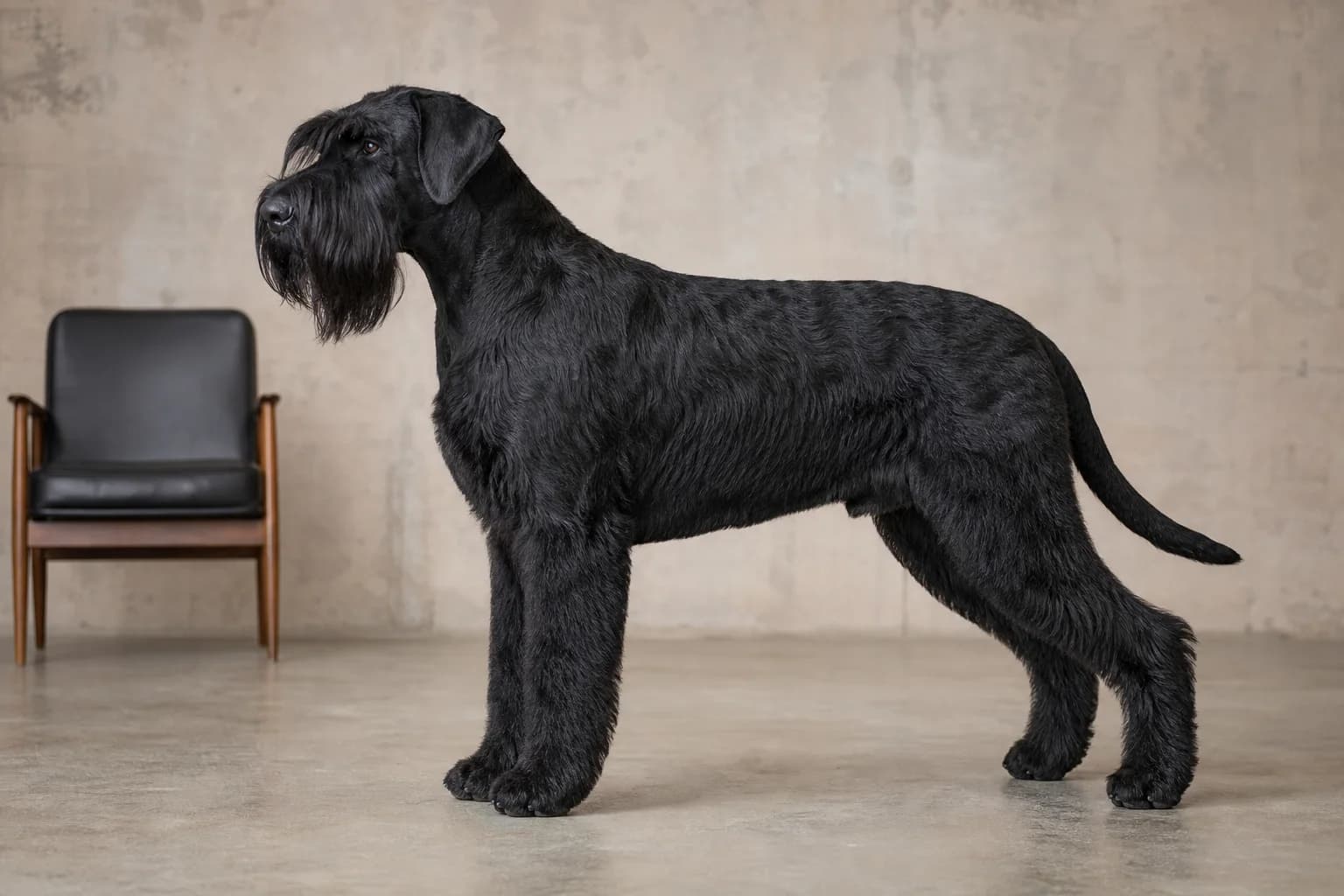
| Giant | Males 25.5 to 27.5 inches and 75 to 95 pounds; females 23.5 to 25.5 inches and 55 to 80 pounds | Cattle driving, guarding, later police and working roles | Strength, structured work, visitor management, grooming |
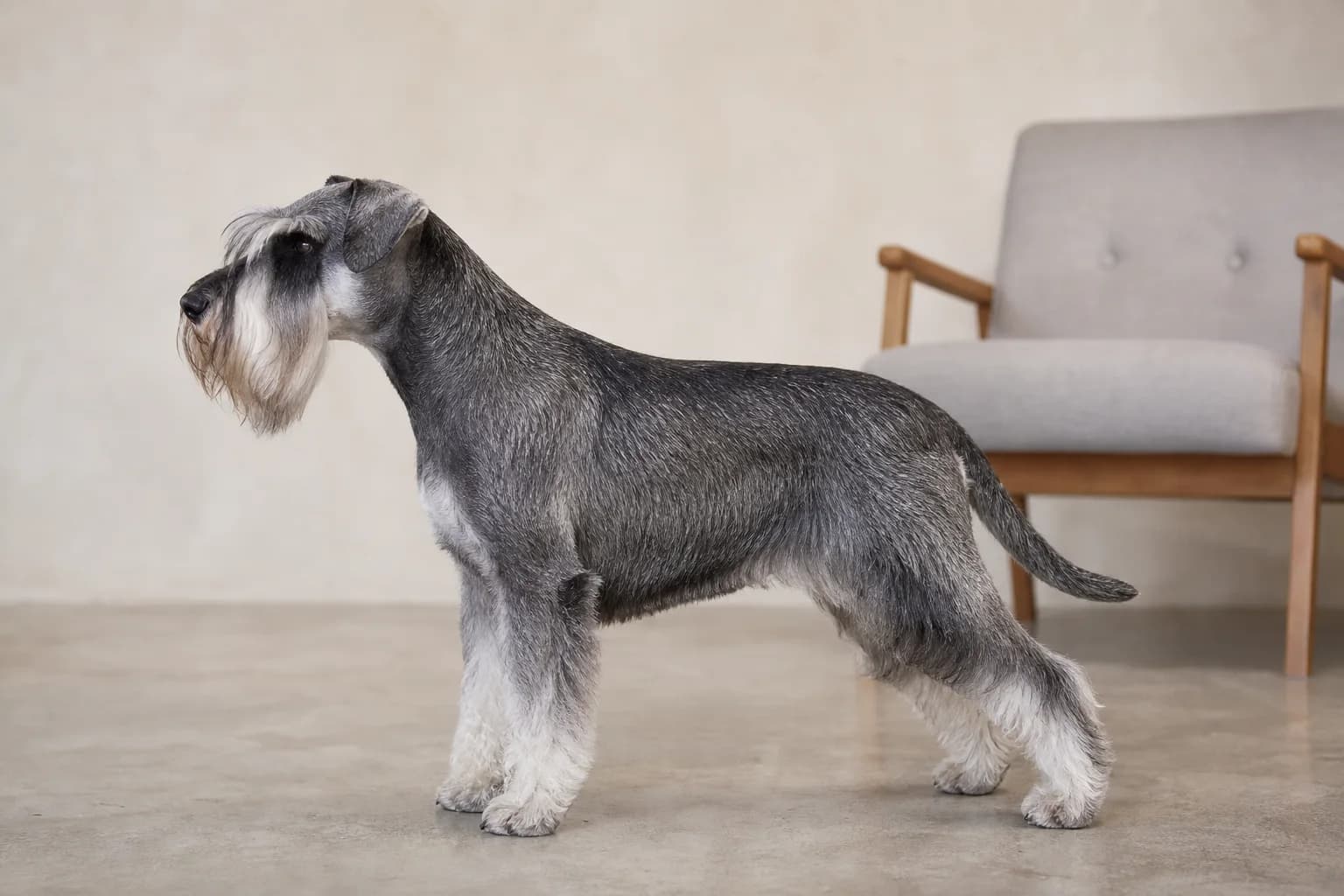
| Standard | Males 18.5 to 19.5 inches and 35 to 50 pounds; females 17.5 to 18.5 inches and 30 to 45 pounds | Original versatile farm and utility Schnauzer | Medium-dog handling, alertness, training, activity |
| Miniature | 12 to 14 inches and about 11 to 20 pounds | Small farm ratter and companion | Terrier awareness, voice, prey interest, compact handling |
These are the three types of Schnauzers in this comparison. The Standard Schnauzer is the original medium breed, not a halfway personality setting between the Giant and Miniature.
Published ranges help with equipment and logistics but do not predict personality. Breed traits are probabilities shaped by genetics, early experience, health, training, and the home.
Use capacity before preference
Begin with nonnegotiable limits: the weight every caregiver can safely handle, housing rules, vehicle and stair access, daily time, grooming budget, resident animals, visitor traffic, and tolerance for alert barking.
Remove any breed that exceeds a hard safety or welfare limit. Only then compare appearance, sport interests, affection style, and source availability.
- Every adult caregiver agrees on management.
- The dog can be transported during illness.
- Training and grooming support exists locally.
- Resident pets have protected space.
Do not choose the Giant with a plan to make it smaller in behavior, or the Miniature with an assumption that small means no training is needed.
Shared look, separate histories
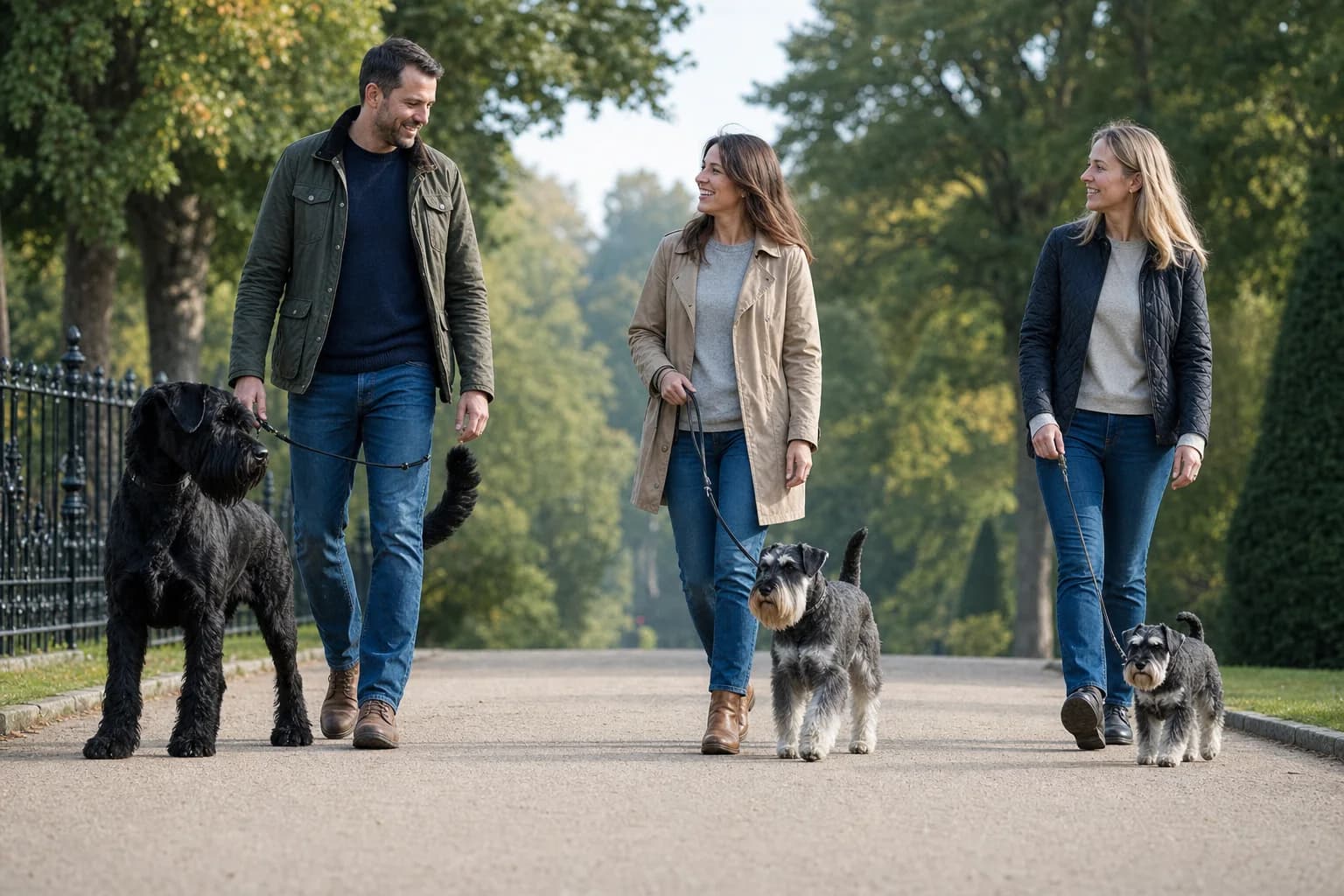
The Standard Schnauzer is the original medium breed. The Giant developed as a larger, more powerful working dog in southern Germany, while the Miniature was developed as a smaller farm ratter. Similar outline does not erase those selection pressures.
Giant Schnauzer profile
The Giant brings the most physical leverage and the strongest guardian-management implications of the three. Intelligence and loyalty are advantages when given a job and clear routines, but they amplify inconsistency and rehearsal of unwanted behavior.
Choose the Giant when the household actively wants a working relationship, can provide daily structured exercise and training, and can manage visitors and adolescent strength without intimidation.
- Adults can hold and transport a 55 to 95 pound dog.
- A secure physical containment plan exists.
- Reward-based working-breed help is accessible.
- Substantial coat and beard care is budgeted.
The Giant is a poor choice when the main goal is visual deterrence, when long isolation is routine, or when strangers must enter without management.
Petful may earn a commission when you click through to Lemonade, at no extra cost to you.
Size, strength, and housing
Size changes equipment, transport, boarding, food quantity, medication cost, and the severity of an accidental collision or leash pull. It does not determine whether a dog can live in an apartment. Settling skill, exercise plan, barking, shared entrances, and elevator behavior may matter more than floor area.
Official breed standards compare adult height at the withers, but weight, leverage, and the actual dog's handling skills determine the practical household burden.
Translate measurements into handling
Working drive also varies within each distinct breed, so use the published size at the withers as one capacity input rather than a personality score.
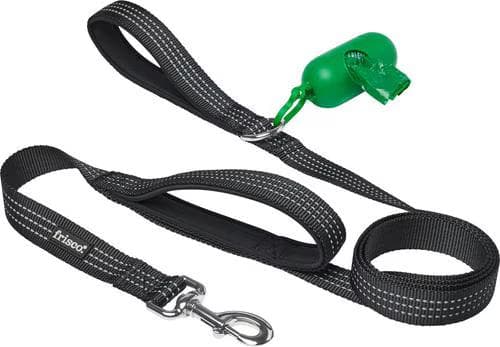
Compare a traffic-handle leash only after checking hand comfort, hardware, length, and the adult dog's training. Close control equipment cannot compensate for an unsafe size mismatch.
Apartment and city life
A Miniature takes less physical space but may be more easily triggered by hallway sound or window activity. A Giant may rest quietly after adequate work but is harder to maneuver through tight lobbies and shared elevators.
Audit noise transmission, potty access, stairs, elevator size, dog rules, nearby exercise routes, visitor frequency, and emergency transport. Practice stationing and calm exits away from peak traffic.
- The lease permits the exact adult breed and size.
- There is a plan for illness when stairs are unavailable.
- Windows and hallways do not become patrol stations.
- Neighbors are not the training plan.
A property restriction or caregiver handling limit is a hard constraint, not something to solve after acquisition.
Children and physical mismatch
A Giant can knock down a child unintentionally; a Miniature can be injured by rough handling; a Standard sits between those risks. All three need protected rest and adults who read body language.
Separate dog and child during food, chews, rough play, sleep, and visiting-child chaos. Teach the dog a comfortable station and children to invite rather than force contact.
- The dog can leave every interaction.
- An adult controls the leash.
- No child removes items from the mouth.
- Barriers are available before arousal rises.
Growling, freezing, hiding, hard staring, or snapping requires immediate separation and qualified help. Never punish the warning.
Standard Schnauzer profile
The Standard offers a medium frame but remains an alert, intelligent working farm dog rather than a reduced Giant. It can be energetic, opinionated, watchful, and highly engaged with the household.
Choose the Standard when medium scale improves logistics but the household still enjoys substantial training, exercise, coat care, and a dog that notices changes in its environment.
- Medium-dog activity and training remain desirable.
- Alert barking can be managed consistently.
- The breeder or rescue discusses working temperament honestly.
- Grooming expectations are understood.
Do not assume the Standard is a compromise with none of the Giant's intensity or the Miniature's terrier traits. Evaluate the actual lines and dog.
Temperament, guarding, voice, and prey interest
All three breeds are alert and capable of forming strong opinions. The Giant's size and guarding background raise the stakes of territorial or stranger-directed behavior. The Standard's farm utility can combine watchfulness with persistence. The Miniature's ratter background can bring quick response, prey interest, and vocal alerting in a compact body.
- Meet stable adults from the specific line or placement, ask about recovery and daily behavior, and evaluate the individual. Do not rank breeds with one friendliness, intelligence, or protection number.
Visitors and public neutrality
The goal is not indiscriminate sociability. It is a dog that can remain safe, recover from surprise, follow the handler, and be separated without conflict. The management equipment may differ by size, but the learning principles do not.
Petful may earn a commission when you click through to Chewy, at no extra cost to you.
Teach stationing, gate routines, leash movement, disengagement, and calm observation with rewards. Let dogs decline contact and prevent visitors from looming or reaching.
- Arrival routines are practiced without guests.
- Distance is increased before barking escalates.
- Delivery and contractor access is preplanned.
- A bite history receives professional risk assessment.
Do not select a Giant for amateur protection work or punish a smaller Schnauzer until it stops signaling discomfort. Both approaches can increase risk.
Dogs, cats, and small pets
No breed label guarantees compatibility. Prey interest, dog social skill, resource guarding, sex, age, history, and the resident animal determine what management is needed.
Use parallel movement, controlled distance, separate feeding, and dog-free escape routes for cats. Prevent chasing from the beginning and increase freedom only after a long pattern of calm behavior.
- The smaller animal has protected rooms and vertical space.
- Chews and meals are separated.
- Introductions are short enough for recovery.
- Unsupervised access is earned, not assumed.
Predatory fixation, repeated pinning, severe guarding, or a dangerous size mismatch may make cohabitation inappropriate.
Exercise, training, and settling
The Giant generally requires the most deliberate physical and mental workload. The Standard is an active medium working breed. The Miniature needs meaningful daily activity but can often receive it in smaller spaces and shorter physical distances. None is well served by an endless escalation of high-arousal exercise.
Giant Schnauzer temperament combines intelligence and working drive with substantial physical consequences. A Giant Schnauzer guard dog decision therefore belongs in the complete Giant Schnauzer guide, which covers stable public behavior, visitor management, and why protection theatrics are not a household training plan.
Match work to the dog
Walking, sniffing, tracking, obedience, agility foundations, tricks, search games, and controlled play can be scaled to the breed and individual. A food puzzle can add quiet problem solving when construction and portion fit.
Watch recovery, sleep, appetite, movement, and behavior after activity. Build duration and impact gradually, particularly for puppies, seniors, and dogs returning from illness.
- Training rewards are counted in daily calories.
- Rest follows demanding activity.
- The dog can disengage rather than remain frantic.
- Pain or exercise intolerance is assessed medically.
A yard does not replace interaction, and exhaustion does not treat anxiety, guarding, or unclear routines.
Training consequences at three scales
The same pulling, jumping, guarding, or door rushing has different physical consequences across sizes. Address foundations early in all three rather than allowing a smaller dog to practice them because it is easier to restrain.
Teach recall, loose leash, place, leave it, drop, cooperative handling, and threshold waits with rewards. Generalize across locations and raise difficulty one variable at a time.
- Equipment fits the measured body.
- Caregivers use the same cues.
- Management prevents rehearsal during learning.
- Force and fear are not used as shortcuts.
Sudden behavior change or touch sensitivity can be medical. Arrange examination instead of assuming defiance.
Grooming and coat-care differences
All three carry a wiry-coat tradition with beard and eyebrow furnishings. Coat density, individual texture, clipping or stripping goal, and body size affect the time and expense. A smaller dog is quicker to bathe and lift, while a Giant needs more table, tub, drying, and handling capacity.
A measured washable supportive bed also illustrates scale: the Miniature can fit many compact options, while the Giant needs room to stand, turn, and stretch without crowding household paths.
The Giant shedding and grooming guide covers the large breed's routine. Regardless of breed, line comb to the skin, clean and dry the beard, maintain nails, inspect skin and toes, and arrange periodic skilled grooming.
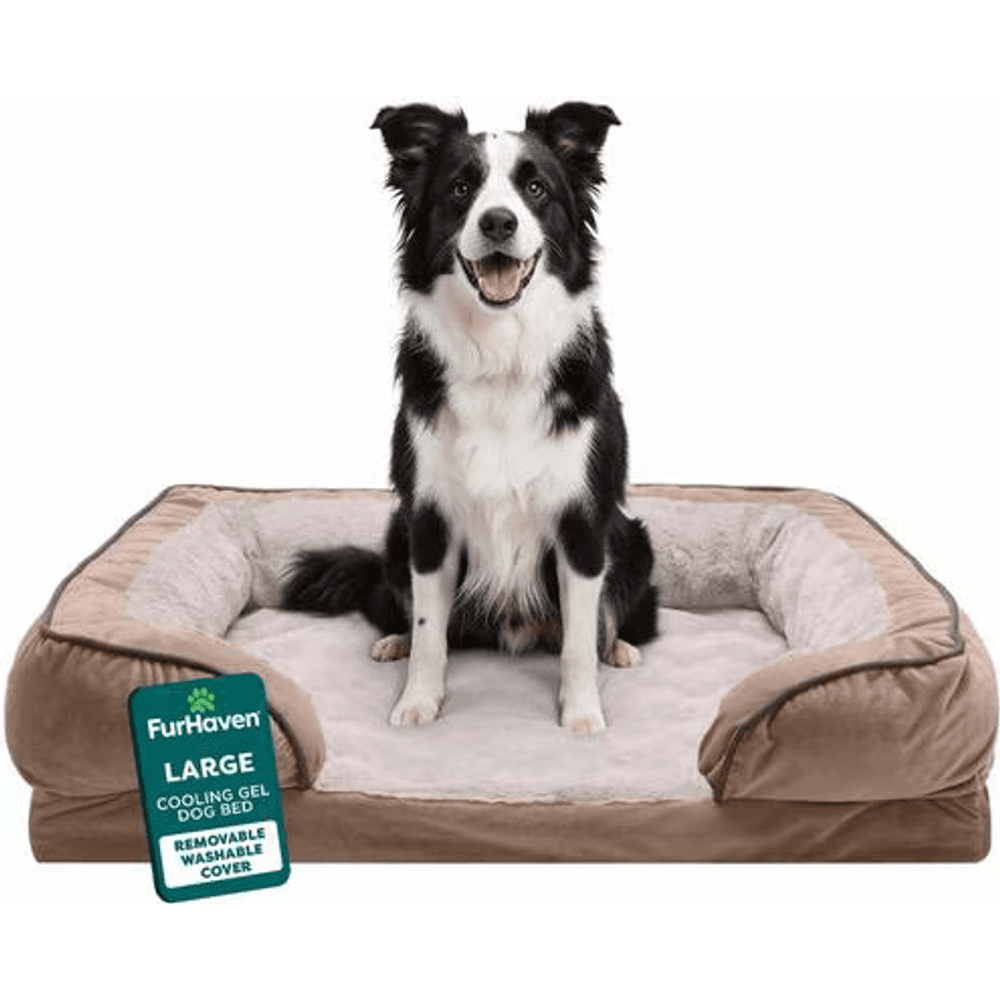
An orthopedic sofa bed with three bolstered sides for dogs who like to rest their head and joints against a cushion. The supportive foam base cradles hips and elbows, a comforting spot for an older or shaky dog to settle.
Petful may earn a commission when you click through to Chewy, at no extra cost to you.
Compare the real grooming plan
Ask a local groomer for expected appointment interval, technique, session length, price, and home maintenance for each candidate breed. Show-coat hand stripping and practical companion clipping are different commitments.
Practice standing, paw handling, face handling, bathing, drying noise, and table or mat stationing with rewards from puppyhood.
- The groomer has wiry-coat experience.
- The owner can comb to the skin between visits.
- Beard hygiene fits daily life.
- Painful mats are prevented rather than hidden.
Low visible shedding is not low maintenance or proof that a person with allergies will tolerate the dog.
Miniature Schnauzer profile
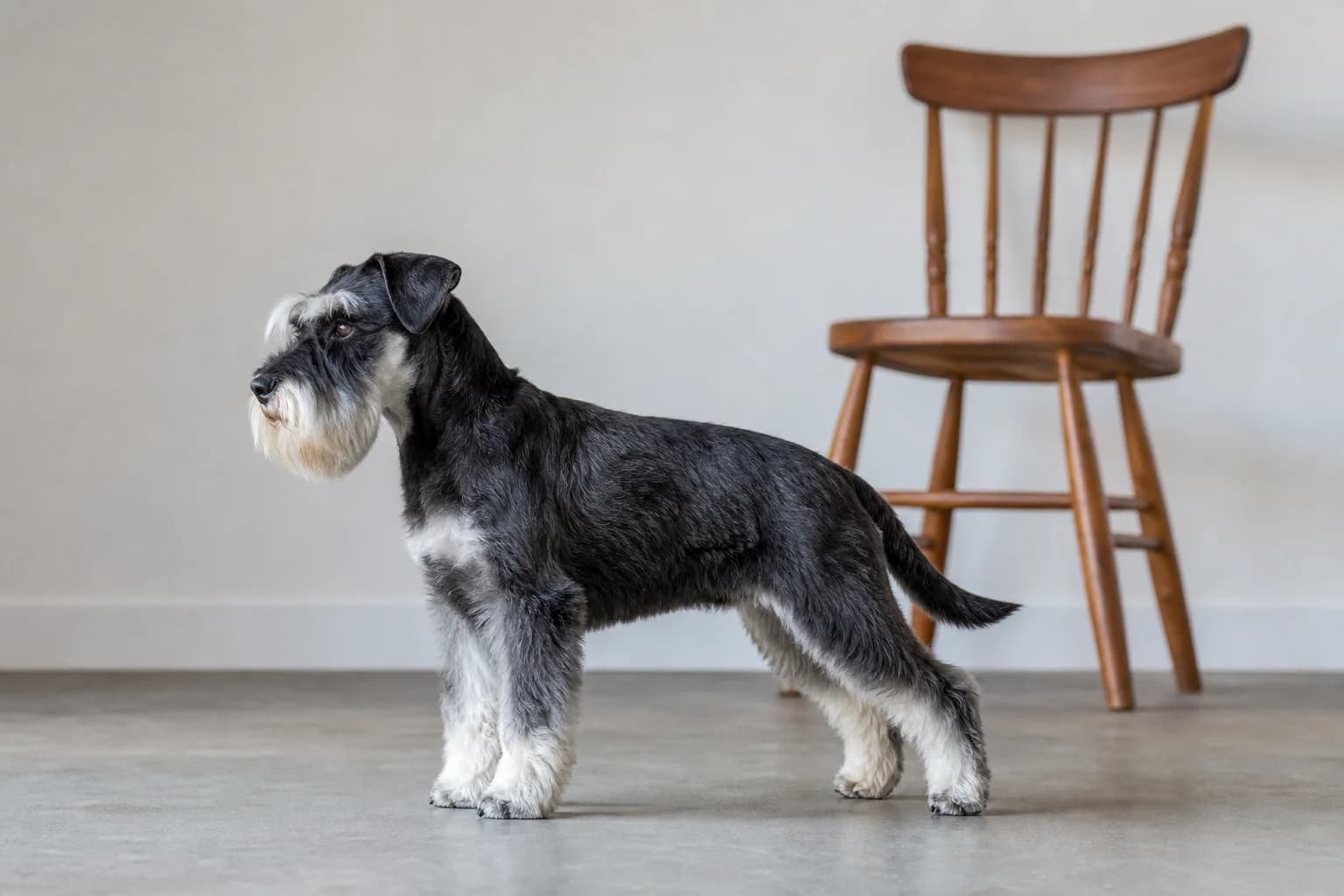
The Miniature is much easier to lift, transport, and house, but it is still an alert terrier with intelligence, voice, and potential prey interest. Small size changes consequences, not the need for enrichment or manners.
Choose the Miniature when compact scale is a true requirement and the household can provide daily walks, scent and training games, grooming, dental planning, and humane barking management.
- Children handle a small dog gently.
- Small-animal and door management fits terrier interest.
- Dental and weight care are planned.
- The dog is not expected to be a silent decorative pet.
A Miniature should not be carried away from every challenge or allowed to rehearse behavior that would be addressed in a larger dog.
Health planning and lifespan context
Breed-specific screening differs. Verify the current national breed-club guidance for the exact breed and actual parents rather than transferring one Schnauzer's checklist to another. Individual veterinary care then follows the dog's history, findings, life stage, and symptoms.
The Giant health guide gives the veterinarian-led plan for the largest breed. For any puppy, a CHIC number is a record of completed and public required testing, not a guarantee that every result is normal or that the puppy cannot become ill.
A deeper three-breed ownership comparison
When two or three breeds still fit on paper, compare the less glamorous systems that shape ordinary life. Repeat the comparison with named adults from responsible sources rather than an imaginary average dog. Ask each source about recovery after excitement, visitor routines, grooming cooperation, alone time, prey interest, dog compatibility, and the hardest age in that line or placement. Those observations help translate official history and size into the home you actually have.
Compare responsible sources, not idealized breeds
A stable, well-reared individual from health-tested parents can be a better fit than a poorly matched dog from the theoretically easiest breed. Source quality and placement decisions sit beside breed choice.
Verify current parent-club screening for the exact breed, meet adult relatives, ask about recovery and handling, and read the return contract. For rescue, request observed behavior and current medical information.
- The source discusses limitations openly.
- Parent or adult identities are verifiable.
- Color and urgency do not lead the sale.
- The source will take the dog back.
Do not let a good breed match excuse missing records or let a polished source persuade you into the wrong breed.
Travel and boarding
Miniatures fit more carriers and lodging limits, Standards need medium-dog accommodations, and Giants can exceed airline, hotel, sitter, or kennel limits. Temperament and handling can restrict options at any size.
Price and trial local boarding, sitter, vehicle, and emergency options before choosing. Ask whether group play is required and whether staff can manage coat, medication, or visitor sensitivity.
- Housing rules permit the adult breed.
- Transport fits the measured dog.
- A backup caregiver has completed a trial.
- The return route works if care fails.
Never omit bite history, escape risk, or medical needs to gain access to a facility.
Lifetime cost shape
The Giant generally consumes more food and may incur higher medication, grooming, boarding, and equipment costs. A Miniature may have lower volume costs but still needs grooming, dental care, training, and veterinary planning.
If veterinary-cost risk is part of the decision, compare a pet insurance option using the exact breed, age, location, coverage, exclusions, and reimbursement terms. A sample quote is not a lifetime-cost guarantee.
Obtain local quotes for food, grooming, classes, boarding, insurance, routine care, and an emergency. Use ranges and review them annually.
- Cost includes senior and illness logistics.
- Grooming technique is comparable.
- Training is included for every size.
- An acquisition premium does not consume the care reserve.
Do not choose a smaller breed solely because it seems cheap or a Giant because the purchase price seems affordable.
First-time owner fit
The Miniature's scale can reduce physical risk, but voice and terrier behavior still require skill. The Standard remains an active working dog. The Giant adds strength and serious guardian-management consequences.
Meet adults in home-like settings, attend a reward-based class as an observer, and ask an experienced trainer what support exists locally for each breed.
- The learning budget includes private help if needed.
- Household members can read canine body language.
- Management tools are accepted rather than stigmatized.
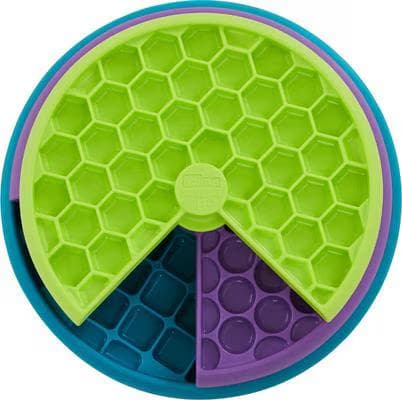
Petful may earn a commission when you click through to Chewy, at no extra cost to you.
- The hard days still fit.
First-time status is not a moral disqualification, but confidence without preparation is not a safety plan.
Dog sports and work
All three can enjoy training and sport, but body size, original function, health, drive, and local opportunities shape the best outlet. A sport title is not required for a fulfilled life.
Observe classes in scent work, obedience, rally, tracking, agility foundations, barn hunt, or other appropriate activities and choose one that supports cooperation and recovery.
- Impact matches age and conditioning.
- The dog can rest after training.
- Equipment fits the body.
- Competition goals do not override welfare.
Protection work is not a casual enrichment choice, especially for the Giant, and should not be learned from internet instructions.
Aging at three sizes
Small dogs are easier to lift but can still suffer pain and cognitive or sensory change. Medium and large dogs need earlier planning for traction, ramps, transport, and assisted movement.
Imagine the home with the dog unable to jump, climb stairs, hear, or see well. Add adaptations before they are needed and budget for closer veterinary monitoring.
- Rest and toilet areas can be placed on one level.
- The dog can reach the vehicle without jumping.
- Caregivers can administer medication safely.
- Quality-of-life preferences are discussed.
Never let difficulty lifting a Giant become a reason to delay urgent care. Build the transport plan while the dog is healthy.
The 72-hour decision worksheet
After meeting a candidate, wait long enough for the emotional high to settle. Revisit hard limits and ask whether the source and individual evidence support the initial impression.
Score size, handling, visitors, pets, voice, activity, grooming, health evidence, cost, travel, and backup care. Any red item needs a concrete solution, not optimism.
- Every caregiver scores independently.
- The source answers follow-up questions.
- A trainer or veterinarian reviews high-risk issues.
- Walking away remains an acceptable outcome.
A deadline, deposit pressure, or rare-color claim should not shorten a major household decision.
Which Schnauzer fits your household?
| Household limit | Likely direction | Still verify |
|---|---|---|
| Adult lift and transport must stay compact | Miniature may fit best | Voice, terrier behavior, dental and coat care |
| Medium frame is the practical ceiling | Standard may fit best | Activity, alertness, line temperament, grooming |
| Household actively wants a powerful working guardian | Giant may fit best | Handling, visitors, daily work, grooming, health budget |
| Resident small animals create high consequence | Do not decide by size alone | Individual prey interest and management |
| Low grooming tolerance | None is an automatic fit | Actual coat plan and local groomer |
| Severe allergy concern | No breed guarantee | Repeated exposure and medical advice |
Meet adults, speak with responsible sources and rescues, and imagine the dog during an ordinary workweek, bad weather, illness, travel, and old age. Choose the breed whose difficult days still fit.
Test the comparison against the whole household
Breed choice is a shared systems decision. The best match must work for the least experienced regular caregiver, the physical home, resident animals, and the weeks when routines are strained.
Give every caregiver a real veto
A Giant chosen by one enthusiastic adult still affects the person who opens doors, hosts visitors, walks the dog when someone is sick, or shares space with grooming equipment and barking.
Have each caregiver separately list hard limits for lifting, leash force, noise, grooming, cost, travel, training, and visitors. Discuss conflicts before meeting a litter or paying a deposit.
- Children are not counted as primary handlers.
- The least strong adult can follow the safety plan.
- Daily tasks have named owners and backups.
- A no decision remains acceptable.
Hope that a reluctant caregiver will adapt is not informed consent. A persistent household veto should end the acquisition plan.
Compare consequences around children and pets
Size changes injury potential, while terrier behavior, prey interest, resource guarding, and arousal can matter in all three breeds. A smaller dog is not automatically tolerant, and a well-trained Giant still requires adult management.
Describe resident animals, visiting children, gates, feeding spaces, sleeping areas, and prior incidents to the source. Ask for observed behavior and plan gradual separation-based introductions.
- Food and high-value items can be managed separately.
- Small animals have truly inaccessible safe zones.
- Adults supervise every child interaction.
- Conflict does not rely on physical restraint alone.
Do not choose by a breed-wide friendly label when an individual history, prey pattern, fear response, or household layout creates a specific risk.
Model the actual workweek
Weekend hiking does not answer who provides weekday toileting, movement, training, coat checks, and quiet decompression. A Miniature may need less physical space, but it still needs engagement and a plan for voice.
Build a Monday-through-Friday schedule for each breed, including commute, school, visitors, grooming, classes, and backup care. Price the services required to make the schedule real.
- The dog is not routinely left beyond the household's care plan.
- Activity includes thinking and recovery, not only mileage.
- A bad-weather option exists.
- The schedule still works during adolescence.
Do not assume a yard exercises a Giant, a medium dog self-settles, or a small dog needs little training. Those shortcuts hide different unmet needs.
Include neighbors, housing, and sound
Shared walls, breed or weight clauses, elevators, narrow halls, unfenced exits, and frequent deliveries can turn an otherwise suitable dog into a daily conflict. Alert barking can matter as much as body size.
Read the current lease, association rules, and insurance terms; walk the entrance route at busy times; and identify where the dog can toilet, decompress, and pass people without crowding.
- Written permission covers the adult breed and weight.
- Elevator or stair access works during illness.
- Noise management does not depend on punishment.
- A secure exit routine fits the building.
Verbal approval and a puppy's current weight are not durable housing evidence. Resolve restrictions before acquisition.
Ask breed-specific source questions
A polished generic answer can hide whether a source understands the health, temperament, working history, and placement challenges of the exact Schnauzer breed.
Ask about current parent-club screening, adult size and behavior in the line, grooming technique, recovery after excitement, dog compatibility, voice, return support, and the placements the source declines.
- Answers distinguish Giant, Standard, and Miniature needs.
- Named records can be verified independently.
- Adult relatives can be discussed honestly.
- The contract supports return for life.
Registration, color, a show title, or a long waitlist cannot replace health evidence, stable adult behavior, transparent limitations, and thoughtful matching.
Schnauzer comparison FAQs
Giant Schnauzers are like Mini Schnauzers in a recognizable outline, wiry-coat tradition, intelligence, and alertness, but they are distinct breeds. The Giant is a powerful Working Group dog with major handling and guardian implications. The Mini is a compact Terrier Group breed with real voice and prey interest. Similar appearance does not make their adult size, original work, risk, or daily workload interchangeable, so meet stable adults and evaluate the specific line and dog.
The best Schnauzer size depends on the household; no size is universally best. Start with household capacity and hard limits for adult handling, housing, transport, activity, visitors, resident animals, grooming, and budget. Remove any breed that exceeds a safety or welfare limit, then assess the specific dog and source. Smaller can simplify lifting and space, but it does not promise quiet behavior, easy training, low prey interest, or a maintenance-free coat.
A Standard Schnauzer is not just a smaller Giant. The Standard is the original medium Schnauzer and a distinct breed with its own history and standard. It can share alertness, intelligence, a wiry outline, and working qualities with the Giant, but similar appearance does not make temperament or ownership needs interchangeable. Compare the Standard's actual lines, adult handling, exercise, voice, coat plan, and source rather than assuming it is a reduced Giant.
Smaller scale can reduce physical consequences, but ease depends on temperament, voice, prey interest, health, grooming, and owner preparation. A well-matched Miniature may be more manageable physically, yet no Schnauzer is training-free. A first-time owner should meet adults, confirm local grooming and training support, describe the household honestly, and choose the specific dog whose difficult days remain safe and sustainable.
Primary sources

Coreen Saito is a pet writer and longtime shelter volunteer with more than a decade in animal rescue. She covers cat behavior, breed care, and the small, ordinary science of sharing a life with companion animals, with a particular focus on honest takes about the products and decisions that actually matter. At home in Arizona, she's outranked by Mac (a dog with the loudest opinion in the house), Rebel (a cat who governs by quiet authority), and Meri (an orange tabby who runs the late shift and the laundry basket). She writes about all three, plus the rescues that keep coming through her life, at LifeWithMinty.com.
Sign up for expert-backed reviews and safety alerts all in one place.