Giant Schnauzer Size and Weight Guide
Giant Schnauzer size affects transport, training, equipment, and safe handling. Use official height ranges, body condition, and growth trends instead of one ideal weight.
Petful is reader supported. As an affiliate of platforms like Amazon and Chewy, we may earn a commission when you buy through links on this page. There is no extra cost to you.
Giant Schnauzer size affects much more than the space a dog occupies. Adult scale changes leash leverage, vehicle access, crate and bed fit, grooming setup, veterinary handling, stairs, evacuation, and the amount of error a household can safely absorb.
The AKC publishes sex-specific height and weight ranges, but one number cannot diagnose health. Use official context, measured body condition, muscle condition, growth trend, and the individual dog's comfort instead of chasing an extreme weight.
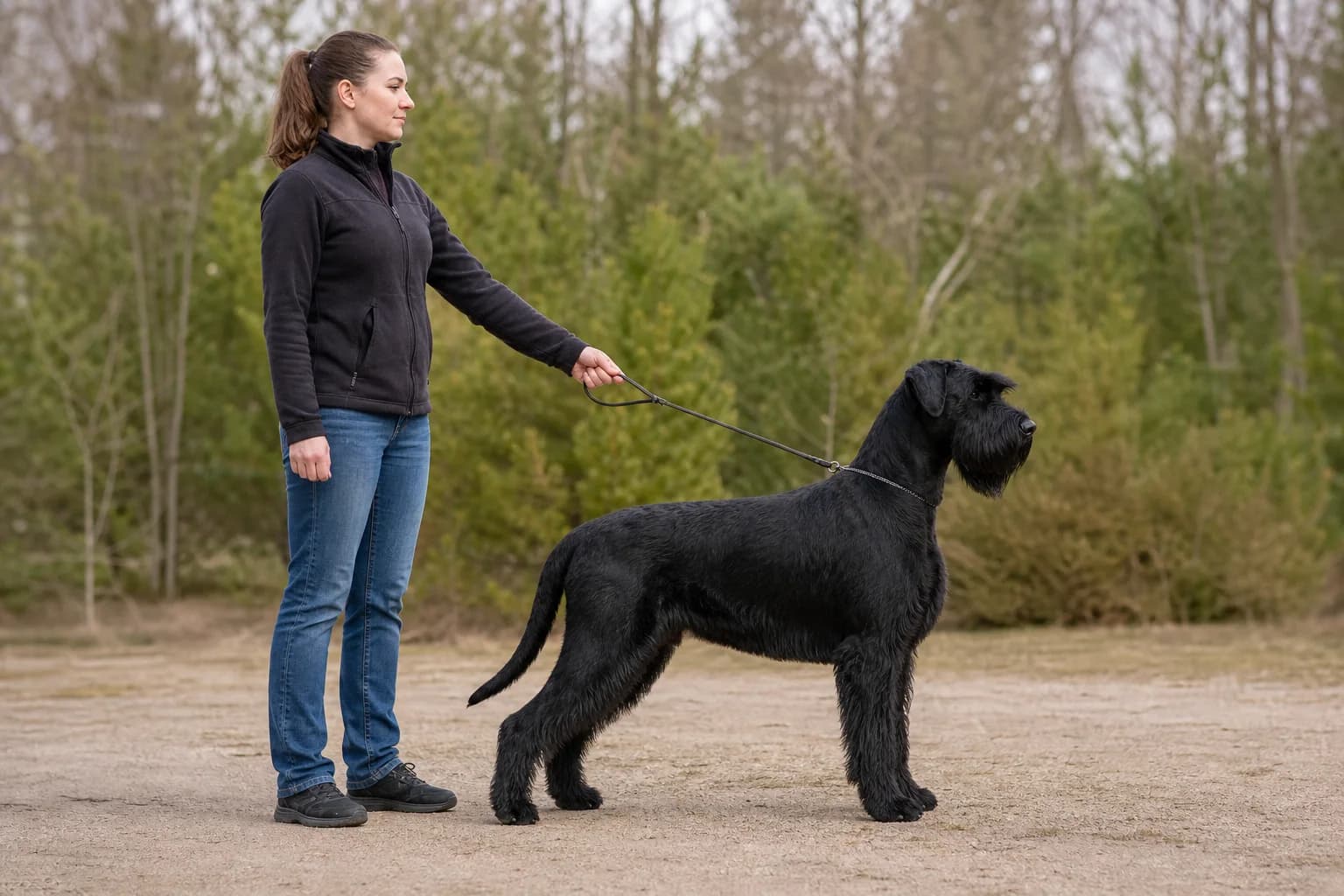
A photograph can make a large dog look even bigger beside furniture or a short handler. Treat any size image as context, then measure the actual dog and the spaces that dog must use.

Sign up for expert-backed reviews and safety alerts all in one place.
Official Giant Schnauzer height and adult weight context
Giant Schnauzer size is substantial, but the phrase big Giant Schnauzer should not become a goal to maximize weight. Official height, individual frame, body condition, and comfortable function answer different questions.
- 1AKC publishes 25.5 to 27.5 inches and 75 to 95 pounds for males.
- 2AKC publishes 23.5 to 25.5 inches and 55 to 80 pounds for females.
- 3Height is measured at the withers on level ground.
- 4Weight is interpreted with body and muscle condition, not as a target to maximize.
- 5Real-world planning includes transport, equipment, handling, and emergency access.
- 6Use a space-and-handling audit for the vehicle, rest area, stairs, grooming station, veterinary access, and emergency exit.
| Sex | Height at the withers | Published weight context |
|---|---|---|
| Male | 25.5 to 27.5 inches | 75 to 95 pounds |
| Female | 23.5 to 25.5 inches | 55 to 80 pounds |
These ranges describe a population and the breed's intended scale. They are not a prescription to feed an individual to the middle or top of a range. Frame, sex, maturity, muscle, reproductive status, and health all affect weight.
Height, weight, and condition answer different questions
Height describes skeletal scale, weight describes mass on the day, body condition score estimates fat cover, and muscle condition considers muscle loss. Combining them prevents a heavy coat or dramatic number from hiding what is happening physically.
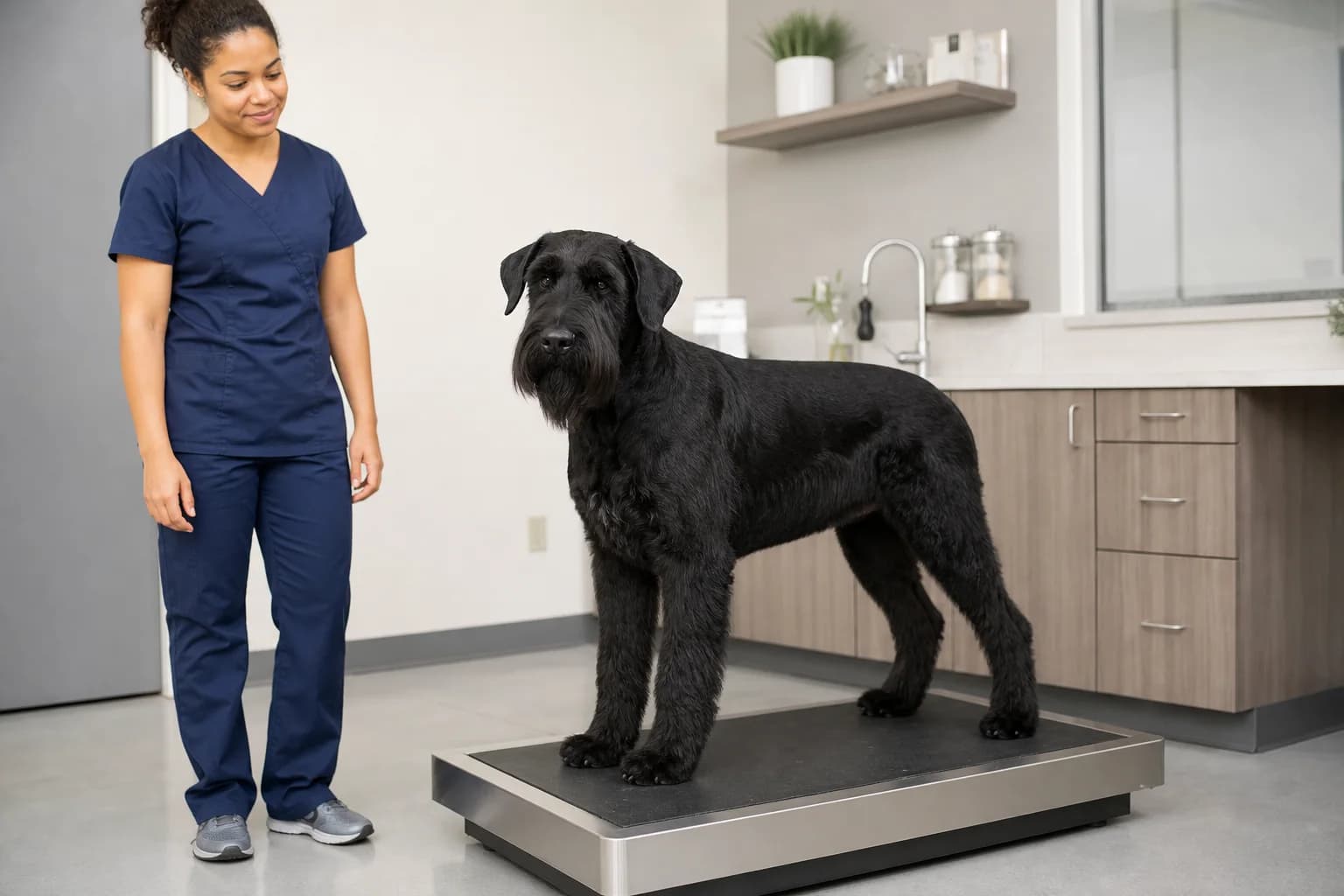
Record height once the dog can stand comfortably, weigh under comparable conditions, and ask the veterinary team to document body and muscle condition. Photograph side and overhead views on the same surface when tracking change.
- Ribs can be assessed through the coat with the hands.
- A waist and abdominal tuck are interpreted for the individual frame.
- Weight trend is compared with appetite, activity, stool, and comfort.
- The goal is comfortable function rather than a social-media number.
Petful may earn a commission when you click through to Chewy, at no extra cost to you.
A dog outside a published range is not automatically unhealthy. Rapid or unexplained change, weakness, pain, swelling, or reduced appetite needs veterinary assessment.
How to measure height and weight
Measure height from level ground to the highest point of the shoulder blades, the withers. Measuring to the head, ears, or top of the coat inflates the result. Ask for help if the dog cannot stand calmly and squarely.
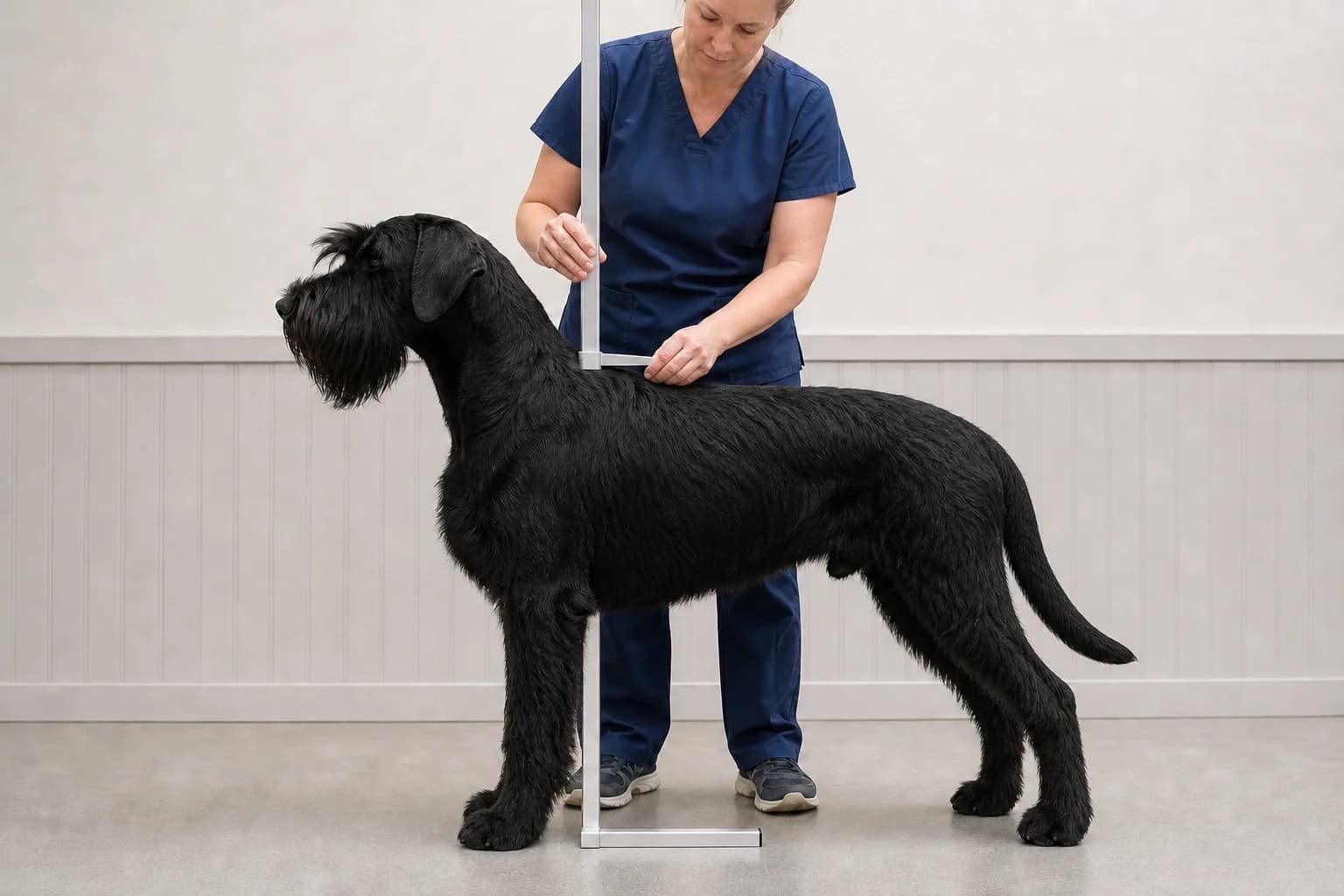
For weight, use the same reliable scale when practical. Record the date, time relative to meals, and any important context such as illness, a diet change, or heavy exercise. One reading is less informative than a stable trend.
A pet insurance option may be worth comparing while the dog is young, especially because adult-size diagnostics and treatment can be costly. Read the actual contract and keep a separate care reserve.
A repeatable home measurement protocol
Consistency matters more than false precision. A tense dog leaning, crouching, or standing on uneven flooring can produce a misleading height, and different scales can vary.
Use a non-slip level surface, let the dog settle, identify the withers by touch, keep the measuring tool vertical, and repeat once. For weight, choose a safe platform scale or use the veterinary clinic rather than unsafe lifting.
- The dog stands naturally without force.
- The same anatomical landmark is used each time.
- The tool is level and perpendicular to the floor.
- Measurements are dated and not rounded upward for effect.
Do not wrestle, suspend, or frighten a dog for a number. Cooperative handling is more valuable than a measurement obtained at the cost of safety.
Tracking puppy growth
Growth is not linear. Genetics, sex, nutrition, illness, and developmental timing influence the curve. A puppy chart cannot promise final adult size, and a fast early gain is not evidence of superior quality.
Petful may earn a commission when you click through to Lemonade, at no extra cost to you.
Trend the puppy, not an internet chart
Use a chart as a record of the puppy's own direction. Pair weight with body condition, stool, appetite, energy, limb comfort, and veterinary examinations. Compare with parent size only as context.
Weigh at sensible intervals, keep units and conditions consistent, and bring the record to preventive visits. Feed a complete growth diet with an adequacy statement appropriate for the expected adult size when applicable.
- Gain remains steady enough for the individual puppy.
- The puppy is not being overfed to reach a projected number.
- Treat calories are included in the daily total.
- Lameness, pain, or poor growth is discussed promptly.
Do not add calcium, minerals, or growth supplements to a complete diet unless the veterinarian directs it. More nutrient is not automatically safer during skeletal development.
What Giant Schnauzer size means at home
| Area | Measure before acquisition | Functional test |
|---|---|---|
| Vehicle | Door opening, step height, turning and lying space | Dog can enter, turn, lie down, and ride restrained |
| Rest area | Standing height, body length, ventilation, door swing | Dog stands, turns, stretches, and exits without catching coat |
| Stairs | Width, traction, landing space, barrier location | Handler can assist without being pulled off balance |
| Grooming | Non-slip floor, water access, tool storage | Dog can stand and be handled without slipping |
| Veterinary access | Vehicle, clinic entry, scale, backup handler | Transport remains possible during pain or weakness |
| Emergency exit | Gate width, route, lift or ramp plan | Two adults can move the dog safely if needed |
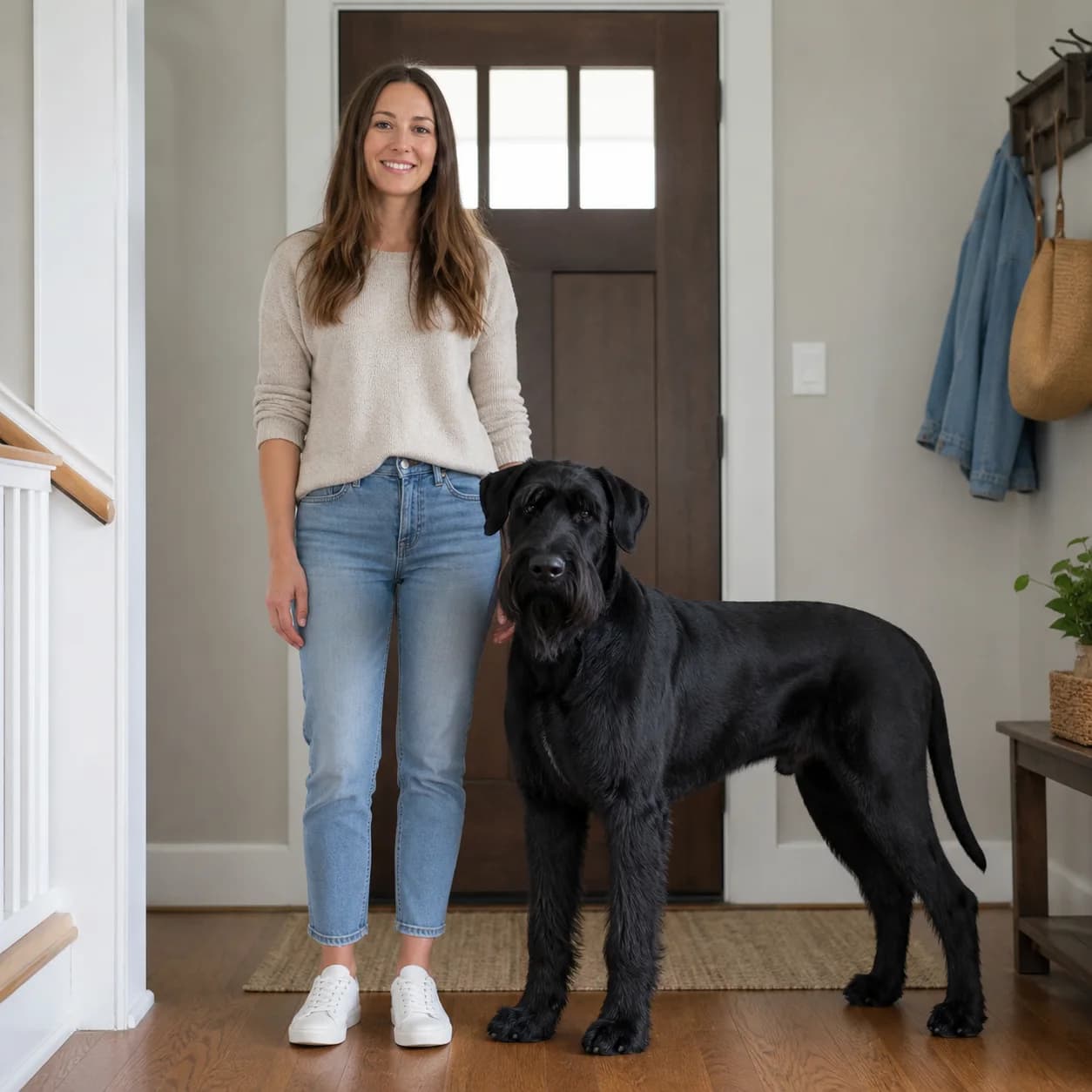
A Giant Schnauzer next to person image can establish rough visual scale, but it cannot tell you whether a specific crate, vehicle, doorway, or handler will work. Readers comparing types of Schnauzers should use the three-breed comparison because a Standard Schnauzer has its own adult range and is not merely a reduced Giant.
Are Giant Schnauzers bigger than German shepherds? Published ranges overlap, so compare the actual dogs, usable space, leverage, and equipment rather than relying on one breed label.
Check the physical setup
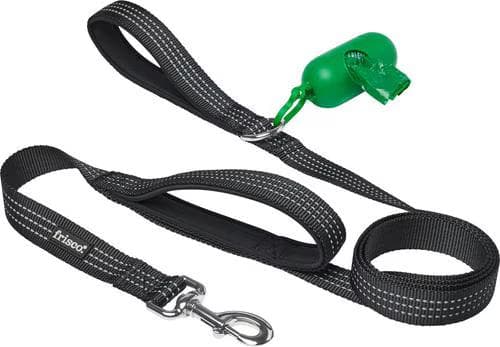
The traffic-handle leash is one equipment category to compare for close control, but hardware is not a substitute for training. Check equipment fit, manufacturer specifications, hand comfort, attachment integrity, and the individual dog's behavior.
For rest, compare a washable supportive bed with the dog's measured body length, preferred sleep posture, floor traction, and ability to step on and off. A large label may still be too short for a Giant to stretch fully.
Vehicle and transport fit
A dog can fit by weight and still lack safe headroom, turning space, or a practical entrance. An adolescent may jump into a vehicle today and be unable to do so after injury or surgery.
Measure the actual cargo area and opening, choose a restraint or secured space designed for the setup, and teach calm entry, exit, and ramp use before they are urgently needed.
- The dog can lie naturally without obstructing the driver.
- The restraint does not rely on a neck collar in a crash.
- Hot-weather ventilation and stops are planned.
- A non-jumping option exists for illness or old age.
Never leave the dog loose in an open pickup bed or unattended in unsafe temperatures. Transport convenience does not override physical safety.
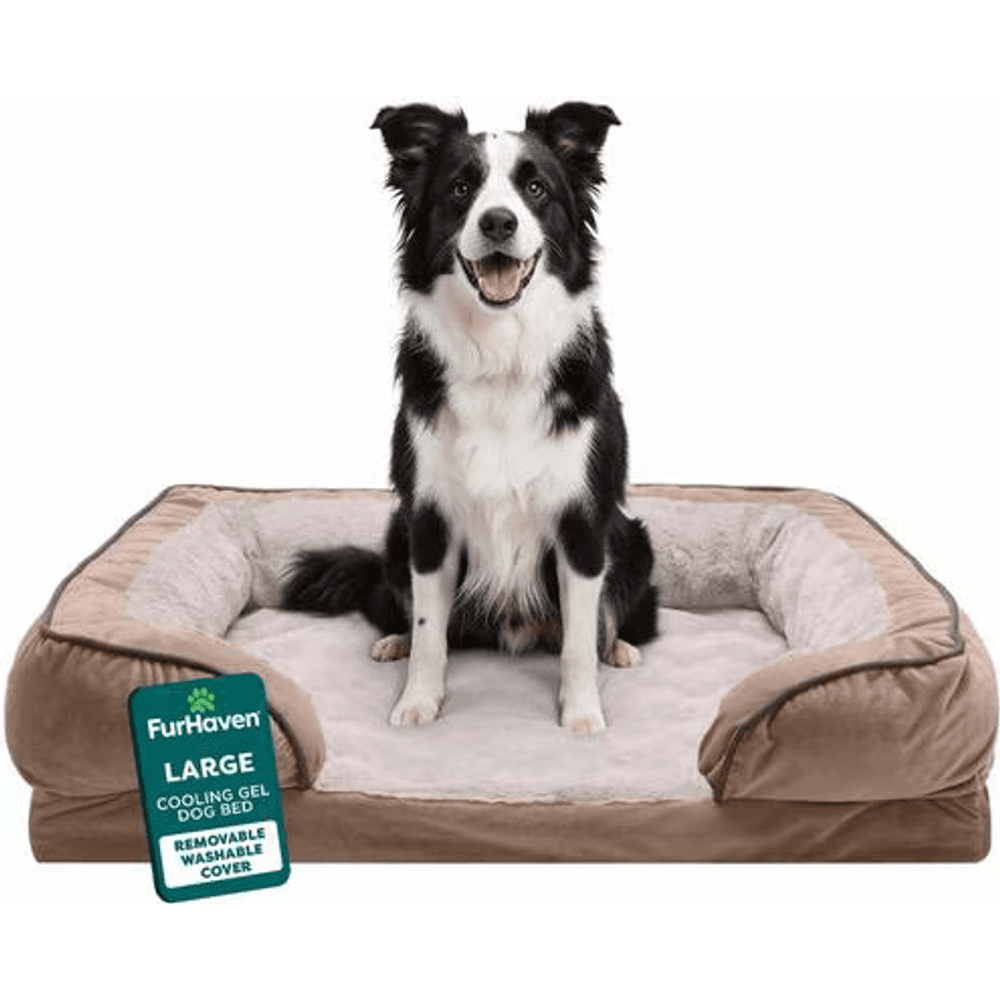
An orthopedic sofa bed with three bolstered sides for dogs who like to rest their head and joints against a cushion. The supportive foam base cradles hips and elbows, a comforting spot for an older or shaky dog to settle.
Petful may earn a commission when you click through to Chewy, at no extra cost to you.
Leash leverage and cooperative handling
A calm 90-pound dog may be easier to care for than a frightened 60-pound dog. Size planning therefore includes trained behavior: accepting touch, stepping on a scale, wearing a muzzle, entering a vehicle, and waiting at thresholds.
Build each skill with small rewards and voluntary participation. Practice with every adult caregiver and use secure equipment that fits the dog's measured body rather than a breed label.
- The leash and attachment are inspected for wear.
- Doorways and gates have a two-step containment plan.
- Caregivers know how to create distance without jerking or wrestling.
- The dog can settle while equipment is put on.
If a caregiver cannot safely hold the dog around ordinary triggers, restrict the setup and get qualified training help before another incident occurs.
Size planning beyond the scale
The most expensive size mistakes are often logistical rather than numerical. Audit the places and procedures the dog must use throughout life. Repeat the audit when the puppy reaches adolescence, after a move or vehicle change, and as the adult ages. Equipment that technically contains the dog can still fail if the opening is narrow, the surface is slippery, the handler cannot reach the latch safely, or the dog has never learned to use it calmly. Measure function, not only dimensions.
Readers comparing types of Schnauzers or a Standard Schnauzer should use the three-breed guide before converting one breed's measurements into another's equipment plan.
- Measure the dog and the actual opening, interior, floor, and restraint point. Then test functional fit: the dog should enter, turn, lie down, exit, and remain calm without forcing the body or the handler into an unsafe position.
Crates, gates, and rest areas
Equipment marketed as large or extra large varies widely. The dog needs enough interior room to stand naturally, turn, lie on the side, and stretch, while the structure and latch must tolerate real use.
Measure body length, standing height, shoulder width, and the doorway. Check ventilation, floor traction, pinch points, evacuation access, and whether the unit blocks household exits.
- The adult measurement, not puppy weight, drives the purchase.
- The dog can enter voluntarily and rest calmly.
- Collars or tags cannot catch on unsafe hardware.
- Confinement duration matches welfare and training needs.
A crate is not a substitute for exercise, social contact, medical care, or behavior support, and it should never be used where panic creates injury. One product-specific equipment option to compare is FurHaven Velvet Waves sofa bed; measure the individual dog and confirm size, condition, and intended use before purchase.
Stairs, flooring, and traction
Slippery surfaces change how a large dog rises, turns, and brakes. Stairs become harder after injury, anesthesia, weakness, or aging, exactly when lifting is least practical.
Add stable runners, secure gates, good lighting, and a trained ramp or support system before decline. Keep nails and paw hair managed and teach controlled stair movement.
- Rugs do not slide or curl.
- Landings allow the dog and handler to turn.
- A recovery area can be created on one level.
- The caregiver knows how to use support equipment.
Sudden stair refusal, slipping, limb dragging, pain, or weakness needs veterinary assessment rather than repeated encouragement.
Conditioning a large working body
Muscle and coordination protect function, but conditioning must progress from the dog's current ability. Weekend intensity cannot safely replace weekday consistency.
Build walking duration, terrain, hills, balance, and sport foundations gradually. Include warm-up, cool-down, rest, and condition checks, and adjust for heat or growth.
Petful may earn a commission when you click through to Chewy, at no extra cost to you.
- The dog recovers normally after sessions.
- No persistent stiffness or gait change follows.
- Puppy impact is developmentally appropriate.
- Body condition supports movement.
Pain, collapse, unusual breathing, or exercise intolerance is not a conditioning problem to push through.
Senior and emergency handling
A Giant may eventually need help standing, entering a vehicle, or reaching care. One person often cannot safely lift the dog, especially when pain changes behavior.
Identify a two-person technique with veterinary guidance, keep a suitable ramp or support device, maintain clear vehicle access, and know which emergency service can receive a large nonambulatory dog.
- Equipment is tested before crisis.
- The dog is conditioned to the ramp and handling.
- Emergency contacts know the dog's weight.
- The route avoids narrow stairs where possible.
Do not improvise lifting by the collar, limbs, or abdomen. Ask the clinical team how to move an injured dog.
Body condition and concerning weight changes
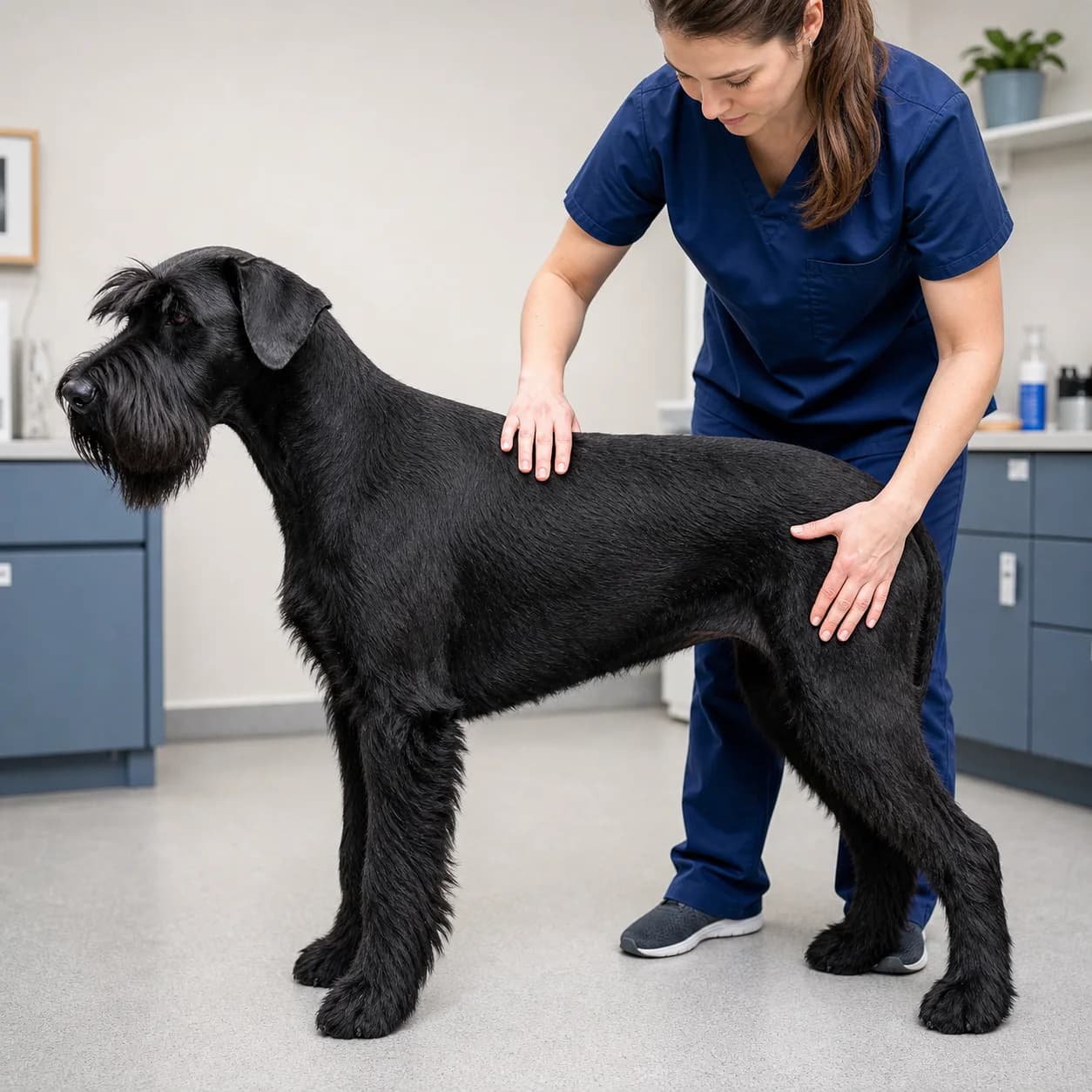
- Contact a veterinarian for rapid or unexplained weight loss or gain, reduced appetite, increased thirst, vomiting or diarrhea, abdominal enlargement, weakness, breathing change, pain, or loss of muscle. Do not solve a medical pattern by changing portions repeatedly without assessment.
Use hands as well as eyes because the wiry coat can hide the ribs, waist, and muscle loss. Ask the veterinary team to show you what the dog's current score means and what rate of change is appropriate.
This space-and-handling audit also creates a baseline for Giant Schnauzer health problems and age-related changes discussed in the lifespan guide.
WebVet's overview of unexpected dog weight loss or gain adds symptom and urgency context when a trend cannot be explained by normal growth, activity, or a planned feeding change.
- The Giant Schnauzer lifespan discussion in the health and lifespan guide adds clinical context when weight change accompanies other signs.
- The food guide translates calories and body condition into a measured feeding plan.
- The complete Giant Schnauzer breed guide adds temperament and household context.
Match equipment to leverage and access
Height and weight matter because they change the forces placed on people, hardware, floors, and vehicles. Measure the real interfaces instead of trusting a size label.
Fit handling equipment on the actual dog
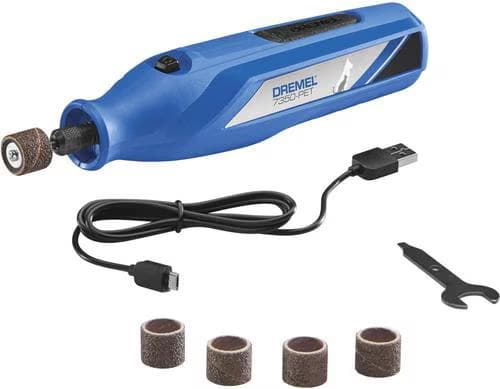
A suitably quiet nail grinder can be one part of cooperative handling when introduced in tiny steps. It does not replace checking nail heat, quick length, paw comfort, or the dog's ability to pause.
Two Giants at the same weight can have different neck, chest, shoulder, and head proportions. Loose gear can slip during a startle, while tight or poorly placed gear can chafe and restrict movement.
Measure according to the maker's instructions, check fit while standing and moving, inspect stitching and attachment points, and retest after growth, grooming, weight change, or coat change.
- The dog cannot back out during gentle directional pressure.
- Shoulders move freely and straps do not rub the armpits.
- Hardware is rated for the dog's real use.
- A second secure connection is available when risk is high.
Equipment is not a substitute for training or handler capacity. Pain, coughing, gait change, or skin injury requires a fit review and appropriate veterinary input.
Measure every narrow point in the transport path
Cargo volume alone does not show whether a tall dog can enter, turn, lie down, and exit without twisting. Door height, sill height, ramp angle, ceiling clearance, crate opening, and the handler's standing space all matter.
Measure the vehicle and home route with doors in their working positions. Teach ramp and crate use gradually, add traction, and rehearse loading when the dog is healthy and calm.
- The dog does not need to jump into the vehicle.
- The ramp is stable at the actual angle.
- Emergency access remains clear around the dog.
- Heat control works before the dog is loaded.
Do not discover during an injury that the dog, ramp, carrier, or two helpers cannot use the route. Ask the veterinary team about safe movement before an emergency.
Giant Schnauzer size FAQs
Giant Schnauzers can be bigger than some German shepherds, but breed ranges overlap and individual dogs vary. AKC publishes Giant Schnauzer ranges of 25.5 to 27.5 inches and 75 to 95 pounds for males, and 23.5 to 25.5 inches and 55 to 80 pounds for females. German shepherd ranges also vary by sex and standard, so measure the actual dogs and compare usable space, leverage, and equipment rather than relying on a breed label alone.
A Giant Schnauzer may be full grown in height before the dog finishes filling out or maturing behaviorally. Growth timing varies with sex, genetics, health, nutrition, and the individual growth curve. Track height, weight, body condition, muscle condition, and comfort with a veterinarian instead of using one online deadline. Adult-sized equipment may be needed before physical and social maturity are complete.
The biggest puppy is not necessarily the healthiest. Large size, fast gain, or heavy bone is not proof of health. Parent screening, steady development, suitable growth nutrition, body condition, movement, and veterinary assessment are more useful. A puppy pushed toward rapid growth can face avoidable nutritional and orthopedic concerns, while the smallest littermate is not automatically unhealthy. Judge the individual record and development rather than ranking puppies by size.
To know whether a Giant Schnauzer is overweight, use a hands-on body-condition assessment, visible waist and abdominal tuck, muscle condition, and weight trend. A dense coat can hide shape, so ask the veterinary team to demonstrate the score on your dog. Recheck under comparable conditions and discuss rapid change, reduced stamina, pain, appetite changes, or muscle loss rather than repeatedly changing portions from appearance alone.
Primary sources

Coreen Saito is a pet writer and longtime shelter volunteer with more than a decade in animal rescue. She covers cat behavior, breed care, and the small, ordinary science of sharing a life with companion animals, with a particular focus on honest takes about the products and decisions that actually matter. At home in Arizona, she's outranked by Mac (a dog with the loudest opinion in the house), Rebel (a cat who governs by quiet authority), and Meri (an orange tabby who runs the late shift and the laundry basket). She writes about all three, plus the rescues that keep coming through her life, at LifeWithMinty.com.
Sign up for expert-backed reviews and safety alerts all in one place.