Goldendoodle Generations: F1, F1b Goldendoodle, F2 and Multigen Explained
Confused by F1, F1b, F2, F2b, and multigen Goldendoodles? This guide breaks down what each generation means for coat type, shedding, size, and allergy-friendliness, so you can pick the right doodle.
Petful is reader supported. As an affiliate of platforms like Amazon and Chewy, we may earn a commission when you buy through links on this page. There is no extra cost to you.
If you have started shopping for a Goldendoodle, you have already run into the code: F1, F1b Goldendoodle, F2, F2b, and multigen. Those little labels are not marketing fluff. They tell you the exact recipe of Golden Retriever and Poodle that went into a puppy, and that recipe is the single best predictor of how curly the coat will be, how much the dog will shed, and how allergy-friendly it is likely to feel in your home. Get the generation right and you get a dog that matches the picture in your head. Get it wrong and you can end up with a shaggy 55-pound shedder when you were promised a wash-and-wear teddy bear.
This guide decodes every generation in plain English. You will learn what each label actually means, what it does (and does not) promise for coat and shedding, how the health picture really compares, and how to pick the generation that fits your family. No hype, just how the genetics shake out in real litters.
- 1The letters and numbers describe ancestry: F = filial generation, the number = how many generations from the original cross, and b = backcross to a Poodle for a curlier, lower-shedding coat.
- 2Higher Poodle percentage (F1b, F2b, multigen with furnishings) usually means a curlier coat and less shedding, but no Goldendoodle is truly hypoallergenic.
- 3Generation predicts coat and shedding far better than it predicts health or temperament, which come down to the breeder's health testing and the individual dog.

Sign up for expert-backed reviews and safety alerts all in one place.
Goldendoodle generations at a glance
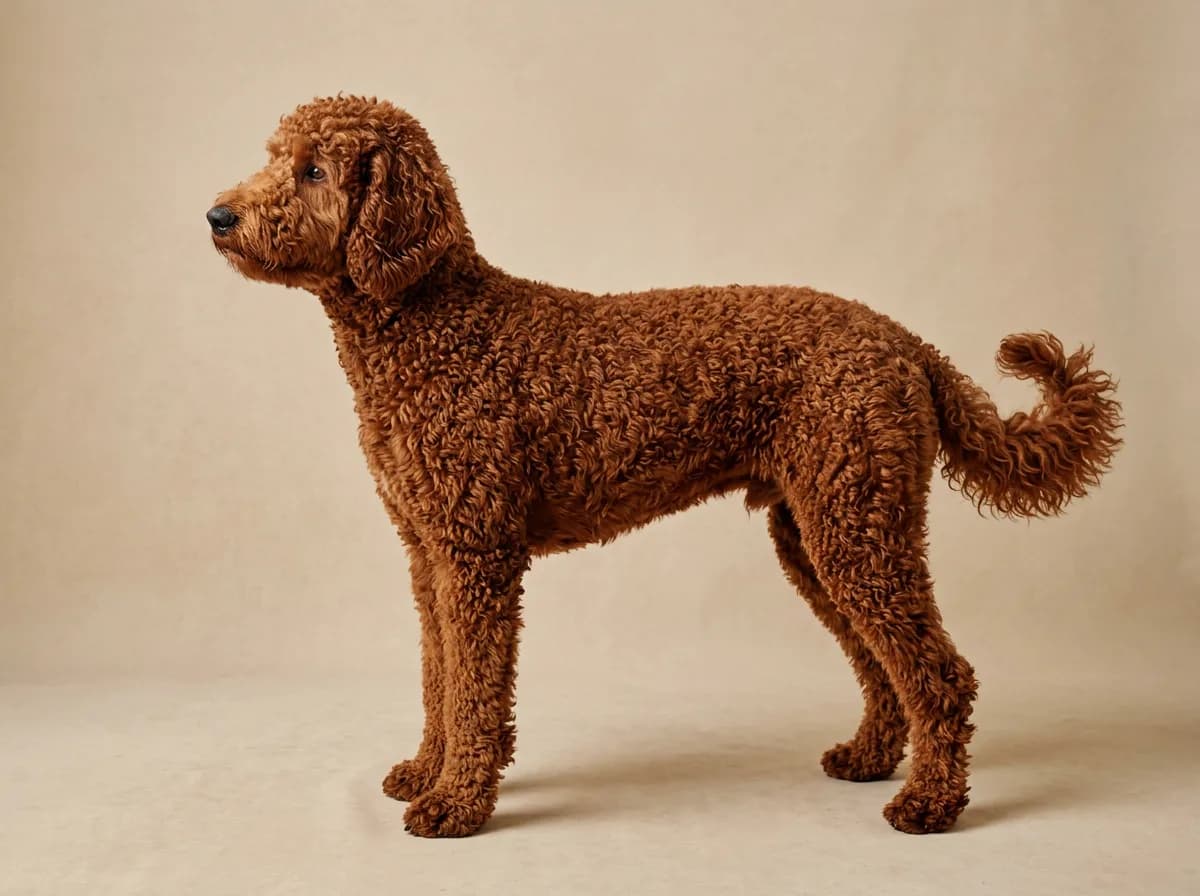
Before we go section by section, here is the fast version. The table below shows the parent cross behind each generation, the rough Poodle percentage, and what that tends to mean for the coat. Treat the percentages as targets, not guarantees, because genes do not split into perfectly even halves in every puppy.
| Generation | Parent cross | Approx. Poodle % | Typical coat | Shedding |
|---|---|---|---|---|
| F1 | Golden Retriever x Poodle | 50% | Wavy, shaggy, variable | Low to moderate |
| F1b | F1 Goldendoodle x Poodle | 75% | Wavy to curly | Low |
| F2 | F1 x F1 | 50% | Most variable, straight to curly | Low to moderate |
| F2b | F1 x F1b | 62.5% | Wavy to curly | Low |
| Multigen | Doodle x Doodle (F3+) | Varies, often 60-75% | Curly, consistent when furnished | Very low |
The big lesson from that table: the more Poodle in the mix, and the more a breeder selects for the "furnishings" that give doodles their fuzzy face and low-shed coat, the more predictable and allergy-friendly the puppy tends to be. That is why the F1b Goldendoodle and multigen lines dominate the low-shedding conversation.
Petful may earn a commission when you click through to Chewy, at no extra cost to you.
How to read a Goldendoodle generation label
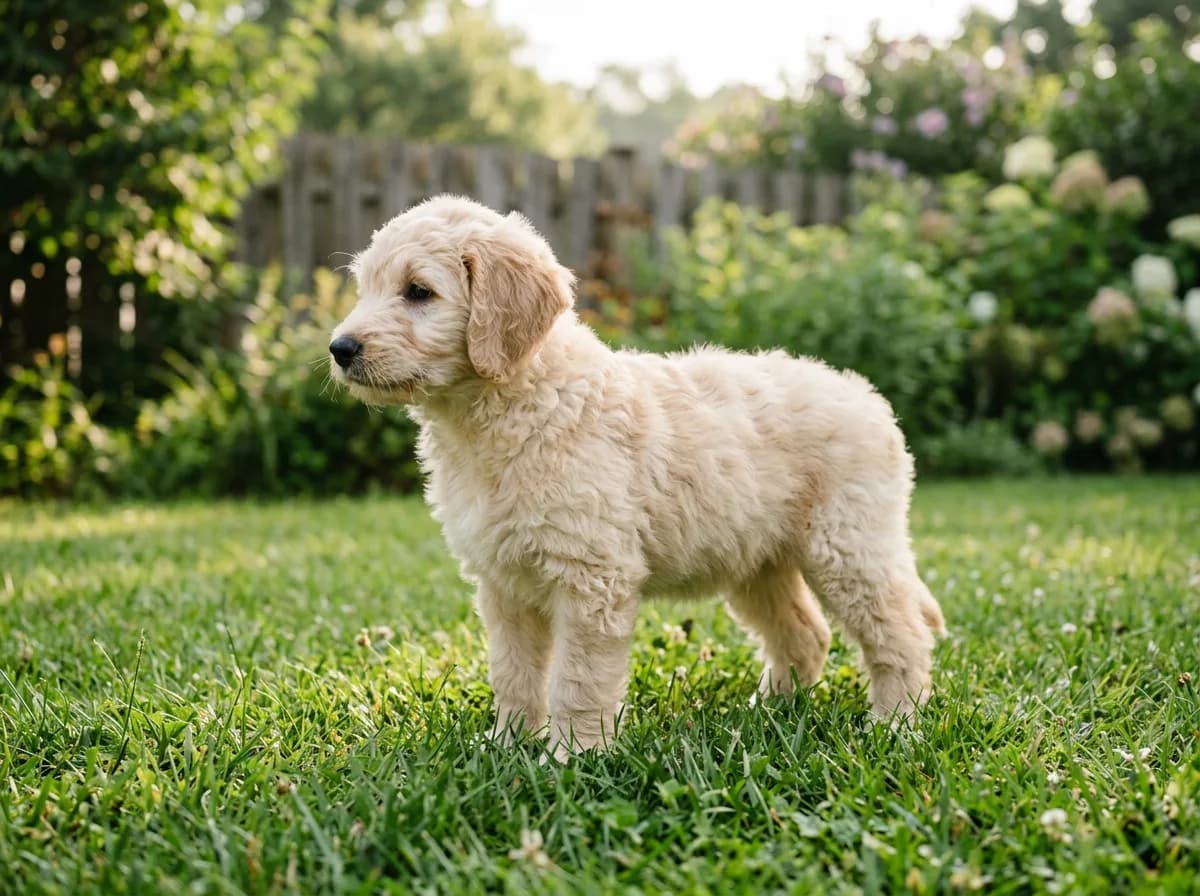
Every label is built from three pieces of information.
- The F stands for filial, which just means a generation produced by breeding. It is standard genetics shorthand, not a doodle-specific invention.
- The number tells you how far you are from the original Golden-to-Poodle cross. F1 is the very first cross. F2 is two doodles bred together. F3 and beyond usually get folded into the word "multigen."
- The lowercase b stands for backcross, meaning one parent was bred back to a purebred Poodle to push the Poodle percentage up. A second b (as in F1bb) means it happened again, landing around 87.5% Poodle.
So an "F1b" reads as: first-generation Goldendoodle, backcrossed once to a Poodle. An "F2b" reads as: a second-generation dog whose recipe leaned on an F1b parent, which is why its Poodle percentage lands higher than a plain F2. Once you internalize that pattern, every label on a breeder's site becomes readable at a glance.
- Almost every backcross goes to a Poodle rather than a Golden Retriever because the goal is a curlier, lower-shedding coat. Breeding back to a Golden would move the coat the other way, toward heavier shedding, so it is rarely done for pet Goldendoodle lines.
What is an F1 Goldendoodle?
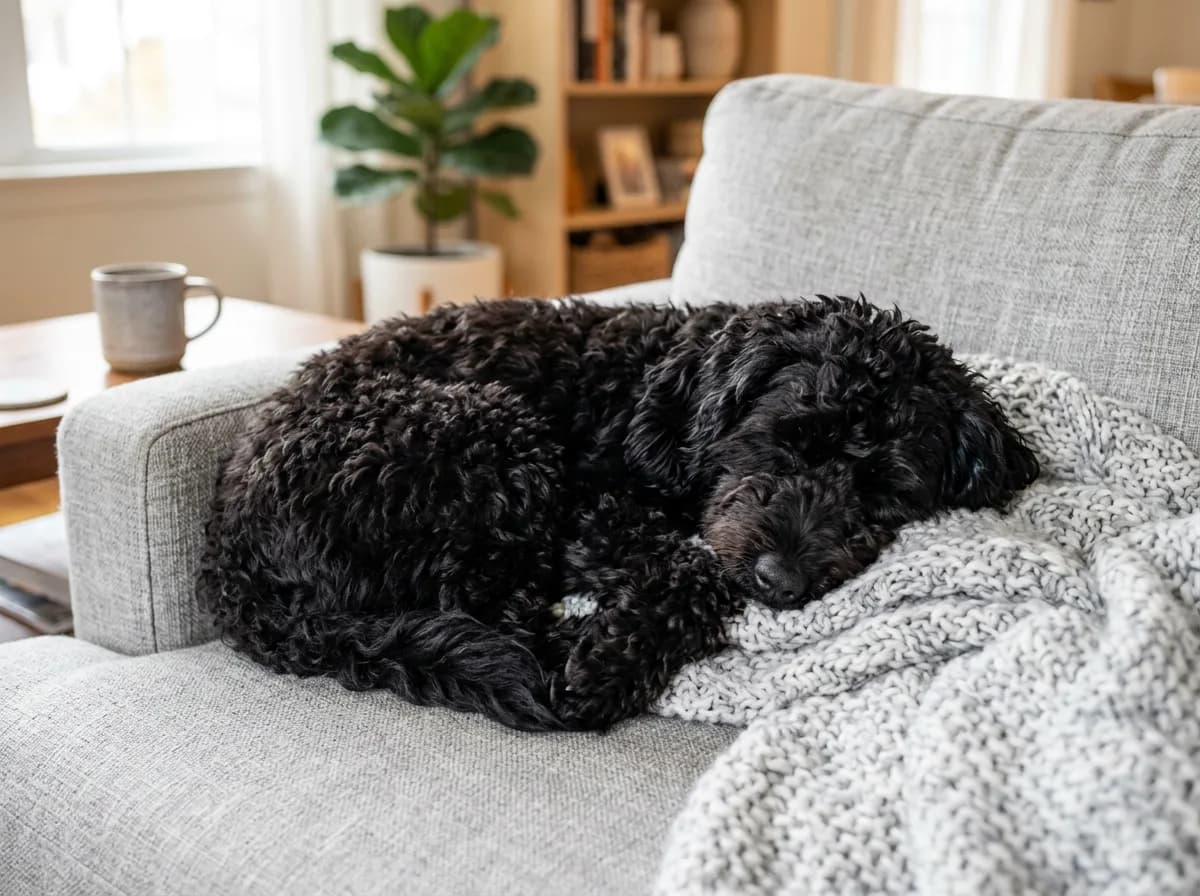
An F1 Goldendoodle is the original recipe: one purebred Golden Retriever bred to one purebred Poodle, making a puppy that is 50% of each. This is the classic first-generation doodle, and it is where the breed began.
Because F1 puppies inherit one coat gene from each very different parent, their coats are the most variable within a single litter. You can see flat, Golden-like coats, loose waves, and shaggy "teddy bear" textures in the same group of siblings. Most F1s land somewhere in the wavy-to-shaggy range and shed a little to moderately. Many allergy-sensitive families do fine with an F1, but it is a roll of the dice rather than a promise, because a straighter-coated F1 can still shed and carry more dander.
What F1s have going for them is heterosis, sometimes called hybrid vigor: the health advantage that can come from crossing two genetically distinct breeds. It is real, but it is not a magic shield, and we will unpack exactly what it does and does not buy you further down.
What is an F1b Goldendoodle?
An F1b Goldendoodle is an F1 Goldendoodle bred back to a purebred Poodle, which makes the puppy roughly 75% Poodle and 25% Golden Retriever. That extra dose of Poodle is the whole point: it pushes the coat curlier and the shedding lower, which is why the F1b is the generation most often recommended to families with allergies.
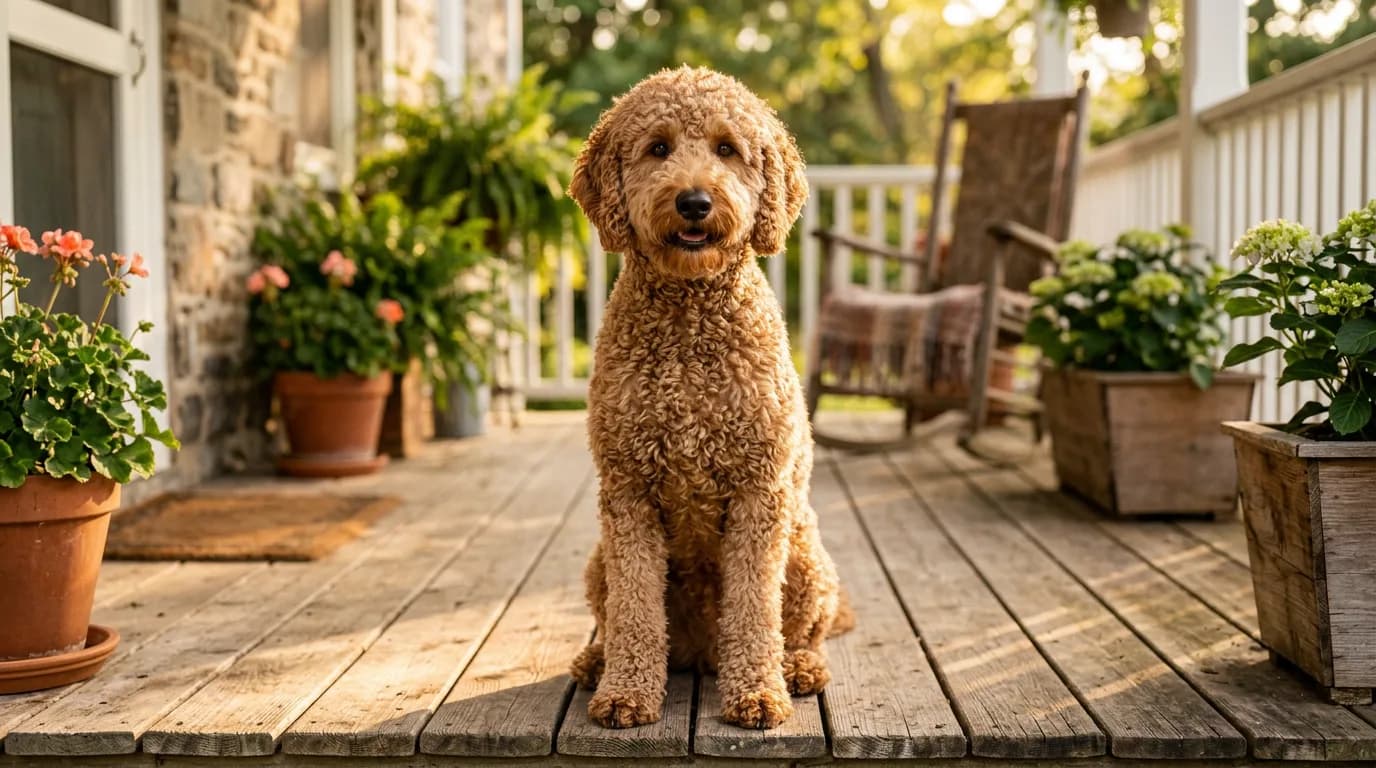
In a typical F1b litter you will see wavy to distinctly curly coats, fuzzy furnished faces, and shedding that ranges from very low to barely-there. Because the coat leans Poodle, an F1b usually needs committed grooming: regular brushing to the skin and a professional trim every six to eight weeks, or the curls will mat. That is the trade you make for the low-shed coat.
The F1b is the sweet spot for a lot of buyers because it keeps the friendly, mellow Golden influence in the temperament while borrowing the Poodle's coat. It is predictable enough to recommend with confidence, without going all the way to a nearly-pure-Poodle look.
Petful may earn a commission when you click through to Chewy, at no extra cost to you.
One caveat worth setting straight: F1b does not mean "no shedding." It means low, and lower than an F1 on average. The curl traps loose hairs against the coat instead of dropping them on your floor, which is exactly why the coat mats if you skip brushing. If you are the kind of owner who will not keep up a grooming routine, an F1b can actually become higher-maintenance than an F1, because a neglected curly coat pelts and has to be shaved down.
- The most reliable low-shed F1b litters come from breeders who DNA test the parents for furnishings and the shedding locus. A furnished, low-shed result on paper beats any verbal promise, so ask to see the genetic panel before you put down a deposit.
What is an F2 Goldendoodle?
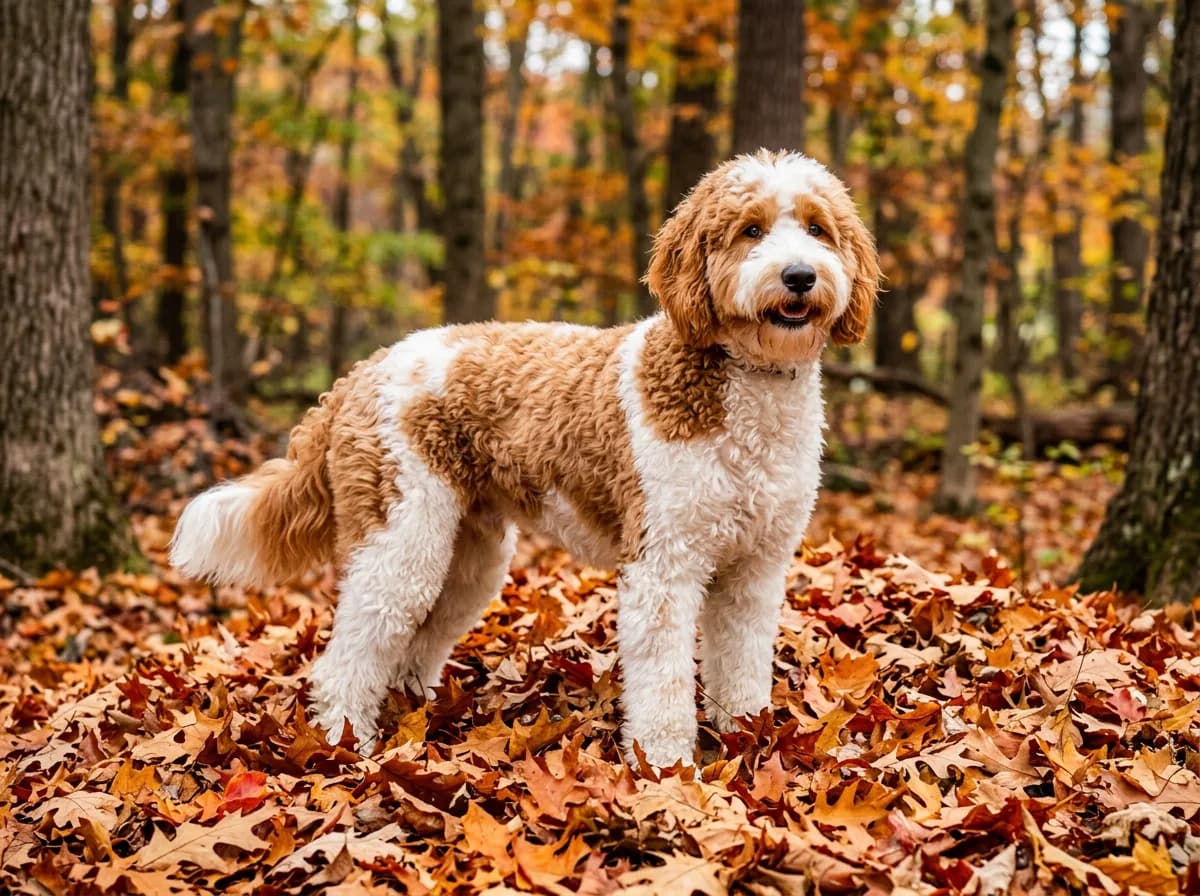
An F2 Goldendoodle comes from breeding two F1 Goldendoodles together. On paper it is still about 50% Poodle and 50% Golden, so you might expect it to look just like an F1. In practice, the F2 is the least predictable generation of all.
Here is why. When you cross two F1s, the coat genes get reshuffled instead of arriving one-from-each-purebred-parent. That reshuffle can produce puppies across the entire spectrum in one litter: flat Golden-style coats, loose waves, and tight curls, sometimes with very different shedding levels between littermates. A well-chosen F2 can be a wonderful low-shed dog, but the range is wide, so this is a generation where the individual puppy and the breeder's DNA testing matter more than the label.
For allergy households, an F2 is generally the riskier pick unless the breeder can show furnishings and low-shed genetics on both parents. If your top priority is a coat you can count on, most people are better served by an F1b, F2b, or multigen.
What is an F2b Goldendoodle?
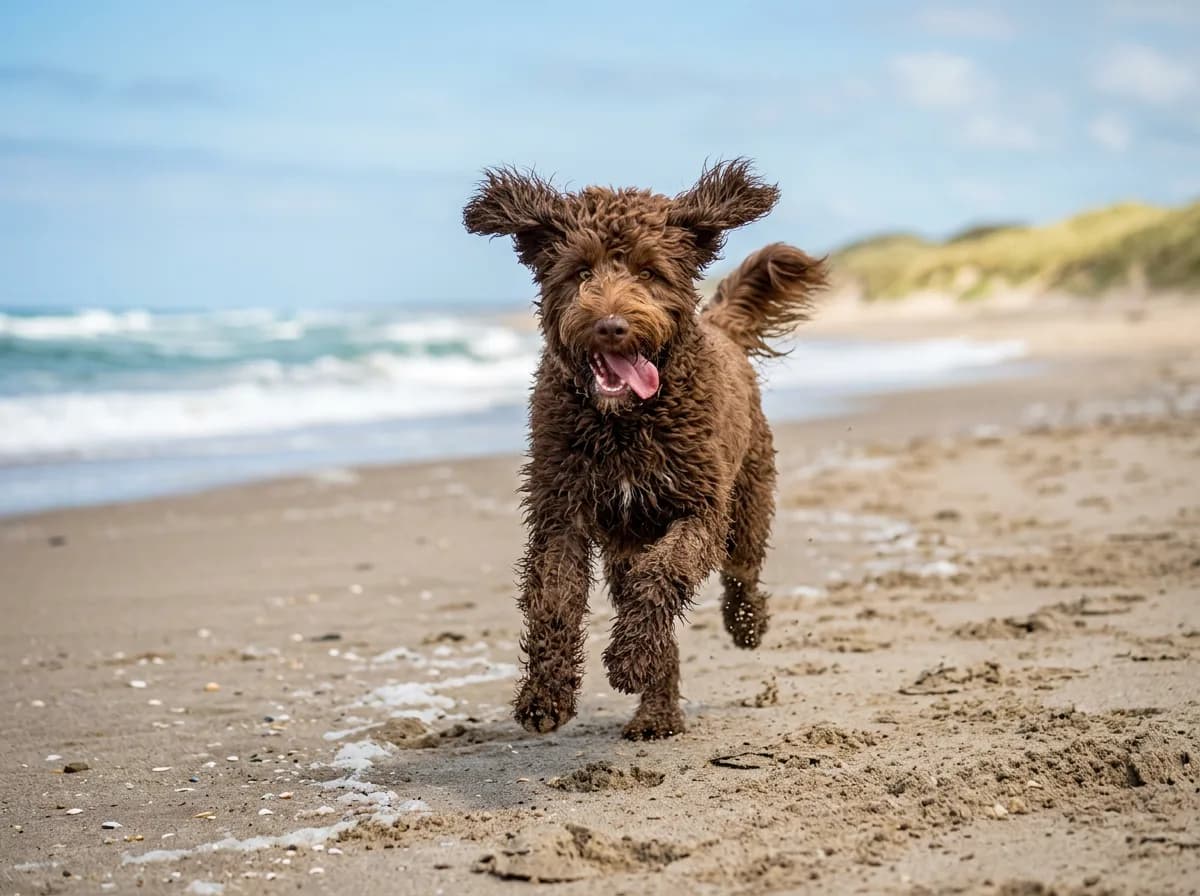
An F2b Goldendoodle is an F1 bred to an F1b, which lands the puppy at about 62.5% Poodle. Think of it as an F2 with a thumb on the scale toward Poodle, and therefore toward a curlier, lower-shedding coat than a plain F2.
F2b puppies tend to be more consistent than F2s and are a solid choice for allergy-conscious families who still want a bit more Golden warmth in the look than a straight F1b delivers. Coats usually run wavy to curly, shedding runs low, and grooming needs sit right alongside the F1b: brush often, trim regularly. If an F1b feels a touch too Poodle for your taste but an F1 feels too shaggy and unpredictable, the F2b often threads that needle.
What is a multigen Goldendoodle?
A multigen Goldendoodle is any Goldendoodle from the third generation onward (F3 and beyond), produced by breeding two Goldendoodles that are themselves multiple generations in. The Poodle percentage varies by the specific pairing, but most reputable multigen programs deliberately breed toward furnished, low-shedding coats.
Multigens are, counterintuitively, often the most predictable doodles of all. By the third generation, a careful breeder has already selected for the traits families want, so the coat, shedding level, and even the fuzzy face come through more reliably litter after litter. If you want a curly, very-low-shed teddy bear and you want the odds stacked in your favor, a multigen from a health-testing program is one of the safest bets on the board.
The catch is that "multigen" is a broad umbrella. It does not tell you the exact percentage the way F1b does, so you still want to see the parents, their coats, and their genetic panels rather than trusting the word alone.
Petful may earn a commission when you click through to Chewy, at no extra cost to you.
| Generation | Typical coat texture | Allergy-friendliness | Grooming workload |
|---|---|---|---|
| F1 | Flat to shaggy, variable | Moderate, unpredictable | Moderate |
| F1b | Wavy to curly | High | High, frequent trims |
| F2 | Straight to curly, widest range | Variable | Moderate to high |
| F2b | Wavy to curly | High | High |
| Multigen | Curly, consistent | Highest when furnished | High |
Do higher generations always shed less?
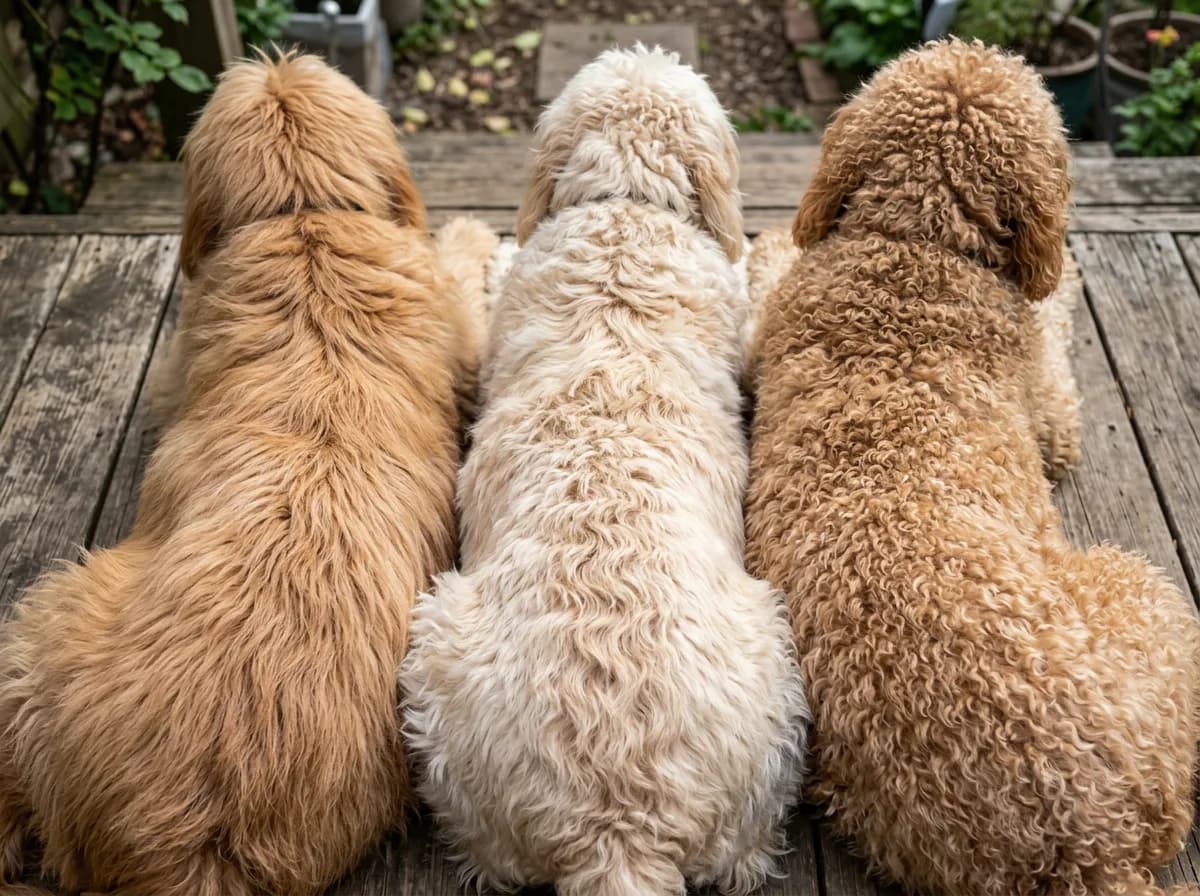
Not automatically. It is tempting to read the generation ladder as a straight line where every step toward more Poodle guarantees less shedding, but coat genetics are messier than that. Two genes do most of the heavy lifting: the furnishings gene, which produces the fuzzy eyebrows and beard, and the shedding locus, which controls how much hair a dog drops. A dog can carry a high Poodle percentage on paper and still shed noticeably if it did not inherit the low-shed and furnished versions of those genes.
That is why a DNA-tested multigen can out-perform an untested F1b, and why a carefully bred F1b can out-perform a random F2b. The generation label sets the odds, but the specific genes the puppy actually inherited set the result. This is also the single strongest argument for buying from a breeder who tests, because testing turns a probability into something much closer to a promise.
Which Goldendoodle generation is most allergy-friendly?
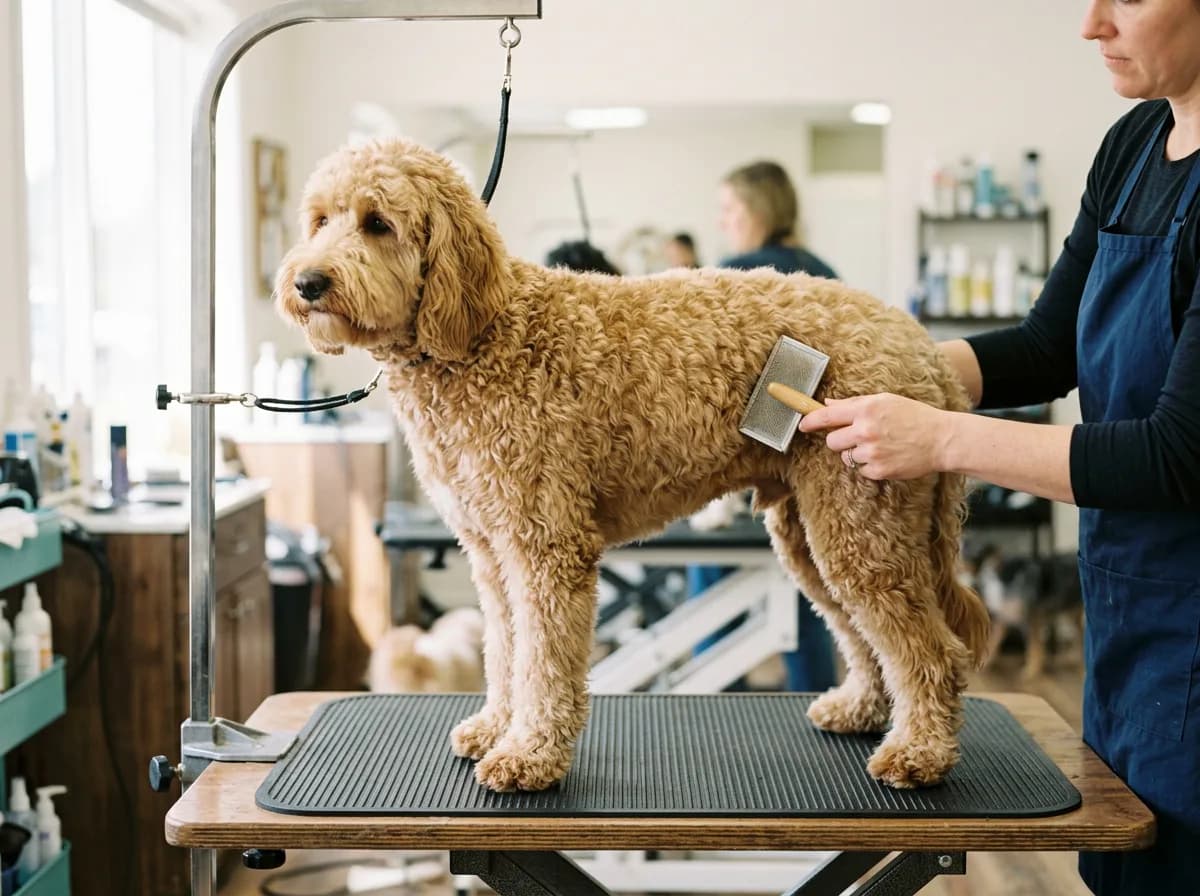
The most allergy-friendly Goldendoodles are the higher-Poodle-percentage generations with furnishings: F1b, F2b, and furnished multigens. More Poodle plus the furnishings gene generally means a curlier coat that traps loose hair and dander instead of dropping it around your home.
That said, a hard truth first: no dog is truly hypoallergenic. The American Kennel Club is blunt about this. Allergies are triggered by proteins in dander, saliva, and urine, not by hair itself, so even a very low-shedding curly doodle produces allergens. What a low-shed coat does is reduce how much of that allergen gets broadcast around your rooms, which is why so many sensitive families still do well with the curlier generations.
If allergies are the deciding factor, do two things. First, prioritize an F1b or furnished multigen from a breeder who DNA tests for furnishings and shedding. Second, spend real time with the parents or a similar adult dog before committing, because your own reaction is the only test that matters. For a deeper look at how much each coat actually drops, see our companion guide on how much Goldendoodles shed.
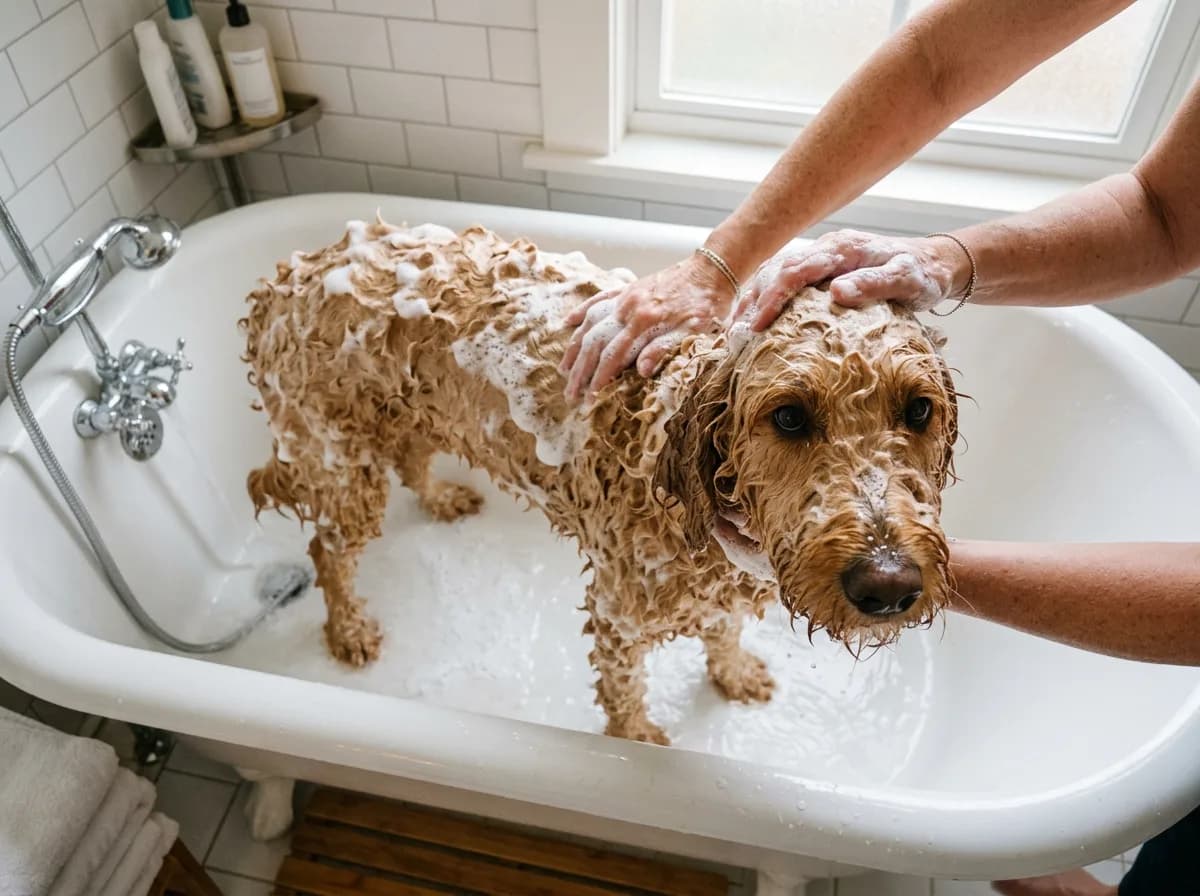
Whichever generation you land on, allergy management is as much about upkeep as genetics. Regular line-brushing to the skin pulls loose, allergen-carrying hair out of a curly coat before it can shed into your home, and routine bathing rinses dander off the skin. The curlier the generation, the more that grooming routine matters, so an allergy household should budget for both the tools and the professional trims from day one.
- Be cautious with any breeder who promises a 100% hypoallergenic or non-shedding Goldendoodle. Reputable breeders talk in terms of low-shedding and furnished coats, and they back it up with genetic testing, not absolute claims your allergies may not honor.
Is an F1 or F1b Goldendoodle better?
Neither is universally better. The right answer depends on what you want from the coat. Choose an F1 if you love a shaggier, more classic teddy-bear look and can tolerate a little shedding. Choose an F1b Goldendoodle if a low-shedding, curlier, more allergy-friendly coat is your top priority.
That is the honest version of a question people expect to have a single winner. An F1b wins on shedding and allergy predictability because of its higher Poodle percentage. An F1 wins on that softer, less-tightly-curled look some families prefer, and it typically needs a bit less intensive grooming than a curly F1b. Temperament between the two is broadly similar, since both carry plenty of the easygoing Golden Retriever influence.
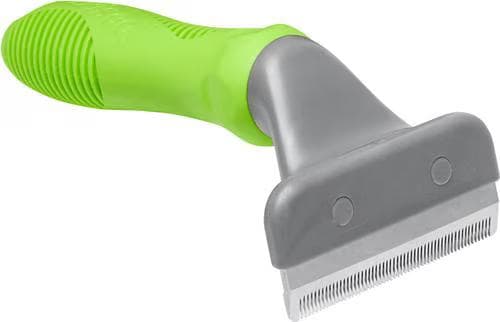
Petful may earn a commission when you click through to Chewy, at no extra cost to you.
If allergies or a spotless floor are non-negotiable, lean F1b. If you want the shaggy look and are relaxed about a modest amount of hair, an F1 can be the better fit. There is no trophy here, only the coat you actually want to live with.
Is an F1 or F1b Goldendoodle healthier?
Generation is not a reliable predictor of health. An F1 and an F1b are both healthy or both risky based on one thing above all: whether the breeder health-tested the parents. Two well-screened parents produce sounder puppies at any generation than two untested parents ever will.
There is a real genetics wrinkle worth understanding. F1 dogs benefit most from heterosis, the hybrid vigor that can come from crossing two distinct breeds, which may slightly lower the odds of certain breed-specific inherited conditions. As you backcross toward the Poodle in an F1b, or breed doodle-to-doodle in later generations, you reintroduce more shared ancestry, so that first-generation vigor effect softens. In theory that gives the F1 a small edge.
In the real world, that edge is swamped by health testing. Both Golden Retrievers and Poodles carry risks for hip and elbow dysplasia, eye disease, and certain heart conditions, and those pass down regardless of the F-number. Reputable breeders screen through the Orthopedic Foundation for Animals and run genetic panels for conditions like progressive retinal atrophy. Ask any breeder for OFA hip, elbow, cardiac, and eye clearances on both parents. A tested F1b is healthier than an untested F1 every day of the week.
- Ask to see OFA hip and elbow scores, a cardiac clearance, and an eye exam on both parents, plus a genetic panel for breed-specific conditions. Health testing on the parents tells you far more about a puppy's future than whether it is labeled F1 or F1b.
Are F1b Goldendoodles the best generation?
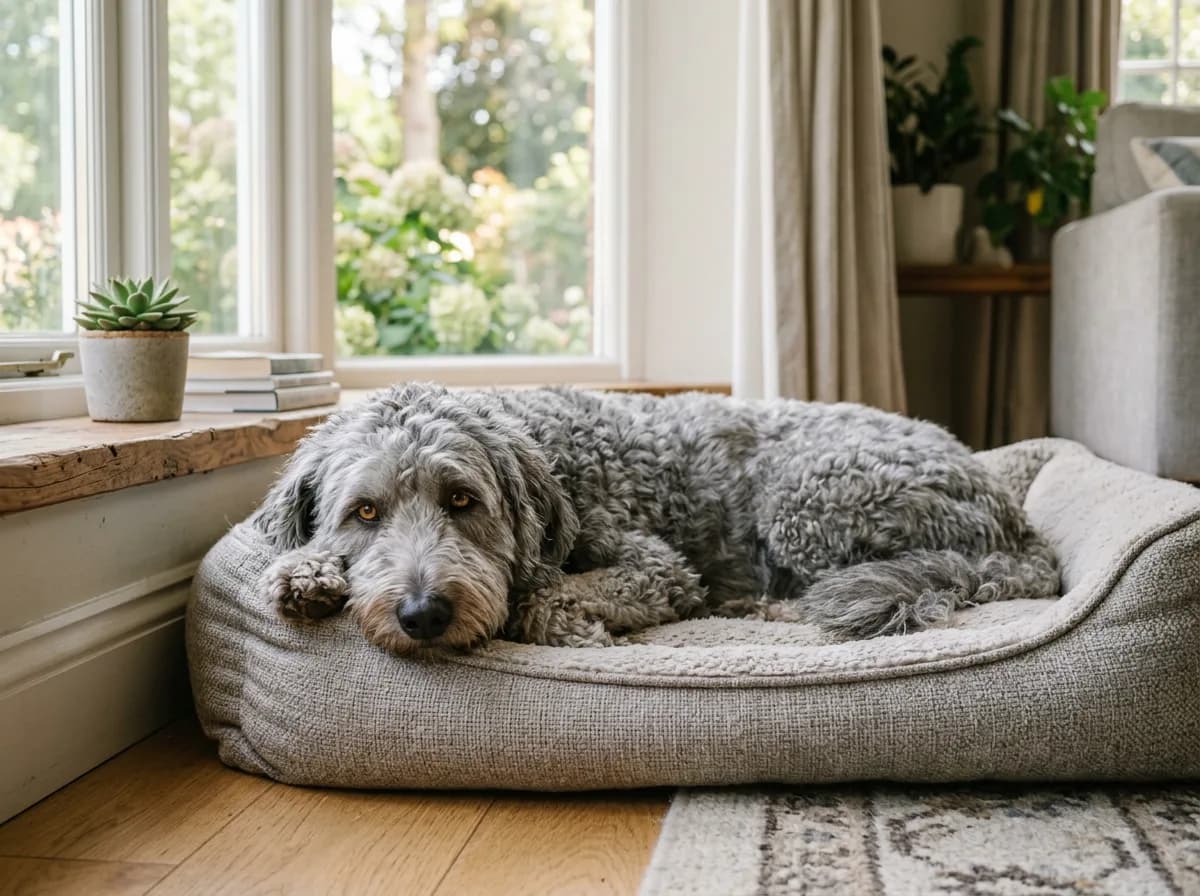
F1b Goldendoodles are the most popular and often the most-recommended generation, but "best" depends entirely on your priorities. They earn that reputation because they reliably deliver a low-shedding, allergy-friendlier, curly-to-wavy coat while keeping the friendly Golden temperament, which is exactly what most families are shopping for.
Where an F1b is genuinely the best choice: allergy households, people who want predictable low shedding, and buyers who want a teddy-bear coat without going all the way to a Poodle look. Where another generation might beat it: if you prefer a shaggier coat (F1), want even more coat consistency across a litter (a furnished multigen), or want a middle-ground look (F2b). The F1b is the safe, sensible default, not an automatic trophy winner for every home.
Which is the calmest doodle generation?
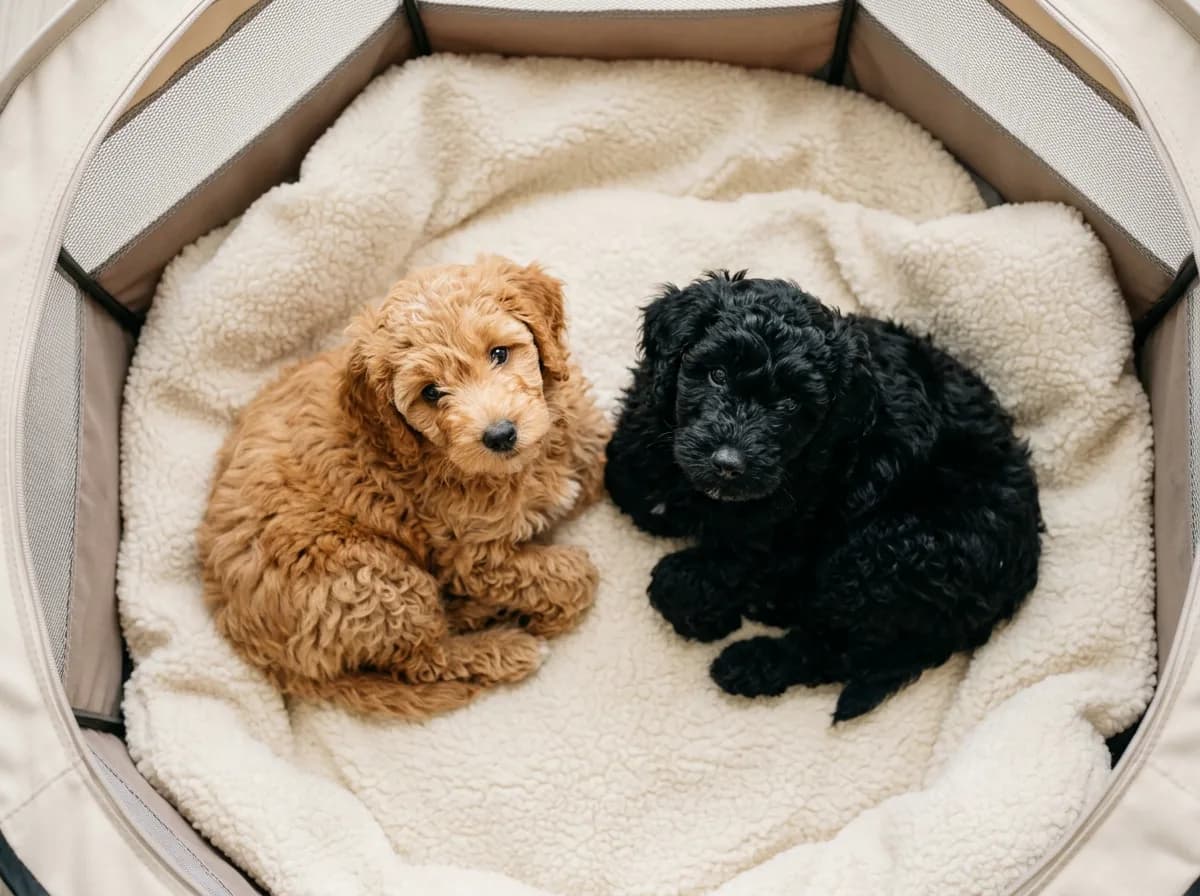
No single generation is reliably the calmest. Calmness in a Goldendoodle is driven far more by the specific breeding lines, the dog's size, early socialization, training, and plain individual personality than by whether it is an F1 or an F1b. Anyone who tells you one F-number guarantees a mellow dog is overselling the label.
That said, a few real patterns help. Goldendoodles as a breed lean gentle and people-oriented thanks to the Golden Retriever side, and many owners find them among the calmer doodle types once they are past the bouncy puppy and adolescent stages. Smaller Goldendoodles often read as calmer in tight living spaces simply because there is less dog and less drive to burn off, though plenty of standards settle into wonderfully steady adults. Breeders who select for temperament, and owners who deliver consistent exercise and training, produce calm dogs at any generation. If a settled disposition is your goal, ask the breeder directly about the temperament of the parents and grandparents, and read up on the broader breed's Goldendoodle temperament before you fixate on a generation code.
Are F1b Goldendoodles more expensive?
Sometimes, but not dramatically, and not because of the F1b label itself. F1b Goldendoodles can carry a slightly higher price than F1s in some programs because their low-shedding, allergy-friendlier coats are in high demand, and demand nudges price. But the biggest price drivers are the breeder's health testing, size, color, and reputation, not the generation code.
Across health-testing breeders, most Goldendoodle puppies fall into a broad range, with sought-after low-shed generations and rarer colors sitting toward the top of it. A backyard breeder selling an "F1b" for a suspiciously low price is a red flag, not a bargain, because the savings almost always come out of health testing you will pay for later at the vet. The table below shows how the pricing conversation usually breaks down. For more, see Petful’s guide to Goldendoodle colors.
| Generation | Relative demand | Where it usually sits on price | Main reason |
|---|---|---|---|
| F1 | High | Mid-range | Classic look, some shedding |
| F1b | Very high | Mid to upper | Low-shed, allergy demand |
| F2 | Moderate | Lower to mid | Less predictable coat |
| F2b | Moderate | Mid to upper | Curlier, more consistent |
| Multigen | High | Upper | Most predictable low-shed coat |
The takeaway: do not let an F1b premium spook you, and do not let a cut-rate F1b tempt you. Pay for the health testing and the breeder's track record. That is where your money actually protects you.
How to choose the right Goldendoodle generation for you
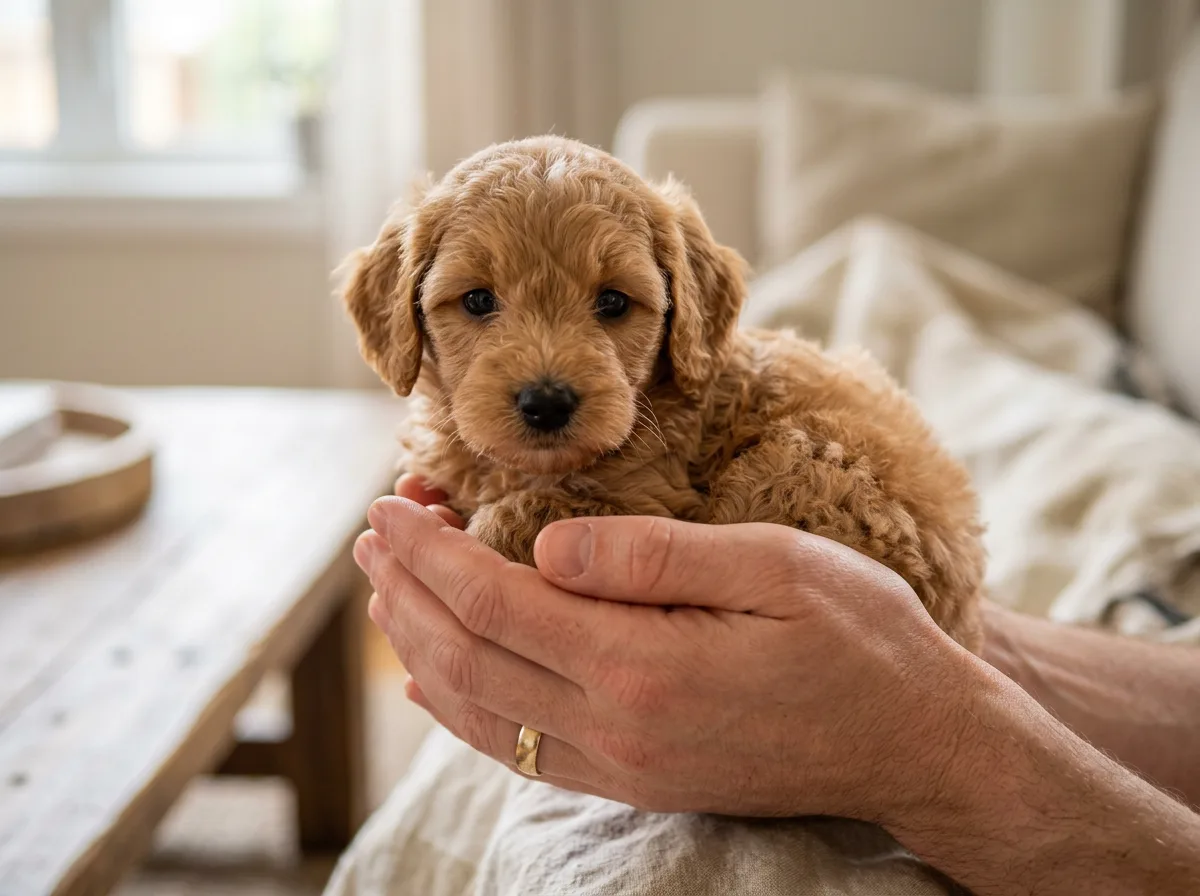
Work backward from what matters most to your household, and the generation almost picks itself.
- Allergies or low shedding are your top priority. Start with an F1b or a furnished multigen, and insist on furnishings and shedding DNA results.
- You love a shaggy, classic teddy-bear look and tolerate light shedding. An F1 is your friend.
- You want a middle ground between shaggy and curly. Look hard at F2b.
- You want the most predictable coat, litter after litter. A multigen from an established, health-testing program stacks the odds in your favor.
- Size matters for your space. Generation and size are separate choices, so pair this decision with our guide to Goldendoodle sizes to land on the right combination.
Whatever generation you choose, the breeder outranks the label. A conscientious breeder who health-tests, socializes, and is honest about their coats will hand you a better dog at any generation than a careless one selling the "perfect" F1b. If you are still weighing doodles against other designer crosses, it is worth comparing the Goldendoodle with a smaller option like the Cavapoo before you commit.
- Once you know which generation fits your priorities, ask the breeder to show you the parents, their coats, and their genetic and health testing. Matching the label to real dogs in front of you is how you turn a spreadsheet decision into the right puppy.
Goldendoodle generation FAQs
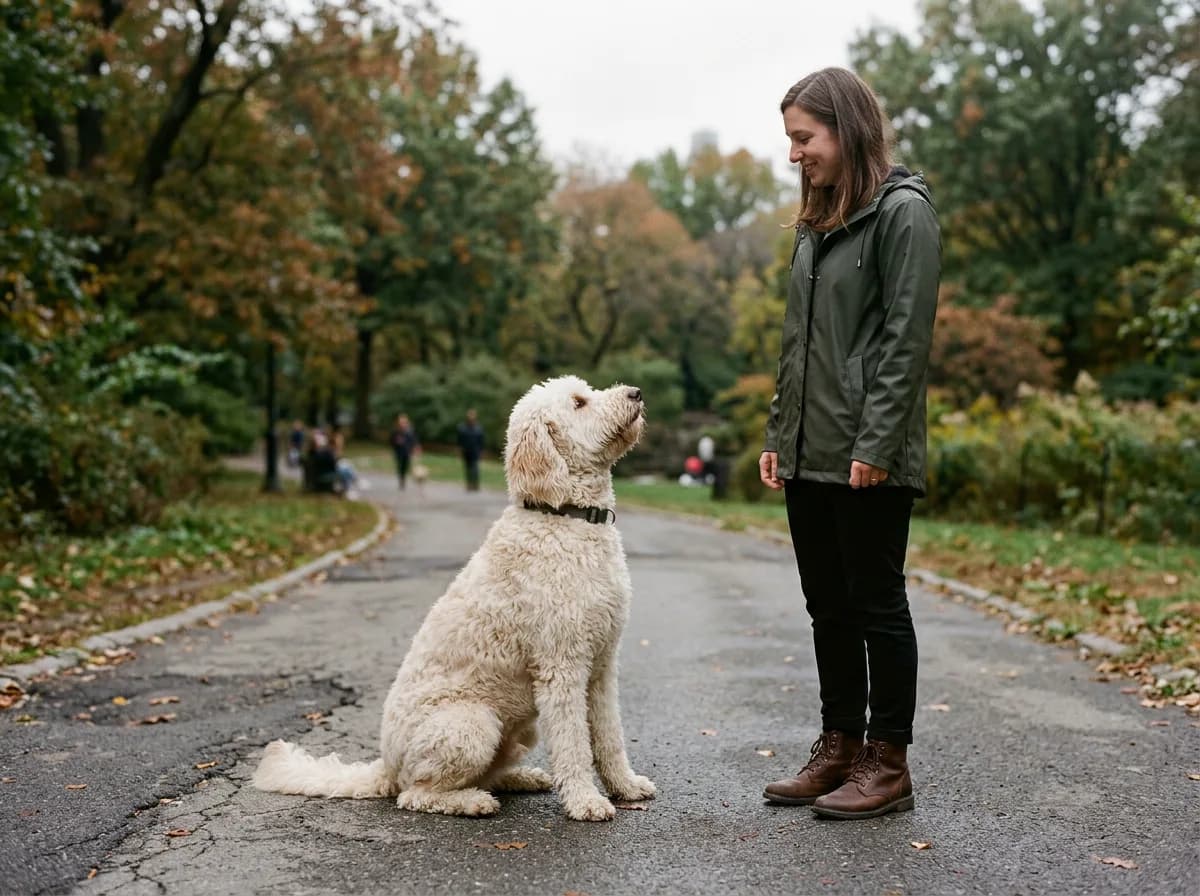
Do F1b Goldendoodles come in mini, medium, and standard sizes?
Yes. "F1b" describes ancestry, not body size. An F1b is a first-generation Goldendoodle bred back to a Poodle, so it is about 75% Poodle and 25% Golden Retriever, and that ratio stays the same whether the dog grows up to be a 20-pound lapdog or a 60-pound family dog. What actually sets an F1b's adult size is the Poodle used in the backcross plus the size of the F1 parent.
Because breeders can pair an F1 Goldendoodle with a Toy, Miniature, or Standard Poodle, the same F1b label shows up across every size tier:
- Petite or toy F1b: bred down through a Toy Poodle line, the smallest option.
- Miniature F1b: the most common "mini goldendoodle f1b," produced with a Miniature Poodle.
- Medium F1b: a middle tier between mini and standard.
- Standard F1b: bred with a Standard Poodle, the largest option.
The practical takeaway: the "F1b" tag alone tells you nothing about how big the dog will get. Always ask the breeder which size Poodle is behind the litter and what adult weight the parents reached.
How big is a full grown F1b Goldendoodle?
A full grown F1b Goldendoodle typically weighs anywhere from about 15 to 70 pounds and stands roughly 13 to 24 inches at the shoulder, depending entirely on its size tier. The Goldendoodle Association of North America (GANA) sorts adult sizes into four brackets that F1bs fall into:
- Petite: under about 25 lb, under 14 inches tall.
- Miniature: about 26–35 lb, 14–17 inches.
- Medium: about 36–50 lb, 17–21 inches.
- Standard: about 51 lb and up, over 21 inches.
Height is measured at the shoulder (the withers), not the top of the head, so a dog that looks taller when standing may still sit inside its bracket.
When is an F1b Goldendoodle full grown?
Mini and petite F1bs reach close to their adult height by roughly 11–13 months. Standard F1bs hit full height around 12–16 months, then keep filling out in muscle and weight until about 2 years old. A rough field estimate is that a puppy carries about half its adult weight at 4.5 to 5 months, but the parents' actual weights remain the most reliable predictor.
How long do F1b Goldendoodles live?
Most F1b Goldendoodles live about 10 to 15 years. Size is the single biggest factor: smaller mini and petite F1bs often reach 13–15 years, while standard-size dogs tend to land closer to 10–13, which follows the general pattern that smaller dogs outlive larger ones. Males and females live about the same length of time, so weight, dental care, and overall health management matter far more than sex.
The F1-to-Poodle backcross widens the gene pool compared with a purebred, but the generation label by itself is not what protects longevity. Responsible health testing does. Ask the breeder to show clearances on both parents before you commit.
- Keep the dog at a lean body weight to reduce joint and heart strain.
- Stay on top of dental care, a common quiet driver of shorter lifespans.
- Request OFA or equivalent clearances for hips, elbows, eyes, and heart, plus DNA panels for conditions like progressive retinal atrophy.
- Hybrid vigor gives an F1b a head start, but the parents' health clearances are the real predictor of a long, healthy life. A generation code on a pedigree is not a substitute for OFA and DNA results.
Neither is universally better. An F1b Goldendoodle is better for low shedding and allergy-friendliness thanks to its higher Poodle percentage, while an F1 is better if you want a shaggier, classic teddy-bear coat and can tolerate a little shedding. Match the generation to the coat you actually want.
F1b Goldendoodles are the most popular and most-recommended generation because they reliably deliver a low-shedding, allergy-friendlier coat with a friendly temperament. They are the safest default for allergy households, but a furnished multigen or an F1 can be a better fit depending on your priorities.
An F1b Goldendoodle is an F1 Goldendoodle bred back to a purebred Poodle, making the puppy about 75% Poodle and 25% Golden Retriever. That higher Poodle percentage produces a curlier, lower-shedding, more allergy-friendly coat.
Generation is not a reliable predictor of health. F1 dogs may get a small edge from hybrid vigor, but health depends far more on whether the breeder tested both parents through the Orthopedic Foundation for Animals and genetic panels. A health-tested F1b is healthier than an untested F1.
No single generation or doodle type is reliably calmest. Calmness comes from breeding lines, size, socialization, training, and individual personality more than the F-number. Goldendoodles lean gentle thanks to the Golden Retriever side, and smaller dogs often read as calmer in tight spaces.
Sometimes slightly, because their low-shed coats are in high demand, but the label itself is not the main price driver. Health testing, size, color, and breeder reputation move the price far more than whether a puppy is F1 or F1b.
Sources
- American Kennel Club (akc.org): Goldendoodle coat, grooming, and hypoallergenic-dog guidance
- Orthopedic Foundation for Animals (ofa.org): hip, elbow, cardiac, and eye health testing standards for parent dogs
- University of California, Davis Veterinary Genetics Laboratory (vgl.ucdavis.edu): furnishings and shedding coat-genetics testing

Coreen Saito is a pet writer and longtime shelter volunteer with more than a decade in animal rescue. She covers cat behavior, breed care, and the small, ordinary science of sharing a life with companion animals, with a particular focus on honest takes about the products and decisions that actually matter. At home in Arizona, she's outranked by Mac (a dog with the loudest opinion in the house), Rebel (a cat who governs by quiet authority), and Meri (an orange tabby who runs the late shift and the laundry basket). She writes about all three, plus the rescues that keep coming through her life, at LifeWithMinty.com.
Sign up for expert-backed reviews and safety alerts all in one place.