Teacup Goldendoodle: Size, Care, and Health Realities
Teacup Goldendoodle is a marketing label, not a real size. Here is how big petite doodles actually get, what they cost, the health cautions of extreme small breeding, and how to care for one responsibly.
Petful is reader supported. As an affiliate of platforms like Amazon and Chewy, we may earn a commission when you buy through links on this page. There is no extra cost to you.
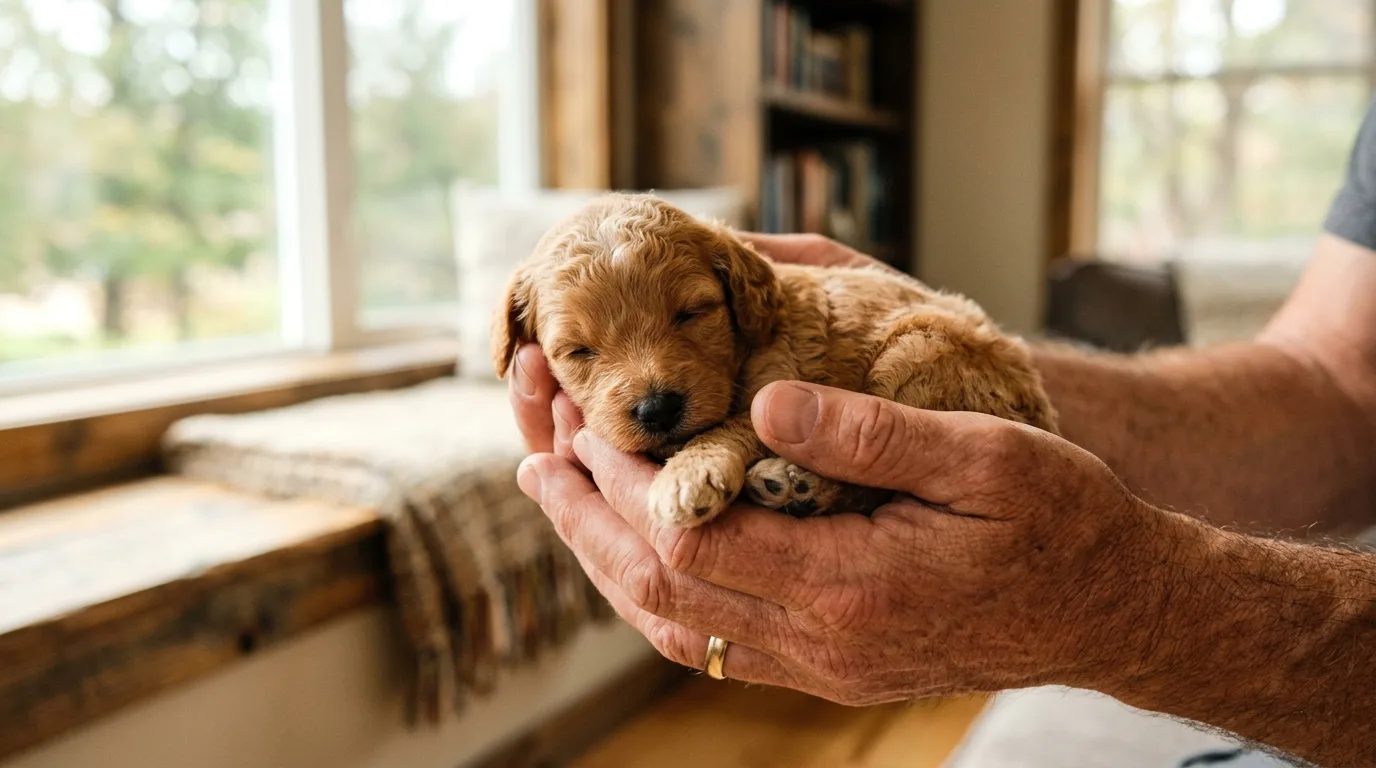
A teacup goldendoodle is marketed as the smallest possible version of the beloved Golden Retriever and Poodle cross, a pocket-sized companion that supposedly stays puppy-tiny for life. The name is charming, and the photos are irresistible: a curly, apricot bundle that fits in two cupped hands. Before you fall for the picture, it helps to know that "teacup" is a seller's word, not a breed size recognized by any kennel club, and that squeezing a dog into that frame comes with real trade-offs. This guide walks through what teacup actually means, how big these dogs really get, the health cautions tied to extreme small breeding, and how to care for one responsibly if a petite doodle joins your family.
- 1"Teacup" is a marketing label, not an official Goldendoodle size, and no major registry recognizes it
- 2A true teacup or petite Goldendoodle usually matures around 8 to 15 pounds, achieved by breeding down to the smallest Toy Poodles or by selecting runts
- 3The smaller the frame, the higher the risk of fragility, hypoglycemia, luxating patellas, dental crowding, and other issues, so a health-tested breeder and a welfare-first mindset matter more here than with any standard doodle

Sign up for expert-backed reviews and safety alerts all in one place.
What Does "Teacup" Actually Mean in a Goldendoodle?
The honest answer is that "teacup" means whatever the person selling the puppy wants it to mean. There is no teacup class in the Goldendoodle world the way there is a recognized Miniature or Standard. The Goldendoodle itself is a crossbreed, so it is not a breed with a written standard at the American Kennel Club to begin with, and the sizes that hobby breeders and clubs do use (Toy, Miniature, Medium, Standard) stop well short of a formal "teacup" tier. When a breeder advertises a teacup, micro, petite, or pocket Goldendoodle, they are describing an outcome, an adult that stays very small, rather than a category with agreed weight limits.
That matters for buyers because the same word can describe very different dogs. One breeder's "teacup" is a healthy 12-pound adult produced by pairing a Toy Poodle with a small Mini Goldendoodle. Another's "teacup" is the runt of a litter, undersized because of poor nutrition or a health problem, sold at a premium precisely because it looks tiny. A third may be crossing already-small dogs generation after generation, chasing a number on the scale without screening for the conditions that come along for the ride. The label tells you nothing about which of those you are getting, so the questions you ask the breeder matter far more than the word on the listing.
Is "Teacup" a Recognized Size?
No. The AKC does not register Goldendoodles at all because they are a hybrid, and the breed clubs that do publish size guidance for doodles top out at Toy or Petite, not teacup. When you see "teacup" or "micro," treat it as a red flag to slow down and verify, not a guarantee of quality. Reputable programs tend to use plainer language such as "petite" or "toy," disclose the adult weights of the parents, and show health testing. Sellers leaning hard on "teacup" as the headline, especially alongside urgency and deposits, are often selling the fantasy rather than a well-bred dog.
How Big Does a Teacup Goldendoodle Get?
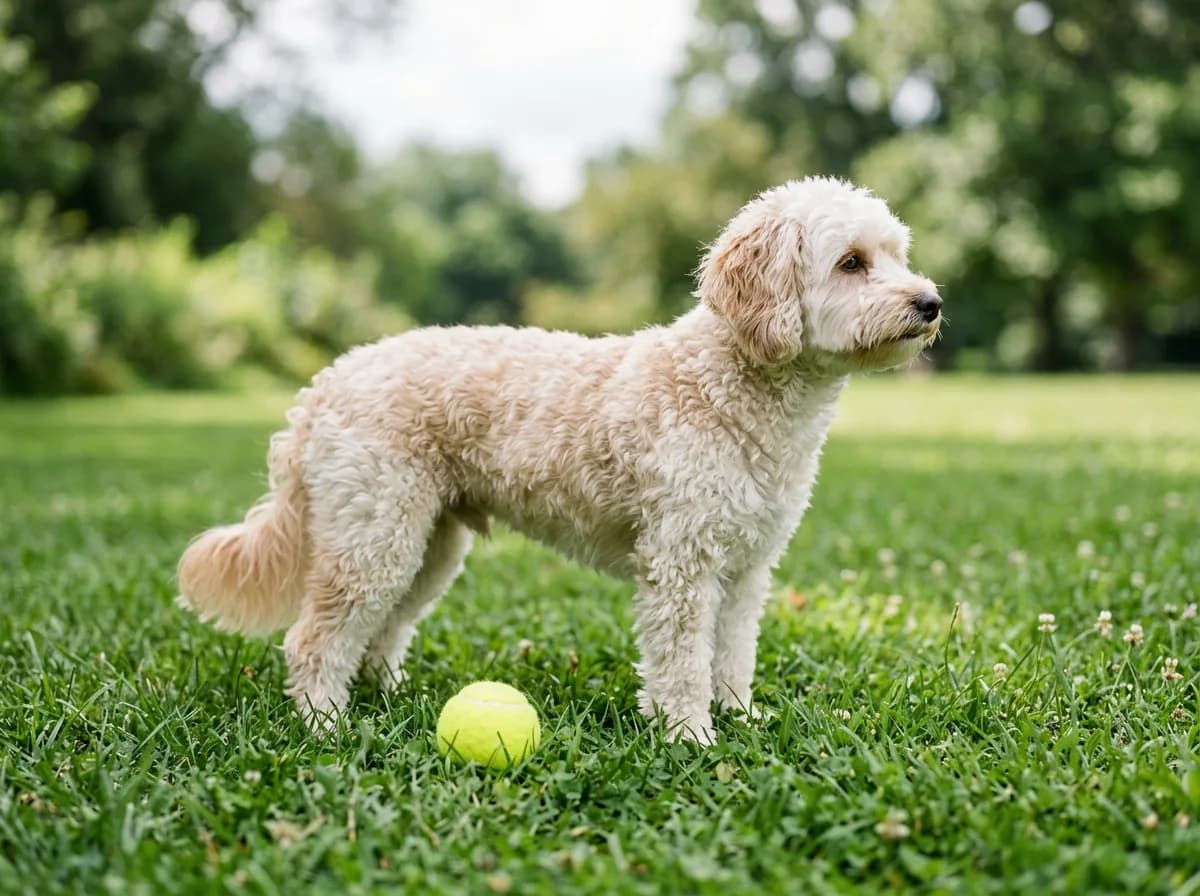
Here is the practical size question most buyers actually care about. A teacup or petite Goldendoodle typically matures at roughly 8 to 15 pounds and stands under about 14 inches at the shoulder, though there is real spread on both ends because these dogs are not bred to a standard. Some individuals labeled teacup settle closer to a small Toy Goldendoodle at 15 to 20 pounds once fully grown. Others genuinely stay in the single-digit-pound range. Growth is largely finished between 8 and 12 months for dogs this small, earlier than a Standard, so the puppy you see at ten months is close to the adult you will keep.
The single most reliable predictor is the size of the parents, especially the Poodle side, and the grandparents if the breeder will share them. A puppy out of two genuinely tiny, healthy adults is more likely to stay small in a healthy way than a puppy that is simply the runt of a Miniature litter. Ask for the weights of the sire and dam, not just a promised adult weight for the puppy, and be skeptical of any guarantee of an exact final size, because biology does not work on promises.
Petful may earn a commission when you click through to Chewy, at no extra cost to you.
If you are weighing a teacup against the more established small doodles, it helps to see the full range side by side. Our guide to Goldendoodle sizes breaks down each tier, and the Mini Goldendoodle profile covers the size most people actually mean when they picture a small doodle.
| Size Type | Adult Weight | Adult Height | Notes |
|---|---|---|---|
| Teacup / Petite | 8-15 lb | under 14 in | Not a breed standard; welfare cautions apply |
| Toy / Micro Mini | 10-20 lb | 10-15 in | Bred from Toy Poodles |
| Miniature | 15-35 lb | 13-20 in | The most popular small doodle size |
| Medium | 30-45 lb | 17-20 in | Sits between mini and standard |
| Standard | 45-90 lb | 20-26 in | Bred from Standard Poodles |
Teacup Goldendoodle Generations Explained
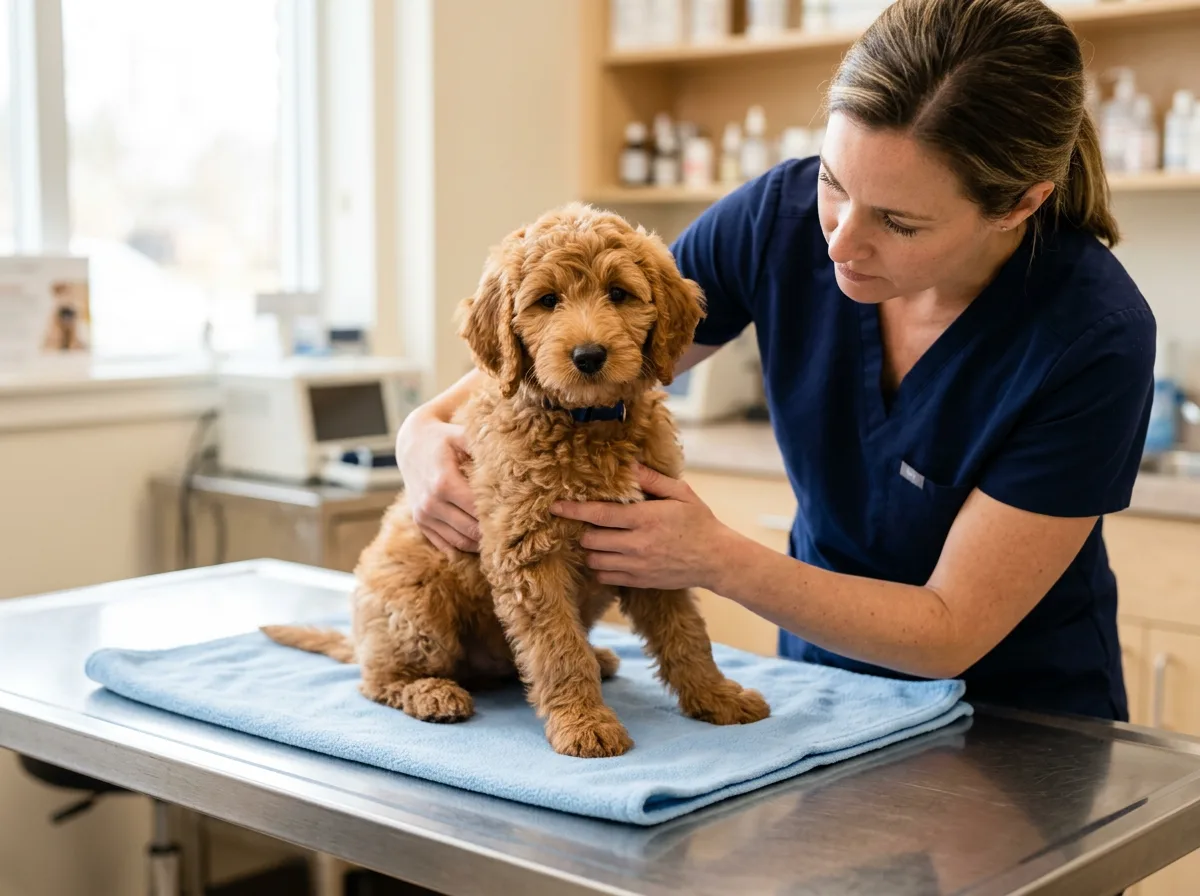
Beyond size, doodles are described by generation, and the generation shapes coat, shedding, and how predictable a small size will be. You will rarely see a true first cross at teacup size, because a Golden Retriever is far too large to produce a pocket-sized dog in one step. Petite doodles come almost entirely from crossing already-small doodles with Toy Poodles, which is why the letters and numbers on a listing tell you something useful.
- F1: a Golden Retriever crossed with a Poodle, a 50/50 first cross. Almost never genuinely teacup-sized.
- F1B: an F1 doodle bred back to a Poodle, usually a Toy Poodle for petite lines. More Poodle, curlier, lower-shedding, and smaller. Most teacup lines lean heavily on F1B and beyond.
- F2 and F2B: second-generation crosses, doodle to doodle or doodle back to Poodle. Coat and size grow less predictable as the generations stack.
- Multigenerational (multigen): several generations of doodle-to-doodle breeding, selected for coat and size. Reputable petite programs often use multigen dogs to lock in a small frame and a reliably low-shedding coat.
The practical point for a buyer is that more Poodle in the mix, the backcrosses and multigen lines, usually means curlier, lower-shedding coats and smaller frames, which is exactly why teacup lines rely on them. It also means more grooming, because curlier coats mat faster. Ask the breeder which generation a puppy is and match that to your tolerance for shedding and coat care, not just the number on the scale. Generation never overrides health testing, though. An F1B teacup from unscreened parents is still a gamble in a small, fragile package.
How Breeders Create Teacup Goldendoodles
Understanding how a dog gets this small is the fastest way to judge whether a given puppy is a good idea. There are a few common routes, and they are not equally responsible.
The most defensible method is careful downsizing: breeding a small, health-tested Toy Poodle to an already-small Mini or Toy Goldendoodle, then selecting the smaller, sound offspring over several generations. Done well, with full genetic screening at each step, this can produce a small dog without stacking up defects. It is slow, expensive, and unglamorous, which is exactly why the breeders who do it rarely rely on the word "teacup" to sell.
The riskier routes are the ones buyers should watch for. Some sellers simply sell runts, the smallest and often weakest puppy in a litter, at a markup. A runt may be small because of a heart defect, a liver shunt, or poor early nutrition, none of which you want to pay extra for. Others chase size by breeding two very small dogs repeatedly without screening, which concentrates the same structural problems generation after generation. And a few introduce other tiny breeds into the line and still call the result a Goldendoodle. None of this shows up in a cute photo, which is why the paperwork and the health testing behind the puppy matter more than the puppy's appearance.
- Paying a premium for the smallest puppy in a litter often means paying more for a dog that is small because something is wrong. Small size on its own is not a health feature. Ask why this puppy is small, and ask to see the parents and their health testing before you commit.
Health Realities of Extreme Small Breeding
This is the part that gets glossed over in the marketing, and it is the reason a welfare-first approach is not optional with teacup dogs. Pushing any breed toward an extreme, whether that is a very flat face or a very tiny body, tends to bring predictable problems. With very small dogs, the well-documented risks include the following, and a good breeder is actively screening against them rather than pretending they do not exist.
Hypoglycemia, or low blood sugar, is a genuine emergency risk in very small puppies. A tiny body has little reserve, so a missed meal, stress, or a chill can drop blood sugar to dangerous levels, causing weakness, wobbliness, or seizures. Teacup puppies often need small, frequent meals and close monitoring in their first months.
Luxating patellas, kneecaps that slip out of place, are common in small and toy-type dogs and can range from a mild occasional skip to a problem that needs surgery. Dental crowding is another near-certainty: the same number of teeth crammed into a smaller jaw leads to overcrowding, retained baby teeth, and a higher lifetime burden of dental disease, so at-home tooth care matters a lot.
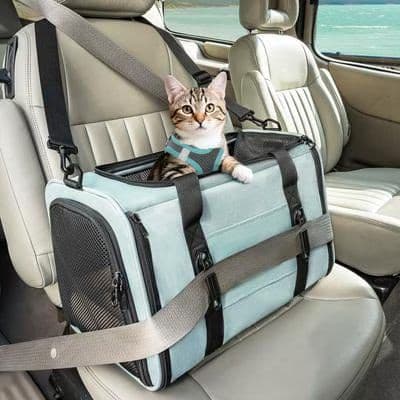
An airline-approved soft-sided carrier with patent safe buckles and mesh ventilation panels, sized for cats and small dogs.
Petful may earn a commission when you click through to Chewy, at no extra cost to you.
Fragility is not a technicality. A dog under fifteen pounds, and especially one under ten, can be seriously hurt by a fall from a couch, a misjudged step, or an over-enthusiastic child or larger dog. Some very small dogs also carry a higher risk of tracheal collapse, patent (open) fontanelles where the skull does not fully close, portosystemic liver shunts, and heart murmurs. None of these is guaranteed, but the smaller the target size, the more the odds tilt, and that is exactly why parent-dog health screening through resources like the Orthopedic Foundation for Animals (ofa.org) is the single most important thing to verify.
Veterinary schools that publish owner guidance, such as Cornell University's College of Veterinary Medicine (vet.cornell.edu), consistently emphasize that responsible breeding and early screening reduce these risks, while chasing extreme size for its own sake increases them. The takeaway is not that every petite doodle is doomed. It is that the smaller you go, the less margin for error there is, and the more the breeder's diligence decides your dog's future.
- Before you place a deposit, ask to see hip, knee, eye, heart, and DNA screening results for both parents, ideally verifiable through OFA. A breeder who cannot or will not provide them is not a breeder you want to buy a fragile small dog from.
Coat Colors of the Petite Goldendoodle
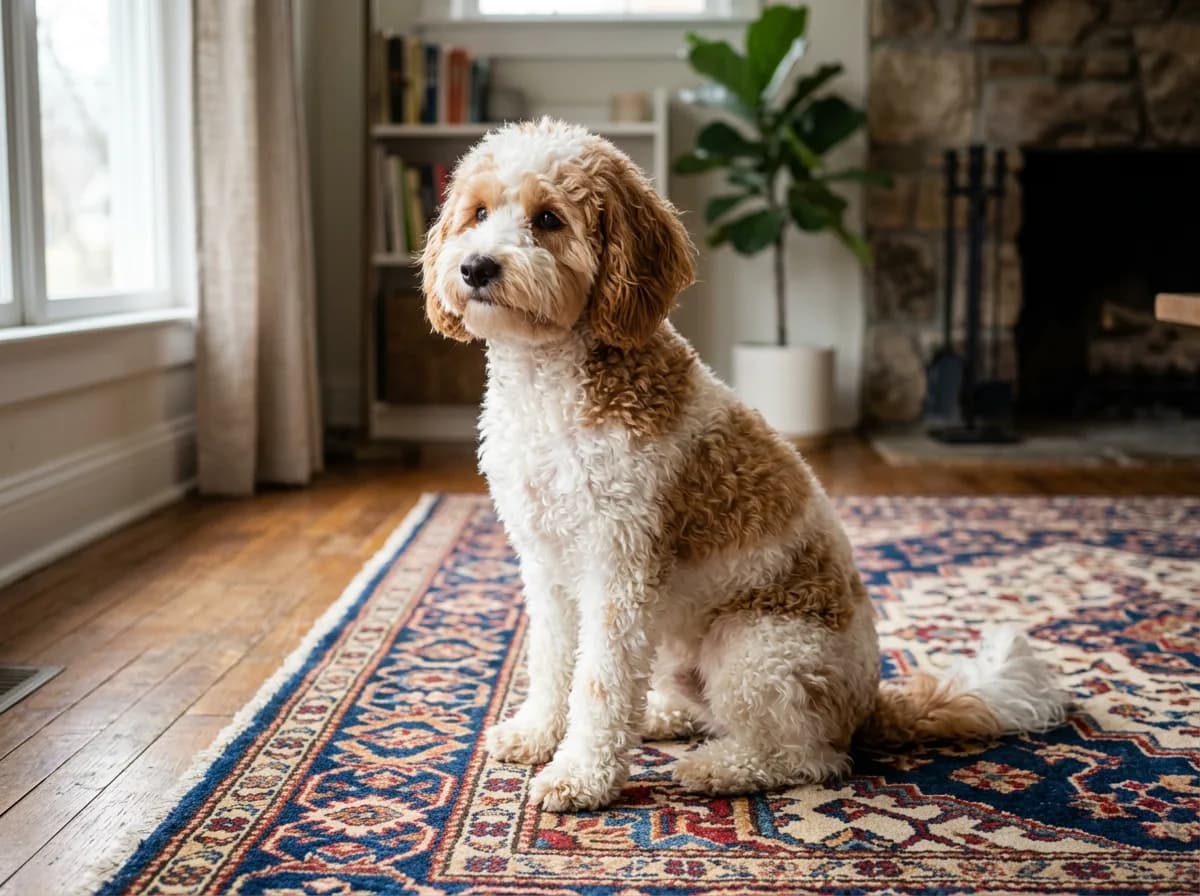
Part of the appeal of these dogs is the range of coats they come in, and color is one of the few places where you can indulge a preference without compromising welfare, as long as you avoid color-first breeders who wave away health testing. Common teacup Goldendoodle colors include:
- Apricot: a warm, golden-orange that is one of the most sought-after doodle shades.
- Red: a deeper, richer version of apricot, often darker around the ears and muzzle.
- Cream and white: pale, soft coats that read almost ivory.
- Gold: closer to the classic Golden Retriever tone.
- Black: a solid, glossy dark coat inherited from the Poodle side.
- Chocolate and brown: rich cocoa shades that are less common and often priced higher.
- Parti: a coat that is at least half white with patches of a second color.
- Phantom, sable, and merle: patterned or shaded coats that appear in some lines.
One caution on merle: the merle pattern is linked to eye and ear problems when two merle dogs are bred together, so a responsibly bred merle should never come from two merle parents. Color should never be the reason you overlook health testing or accept an extreme-size gamble, because a gorgeous coat on a fragile, poorly bred dog is still a fragile, poorly bred dog. Choose temperament and health first, then enjoy whatever color comes with the right puppy. Keep in mind that doodle coats often lighten or shift tone as the dog matures, so the puppy you meet may look noticeably different as an adult.
Lifespan and Long-Term Outlook
Small dogs tend to live longer than large ones, and Goldendoodles in the smaller sizes often reach roughly 12 to 15 years, sometimes more, when they are well bred and well cared for. That long companionship is a genuine reason people love petite doodles, but it comes with a real commitment: more than a decade of grooming every six to eight weeks, ongoing dental care, careful weight management, and vigilance for the small-dog issues covered above.
A teacup's long-term outlook rests on two things you influence directly. The first is where the dog came from, since screened parents lower the odds of inherited disease. The second is how you manage the everyday risks, keeping the dog lean, protecting the joints, staying ahead of dental disease, and preventing the falls and injuries a fragile body cannot shrug off. Regular veterinary checkups catch problems early, and a small dog kept in good condition can be a healthy, happy companion well into its teens. Plan for the full lifespan, financially and practically, before you bring one home, because a teacup is a fifteen-year decision, not a fifteen-week novelty.
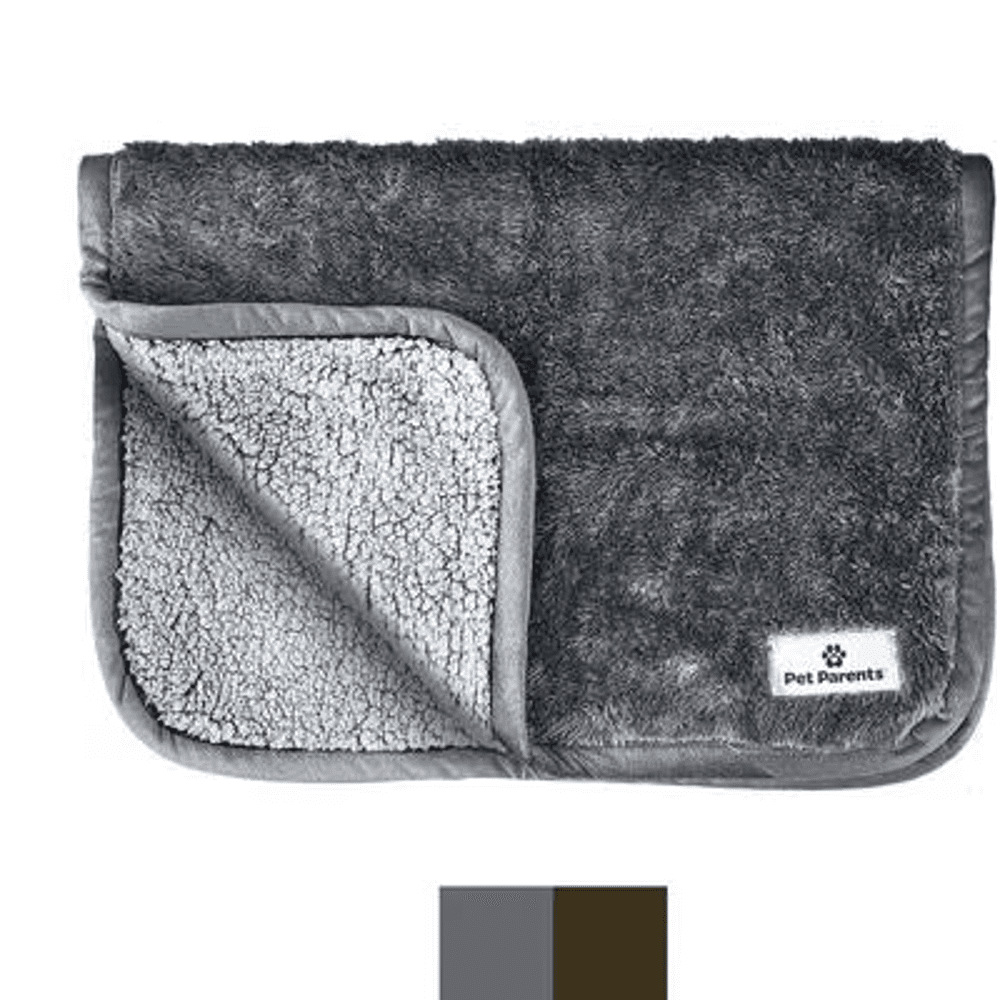
A plush, waterproof sherpa blanket that gives a cold or shivering dog a warm, cozy layer to curl into. The hidden waterproof lining protects the bed, couch, or car seat, and the whole thing is machine washable.
Petful may earn a commission when you click through to Chewy, at no extra cost to you.
Temperament and Personality
The upside of the Golden Retriever and Poodle mix is that temperament tends to survive the shrinking better than the body does. Teacup Goldendoodles are generally friendly, affectionate, people-oriented, and smart, inheriting the Golden's warmth and the Poodle's quick mind. They usually bond hard with their families, enjoy being lap-close, and pick up training readily, which makes them appealing companions for apartments and for people who want a dog that is always nearby.
Two temperament caveats come with the tiny size, though. First, small dogs are easy to over-pamper, and a teacup that is carried everywhere and never asked to behave can become anxious, yappy, or nippy. They still need real training, boundaries, and socialization, just at a scale that respects their fragility. Second, their intelligence means they get bored, and a bored doodle of any size invents its own entertainment. The personality is a genuine strength of these dogs, but it is a strength you have to support with structure, not just cuddles.
Because they are so devoted, teacup doodles are also prone to separation anxiety if they are never taught to be alone. Building short, calm departures from puppyhood, and giving them a safe, enclosed space rather than the run of a house they can hurt themselves in, sets them up to be confident rather than clingy.
Caring for a Teacup Goldendoodle
Day-to-day care for a petite doodle is not harder than for a standard dog so much as it is more precise. The margins are smaller, so the details matter more.
Feeding and the Best Food for Goldendoodles
Because low blood sugar is a real risk in very small dogs, teacup puppies usually do best on several small meals a day rather than one or two large ones, with a vet-guided plan for how much and how often. As for the best food for Goldendoodles in general, the honest answer is that there is no single magic brand. The best food for a Goldendoodle is a complete and balanced diet that meets the standards set by the Association of American Feed Control Officials for the dog's life stage, made by a company with real veterinary and nutritional oversight, and appropriately sized kibble for a small mouth. Look for an AAFCO statement on the label, a named animal protein, and a size-appropriate formula, and let your veterinarian tailor calories to your specific dog rather than free-feeding.
For a teacup specifically, portion control is safety, not just waistline management. These dogs need surprisingly few calories, so it is easy to overfeed a body this small, and obesity puts extra strain on already-vulnerable joints. Weigh food rather than eyeballing it, keep treats to a tiny fraction of daily calories, and always have fresh water available. The American Kennel Club (akc.org) and your vet are better sources for feeding specifics than any breeder's upsell of a proprietary food.
Grooming and Coat Care
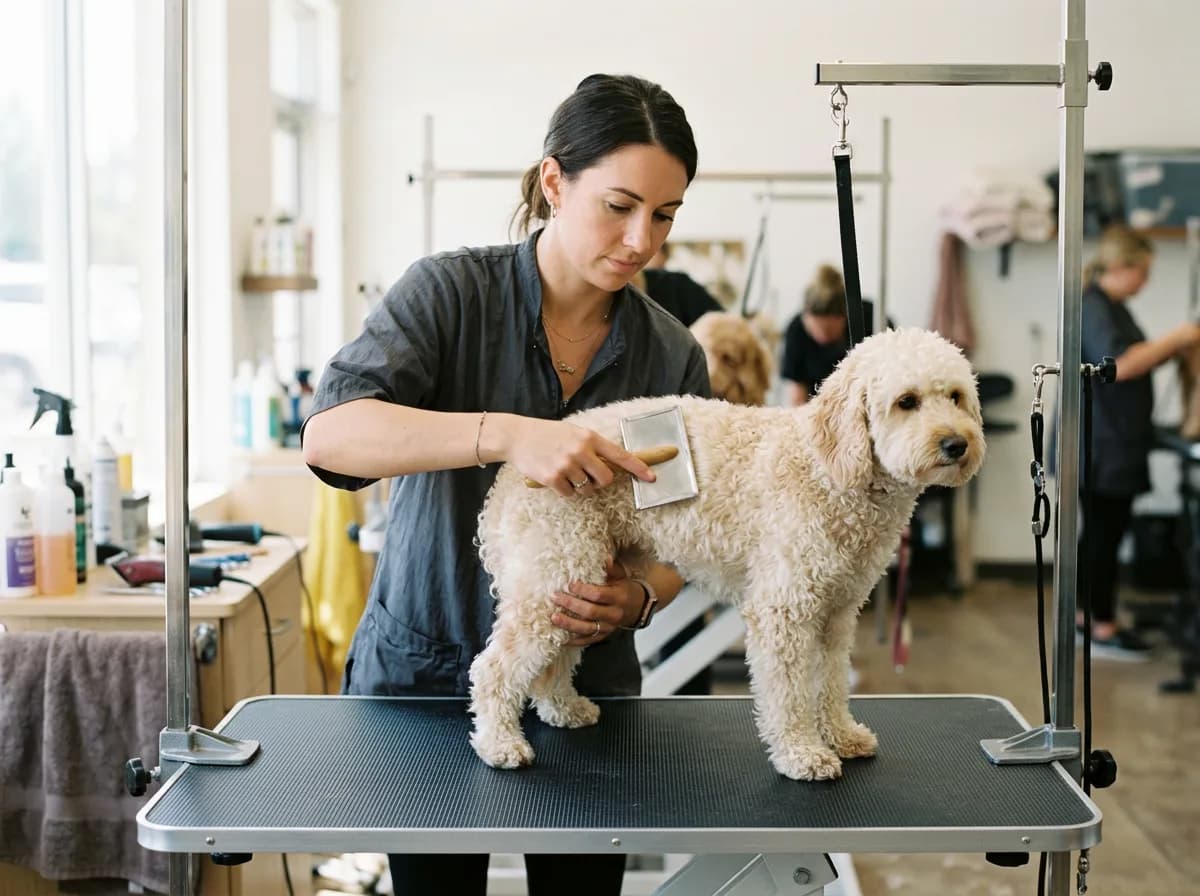
Like most doodles, teacup Goldendoodles usually have a wavy or curly, low-shedding coat that needs consistent grooming to stay comfortable. That coat is one of the breed's selling points, but it mats quickly if neglected, and a matted coat is itchy, painful, and prone to skin problems underneath. Plan to brush several times a week down to the skin, not just over the surface, and to schedule professional grooming roughly every six to eight weeks for a bath, trim, and tidy. There is more on this in Petful’s guide to do goldendoodles shed.
On a dog this small, grooming is also a safety exercise. Nails left too long change how the dog stands and can worsen joint strain, ears need checking and cleaning because doodle ears trap moisture, and the fine coat around the eyes needs regular attention to prevent irritation. Bathing should use a gentle, dog-formulated shampoo, and the dog must be dried thoroughly, since a chilled tiny dog loses body heat fast. Introduce brushing, nail trims, and drying early and make them calm, rewarding routines, because a fragile dog that panics during grooming is easy to injure.
Exercise and Mental Stimulation
A teacup doodle does not need long runs, and in fact too much high-impact exercise, stairs, and jumping can hurt those small joints. What they do need is regular, gentle, low-impact activity: short walks, gentle play, and safe indoor movement that keeps muscle tone up without pounding the joints. A few short outings a day usually suit them better than one long, exhausting one.
Mental exercise is where these dogs really thrive, and it answers a question a lot of doodle owners ask: how do I mentally stimulate my Goldendoodle? The most reliable tools are food puzzles and slow feeders, short daily training sessions that teach new cues and tricks, scent games such as hiding treats around a room for the dog to find, and rotating a small set of toys so they stay novel. Because Goldendoodles are so bright, five to ten minutes of training a couple of times a day does more for their contentment than an hour of aimless yard time. Teaching names of toys, simple problem-solving games, and gentle nose work all channel that Poodle intelligence into something constructive, which in turn prevents the barking, chewing, and anxiety that bored doodles fall into.
Housetraining deserves its own note, because small dogs have small bladders and can be slower to fully house-train. Consistency, frequent trips out, and patience win here, and puppy pads or an indoor option can bridge the gap in bad weather or high-rise apartments.
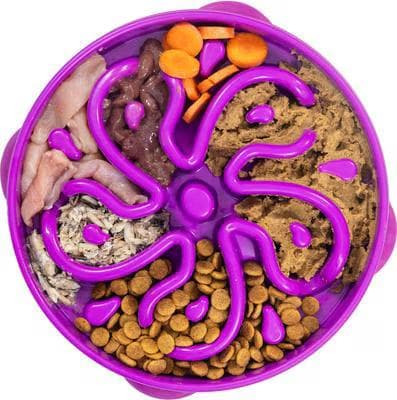
A maze-pattern slow-feeder bowl that makes fast eaters work for each bite, reducing the gulping and swallowed air that trigger regurgitation and vomiting. Holds up to 4 cups.
Petful may earn a commission when you click through to Chewy, at no extra cost to you.
Living Space and Everyday Safety
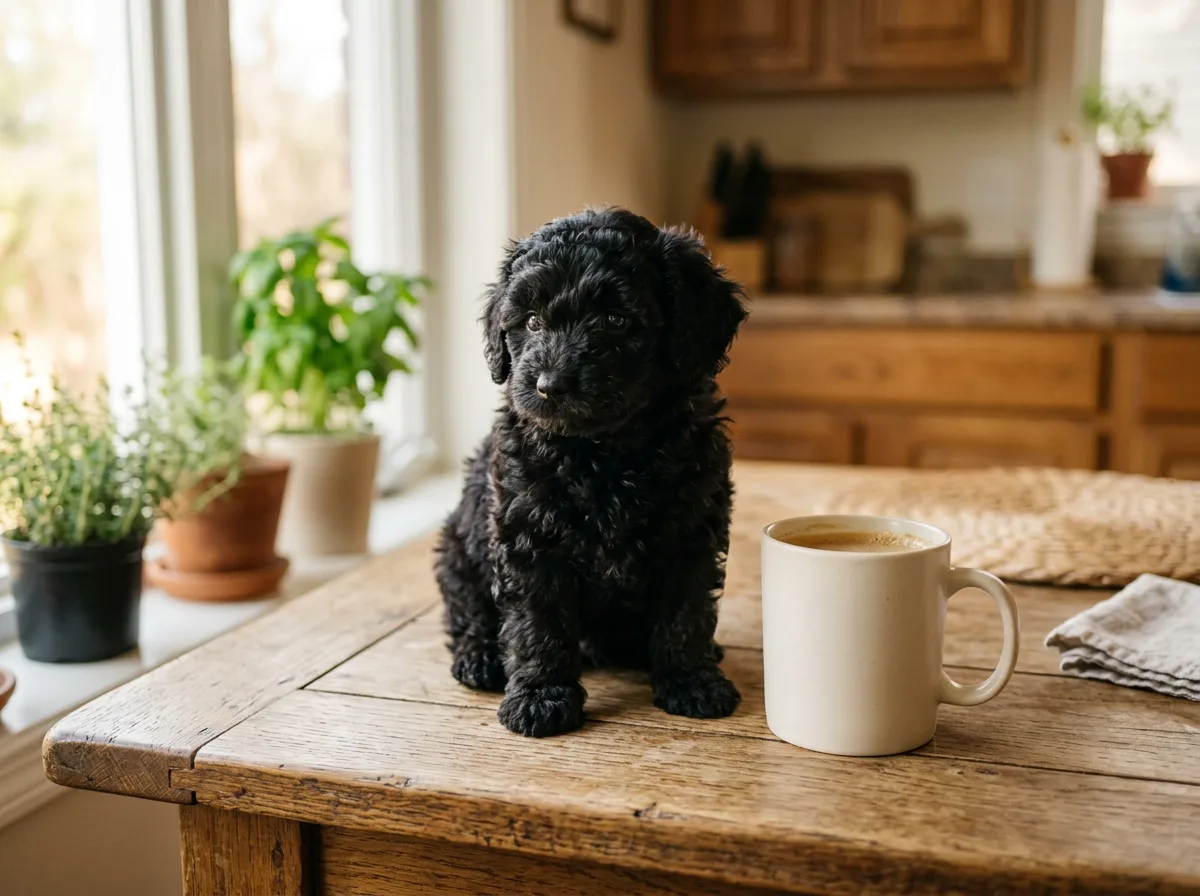
The right home for a teacup doodle is one that has been quietly made safe for something small and breakable. Ramps or steps to favorite furniture reduce jumping. Baby gates keep a tiny dog away from staircases. Underfoot awareness becomes a daily habit, because these dogs are easy to step on or trip over. Larger dogs and very young children should be supervised, not because the doodle is aggressive but because rough play can seriously hurt a dog this size. None of this is difficult, but it is the price of admission for keeping a fragile companion thriving.
How Much Does a Teacup Goldendoodle Cost?
Teacup and petite Goldendoodles are among the most expensive doodles to buy, and the smaller and rarer the size is marketed as, the higher the sticker tends to climb. From a responsible, health-testing breeder, expect a purchase price roughly in the range of $2,500 to $5,000 or more, with the "teacup" label often used to justify the top of that band. A suspiciously cheap teacup is a warning sign, not a bargain, and frequently points to a puppy mill or a runt with an undisclosed problem.
The purchase price is only the beginning. Small, known-risk dogs can carry higher lifetime veterinary costs, and grooming every six to eight weeks adds up quickly. Budgeting honestly before you buy is part of buying responsibly, because a dog you cannot afford to care for properly is a welfare problem waiting to happen. The table below lays out the realistic first-year and recurring costs so the number that matters, the total cost of ownership, is not a surprise.
| Expense | Typical Cost | Notes |
|---|---|---|
| Purchase price | $2,500-$5,000+ | From a health-testing breeder |
| First-year vet and vaccines | $300-$600 | Exams, shots, deworming |
| Spay or neuter | $200-$500 | Small-dog anesthesia care |
| Food (annual) | $300-$600 | Small volume, quality diet |
| Professional grooming (annual) | $600-$1,200 | Every 6-8 weeks |
| Pet insurance (annual) | $400-$700 | Often higher for known-risk small breeds |
| DNA and health screening | $100-$200 | Optional owner testing |
Is a Teacup Goldendoodle Right for You?
A teacup Goldendoodle can be a wonderful, devoted companion for the right home: someone who wants a small, affectionate, low-shedding dog, who has the time and money for careful grooming and veterinary care, and who is willing to child-proof and dog-proof their space around a fragile animal. Apartment dwellers, gentle-household seniors, and people who work mostly from home often suit these dogs well.
They are a poor fit for busy households with toddlers or rambunctious large dogs, for owners who want a hiking or jogging partner, and for anyone shopping primarily on price. If the appeal is mostly the novelty of an extremely tiny dog, it is worth pausing, because that same instinct is what drives demand for the least responsible breeding.
If you do move forward, the breeder is everything. Choose one who uses plain size language, health-tests both parents through OFA and shares the results, lets you see the puppy with its mother and littermates, does not push runts as premium teacups, provides a health guarantee and a contract, and asks you as many questions as you ask them. A doodle in this size class magnifies the difference between a careful breeder and a careless one, so the diligence you do before you buy is the diligence that protects the dog for its whole life. If you are still comparing designer crosses, our profile on the Cavapoo is a useful companion read for anyone deciding between small doodle-style companions.
- Health testing you can verify, both parents on site or shown on video, plain honest size language, a written health guarantee, and a breeder who screens you back. If a seller skips these to close the sale fast, walk away, no matter how cute the photo is.
Frequently Asked Questions
How to Vet a Teacup Goldendoodle Breeder and Avoid Puppy Scams
Because the teacup label commands premium prices, it attracts the widest possible range of sellers, from genuinely careful breeders to outright scammers. Knowing exactly what to verify, and what to refuse, protects both your wallet and the dog.
The health tests to see in writing
A responsible breeder screens both parents, not just one, and hands you the paperwork without being chased for it. Ask specifically for:
- Orthopedic clearances through the OFA (Orthopedic Foundation for Animals): patellar luxation on the Poodle side, plus hip and elbow evaluations on the Golden Retriever side, since loose kneecaps and joint dysplasia are the structural problems these lines carry.
- A recent canine eye exam by a veterinary ophthalmologist (a CAER exam), because both parent breeds are prone to inherited eye disease.
- DNA panel results covering progressive retinal atrophy (PRA), degenerative myelopathy (DM), von Willebrand disease (a bleeding disorder), and, on the Golden side, ichthyosis.
- A cardiac evaluation, which matters more the smaller the dog, given the tracheal and heart concerns common in the teacup class.
Results should be verifiable, not just claimed. Many OFA records are searchable by the dog's registered name at ofa.org, so you can confirm a clearance yourself rather than trust a screenshot.
Red flags that signal a scam or a mill
The internet is where most teacup buyers get burned. Treat any of these as a reason to walk away:
- A seller who will not do a live video call showing the puppy moving with its mother and littermates. Stock-looking photos and recycled images are a classic tell.
- Pressure to pay by wire transfer, Zelle, gift cards, or cryptocurrency. Legitimate breeders accept reversible, traceable payment and never demand crypto.
- A price far below the going rate, followed by surprise "shipping insurance," "climate crate," or customs fees once you have paid a deposit. That escalating-fee pattern is the hallmark of the online puppy scam.
- Always-available litters, several breeds listed at once, and no waitlist, which point to a broker or mill rather than a home program.
- A refusal to provide a written contract, a health guarantee, or a commitment to take the dog back if you ever cannot keep it.
- If a seller insists on an irreversible payment, blocks a video call, or invents new fees after your deposit, stop. These are the three most common signs of a puppy-purchase scam, and the money is almost never recoverable once it is sent.
Traveling and Getting Around With a Teacup Goldendoodle
One genuine perk of a tiny doodle is portability, but small size changes the rules for every kind of travel.
Flying and public outings
A teacup easily meets the in-cabin pet rules most U.S. airlines set, which require the pet and its carrier to fit in a soft bag under the seat in front of you and to stay within a combined weight limit. Book the pet slot in advance, since carriers allowed per cabin are capped, confirm your specific airline's carrier dimensions, and let the dog practice napping in the bag at home for weeks before the trip. For everyday outings, a well-ventilated sling or carrier keeps a fragile dog off the ground and away from bigger dogs in crowded places.
Car safety
Loose is not safe. A dog this small should ride in a secured, crash-tested carrier or a properly fitted car harness, never on a lap and never in the front seat where a deploying airbag can be deadly. In a sudden stop an unrestrained eight-pound dog becomes a projectile, and a small dog can also slip into a footwell or under a pedal.
Temperature and comfort
Tiny bodies lose and gain heat fast. In cold weather a teacup genuinely benefits from a well-fitted sweater and short outdoor trips, and in heat these dogs overheat quickly, so walks belong in the cool part of the day with water on hand. Never leave one in a parked car in any season. Keep the microchip registration current and an ID tag on the collar, because a small dog is easy to lose and hard to spot.
Teacup Goldendoodle vs. Other Tiny Crossbreeds
If your real goal is a small, affectionate, low-shedding lap dog, the teacup Goldendoodle is only one of several designer crosses competing for that spot. Comparing them honestly can save you money and heartache, because some reach a similar look and temperament at a sturdier, better-established size.
The Goldendoodle is a newer, larger foundation cross, so shrinking it to teacup size takes the most aggressive breeding and carries the most fragility risk. Poodle crosses built from already-small breeds often reach a petite adult weight more naturally. Whatever you choose, the health-testing rules above still apply, because a crossbreed is only as sound as the two parents behind it.
| Cross | Typical Adult Weight | Coat and Shedding | Worth Knowing |
|---|---|---|---|
| Teacup Goldendoodle | Around 8-15 lb | Wavy or curly, low-shedding | No breed standard; teacup size adds fragility |
| Maltipoo (Maltese x Poodle) | Around 5-20 lb | Soft, low-shedding | Naturally small, well-established cross |
| Cavapoo (Cavalier x Poodle) | Around 9-25 lb | Wavy, low to moderate | Watch the Cavalier heart lines |
| Yorkipoo (Yorkie x Poodle) | Around 4-15 lb | Silky to curly, low-shedding | Very small with a big personality |
| Toy Poodle (purebred) | Around 4-6 lb | Curly, low-shedding | Recognized standard, predictable size |
None of these is automatically better than a teacup Goldendoodle. The point is that the doodle look and low-shedding coat are not unique, so if the extreme small size worries you, a naturally petite cross or a purebred Toy Poodle from a health-testing breeder may deliver the same companionship with a wider safety margin.
Teacup vs. Toy vs. Micro vs. Mini Goldendoodle: What the Size Labels Mean
Short version: only one of those words points to a real, club-recognized tier. The doodle clubs that publish size guidance name Toy, Miniature, Medium, and Standard. "Teacup," "micro," "petite," and "pocket" all sit below Toy as seller language for the very smallest dogs, and breeders use them loosely and interchangeably. Here is how the labels tend to shake out in practice, with heavy overlap between them:
- Miniature (mini): the size most people picture when they imagine a small doodle, commonly around 20 to 35 pounds.
- Toy: the smallest tier breeders name with any real consistency, often 15 to 25 pounds.
- Teacup, micro, petite, pocket: marketing terms for a dog bred below toy size, usually 8 to 15 pounds and occasionally single digits. "Micro" tends to signal the most extreme size claim of the group.
A "teacup mini Goldendoodle" or "teacup miniature Goldendoodle" is simply two size words stacked together, describing a mini line bred down toward teacup. Because none of these labels is standardized, the adult weights of the parents and grandparents tell you far more than the tier printed on the listing.
- Toy is the smallest tier doodle clubs actually name. Teacup, micro, petite, and pocket are interchangeable seller words for the same below-toy floor, not four different dogs.
What Is a Teddy Bear Teacup Goldendoodle?
"Teddy bear" is a look, not a separate size or variety. The term describes a teacup or petite Goldendoodle with a rounded head, a shorter muzzle, dark round eyes, and a soft, even coat that gives the face a stuffed-animal quality. A good part of that look is created at the grooming table: the "teddy bear cut" leaves the muzzle and cheeks rounded and the body clipped to one even, plush length, usually refreshed every six to eight weeks alongside the regular coat care any doodle needs.
Genetics play a role too. The teddy bear face is often linked to English or English cream lines, where an English Golden Retriever adds a blockier head and a paler coat, though plenty of teddy bear doodles come from standard American lines. What the phrase does not tell you is anything about health or true adult size. A teddy bear teacup is still a teacup, so it carries the same fragility, hypoglycemia, and dental cautions as any dog bred this small, and the breeder deserves exactly the same health-testing scrutiny. Choose the sound, well-bred puppy first, because the teddy bear look is largely something a skilled groomer maintains.
Most teacup or petite Goldendoodles mature at roughly 8 to 15 pounds and stand under about 14 inches at the shoulder, though because they are not bred to an official standard, some settle closer to 15 to 20 pounds. Growth is usually finished between 8 and 12 months, and the size of the parents, especially the Poodle side, is the best predictor of a puppy's adult size.
From a responsible, health-testing breeder, expect roughly $2,500 to $5,000 or more, with the teacup label often pushing prices to the top of that range. A suspiciously cheap teacup is a red flag rather than a bargain. Remember that grooming, insurance, and higher potential vet costs make the lifetime cost much larger than the purchase price.
The best food for a Goldendoodle is a complete and balanced diet that meets AAFCO standards for the dog's life stage, made by a company with genuine veterinary and nutritional oversight, with a named animal protein and a size-appropriate kibble. There is no single magic brand; let your veterinarian tailor calories to your individual dog, and for a teacup, feed small, frequent meals to guard against low blood sugar.
Goldendoodles are highly intelligent and thrive on mental work. Use food puzzles and slow feeders, run short daily training sessions teaching new cues and tricks, play scent games like hiding treats for the dog to find, and rotate toys to keep them novel. Five to ten minutes of training a couple of times a day does more for a doodle's contentment than an hour of aimless yard time and helps prevent boredom-driven barking and chewing.
No. Teacup is a marketing term, not a size recognized by any major kennel club or breed registry. Goldendoodles are a crossbreed, and the size tiers breeders use top out at Toy or Petite. Treat teacup, micro, and pocket as cues to verify the breeder's health testing and honesty, not as guarantees of quality.
They can be healthy with a careful, health-testing breeder, but extreme small size raises the odds of hypoglycemia, luxating patellas, dental crowding, tracheal collapse, open fontanelles, liver shunts, and injury from falls. The smaller the target size, the more the breeder's screening and your everyday care decide the dog's outcome.

Coreen Saito is a pet writer and longtime shelter volunteer with more than a decade in animal rescue. She covers cat behavior, breed care, and the small, ordinary science of sharing a life with companion animals, with a particular focus on honest takes about the products and decisions that actually matter. At home in Arizona, she's outranked by Mac (a dog with the loudest opinion in the house), Rebel (a cat who governs by quiet authority), and Meri (an orange tabby who runs the late shift and the laundry basket). She writes about all three, plus the rescues that keep coming through her life, at LifeWithMinty.com.
Sign up for expert-backed reviews and safety alerts all in one place.