Labradoodle Grooming: Coat Care, Shedding & Clips
A complete Labradoodle grooming plan built around coat type. Learn whether Labradoodles shed, how to brush and bathe at home to prevent matting, the best haircut styles, how often to groom, and what professional grooming costs.
Petful is reader supported. As an affiliate of platforms like Amazon and Chewy, we may earn a commission when you buy through links on this page. There is no extra cost to you.
Labradoodle grooming is the part of owning this breed that surprises most new owners, because the soft, low-shedding coat that made you fall in love only stays soft and low-shedding with steady, hands-on care. Skip a few weeks of brushing and that same coat tightens into mats a groomer has to shave off.
The good news: once you understand your dog's coat type, the whole routine gets simple. This guide covers whether Labradoodles shed, how to brush and bathe at home, how often to book a professional groom, the clip styles owners actually ask for, and what all of it costs. For the full breed picture, start with our Labradoodle breed guide.
- 1A Labradoodle's coat type (wool, fleece, or hair) decides how much it sheds and how often you brush
- 2Brush most Labradoodles daily and book a professional clip every six weeks
- 3Expect to pay $55 to $150 per professional groom, more for a matted or oversized coat

Sign up for expert-backed reviews and safety alerts all in one place.
Do Labradoodles Shed? Shedding and Allergies by Coat Type
The top-ranking incumbent on this topic runs roughly 7,000 words with a single photo and no coat-type shedding framework, which helps nobody decide anything. The short version maps shed level and brush frequency to the wool, fleece, and hair coats side by side: wool sheds least and needs the most clipping, fleece is the low-shedding middle ground, and hair coats shed the most.
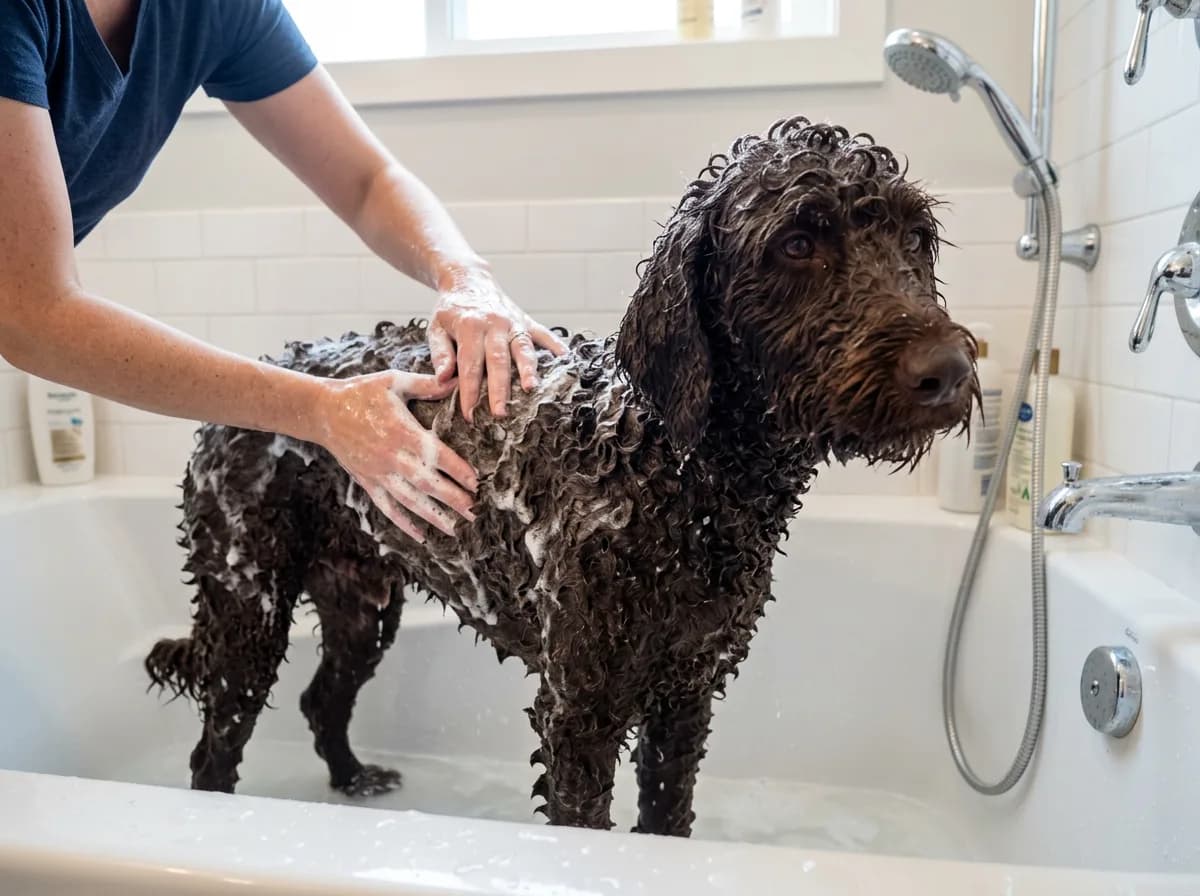
So, do Labradoodles shed? Yes, but most are low to moderate shedding dogs, and the wool coat sheds least. Because the breed crosses a Labrador Retriever with a Poodle, each dog lands somewhere on a spectrum, and the single best predictor is coat type shedding: the tighter and curlier the coat, the less hair you find on your floor.
Labradoodles grow three recognized coat types, and mapping shed level and brush frequency by coat is the whole game. Owners often shorthand this as the wool fleece hair spectrum. A wool coat is dense and curly like a Poodle's, a fleece coat is soft and wavy, and a hair coat is straighter and closer to a Labrador's. The mix a puppy inherits depends on its generation and its parents, which is why two Labradoodles from the same litter can shed differently.
Generation is the other piece of the puzzle. First-generation Labradoodles (F1, a Labrador crossed directly with a Poodle) show the widest range of coats and shed the most unpredictably. Later generations like F1B and multigen doodles are bred back toward the Poodle, so they lean curlier, lower-shedding, and more allergy-friendly. If shedding is your top concern, ask a breeder about the generation and the parents' coats before you fall for a puppy.
| Coat Type | Shed Level | Brush Frequency |
|---|---|---|
| Wool coat | Lowest, sheds least | Every 1–2 days |
| Fleece coat | Low to moderate | Daily |
| Hair coat | Moderate, sheds most | 2–3 times weekly |
This is also why coat type drives the allergy question. No dog is truly hypoallergenic, but a low-shedding wool or fleece coat holds more dander close to the skin, so it releases fewer allergens into the air. People often ask, are Australian Labradoodles hypoallergenic? Australian Labradoodles were bred specifically for consistent fleece and wool coats, so they are among the most reliably low-shedding doodles, though no line is a guarantee. And do Australian Labradoodles shed? They can, lightly, especially if a dog carries more hair-coat genetics.
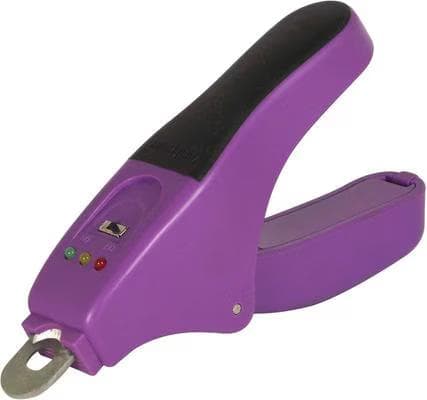
Petful may earn a commission when you click through to Chewy, at no extra cost to you.
A few quick answers owners search for most:
- Do Labradoodles shed a lot? Rarely. Even the heaviest-shedding hair coats drop far less hair than a purebred Labrador.
- Do Labradoodles have an undercoat? Most carry a light, single-layer coat with little true undercoat, which is part of why they shed less but mat more.
- Which coat is most hypoallergenic? The wool coat, followed closely by fleece.
Coat color does not change shedding, but it is its own rabbit hole. If you are wondering what the rarest color of a Labradoodle is, our Labradoodle coat colors guide breaks down every shade and which are hardest to find.
How Often Should a Labradoodle Be Groomed?
When owners ask how often to book professional grooming, the typical clip schedule is every six weeks, stretched to eight for short kennel clips and tightened toward five for long teddy bear styles; between appointments, the brushing routine above decides whether the groomer can keep the coat long or has to shave the mats out.
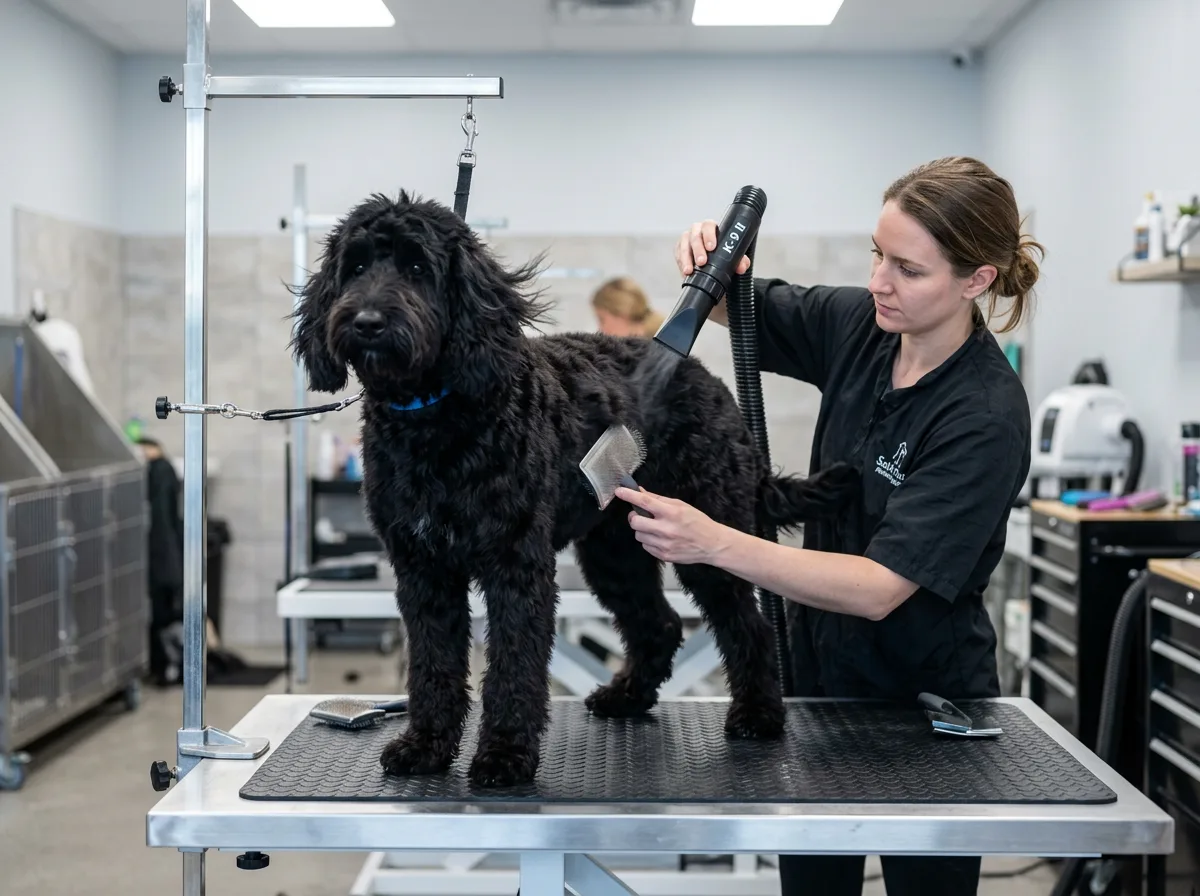
How often should a Labradoodle get groomed? Plan on a daily brushing routine at home plus a professional groom every six weeks, or every six to eight weeks if your dog wears a shorter, lower-maintenance clip. That every six weeks cadence keeps the coat from outgrowing itself and matting between visits.
Puppies are the exception worth planning around. Start short, frequent sessions the week you bring your Labradoodle home, long before the adult coat comes in around eight to twelve months. That coat change is when matting spikes, and it is when owners who skipped early brushing suddenly need a full shave-down.
Seasons matter less than you might think. Because most Labradoodles lack a heavy undercoat, they do not blow their coat twice a year the way double-coated breeds do. What changes with the calendar is your preference: many owners keep a longer teddy bear coat in winter for warmth, then switch to a shorter summer clip to cut brushing time and keep the dog cool. Either way, the every six weeks rhythm holds.
- Standing appointments every six to eight weeks fill fast at good salons, so schedule the next visit while you are still checking out from the current one.
How to Groom a Labradoodle at Home: Brushing and Bathing
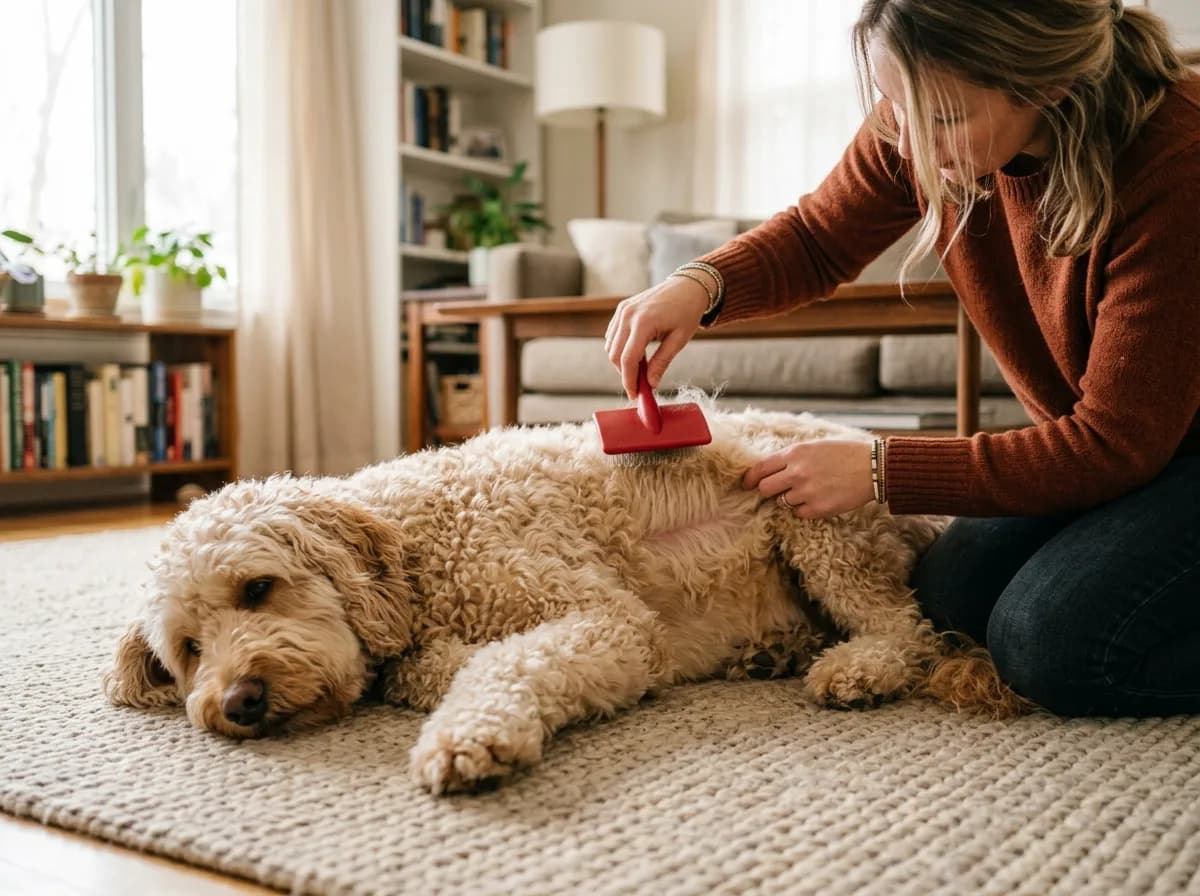
What kind of grooming does a Labradoodle need? At home, Labradoodle coat type grooming comes down to three habits: brushing to the skin, bathing about once a month, and keeping a simple brush and clip schedule so a groomer can handle the finish work. Get the brushing right and everything else falls into place.
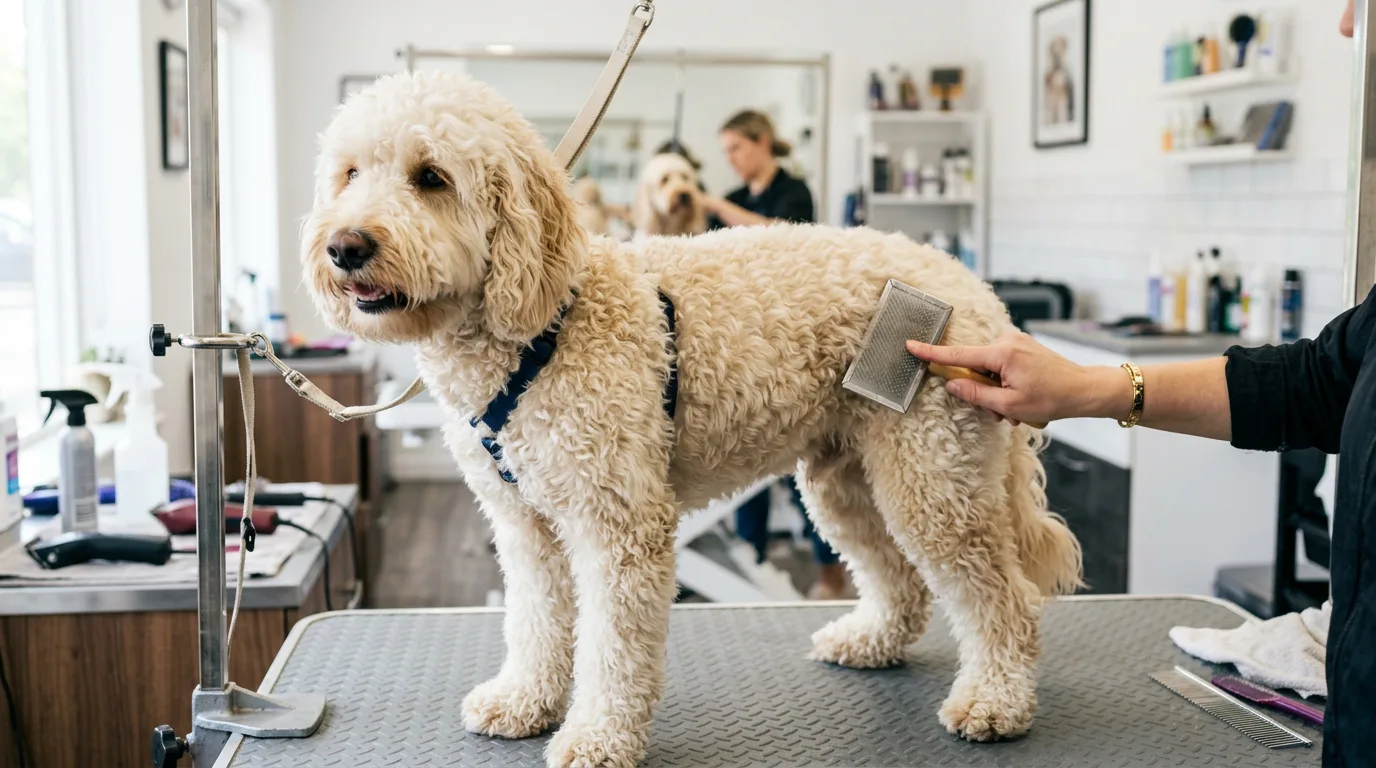
The technique that actually prevents matting is line brushing. Instead of skimming the top of the coat, you part the hair in horizontal lines and brush each section from the skin outward, so you are working the exact layer where mats form. A slicker brush and a metal comb are the only two tools you need to start.
A simple at-home Labradoodle grooming session looks like this:
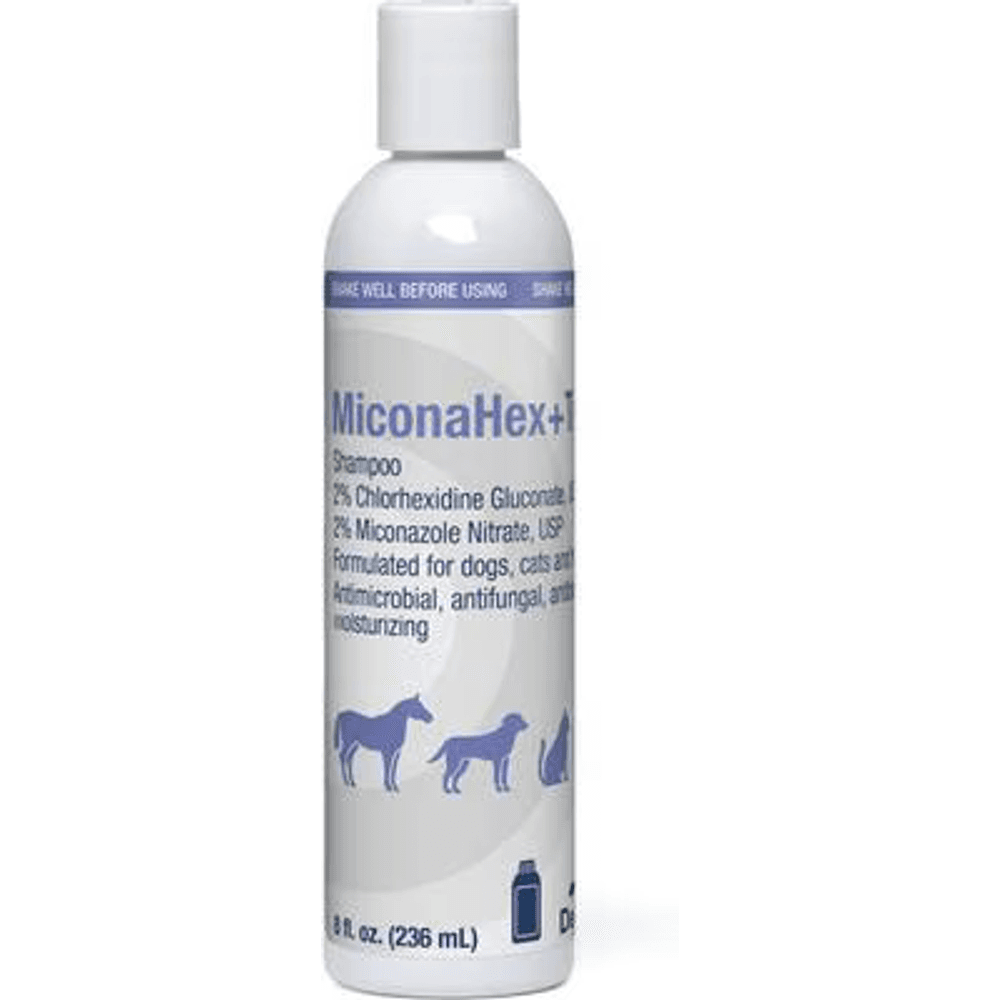
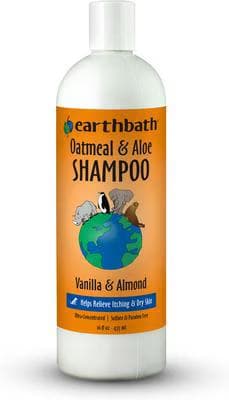
A vet-strength medicated shampoo pairing 2% chlorhexidine and 2% miconazole, a potent antifungal and antibacterial combination widely used to help clear ringworm and yeast or bacterial skin infections.
Petful may earn a commission when you click through to Chewy, at no extra cost to you.
- Line brush the whole coat with a slicker brush, section by section, until a comb passes through cleanly.
- Check the friction zones first: behind the ears, the armpits, the collar line, and between the back legs, where mats start.
- Bathe with a gentle dog shampoo every four to six weeks, never more often, so you do not dry out the skin.
- Dry and brush at the same time (called fluff drying) so the coat dries straight instead of curling into knots.
- Finish with nails, then wipe the ears and the corners of the eyes.
Two finishing steps get skipped the most and cause the most trouble. Clean the ears every week or two with a vet-approved ear cleaner, because a Labradoodle's floppy, hairy ears trap moisture and are prone to infection. And dry the coat fully after every bath: a damp coat left to air dry curls tight and can start a mat within a day, so a quick fluff dry with the brush is worth the extra ten minutes.
The routine flexes a little by coat and size. Australian Labradoodle grooming leans on that same daily line brushing because the fleece coat holds knots close to the skin. Mini Labradoodle grooming is faster simply because there is less dog, but minis mat just as easily, so do not stretch the schedule. Straight hair Labradoodle grooming is the most forgiving of the three: a hair coat sheds a bit more but resists matting, so you can often brush a few times a week instead of daily.
- Water tightens existing mats into felt, so always brush a Labradoodle completely before it gets wet, not after.
Grooming Tools for a Labradoodle Coat
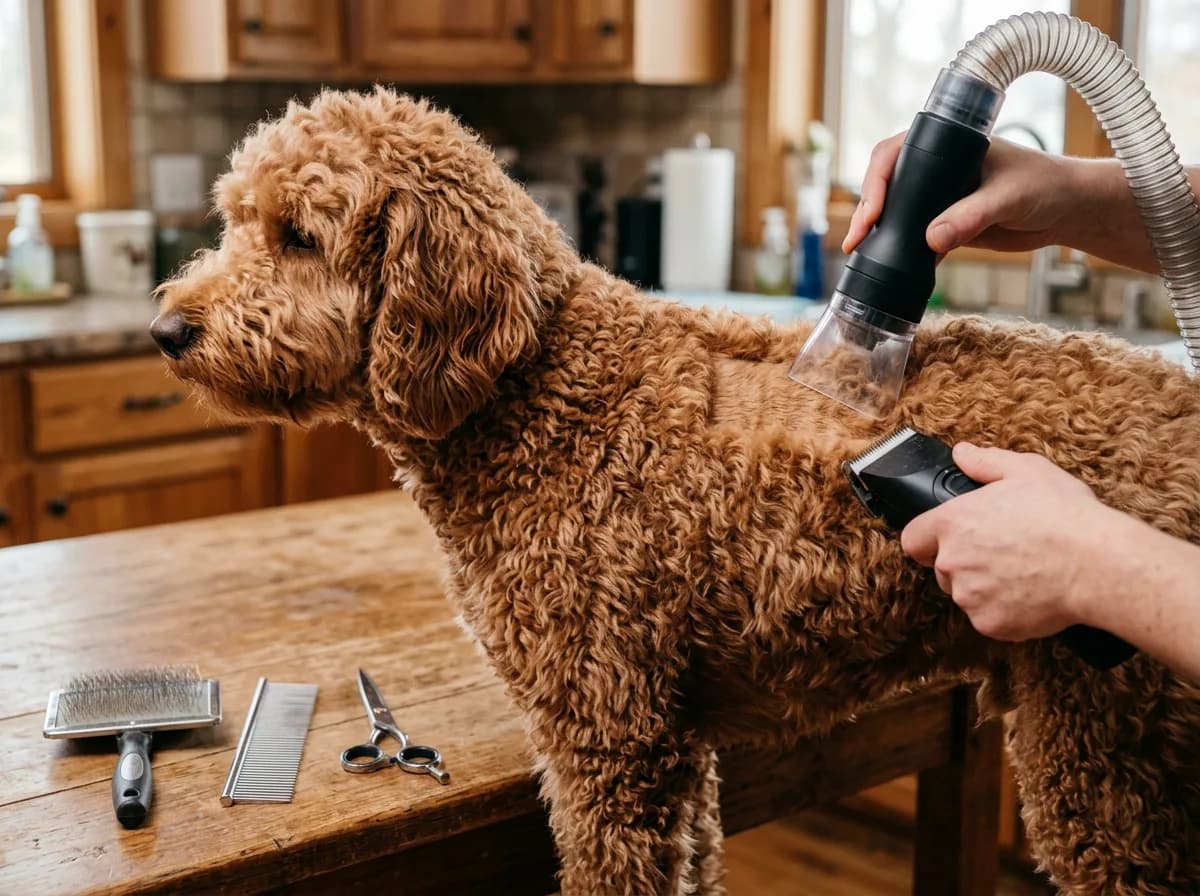
You can groom a Labradoodle with a surprisingly short tool list, and buying a matched labradoodle grooming kit is the easiest way to start. The best dog grooming kit for doodles is not the biggest one, it is the one with a firm slicker brush, a stainless steel comb, and a clipper that can push through a dense curly coat without bogging down.
The core kit for a Labradoodle coat:
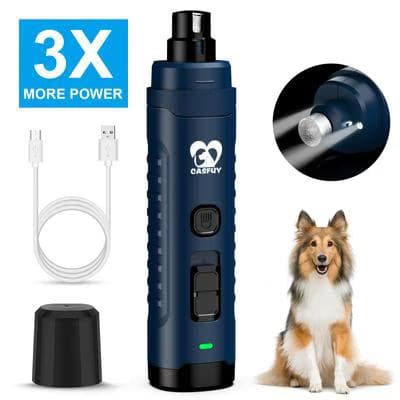
Petful may earn a commission when you click through to Chewy, at no extra cost to you.
- A firm slicker brush for daily line brushing.
- A stainless steel greyhound comb to find hidden mats before they spread.
- A clipper strong enough for dense coats. Many owners choose professional dog clippers with vacuum attachments that catch loose hair and cut cleanup in half.
- A pair of rounded-tip scissors for face and paw touch-ups.
- Dog-safe shampoo and a forced-air dryer for fluff drying.
If you plan to clip at home between professional visits, buy the clipper once and buy it good. A cheap clipper stalls in a wool coat, pulls the hair, and teaches your dog to hate grooming. A quality clipper, ideally one with a vacuum, keeps the session calm and the floor clean, which matters more than any other feature while you are still learning.
One tool most kits leave out is a dematting rake or a mat splitter, and it is the one you will reach for when a knot sneaks up on you. Use it gently on small mats, working from the tip inward, and never saw at a mat sitting against the skin. If a mat is larger than a coin or pressed close to the skin, it is safer and kinder to let a groomer shave that spot than to fight it at home.
Popular Labradoodle Haircut Styles
The popular clip styles cover a spectrum, and the three cuts owners request most are easy to picture: the teddy bear cut keeps a plush rounded face and legs, the lamb cut leaves longer leg coat over a shorter body, and the kennel cut trades looks for wash-and-go upkeep, including summer swim season.
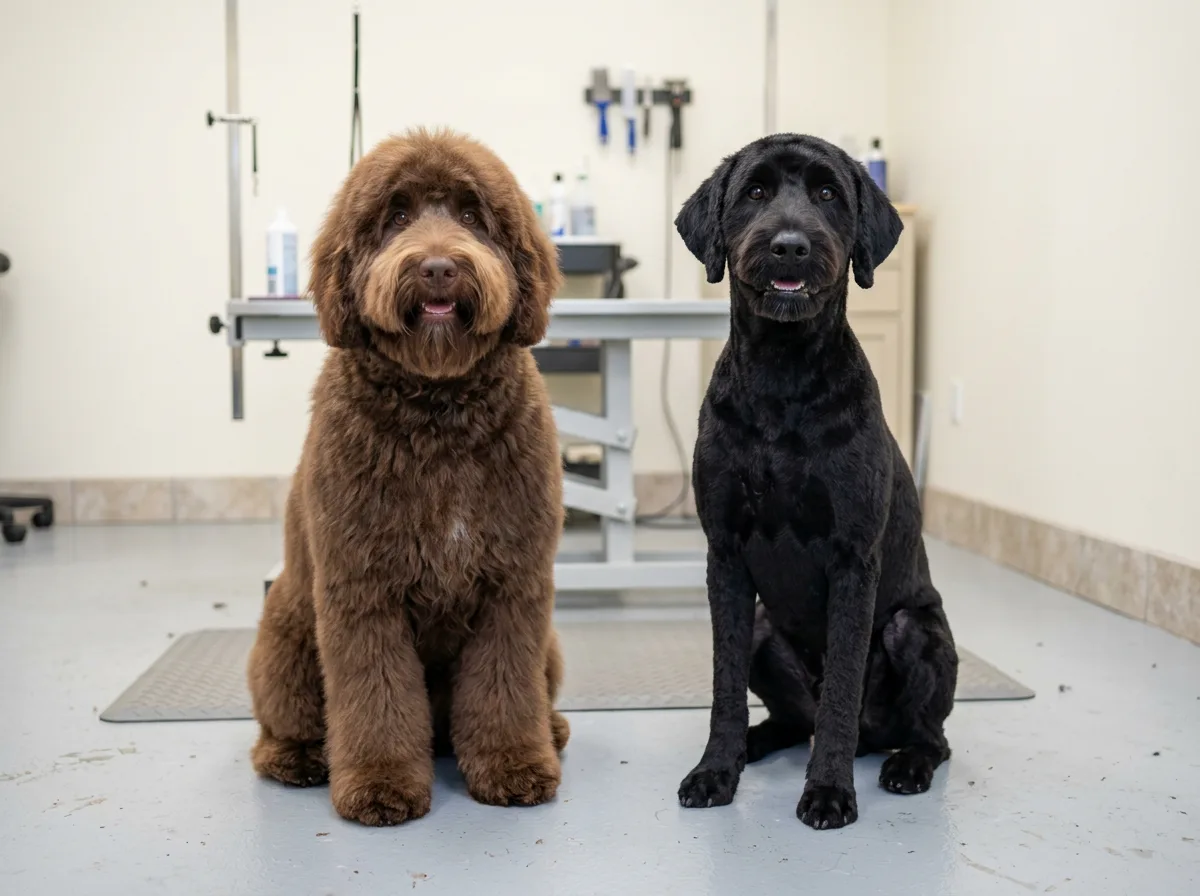
What is the best cut for a Labradoodle? There is no single winner, because the best labradoodle grooming style depends on your climate, your dog's coat, and how much brushing you want to do. The teddy bear cut is the most requested look, but a shorter kennel clip is the smart pick for a heavy-coated dog in summer.
The most popular labradoodle grooming styles owners ask for:
- Labradoodle teddy bear cut: coat left about one inch all over with a rounded face, the soft look most people picture. The Australian Labradoodle teddy bear cut is the same idea on the plush Australian fleece.
- Kennel or puppy cut: short and even all over, the lowest-maintenance clip there is.
- Lamb cut: short body with slightly longer legs, a favorite for active dogs.
- Summer or shave-down: very short everywhere, used for heavy matting or hot climates.
- For softer, wavy coats, wavy labradoodle haircut styles keep a little length to show the natural wave without inviting knots.
| Style | Body Length | Upkeep |
|---|---|---|
| Teddy bear | About 1 inch | Brush daily |
| Kennel or puppy | 1/4 to 1/2 inch | Low |
| Lamb | Short body, longer legs | Moderate |
| Summer shave | Under 1/4 inch | Very low |
One honest note on the teddy bear cut: it looks the softest and mats the fastest, because that length is exactly where knots love to form. If you love the teddy bear look but you travel a lot or hate brushing, tell your groomer, and they will leave it a touch shorter so it grows out gracefully instead of felting.
Petful may earn a commission when you click through to Chewy, at no extra cost to you.
Beyond the body length, three details define the look: the face, the ears, and the tail. A rounded teddy bear face reads soft and puppyish, while a shorter muzzle trim looks sportier and stays cleaner around the mouth. Ask your groomer to leave feathering on the ears and tail if you want a fluffier silhouette, or to tidy them down if your dog is always into mud and burrs. Small choices like these change the whole style more than the guard length alone.
How Much Does Professional Labradoodle Grooming Cost?
That cost guidance is thin or missing across most editorial competitors, so here is the clear answer to why groomers charge extra for doodles: the dense, matting-prone coat simply takes more table time, more product, and more skill than a comparable short-coated breed, and every busy groomer prices that reality honestly.
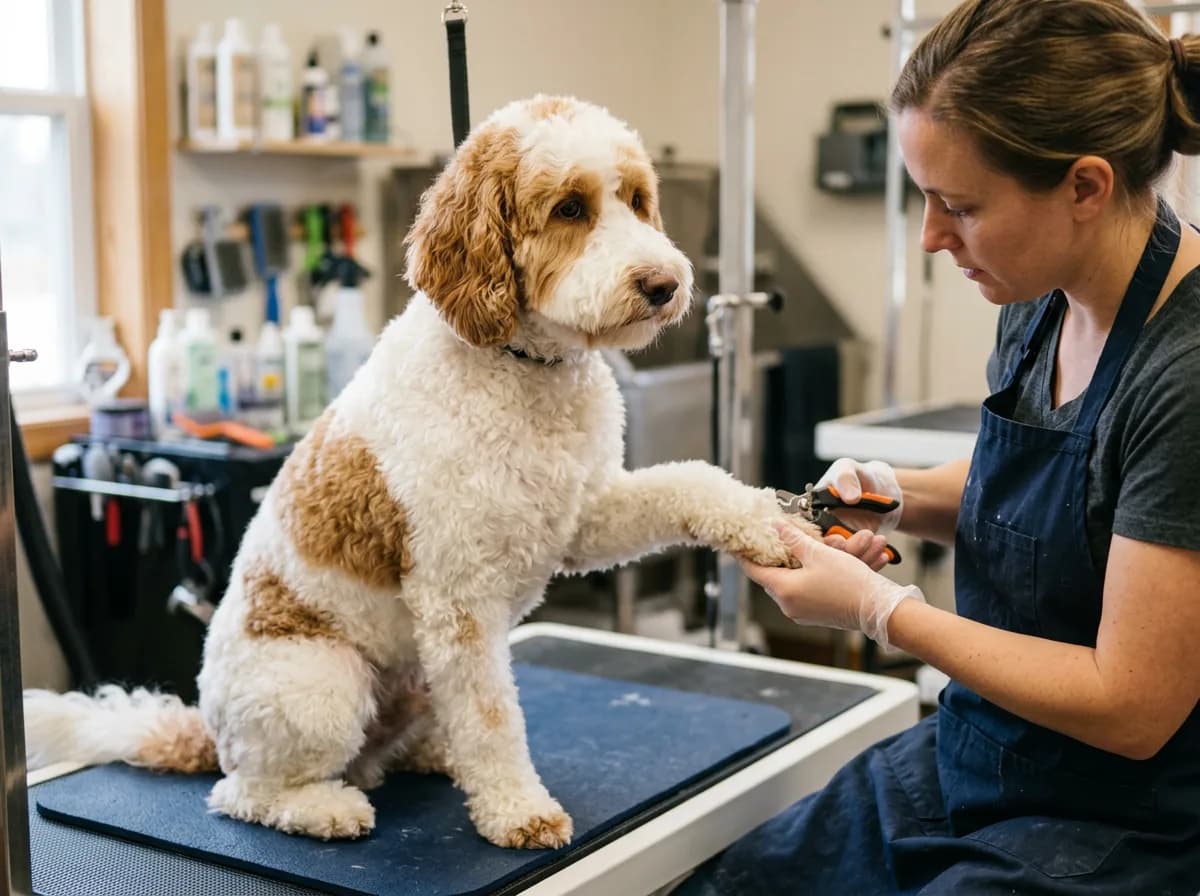
Labradoodle grooming cost is one of the most under-discussed parts of owning the breed, and the number surprises people. Across the US, the typical groomer price range for a full Labradoodle groom runs about $55 to $150, depending on size, coat condition, and clip. A quick bath and tidy costs less, while a full bath, clip, and hand finish costs more.
| Dog Size | Full Groom | Bath and Tidy |
|---|---|---|
| Mini (under 30 lb) | $55–$85 | $35–$50 |
| Medium (30–45 lb) | $70–$110 | $45–$65 |
| Standard (45–65 lb+) | $90–$150 | $55–$80 |
Why do groomers charge extra for doodles? Here is why doodles cost extra, in plain terms: a Labradoodle coat is dense, non-shedding, and prone to matting, so it takes far longer to brush out, clip, and finish than a short-haired dog. Many salons add a doodle surcharge or a matting fee because a neglected coat can double the labor on the table. Booking on time is the cheapest way to keep the price down.
A standard full-service Labradoodle groom usually includes:
- A bath with dog shampoo and a full blow-dry.
- A complete brush-out and light de-matting.
- A clip or scissor finish in the style you choose.
- A nail trim, ear cleaning, and a sanitary trim.
- Anal gland expression at many salons, on request.
When you search labradoodle grooming near me, prices swing with your zip code: expect city rates near the top of these ranges and small-town rates below them. The same pattern holds if you compare goldendoodle grooming cost near me, since the two breeds carry nearly identical coats and take about the same time to finish. Brushing well between visits also lowers your bill, because a mat-free coat is faster for the groomer to work.
Doing the brushing yourself and booking only clips is the biggest lever on cost. Owners who line brush at home and hand over a mat-free dog often pay the low end of every range, while a heavily matted coat can add a $20 to $40 fee on the spot or push the groom into a full shave-down. If you tip, 15 to 20 percent is the standard for a good groom, the same as most personal services.
What Happens If You Skip Grooming a Labradoodle?
What happens if you don't groom a Labradoodle? The coat mats. It starts as small tangles behind the ears and in the armpits, then spreads into a tight layer of felt pressed against the skin. Once a coat is pelted, brushing it out is painful and often impossible, so the only humane option left is a full shave-down.
Skipping grooming causes real problems, not just a messy look:
- Painful mats that pull the skin every time the dog moves.
- Trapped moisture and dirt under the mats, which leads to hot spots and skin infections.
- Hidden ear infections and overgrown nails when the whole routine slides at once.
- A forced shave-down that erases months of coat growth and any style you liked.
None of this is dramatic if you stay on schedule. A dog brushed a few minutes a day and groomed every six weeks almost never mats. The problems above come from a coat left alone for a month or two, not from a single missed brushing session.
What a Well-Groomed Labradoodle Looks Like
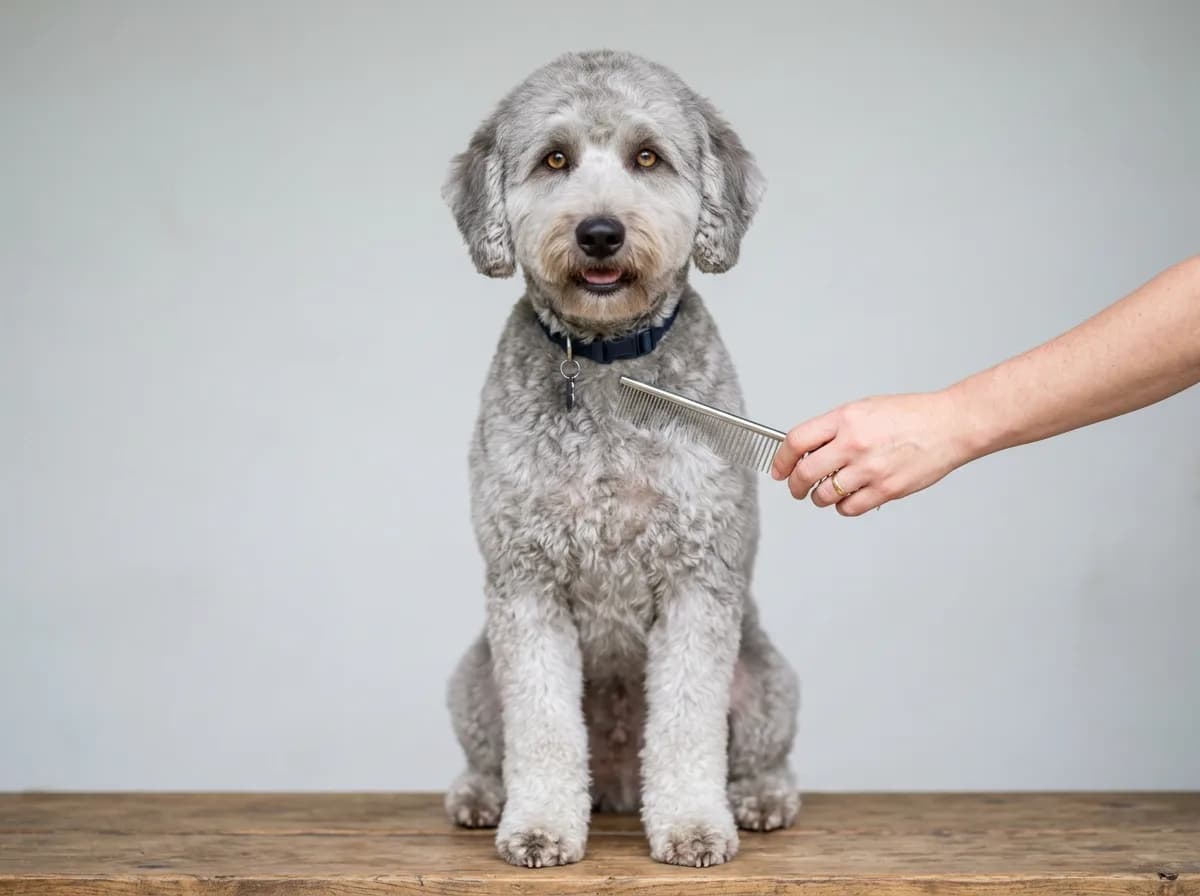
What should a groomed Labradoodle look like? A well-groomed Labradoodle has a clean, even coat you can run a comb through from skin to tip with zero snags. The face is tidy and the eyes are clear of hair, the ears are clean and free of buildup, the paws are trimmed with no fur hiding the pads, and the nails are short enough that they do not click on the floor.
A quick head-to-tail check after any groom:
- A comb glides through the entire coat with no catches or hidden mats.
- The eyes are visible and the face fur is shaped, not shaggy.
- The ears are clean, dry, and free of odor.
- The paw pads and sanitary areas are neatly trimmed.
- The nails are short and the dog stands and moves comfortably.
Labradoodle vs. Goldendoodle: Which Sheds More?
Doodle shoppers almost always end up asking, do Labradoodles shed more than Goldendoodles? The short answer is that the two are very close, and coat type matters far more than breed, but there are real differences in size, temperament, and appearance worth weighing. If you are comparing labradoodle vs goldendoodle looks and shedding side by side, we cover the full head-to-head in our Labradoodle vs. Goldendoodle guide.
Frequently Asked Questions
No. Mini Labradoodle grooming takes less time only because there is less coat, but minis mat just as fast, so brush daily and book a professional groom every six to eight weeks.
Australian Labradoodles were bred for consistent fleece and wool coats, so most are reliably low-shedding and among the most allergy-friendly doodles, though no dog is fully hypoallergenic.
No. A dense doodle coat needs a dog clipper with the torque to cut without pulling, and many owners prefer professional dog clippers with vacuum attachments to reduce cleanup and keep the dog calm.
Straight hair Labradoodle grooming is the easiest of the three coats, because a hair coat resists matting, so brushing a few times a week plus a monthly bath usually keeps it healthy.

Coreen Saito is a pet writer and longtime shelter volunteer with more than a decade in animal rescue. She covers cat behavior, breed care, and the small, ordinary science of sharing a life with companion animals, with a particular focus on honest takes about the products and decisions that actually matter. At home in Arizona, she's outranked by Mac (a dog with the loudest opinion in the house), Rebel (a cat who governs by quiet authority), and Meri (an orange tabby who runs the late shift and the laundry basket). She writes about all three, plus the rescues that keep coming through her life, at LifeWithMinty.com.
Sign up for expert-backed reviews and safety alerts all in one place.