Labradoodle Colors: Every Coat Color & Pattern
A complete guide to Labradoodle colors and patterns: every solid shade, parti, phantom, merle, and rare colors, the genes that drive them, and how a puppy's coat clears and changes with age.
Petful is reader supported. As an affiliate of platforms like Amazon and Chewy, we may earn a commission when you buy through links on this page. There is no extra cost to you.
Few crossbreeds come in as wide a rainbow as this one, and if you have started puppy shopping you already know that labradoodle colors can feel almost endless. The Labrador Retriever brings a handful of solid base shades to the cross, while the Poodle contributes an unusually deep genetic paint box plus a set of patterns and a lifelong tendency for the coat to lighten as the dog grows up. Put those two together and you get everything from jet black to chalk white, with parti, phantom, merle, and sable markings layered on top.
This guide maps the whole universe in one place: every solid coat color, every recognized pattern, what genetically drives each one, which shades are genuinely rare, and how a puppy's color shifts between the whelping box and adulthood. For the wider picture on generations, sizes, and care, our full Labradoodle breed guide is the pillar to start from, and this page is the color-specific deep dive.
Two ideas run through everything that follows, so it helps to fix them in mind before the color-by-color tour. First, a Labradoodle's color is not one gene but a small committee of them, each deciding a different part of the picture (how dark the base pigment is, whether it dilutes, whether a pattern shows, and how fast the coat fades). Second, the color you see at eight weeks is often not the color you get at two years, because most of these dogs are quietly programmed to lighten. Get those two facts straight and the rest of the palette makes sense.
- 1Labradoodles come in eight core solid colors (black, chocolate, cream, apricot, red, caramel, silver, and gray) plus patterns like parti, phantom, merle, tricolor, and sable
- 2Coat color is set by pigment genes inherited mostly from the Poodle side, and a separate greying gene makes most coats lighten with age through a process called clearing
- 3The rarest looks are true non-fading red, lavender, and multi-color patterns like tricolor and phantom, but color has no effect on health or temperament on its own

Sign up for expert-backed reviews and safety alerts all in one place.
The Full Labradoodle Color Palette
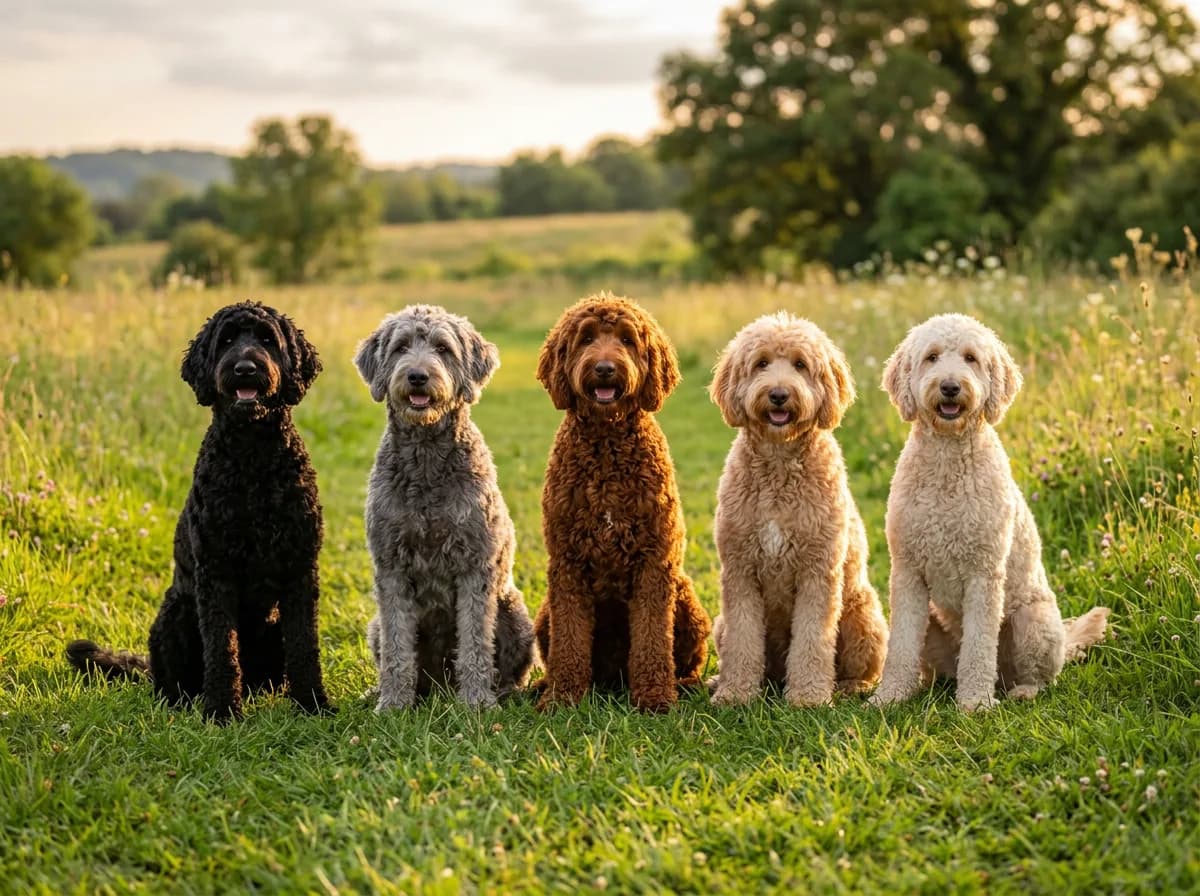
Ask ten breeders how many recognized coat colors a Labradoodle can wear and you will get ten slightly different answers, because the cross inherits the Poodle's enormous color range rather than a tidy fixed list. Still, the shades below cover the solid colors you will actually meet in a litter, and together they answer the how-many-colors question that sends most people to Google in the first place. Because color changes with age in this breed, treat every shade here as the adult target rather than a guarantee of what a six-week-old puppy looks like today.
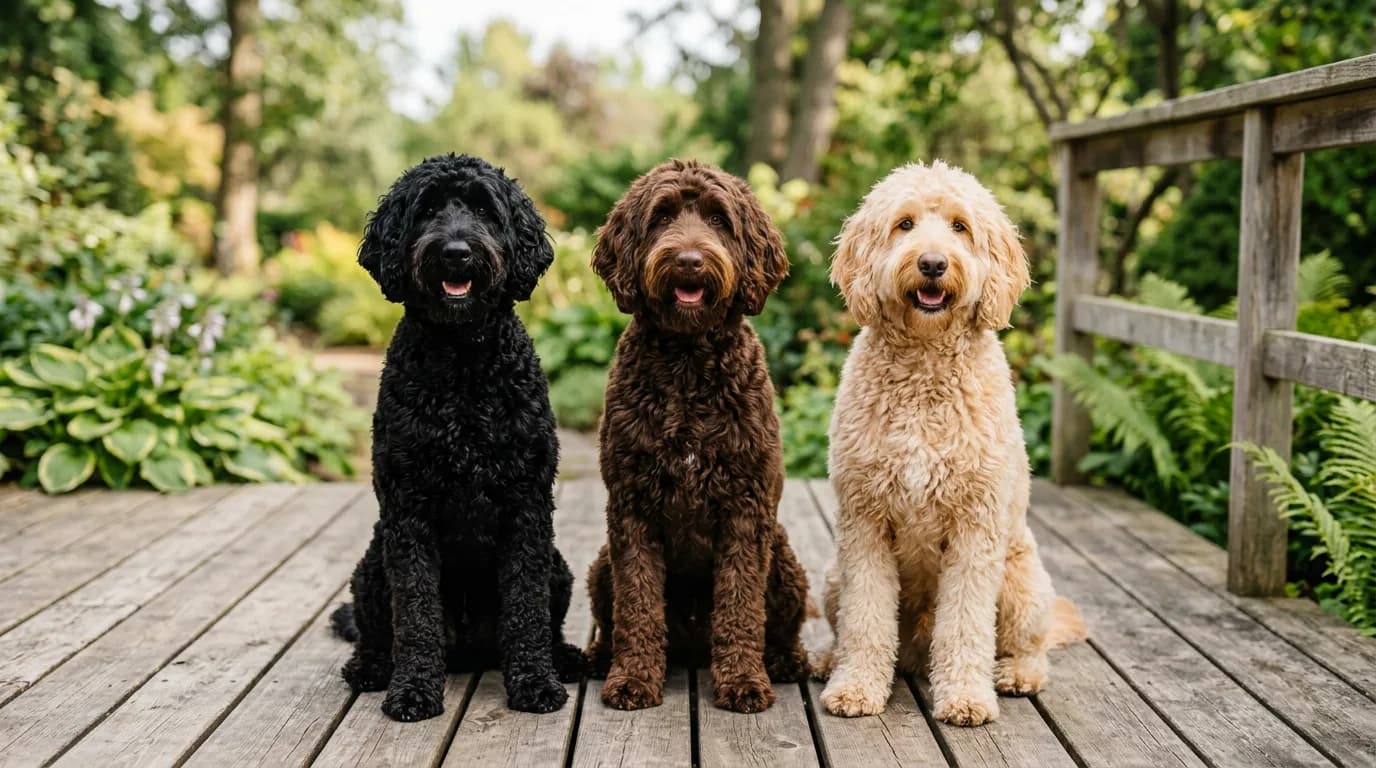
We describe each shade the way a breeder would label a color photo of the puppy, so you have a clear coat color example to hold your own dog up against. A single labeled color photo does more than any paragraph, which is why the montage below shows the spread at a glance.
Here is the core solid palette, from darkest to lightest, with the pigment story behind each one:
Petful may earn a commission when you click through to Chewy, at no extra cost to you.
- Black labradoodle: A solid, even black from nose to tail, produced when the dog carries dominant black pigment (eumelanin) with no dilution or fading gene switched on. True non-clearing black is less common than people expect, because many blacks carry the greying gene and drift toward blue or silver over the first two years.
- Chocolate labradoodle: A rich brown, sometimes called liver, driven by the brown (B locus) version of the same dark pigment. Chocolate is one of the most fade-prone colors: a deep brown puppy frequently matures into a lighter café, silver-beige, or parchment tone.
- Silver labradoodle: Not a birth color at all but a cleared black. A silver labradoodle is usually born solid black and lightens to a smoky gray-silver over 12 to 24 months as the greying gene expresses. The coat often shows darker points at the ears and muzzle.
- Gray labradoodle: Closely related to silver, a gray labradoodle (sometimes spelled grey, or called blue when the tone is cooler and darker) is another cleared black. The difference between blue, gray, and silver is mostly a matter of how far the clearing goes.
- Caramel labradoodle: A warm golden-brown to rich toffee shade built on red pigment (phaeomelanin) over a brown nose and eye rims. A caramel labradoodle sits between cream and red and holds its warmth better than a true red does.
- Red labradoodle: The deepest, most saturated version of red pigment, close to an Irish Setter tone. A genuine, non-fading red labradoodle is one of the harder solids to produce, because most reds carry the greying gene and soften toward apricot as they mature.
- Apricot labradoodle: A soft orange-tan that reads like a diluted red. An apricot labradoodle is extremely popular and very common, partly because so many reds and darker golds clear down into apricot by adulthood.
- Cream labradoodle: A pale, buttery off-white with darker pigment still visible on the nose, lips, and eye rims. A cream labradoodle carries the same red-pigment base as apricot and red, just heavily lightened.
- Tan labradoodle: A light golden-fawn that shares the phaeomelanin base with cream and caramel. A tan labradoodle often gets grouped with gold or wheaten depending on the breeder's labeling.
Two labels sit at the far ends of the palette and cause the most confusion. Chalk and white look almost identical to cream at a glance, but chalk carries slightly more warmth in the undertone, while true white is rare and usually shows the lightest possible pigment. At the opposite end, black and chocolate are the only two solids that start dark and stay comparatively dark, which is exactly why they are the shades most likely to change dramatically as the dog ages. Everything in between is a story of how much red or dark pigment the dog inherited and how strongly the fading gene acts on it.
- Different breeders use different names for the same shade, so one program's "gold" is another's "apricot" or "caramel." Judge the actual coat in natural light rather than trusting the label alone, and always ask to see the parents.
Nose, Eyes, and Points Follow the Pigment
A quick trick for reading any Labradoodle's genetic color is to look past the coat and check the nose, eye rims, and lips. Dogs built on black pigment (black, blue, silver, gray, and the creams, apricots, and reds that sit on a black base) carry a black nose and dark eye rims. Dogs built on brown pigment (chocolate, cafe, caramel, lavender, and warm tones on a brown base) show a liver or rose-colored nose and often lighter, amber-toned eyes. The coat can fool you as it clears, but the pigment on the nose stays honest, which is why breeders use it to confirm whether a faded adult started as a black-based or brown-based dog.
How to Predict a Puppy's Adult Color
There is no crystal ball, but a few tells narrow the odds considerably. Before you fall for a specific shade, run through this quick checklist with the breeder:

Petful may earn a commission when you click through to Chewy, at no extra cost to you.
- Check the coat at the roots. Part the fur near the skin. If the base of each hair is noticeably lighter than the tip, the puppy is already clearing and will likely finish much paler.
- Look at the muzzle and ears. These areas often keep the truest, darkest version of the color, giving you a preview of the deepest tone the adult may hold.
- Meet both parents and, if possible, older siblings. A pairing that produced faded reds last time will almost certainly do it again.
- Ask about the greying gene. If either parent carries progressive greying, expect meaningful lightening; if neither does, the birth color has a much better chance of sticking.
What Determines Coat Color and How It Changes With Age
Ranking pages mention color change vaguely, so here is the concrete puppy-to-adult clearing timeline by color: black coats that carry fading genes typically silver between 12 and 24 months, chocolate clears toward cafe by age two, red and apricot coats soften noticeably by the first birthday, and cream coats usually finish lightest of all.
Labradoodle coat color genetics come almost entirely from the Poodle side of the cross, which is what gives this hybrid its huge range compared with a purebred Labrador. At the most basic level, two pigments do all the work: eumelanin, the dark pigment responsible for black, brown, blue, and silver, and phaeomelanin, the red pigment behind red, apricot, cream, gold, and caramel. A handful of switch genes then decide how much of each pigment shows up and where. Petful’s guide to fox red Labradors covers where the color comes from and what it costs.
Understanding pigment gene inheritance helps you predict a litter better than any color chart can. The genes that matter most are the brown gene (which turns black pigment into chocolate), the dilution and greying genes (which lighten black into blue, gray, and silver), the red-intensity genes (which decide whether phaeomelanin reads as deep red or pale cream), and the pattern genes covered in the next section. None of these has any link to health or personality on its own, with the single well-known exception of the merle gene, which we flag below.
The Genes Behind Each Coat Color
If you want the mechanics rather than the summary, these are the switch genes (geneticists call them loci) that decide a Labradoodle's final look. Reputable breeders test the parents for most of them:
- E locus (red pigment switch): When a dog inherits two recessive copies, dark pigment is masked and the coat reads as red, apricot, gold, or cream. This is why two black-nosed parents can still produce a cream puppy.
- B locus (brown): Two recessive copies turn black pigment into chocolate and give the dog a liver nose. Cafe and parchment are cleared versions of this brown base.
- D locus (dilution): Dilution softens black into blue and brown into a paler lilac tone. It works alongside greying but is a separate mechanism.
- Progressive greying gene: A dominant fading gene, strong in Poodles, that drives the clearing process. It is the single biggest reason Labradoodle coats lighten with age.
- A locus (agouti): Controls the sable pattern and the tan-point pattern that shows up as phantom markings when a dog is not solid black.
- S locus (spotting): The parti gene. It adds white, from a small abstract mismark up to a full parti coat that is more than half white.
- M locus (merle): Produces the marbled merle pattern and carries the health caution covered in the pattern section.
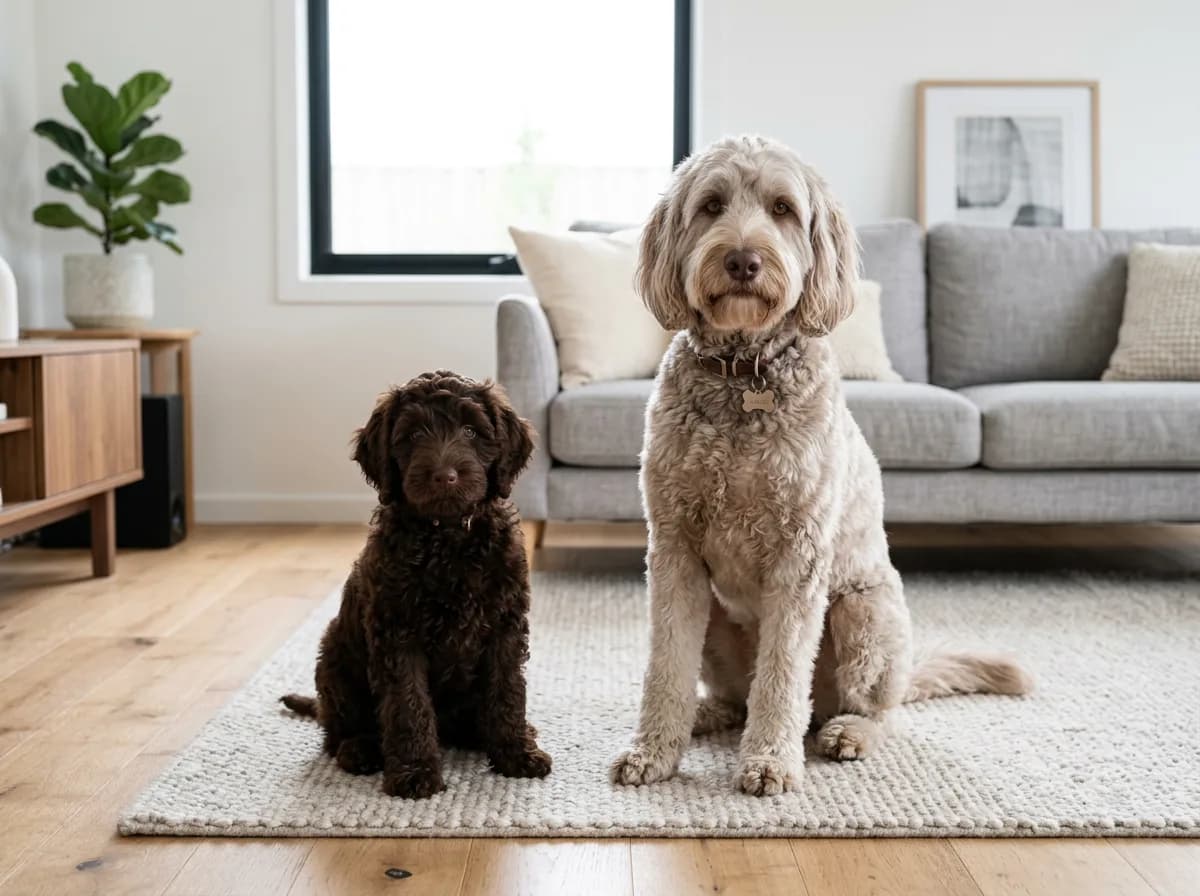
The single biggest thing new owners miss is that color changes with age. Most Labradoodles carry a progressive greying gene inherited from the Poodle, and it slowly fades the coat over the dog's first two years. This is called clearing, and it is the reason a chocolate puppy can grow into a silver-beige adult, or a deep red puppy can soften into apricot. Clearing is normal, it is not a sign of illness, and it does not affect every dog to the same degree.
Here is roughly how the clearing timeline plays out. A newborn puppy coat lightens fastest between about eight weeks and one year, the change slows through the second year, and the color at maturity is usually locked in by around 24 months. The puppy coat itself is also softer and often darker than the adult coat that replaces it.
Petful may earn a commission when you click through to Chewy, at no extra cost to you.
| Birth Color | Common Adult Color | Typical Clearing Window |
|---|---|---|
| Black | Blue, gray, or silver | 12 to 24 months |
| Chocolate | Cafe, silver-beige, or parchment | 8 to 18 months |
| Red | Apricot or light red | 6 to 18 months |
| Apricot | Cream or pale gold | 6 to 12 months |
| Cream | Chalk or near-white | 4 to 12 months |
Not every dog clears, and a minority hold their birth color for life. Breeders who advertise a true, non-fading red or a stable black usually mean the parents lack the greying gene, so their puppies are far more likely to keep the color you fall in love with at eight weeks. If holding a specific shade matters to you, the before-and-after coat comparison below shows just how dramatic the shift can be on the same dog.
If you want a shade that will not surprise you, ask the breeder these questions before you commit:
- Do the parents carry the greying or fading gene, and have they been DNA color-tested?
- What did the parents look like at eight weeks versus as adults?
- Have previous litters from this pairing held their color or cleared significantly?
- Is the puppy's current coat the soft puppy coat or has the adult coat started coming in?
Labradoodle Coat Patterns: Parti, Merle, Phantom, and Tricolor
Every recognized pattern belongs in one reference: parti, merle, phantom, tricolor, sable, and abstract. No competitor pairs each color and pattern with the gene that drives it in one place, so this guide does: the merle gene dilutes random patches, the parti gene's recessive piebald creates the white base, and phantom point markings follow fixed tan-point genetics.
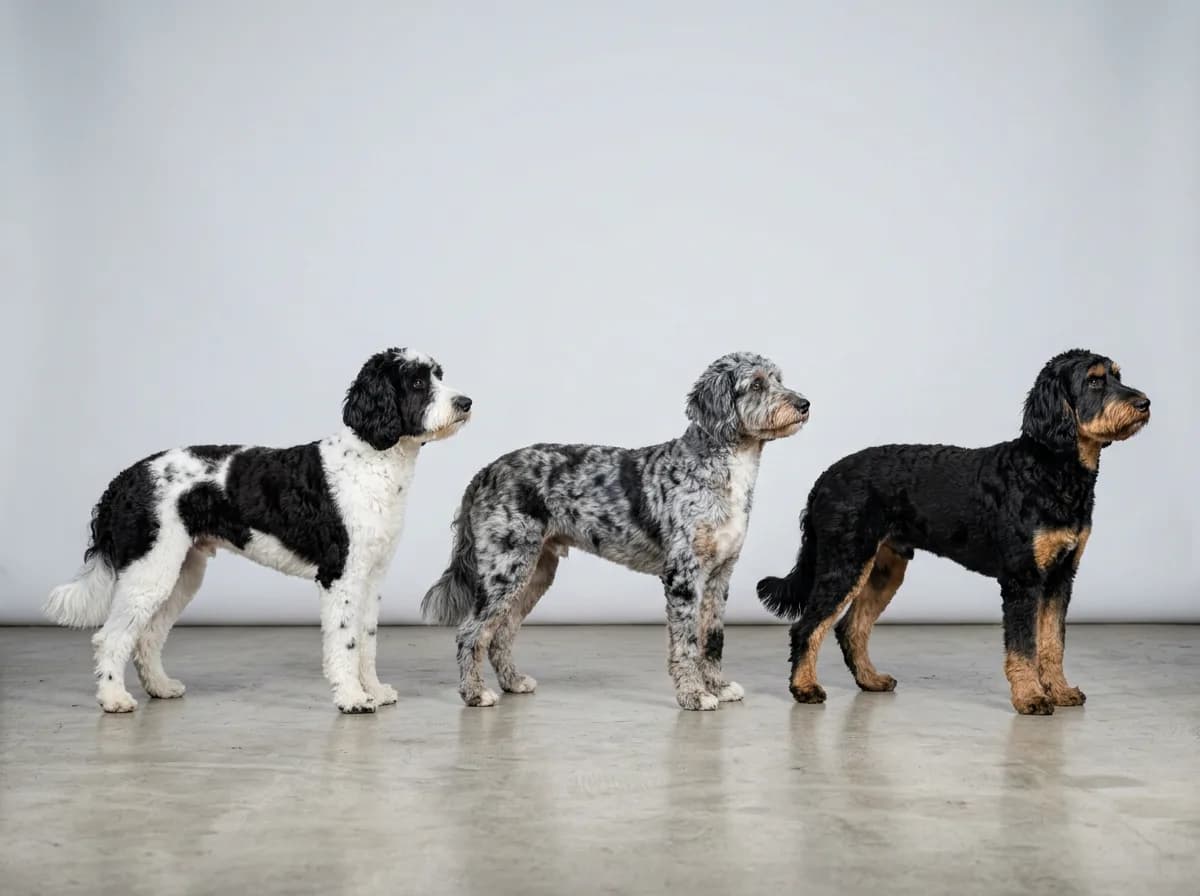
Solid colors are only half the story. Patterns are where Labradoodles get truly distinctive, and they answer a completely separate genetic question: not which pigment the dog carries, but how that pigment is arranged across the body. A dog can be any of the solid colors above and still wear one of these patterns on top. The three headline patterns (parti, merle, and phantom) read as clearly different from a plain solid coat, as the side-by-side examples below show.
The recognized patterns you will run into are these:
Petful may earn a commission when you click through to Chewy, at no extra cost to you.
- Parti labradoodle: At least fifty percent white with solid patches of a second color, driven by the piebald spotting gene (the parti gene). A parti labradoodle looks like a two-tone dog, most often white with black, chocolate, apricot, or red patches.
- Phantom labradoodle: A solid base coat with sharp secondary "points" in a fixed pattern, exactly like the tan points on a Doberman or Rottweiler. These phantom markings appear above the eyes, on the cheeks, chest, legs, and under the tail.
- Tricolor labradoodle: A parti coat that also carries phantom points, giving three distinct colors on one dog (typically white, a solid color, and tan points). A tricolor labradoodle is essentially parti and phantom expressed together.
- Sable labradoodle: A coat where each hair is tipped with black over a lighter red or tan base, so the dog often looks darker as a puppy and lightens as the black tips wear away. Sable frequently clears more dramatically than any other pattern.
- Merle labradoodle: A mottled, marbled pattern of diluted and full-color patches produced by the merle gene, sometimes paired with blue eyes.
- Abstract (mismark): Small amounts of white (under fifty percent) on a mostly solid dog, usually on the chest, chin, toes, or tail tip. Abstract is the mildest expression of the same spotting gene behind parti.
What Is a Phantom Labradoodle?
Because it is one of the most searched pattern questions, it is worth answering plainly: a phantom Labradoodle is a solid-colored dog with a fixed second color in specific "point" locations, and nothing else. The phantom markings follow the same map every time (over each eye, on the muzzle and cheeks, across the chest, down the legs, and under the tail), which is what separates a phantom from a random splash of white. A black-and-tan phantom is the classic version, but you also see chocolate-and-tan, red phantoms, and silver phantoms. Phantoms are prized precisely because the points have to land in exactly the right places to qualify.
- Parti, phantom, and sable are not mutually exclusive. A single dog can be a chocolate parti with phantom points, which is how tricolor coats happen. When you read a breeder's color label, split it into base color first, then pattern.
A word of caution belongs with the merle pattern specifically. Merle is genuinely eye-catching, but there is a real merle gene health risk when two merle dogs are bred together. A double-merle puppy (one that inherits the merle gene from both parents) has a significantly elevated chance of deafness, vision defects, and other problems. Responsible programs never pair two merles, and many Australian Labradoodle registries do not accept merle in the standard at all. If a breeder is producing merles, ask directly how they avoid double-merle pairings.
Patterns clear right alongside solid colors, which trips people up. A striking black-and-tan phantom puppy can mature into a muted silver-and-cream version of the same pattern once the greying gene does its work, and a bold sable often looks almost like a plain solid by adulthood as the black hair tips fade. The pattern itself does not disappear, but the contrast between the two colors usually softens. That is why a phantom or tricolor with strong, high-contrast markings at maturity is worth more than one whose colors have washed together.
How Breeders Label a Coat
Once you understand that base color and pattern are two separate layers, breeder labels stop looking like alphabet soup. Read any color description in two steps: identify the base color first, then the pattern stacked on top. A "chocolate parti" is a brown-based dog that is more than half white. A "red phantom" is a red-based dog with tan points. A "blue merle" is a diluted black dog wearing the marbled merle pattern. When a breeder lists three colors, you are almost always looking at a tricolor, meaning parti plus phantom on a single dog. Splitting the label this way tells you not only what the puppy looks like now but which genes it carries and how it may clear.
Rare Labradoodle Colors and the Color Chart
Because rare shades command premiums, breeder pages skew to sales pitches rather than straight answers; when a color quote sounds high, route the buying and price intent through the dedicated Labradoodle price and cost resource before you commit, since a rare coat never justifies skipped health testing or double the regional market rate.
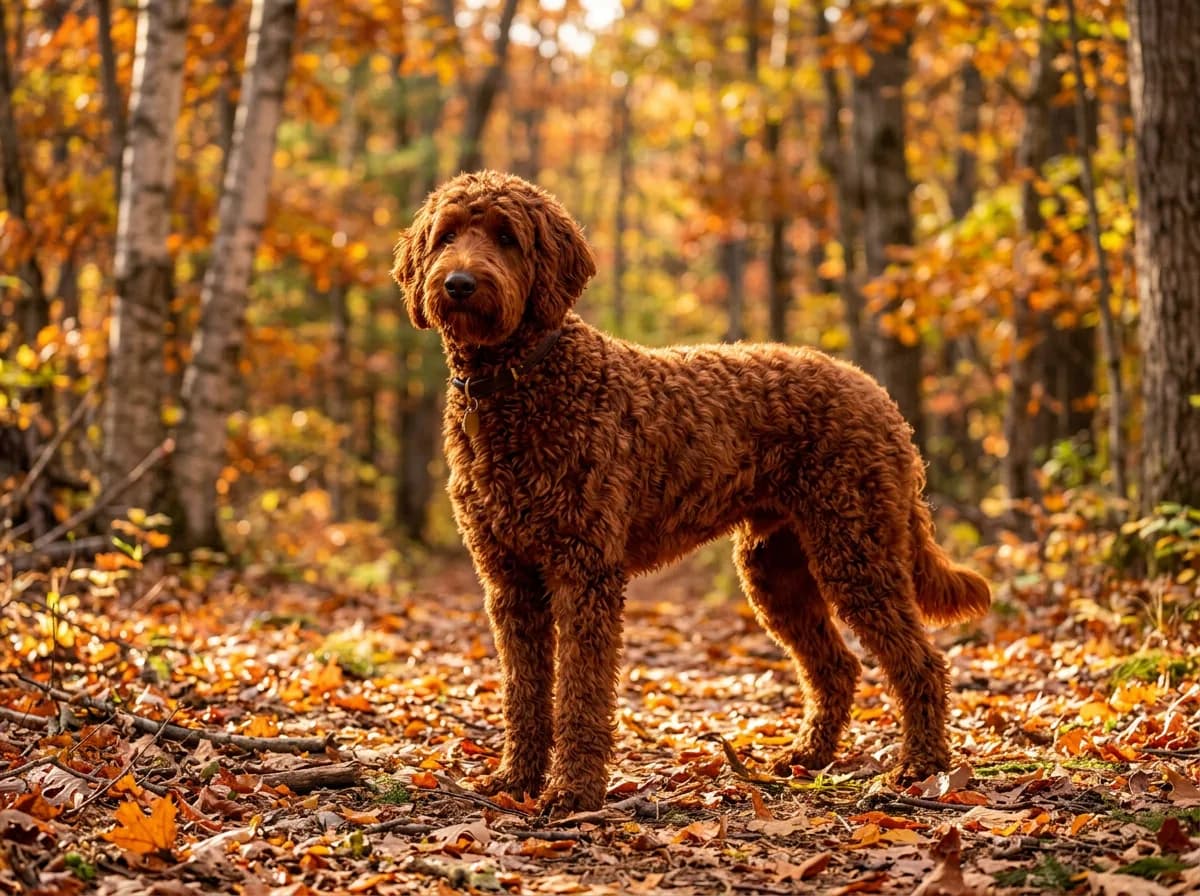
Once you know the solid colors and the patterns, the natural next question is which combinations are genuinely uncommon. The rare labradoodle colors are not random: they are the shades and patterns that require specific, harder-to-stack genetics, which is why breeders can charge more for them and why they sell out first.
What Is the Rarest Color of Labradoodles?
The rarest labradoodle color is generally a true, non-fading red that holds its deep saturation into adulthood, followed closely by lavender. A lavender labradoodle is a chocolate-based coat carrying a specific dilution that gives a smoky pinkish-gray tone, and the exact genotype needed to produce it is uncommon, which makes it the hardest color to find in many programs. Beyond single colors, the rarest looks are the multi-color patterns: tricolor and phantom patterns demand that points land in precisely the right places, so a well-marked tricolor is one of the scarcest coats of all. Blue, silver phantom, and clean parti in an unusual base color round out the short list of premium rarities.
To make the whole system easy to scan, here is a compact labradoodle colors chart that pairs each look with its driving gene and whether it typically clears with age. Use this chart as a quick reference alongside the detailed descriptions above.
| Color or Pattern | What Drives It | Clears With Age? | Rarity |
|---|---|---|---|
| Black | Dominant dark pigment | Often to blue or silver | Common |
| Chocolate | Brown gene | Yes, strongly | Common |
| Cream | Lightened red pigment | Yes | Common |
| Apricot | Diluted red pigment | Sometimes | Very common |
| Red | Intense red pigment | Usually fades to apricot | Uncommon (true red) |
| Caramel | Warm red over brown | Mildly | Uncommon |
| Silver or gray | Greying gene on black | Yes, that is the point | Common |
| Parti | Piebald spotting gene | Base color may clear | Uncommon |
| Phantom | Tan-point gene | Points may soften | Rare |
| Tricolor | Parti plus phantom | Yes | Very rare |
| Merle | Merle gene | Minimal | Rare and health-flagged |
| Lavender | Chocolate plus dilution | Slightly | Very rare |
The takeaway from the chart is simple: rarity tracks how many specific genes have to line up at once. A common apricot needs only red pigment plus some fading, while a rare tricolor needs the spotting gene, the tan-point gene, and the right base color to all show up in one puppy.
Rarity also has a supply side. Even when the genetics are possible, only a small number of breeders deliberately produce lavender, tricolor, or non-fading red, because doing it consistently requires health-tested parents with the exact recessive combinations and years of tracking which pairings hold their color. That scarcity is real, but it is worth keeping in perspective: a rare label is a cosmetic distinction, not a mark of quality or health. A common cream from a fully health-tested, well-socialized litter is a far better dog than a rare lavender from a breeder who cannot show you the parents' genetic panels.
Australian Labradoodle Colors and the Breed Standard
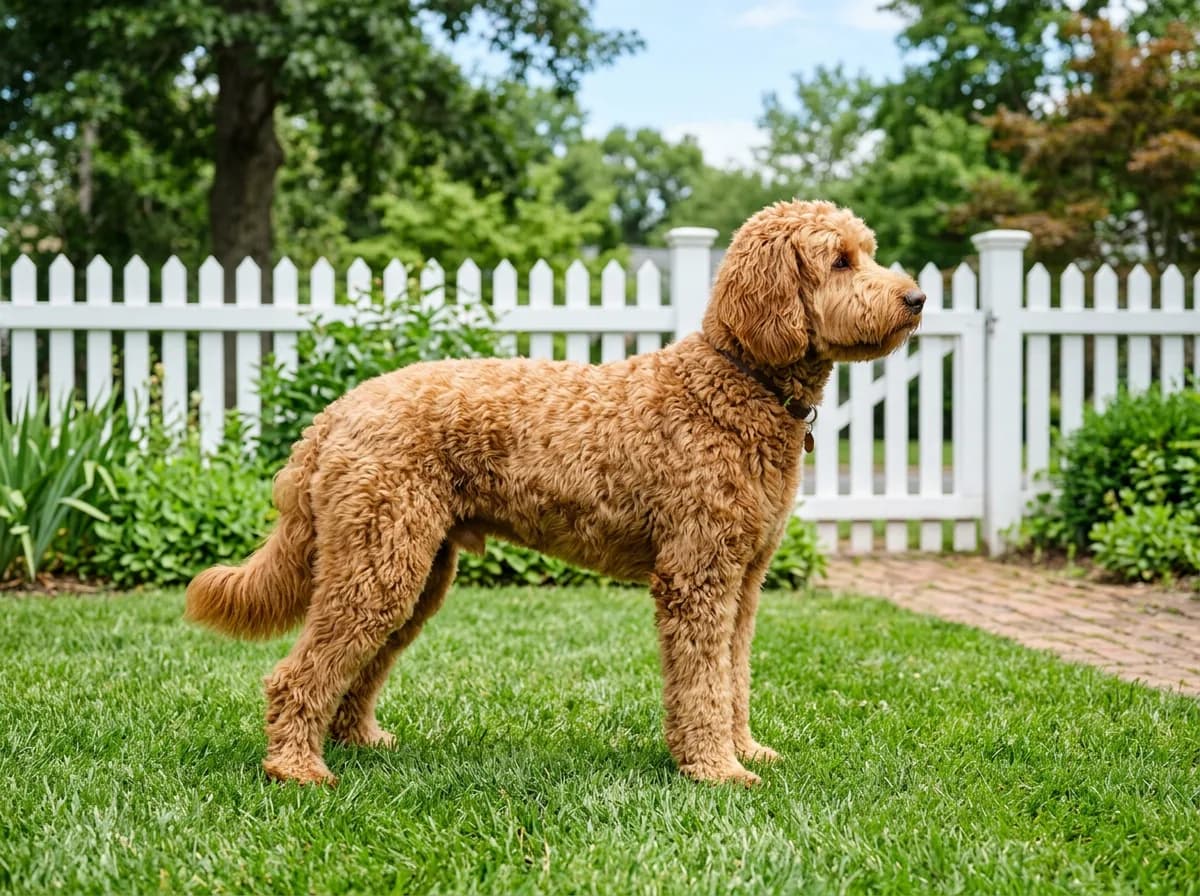
There is an important distinction hiding inside the color question. A standard Labradoodle is simply a Labrador crossed with a Poodle, and its colors are wide open because nothing is formally standardized. An Australian Labradoodle is a separate, multi-generational breed developed in Australia that also folds in Irish Water Spaniel and Cocker Spaniel lines, and it does have a written color standard maintained by the Australian Labradoodle Association of America.
The history explains the difference. The first intentional Labradoodle was bred in Australia in the late 1980s as an attempt to create a low-shedding guide dog. Over the following decades, Australian breeders stabilized the cross into a consistent, multi-generational breed by carefully infusing a few other coat-friendly lines and then breeding Australian Labradoodle to Australian Labradoodle rather than starting over from a Labrador and a Poodle each time. Locking in the coat also meant locking in the colors, which is how the breed ended up with a defined palette while the standard first-generation Labradoodle stayed a genetic grab bag.
That is why australian labradoodle colors read as a more curated list than the free-for-all you get from a first-generation cross. The ALAA breed standard recognizes a defined set of colors and describes acceptable patterns, and reputable Australian Labradoodle breeders label their dogs against it rather than inventing names.
The Australian Labradoodle Color List
The ALAA-recognized color family includes:
- Chalk and cream: The palest end, from a warm off-white (chalk) to a soft buttery cream.
- Gold, apricot, and caramel: The red-pigment warm tones, including the popular apricot australian labradoodle, which is one of the most requested shades in the breed.
- Red: A deep, rich version of the warm tones, valued when it holds without fading.
- Black, blue, and silver: The dark-pigment family, where blue and silver are cleared blacks.
- Chocolate, cafe, parchment, and lavender: The brown-pigment family, from deep chocolate down to the rare, dilute lavender.
Coat type sits right next to color in the Australian standard, and the two are often discussed together. The australian labradoodle coat types are wool (a dense, spiraling, poodle-like coat), fleece (a soft, wavy coat that is the breed's signature), and hair (a coarser, more Labrador-like coat that is not preferred in the standard). Coat type affects how a color reads in person and how much a coat clears, because a tighter wool coat can look darker than a loose fleece of the same genetic color.
- In the Australian Labradoodle standard, the same genetic color can look different on a wool versus a fleece coat. That is one more reason to see the dog in person rather than choosing from a single photo.
If you plan to groom for a specific look, remember that coat type and color interact, which is covered in depth in our Labradoodle grooming guide. And if you are weighing this breed against its closest lookalike, the color ranges differ in subtle ways we break down in Labradoodle vs Goldendoodle. Petful’s guide to Goldendoodle colors has the full breakdown.
Does Color Affect Personality or Health?
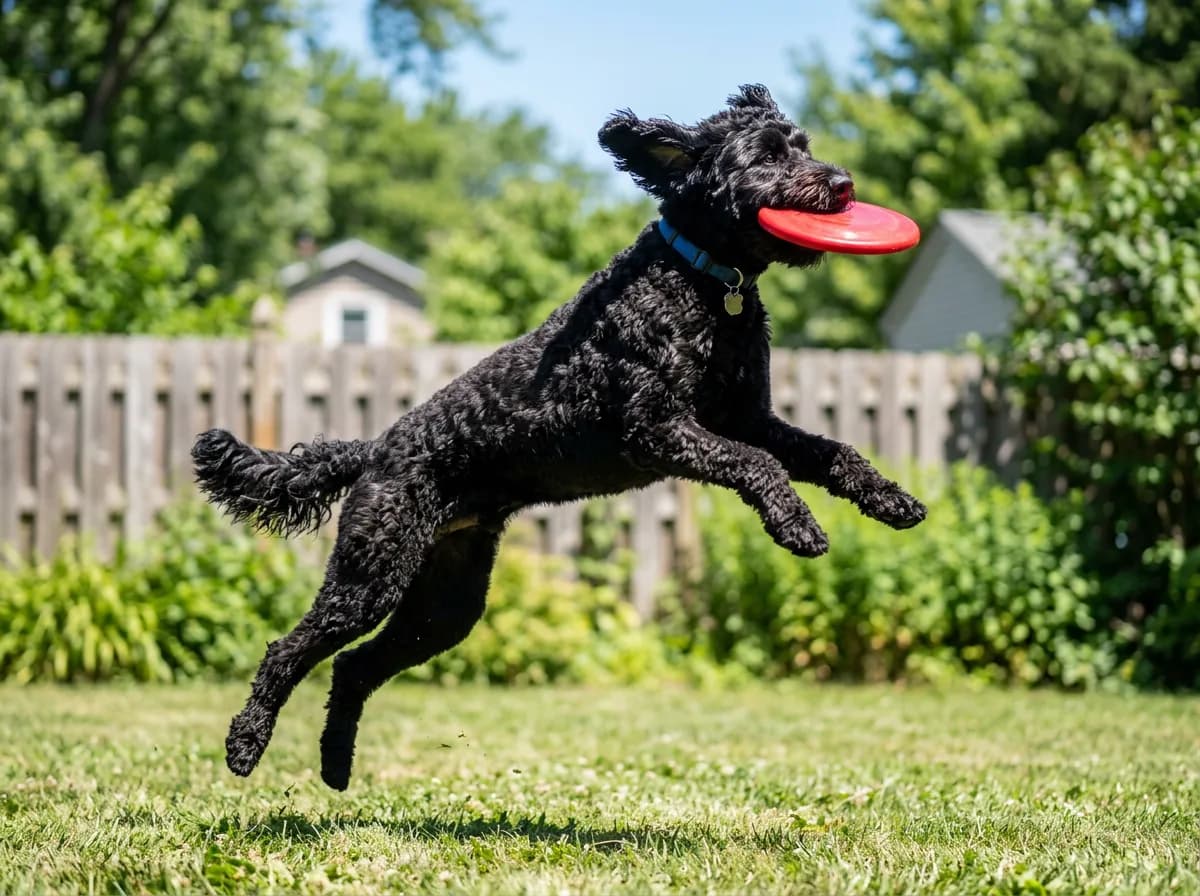
It is worth stating plainly, because the internet is full of myths: coat color does not determine a Labradoodle's temperament, intelligence, or trainability. A red Labradoodle is not calmer than a black one, and a parti is not more stubborn than a solid. Personality comes from breeding, socialization, and individual variation, and you can read what these dogs are actually like to live with in our guide to Labradoodle temperament and downsides.
The one place where color and health genuinely intersect is the merle gene, and only when two merles are bred together, as covered above. Every other color and pattern in this guide is cosmetic. So choose the shade you love, then vet the breeder on health testing, socialization, and clearing history rather than on color alone.
Do Rare Colors Cost More?
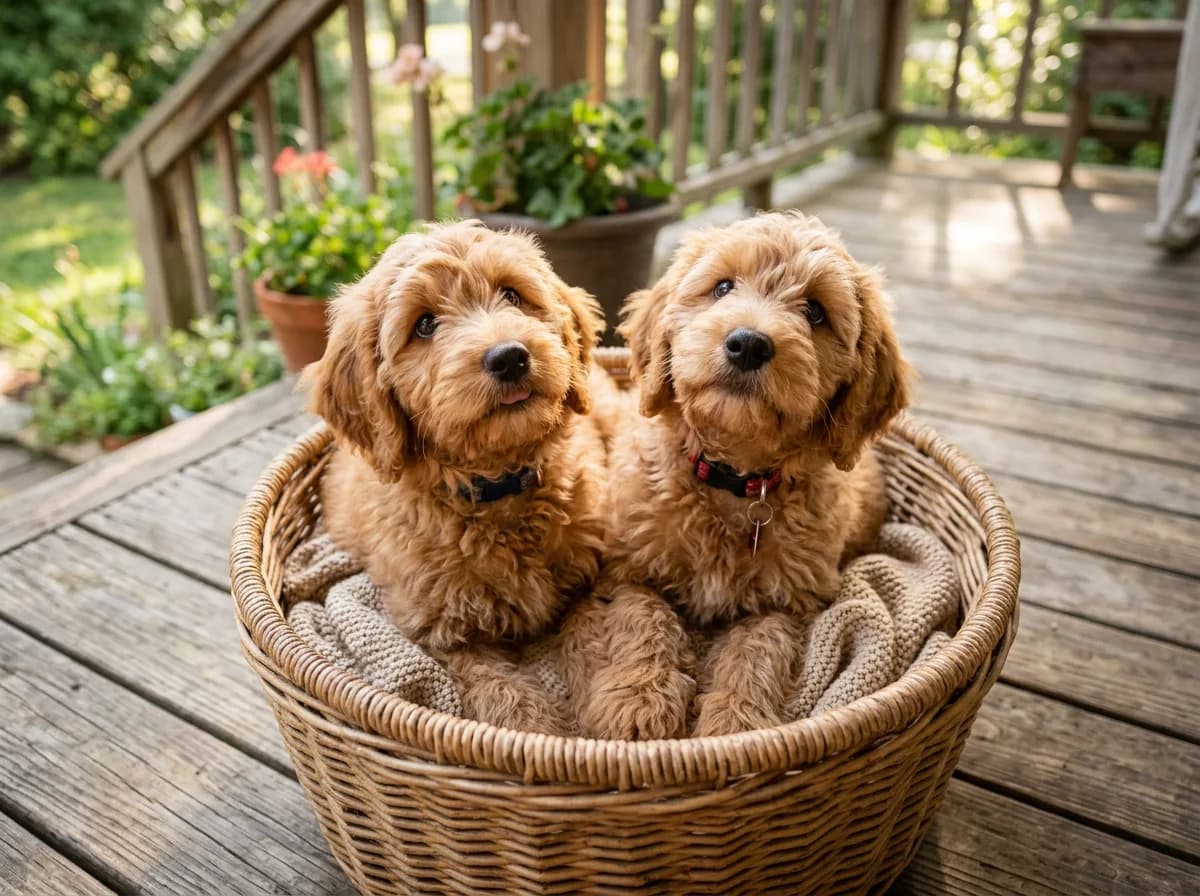
Short answer: yes, usually. Rare colors and stacked patterns command a premium because they are harder to produce reliably, so an apricot labradoodle puppy from a well-known line, a litter of red labradoodle puppies that hold their color, or the scarce tricolors and lavenders tend to sit at the top of a breeder's price sheet. Standard, common shades like black or cream generally cost less, all else being equal.
Where color trips buyers up is that it is easy to over-weight against everything else that sets a price. A rare-color puppy from an unproven breeder can cost more than a common-color puppy from a program that health-tests, socializes, and stands behind its dogs, and the second dog is the better buy every time. Treat color as one line item on the invoice, then look hard at the parents' health clearances, the breeder's guarantee, and whether the coat you are paying a premium for is likely to clear anyway.
Because price is its own deep topic (region, generation, breeder reputation, and health testing all move the number more than color does), we keep the full breakdown in one place. If you are budgeting for a puppy or comparing quotes on standard labradoodles for sale, see our dedicated guide to how much a Labradoodle costs rather than treating the color premium as the whole story. Color is a modifier on price, not the driver.
Frequently Asked Questions
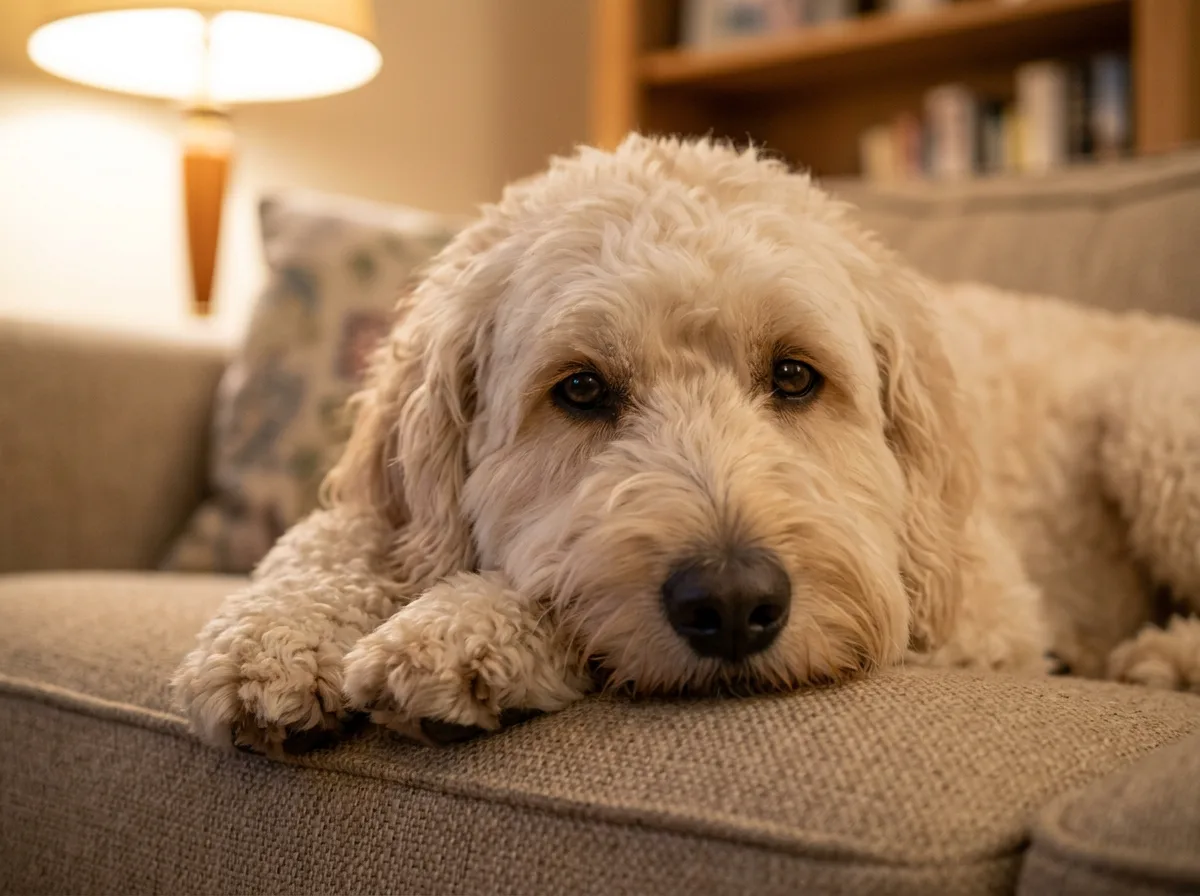
Most do. Thanks to a greying gene inherited from the Poodle, the majority of Labradoodles lighten over their first one to two years through a process called clearing. Chocolate can fade to cafe or silver-beige, red often softens to apricot, and black can turn blue or silver. The color usually settles by about 24 months.
Apricot and cream are the most common, partly because they are popular and partly because so many reds and golds clear down into apricot and cream by adulthood. Black is also common at birth, though many blacks clear toward blue or silver.
A true, non-fading red is the rarest solid, with lavender close behind. Among patterns, tricolor and well-marked phantom coats are the hardest to produce because several genes have to line up at once.
Color itself is cosmetic and does not affect health, with one exception: the merle pattern. Breeding two merle dogs together creates a merle gene health risk, because double-merle puppies have a higher chance of deafness and vision defects. Reputable breeders never pair two merles.
A phantom Labradoodle is a solid-colored dog with a second color appearing as fixed points over the eyes, on the cheeks and muzzle, on the chest, legs, and under the tail, just like the tan points on a Doberman. The markings have to land in specific places to count as true phantom.
A standard Labradoodle (Labrador crossed with Poodle) has no formal color standard, so its range is wide open. An Australian Labradoodle is a separate multi-generational breed with a written ALAA breed standard that recognizes a defined list of colors and coat types.

Coreen Saito is a pet writer and longtime shelter volunteer with more than a decade in animal rescue. She covers cat behavior, breed care, and the small, ordinary science of sharing a life with companion animals, with a particular focus on honest takes about the products and decisions that actually matter. At home in Arizona, she's outranked by Mac (a dog with the loudest opinion in the house), Rebel (a cat who governs by quiet authority), and Meri (an orange tabby who runs the late shift and the laundry basket). She writes about all three, plus the rescues that keep coming through her life, at LifeWithMinty.com.
Sign up for expert-backed reviews and safety alerts all in one place.