Mini Aussiedoodle: Full Grown Size, Price and Temperament
A mini Aussiedoodle is an Australian Shepherd crossed with a Miniature Poodle. See full grown size and weight, what toy and teacup really mean, temperament and barking, exercise and apartment fit, and what the smaller size costs.
Petful is reader supported. As an affiliate of platforms like Amazon and Chewy, we may earn a commission when you buy through links on this page. There is no extra cost to you.
A mini Aussiedoodle is an Australian Shepherd crossed with a Miniature Poodle, and swapping the Standard Poodle parent for a smaller one is the only thing that separates it from a standard Aussiedoodle. The result is a bright, busy, low-shedding dog that usually finishes between 15 and 35 pounds instead of the 40 to 70 pounds a standard carries, with most of the herding brain still fully intact.
That size gap is the whole reason people search "aussiedoodle mini" in the first place, and it is also where the search results fall down. The pages that rank are mostly puppy listings, so the numbers a buyer actually needs get buried under photos. This guide gives them plainly: full grown weight and height, what toy and teacup really mean, how temperament and energy shift at the smaller size, whether one fits an apartment, and what the small size costs. Whole-breed depth lives in our Aussiedoodle breed guide.
- 1A mini Aussiedoodle is an Australian Shepherd crossed with a Miniature Poodle, and most adults stand 12 to 18 inches tall and weigh 15 to 35 pounds full grown.
- 2"Toy," "teacup," and "micro" are seller labels, not registry size classes, and no breed registry recognizes any of them.
- 3A mini is not the same breed as a Mini Aussie, which is a Miniature American Shepherd and carries no Poodle at all.
- 4Expect around 60 minutes of exercise a day plus daily mental work, and budget roughly $2,000 to $4,500 for a well-bred puppy.

Sign up for expert-backed reviews and safety alerts all in one place.
What Is a Mini Aussiedoodle?
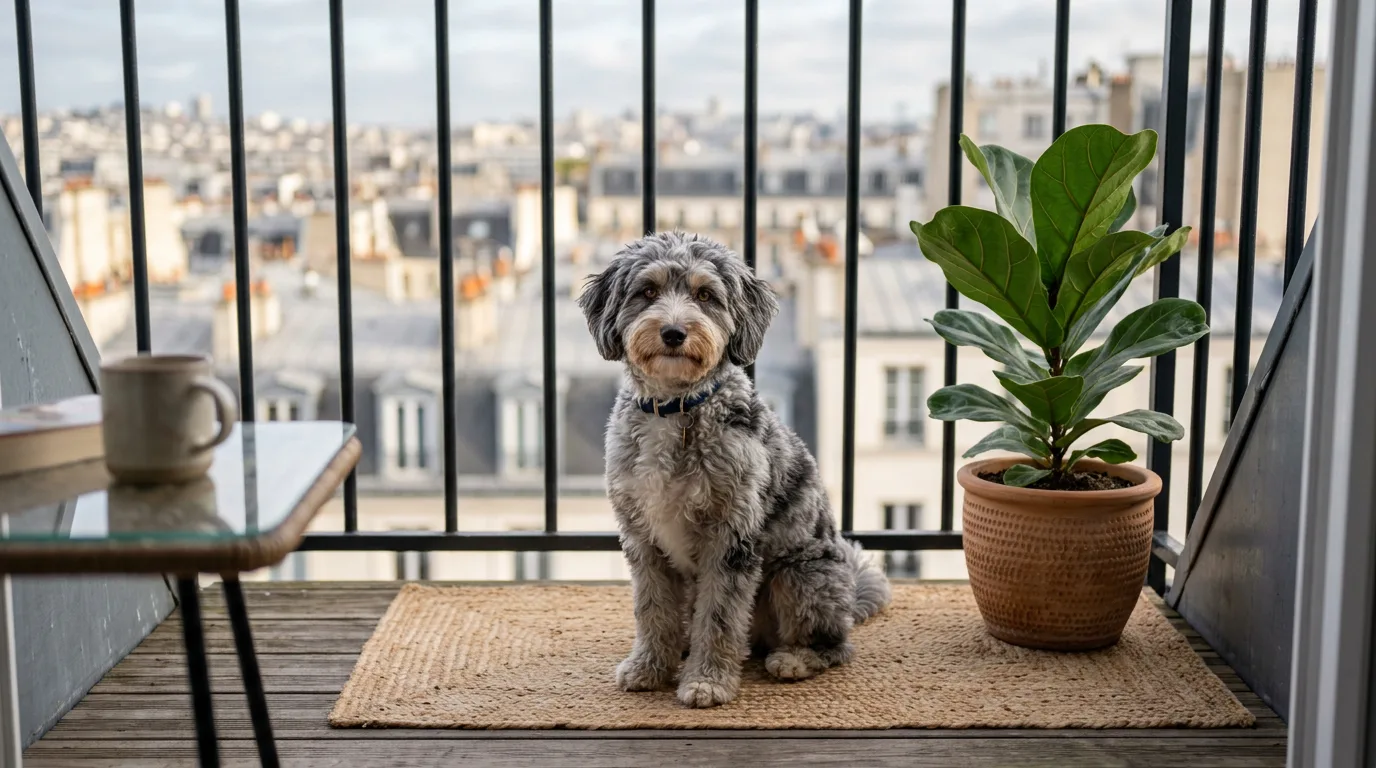
A mini Aussiedoodle is a deliberate cross between an Australian Shepherd (or a Miniature Australian Shepherd) and a Miniature Poodle. Both parents are working, thinking breeds, so the cross inherits a real job-seeking drive rather than the easygoing retriever temperament people expect from other doodles. What does a mini Aussiedoodle look like? Most have a wavy or curly medium-length coat, a squared-off muzzle softened by Poodle furnishings, feathered legs and tail, and expressive eyes that are often amber, brown, or blue. Australian Shepherd genetics also bring in merle patterning, which is why so many mini Aussiedoodles show marbled blue or red coats.
Generation labels tell you more about the coat than the size does:
- F1: a purebred Australian Shepherd bred to a purebred Miniature Poodle. Coat texture varies most in this generation, and some F1 dogs shed lightly.
- F1b generation: an F1 bred back to a Miniature Poodle, so the dog is roughly 75 percent Poodle. F1b litters produce the curliest, most consistently low-shedding coats, which is why allergy-sensitive buyers gravitate to them.
- F2 and multigen: later generations bred doodle to doodle, which stabilizes coat type but still cannot guarantee a finished adult weight.
Here is the distinction almost nobody online gets right, and it costs buyers real money: a mini Aussiedoodle and a "Mini Aussie" are not the same breed. A Mini Aussie is a Miniature American Shepherd, a separate purebred recognized by the American Kennel Club since 2015, with no Poodle in it at all. It sheds a full double coat seasonally. A mini Aussiedoodle is a crossbreed that no registry recognizes as a breed, and its appeal is precisely the low-shedding Poodle coat the Miniature American Shepherd does not have. If a listing uses the two names interchangeably, that seller does not know what they are selling.
- "Mini Aussie," "Miniature Australian Shepherd," and "Miniature American Shepherd" all describe a purebred herding dog with a shedding double coat. Only "mini Aussiedoodle" or "miniature Aussiedoodle" means a Poodle cross. Ask to see both parents before you pay a deposit.
The F1b generation deserves one more line, because it is the label buyers ask about most and the one most often oversold. An F1b generation mini Aussiedoodle is an F1 Aussiedoodle bred back to a Miniature Poodle, which puts the puppy at roughly 75 percent Poodle and produces the tightest, most reliably low-shedding curl in the cross. What the F1b generation does not do is guarantee a smaller adult, because the Miniature Poodle parent still ranges from 11 to 15 inches and the Australian Shepherd genes behind the F1 side still push finished size upward. Buy an F1b generation puppy for coat predictability, not for a lower adult weight.
This confusion is not the reader's fault. Search either name today and the live result set mixes the two breeds together, because almost no ranking page separates the Mini Aussiedoodle from the Mini Aussie, which is the Miniature American Shepherd. The People Also Ask bank on a Mini Aussiedoodle query openly serves Mini Aussie questions in the same set. The practical difference is simple. The Miniature American Shepherd is an AKC-recognized purebred, admitted to the Herding Group in 2015 and descended from small Australian Shepherds bred down in California from the 1960s onward, and it sheds a seasonal double coat. The Mini Aussiedoodle is a crossbreed of an Australian Shepherd and a Miniature Poodle, and it is the Poodle half that gives it the low-shedding coat buyers are paying a premium for. Two breeds, two grooming realities, two different price structures.
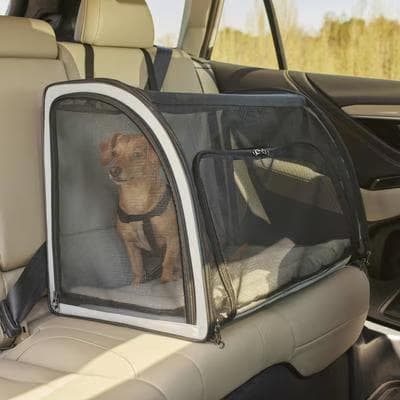
Soft-sided travel safety carrier that keeps a stressed cat secure and well-ventilated on the way to the vet, with mesh panels for airflow and a seat-belt loop.
Petful may earn a commission when you click through to Chewy, at no extra cost to you.
- Coat: a Miniature American Shepherd blows a double coat seasonally and needs brushing rather than clipping. A mini Aussiedoodle sheds very little but grows continuously and needs a professional groom every six to eight weeks.
- Papers: a Miniature American Shepherd can be AKC registered with a real pedigree. No registry recognizes any Aussiedoodle as a breed, so an Aussiedoodle "registration" certificate is a receipt, not a standard.
- Size: Miniature American Shepherds stand roughly 13 to 18 inches and mini Aussiedoodles 12 to 18 inches, so size alone will never tell you which dog is in the photo. Ask for both parents by breed name.
Mini Aussiedoodle Size and Weight Full Grown
A full grown mini Aussiedoodle stands 12 to 18 inches tall at the shoulder and weighs 15 to 35 pounds full grown, with most adults landing near 25 pounds. That is the honest mini Aussiedoodle size range, and the spread is wide because the Australian Shepherd parent can be a full-size Aussie or a miniature one, and the Miniature Poodle parent can sit anywhere from 11 to 15 inches itself.
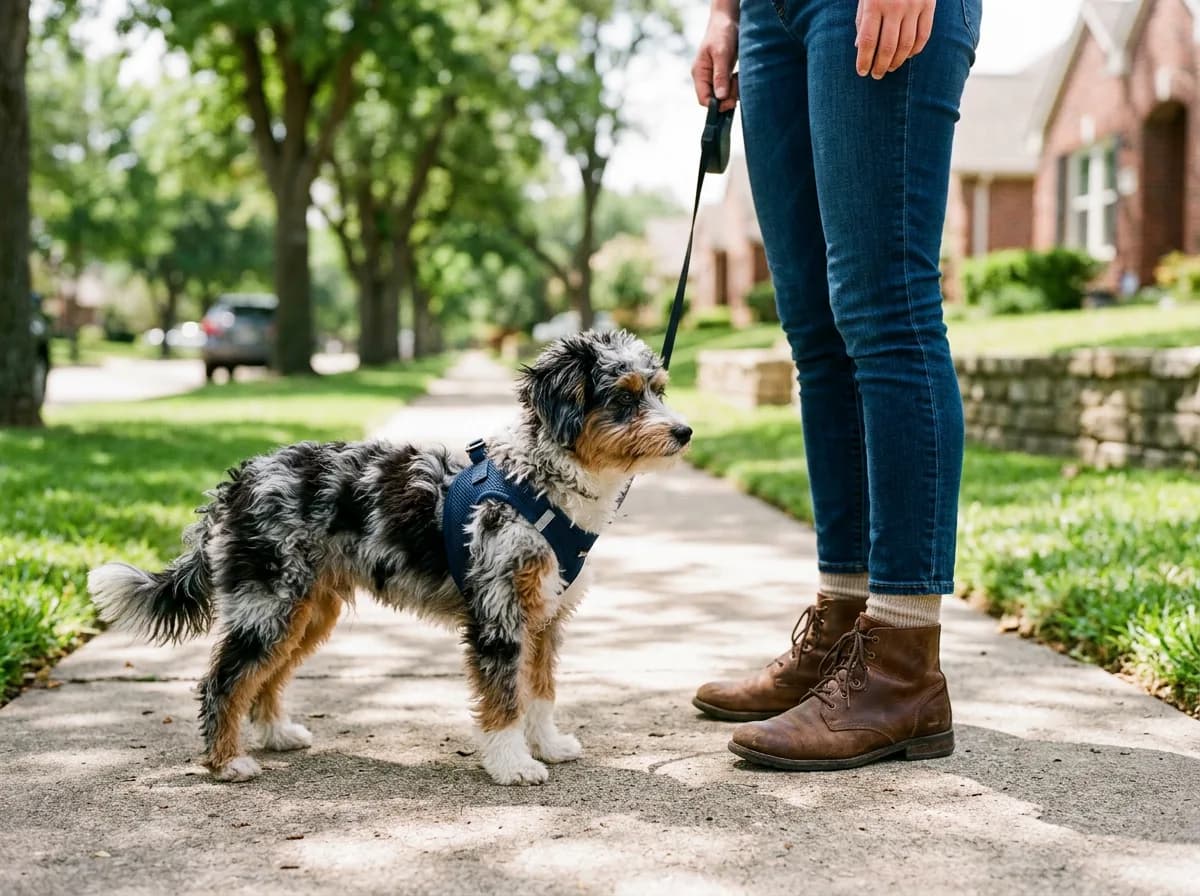
Smaller dogs need smaller tools, and a nail clipper sized for small dogs gives far better control on a thin nail than a full size pair.
How big will a mini Aussiedoodle get?
A mini Aussiedoodle will get to roughly 12 to 18 inches tall and 15 to 35 pounds as an adult, reaching its adult height at about 11 to 13 months and filling out in muscle for another month or two after that. The single best predictor of a given puppy's mini Aussiedoodle adult size is the weight of both parents, because a litter out of a 40-pound Australian Shepherd and a 15-pound Miniature Poodle finishes very differently from a litter out of two smaller dogs.
People search the size of mini Aussiedoodle a dozen different ways, so here is the mini Aussiedoodle size chart in one place. A miniature Aussiedoodle full grown falls into three practical bands:
- Small mini: 12 to 14 inches and 15 to 22 pounds, usually from a Miniature Australian Shepherd parent.
- Typical mini: 14 to 16 inches and 22 to 30 pounds. This is what most breeders mean by a mini.
- Large mini: 16 to 18 inches and 30 to 35 pounds, which shades into medium territory.
| Size class | Height at shoulder | Adult weight | Reaches adult size |
|---|---|---|---|
| Toy Aussiedoodle | 10-12 in | 8-15 lb | 9-11 months |
| Mini Aussiedoodle | 12-18 in | 15-35 lb | 11-13 months |
| Medium Aussiedoodle | 17-19 in | 30-45 lb | 12-14 months |
| Standard Aussiedoodle | 18-23 in | 40-70 lb | 14-16 months |
Because those figures sit in a table, here is the same mini Aussiedoodle full grown size in plain text: 12 to 18 inches tall, 15 to 35 pounds, done growing upward around the first birthday. A full grown miniature Aussiedoodle keeps adding chest and muscle until roughly 14 months, so an adult mini Aussiedoodle at ten months often looks leggy and unfinished. Mini Aussiedoodle full grown weight is also the number breeders quote least reliably, so ask for the recorded adult weight of previous litters rather than an estimate.
- Growth plates: close at about 10 to 14 months in a mini, earlier than in a standard, which is when repeated high-impact exercise becomes safe.
- Quick estimate: double the puppy's weight at four months for a workable adult target.
- Biggest variable: the Australian Shepherd side, not the Poodle side.
Toy, Teacup, and Micro Mini Aussiedoodles
A toy Aussiedoodle is an Australian Shepherd crossed with a Toy Poodle, and a toy Aussiedoodle full grown typically stands 10 to 12 inches and weighs 10 to 15 pounds. That is a genuine size class in practice, produced by using a smaller Poodle. Toy Aussiedoodle weight below about 10 pounds usually means several generations of breeding down, and that is where the caution starts.
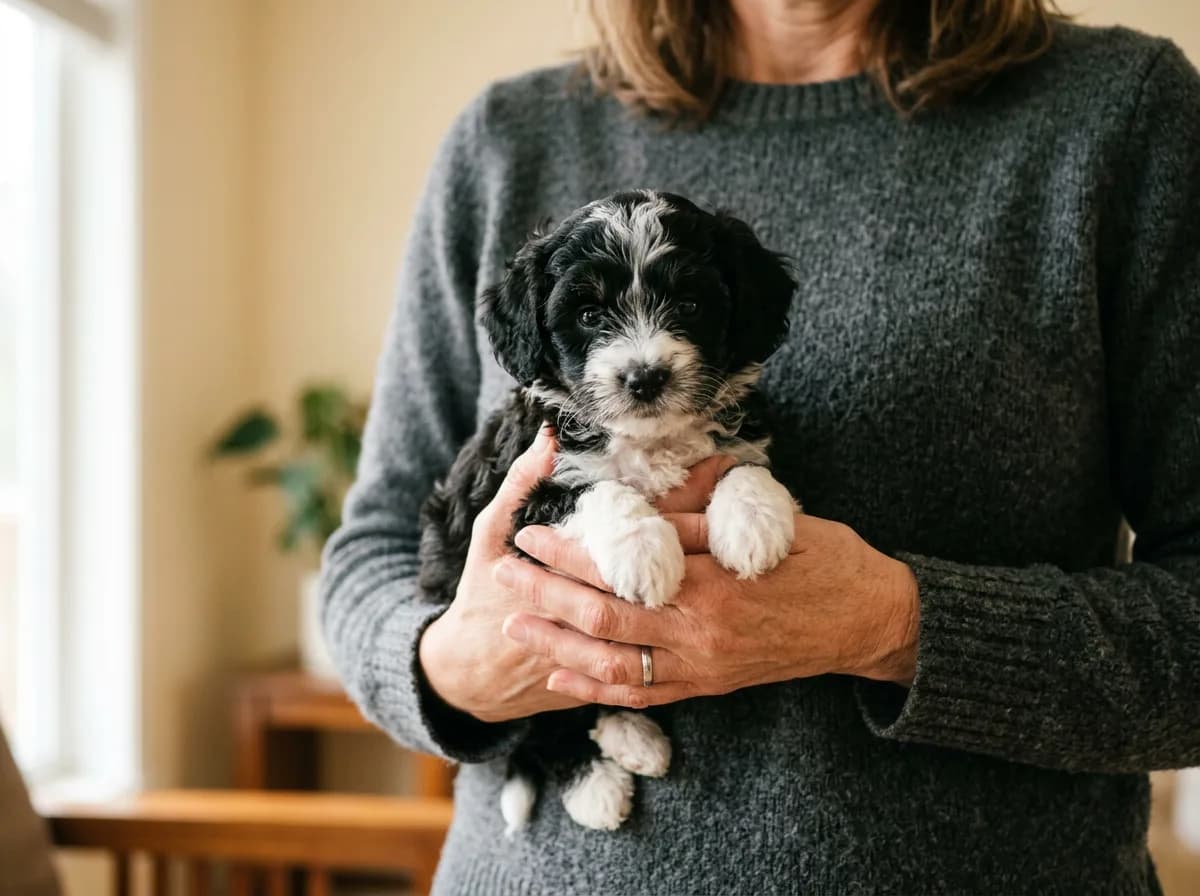
Here is the part the ranking breeder pages leave out. No breed registry recognizes toy, teacup, or micro as Aussiedoodle size classes, because no registry recognizes the Aussiedoodle as a breed at all. Those words are marketing, and they are applied inconsistently from one seller to the next:
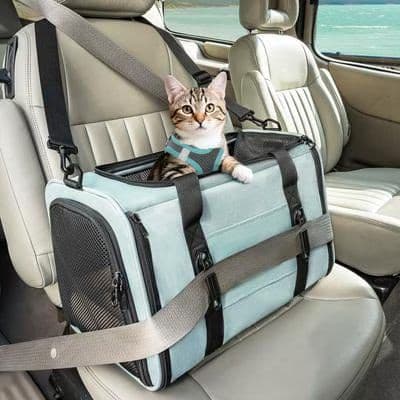
An airline-approved soft-sided carrier with patent safe buckles and mesh ventilation panels, sized for cats and small dogs.
Petful may earn a commission when you click through to Chewy, at no extra cost to you.
- Teacup Aussiedoodle: no agreed definition. A teacup mini Aussiedoodle full grown is usually quoted at 8 to 12 pounds, but the same seller may call a 15-pound dog a teacup.
- Micro Aussiedoodle and micro mini Aussiedoodle: the smallest marketed tier. A micro mini Aussiedoodle full grown is typically advertised at 6 to 12 pounds.
- Toy Aussiedoodle: the most consistent of the small labels, since it usually does reflect a Toy Poodle parent.
The size difference between a toy and a typical mini is not cosmetic. Very small dogs carry higher rates of luxating patella, dental crowding, tracheal collapse, and hypoglycemia in puppyhood, and breeding aggressively for miniaturization concentrates those risks. Ask what the smallest dog in the pedigree weighed, and treat any breeder who cannot answer that as a pass.
- No kennel club recognizes a teacup or micro Aussiedoodle, so those labels carry no size guarantee and no health standard. A puppy sold as a micro can easily finish at 18 pounds. Buy on the recorded weights of the parents and grandparents, never on the label in the ad.
It is worth saying plainly why this section exists at all. Toy, teacup, and micro carry real measured search demand, several thousand searches a month between them, yet the top editorial pages on this topic ignore those labels completely and none of them warns the reader that no breed registry recognizes any of the three. A label with no registry behind it carries no minimum standard, no required health screening, and no accountability if the adult dog finishes at double the promised weight. Treat toy, teacup, and micro as price tags rather than size classes, and price the health consequences in before you fall for the photos.
- Under about 10 pounds usually means several generations bred down for size, and each round of downsizing narrows the gene pool that health screening depends on.
- Ask in writing for the adult weights of the dam, the sire, and the smallest dog in the last three litters. A breeder who tracks size properly can answer in a minute.
- Budget for dental work from year one. Crowded teeth in a shortened jaw drive extractions and cleanings far earlier than in a typical 25-pound mini. There is more on this in Petful’s guide to dog teeth cleaning cost.
- Walk away from any seller who guarantees a finished adult weight under 8 pounds. That is a promise genetics does not let an honest breeder make.
Mini vs Standard Aussiedoodle: What Actually Changes
Ask what mini Aussiedoodle full size really means next to a standard Aussiedoodle and most pages describe one dog at a time. Here they are side by side, because the differences are measurable and they change daily life.
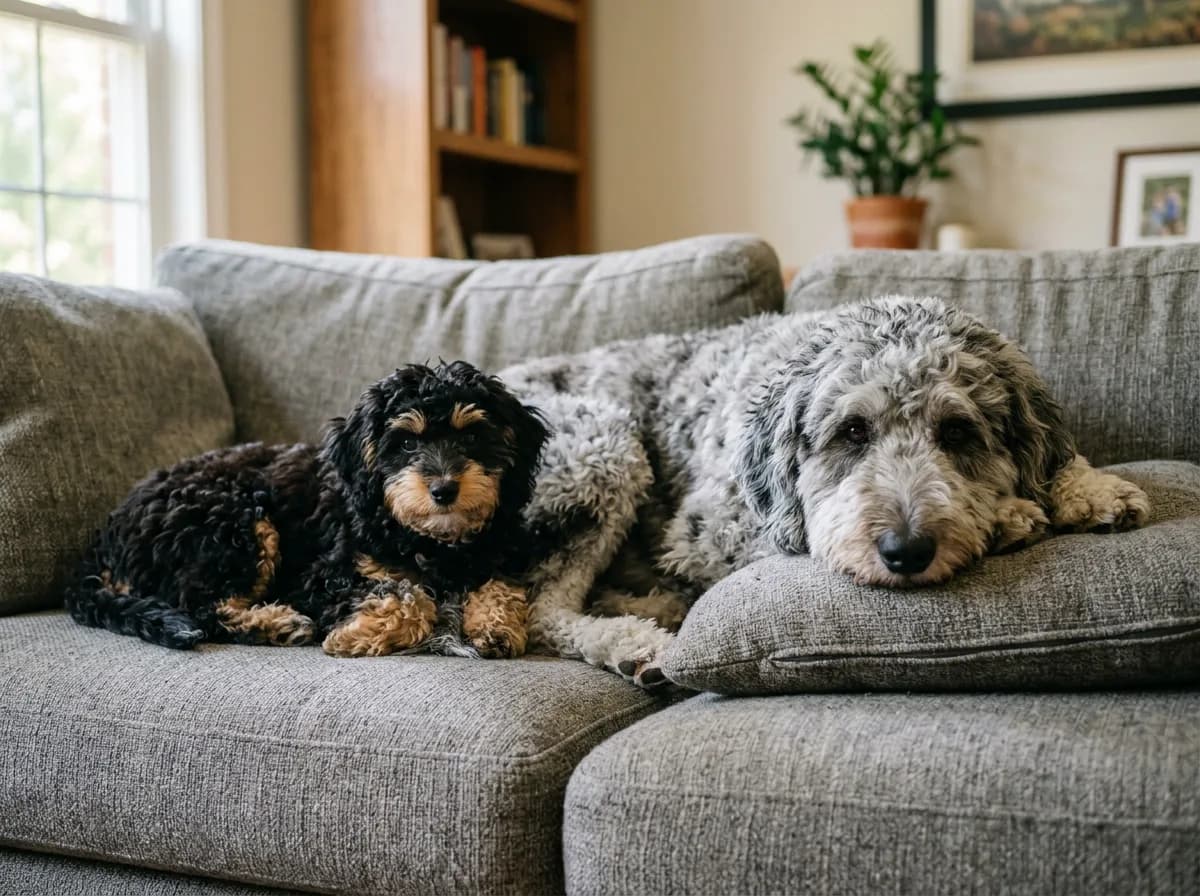
| Trait | Mini Aussiedoodle | Standard Aussiedoodle |
|---|---|---|
| Height | 12-18 in | 18-23 in |
| Adult weight | 15-35 lb | 40-70 lb |
| Daily exercise floor | about 60 minutes | about 90 minutes |
| Typical puppy price | $2,000-$4,500 | $1,500-$3,000 |
| Reaches adult size | 11-13 months | 14-16 months |
| Monthly food cost | $30-$50 | $60-$100 |
Read that out in plain numbers, since it is the comparison the search results never make. An Aussiedoodle miniature size adult is roughly half the height and a third to a half the weight of a standard, needs about 30 fewer minutes of daily exercise, eats about half as much, and costs several hundred to fifteen hundred dollars more to buy. That last line is the surprise: the mini carries a price premium over the standard even though it is the smaller dog.
- Smaller footprint, same brain. Miniature Aussiedoodle size does not dilute the Australian Shepherd work ethic. Intelligence, biddability, and herding instinct come through at every size.
- Easier to handle. A 25-pound dog is liftable into a bath or a car, fits a cabin carrier, and is manageable on leash for a smaller owner.
- Middle option exists. A medium Aussiedoodle at 17 to 19 inches and 30 to 45 pounds sits between the two if the mini feels too fragile and the standard too much dog.
- Cheaper to run, pricier to buy. Aussiedoodle mini size lowers food, medication, and boarding costs for life, but raises the purchase price up front. For more, see Petful’s guide to dog boarding cost.
The one thing that does not shrink is the need for a job. A mini that is under-exercised finds its own work, and that work is usually barking at the window or reorganizing your shoes.
Mini Aussiedoodle Temperament and Energy
Mini Aussiedoodle temperament is best understood as two working breeds in a small package. From the Australian Shepherd comes intense focus, loyalty that borders on velcro, herding instinct, and a strong pull toward whoever it decides is its person. From the Miniature Poodle comes fast learning, sensitivity, and a streak of comedy. The blend produces a dog that learns a new cue in a handful of repetitions and gets genuinely frustrated with nothing to do.
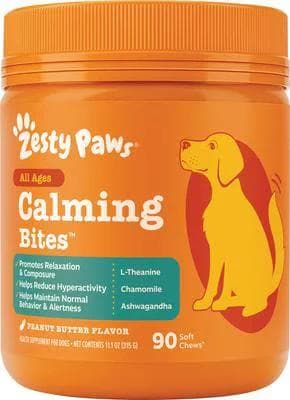
Peanut butter soft chews with L-theanine, chamomile, and ashwagandha to ease hyperactivity and support calm, relaxed behavior.
Petful may earn a commission when you click through to Chewy, at no extra cost to you.
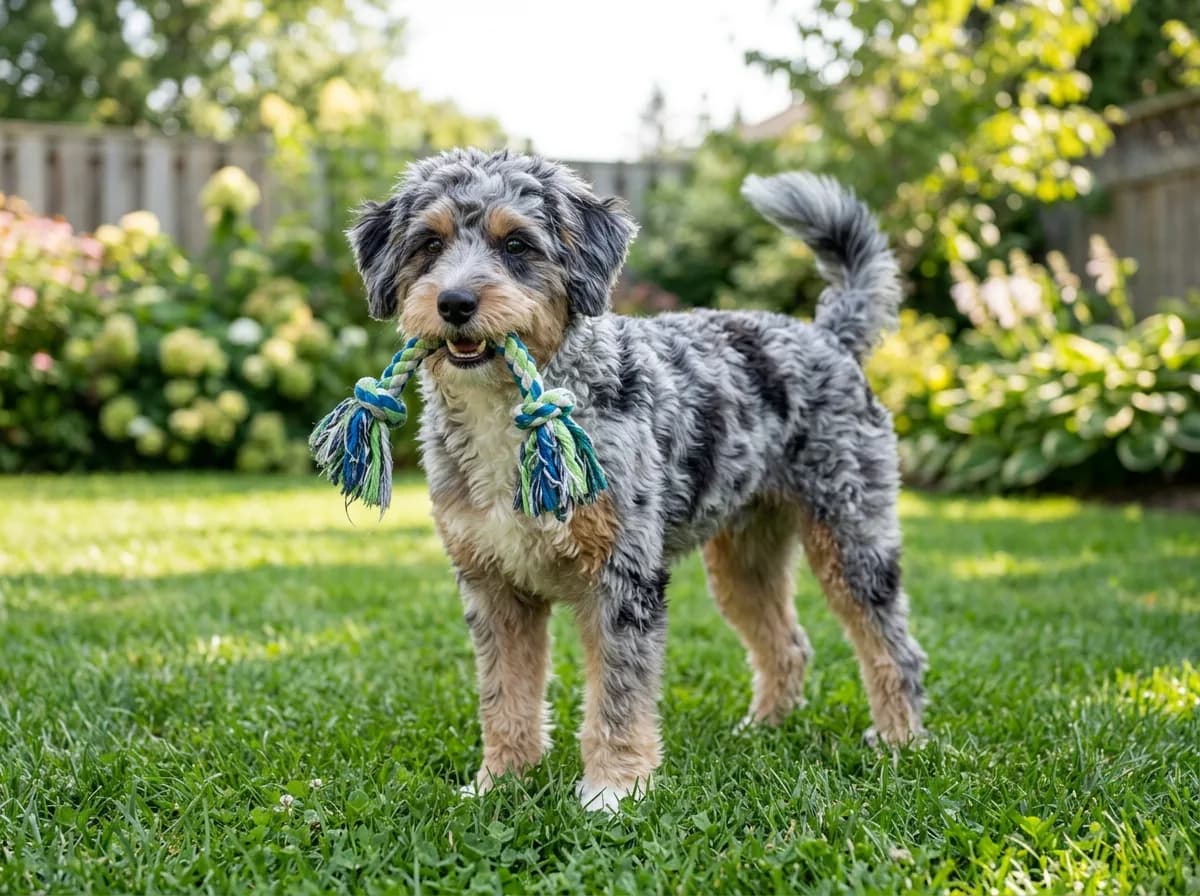
Miniature Aussiedoodle temperament is consistent enough to plan around:
- Very high trainability. Mini Aussiedoodle personality is defined by wanting instruction. Obedience, agility, trick training, and scent work all land easily.
- Deeply people-bonded. They follow you room to room and are prone to separation distress in homes that are empty all day.
- Herding carryover. Circling, nudging, and light ankle-nipping at running children is instinct, not aggression, and it responds well to early redirection.
- Sensitive to tone. Harsh corrections shut this cross down. Reward-based methods work far better.
- Alert and observant. They notice everything, which is useful and also the root of most noise complaints.
- A small rope toy suits a mini mouth better than the large chews sold for standards, and tug is a genuine energy outlet indoors.
- Lightweight squeaky plush toys work well indoors for a dog this size, where a heavy chew is more than the jaw needs.
A defined off switch helps more with this cross than with calmer breeds. Giving the dog its own calming bolster bed in a low traffic corner gives it somewhere to disengage, which matters in a small flat where there is nowhere else to go.
Do mini Aussiedoodles bark a lot?
Mini Aussiedoodles bark more than the average doodle, and that comes directly from the Australian Shepherd side, which was bred to use its voice while working stock. Expect alert barking at the door, at passing dogs, and at anything new outside the window. It is not constant yapping by default, but it is a genuinely vocal cross and it escalates fast when the dog is bored or under-exercised. Teaching a "quiet" cue in puppyhood, rewarding calm at windows, and meeting the daily exercise minimum keeps it manageable.
Most mini Aussiedoodle behavior problems trace back to the same root rather than to temperament faults. Nuisance barking, counter surfing, destructive chewing, and obsessive fixation on shadows or lights are almost always what an intelligent working dog does with unused capacity. Are Aussiedoodles calm? A well-exercised, mentally worked adult is genuinely calm indoors and settles beside you for hours. An under-stimulated one is not, and no amount of training substitutes for the daily outlet.
- Ten to fifteen minutes of nose work, a puzzle feeder, or a short training session tires a mini Aussiedoodle more than an extra half hour of walking. Working dogs need to think, and mental work is the cheapest way to buy yourself a quiet evening.
Exercise Needs and Apartment Life With a Mini Aussiedoodle
Mini Aussiedoodle energy level is high, and the honest daily minimum is 60 minutes of exercise split across at least two outings, plus 10 to 15 minutes of deliberate mental work. That is less than the 90 minutes a standard needs, but it is far more than the 20-minute stroll many small-dog owners plan for. A mini Aussiedoodle that gets its hour is a pleasant, quiet housemate. One that gets 20 minutes is the dog neighbors complain about.
The size does make travel easier, and an airline approved carrier is one of the few genuine advantages a mini has over a standard.
So can a mini Aussiedoodle live in an apartment? Yes, and apartment living genuinely suits the size, but only if the schedule supports it. Answer these honestly before you buy:
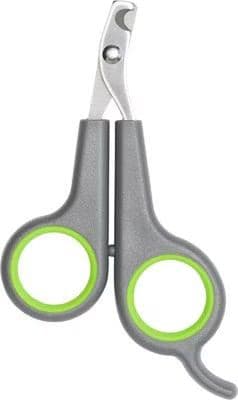
Compact spring-loaded scissor clippers sized for cats and small dogs, with rounded, easy-grip handles.
Petful may earn a commission when you click through to Chewy, at no extra cost to you.
- Can you commit 60 minutes of exercise a day, every day, including winter and deadline weeks?
- Is there safe off-leash or long-line space within a short walk, such as a fenced park or a quiet field?
- Will the dog be alone for more than six hours on a typical weekday?
- Are you willing to train a "quiet" cue early, given shared walls and an alert-barking cross?
- Can you add mental work on days when the weather cuts the walk short?
Four or five yes answers means a mini Aussiedoodle apartment life will work well. Two or fewer means the dog will be miserable and so will your neighbors, regardless of square footage. Square footage matters far less than the daily outing schedule, which is why a well-run apartment often beats a house with a yard nobody uses. General exercise and joint-loading guidance for growing small dogs is well covered in the VCA veterinary knowledge base, and the AKC expert advice library is a good reference for how herding-breed drive shows up in daily management.
- A 30-minute morning walk, a 20-minute evening walk or play session, a 10-minute training or scent game, and one longer weekend outing covers a mini Aussiedoodle comfortably. Two shorter outings beat one long one, because the dog resets between them.
Score that checklist rather than reading it. A concrete apartment fit test gives you an actual answer, while the vague needs exercise line on most breed pages gives you nothing to decide with. Give yourself one point for every yes above. The test is deliberately based on two inputs only: the daily exercise minutes you will genuinely deliver in February as well as in June, and your access to safe outdoor space within a short walk. Three points is the pass mark, and any weak spot has to have a plan attached, usually a midday walker or one daycare day a week. Square footage is not part of the test, and neither is whether you own or rent.
- Counts fully toward the 60 minutes: brisk leashed walking, off-leash running on a long line or in a fenced space, fetch, and structured training done in motion.
- Counts as half: sniff walks and slow neighborhood strolls. They are genuinely valuable for decompression, but they do not spend much of a herding dog's daily energy.
- Does not count: unsupervised time in a yard, a puzzle feeder, or a chew. Those are mental work, and mental work is an addition to the hour rather than a substitute for it.
- Add on top: 10 to 15 minutes of nose work, trick training, or a shaping session every day, not only on the days when weather cuts the walk short.
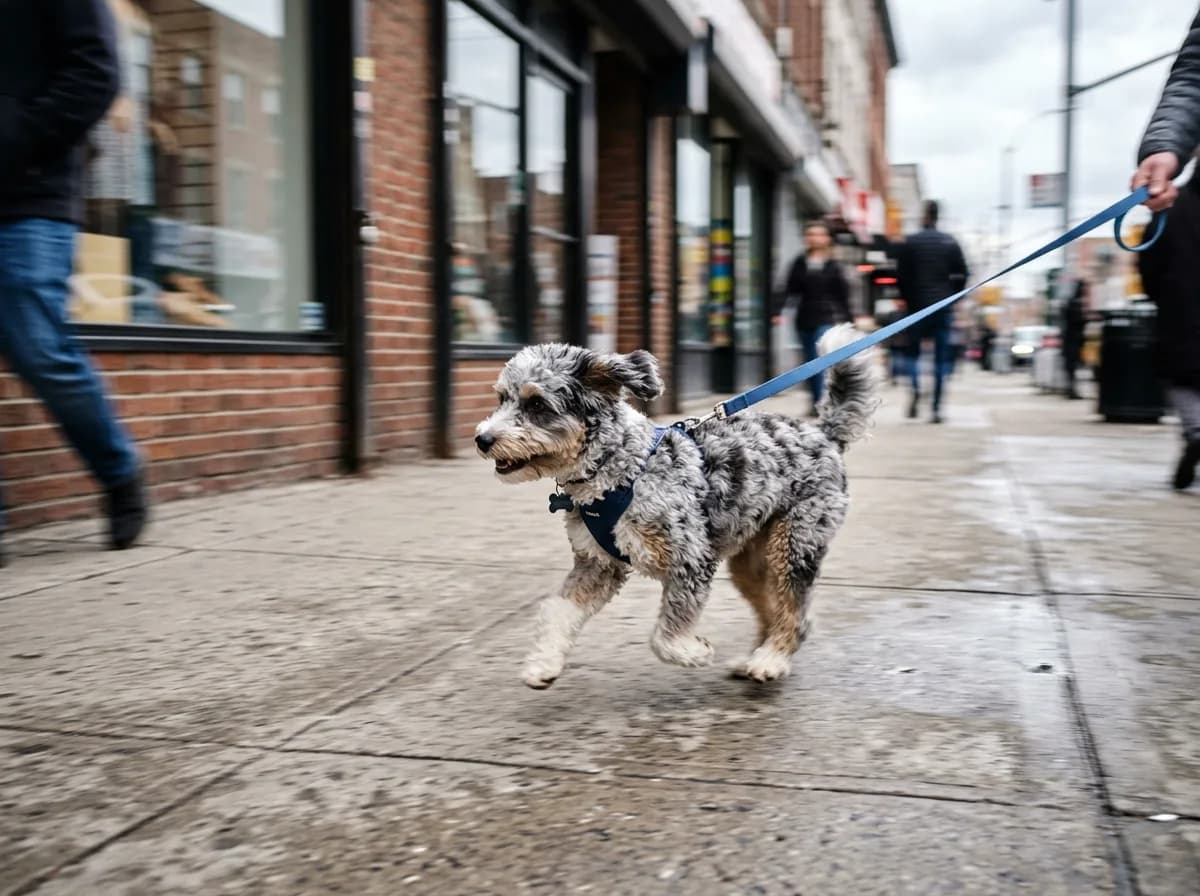
- City walking is easier on a no-pull harness in a small size, because a mini pulling on a flat collar puts all of it through the throat.
- A leash with a traffic handle earns its place in a city, where you need the dog close at a kerb without hauling on the harness.
The short version for anyone weighing apartment living: this is a working cross in a small body, and the deciding factor is the number of minutes of exercise you can reliably deliver on an ordinary Tuesday, not the floor plan you deliver them from. A mini Aussiedoodle that gets its full 60 minutes of exercise plus a short training session settles well in a one bedroom flat. The same dog in a large house with a yard and 15 rushed minutes of exercise will bark, chew and herd the household instead, which is why apartment living itself was never the real variable.
City walks are longer than they look on a map, so carry water. A collapsible travel bowl clips to a lead and solves the summer pavement problem that catches out most apartment owners.
Mini Aussiedoodle Price and the Size Premium
The average mini Aussiedoodle price from a reputable breeder is $2,000 to $4,500, and the typical price range narrows to $2,500 to $3,500 for a health-tested puppy from an established program. Toy and micro-marketed puppies commonly run $3,000 to $6,000. Miniature Aussiedoodle cost climbs above those bands for popular merle coloring, blue eyes, or a breeder with a long waitlist.
The factors that move the number are predictable:
- Size class. Smaller sells for more. The mini and toy tiers carry the premium.
- Coat color. Blue merle and red merle puppies routinely price $500 to $1,000 above solid black or chocolate littermates.
- Health testing. A reputable breeder screens both parents for hip, elbow, eye, and MDR1 drug-sensitivity issues, and that cost is built into the price.
- Generation. F1b litters often price higher because buyers pay for coat predictability.
- Region and waitlist. Metro-area programs with multi-year waitlists charge more than rural ones.
Why does the smaller dog cost more? Mini litters are smaller, the breeding is harder to plan, and demand for compact doodles outstrips supply. That is the price premium in one sentence, and it means a mini frequently costs $500 to $1,500 more than a standard Aussiedoodle from the same breeder. The trade is that lifetime running costs are lower, since a 25-pound dog eats about half what a 55-pound dog eats and pays less for medication, grooming, and boarding for 12 to 15 years.
Put a real number on the premium, because the pages currently ranking for this topic will not. The measured category leaders give a single adult size range and then stop, and not one of them will quantify the price premium a mini commands over a standard Aussiedoodle. Here is the arithmetic. A standard Aussiedoodle puppy from a health-testing breeder runs about $1,500 to $3,000, while the same breeder's mini litters list at $2,000 to $4,500. Matched for breeder, coat color, and health panel, the mini premium lands at $500 to $1,500, and toy or micro-marketed puppies stretch that gap to $1,500 to $3,000 above a standard from the identical program.
- Smaller litters. A Miniature Poodle cross typically produces 3 to 5 puppies where a Standard Poodle cross produces 6 to 9, so the same breeding effort yields fewer puppies to cover it.
- Harder breeding. Pairing a small dam with a larger Australian Shepherd sire often requires artificial insemination, carries higher whelping risk, and pushes some programs to plan a Caesarean by default.
- Higher demand. Compact doodles are the most requested doodle size in the country, and waitlists running 12 to 24 months let breeders hold the higher number without discounting.
- Paid once, saved for life. The premium is a one-time cost, while a 25-pound dog spends less than a 55-pound dog on food, flea and tick medication, boarding, and anesthesia for 12 to 15 years.
Standard Aussiedoodle Growth Charts
If your puppy is not a mini, or you want the month-by-month numbers rather than the adult range, the growth detail sits on its sibling page. Aussiedoodle size and weight vary enough by class that a full grown Aussiedoodle can be anything from 15 to 70 pounds, and predicting where a specific puppy lands takes an actual Aussiedoodle growth chart rather than an average. Our Aussiedoodle size chart maps weight by month for every class and explains how to project an Aussiedoodle full grown weight from a 16-week measurement.
Mini Aussiedoodle Grooming and Shedding
Do mini Aussiedoodles shed? Very little in most cases, because the Poodle coat traps loose hair rather than dropping it, and F1b dogs shed least of all. The trade is that the coat keeps growing and mats without regular work, so mini Aussiedoodle grooming is a real ongoing commitment rather than a low-maintenance perk. Brushing several times a week and a professional groom every six to eight weeks is the baseline, and the mini Aussiedoodle shed rate depends far more on coat texture than on size. Our Aussiedoodle grooming guide covers brushing technique, matting prevention, and the mini Aussiedoodle grooming styles worth asking your groomer for.
A smaller coat is quicker to wash but no less prone to tangling when it dries. A conditioning dog shampoo and conditioner makes the post bath comb through considerably easier on a wavy mini coat.
Mini Aussiedoodle Health and Lifespan
The lifespan of mini Aussiedoodles is typically 12 to 15 years, a little longer than the standard, following the usual pattern that smaller dogs outlive larger ones. Aussiedoodle life expectancy across the breed depends heavily on parent screening, because the Australian Shepherd side contributes MDR1 drug sensitivity, hip dysplasia, and eye conditions worth testing for. Is a mini Aussiedoodle hypoallergenic? No dog truly is, though the low-shedding coat means many mild allergy sufferers tolerate a miniature Aussiedoodle hypoallergenic claim better than they expect. The full condition list, screening panel, and honest allergy discussion live in our Aussiedoodle health guide.
Mini Aussiedoodle Coat Colors
Color is where the Australian Shepherd side shows most. A blue merle Aussiedoodle is the pattern that drives the most demand and the highest prices, and a full grown blue merle mini Aussiedoodle usually keeps its marbling for life while the base tone lightens. A black mini Aussiedoodle is the most common and often the least expensive, and a mini golden Aussiedoodle describes the apricot-to-red end of the range rather than any Golden Retriever ancestry. One rule matters more than any aesthetic preference: responsible breeders never pair two merle parents, because merle-to-merle breeding produces double merle puppies at high risk of deafness and blindness. Our Aussiedoodle colors guide breaks down every pattern and the genetics behind them.
Full Aussiedoodle Cost Breakdown
This page covers the mini size premium only. Aussiedoodle price across the breed, the first-year and lifetime Aussiedoodle cost, what the price of Aussiedoodle puppies looks like by region and color, and how the Aussiedoodle puppy cost compares with adoption fees all sit on the dedicated page. If you are budgeting rather than comparing sizes, start with our Aussiedoodle price breakdown, which itemizes vet care, grooming, food, and insurance across the first year.
Is a Mini Aussiedoodle Right for Your Home?
What are the pros and cons of a mini Aussiedoodle?
The pros of a mini Aussiedoodle are a compact 15 to 35 pound size that suits apartments and smaller owners, a low-shedding coat, exceptional intelligence and trainability, a 12 to 15 year lifespan, and a deeply affectionate bond with its people. The cons are a 60-minute daily exercise floor that does not bend, a vocal streak inherited from the Australian Shepherd, frequent professional grooming, real separation distress when left alone all day, and a purchase price that runs higher than the larger standard.
Sorted by who it actually fits:
- Great fit: active households, people who work from home or nearby, anyone who enjoys training, apartment dwellers with a reliable walking routine.
- Poor fit: homes empty ten hours a day, owners who want a low-effort lap dog, anyone unwilling to budget for grooming every six to eight weeks.
- Consider a standard instead: if you want a running or hiking partner and have the space, since the larger dog costs less to buy.
- Consider a different breed: if quiet is non-negotiable in a shared-wall building and you cannot commit to daily training.
Whole-breed drawbacks apply at every size rather than to minis specifically, so the honest downside discussion for the cross as a whole sits in our Aussiedoodle breed guide. If the exercise commitment and the grooming schedule both sound workable, a mini Aussiedoodle is one of the most rewarding small companions available, provided you buy it from someone who can show you what its parents weighed.
Mini Aussiedoodle FAQ
A mini Aussiedoodle stands 12 to 18 inches and weighs 15 to 35 pounds, while a Mini Aussie, properly called a Miniature American Shepherd, stands 13 to 18 inches and weighs 20 to 40 pounds. The sizes overlap, but they are not the same breed. The Miniature American Shepherd is a recognized purebred with a shedding double coat, and the mini Aussiedoodle is a Poodle crossbreed with a low-shedding one.
Most reach their adult height between 11 and 13 months and finish filling out in chest and muscle by about 14 months. Growth plates in a mini close around 10 to 14 months, which is when higher-impact activity such as repeated jumping or long runs on pavement becomes appropriate. Toy-size dogs finish a little earlier, often by 11 months.
They can be, because the cross is unusually easy to train and eager to work with you. The catch is exercise and companionship rather than difficulty. A first-time owner who commits to an hour of activity a day, starts puppy classes early, and is not out of the house ten hours a day will do well. Someone looking for a low-effort small dog will struggle.
After the purchase price, plan on roughly $1,800 to $3,000 a year. Grooming every six to eight weeks at $60 to $90 a visit is the largest recurring line item, followed by food at $30 to $50 a month, routine veterinary care, preventives, and pet insurance. The smaller size keeps food and medication costs meaningfully below what a standard Aussiedoodle runs.

Coreen Saito is a pet writer and longtime shelter volunteer with more than a decade in animal rescue. She covers cat behavior, breed care, and the small, ordinary science of sharing a life with companion animals, with a particular focus on honest takes about the products and decisions that actually matter. At home in Arizona, she's outranked by Mac (a dog with the loudest opinion in the house), Rebel (a cat who governs by quiet authority), and Meri (an orange tabby who runs the late shift and the laundry basket). She writes about all three, plus the rescues that keep coming through her life, at LifeWithMinty.com.
Sign up for expert-backed reviews and safety alerts all in one place.