Aussiedoodle Size: Toy, Mini, Medium and Standard Growth Guide
Aussiedoodles run from a 10-pound toy to a 70-pound standard. This guide gives height and weight ranges for all four size classes, month-by-month growth charts, and a repeatable way to predict your puppy's adult size.
Petful is reader supported. As an affiliate of platforms like Amazon and Chewy, we may earn a commission when you buy through links on this page. There is no extra cost to you.
The first number most buyers need pinned down is aussiedoodle size, because an Australian Shepherd crossed with a Poodle can finish anywhere from a 10-pound lap dog to a 70-pound athlete. That spread is wider than almost any other doodle cross, and it is not random. It traces directly to which Poodle variety stood at the other end of the cross and how many generations the breeder worked through to get there.
This guide gives you the real height and weight figures for all four Aussiedoodle sizes, month-by-month growth tables for each class, the age each one stops growing, and a repeatable method for predicting what your own puppy will weigh as an adult. For coat, personality and care, our full Aussiedoodle breed guide covers the rest of the breed.
- 1Aussiedoodles come in four size classes: toy (10 to 12 in, 10 to 15 lbs), mini (12 to 18 in, 15 to 35 lbs), medium (17 to 20 in, 30 to 45 lbs) and standard (19 to 25 in, 45 to 70 lbs)
- 2The Poodle parent sets the size class, so a Toy Poodle cross and a Standard Poodle cross produce dogs that differ by more than 50 pounds
- 3Most Aussiedoodles reach adult height between 11 and 14 months, while standards keep filling out in weight until 18 to 24 months

Sign up for expert-backed reviews and safety alerts all in one place.
Aussiedoodle Sizes: Toy, Mini, Medium and Standard
Breeders sort the four aussiedoodle sizes by the Poodle used in the cross, and the short answer is this: a toy Aussiedoodle stands 10 to 12 inches tall and carries a weight range of 10 to 15 pounds, a mini stands 12 to 18 inches tall at 15 to 35 pounds, a medium stands 17 to 20 inches tall at 30 to 45 pounds, and a standard Aussiedoodle stands 19 to 25 inches tall at 45 to 70 pounds. Every one of those height figures is a withers height, measured at the ridge between the shoulder blades rather than to the top of the head, so a heavily coated dog that looks taller still measures at the shoulder.
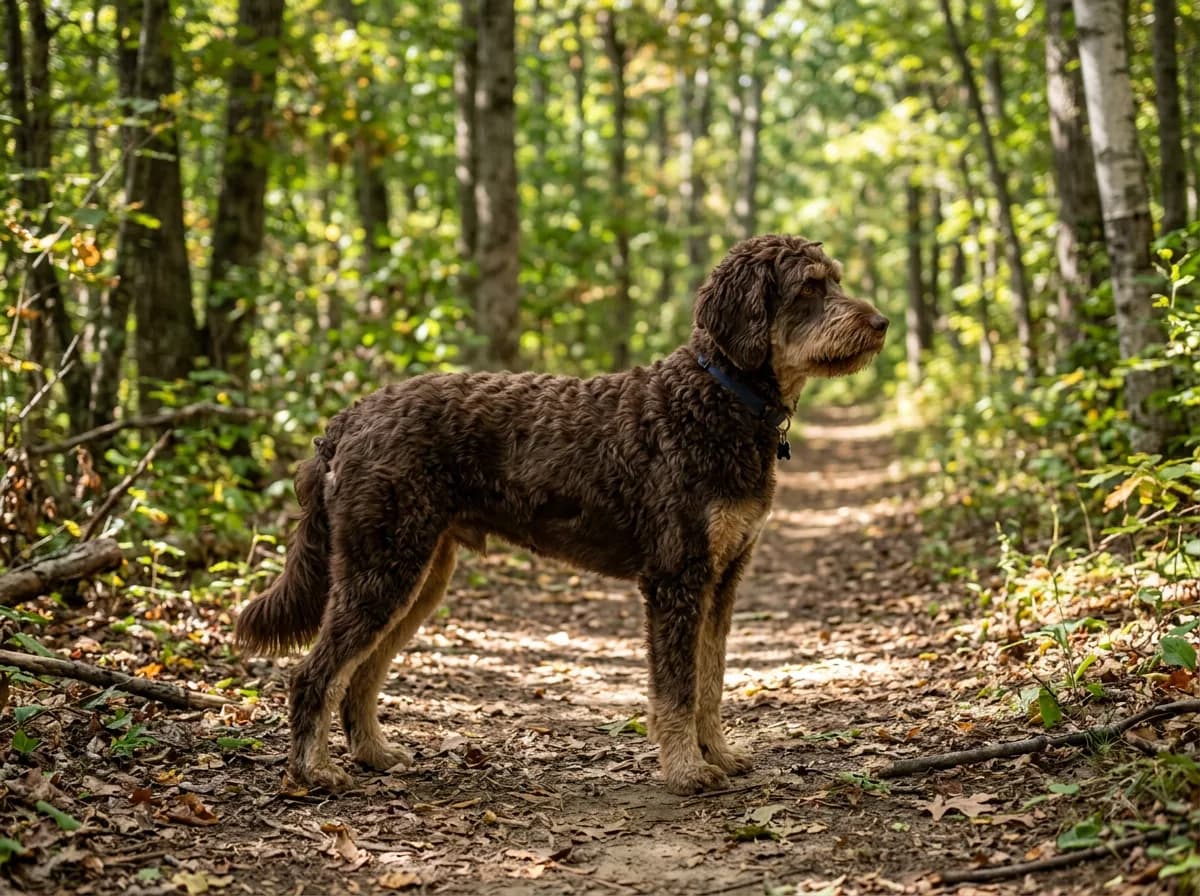
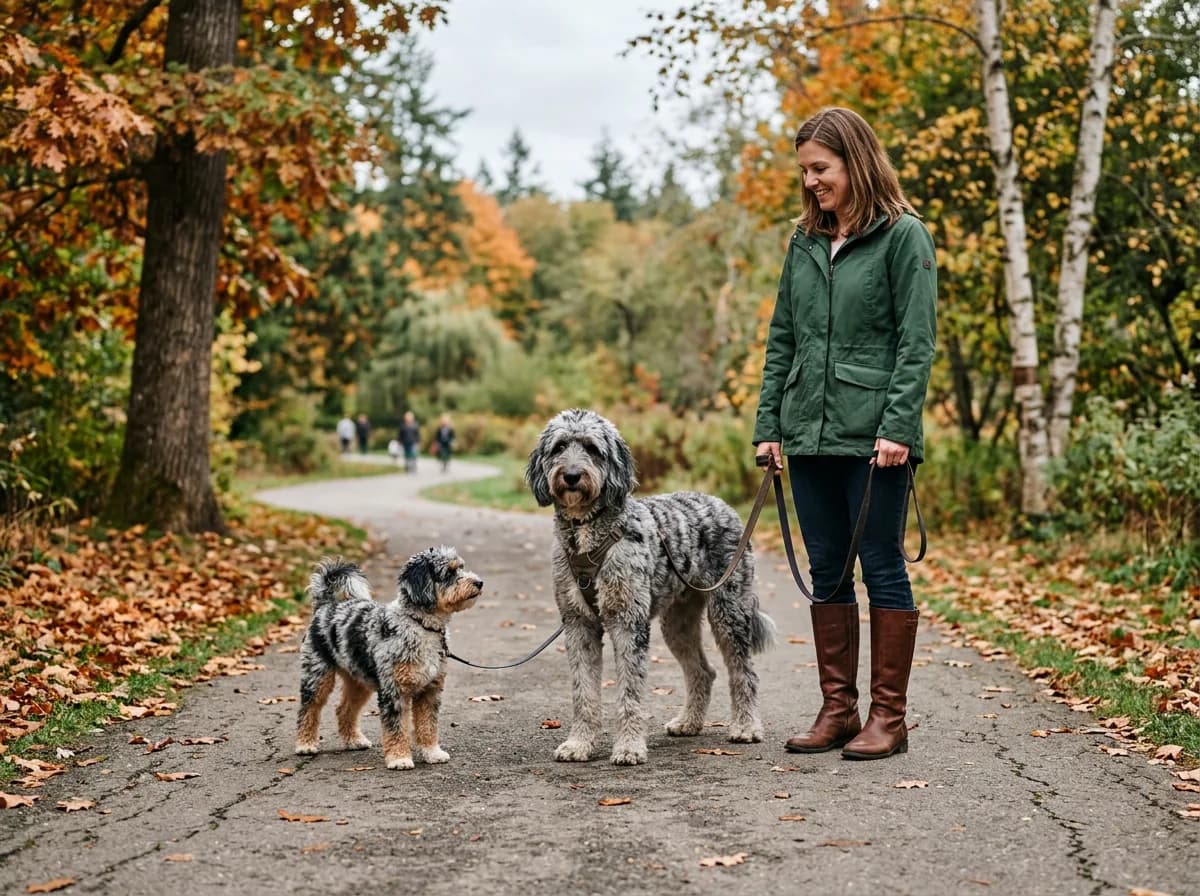
Weight is the looser of the two numbers. Coat density, build and body condition all move the scale, which is why two dogs of identical height can sit five pounds apart and both be healthy.
- Toy: 10 to 12 inches, 10 to 15 pounds. Bred from a Toy Poodle, usually through a back-cross.
- Mini: 12 to 18 inches, 15 to 35 pounds. Bred from a Miniature Poodle, most often onto a Miniature American Shepherd.
- Medium: 17 to 20 inches, 30 to 45 pounds. The class most breeder charts skip entirely.
- Standard: 19 to 25 inches, 45 to 70 pounds. A full Australian Shepherd crossed with a Standard Poodle.
The aussiedoodle size comparison below puts all four classes side by side with the Poodle parent that produces each one, because that single fact predicts more about a puppy's adult frame than anything else on a breeder's website.
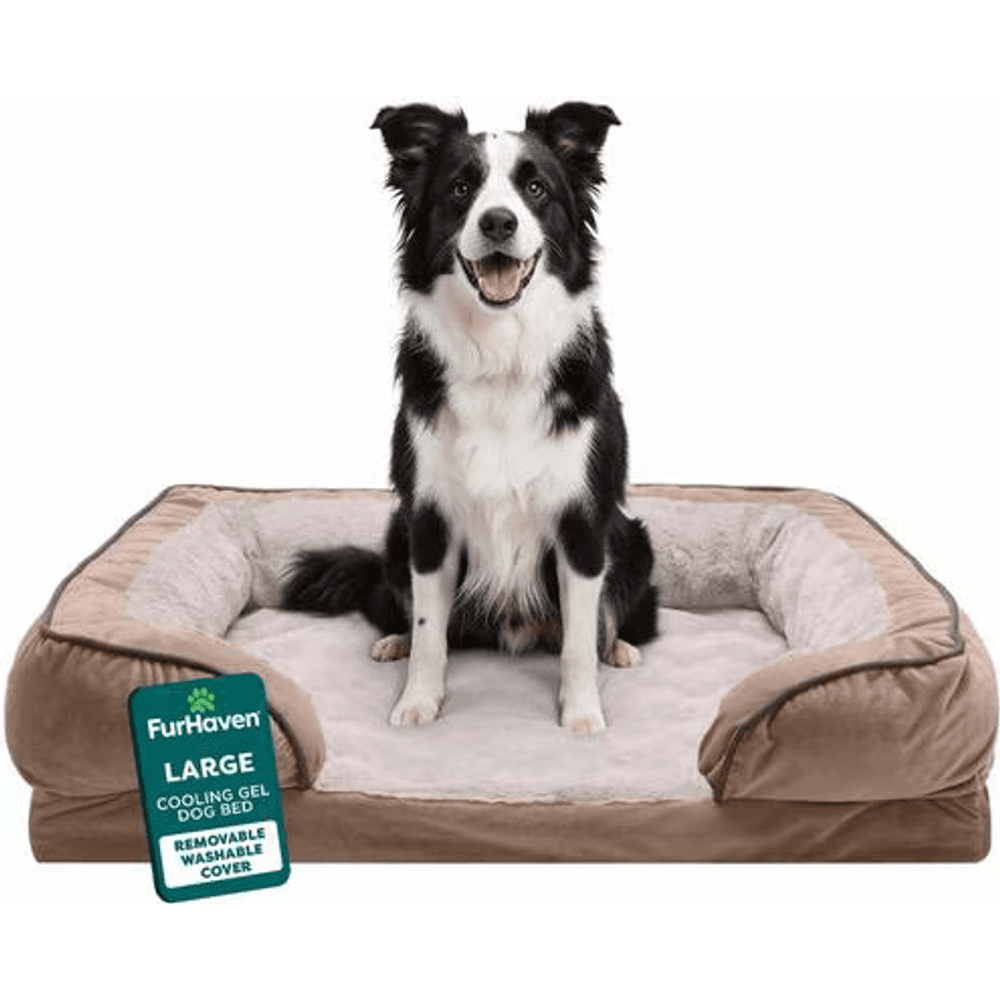
An orthopedic sofa bed with three bolstered sides for dogs who like to rest their head and joints against a cushion. The supportive foam base cradles hips and elbows, a comforting spot for an older or shaky dog to settle.
Petful may earn a commission when you click through to Chewy, at no extra cost to you.
| Size Class | Poodle Parent | Height at Withers | Adult Weight | Full Grown By |
|---|---|---|---|---|
| Toy | Toy Poodle | 10 to 12 in (25 to 30 cm) | 10 to 15 lbs (5 to 7 kg) | 9 to 11 months |
| Mini | Miniature Poodle | 12 to 18 in (30 to 46 cm) | 15 to 35 lbs (7 to 16 kg) | 11 to 13 months |
| Medium | Miniature or small Standard Poodle | 17 to 20 in (43 to 51 cm) | 30 to 45 lbs (14 to 20 kg) | 12 to 14 months |
| Standard | Standard Poodle | 19 to 25 in (48 to 64 cm) | 45 to 70 lbs (20 to 32 kg) | 12 to 16 months, weight to 24 months |
Two things about that table are worth saying out loud, because breeder marketing tends to blur both. First, there is no kennel club standard for any of these classes. The Aussiedoodle is not a recognized breed, so the size labels are breeder conventions, not enforced measurements, and one program's "medium" is another's "standard." Second, the ranges overlap on purpose. A large mini and a small medium can be the same dog wearing two different price tags.
Standard Aussiedoodle size
A standard Aussiedoodle is the original version of the cross: a full-sized Australian Shepherd bred to a Standard Poodle. The standard aussiedoodle size runs 19 to 25 inches at the shoulder and 45 to 70 pounds, with most dogs settling near 21 inches and 55 pounds. Males usually land in the upper half of both bands and females in the lower half, a gap of roughly 10 percent that holds across all four classes.
Anyone comparing programs will see aussiedoodle standard size quoted as a single number, often "about 50 pounds." Treat that as a midpoint rather than a promise. Both parent breeds carry real variation of their own, and a Standard Poodle can itself weigh anywhere from 40 to 70 pounds, so the cross inherits that entire spread.
- Needs a 42-inch crate and a vehicle with real cargo room
- Eats roughly three times what a toy Aussiedoodle eats
- Keeps the Australian Shepherd working drive at full scale, so exercise needs are genuine
Medium Aussiedoodle size
The medium class sits between the mini and the standard at 17 to 20 inches and 30 to 45 pounds, and it is the size class competitor charts routinely leave out. It is usually produced by pairing a Miniature Poodle with a full-sized Australian Shepherd, or a small Standard Poodle with a Mini American Shepherd, which is exactly why it exists as a category at all: the two parents meet in the middle.
For most families this is the practical sweet spot. A medium is sturdy enough to hike, swim and keep up with school-age kids, but it still fits a mid-sized car and a normal-sized living room.
- Size labels are marketing. The Poodle parent is biology. A breeder who can tell you the variety and the recorded adult weight of both parents is giving you far better information than one who simply writes "medium" on the listing.
Aussiedoodle Growth Chart: Weight and Height by Month
An aussiedoodle size chart is only useful if it separates the classes, because a single blended curve describes no real dog. The four tables below track aussiedoodle weight by month from 8 weeks through 24 months, one table per size class, so you can check your puppy against the band it actually belongs to rather than a breed-wide average.
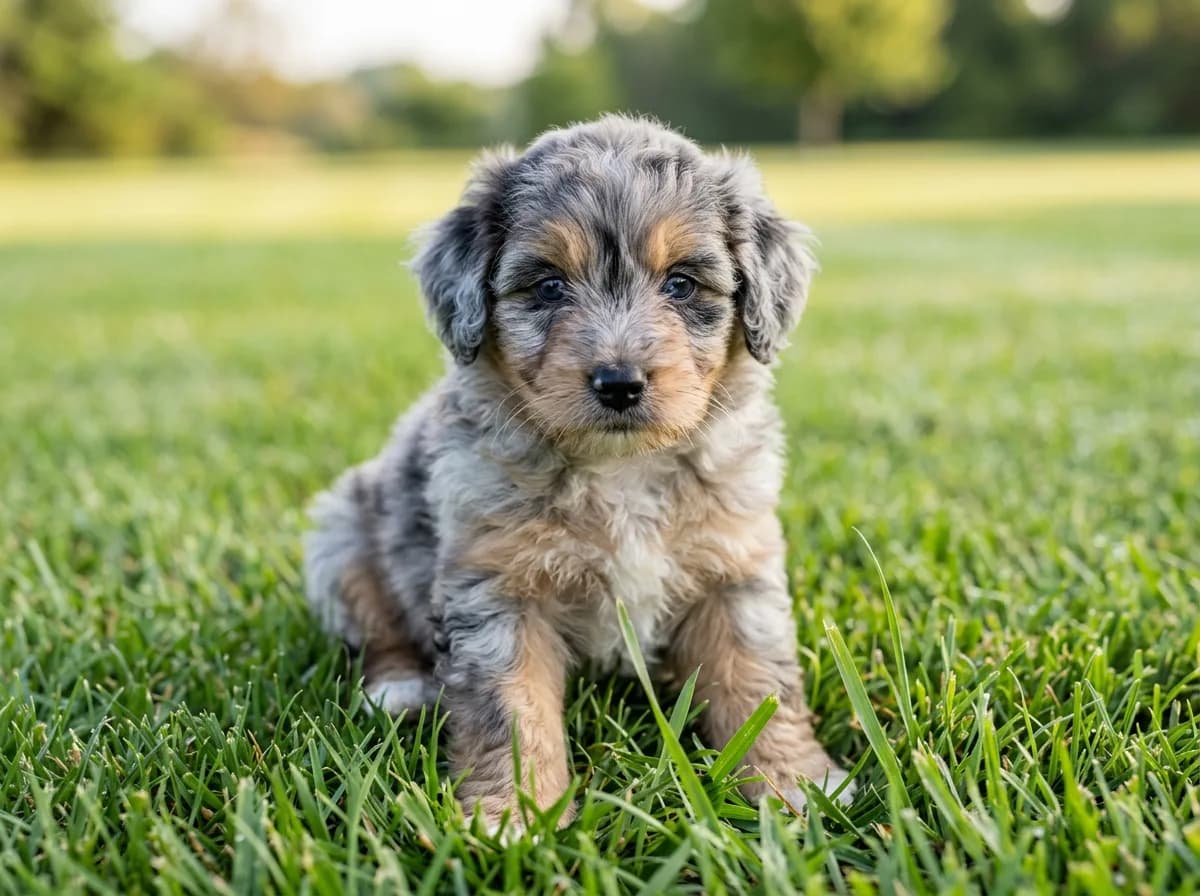
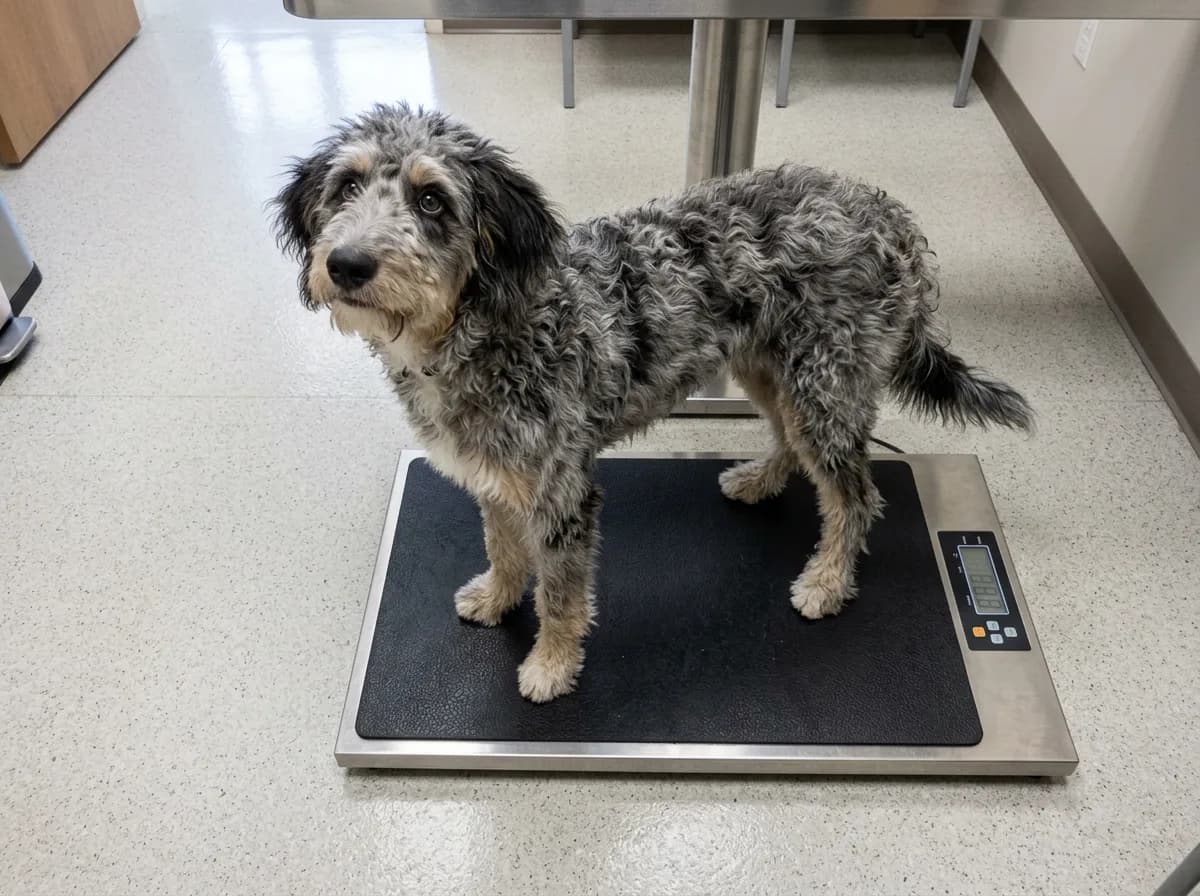
Read these as ranges, not targets. A puppy tracking slightly above or below its band is normal. What matters is steady month-over-month gain and a healthy body condition, not hitting a specific figure at a specific age.
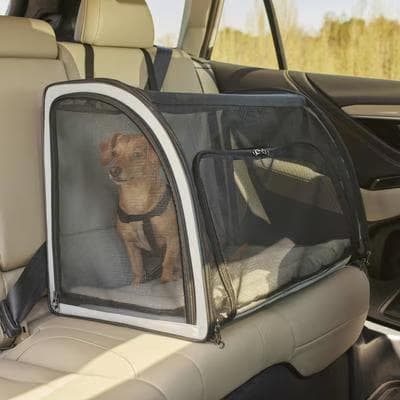
Soft-sided travel safety carrier that keeps a stressed cat secure and well-ventilated on the way to the vet, with mesh panels for airflow and a seat-belt loop.
Petful may earn a commission when you click through to Chewy, at no extra cost to you.
| Age | Weight | Height |
|---|---|---|
| 8 weeks | 2 to 4 lbs | 4 to 6 in |
| 3 months | 4 to 6 lbs | 6 to 8 in |
| 4 months | 5 to 7 lbs | 7 to 9 in |
| 6 months | 8 to 11 lbs | 9 to 11 in |
| 9 months | 9 to 13 lbs | 10 to 12 in |
| 12 months | 10 to 15 lbs | 10 to 12 in |
| 18 months | 10 to 15 lbs | 10 to 12 in |
| 24 months | 10 to 15 lbs | 10 to 12 in |
| Age | Weight | Height |
|---|---|---|
| 8 weeks | 4 to 7 lbs | 6 to 8 in |
| 3 months | 8 to 13 lbs | 9 to 12 in |
| 4 months | 10 to 17 lbs | 10 to 13 in |
| 6 months | 13 to 25 lbs | 11 to 16 in |
| 9 months | 15 to 31 lbs | 12 to 17 in |
| 12 months | 15 to 34 lbs | 12 to 18 in |
| 18 months | 15 to 35 lbs | 12 to 18 in |
| 24 months | 15 to 35 lbs | 12 to 18 in |
| Age | Weight | Height |
|---|---|---|
| 8 weeks | 7 to 11 lbs | 8 to 10 in |
| 3 months | 14 to 20 lbs | 11 to 14 in |
| 4 months | 18 to 25 lbs | 13 to 16 in |
| 6 months | 23 to 33 lbs | 15 to 18 in |
| 9 months | 28 to 40 lbs | 16 to 19 in |
| 12 months | 30 to 44 lbs | 17 to 20 in |
| 18 months | 30 to 45 lbs | 17 to 20 in |
| 24 months | 30 to 45 lbs | 17 to 20 in |
| Age | Weight | Height |
|---|---|---|
| 8 weeks | 9 to 15 lbs | 9 to 11 in |
| 3 months | 20 to 30 lbs | 12 to 15 in |
| 4 months | 25 to 38 lbs | 14 to 17 in |
| 6 months | 33 to 50 lbs | 17 to 21 in |
| 9 months | 41 to 62 lbs | 18 to 23 in |
| 12 months | 44 to 66 lbs | 19 to 25 in |
| 18 months | 45 to 70 lbs | 19 to 25 in |
| 24 months | 45 to 70 lbs | 19 to 25 in |
The pattern across all four tables is the same, and it is the single most useful thing a growth chart teaches: growth is front-loaded. Roughly half of adult weight arrives in the first four months, the curve flattens hard somewhere between 8 and 12 months old, and the last few pounds trickle on for months after height has stopped changing.
- A toy or mini is at about 75 percent of adult weight by 6 months old
- A medium is at roughly 70 percent by 6 months old
- A standard is closer to 65 percent at the same point, which is why big Aussiedoodles look lanky longest
- Every class hits full height before it hits full weight
Owners of the smallest classes tend to search separately, so here are those figures pulled out directly. A mini aussiedoodle growth chart runs from about 5 pounds at 8 weeks to 15 to 35 pounds at maturity, and a mini aussiedoodle weight chart flattens around 12 months. The matching mini aussiedoodle height is 12 to 18 inches, and typical mini aussiedoodle weight at one year sits between 15 and 34 pounds.
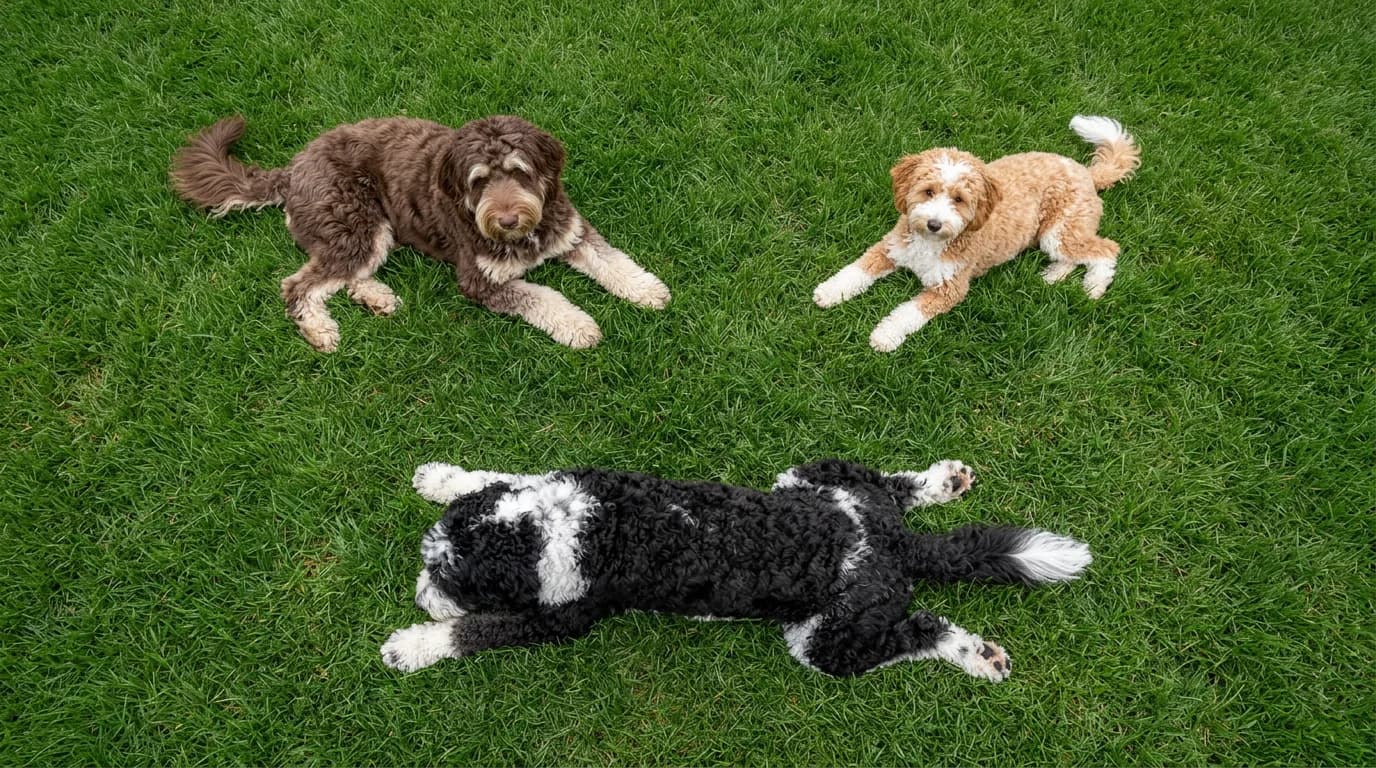
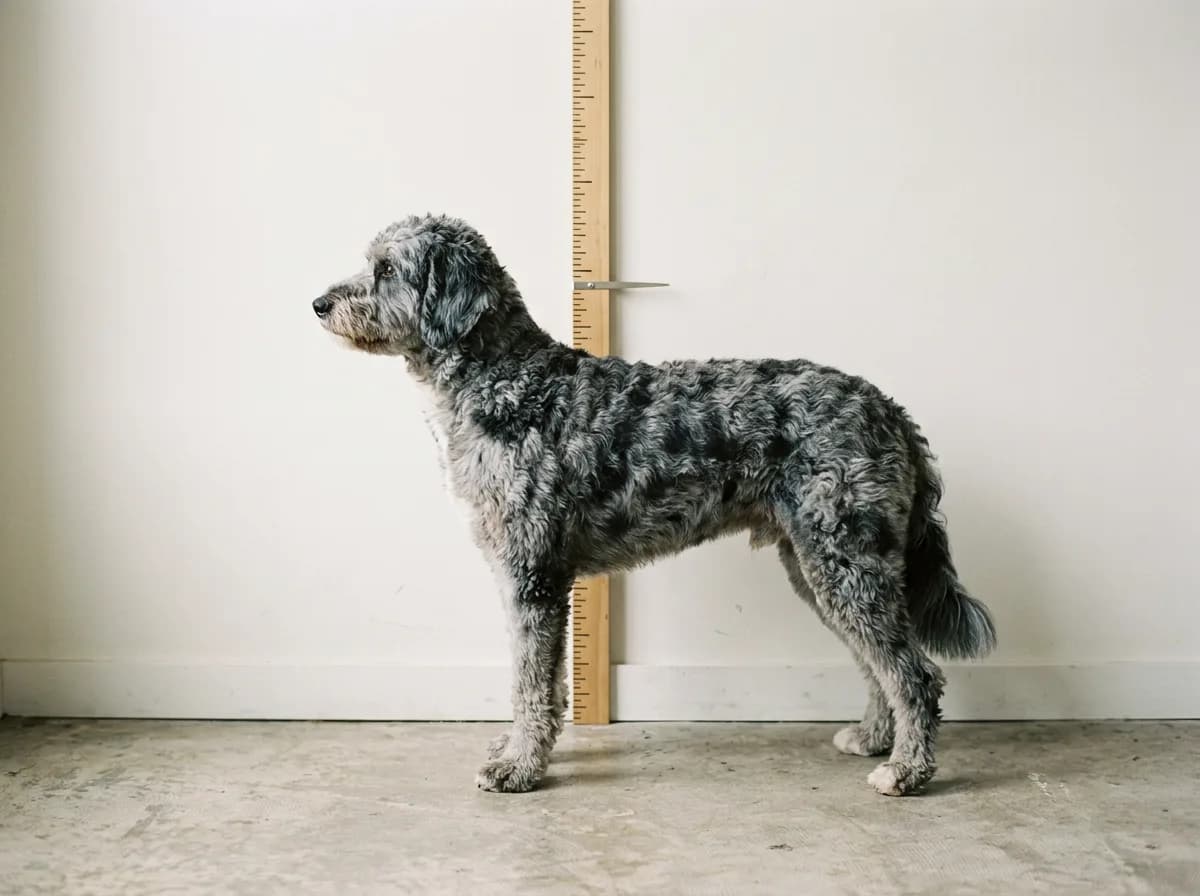
The size difference between the classes is easiest to see in person rather than on paper, which is why the photographs in this guide show real dogs against real reference points instead of a drawn comparison. A 12-pound toy and a 65-pound standard share a coat type and a face and almost nothing else about their footprint in a home.
- Puppy portions are set by projected adult weight, and overfeeding a fast-growing large-breed puppy stresses joints during the exact months the frame is forming. If your Aussiedoodle sits at the very top or bottom of its band, treat that as a cue to review portions and body condition scoring with your vet.
Read as one continuous story rather than four separate tables, the month by month pattern is easy to follow. A toy Aussiedoodle leaves the breeder at 2 to 4 pounds at 8 weeks, reaches 5 to 7 pounds by 4 months, 8 to 11 pounds by 6 months, and settles at 10 to 15 pounds by 12 months. A mini starts at 4 to 7 pounds, hits 10 to 17 pounds at 4 months, 13 to 25 pounds at 6 months, and finishes between 15 and 35 pounds. A medium begins at 7 to 11 pounds, passes 18 to 25 pounds at 4 months and 23 to 33 pounds at 6 months, then lands at 30 to 45 pounds. A standard opens at 9 to 15 pounds, reaches 25 to 38 pounds at 4 months and 33 to 50 pounds at 6 months, and takes until 18 to 24 months to fill out to 45 to 70 pounds.
That month by month walk through the tables matters because no other ranking page gives all four size classes their own weight tables. The size lane leaders each cover one class in depth, or give a single vague adult range that stretches from 10 to 70 pounds and helps nobody. A range that wide cannot separate a toy owner from a standard owner, and it cannot tell you whether your own puppy is tracking normally at 6 months old.
- Toy at 4 months: 5 to 7 pounds, roughly half of a 10 to 15 pound adult
- Mini at 4 months: 10 to 17 pounds, against a 15 to 35 pound adult
- Medium at 4 months: 18 to 25 pounds, against a 30 to 45 pound adult
- Standard at 4 months: 25 to 38 pounds, against a 45 to 70 pound adult
By 9 months old the four classes have separated for good. A toy sits at 9 to 13 pounds and a mini at 15 to 31 pounds, while a medium is already carrying 28 to 40 pounds and a standard 41 to 62 pounds. After that the toy chart stops moving, the mini and medium each add a pound or two through 18 months, and the standard climbs from 44 to 66 pounds at a year to its final 45 to 70 pounds, with chest depth still filling in toward the second birthday.
- A growth chart only works if the inputs are consistent. Weigh your puppy at the same time of day, on the same scale, once a month from 8 weeks through 12 months, and write the number down. The trend line across six readings tells you far more than any single weigh-in compared against a table.
How Big Is a Full Grown Aussiedoodle?
A full grown Aussiedoodle stands 10 to 25 inches at the shoulder and weighs 10 to 70 pounds, depending entirely on its size class. The most common version, the standard, finishes at 19 to 25 inches and 45 to 70 pounds. A full grown mini lands at 12 to 18 inches and 15 to 35 pounds, a medium at 17 to 20 inches and 30 to 45 pounds, and a toy at 10 to 12 inches and 10 to 15 pounds. Adult weight is reached later than adult height in every class, so a dog that has stopped getting taller is often still filling out.
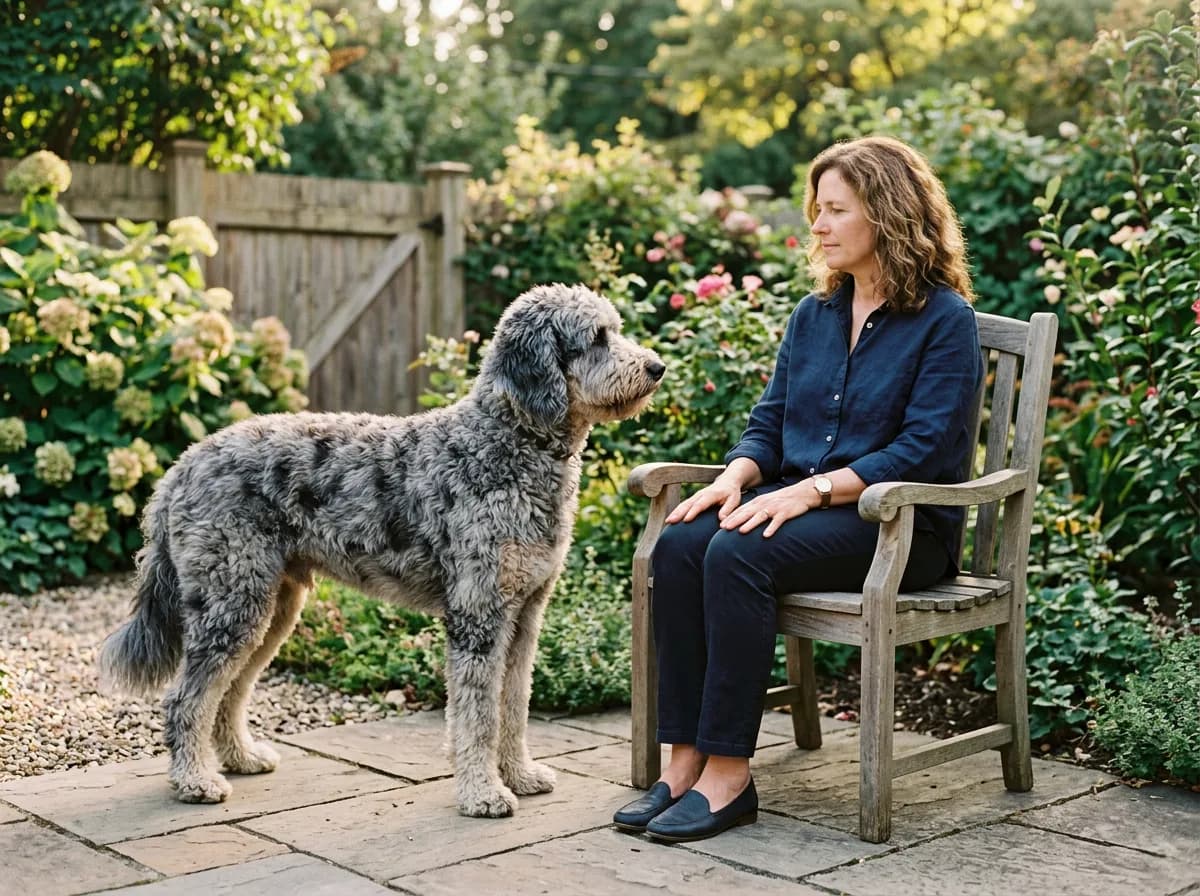
Searches for how big do aussiedoodle get and how big does an aussiedoodle get are almost always really asking about the standard class, since that is the version people picture. A full grown standard aussiedoodle is a genuinely large dog: knee-height on most adults, strong enough to pull on a leash, and heavy enough that lifting it into a car is a two-arm job.
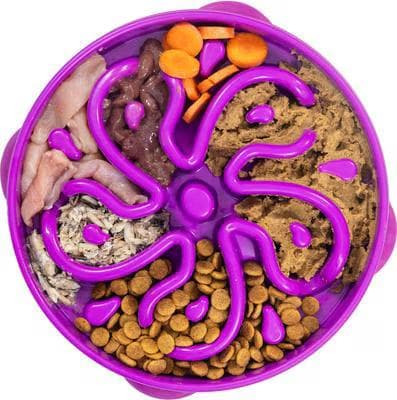
A maze-pattern slow-feeder bowl that makes fast eaters work for each bite, reducing the gulping and swallowed air that trigger regurgitation and vomiting. Holds up to 4 cups.
Petful may earn a commission when you click through to Chewy, at no extra cost to you.
- Toy Aussiedoodle full grown: height by 9 to 11 months, final weight by about 12 months
- Mini Aussiedoodle full grown: height by 11 to 13 months, final weight by 12 to 14 months
- Medium Aussiedoodle full grown: height by 12 to 14 months, final weight by 14 to 18 months
- Standard Aussiedoodle full grown: height by 12 to 16 months, final weight by 18 to 24 months
The rule underneath those bullets is simple: the bigger the dog, the longer the finish. A full size aussiedoodle from a Standard Poodle line can take twice as long to reach its final adult weight as a toy from the same program.
That timeline matters for more than curiosity. Growth plates, the soft cartilage zones at the ends of the long bones, stay open until a dog is done growing, and repeated high-impact work on open plates can strain developing joints. The window is short in a toy and long in a standard, which is why an adult Aussiedoodle can run trails that a 10-month-old version of the same dog should not. The American Kennel Club's puppy growth and development guidance covers the same principle across breeds.
Between roughly 8 and 14 months old, most Aussiedoodles go through a leggy adolescent stage where they look tall, narrow and slightly awkward. That is normal. The chest and shoulders broaden afterward, and an aussiedoodle adult typically looks proportionally correct only after the second birthday in the larger classes.
- Until your Aussiedoodle finishes growing, favor swimming, walking and controlled play over repeated jumping or long runs on hard ground. A standard stays in that careful phase months longer than a toy does, even though both are technically the same age.
How to Predict Your Aussiedoodle's Adult Size
You do not have to wait a year to know what you are raising. Three inputs, used together, get you within a few pounds: the parents, the generation label, and a single weigh-in at 16 weeks. No ranking page walks through all three, so here is the whole method.
Sizing gear to the finished adult rather than the puppy saves buying twice, and a collapsible travel bowl is the one item that fits every size class from toy to standard.
- Step 1: Average the parent weights. Ask the breeder for the recorded adult weight of both the sire and the dam. Add them, divide by two, and that midpoint is your starting estimate. Parent weight is the strongest single predictor available, and a breeder who will not share it is telling you something.
- Step 2: Adjust for the generation label. The F1 generation, meaning a first cross of a purebred Australian Shepherd and a purebred Poodle, is the most variable and usually lands near the parent average. An F1b Aussiedoodle belongs to the F1b generation, which takes an F1 back to a Poodle, and it leans toward the Poodle parent in both size and coat. If the aussiedoodle f1b listing you are looking at used a Miniature Poodle, expect a smaller adult than the parent average suggests.
- Step 3: Weigh at 16 weeks and multiply. At 16 weeks, multiply the weight by the factor for the expected size class. This is the same arithmetic any mini aussiedoodle weight calculator runs behind the scenes, and doing it yourself takes ten seconds.
| Size Class | Weigh At | Multiplier | Worked Example |
|---|---|---|---|
| Toy | 16 weeks | x 2.0 | 6 lbs becomes about 12 lbs |
| Mini | 16 weeks | x 2.0 | 12 lbs becomes about 24 lbs |
| Medium | 16 weeks | x 2.2 | 18 lbs becomes about 40 lbs |
| Standard | 16 weeks | x 2.5 | 24 lbs becomes about 60 lbs |
A worked example ties it together. Say the sire is a 40-pound Miniature Poodle cross and the dam is a 30-pound Mini American Shepherd, giving a parent average of 35 pounds. The puppy weighs 16 pounds at 16 weeks. Multiply the weight by 2.0 for the mini class and you get 32 pounds, which sits comfortably against the 35-pound parent average. Two independent methods agreeing is a strong signal.
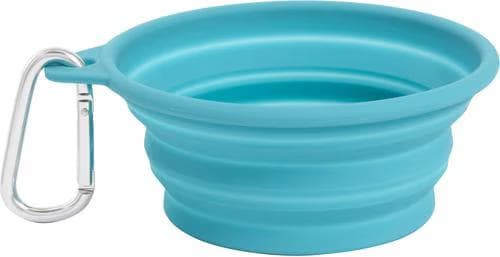
Collapsible silicone travel bowl with a carabiner that clips to a leash or bag, so your dog always has fresh water on walks, hikes, and car trips.
Petful may earn a commission when you click through to Chewy, at no extra cost to you.
- Both estimates agree within a few pounds: plan confidently around that figure
- The estimates disagree by more than 20 percent: trust the parent average, and re-weigh at 6 months
- Oversized paws and loose skin at 16 weeks usually mean there is more growing left than the math suggests
Generation deserves its own look, because it shifts the odds rather than the ceiling. An f1 aussiedoodle splits the difference between two very different parents and is the least predictable. Later and back-crossed generations tighten up, which is why multigenerational programs can quote narrower ranges honestly.
| Generation | What It Is | Size Tendency |
|---|---|---|
| F1 | Australian Shepherd x Poodle (first cross) | Most variable, usually near the parent average |
| F1b | F1 Aussiedoodle bred back to a Poodle | Leans toward the Poodle parent's size and coat |
| F2 | F1 Aussiedoodle x F1 Aussiedoodle | Wide spread, can favor either parent line |
| Multigen | Several Aussiedoodle generations bred together | Most consistent and predictable adult size |
The small-dog labels follow the same logic. An f1 mini aussiedoodle pairs a Miniature American Shepherd with a Miniature Poodle, while an f1b mini aussiedoodle takes that dog back to a Miniature or Toy Poodle, which usually shaves a few pounds off the adult and tightens the curl.
- No breeder can promise an exact adult size, because both parent breeds carry real variation. A good program gives you a range and the parents' recorded weights. A program that guarantees "under 20 pounds" in writing is selling certainty that genetics cannot deliver.
The 16-week multiplier behaves differently by class, and it is worth knowing where it breaks down. In the toy and mini classes it is close: a toy weighing 6 pounds at 16 weeks doubles to about 12 pounds and lands squarely inside the 10 to 15 pound band. In the medium and standard classes it runs high at the top end, because a big-framed standard puppy at 38 pounds at 4 months would multiply out past 90 pounds, and no Aussiedoodle finishes there. For the larger classes, treat the multiplier as a ceiling check rather than a point estimate, and give the parent average the final word.
Generation moves the estimate instead of replacing it. An F1, the first cross of a purebred Australian Shepherd and a purebred Poodle, sits close to the parent average with the widest spread around it, and littermates from a single F1 pairing can finish 10 pounds apart. An F1b takes that dog back to a Poodle, so three of its four grandparents are Poodles and the expected adult shifts toward whichever Poodle variety was used. Back-crossing to a Miniature Poodle typically pulls the estimate down by 10 to 20 percent from the parent average, and back-crossing to a Standard Poodle can push it up by about the same amount.
- Parent average: the strongest single input, but still plan on roughly plus or minus 15 percent
- 16-week multiplier: dependable for toy and mini, runs high at the top of the medium and standard bands
- Generation: shifts the estimate 10 to 20 percent toward the Poodle parent in an F1b, and widens the spread in an F1
- All three landing within a few pounds of each other: the most confidence available before 6 months old
What ranking pages never show is a reproducible way to predict where one puppy's adult size will land. They state adult ranges and then stop, which leaves you guessing inside a spread that can run 60 pounds wide. The method above is reproducible on purpose, because parent weights and generation are both knowable before you take the puppy home, and the 16-week weigh-in is a number you can produce yourself with a bathroom scale.
- Ask for both parents' recorded adult weights and the generation label while the litter is still on the ground. Those two figures alone put you within about 15 percent of the adult size, which is enough to decide whether the dog fits your car, your crate and your home before any money changes hands.
Toy Aussiedoodles: The Smallest Size Class
A toy Aussiedoodle stands 10 to 12 inches and weighs 10 to 15 pounds, making it the smallest class by a wide margin. Getting there requires a Toy Poodle in the line, usually through a back-cross rather than a first-generation pairing, because an Australian Shepherd bred directly to a Toy Poodle is not a responsible pairing on size grounds alone.

The honest caveat: "toy" is a marketing term here, not a standard. Some programs use it for anything under 15 pounds, others apply it to the bottom of their mini range, and a few use "teacup" for the same dogs at a higher price. When you see a toy aussiedoodle size quoted, ask for the specific parent weights rather than trusting the label. Petful’s guide to teacup Goldendoodle has the full breakdown.
The toy vs mini aussiedoodle question comes down to about 10 pounds and a Poodle variety. A toy uses a Toy Poodle and finishes at 10 to 15 pounds. A mini uses a Miniature Poodle and finishes at 15 to 35 pounds. The toy aussiedoodle full grown size is small enough to travel in an under-seat carrier, which the mini generally is not.
- Fits a 24-inch crate and most airline carriers
- Reaches full grown toy aussiedoodle weight earlier than any other class, usually by 12 months
- Keeps the same herding-bred energy in a much smaller body, so exercise needs do not scale down as much as the frame does
- More fragile around toddlers and larger dogs than the mini or medium classes
Smaller does not mean cheaper, either. Demand for the smallest doodles outstrips supply, so a toy aussiedoodle price frequently exceeds what the same program charges for a standard from the same litter line.
Mini Aussiedoodle Size at a Glance
The mini aussiedoodle is by far the most searched of the four classes, and the numbers are worth stating plainly here before you go deeper. A mini aussiedoodle full grown stands 12 to 18 inches at the withers and weighs 15 to 35 pounds, reaching adult height around 11 to 13 months. That is the answer to how big does mini aussiedoodle get, and it holds across most reputable programs.
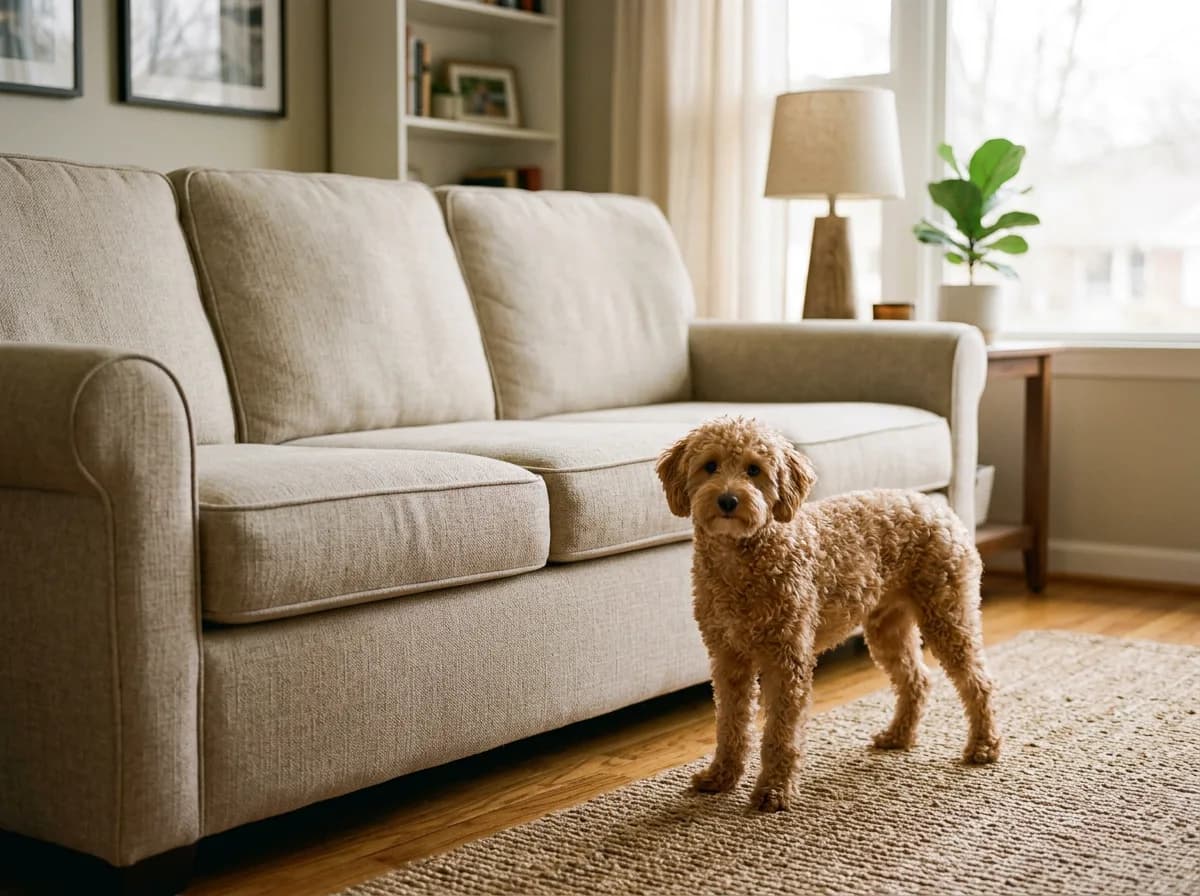
A full grown mini Aussiedoodle is small enough for apartment living and large enough to hike a full day, which is most of why the class dominates the breed's search demand. Coat type, energy level, grooming load and price all shift once you go this small, and those details deserve more room than a size reference can give.
For the complete breakdown, including a full mini aussiedoodle size chart, temperament and day-to-day care, see our dedicated mini Aussiedoodle size guide.
Does Size Change What an Aussiedoodle Costs?
Size and price are linked, but not in the direction most buyers expect. Smaller usually costs more up front: a mini aussiedoodle price often runs above a standard from the same breeder because compact doodles are in short supply. Ongoing spend runs the opposite way, since a 60-pound standard eats more, needs weight-dosed preventatives, and costs more per grooming visit.
Feeding gear scales with the dog as well, though a slow feeder bowl is worth having at any size because fast eating is a habit rather than a size problem.
- Food: a standard can eat three times what a toy eats over a year
- Flea, tick and heartworm preventatives: priced by weight band
- Grooming: a bigger coat means more time on the table and a higher fee
- Boarding and daycare: many facilities charge a large-dog surcharge
- Taller dogs often do better with an elevated bowl, which is one of the few pieces of kit a toy or mini genuinely does not need.
Anyone comparing aussiedoodle prices across programs will see the same pattern repeat, and mini aussiedoodle cost in particular tends to sit at the top of the range. We break down breeder ranges, regional variation and lifetime spend in our full Aussiedoodle price by size guide.
Some kit costs the same whatever the dog weighs. A pair of nail clippers works on a toy and a standard alike, and nail care is one of the few routines that does not scale with body size.
Choosing the Right Aussiedoodle Size for Your Home
Picking a class is really about matching the dog to your space, your schedule and your budget. A toy or mini suits apartments and frequent travel, a medium fits active families with a yard, and a standard needs room and real daily exercise to stay settled. Size interacts with everything else about the breed, so it is worth reading across the lanes before you commit.
- Wondering whether the breed suits your household, or how much it vocalizes? Household fit, energy level and barking are covered in our Aussiedoodle temperament guide.
- Curious how much coat care a bigger dog brings, or whether the standard class sheds? Coat type, shedding and grooming load live in our Aussiedoodle grooming and shedding guide.
- Still weighing the breed's overall trade-offs and downsides? The balanced full-breed picture is on the main Aussiedoodle breed guide.
- Crate size follows adult size, not puppy size. A wire crate with a divider panel grows with the dog and is the one purchase worth sizing up front.
- Harnesses are the opposite: buy to fit now and expect to replace at least once, because a no-pull harness sized for a puppy will not last the year.
- For a bigger standard in an open-plan house, an exercise pen is often more practical than a crate once the dog is past the chewing stage.
Whichever class you choose, the healthiest Aussiedoodle is the one kept lean for its build. Use these charts as a planning baseline, confirm both parents' recorded weights before you put down a deposit, and lean on your vet's body condition scoring rather than the scale alone as your puppy grows.
The standard Aussiedoodle is the largest class, at 19 to 25 inches and 45 to 70 pounds. A few programs produce oversized dogs past 70 pounds when both parents sit at the heavy end, but that is outside the typical range rather than a separate recognized class.
Height finishes first, between 9 and 16 months depending on class, and weight follows. Toys are done by about 12 months, minis and mediums by 12 to 18 months, and standards keep adding chest and weight until 18 to 24 months.
Yes, by roughly 10 percent. Males typically sit in the upper half of their class range for both height and weight, and females in the lower half. The gap is consistent across all four size classes but is easiest to notice in standards.
It is uncommon but possible. Both parent breeds carry genes for larger ancestors, so an F2 litter from two minis can occasionally throw a puppy that finishes above the mini band. This is exactly why multigenerational lines are more predictable on size than early generations.
No. The Aussiedoodle is a crossbreed, not a kennel club recognized breed, so no registry enforces height or weight. Every size label is a breeder convention, which is why parent weights are more reliable than the class name on a listing.
Size the sleeping setup to the adult rather than the puppy. A dog bed bought for a 15 pound mini will not stretch to a 60 pound standard, and this is the single most common thing owners end up buying twice.

Coreen Saito is a pet writer and longtime shelter volunteer with more than a decade in animal rescue. She covers cat behavior, breed care, and the small, ordinary science of sharing a life with companion animals, with a particular focus on honest takes about the products and decisions that actually matter. At home in Arizona, she's outranked by Mac (a dog with the loudest opinion in the house), Rebel (a cat who governs by quiet authority), and Meri (an orange tabby who runs the late shift and the laundry basket). She writes about all three, plus the rescues that keep coming through her life, at LifeWithMinty.com.
Sign up for expert-backed reviews and safety alerts all in one place.