Aussiedoodle Temperament: An Honest Personality Guide
An honest guide to Aussiedoodle temperament, covering the herding drive inherited from the Australian Shepherd, real daily exercise and enrichment needs, family and kid fit, separation anxiety, and the behavior problems that show up in adolescence.
Petful is reader supported. As an affiliate of platforms like Amazon and Chewy, we may earn a commission when you buy through links on this page. There is no extra cost to you.
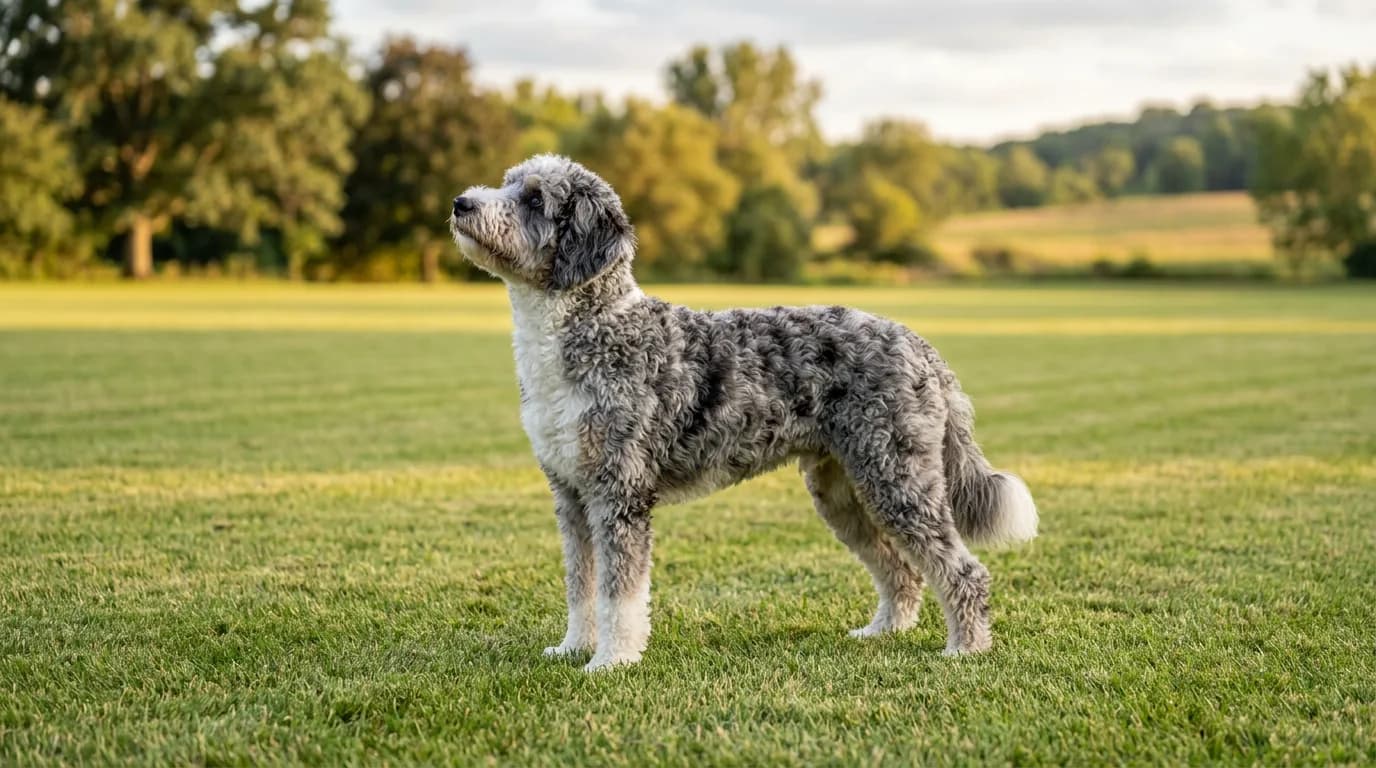
The Aussiedoodle temperament is the part of this cross that buyers most often get wrong, and it is the part that decides whether the next 12 to 15 years go well or badly. An Aussiedoodle is an Australian Shepherd crossed with a Poodle, which means you are not bringing home a low-effort teddy bear with a fun coat. You are bringing home a working herding dog in a curly wrapper.
This guide is deliberately honest about that. Breeder pages sell the smart, affectionate, velcro-companion half of the picture and go quiet on the heel nipping, the adolescent crash, and the alone-time problem. Both halves are real, and you deserve both before you put down a deposit.
- 1Aussiedoodles are highly intelligent, deeply bonded, and genuinely fun, and the same wiring produces real behavior problems when it goes unspent.
- 2The herding instinct from the Australian Shepherd side is a distinct trait, not just another word for high energy.
- 3Plan on 60 to 90 minutes of physical work plus 20 to 30 minutes of mental enrichment every day, not a walk around the block.
- 4Most do not settle into a calm adult temperament until 2 to 3 years old.
- 5This is a poor match for a household that is empty 10 hours a day.

Sign up for expert-backed reviews and safety alerts all in one place.
Aussiedoodle temperament at a glance
The Aussiedoodle is a cross between the Australian Shepherd and the Poodle, and its temperament reads exactly like that pairing. Expect a bright, intensely people-bonded, highly biddable dog with a live herding instinct, a strong work ethic, and very little tolerance for boredom. The core Aussiedoodle characteristics are problem-solving intelligence, close sensitivity to their handler's mood, and an energy level that has to be spent on purpose rather than waited out.
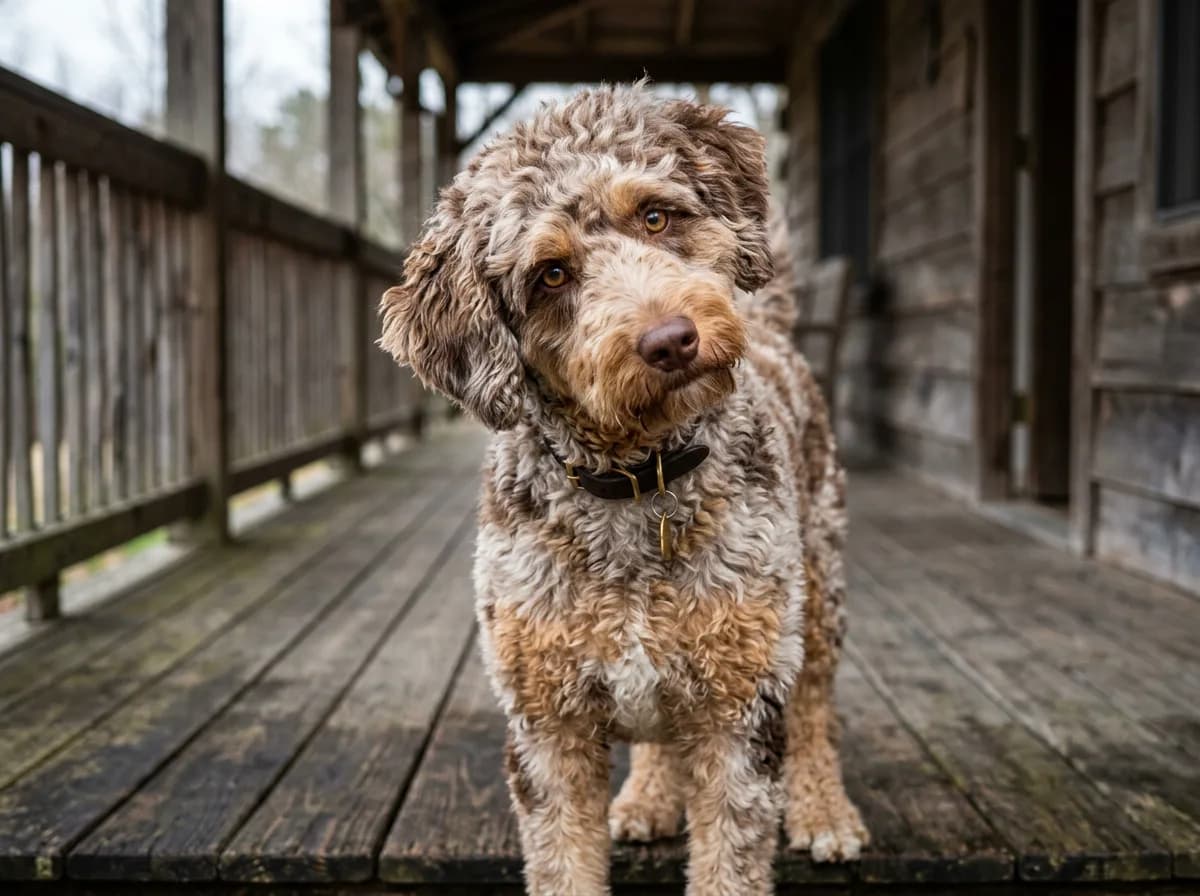
The Aussiedoodle traits that turn up in nearly every household, regardless of size or generation, are consistent enough to plan around:
- Intensely bonded. They pick their people and follow them room to room. This is the trait owners love and the trait that later becomes separation distress.
- Fast learners with a long memory. They pick up cues in a handful of repetitions, including the ones you did not mean to teach.
- Environmentally busy. They track movement, noise, and change constantly. A quiet dog lying down is usually a dog that has already worked.
- Sensitive to correction. Harsh handling shuts them down rather than straightening them out.
- Playful well past puppyhood. The goofy streak often lasts into year three and beyond.
Those Aussiedoodle personality traits are the raw material. What you actually live with depends on how much of that drive gets a legal outlet each day.
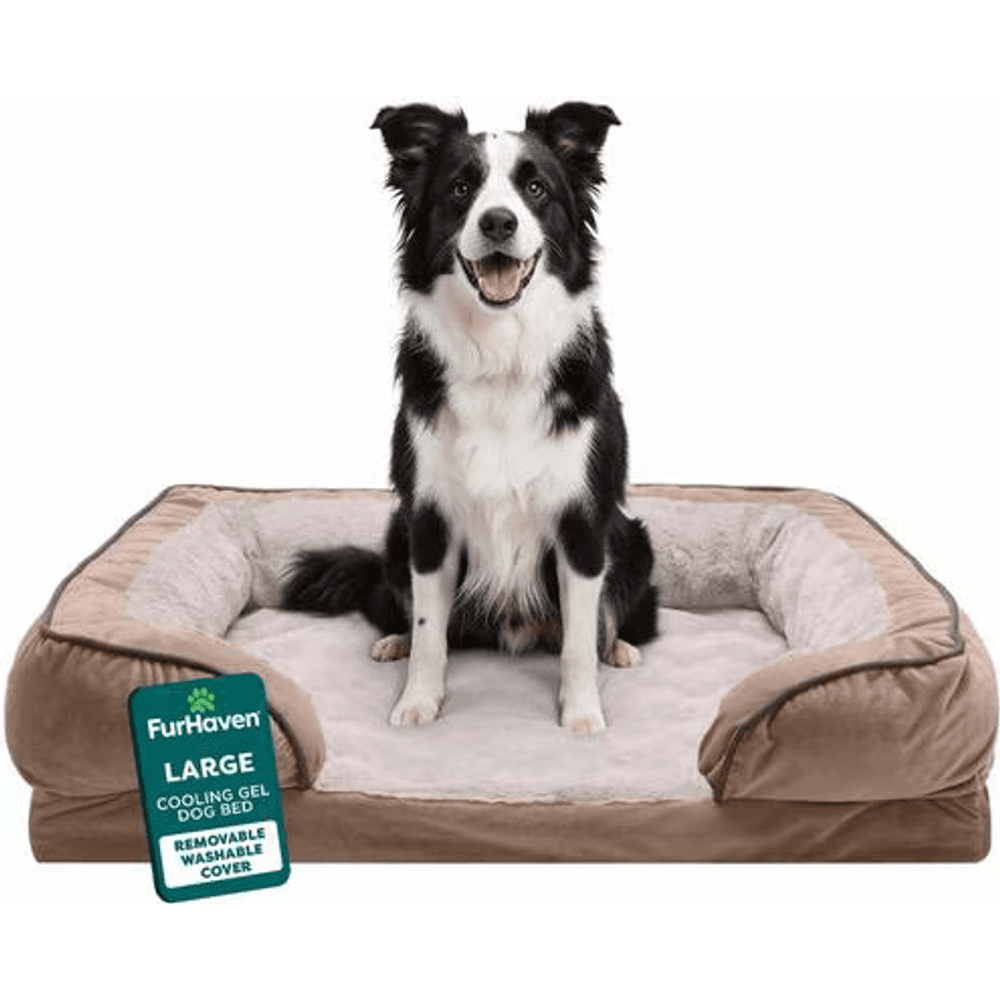
An orthopedic sofa bed with three bolstered sides for dogs who like to rest their head and joints against a cushion. The supportive foam base cradles hips and elbows, a comforting spot for an older or shaky dog to settle.
Petful may earn a commission when you click through to Chewy, at no extra cost to you.
| Trait | Typical rating | What it means day to day |
|---|---|---|
| Intelligence | 5/5 | Learns fast, gets bored faster, solves problems you did not set |
| Energy level | 5/5 | Needs daily hard exercise, not a stroll |
| Herding drive | 4/5 | Nipping, circling, and gathering behavior toward moving things |
| Affection with family | 5/5 | Velcro dog, wants to be in the room with you |
| Tolerance of being alone | 2/5 | Prone to separation anxiety without deliberate training |
| Friendliness to strangers | 3/5 | Often reserved at first, warms with socialization |
| Barking | 3/5 | Alert and vocal, but not a nuisance barker when exercised |
| First-time owner fit | 3/5 | Workable with real commitment, punishing without it |
- An Aussiedoodle from a health-tested, temperament-focused breeder with early socialization is a very different animal from a volume-bred puppy sold on looks. The cross is not standardized, so the source you buy from shapes temperament more than the name on the pedigree does.
What an Aussiedoodle is, in brief
An Aussiedoodle is a deliberate cross between an Australian Shepherd and a Poodle, bred since the 1990s as a companion dog. An f1 Aussiedoodle is the straight first cross, with one purebred parent of each type, and it is the most variable of the lot. An f1b Aussiedoodle is that first cross bred back to a Poodle, which tightens up the coat and shifts temperament a little toward the Poodle side. Multigen litters go further still. Generation labels change the odds, not the guarantee.
For the full breed history, the generation chart, and the complete care picture across every variety, the Aussiedoodle breed guide is the hub that owns that ground. This page stays on personality.
The herding half: what the Australian Shepherd brings
The herding drive an Aussiedoodle inherits from the Australian Shepherd side is not a quirk you can train away, and it shows up at home long before it would ever show up on a farm. It is a hardwired sequence: notice movement, move to control it, apply pressure until the movement stops. In a house with no sheep, the moving things are children, joggers, vacuum cleaners, cyclists, and the family cat. The Australian Shepherd herding drive is the single best predictor of what this cross will do with an empty afternoon, and the Australian Shepherd breed standard describes a dog built to work a full day, which is the half of the pedigree buyers tend to skip past.
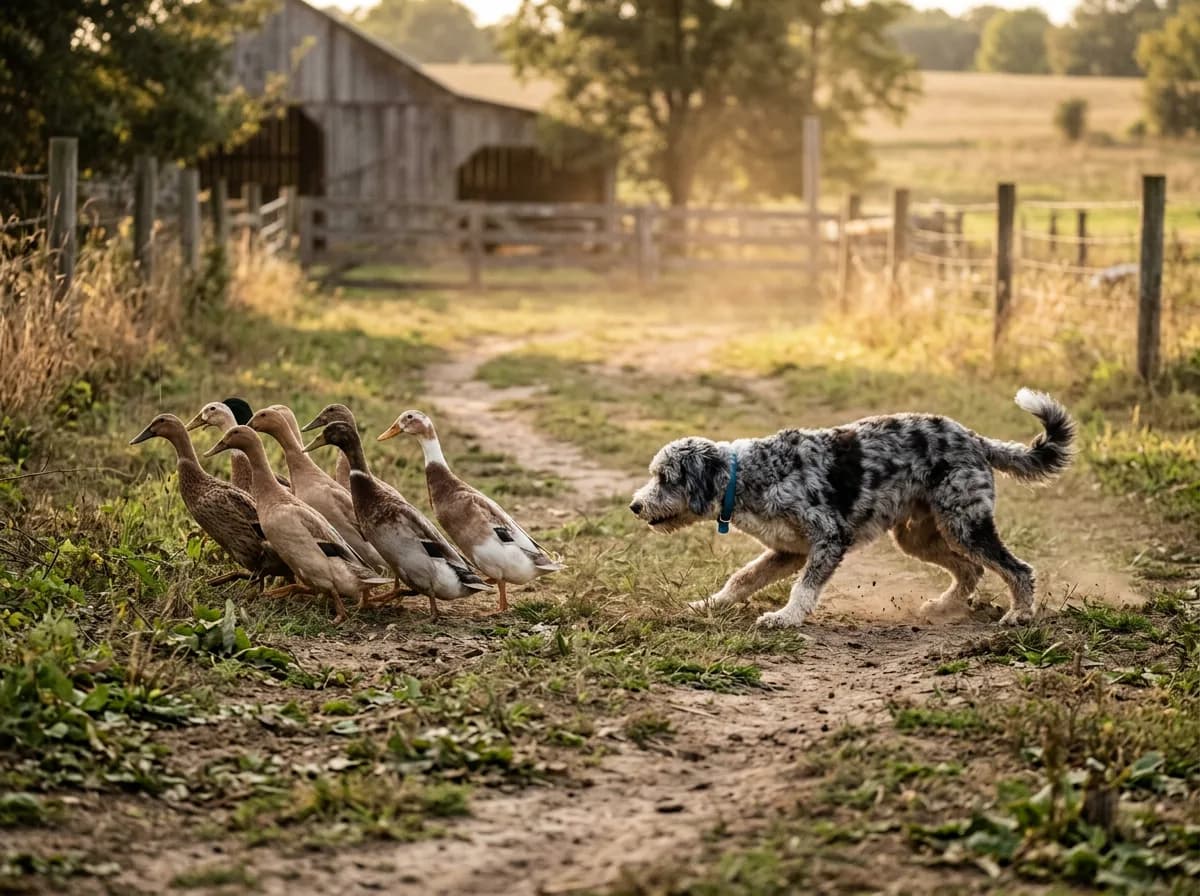
Herding drive is not the same thing as high energy, and collapsing the two is the biggest gap in the pages currently ranking for this topic. They describe the Aussiedoodle dog breed as high energy generically and never separate herding behavior from ordinary exercise needs. Ordinary energy is spent with a longer run. Herding is specific: heel nipping at moving legs, circling to gather people into a group, hard staring at whoever breaks away from the pack, and body-blocking at doorways. When you see those tells, redirect the herding into a job instead of punishing the dog for having instincts you bought.
Here is what each herding tell looks like, and the response that actually works:
- Heel nipping. Mouth contact at ankles or trouser hems when someone runs. Stop the movement instantly, cue a known behavior, and restart calmly. Running away rewards the sequence.
- Circling. Wide arcs around a group of people, tightening as the group spreads out. Give a mat or place cue and pay the settle.
- The eye. A still, hard stare at one moving person or animal. Interrupt early with a name cue. Left to build, staring escalates into chasing.
- Doorway gathering. Body-blocking at thresholds so nobody leaves the group. Train a formal wait at doors rather than shoving past.
- Vehicle and bike fixation. The most dangerous version of the same instinct, and the reason recall matters here more than in most crosses.
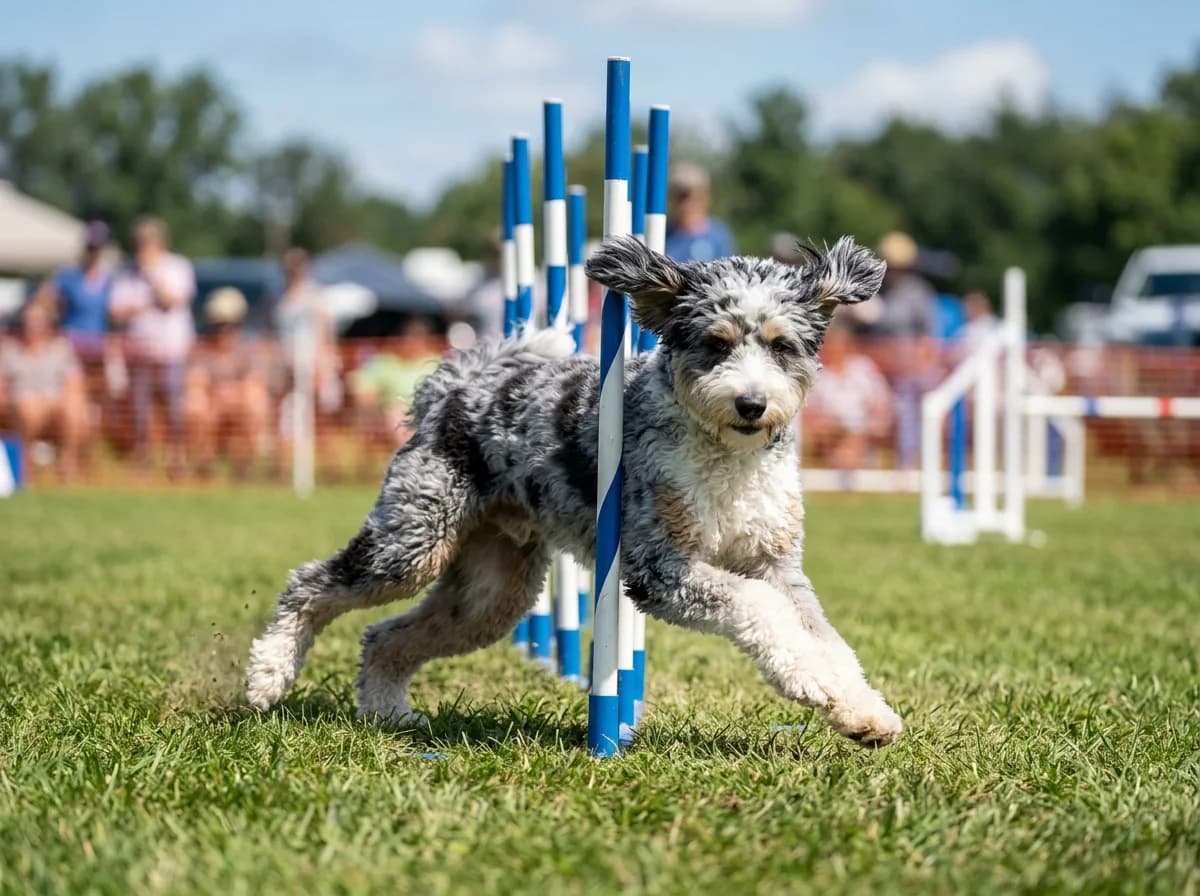
The Aussiedoodle breed does best when that drive is aimed rather than suppressed. Herding balls, flirt poles, scentwork, treibball, and formal trick training all consume the same instinct that would otherwise be spent on your calves. Fetch alone rarely does it, because fetch is a chase without the control phase the dog is actually built for.
- Correcting heel nipping harshly teaches a sensitive dog to distrust you without giving the drive anywhere to go. The behavior comes back louder, usually aimed at whoever corrects it least. Give the instinct a legal target every single day and the nipping fades on its own.
The Aussiedoodle mix inherits the Poodle side too, and that half is not passive. Poodles are water retrievers with serious problem-solving intelligence, so what you get is a dog that both wants to control movement and wants to figure things out. That combination is why boredom in this cross does not look like sleeping. It looks like a project.
Intelligence, trainability, and how much exercise they really need
At what age does an Aussiedoodle calm down? Most settle between 2 and 3 years old, and the honest age-staged timeline runs later than buyers expect. The puppy months are busy but manageable, the adolescent phase from roughly 6 to 18 months is the hardest stretch by a wide margin, and a genuinely settled adult arrives only once adolescence ends and social maturity begins. No ranking editorial page gives that calm-down timeline even though it is a live question people ask constantly. Anyone promising you a calm one-year-old is selling something.
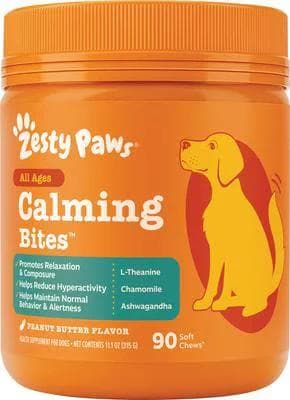
Peanut butter soft chews with L-theanine, chamomile, and ashwagandha to ease hyperactivity and support calm, relaxed behavior.
Petful may earn a commission when you click through to Chewy, at no extra cost to you.
- 8 to 16 weeks. Sponge stage. Socialization matters more than obedience. Every new surface, sound, and calm stranger is deposit in the bank.
- 4 to 6 months. Fast learning, short attention. Teething drives mouthing. Build the alone-time habit now, before you need it.
- 6 to 18 months. The adolescent phase. Energy peaks, known cues evaporate, herding behavior sharpens, and most rehomings happen. Consistency here is the whole game.
- 18 months to 2 years. Recovery. The dog you trained starts showing up reliably.
- 2 to 3 years. Settled adult temperament. Still active, but with an off switch that finally works.
An honest daily load for a standard-sized dog is 60 to 90 minutes of real physical exercise plus 20 to 30 minutes of mental enrichment, not a vague high energy label on a breeder page. Mental enrichment means scentwork, puzzle feeders, shaping sessions, chew projects, and short problem-solving games. Ten minutes of hard thinking takes more out of this cross than 30 minutes of walking, and the best days stack both.
| Size | Physical exercise | Mental enrichment | Good outlets |
|---|---|---|---|
| Standard | 60-90 minutes | 20-30 minutes | Running, hiking, herding balls, agility, treibball |
| Miniature | 45-60 minutes | 20-30 minutes | Brisk walks, flirt pole, scentwork, trick chains |
| Toy | 30-45 minutes | 15-20 minutes | Walks, indoor shaping, puzzle feeders, short runs |
| Senior | 20-40 minutes | 15-20 minutes | Sniff walks, gentle swimming, low-impact nosework |
Aussiedoodle training is genuinely enjoyable because the dog meets you halfway. The Poodle side brings problem-solving, the Australian Shepherd side brings a strong desire to work with a handler, and the result learns new cues in a handful of reps. The catch is symmetrical: they learn the wrong lesson just as fast, and because they are sensitive, heavy-handed correction produces a shut-down dog rather than a compliant one. Positive reinforcement is not the soft option here, it is the effective one.
Recall training deserves its own line item. A cross with this much movement sensitivity will chase a cyclist, a deer, or a child on a scooter, and a dog that has practiced ignoring you at 40 yards will do it again at a road. Build recall on a long line, pay it heavily, and never call the dog to end something fun. Proof it against motion specifically, because motion is the trigger this cross is built to answer.
How to train a mini Aussiedoodle is the same job as training a standard one, just in a smaller body with the same brain. Miniature dogs get less structure because their misbehavior is less physically inconvenient, and that leniency is exactly why small Aussiedoodles so often end up pushier than their larger siblings.
- Keep sessions short. Five to ten focused minutes beats a long repetitive drill a clever dog will start editing.
- Train an off switch on purpose. Reward settling on a mat as an active behavior, not as the thing that happens when the dog finally crashes.
- Vary the reinforcer. Food, play, and access to the thing they want all work. Predictable rewards get boring fast.
- Proof against distraction in stages. Perfect in the kitchen means nothing at the park until you have done the work in between.
- Enroll in a real class. Structured socialization plus obedience in one place is worth more than either alone.
- A stepped interactive puzzle gives this brain something to solve, and most Aussiedoodles work through the easy levels within a week.
- A snuffle mat turns one meal into fifteen minutes of scent work, which tires a herding cross far more than the same time on a lead.
- Owners who want to push the training further sometimes add talking buttons, which suit a cross this biddable better than most breeds.
- With most breeds, mental work is a nice-to-have. With this one it is load-bearing. An Aussiedoodle that gets physical exercise but no thinking work stays wired, and the leftover drive goes into the behaviors listed further down this page.
Are Aussiedoodles good family dogs?
Yes, for the right family, and the qualifier is doing real work in that sentence. An Aussiedoodle in an active household with older children, a flexible schedule, and someone who enjoys training is close to an ideal family dog: affectionate, funny, endlessly involved, and safe with people. The same dog in a quiet house with two absent adults and a toddler is where the rehoming stories come from.
Are Aussiedoodles good house dogs? Genuinely yes, and this surprises people. Indoors they are clean, relatively quiet, and happy to settle at your feet, provided the day's work has been done. The problem is never the house. The problem is the eight hours before you walked through the door.
The family and kid fit question turns on one specific risk: heel nipping. A herding-bred adolescent that sees young children running, squealing, and scattering will often try to control that movement the only way it knows, by nipping at heels and ankles. It is not aggression and it carries no malice, but a toddler cannot tell the difference, and neither can a bruise. Families with children under about six should plan for active management, not hope.
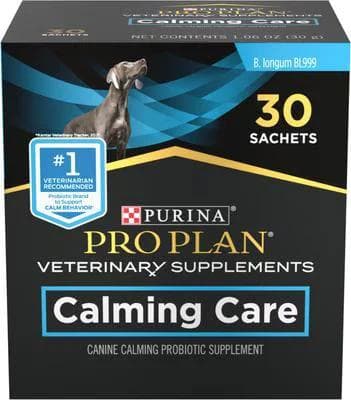
A vet-recommended probiotic supplement that helps dogs manage anxious behaviors and stay calm during stressful events like fireworks.
Petful may earn a commission when you click through to Chewy, at no extra cost to you.
- The trigger is fast movement plus noise, so the fix is structural rather than corrective. Use a baby gate during the loudest hour of the day, teach children to stop moving and fold their arms instead of running, and give the dog a settle spot with a chew while young children play. The nipping fades as adolescence ends, provided it never gets rehearsed for a year first.
Aussiedoodle temperament with other dogs is usually social and playful when socialization started early, and multi-dog households often work well. The fit with cats and other dogs in the same household needs more thought than owners expect. A resident cat that bolts will trigger exactly the same gathering instinct a running child does, so introductions run slow, behind barriers, and the cat needs vertical escape routes the dog cannot follow. Small pets in cages are best kept out of the dog's line of sight entirely.
- 1Score your household honestly before you commit, not after the puppy arrives.
- 2Alone-time tolerance: can someone be home for most of the day, or can you fund a walker or daycare?
- 3Weekly enrichment: can you deliver 7 to 10 hours of combined exercise and thinking work every week, in all weather?
- 4Children: are they over six, or can you manage a nipping adolescent around a toddler for a year?
- 5Resident cat: does it have height, escape routes, and a dog-free room?
Run that household-fit audit before the deposit. Alone-time tolerance is the item people fudge most, because the answer they want is that the dog will adapt. Weekly enrichment is the item they underestimate, because seven to ten hours sounds small until it is raining on a Wednesday. The resident cat question is the one that gets discovered too late, usually in week two.
The Aussiedoodle pros and cons in a family home are easy to state plainly:
- Pro: deeply affectionate, involved in everything, and genuinely good with respectful children.
- Pro: trainable enough that good manners are achievable for a committed first-time owner.
- Pro: low-shedding coat that suits many households with mild allergy concerns.
- Con: herding behavior aimed at running children during adolescence.
- Con: poor tolerance of long solo days, with separation anxiety common.
- Con: an exercise and enrichment bill that does not go down on busy weeks.
Two facts about Aussiedoodles matter more than any breed-average trait list. The first is that individual variation inside this cross is enormous, so meeting the actual parents tells you more than any generation label. The second is that among the more useful Aussiedoodle facts for buyers, temperament tracks the Australian Shepherd parent's working line closely. A puppy out of a genuine working Aussie is a different proposition from one out of a show or companion line, and reputable breeders will tell you which they have.
Common Aussiedoodle behavior problems
Ask what the downside to Aussiedoodles is, and the only honest account online is a Reddit thread ranking first and feeding the AI Overview. No editorial competitor structures those owner-reported downsides into anything usable, so here is that list for an Aussiedoodle specifically, ordered by how often owners actually raise it. Almost none of these are temperament faults. They are the predictable output of an intelligent working cross whose needs went unmet.
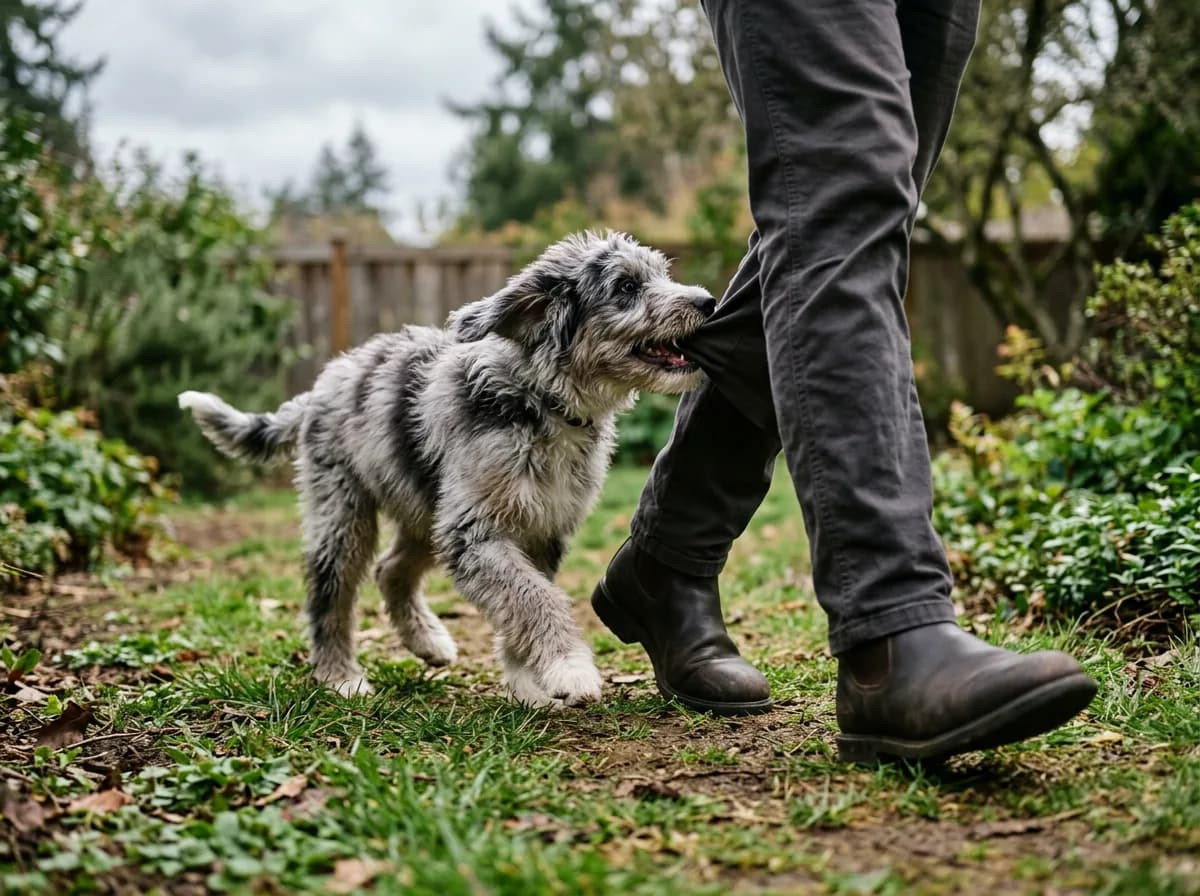
The Aussiedoodle behavior problems owners report most, and what is actually driving each:
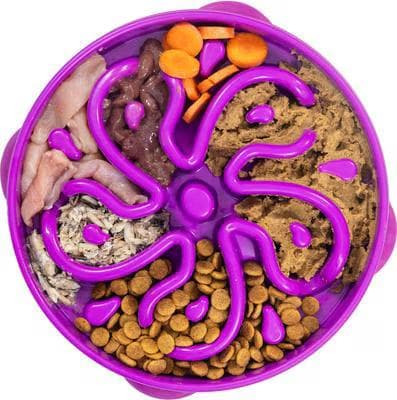
A maze-pattern slow-feeder bowl that makes fast eaters work for each bite, reducing the gulping and swallowed air that trigger regurgitation and vomiting. Holds up to 4 cups.
Petful may earn a commission when you click through to Chewy, at no extra cost to you.
- Heel nipping and mouthing. Herding instinct plus adolescence plus over-arousal. Redirect to a legal target and manage the trigger.
- Separation distress. Vocalizing, destruction near doors, and house-training regression that happens only when the dog is alone.
- Chewing and shredding. Under-exercise and under-stimulation. Rarely spite, always arithmetic.
- Reactivity on lead. Movement sensitivity plus frustration at being unable to control what it can see.
- Counter-surfing and door-dashing. A tall, clever, fast dog doing exactly what has worked before.
- Fixation on cars, bikes, and scooters. The most dangerous expression of the drive and the one to interrupt earliest.
- Resource guarding. Less common, but real, and worth professional help early rather than late.
- For the dog that cannot settle, a stuffed and frozen rubber chew toy gives the mouth a legal job and breaks the nipping habit faster than correction.
Mini Aussiedoodle behavior problems are the same list, not a shorter one. Smaller dogs get away with more for longer because a 20-pound dog body-blocking a doorway is easy to step over, so the behavior rehearses unchallenged for months and arrives fully built.
Separation anxiety deserves its own paragraph, because it is the item that ends the most placements. This cross bonds hard and fast, and being left is genuinely difficult for many of them. Structured alone-time training starts on day one and is built in seconds, then minutes, rewarding calm rather than testing endurance. Make departures and arrivals boring, exercise before you leave, and hand over a chew or puzzle only at the moment you go. True panic is a welfare problem, not a manners problem, and it responds to a structured plan rather than to being left to cry it out. The veterinary behavior guidance from Cornell's Riney Canine Health Center is a sound starting point when the distress is severe.
- Not enough physical work, not enough mental work, or too much time alone. Fix those three and most of these behaviors shrink without any dedicated behavior training. Chase the symptoms while the causes stand, and you will be chasing them for a decade.
Do Aussiedoodles bark a lot?
Aussiedoodles bark a moderate amount, and whether that lands as "a lot" depends mostly on how the day was spent. They are alert dogs with a herding parent's watchfulness, so they will announce the doorbell, a delivery van, a squirrel with the wrong attitude, and anyone approaching the house. Most settle quickly once they have registered that you heard them.
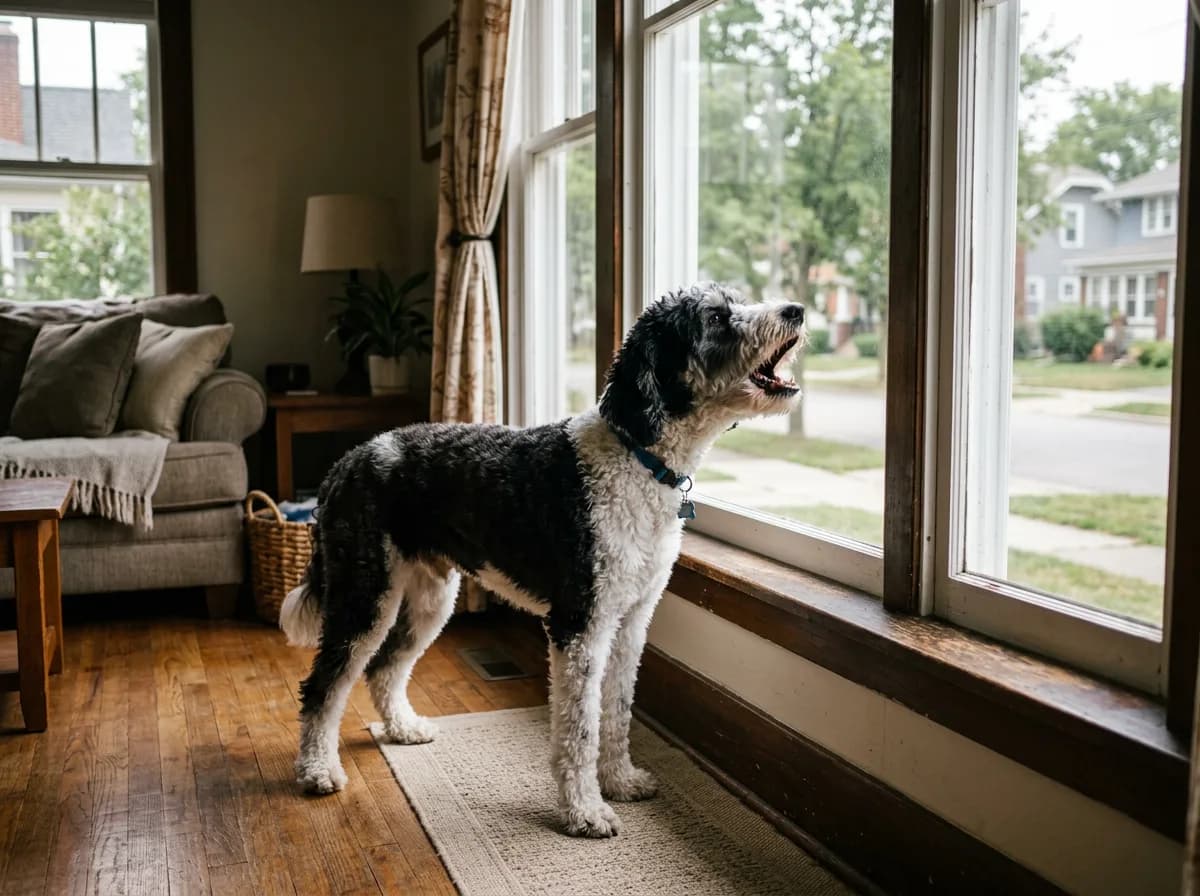
Nuisance barking in this cross is almost always a symptom rather than a trait:
- Boredom barking at nothing in particular, usually in the late afternoon of an under-worked day.
- Alert barking that never switches off, which is a training gap rather than a volume problem.
- Frustration barking on lead, aimed at things the dog wants to move toward and cannot.
- Distress barking when left alone, which is a separation problem wearing a barking costume.
Address the cause and the noise follows. Suppressing the sound with corrections while the underlying feeling stands makes a sensitive dog worse, not quieter. Apartment dwellers should assume a vocal adolescent phase and budget training time for it rather than hoping to get lucky.
Do mini and toy Aussiedoodles have a calmer temperament?
No, and this is one of the most persistent myths in the doodle market. The mini Aussiedoodle temperament is the standard temperament in a smaller container: the same intelligence, the same herding instinct, the same need for a job. What changes is the absolute exercise requirement, not the intensity of the drive behind it. A miniature needs less distance covered, but it does not need less thinking, less structure, or less socialization.
The mini Aussiedoodle personality can actually read as busier than a standard's, for two reasons. Smaller dogs are often under-trained because their pushiness is easy to absorb, and Miniature Poodle genetics can add a layer of sensitivity and vocal reactivity on top of the Aussie watchfulness. The result is a small dog with a big opinion about the postman.
- Same drive, smaller tank. Plan 45 to 60 minutes of physical work rather than 60 to 90, with identical enrichment.
- More sensitivity, not less. Miniatures often startle more easily and need more careful socialization.
- More vocal, on average. Alert barking tends to run higher in the smaller sizes.
- Apartment-capable, not apartment-easy. Size makes the space work; the schedule still has to.
- If you want a genuinely lower-energy dog, choose a lower-energy cross rather than a smaller version of a high-drive one. Buying down in size to buy down in intensity is the most common disappointment in this breed group.
Aussiedoodle vs other doodles on temperament
Which is the calmest doodle breed? On average, the Bernedoodle, and the Aussiedoodle is not close to the top of that list. Doodle temperament tracks the non-Poodle parent, so a mountain-dog cross defaults calmer than a herding cross, and a retriever cross lands in between. That comparison is where most buyers should start, because picking on coat or color and hoping temperament sorts itself out is how mismatches happen.
| Cross | Non-Poodle parent | Default energy | Signature trait | Calmer than an Aussiedoodle? |
|---|---|---|---|---|
| Aussiedoodle | Australian Shepherd | Very high | Herding and movement control | Baseline |
| Bernedoodle | Bernese Mountain Dog | Moderate | Mellow, slower to mature | Usually yes |
| Labradoodle | Labrador Retriever | High | Retrieving and social exuberance | Slightly |
| Goldendoodle | Golden Retriever | High | Eager-to-please softness | Slightly |
Bernedoodle vs Aussiedoodle is the clearest contrast in the group. The Bernedoodle temperament is famously mellow and slow to mature, with a strong lean toward lying near you rather than organizing you. Labradoodle vs Aussiedoodle is a subtler difference of drive type rather than drive volume: the Labradoodle temperament is built on retrieving, which is a chase-and-return loop, while the Aussiedoodle is built on controlling movement, which is a chase-and-contain loop. Both are busy. Only one keeps trying to organize your household. Petful’s guide to Bernedoodle temperament has the full breakdown.
The stubborn streak people report in this cross is worth naming properly, because it is almost always a misdiagnosis. An Aussiedoodle that stops responding to known cues is usually under-stimulated rather than defiant. A dog this intelligent will disengage from a handler who repeats the same drill, and disengagement reads exactly like stubbornness from the far end of the lead. Raise the difficulty, change the reinforcer, or shorten the session, and the stubborn dog generally reappears as the clever one.
Aussiedoodle vs Goldendoodle: which is the better fit?
Which is better, an Aussiedoodle or a Goldendoodle? Neither is better outright, and the answer is decided by your schedule rather than by the dogs. The Goldendoodle's Golden Retriever half brings a softer, more forgiving default: friendlier with strangers, more tolerant of an inconsistent routine, and less inclined to invent work. The Aussiedoodle brings more drive, more precision, and more upside if you actually want a training partner.
Choose the Goldendoodle if you want an easygoing family dog and your weeks are unpredictable. Choose the Aussiedoodle if you want a dog that does things with you, and you can commit to daily physical and mental work through a long adolescence. The overlap between the two is large enough that the individual puppy and its breeder matter more than the label, but the averages point in different directions and it is worth respecting them.
How big Aussiedoodles get
Aussiedoodle size follows the Poodle parent almost entirely. A standard Aussiedoodle typically lands between 45 and 70 pounds, a miniature between 20 and 40, and the smallest crosses below that. A full grown Aussiedoodle reaches adult height by about 12 months and fills out through the second year, which is also why the adolescent phase feels so long: the body finishes well before the brain does.
Growth charts, adult-weight prediction, and the full size-class breakdown are covered in our dedicated size guide. See how big Aussiedoodles get for the month-by-month numbers.
Mini and toy Aussiedoodles
A mini Aussiedoodle comes from a Miniature Poodle parent and a toy Aussiedoodle from a Toy Poodle parent, and the two size classes behave more alike than their labels suggest. Teacup Aussiedoodle is a marketing term rather than a recognized class, and dogs sold under it are often bred down aggressively enough to carry extra health risk, so treat that word as a warning rather than a feature.
For size-class definitions, adult weights, apartment fit, and what to ask a breeder about the smaller crosses, the mini Aussiedoodle size guide covers that ground properly.
Coat colors and merle patterns
A blue merle Aussiedoodle is the pattern this cross is best known for, inherited straight from the Australian Shepherd side, while a black Aussiedoodle, red merle, tricolor, and parti coats are all common. Colour has no reliable relationship to temperament, and any breeder pricing a merle Aussiedoodle higher on personality grounds is selling a story.
Merle to merle breeding is never acceptable. Pairing two merle parents produces double merle puppies with a high risk of deafness, blindness, and eye malformation, and no responsible breeder does it under any circumstances. If a breeder advertises a merle-to-merle litter, or cannot tell you the coat genetics of both parents, walk away from that litter entirely and do not take a puppy out of pity.
Full color genetics, pattern names, and what to verify before a deposit are covered in our Aussiedoodle coat colors guide.
Shedding, coat care, and grooming
Do Aussiedoodles shed? Lightly, and less than an Australian Shepherd, but Aussiedoodle shedding is never truly zero and varies by generation and coat type. How much do Aussiedoodle shedding levels vary in practice? Enough to matter, because a tight wool coat traps loose hair in the curl while a straighter hair coat drops it on the floor, and the full shedding breakdown by coat type belongs in our grooming guide rather than on this page. Are Aussiedoodles hypoallergenic? No dog is, and the Aussiedoodle hypoallergenic claim really means lower dander and less loose hair, which helps many mild allergy sufferers and not all of them.
Aussiedoodle grooming is the practical cost people underestimate: most need brushing several times a week and a professional groom every six to eight weeks, and a neglected coat mats painfully. Choosing the best brush for Aussiedoodle coats depends on which type you have, with a slicker plus a metal comb doing most of the work on wool and fleece, and the Aussiedoodle shedding and grooming guide is built to answer that properly.
Health and lifespan
Aussiedoodle life expectancy generally runs 10 to 13 years, with the smaller crosses at the longer end. The lifespan of mini Aussiedoodles often reaches 12 to 15 years, following the usual pattern of small dogs outliving larger ones. Both parent breeds contribute conditions worth screening for, and the Australian Shepherd side in particular carries the MDR1 drug-sensitivity gene that changes how some common medications must be dosed.
Health screening panels, condition detail, and the questions to ask a breeder are covered in our Aussiedoodle health and lifespan guide, which is written under a veterinary byline.
What an Aussiedoodle costs
Aussiedoodle price from a health-testing breeder generally runs in the low-to-mid four figures, with mini Aussiedoodle price often sitting higher than standard because demand for the smaller sizes is stronger. The purchase figure is the smaller half of the story: Aussiedoodle cost over a first year includes grooming every six to eight weeks, training classes, food, and routine veterinary care.
For current price ranges by size and color, plus a realistic first-year budget, see what an Aussiedoodle costs.
Frequently asked questions
They can be, but only for a committed one. Their trainability and desire to work with a handler make them rewarding to teach, and a first-time owner who exercises the dog properly and enrolls in a class usually does well. A first-time owner who expected a low-effort companion will struggle badly through adolescence.
Often yes, with slow introductions and management. The complication is the herding instinct: a cat that runs triggers the same chase-and-control sequence a running child does. Give the cat height, escape routes, and a dog-free room, introduce behind a barrier, and never leave a young dog loose with a nervous cat.
Aggression is not typical of this cross. They are more likely to be reserved with strangers than hostile. Nipping and herding contact are frequently mistaken for aggression but are instinct rather than hostility. Genuine aggression usually traces to fear, poor breeding, or missed socialization, and warrants a qualified behaviorist rather than a correction.
Most are enthusiastic cuddlers once the day's work is done. They are velcro dogs that want physical closeness and will lean, follow, and settle against you. The same attachment is what makes long solo days difficult for them, so treat the cuddliness and the alone-time problem as two sides of one trait.
The overlap is large and the individual dog matters more than sex. Owners often describe males as goofier and slower to mature, and females as a little more independent and quicker to settle. Neutering status, early socialization, and daily routine influence calmness far more than sex does.
Yes, if the schedule works. Space is not the limiting factor; exercise, enrichment, and alone time are. A miniature with a committed owner does well in an apartment, while a standard left alone all day will struggle in a house with a large yard. Budget for a vocal adolescent phase and train the settle deliberately.
Not necessarily, and a second dog is not a fix for separation anxiety. Distress at being left is usually about the absent person, not about solitude, so adding a dog often adds a second set of needs without solving the first. Structured alone-time training is the real answer.
An Aussiedoodle is a genuinely excellent dog for the household that wants one. It is affectionate, brilliant, funny, and endlessly willing to do things with you. It is also a herding cross with a long adolescence, a real enrichment bill, and a low tolerance for being left, and none of that is fixable by hoping. Match the dog to the life you actually have and this is one of the best companions you will ever own.

Coreen Saito is a pet writer and longtime shelter volunteer with more than a decade in animal rescue. She covers cat behavior, breed care, and the small, ordinary science of sharing a life with companion animals, with a particular focus on honest takes about the products and decisions that actually matter. At home in Arizona, she's outranked by Mac (a dog with the loudest opinion in the house), Rebel (a cat who governs by quiet authority), and Meri (an orange tabby who runs the late shift and the laundry basket). She writes about all three, plus the rescues that keep coming through her life, at LifeWithMinty.com.
Sign up for expert-backed reviews and safety alerts all in one place.