Aussiedoodle Price: Puppy Cost and First-Year Budget
The Aussiedoodle price runs about $1,500 to $5,000 for a puppy, and far less through rescue. See how size, generation and coat color move the number, what an ethical breeder's price covers, and the real first-year and lifetime cost of ownership.
Petful is reader supported. As an affiliate of platforms like Amazon and Chewy, we may earn a commission when you buy through links on this page. There is no extra cost to you.
The Aussiedoodle price for a well-bred puppy runs roughly $1,500 to $5,000, and most family buyers land between $2,000 and $3,500. An Aussiedoodle is an Australian Shepherd crossed with a Poodle, and the number on the breeder's contract moves with size, generation, coat color, and how much health testing the breeding pair actually passed. This guide prices each of those variables, then carries the arithmetic past the puppy into a realistic first-year budget and a full lifetime total.
Search results for aussie doodle price are dominated by individual breeder listing pages, each quoting its own program. What follows is a neutral read of what buyers are paying, what an ethical breeder's price covers that a bargain listing does not, and what the same dog costs through rescue instead. If you want the full breed background first, our Aussiedoodle breed guide covers temperament, health, and history in depth.
- 1An Aussiedoodle puppy typically costs $1,500 to $5,000, with most pet-home buyers paying $2,000 to $3,500.
- 2Smaller costs more: mini and toy Aussiedoodles usually price above standards from the same litter program, and blue merle or tri color coats add a premium.
- 3Adoption through an Aussiedoodle rescue runs about $200 to $600, while lifetime ownership lands between $20,000 and $38,000.

Sign up for expert-backed reviews and safety alerts all in one place.
How much does an Aussiedoodle cost?
How much do Aussiedoodles cost? A well-bred Aussiedoodle puppy costs $1,500 to $5,000, and most family buyers pay $2,000 to $3,500. That aussiedoodle price band buys a puppy from a breeder who health-tests both parents, raises the litter indoors, and sends the dog home vaccinated, dewormed, microchipped, and covered by a written health guarantee. Anything advertised far below the band is not a discount on the same product, it is a different product.
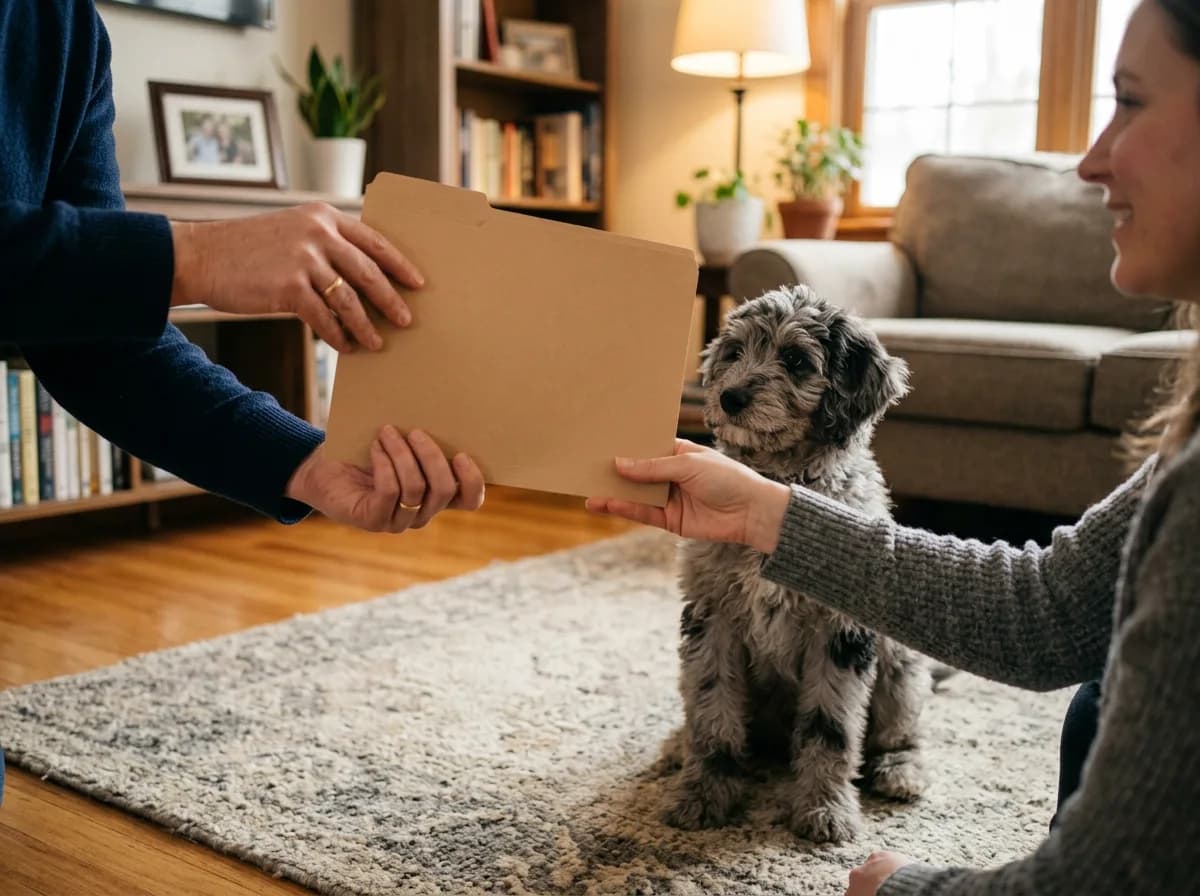
The spread is wide because an Aussiedoodle is not one dog. A 55-pound standard from a first-generation cross and a 14-pound toy from a multigenerational program sell into different markets, even when the same breeder produced both. When shoppers ask how much are Aussiedoodles, the honest answer is that four variables set the number rather than one:
- Size: Standard, mini, toy, and micro mini Aussiedoodles are priced separately, and the smaller classes usually cost more.
- Generation: An F1 Aussiedoodle is a straight Australian Shepherd to Poodle cross. Later generations that lock in a lower-shedding coat cost more.
- Coat color and pattern: Solid black or brown sits at the baseline. Blue merle, red merle, and tri color coats carry a premium.
- Health testing: OFA health testing, eye clearances, and DNA panels on both parents cost a breeder real money before a single puppy sells.
A fair aussiedoodle puppy cost is really an itemized bill, not a sticker. Before you compare two quotes, confirm that both of them include the same things, because breeders who charge less often include less:
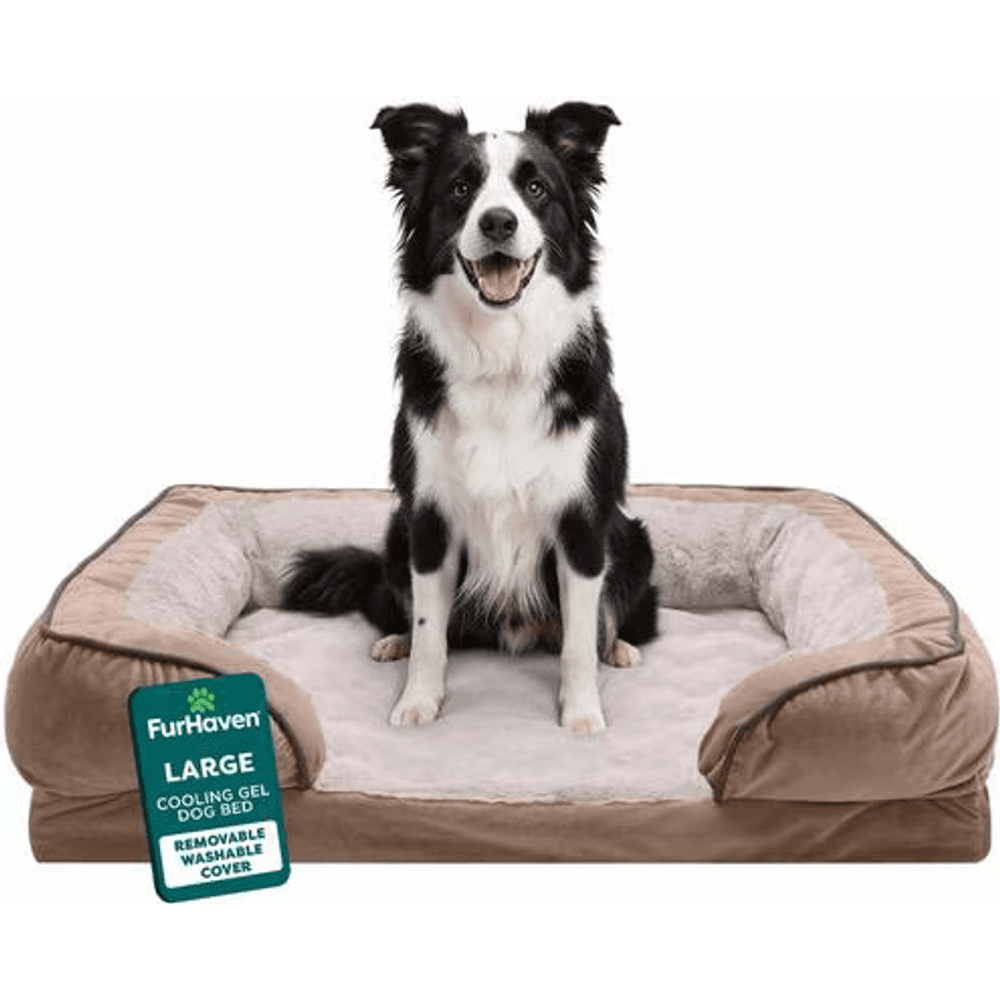
An orthopedic sofa bed with three bolstered sides for dogs who like to rest their head and joints against a cushion. The supportive foam base cradles hips and elbows, a comforting spot for an older or shaky dog to settle.
Petful may earn a commission when you click through to Chewy, at no extra cost to you.
- Age-appropriate vaccinations and deworming
- Microchip plus registration paperwork
- A written health guarantee, commonly one to two years
- Verifiable OFA health testing results on both parents
- A veterinary exam within days of pickup
- A lifetime take-back commitment if your circumstances change
Seen that way, the price of Aussiedoodle puppies mostly reflects what the breeder spent before you arrived. The parent breeds set the baseline expectations for temperament and structure, and the AKC parent breed standards section documents both the Australian Shepherd and the Poodle behind the cross. A breeder who can talk fluently about both parent breeds, and produce paperwork for both, is usually the one whose aussiedoodle puppy price holds up under scrutiny.
One search-behavior note worth knowing before you shop: plenty of buyers type aussie doodle price as two words, and that misspelling pulls up a different mix of breeder listing pages than the one-word spelling does. The dogs are identical, and so are the price bands. What changes is which programs surface, so run both spellings before you conclude that $2,800 is the going rate in your area.
Aussiedoodle price by size: standard, mini, and toy
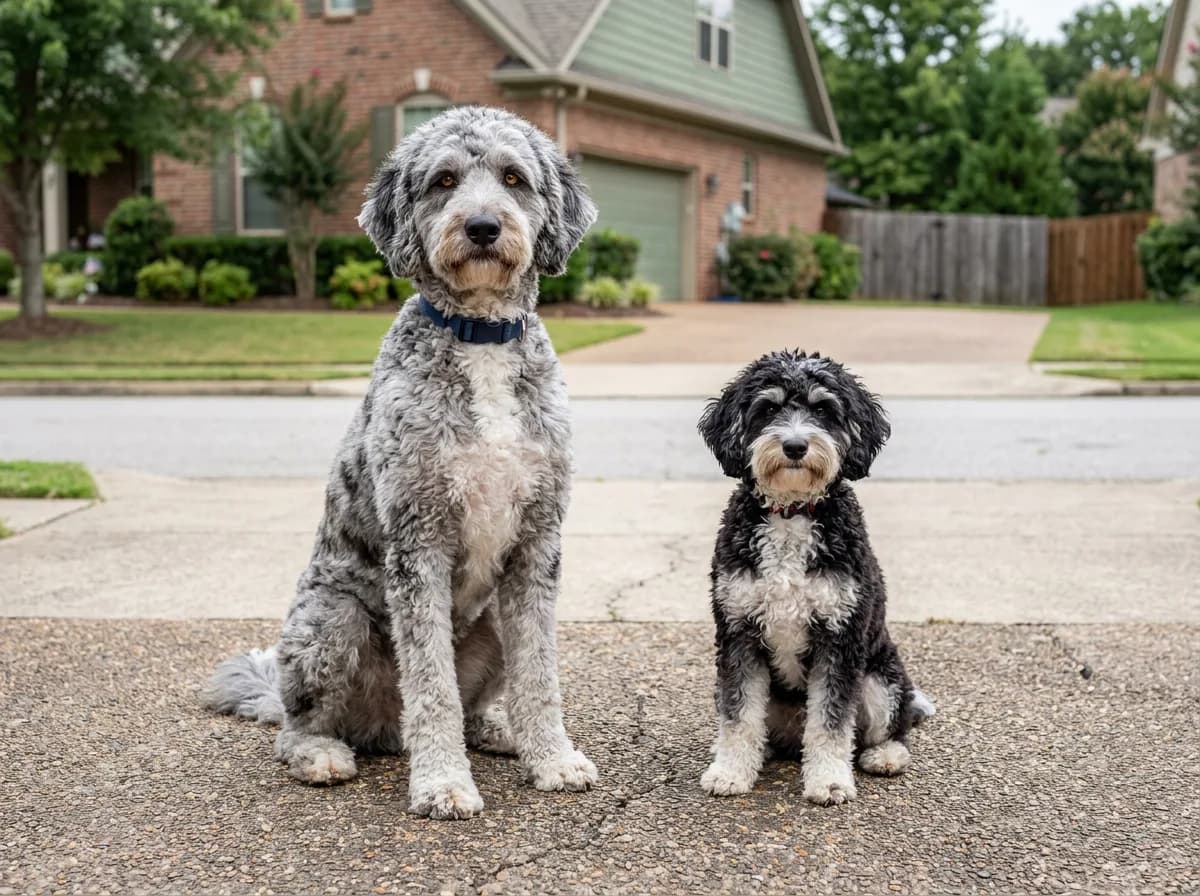
Price by size is the single clearest pattern in this breed, and it runs opposite to what most buyers assume. Smaller Aussiedoodles cost more. Producing a consistently small dog takes a Toy or Miniature Poodle parent, smaller litters, and more breeding attempts to hit a predictable adult weight, so the mini aussiedoodle price sits above a standard from the same program.
| Aussiedoodle type | Typical puppy price | Why it prices there |
|---|---|---|
| Standard F1 Aussiedoodle | $1,500 to $3,000 | Largest size class, biggest litters, most available |
| Standard F1b Aussiedoodle | $2,000 to $3,800 | Backcross to a Poodle for a lower-shedding coat |
| Mini Aussiedoodle (F1) | $2,000 to $4,000 | Miniature Poodle parent, high demand from small-home buyers |
| Mini Aussiedoodle (F1b) | $2,500 to $4,500 | Small size plus coat predictability, the busiest price band |
| Toy or micro mini Aussiedoodle | $3,000 to $5,000 | Toy Poodle parent, smallest litters, longest waitlists |
| Blue merle, red merle, or tri color coat | Add $300 to $1,000 | Pattern premium applied on top of the size price |
The mini aussiedoodle price range most commonly quoted is $2,000 to $4,500 depending on generation, which overlaps the top of the standard band entirely. Buyers searching miniature aussiedoodle price or miniature aussiedoodle cost are usually looking at the same dogs under a different label, since breeders use "mini" and "miniature" interchangeably for a 25 to 40 pound adult.
Below the mini sits the smallest tier, and this is where prices climb hardest:
- Toy Aussiedoodle: Roughly 10 to 20 pounds at maturity, produced with a Toy Poodle parent, commonly $3,000 to $5,000.
- Micro mini Aussiedoodle: A marketing label rather than a recognized size class, usually describing a toy-sized dog under 15 pounds at the very top of the price range.
- Standard: Roughly 45 to 65 pounds, the most affordable class and the easiest to find without a long wait.
Be skeptical of the smallest promises. There is no registry policing what "micro mini Aussiedoodle" means, so the term is applied loosely, and a breeder quoting a premium for a size they cannot document across previous litters is charging for a label. Ask to see adult weights from that breeder's past puppies before you pay a small-size premium.
Worth saying plainly: no ranking page breaks Aussiedoodle purchase price out by size, generation, and color together in one comparison, which is exactly why buyers collect three quotes they cannot reconcile. This guide prices Aussiedoodles by size, generation, and color together so the premiums stack visibly instead of hiding inside a single number. A standard F1 in solid black at $1,800 and a mini F1b in blue merle at $4,600 are the two ends of the same market, not two different markets.
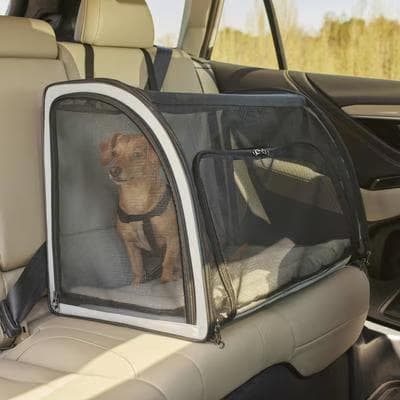
Soft-sided travel safety carrier that keeps a stressed cat secure and well-ventilated on the way to the vet, with mesh panels for airflow and a seat-belt loop.
Petful may earn a commission when you click through to Chewy, at no extra cost to you.
- Standard F1, solid black or brown: $1,500 to $2,500, the cheapest combination in the breed and the easiest to find without a waitlist.
- Standard F1b, solid coat: $2,000 to $3,500, since coat predictability adds roughly $500 to $1,000 over an F1 from the same program.
- Mini F1, solid coat: $2,000 to $3,500, where the smaller size class carries its own premium even without a color upcharge.
- Mini F1b, blue merle or tri color: $3,000 to $4,500, with a color premium of $300 to $1,000 already sitting inside that band.
- Toy F1b, merle or tri color: $4,000 to $5,000, the top of the market, the smallest litters, and the longest wait.
How big will your Aussiedoodle get?
Aussiedoodle size is the question buyers research immediately after price, because the size class you choose sets the purchase price, the grooming bill, and the food budget for the next decade. Standard aussiedoodle size, mini aussiedoodle size, the medium Aussiedoodle, and the European moyen Aussiedoodle each land in a different weight band, and predicting a full grown mini Aussiedoodle from a 10-week-old puppy takes more than a guess at the parents. Our guide to how big Aussiedoodles get has the growth charts, the adult-weight prediction method, and the size class comparison in full detail.
Do blue merle and rare colors cost more?
Yes. Color is a real premium in this breed, and blue merle is the headline. A blue merle aussiedoodle price typically sits $300 to $1,000 above a solid-coated littermate, because the merle pattern is inherited from the Australian Shepherd side and cannot be produced on demand. Tri color coats, where merle is combined with tan points and white markings, sit at the same premium or slightly higher.
Generation moves the price alongside color, and the two are often quoted together:
- F1 Aussiedoodle: A first-generation cross, one purebred Australian Shepherd to one purebred Poodle. The f1 aussiedoodle price is the most affordable entry point, commonly $1,500 to $3,000, but the coat is the least predictable and some F1 puppies shed noticeably.
- F1b Aussiedoodle: An F1 Aussiedoodle bred back to a Poodle, so the puppy is roughly three-quarters Poodle. The f1b generation is priced $500 to $1,000 above an F1 because the curlier, lower-shedding coat is far more consistent.
- Multigenerational: Doodle bred to doodle across several generations, priced with the F1b band or above, chosen by buyers who want coat predictability more than anything else.
The practical takeaway is that you are usually paying twice: once for the size class, and once for coat predictability. A mini F1b in blue merle can therefore cost double a standard F1 in solid black from the same breeder, and both puppies are genuinely fairly priced. What is not fair is a premium attached to a color with no health testing behind it, which is where this breed has a specific and serious problem.
- Breeding merle to merle can produce double merle puppies at high risk of deafness, blindness, and severe eye defects. No price justifies it and no reputable breeder does it. If a breeder advertises a litter from two merle parents, or cannot tell you the coat pattern of both parents, end the conversation.
To put it in one place, here is how coat color and F1 versus F1b generation change the price you are quoted. Color moves the number $300 to $1,000, and only when merle or tri color is involved, because a solid black or brown coat is what the cross produces most often. The F1b generation moves it another $500 to $1,000 on top, since a coat that reliably curls is the thing most doodle buyers are actually paying for. Stack both premiums on a mini and you have added about $1,500 to the same litter's baseline.
Aussiedoodle coat colors and what they mean
Beyond the price premium, coat color in this breed is genetics rather than fashion. Blue merle Aussiedoodle and red merle Aussiedoodle coats come from the Australian Shepherd parent, while black Aussiedoodle, brown Aussiedoodle, chocolate Aussiedoodle, and golden Aussiedoodle coats trace to either side of the cross. Tri color Aussiedoodle patterns and the way a merle Aussiedoodle puppy fades or clears as it matures both surprise first-time owners. Our full guide to Aussiedoodle coat colors covers the genetics, the fading, and which shades hold. Petful’s separate guide to red Australian Shepherds covers red merle and red tri genetics, colors, and care.
Buying from an ethical Aussiedoodle breeder
The gap between an ethical breeder and a volume seller is the whole reason this breed has a $3,500 price spread. Serious Aussiedoodle puppy breeders spend heavily before a litter exists, and that spending is what your money buys. Understanding it is the fastest way to judge whether a quote is fair or inflated.
Here is what sits behind the price at a program worth buying from:
- Health testing on both parents: OFA hip and elbow certification, annual eye exams through a veterinary ophthalmologist, and a cardiac clearance. Expect $800 to $1,500 per breeding dog.
- MDR1 gene mutation screening: The Australian Shepherd side carries a well-documented MDR1 gene mutation that causes severe reactions to several common veterinary drugs. A responsible breeder tests for it and hands you the result.
- Poodle-side DNA panels: Progressive retinal atrophy and von Willebrand disease screening on the Poodle parent.
- Prenatal and whelping veterinary care: Ultrasound, progesterone testing, and often a cesarean section in the smaller size classes.
- Early socialization: Eight weeks of household raising, handling, noise exposure, and the start of crate and potty routines.
Buyers looking for the best Aussiedoodle breeders, mini Aussiedoodle breeders, toy Aussiedoodle breeders, or F1 Aussiedoodle breeders should evaluate all of them against the same list. The label a breeder uses matters far less than whether they can produce paperwork, and the strongest programs volunteer it before you ask.
Petful may earn a commission when you click through to Chewy, at no extra cost to you.
- Request the OFA numbers, the MDR1 result, and the eye clearance for both parents in writing, then look the OFA numbers up yourself in the public database. A breeder who has done the health testing will send the documents within a day, and one who has not will change the subject.
The red flags run in the other direction, and most of them are visible before you ever meet a puppy. Walk away from Aussiedoodle puppies breeders who show any of these:
- No health testing paperwork, or a vague claim that the parents are "vet checked" rather than OFA certified
- Refusal to let you see the mother, or to video call from the room the litter is raised in
- Multiple breeds and constant litters listed on one site, the classic puppy mill signature
- Puppies available to go home before eight weeks
- Payment demanded by wire transfer, gift card, or a cash app before you have met the dog
- No written contract, no health guarantee, and no take-back clause
- A breeder who never asks you a single question about your home
Then there are the price-driven searches. Listings for an Aussiedoodle for sale under $500, or a mini Aussiedoodle for sale under $500, are almost never a health-tested breeder having a slow month. At that price the seller has skipped the genetic screening, the prenatal veterinary care, or both, and in the worst cases the listing is an outright scam collecting deposits on puppies that do not exist. The savings tend to reappear as an orthopedic bill or an inherited eye condition inside the first two years. If your budget genuinely tops out below $1,500, rescue is the honest path rather than the bottom of the breeder market.
Add it up and the gap is expenditure rather than margin. Here is what an ethical breeder spends that a cheap puppy seller does not: about $800 to $1,500 per parent for OFA hip and elbow certification, an annual ophthalmologist eye exam, and a cardiac clearance, another $150 to $300 per dog for the DNA panel, and $500 to $2,000 in progesterone testing, ultrasound, and whelping supervision, plus $1,500 to $3,000 when a small-size litter needs a cesarean. Spread across a six-puppy litter, that is roughly $700 to $1,200 of cost per puppy before food, vaccines, or a microchip.
No ranking page gives a buyer the parent-breed health testing checklist in one place, so here it is: Australian Shepherd MDR1 gene mutation screening, plus Poodle eye and hip screening, run on both parents and dated within the past year. The same checklist warns against merle to merle breeding, which is never acceptable practice. Pairing two merle parents risks double merle puppies born deaf, blind, or both, and no color premium justifies producing them.
- These are the Aussiedoodle breeder red flags a buyer can check in about ten minutes: no OFA numbers you can look up by the parents' registered names, a seller who will not video call from the room the litter is raised in, six or more breeds listed on one website, which is the classic puppy mill signature, deposits demanded by wire transfer or gift card, and puppies offered to go home before eight weeks old. Any single one of these is reason enough to walk away.
Adopting an Aussiedoodle from a rescue
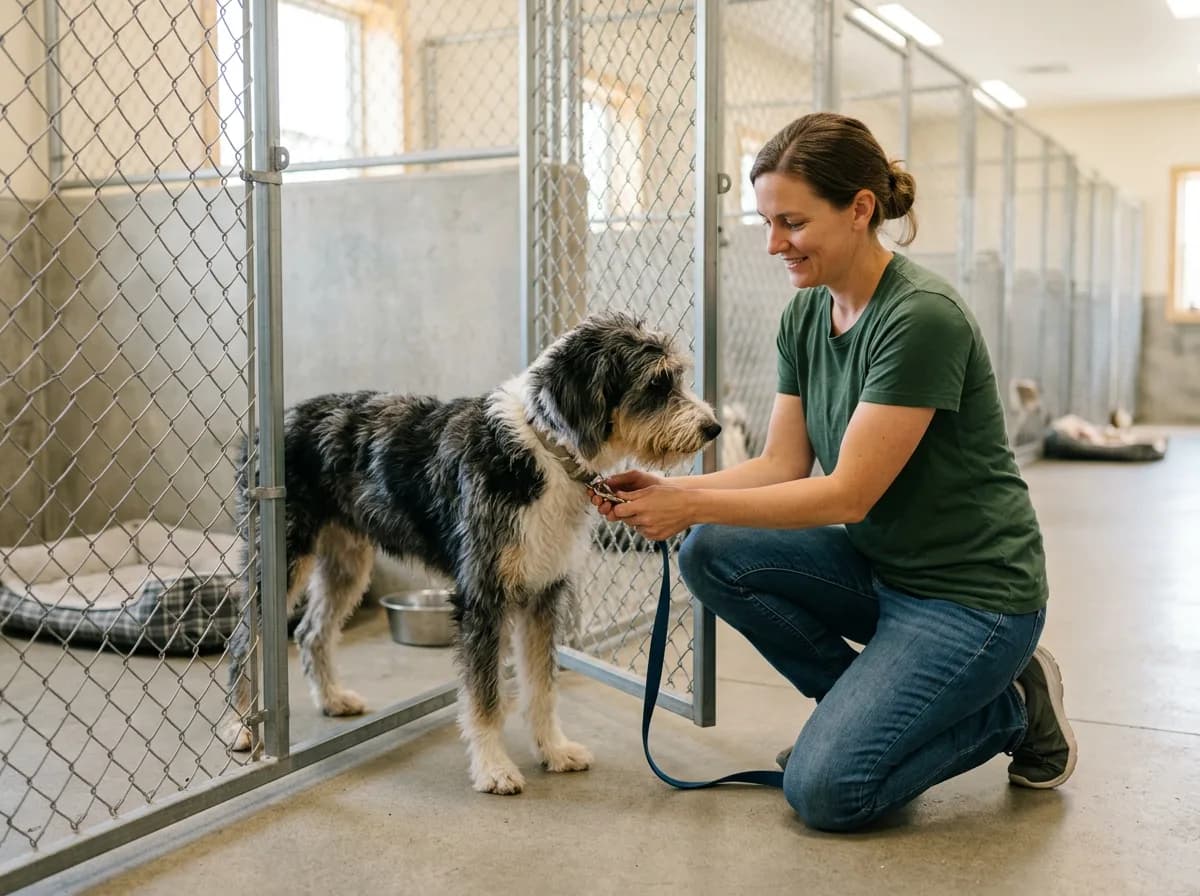
Adoption is the lowest-cost route into this breed, and the fee usually covers veterinary work you would otherwise pay for separately. Expect $200 to $600 through a shelter or a breed-specific rescue, which typically includes spay or neuter, current vaccinations, a microchip, and a heartworm test. That is a fraction of the aussiedoodle price at a breeder for a dog that arrives already vetted.
Where to look, and what each source realistically offers:
- Aussiedoodle rescues and doodle-specific groups: Doodle Rescue Collective and IDOG Rescue take in doodle crosses nationally, and regional Australian Shepherd and Poodle rescues take Aussiedoodles too.
- Aussiedoodles for adoption through municipal shelters: Less common but far cheaper, and shelters rarely list the dog as an Aussiedoodle, so search for Australian Shepherd mix and Poodle mix as well.
- Mini Aussiedoodle rescue placements: The smaller sizes are surrendered less often and adopted faster, so expect a waitlist and be ready to travel.
- Breeder take-back and retired adults: Ethical programs rehome retired breeding dogs at a modest fee, and these adults are health-tested, socialized, and often the best value in the breed.
The buy or adopt Aussiedoodle decision usually comes down to what you need to control. A breeder puppy lets you specify size, generation, and coat, and gives you documented parent health testing plus a blank slate for training. A rescue dog costs a fraction as much, arrives with its adult size and temperament already visible, and is frequently past the destructive puppy stage. Neither is the responsible choice by default.
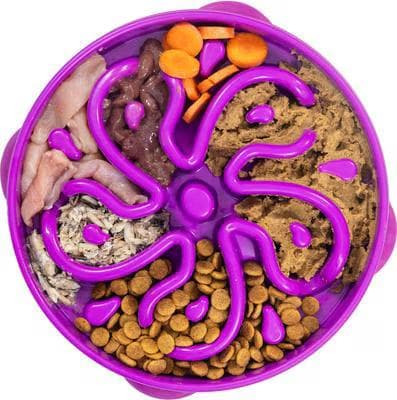
A maze-pattern slow-feeder bowl that makes fast eaters work for each bite, reducing the gulping and swallowed air that trigger regurgitation and vomiting. Holds up to 4 cups.
Petful may earn a commission when you click through to Chewy, at no extra cost to you.
- Whether you paid $200 or $4,000, book an independent veterinary exam within the first few days. Most breeder health guarantees require it, and for a rescue dog it establishes the baseline you will need if you enroll in pet insurance.
Your first year with an Aussiedoodle: the real budget
The purchase price is the deposit on the relationship, not the cost of it. Your first year cost is the highest single year you will face, because puppy setup, initial veterinary care, training, and the first professional grooming appointments all land at once. Budget $2,200 to $4,600 in the first twelve months on top of the purchase price.
A puzzle feeder is one of the cheapest lines in the budget and does more for a bored herding cross than most of the expensive gear.
Budget for a travel carrier early too, because the first vet visits, the first road trips and any flight all land inside that first year.
| Expense | Cost estimate |
|---|---|
| Initial vet care, vaccine series, spay or neuter, microchip | $500 to $1,100 |
| Puppy and adult food | $450 to $850 |
| Professional grooming, every 6 to 8 weeks | $480 to $960 |
| Supplies: crate, bed, bowls, leash, harness | $250 to $500 |
| Puppy training classes | $150 to $450 |
| Pet insurance premiums | $360 to $780 |
| First year total | $2,190 to $4,640 |
Two line items catch new Aussiedoodle owners off guard. Grooming is the first, because this coat is not low-maintenance just because it sheds less. The second is training, since an Australian Shepherd crossed with a Poodle produces a genuinely intelligent, high-drive dog that gets destructive when under-stimulated, and group classes are cheaper than replacing a sofa.
You can trim the first-year number without cutting corners on the dog:
- Buy the crate, bed, and bowls secondhand, and spend the savings on training instead.
- Learn to brush thoroughly at home so the professional groom is a trim rather than a dematting charge.
- Enroll in pet insurance in month one, while nothing is on the record and premiums are lowest.
- Skip the boutique puppy gear and put that money toward the spay or neuter and the vaccine series.
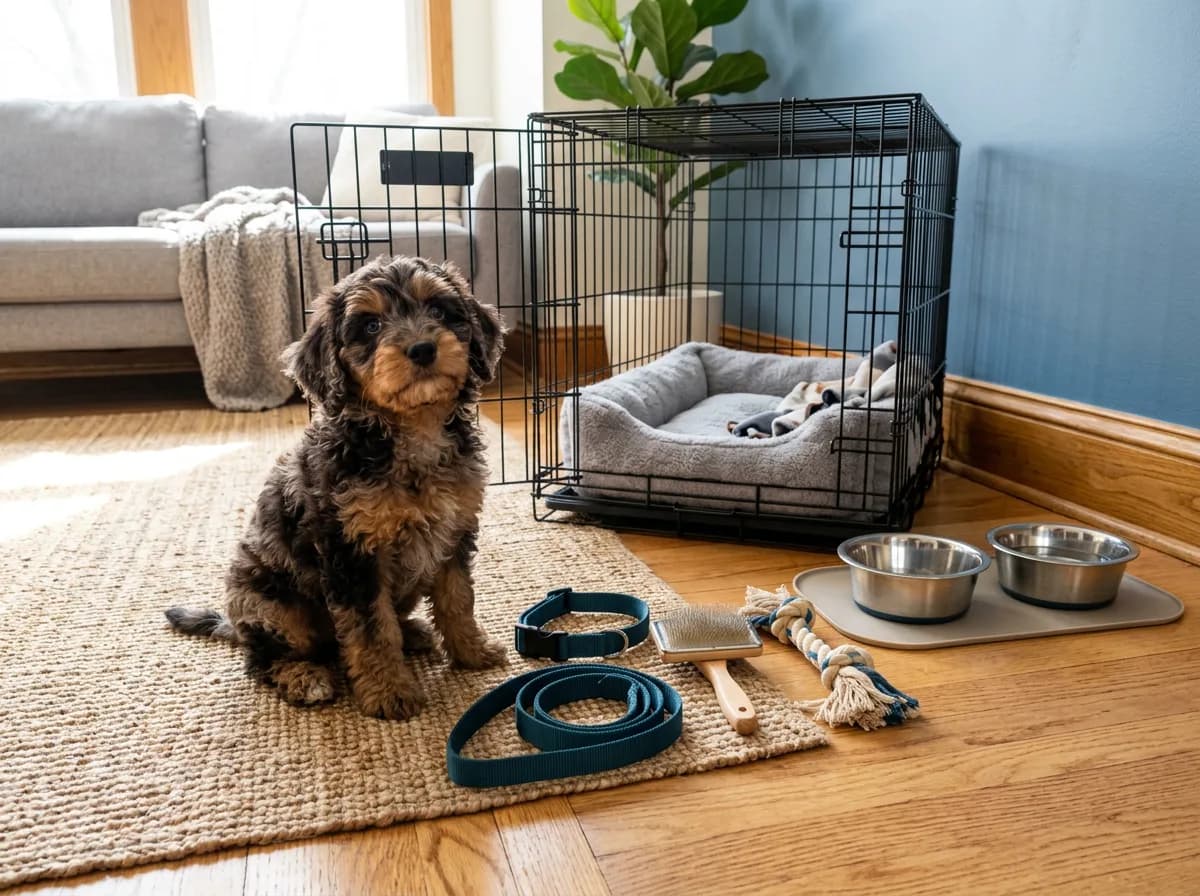
- A wire crate is the single biggest one-off in the setup list, and buying adult sized with a divider avoids paying twice.
- Food is the largest recurring line. A mid-range complete dry food for a standard runs meaningfully more per month than for a mini.
- Budget for house training too. Washable puppy pads cost less over a year than disposables if you are prepared to launder them.
- A decent leash with a traffic handle is a small line item that lasts the dog life, unlike the cheap one most people replace twice.
Grooming costs and coat upkeep
Aussiedoodle grooming is the largest recurring line in this budget after food, running $60 to $120 per professional visit every six to eight weeks. Mini Aussiedoodle grooming costs slightly less per appointment simply because there is less dog. The Aussiedoodle shedding question and the related are Aussiedoodles hypoallergenic question both come down to coat type, and no dog is truly Aussiedoodle hypoallergenic. Our Aussiedoodle grooming and shedding guide covers the tools, the brushing cadence, and the haircuts that keep those bills predictable.
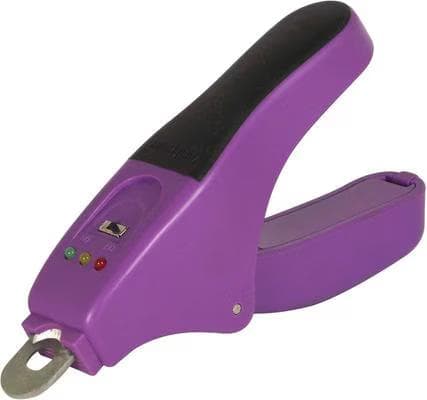
Doing the small jobs yourself is where owners claw back the most money. A single pair of nail clippers costs less than one salon nail trim and lasts years, and the same logic applies to brushing between appointments.
Vet care and health costs to budget for
Routine preventive care runs $300 to $700 a year for a healthy adult, and the routine veterinary care guidance from the AVMA outlines what a yearly visit should include. Aussiedoodle lifespan, Aussiedoodle life expectancy, the lifespan of mini Aussiedoodle variants specifically, and Aussiedoodle allergies all affect what you will actually spend, and hip dysplasia, progressive retinal atrophy, and MDR1 drug sensitivity are the conditions that turn a routine year into an expensive one. Our Aussiedoodle health and lifespan guide covers the screening panel and the warning signs in depth.
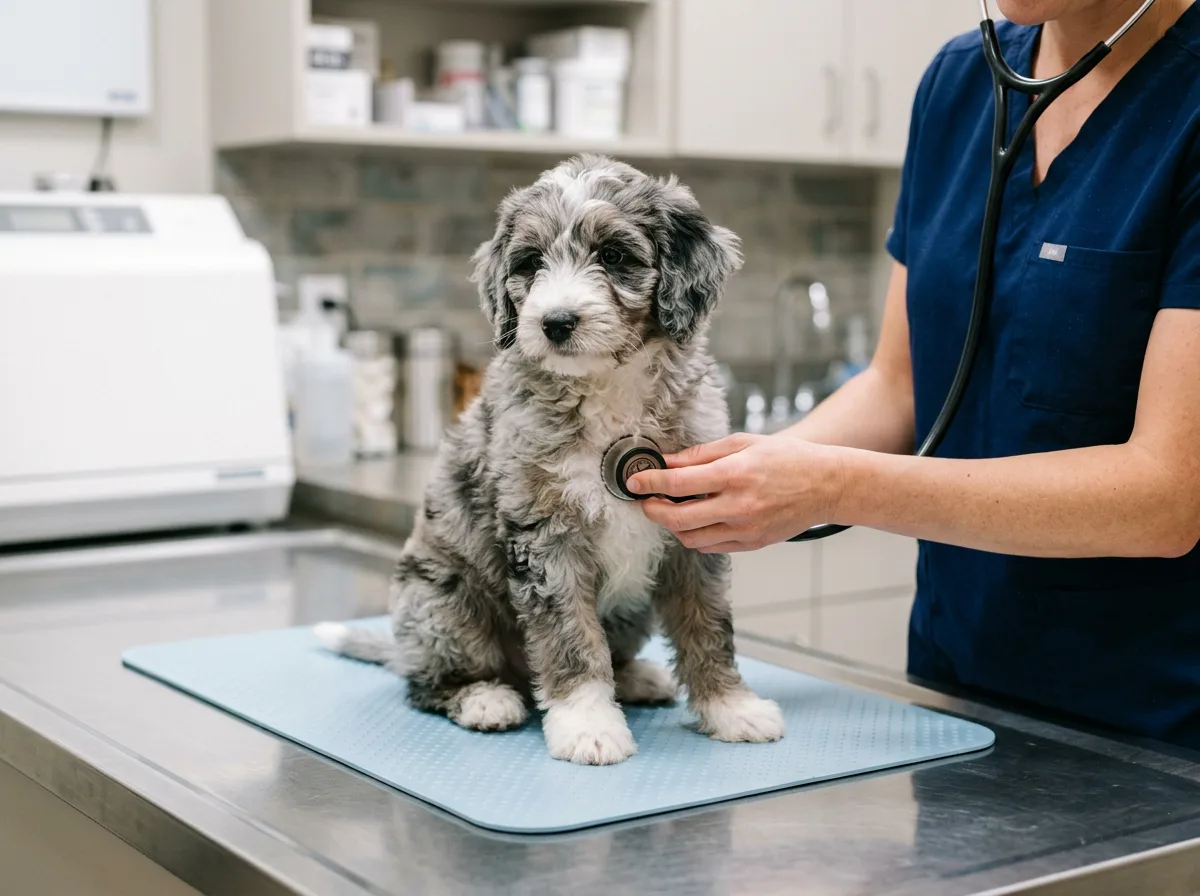
Dental work is the line item that surprises people, because a professional cleaning under anaesthetic runs into the hundreds. Daily dental chews plus brushing will not replace that entirely, but they push the first cleaning further out.
What does an Aussiedoodle cost over its lifetime?
The Aussiedoodle lifespan is 10 to 13 years, with mini and toy Aussiedoodles typically living toward the upper end and standards toward the lower end, which is the normal size-to-longevity pattern in dogs. That range is the multiplier that turns an annual budget into a lifetime cost, and it is the calculation the ranking cost guides stop short of.
| Expense | Annual estimate |
|---|---|
| Food | $400 to $800 |
| Professional grooming | $520 to $1,040 |
| Routine vet care and preventives | $300 to $700 |
| Pet insurance | $420 to $900 |
| Toys, replacements, boarding | $200 to $500 |
| Annual total | $1,840 to $3,940 |
| Lifetime total (11.5 year average, first year included) | $20,000 to $38,000 |
Across an average 11.5-year life, the lifetime cost of owning an Aussiedoodle lands between $20,000 and $38,000, and the purchase price is only 8 to 15 percent of that total. Grooming, food, and veterinary care do the heavy lifting, which is why an extra $1,000 at purchase for a health-tested puppy is a rounding error against the bill it can prevent.
A few decisions move the lifetime number more than anything else:
- Enrolling in pet insurance early. One orthopedic surgery can cost more than five years of premiums, and pre-existing conditions are excluded once documented.
- Doing maintenance brushing at home. Dematting surcharges can double a grooming appointment, and they are entirely avoidable.
- Staying current on dental care and preventives. A dental cleaning is cheaper than extractions, and heartworm prevention is cheaper than treatment by an order of magnitude.
- Choosing a breeder who screened the parents. Hip and eye conditions are the expensive ones, and screening is the only lever you have before the dog comes home.
One number to carry away: a lifetime cost estimate tied to the breed lifespan of 10 to 13 years. Take a mid-range annual figure of $2,600 covering grooming, food, preventives, insurance, and routine veterinary care, multiply it by an average 11.5-year life, and you land at $29,900. Add a $2,500 purchase price and you are at roughly $32,400 for a standard Aussiedoodle from a health-tested litter, with the first year and the senior years both running above that annual average.
That is the arithmetic worth doing before a deposit clears. The cost guides that rank for this breed stop at monthly costs and never carry the arithmetic through to a lifetime total, which makes an Aussiedoodle look like a $220-a-month dog rather than a $32,000 commitment across a decade. Both framings are accurate. Only one of them tells you whether the next eleven years are genuinely affordable on your budget.
Is an Aussiedoodle right for your household?
Whether an Aussiedoodle suits your home is a temperament question rather than a price question, and it is the one worth settling before you send a deposit. Are Aussiedoodles good dogs, what the standard Aussiedoodle traits and Aussiedoodle personality traits actually look like day to day, and an honest list of Aussiedoodle pros and cons all live in our Aussiedoodle temperament guide. So do the three questions buyers ask most often at this stage: whether an Aussiedoodle is a good house dog, whether Aussiedoodles bark a lot, and at what age an Aussiedoodle calms down. If those answers matter to your decision, read that guide before this one's numbers.
How Aussiedoodle prices compare with other doodles
Aussiedoodle pricing sits in the middle of the doodle market, which surprises buyers who assume the herding cross costs more. The Aussiedoodle vs Bernedoodle comparison usually favors the Aussiedoodle on price, since Bernedoodles carry a Bernese Mountain Dog parent with a shorter lifespan and a bigger frame. You can see the sibling price point on our Bernedoodle price comparison hub.
Set against the other two common crosses:
- Aussiedoodle vs Goldendoodle: Goldendoodles are more widely bred, so supply is deeper and standard sizes often price slightly lower. Aussiedoodles command more in the mini and toy classes.
- Bernedoodle vs Aussiedoodle: Bernedoodles typically run $2,500 to $5,000, above the Aussiedoodle band, with higher lifetime veterinary costs.
- Labradoodle vs Aussiedoodle: The two overlap almost exactly on purchase price, and the decision comes down to drive level rather than dollars.
The full cross-doodle breakdown, including which parent breed traits actually show up, lives on our Aussiedoodle breed guide. If you are specifically shopping the smallest size class, our mini Aussiedoodle guide covers that variant, and the Australian Shepherd parent breed profile explains the herding drive you are paying for on one side of the cross.
Is an Aussiedoodle worth the price?
For an active household with time to spend, an Aussiedoodle is worth the price. You are buying a genuinely bright, trainable dog with a low-shedding coat and a decade-plus lifespan that spreads the cost across a long relationship. That said, the honest downside to Aussiedoodles is a real one, and it is mostly financial and temperamental rather than medical.
The three drawbacks that cause the most regret:
- Ongoing costs are high and non-negotiable. Grooming alone runs $520 to $1,040 a year, and unlike food it cannot be economized without the coat matting to the skin.
- The energy level is a working level. Both parent breeds were bred to work all day, and an under-exercised Aussiedoodle becomes destructive, vocal, and anxious.
- The coat is unpredictable in early generations. F1 buyers hoping for a non-shedding dog sometimes get a shedding one, which is exactly why the F1b commands a premium.
None of that makes the breed a bad buy. It makes it a bad impulse buy. Weigh the ongoing costs against your actual weekly schedule before you compare breeders, because the households that regret an Aussiedoodle almost never regret the purchase price. They regret underestimating the grooming appointments and the exercise the dog needed every single day for a decade.
A mini Aussiedoodle typically costs $2,000 to $4,500, above a standard from the same breeder, because a Miniature Poodle parent produces smaller litters and demand from small-home buyers is high. F1b minis sit at the top of that range.
The cost is mostly health testing and early care. OFA hip and elbow certification, eye clearances, MDR1 screening, and cardiac testing can run $800 to $1,500 per breeding dog before a litter exists, and prenatal veterinary care and eight weeks of socialization are on the breeder's dime.
Adoption. A breed-specific rescue or shelter fee of roughly $200 to $600 usually includes spay or neuter, vaccinations, a microchip, and a heartworm test, and retired breeding adults from ethical programs are another low-cost, health-tested option.
The F1b costs more, typically $500 to $1,000 above an F1 from the same program, because backcrossing to a Poodle produces a far more consistent low-shedding coat. The F1 is the more affordable entry point but the coat is less predictable.

Coreen Saito is a pet writer and longtime shelter volunteer with more than a decade in animal rescue. She covers cat behavior, breed care, and the small, ordinary science of sharing a life with companion animals, with a particular focus on honest takes about the products and decisions that actually matter. At home in Arizona, she's outranked by Mac (a dog with the loudest opinion in the house), Rebel (a cat who governs by quiet authority), and Meri (an orange tabby who runs the late shift and the laundry basket). She writes about all three, plus the rescues that keep coming through her life, at LifeWithMinty.com.
Sign up for expert-backed reviews and safety alerts all in one place.