Red Australian Shepherd: Genetics, Colors, and Care
The red Australian Shepherd is a standard Aussie carrying the recessive red gene, showing up as red merle, red tri, red bi, or rare solid red. Here is how the color is inherited, how the four patterns differ, and what it means for care.
Petful is reader supported. As an affiliate of platforms like Amazon and Chewy, we may earn a commission when you buy through links on this page. There is no extra cost to you.
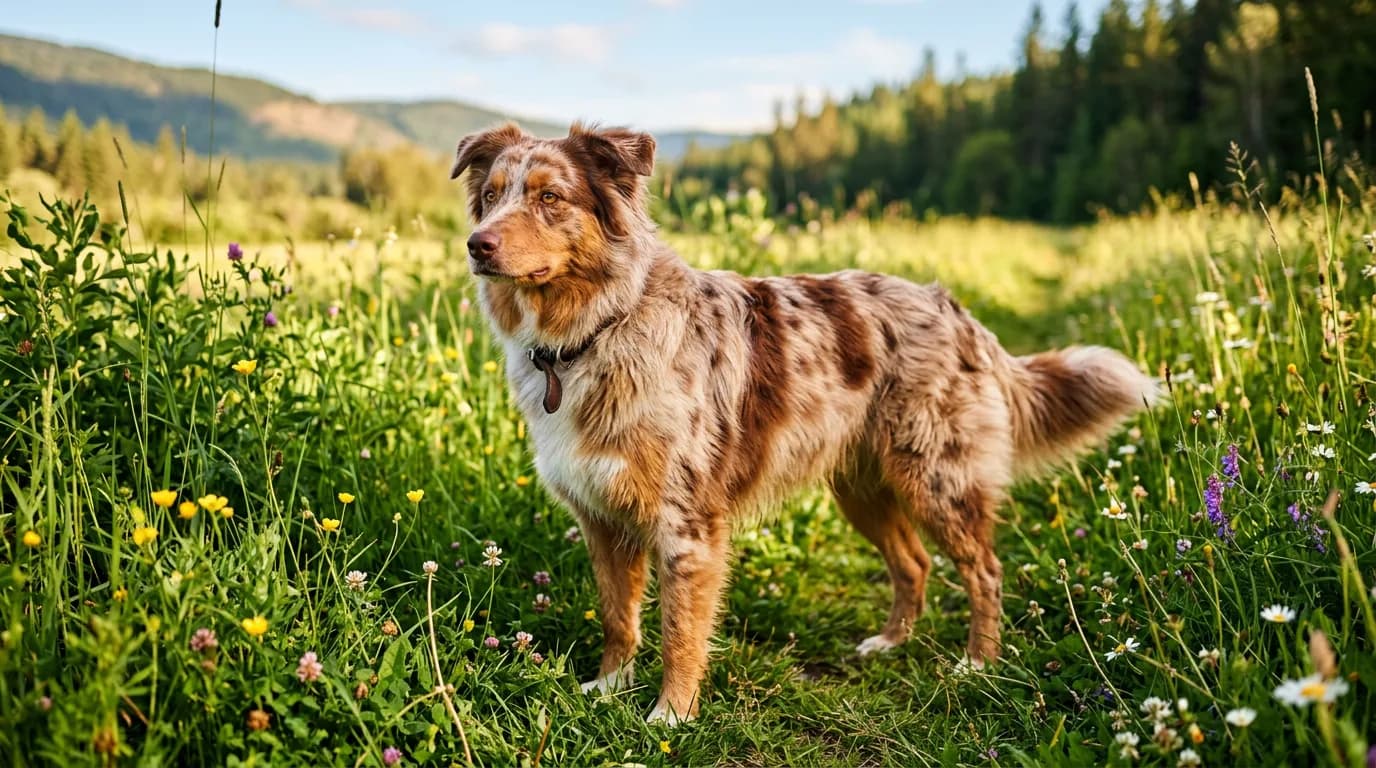
The red Australian Shepherd is not a separate breed or a rare designer variant. It is a standard Aussie carrying the recessive red gene, and that single genetic switch produces some of the most striking coats in the breed: the swirling red merle, the bold red tricolor, the copper-flecked red bi, and the exceptionally rare solid red. If you are drawn to the warm liver tones of a red Australian Shepherd, this guide walks through exactly how the color is inherited, how the four red patterns differ, what changes as a puppy matures, and the health and care realities that come with the coat.
Understanding the genetics matters for more than curiosity. It shapes which two dogs a responsible breeder pairs, which eye colors show up, and, in the case of merle-to-merle breeding, whether a litter carries a real risk of deafness and blindness. We will keep the science plain, cite the breed clubs and veterinary sources directly, and separate the marketing myths from what is actually written into the breed standard.
- 1"Red" in Aussies refers to a liver or cinnamon base created by the recessive red (b) gene, not a distinct breed
- 2The four recognized red patterns are red merle, red tri, red bi, and solid red, with solid red being the rarest
- 3Merle-to-merle breeding is the real health concern, not the red color itself, which carries no inherent defect

Sign up for expert-backed reviews and safety alerts all in one place.
What Makes an Australian Shepherd "Red"
Every Aussie coat starts from one of two base colors: black or red. The base is controlled by the B locus, a gene where black (B) is dominant and red (b) is recessive. A dog needs two copies of the recessive red gene (bb) to actually show a red coat. A dog with one copy (Bb) looks black but quietly carries red, and can pass it to puppies. This is why two black-coated Aussies can produce a red litter: both parents were secret carriers.
The red itself is a liver pigment. In an Aussie it can range from a light cinnamon or "clear red" through a deep, chocolatey liver. The Australian Shepherd Club of America (ASCA) breed standard lists the recognized colors as blue merle, red (liver) merle, solid black, and solid red, each with or without white markings and with or without copper (tan) points. So "red" is baked into the standard, not an oddity outside it.
Two other genes then decide the pattern that sits on top of that red base:
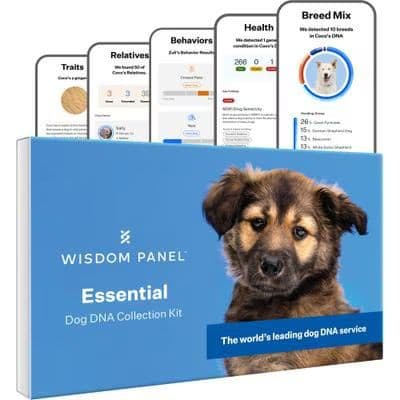
Petful may earn a commission when you click through to Chewy, at no extra cost to you.
- The merle gene (M locus) breaks up the solid red into patches and marbling, creating red merle. A dog needs only one copy of merle to show the pattern.
- The tan-point and white-spotting genes decide whether copper points appear over the eyes, on the cheeks and legs, and whether white shows on the chest, face, legs, and collar.
Stack those together and you get the four red variations covered below. The important mental model: red is the base coat, and merle, tan points, and white are modifiers layered over it.
The Four Red Australian Shepherd Variations
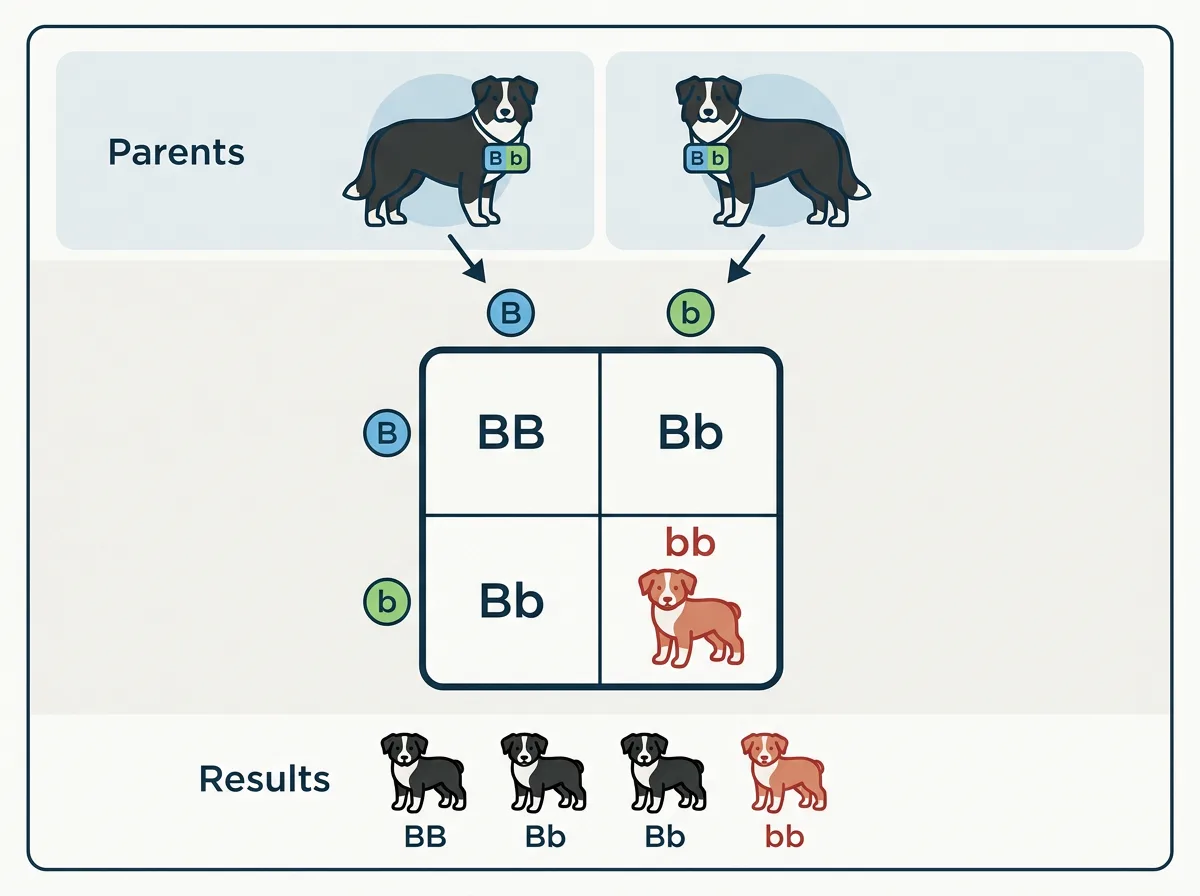
Red Aussies show up in four documented patterns. Breeders and owners use these terms loosely in conversation, so it helps to nail down what each one actually means.
Red Merle
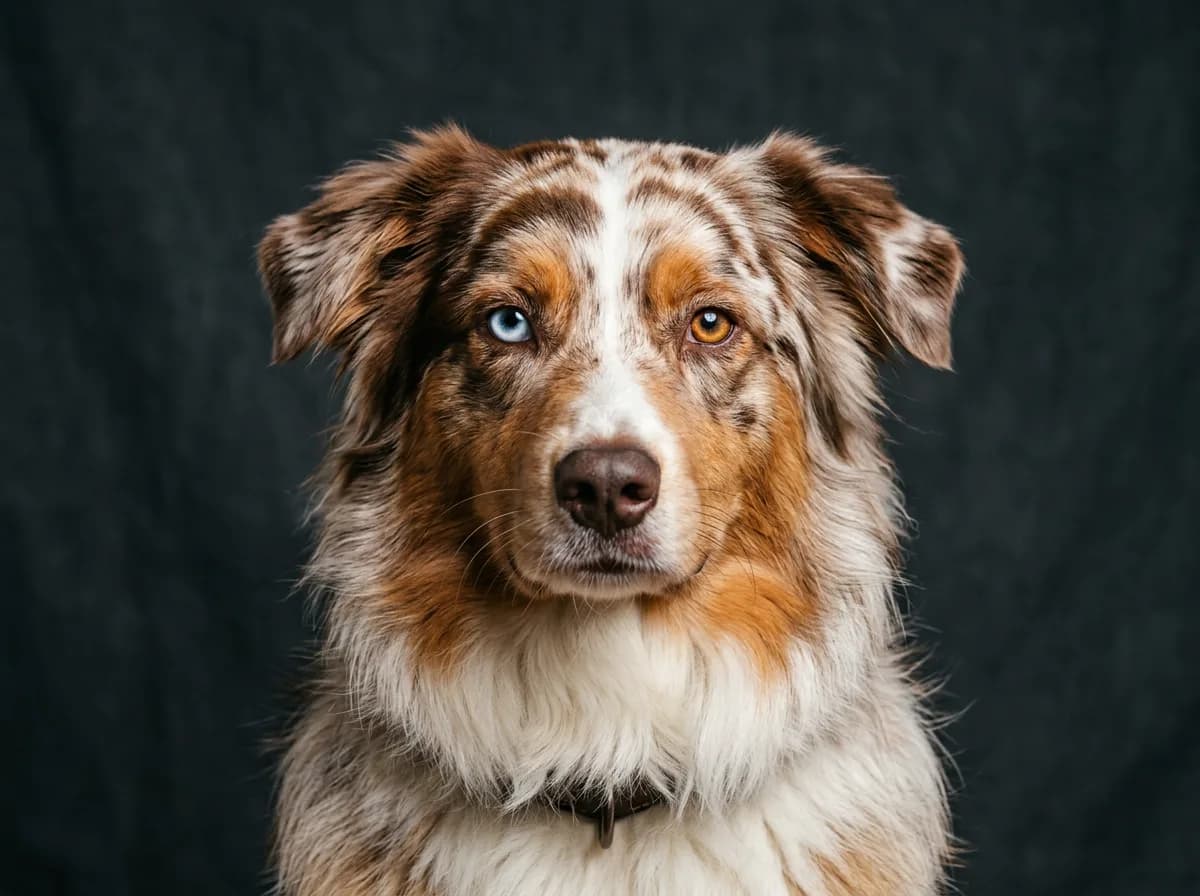
Red merle is the pattern most people picture when they hear "red Australian Shepherd." It is a marbled coat: irregular patches and speckles of red or liver scattered over a lighter buff, cream, or silver background, the result of the merle gene diluting some areas of the red base while leaving others full-strength. No two red merles are marked alike, which is a large part of their appeal.
Red merles frequently carry white markings on the chest, face, legs, and neck, plus copper points around the eyes and muzzle. Eye color is where red merle gets especially interesting: because the merle gene affects pigment, these dogs commonly have amber or hazel eyes, blue eyes, one of each (heterochromia), or even a single eye split between two colors ("marbled" eyes). Petful’s separate guide to what colors dogs can see explains how canine color vision actually works.

Petful may earn a commission when you click through to Chewy, at no extra cost to you.
Red Tri (Tricolor)
A red tri, or red tricolor, has three colors working together: a solid red or liver base, crisp white markings (usually on the chest, face blaze, legs, and collar), and copper or tan points on the eyebrows, cheeks, muzzle, and lower legs. Unlike the red merle, the base is a single even red with no marbling. Red tris almost always have brown, amber, or hazel eyes rather than blue, because they lack the merle gene that drives blue pigment.
Red Bi (Bicolor)
A red bi is a two-color dog. It carries a solid red base plus one modifier, but not both: either red with white markings, or red with copper points, never all three. A red-and-white bi and a red-and-copper bi are both "red bis." Because the merle gene is absent, red bis typically have brown or amber eyes.
Solid Red
A solid red Aussie is a completely liver-colored coat with no white and no copper points at all. It is the rarest of the four because it requires the red base plus the absence of both the white-spotting and tan-point modifiers, an uncommon genetic combination. Adopt a Pet and multiple breed sources agree that solid red is the least common way a red Aussie shows up, which is exactly why it is so sought after (and sometimes mispriced by breeders trading on the "rare" label).
Petful may earn a commission when you click through to Chewy, at no extra cost to you.
| Variation | Base and modifiers | Typical eyes |
|---|---|---|
| Red merle | Marbled red over buff, often white and copper | Amber, blue, or two-toned |
| Red tri | Solid red plus white plus copper points | Brown, amber, hazel |
| Red bi | Solid red plus white OR copper, not both | Brown, amber |
| Solid red | Solid liver, no white or copper | Brown, amber |
How Rare Is a Red Australian Shepherd?
Red Aussies are less common than blue merles and black tris, but "rare" is doing a lot of work in breeder marketing. Because red is recessive, it appears less often in random pairings, and a striking red merle or a clean solid red genuinely stands out. But red is a fully recognized standard color, produced by ordinary Aussie genetics, not a mutation or an exotic import.
The rarity gradient runs roughly like this: blue merle and black tri are the most common, red merle and red tri are moderately common, red bi is less common, and solid red is the rarest of all. When a breeder advertises a "rare red Aussie" at a steep premium, they are usually pricing the color's visual appeal rather than any added value in health, temperament, or working ability. A red coat does not make a dog a better companion, and it does not justify skipping health testing.
- A red or solid-red coat says nothing about a dog's hips, eyes, or genetic health. Buy on health testing and temperament first, and treat color as the last tiebreaker, never the reason to overlook a missing OFA or DNA panel.
Red Aussie Puppies: How the Coat Changes
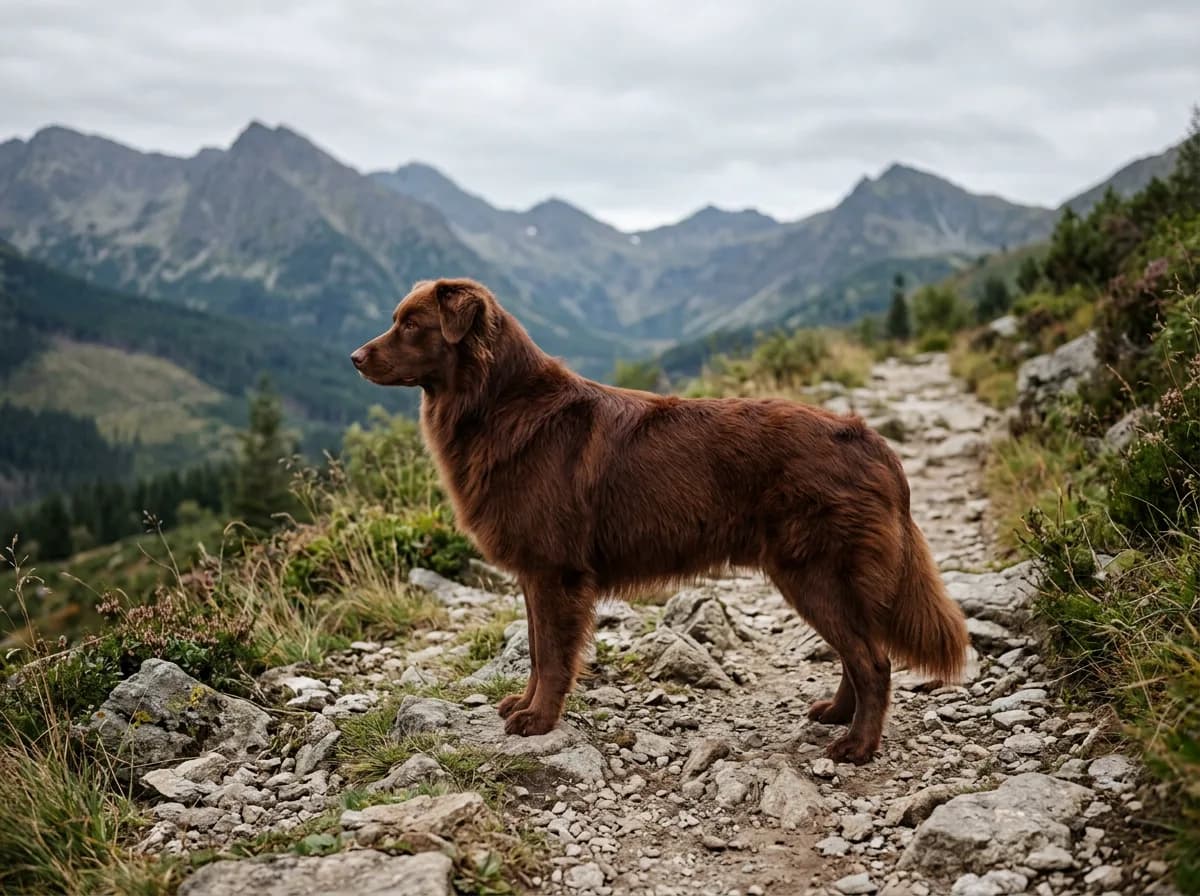
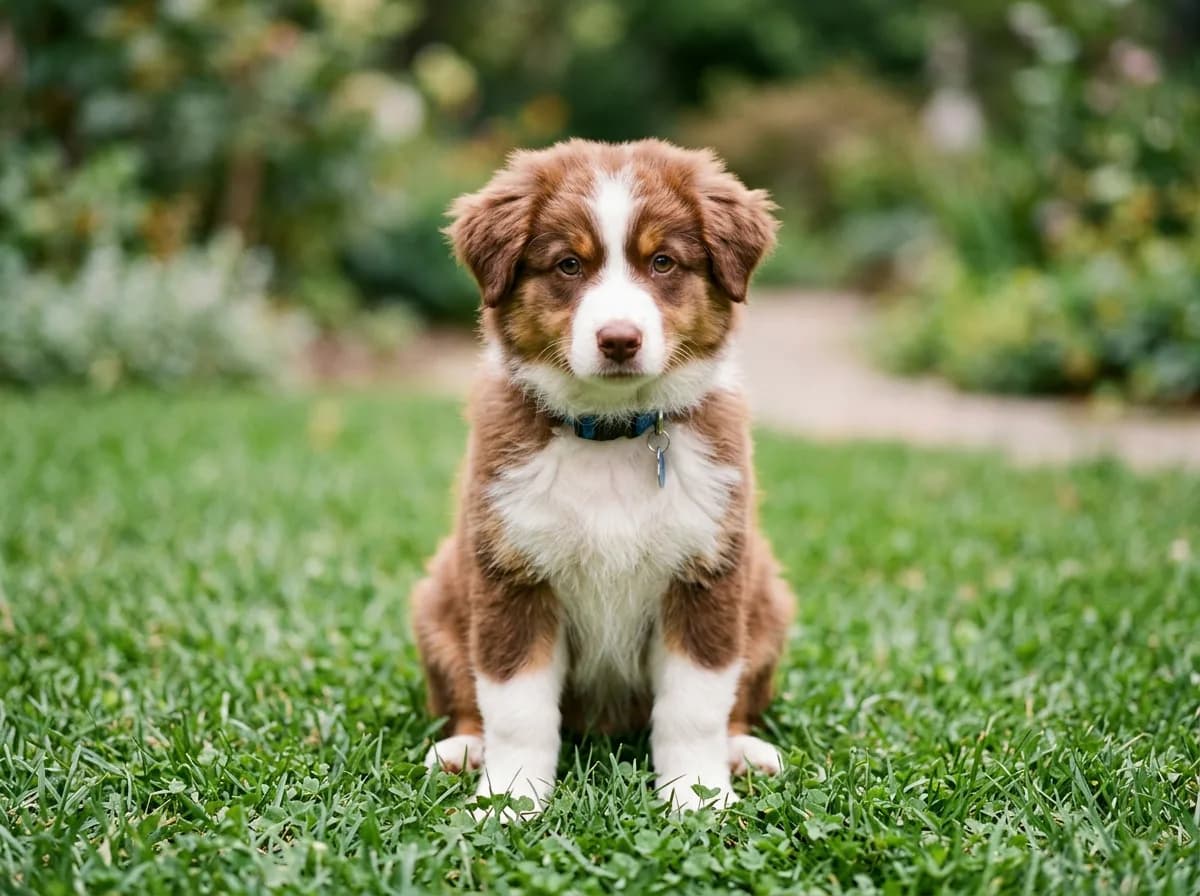
Red Aussie puppies rarely look exactly like the adults they become. Merle patterning is present at birth but often darkens, expands, and sharpens over the first several months as the coat comes in. A red merle pup can start soft and washed-out and mature into bold, well-defined marbling. Copper points frequently deepen with age, and white markings may shrink slightly as the dog grows into its adult frame.
Eye color also settles over time. Puppies born with blue eyes usually keep them, but the amber and hazel tones in red merles can take weeks to reach their final shade. If you are choosing a puppy for a specific look, ask the breeder for photos of the parents and older siblings rather than banking on how an eight-week-old pup is marked today.
Petful may earn a commission when you click through to Chewy, at no extra cost to you.
Health Considerations for Red Australian Shepherds
The red coat itself carries no inherent health defect. A red Aussie is exactly as healthy as a blue merle or black tri of the same lineage. The real health flags cluster around the merle gene and a few breed-wide conditions, so red merle owners in particular should understand them.
Double Merle: The One Genetic Line You Must Not Cross
The single most important genetics rule in the breed is that you never breed merle to merle. When two merle dogs (of any color, red or blue) are bred, roughly a quarter of the litter can inherit two copies of the merle gene, producing a "double merle." According to the AKC and veterinary geneticists, double merle dogs are predominantly white and face a high risk of congenital deafness and serious eye defects including small or malformed eyes and blindness. This risk is why a red merle should only ever be paired with a non-merle mate, such as a red tri or a solid dog.
- A red merle bred to another merle risks deaf and blind puppies. Responsible breeders pair every merle with a non-merle partner, and any breeder who does merle-to-merle should be a hard pass.
Color Dilution Alopecia
A separate coat-linked condition worth knowing is color dilution alopecia (CDA), a genetic skin disorder tied to the dilution gene that can cause thinning hair, a dull coat, and flaky skin, typically in "dilute" colored dogs. According to veterinary dermatology resources such as VCA Animal Hospitals, CDA is most associated with diluted coat colors like blue and fawn rather than standard liver-red, so it is uncommon in typical red Aussies, but it is a reason to be cautious with breeders selling unusually "washed out" or diluted reds as premium rarities.
Breed-Wide Health Watch
Beyond coat genetics, Australian Shepherds as a breed carry a few conditions every owner should have on their radar and every ethical breeder should test for:
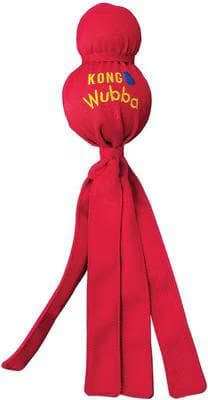
A large fabric-covered dog toy for supervised tug and fetch; choose the size for your dog and retire it if seams or material begin to fail.
Petful may earn a commission when you click through to Chewy, at no extra cost to you.
- Hip and elbow dysplasia, screened through OFA or PennHIP evaluations
- Progressive retinal atrophy, collie eye anomaly, and cataracts, screened through annual CAER (formerly CERF) eye exams
- The MDR1 gene mutation, which affects sensitivity to certain common medications and is testable with a simple DNA panel
None of these are red-specific. They are reasons to buy from a breeder who health-tests, whatever color the puppy is.
Temperament and Exercise Needs
A red Australian Shepherd is, first and foremost, an Aussie: bright, driven, deeply bonded to its people, and built for a job. These are working herding dogs with stamina to match. Color has zero bearing on temperament, so a red merle and a blue merle from the same litter will have the same fundamental drive to move, think, and stay busy.
That drive is the make-or-break factor for most owners. An under-exercised, under-stimulated Aussie will invent its own jobs, and those jobs tend to involve your furniture, your fence line, or nipping at moving heels. Plan for a genuinely active home: this is not a breed that thrives on a couple of short walks. Aussies excel at agility, herding trials, flyball, dock diving, scent work, and long trail hikes, and they need a combination of hard physical exercise and real mental challenge nearly every day.
- 1A red Aussie needs both physical exercise and mental work daily, not one or the other
- 2Herding drive means these dogs will "manage" a bored household if you do not give them a job
- 3Puzzle feeders, training games, and structured activities tire an Aussie faster than distance walking alone
Grooming the Red Coat
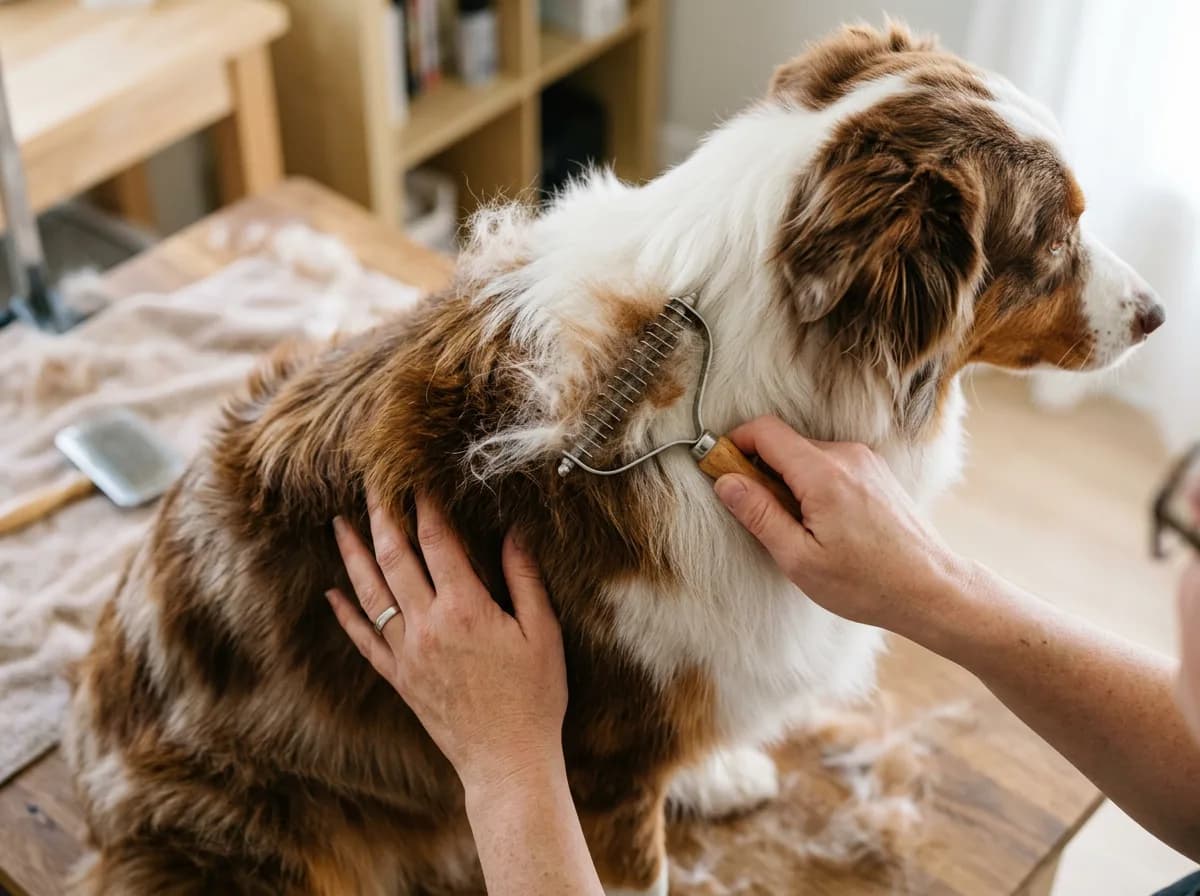
Aussies wear a water-resistant double coat of medium length that sheds year-round and blows out heavily twice a year in spring and fall. A red merle's marbling and a red tri's copper points look their best when the coat is clean and the undercoat is kept from matting.
Brush two to three times a week with a slicker brush and an undercoat rake, stepping up to daily during the seasonal blowout to stay ahead of the shed. Bathe only as needed, roughly every one to three months or when the dog is genuinely dirty, because over-bathing strips the coat's natural oils and can leave the skin dry. Do not shave an Aussie's double coat: it does not help with heat and can permanently alter how the coat grows back. Round out grooming with regular nail trims, ear checks, and dental care.
Feeding a Red Australian Shepherd
Diet is not color-specific, but it is central to keeping a hard-working Aussie sound. Feed a complete and balanced diet formulated to AAFCO nutrient standards for the dog's life stage, and match portions to a medium, athletic build (adult Aussies generally run 40 to 65 pounds). Active and working Aussies burn more calories than couch companions, so adjust intake to keep a lean body condition where you can feel ribs without a fat pad over them. Puppies do best on a diet built for their growth stage, fed on a consistent schedule. When you change foods, transition gradually over about a week to avoid stomach upset, and talk to your veterinarian before adding supplements or switching to a specialized diet.
Is a Red Australian Shepherd Right for You?
A red Aussie rewards the right home enormously and frustrates the wrong one. If you are active, home enough to provide daily engagement, and genuinely want a dog that thinks alongside you, the breed is hard to beat, and the red coat is a beautiful bonus. If you want a low-maintenance, low-energy pet, the color will not change the fact that this is a demanding working dog under the pretty coat.
Buy on health testing first, temperament second, and color a distant third. A responsible breeder will show you OFA hip results, CAER eye clearances, and DNA panels, will never breed merle to merle, and will not charge a "rare red" surcharge as a substitute for those clearances. For a broader look at how coat color inheritance works across breeds, our guide to Rhodesian Ridgeback colors walks through similar recessive-red genetics in another breed, and you can browse more breed profiles in our dog breeds library. For coat, skin, and general wellness reading, our pet health section covers the conditions mentioned above in more depth.
Frequently Asked Questions
How to Tell a Red Aussie From a Black-Based Aussie
The fastest way to identify a red Australian Shepherd is to read the pigment, not the coat pattern. A red (liver-based) Aussie has a liver-brown nose, brown eye rims, and brown paw pads. A black-based Aussie, whether a blue merle or a black tri, has a black nose, black eye rims, and black pads. That tell holds even when two coats look alike: a pale red merle and a blue merle can both read as "mottled" from across a yard, but the nose leather settles it instantly. The brown pigment is present from birth, so even a solid red puppy that has not yet deepened into its adult liver tone already shows the brown nose and rims. One caveat: a nose that fades to pink in cold weather ("snow nose") is a harmless seasonal change, not a separate color, so confirm with the eye rims and pads, which stay brown year-round on a true red.
Red Aussies in the Show Ring vs the Pet Home
Red is fully accepted under both the ASCA and AKC breed standards, so a well-marked red merle or red tri can be shown and finish a championship exactly like a blue merle. Where color enters judging is white placement, not the red base itself. Both standards call white on the body, between the withers and the tail, a disqualification, and excessive white on the head or around the eyes is faulted, partly because heavy white can track with the same pigment-related deafness and eye risks seen in double merles. A red Aussie carrying a lot of body white or a mostly white face may therefore be graded "pet quality" in the ring while being perfectly sound and lovely at home. For a companion, none of that scoring matters. If you specifically want a show prospect, buy from a breeder who understands white-factored pairings and can point to the pigment and markings that actually meet the standard.
- A red Aussie ruled "pet quality" for cosmetic white or off-standard markings is just as healthy, trainable, and affectionate as a show dog. Conformation grading scores a dog against a written standard, not how good a companion it will be.
Related on Petful
- Blue Merle Australian Shepherd: Pattern & Genetics
- Merle Dog Guide: Genetics, Breeds, and Health
- Golden Retriever Colors: A Complete Shade Guide
- Doberman Colors: Every Coat, Rarity, and Genetics
Red Aussies are less common than blue merles and black tris because the red base is a recessive gene that needs two copies to show, but red is still a fully recognized standard color, not a mutation. Within the reds, red merle and red tri are moderately common, red bi is less common, and solid red (a liver coat with no white or copper) is the rarest of all. "Rare" reflects visual scarcity, not added health or working value.
The best food for an Australian Shepherd is a complete and balanced diet formulated to AAFCO nutrient standards for the dog's life stage, matched to a medium, athletic build of roughly 40 to 65 pounds. Active and working Aussies need more calories than sedentary pets, so adjust portions to keep a lean body condition. Choose a growth formula for puppies, transition new foods gradually over about a week, and ask your veterinarian before adding supplements.
Combine hard physical exercise with real mental work, because an Aussie needs both. Long hikes, running, fetch, and dog sports like agility, herding, flyball, and dock diving burn energy, while puzzle feeders, training sessions, scent games, and trick work tire the mind. A structured training game often exhausts an Aussie faster than distance walking alone, and a mentally engaged dog is far less likely to invent destructive jobs at home.
Bathe an Australian Shepherd only as needed, roughly every one to three months or when the dog is genuinely dirty or smelly. Over-bathing strips the double coat's natural oils and can dry the skin. Between baths, brush two to three times a week (daily during the twice-yearly seasonal shed) with a slicker brush and undercoat rake to keep the coat clean and mat-free.
A purebred Australian Shepherd from a reputable, health-testing breeder typically costs around $1,500 to $2,500 up front, and red coats are usually priced within that same range. Some breeders add a premium for "rare" solid red or striking red merle marking, but color alone does not justify skipping health clearances. Budget beyond the purchase price too: ongoing care commonly runs $100 to $400 per month.
"Rage syndrome" is a rare neurological condition (also called sudden onset aggression) in which a dog shows sudden, unprovoked aggression that it appears unable to control, sometimes followed by a return to normal behavior. It is uncommon in Australian Shepherds and is not linked to coat color. True rage syndrome is distinct from ordinary reactivity or resource guarding, so any sudden severe behavior change warrants a full veterinary and behavioral workup rather than self-diagnosis.
Yes, Australian Shepherds can eat cooked eggs in moderation, and scrambled, boiled, or poached plain eggs are all fine as an occasional treat or food topper. Cook them plain, with no butter, oil, salt, or seasoning, and avoid raw eggs, which carry a salmonella risk and can reduce nutrient absorption. Keep eggs to a small share of daily calories so they do not unbalance a complete diet.
An Aussie shows attachment by staying close and following you room to room, making relaxed eye contact, leaning into you, bringing toys, and settling calmly near you. Because Aussies are intensely people-oriented herding dogs, many also "check in" during walks, greet you enthusiastically, and want to work or train alongside you. Loose, wiggly body language and a desire to be involved in your activities are the clearest signs your red Aussie is bonded to you.

Coreen Saito is a pet writer and longtime shelter volunteer with more than a decade in animal rescue. She covers cat behavior, breed care, and the small, ordinary science of sharing a life with companion animals, with a particular focus on honest takes about the products and decisions that actually matter. At home in Arizona, she's outranked by Mac (a dog with the loudest opinion in the house), Rebel (a cat who governs by quiet authority), and Meri (an orange tabby who runs the late shift and the laundry basket). She writes about all three, plus the rescues that keep coming through her life, at LifeWithMinty.com.
Sign up for expert-backed reviews and safety alerts all in one place.