Merle Dog Guide: Genetics, Breeds, and Health
A merle dog carries a striking marbled coat from the M locus gene, but the same gene drives serious risk in double merles. Here is the genetics, the breeds that carry it, the deafness and blindness dangers, and how to buy or breed merle responsibly.
Petful is reader supported. As an affiliate of platforms like Amazon and Chewy, we may earn a commission when you buy through links on this page. There is no extra cost to you.
A merle dog carries one of the most striking and most misunderstood coat patterns in the canine world: a marbled swirl of diluted patches scattered across a darker base color, often paired with blue eyes and pink-flecked noses. The look is beautiful, and it sells. But the same gene that creates that mottled coat also carries real, documented health risk, and that risk is not evenly spread. Understanding the difference between a healthy single merle and a high-risk double merle is the single most important thing any prospective owner or breeder can learn.
This guide walks through exactly what the merle pattern is, the genetics of the M locus that produces it, which breeds legitimately carry it, and the serious deafness and blindness risks tied to double merle breeding. It leans on primary genetic and veterinary sources so you can separate the marketing hype around "rare merle" puppies from what the science actually says.
- 1Merle is a dominant coat pattern caused by a mobile DNA insertion in the PMEL gene that randomly dilutes patches of pigment.
- 2A single-merle dog (one copy) is typically healthy; a double merle (two copies) faces high rates of deafness and eye defects.
- 3Breeding two merles together is the core welfare problem, and responsible registries refuse to register merle-to-merle litters.

Sign up for expert-backed reviews and safety alerts all in one place.
What is a merle dog?
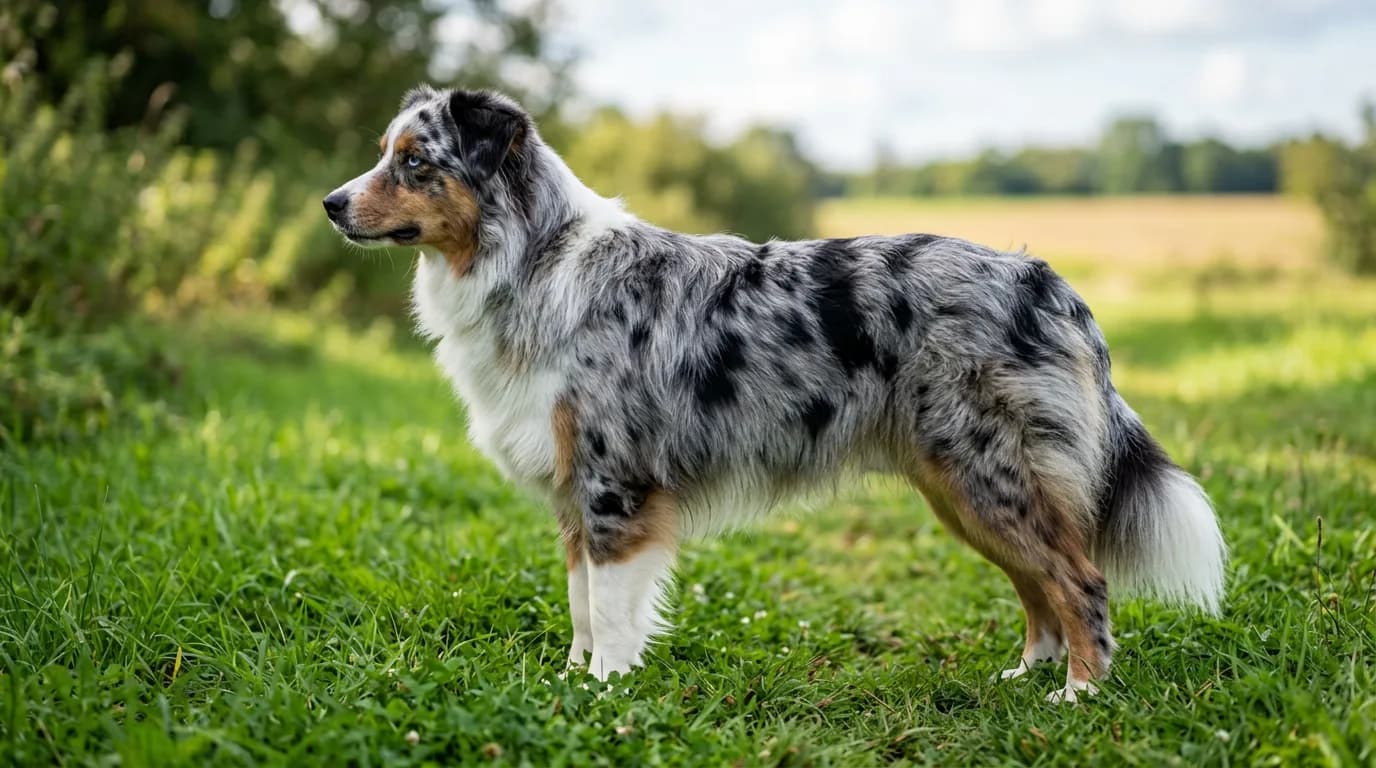
Merle is a coat pattern, not a breed and not a color of its own. It takes whatever base color a dog already has, black, liver (brown), or their diluted versions, and randomly lightens irregular patches of it. The result is a marbled or mottled effect: solid darker zones marbled against paler, washed-out areas of the same underlying pigment.
Because the dilution is patchy and random, no two merle dogs look exactly alike, and even littermates from the same parents can range from heavily marbled to almost solid. The pattern also frequently affects pigment beyond the coat. Merle can lighten the eyes to blue or partial blue (heterochromia, where the two eyes differ in color, or even a single eye split between two colors), and it can leave pink or "butterfly" mottling on the nose and paw pads.
A key point that trips up new owners: merle only shows up on a dog that has eumelanin (black or liver pigment) to dilute. On a dog whose coat is entirely phaeomelanin (red or yellow), like some solid-red dogs, the merle gene can be present and completely invisible in the coat. That "hidden" or "cryptic" merle is exactly why merle-to-merle accidents happen even when a breeder swears only one parent was merle.
- When someone advertises a "merle" puppy, they are describing how the pigment is distributed, not a distinct pigment. Underneath every blue merle is a black-based dog, and underneath every red or chocolate merle is a liver-based dog. The base color decides the shade; the merle gene decides the marbling.
The genetics of the M locus
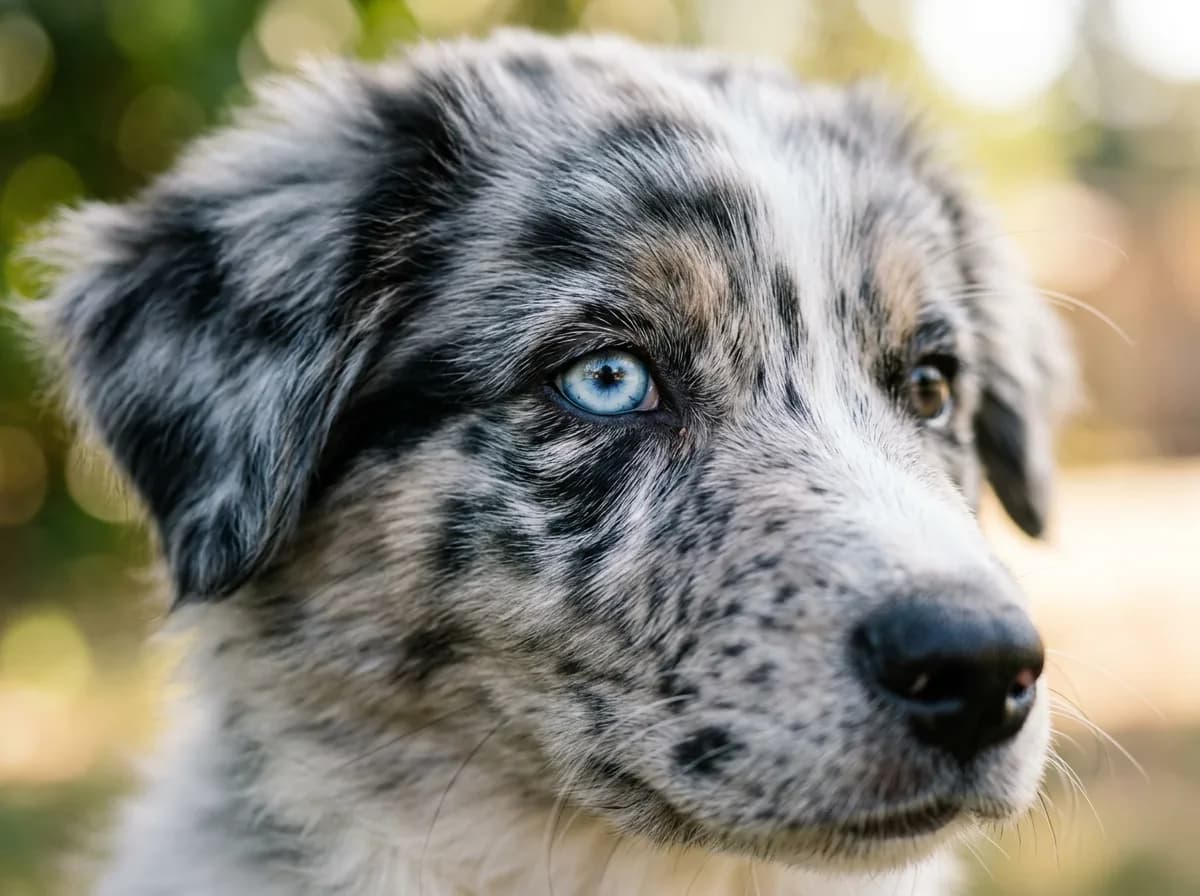
Every merle dog owes its coat to a single stretch of DNA that geneticists call the M locus, which sits on the canine PMEL gene (also written SILV). PMEL normally helps build the structure that stores and organizes melanin inside pigment cells. When a mobile piece of DNA (a SINE, or short interspersed nuclear element) inserts itself into that gene, it disrupts pigment production in a random, patchy way. That disruption is what you see as the merle coat.
Petful may earn a commission when you click through to Chewy, at no extra cost to you.
It is a dominant pattern
Merle is inherited as an incompletely dominant trait. A dog needs only one copy of the merle insertion to display the pattern. That copy came from one merle parent. If you breed a merle to a non-merle, on average about half the litter will be merle and half will be solid, and none of the solids will carry it forward (with the important exception of cryptic merle, covered below).
Geneticists write the merle allele as M and the non-merle version as m. So:
- m/m is a non-merle dog (two normal copies).
- M/m is a single merle: one merle copy, one normal copy. This is the typical, healthy, patterned merle you see and want.
- M/M is a double merle: two merle copies, one from each merle parent. This is the high-risk combination.
The insertion has a length, and length matters
The reason modern merle genetics is more complicated than "you have it or you don't" is that the SINE insertion is unstable. It can shorten or lengthen as it passes from parent to pup, and the LENGTH of the insertion changes how strongly it disrupts pigment. Research and testing labs now describe a spectrum of merle alleles by the size of that insertion, roughly from shortest to longest:
- Cryptic or "phantom" merle (Mc): the insertion is so short it barely affects the coat, so the dog can look almost solid while still carrying and passing on merle.
- Atypical merle (Ma): a slightly longer insertion, often producing a diluted, washed, or patchy-but-subtle look, sometimes with only faint patches.
- Classic or standard merle (M): the length range that produces the clear, textbook marbled pattern.
- Harlequin-length and long insertions (Mh): the longest insertions, associated with the most dramatic dilution and, when doubled up, the greatest risk.
- A cryptic (Mc) dog can look completely solid and still carry a merle allele. If it is bred to a visible merle, some pups can inherit two merle alleles and be functionally double merle, with all the deafness and blindness risk that carries, even though only one parent "looked" merle. This is the strongest argument for DNA testing both parents before any merle breeding.
Because the insertion length can drift between generations, two dogs that both test "merle" may carry different-length alleles, and their puppies can land anywhere on the spectrum. That instability is exactly why a DNA test that reports the specific allele length is far more useful than a simple "merle: yes/no" result.
Why merle DNA testing beats guessing by eye
Coat testing labs sequence the M locus and report both whether a merle allele is present and roughly how long the insertion is. That length report is the useful part. A dog that looks solid red might come back carrying a classic-length merle allele that never showed in the coat because the dog had no black or liver pigment to dilute. A dog that looks like a light, washed merle might actually carry an atypical (Ma) allele that, if paired with a long insertion from the other parent, could still produce affected puppies. You cannot read any of that off a photograph.
The practical takeaway for anyone breeding: test both parents, look at the reported alleles side by side, and never assume the visible coat tells the whole story. A single visible merle bred to a dog that "looks solid" but secretly carries a cryptic allele is one of the most common ways an unintentional double merle litter is produced. The test costs a fraction of what a single puppy sells for, and it is the only reliable way to keep merle-to-merle pairings from happening by accident.
The pattern is old, the marketing is new
Merle has existed in herding breeds for a very long time; it is documented as a working-dog trait well before the current wave of "exotic color" marketing. In its native breeds, the pattern was simply one of several accepted coats, managed by breeders who understood not to double it up. What changed in recent years is the deliberate spread of merle into breeds that never carried it, chasing a premium price. That shift, from a managed traditional trait to a marketed novelty, is the root of most of the welfare problems now attached to the word "merle."

Petful may earn a commission when you click through to Chewy, at no extra cost to you.
Which breeds carry the merle gene
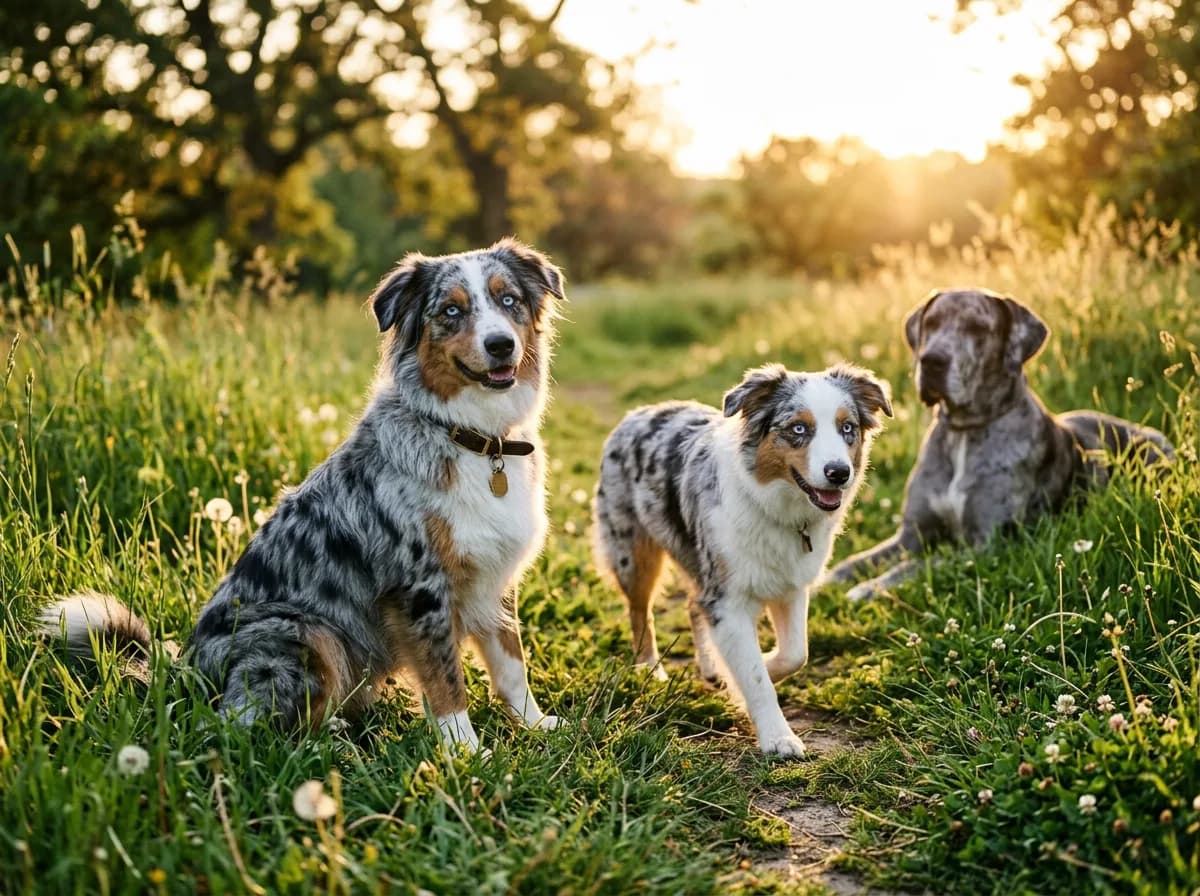
Merle is naturally established in a defined set of breeds, mostly herding and working types where the pattern has been part of the breed for generations. It is emphatically NOT native to every breed, and its sudden appearance in a breed that never historically carried it is a red flag for crossbreeding.
Breeds where merle is a long-standing, recognized part of the coat include:
- Australian Shepherd (blue merle and red merle are signature looks)
- Border Collie
- Shetland Sheepdog (Sheltie)
- Rough and Smooth Collie ("blue merle" collies)
- Cardigan Welsh Corgi
- Dachshund (where the pattern is traditionally called "dapple")
- Great Dane (as part of the harlequin and merle family)
- Catahoula Leopard Dog
- Australian Cattle Dog and Koolie
- Pyrenean Shepherd, Bergamasco, and Welsh Sheepdog
A few of these breeds show how differently merle behaves depending on the breed's history:

Petful may earn a commission when you click through to Chewy, at no extra cost to you.
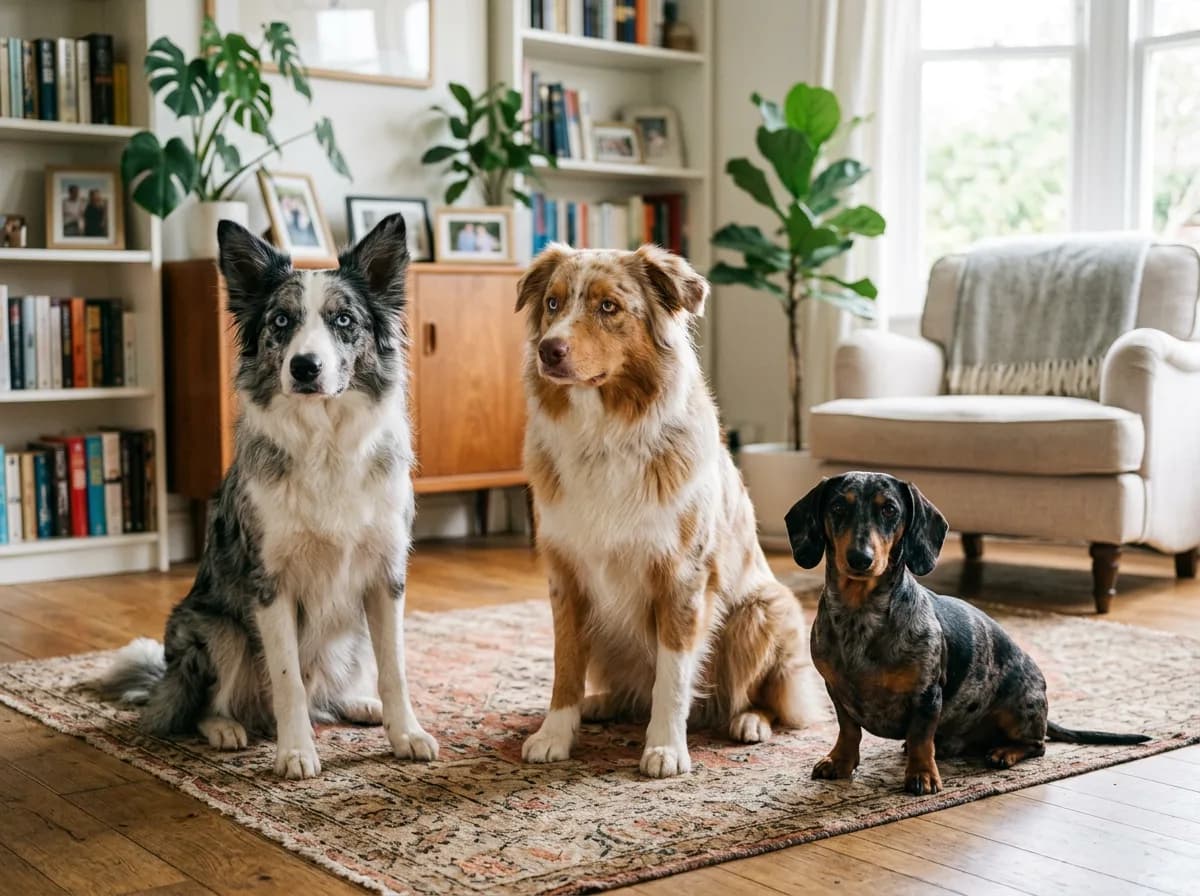
- Australian Shepherd: merle is a defining, celebrated coat. Blue merle and red merle Aussies are shown, worked, and loved worldwide, and responsible Aussie breeders have managed the gene carefully for generations.
- Dachshund: the exact same gene is present, but the breed calls it "dapple." A "dapple Dachshund" and a "merle Aussie" are carrying the same M-locus trait under two different traditional names, and the double-dapple welfare warning is identical to the double-merle one.
- Great Dane: merle underlies the harlequin pattern, so Dane color genetics carry the same cautions plus an extra modifier layer (covered below).
- Catahoula Leopard Dog: merle (locally called "leopard") is central to the breed's identity, and the same responsible-breeding rules apply.
- Shetland Sheepdog and Collie: "blue merle" is a long-recognized, registry-accepted color in these herding breeds.
You will also see merle heavily marketed in breeds where it is controversial or not traditionally accepted, most notably the French Bulldog, the "merle Pomeranian," the Chihuahua, and various bully-type dogs. In several of these, the merle allele is widely believed to have been introduced through outcrossing rather than existing natively, which is one reason major breed registries do not accept merle as a standard color in those breeds. Buyers paying a premium for a "rare merle Frenchie" should understand they may be paying for a pattern the parent breed club considers a fault or a sign of mixed ancestry, and in flat-faced breeds that layer merle's risks on top of the breed's existing eye and breathing concerns.
- If a breed did not historically carry merle and a breeder is now selling merle puppies in it, ask for the DNA panel on both parents. A legitimately merle breed will have a documented history of the pattern; a sudden merle line in a non-merle breed usually traces back to an outcross the breeder may not disclose.
For a broader look at how a single breed's coat colors are structured and named, our Rhodesian Ridgeback color guide is a useful companion, and you can browse the full Petful dog breed library to see how coat and color are described breed by breed.
Double merle: the real health risk
Here is the part that matters more than any coat photo. A single merle dog (M/m) is, as a rule, a healthy dog whose main "merle-related" issue is a slightly higher chance of some eye quirks. The serious welfare problem is the double merle: a dog that inherited a merle allele from BOTH parents (M/M), which only happens when two merle dogs are bred together.
Double merle dogs are frequently born with severe, permanent sensory defects because the same pigment disruption that lightens the coat also interferes with pigment cells the body needs to build a working inner ear and eye. Where a dog ends up with large unpigmented (often white) areas over the ears or eyes, the structures underneath can fail to develop normally.
The documented consequences of double merle breeding include:
- Deafness in one or both ears, sometimes total and permanent
- Small, malformed, or missing eyes (microphthalmia and related defects)
- Colobomas, cataracts, and other structural eye abnormalities that can cause partial or complete blindness
- Increased sensitivity to light and other vision problems
- A predominantly white coat, which is a visual marker of the underlying pigment loss, not a desirable "rare" color
- A double merle dog exists because two merle dogs were mated. The deafness and blindness are not random misfortune, they are the predictable statistical outcome of that pairing. This is why responsible breeders and reputable registries treat merle-to-merle mating as off-limits.
The strength of this consensus is why the Royal Kennel Club, for example, states plainly that it will not register puppies produced from merle-to-merle matings, because such crosses carry an increased risk of eye and ear problems that can cause blindness and deafness. University veterinary genetics laboratories that offer merle testing exist precisely so breeders can avoid doubling up the allele by accident. The peer-reviewed literature on the merle SINE insertion (see, for example, the open study archived at the National Library of Medicine's PMC repository) established the molecular mechanism that links the insertion, the pigment disruption, and the auditory and ocular defects seen in homozygous (double) merles.

Petful may earn a commission when you click through to Chewy, at no extra cost to you.
- 1Single merle (one copy) = typically healthy, occasional minor eye variation.
- 2Double merle (two copies) = high rates of deafness, malformed eyes, and blindness.
- 3The entire risk is created by breeding two merles together, which is avoidable with DNA testing and responsible pairing.
Ethics: buying and breeding merle responsibly
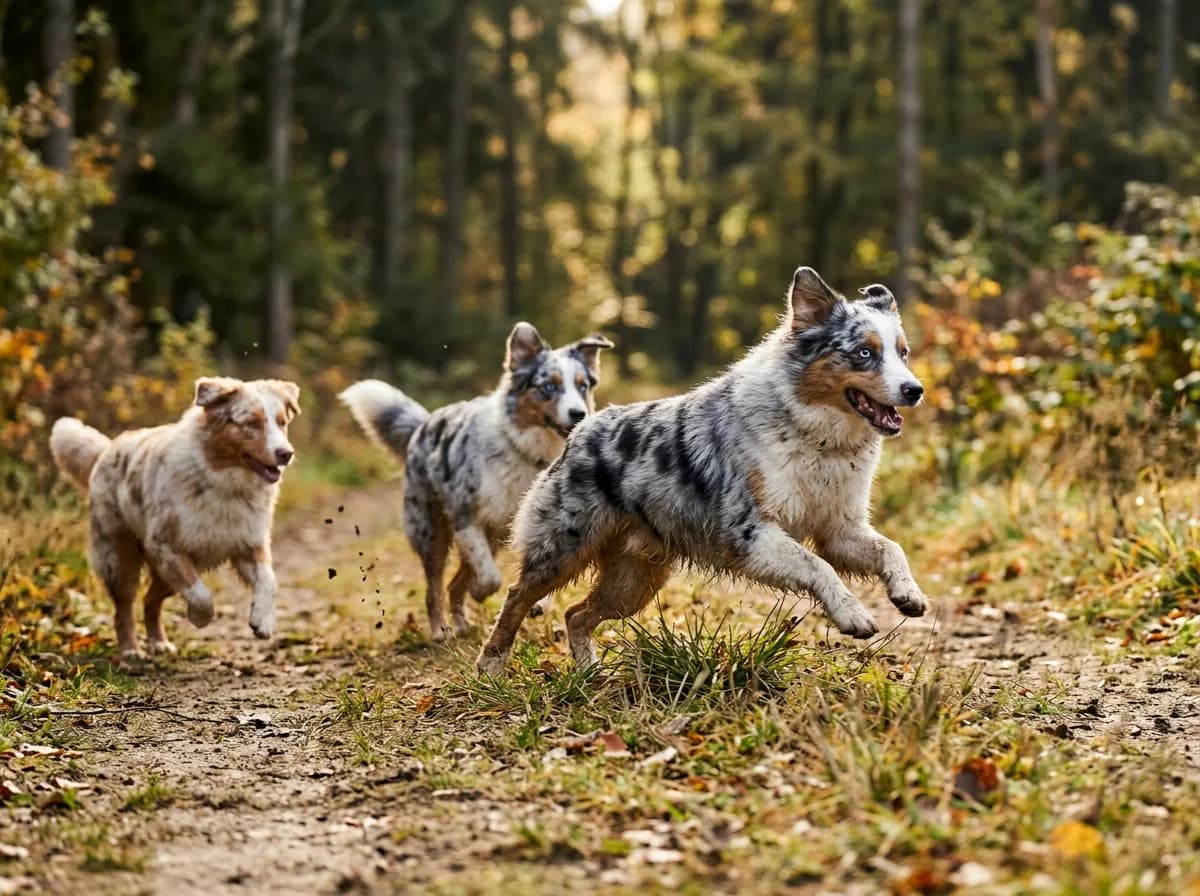
Because the merle pattern commands high prices, it attracts breeders who chase the look and ignore the genetics. That combination is exactly how double merle litters, and the deaf and blind dogs they produce, keep appearing. A few principles separate responsible merle ownership and breeding from the rest.

Petful may earn a commission when you click through to Chewy, at no extra cost to you.
For breeders
- Never breed merle to merle. This is the non-negotiable rule. Pair a merle only with a confirmed non-merle (and confirm it with a DNA test, not just by looking, because cryptic merle hides).
- DNA test both parents for the specific merle allele and its length before any planned merle litter.
- Do not breed for double merle "for the white coat" or "for the blue eyes." Those traits in a double merle are markers of the very defects that harm the dog.
- Follow the breed registry's rules. If a registry refuses merle-to-merle litters, that is the floor, not an obstacle to route around.
For buyers
- Ask to see the DNA results on both parents. A serious breeder will have them.
- Be skeptical of "rare," "exotic," or "designer" merle marketing, especially in breeds that do not naturally carry merle. Rarity language is often a price justification, not a health promise.
- If a mostly white "merle" puppy is offered at a premium, understand it may be a double merle with vision or hearing loss. That is a dog that can absolutely be a wonderful pet, but it should never be a dog you pay MORE for as if the white coat were a feature.
- Adopting a deaf or blind double merle from a rescue is a genuinely good thing to do. Paying a breeder a premium to intentionally produce more of them is not.
- Double merle dogs that are already here deserve loving homes, and many live full, happy lives with training adapted to their senses (hand signals for deaf dogs, consistent room layouts and scent cues for blind dogs). The ethical line is about not deliberately breeding MORE of them, not about the worth of the dogs themselves.
Merle patterns and look-alikes
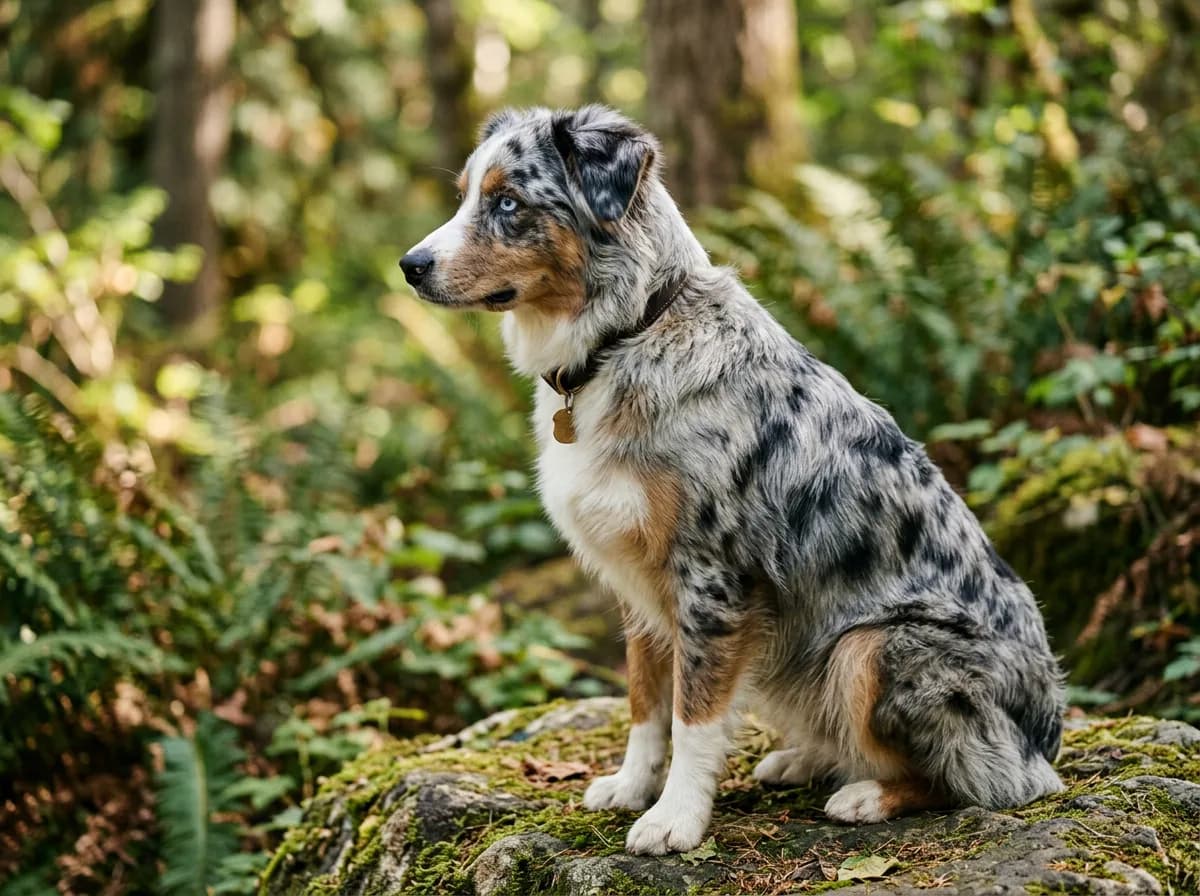
Not every marbled or spotted dog is genetically merle, and knowing the difference protects you from mislabeled marketing.
True merle variations
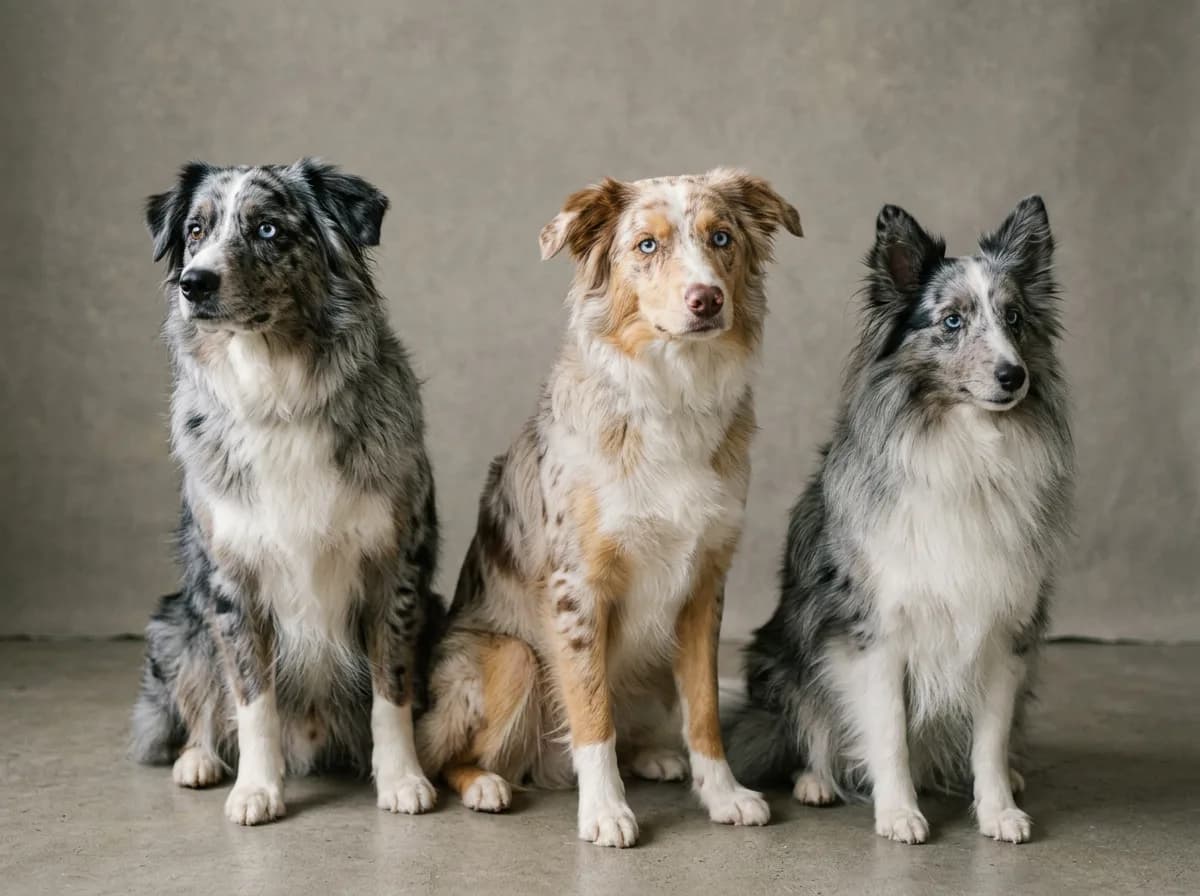
- Blue merle: a black-based dog with the merle pattern, giving gray-and-black marbling. The most familiar merle look.
- Red or "liver" merle: a brown-based dog with merle, giving tan-and-brown marbling.
- Dilute merles: when the dog also carries the dilution (d) gene, blue merle becomes a softer "slate," and red merle softens too.
Patterns often confused with merle
- Dapple: in Dachshunds, "dapple" is simply the breed's traditional word for merle. Same gene, different name.
- Harlequin: seen in Great Danes, harlequin is a merle base with an additional modifier that turns the diluted areas white, leaving torn black patches on white. It is built ON merle, which is why Dane color genetics are tied to the same welfare cautions.
- Brindle, roan, and ticking: these are entirely separate patterns. A brindle "tiger-stripe" or a heavily ticked coat is not merle, even though marketing sometimes blurs the terms.
| Trait | Single merle (M/m) | Double merle (M/M) |
|---|---|---|
| Merle copies inherited | One (from one merle parent) | Two (from two merle parents) |
| Typical coat | Clear marbled pattern | Predominantly white with patchy merle |
| Hearing | Usually normal | High risk of partial or total deafness |
| Vision | Usually normal, occasional minor eye variation | High risk of malformed eyes and blindness |
| Health outlook | Generally healthy | Often affected; needs adapted care |
How merle affects eyes, ears, and pigment
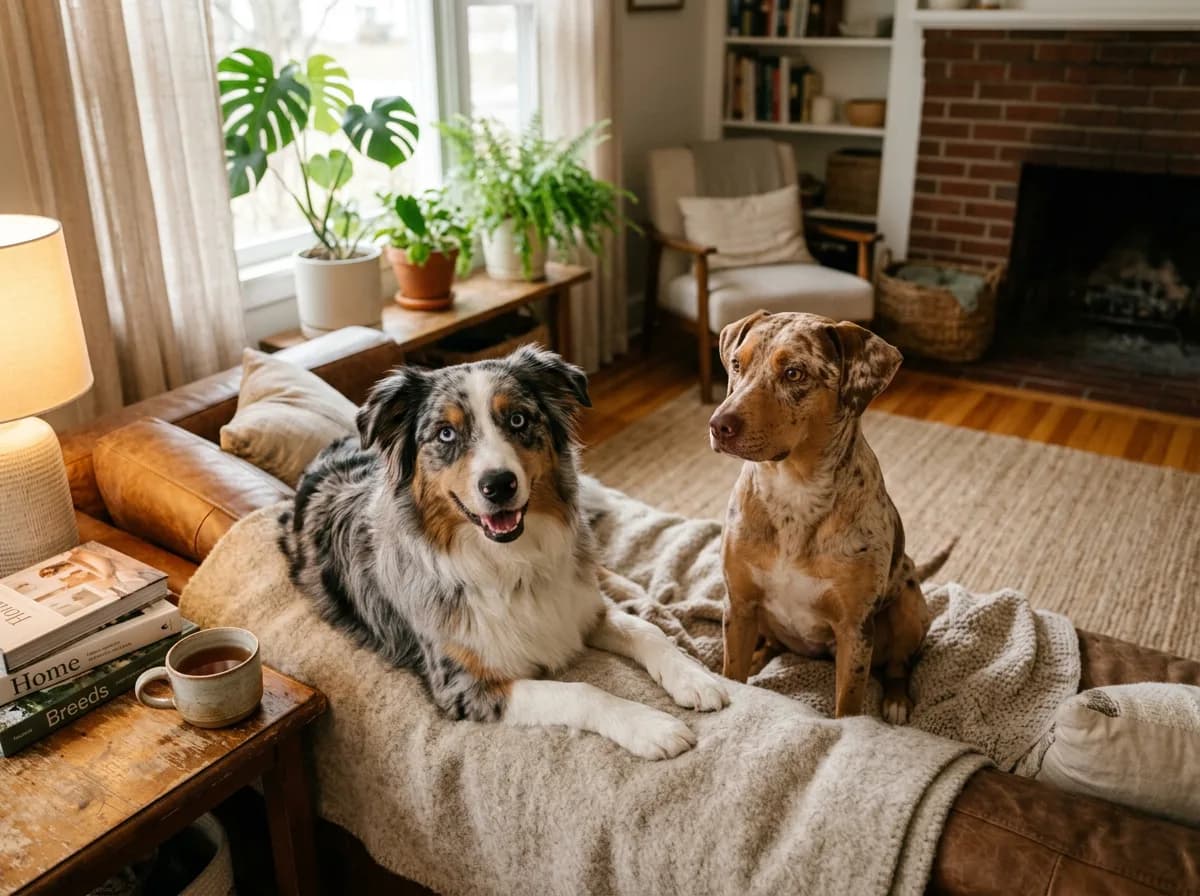
The link between the merle coat and sensory health comes down to one biological fact: the pigment cells (melanocytes) that color a dog's coat are the same lineage of cells that the inner ear and parts of the eye rely on to develop and function. When merle dilutes or eliminates pigment in a region, it can also compromise the melanocyte-dependent structures underneath.
That is why the risk tracks so closely with WHITE areas over the head. A single merle with normal pigment around the ears and eyes almost always hears and sees fine. A double merle with large unpigmented zones over one or both ears, or with poorly pigmented eyes, is where deafness and eye defects cluster. Blue eyes alone in an otherwise well-pigmented single merle are usually just a cosmetic effect of the pattern and not a sign of a problem, but in a double merle, extensive lack of pigment around the eye is a warning sign worth a veterinary ophthalmology check.
If you own or are considering a merle dog, a baseline hearing check (a BAER test, which measures the ear's electrical response to sound) and an eye exam are reasonable, especially for any dog whose parentage or merle status is uncertain.
Living with a deaf or blind merle
A double merle that has already been born deaf, blind, or both is not a tragedy to be pitied, it is a dog that needs a slightly different toolkit. Deaf dogs train beautifully on hand signals and vibration cues, learn to check in with their owner visually, and are kept safe with a fenced yard and a leash near roads. Blind dogs map a home by memory and scent, so keeping furniture in consistent places and using textured mats or scent markers at doorways and stairs helps them move confidently. Many owners of dual-sensory (deaf-blind) merles report that their dogs live full, joyful lives once the household adapts.
None of that changes the core ethical point. The right response to a deaf or blind double merle already in the world is a good home and adapted care. The wrong response is treating those dogs as proof that "merle turned out fine," and deliberately breeding more of them for the look.
Harlequin and the merle base
Great Dane owners run into a special case. The harlequin pattern, torn black patches on a white background, is not a separate gene from merle; it is built on top of a merle base by an additional modifier. That means harlequin Danes carry merle, and the same merle-to-merle cautions apply, layered with the harlequin modifier's own lethal combinations. Dane color breeding is therefore some of the most genetically complex in the dog world, and it is a domain where DNA testing is not optional. If you are drawn to a harlequin or merle Dane, buy only from a breeder who can show you the full color-gene panel on both parents.
Common myths about merle dogs
The premium pricing and heavy marketing around merle have produced a lot of half-truths. A few worth clearing up:
- Myth: "All merles have health problems." Reality: single merles are typically healthy. The concentrated risk sits with double merles, which only exist because of merle-to-merle breeding.
- Myth: "Blue eyes mean the dog is sick." Reality: blue or partially blue eyes are a normal cosmetic effect of the merle pattern in a well-pigmented single merle. It is the large white, unpigmented areas of a double merle, not blue eyes alone, that signal risk.
- Myth: "A mostly white merle is the rarest and best." Reality: a predominantly white "merle" is usually a double merle, and the white coat is a visible marker of pigment loss tied to deafness and eye defects. It is a warning sign, not a premium feature.
- Myth: "Only one parent was merle, so the puppies are safe." Reality: cryptic (hidden) merle means a dog can carry and pass merle while looking solid. Without DNA testing both parents, "only one looked merle" is not a guarantee.
- Myth: "Merle is its own color." Reality: merle is a pattern applied to a base color. Every merle is a black-based or liver-based dog underneath.
- In merle marketing, "rare," "exotic," and "designer" almost always describe scarcity and price, not health, pedigree, or quality. A responsible breeder sells you documented genetics, not adjectives.
Is a merle dog right for you?
If you love the look of a merle dog, the pattern itself is no reason to hesitate, as long as you source the dog responsibly. The most important questions are not about the coat at all; they are about the breed and the breeder. A single merle Australian Shepherd is first and foremost an Aussie: a high-drive, intensely bonded herding dog that needs a job, exercise, and mental work. A merle Dachshund is still a Dachshund, with that breed's back-care needs. Choose the breed for its temperament and needs, then treat merle as a coat detail, not the headline.
When you find a litter, put your energy into vetting the breeder. Ask for the DNA color panel on both parents, confirm that the pairing was not merle-to-merle, ask whether the breeder BAER-tests puppies where hearing is a concern, and walk away from anyone who leans on "rare merle" language instead of health documentation. A good breeder will welcome those questions. A breeder chasing the merle premium will get defensive, and that reaction tells you what you need to know.
- 1Pick the breed for its temperament and needs first, and treat merle as a coat detail.
- 2Vet the breeder harder than the color: DNA panels on both parents, no merle-to-merle pairing.
- 3Health documentation beats "rare" and "exotic" marketing every time.
Frequently asked questions about merle dogs
Related on Petful
- The Merle French Bulldog: Genetics, Health, Price
- Blue Merle Australian Shepherd: Pattern & Genetics
- Red Australian Shepherd: Genetics, Colors, and Care
- Doberman Colors: Every Coat, Rarity, and Genetics
- Poodle Colors: Every Shade, Pattern, and Fade
Merle is a coat pattern, not a breed or a standalone color. A single dominant gene (a SINE insertion in the PMEL gene at the M locus) randomly dilutes patches of a dog's base pigment, producing a mottled, marbled coat. It often also lightens the eyes to blue and mottles the nose. A dog needs only one copy of the merle allele to show the pattern.
A single-merle dog (one copy of the gene) is usually healthy, with at most minor eye variation. The real health problem is the double merle, a dog with two copies from breeding two merles together. Double merles have high rates of deafness in one or both ears and eye defects that can cause partial or full blindness, because the pigment loss also affects the cells the ear and eye need to develop. Breeding two merles together is what creates the risk.
There is no single "most loving" breed, and merle status has nothing to do with affection; it only affects coat and pigment. That said, several merle-carrying herding breeds, such as the Australian Shepherd, Border Collie, and Shetland Sheepdog, are famous for being intensely bonded and devoted to their people, because they were bred to work closely alongside a handler all day. A merle Aussie is not more loving because it is merle, but the breed's working temperament tends to be deeply attached.
Merle puppies often cost more because the pattern is visually striking, marketed as "rare" or "exotic," and in some breeds (like French Bulldogs) is uncommon and in high demand. Price is driven by scarcity and marketing, not by the dog being healthier; in fact, chasing the merle look can push unethical breeders toward risky merle-to-merle pairings. A high price tag is not proof of a well-bred, healthy dog, so always ask for DNA results on both parents.
Yes, merle-patterned puppies are frequently priced higher than solid-colored littermates of the same breed, sometimes substantially so in breeds where merle is trendy or considered rare. The premium reflects demand and marketing rather than any health advantage. Be especially cautious of premium pricing on mostly white "merle" puppies, which can be double merles with hearing or vision loss.
"Clingy" (velcro-dog) tendencies are a temperament trait, not a merle trait. Among merle-carrying breeds, herding dogs like the Australian Shepherd, Border Collie, and Shetland Sheepdog are often described as velcro dogs because they were bred to stay glued to their handler. Outside the merle world, breeds like the Vizsla and various companion breeds are also known for it. Coat pattern does not affect how clingy a dog is.
There is no official ranking, but the merle-carrying herding breeds (Australian Shepherd, Border Collie, Sheltie) are commonly cited as some of the most attached and handler-focused dogs, thanks to their working heritage rather than their coat. If constant companionship matters to you, temperament and breed history are what to research, not whether the dog happens to be merle.
A merle dog's lifespan is set by its breed and overall health, not by the merle pattern itself. A healthy single merle typically lives the normal lifespan for its breed (roughly 10 to 15 years for many merle breeds like Aussies, Border Collies, and Shelties). Double merles are not inherently shorter-lived, but deafness and blindness can affect quality of life and safety, so they need adapted care. In short, a single merle should live a normal breed-typical lifespan.
The bottom line on merle dogs
The merle pattern is one of the most eye-catching coats a dog can wear, and in a healthy single merle from a well-bred litter, it is nothing to worry about. The problem is never the pattern itself, it is the temptation to double it up. Every serious welfare issue tied to merle, the deafness, the malformed eyes, the blindness, traces back to breeding two merle dogs together, and that is a choice a responsible breeder simply never makes.
If you are buying, ask for the DNA panel on both parents, be wary of "rare merle" price tags, and remember that a mostly white "merle" is a warning sign, not a bonus feature. If you are breeding, test first and never pair merle with merle. Do that, and you get everything wonderful about the merle dog with none of the harm.

Coreen Saito is a pet writer and longtime shelter volunteer with more than a decade in animal rescue. She covers cat behavior, breed care, and the small, ordinary science of sharing a life with companion animals, with a particular focus on honest takes about the products and decisions that actually matter. At home in Arizona, she's outranked by Mac (a dog with the loudest opinion in the house), Rebel (a cat who governs by quiet authority), and Meri (an orange tabby who runs the late shift and the laundry basket). She writes about all three, plus the rescues that keep coming through her life, at LifeWithMinty.com.
Sign up for expert-backed reviews and safety alerts all in one place.