Blue Merle Australian Shepherd: Pattern & Genetics
The blue merle Australian Shepherd's marbled coat and blue eyes come from one incomplete-dominant gene layered on a standard Aussie. Here is how the merle pattern and eye color work, why breeding two merles is risky, and what this breed needs.
Petful is reader supported. As an affiliate of platforms like Amazon and Chewy, we may earn a commission when you buy through links on this page. There is no extra cost to you.
The blue merle Australian Shepherd is one of the most recognizable dogs in the world, and for good reason. That marbled silver-gray coat splashed with irregular black patches, often paired with a pair of piercing blue eyes, turns heads at every dog park. But "blue merle" is not a separate breed. It is a coat pattern produced by a single well-understood gene, layered on top of the standard Australian Shepherd. Understanding how that pattern works, why the eye color varies so wildly, and what the genetics mean for a puppy's health will make you a far smarter owner or buyer.
This guide walks through the pattern, the eye color, and the genetics behind the blue merle Aussie, plus the practical care and buying questions people ask most. Everything here is grounded in the live search results people are actually reading and in published veterinary genetics, so you can separate the marketing hype from the facts.
- 1"Blue merle" is a coat pattern, not a breed. The Australian Shepherd underneath is the same breed regardless of color.
- 2The merle gene is an incomplete dominant that dilutes patches of an otherwise black-based coat, creating the marbled gray look and, often, blue or partially blue eyes.
- 3Breeding two merles together produces "double merle" puppies at high risk of deafness and eye defects, which is why responsible breeders never do it.

Sign up for expert-backed reviews and safety alerts all in one place.
What Is a Blue Merle Australian Shepherd?
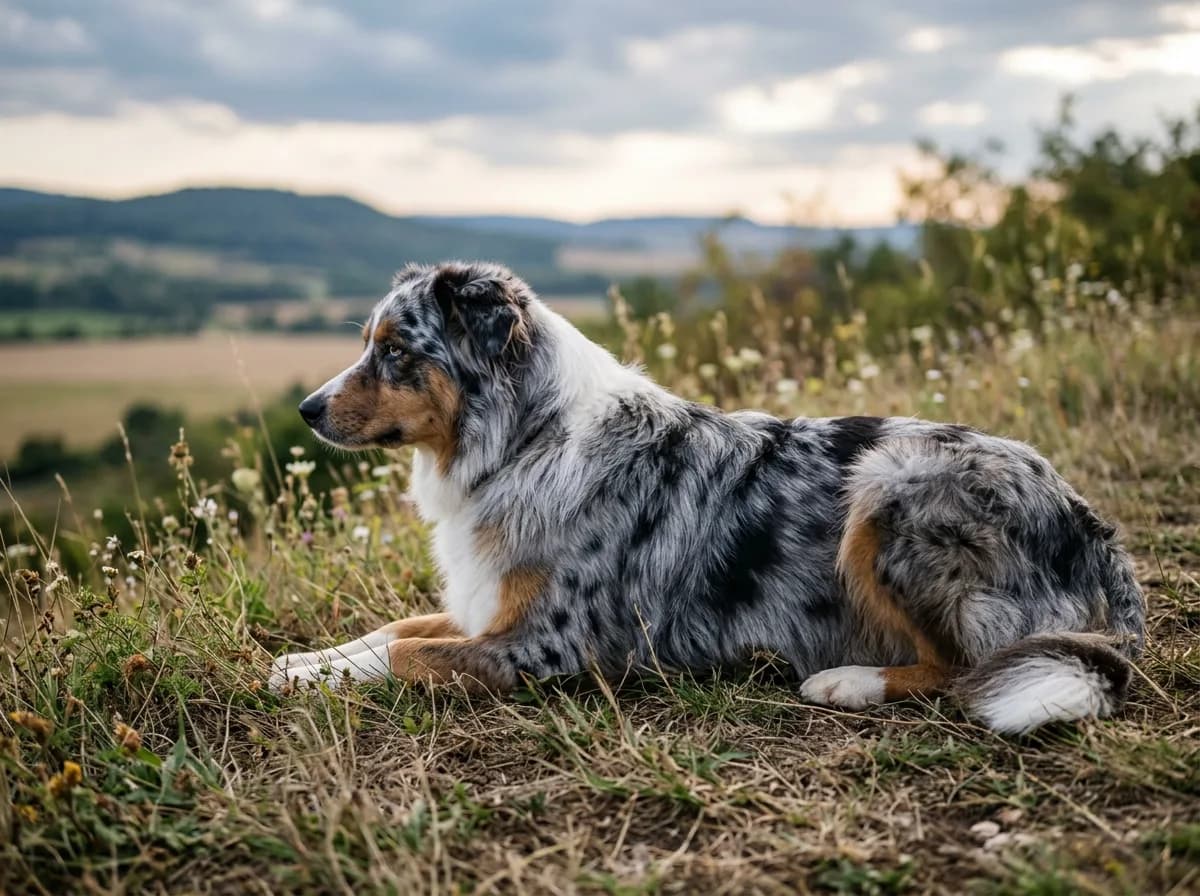
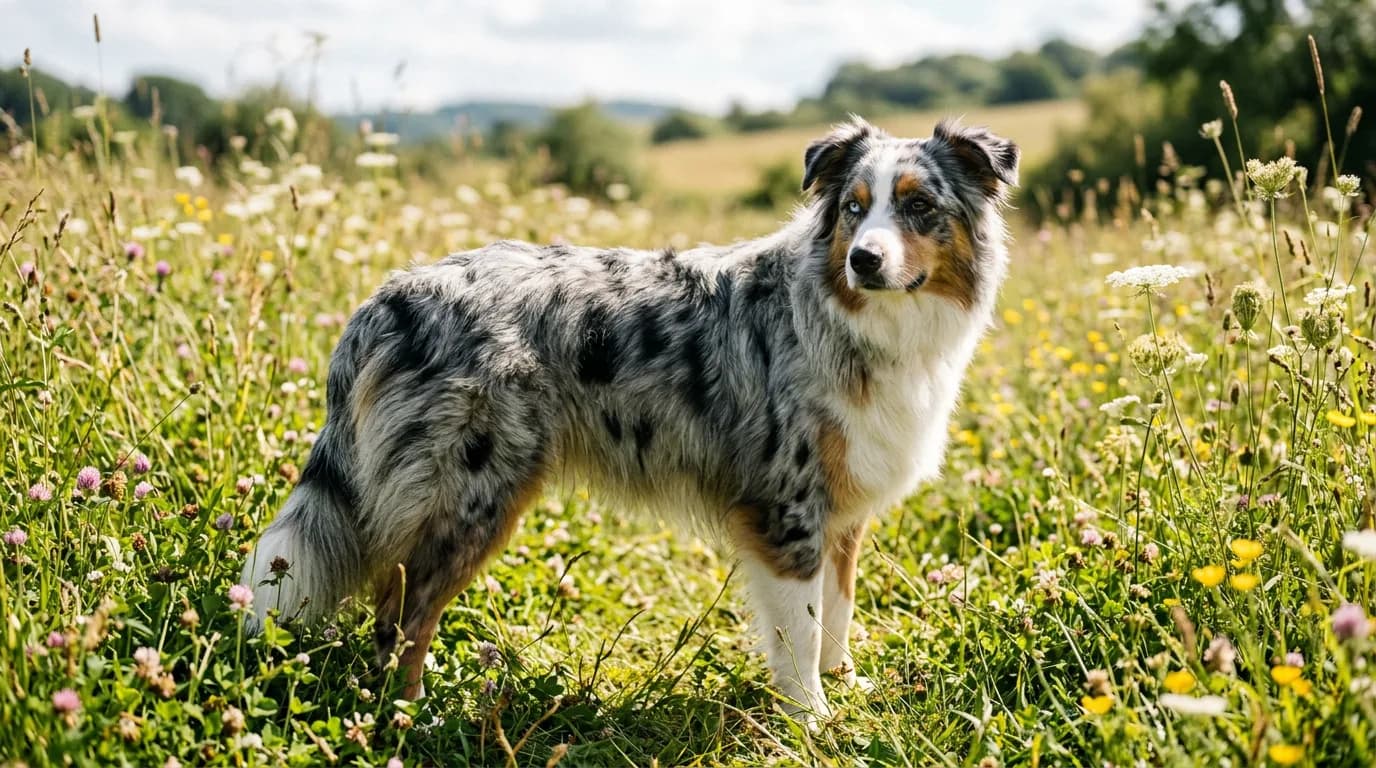
A blue merle Australian Shepherd is a standard Aussie carrying the merle gene on a black-based coat. The gene lightens random areas of the black pigment to a diluted blue-gray, while leaving other patches full black. The result is the classic mottled, marbled pattern that reads as "blue" from a distance, even though there is no true blue pigment in a dog's coat. The "blue" is simply diluted black.
Australian Shepherds come in four recognized base colors: black, red, blue merle, and red merle. A blue merle is the merle pattern applied to the black variety; a red merle is the same pattern on a liver or red-based coat. The two merle colors share identical genetics and differ only in whether the underlying pigment is black or red.
Because the merle pattern is layered on top of the breed, a blue merle Aussie has exactly the same temperament, size, energy level, and care needs as any other Australian Shepherd. The color changes nothing about the dog's behavior or working drive. If you have read that blue merles are calmer, smarter, or more loyal than solid-colored Aussies, that is a myth. They are Aussies first and a color second.

Petful may earn a commission when you click through to Chewy, at no extra cost to you.
- A blue merle Australian Shepherd is not a rare designer variant or a crossbreed. It is a purebred Aussie displaying one of the breed's four standard colors. Temperament, size, and health baseline all come from the breed, not the pattern.
Australian Shepherds are medium-sized herding dogs. Standard Aussies stand roughly 18-23 inches at the shoulder and weigh about 40-65 pounds, with males larger than females, and typically live 12-15 years. Those figures are the same for a blue merle as for any other color. The pattern sits on top of a compact, athletic, working-dog frame built for long days moving livestock.
The Blue Merle Coat Pattern Explained
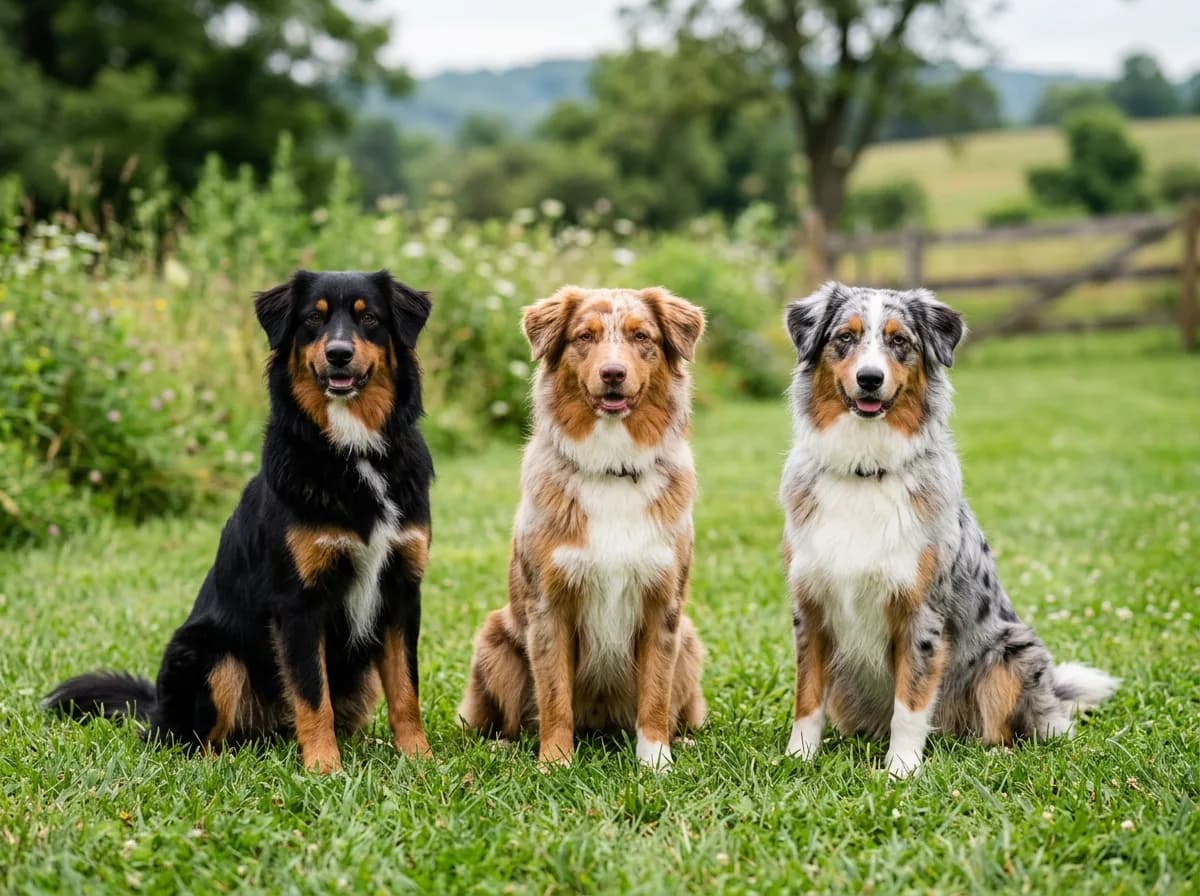
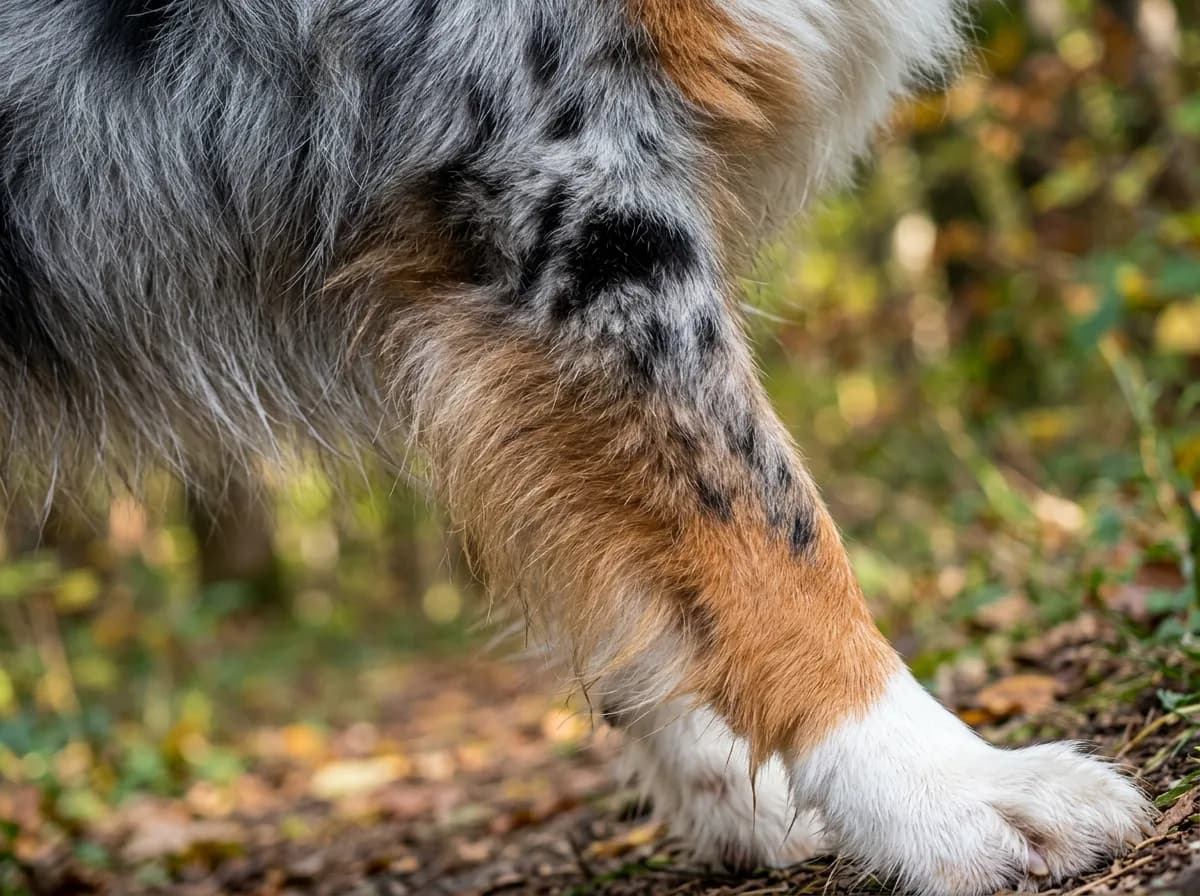
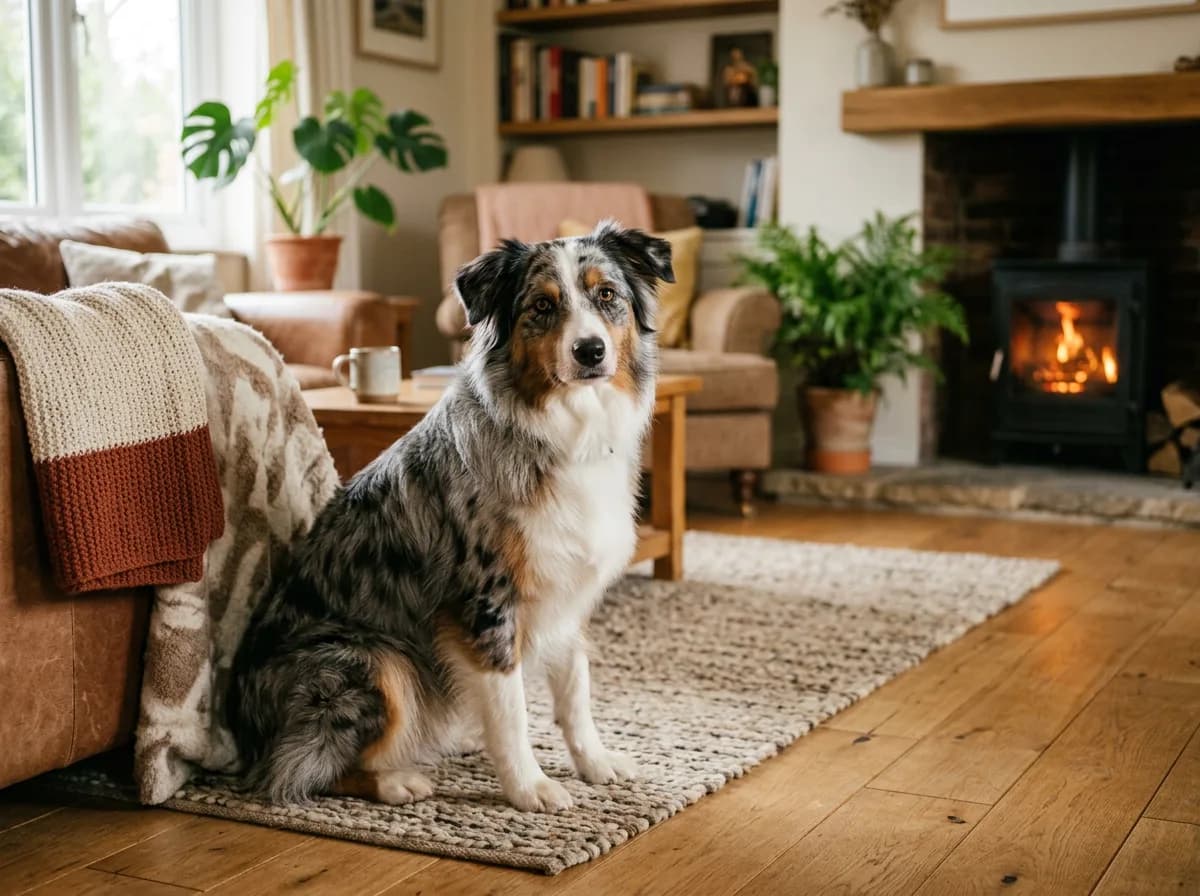
The blue merle coat is a study in controlled randomness. On a single dog you will see full-black patches, diluted gray zones, and often patches of white and copper or tan "points" on the face, chest, legs, and under the tail. No two blue merles look exactly alike, which is a large part of the appeal.
Here is what drives the look:
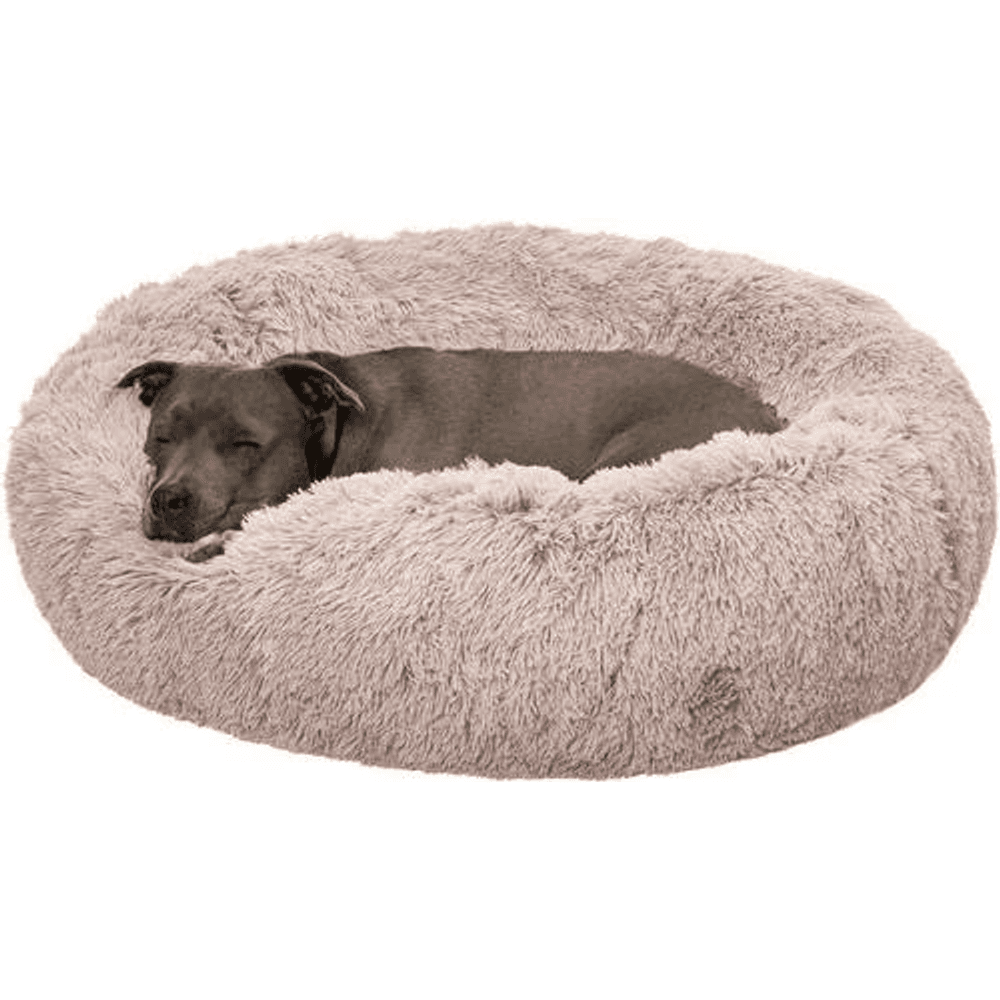
A plush, long-fur donut bolster bed with a raised rim that gives a recovering pet a secure, cushioned place to curl up during the crucial 10 to 14 days after surgery.
Petful may earn a commission when you click through to Chewy, at no extra cost to you.
- Marbling. The merle gene randomly dilutes areas of black to gray, producing the mottled, swirled effect across the body.
- Black patches. Areas the gene leaves untouched stay solid black, giving the coat its high contrast.
- White trim. Many Aussies carry separate white spotting genes that add a white collar, chest blaze, muzzle, and paws.
- Copper points. Tan or copper markings above the eyes, on the cheeks, and on the legs are common and are controlled by a different gene entirely.
Aussie fanciers sometimes sort blue merles into informal subcategories based on how much black versus gray appears and how the white and copper fall. These are descriptive nicknames, not official color divisions. What matters genetically is simply that the dog carries one copy of the merle gene on a black base.
The coat itself is a medium-length, weather-resistant double coat. It sheds year-round with heavier seasonal blowouts, and it needs brushing a few times a week to prevent mats behind the ears and on the hindquarters. The merle pattern has no effect on coat texture or grooming needs. A blue merle and a solid black Aussie groom identically.
Blue Merle Aussie Eye Color and Genetics
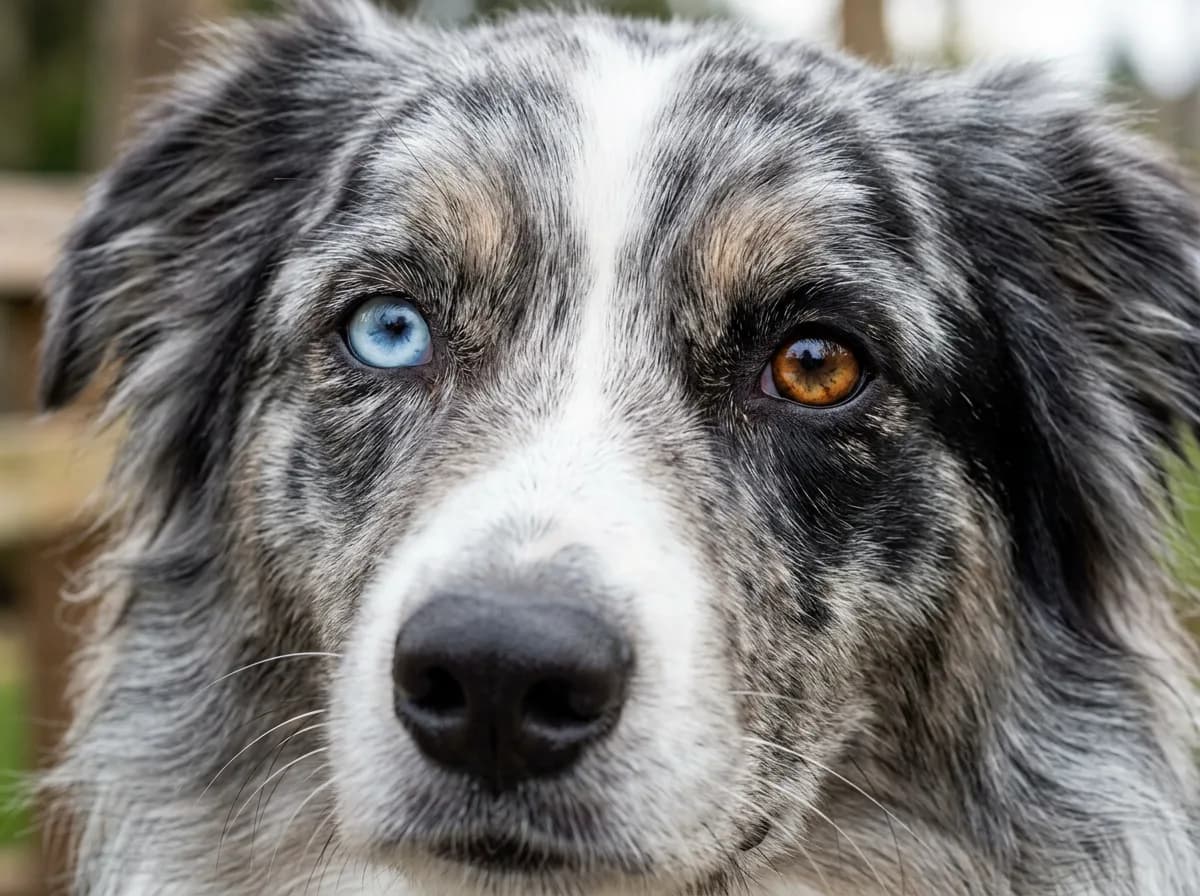
Eye color is where the blue merle really earns its reputation. The same gene that dilutes coat pigment also affects the eyes, so blue merles show an unusually wide range of eye colors, sometimes within a single dog.
You may see:
- Two blue eyes.
- Two brown or amber eyes.
- One blue and one brown eye, a striking mismatch called heterochromia.
- "Split" or "marbled" eyes, where a single iris carries both blue and brown in the same eye.
All of these are normal for a merle-patterned Aussie and none, on their own, indicates a health problem. Blue eyes in a merle dog come from the same pigment dilution that lightens the coat, not from a defect. A blue merle with two blue eyes can have perfectly normal vision.
Petful may earn a commission when you click through to Chewy, at no extra cost to you.
- In a single-merle Aussie, blue or split eyes are a normal expression of the pattern and do not mean the dog is blind or has vision problems. Eye defects become a real concern mainly in double-merle dogs, which is a breeding issue, not something you see in a typical patterned pet.
How the Merle Gene Works
The merle pattern is produced by the M locus, a gene that affects pigment production (the merle variant is an insertion in the PMEL / SILV pigment gene). It is an incomplete dominant gene, which is the single most important genetics fact for any prospective blue merle owner to understand.
Every dog carries two copies of the gene, one from each parent. In simplified terms:
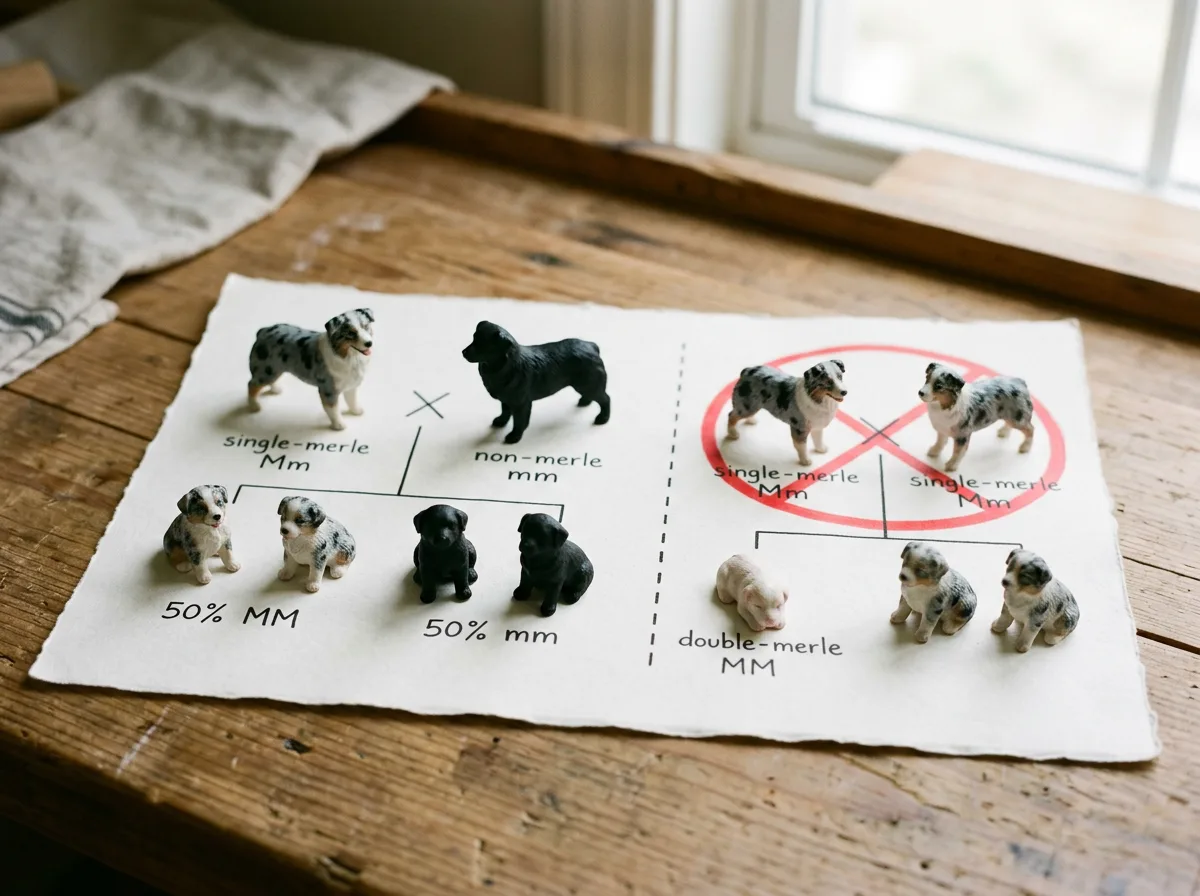
- mm (non-merle): The dog has no merle allele. It shows a solid coat with no marbling. A black-based mm Aussie is solid black; a red-based one is solid red.
- Mm (single merle): The dog has one merle allele and one normal allele. This is your typical, healthy blue merle or red merle, with the marbled coat and often blue or split eyes.
- MM (double merle): The dog inherited a merle allele from both parents. Because merle is incomplete dominant, two copies push the dilution to an extreme, producing a mostly white coat and, critically, a high risk of deafness and eye abnormalities.
That incomplete-dominant behavior is why a single copy gives you a beautiful, healthy patterned dog, while two copies stack the dilution to a dangerous degree. Reputable sources including the Australian Shepherd Health & Genetics Institute and the Merck Veterinary Manual describe the same pattern of inheritance and the same double-merle risk. (Sources: ashgi.org; merckvetmanual.com; akc.org.)
Petful may earn a commission when you click through to Chewy, at no extra cost to you.
The Double Merle Warning
This is the part of blue merle genetics that matters most for animal welfare, so it deserves its own section. When a breeder mates two merle dogs, statistically about one in four puppies in the litter will be double merle (MM), inheriting two copies of the gene.
Double merle dogs are typically predominantly white and carry a substantially elevated risk of:
- Deafness in one or both ears, from a lack of pigment-producing cells in the inner ear.
- Eye abnormalities, including microphthalmia (abnormally small eyes), colobomas (gaps in eye structures), and partial or complete blindness.
These are not cosmetic quirks; they are serious, permanent, welfare-affecting conditions. The mechanism is understood: the merle mutation disrupts pigment cells, and those same cells are essential for normal development of the inner ear and parts of the eye. Push the dilution far enough with two copies and those systems fail to develop properly.
- 1Double merle (MM) puppies come from breeding two merle parents together and often suffer deafness, eye defects, or both.
- 2Responsible breeders never pair two merles. A merle is always bred to a solid, non-merle mate so no puppy can inherit two merle copies.
- 3A healthy single-merle blue merle pet, bought from a breeder who health-tests, carries none of this extra risk. The danger lives in the breeding decision, not in the color itself.
The practical takeaway for buyers is simple: a healthy blue merle comes from a merle-to-non-merle pairing. Ask any breeder directly whether both parents are merle. If the answer is yes, or if they cannot tell you, walk away. A reputable breeder will happily explain their pairing and will not knowingly produce double-merle litters. (Source: ashgi.org.)
Petful may earn a commission when you click through to Chewy, at no extra cost to you.
- Never buy a merle puppy without confirming that only one parent is merle. Merle-to-merle breeding is the single biggest avoidable health risk for this coat pattern, and no reputable breeder does it.
Blue Merle vs. Blue Merle Border Collie
Because the two breeds overlap in herding heritage and can carry the same merle pattern, people frequently confuse a blue merle Australian Shepherd with a blue merle Border Collie. They are different breeds that happen to share a coat gene. For more, see Petful’s guide to Border Collie colors.
| Trait | Blue Merle Aussie | Blue Merle Border Collie |
|---|---|---|
| Build | Compact, medium, cobby | Leaner, more athletic outline |
| Tail | Often naturally bobbed or docked | Full, low-carried tail |
| Coat | Medium double coat | Medium to smooth double coat |
| Temperament | Devoted "velcro" family herder | Intense, work-driven herder |
| Merle genetics | Identical M-locus gene | Identical M-locus gene |
The merle pattern behaves the same way genetically in both breeds, including the same double-merle risk. The differences are in body type, tail, drive, and overall breed temperament rather than in the color itself. If you are choosing between them, decide on the breed first and treat the merle coat as a shared feature, not a deciding factor.
For a broader look at how coat-color patterns work across other breeds, see our guide to Rhodesian Ridgeback colors, and browse more breed profiles in our dog breeds section.
Caring for a Blue Merle Australian Shepherd
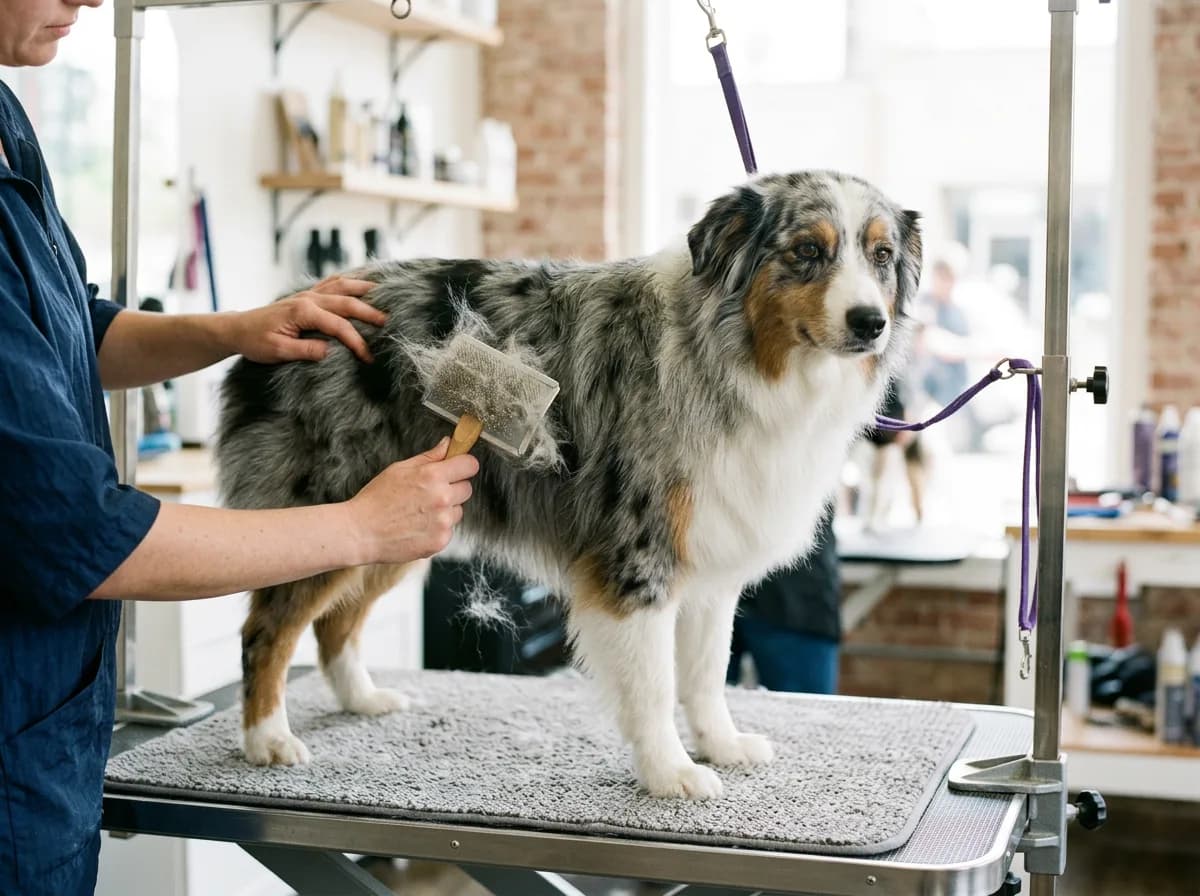
A blue merle Aussie needs the same care as any Australian Shepherd, and that care is not trivial. This is a high-drive working breed, not a low-maintenance companion. The color on the outside does not change the engine underneath.
Exercise and Enrichment
Australian Shepherds thrive on a job. Plan on 1-2 hours of real activity every day, split between physical exercise and mental work. A tired Aussie is a well-behaved Aussie; a bored, under-exercised one will herd your kids, nip at heels, and invent destructive projects. Fetch, hiking, dog sports like agility or flyball, and structured training games all help burn that intelligence productively.
Grooming
The medium-length double coat sheds year-round and blows heavily twice a year. Brush a few times a week to control loose hair and prevent mats, and increase frequency during seasonal sheds. Bathe only as needed. The merle pattern has no bearing on grooming; you groom the coat type, not the color.
Feeding
Feed a complete, balanced diet formulated for an active medium-sized dog, and portion to keep your Aussie lean. Working-line dogs at high activity levels may need more calories than a couch-potato pet of the same size. Your veterinarian can help you dial in the right amount and adjust as your dog ages.
Health Monitoring
Beyond the merle-specific breeding concern, Australian Shepherds as a breed can be predisposed to certain eye conditions and hip dysplasia, so buy from a breeder who screens their stock. For a single-merle pet, no extra merle-related testing is required, but responsible owners keep up with routine wellness exams, dental care, and parasite prevention just as they would for any dog.
What People Ask About Blue Merle Aussies
Related on Petful
- Merle Dog Guide: Genetics, Breeds, and Health
- Red Australian Shepherd: Genetics, Colors, and Care
- The Merle French Bulldog: Genetics, Health, Price
- Doberman Colors: Every Coat, Rarity, and Genetics
Blue merle is one of the four standard Australian Shepherd colors, so it is not genuinely rare within the breed, but it is less common than solid black and is highly sought after. Because a merle must always be bred to a non-merle for safety, a given litter usually contains only some merle puppies, which keeps availability lower than demand and drives up prices. Rarity claims are often a marketing angle rather than a genetic fact.
The best food for an Australian Shepherd is a complete, balanced diet formulated for an active medium-sized dog, fed in portions that keep the dog lean and muscular rather than overweight. High-drive working Aussies may need more calories than lower-activity pets of the same size. There is no single "best" brand; match the food to your dog's age, activity, and any health needs, and ask your veterinarian for guidance.
Aussies are famously devoted "velcro dogs" that show attachment by following you room to room, leaning on you, making soft eye contact, bringing toys, and staying calm and relaxed in your presence. A wagging whole-body wiggle at your return and a preference for being near you over being alone are all signs your Australian Shepherd is bonded to you.
Australian Shepherds most commonly react to environmental allergens such as pollen, grasses, dust mites, and mold, and less often to specific food ingredients like certain proteins. Signs include itchy skin, ear infections, and paw licking. Because the herding-breed group can also carry the MDR1 gene affecting drug sensitivity, always confirm medication safety with your veterinarian, who can also pinpoint the allergen and the right treatment.
Blue merles command higher prices because of strong demand for the striking coat and eye color combined with limited supply, since responsible breeders only pair a merle with a non-merle, so each litter yields a limited number of merle puppies. Health testing, reputable breeding practices, and the marketing of merle as "rare" all push prices up further. A higher price does not guarantee a healthier dog, so vet the breeder, not just the price tag.
Australian Shepherds often form an especially close bond with one primary person, typically whoever handles their training, feeding, and daily activity, while still being affectionate with the whole family. This one-person tendency comes from the breed's intense loyalty and working partnership instinct. Consistent handling and involving the whole household in training helps a well-rounded Aussie bond broadly.
Several vegetables are healthy dog-safe options, with leafy greens and orange vegetables among the most nutrient-dense. Carrots, green beans, and broccoli (in moderation) are commonly recommended because they are low in calories and rich in fiber and vitamins. Introduce any new vegetable in small amounts, avoid toxic ones like onions and garlic, and treat vegetables as a supplement to a complete diet, not a replacement.
The Bottom Line
The blue merle Australian Shepherd is a stunning dog, but the color is the least important thing about it. Underneath the marbled coat and the blue eyes is a high-energy, highly intelligent herding breed that needs a job, daily exercise, and consistent training to thrive. The merle pattern comes from a single incomplete-dominant gene, and a healthy blue merle always traces back to a breeder who paired one merle parent with a non-merle mate to avoid the deafness and blindness of double merles.
If you are drawn to the blue merle Aussie, choose it because you want an Australian Shepherd and the coat is a bonus, not because a breeder sold you on "rare." Ask about the parents, confirm health testing, and be honest about whether your lifestyle can keep up with one of the most driven dogs in the working group. Do that, and you will have a devoted, dazzling companion for well over a decade.

Coreen Saito is a pet writer and longtime shelter volunteer with more than a decade in animal rescue. She covers cat behavior, breed care, and the small, ordinary science of sharing a life with companion animals, with a particular focus on honest takes about the products and decisions that actually matter. At home in Arizona, she's outranked by Mac (a dog with the loudest opinion in the house), Rebel (a cat who governs by quiet authority), and Meri (an orange tabby who runs the late shift and the laundry basket). She writes about all three, plus the rescues that keep coming through her life, at LifeWithMinty.com.
Sign up for expert-backed reviews and safety alerts all in one place.