The Merle French Bulldog: Genetics, Health, Price
A merle French Bulldog carries a dominant gene that marbles the coat into rare blue, lilac, and chocolate patterns. Here is the story behind the genetics, the double-merle health risks, the $5,000 to $10,000+ price, and how to find a good breeder.
Petful is reader supported. As an affiliate of platforms like Amazon and Chewy, we may earn a commission when you buy through links on this page. There is no extra cost to you.
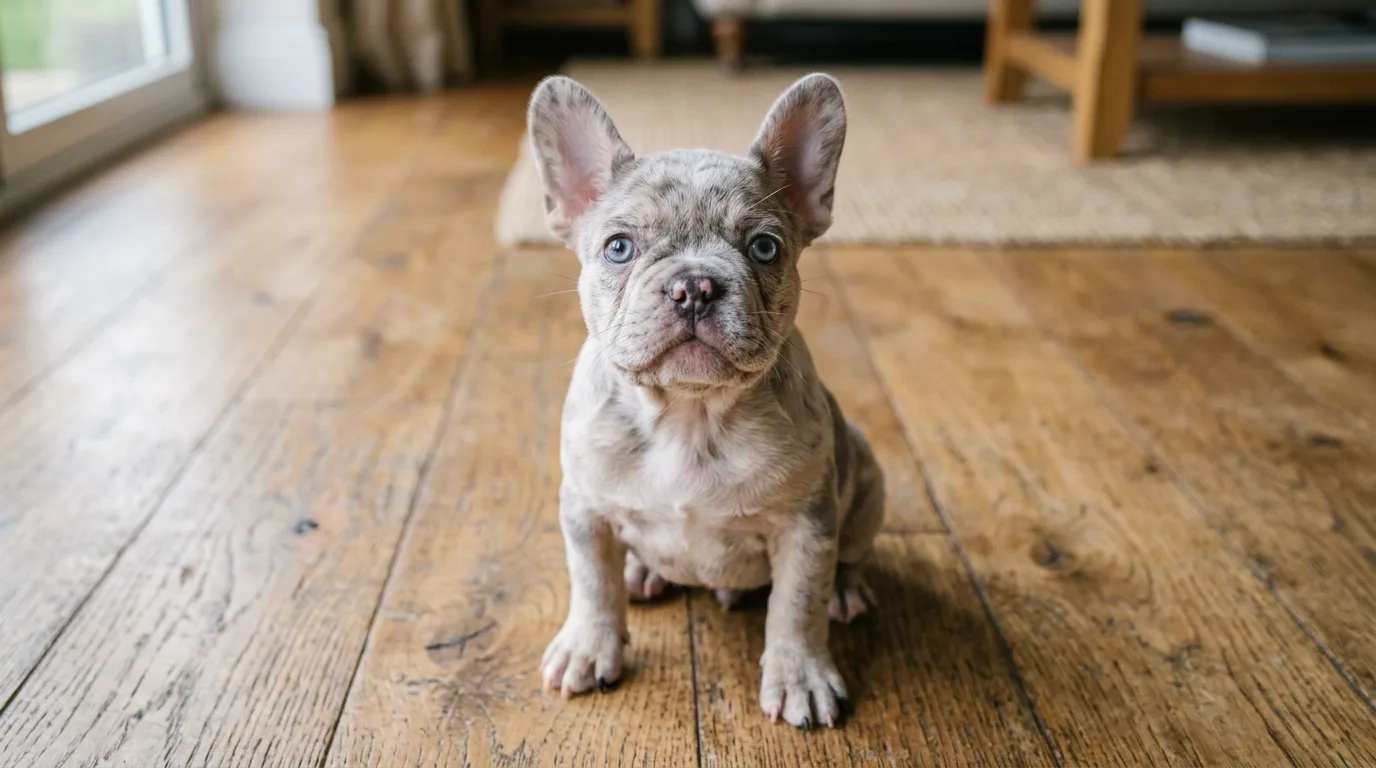
A merle French Bulldog is a Frenchie whose coat carries the merle gene, a dominant genetic mutation that randomly dilutes patches of the base color into a mottled, marbled pattern of blue, gray, chocolate, or lilac. The look is striking, the price tags are eye-watering, and the breeding practices behind it are among the most debated topics in the entire dog world. Before you fall for those speckled coats and pale blue eyes, it helps to understand exactly what that single gene does, what it can cost a puppy's health, and why a lot of reputable veterinarians and breed clubs wish these dogs were never produced at all.
This guide walks through the genetics in plain language, separates the single-merle dogs from the far riskier double-merle ones, lays out the real price range you should expect, and gives you a breeder-vetting checklist so you can tell an ethical program from a backyard operation cashing in on a fad.
- 1The merle pattern comes from a dominant gene that dilutes the coat in random patches, so no two merle Frenchies look alike.
- 2A single-merle dog can be healthy, but breeding two merles together produces "double merle" puppies at high risk of deafness, blindness, and eye defects.
- 3Merle is not a recognized French Bulldog color, so these dogs cannot be shown, and expect to pay $5,000 to $10,000 or more.

Sign up for expert-backed reviews and safety alerts all in one place.
What Makes a French Bulldog Merle
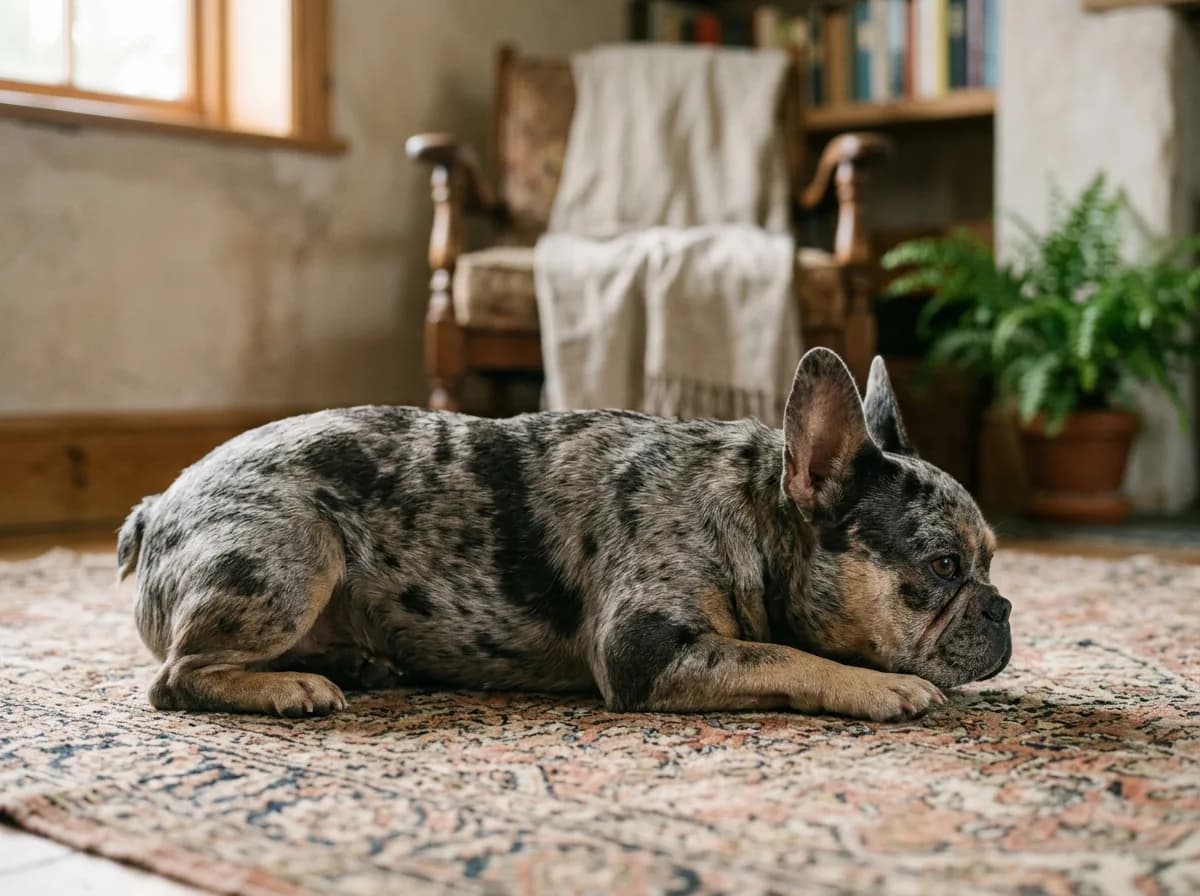
Merle is not a color. It is a pattern layered on top of whatever base color a dog already has. The merle gene, technically a mutation in the PMEL (SILV) gene, interrupts pigment production in random spots across the coat, so a solid color gets broken up into lighter blotches surrounded by darker patches. That is why the pattern is described as marbled, dappled, or mottled, and why every merle Frenchie is a genetic one-off.
The merle mutation is dominant, which matters for two reasons. First, a dog only needs one copy of the gene to show the pattern. Second, because it is dominant and visible, it is easy for breeders to select for, which is exactly how a rare gene became a five-figure fad. According to the American Kennel Club's overview of canine coat color genetics, merle interacts with the base coat rather than replacing it, so you get named combinations like blue merle, lilac merle, chocolate merle, and fawn merle depending on what color sits underneath. Petful’s separate guide to red Australian Shepherds covers red merle and red tri genetics, colors, and care.
One quirk worth knowing: the merle gene did not originate in the French Bulldog breed. Purebred Frenchies historically did not carry it at all, which is why many geneticists and breed purists argue that any merle Frenchie has, at some point in its pedigree, an outcross to another breed that does carry merle, such as the Chihuahua. That is a live controversy, not settled fact, but it is one reason the pattern sits outside the recognized breed standard.

Petful may earn a commission when you click through to Chewy, at no extra cost to you.
The Merle Color Variations
Because merle is a pattern over a base color, the marketing names multiply fast. Here is how the common ones break down.
- Blue merle: a black base broken into gray and slate-blue patches, often with blue eyes. This is the most common and usually the least expensive merle.
- Chocolate merle: a brown base with lighter tan and cream dappling.
- Lilac merle: a dilute chocolate base (the "isabella" dilution) that reads as a soft grayish-lavender. Among the rarest and priciest.
- Fawn merle: a tan base with faint darker mottling, sometimes hard to spot.
- Tri-color and pied merle: merle combined with tan points or white spotting for a more complex coat.
You will also hear the term "ghost merle" or "cryptic merle." This describes a dog that carries the merle gene but shows little or no visible pattern, usually because of the length of the gene's repeat sequence. Ghost merles are a real problem for breeders because a dog can look solid, get bred as if it were non-merle, and accidentally produce a double-merle litter. That is why DNA testing, not eyeballing the coat, is the only reliable way to know a Frenchie's true merle status.
Single Merle vs. Double Merle: The Line That Matters
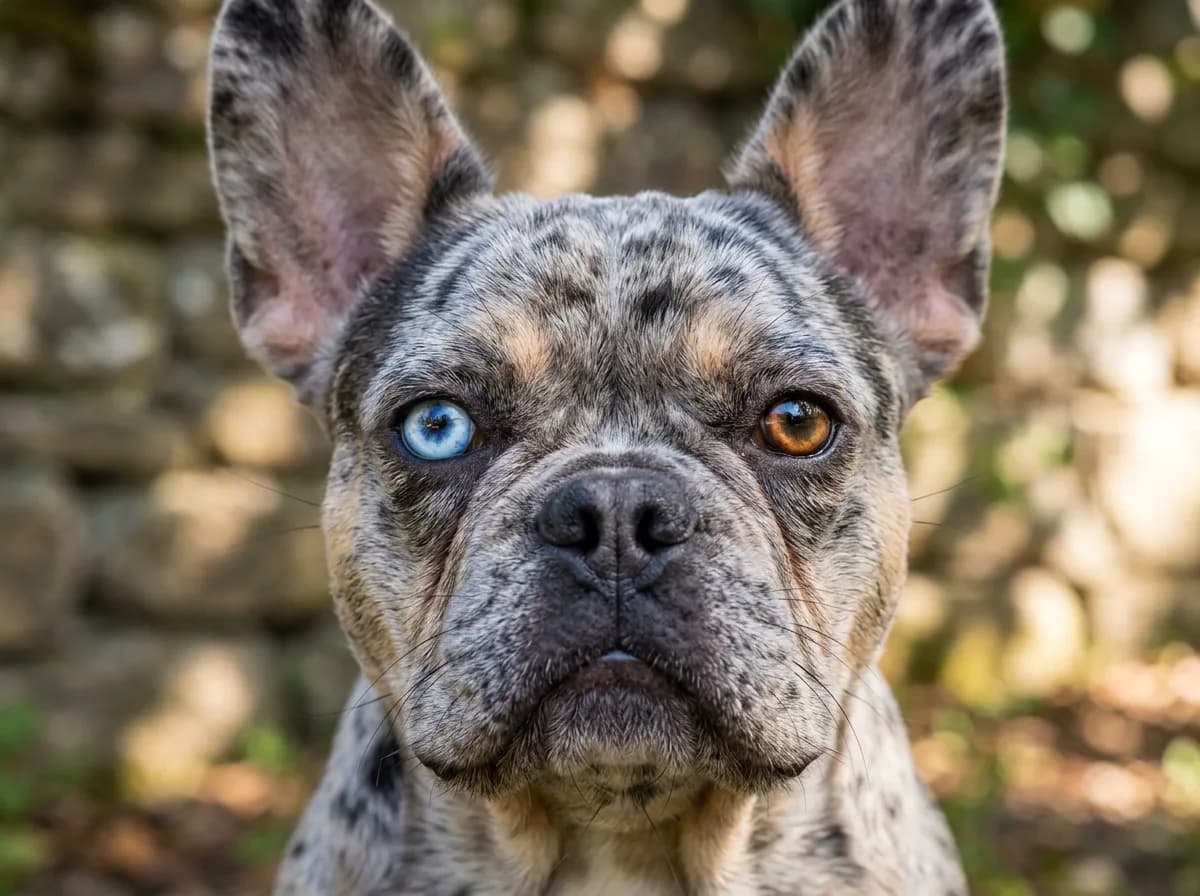
If you remember one thing from this article, make it this: there is an enormous difference between a single-merle dog and a double-merle dog, and confusing the two is how puppies end up blind and deaf.

Petful may earn a commission when you click through to Chewy, at no extra cost to you.
A single-merle dog inherited one copy of the merle gene from one parent. These dogs show the pattern and, when they come from a health-focused program, are generally no less healthy than a standard-colored Frenchie of the same lines. The merle gene alone, in a single dose, is not a death sentence.
A double-merle dog inherited two copies, one from each merle parent. This only happens when a breeder crosses two merle dogs together, and it is where the serious harm concentrates. The Merck Veterinary Manual and multiple veterinary sources describe the merle locus as associated with auditory and ophthalmologic abnormalities, and those risks climb sharply in the homozygous (double) state. Double-merle dogs frequently have large white patches where pigment failed to develop, and that missing pigment inside the ear and eye is the direct cause of the defects.
- If a breeder pairs two merle dogs, roughly a quarter of the litter will be double merle and at high risk of congenital deafness and blindness. An ethical program pairs a merle only with a non-merle, tested partner. Walk away from any seller advertising two merle parents.
The Health Risks of the Merle Gene
Here is what the merle gene can affect, drawn from veterinary literature rather than breeder marketing.
- Congenital deafness: pigment cells are essential for normal function of the inner ear. Where merle strips pigment, dogs can be deaf in one or both ears. Double merles are affected far more often than single merles.
- Eye abnormalities: microphthalmia (abnormally small eyes), coloboma (gaps in eye structures), and other defects are documented at the merle locus, again concentrated in double merles.
- Vision loss and blindness: the same pigment-related mechanism that damages the ear can damage the developing eye.
- Skin sensitivity: large unpigmented areas mean less protection from the sun and a higher lifetime skin-cancer risk on those patches.
None of this means every merle Frenchie is sick. A responsibly bred single merle from health-tested parents can live a normal Frenchie lifespan. The point is that the pattern raises the stakes, and only DNA testing plus a merle-to-non-merle pairing keeps those stakes manageable.

Petful may earn a commission when you click through to Chewy, at no extra cost to you.
The French Bulldog Health Problems Merle Does Not Cause
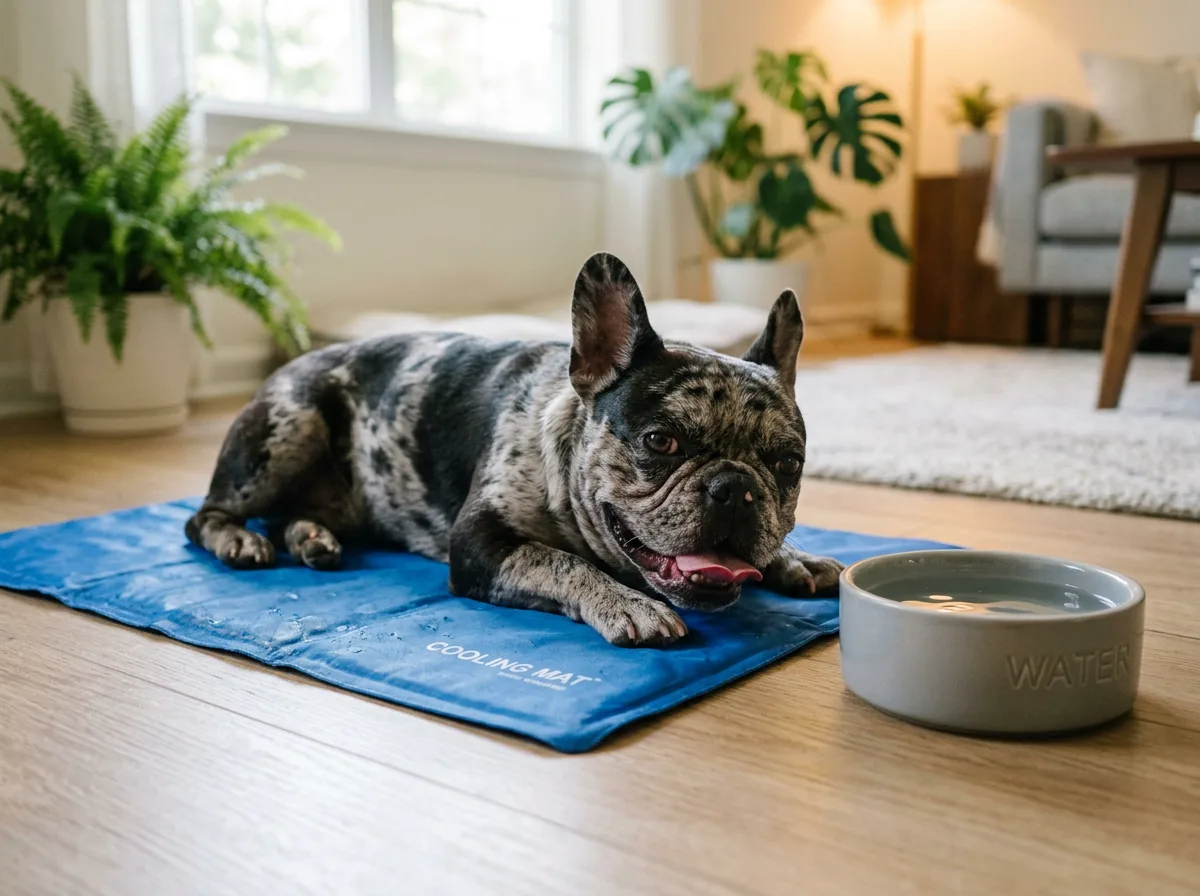
It would be dishonest to blame every Frenchie health issue on the merle gene. French Bulldogs are a brachycephalic (flat-faced) breed, and that skull shape brings its own well-documented set of problems that apply to every Frenchie regardless of color.
The American Kennel Club and veterinary surgeons flag brachycephalic obstructive airway syndrome (BOAS) as the defining Frenchie health concern: narrowed nostrils, an elongated soft palate, and a shortened windpipe that together make breathing, cooling, and exercise harder. Frenchies also see high rates of intervertebral disc disease (their compact "screw" tail is linked to spinal malformations), skin-fold dermatitis, and heat intolerance.
A merle Frenchie carries all of these breed-wide risks plus the merle-specific ones on top. So when you budget for a merle, budget for a dog that may need airway surgery, keeps cool indoors in summer, and sees the vet more than the average mixed-breed dog. That is the full picture the price tag rarely mentions.
| Feature | Merle Frenchie | Standard Frenchie |
|---|---|---|
| Coat pattern | Marbled, dappled, one-of-a-kind | Solid or standard markings |
| Typical price | $5,000 to $10,000+ | $2,500 to $4,000 |
| AKC show eligibility | Not eligible (non-standard pattern) | Eligible if standard color |
| Added health risk | Merle-linked ear and eye defects, worst in double merles | Breed-wide brachycephalic risks only |
| Breeding caution | Must pair merle x non-merle, DNA tested | Standard breeding practices apply |
Temperament: A Frenchie Is a Frenchie
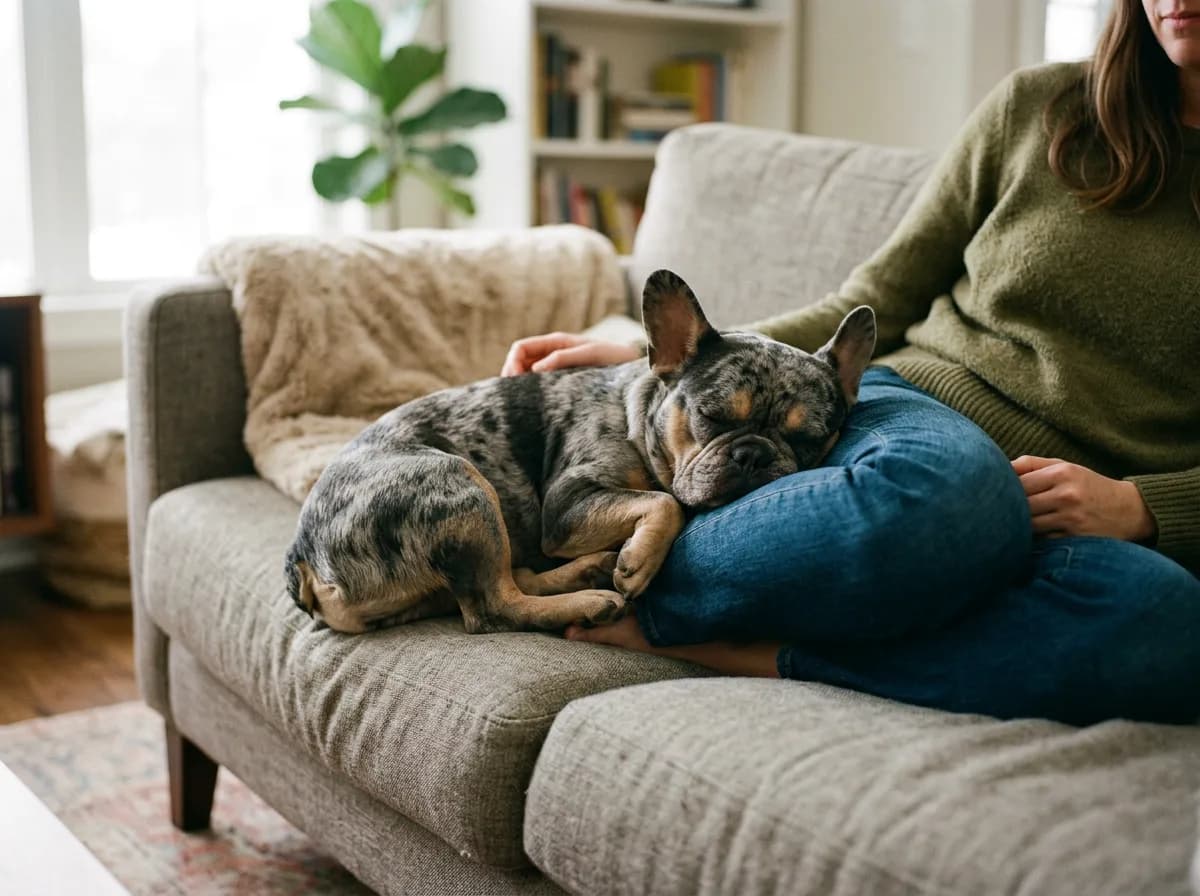
Coat color has nothing to do with personality, and any breeder who claims a merle is calmer, smarter, or more affectionate because of its color is selling you a story. A merle French Bulldog has the same temperament as any other well-raised Frenchie: affectionate, people-oriented, clownish, stubborn about training, and firmly attached to being a lap dog.
They are companion dogs first and last. They bond hard with their household, tend to be good with children and other pets when socialized early, and do not need much exercise beyond short walks and play. What they do need is company. Frenchies are prone to separation-related stress and are not a breed that does well left alone for long stretches. Their charm and their needs come from the breed, not the coat.

Petful may earn a commission when you click through to Chewy, at no extra cost to you.
The Controversy: Why Many Breeders Refuse to Produce Merle
The merle French Bulldog sits at the center of an ethics fight that is worth understanding before you buy in.
On one side, established breed authorities do not recognize merle. The American Kennel Club breed standard for French Bulldogs lists the acceptable colors, and merle is not among them, which means a merle Frenchie cannot compete in conformation shows and, in the eyes of the breed club, is not a "correct" French Bulldog. The French Bull Dog Club of America has publicly warned against the health risks and the outcrossing that merle implies.
On the other side is a booming market. Because merles are rare and photogenic, they command huge prices, and that money has pulled in breeders who prioritize the pattern over health. The concern is not the single-merle pet dog itself. It is the incentive structure: when a coat pattern is worth thousands of dollars, some breeders cut corners, skip DNA testing, and pair merle to merle to maximize the number of flashy puppies, which is exactly the practice that produces the worst outcomes.
That is why the honest answer to "should I get a merle Frenchie" is not a flat no. It is: only from a breeder who treats the pattern as a responsibility rather than a payday.
- Some merle Frenchies are registered with the AKC, which confuses buyers into thinking the pattern is approved. Registration confirms parentage, not that a dog meets the breed standard. A registered merle still cannot be shown and still sits outside the standard.
What a Merle French Bulldog Costs
Price is the reason most people land on this topic, so here are realistic numbers rather than a single headline figure.

Petful may earn a commission when you click through to Chewy, at no extra cost to you.
A standard, pet-quality French Bulldog from a responsible breeder typically runs $2,500 to $4,000. Merle Frenchies sit well above that because of rarity and demand. Expect roughly $5,000 to $10,000 for a merle, and the rarer combinations push higher: lilac merle and fluffy (long-haired) merle Frenchies can exceed $10,000, occasionally reaching $15,000 to $20,000 from sought-after bloodlines.
Cheap is a red flag, not a bargain. A merle advertised at a suspiciously low price is often the output of a program that skipped DNA testing, health screening, and responsible pairing, which is where double-merle heartbreak comes from. The upfront price is also only the start. Factor in a possible BOAS airway workup, higher insurance premiums for a brachycephalic breed, and the ongoing cost of a dog built for the vet's waiting room.
- 1Budget $5,000 to $10,000+ for a merle Frenchie, with lilac and fluffy merles reaching well beyond that.
- 2A price far below the market rate usually signals skipped health testing, not a deal.
- 3The purchase price ignores lifelong brachycephalic care costs that every Frenchie owner should plan for.
How to Vet a Merle French Bulldog Breeder
Because this market attracts opportunists, breeder selection is the single most important decision you will make. Use this checklist.
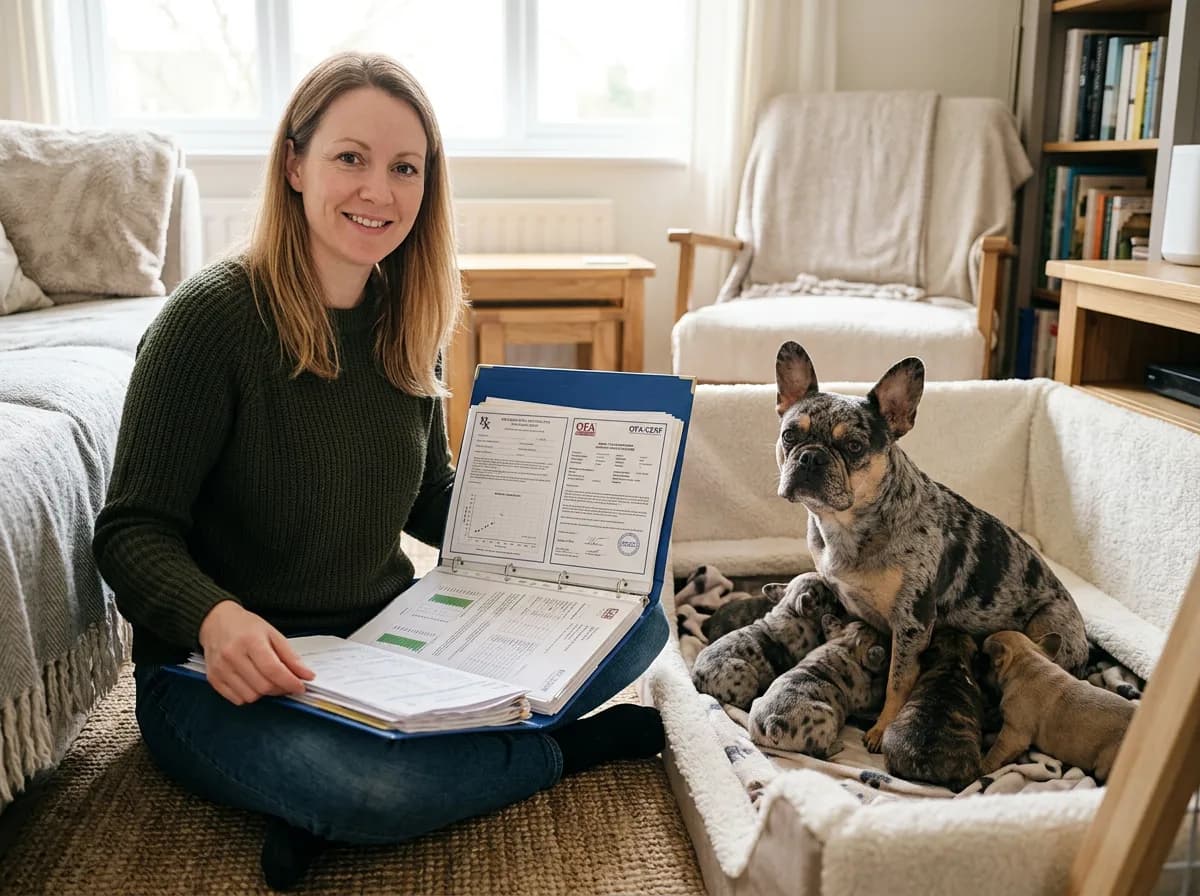
- DNA results in writing: ask for the merle genotype of both parents. You want a merle bred to a confirmed non-merle. If either result is missing or the breeder is vague, stop.
- Health testing: both parents should have documented screening appropriate to the breed, including airway and spine assessments where available.
- No double-merle pairings, ever: if the breeder produces merle-to-merle litters, that alone disqualifies them.
- Sees the puppies with the dam: you should meet the mother and see the environment the litter was raised in.
- BAER hearing test: reputable merle breeders BAER-test puppies for deafness before they go home.
- A contract and health guarantee: a real program stands behind its dogs and takes one back rather than let it go to a shelter.
A breeder who welcomes these questions is the one you want. A breeder who dodges them, pressures a fast deposit, or ships puppies sight-unseen is the one who produces the dogs this article is warning you about.
Caring for a Merle French Bulldog
Day-to-day care of a merle is Frenchie care, with a little extra attention to the merle-linked risks.
- Keep them cool: brachycephalic dogs overheat fast. Exercise in the cool part of the day, never leave them in a warm car, and give them shade and water.
- Protect the skin: unpigmented patches sunburn. Limit peak-sun exposure and ask your vet about dog-safe sun protection for exposed skin.
- Watch the hearing and eyes: if you have a merle, especially one from an unknown background, have hearing and vision checked early so you can adapt training if needed.
- Clean the folds: facial and body folds trap moisture and need regular gentle cleaning to prevent dermatitis.
- Feed for a lean weight: extra pounds worsen airway and joint strain in this breed.
With sensible management, a healthy single-merle Frenchie lives the same affectionate, couch-loving life as any other French Bulldog. The coat is the novelty; the care is standard Frenchie care done well.
If you enjoy learning how a single gene reshapes a coat, the same dominant-merle mechanism shows up across many breeds. Our deep dive on Rhodesian Ridgeback coat colors walks through how pigment genetics play out in another breed, and you can browse more breed guides in the Petful dog breeds library.
Frequently Asked Questions
Related on Petful
- Merle Dog Guide: Genetics, Breeds, and Health
- French Bulldog Colors: Standard vs. Rare Guide
- Blue Merle Australian Shepherd: Pattern & Genetics
- Poodle Colors: Every Shade, Pattern, and Fade
Most healthy French Bulldogs, merle or not, clean themselves fine and do not need routine wiping. Their short screw tails and skin folds can occasionally trap debris, so a quick check and an occasional wipe with a dog-safe wipe keeps the tail pocket and rear clean and prevents skin-fold irritation. If a Frenchie needs frequent wiping because stool is loose, that points to a diet or health issue worth a vet visit.
French Bulldogs love small, soft, high-value treats such as plain cooked chicken, tiny pieces of cheese, blueberries, plain pumpkin, and commercial training treats sized for small dogs. Because Frenchies gain weight easily and extra pounds strain their airways and spine, keep treats to about ten percent of daily calories and favor low-fat options to protect this pancreatitis-prone breed.
Yes. French Bulldogs are intensely people-oriented companion dogs that usually love sleeping in or near their owner's bed and often seek body contact through the night. Just plan for snoring, which is common in flat-faced breeds, and make sure the dog can get on and off the bed safely, since jumping down can stress a Frenchie's back.
Never feed a Frenchie grapes or raisins, which can cause kidney failure, and avoid cherries, whose pits contain cyanide, and large amounts of citrus. Always remove seeds, pits, and cores, since apple seeds and stone-fruit pits are hazards. When in doubt about any fruit, check with your veterinarian before offering it.
Scooting after pooping usually signals irritation, most often full or impacted anal glands, but it can also come from a tapeworm, itchy skin allergies, or leftover stool stuck in the fur. French Bulldogs are prone to anal-gland issues, so occasional scooting warrants a vet check to have the glands expressed and to rule out parasites or allergies.
Frenchies settle best with steady routine, enough companionship, short daily exercise, and mental enrichment like puzzle feeders and chews. For situational stress, a calm environment, a covered crate or safe den, and positive reinforcement help, and vet-recommended calming aids such as pheromone diffusers or anxiety supplements can support an anxious dog. Because this breed is prone to separation stress, gradual alone-time training matters more than any single product.
Many French Bulldogs love blueberries, which are a safe, low-calorie, antioxidant-rich treat, and they also tend to enjoy small pieces of banana, watermelon (seeds and rind removed), and apple (seeds and core removed). Serve any fruit in small amounts as an occasional treat rather than a meal to avoid stomach upset and extra calories.

Coreen Saito is a pet writer and longtime shelter volunteer with more than a decade in animal rescue. She covers cat behavior, breed care, and the small, ordinary science of sharing a life with companion animals, with a particular focus on honest takes about the products and decisions that actually matter. At home in Arizona, she's outranked by Mac (a dog with the loudest opinion in the house), Rebel (a cat who governs by quiet authority), and Meri (an orange tabby who runs the late shift and the laundry basket). She writes about all three, plus the rescues that keep coming through her life, at LifeWithMinty.com.
Sign up for expert-backed reviews and safety alerts all in one place.