Doberman Colors: Every Coat, Rarity, and Genetics
Doberman colors come from a simple genetic recipe: two base pigments and one dilution gene. This guide covers the four standard coats (black, red, blue, and fawn), the genetics behind them, white and melanistic dogs, and the risks of dilute coats.
Petful is reader supported. As an affiliate of platforms like Amazon and Chewy, we may earn a commission when you buy through links on this page. There is no extra cost to you.
Doberman colors come down to a surprisingly small genetic recipe that produces a striking range of looks, from the classic black-and-rust guard dog to the silvery, dreamlike Isabella. Officially, kennel clubs recognize only four Doberman colors, yet you will hear breeders and owners talk about melanistic dogs, white Dobermans, and "rare" coats that command higher prices. This guide sorts the real from the marketing, walks through the two genes that control every shade, and flags the health issues tied to the diluted coats so you know exactly what you are looking at before you fall in love with a puppy.
If you have ever stood in front of a litter and wondered why one pup is jet black and the next is a warm chocolate, the answer is genetics you can actually understand. By the end of this article you will be able to name any Doberman's color on sight, explain how it was inherited, judge whether a "rare" price tag reflects genuine scarcity or a health gamble dressed up as exclusivity, and know exactly which questions to ask a breeder before you commit.
- 1Only four Doberman colors are recognized by major kennel clubs: black, red, blue, and fawn (Isabella), each paired with rust markings.
- 2Two genes do all the work: a black-vs-red pigment gene and a dilution gene that lightens black into blue and red into fawn.
- 3Blue and fawn are legitimate standard colors but carry a real risk of color dilution alopecia, and white (albino) Dobermans are not recognized and come with serious health problems.

Sign up for expert-backed reviews and safety alerts all in one place.
The four standard Doberman colors
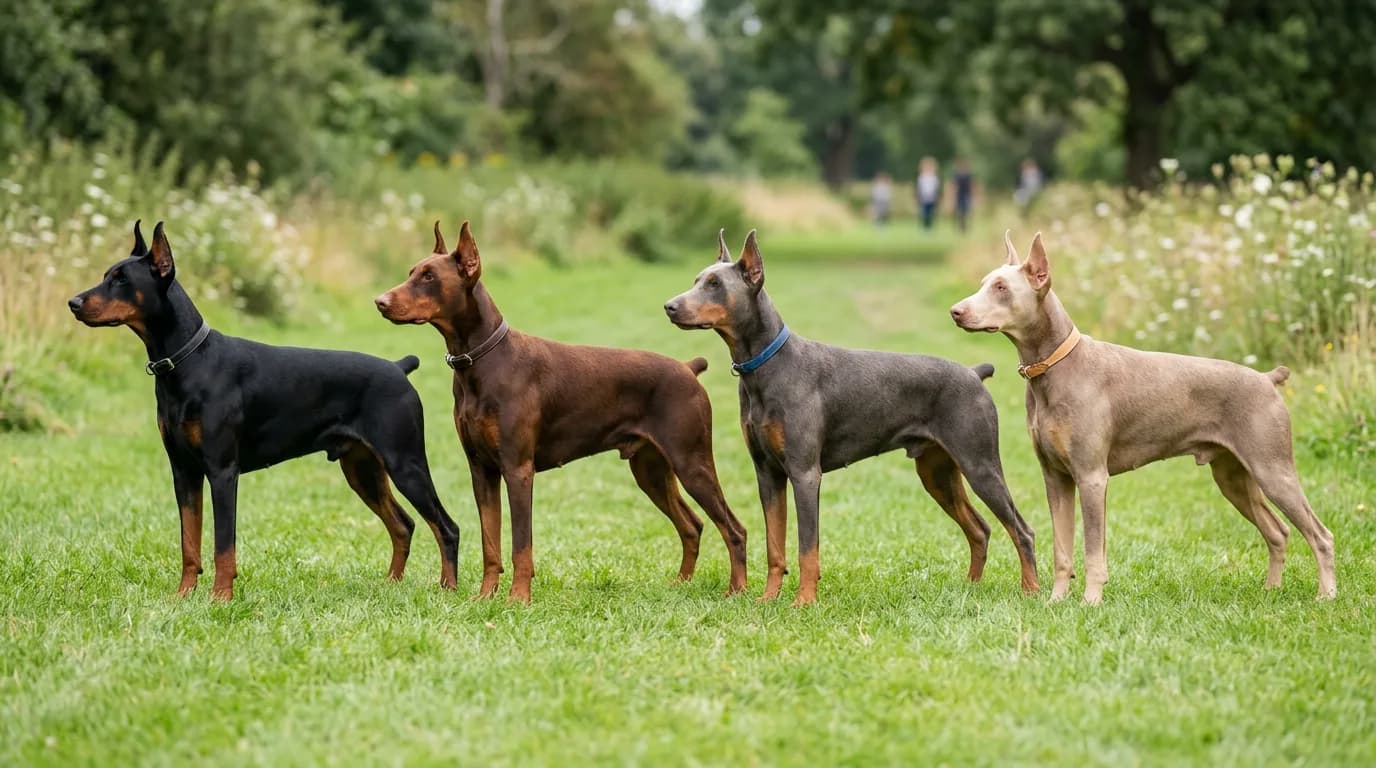
Every reputable Doberman authority starts from the same place. The American Kennel Club breed standard and the Doberman Pinscher Club of America both recognize exactly four coat colors, and each one is a base color combined with sharply defined rust (tan) markings. The American Kennel Club even assigns each color its own registration code, which is how you will see them listed on official paperwork.
Those four Doberman colors are black and rust, red and rust, blue and rust, and fawn (Isabella) and rust. The rust points are non-negotiable in the standard: they appear above each eye, on the muzzle, throat, and forechest, on all legs and feet, and below the tail. A Doberman without those markings, a solid black or solid red dog, is a disqualifying fault in the show ring even though the dog is otherwise healthy.
Here is the part that makes Doberman color genetics click. There are really only two "true" base pigments in the breed, black and red. Blue is simply black that has been lightened by a dilution gene, and fawn is red that has been lightened by that same gene. So the four colors are actually two pigments times two dilution states. Once you see it that way, the whole spectrum stops feeling random. A black dog and a blue dog carry the same base pigment; the blue one just expresses it at a lower intensity. The same relationship connects red and fawn. Everything else in this guide builds on that single idea.
The four-color system also has deep roots in the breed's history. When Karl Friedrich Louis Dobermann developed the breed in Germany in the late nineteenth century, he was after a medium-sized, alert protection dog, not a designer coat. The colors that survived into the modern standard are the ones that came with that functional stock and bred true. That is why the standard is conservative about color: it protects a working type, not a fashion palette. The early Doberman drew on ancestors like the old German Pinscher and various herding and butcher's dogs, and the black-and-tan pattern common in that founding stock is exactly the rust-marked look the breed still carries today.
- In every recognized Doberman, "rust" refers to the tan points, not the base coat. When people say "black Doberman" they mean black and rust; the rust is assumed. A dog that lacks the rust points entirely is outside the standard.
Why kennel clubs only recognize four
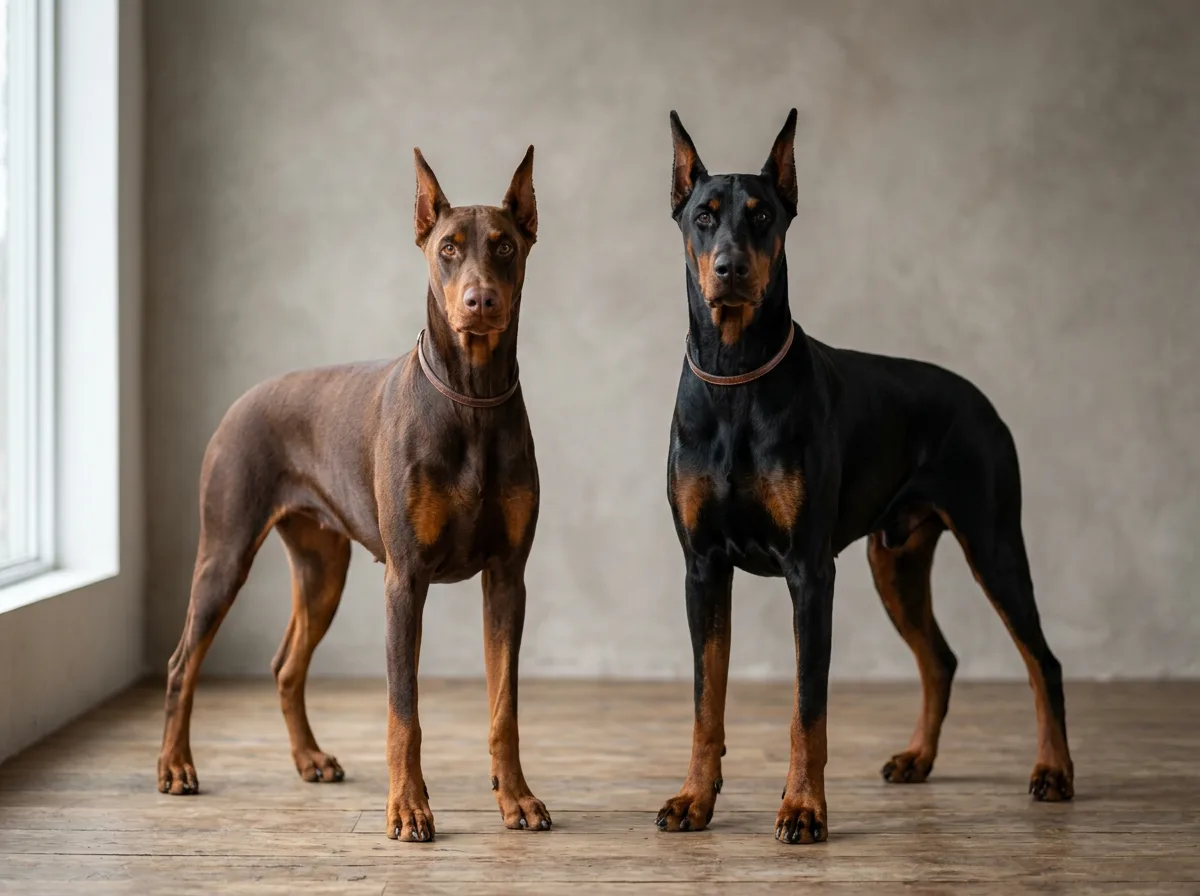
The four-color rule is not arbitrary snobbery. The standard exists to preserve a consistent, functional breed type, and the four recognized Doberman colors are the ones that breed true and reflect the dog's working heritage. When a puppy shows up in a color outside those four, it is almost always either a solid dog missing its markings, a white dog carrying an albinism mutation, or a "melanistic" dog where the rust points have been bred down to almost nothing. None of those breed true in a way that supports a healthy, predictable line.
Petful may earn a commission when you click through to Chewy, at no extra cost to you.
The Doberman Pinscher Club of America is blunt about this. Per the Doberman Pinscher Club of America, the blue and fawn coats are the recognized "dilutes" of black and red, but the club openly educates buyers about the dilution-linked skin problems that can come with them. That honesty is exactly why you want to read the parent club before a breeder, not after. A breeder is selling you a puppy; the parent club is trying to protect the breed, and the two do not always tell the same story about color.
It also helps to know that different registries draw the line in slightly different places. The AKC in the United States recognizes all four colors, including the two dilutes. Some European bodies under the Fédération Cynologique Internationale have moved to stop registering blue and isabella specifically because of the coat-health concerns, treating the dilutes as undesirable rather than simply rare. So "recognized" is not a single global yes or no; it depends on the registry, and that nuance matters if you plan to show or breed internationally.
Black and rust Doberman: the classic
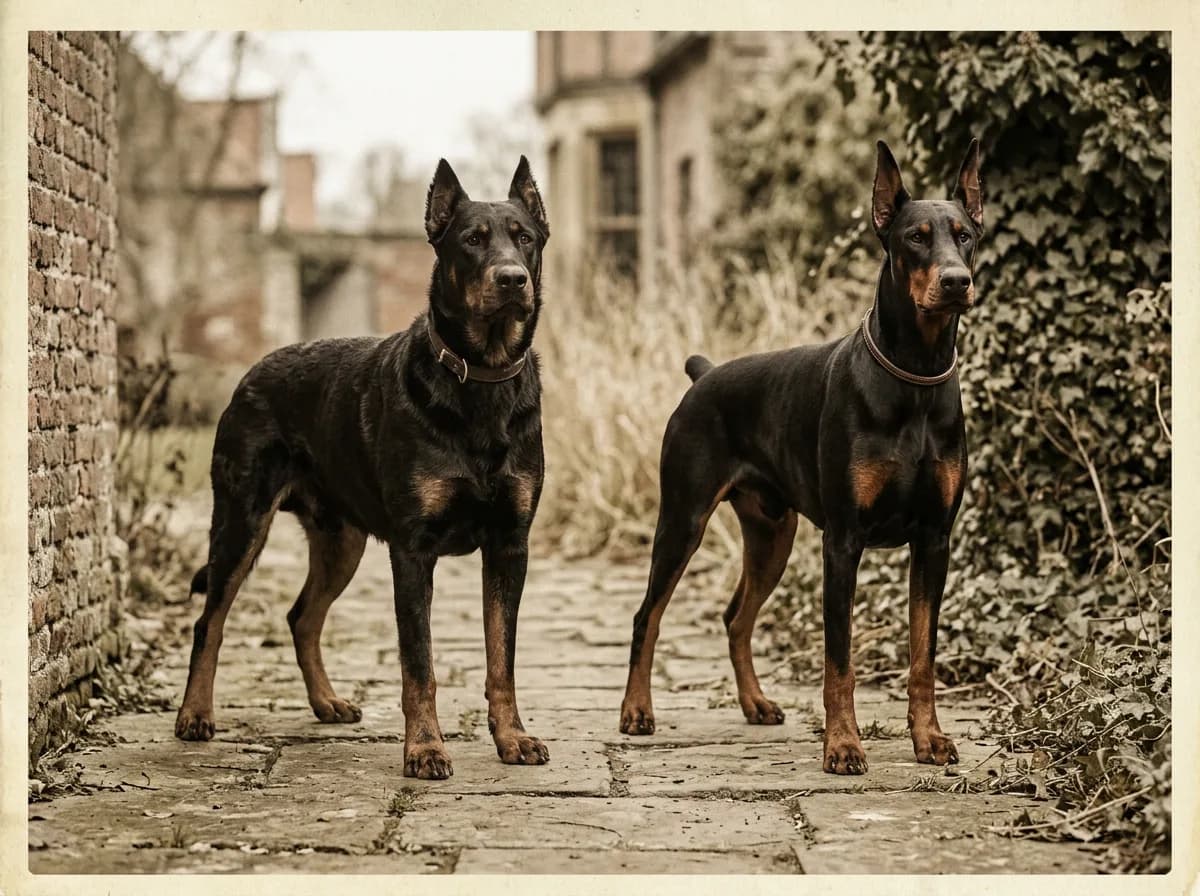
The black and rust Doberman is the coat almost everyone pictures when they hear the breed name. The base coat is a deep, glossy black, and the rust markings sit crisp against it above the eyes, on the muzzle and chest, and down the legs. This is the most common of all Doberman colors, and for good reason: black is the dominant base pigment, so it shows up most often in litters.
Genetically, a black and rust dog carries at least one copy of the dominant black-pigment allele and at least one copy of the non-dilution allele. That combination keeps the coat fully saturated. Because black is dominant, a black and rust Doberman can still carry a hidden copy of the red gene or the dilution gene and pass it to puppies, which is why two black parents can occasionally produce a red or even a blue pup. The dog you see is black, but the genes it carries can be a mixed bag, and that hidden variation is what keeps litters interesting.
Black and rust dogs are the least likely of the four Doberman colors to have coat-related skin issues, since their pigment is not diluted. That is one practical reason many working and show homes gravitate to them, alongside the sheer classic look. A well-bred black and rust Doberman should have a short, hard, close-lying coat with a near-mirror shine when it is in good condition, and the rust points should be clearly defined rather than smudged or muddy where they meet the black.
If you are after the most predictable, lowest-maintenance coat with the strongest tie to the breed's traditional image, black and rust is the safe default. It is common enough that you will never pay a rarity premium, and its full pigment means you are not signing up to manage a dilution-linked skin condition.
- 1Black and rust is the most common Doberman color and the least prone to coat-linked skin problems.
- 2Because black pigment is genetically dominant, black parents can secretly carry red or dilution genes.
- 3Two black and rust Dobermans can produce red, blue, or fawn puppies if both carry the recessive genes.
Red and rust Doberman: chocolate warmth
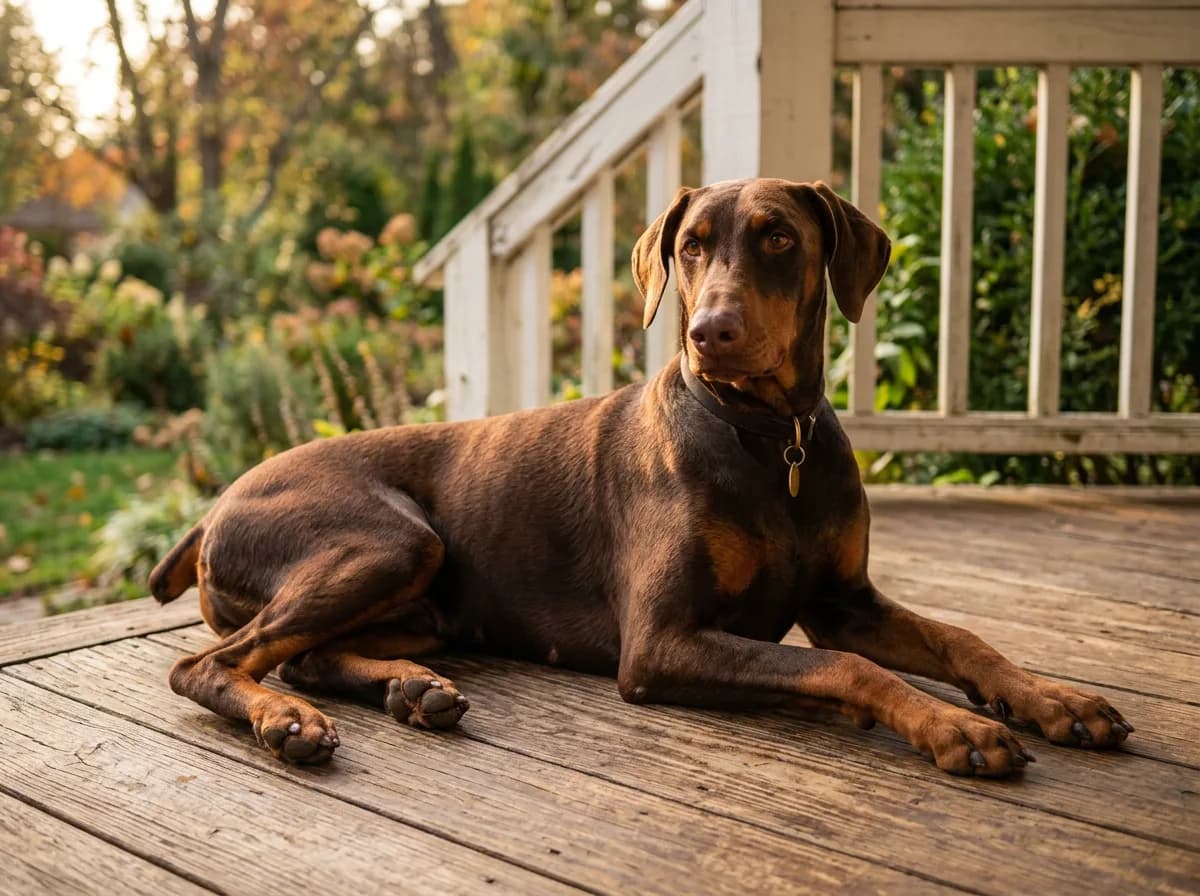
The red and rust Doberman, sometimes called brown or chocolate, trades the black base for a rich reddish-brown. The rust markings stay in exactly the same places, which can make the contrast a little softer than on a black dog because the base and points are closer in tone. Red is the second most common of the Doberman colors and is fully recognized by every major kennel club.
The genetics here are a clean flip of the black dog. A red and rust Doberman is recessive at the black-versus-red pigment gene, meaning it carries two copies of the red allele and no dominant black. That is why red is less common than black: a puppy needs the recessive gene from both parents. Like black dogs, reds carry a full (non-diluted) pigment, so they generally do not have the dilution-linked coat problems, and their coat should be just as short, hard, and glossy as a black dog's when the dog is healthy.
The shade of a red Doberman can vary more than people expect, from a deep mahogany that almost reads black in low light to a lighter, warmer chestnut. This is normal variation within the red base and is not the same as dilution. A dilute (fawn) dog looks washed-out and silvery; a true red, even a light one, still looks saturated and warm. Keeping that distinction in mind saves a lot of confusion when you are looking at photos online, where lighting can push a red toward either extreme.
Owners often ask whether red Dobermans behave differently from black ones. There is a long-running community belief that reds are a touch softer or "goofier," but it remains anecdotal, and enthusiasts have actually run informal surveys trying to prove it without a clear result. As the coat genetics show, the only proven difference between a black and a red Doberman is the pigment gene itself, not temperament. Any two individual dogs will differ in personality regardless of color, so choose the dog, not the myth.
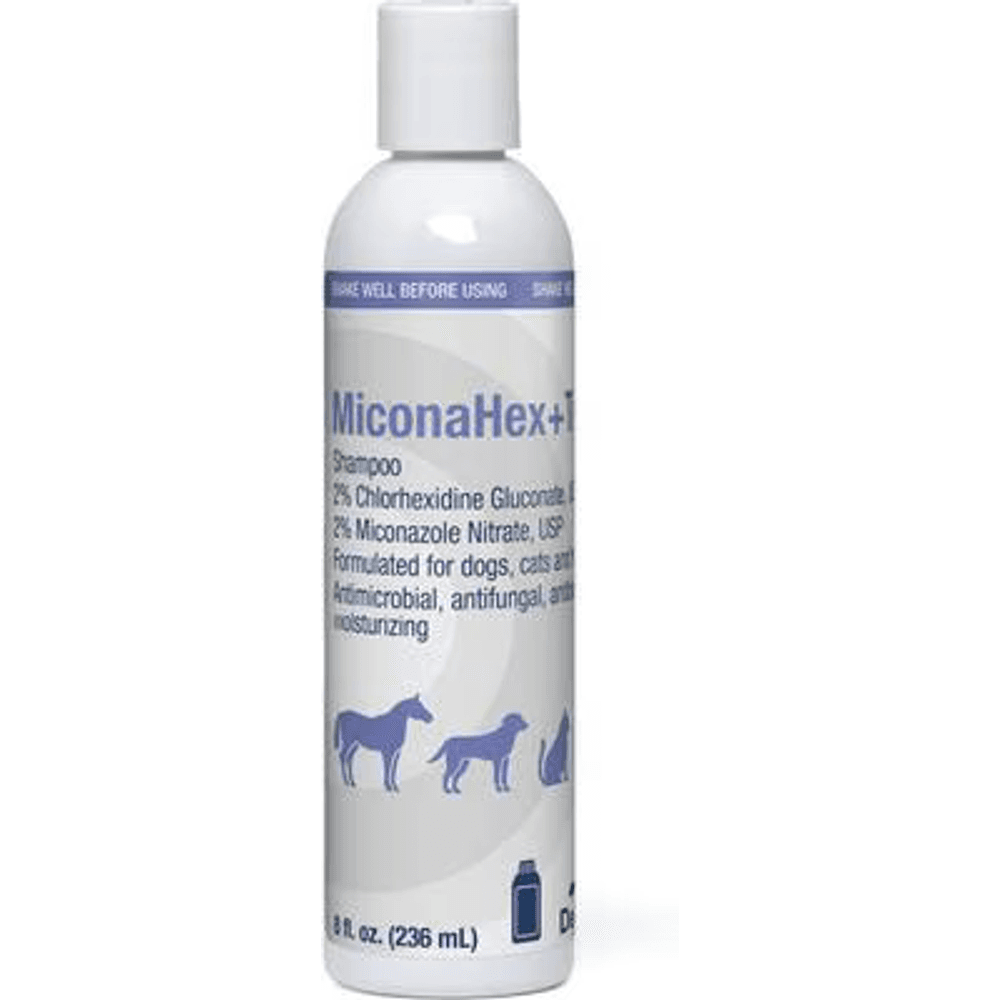
A vet-strength medicated shampoo pairing 2% chlorhexidine and 2% miconazole, a potent antifungal and antibacterial combination widely used to help clear ringworm and yeast or bacterial skin infections.
Petful may earn a commission when you click through to Chewy, at no extra cost to you.
Black vs red: how to tell them apart in a photo

New buyers frequently mix up a red Doberman with a black one in dim lighting. The reliable tell is the base coat next to the rust points. On a black dog the base is clearly darker than the rust; on a red dog the base and the rust are both brown, so the whole dog reads as warmer and more uniform. Nose color helps too: black dogs have black noses, while red dogs typically have a brown nose that matches the coat. Eye rims and nails follow the same logic, taking on a brownish cast on red dogs.
| Color | Base pigment | Dilution | Rarity | Coat health note |
|---|---|---|---|---|
| Black and rust | Black | None | Most common | Lowest risk |
| Red and rust | Red (brown) | None | Common | Lowest risk |
| Blue and rust | Black | Diluted | Uncommon | CDA risk |
| Fawn (Isabella) and rust | Red (brown) | Diluted | Rarest standard | Highest CDA risk |
Blue and rust Doberman: diluted black
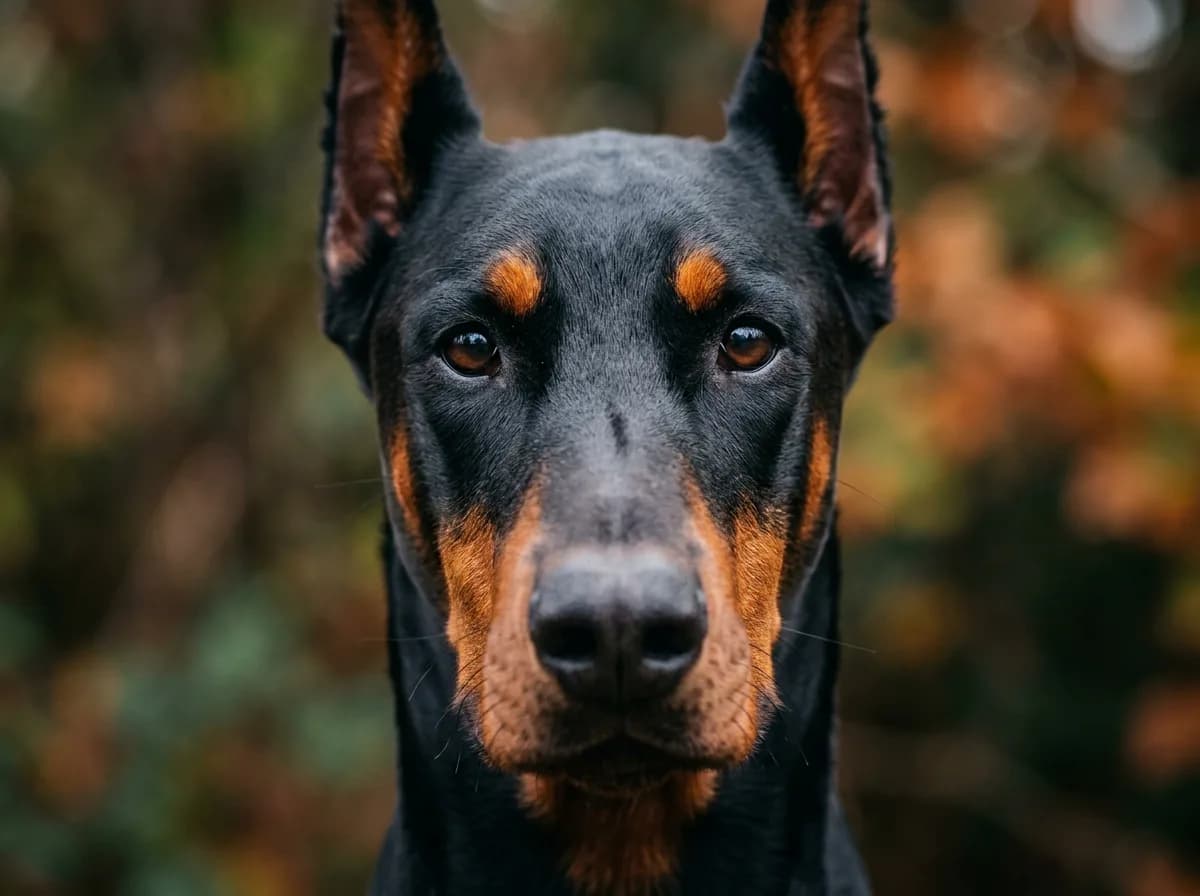
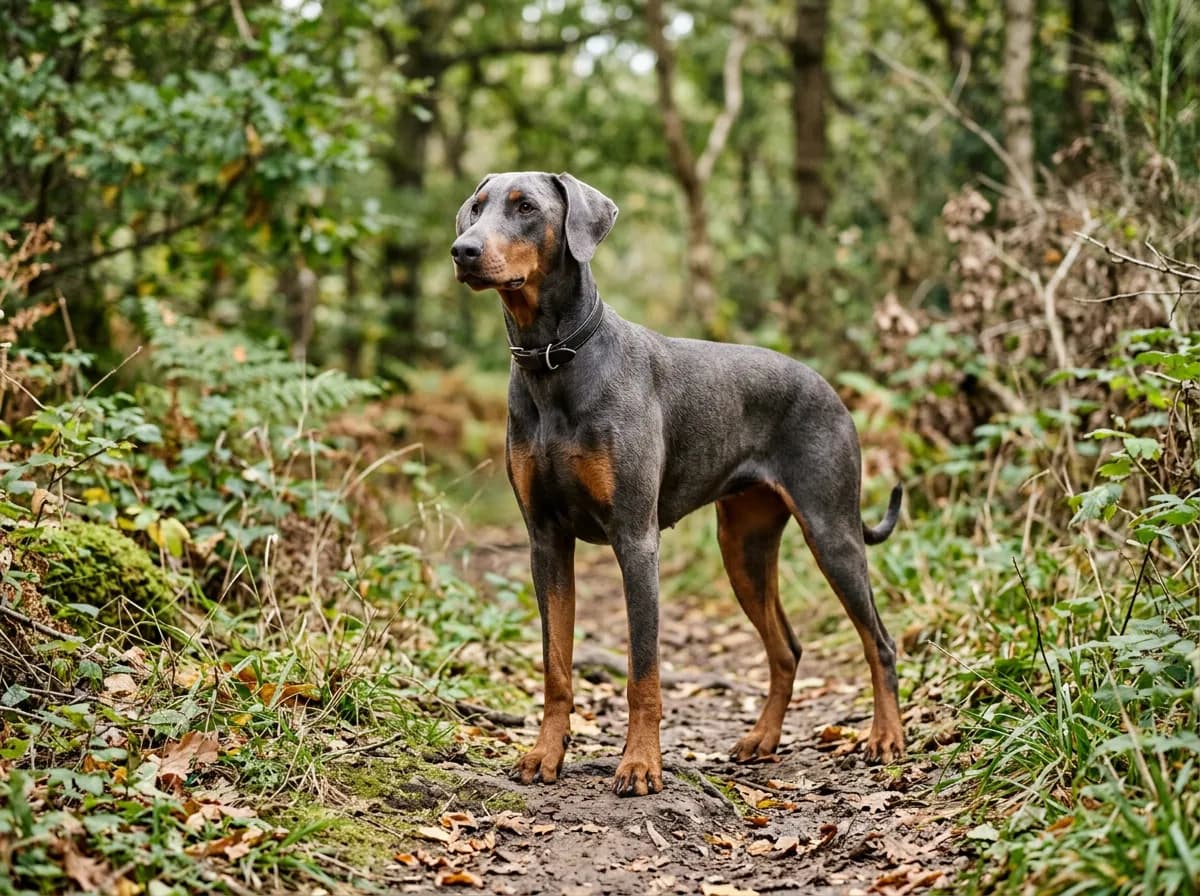
The blue and rust Doberman is where the dilution gene enters the picture, and where the conversation shifts from pure aesthetics to health. A "blue" Doberman is not really blue. It is a black dog whose pigment has been lightened to a smoky steel-gray or charcoal by two copies of the recessive dilution gene. The rust points remain, though they can look slightly muted against the softer gray, and the overall effect in good light is genuinely beautiful, almost silvery.
Blue is a recognized standard color under the AKC, so a blue and rust Doberman can be registered and shown in the United States. But it is genuinely uncommon, because it requires the dog to be black-based and carry two copies of the dilution allele. That double-recessive requirement is why blues show up far less often than blacks or reds, and it is also why they are frequently marketed as "rare" at a premium price. The rarity is real; the question is whether the premium is worth the trade-off that comes with it.
Here is the honest caveat every prospective blue owner should hear. Diluted coats are strongly associated with color dilution alopecia (CDA), a genetic skin condition in which the diluted hairs are structurally weaker, break off, and fail to regrow, leaving thinning fur, flaky skin, and sometimes recurrent follicle infections. The Doberman Pinscher Club of America discusses this openly, and the condition was historically common enough in the breed that it was once informally called "blue Doberman syndrome." Not every blue dog develops CDA, but the risk is real and lifelong, and it is the single most important thing to weigh against a blue's striking looks.
- A blue and rust Doberman is a legitimate standard color, not a defect. However, the same dilution gene that makes the coat gray raises the risk of color dilution alopecia. Ask the breeder about the coat health of the parents and grandparents before committing to a diluted dog.
Fawn (Isabella) and rust Doberman: the rarest standard color
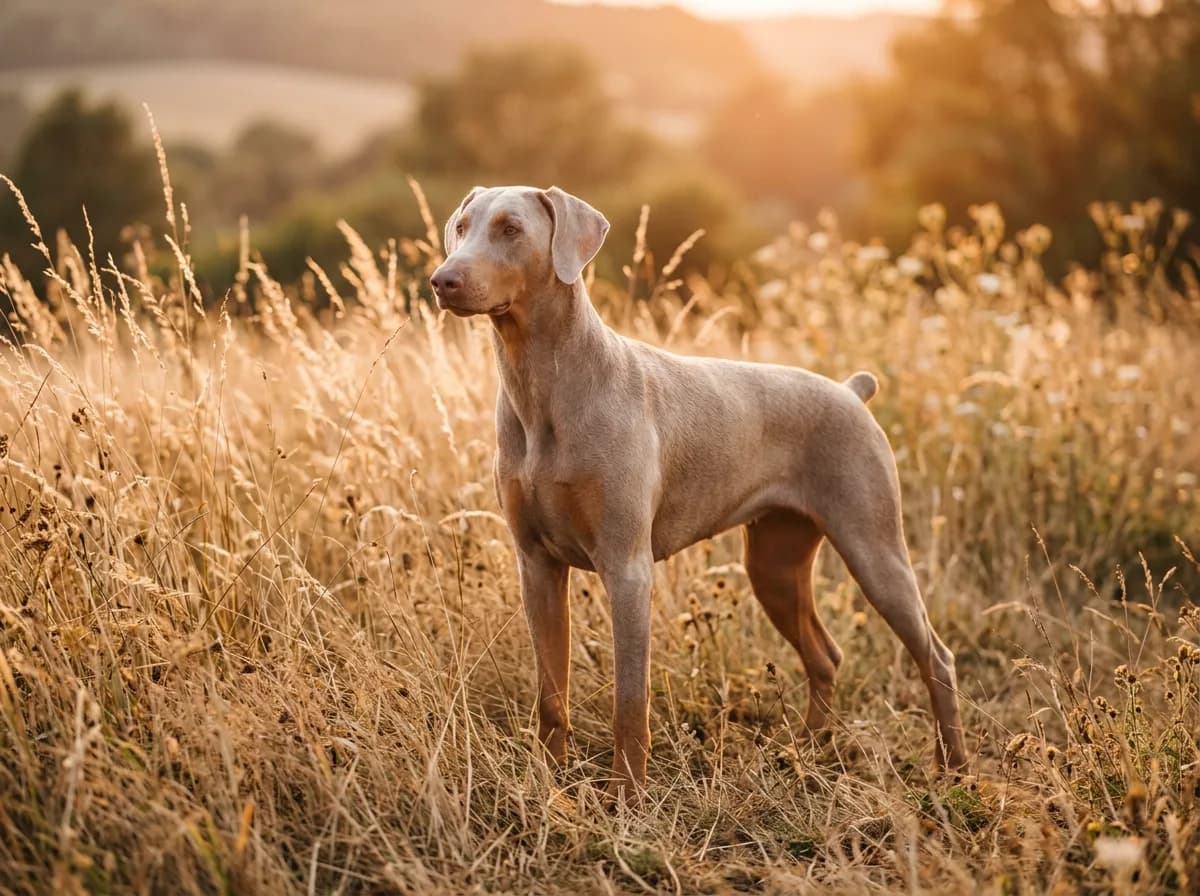
The fawn Doberman, almost always called Isabella by enthusiasts, is the rarest of the four recognized Doberman colors and arguably the most eye-catching. It is a red dog that has been diluted, so instead of the smoky gray of a blue, you get a soft, silvery beige or light-tan coat. Paired with the rust points, an Isabella Doberman has an almost lilac, otherworldly quality that makes it a magnet for buyers chasing something different.
The genetics explain the rarity clearly. To produce a fawn, a puppy must be recessive at the red gene (two red alleles, no dominant black) and recessive at the dilution gene (two dilution alleles). That is four specific recessive copies lining up at once, which is why fawn is the least common standard color to appear in a litter. Both parents must carry the right combination of hidden genes, and even then only a fraction of the puppies will be fawn. This is genuine, math-driven scarcity, unlike the manufactured scarcity around white and melanistic dogs.
Because fawn is diluted red, it carries the same, and often greater, exposure to color dilution alopecia as blue. Many breed authorities consider Isabella the highest-risk coat for CDA of the four Doberman colors. That does not make every fawn dog unhealthy, but it does make parental coat history and a candid breeder conversation essential. If a breeder cannot or will not talk frankly about CDA in their fawn line, that silence is itself an answer.
The name "Isabella," by the way, is shared with a diluted color in several other breeds and even in horses. It generally describes exactly this pale, warm, silvery-beige dilution of a red or brown base, so if you have seen an "Isabella" French Bulldog or a horse described that way, you already have a mental picture of the Doberman version.

Petful may earn a commission when you click through to Chewy, at no extra cost to you.
- 1Fawn (Isabella) is the rarest of the four recognized Doberman colors, a diluted version of red.
- 2It requires four specific recessive genes to line up, which is why it appears so infrequently.
- 3As a diluted coat, Isabella carries the highest risk of color dilution alopecia of the four standard colors.
Blue vs fawn: telling the two dilutes apart
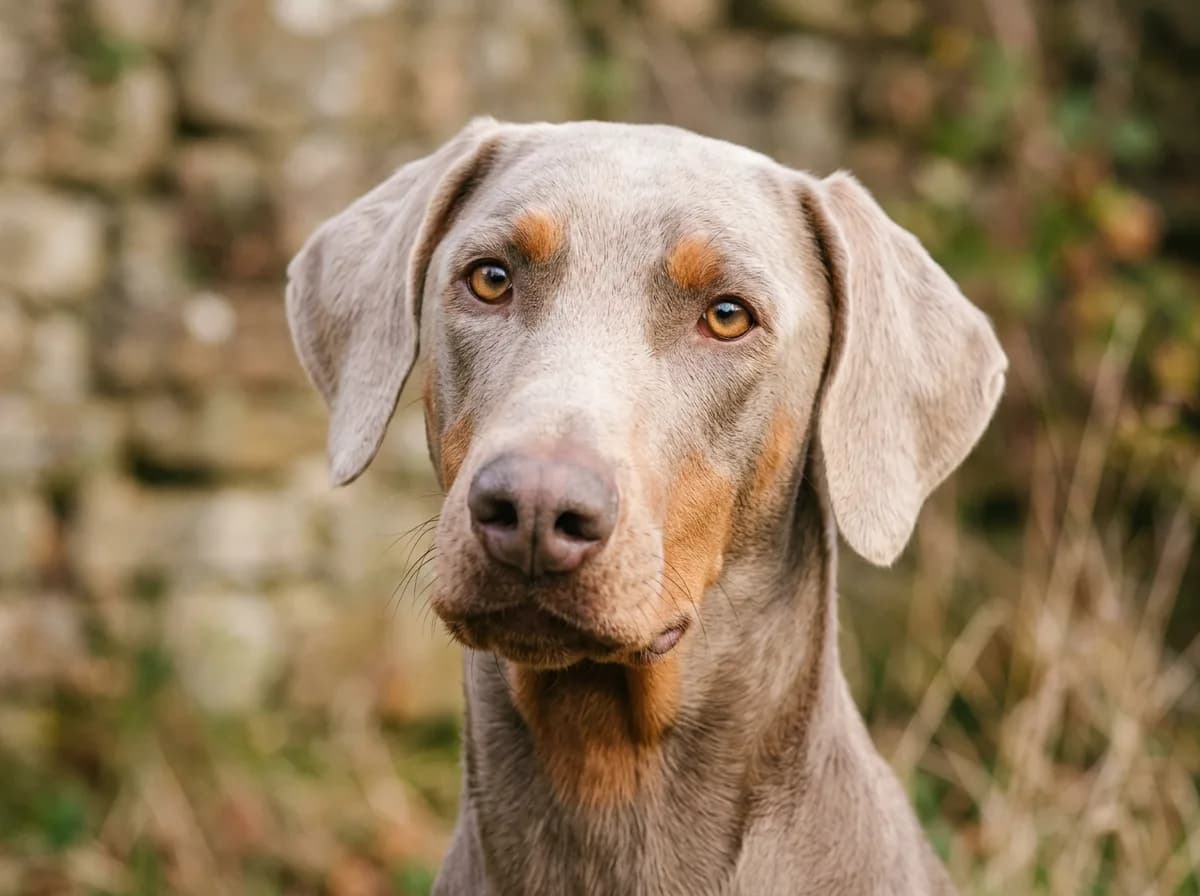
Blue and fawn both come from the dilution gene, so people sometimes confuse them, but they start from different base pigments. A blue dog is diluted black, so it reads gray or charcoal. A fawn dog is diluted red, so it reads warm beige, tan, or lilac. If the coat looks cool and silvery, it is blue; if it looks warm and sandy, it is fawn. Both share the same elevated CDA risk that comes with dilution, and both will have a matching dilute nose, a slate-gray nose on a blue and a light liver nose on a fawn, rather than the black or dark-brown nose of an undiluted dog.
The genetics behind every Doberman color
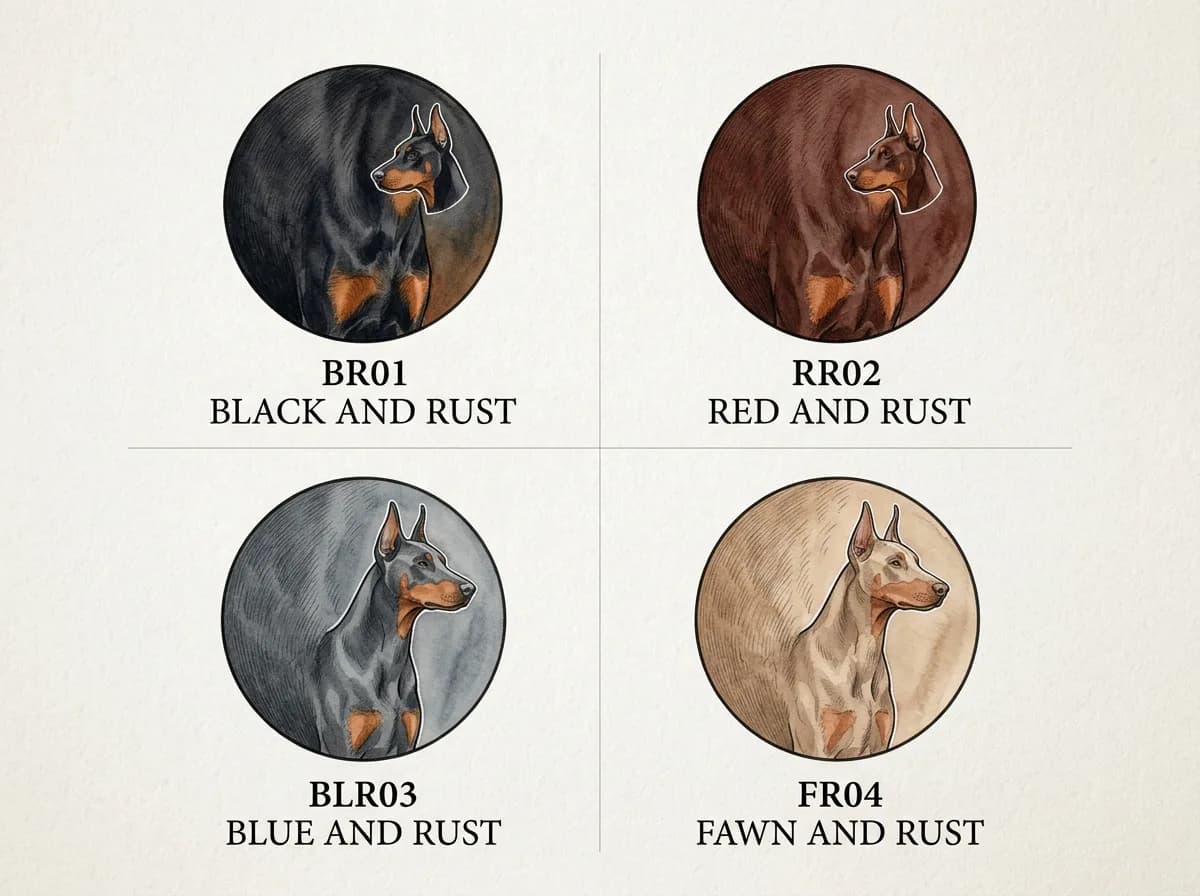
Once you understand two genes, you can predict every Doberman color and even guess what a pairing might produce. This is the section that separates a casual owner from someone who can actually read a pedigree, and it is worth slowing down for because it makes every other section click into place.
Gene one: black versus red (the B locus)
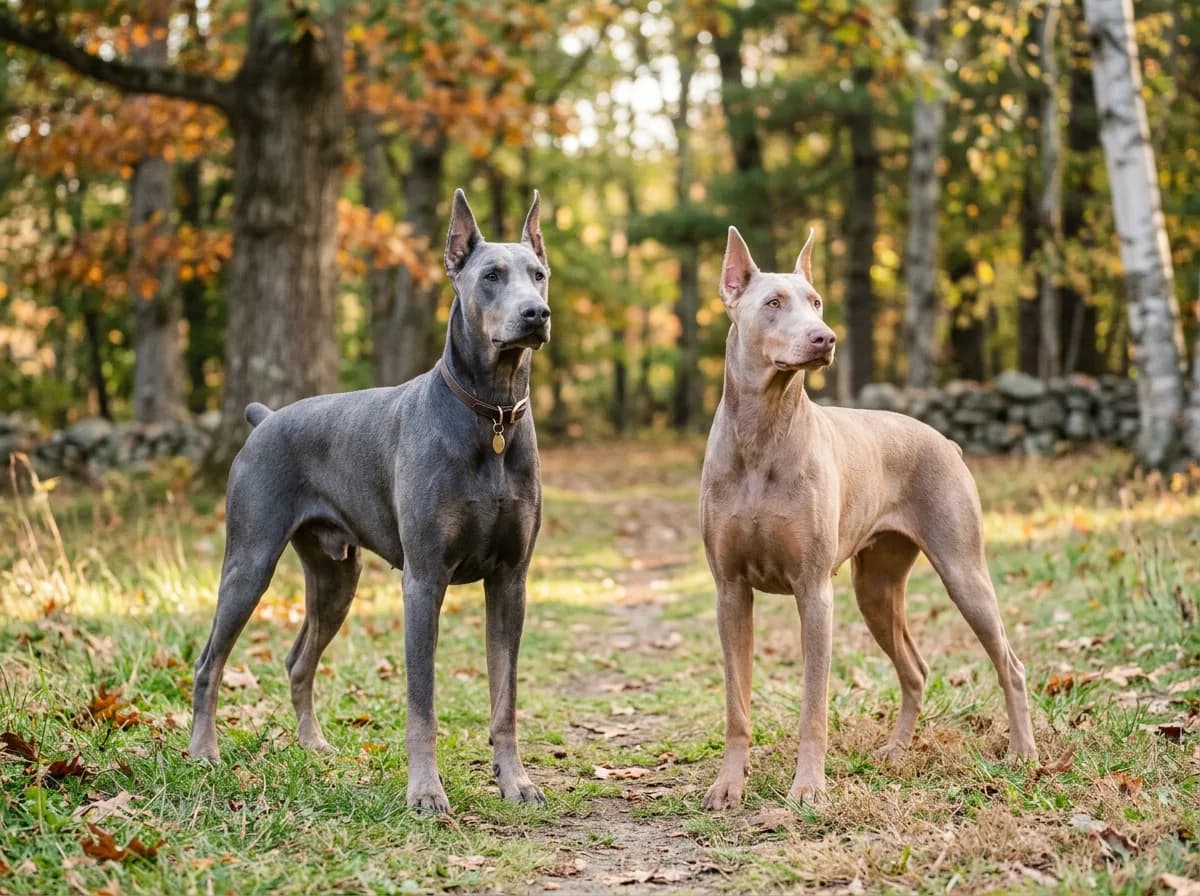
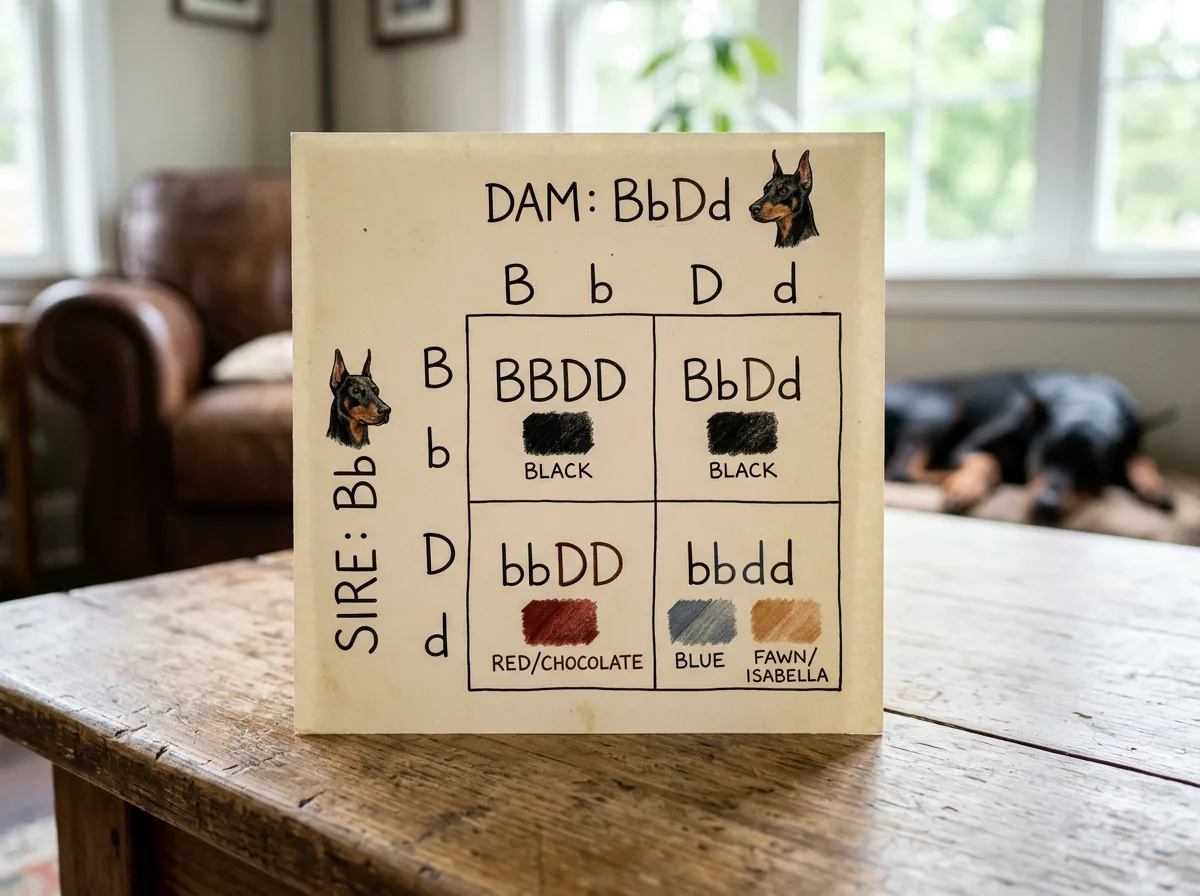
The first gene decides whether the dog's base pigment is black or red (brown). Black is dominant, red is recessive. A dog needs only one copy of the black allele to be black-based, but it needs two copies of the red allele to be red-based. This is why black is the most common Doberman color and red is the second most common. It also explains the classic surprise where two black parents produce a red puppy: both parents secretly carried one hidden red allele and passed it on together. Geneticists label this the B locus, and in the Doberman it is essentially an on/off switch between black and brown pigment.
Gene two: dilution (the D locus)
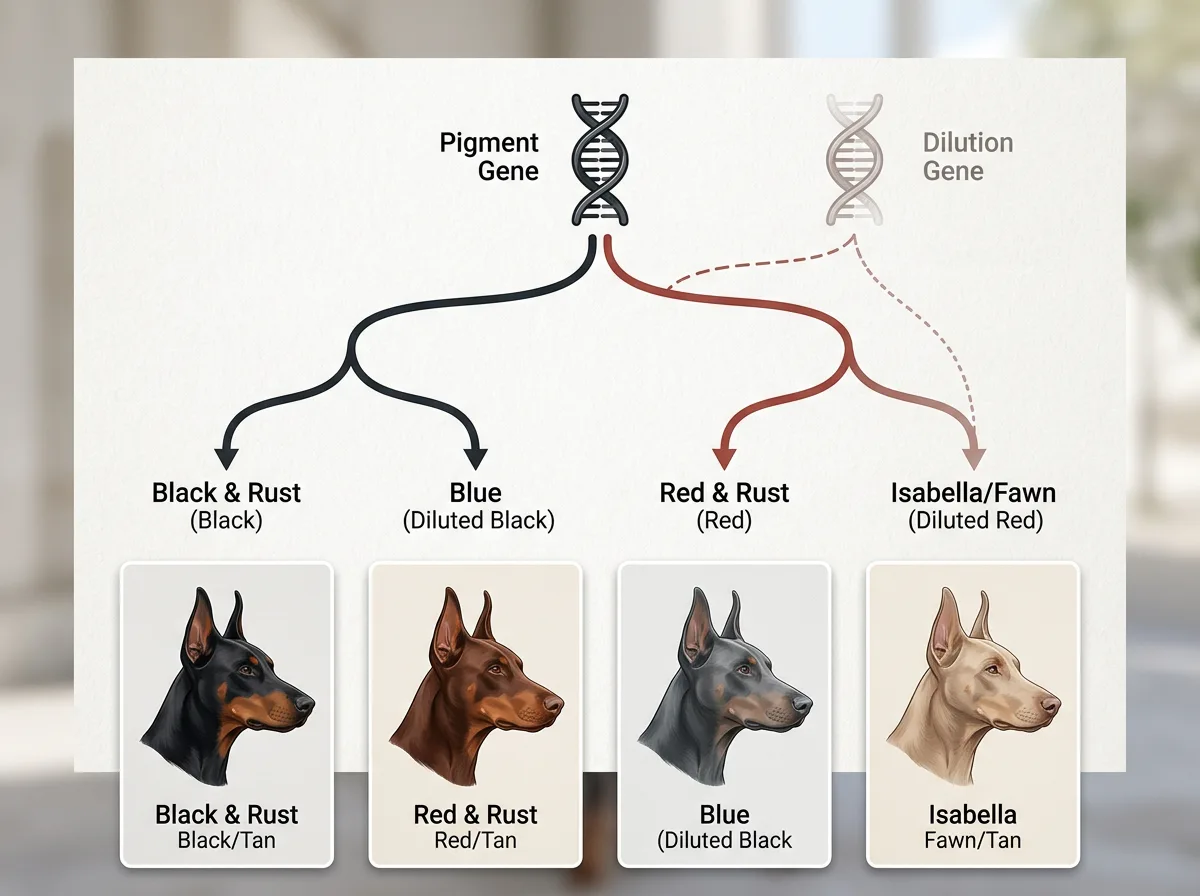
The second gene decides whether that base pigment is expressed at full strength or diluted. Full color is dominant, dilution is recessive, so a dog needs two copies of the dilution allele to show a diluted coat. Dilution does not change which pigment the dog has, only how intensely it is displayed. Applied to a black-based dog, dilution produces blue. Applied to a red-based dog, it produces fawn (Isabella). A resource focused on canine coat genetics, Coats and Colors, lays out these B and D locus interactions in detail for the breed, right down to the effect on nose and eye pigment.
Putting the two genes together
Combine the two switches and you get exactly four outcomes, which is why there are exactly four Doberman colors. Black base plus full color equals black and rust. Red base plus full color equals red and rust. Black base plus dilution equals blue and rust. Red base plus dilution equals fawn and rust. There is no fifth combination hiding in the standard, because two on/off switches can only produce four results. Everything marketed as a fifth or ninth "color," from melanistic dogs to whites, is either a marking variation or a separate mutation layered on top of these two genes.
| Result color | Pigment gene | Dilution gene | What you see |
|---|---|---|---|
| Black and rust | Black-based | Full color | Deep black |
| Red and rust | Red-based | Full color | Chocolate brown |
| Blue and rust | Black-based | Diluted | Steel gray |
| Fawn and rust | Red-based | Diluted | Silvery beige |
This also explains why a single litter can hold several colors at once. If both parents carry hidden red and hidden dilution genes, one litter can contain black, red, blue, and even fawn puppies side by side, which is why breeders who understand the genetics can plan for, or deliberately avoid, the dilute colors long before a single puppy is born.
The "Z factor" and why it matters for white Dobermans
Beyond the two main color genes, Doberman pedigrees sometimes carry a "Z factor" notation. This is a registry flag used to track ancestry back to the first white (albino-type) Doberman. When a dog is descended from that white line, its registration papers can carry a "Z" in the registration number, warning breeders that the dog may carry the white mutation even if it looks like a perfectly normal black, red, blue, or fawn. Responsible breeders use the Z-factor flag specifically to avoid pairing two carriers and producing more white Dobermans. It is a genetics-tracking tool, not a color you can see, and it is one of the most useful safeguards the breed community has against spreading the albinism gene.
The number-one veterinarian-recommended joint supplement brand. Glucosamine, chondroitin, and MSM support cartilage and cushion the joints, easing the stiffness and hind-end weakness that can leave an older or arthritic dog trembling.
Petful may earn a commission when you click through to Chewy, at no extra cost to you.
- If you are buying from a registered line and want to avoid the white mutation, ask whether either parent is Z-factored. A "Z" in the registration number signals descent from the original white Doberman and a possible carrier status, even when the dog itself is a standard color.
White Dobermans: the color that is not a color
No honest guide to Doberman colors can skip the white Doberman, and no honest guide should present it as just another rare option. The white Doberman is not a recognized color and is not a normal dilution. It is the product of a specific genetic mutation, a form of albinism, and it comes with real, documented health consequences that set it apart from the four standard colors.
White Dobermans are more accurately described as partial albinos. They have a cream or off-white coat, pale blue eyes, and pink skin around the nose, eye rims, and paw pads. According to Wikipedia's Dobermann entry, every white Doberman traces back to a single female named Padula's Queen Sheba, born in 1976, and the mutation involved is a form of oculocutaneous albinism. Because the entire white population descends from one dog, the line is heavily inbred, which compounds the health risks on top of the albinism itself.
The health issues are not cosmetic. The lack of pigment leaves these dogs with poor tolerance of sunlight and a heightened risk of skin damage and skin cancer, along with light-sensitive eyes and vision problems. Because the coat and skin cannot shield against ultraviolet light the way a pigmented dog's can, white Dobermans often need indoor management, sun protection such as canine-safe sunscreen or UV-blocking clothing, and vigilant veterinary skin monitoring for life. Some also show photophobia, squinting or avoiding bright light because their unpigmented eyes cannot filter it comfortably.
For all these reasons, major kennel clubs do not recognize white as one of the Doberman colors, and the Doberman Pinscher Club of America has long discouraged breeding them. When you see a white Doberman advertised as a "rare albino" at a premium, understand that the price reflects scarcity created by a mutation, not a desirable, healthy trait. The kindest thing a buyer can do for the breed is to refuse to reward the deliberate breeding of white dogs, which removes the financial incentive that keeps the practice alive.
- White Dobermans carry documented risks including light sensitivity, elevated skin cancer risk, and vision problems, all tied to their albinism. They are not a recognized color, and reputable breeders use the Z-factor system specifically to avoid producing them. Treat a premium "rare white" listing as a warning sign, not a selling point.
Melanistic Dobermans: rust points bred away
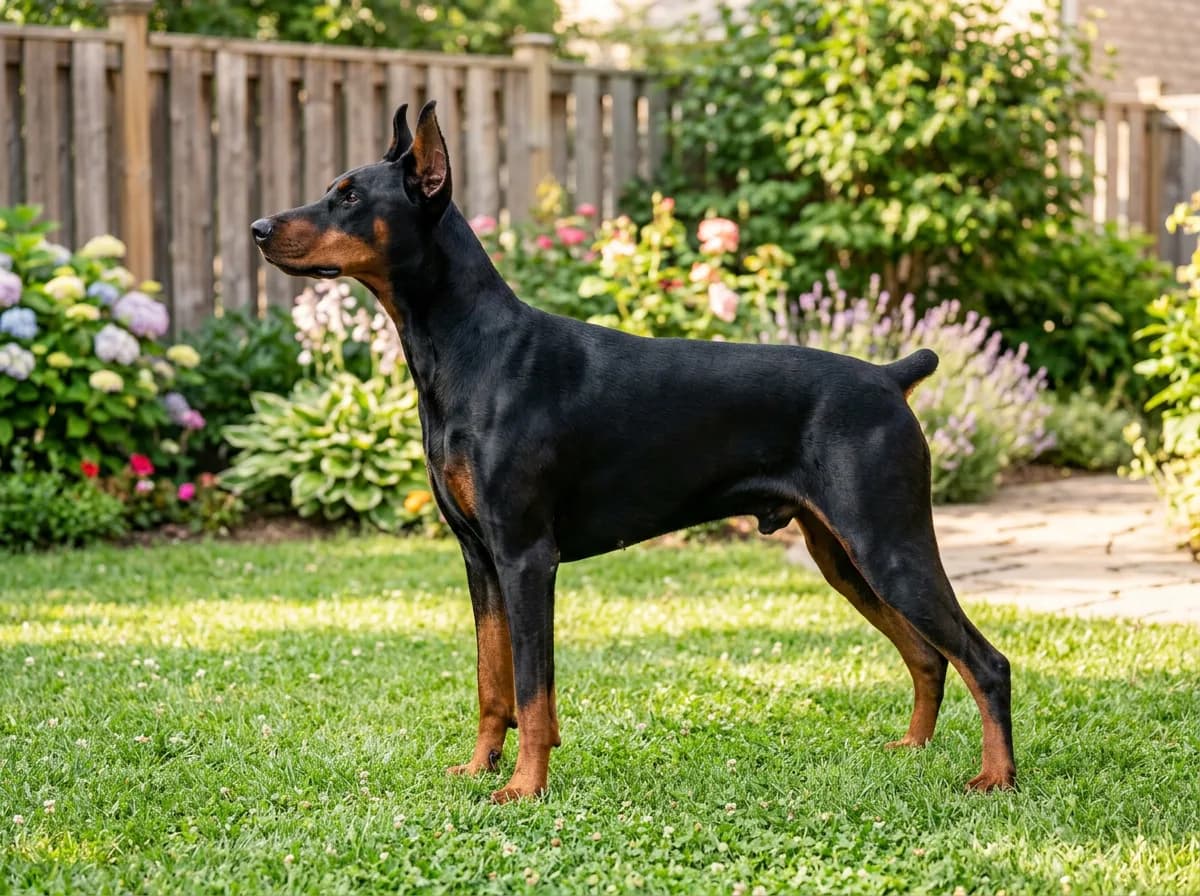
At the opposite end from the white dog sits the melanistic Doberman. Where white has too little pigment, a melanistic dog has too much. "Melanistic" describes a dog whose rust points have been bred down until they are barely visible or gone entirely, producing what looks like a solid black, solid red, solid blue, or solid fawn dog. You will occasionally see all four melanistic variants advertised, often as ultra-rare exotics with names like "solid black Doberman" or "all-black Doberman."
The catch is that a solid-colored Doberman without rust markings is a disqualifying fault in the breed standard, not a prized rare color. The rust points are part of what defines the breed, and breeding them away moves the dog further from the standard, not closer to something special. A melanistic dog inherits the same underlying base color as its non-melanistic relatives, so a melanistic black is still genetically a black dog; it has simply lost the visible tan pattern. There can be four melanistic looks because there are four base colors, but none of them is a new color, only a marking loss layered on an existing one.
A melanistic dog is not inherently unhealthy the way a white Doberman is, and if it descends from a blue or fawn line it still carries the dilution-linked CDA risk of that base. The bigger issue is what the "rare melanistic" marketing usually signals: a breeder chasing novelty and price over the standard and, often, over health testing. If your goal is a companion and you do not care about the show ring, a melanistic dog can be a perfectly good pet. Just recognize the label for what it is, a solid dog missing its markings, and do not pay an exotic premium for a disqualifying fault.
American vs European Dobermans: color is the same, type differs
A common point of confusion is whether "American" and "European" Dobermans come in different colors. They do not. Both types come in the same four recognized Doberman colors, because color and type are controlled by different things. What differs between the American and European (often called the Dobermann in Europe) is build and temperament, not coat color.
Petful may earn a commission when you click through to Chewy, at no extra cost to you.
American Dobermans tend to be sleeker, more refined, and bred with a strong eye toward the show ring and companion homes. European Dobermanns tend to be heavier-boned, more muscular, and bred under working and protection standards, with a somewhat blockier head and thicker neck. You can find a black and rust dog, a red and rust dog, a blue, or a fawn in either type. So if a breeder implies that a color is exclusive to a "European line" as a way to justify a higher price, treat that as marketing rather than genetics.
There is one indirect connection worth knowing. Because some European registries have moved away from registering the dilute colors, blue and fawn dogs are proportionally more common in American than in strict European show lines. That is a registry-policy effect, not a biological one: the genes exist in both populations, but European breeding rules discourage expressing them, so you simply see fewer dilutes stamped with European papers. The color itself is never locked to a continent.
- 1American and European Dobermans share the same four recognized colors; the difference is build and temperament, not coat.
- 2American dogs are typically sleeker and show-oriented; European dogs are heavier-boned and work-oriented.
- 3A color is never exclusive to one type, so "European-only color" claims are a marketing tell.
What about the "Warlock" or "king" Doberman?
You may also run into the term "Warlock" or "king" Doberman, usually attached to an oversized dog and sometimes to an unusual color. This is not a separate color or even a real, recognized variety. It is a marketing label, often for a larger-than-standard dog, and it has no basis in the breed standard. There is no giant "Warlock" color, and the name traces back to a specific champion dog whose title was misunderstood and turned into a sales gimmick. Treat "Warlock" the same way you treat "rare exotic color" claims: as a reason to ask more questions, not to pay more money.
Rarity, price, and what actually drives cost

Because Doberman colors range from very common to genuinely uncommon, color is one of the biggest levers breeders use on price. Understanding the real rarity order keeps you from overpaying for a coat that is either unremarkable or actively risky.
In rough order from most to least common among the recognized colors: black and rust is the most common, red and rust is next, blue and rust is uncommon, and fawn (Isabella) is the rarest of the four standard colors. Outside the standard, white and melanistic dogs are also uncommon, but their scarcity comes from mutation and disqualifying faults rather than desirable rarity. A rarity ranking is only useful if you also know why each color is rare, because "rare because the math is hard" (fawn) is very different from "rare because it is a mutation nobody should be spreading" (white).
Here is the key judgment call. The two rarest recognized colors, blue and fawn, are also the two with meaningful coat-health risk because of the dilution gene. So the very traits that make a dog "rare and expensive" are the traits that can bring color dilution alopecia. A savvy buyer weighs the premium against that risk and asks pointed questions about the parents' coat and skin history. Rarity alone is not a reason to pay more; health-tested, honestly represented breeding is. A common, health-tested black and rust dog from a careful breeder is a far better buy than a "rare" fawn from a breeder who cannot speak to CDA in the line.
It is also worth remembering that coat color has nothing to do with the health conditions that actually shorten Doberman lives most often, chiefly dilated cardiomyopathy and von Willebrand disease. Those are the tests that should drive your breeder choice, and they apply equally to every color. A gorgeous, rare coat on a dog from untested parents is a bad trade in every direction.
| Color | Rarity | Recognized | Buyer note |
|---|---|---|---|
| Black and rust | Most common | Yes | Safest all-around choice |
| Red and rust | Common | Yes | Full pigment, low coat risk |
| Blue and rust | Uncommon | Yes | Verify CDA history in the line |
| Fawn (Isabella) | Rarest standard | Yes | Highest CDA risk, ask hard questions |
| White (albino) | Rare | No | Serious health risks, avoid |
| Melanistic | Uncommon | No | Disqualifying fault, not a prize |
Coat care and the health of diluted Dobermans
Whatever color you choose, a Doberman has a short, single coat that is genuinely low-maintenance. A weekly once-over with a rubber curry or hound glove pulls loose hair, spreads skin oils, and lets you check for any bare patches or flaking. Because the coat is so short, most Dobermans need only occasional baths, and over-bathing can actually dry the skin and make any diluted-coat issues worse rather than better.
For blue and fawn dogs, coat care is also health monitoring. Color dilution alopecia usually shows up in the first one to three years of life as gradual thinning over the diluted areas, dry or scaly skin, and sometimes small follicle infections. There is no cure, but the condition is manageable with gentle skin care, appropriate medicated or moisturizing shampoos, veterinary support, and sometimes supplements, and a good diet supports skin and coat integrity from the inside. Petful's guide to skin and coat nutrition covers why quality nutrition matters for exactly this kind of coat health.
The practical management goal with a dilute dog is to keep the skin healthy so the remaining hair stays put and secondary infections do not take hold. That means catching problems early, not fighting them after a dog is half bald. Owners who stay ahead of it, with routine grooming checks, prompt veterinary care at the first sign of thinning or irritation, and a skin-supporting diet, often keep their blue or fawn Doberman looking good and comfortable for years, even if the coat is never quite as dense as a black dog's.
If you are drawn to the way color hubs break a breed down, you may also enjoy our companion piece on Rhodesian Ridgeback colors, which walks through that breed's spectrum with the same genetics-first approach.
- For blue and fawn Dobermans especially, a weekly hands-on grooming session is your best early warning for color dilution alopecia. Catching thinning fur or flaky skin early lets your vet start a management plan before infections set in.
Eye and nose color: the details that finish the picture
Coat color is only part of a Doberman's look. Eye and nose pigment shift right along with the coat, and knowing the pattern helps you spot a dilute or verify a color from a photo. On a standard black and rust dog, the eyes are dark brown and the nose is black. On a red dog, both warm up: the nose is brown and the eyes are usually a lighter brown to match. On the dilutes, everything softens further, so a blue dog has a slate-gray nose and often a lighter eye, and a fawn dog has a light liver or pinkish nose with amber or greenish-tinged eyes.
That coordinated shift is why a truly light eye or an off-color nose can be a clue that a dog is a dilute even when the coat is ambiguous in a photo. Breed standards prefer darker eyes and penalize very light or "bird of prey" yellow eyes in the show ring, but on a dilute dog a lighter eye is simply part of the package rather than a separate fault. None of this affects the dog's vision or health; it is pigment, not function, except in the white Doberman, where the pale eyes come with the albinism-related vision problems described earlier. Nail and paw-pad color follow the same rule, running darker on black dogs and lighter on reds and dilutes, so even the details of a Doberman line up with its base color and dilution status once you know what to look for.
Choosing a Doberman by color: a sensible approach
If you are choosing a Doberman and color matters to you, a simple framework keeps you out of trouble. Start by deciding whether you care about the show ring. If you do, you are choosing among the four recognized colors, and you want crisp rust markings and no disqualifying faults. If you only want a companion, you have more latitude, but the health logic still applies just as strongly.
Next, weigh rarity against risk honestly. Black and red give you full-pigment coats with the lowest coat-health risk. Blue and fawn give you a striking, uncommon look but ask you to accept and manage a real chance of color dilution alopecia. White is a hard no for most buyers because of the serious health burden, and melanistic dogs are solid coats missing the breed's signature markings. There is no wrong answer among the four recognized colors, only trade-offs you should choose with your eyes open.
Finally, judge the breeder, not just the puppy. A breeder who is upfront about dilution risk, health-tests their dogs for the conditions that actually matter, and can speak to the coat and skin history of the parents is worth far more than a flashy "rare color" listing. The color is the last thing that should drive the decision; the health and honesty of the breeding are the first. Get those right and any of the four Doberman colors will make a wonderful dog.
- 1Decide show vs companion first, since the show ring limits you to the four recognized colors with proper markings.
- 2Balance rarity against health: black and red are lowest risk, blue and fawn are striking but carry CDA risk.
- 3Choose the breeder over the coat; honesty about dilution risk and health testing matters more than a rare color.
Frequently asked questions about Doberman colors
How a Doberman's color changes from puppy to adult
Doberman puppies wear their true color from day one, which sets the breed apart from those that lighten or "clear" as they grow. A black pup is born black, a red pup is born a warm brown, and the two dilutes are already visible as gray or pale beige in the whelping box. What changes over the first several months is not the color itself but the quality of the coat. A young puppy's fur is softer, slightly duller, and a touch fuzzier, and it gradually gives way to the short, hard, close-lying adult coat that carries the breed's signature shine. Most Dobermans settle into their full adult coat texture and gloss somewhere in the first year.
The rust markings mature too. They are present at birth, but on a young puppy they can look softer or less sharply outlined, then tighten into crisp, well-defined points as the dog grows. This is worth knowing when you evaluate a litter, because a puppy with slightly smudgy rust is usually just young, not faulty. It also helps with the black-versus-red confusion covered earlier: a very dark red puppy can read almost black under nursery lighting and only declares itself clearly once the adult coat comes in and catches the sun.
One thing that does not change is the base genetics. A puppy cannot turn from black to blue or from red to fawn as it ages, because color and dilution are fixed at conception. If a dilute puppy's coat looks like it is thinning or losing density over the first one to three years rather than simply maturing, that points to the dilution-linked skin problems described above, not a normal color change, and it is worth a veterinary look.
DNA color testing: what your Doberman actually carries
The color you see is only half the story, because a Doberman can carry color genes it does not show. A black and rust dog can quietly carry the recessive red allele, the dilution allele, or both, which is exactly how two black parents surprise everyone with a red or blue puppy. Pedigree paperwork and the Z-factor notation tell you about ancestry, but they cannot always tell you what an individual dog carries. A DNA color panel can.
Affordable canine DNA tests now read the two genes that drive Doberman color directly: the locus that switches base pigment between black and red, and the dilution locus that turns black into blue and red into fawn. A single cheek swab reveals whether a solid-looking black dog is hiding red, dilution, or both, which lets a breeder plan a litter and either produce or deliberately avoid the dilute colors. For a buyer who wants a black or red dog with the lowest coat-health risk, knowing the parents' carrier status is far more informative than the color of the parents alone.
Testing also reaches the health-relevant mutation behind white Dobermans. The albino-type mutation that the Z factor flags in pedigrees has an actual DNA test, so a responsible breeder can confirm a dog is clear of it rather than relying on paperwork alone. When you talk to a breeder about the dilute or white risks discussed above, asking whether the parents were DNA color-tested and cleared for the albino mutation turns a vague reassurance into something you can verify.
- A DNA color test shows what a Doberman carries, not only what it looks like. If you want to steer clear of the dilute coats or the albino mutation, ask whether the parents were swab-tested for the red, dilution, and albino genes, and ask to see the results.
Related on Petful
- Merle Dog Guide: Genetics, Breeds, and Health
- German Shepherd Colors: The Complete Guide
- Blue Nose Pitbull: Facts, Health, Price, and Myths
- Poodle Colors: Every Shade, Pattern, and Fade
- Labrador Colors: The Complete Guide
Major kennel clubs recognize four standard Doberman colors: black and rust, red and rust, blue and rust, and fawn (Isabella) and rust. Each is a base pigment (black or red) combined with sharply defined rust markings above the eyes and on the muzzle, chest, legs, and under the tail. A Doberman without those rust points, such as a solid black or solid red dog, is a disqualifying fault even though the dog is otherwise healthy.
Among the four recognized colors, fawn (Isabella) is the rarest. It is a diluted version of red and requires four specific recessive genes to line up at once, so it appears far less often in litters than black, red, or blue. White (albino) and melanistic Dobermans are also uncommon, but their scarcity comes from a mutation and from disqualifying faults rather than from a desirable, healthy rarity.
Blue and fawn are legitimate recognized colors, but both are diluted coats and both carry a real risk of color dilution alopecia (CDA), a genetic condition where diluted hairs are weaker, break off, and fail to regrow. Isabella (fawn) is often considered the highest-risk coat for CDA. Many diluted Dobermans live healthy lives, but you should ask a breeder about the coat and skin history of the parents and grandparents before committing.
White Dobermans exist but are not a recognized color. They are partial albinos descended from a single female born in 1976, with a cream coat, pale blue eyes, and pink skin. Their albinism brings documented health problems including light sensitivity, elevated skin cancer risk, and vision issues. Major kennel clubs do not recognize white, and reputable breeders use the Z-factor registration flag specifically to avoid producing them.
A melanistic Doberman is a dog whose rust markings have been bred down until they are barely visible or gone, producing a near-solid black, red, blue, or fawn coat. A solid Doberman without rust points is a disqualifying fault in the breed standard, not a prized rare color, so an exotic "rare melanistic" premium is usually marketing rather than genuine value.
The Z factor is a registration notation that traces a dog's ancestry back to the original white Doberman line. A "Z" in the registration number warns breeders that the dog may carry the white (albino) mutation even if it looks like a normal color. Responsible breeders use the flag to avoid pairing carriers and producing more white puppies. It is a genetics-tracking tool, not a visible coat color.
No. American and European Dobermans share the same four recognized colors. The difference between the two is build and temperament, with American dogs typically sleeker and show-oriented and European dogs heavier-boned and work-oriented. If a breeder claims a color is exclusive to a European line to justify a higher price, that is marketing, not genetics.
Black and rust is by far the most common Doberman color. Black is the dominant base pigment, so it shows up most often in litters, and black-based dogs also have the lowest risk of coat-linked skin problems because their pigment is not diluted. Red and rust is the second most common recognized color.
Blue and fawn Dobermans often carry a higher price than black or red because they are less common, but that premium reflects rarity, not quality or health, and the same dilution gene raises the risk of color dilution alopecia. Coat color does not affect the serious conditions that actually shorten Doberman lives, such as heart disease, so a health-tested common color is a better value than an untested rare one.
The bottom line on Doberman colors
Doberman colors reduce to an elegant bit of genetics: two base pigments, black and red, and one dilution switch that turns black into blue and red into fawn. Those four combinations are the only colors the major kennel clubs recognize, and each pairs its base coat with the breed's signature rust markings. Everything else you will hear about, white dogs, melanistic dogs, "Warlock" giants, "rare exotic" coats, sits outside the standard for reasons worth understanding before you buy.
The practical wisdom is simple. Black and red give you the safest, most classic coats. Blue and fawn give you a rarer, more striking look in exchange for managing a real risk of color dilution alopecia. White is a genuine health gamble tied to albinism, and melanistic is a disqualifying fault dressed up as an exotic. Let the genetics and the health facts guide you, choose an honest breeder over a flashy color, and you will end up with a Doberman whose looks you love and whose skin and coat stay healthy for life.

Coreen Saito is a pet writer and longtime shelter volunteer with more than a decade in animal rescue. She covers cat behavior, breed care, and the small, ordinary science of sharing a life with companion animals, with a particular focus on honest takes about the products and decisions that actually matter. At home in Arizona, she's outranked by Mac (a dog with the loudest opinion in the house), Rebel (a cat who governs by quiet authority), and Meri (an orange tabby who runs the late shift and the laundry basket). She writes about all three, plus the rescues that keep coming through her life, at LifeWithMinty.com.
Sign up for expert-backed reviews and safety alerts all in one place.