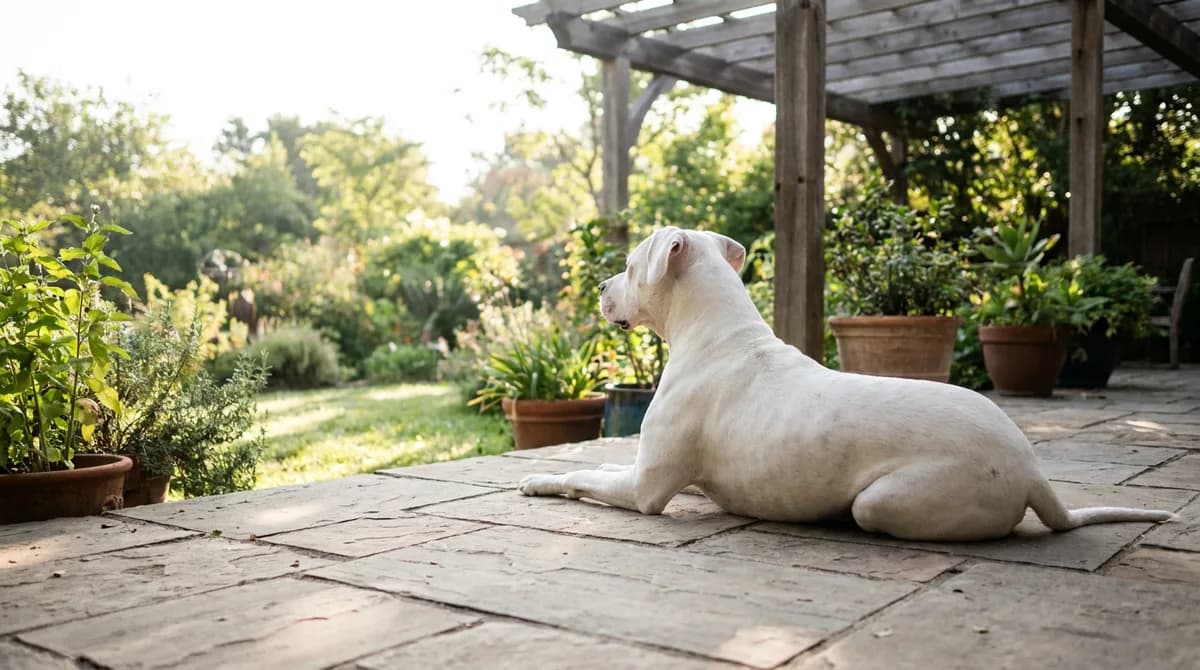
Labrador Colors: The Complete Guide
Labrador colors come down to three breed-standard coats, black, yellow, and chocolate, plus rare dilutes like silver, charcoal, and champagne and the deep-pigment fox red. It explains the genetics behind each coat plus the health facts to know.

Petful is reader supported. As an affiliate of platforms like Amazon and Chewy, we may earn a commission when you buy through links on this page. There is no extra cost to you.
Labrador colors come down to three officially recognized coats plus a handful of controversial "rare" shades, and understanding the difference matters whether you are picking a puppy, breeding responsibly, or just curious why your black Lab's littermate turned out yellow. The three standard labrador colors are black, yellow, and chocolate, all recognized by the American Kennel Club and every major kennel club worldwide. Beyond those, you will hear breeders advertise silver, charcoal, champagne, and fox red Labs, and each of those raises its own questions about genetics, registration, and health that this guide walks through in full.
Coat color in Labradors is one of the cleanest examples of Mendelian genetics in any dog breed, which is exactly why it gets taught in veterinary genetics courses. A puppy's color is set the moment it is conceived, decided by a small set of genes it inherits from each parent. That also means two black Labs can produce yellow or chocolate puppies, a chocolate pair can never produce a black puppy, and a "silver" Lab is genetically a diluted chocolate. Once you understand the three genes doing the work, every coat you will ever see on a Labrador makes sense.
- 1Only three labrador colors are breed-standard: black, yellow, and chocolate
- 2Silver, charcoal, and champagne are dilute variants tied to a health-linked gene, and fox red is a deep-pigment yellow
- 3Coat color is fixed at conception by three main genes and does not affect a Lab's temperament, trainability, or working ability

Sign up for expert-backed reviews and safety alerts all in one place.
The Three Standard Labrador Colors

The Labrador Retriever breed standard is unusually strict about color. The AKC lists exactly three: black, yellow, and chocolate, each with its own registration code (black is 007, yellow 232, chocolate 071). Anything outside those three is a disqualification in the show ring, and the FCI and Kennel Club standards worldwide agree. A Labrador of any of these three colors is a "purebred" Lab in the fullest sense, and all three can appear in the same litter.
Black Labradors

Black is the original and most common Labrador color, and for a long stretch of the breed's history it was the only color breeders wanted. The dogs descend from the St. John's water dog of Newfoundland, which was predominantly black, and early Labrador breeders in England culled or gave away off-color puppies. A black Lab has a solid, glossy black coat from nose to tail, dark brown eyes, and a black nose and paw pads. A small white spot on the chest is common and does not affect a dog's registration or breed standing.
Black remains the default in the field-trial and hunting world, partly by tradition and partly because a black dog is easy to see against snow, water, and pale cover. If you sort labrador colors from most common to least common, black sits at the top.
Yellow Labradors

Yellow is the color most people picture when they think "Labrador," thanks in part to guide-dog programs and film. What most owners do not realize is that "yellow" covers an enormous range, from nearly white cream to deep golden to reddish. All of it is the same genetic color. A yellow Lab's actual coat pigment is masked by a gene that switches off the black or brown, leaving the underlying red-yellow pigment to show. Their skin, nose, and eye rims are usually black, which is how you tell a true yellow Lab from a dilute.

Petful may earn a commission when you click through to Chewy, at no extra cost to you.
Yellow Labs first appeared in the recorded pedigrees around 1899 with a dog named Ben of Hyde, and the color was considered a fault for decades before gaining acceptance. Today yellow Labs are second only to black in popularity.
Chocolate Labradors

Chocolate Labs (also called liver Labs in older texts) carry a rich brown coat that ranges from light "milk chocolate" to deep "dark chocolate." Their defining feature is a brown nose, brown eye rims, and often lighter, amber or hazel eyes rather than the dark brown of a black Lab. Chocolate is genetically recessive, which historically made it rarer, but a surge in popularity as a family pet has made chocolate Labs common.
There is one health note worth knowing. A widely cited 2018 University of Sydney study of more than 33,000 Labradors found chocolate Labs had a shorter median lifespan and higher rates of ear and skin conditions than black or yellow Labs. Researchers linked this to the smaller breeding pool used to reliably produce the recessive chocolate color, not to the color itself, which is a strong argument for choosing breeders who prioritize health over coat. You can read more in our full guide to the chocolate Labrador.
How Labrador Color Genetics Work

Coat color in Labradors is controlled mainly by three gene locations, and once you see how they interact, every color combination becomes predictable. This is why breeders can plan litters and why a color-inheritance chart works. According to the UC Davis Veterinary Genetics Laboratory, Labrador coat color is determined by these interacting genes, each of which comes in two versions the puppy inherits one of from each parent.
The B locus: black versus brown
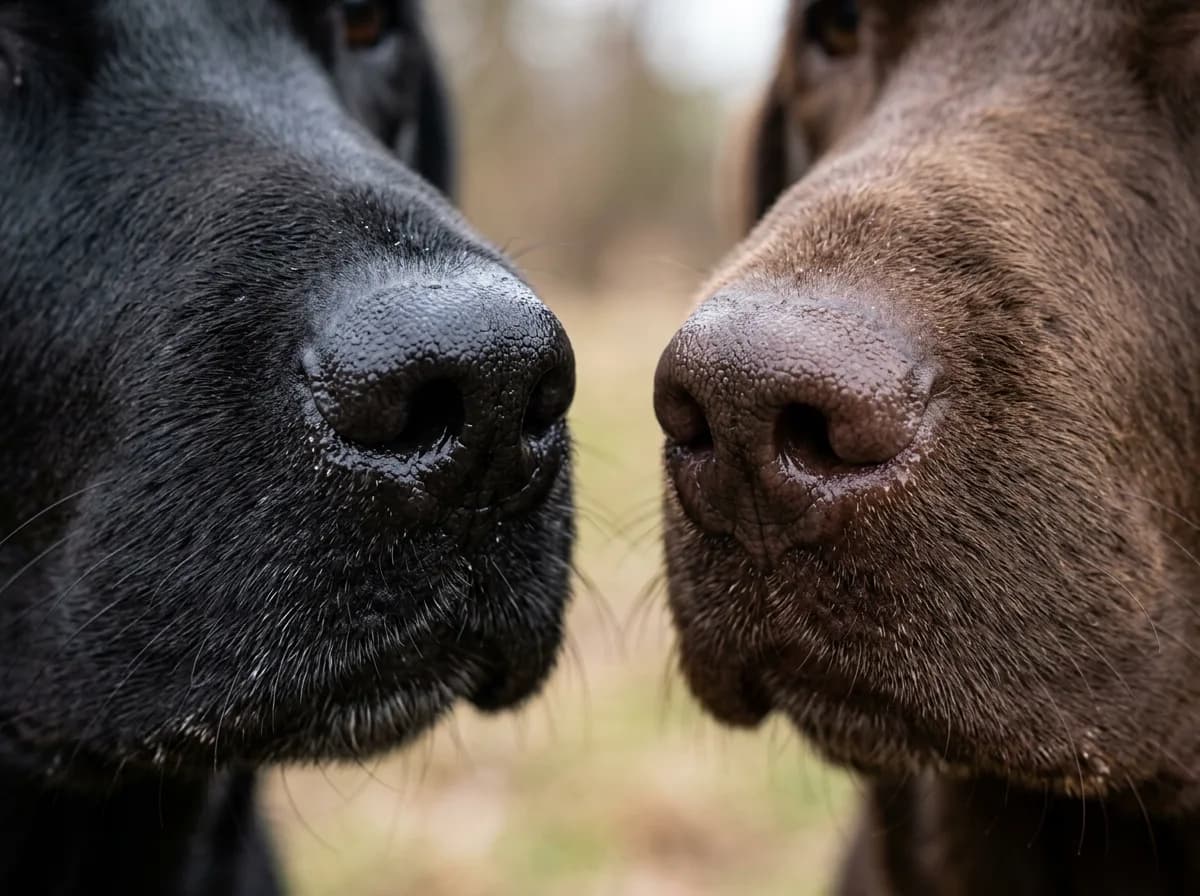
The B gene decides whether the dog's dark pigment is black or brown. "B" (black) is dominant and "b" (brown) is recessive. A dog needs two copies of the recessive "b" (a bb pairing) to be brown, which is why chocolate is recessive. A dog that is BB or Bb has black pigment. This single gene is the difference between a black Lab and a chocolate Lab, all else being equal.
The E locus: the "yellow switch"

The E gene is the master switch for yellow. The recessive "e" version, when a dog inherits two copies (ee), blocks black or brown pigment from reaching the coat entirely, leaving the coat yellow regardless of what the B gene says. This is the key twist: a genetically "black" or "chocolate" dog that is also ee will look yellow. It is why two black Labs can throw a yellow puppy, and why a yellow Lab can have either a black nose (underlying black pigment) or a brown nose (underlying chocolate pigment, called a Dudley when the nose and rims are fully pink-brown).
The D locus: the dilution gene

The D gene is the one at the center of the "rare colors" debate. The dominant "D" keeps pigment full-strength. The recessive "d," in a dd pairing, dilutes the color: a black dog becomes charcoal, a chocolate dog becomes silver, and a yellow dog becomes champagne. Standard Labradors are not supposed to carry the dilution gene at all, which is why the appearance of silver Labs is so contested (more on that below).

Petful may earn a commission when you click through to Chewy, at no extra cost to you.
| Gene Combination | Resulting Color | Standard or Rare |
|---|---|---|
| B_ E_ D_ (has black pigment, not yellow-switched, not diluted) | Black | Standard |
| bb E_ D_ (brown pigment, not yellow-switched, not diluted) | Chocolate | Standard |
| __ ee D_ (yellow switch on, not diluted) | Yellow (incl. fox red) | Standard |
| B_ E_ dd (black pigment, diluted) | Charcoal | Rare/dilute |
| bb E_ dd (brown pigment, diluted) | Silver | Rare/dilute |
| __ ee dd (yellow, diluted) | Champagne | Rare/dilute |
- 1The B gene sets black vs. chocolate
- 2The E gene is the yellow switch that overrides both
- 3The D dilution gene creates silver, charcoal, and champagne and is not part of the standard Labrador genome
The "Rare" Labrador Colors
Beyond the three standard coats, you will see breeders market silver, charcoal, champagne, fox red, and even white or albino Labs, often at a premium price. Some of these are legitimate shade variations within the standard colors; others are dilute coats tied to a gene that raises health and registration questions. Here is what each one actually is.
Fox Red Labradors
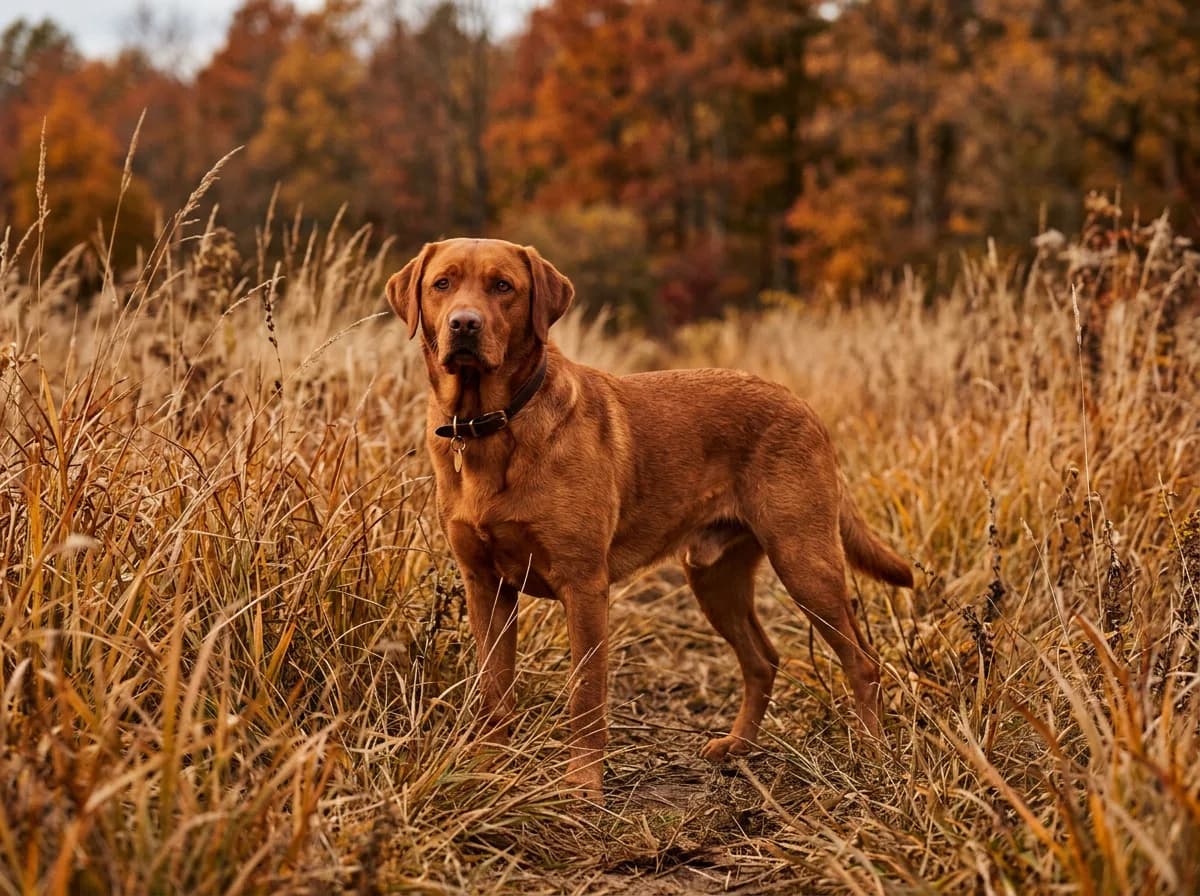
Fox red is the deepest, most saturated end of the yellow spectrum, a rich mahogany or rust color rather than the pale cream most people picture. Genetically it is a yellow Lab (ee), full stop, with modifier genes intensifying the red-yellow pigment. Because it is genetically yellow, a fox red Lab is fully standard and AKC-registrable as "yellow," and it can be shown. Fox red was actually common in the breed's early hunting lines and faded as pale yellows became fashionable; it is now enjoying a comeback among sporting-dog owners. For the full breakdown of shades, health, and where to find one, see our guide to the fox red Labrador.
Silver Labradors
Silver is the most controversial coat in the breed. A silver Lab is a genetically chocolate Labrador (bb) that also carries two copies of the dilution gene (dd), turning the brown coat a grayish, gunmetal silver. The controversy is twofold. First, purebred Labradors historically do not carry the dilution gene at all, which leads many breed authorities to argue that silver Labs trace back to a Weimaraner cross somewhere in their pedigree. Second, the AKC will register silver Labs, but only under the "chocolate" color code, not as "silver," and the breed's parent club does not recognize the color. There are also health concerns tied to the dilution gene, covered in the health section below. Our full guide to the silver Labrador digs into the pedigree debate, the price premium, and what to ask a breeder.
Charcoal Labradors
Charcoal is the dilute of black. A charcoal Lab is genetically a black Labrador (with black pigment) carrying two copies of the dilution gene, which fades the black to a smoky slate-gray. Like silver, charcoal is registered as "black" by the AKC and carries the same dilution-gene questions about pedigree and health. Charcoal, silver, and champagne are essentially the three dilute coats, one for each standard color, and they always travel together in the same conversation because they all trace to the same recessive gene.
Champagne Labradors
Champagne is the dilute of yellow, a very pale, almost pinkish-cream coat produced when a yellow Lab (ee) also carries the dilution gene. Champagne Labs are registered as "yellow." Because yellow already ranges so light, champagne can be hard to distinguish from a very pale standard yellow without a genetic test, which is one reason the champagne label is easy to apply, and to charge for, without proof.
White and Albino Labradors
"White" Labradors are usually just the palest extreme of standard yellow, a cosmetically near-white cream coat with normal black pigment on the nose and eye rims. These are standard yellow Labs and perfectly healthy. True albino Labradors are entirely different and genuinely rare: an albino Lab has no pigment at all, with a pink nose, pink skin around pale blue or pink eyes, and the associated health problems of albinism including light sensitivity and a higher risk of deafness. Albino should not be confused with a pale-cream "white" Lab, and any breeder using the two words interchangeably either does not understand the difference or is hoping you do not.
Petful may earn a commission when you click through to Chewy, at no extra cost to you.
- Because the dilute and intensified coats all trace to genes you can test for, a reputable breeder of "rare" colors should provide the parents' D-locus and E-locus genetic results. If a breeder charges a silver or champagne premium but cannot show the DNA, treat the color claim, and the price, with skepticism.
Labrador Color Rarity: Most Common to Rarest

If you want to know which labrador colors you are most and least likely to meet, here is the practical ranking. Black is the most common by a wide margin, followed by yellow, then chocolate among the standard three. Among the non-standard coats, fox red is the most available (it is just deep yellow), while the dilutes are less common, and true albino is rarest of all.
| Color | Rarity | Standard? |
|---|---|---|
| Black | Most common | Yes |
| Yellow | Common | Yes |
| Chocolate | Common, recessive | Yes |
| Fox red | Uncommon | Yes (registered yellow) |
| Silver | Rare/dilute | Registered as chocolate |
| Charcoal | Rare/dilute | Registered as black |
| Champagne | Rare/dilute | Registered as yellow |
| White (pale yellow) | Uncommon shade | Yes (registered yellow) |
| Albino (true) | Rarest | No, a genetic anomaly |
The takeaway: the coats marketed as "rarest" and priced highest are usually the dilutes and the true albino. But "rare" is not the same as "better" or even "purebred standard," and in the case of the dilutes, rarity is partly the point of the marketing.
Predicting Puppy Colors: What Two Parents Can Produce
Because Labrador color follows the three-gene system above, you can predict what colors a given pairing can and cannot produce. This is exactly what serious breeders do before planning a litter, and it explains a lot of the surprises new owners see when a litter arrives. The core principle: a puppy inherits one copy of each gene from each parent, and the recessive versions (brown "b," yellow-switch "e," dilute "d") only show up when a puppy gets two of them.
Here are the pairings owners ask about most.
Can two black Labs have yellow or chocolate puppies?
Yes to both, and it surprises people every time. A black Lab can secretly carry one hidden copy of the brown gene (Bb) and one hidden copy of the yellow switch (Ee) without showing either. If both black parents carry a hidden brown gene, roughly a quarter of the litter can be chocolate. If both carry a hidden yellow switch, roughly a quarter can be yellow. A single black pair that carries both recessives can, in theory, produce all three standard colors in one litter. This is why two beautiful black Labs sometimes surprise their owners with a yellow or chocolate puppy.
Can two chocolate Labs have a black puppy?
No, and this is the cleanest rule in Labrador color. Chocolate is recessive (bb), meaning a chocolate Lab has no black gene to pass on. Two chocolate parents can only give brown genes, so every puppy inherits bb and no puppy can be black. Two chocolates can, however, produce yellow puppies if both parents also carry the yellow switch, because the yellow switch overrides everything.
Can two yellow Labs have black or chocolate puppies?
Almost never black or chocolate in the coat, because both parents are ee (yellow-switched), so every puppy is also ee and therefore yellow. The variation you get from a yellow-by-yellow pairing is in shade (pale cream to fox red) and in nose color, not in the base color. The rare exception involves the underlying pigment showing through only in skin and nose, never a black or chocolate coat.

A durable rubber dog toy that can be stuffed with treats and selected by the manufacturer's size guide; supervise use and retire it when damaged.
Petful may earn a commission when you click through to Chewy, at no extra cost to you.
| Parent Pairing | Possible Puppy Colors | Impossible |
|---|---|---|
| Chocolate x Chocolate | Chocolate, yellow (if both carry e) | Black |
| Yellow x Yellow | Yellow (any shade) | Black coat, chocolate coat |
| Black x Black (both carriers) | Black, yellow, chocolate | None of the three |
| Black x Chocolate | Black, chocolate, sometimes yellow | Depends on hidden genes |
| Yellow x Chocolate | Yellow, chocolate, black | Depends on hidden genes |
- Breeders no longer have to guess which hidden genes a dog carries. An inexpensive canine DNA test reads the B, E, and D genes directly, so a breeder can know before pairing exactly which colors a litter can produce and whether either parent carries the dilution gene. Ask any breeder of a specific or "rare" color to show you these results.
Eye Color, Nose Color, and Coat Type

Coat color is only the headline. Labradors also vary in eye color, nose (and eye-rim) pigment, and coat texture, and these details are how you tell related colors apart and spot a dilute.
Eye color
Black and yellow Labs typically have warm brown eyes. Chocolate Labs more often have lighter eyes, ranging from amber to hazel, which pairs with their brown pigment. Dilute Labs (silver, charcoal, champagne) frequently have notably pale, light-yellow or greenish eyes, one of the visual cues that the dilution gene is at work. Very pale or blue eyes in an adult Lab are unusual and, in the case of true albinos, come with the pigment loss of albinism.
Nose and eye-rim color
Nose pigment is one of the most reliable "tells" in Labrador color. A black or standard yellow Lab has a solid black nose and dark eye rims. A chocolate Lab has a brown nose and brown rims. A yellow Lab with a brown nose and pink-brown rims is called a Dudley, meaning its underlying pigment is chocolate rather than black, showing through only on the skin. Noses can also fade seasonally to a lighter "snow nose" in winter, which is cosmetic and harmless.
Coat type
All standard Labradors share the same double coat: a soft, insulating undercoat beneath a short, dense, water-resistant outer coat, which is what made them such capable water retrievers. Color has no bearing on coat texture in standard Labs. Dilute-coated dogs, however, can show thinner or patchy coats if they develop color dilution alopecia, which is the coat problem tied to the dilution gene rather than to a "silver" or "charcoal" appearance itself.

Petful may earn a commission when you click through to Chewy, at no extra cost to you.
A Short History of Labrador Colors
Understanding where the colors came from explains why the standard is so narrow. The Labrador descends from the St. John's water dog of Newfoundland, a hardy, predominantly black working dog brought to England in the early 1800s. Early breeders prized the solid black coat and considered off-colors faults, so black dominated the breed for its first several decades.
Yellow entered the recorded pedigree with Ben of Hyde, born in 1899, the first documented yellow Lab in the studbook. Chocolate (then called liver) appeared around the same era but stayed uncommon because it is recessive. For years, breeders culled yellow and chocolate puppies until the colors slowly gained acceptance in the early twentieth century. Fox red, the deep-mahogany yellow, was common in early hunting stock before pale yellows became fashionable, which is why its recent resurgence is really a revival.
The dilute colors, by contrast, have no comparable pedigree. There is no historical record of silver, charcoal, or champagne Labs in the breed's foundation, which is the crux of the argument that the dilution gene entered Labrador lines relatively recently, most likely through crossbreeding. That history is why the parent clubs treat the dilutes as outside the standard rather than as long-lost original colors.
Do Labrador Colors Affect Health?
For the three standard colors, coat itself does not cause health problems. But two color-related patterns are worth every prospective owner's attention, both backed by primary research.
Chocolate Labs and lifespan
The 2018 University of Sydney study published in *Canine Medicine and Genetics*, which analyzed VetCompass records for 33,320 UK Labradors, found the median lifespan of chocolate Labradors was about 10.7 years, roughly 10 percent shorter than non-chocolate Labs, and that chocolates had significantly higher rates of ear inflammation (otitis externa) and skin disease (pyo-traumatic dermatitis). The researchers' interpretation is important: this is almost certainly a consequence of the narrow gene pool breeders use to reliably produce the recessive chocolate coat, not something the brown pigment does. Choosing a health-focused breeder mitigates it.
The dilution gene and color dilution alopecia
The dilution gene behind silver, charcoal, and champagne Labs is linked to a skin condition called color dilution alopecia (CDA). CDA causes progressive hair thinning, patchy hair loss, and recurrent skin and follicle infections in dogs that carry the dilute coat, and it is documented across many dilute-coated breeds. Not every dilute dog develops CDA, but the dilute coat is a known risk factor, which is the health basis behind the "say no to silver Labs" argument you will see in breeder communities. The American College of Veterinary Dermatology and veterinary genetics references describe CDA as a hereditary condition associated specifically with the dilution (d) allele.
- For any Labrador, the health screenings that matter most are hip and elbow dysplasia evaluations (OFA or PennHIP), an eye exam by a veterinary ophthalmologist, and a DNA panel that includes exercise-induced collapse (EIC) and progressive retinal atrophy (PRA). A responsible breeder of any color provides these. Coat shade should be the last thing on your checklist, not the first.
Shade Variation Within Each Labrador Color
One reason the "how many labrador colors are there" question gets so many different answers is that each of the three standard colors spans a wide range of shades, and marketers slice those shades into named "colors" to justify a premium. It helps to see the standard three as spectrums rather than single tones.
Yellow is the broadest. It runs from a nearly white cream, through the classic golden of a guide dog, into the deep rust of a fox red, all of it genetically identical ee yellow. The pale end gets marketed as "white" and the deep end as "fox red" or "ruby," but registration lists all of it as yellow. Black, being fully pigmented, is the most uniform of the three, though coats can look slightly brownish in strong sun or when "blowing" the undercoat during a seasonal shed. Chocolate ranges from a warm milk-chocolate to a deep, almost-black dark chocolate, and a young chocolate puppy often lightens or darkens as its adult coat comes in.
| Standard Color | Lightest Shade | Darkest Shade | Sometimes Marketed As |
|---|---|---|---|
| Yellow | Near-white cream | Deep mahogany | White, cream, golden, fox red, ruby |
| Black | Solid glossy black | Solid black | (rarely sub-labeled) |
| Chocolate | Light milk chocolate | Dark near-black brown | Liver, milk chocolate, dark chocolate |
Knowing this spectrum protects your wallet. A "rare white Lab" and a "premium fox red" are both simply yellow Labs at opposite ends of one gene's expression, and neither is rarer or more valuable than a standard golden yellow from a health-tested litter.
What Rare Labrador Colors Cost
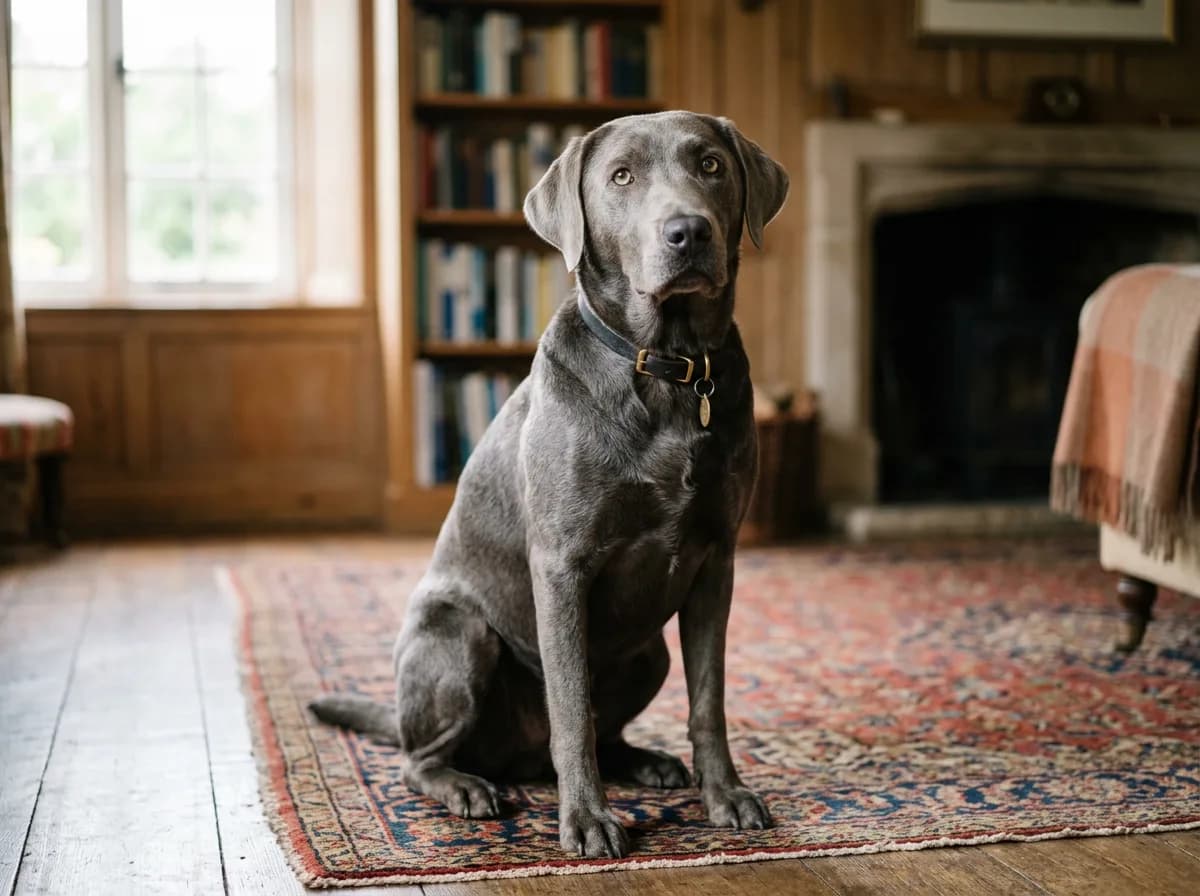
Price is where color marketing does its real work. Standard black, yellow, and chocolate Labrador puppies from a reputable, health-testing breeder generally fall in a similar range to one another, because none of the three is genuinely scarce. The premium appears with the marketed coats. Silver, charcoal, champagne, and fox red puppies are routinely advertised at meaningfully higher prices, sometimes well above a standard Lab, on the strength of the word "rare."
It is worth being clear-eyed about what that premium buys. Fox red is a standard yellow, so the markup is purely for the shade. The dilutes command the highest prices precisely because they are uncommon, but that same uncommonness reflects the disputed pedigree and the dilution-gene health link, not a superior dog. A dilute-color premium is a price for coat, not for health, structure, or temperament. The better investment, dollar for dollar, is a fully health-screened puppy of any standard color from a breeder who tests hips, elbows, eyes, and the EIC and PRA genes.
- 1Standard colors are priced similarly because none is truly scarce
- 2"Rare" coats carry a premium for the shade, not for a better dog
- 3Money spent on breeder health testing pays off far more than money spent on a color premium
Which Labrador Color Is Right for You?
Since color has no bearing on temperament or trainability, choosing a color is genuinely a matter of preference, with a couple of practical footnotes. Working and hunting homes often lean black or fox red by tradition and visibility in the field. Families who want a well-documented, health-tested pet should weigh the chocolate lifespan data and choose breeders accordingly. Anyone drawn to a silver, charcoal, or champagne Lab should go in with eyes open about the dilution gene, the registration limits, and the price premium.
The single most useful piece of advice: pick the breeder first, the color second. A health-tested black Lab from a careful breeder will almost always be a better dog than a "rare" silver from a breeder selling color.
- 1Color does not predict a Labrador's personality or ability
- 2The chocolate lifespan and dilute-gene CDA findings come from real research and should inform breeder choice
- 3Choosing a responsible, health-testing breeder matters far more than coat shade
Frequently Asked Questions About Labrador Colors
Beyond the Standard Coats: Labrador Mismarks and Unusual Markings
Every so often a Labrador arrives with markings that fit none of the three standard descriptions, and new owners understandably wonder whether their dog is really purebred. In almost every case it is. These "mismarks" come from recessive genes that are normally hidden by the same E and K genes that keep a Labrador a solid color, and when an uncommon pairing lets them surface, the result is a fully purebred Lab that simply cannot be shown.
The markings you are most likely to encounter:
- Tan points: rust-colored markings above the eyes, on the cheeks, and on the legs, the same pattern a Rottweiler or Doberman wears. They come from a recessive version of the A (agouti) gene and are a disqualification in the ring, though the dog is otherwise a normal Lab.
- Brindle: faint tiger-striping, usually on the legs or across a patch of the body, produced by a rare version of the K gene. It is uncommon and, again, harmless.
- Extra white: beyond the small chest spot the standard allows, some Labs show white toes or a white blaze. A tiny white spot behind the front wrist, nicknamed the "bolo mark" after an early champion of the breed, is a well-known and rather prized Labrador quirk.
- Mosaic patches from chimerism: very rarely, a single dog carries two cell lines and shows a patch of off-color fur. It is a genetic curiosity, not a health problem.
- Tan points, brindling, and stray white patches disqualify a Labrador from the conformation ring but have no effect on health, temperament, or working ability. A mismarked Lab from health-tested parents is every bit as sound as a flawlessly colored one.
How a Labrador's Color Changes Over Its Lifetime
A Lab's coat is not fixed at the shade you see on puppy day. Color develops, deepens, and eventually fades across a dog's life, and knowing the pattern saves owners from surprises.
Yellow puppies often arrive very pale, almost white, with the adult depth of color hinted at only by slightly darker fur on the ear tips. Over the first year that pigment fills in, and a cream puppy can mature into a rich golden or even fox red adult. Chocolate puppies can shift the other way, a milk-chocolate baby coat settling into a darker adult brown (or occasionally lightening) as the true coat comes through. Black is the most stable of the three, though a young black Lab's coat sometimes carries a slightly rusty cast that clears with maturity.
Sun and season play a role too. A black or chocolate coat exposed to a lot of summer sun can take on a reddish, bleached tint at the tips until the next shed, which is purely cosmetic and grows out on its own.
The clearest change comes with age. Like people, Labs go gray. Silver and white hairs appear first on the muzzle and around the eyes, often starting as early as five to seven years old, and they show most dramatically on a black Lab, where a frosted gray face becomes one of the sweetest signs of a senior dog. None of this graying signals illness. It is simply a Labrador growing old gracefully.
Grooming and Coat Care Across the Colors
Every standard Labrador, whatever its color, wears the same weatherproof double coat, so the grooming routine is essentially identical from black to yellow to chocolate. That coat sheds steadily year-round and "blows" heavily twice a year, in spring and fall, when the insulating undercoat releases in clumps. Because the double coat is what keeps a Lab warm, dry, and protected, it should never be shaved down, even in summer.
A simple routine keeps it manageable:
- Brush weekly with a bristle or slicker brush, stepping up to several times a week and adding a deshedding tool during the spring and fall blows.
- Bathe only every four to six weeks, or when the dog is genuinely dirty. Over-bathing strips the natural oils that make the coat water-resistant.
- Dry the dog thoroughly after swimming or baths, especially inside the ears, since Labs are prone to ear infections.
Color changes only one practical thing: where the shed hair shows up. Black and chocolate hair announces itself on pale sofas and light clothing, while yellow hair vanishes into carpet but coats dark trousers. Owners of dilute-coated Labs (silver, charcoal, champagne) should watch the skin as well as brush the coat, checking for the thinning or flaking that can accompany the dilution gene, and keep grooming gentle if the skin ever looks irritated.
Related on Petful
- Silver Lab: The Dilute Gene Controversy Explained
- The Fox Red Lab: A Complete Color Guide
- Chocolate Lab: The Complete Owner's Guide
- Golden Retriever Colors: A Complete Shade Guide
- German Shepherd Colors: The Complete Guide
There are three officially recognized labrador colors: black, yellow, and chocolate, all accepted by the AKC and every major kennel club. Beyond those, you will see non-standard coats marketed as fox red (a deep yellow), silver (dilute chocolate), charcoal (dilute black), champagne (dilute yellow), and white (a pale yellow). Only the first three are breed-standard show colors; the dilutes are registered under their base color, not as a separate color.
The rarest coat is a true albino Labrador, which has no pigment at all, a pink nose, and pale pink or blue eyes, and it comes with albinism-related health problems such as light sensitivity and a higher risk of deafness. Among the marketed "designer" coats, the dilute colors (silver, charcoal, champagne) are the least common. Do not confuse a true albino with a pale-cream "white" Lab, which is simply the lightest end of standard yellow.
Labradors respond to positive-reinforcement training, not punishment. Reward the behavior you want with praise, treats, or play, and redirect unwanted behavior rather than scolding. For example, if your Lab chews a shoe, calmly swap in a chew toy and reward them for taking it. Consistency, early socialization, and plenty of mental and physical exercise prevent most behavior problems, since a bored, under-exercised Lab is far more likely to act out. Coat color has nothing to do with a Lab's behavior.
Labs are famously affectionate, people-pleasing, and playful, and what they love most is time and activity with their people. They thrive on interactive play (fetch and retrieving especially, given their working roots), food-based training games, swimming, and simply being included in family life. As highly social dogs, Labradors have a strong need for attention and companionship and do not do well left alone for long stretches, regardless of their color.
The rarest color for a Labrador is a pure white or albino coat. A true albino Lab has light or pink eyes, a red-brown or pink nose, and pink skin around the eyes and nose, and albinism can bring health issues including light sensitivity and deafness. This is distinct from the common pale-cream Labs, which are standard yellows with normal black pigment. Among registrable coats, chocolate is the rarest of the three standard colors because it is recessive.
The "5-minute rule" is a guideline for exercising Labrador puppies to protect their developing joints: allow roughly five minutes of structured exercise per month of age, up to twice a day. So a three-month-old puppy gets about 15 minutes, a four-month-old about 20 minutes, and so on, until they are fully grown. It is a rule of thumb rather than a hard limit, and it applies to all Labs regardless of coat color.
The non-standard "designer" coats cost the most. Silver, charcoal, champagne, and fox red Labs are frequently priced well above black, yellow, and chocolate puppies because breeders market them as rare. Whether the premium is justified is debatable: fox red is just a deep standard yellow, while the dilutes carry registration limits and a documented link to color dilution alopecia. A health-tested puppy of any standard color is a better value than a color-premium dog from a breeder selling on coat alone.
The argument against silver Labs has two parts. First, purebred Labradors are not supposed to carry the dilution (d) gene that produces the silver coat, which leads many breed authorities to argue the color entered the line through a Weimaraner cross, so a "silver Lab" may not be a purebred Labrador. Second, the dilution gene is associated with color dilution alopecia, a hereditary skin and coat condition. The AKC will register silvers only under the "chocolate" code, and the Labrador parent club does not recognize the color. If you still want one, insist on DNA testing and health clearances from the breeder.
The Bottom Line on Labrador Colors
Labrador colors start and end with three: black, yellow, and chocolate. Everything else you will hear advertised is either a shade of those three (fox red and white are just intense and pale yellow) or a dilute variant (silver, charcoal, champagne) that raises real questions about pedigree, registration, and the health-linked dilution gene. The genetics are refreshingly simple once you know the three genes at work, and the most important thing they tell you is this: a Lab's color says nothing about the dog inside it. Prioritize a responsible, health-testing breeder and the temperament of the parents, and let coat color be the pleasant last detail rather than the deciding factor.
For more on individual coats, our guides to the silver Labrador, the fox red Labrador, and the chocolate Labrador go deeper on each one.

Coreen Saito is a pet writer and longtime shelter volunteer with more than a decade in animal rescue. She covers cat behavior, breed care, and the small, ordinary science of sharing a life with companion animals, with a particular focus on honest takes about the products and decisions that actually matter. At home in Arizona, she's outranked by Mac (a dog with the loudest opinion in the house), Rebel (a cat who governs by quiet authority), and Meri (an orange tabby who runs the late shift and the laundry basket). She writes about all three, plus the rescues that keep coming through her life, at LifeWithMinty.com.
Sign up for expert-backed reviews and safety alerts all in one place.