Golden Retriever Colors: A Complete Shade Guide
Golden retriever colors span one warm spectrum from pale cream to deep mahogany red, yet every shade is the same breed. This guide covers the three official AKC colors, red goldens and English cream, the genetics, and how coat color changes with age.

Petful is reader supported. As an affiliate of platforms like Amazon and Chewy, we may earn a commission when you buy through links on this page. There is no extra cost to you.
Golden retriever colors run across a single warm spectrum, from the palest cream to a deep reddish mahogany, yet every one of those dogs is the same breed underneath. People often assume a "golden" is one fixed shade, but the American Kennel Club recognizes three official color descriptions, and breeders and owners casually name several more. This guide walks through every shade you will actually meet, from red goldens and English cream to dark golden, explains the genetics that produce them, and covers how a puppy's coat changes as it grows up.
If you are trying to name your own dog's shade, predict a puppy's adult coat, or just settle a friendly argument about whether "English cream" is a real thing, you are in the right place. We will also cover the colors goldens do not come in, which shade is rarest, and whether coat color has anything to do with health or temperament (spoiler: it does not).
- 1The AKC recognizes three golden retriever colors: light golden, golden, and dark golden.
- 2"Red golden" and "English cream" are informal names for the dark and light ends of that same spectrum, not separate breeds or official colors.
- 3Coat color has no proven effect on a golden retriever's health, trainability, or temperament.

Sign up for expert-backed reviews and safety alerts all in one place.
The Three Official Golden Retriever Colors

The breed standard is the reference point, so start there. The American Kennel Club breed standard for the golden retriever describes the coat as "rich, lustrous golden of various shades" and lists three registration colors: Light Golden, Golden, and Dark Golden (American Kennel Club, akc.org). Every registered golden falls into one of those three buckets, and all three are equally correct in the show ring.
Here is how the three official shades compare at a glance.

Petful may earn a commission when you click through to Chewy, at no extra cost to you.
| Shade | What it looks like | AKC code |
|---|---|---|
| Light Golden | Pale honey to soft wheat, never true white | 119 |
| Golden | Classic mid-tone gold, the "storybook" retriever | 093 |
| Dark Golden | Deep gold with reddish or ginger warmth | 080 |
Light Golden
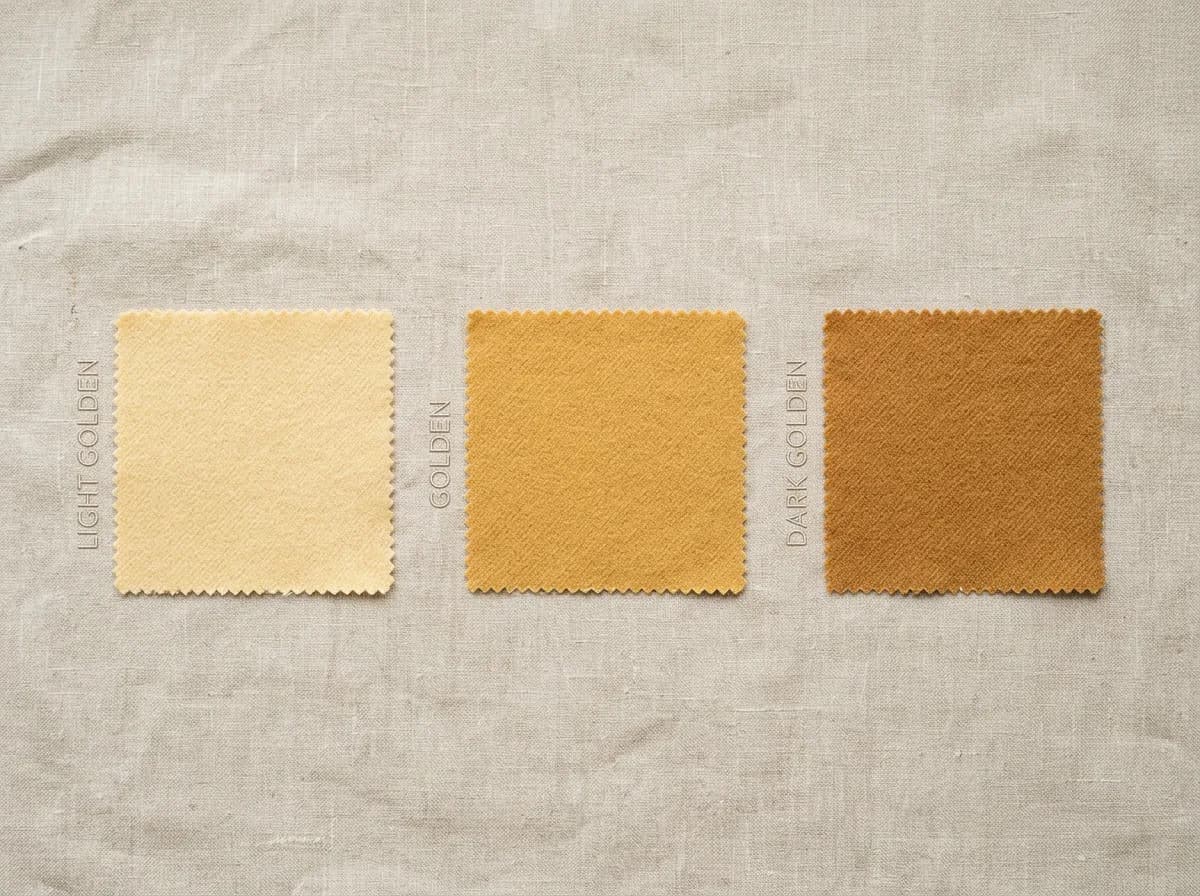
Light golden is the palest shade the AKC recognizes. It ranges from a soft wheat to a pale honey gold. It is warmer and more saturated than the near-white "English cream" coats you see marketed online, though the two blur together at the edges. Light golden dogs often have feathering on the legs, chest, and tail that is a shade or two lighter still, which can make them look almost two-toned in good light.
Because pale coats read as "elegant" to a lot of buyers, light golden puppies are in high demand, but the shade itself carries no special value under the standard. A pale coat is neither better nor worse than a dark one.
Golden
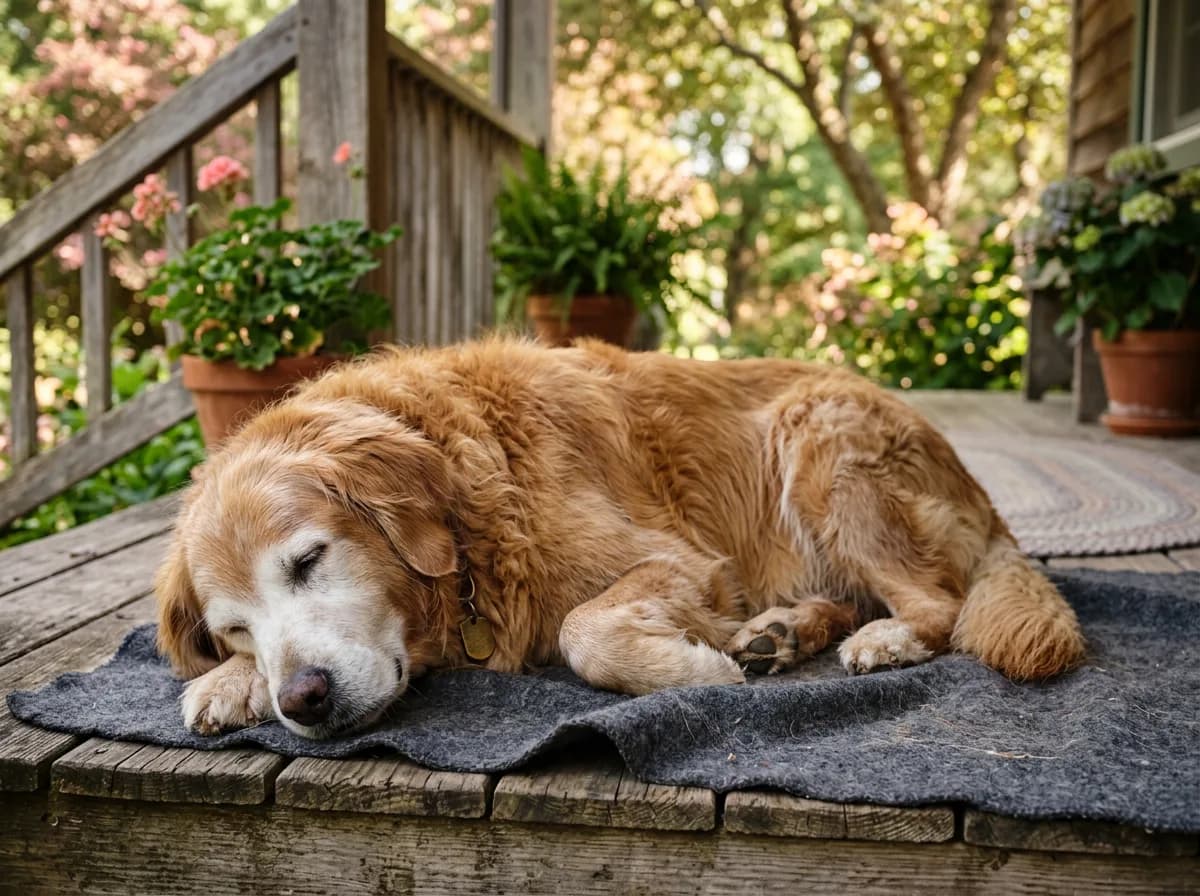
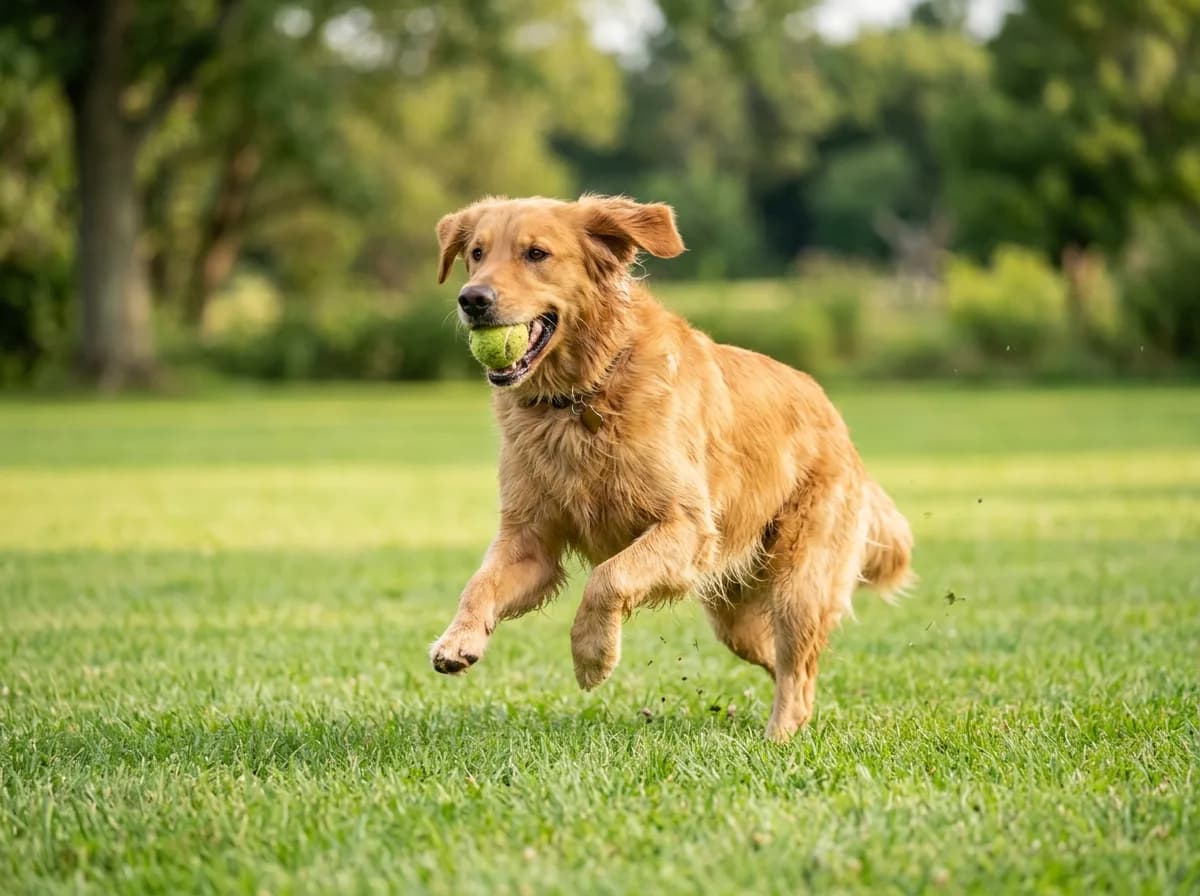
This is the shade most people picture when they hear "golden retriever": a clean, mid-tone gold that looks like it belongs on a cereal box. It is the most common shade in the breed and the one you will see most often at the park. Within this middle band there is still real variation, from a lighter honey to a richer amber, and two "golden" dogs can look noticeably different side by side while both sitting squarely inside the standard.
Dark Golden

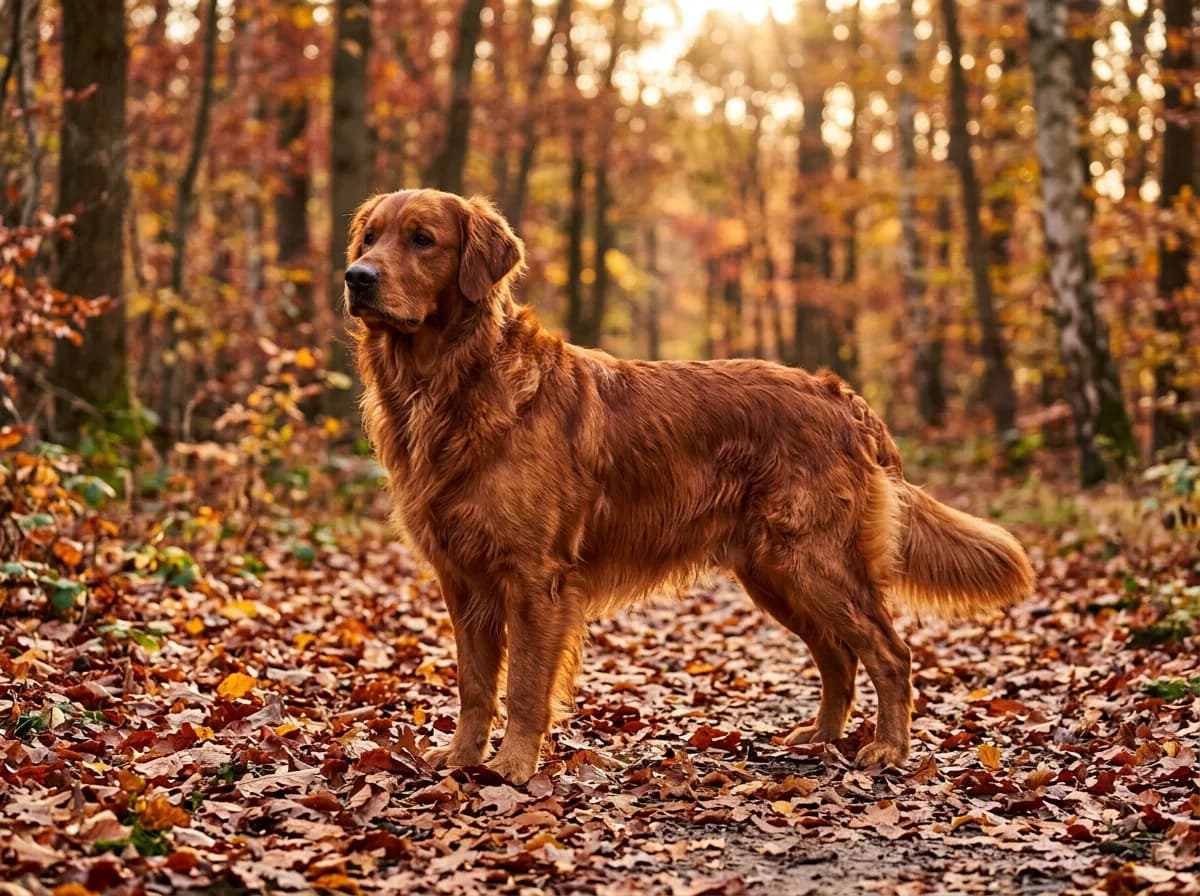
Dark golden is the deepest shade the AKC formally recognizes. These coats carry obvious reddish, ginger, or coppery warmth without tipping into true red-setter territory. Dark golden dogs are frequently confused with "red goldens," and the line between the two is genuinely blurry, more a matter of degree than a hard boundary. A very dark golden and a lighter red golden can be effectively the same color.
- The AKC standard notes that a coat which is "extremely pale or extremely dark is undesirable" in the show ring. That is a conformation preference for judging, not a health rule. A very pale or very dark golden is still a perfectly healthy, purebred dog and makes an equally good pet.
Red Golden Retrievers

"Red golden retriever" is not an official AKC color, but it is one of the most searched golden retriever colors, so it deserves its own section. A red golden is simply a golden at the deepest, most saturated end of the dark golden range, a coat that reads as a rich mahogany or coppery red rather than gold. The color is real; the label is informal.

An orthopedic sofa bed with three bolstered sides for dogs who like to rest their head and joints against a cushion. The supportive foam base cradles hips and elbows, a comforting spot for an older or shaky dog to settle.
Petful may earn a commission when you click through to Chewy, at no extra cost to you.
Red goldens are often mistaken for Irish setters, and the confusion is understandable given the shade. The difference is build and coat: goldens are stockier, with the classic dense, water-repellent double coat and heavy feathering, while setters are leaner with a silkier, flatter coat. A red golden is a golden retriever in every structural sense, just wearing the breed's darkest coat.
Many red goldens trace back to field-line breeding rather than show lines. Field-bred (working) goldens tend to run darker and slightly smaller, while show-line goldens trend lighter and heavier-boned. Color and line are correlated but not locked together, so you will find dark show dogs and pale field dogs too.
If you specifically want a red golden, ask breeders about their line rather than searching by color alone. A breeder who works field or hunting lines is far more likely to consistently produce deep coats, but the priority order never changes: confirm the hip, elbow, eye, and heart clearances first, then talk about shade. A stunning red coat on an unhealthy dog is a bad trade, and the deepest reds still darken over the puppy's first year, so the newborn you meet will usually be lighter than the adult it becomes.
- 1A red golden is a golden retriever at the darkest end of the dark golden range.
- 2The "red" label is informal and not an AKC registration color.
- 3Red coats are more common in field-bred lines but appear in show lines as well.
English Cream Golden Retrievers

At the opposite end of the spectrum sits the "English cream" golden retriever, another popular but unofficial label. English cream describes a very pale, near-white gold coat associated with European show lines. Like "red golden," the term is a marketing and enthusiast name, not an AKC color, and there is no separate "English cream" breed.
The Golden Retriever Club of America is direct about this: the color is still golden, and marketing that treats "white" or "English cream" goldens as rare or premium is misleading (Golden Retriever Club of America, grca.org). A cream-coated golden from European lines is the same breed as a mid-gold American golden. The UK Kennel Club standard allows "any shade of gold or cream," while the American standard leans away from coats that are "extremely pale," which is why very light dogs are more common in European pedigrees.
Two things are worth separating here. First, "cream" is a legitimate description of a pale coat. Second, the idea that English cream goldens are a distinct, superior, or rarer type is a sales pitch, not biology. Judge the breeder, not the color.

A quiet, 6-speed rechargeable grinder that files nails smooth, ideal for dogs who dislike clippers.
Petful may earn a commission when you click through to Chewy, at no extra cost to you.
The Genetics Behind Golden Retriever Colors
Golden retriever colors all come from one pigment story, which is why the breed looks so uniform compared to, say, a Labrador or a Dane. Understanding the basics helps explain why goldens never come in black, brindle, or merle.
Coat color in dogs is controlled by two pigments: eumelanin (black/brown) and phaeomelanin (red/yellow). Golden retrievers carry two copies of a recessive gene at the E locus (written e/e), and that genotype blocks black pigment from showing in the coat entirely. Every purebred golden is effectively "locked" into producing only the red-to-yellow pigment, which is why the whole breed lives on a single cream-to-mahogany band (VCA Animal Hospitals, vcahospitals.com).
What varies from dog to dog is the intensity of that red-yellow pigment, plus modifier genes that dial the shade lighter or darker. A pale cream dog and a deep red dog differ in intensity, not in which pigment they can make. This is also why you can get light and dark puppies in the same litter: the parents pass along different intensity modifiers.
| Genetic factor | Effect on coat | Result |
|---|---|---|
| E locus (e/e) | Blocks black pigment in the coat | No black, brindle, or merle goldens |
| Pigment intensity | Sets how saturated the red-yellow is | Cream vs. mahogany |
| Modifier genes | Nudge the shade lighter or darker | Litter-mate variation |
Because the black-pigment block is fixed across the breed, a true black golden retriever does not exist. A "black golden" is either a mixed-breed dog (often a golden crossed with a flat-coated retriever or Labrador) or a misidentified black flat-coated retriever, which is a separate breed.
How a Golden Retriever's Color Changes With Age
One of the most common surprises for new owners is that the puppy you bring home is not the color it will stay. Golden retriever puppies are usually born much lighter than their adult coat, and the true shade develops over the first year.
The most reliable early clue is the ear tips. A young golden's adult coat color tends to match the color of the fur on the tips of its ears, so a puppy with dark ear tips is likely to mature into a darker adult, and pale ear tips point to a lighter adult coat. The body coat then fills in and darkens to catch up over roughly the next 6 to 12 months.
- Look at the fur along the very edge of a golden puppy's ears. That shade is usually close to the adult body color the dog will grow into. It is not a guarantee, but it is the single best at-home predictor most breeders use.
Later in life, the trend reverses at the face. Like most dogs, aging goldens develop a "sugar face," with white or silver hairs spreading across the muzzle and around the eyes, typically starting somewhere around 7 to 10 years of age. That graying is cosmetic and normal, not a color change in the coat's base shade.
Petful may earn a commission when you click through to Chewy, at no extra cost to you.
The Colors Golden Retrievers Do Not Come In
Because of the e/e genetics above, several coat colors are simply impossible in a purebred golden retriever. If a breeder is advertising any of these as a "rare golden," treat it as a red flag for a mixed breed or a misidentified dog.

Petful may earn a commission when you click through to Chewy, at no extra cost to you.
- Black: Blocked by the breed's E-locus genetics. A black "golden" is a mix or a flat-coated retriever.
- Merle: Goldens do not carry the merle gene. A merle "golden" is a cross, often with an Australian shepherd or Catahoula.
- Brindle: The tiger-striped brindle pattern does not occur in the breed.
- Solid white (true albino or pure white): Very pale cream exists, but a truly white or pink-eyed albino golden is not a recognized golden.
- Parti-color or heavy spotting: Large patches of a second color indicate mixed ancestry, not a purebred golden.
- If you see a golden retriever advertised as black, merle, brindle, or "panda," it is not a purebred golden. These patterns are genetically impossible in the breed. Ask for a pedigree and health clearances, and be skeptical of any premium price tied to an "exotic" color.
Which Golden Retriever Color Is Rarest?
Of the shades that actually occur, the deep red or mahogany golden is generally considered the rarest, because the standard discourages extremes and most breeding sits comfortably in the middle golden band. Very pale cream coats are also less common in American lines, though they are the norm in some European pedigrees, so "rare" depends heavily on where you are looking.
The practical takeaway: rarity is about breeding fashion and geography, not quality. A mid-gold dog from health-tested parents is a far better bet than a "rare red" or "rare cream" puppy from a breeder who leads with color instead of clearances.
It is also worth remembering that "rare" and "expensive" are marketing terms a breeder controls, not fixed facts about the breed. Because the golden's entire palette sits on one pigment band, no shade is genuinely exotic; the reds and creams simply sit at the visible ends. When a listing frames a color as a reason to pay more, read that as a prompt to ask harder questions about the parents, the clearances, and how the breeder raises their litters, not as proof you are getting something special.
Does Golden Retriever Color Affect Temperament or Health?

No. This is the most important myth to put to rest. There is no evidence that coat shade influences a golden retriever's personality, trainability, energy, or health. A red golden is not calmer than a cream one; a light golden is not more prone to any disease than a dark one.
What can correlate loosely with color is line type. Darker, leaner field-bred goldens are often a touch more driven and energetic because they are bred for hunting work, while lighter, heavier show-bred goldens can be a bit mellower. But that is a function of what the line was bred for, not the pigment in the coat. Two dogs of the same shade from different lines can have very different energy levels.
Health in golden retrievers is driven by genetics and breeding practices, not color. The breed is prone to certain cancers (notably hemangiosarcoma and lymphoma), hip and elbow dysplasia, and inherited eye conditions, and responsible breeders screen for these regardless of what shade their dogs are (Morris Animal Foundation Golden Retriever Lifetime Study, morrisanimalfoundation.org). Choose a breeder by their health clearances, never by their color chart.
How to Predict Your Golden Puppy's Adult Color
Pulling the practical tips together, here is how experienced breeders forecast an adult coat:
- Check the ear tips. The fur at the edge of the ears is the closest early match to the adult body color.
- Look at the parents. A puppy's adult shade usually lands somewhere between or near its parents' colors.
- Expect darkening. Almost every golden matures darker than it was as a young puppy, so a pale pup will very likely deepen.
- Give it a year. The adult coat is not fully set until roughly 12 months, and feathering keeps filling in after that.
None of these are guarantees, but together they will get you close. If exact color matters a lot to you, meet the litter in person and ask the breeder to point out how their past puppies matured.
Frequently Asked Questions About Golden Retriever Colors

Grooming and Coat Care Across Golden Retriever Shades
No golden shade is easier to groom than another. Every golden, from the palest cream to the deepest mahogany, carries the same water-repellent double coat, so the year-round shedding, the seasonal coat blow, and the brushing routine are identical regardless of color. What actually varies is coat type, not color. Dogs from field-bred lines tend to have shorter, flatter coats with lighter feathering, while show-bred dogs usually carry heavier feathering on the ears, chest, legs, tail, and belly. Those feathered areas mat the fastest, especially behind the ears and along the back of the thighs, so work through them two or three times a week with an undercoat rake and a slicker brush. Bathe every six to eight weeks, and never shave a golden. The double coat insulates against both heat and cold, and it often grows back patchy and coarse once it has been clipped.
- A puppy's shade tells you nothing about how thick, soft, or manageable its adult coat will be. Texture and feathering track the breeding line and the parents' coats, not the depth of the gold.
Should You Pay More for a Rare Golden Color?
You will see breeders advertise "white," "platinum," "rare English cream," or unusually dark "red" goldens at a premium, and it helps to understand what that markup does and does not buy. Coat shade is cosmetic. It is set by the same handful of genes in every golden and has no link to health, trainability, or lifespan, so a paler or darker coat is not a better dog. "White" is not even a recognized Golden Retriever color, and the breed standard treats an extremely pale coat as undesirable in the show ring rather than as a rare prize. What genuinely protects your investment is documented health testing on both parents (hips, elbows, heart, and eyes) and a breeder who welcomes your questions. Choose the puppy and the pedigree first, then let the color be a bonus.
Related on Petful
- Labrador Colors: The Complete Guide
- Merle Dog Guide: Genetics, Breeds, and Health
- Poodle Colors: Every Shade, Pattern, and Fade
- Doberman Colors: Every Coat, Rarity, and Genetics
- Chocolate Lab: The Complete Owner's Guide
Among shades that actually occur in the breed, the deep red or mahogany golden is usually considered the rarest, because the AKC standard discourages extremes and most breeding sits in the middle golden band. Very pale cream coats are also uncommon in American lines but normal in some European pedigrees, so rarity depends on where you look. Rarity reflects breeding fashion, not quality or health.
The golden retriever is frequently ranked among the happiest and friendliest dog breeds, thanks to its affectionate, people-focused, and eager-to-please temperament. That sunny disposition is a feature of the breed as a whole and has nothing to do with coat color: a cream golden and a red golden are equally likely to be cheerful, social dogs.
Most golden retrievers start to settle noticeably between 2 and 3 years of age, as they finish the long puppy-and-adolescent phase the breed is known for. Consistent exercise, training, and mental enrichment speed the process. Coat color has no bearing on when a golden matures out of its bouncy stage.
The best food for a golden retriever is a complete, balanced diet that meets AAFCO standards and suits the dog's life stage, from a reputable brand your veterinarian trusts. Goldens are prone to weight gain and certain joint issues, so portion control and an appropriate large-breed formula matter more than the specific flavor. Always transition foods gradually and ask your vet before making major diet changes.
The "silent killer" most often refers to hemangiosarcoma, an aggressive cancer of the blood-vessel lining that golden retrievers are unusually prone to and that frequently shows no symptoms until it is advanced. Regular veterinary checkups and prompt attention to sudden weakness, pale gums, or a swollen belly are important. This risk is tied to breed genetics, not to coat color.
Pale "English cream" and deep "red" goldens are often marketed at higher prices because they are promoted as rare or exotic, but color alone does not justify a premium. What should drive price is the breeder's health testing, pedigree, and care, not the shade of the coat. Paying extra purely for a color is a warning sign of a breeder selling looks over health.
Dogs do not feel guilt the way people do, but they read our mood and offer appeasement signals that look apologetic: lowered head, tucked tail, flattened ears, avoiding eye contact, and leaning in for contact. A golden retriever, being especially tuned in to its humans, tends to show these calming signals readily. None of this behavior varies by coat color.
Dogs generally dislike strong citrus (orange, lemon), vinegar, chili or capsaicin, and concentrated cleaning products or alcohol. Because a dog's nose is far more sensitive than ours, these smells can be genuinely overwhelming, which is why citrus is sometimes used as a gentle deterrent. This is a canine trait across breeds and has nothing to do with a golden's color.
The Bottom Line on Golden Retriever Colors
Every golden retriever, from the palest English cream to the deepest red, is the same breed wearing a different intensity of the same warm pigment. The AKC recognizes three shades, light golden, golden, and dark golden, and the popular labels "red" and "English cream" just describe the ends of that band. Color has no proven link to health, temperament, or trainability, so when you are choosing a puppy, focus on health clearances and a responsible breeder rather than a fashionable shade.
For more on how coat color works across other breeds, see our guide to Rhodesian ridgeback colors, and browse our full library of dog breed profiles to learn what makes each breed unique.

Coreen Saito is a pet writer and longtime shelter volunteer with more than a decade in animal rescue. She covers cat behavior, breed care, and the small, ordinary science of sharing a life with companion animals, with a particular focus on honest takes about the products and decisions that actually matter. At home in Arizona, she's outranked by Mac (a dog with the loudest opinion in the house), Rebel (a cat who governs by quiet authority), and Meri (an orange tabby who runs the late shift and the laundry basket). She writes about all three, plus the rescues that keep coming through her life, at LifeWithMinty.com.
Sign up for expert-backed reviews and safety alerts all in one place.