Chocolate Lab: The Complete Owner's Guide
A complete chocolate Lab guide: the recessive bb genetics behind the brown coat, the truth about the lifespan study, realistic pricing, temperament, and the health issues to test for before you buy.

Petful is reader supported. As an affiliate of platforms like Amazon and Chewy, we may earn a commission when you buy through links on this page. There is no extra cost to you.
The chocolate Lab is one of the most recognizable dogs in America: a warm, deep liver-brown Labrador Retriever with a soft mouth, a metronome tail, and a personality built for family life. If you have landed here trying to separate the myths from the facts (are they rarer, are they less healthy, are they harder to train), you are in the right place. This guide walks through the genetics behind that brown coat, what the widely misread lifespan study actually found, realistic pricing, temperament, health, and how to bring one home the right way.
Chocolate is not a separate breed. A chocolate Lab is a Labrador Retriever that happens to carry two copies of a specific recessive gene. Same breed standard, same temperament baseline, same working heritage as its black and yellow littermates. The color is the only thing that changes at the DNA level, and understanding that one detail clears up most of the confusion floating around the internet.
- 1A chocolate Lab is a standard Labrador Retriever with a recessive "bb" coat genotype, not a distinct or designer breed.
- 2The 2018 study people cite for "chocolate Labs live shorter" points to breeding practices and specific ear and skin conditions, not the color gene itself.
- 3Expect to pay roughly 800 to 1,500 dollars from a responsible breeder, with well-bred field or show lines running higher.

Sign up for expert-backed reviews and safety alerts all in one place.
What Makes a Lab "Chocolate": The Genetics in Plain English

Coat color in Labradors is controlled mainly by two genes working together. Get comfortable with these two and the whole "why is my Lab this color" question resolves itself.
The B locus decides brown versus black

The B locus (sometimes written as the TYRP1 gene) comes in two versions: a dominant "B" that produces black pigment and a recessive "b" that produces brown, historically called liver. Because every dog inherits one copy from each parent, there are three possible combinations:
- BB: two black copies, the dog makes black pigment.
- Bb: one of each, still black because black is dominant, but the dog is a "carrier" that can pass brown to puppies.
- bb: two brown copies, and this is the genotype that produces a chocolate Lab.
So a chocolate Lab is, by definition, a "bb" dog. It received a brown gene from both mother and father. This is why two black Labs can surprise their owners with a chocolate puppy: if both parents are secretly "Bb" carriers, roughly one in four of their puppies will land as "bb" chocolate.

Petful may earn a commission when you click through to Chewy, at no extra cost to you.
If you have ever seen a Punnett square, the math is simple. Cross two "Bb" carriers and, on average, one quarter of the litter is "BB" (black, no brown to pass on), one half is "Bb" (black carriers), and one quarter is "bb" (chocolate). Cross a "bb" chocolate with a "BB" black and every puppy comes out black but carries brown. Cross two chocolates and every single puppy is chocolate, because neither parent has a dominant black gene left to give. That last cross is exactly why breeders chasing guaranteed chocolate litters pair two "bb" dogs, a choice that has downstream consequences we return to in the lifespan section.
The E locus can hide the color entirely

The second gene, the E locus (the MC1R gene), acts like a master switch for whether the coat's true color shows up at all. A recessive "ee" combination blocks black and brown pigment from reaching the coat and produces a yellow Lab instead. Here is the twist that trips people up: a yellow Lab can genetically be "bb" underneath. You will not see the chocolate because the "ee" switch masked it, but that yellow dog can still pass a brown gene to its puppies, and its nose and eye rims often give it away with a brown (rather than black) pigment.
- Pigment on the nose, lips, and eye rims follows the same B locus as the coat. A chocolate Lab has a brown nose, and a yellow Lab with a brown nose is almost certainly carrying the chocolate gene underneath. Breeders use this visible clue alongside DNA panels to predict what colors a litter can produce.
Shades of chocolate
Not every chocolate Lab is the same brown. The color ranges from a light, milky "cafe au lait" through medium liver to a deep, almost black-brown sometimes called dark chocolate. All of these are the same "bb" genotype; the variation comes from modifier genes and is purely cosmetic. There is no such thing as a healthier or purer shade, and no responsible breeder charges a premium for one over another.
Why Are Chocolate Labs So Rare?

Chocolate Labs are not truly rare, but they are less common than black Labs, and the reason is baked into the genetics above. Because chocolate requires the recessive "bb" pairing, a puppy only turns out chocolate when both parents contribute a brown gene. Black, being dominant, shows up far more often across the general Lab population, so black Labs dominate the numbers, followed by yellow, with chocolate the least common of the three standard colors.
There is also a historical layer. In the breed's early decades, black was the fashionable and functional color for working gundogs, and chocolate (then "liver") was often quietly culled or given away rather than bred. That old bias thinned the chocolate gene pool for generations. Demand only swung toward chocolate in the mid-20th century, so the color started from a smaller base and is still catching up. So chocolate Labs feel special and are genuinely less common, but "rare" in the sense of hard-to-find is an overstatement. Any reputable Lab breeder in the country can point you to a chocolate litter.
- Some sellers slap a "rare chocolate" or "rare silver" label on puppies to justify inflated prices. Chocolate is a normal, recognized Labrador color, not a rarity worth thousands extra. Treat a "rare color" premium as a red flag, not a selling point.
The Lifespan Study: What It Actually Found

This is the single most misunderstood fact about chocolate Labs, so it is worth getting exactly right. You have probably seen a headline like "chocolate Labs die younger." That claim traces to one real study, and the study says something more nuanced than the headlines suggest.
The primary source
In 2018, researchers led by Professor Paul McGreevy at the University of Sydney, working with the UK's Royal Veterinary College VetCompass program, published a large analysis in the journal Canine Genetics and Epidemiology. They examined health records for more than 33,000 Labrador Retrievers under UK veterinary care. The finding that made news: the median lifespan of chocolate Labs was 10.7 years, compared with 12.1 years for black and yellow Labs, roughly a 10 percent difference.
Petful may earn a commission when you click through to Chewy, at no extra cost to you.
That is a real, published, peer-reviewed result. Dismissing it outright would be dishonest. But the important part is why, because the "why" is where the popular reading goes wrong.
The color gene is not the cause

The study did not find that the chocolate pigment shortens a dog's life. It found two specific health conditions that were markedly more common in chocolate Labs:
- Otitis externa (ear canal inflammation and infection), found in about 23 percent of chocolate Labs versus roughly 13 percent of non-chocolate.
- Pyo-traumatic dermatitis (hot spots, a painful moist skin inflammation), found at more than double the rate in chocolate Labs.
Neither of these is caused by the "bb" gene doing something to the body. The leading explanation from the researchers themselves is about breeding history. Because chocolate is recessive, breeders who want to reliably produce chocolate litters must pair two "bb" dogs, which shrinks the pool of available mates and encourages a narrower, more intensive line-breeding for color. A smaller gene pool concentrates whatever health liabilities those lines carry, including the ear and skin problems above.
- The chocolate coat itself is not a health defect. The study's own authors framed the lifespan gap as a likely consequence of breeding-for-color narrowing the gene pool, not of the pigment. A chocolate Lab from a health-tested breeder who prioritizes structure and longevity over color is not signing up for a shorter life.
What this means for you

If you buy a chocolate Lab from a breeder who selects for the color first and health second, you may inherit the elevated ear and skin risk the study measured. If you buy from a breeder who does full health testing, breeds for temperament and structure, and treats color as a nice-to-have rather than the goal, you sidestep most of that risk. In other words, the study is a reason to vet your breeder carefully, not a reason to avoid chocolate Labs. Good ear hygiene and prompt skin care handle the rest, and we cover both below.
Chocolate Lab Temperament and Personality

Here is the reassuring part: color does not change character. A chocolate Lab has the same temperament blueprint as any other Labrador, and that blueprint is exactly why Labs have been America's most popular breed for three decades.
Labs are friendly, outgoing, and eager to please. They bond hard with their families, tend to love children and other dogs, and are famously food-motivated, which makes them a joy to train. They were bred to work alongside people all day retrieving game, so they carry a deep-seated desire to be useful and included. A Lab left out of family life gets bored, and a bored Lab invents its own projects, usually involving your shoes or your garden.
Energy and the "5 minute rule"
Chocolate Labs are high-energy dogs, especially in their first two years. This is where the "5 minute rule" comes in, a guideline for growing puppies: give a puppy roughly 5 minutes of structured exercise per month of age, once or twice a day. A four-month-old puppy would get about 20 minutes; a six-month-old about 30. The point is to protect developing joints from the pounding of over-exercise while still burning energy. It is a rule of thumb, not a hard law, and it applies to the puppy and adolescent stage, not adult dogs, who can and should get much more.
Adult chocolate Labs typically need 60 to 90 minutes of real exercise a day: walks, fetch, swimming (they adore water), and mental work like scent games or training drills. Meet that need and you get a mellow, happy companion. Skip it and you get a whirlwind.

Petful may earn a commission when you click through to Chewy, at no extra cost to you.
| Life Stage | Daily Exercise | Focus |
|---|---|---|
| Puppy (8 wk to 12 mo) | 5 min per month of age, once or twice daily | Joint protection, socialization, basic obedience |
| Adolescent (1 to 2 yr) | 45 to 75 min, building up | Impulse control, recall, structured outlets |
| Adult (2 to 8 yr) | 60 to 90 min | Aerobic exercise plus mental enrichment |
| Senior (8 yr plus) | 30 to 60 min, gentle | Low-impact walks, swimming, joint support |
Do chocolate Labs pick one person?
Labs are the classic "everybody's best friend" breed, so they usually spread their affection across the whole household rather than bonding to a single person the way some guarding breeds do. That said, many Labs do form a slightly closer attachment to whoever handles their core routines: the person who feeds them, trains them, and takes them on the most adventures. It is a soft preference, not exclusive loyalty. Your chocolate Lab will still greet every family member (and most strangers) like a long-lost friend.
Are Chocolate Labs More Aggressive?

Short answer: no. There is no credible evidence that chocolate Labs, or Labs of any color, are inherently more aggressive than other Labs. Labradors as a breed sit at the gentle, people-loving end of the temperament spectrum, which is exactly why they dominate as family dogs, therapy dogs, and guide dogs.
The "chocolate Labs are more aggressive" idea seems to stem from a mix of things: the same 2018 study noting behavioral differences in some color lines, plus the reality that high-energy, under-exercised young Labs of any color can be mouthy, jumpy, and pushy, which owners sometimes mislabel as aggression. That is frustration and excess energy, not true aggression, and it responds beautifully to exercise, structure, and reward-based training.
- A dog's behavior comes from genetics across its whole line, early socialization, training, and daily needs being met, not from coat color. A well-socialized, well-exercised chocolate Lab is as steady and gentle as any Labrador can be.
Chocolate Lab Size and Appearance
Chocolate Labs follow the standard Labrador build. They are medium-to-large, athletic dogs with a broad head, kind eyes, a thick "otter" tail that acts like a rudder in water, and a dense, water-repellent double coat.
| Measure | Male | Female |
|---|---|---|
| Height at shoulder | 22.5 to 24.5 in | 21.5 to 23.5 in |
| Weight | 65 to 80 lb | 55 to 70 lb |
| Full grown by | ~18 months (frame), 2 yr (fill out) | ~18 months (frame), 2 yr (fill out) |
You will also see two body "types" within the breed. English (or show) chocolate Labs tend to be stockier, blockier-headed, and calmer. American (or field) chocolate Labs tend to be leaner, taller, and higher-drive, bred for hunting stamina. Both are the same breed and both come in chocolate; the difference is line and purpose, not color.
What Is the Average Price for a Chocolate Lab?

Expect to pay roughly 800 to 1,500 dollars for a chocolate Lab puppy from a responsible, health-testing breeder. Pet-quality puppies from proven family lines cluster in that range. Prices climb from there for puppies out of titled show lines, proven field-trial hunting lines, or breeders with a long waitlist and full health-testing transparency, where 2,000 to 3,000 dollars is not unusual.

Petful may earn a commission when you click through to Chewy, at no extra cost to you.
Chocolate itself should not add a premium. It is a standard recognized color, so a "rare chocolate" upcharge is a marketing tactic, not a reflection of value. What you are really paying for is the health testing behind the litter, and that is where your money should go.
| Factor | Typical Range | Notes |
|---|---|---|
| Responsible pet-quality breeder | 800 to 1,500 dollars | Health-tested parents, standard color |
| Show or field-trial lines | 2,000 to 3,000 dollars | Titled parents, waitlists, full testing |
| Rescue or breed-specific rescue | 200 to 500 dollars | Adoption fee, often adult dogs |
| "Rare color" premium | Avoid | Chocolate is not rare enough to justify a markup |
Do not forget the true cost of ownership beyond the purchase price. First-year setup (crate, bed, bowls, leash, initial vet visits, spay or neuter, quality food) commonly runs 1,500 to 2,500 dollars, and Labs are big eaters, so budget accordingly for the long haul.
Common Health Problems in Chocolate Labs

Chocolate Labs share the Labrador breed's health profile, plus the slightly elevated ear and skin risk the 2018 study flagged. None of these should scare you off; they are simply what to watch for and test against.

Petful may earn a commission when you click through to Chewy, at no extra cost to you.
Breed-wide concerns to test for
- Hip and elbow dysplasia: joint malformations common in larger breeds. Responsible breeders screen parents through OFA or PennHIP scoring. Ask to see the results.
- Progressive retinal atrophy (PRA) and other eye conditions: a DNA test and annual eye exams catch these. Ask for clear parent results.
- Exercise-induced collapse (EIC): a genetic condition where intense exercise triggers weakness or collapse. A simple DNA test tells you a puppy's status.
- Obesity: Labs carry a genetic quirk (a variant in the POMC gene) that leaves many of them perpetually hungry. This is the single most preventable health problem in the breed. Measure meals, skip the free-feeding, and keep your dog lean.
Chocolate-specific watch points
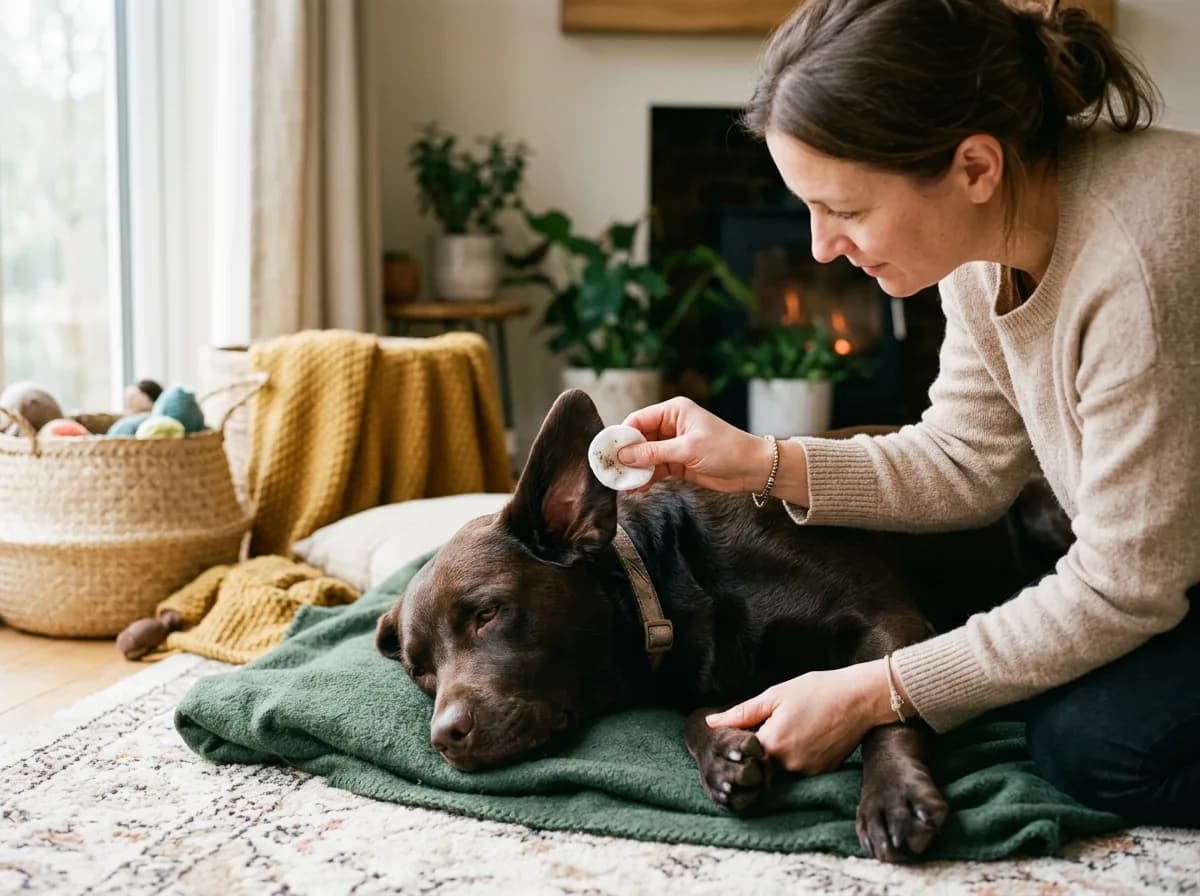
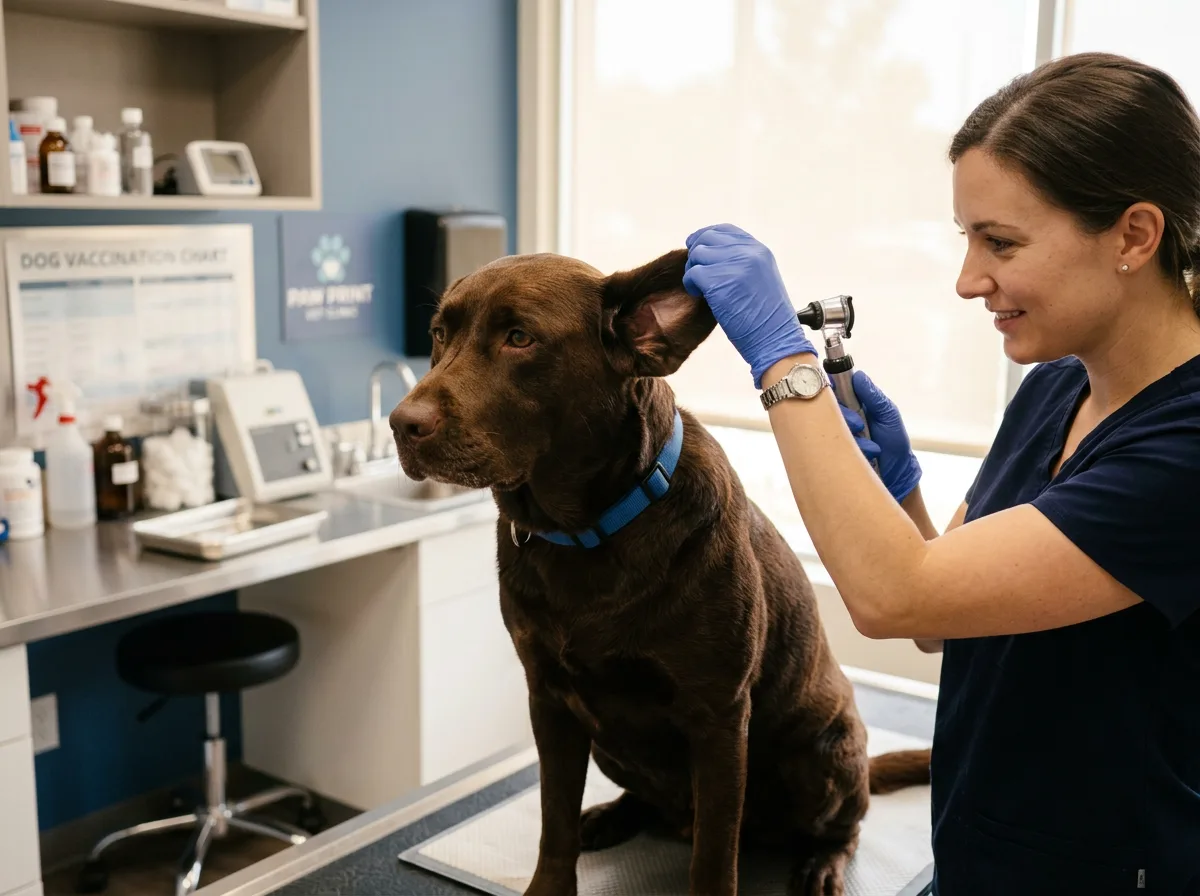
- Ear infections (otitis externa): the condition the study found roughly twice as often in chocolate Labs. Labs have floppy ears that trap moisture, and they love water, a perfect setup for infection. Check and dry the ears after swimming and clean them on a routine. A practical cadence is a quick weekly look inside each ear for redness, odor, or brown discharge, plus a gentle wipe with a vet-approved ear cleaner every one to two weeks and always after a swim or bath. Never push a cotton swab down into the canal; clean only what you can see.
- Hot spots (pyo-traumatic dermatitis): also more common in the study's chocolate group. A hot spot can flare from a wet coat, an insect bite, an allergy, or a patch the dog will not stop licking, and it can go from a small red spot to a raw, oozing patch within a day. Catch skin irritation early, keep the coat clean and dry, address underlying allergies promptly, and see your vet if a spot spreads or weeps, since these often need medicated treatment rather than home care alone.
- A weekly ear check-and-dry routine and prompt attention to any itchy or moist patch of skin handle the two exact conditions the lifespan study measured. Simple maintenance turns the study's warning into a manageable checklist.
Diet, weight, and longevity
Because Labs are food-obsessed and prone to obesity, weight management is the highest-leverage thing you control for lifespan. A landmark lifetime study found that Labs kept lean lived significantly longer and developed arthritis later than their overfed littermates. Feed a complete, life-stage-appropriate diet, measure portions, and use part of the daily food as training rewards rather than adding extra calories. Keeping your chocolate Lab at a healthy weight does more for its lifespan than any supplement.
Grooming and Care
Chocolate Labs are low-maintenance on grooming but high-volume on shedding. That double coat blows out heavily twice a year and sheds steadily in between.
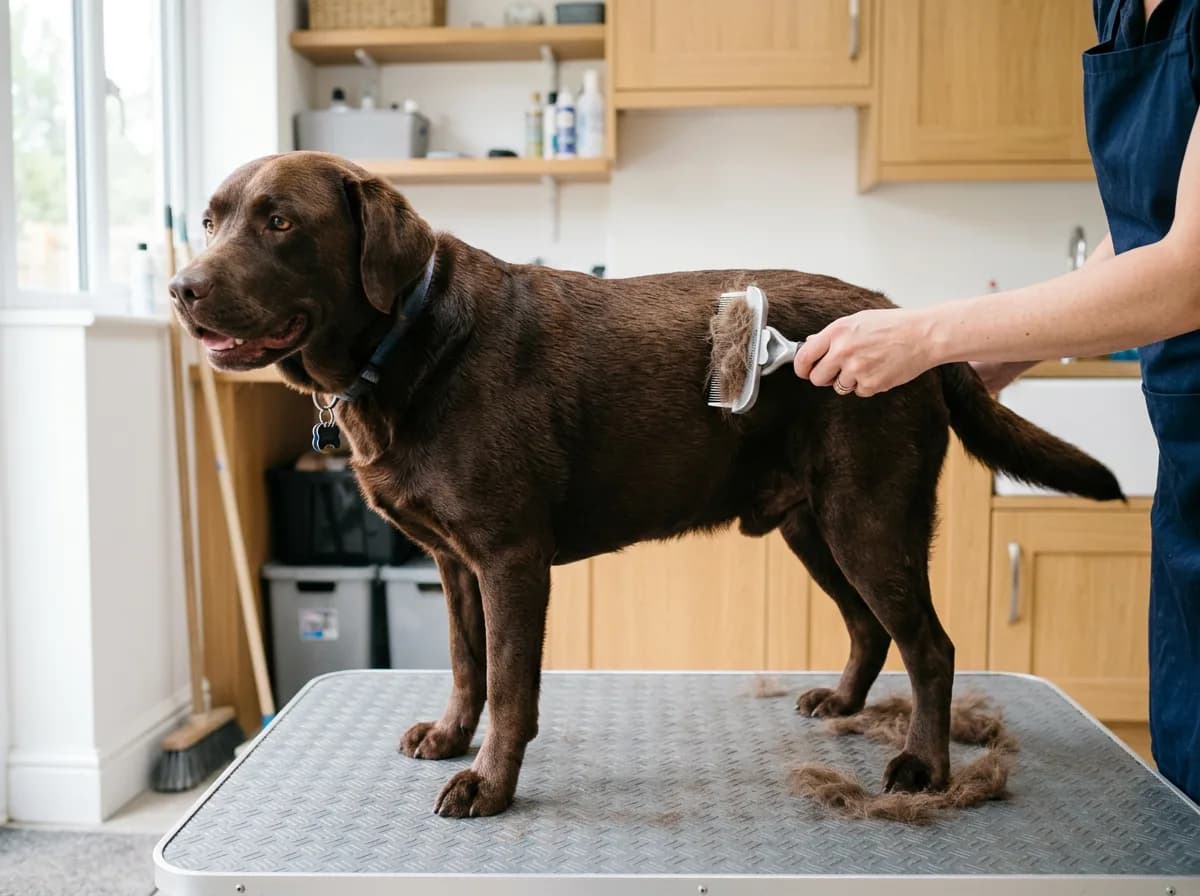
- Brushing: a few times a week normally, daily during the spring and fall "coat blow." A de-shedding tool earns its keep.
- Bathing: every couple of months or when genuinely dirty. Over-bathing strips the coat's natural water resistance.
- Ears: check weekly, clean on a routine, and always dry after swimming (doubly important for chocolates, per the study).
- Nails and teeth: trim nails every few weeks; brush teeth several times a week.
| Task | Frequency | Why It Matters |
|---|---|---|
| Brushing | 3x per week (daily in shedding season) | Controls shedding, distributes coat oils |
| Bathing | Every 6 to 8 weeks or as needed | Preserves water-resistant coat |
| Ear care | Weekly, plus after every swim | Prevents the otitis the study flagged |
| Nails | Every 3 to 4 weeks | Joint and posture health |
| Teeth | 3 to 4x per week | Prevents dental disease |
Training Your Chocolate Lab
Labs are among the easiest breeds to train because they are smart, biddable, and ravenously food-motivated. That same enthusiasm means an untrained Lab is a large, bouncy problem, so start early and stay consistent.
- Start young: begin socialization and basic obedience the week your puppy comes home. Early exposure to people, dogs, sounds, and surfaces builds a confident adult.
- Use rewards: positive reinforcement with food and play is exactly how a Lab wants to learn. Harsh methods backfire on this soft-natured breed.
- Channel the mouth: Labs are oral dogs that love to carry things. Give plenty of appropriate chew and retrieve outlets so your hands and furniture are spared.
- Prioritize recall and impulse control: a Lab that comes when called and can settle on cue is a joy; one that cannot is a runaway retriever.
- Tire the brain, not just the body: puzzle feeders, scent games, and trick training burn mental energy and prevent boredom mischief.
Because Labs mature slowly, expect a long, goofy adolescence stretching past the two-year mark. Consistency through that stage is what turns a wild teenager into the steady adult the breed is famous for.
How to Bring Home a Chocolate Lab the Right Way
Whether you buy or adopt, the same principle applies: prioritize health and temperament over color.
Choosing a responsible breeder
- Ask for health-testing results on both parents: hips, elbows, eyes, EIC, and PRA at a minimum. A breeder who cannot produce these is a pass.
- Look for a breeder who treats chocolate as one option among their standard colors, not a "rare" premium product.
- Meet the mother and see the litter's living conditions. Puppies raised in the home are better socialized.
- Expect a good breeder to interview you too. The ones who ask hard questions are the ones worth buying from.
Adopting a chocolate Lab
Labs are one of the most common breeds in shelters and rescues, and chocolate Labs turn up regularly. Breed-specific Lab rescues are a great route, often placing adult dogs whose temperament is already known, which sidesteps the puppy-lottery entirely. Adoption fees typically run a few hundred dollars and frequently include spay or neuter and initial vaccines.
- Your best insurance against every concern in this guide, the lifespan gap, the ear and skin risk, the temperament worries, is choosing a source that puts health and structure first and treats the beautiful brown coat as a bonus, not the whole point.
If you are fascinated by how coat color works across breeds, our deeper explainer on how breed coat colors are inherited walks through the same dominant and recessive gene logic with a different breed, and it pairs well with everything you just read about the Lab's B and E loci.
Is a Chocolate Lab Right for You?
A chocolate Lab is a fantastic choice for an active household that wants a friendly, trainable, family-oriented dog and can commit to daily exercise, consistent training through a long adolescence, and the shedding that comes with a double coat. They are wonderful with kids, thrive on inclusion, and reward good ownership with years of loyal, goofy companionship.
They are a poor fit for a sedentary lifestyle, a household away from home all day with no plan for the dog, or anyone hoping for a low-shedding, low-energy pet. Meet the breed's needs and the chocolate Lab delivers exactly what has made Labradors the country's favorite dog for a generation, wrapped in a coat the color of a candy bar.
Frequently Asked Questions
How Much Exercise Does a Chocolate Lab Need?
Chocolate Labs are working retrievers at heart, bred to spend long days afield, so they need real daily activity, not just a stroll around the block. Plan on at least an hour of exercise per day, ideally split into two sessions of brisk walks, fetch, and off-leash running in a safe space. Their water-resistant double coat and webbed feet make them natural swimmers, and swimming is gentle on the joints for a breed prone to hip and elbow trouble. An under-exercised Lab often turns to chewing, digging, or restless pacing, so mental work (puzzle feeders, scent games, short training drills) matters just as much as the physical output.
Feeding a Chocolate Lab Without the Weight Gain
Labradors are among the most food-motivated of all breeds, and research has tied many of them to a POMC gene variant linked to near-constant hunger and a higher obesity risk. That appetite is endearing until it becomes joint-straining extra weight. Feed measured meals sized to your dog's body condition rather than leaving food down all day, and keep treats (training snacks included) to roughly 10 percent of daily calories.
- You should be able to feel your Lab's ribs without pressing hard and see a clear waist from above. If you cannot, ask your vet to set a target weight, since even a few extra pounds worsens the hip and elbow problems the breed already carries.
Related on Petful
- Labrador Colors: The Complete Guide
- Silver Lab: The Dilute Gene Controversy Explained
- The Fox Red Lab: A Complete Color Guide
- Golden Retriever Colors: A Complete Shade Guide
- Merle Dog Guide: Genetics, Breeds, and Health
Chocolate Labs are less common rather than truly rare. The chocolate color needs the recessive "bb" gene pairing, so a puppy is only chocolate when both parents pass on a brown gene. Black, being dominant, appears far more often, and historical breeding once favored black over "liver," which thinned the chocolate gene pool for generations. Any reputable Lab breeder can still find you a chocolate litter.
Yes. Chocolate Labs have the same friendly, outgoing, family-loving temperament as any Labrador, the breed that has been America's most popular for three decades. They are affectionate, great with children and other dogs, and highly trainable. Color has no effect on temperament, so a well-socialized, well-exercised chocolate Lab is a superb family companion.
Expect roughly 800 to 1,500 dollars for a puppy from a responsible, health-testing breeder. Show or field-trial lines can run 2,000 to 3,000 dollars, while rescue adoption fees are usually 200 to 500 dollars. Chocolate is a standard color, so treat any "rare color" premium as a marketing red flag rather than real added value.
The 5 minute rule is a puppy-exercise guideline: give a growing puppy about 5 minutes of structured exercise per month of age, once or twice a day. A four-month-old gets around 20 minutes; a six-month-old around 30. It protects developing joints from over-exercise and applies only to puppies and adolescents, not adult Labs, who need far more.
They are not. There is no credible evidence that chocolate Labs are more aggressive than other Labs. Labradors are one of the gentlest, most people-loving breeds. The myth usually confuses ordinary young-Lab behavior, mouthiness and jumping from excess energy, with aggression. Proper exercise, socialization, and reward-based training resolve it.
Usually not exclusively. Labs are classic "everybody's friend" dogs and tend to love the whole household. Many form a slightly closer bond with whoever handles their daily feeding, training, and adventures, but it is a soft preference, not the single-person loyalty seen in some guarding breeds.
Chocolate Labs share the Lab breed's concerns, hip and elbow dysplasia, eye conditions, exercise-induced collapse, and a strong tendency toward obesity, plus a slightly higher rate of ear infections (otitis externa) and hot spots (pyo-traumatic dermatitis) found in the 2018 University of Sydney study. A weekly ear-check routine, prompt skin care, weight management, and buying from a health-testing breeder address nearly all of it.

Coreen Saito is a pet writer and longtime shelter volunteer with more than a decade in animal rescue. She covers cat behavior, breed care, and the small, ordinary science of sharing a life with companion animals, with a particular focus on honest takes about the products and decisions that actually matter. At home in Arizona, she's outranked by Mac (a dog with the loudest opinion in the house), Rebel (a cat who governs by quiet authority), and Meri (an orange tabby who runs the late shift and the laundry basket). She writes about all three, plus the rescues that keep coming through her life, at LifeWithMinty.com.
Sign up for expert-backed reviews and safety alerts all in one place.