German Shepherd Colors: The Complete Guide
From the classic black-and-tan saddle to rare blue, liver, isabella, white, and panda coats, here is every recognized and rare German Shepherd color, the genetics behind each, and what color really means for health and temperament.
Petful is reader supported. As an affiliate of platforms like Amazon and Chewy, we may earn a commission when you buy through links on this page. There is no extra cost to you.
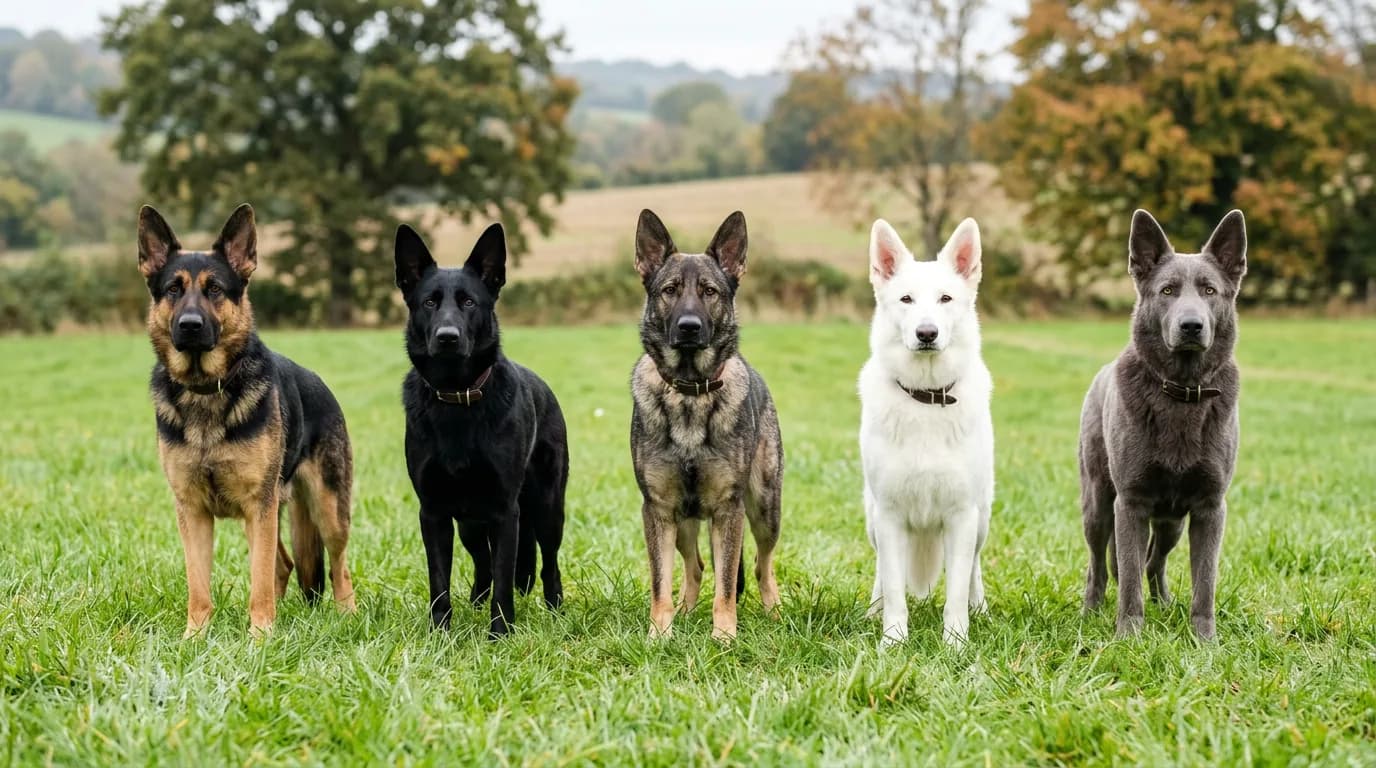
German Shepherd colors run far wider than the classic black-and-tan saddle most people picture. This breed carries one of the most genetically varied coats in the dog world, from the deep red-and-black of a show line dog to solid white, steely blue, rich sable, and rare liver and panda patterns. Whether you are choosing a puppy, decoding your dog's changing coat, or simply curious about what the American Kennel Club actually recognizes, this guide covers every recognized and rare German Shepherd color, the genetics behind each one, and what a color does (and does not) tell you about health and temperament.
The short version: coat color is almost entirely cosmetic. It is set by a handful of genes, it has nothing to do with intelligence or working ability, and with one narrow exception (the double merle pattern, which is not native to purebred German Shepherds) color does not cause health problems. A well-bred sable and a well-bred black-and-tan are the same dog in a different coat.
- 1German Shepherds come in roughly a dozen recognized coat colors plus several rare patterns, all controlled by a small set of pigment genes.
- 2Only a few colors meet the show-ring breed standard, but non-standard colors like blue, liver, and white are healthy purebred dogs, not mixes.
- 3Coat color has no proven link to temperament, trainability, or lifespan, so pick the dog, not the color.

Sign up for expert-backed reviews and safety alerts all in one place.
How German Shepherd Coat Color Works
Before the color-by-color tour, it helps to know what is happening under the fur. Every German Shepherd color is built from two pigments: eumelanin (black-based, which can dilute to blue or liver) and phaeomelanin (red-based, which ranges from deep mahogany to pale cream). A small set of genes decides how those two pigments are arranged, switched on, switched off, or diluted.
Four gene locations do most of the work:

Petful may earn a commission when you click through to Chewy, at no extra cost to you.
- The A (agouti) locus controls the banding pattern. It is why one dog is a sable (each hair banded light-to-dark) while another is a black-and-tan saddle, and why a third is solid black.
- The B (brown) locus decides whether black pigment stays black or shifts to liver (a warm brown). Two copies of the recessive liver gene turn every black hair, the nose, and the paw pads brown.
- The D (dilution) locus thins pigment. Two copies of the recessive dilution gene turn black into blue (a cool gray) and can turn liver into a pale isabella.
- The E and K loci fine-tune whether the base pattern shows fully, masks with more black, or is overridden by a recessive solid black.
That is the whole toolkit. Sable, black-and-tan, solid black, blue, liver, and the rest are just different combinations of these switches. This also explains one of the most common questions owners ask: why the puppy they brought home looks nothing like the adult dog. German Shepherd puppies are frequently born much darker, and the adult pattern only settles in over the first one to two years as the agouti banding grows out.
- A blue or liver German Shepherd is a purebred German Shepherd. These colors come from recessive genes that have existed in the breed for generations, not from crossing in another breed. What changes with a non-standard color is show eligibility, not pedigree.
Standard German Shepherd Colors (Breed-Standard)
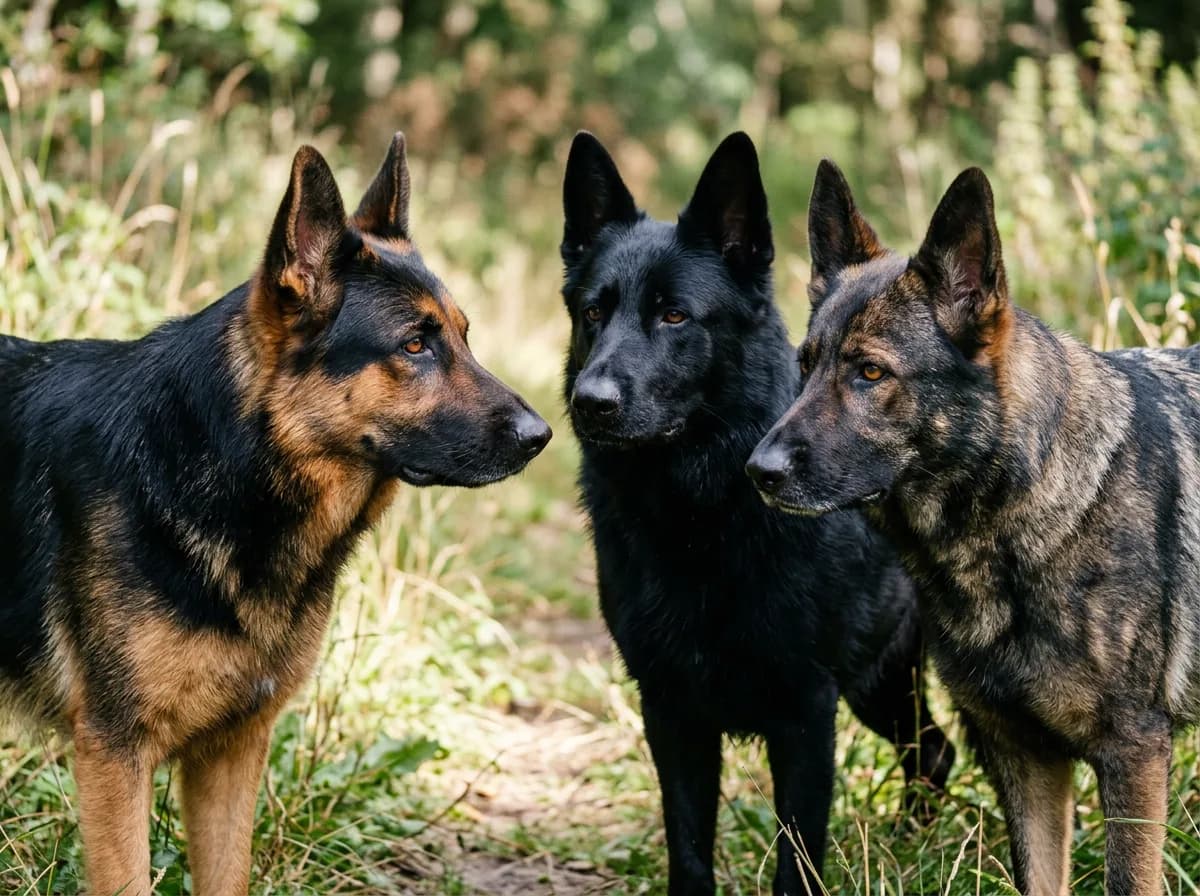
These are the colors the American Kennel Club and the German Shepherd Dog Club of America accept in the conformation ring. Strong, rich color is preferred, and the breed standard explicitly says pale, washed-out, or "blue and liver" colors are serious faults, while a white dog is disqualified from the show ring. None of that is a health judgment. It is a show-ring preference for the classic working-dog look.
Black and Tan
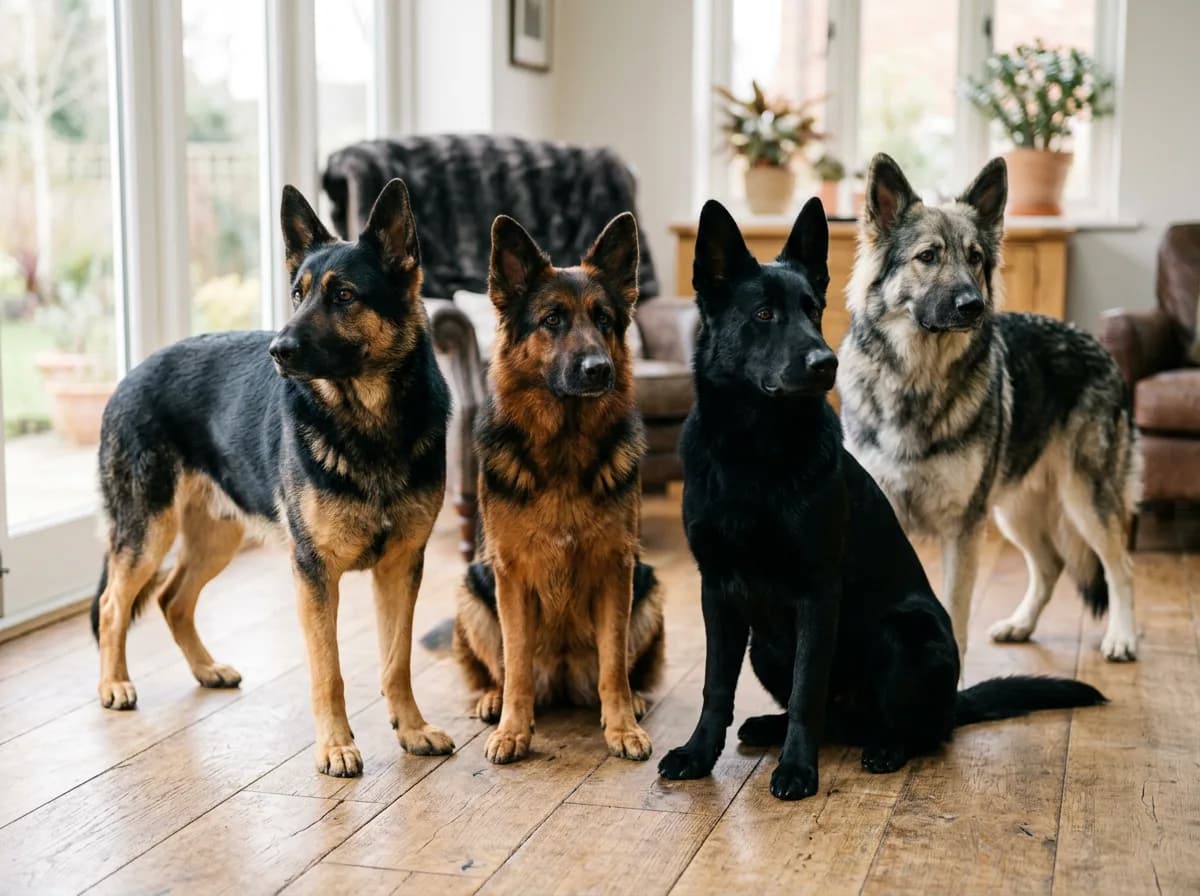
The black-and-tan German Shepherd is the coat almost everyone pictures: a black "saddle" or blanket over the back and sides, with tan to rust legs, chest, face markings, and underside. It is the most common color and the default image of the breed in film, police work, and family homes. The exact split between black and tan varies from a small saddle to a near-blanket that covers most of the body. This is also the color new owners most often use as their mental "default," which is why so many are surprised when a black-and-tan puppy is born nearly solid black and only develops its tan points over the following months.
Black and Red
Black-and-red is the show line's signature. It follows the same saddle pattern as black-and-tan, but the tan is replaced by a deep, saturated mahogany red. This is the coat you see on West German and American show line dogs bred specifically for that rich pigment. Genetically it is the same agouti saddle pattern, just with the red-based pigment turned up to its most intense. Because show breeders select for this coloring generation after generation, black-and-red dogs often display the most uniform, saturated pigment in the breed, and the depth of red is one of the traits judges reward in the conformation ring.
A plush orthopedic foam mattress that cushions aging joints and pressure points, giving a stiff or trembling senior dog warm, supportive rest.
Petful may earn a commission when you click through to Chewy, at no extra cost to you.
Black and Cream
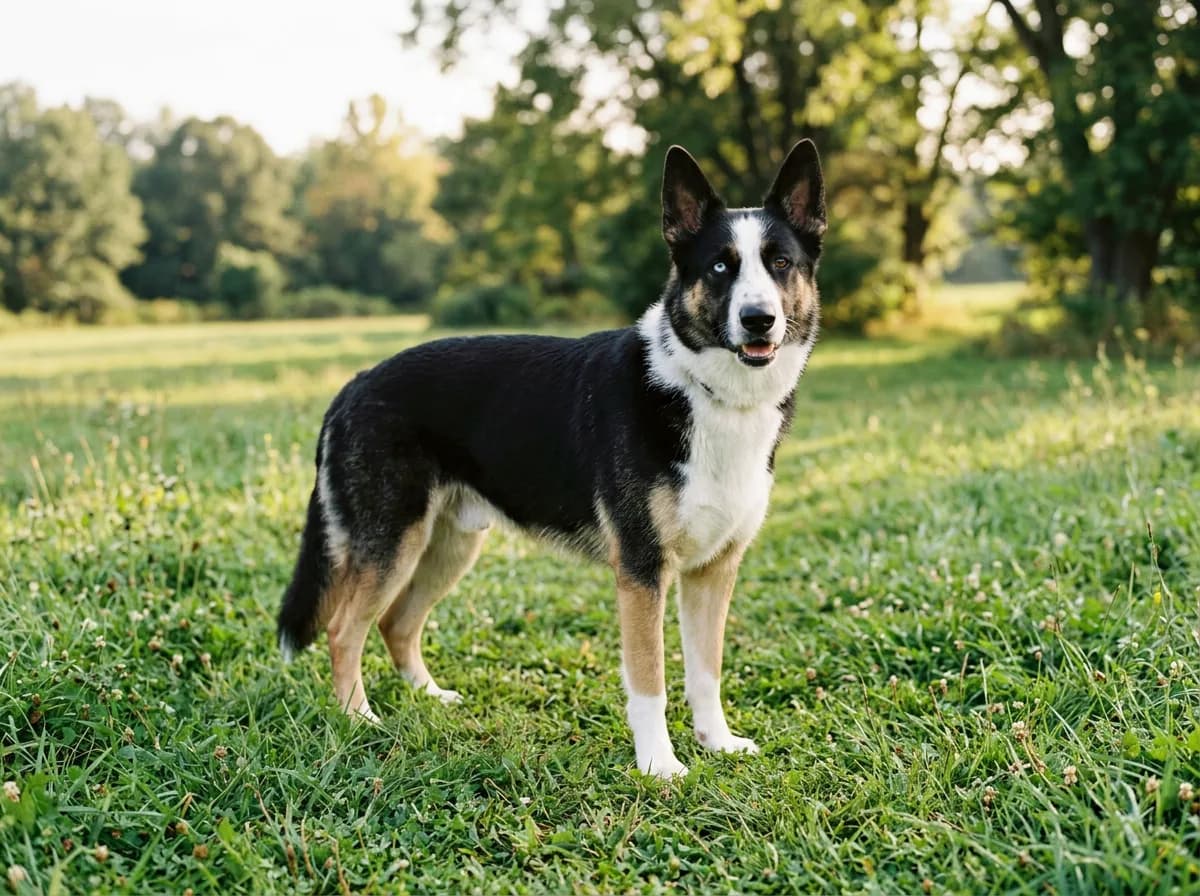
Black-and-cream is the palest version of the saddle pattern. The black blanket sits over very light cream or near-silver points instead of tan or red. It is recognized and reasonably common, though the breed standard prefers stronger, richer color, so a very washed-out cream is marked down in the ring even though it is perfectly healthy. Cream-pointed dogs are popular as family pets precisely because the softer, lighter markings read as gentler than the intense show-line reds, even though the underlying dog is identical.
Black and Silver
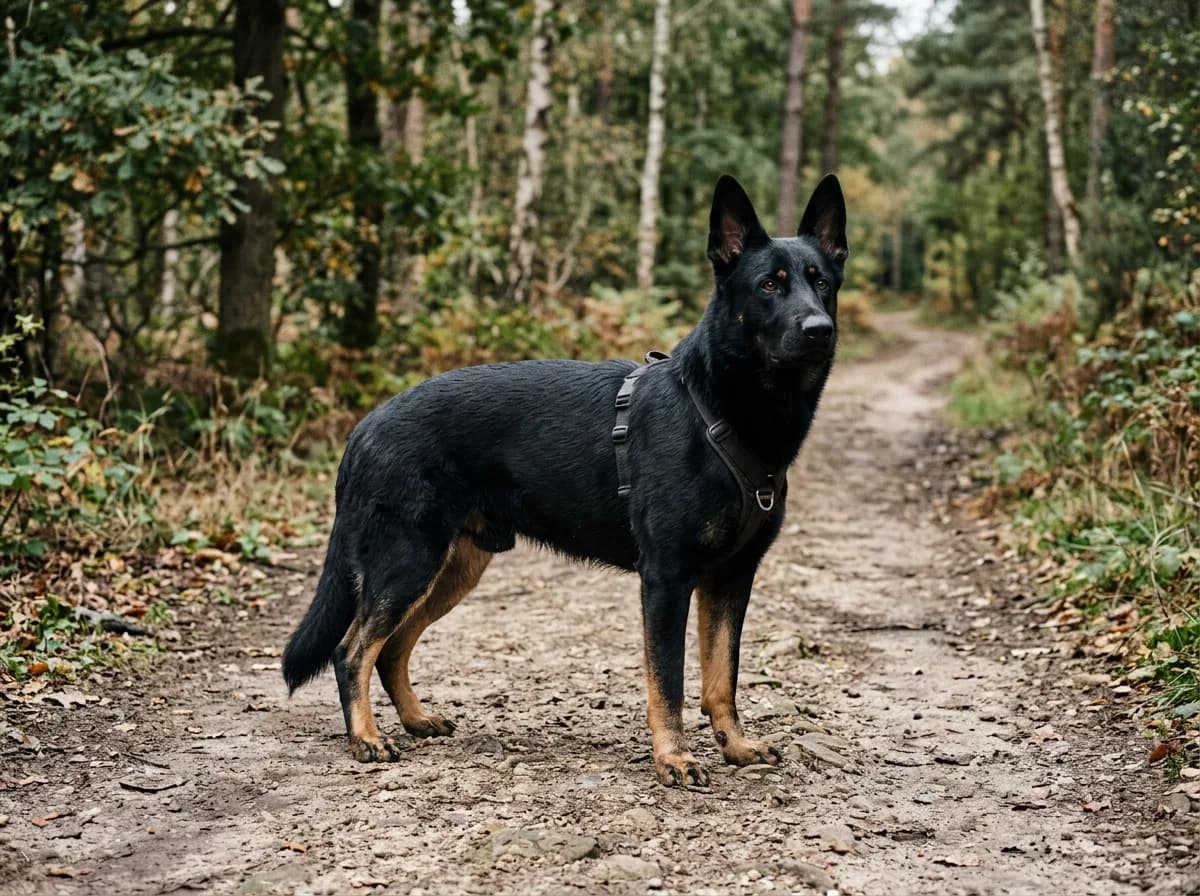
Black-and-silver swaps the tan for a cool, pale silver. The saddle stays dark and crisp, and the legs, chest, and face markings read as clean silver-gray rather than warm tan. It is a striking, high-contrast coat that is more common in working lines than in the show ring. The crisp contrast between the jet-black saddle and the cool silver points makes this one of the most photogenic standard colors, and it is a frequent choice for handlers who want a sharp, businesslike look on a working dog.
Sable (Agouti)
Sable is arguably the breed's oldest and most "wolf-like" color, and it is the dominant coat gene. On a sable dog, each individual hair is banded, typically light at the base and tipped in black, which gives the coat a shifting, grizzled look. Sable ranges widely: gray sable (silver with black tips, very wolfish), red sable (warm tan base with black overlay), and dark sable that can look nearly black at a distance. Because sable is genetically dominant, a single copy produces the pattern, and it is heavily favored in working and herding lines. Von Stephanitz's foundation dog for the breed was a sable, which is part of why enthusiasts consider it the original German Shepherd color.
Solid Black
A solid black German Shepherd is entirely black, from nose to tail, with no tan, saddle, or lighter points. It is produced by a recessive gene, so both parents must carry it. Solid black is a fully recognized, breed-standard color (unlike blue, liver, or white) and is prized for its dramatic, uniform look. Solid black dogs are often slightly larger-boned in appearance and are common in working lines. Do not confuse a solid black dog with a very dark sable or a black-and-tan whose saddle has grown to cover most of the body; genetically they are different. Because the solid black gene is recessive, two black-and-tan parents can still produce a solid black puppy if both carry the gene, which is why the color sometimes appears in litters where neither parent is black.
- 1Black and tan is the most common and iconic German Shepherd color.
- 2Black and red is the hallmark of show lines, bred for deep mahogany pigment.
- 3Sable is the dominant, original, wolf-like coat, and solid black is a recognized recessive color, both fully breed-standard.
Non-Standard and Rare German Shepherd Colors
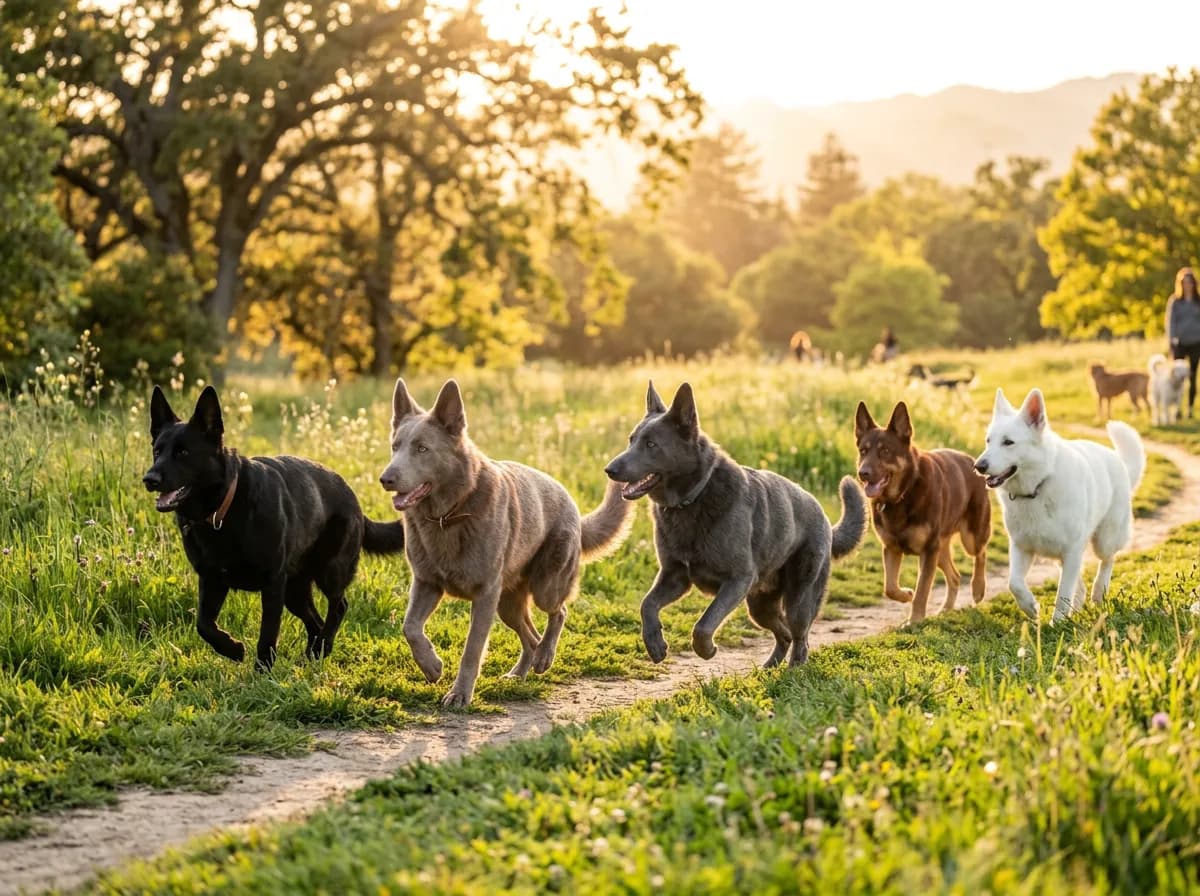
The next group of colors are real, purebred, and healthy, but they fall outside the conformation breed standard. That means they cannot win in the show ring and are often marked as faults or disqualifications, yet they make wonderful pets and, in some cases, capable working dogs. Reputable breeders are upfront that these are non-standard; be cautious of anyone charging a steep premium and marketing them as a rare "exotic" breed.

A quiet, 6-speed rechargeable grinder that files nails smooth, ideal for dogs who dislike clippers.
Petful may earn a commission when you click through to Chewy, at no extra cost to you.
Blue
The blue German Shepherd is a diluted black. Two copies of the recessive dilution gene turn what would be black pigment into a soft steel-gray or slate blue, and the nose and eye rims share the cool tone. Eyes are often a striking light amber or gray-blue. Blue comes in blue-and-tan, blue sable, and solid blue. It is a disqualifying color in the show ring but is not tied to any health problem in German Shepherds; the "color dilution alopecia" seen in some diluted breeds is uncommon here and not a given. Blue is genuinely uncommon, which is part of why it commands high prices. Because the dilution gene acts on whatever pattern is underneath, a blue-and-tan dog is simply a black-and-tan dog whose black has been softened to slate, which is a useful way to picture how the dilute colors relate to the standard ones.
Liver
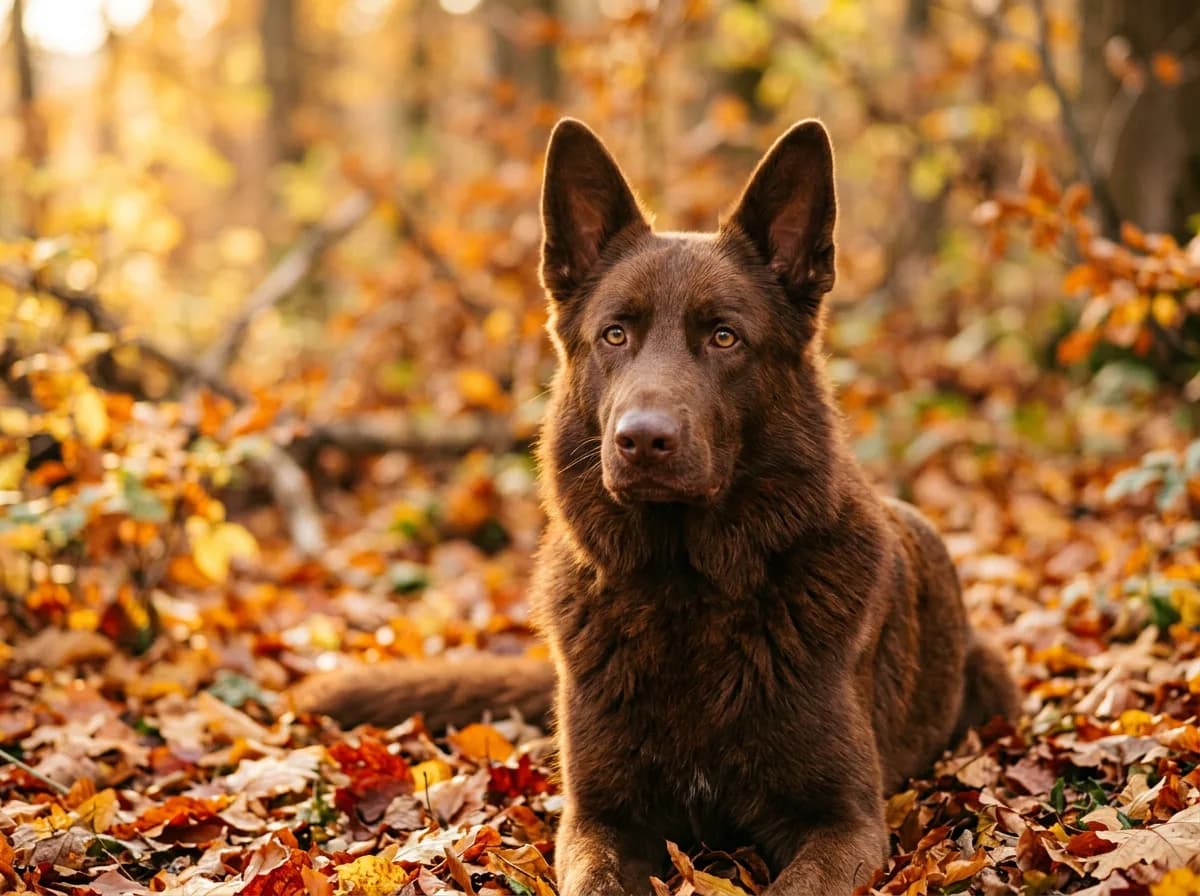
Liver is a diluted or shifted black at the B locus: two copies of the recessive brown gene turn every black hair into a warm chocolate brown, and it takes the nose, lips, and paw pads with it, so a liver dog has a brown nose rather than a black one. You will see liver-and-tan (the saddle pattern in brown instead of black) and solid liver. Like blue, liver is a healthy purebred color that is simply disqualified from the show ring. Eyes are frequently a light amber or hazel that complements the brown coat. The brown nose is the giveaway that separates a liver dog from a rich red-and-tan at a glance, since a standard German Shepherd always has a black nose regardless of how red its coat is.
Isabella (Lilac)
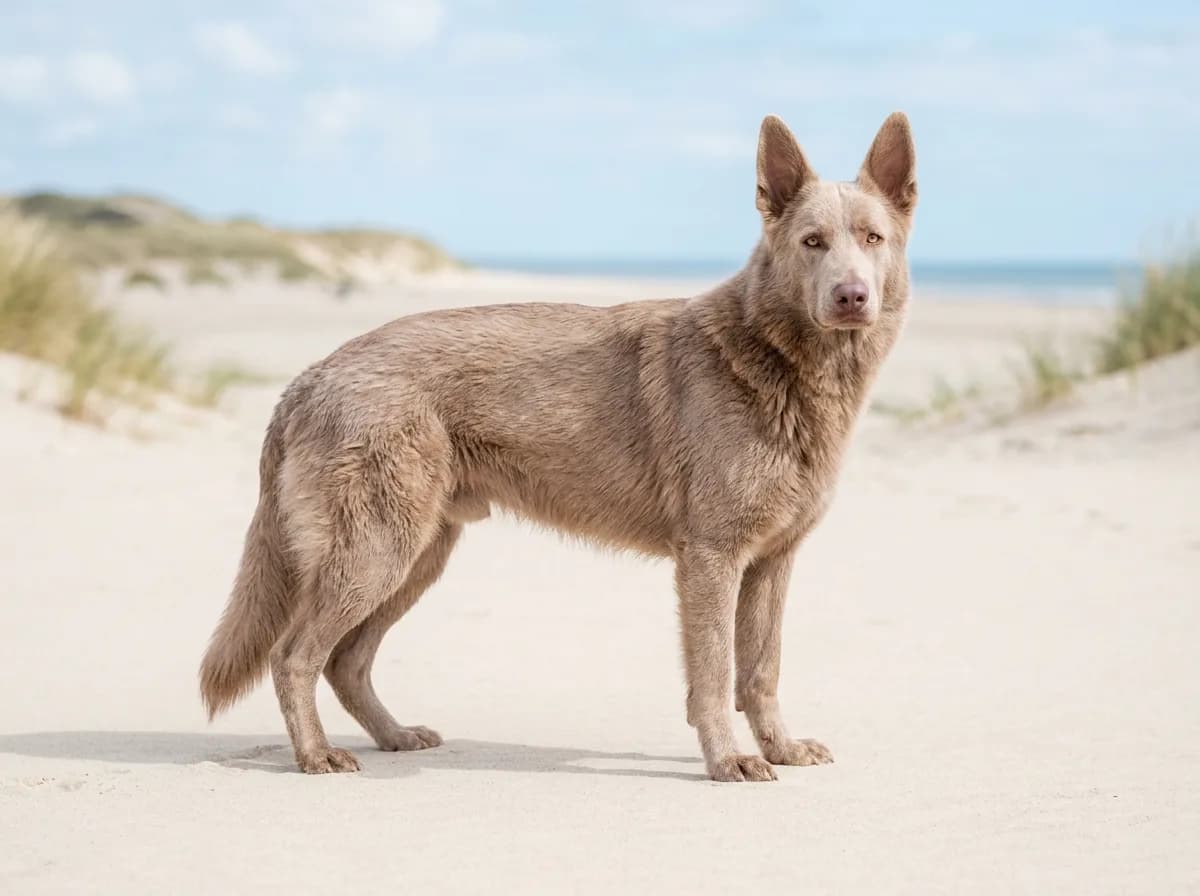
Isabella, sometimes called lilac, is the rarest of the dilute colors: it is what you get when a dog inherits two copies of both the dilution gene and the liver gene at once. The result is a pale, dusty fawn or grayish-lilac coat with a matching liver-toned nose and light eyes. Because it requires four specific recessive genes to line up, an isabella German Shepherd is exceptionally uncommon and is not a recognized show color. It is a legitimate purebred coat, not a designer cross. Isabella is essentially "double dilute" liver, and its scarcity is pure math: both parents must carry both recessives and pass all four along, which happens rarely even in lines that carry the genes.
White
The white German Shepherd is solid white to pale cream, and this is a point of frequent confusion. A white GSD is not albino and is not a health-compromised dog. The white is caused by a recessive gene that masks the underlying color pattern, so a genetically black-and-tan dog can be born white. White dogs have dark eyes, black noses, and normal pigment on skin and pads, which is exactly what separates them from a true albino. The color is disqualified from the AKC show ring for German Shepherds, but white lines are established enough that the White Shepherd is recognized as its own breed by some registries. If you want to see how one breed can carry a whole spectrum of coats in a single standard, our Rhodesian Ridgeback colors guide is a good companion read on coat-color genetics in another working breed.
- A white German Shepherd still carries a full color pattern underneath. Two white parents produce white puppies, but a white dog bred to a colored dog can produce colored puppies that carry the white gene. This is why white pops up unexpectedly in otherwise standard-colored litters.
Panda
The panda German Shepherd is one of the newest and most talked-about patterns. Panda dogs are roughly 35 to 40 percent white, with a distinctive white blaze, chest, collar, and paws over an otherwise standard black-and-tan or sable coat, plus blue or bi-colored eyes on some dogs. It traces to a single spontaneous genetic mutation (a piebald-type mutation on the KIT gene) that appeared in a purebred American litter in the early 2000s, and DNA testing has confirmed panda dogs are purebred German Shepherds with no other breed mixed in. It is not a recognized show color and remains rare, but it is a genuine, documented mutation rather than a crossbreed. The mutation is dominant, so a panda dog bred to a standard dog can pass the pattern on, which is how the small number of panda lines in existence today all trace back to that one original dog.
Petful may earn a commission when you click through to Chewy, at no extra cost to you.
Bi-Color
A bi-color German Shepherd is nearly all black with only small tan or brown points on the legs, under the tail, and sometimes tiny "pips" above the eyes. It sits between a black-and-tan saddle and a solid black dog. Bi-color is recognized and shows up most often in working lines. The genetics are the tan-point pattern with the black extended to cover almost the entire body. Breeders distinguish a true bi-color from a heavily blanketed black-and-tan by looking at the legs: a bi-color dog has black running down the front of the legs, while a blanket black-and-tan keeps tan on the legs even as the saddle spreads.
Gray (Silver / Wolf Gray)
Gray, also called silver or wolf gray, is closely related to sable and often overlaps with it in everyday description. A gray German Shepherd reads as an overall steely, wolfish gray, produced by the agouti banding with cooler, silver-based pigment rather than warm tan. It is a recognized color and a favorite among owners who want the "wolf" look without an actual wolfdog. Because gray and gray sable shade into one another, two breeders may label the same dog differently, which is one reason color counts vary from list to list. What matters is that gray is a legitimate, standard agouti-based color, not a dilute or a fault.
| Color | Breed Standard? | Rarity |
|---|---|---|
| Black and Tan | Standard | Very common |
| Black and Red | Standard (show line) | Common |
| Sable | Standard | Common |
| Solid Black | Standard | Uncommon |
| Bi-Color | Standard | Uncommon |
| Blue | Non-standard (DQ) | Rare |
| Liver | Non-standard (DQ) | Rare |
| White | Non-standard (DQ) | Uncommon |
| Panda | Non-standard | Very rare |
| Isabella (Lilac) | Non-standard | Extremely rare |
Which German Shepherd Color Is Rarest?
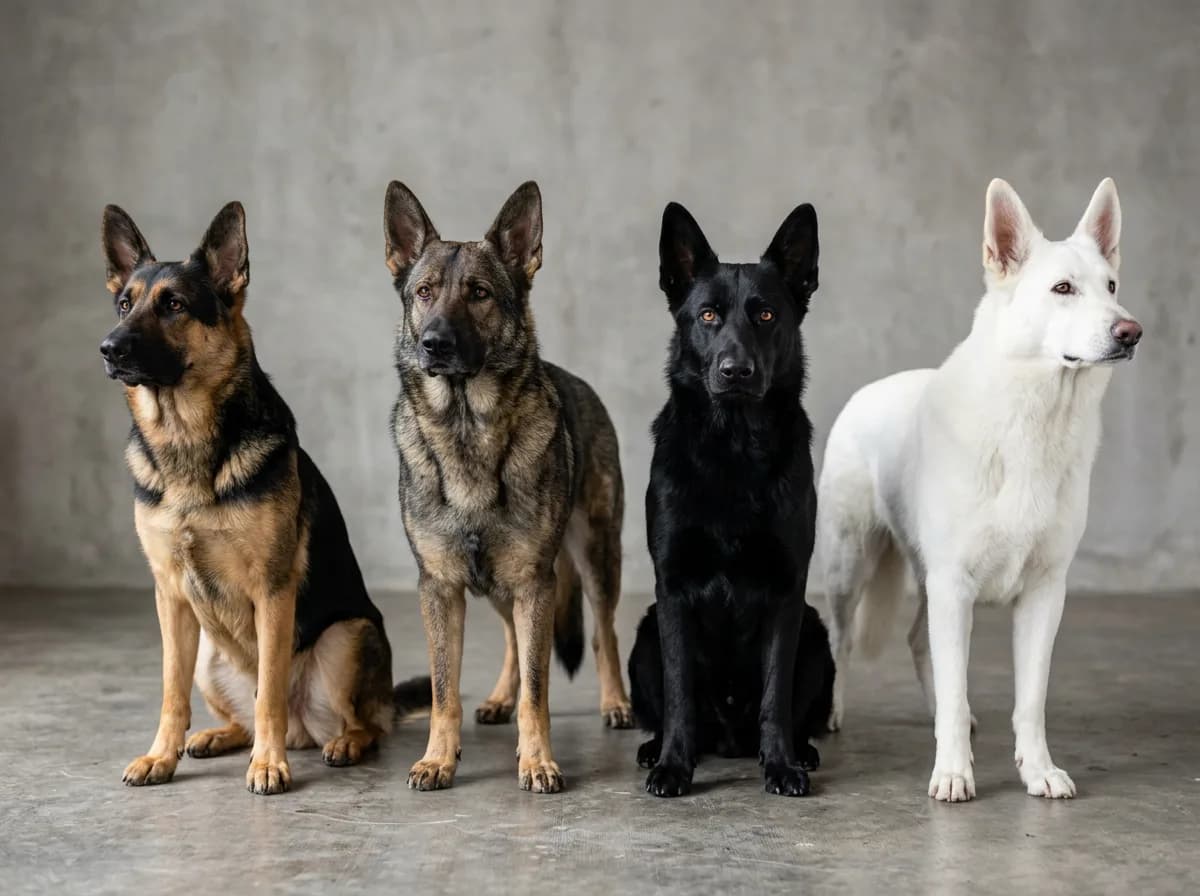
The rarest recognized color in a true purebred German Shepherd is isabella (lilac), because it requires the dog to inherit two copies of both the dilution gene and the liver gene, four specific recessives lining up at once. That is genetically much harder to produce than any single dilute. Close behind it are the panda pattern (which traces to one recent spontaneous mutation and appears in a limited number of lines) and liver and blue, which are individually uncommon dilutes.
If you set aside pattern mutations like panda and rank by pure color scarcity, isabella is the answer to "what is the rarest," with liver-based and blue dilutes next. Solid black, while breed-standard, is also relatively uncommon compared to the everyday black-and-tan, so it sometimes gets called "rare" in casual conversation even though it is fully recognized.
A word of caution on rarity marketing: the fact that a color is rare does not make the dog more valuable as a companion, and it certainly does not make it healthier. Some sellers inflate prices on "rare" blue, liver, isabella, or panda dogs. A rare color is a fine thing to love, but it is not a reason to skip health testing, temperament, and the breeder's ethics.

Petful may earn a commission when you click through to Chewy, at no extra cost to you.
- Beware breeders who charge a large premium purely for a rare color and downplay hip and elbow scores, DNA panels, or temperament. Color is cosmetic; structural and genetic health is what determines your dog's life. Always ask for OFA or PennHIP hip and elbow clearances regardless of coat color.
What Color Says About Health and Temperament
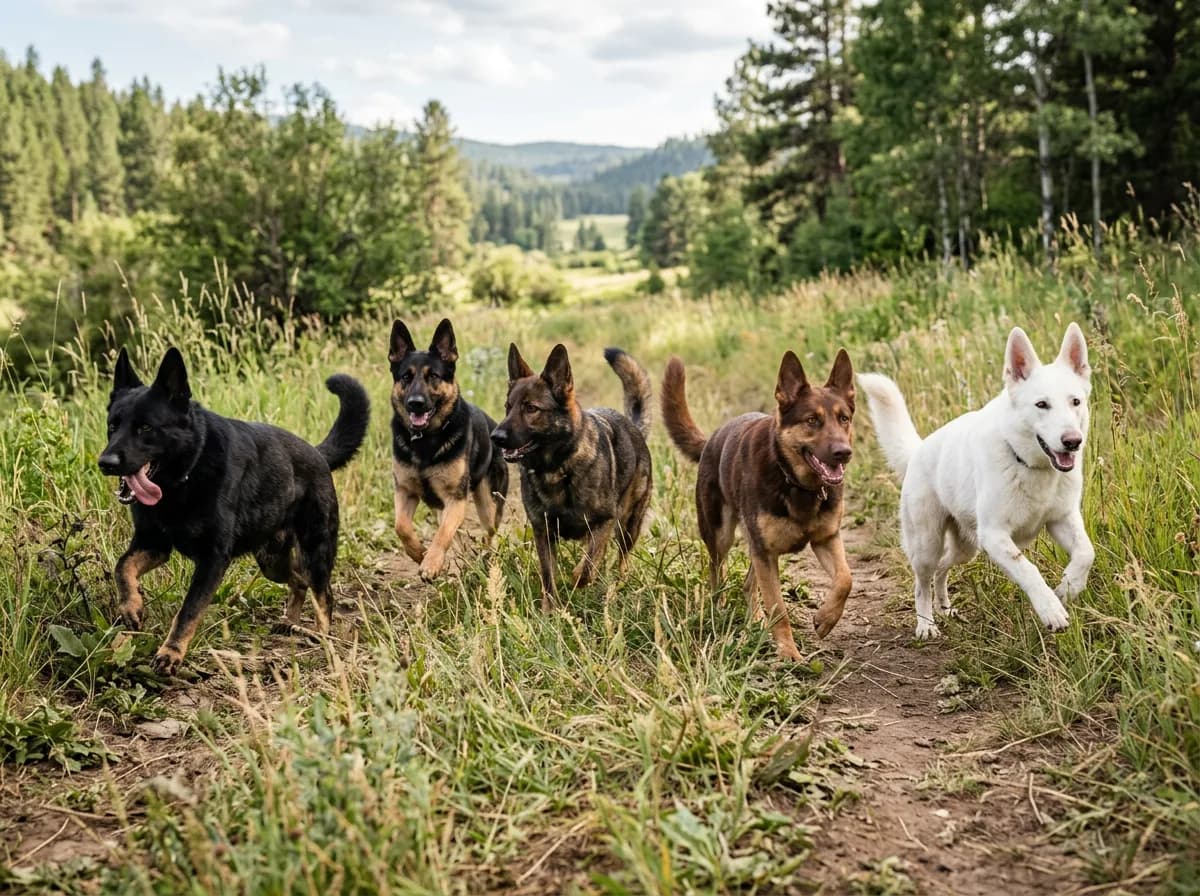
Here is the part that matters most and gets the least airtime: coat color in German Shepherds is essentially cosmetic. Extensive breed-club guidance and canine coat-color genetics both point to the same conclusion, that the pigment genes controlling color are separate from the genes that drive temperament, drive, and trainability. A sable working-line dog and a black-and-red show-line dog differ in behavior because of what they were bred to do and how they were raised, not because of their color.
The breed standard from the German Shepherd Dog Club of America is explicit that "the color of the German Shepherd Dog is not a determinant of the working ability of the dog." In plain terms: do not pick a puppy by color and expect the color to predict its personality. Pick by the parents' temperament, the breeder's program, and the individual puppy's disposition.
There is one genuine color-linked health caveat worth stating clearly, and it does not apply to standard German Shepherds. The double merle pattern (two copies of the merle gene) is linked to deafness and eye defects in the breeds that carry merle. German Shepherds are not a merle breed, so a purebred GSD should not produce double merles. If a seller is marketing a "merle German Shepherd," that dog almost certainly has another breed in its ancestry, and the double-merle health risks become real. Stick to the recognized German Shepherd colors from a reputable breeder and this risk simply does not arise.
As for lifespan, German Shepherds live roughly 9 to 13 years on average, and that range is driven by size, structure, hip and joint health, and care, not by whether the coat is black, sable, or blue. The health priorities for the breed (hip and elbow dysplasia, degenerative myelopathy, bloat) are the same across every color. If you want to go deeper on the joint issue this breed is most known for, our guide to hip dysplasia in dogs covers screening, symptoms, and management.
- 1Coat color has no proven effect on a German Shepherd's temperament, trainability, or intelligence.
- 2The only color-linked health risk (double merle deafness and eye defects) does not occur in purebred GSDs because they are not a merle breed.
- 3Lifespan and health depend on structure, joints, and care, so evaluate the breeder and the parents, not the coat.
How German Shepherd Puppy Color Changes With Age
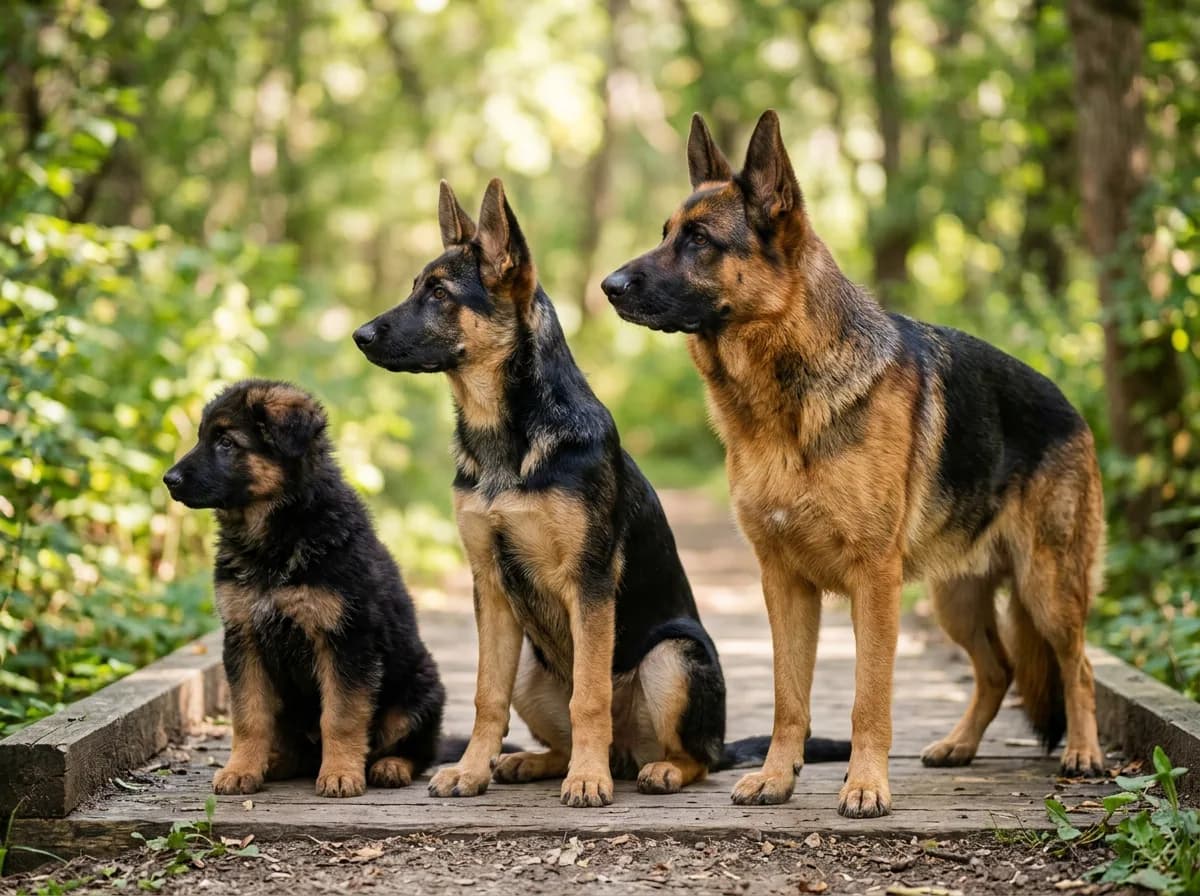
If you have a young German Shepherd, expect the coat to change, sometimes dramatically, over the first one to two years. Sable puppies are a classic example: many are born looking almost solid dark or muddy, and the true banded sable pattern only emerges as the adult coat grows in. Black-and-tan puppies are typically born very dark, almost black, and the tan points "burn in" and expand over the following months. This is normal and is one of the most common reasons owners post photos asking why their dog's color is shifting.
The general rule of thumb: the base color is set at birth, but the pattern and the balance between dark and light shift as the dog matures. A puppy's final adult color is usually settled by around two years of age, though subtle changes and graying around the muzzle continue naturally into the senior years. If you want to predict an adult color, look at the parents and littermates rather than the newborn coat.
- Most German Shepherd puppies are born darker than they will end up. As the adult coat replaces the puppy fluff, saddles recede, tan points expand, and sable banding appears. This is expected and is not a sign of anything wrong. Compare your puppy to the parents to gauge the likely adult color.
Choosing a German Shepherd by Color
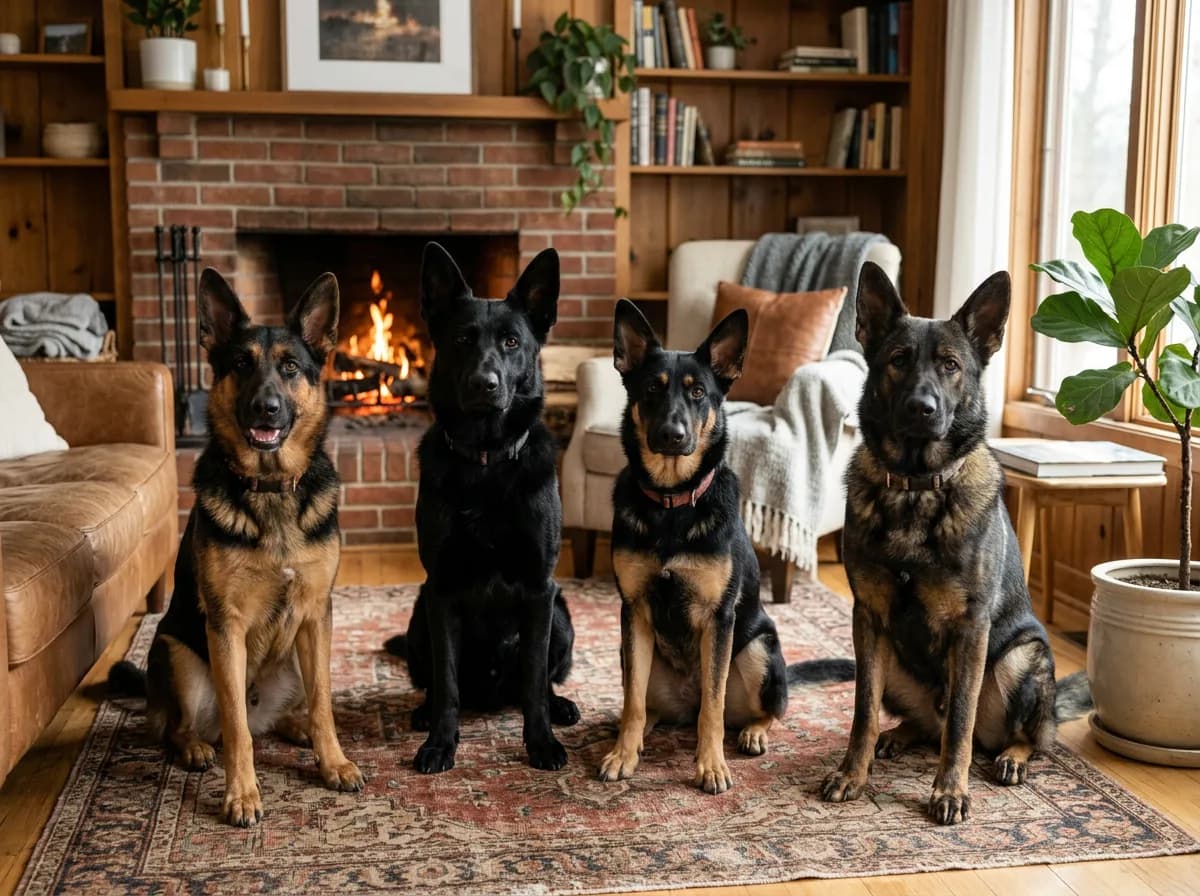
If a specific color speaks to you, there is nothing wrong with wanting it, as long as color sits at the bottom of your priority list, not the top. The order that actually protects you and the dog looks like this:
- First, the breeder and the parents. Health testing (hip and elbow clearances, DNA panels), sound temperament, and an ethical program matter more than any coat.
- Second, line and purpose. Show line, working line, and pet line dogs differ in drive and energy far more than colors do. Match the line to your lifestyle.
- Third, the individual puppy. Temperament within a litter varies. A confident, well-socialized puppy of a "plain" color beats a shy puppy of a rare color every time.
- Last, color. Once the above check out, choose the coat you love.
Reputable breeders will happily discuss color, but they will never pressure you into paying a large premium for a "rare" one or hide health information behind a flashy coat. If color is the headline of the sales pitch and health testing is an afterthought, walk away.
German Shepherd Colors: Frequently Asked Questions
How to Identify Your German Shepherd's Color
Working out which color you are actually looking at gets easy once you know the handful of features that give away the genetics. The single fastest check is the nose. A black nose means normal black pigment, so even a deep mahogany dog with a black nose is a red-and-tan, never a liver. A warm brown nose points to liver, and a soft gray or slate nose points to blue. That one look rules the dilute colors in or out before you study the coat at all.
Next, inspect a single hair. Part the fur along the back or neck and look at a few strands up close. If each hair is banded, pale at the base and dark toward the tip, you have a sable (agouti) dog, even when the overall coat reads as gray or red from across the yard. If the strands are one solid color from root to end, the dog is not a sable, and you are looking at a saddle, bi-color, or solid pattern instead. This "part and check the banding" test settles the most common mix-up in the breed, telling a dark sable apart from a black-and-tan or a solid black.
Then read the temperature of the points. Warm tan or red legs, chest, and face markings sit on the classic black-and-tan and black-and-red dogs. Cool silver or pale cream points signal the black-and-silver and black-and-cream variants instead. Eye color rounds out the picture: the dilute dogs (blue, liver, and isabella) very often carry lighter amber, gold, or gray-green eyes rather than the dark brown of a standard dog, because the genes that lighten the coat lighten the eyes along with it.
- 1Nose color is the quickest tell: black means standard pigment, brown means liver, gray means blue.
- 2Part the coat and check a single hair for light-to-dark banding to confirm a sable versus a solid or saddle pattern.
- 3Cooler silver or cream points and lighter amber eyes usually flag one of the diluted colors.
Grooming and Coat Care Across German Shepherd Colors
No German Shepherd color is genuinely low-maintenance, because grooming is driven far more by coat type than by coat color. The breed comes in two coat lengths: the standard medium "stock" coat and the longer "plush" or long-stock coat. Both are double coats with a dense insulating undercoat, and both shed year-round before "blowing" the undercoat heavily twice a year in spring and fall. Weekly brushing with an undercoat rake or de-shedding tool keeps loose hair in check, and during those two shedding seasons most owners brush several times a week. Long-coated dogs need extra attention behind the ears, on the trousers, and along the tail, where the finer hair tends to mat.
Color does change a few practical details. Light coats show everything. A white, cream, or pale-silver German Shepherd reveals grass stains, muddy paws, and tear staining that a sable or black dog hides completely, so pale dogs usually need baths a little more often just to look clean. Resist over-bathing any of them, though: the double coat depends on its natural oils, and washing more than roughly every six to ten weeks (barring real dirt) can dry the skin and dull the coat.
Sun exposure runs the other direction. A solid black or dark sable coat can pick up a reddish, sun-bleached cast over a hot summer, especially on dogs that sunbathe for hours, and the true color returns as the coat grows back. Pale-nosed dogs deserve a note too: a liver or isabella dog has a brown rather than black nose, and lighter pigment offers slightly less natural UV protection, so keep those dogs out of prolonged midday sun on the brightest days. None of this is color-linked illness, just sensible coat care.
Whatever the color, a simple routine covers nearly every dog:
- Brush weekly with a slicker or pin brush, then add an undercoat rake through the spring and fall sheds.
- Bathe only when the dog is genuinely dirty, using a gentle dog shampoo, and dry the undercoat fully afterward.
- Wipe pale faces and watch for tear staining on white and cream dogs, since it shows far more than on dark coats.
- Trim nails every few weeks and check ears weekly, regardless of color.
Coat quality also starts from the inside, so a well-fed, well-brushed dog looks richer in every color, from the palest cream to the deepest black.
- It is tempting to shave a heavy black or sable coat in summer, but the double coat insulates against heat as much as cold and shields the skin from sunburn. Shaving can trigger patchy, altered regrowth and strips that protection away. Brush the undercoat out instead of clipping it down.
Related on Petful
- White German Shepherd: Facts, Health, and Care
- Doberman Colors: Every Coat, Rarity, and Genetics
- Labrador Colors: The Complete Guide
- Merle Dog Guide: Genetics, Breeds, and Health
- Poodle Colors: Every Shade, Pattern, and Fade
The German Shepherd colors most commonly listed are black and tan, black and red, black and cream, black and silver, sable, solid black, bi-color, gray (silver or wolf gray), blue, liver, white, isabella (lilac), and panda. The AKC formally recognizes a subset of these for the show ring (including black and tan, black and red, sable, solid black, bi-color, and gray), while blue, liver, white, isabella, and panda are non-standard but still purebred, healthy coats.
Isabella (also called lilac) is the rarest true color, because it requires a dog to inherit two copies of both the dilution gene and the liver gene at the same time, which is genetically difficult to produce. The panda pattern is also extremely rare since it traces to a single recent spontaneous mutation, and blue and liver are individually uncommon dilute colors.
The rarest German Shepherd color is isabella (lilac), the double-dilute liver coat, followed by the panda pattern and then blue and liver. Solid black, though breed-standard, is also less common than the everyday black-and-tan, so it is sometimes described as rare in casual terms even though it is fully recognized.
The most expensive German Shepherds by color are usually the rare non-standard coats, blue, liver, isabella, and panda, because scarcity drives price. However, price should track health testing, temperament, and pedigree, not color. A rare-colored dog from an unproven breeder is a worse buy than a well-bred standard-colored dog with full hip, elbow, and DNA clearances.
German Shepherds are highly intelligent, loyal, confident, and trainable working dogs with strong protective instincts and high energy. They bond closely with their families, thrive on jobs and mental stimulation, and can be reserved with strangers. Behavior is shaped by line (working versus show), socialization, and training, not by coat color, so no color is calmer or more aggressive than another.
The best dog food for a German Shepherd is a complete, balanced diet that meets AAFCO standards for the dog's life stage, with quality animal protein, appropriate fat, and joint-supporting nutrients, fed in portions that keep the dog lean to protect its hips and elbows. Large-breed puppy formulas help manage growth rate. Coat color has no bearing on dietary needs. Always confirm any specific diet, especially for a dog with joint or digestive concerns, with your veterinarian.
German Shepherds do not feel guilt the way people do, but they read and respond to their owner's mood. The "sorry" look, ears back, head lowered, avoiding eye contact, tail tucked or gently wagging, leaning in or offering a paw, is appeasement behavior meant to defuse tension, not a moral apology. It is a social signal that the dog senses you are upset and wants to restore calm, and it appears identically across every coat color.
The Bottom Line on German Shepherd Colors
German Shepherd colors span a genuinely wide palette, from the iconic black-and-tan saddle and the show ring's deep black-and-red, through the dominant, wolf-like sable, to recognized solids and the rare, striking dilutes and patterns like blue, liver, isabella, white, and panda. A handful meet the conformation breed standard and the rest do not, but every one of them is a purebred, healthy German Shepherd when it comes from a responsible breeder.
The single most useful thing to remember is that color is the least important box to check. It does not predict temperament, it does not change intelligence, and outside of the double-merle pattern (which does not occur in purebred GSDs) it does not cause health problems. Fall in love with the coat if you like, but choose your dog on health testing, temperament, and the breeder's ethics first. Do that, and whatever color you bring home will be the right one.

Coreen Saito is a pet writer and longtime shelter volunteer with more than a decade in animal rescue. She covers cat behavior, breed care, and the small, ordinary science of sharing a life with companion animals, with a particular focus on honest takes about the products and decisions that actually matter. At home in Arizona, she's outranked by Mac (a dog with the loudest opinion in the house), Rebel (a cat who governs by quiet authority), and Meri (an orange tabby who runs the late shift and the laundry basket). She writes about all three, plus the rescues that keep coming through her life, at LifeWithMinty.com.
Sign up for expert-backed reviews and safety alerts all in one place.