German Shepherd Mix Guide: 29 Crosses With Pictures
Compare 29 German Shepherd mixes with pictures and practical questions about ancestry, adult size, grooming and daily routines, then learn what to check before choosing an individual dog.
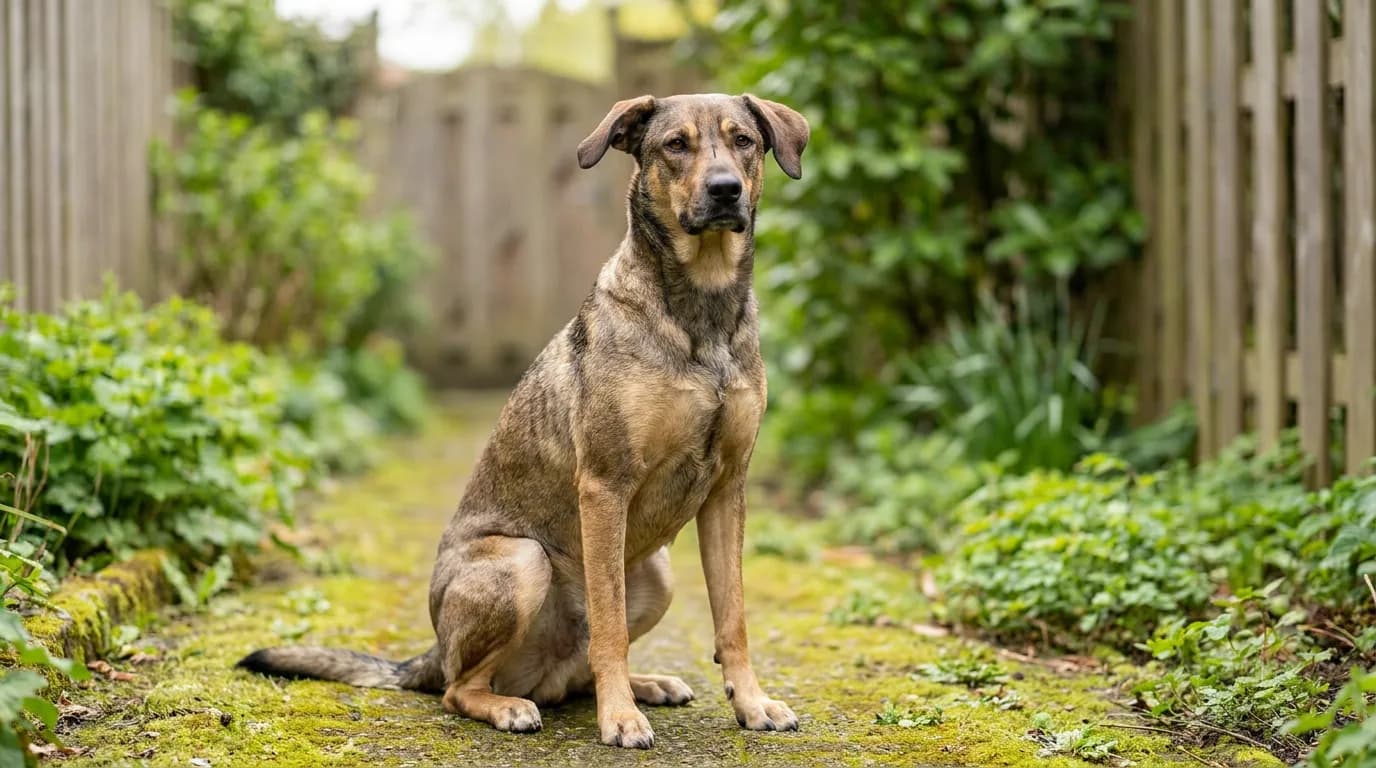
A mixed dog's appearance is one starting point for questions about its background and care.
Petful is reader supported. As an affiliate of platforms like Amazon and Chewy, we may earn a commission when you buy through links on this page. There is no extra cost to you.
A German Shepherd mix may have a Labrador, Husky, Poodle or another breed in its family tree. The name gives you a starting point for questions, but choosing a dog means looking beyond that label to its actual size, coat, behavior and care needs.
This guide compares 29 parent combinations and the practical decisions each raises. Follow the links to existing dedicated mix guides for deeper coverage of those crosses. Use the pictures to explore possible appearances, then use records and conversations with the dog's caregiver to find out what applies to the individual you are considering.

Sign up for expert-backed reviews and safety alerts all in one place.
Which German Shepherd mix fits your home?
Commonly chosen German Shepherd mixes include the Sheprador, whose Labrador Retriever parent is close to the German Shepherd's height; the German Shepherd Husky mix, whose Siberian Husky parent is lighter at 35 to 60 pounds; and the Shepadoodle, whose Standard Poodle parent adds a curly, high-maintenance coat. Even so, a good mix with a German Shepherd is an individual dog whose needs fit your household's time, space, handling ability and experience; no parent combination guarantees the best pet.
Start with the circumstances the dog will encounter every day. A quiet home with one adult presents different demands from a household with children, visiting relatives and another dog. For a German Shepherd mix puppy, also consider what you can accommodate while adult size and behavior are still developing.
Before choosing, establish:
- Which parent breeds are documented and which are estimates.
- What the caregiver has observed during ordinary walks, greetings and quiet time.
- Whether the dog's current dimensions fit your home and transport.
- What training, grooming and veterinary support you can provide.
- Which important questions remain unanswered.
Research published in Science shows that ancestry explains only part of individual behavioral variation. That does not make parentage irrelevant; it means a breed label cannot serve as a complete personality forecast. Morrill and colleagues' research supports evaluating the dog in front of you alongside its background.
- 1Choose the individual dog for your household needs.
- 2Separate documented parentage from a visual guess.
- 3Ask for specific observations, measurements and care records before committing.
German Shepherd mixes at a glance
This cross-comparison table is one useful starting point, naming both parents of each cross. The AKC's German Shepherd page lists males at 24–26 inches and 65–90 pounds, females at 22–24 inches and 50–70 pounds, and a 12–14 year life expectancy; the other parent's ranges come from its AKC breed page (UKC standards for the American Pit Bull Terrier and Carolina Dog), checked October 29, 2026. These are parent-breed ranges, not predictions for a mixed puppy. Coat is the other practical comparison: many of these crosses carry a double coat, and a Frisco Slicker Dog Brush is one tool to discuss with a groomer if it suits the actual coat.
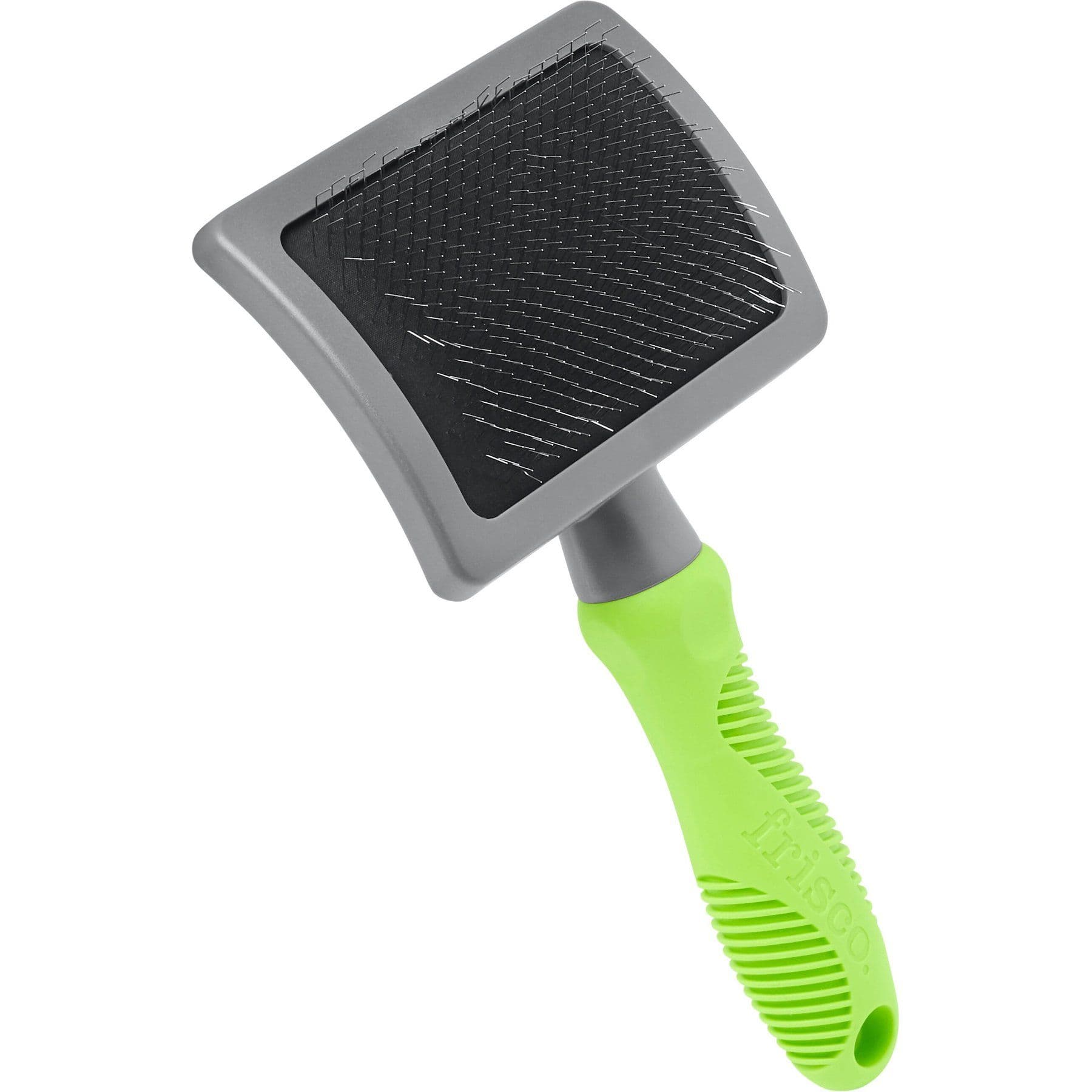
A slicker brush to consider for a suitable coat. Ask for a gentle-use demonstration and do not force the pins through tight mats.
Petful may earn a commission when you click through to Chewy, at no extra cost to you.
| Cross label | Parent breeds | Other parent's published size | Other parent's life expectancy | Questions to ask |
|---|---|---|---|---|
| Husky mix | German Shepherd and Siberian Husky | 21–23.5 in (male), 20–22 in (female); 45–60 lb (male), 35–50 lb (female) | 12–14 years | What vocalization, door and settling behavior has actually been observed? |
| Sheprador | German Shepherd and Labrador Retriever | 22.5–24.5 in (male), 21.5–23.5 in (female); 65–80 lb (male), 55–70 lb (female) | 11–13 years | Which play and training rewards does this dog enjoy? |
| Pit Bull mix | German Shepherd and the documented Pit Bull-type parent | UKC American Pit Bull Terrier: 18–21 in, 35–60 lb (male); 17–20 in, 30–50 lb (female) | Not stated in the UKC standard | What does the ancestry label mean in this dog's records? |
| Rottweiler mix | German Shepherd and Rottweiler | 24–27 in (male), 22–25 in (female); 95–135 lb (male), 80–100 lb (female) | 9–10 years | Can the household manage this dog's actual dimensions and leash behavior? |
| Malinois mix | German Shepherd and Belgian Malinois | 24–26 in (male), 22–24 in (female); 60–80 lb (male), 40–60 lb (female) | 14–16 years | What activity and quiet routine has this dog learned? |
| Doberman mix | German Shepherd and Doberman Pinscher | 26–28 in (male), 24–26 in (female); 75–100 lb (male), 60–90 lb (female) | 10–12 years | How does this dog respond to ordinary visitors and transitions? |
| Great Pyrenees mix | German Shepherd and Great Pyrenees | 27–32 in (male), 25–29 in (female); 100 lb & up (male), 85 lb & up (female) | 10–12 years | What noise and boundary routines are reported by the caregiver? |
| Corgi mix | German Shepherd and the documented Corgi parent | Pembroke: 10–12 in, up to 30 lb; Cardigan: 10.5–12.5 in, 25–38 lb | 12–13 years (Pembroke); 12–15 (Cardigan) | How does this dog comfortably use stairs, vehicles and walking routes? |
| Shepadoodle | German Shepherd and Poodle | Standard Poodle: over 15 in, 60–70 lb (male), 40–50 lb (female) | 10–18 years | Which Poodle variety is documented and what coat care is needed now? |
| Golden Retriever mix | German Shepherd and Golden Retriever | 23–24 in (male), 21.5–22.5 in (female); 65–75 lb (male), 55–65 lb (female) | 10–12 years | What grooming and greeting routines does this dog need? |
| Great Dane mix | German Shepherd and Great Dane | 30–32 in (male), 28–30 in (female); 140–175 lb (male), 110–140 lb (female) | 7–10 years | Do current dimensions fit the transport and resting space available? |
| Chihuahua mix | German Shepherd and Chihuahua | 5–8 in; 6 lb or less | 14–16 years | What parentage and actual measurements support the size description? |
| Boxer mix | German Shepherd and Boxer | 23–25 in (male), 21.5–23.5 in (female); 65–80 lb (male), about 15 lb less (female) | 10–12 years | How does this dog play and settle afterward? |
| Beagle mix | German Shepherd and Beagle | Two varieties: 13 in and under (under 20 lb) or 13–15 in (20–30 lb) | 10–15 years | What scent-following and recall behavior has been observed? |
| Cane Corso mix | German Shepherd and Cane Corso | 25–27.5 in (male), 23.5–26 in (female); weight proportionate to height | 9–12 years | What handling support does this individual need? |
| Blue Heeler mix | German Shepherd and Australian Cattle Dog | 18–20 in (male), 17–19 in (female); 35–50 lb | 12–16 years | How does the dog respond to moving people and animals? |
| Akita mix | German Shepherd and the documented Akita parent | 26–28 in (male), 24–26 in (female); 100–130 lb (male), 70–100 lb (female) | 10–14 years | What introduction history is available? |
| Chow Chow mix | German Shepherd and Chow Chow | 17–20 in; 45–70 lb | 8–12 years | How does the dog respond to brushing and routine handling? |
| Mastiff mix | German Shepherd and the documented Mastiff breed | 30 in & up (male), 27.5 in & up (female); 160–230 lb (male), 120–170 lb (female) | 6–10 years | Which Mastiff breed is actually meant? |
| Alaskan Malamute mix | German Shepherd and Alaskan Malamute | 25 in (male), 23 in (female); 85 lb (male), 75 lb (female) | 10–14 years | What grooming and walking routine does the dog currently follow? |
| Bernese mix | German Shepherd and Bernese Mountain Dog | 25–27.5 in (male), 23–26 in (female); 80–115 lb (male), 70–95 lb (female) | 7–10 years | What coat-care workload and resting space are needed? |
| Shug | German Shepherd and Pug | 10–13 in; 14–18 lb | 13–15 years | What does an examination of this individual establish? |
| Australian Shepherd mix | German Shepherd and Australian Shepherd | 20–23 in (male), 18–21 in (female); 50–65 lb (male), 40–55 lb (female) | 12–15 years | Which activities and quiet routines has the dog learned? |
| Pomeranian mix | German Shepherd and Pomeranian | 6–7 in; 3–7 lb | 12–16 years | What supports the parentage and size description? |
| Saint Bernard mix | German Shepherd and Saint Bernard | 28–30 in (male), 26–28 in (female); 140–180 lb (male), 120–140 lb (female) | 8–10 years | Can the household accommodate the actual resting and transport dimensions? |
| Rhodesian Ridgeback mix | German Shepherd and Rhodesian Ridgeback | 25–27 in (male), 24–26 in (female); 85 lb (male), 70 lb (female) | 10–12 years | What records support ancestry and what outdoor behavior is observed? |
| Border Collie mix | German Shepherd and Border Collie | 19–22 in (male), 18–21 in (female); 30–55 lb | 12–15 years | Is Border Collie documented or is collie being used loosely? |
| Dachshund mix | German Shepherd and Dachshund | 8–9 in (standard), 5–6 in (miniature); 16–32 lb (standard), 11 lb & under (miniature) | 12–16 years | What do the individual proportions and movement show? |
| Carolina Dog mix | German Shepherd and Carolina Dog | UKC Carolina Dog: about 18–24 in, 35–50 lb | Not stated in the UKC standard | What evidence supports the parentage label? |
29 German Shepherd mixes to compare
The following photographs illustrate possible appearances. They cannot verify documented ancestry, and two dogs with the same reported parents may look different. Each entry focuses on a useful question to investigate before you decide whether the dog fits your home.
German Shepherd Husky mix
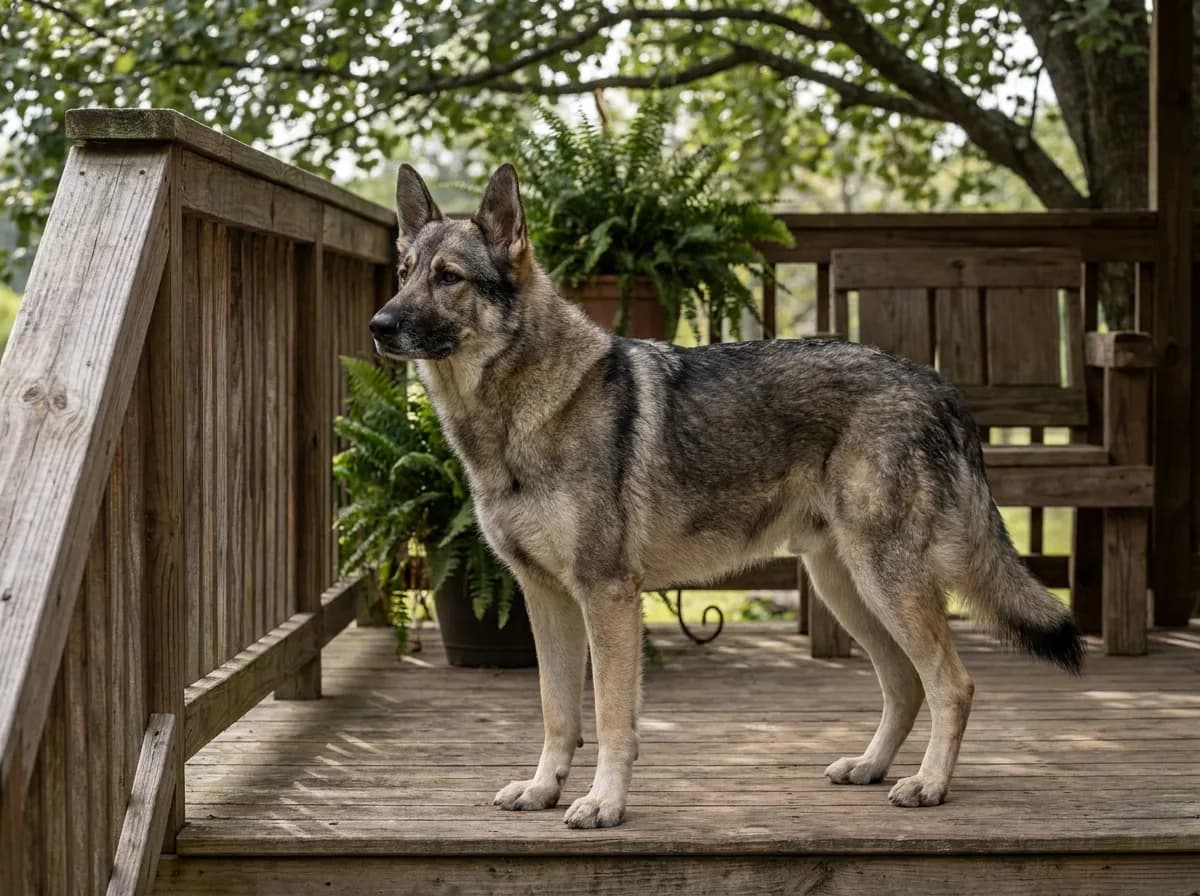
A German Shepherd Husky mix, often sold as a Gerberian Shepsky or Shepsky, has parents of different builds. The AKC lists the Siberian Husky at 21–23.5 inches and 45–60 pounds for males and 20–22 inches and 35–50 pounds for females, against 24–26 inches and 65–90 pounds for a male German Shepherd. Both AKC breed pages give a 12–14 year life expectancy, which is the parent reference for German Shepherd Husky mix life expectancy; the individual dog's age, records and parent health screening decide the rest.
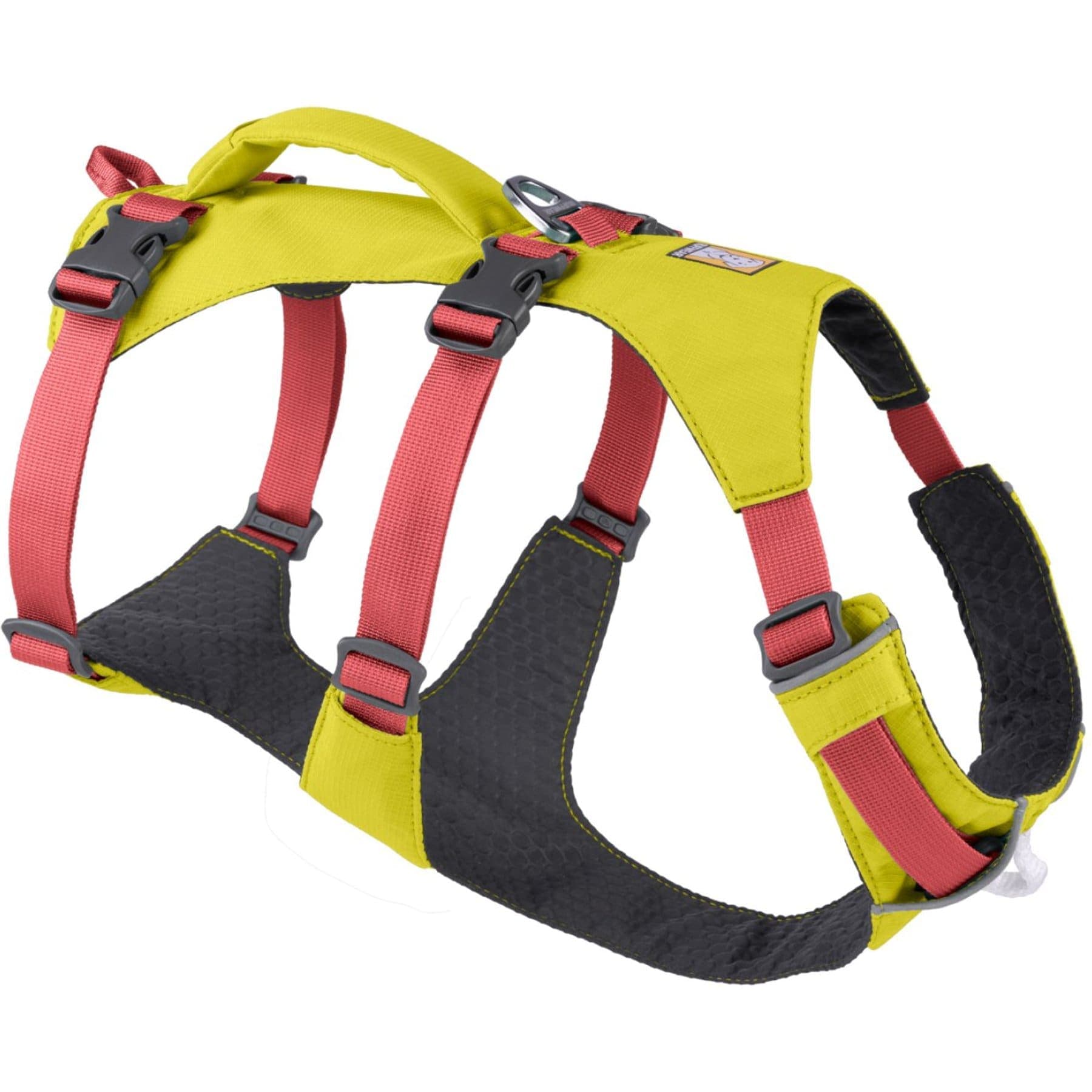
Lightweight body harness with a padded lift handle, load-dispersing chest and belly panel, debris-resistant liner and a front clip, per the listing.
Petful may earn a commission when you click through to Chewy, at no extra cost to you.
For household fit, ask about vocalization, doorways and settling after activity: when the dog vocalizes, how long it lasts and what the caregiver does, which matters with shared walls. A half German Shepherd, half Siberian Husky description should reflect known parentage, and with a puppy, plan for changing equipment fit.
The Ruffwear Flagline harness is one option to evaluate against actual measurements. This listed Medium variant specifies a 27–32-inch chest range. Check the manufacturer's measurement and adjustment instructions, then assess the fit on the dog.
- Ask how the dog behaves when someone opens a door or prepares a walk.
- Find out how it settles when the household returns home. These transitions show which routines need practice.
German Shepherd Lab mix (Sheprador)
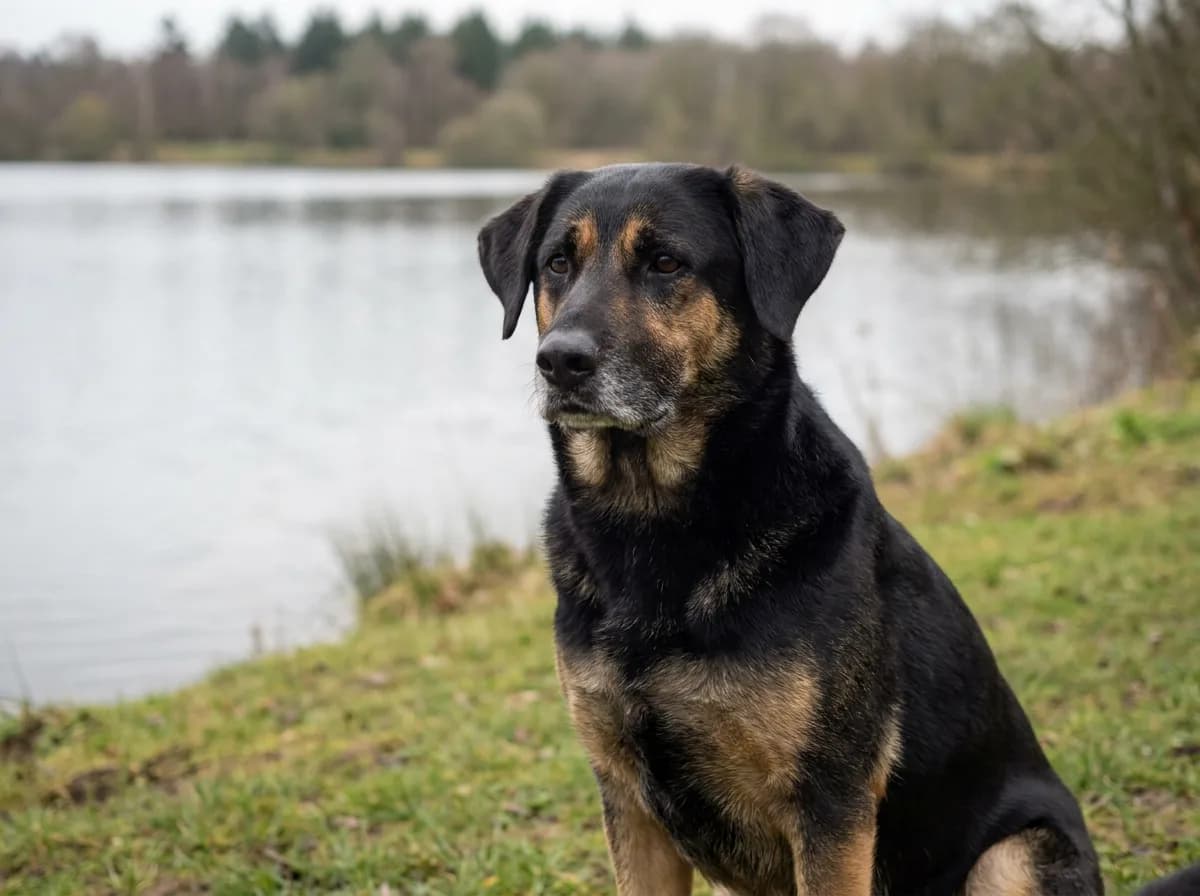
The Sheprador combines German Shepherd and Labrador Retriever ancestry. The AKC's Labrador page lists 22.5–24.5 inches and 65–80 pounds for males, 21.5–23.5 inches and 55–70 pounds for females, and an 11–13 year life expectancy, so both parents sit in a similar size band. The AKC's Labrador introduction describes an active retriever with a dense, short double coat, so plan for undercoat maintenance rather than assuming a short-haired Shepherd cross barely sheds. Food rewards, carrying games and retrieving can provide different activities; use the ones the individual enjoys.
Black Labrador, yellow Lab and chocolate Lab parent descriptions identify color variants within the Labrador side of the family. They do not establish separate German Shepherd Lab mix temperaments. For a puppy, request the actual parent information and any early handling or training records.
During a visit, ask for a simple demonstration:
- Which reward keeps the dog's attention?
- Can play pause comfortably?
- What does the dog do when a toy is put away?
- How does the caregiver encourage a quiet break?
If the dog enjoys retrieving, find out how the game is managed around people and other pets. A pleasant interaction includes being able to end the activity, not just enthusiasm for starting it.
German Shepherd Pit Bull mix

“Pit Bull” can be used as a broad label, so ask what it means in this dog's records. If the documented parent is an American Pit Bull Terrier, the UKC standard gives 18–21 inches and 35–60 pounds for males and 17–20 inches and 30–50 pounds for females, well below a German Shepherd's range; the standard does not state a life expectancy. A German Shepherd Pit Bull mix puppy may arrive with a more confident label than its history supports, so a description such as half Pit Bull should reflect documented parentage, not a visual guess.
No kennel club recognizes a Pitbull and German Shepherd cross as a breed, so move from the label to the dog's actual handling and interaction history. Ask about leash walks, veterinary visits, meeting unfamiliar people and living with other animals. “Good with dogs” needs context: sharing a foster home with one familiar dog is different from meeting every unfamiliar dog comfortably.
Useful follow-up questions include:
- Which animals has the dog actually lived with?
- How were introductions arranged?
- Were food, toys or resting spaces managed separately?
- What support would the caregiver recommend in your home?
German Shepherd Rottweiler mix
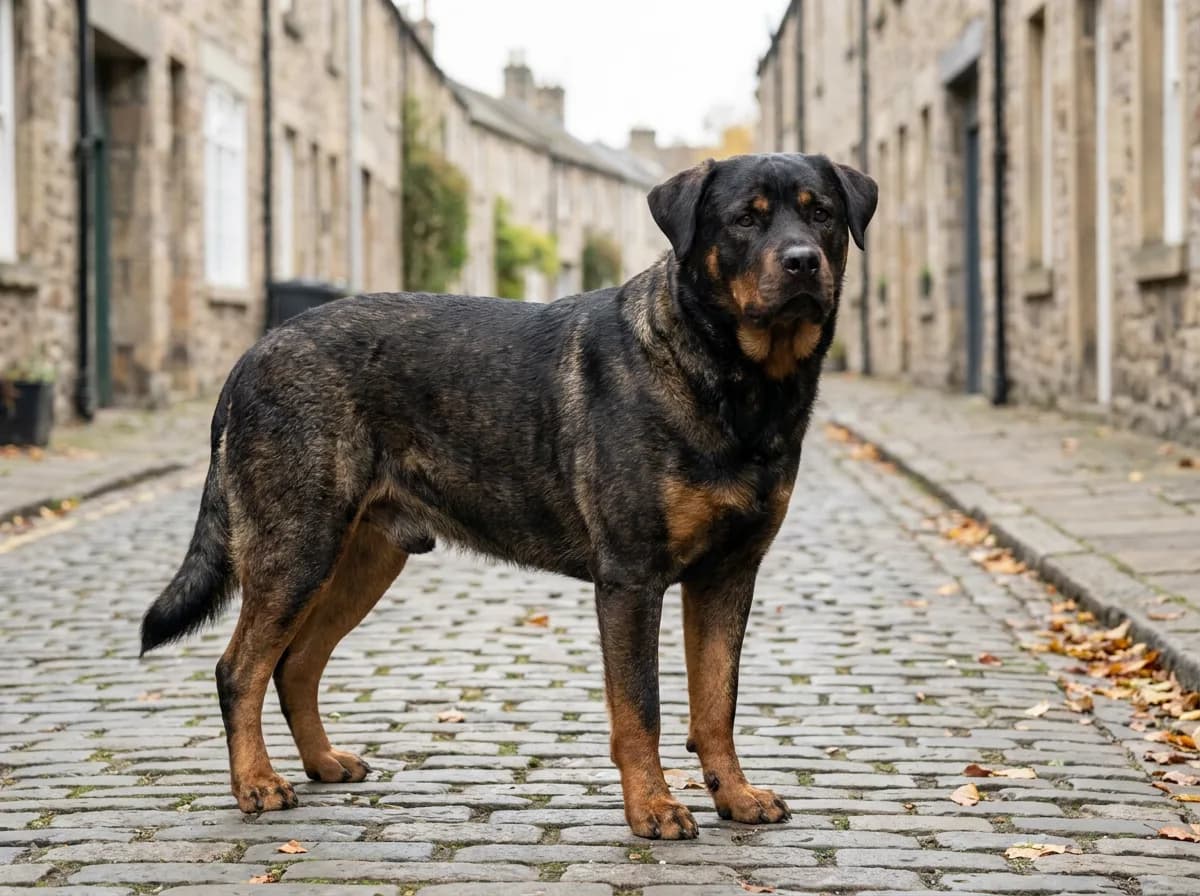
For a German Shepherd Rottweiler mix, the AKC's Rottweiler page lists 24–27 inches and 95–135 pounds for males, 22–25 inches and 80–100 pounds for females, and a 9–10 year life expectancy, so the Rottweiler parent can outweigh a male German Shepherd by 30 pounds or more. Assess physical handling and transport before relying on an advertised adult-weight estimate, and for a puppy, choose equipment with a realistic replacement plan.
Ask to observe an ordinary walk with the current caregiver. Notice the route, equipment, distractions and cues already in use. Then discuss whether everyone expected to handle the dog can follow that routine. A favorable meeting with one experienced person does not answer that question for the whole household.
Quiet enrichment can be part of the daily plan. A large KONG Classic is one option to evaluate for the individual dog's size and chewing behavior. Supervise use and inspect the toy; its presence does not replace training or make every dog comfortable alone.
- Plan how the dog will enter your vehicle.
- Identify who can help if its usual routine becomes impractical.
Belgian Malinois German Shepherd mix
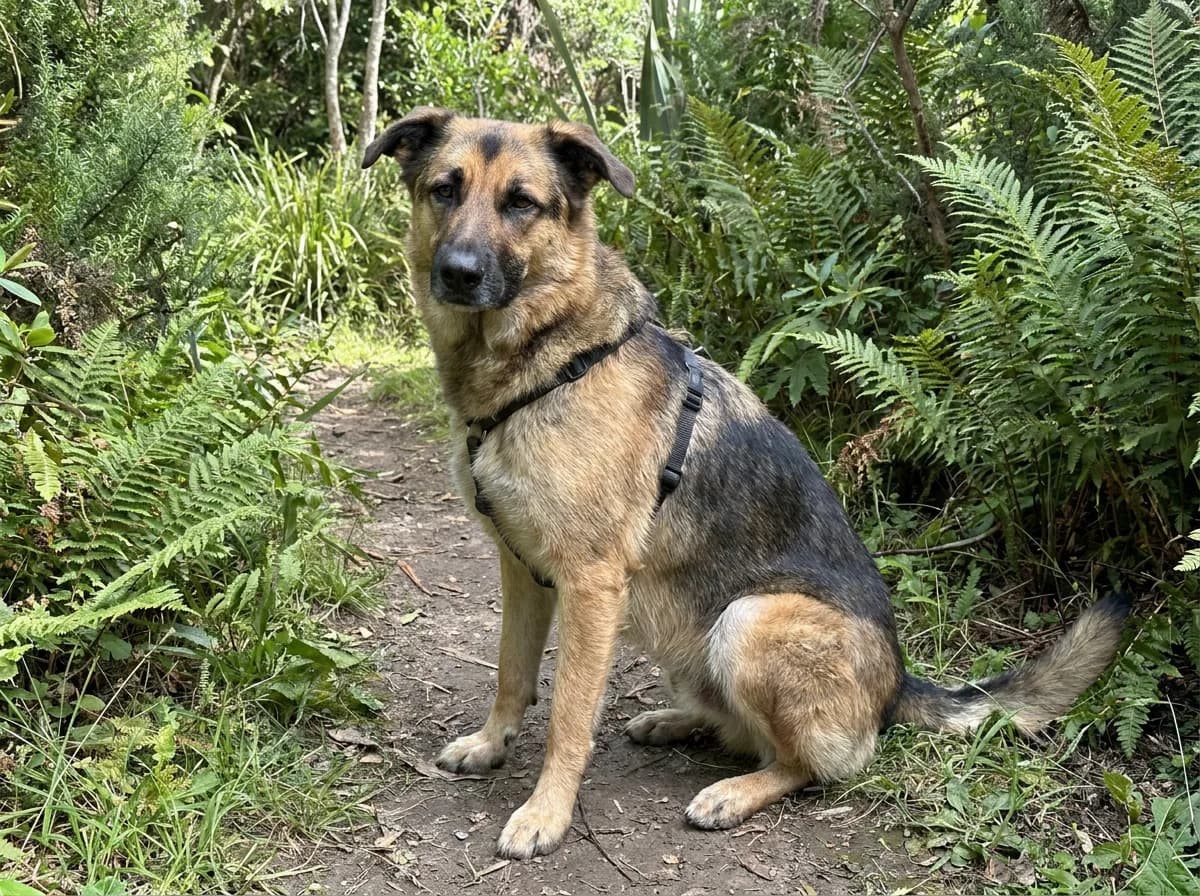
A Belgian Malinois German Shepherd mix is also commonly called a Shepinois. Ask about the individual dog's learned activity and quiet routines, including what happens after a walk or training session. The parent names alone do not establish a working role or the support a particular household will need.
Our Belgian Malinois German Shepherd mix guide covers this cross in detail. Before committing, discuss the caregiver's actual schedule, the dog's response to interruptions and which training cues a new home should continue.
German Shepherd Doberman mix
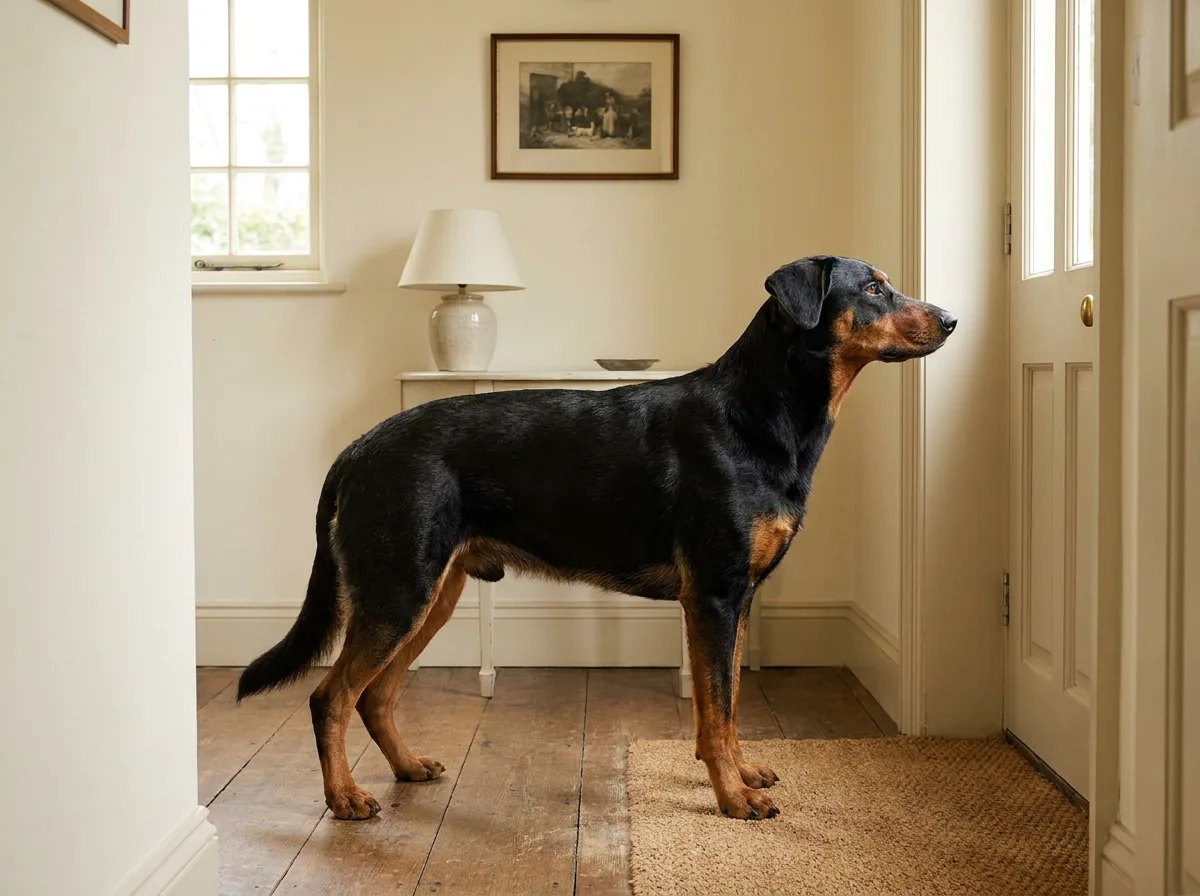
With a Doberman Pinscher and German Shepherd mix, ask how ordinary visitors enter the home. A seller's “protective” description does not tell you whether the dog can remain comfortable while a delivery arrives, a friend visits or a child brings someone home.
Request examples rather than a broad adjective. Find out what the caregiver does before opening the door, where the dog waits and how introductions proceed. Also ask whether the same behavior has been observed in several situations or only during a short meeting.
Consider everyday transitions:
- Someone standing up after a quiet evening.
- A guest moving through the room.
- A household member leaving.
- A familiar routine changing.
These are opportunities to understand the existing management plan, not to provoke a reaction. If you would need professional help to reproduce that plan, arrange the support before adoption. Choose the dog for a workable relationship, rather than an unverified protection-dog promise.
German Shepherd Great Pyrenees mix
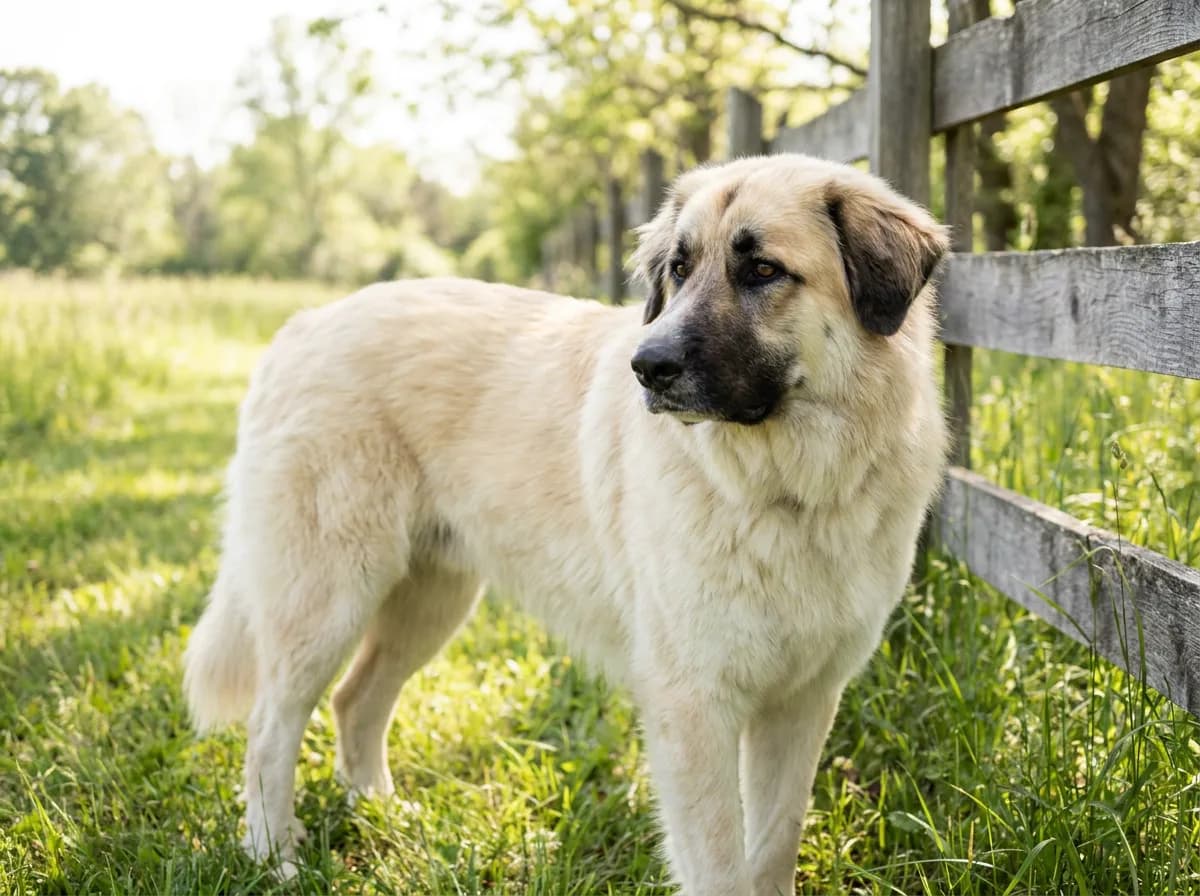
For a Great Pyrenees German Shepherd mix, ask what the caregiver observes at night and around boundaries. When does the dog bark, where does it rest, and what happens when people or animals pass the property? Those details matter more than assigning every dog the same guardian personality.
The Great Pyrenees mixes guide includes this parent combination. Use its broader discussion alongside the individual's history, particularly if your home has close neighbors, frequent visitors or a different outdoor setup from the current home.
German Shepherd Corgi mix
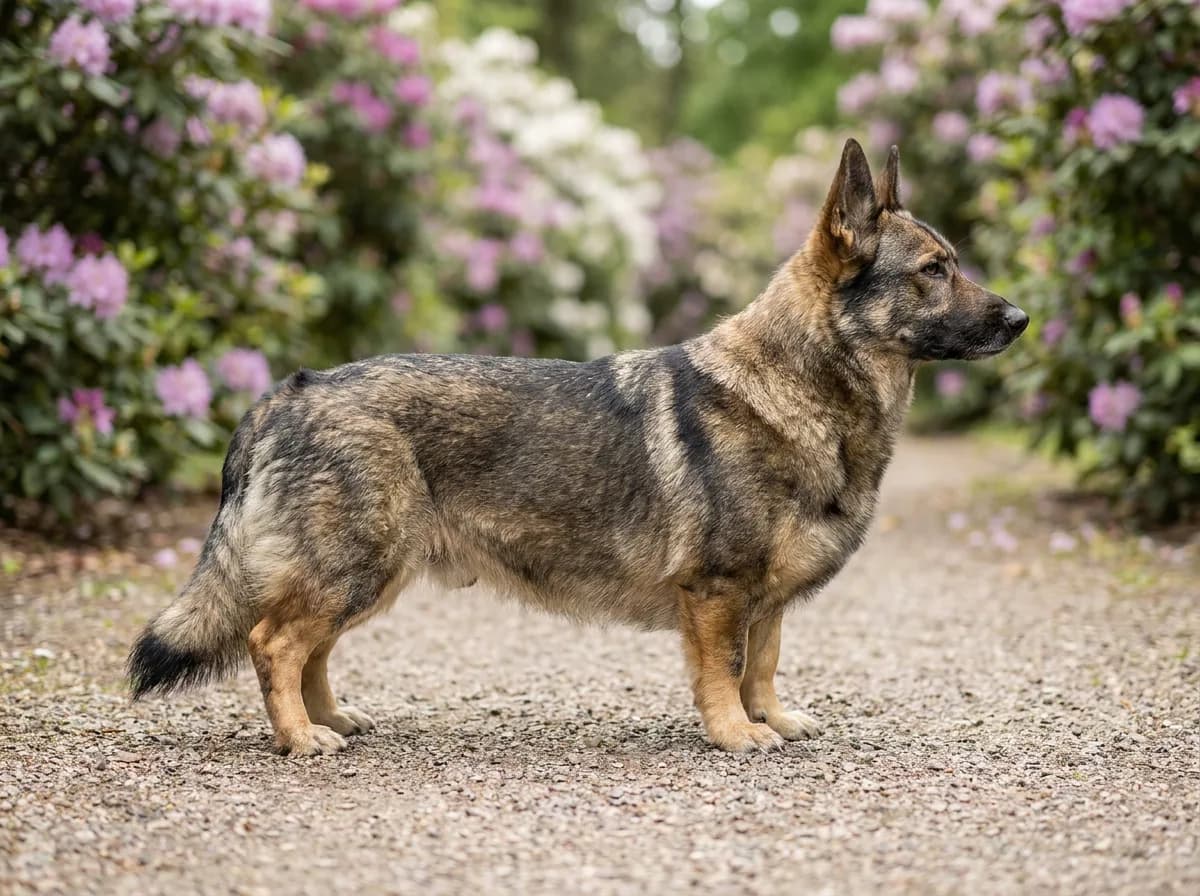
A German Shepherd Welsh Corgi label does not tell you the dog's exact proportions. Look at the individual standing and moving comfortably, then consider the stairs, vehicle entry and walking surfaces it will encounter. Ask which Corgi parent is documented when that information is available.
Our Corgi mixes guide provides the deeper introduction. For your own decision, discuss current mobility and any veterinary recommendations instead of choosing the cross because you expect a miniature, short-legged version of a German Shepherd.
German Shepherd Poodle mix (Shepadoodle)
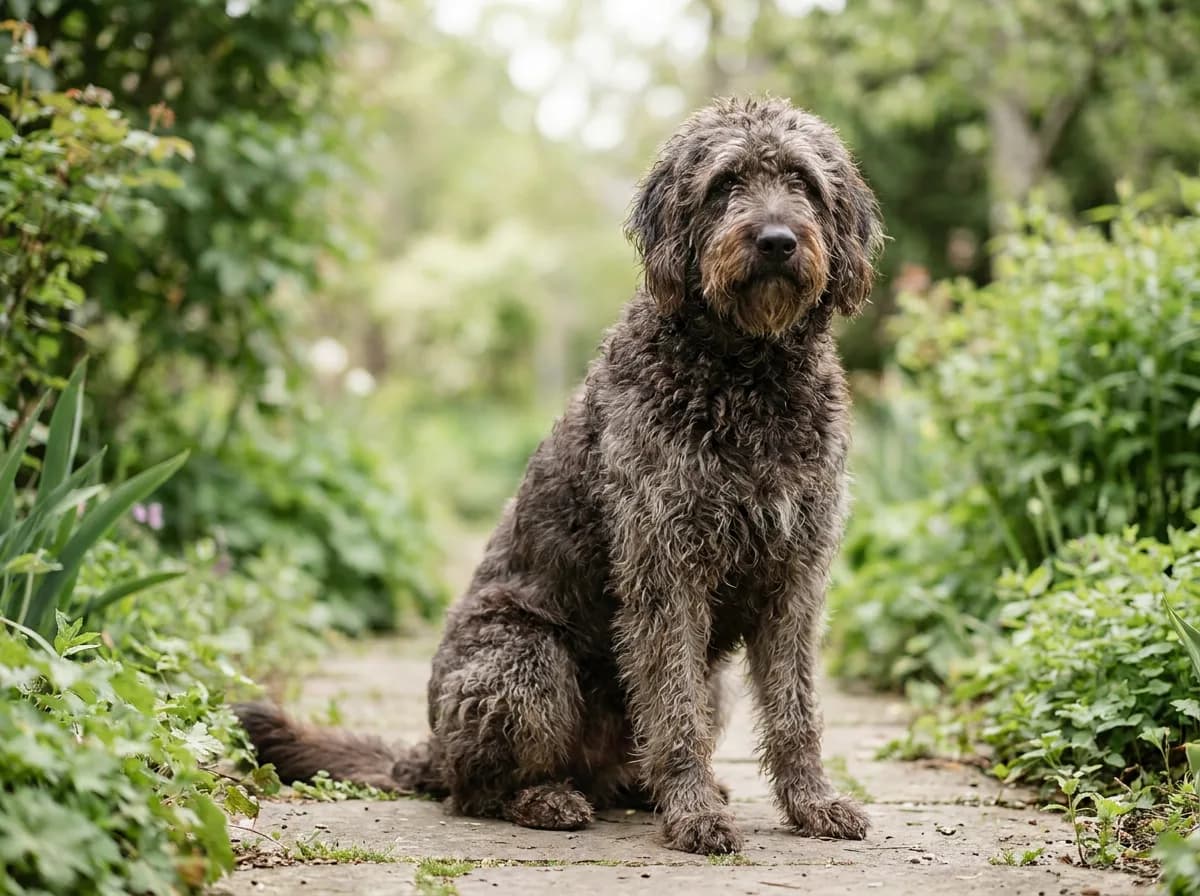
A German Shepherd cross Poodle is generally called a Shepadoodle. The Poodle variety changes the size question: the AKC lists the Standard Poodle at over 15 inches and 40–70 pounds and the Miniature at 10–15 inches and 10–15 pounds, so identify the Poodle parent's variety and actual dimensions rather than treating “German Shepherd doodle” as a precise size. Inspect the coat the dog has now and ask how it is maintained.
See the Shepadoodle section of our Poodle mixes guide for the fuller cross discussion. A curly appearance does not settle shedding, grooming workload or allergy suitability. Those are separate questions to investigate before choosing this dog.
German Shepherd Golden Retriever mix
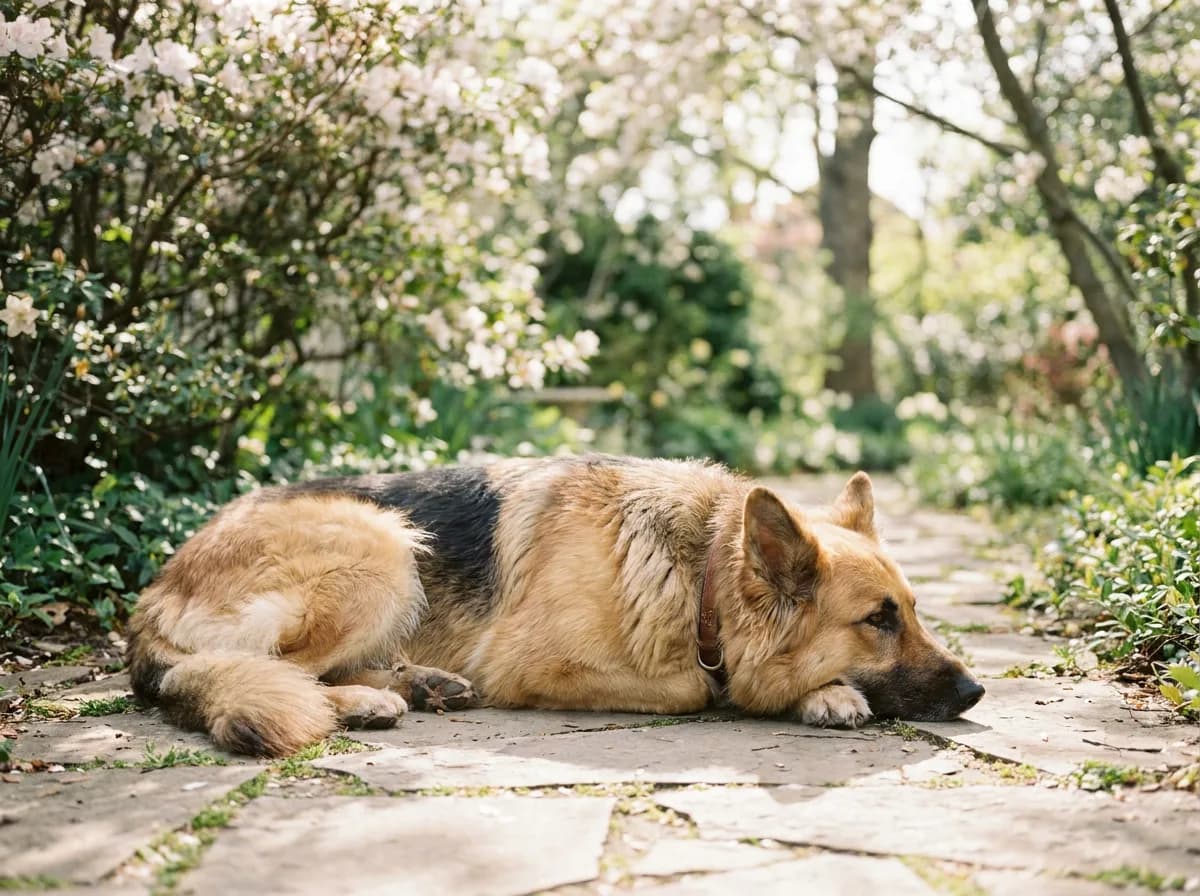
For a German Shepherd Golden Retriever mix, focus on greeting manners and the existing coat-care routine. Ask what happens when someone enters the room, returns from work or sits down beside the dog. “Friendly” can describe several different behaviors, some of which may need training or management in your home.
A German Shepherd and Golden Retriever mix puppy also needs handling practice that fits its comfort level. Ask which grooming tools and short care routines it has already experienced. An adult's caregiver may be able to demonstrate a familiar brushing session and explain which areas require extra attention.
Before deciding, clarify:
- How the dog greets adults and children it knows.
- Whether those observations extend to unfamiliar people.
- Which parts of grooming it accepts comfortably.
- What support is used when it needs a break.
Use those answers to plan supervised introductions and achievable care routines. A retriever parent does not remove the need to teach calm greetings or respect the dog's handling limits.
German Shepherd Great Dane mix
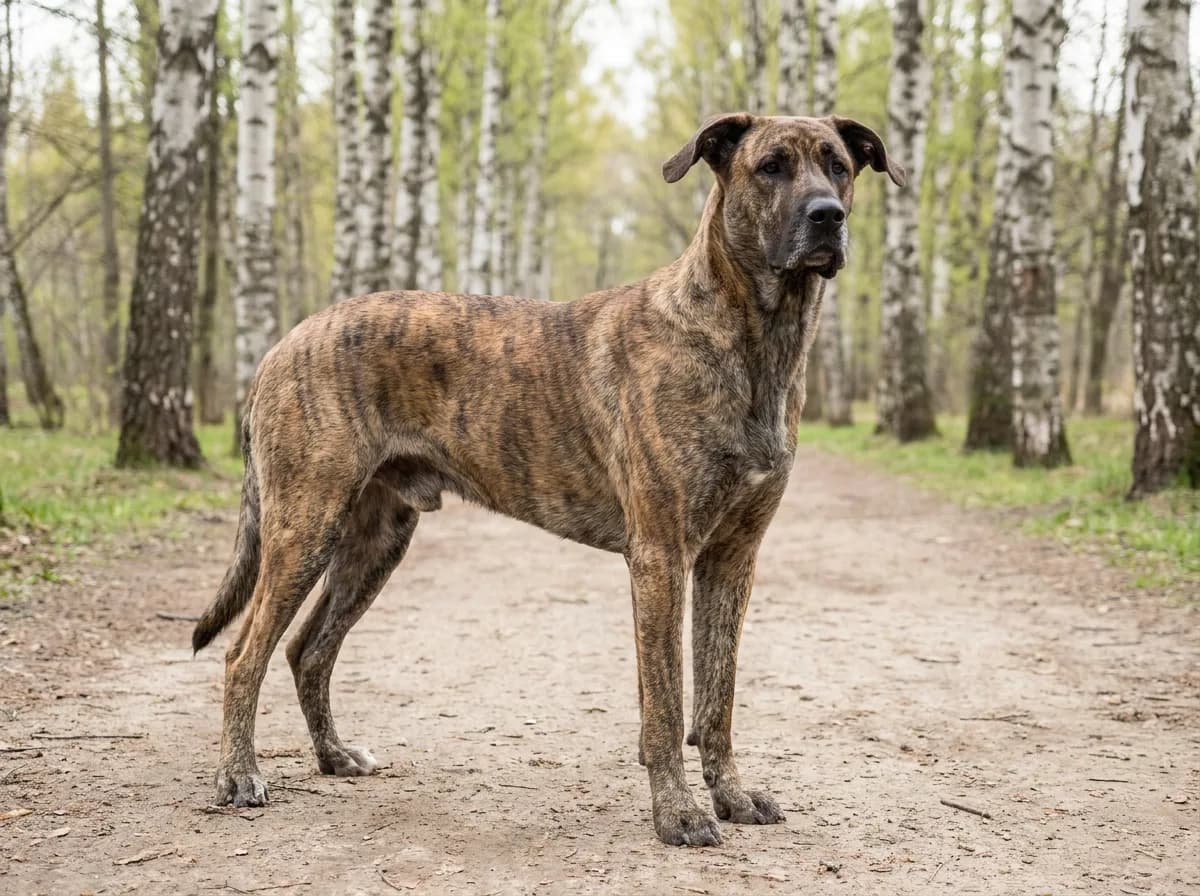
The AKC describes the Great Dane as a breed whose exceptional size, weight and strength create a substantial ownership commitment. A German Shepherd Great Dane mix therefore deserves a height-and-access comparison, not just a weight estimate: check vehicle headroom, the height of entry points and room to turn. The cross has no guaranteed adult dimensions. An adult dog's actual standing and stretched resting measurements give a clearer answer than a giant-breed label.
For a puppy, discuss the available parent history with your veterinarian and leave room for uncertainty. Avoid buying every long-term item around a precise adult-weight prediction.
- Turning space and room to pass another person.
- Access to transport and a resting place clear of household traffic.
German Shepherd Chihuahua mix
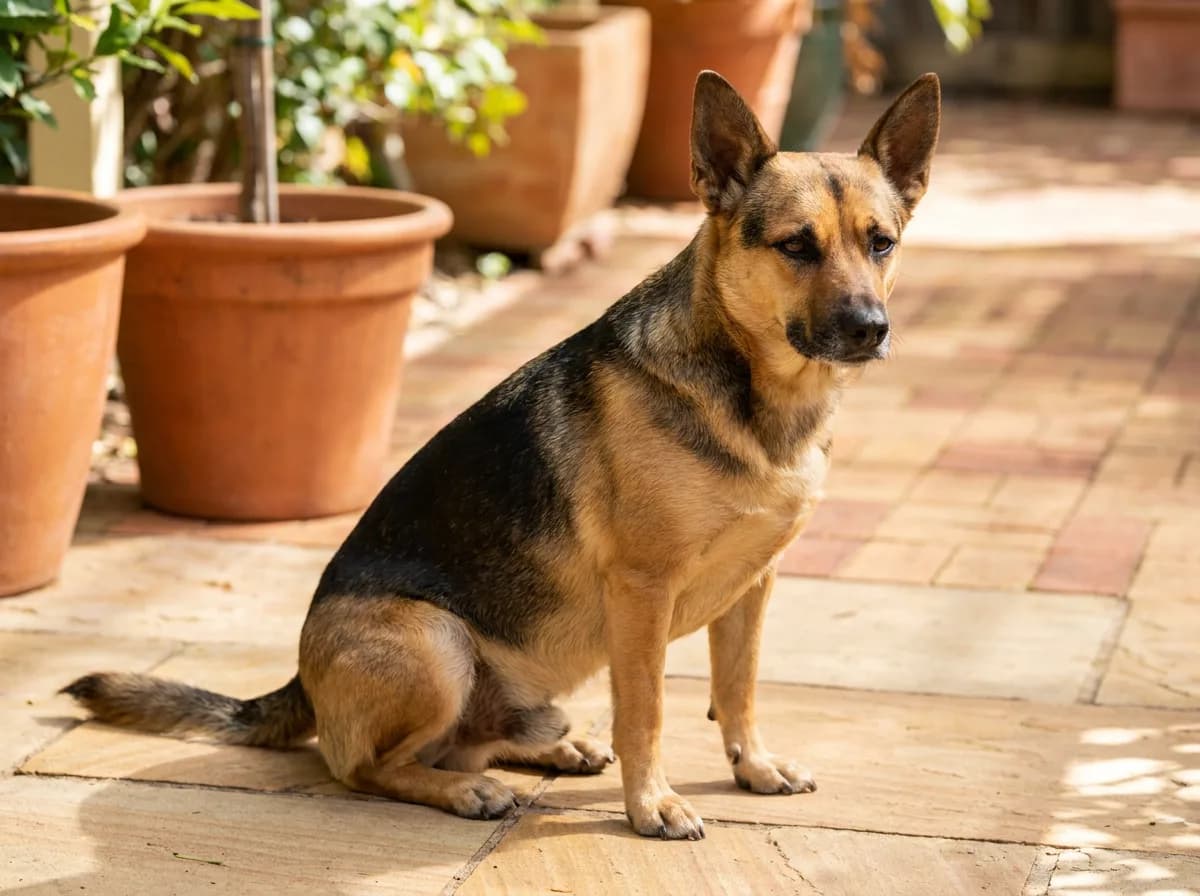
When a dog is described as a Chihuahua and German Shepherd mix, first establish how that parentage was identified. Ask for the available records and the dog's current age and measurements. The large difference between the parent breeds makes an unsupported “mini German Shepherd” promise especially unhelpful.
Do not estimate a puppy's eventual dimensions by averaging two breed standards. Record what is known now, what is estimated and when the measurements were taken. An adult dog's established dimensions may be more useful if your home has a strict size constraint.
Practical questions include:
- What supports the ancestry description?
- Is the stated age documented or estimated?
- Which harness or carrier measurements fit the dog now?
- What changes has the caregiver observed during growth?
Also assess the individual's comfort with being picked up or handled. Being small enough to lift does not mean a dog welcomes it. Ask for a demonstration of a familiar, comfortable routine rather than treating size as permission. Toys follow the same rule: a large KONG Classic sized for a Shepherd parent may be too big for a small cross, so choose enrichment from the dog's actual size and supervise use.

A durable rubber dog toy that can be stuffed with treats and selected by the manufacturer's size guide; supervise use and retire it when damaged.
Petful may earn a commission when you click through to Chewy, at no extra cost to you.
German Shepherd Boxer mix
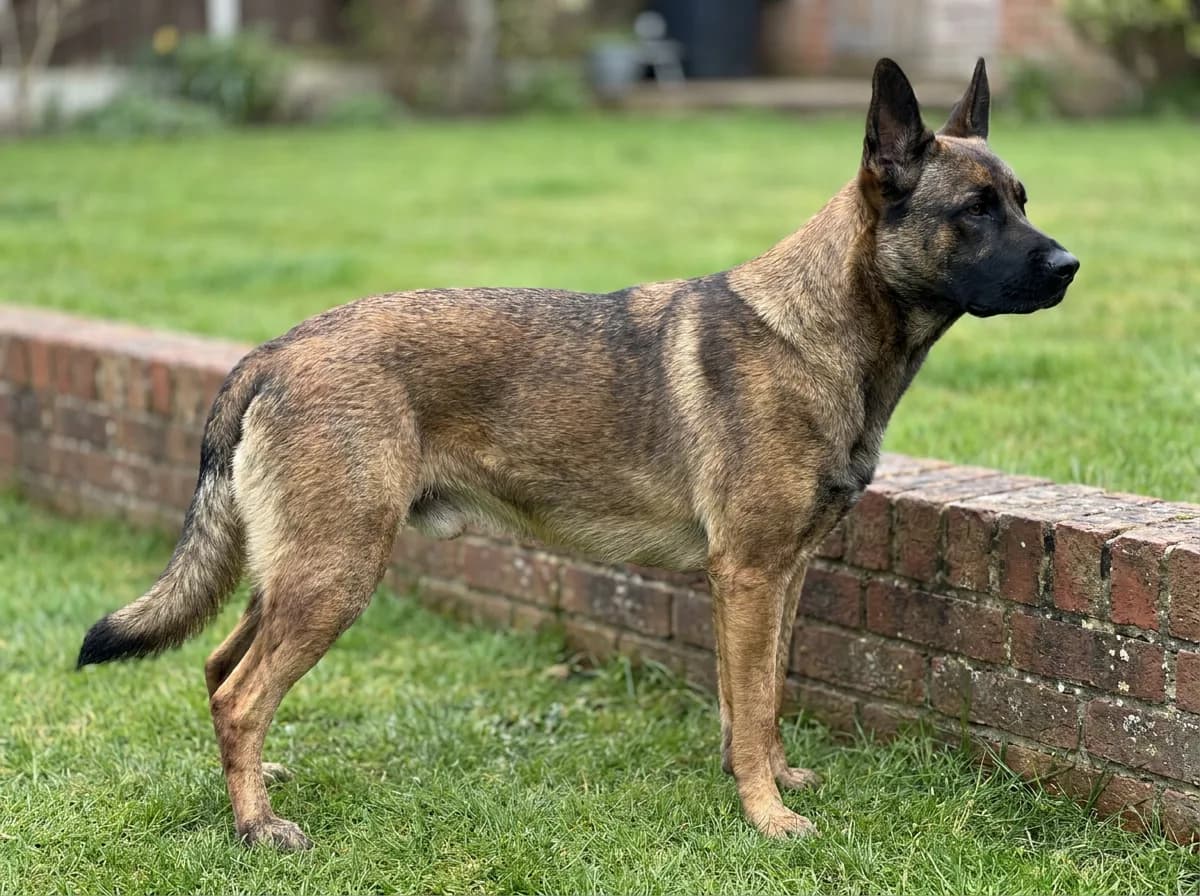
The Boxer parent contributes a muscular, short-coated working-breed background, while German Shepherd ancestry brings a different coat profile and herding history. Our Boxer breed profile explains those Boxer characteristics. In a German Shepherd Boxer mix, examine coat density rather than assuming the Boxer parent's short hair means little grooming. For household fit, watch how energetic play becomes a quiet break. A lively greeting can be enjoyable while still requiring practiced, manageable transitions around children and visitors.
Discuss play style in concrete terms. Does the dog prefer chasing a toy, carrying it, interacting with a person or playing with another dog? Has the caregiver observed those activities with children nearby, and what boundaries are used? Keep the answers tied to actual experience rather than assuming one successful interaction applies everywhere.
A useful visit might include:
- Watching a familiar, manageable game.
- Seeing how the caregiver signals a pause.
- Allowing a quiet period without adding excitement.
- Discussing what happens on less active days.
You are looking for a routine you can realistically maintain. A dog need not perform perfectly during a visit, but you should understand which skills are established and which will need patient teaching.
German Shepherd Beagle mix
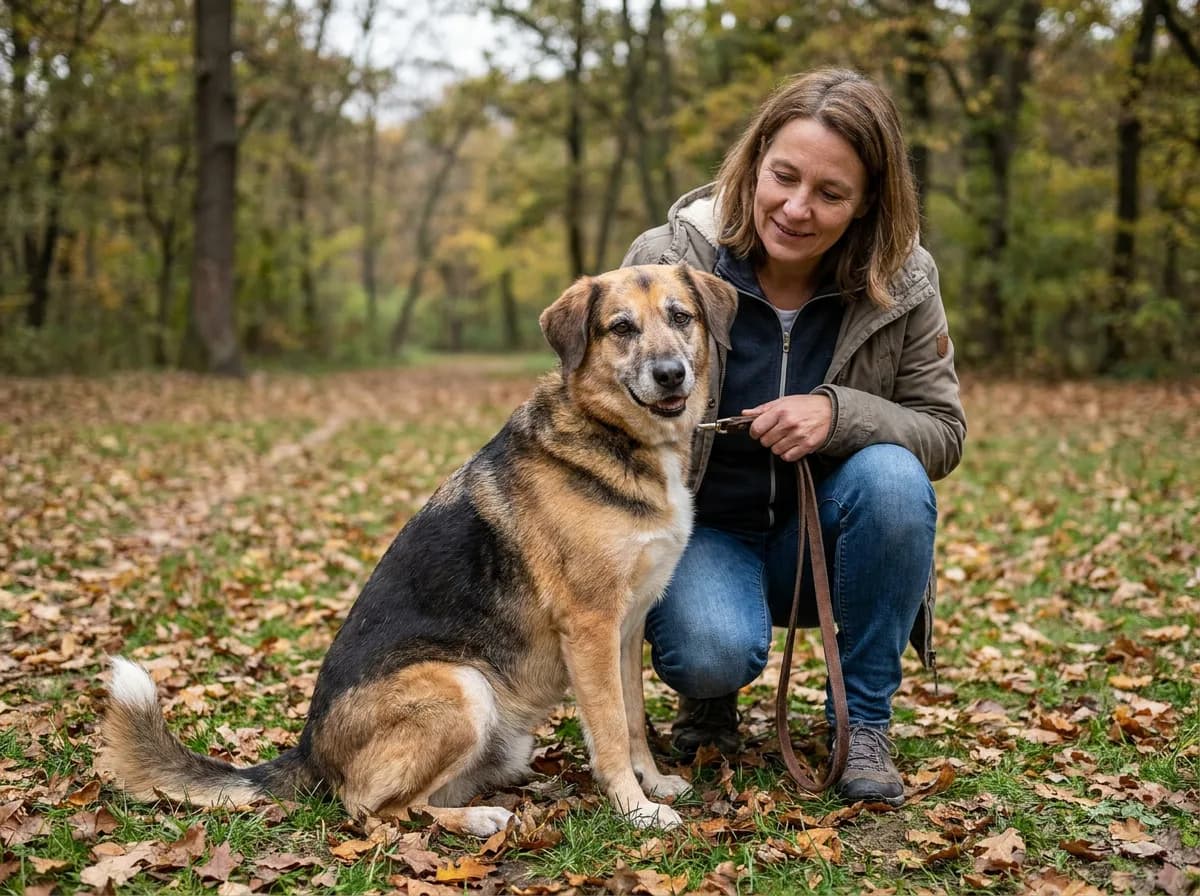
For a German Shepherd Beagle mix, ask about observed sniffing, following scents and responding when called. A caregiver's answer should include the setting and equipment used. Returning promptly in a quiet room does not establish the same response outdoors.
Our Beagle Shepherd guide within Beagle mixes explores this combination. Before changing the dog's walking routine, learn which routes, rewards and management methods already work. Use a secure setup while you build your own relationship rather than making off-leash decisions from the parent names.
German Shepherd Cane Corso mix
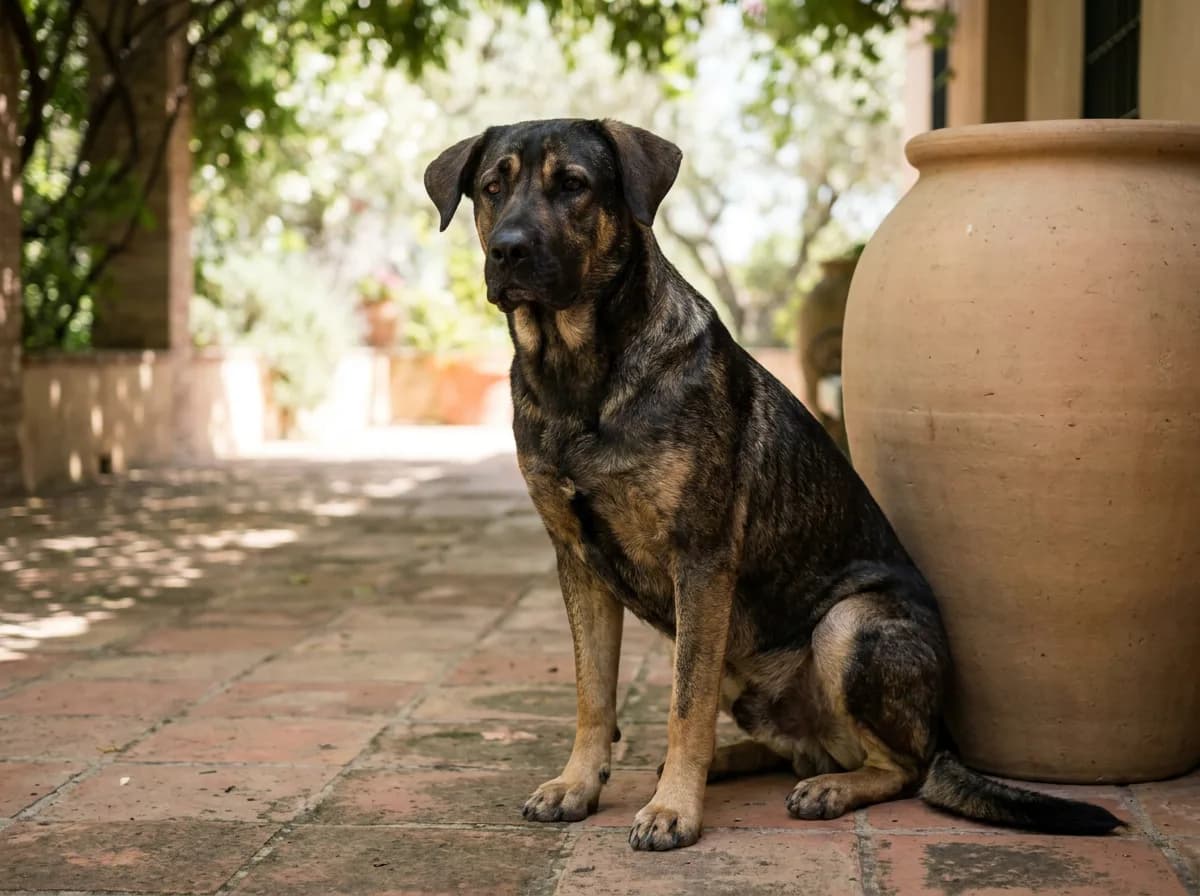
The AKC's Cane Corso introduction describes a confident breed with a guarding background. Alongside German Shepherd ancestry, that makes familiar-versus-unfamiliar situations a more useful comparison than calling the cross automatically protective. Ask how this individual meets visitors and what the caregiver does at gates or doorways. Do not choose it for an untrained guarding role or infer aggression from its parent names. Evaluate whether every regular handler can follow the established management and reward-based training plan.
Ask the current caregiver to demonstrate ordinary equipment use and describe any assistance they need. Observe at a comfortable distance before attempting unfamiliar handling yourself. If a trainer or veterinary professional is already involved, request the practical recommendations that a new home should continue.
Think through these responsibilities:
- Who will walk the dog during a busy workday?
- Who can transport it for veterinary care?
- What happens when visitors arrive?
- Who provides backup care?
This is a household-capacity assessment, not an aggression ranking. Avoid choosing the cross for an automatic guarding role or dismissing an individual solely because of a dramatic label. Make the decision from its history and your support plan.
German Shepherd Blue Heeler mix
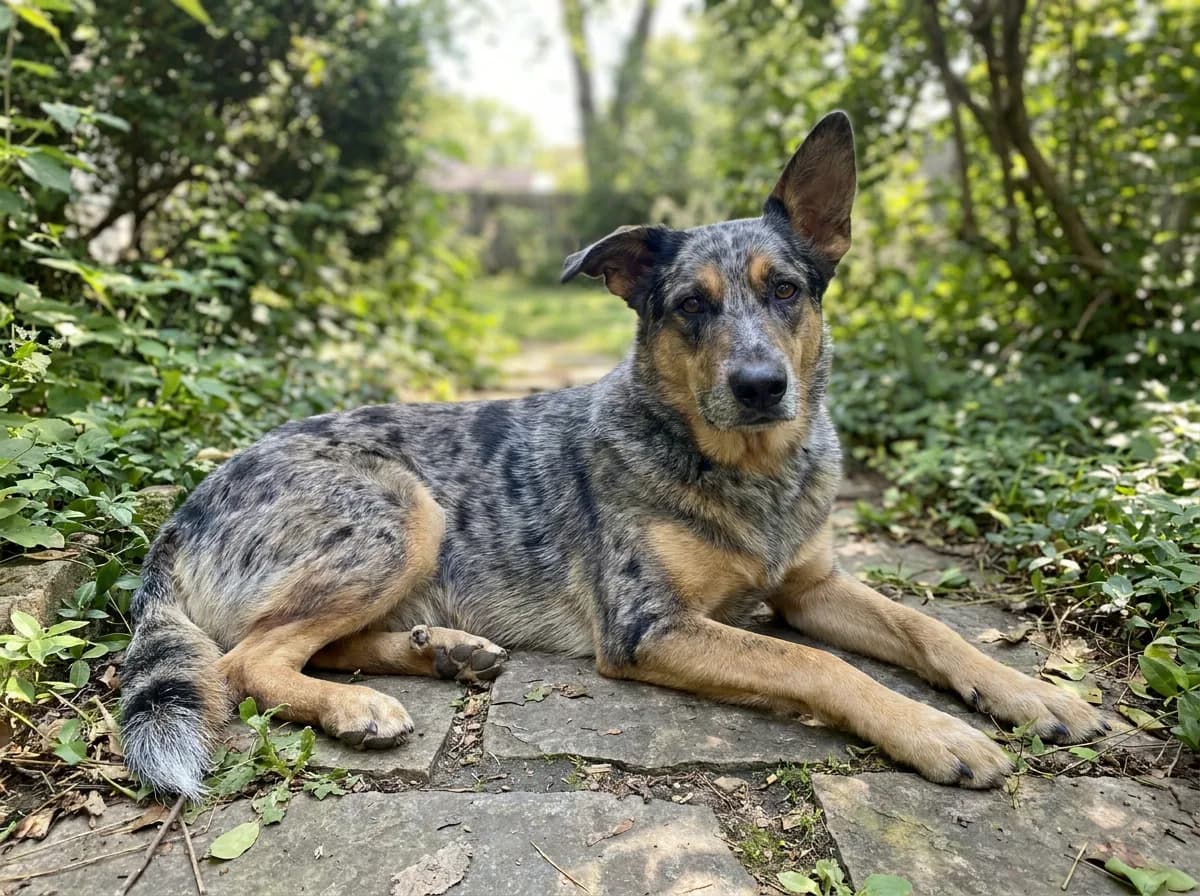
Blue Heeler and Red Heeler are labels associated with the Australian Cattle Dog. A German Shepherd Heeler mix therefore raises a different parentage question from a German Shepherd and Australian Shepherd mix, even though the names can be confused.
Ask how the individual responds to moving people and animals. Useful examples include someone jogging past, children playing, a bicycle passing or another pet moving through a room. You do not need to recreate a difficult situation during a visit; a caregiver's detailed history can identify what requires support.
Clarify the existing routine:
- Which situations has the dog encountered?
- What behavior occurred?
- How did the caregiver respond?
- What training or environmental arrangement helped?
Then compare that routine with your household. A home with frequent movement and noise may need a different introduction plan from a quieter one. Choose activities the dog can enjoy successfully, and include practice settling afterward rather than treating constant activity as the whole answer.
German Shepherd Akita mix
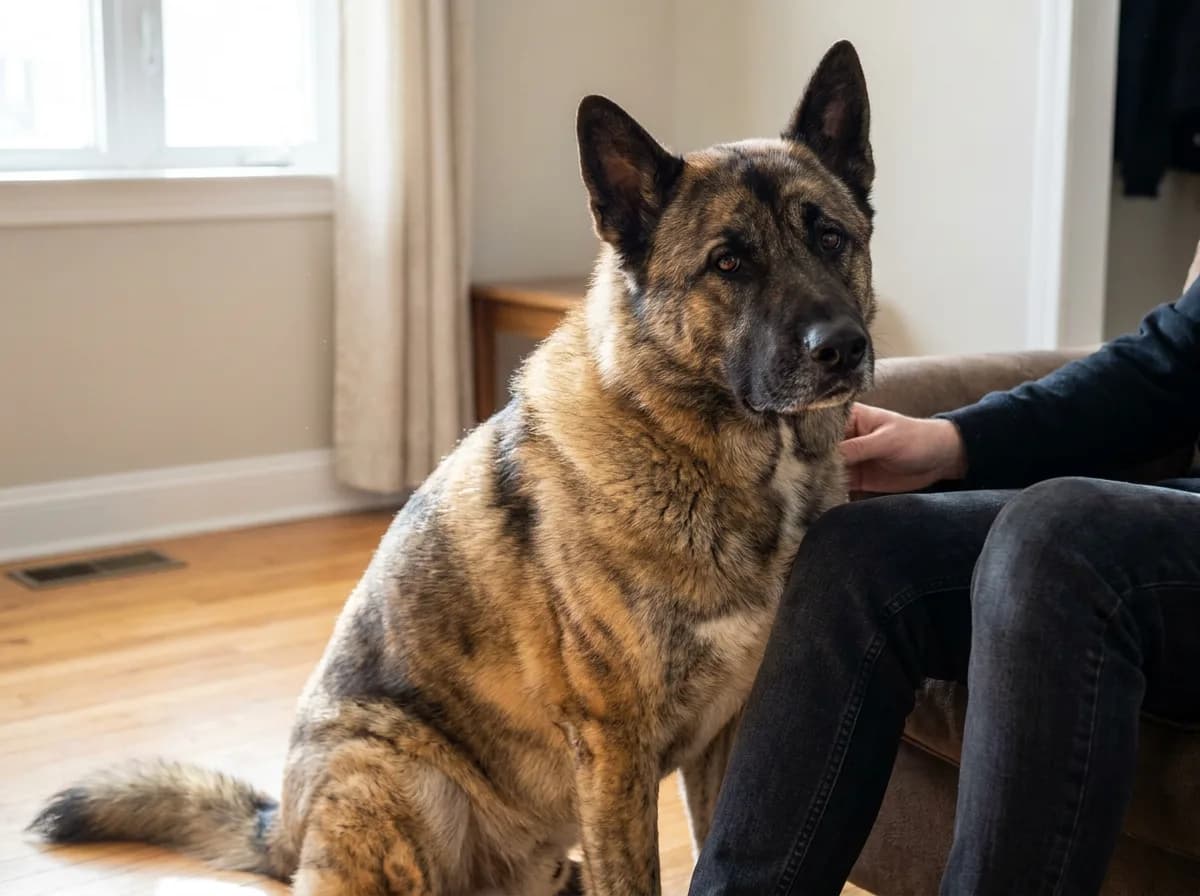
For an Akita and German Shepherd mix dog, clarify the recorded Akita parent and ask about introductions to people and animals. Our Akita German Shepherd mix coverage provides the fuller discussion.
Also request a demonstration of coat care that the individual accepts. A Frisco Slicker Dog Brush is one option to discuss with a groomer if it suits the actual coat. Tool choice should follow coat texture and comfortable handling, not the mix name.
German Shepherd Chow Chow mix
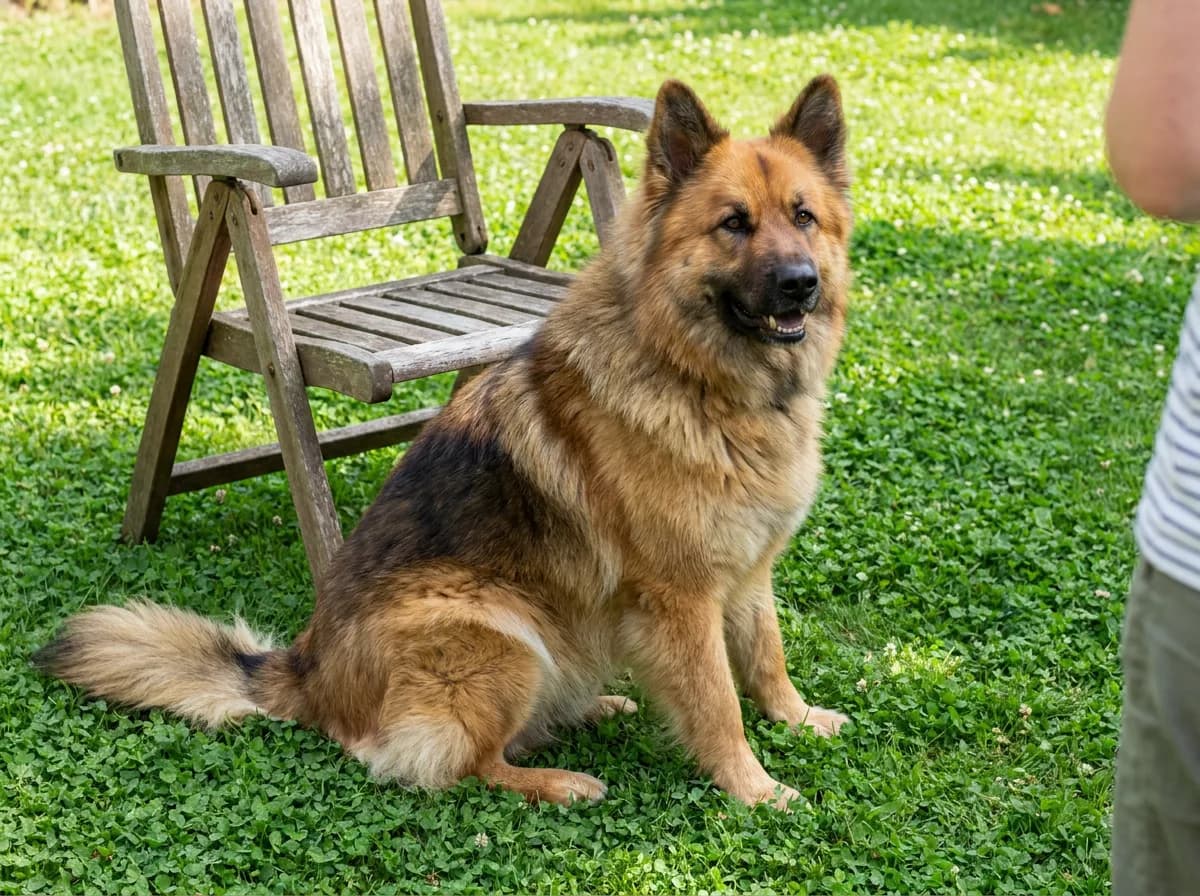
For a German Shepherd Chow mix, ask how brushing, paw checks and other routine handling currently work. Find out which areas the dog accepts comfortably, when breaks are needed and whether a groomer helps. A photograph of a fluffy coat does not reveal the maintenance workload or the dog's experience of care.
The Chow German Shepherd mix discussion offers more detail. Use the individual's established grooming routine when planning your time and budget, and arrange help before a difficult coat-care task becomes urgent.
German Shepherd Mastiff mix
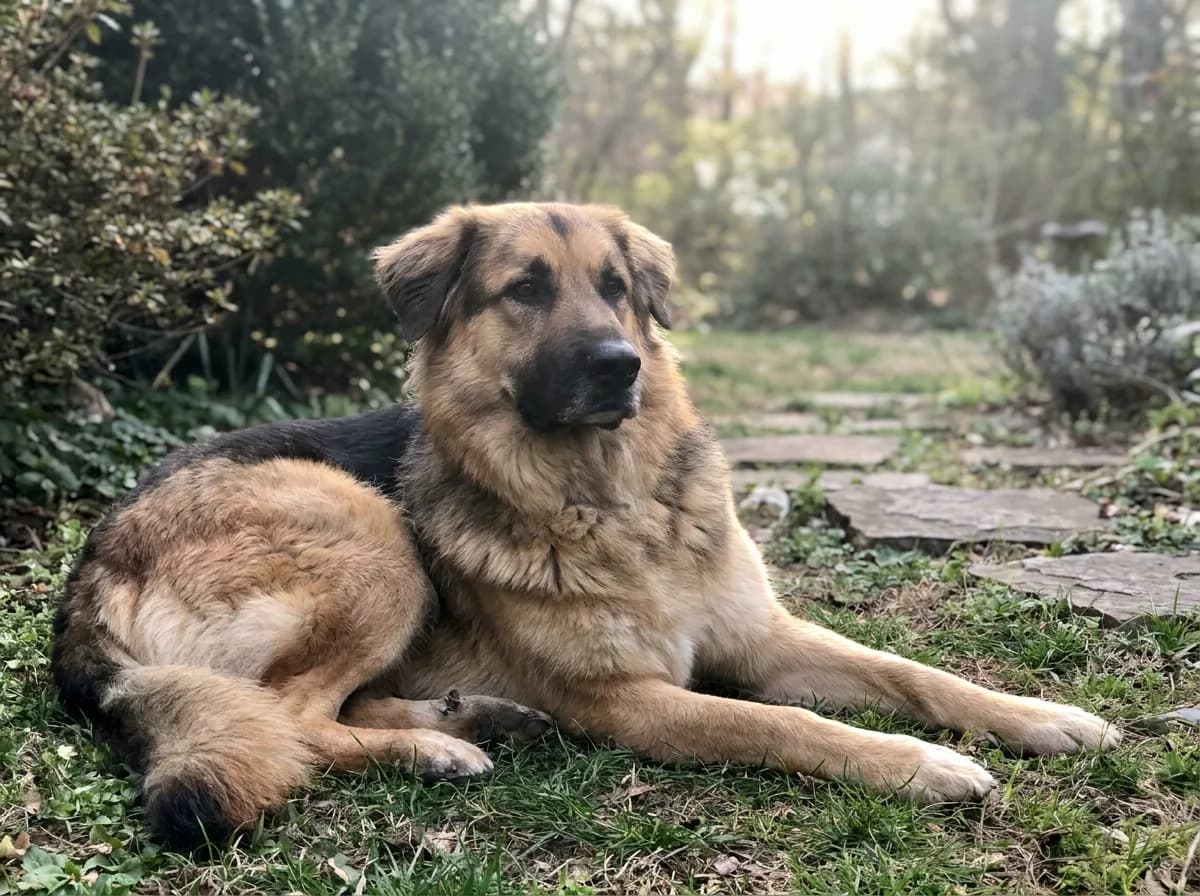
“Mastiff and German Shepherd mix” needs clarification because a loose Mastiff description may not identify a specific parent breed. Ask whether the caregiver means a documented Mastiff parent, another named mastiff-type breed or an appearance-based estimate. Keep that answer attached to any size or care information you receive.
If the parent is the Mastiff described by the UKC standard, its distinguishing features include a broad, heavily built frame, substantial head and short coat. That makes body width and equipment shape important alongside height: a narrow harness or carrier opening can be unsuitable even when its weight label looks adequate. German Shepherd ancestry means the mixed coat still needs inspection; do not promise the short Mastiff coat. A documented parent identity is the starting point for this comparison, not a predicted adult weight.
German Shepherd Alaskan Malamute mix
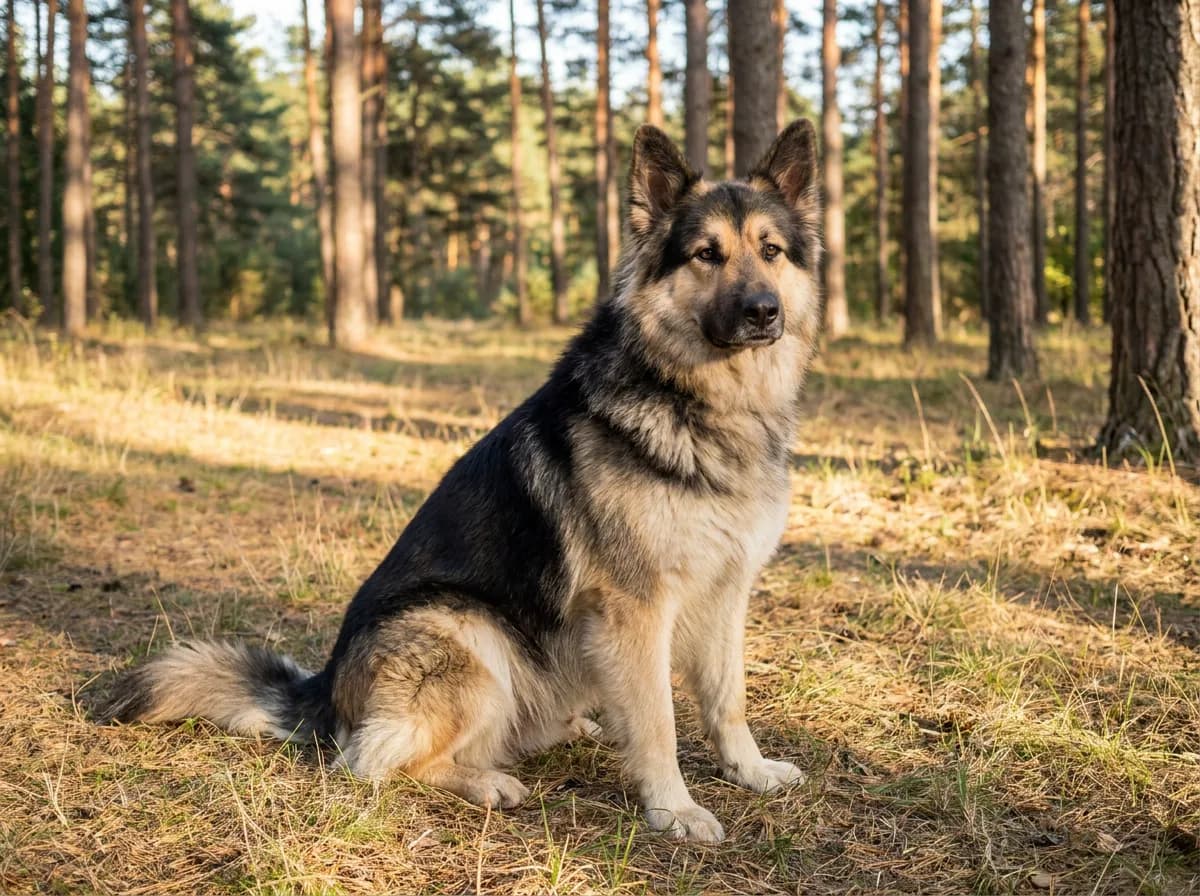
An Alaskan Malamute German Shepherd mix is a different reported combination from a German Shepherd Husky mix. Ask which ancestry is supported by records rather than using a northern-looking coat or face to decide between them.
For your household decision, obtain the dog's actual walking and grooming routine. Ask how often the caregiver checks the coat, which tools are used, how bathing and drying are handled and whether professional grooming is part of the budget. This is more useful than assuming a particular workload from a photograph. For the walking side, a four-foot PetSafe nylon leash is one basic option to fit into the existing routine; it does not by itself control a large, strong dog.
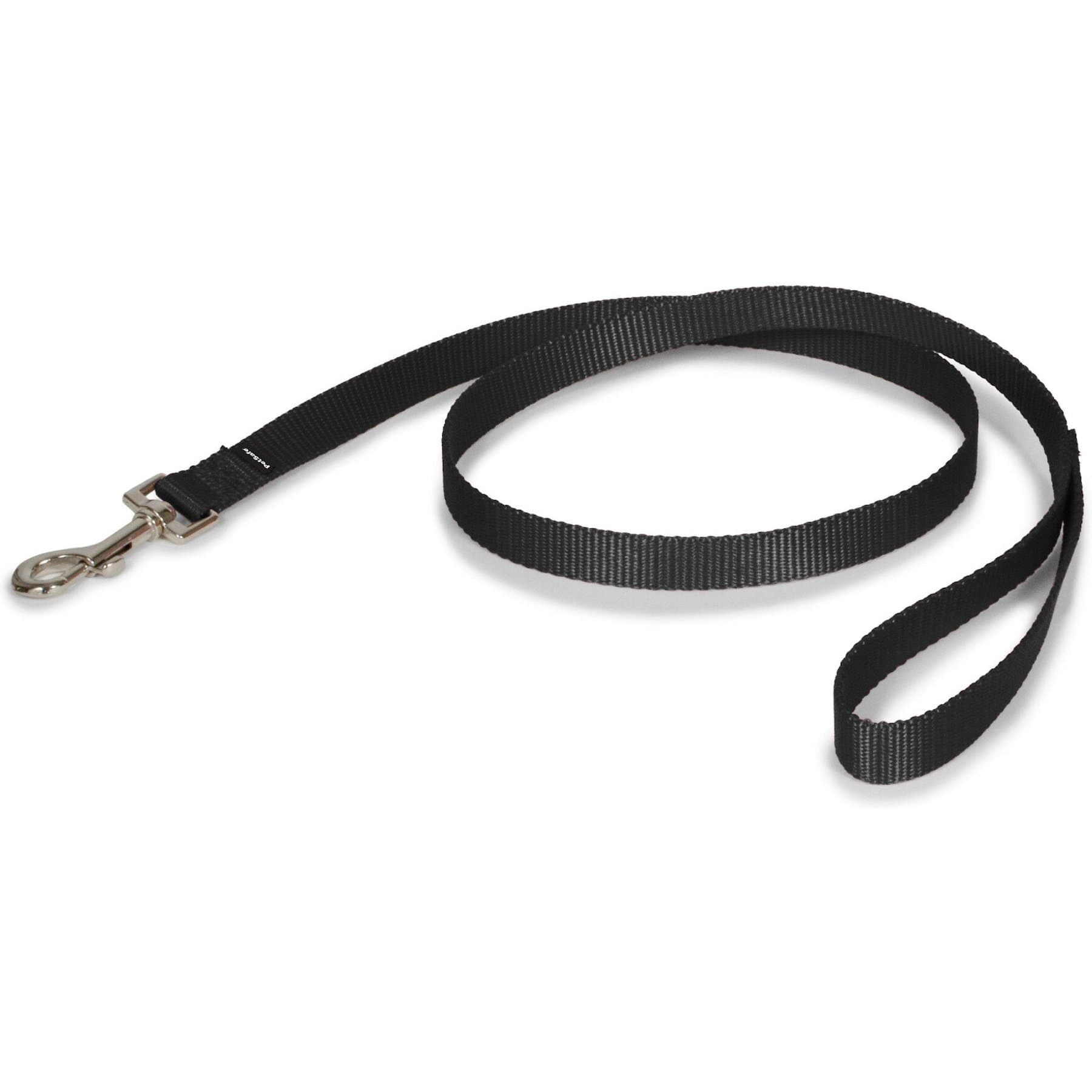
Soft nylon in a short 4-ft, 3/4-in size with a hand loop and a twisting snap bolt clip, light enough not to drag on a small collar.
Petful may earn a commission when you click through to Chewy, at no extra cost to you.
Walk through a typical week:
- Which walks and activities are familiar?
- When does the dog rest comfortably?
- How much coat care is performed at home?
- What help is needed for larger grooming tasks?
If the current arrangement involves resources you do not have, identify an alternative before adoption. That might mean booking grooming support, changing who provides walks or choosing an individual whose established routine is a closer fit.
German Shepherd Bernese Mountain Dog mix
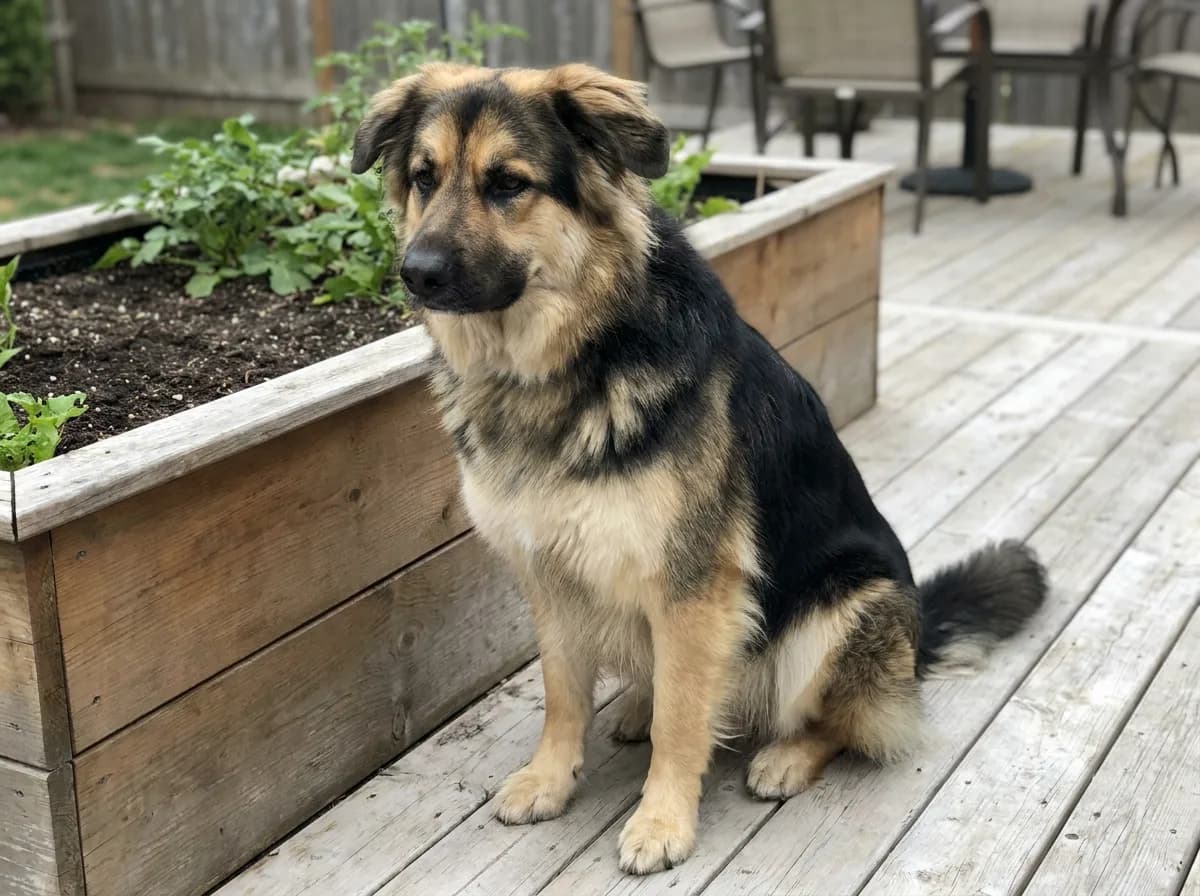
The UKC Bernese Mountain Dog standard describes a sturdy Swiss farm and draft dog with a thick coat and characteristic tricolor markings. For a German Shepherd Bernese Mountain Dog mix, the distinctive comparison is substantial build combined with coat-maintenance work. Ask for a brushing demonstration through the actual hair, including areas where longer hair rubs against equipment. Tricolor markings may describe appearance but cannot prove the ancestry on a rescue label.
Discuss practical maintenance with the current caregiver. Which bedding is easy to clean? Where is brushing done? Does the dog accept handling in short sessions, and is a professional groomer involved? You are trying to understand the routine, not assign a standard coat to every cross.
German Shepherd Pug mix (Shug)
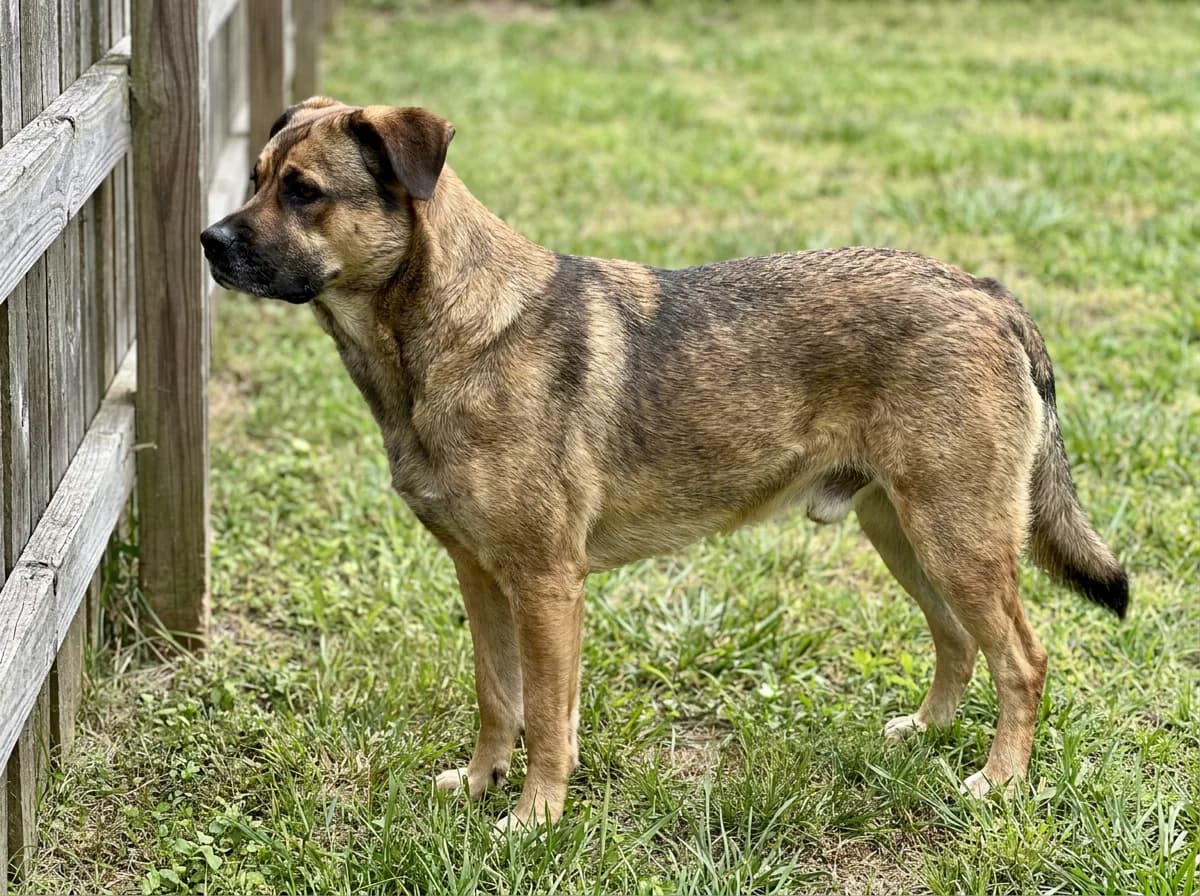
“Shug” is a nickname for a German Shepherd Pug mix. It does not establish a standard body shape, muzzle length, adult size or care routine. If the dog is described as a German Shepherd crossed with a Pug, ask what supports that parentage and review the individual's veterinary history.
Use the actual dog, rather than the nickname, to plan care. Discuss its structure, comfortable movement and any existing recommendations with your veterinarian. A photograph cannot establish breathing health, exercise tolerance or whether a particular living arrangement is appropriate.
Questions worth resolving include:
- What has the dog's veterinary team already assessed?
- Are there existing restrictions or care instructions?
- What activity does the caregiver currently provide?
- Does equipment fit the actual chest and neck comfortably?
Do not assume the Pug parent makes the cross automatically low-maintenance or apartment-ready. Apartment suitability also involves the individual's noise, toileting routine, handling needs and ability to settle within the household's schedule.
German Shepherd Australian Shepherd mix
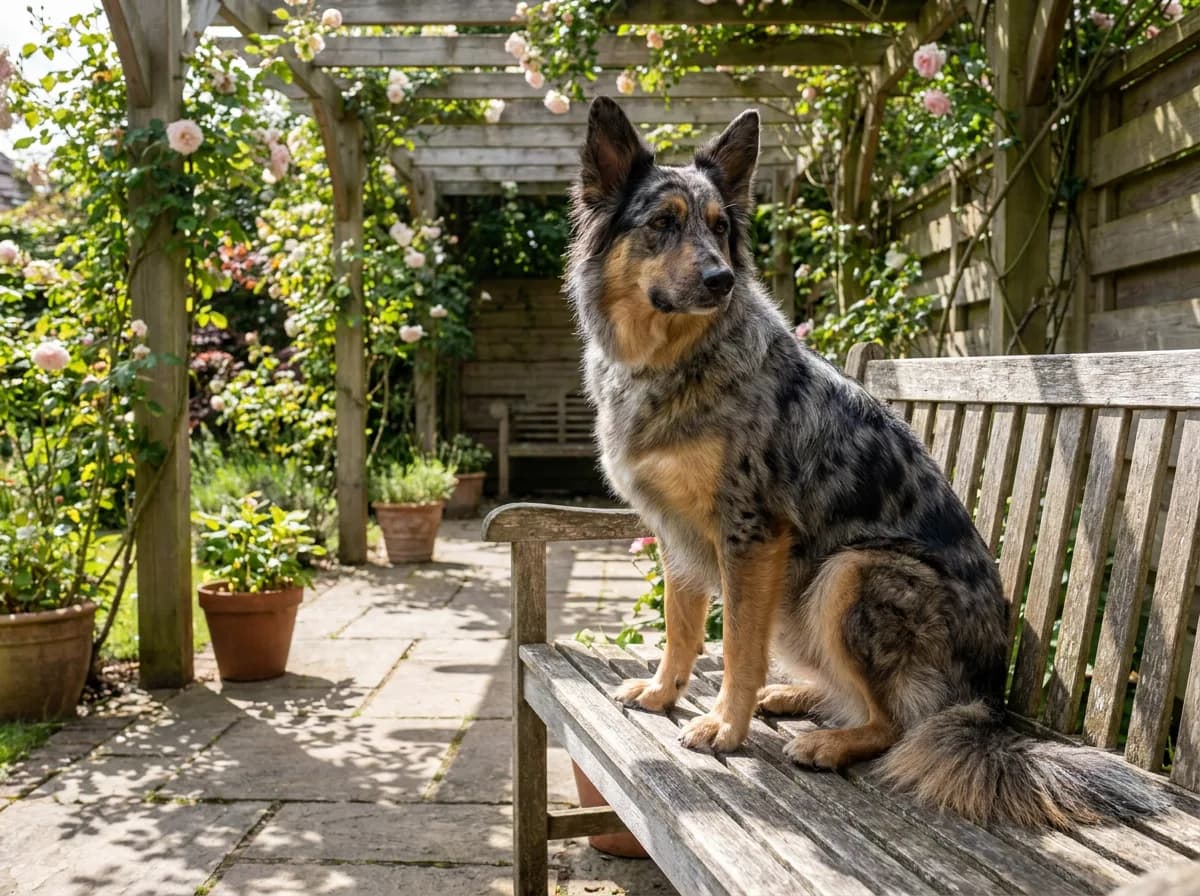
A German Shepherd and Aussie mix has an Australian Shepherd parent in the reported combination. That is distinct from the Australian Cattle Dog, or Heeler, cross discussed earlier. Confirm the label, then ask which activities and quiet routines this individual has learned.
A list of tricks is only part of the picture. Ask about these everyday skills:
- Walking past distractions.
- Waiting while someone prepares food.
- Resting while people work and ending a game.
For a familiar walking routine, a four-foot PetSafe nylon leash is one specific option to evaluate with the rest of the dog's equipment. A leash does not substitute for teaching comfortable walking or assessing the handler's needs.
German Shepherd Pomeranian mix
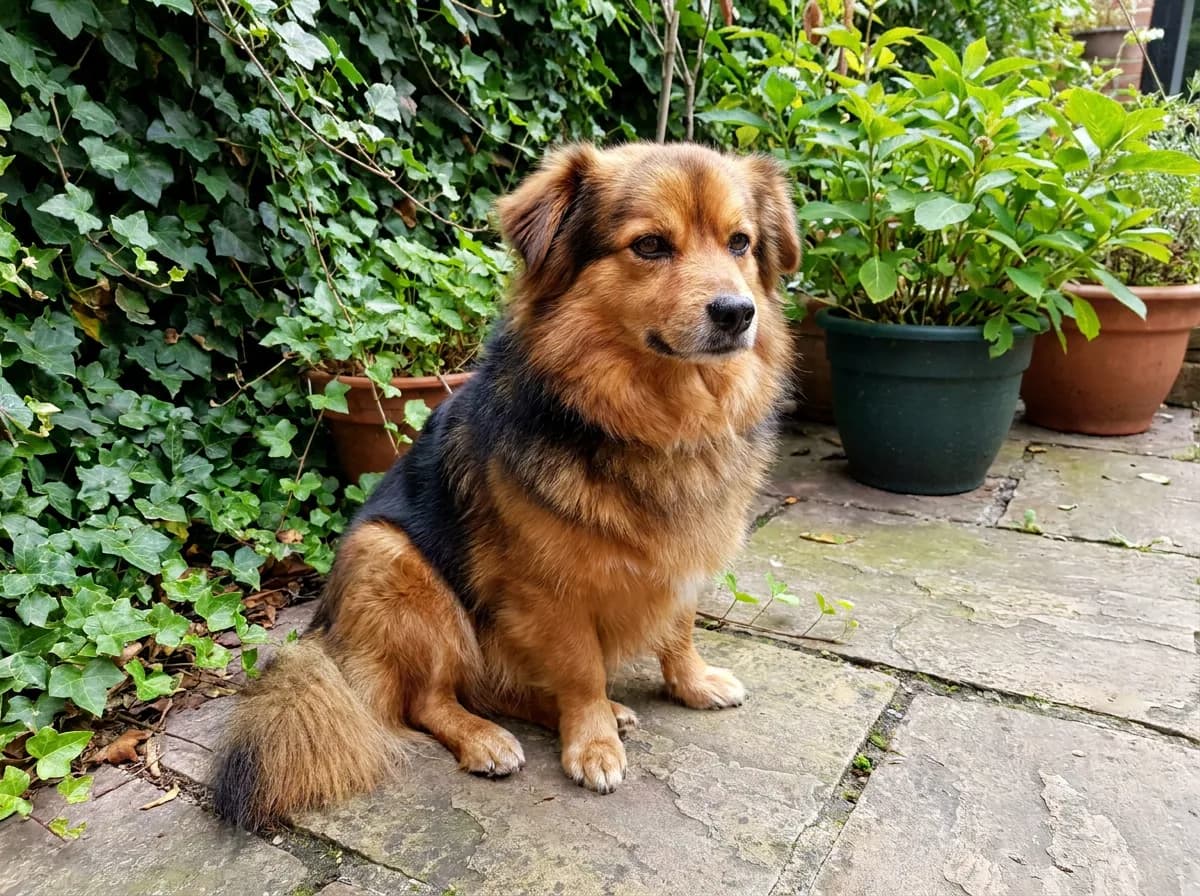
For a German Shepherd Pomeranian mix, separate verified ancestry from a small, fluffy appearance. Request the available parent information and current measurements. A Pomeranian parent does not establish a guaranteed toy-sized adult, and an appealing nickname does not make a size prediction more reliable.
If a small adult dog is essential for your circumstances, an adult with known dimensions may answer that need more directly than a puppy with uncertain growth. For a puppy, discuss the available history with your veterinarian and plan to remeasure equipment regularly.
Ask the caregiver:
- When was the dog last weighed and measured?
- Is the age documented?
- What handling does the dog accept comfortably?
- Which grooming tasks are already familiar?
Avoid assuming that a dog expected to be small will be easy to carry, groom or accommodate. Those decisions involve behavior and practical care as well as dimensions. Meet the individual and understand the support it needs rather than choosing from a miniature-size promise.
German Shepherd Saint Bernard mix
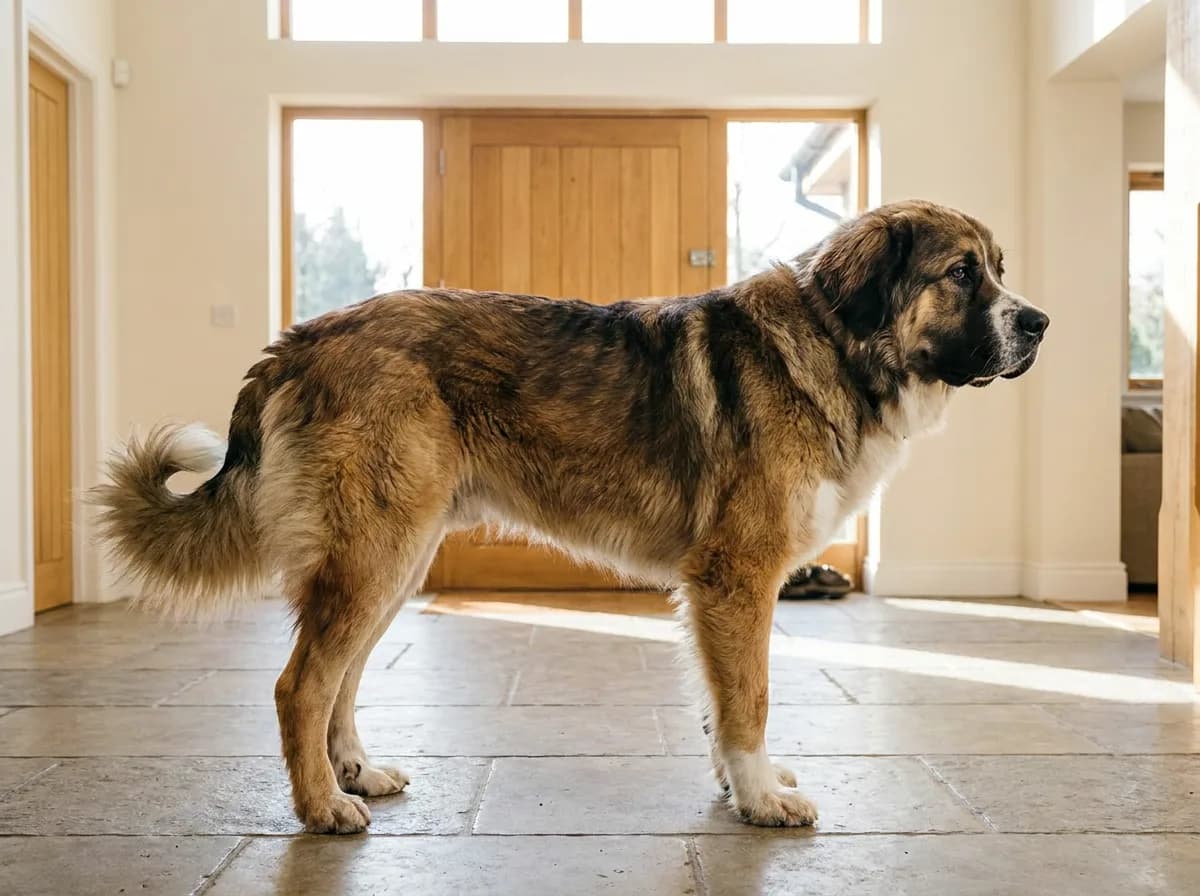
The UKC Saint Bernard standard describes a massive alpine-rescue breed with a dense double coat in both shorthaired and longhaired varieties. That matters for a German Shepherd Saint Bernard mix: a Saint parent does not establish one inevitable coat length, and a shorter-looking coat may still contain substantial undercoat. Compare coat density, drying needs and usable resting space together. Ask which Saint coat type is documented, then assess what the individual dog actually has.
Ask what care tasks the current home performs. Rather than presuming a particular amount of drool, coat length or grooming, find out what is actually cleaned, brushed and washed. A realistic account helps you budget time and choose suitable household arrangements.
German Shepherd Rhodesian Ridgeback mix
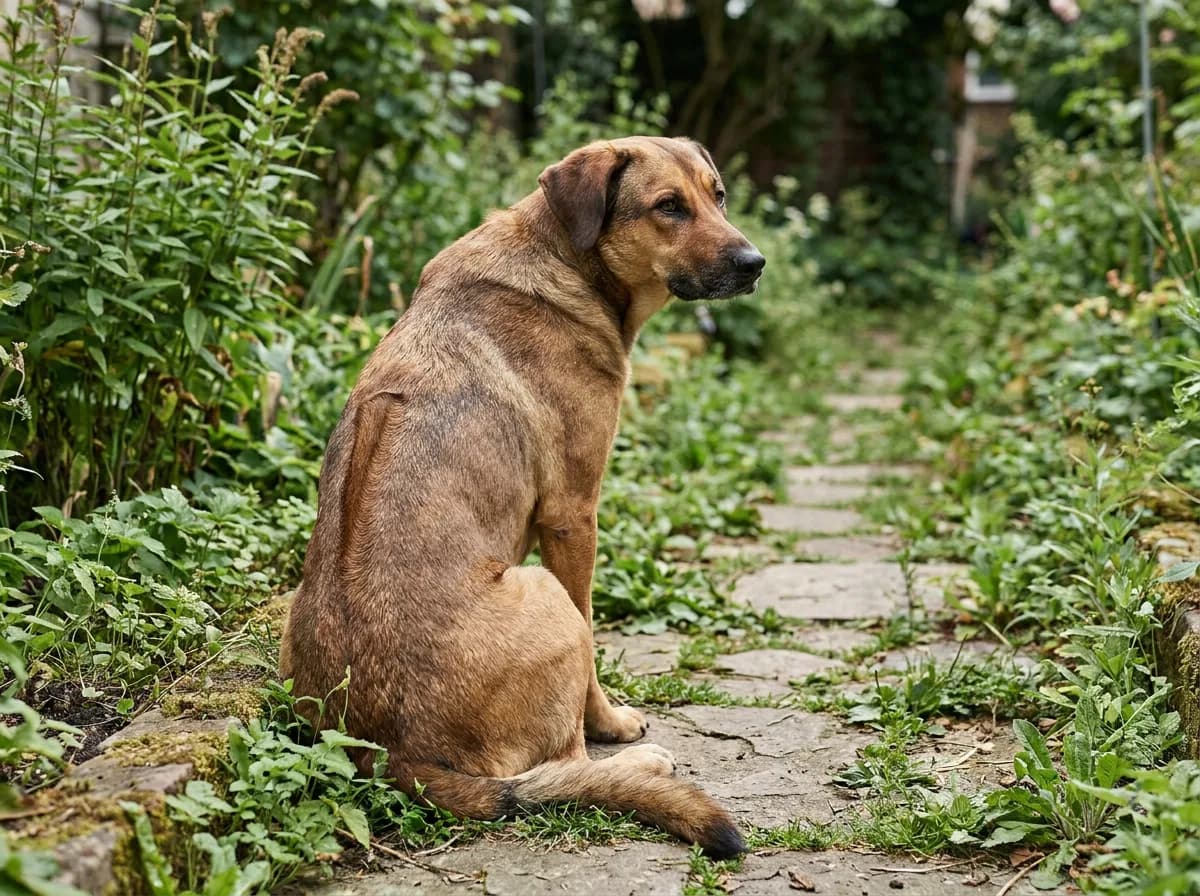
For a Rhodesian Ridgeback German Shepherd mix, ask which records support the parentage description. A visible ridge, or the absence of one, should not be treated as a complete ancestry test. Keep appearance and documented history as separate pieces of information.
The practical comparison is the dog's observed outdoor behavior. Ask how walks are managed, what happens around wildlife and how the dog responds when called in the settings it actually knows. A caregiver's “excellent recall” description needs that context.
Discuss:
- Whether observations come from enclosed or open spaces.
- Which distractions have been present.
- What equipment and rewards are used.
- How the caregiver responds when attention shifts.
Do not turn a visit into an off-leash experiment. Learn the existing routine and continue with appropriate management while you build familiarity. If outdoor activities are central to your plans, explain those plans to the caregiver and ask which parts are supported by the dog's history and which remain untested.
German Shepherd Border Collie mix
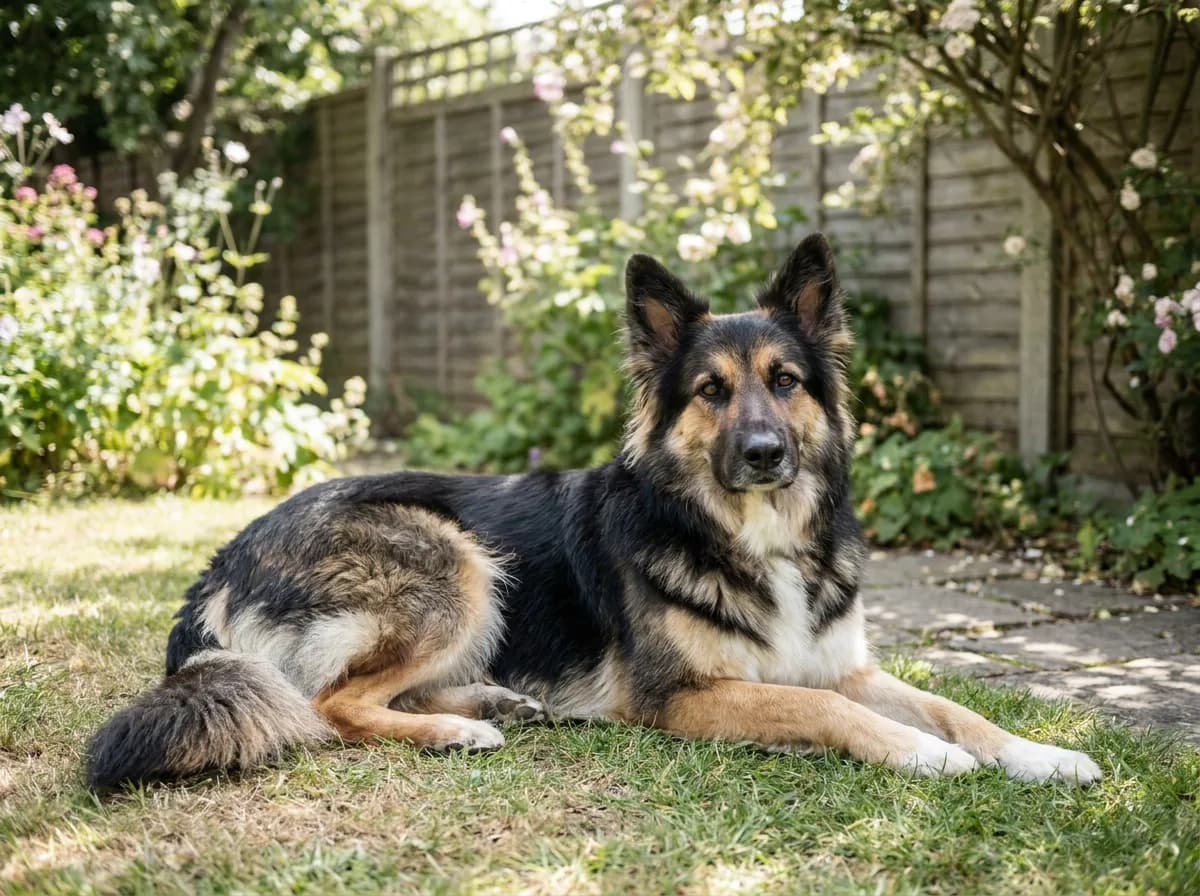
“Collie German Shepherd” may be used loosely, so establish whether Border Collie is the documented parent. Ask which activities the dog enjoys and what it does when an activity ends, including any familiar quiet-time routine.
The Border Collie German Shepherd mix discussion covers this combination more fully. Use that context with the individual's history rather than assuming a particular level of intelligence, activity or trainability. Knowing the cues and routines already learned will help you plan a smoother transition into your home.
German Shepherd Dachshund mix
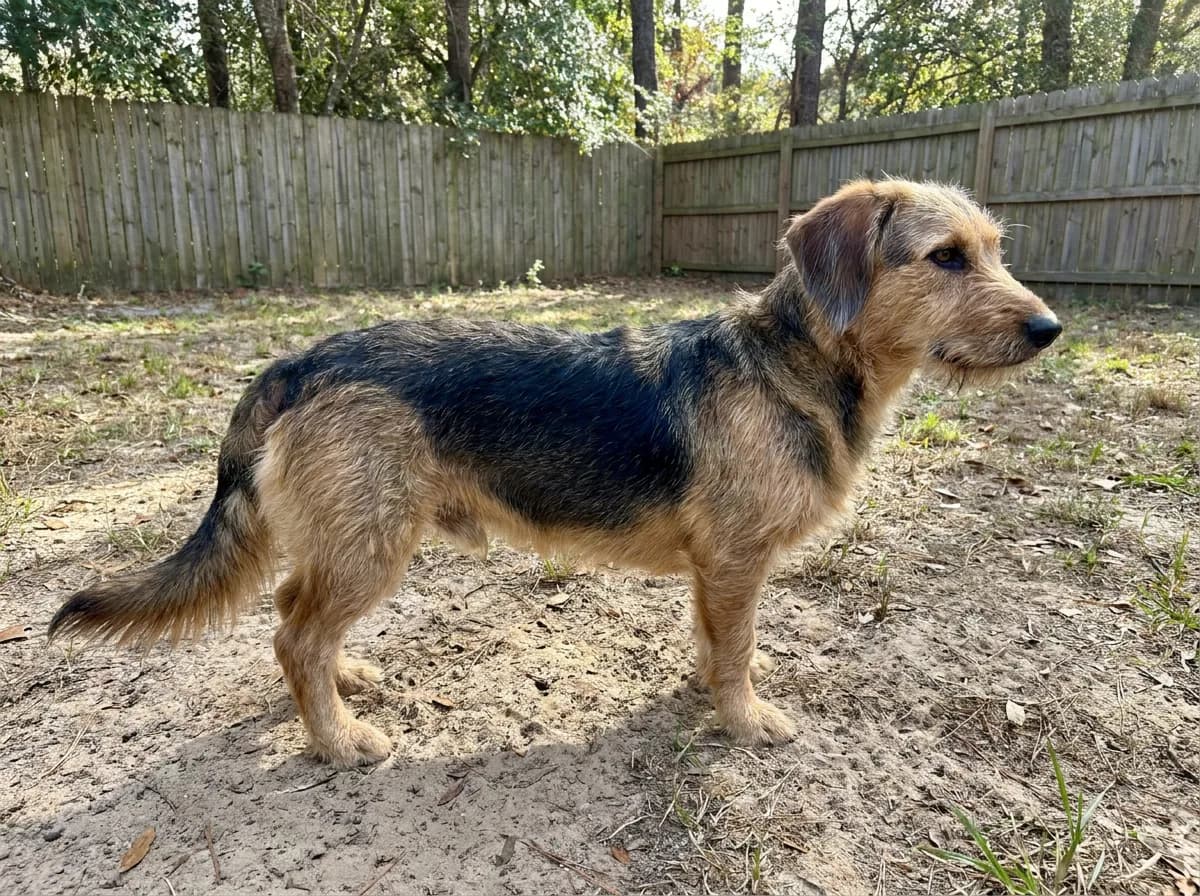
A German Shepherd and Dachshund, sometimes described as a wiener-dog mix, does not necessarily resemble a short-legged German Shepherd. Observe the individual's actual proportions and comfortable movement, and discuss any existing veterinary guidance before planning stairs, vehicle entry or equipment.
Our Dachshund German Shepherd mix coverage provides the deeper introduction. For a puppy, keep future dimensions uncertain. For an adult, use measurements and the caregiver's experience to identify practical needs rather than treating a distinctive silhouette as a complete care plan.
Carolina Dog German Shepherd mix
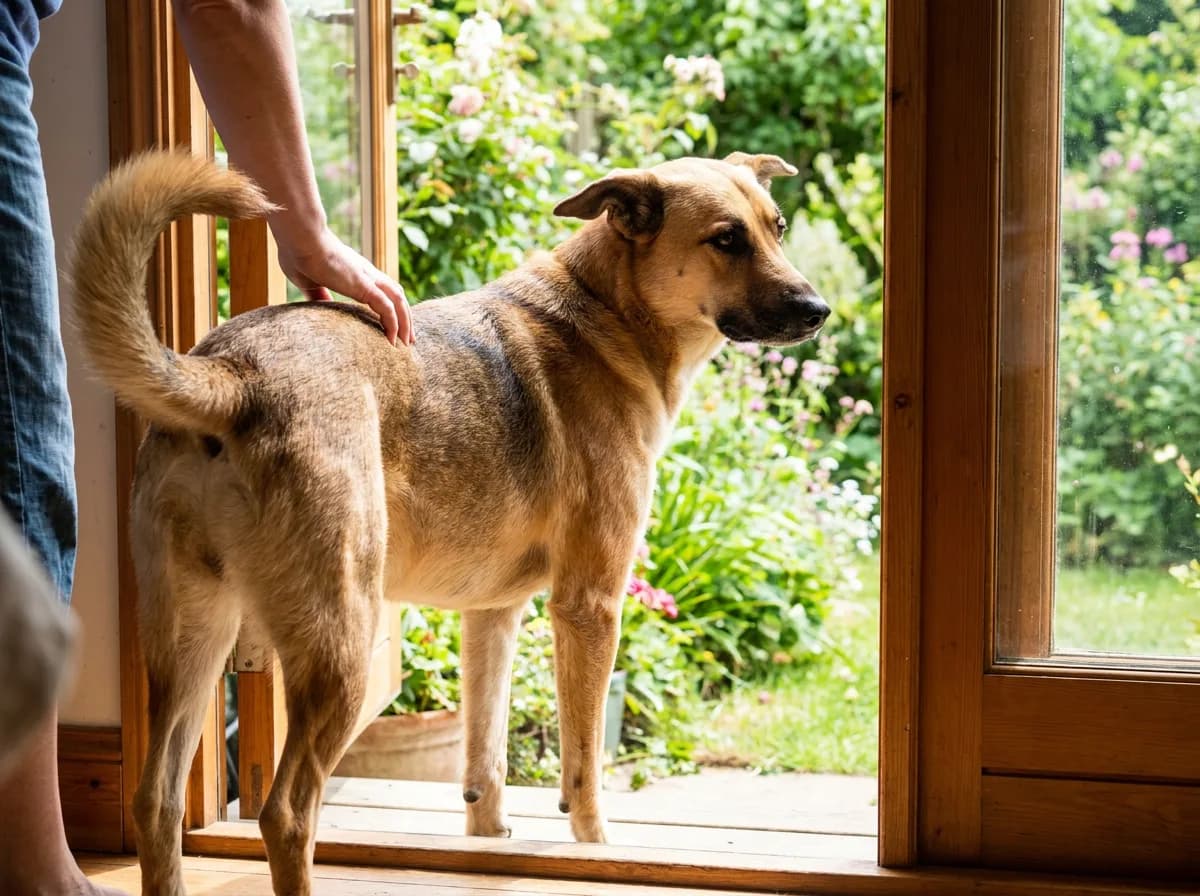
For a Carolina Dog German Shepherd mix, ask what supports the reported Carolina Dog ancestry. An “American dingo” nickname or a similar-looking coat is not a substitute for records. Keep an appearance-based description labeled as an estimate.
The dedicated Carolina Dog German Shepherd mix guide explores this cross. When considering an individual, focus on its experience of home life, handling and unfamiliar situations. A caregiver's account of those ordinary circumstances is more useful than a story built around the nickname.
Check the individual dog's needs before committing
Ask for observations from ordinary home life
The strongest conversation separates documented facts, caregiver observations and unanswered questions. “Lived with two cats for six months” describes a different level of experience from “did not react to a cat across the street.” Both observations can be useful when their limits are clear.
Ask for the circumstances as well as the conclusion. Where was the dog, who was present, what equipment was used and how long had it been in that home? A newly arrived shelter dog may have little available history. That is uncertainty to plan around, not a reason to invent either reassuring or alarming traits.
| Decision | Useful evidence | Question still to resolve |
|---|---|---|
| Ancestry | Documented ancestry or clearly labeled estimate | Which parts of the breed label are confirmed? |
| Space and handling | Adult measurements or a puppy growth record | Can the household manage the known dimensions and uncertainty? |
| Daily behavior | Observed behavior in ordinary home situations | What support is needed in this particular household? |
| Coat care | The actual coat and existing grooming routine | What handling and maintenance are practical? |
| Health | Individual health records and available parent screening results | What should the veterinarian evaluate or clarify? |
Before committing, write down the few decisions that matter most in your home:
- Whether another pet needs a managed introduction.
- Which people will provide walks and routine care.
- How much time the dog will spend without company.
- What transport and resting space are available.
- Which professional support you may need.
Ask the organization or breeder what help is available during the transition. Clarify the contact process and any written agreement while everyone has time to discuss it. A clear support arrangement is more useful than a promise that a particular cross will be easy.
Match grooming to the actual coat
Examine the coat that is present rather than choosing tools from the parent names alone. Ask the caregiver or groomer to show you an ordinary maintenance session, including how the dog is positioned, where brushing starts and when breaks are taken. A short demonstration can reveal both the work involved and the dog's comfort with handling.
Separate three decisions:
- Shedding: How much loose hair does the caregiver actually manage?
- Maintenance: What brushing, bathing, drying or professional grooming does this coat require?
- Allergy: Can the people in your household live comfortably with the dog?
These questions overlap, but they are not interchangeable. A coat that sheds less visibly may still require substantial maintenance. The American Academy of Allergy, Asthma & Immunology explains that no dog breed is truly hypoallergenic. Pet allergens are not determined simply by hair length or the amount of hair on the floor.
If allergies affect the decision, discuss an appropriate plan with the affected person's clinician. Do not treat one pleasant meeting or a Poodle-cross label as medical clearance. For grooming, obtain a quote based on the actual coat and condition rather than assuming every dog under the same cross name costs the same to maintain.
Read health records without assuming hybrid protection
Ask for the dog's individual health records and, when available, the actual screening results for documented parents. “Health tested” is incomplete information without the identity of the dog tested, the test performed and its result. A mixed pedigree does not remove the need to understand those records.
The OFA CHIC program uses breed-specific screening requirements and makes results available. A CHIC number indicates that the program's testing and disclosure requirements have been met; it does not mean every result is normal. Read the results rather than using the number as a blanket health guarantee.
- Request actual parent screening results when available, and review the dog's individual health records with your veterinarian. A completed test and a normal result are different pieces of information.
For a rescue dog whose parents are unknown, work with the information that exists. Bring vaccination records, previous veterinary findings, medications and the caregiver's observations to your veterinarian. Missing parent records do not establish a diagnosis, and a confident ancestry label does not replace an examination.
Ask the veterinary team to assess current condition, including body condition and any questions raised by the history. Keep unresolved issues on a written list so they can be followed up instead of getting lost during the adoption conversation.
Plan training, equipment and support
Build the first weeks around familiar routines and achievable skills. Ask which cues the dog knows, how they are taught and what rewards it enjoys. The American Veterinary Society of Animal Behavior recommends reward-based training methods. A German Shepherd mix does not require a different rule simply because a seller describes it as dominant or protective.
Arrange the practical pieces before the dog arrives:
- A comfortable resting area with manageable household traffic.
- Fitted equipment chosen from the dog's measurements.
- A walking and toileting schedule the household can maintain.
- A plan for introductions and supervised interactions.
- Veterinary, training and care support when needed.
- 1Use reward-based training suited to the individual.
- 2Choose fitted equipment from actual measurements.
- 3Arrange care support before a difficult situation becomes urgent.
Decide who is responsible for each task. If one person handles all walks or grooming, identify a backup and make sure that person understands the routine. Equipment, a long walk or a large yard cannot replace a workable daily plan.
Review that plan as you learn more about the dog. Note which routines are comfortable, which need adjustment and where professional help would be useful. The goal is a stable relationship with this individual, not proving that it matches a description of its parent breeds.
Related German Shepherd decisions
Coat color does not establish a cross
German Shepherd coat colors are a separate topic from mixed ancestry. A color that looks unfamiliar to you does not, by itself, identify another parent breed. Use the German Shepherd colors guide to understand different German Shepherd colors without turning a visual impression into a family-tree claim.
When reviewing an adoption listing, keep color descriptions separate from ancestry information. Both can help identify the dog, but they answer different questions.
A White German Shepherd is a separate question
An all-white dog described as a White German Shepherd is not automatically a mixed-breed dog. If that is the dog you are researching, begin with the dedicated White German Shepherd guide.
For an individual adoption or purchase, ask what records support the breed description. A white coat alone cannot confirm either purebred status or a particular cross. The same record-based approach applies whatever color the dog happens to be.
Use the size guide for the German Shepherd parent
The German Shepherd size guide explains adult dimensions, individual measurement and puppy growth tracking. It is useful context when researching the German Shepherd parent, but its purebred reference ranges should not be transferred directly to a mixed puppy.
For a full-grown German Shepherd mix, measure the actual dog. For a puppy, retain dated growth records and discuss the available parent information with your veterinarian. Leave uncertainty visible when planning future equipment and space.
Build a budget for the individual dog
Use the German Shepherd price and care costs guide to organize the questions involved in acquisition and ongoing care. A German Shepherd puppy price is not a reliable quote for every cross, rescue dog or breeder.
Obtain the individual fee in writing and ask what it includes. Then budget separately for veterinary care, food, equipment, training, grooming and backup care. Known needs and local quotes are more useful than borrowing a national-looking number from an unrelated dog.
If a DNA test or dog sports are on your list, two references help: AAHA's breed-specific considerations for recording ancestry in the veterinary record, and AKC Canine Partners for mixed-breed enrollment and events.
German Shepherd mix questions
Popular choices are the Sheprador, whose Labrador parent shares the German Shepherd's size band; the German Shepherd Husky mix, whose Siberian Husky parent is lighter at 35 to 60 pounds and also lives 12 to 14 years on AKC figures; and the Shepadoodle, for owners willing to groom a Poodle-type coat. The good mix for you is the individual whose observed behavior, size and care needs fit your household.
It is a Shepadoodle: a German Shepherd crossed with a Poodle, usually a Standard Poodle, which the AKC lists at over 15 inches and 40 to 70 pounds. Coat and adult size vary with the Poodle variety, so ask which one was used. Our Poodle mixes guide covers the Shepadoodle in more depth.
Terrier and hound are broad breed labels, not one specific parent breed. A German Shepherd terrier mix or German Shepherd and hound mix description may reflect known ancestry, an estimate or an incomplete history. Ask which meaning applies and whether a named parent is documented. Then assess the dog's actual dimensions, care routine and behavior rather than filling the missing information with a stereotype.
Keep the DNA ancestry information alongside the original history and discuss it with your veterinarian when updating the veterinary record. AAHA notes that visual breed identification is not always correct. A different ancestry estimate does not erase the dog's observed behavior, established relationships or existing medical findings. Use the additional information as context rather than treating it as a new personality diagnosis.
Mixed-breed dogs can enroll in AKC Canine Partners and participate in eligible events and programs. This route is distinct from purebred registration. Check the current enrollment and event requirements for the activity you want to try, then choose training appropriate to the individual dog's health, comfort and experience. Participation should be an enjoyable activity for the dog, not a requirement implied by its ancestry.

Coreen Saito is a pet writer and longtime shelter volunteer with more than a decade in animal rescue. She covers cat behavior, breed care, and the small, ordinary science of sharing a life with companion animals, with a particular focus on honest takes about the products and decisions that actually matter. At home in Arizona, she's outranked by Mac (a dog with the loudest opinion in the house), Rebel (a cat who governs by quiet authority), and Meri (an orange tabby who runs the late shift and the laundry basket). She writes about all three, plus the rescues that keep coming through her life, at LifeWithMinty.com.
Sign up for expert-backed reviews and safety alerts all in one place.