Dachshund Mix: Popular Crosses, Traits, Sizes, and Care
Compare popular Dachshund crosses with honest trait ranges, size and coat guidance, health questions, DNA-test limits, and a responsible adoption checklist.
Petful is reader supported. As an affiliate of platforms like Amazon and Chewy, we may earn a commission when you buy through links on this page. There is no extra cost to you.
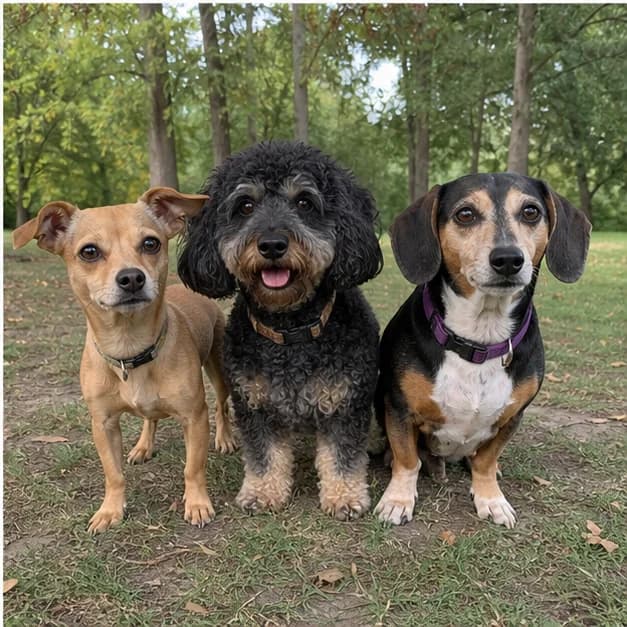
A Dachshund mix may have short legs, a long body, drop ears, a hound's nose, a terrier's intensity, a retriever's size, a curly coat, or almost none of those visible clues. The label describes possible ancestry. It does not create a predictable breed with one size, temperament, coat, or care plan.
This guide compares popular Dachshund crosses without promising an inherited formula. Each profile describes a possible range based on the parent breeds, then returns to the evidence that matters more: the individual dog's adult measurements, body shape, coat, current behavior, health records, family history, and ability to settle in an ordinary home.
The best Dachshund mix is not a named cross that wins every comparison. It is the individual dog whose real needs fit your household. If a size limit, cat, young child, allergy concern, or quiet apartment creates a hard boundary, choose a known adult with a useful history instead of asking a puppy's mix name to guarantee the result.
- 1A Dachshund mix is an individual dog, not a preset blend
- 2Size, coat, shedding, energy, health, and temperament can fall anywhere within or beyond the expected parent range
- 3Plan for the more demanding plausible outcome when history is incomplete
- 4Use foster notes, veterinary records, adult measurements, and observed behavior before appearance
- 5A DNA test can estimate ancestry, but it cannot promise future behavior or health

Sign up for expert-backed reviews and safety alerts all in one place.
Dachshund mixes at a glance
A Dachshund contributes one possible set of traits to a mixed dog: a low and elongated outline, scent-hound persistence, alert barking, prey interest, affection for familiar people, and three possible coat types. Petful's Dachshund breed guide owns the complete parent-breed picture, including temperament, training, handling, and daily care.
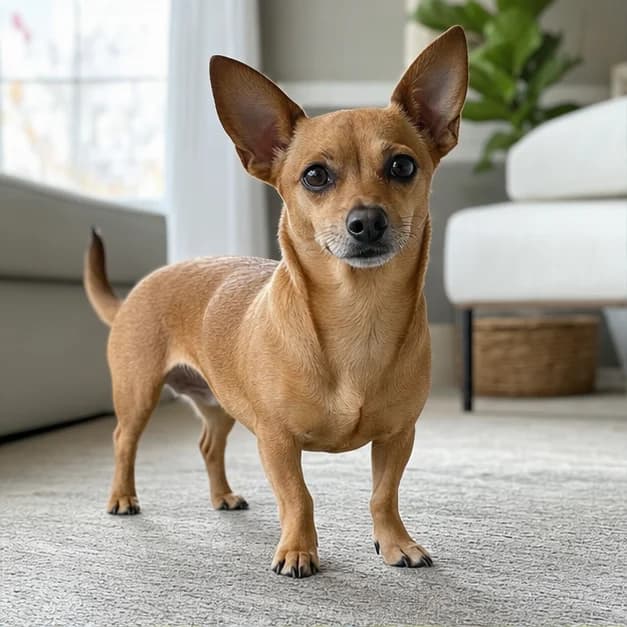
The other parent changes the possible range, not through simple averaging but through many genes that can be inherited in different combinations. A Chihuahua-Dachshund puppy might mature near the small end of both parent ranges, while a littermate grows larger and carries a different coat. A Labrador-Dachshund mix may have a sturdy medium frame without looking like a short Labrador. The same cross label can describe dogs that need different harnesses, exercise plans, grooming tools, and household management.
Use cross profiles for questions, not promises:
- What adult sizes occur in both parent families?
- Are either parents long-bodied, heavy, very small, or prone to orthopedic problems?
- What coat textures and shedding patterns could appear?
- How do the parents behave around strangers, dogs, small animals, handling, and frustration?
- Can the dog settle after activity, or does excitement keep escalating?
- Which traits are already visible in this particular adolescent or adult?
The direct answer to "Is a Dachshund mix a good dog?" is yes, many are excellent companions. A mixed label does not determine goodness or fit. A dog can be loving and still be loud, fearful, predatory, difficult to house-train, uncomfortable with children, or expensive to treat. Responsible matching makes room for the whole dog.
Why mixed-breed traits are not guaranteed
Mixed inheritance is not a recipe in which half of each parent's visible traits are poured into one puppy. Each parent passes a shuffled set of genetic variants, and littermates do not receive identical sets. Body proportions, coat, size, behavior tendencies, and disease risk involve different genes. Those traits can separate instead of traveling as a package.
- A Dachshund mix may resemble one parent, show traits associated with both, or develop a combination that neither short profile predicts. Generation labels such as F1 or multigenerational do not guarantee a fixed size, coat, temperament, or health outcome. Use parent records and current observations as evidence, then plan around uncertainty.
The environment adds another layer. Early care, socialization, training, sleep, pain, fear, reinforcement history, and current household stress can change what an owner sees. A dog that barks at visitors may be alert, afraid, frustrated by a barrier, rehearsed from a window, or experiencing several of those influences at once. Calling the behavior "the Dachshund side" does not identify the cause.
Appearance is equally limited. Short legs can result from variants found in more than one breed. A long body, black-and-tan coat, feathered ears, or curled hair may suggest possible ancestry without proving it. Shelter labels are often practical guesses made from appearance and available history. They should help a listing get noticed, not be treated as a genetic certificate.
Calmness cannot be ranked reliably by cross or Dachshund coat type. One Doxiepoo may settle easily after a walk; another may combine persistent scent work with quick arousal and frequent barking. One Chiweenie may seek laps and avoid conflict; another may be watchful, vocal, and uncomfortable with handling. Ask for examples of recovery and rest:
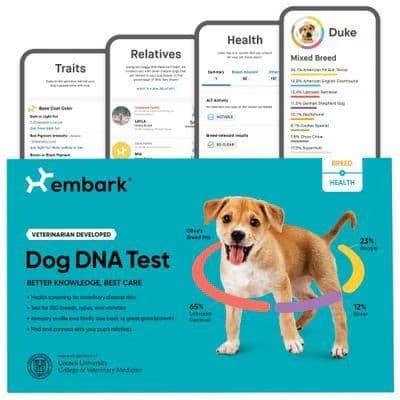
Petful may earn a commission when you click through to Chewy, at no extra cost to you.
- What happens five minutes after play ends?
- Can the dog sleep while normal household activity continues?
- How does the dog respond when a desired item is unavailable?
- Can the dog disengage from wildlife, another dog, or a visitor?
- Does surprise produce a brief startle or a long period of distress?
- How quickly does the dog recover after a veterinary or grooming procedure?
When evidence is limited, plan for the harder plausible outcome. If either parent type can be vocal, create a barking plan. If either can chase, use secure barriers and supervised introductions. If adult size could exceed a housing limit, choose a measured adult. This approach is not pessimistic. It protects the dog from losing its home because a marketing description was treated as a promise.
How to assess the individual dog
An adult or older adolescent usually gives you more useful information than a young puppy. Adult height, weight, body length, coat, and much of the dog's ordinary behavior are already visible. A foster home may also know how the dog sleeps, handles visitors, walks on leash, responds to other animals, and copes with being alone.
Use an observation checklist across more than one setting:
- Measure the dog. Record weight, standing height, chest girth, neck, back length, and the space needed to turn and lie down.
- Watch movement. Note comfort on level ground, willingness to rise, gait symmetry, and any hesitation on ordinary surfaces.
- Observe recovery. After a surprise or exciting event, see whether the dog can return to eating, sniffing, responding, or resting.
- Ask about handling. Request specific notes about paws, ears, mouth, harnessing, lifting, bathing, and veterinary care.
- Test household skills safely. Ask about toilet habits, food guarding, door rushing, chewing, barking, and time alone.
- Protect other animals. Treat calm behavior at a distance as one data point, not proof that the dog can live unsupervised with a cat or small pet.
- Review records. Veterinary notes, medications, prior injuries, foster logs, parent information, and bite or escape history matter more than a cute name.
A puppy still can be a thoughtful choice when the source provides real parent history, health documentation, careful rearing, and honest matching. The tradeoff is uncertainty. A puppy that seems quiet during one visit may be tired, overwhelmed, or between play periods. Adult behavior will develop through adolescence and social maturity.
Popular small Dachshund mixes
Small crosses dominate image results because their compact bodies and expressive faces photograph well. "Small" is still not precise. A standard Dachshund parent can be substantially larger than a miniature, and many second parent breeds have their own broad ranges. Ask whether the Dachshund parent is standard or miniature and verify adult measurements whenever they are known.
For the difference between official American size divisions and informal terms such as "tweenie," use Petful's miniature Dachshund guide. A mix is not classified as a miniature Dachshund simply because it is small.
Chiweenie: Chihuahua-Dachshund mix
A Chiweenie may be very small, but the possible adult range depends on whether the Dachshund parent is miniature or standard and on the Chihuahua family. Some adults have a compact, fine-boned outline. Others are longer, sturdier, or taller on the leg. Ears may stand, fold, or change position with attention, and coats can be short or longer.
Possible behavior questions include alert barking, comfort with strangers, handling sensitivity, prey interest, and the ability to share space. Neither parent label guarantees a lap dog. A small dog can still guard a resting place, chase wildlife, react on leash, or find young children overwhelming.
Choose equipment by measurement. The harness should sit securely without pressing the throat, rubbing behind the elbows, or allowing the dog to reverse out. Children should sit for calm interaction instead of carrying a small dog. Use gates around stairs and high furniture until you understand the individual's movement and habits.
Health questions for a Chiweenie
Health questions should cover both parent families rather than only the Dachshund back. Ask about knees, eyes, heart, teeth, neurologic history, prior injuries, and any veterinary concern in close relatives. A mixed label does not erase risks carried by either family.
Doxiepoo: Dachshund-Poodle mix
A Doxiepoo may have a straight, wavy, curly, wiry, or mixed-texture coat. It may shed lightly, moderately, or seasonally. A Poodle parent does not guarantee a non-shedding puppy, and no Doxiepoo can be promised as hypoallergenic. Allergen exposure comes from proteins in dander, saliva, and urine, not simply loose hair.
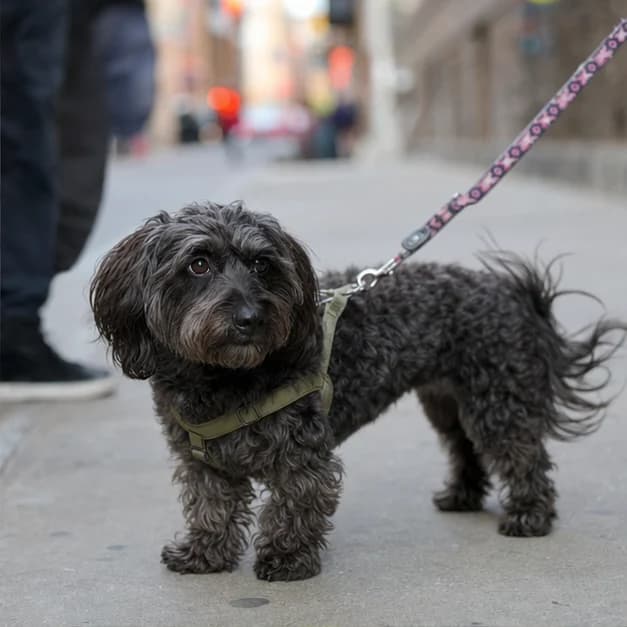
Size can be especially hard to predict because Poodles come in multiple sizes and Dachshunds come in standard and miniature divisions. Ask for the registered variety and measured adult size of both parents. If permanent crate, airline, landlord, or lifting limits matter, an adult Doxiepoo is the safer choice. A measured adult that fits the current product limits may suit the Petsfit Expandable Airline-Approved Soft-Sided Carrier, but airline rules and the dog's standing and turning room still control the decision.
Coat care begins with the coat the dog actually has:
- A curlier coat may mat close to the skin and need regular combing plus professional grooming.
- A looser wavy coat may collect tangles around the ears, legs, chest, and harness area.
- A short mixed coat may shed more than its furnishings suggest.
- Ear hair and a floppy ear shape can change inspection and drying needs, but painful or odorous ears need veterinary care, not more plucking.
Both parent breeds can be quick learners. That does not mean the dog will be easy. Intelligence can support training while sensitivity, barking, scent interest, or frustration complicates daily life. Reinforce the ability to settle, tolerate grooming, return from sniffing, and remain calm when the owner is briefly unavailable.
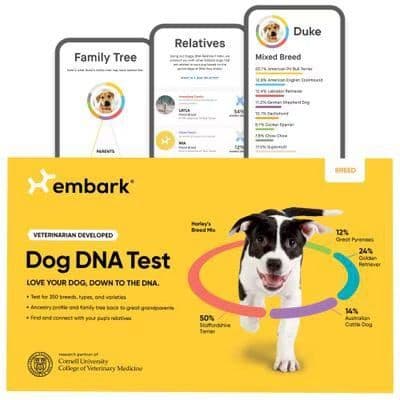
Petful may earn a commission when you click through to Chewy, at no extra cost to you.
Doxle: Beagle-Dachshund mix
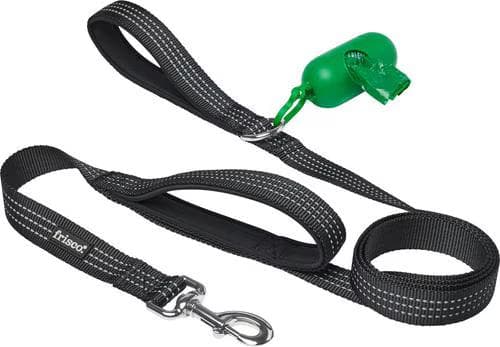
A Doxle combines two scent-hound backgrounds, so a strong interest in smells is a reasonable possibility, not a guarantee. Some may follow scent trails persistently, vocalize when excited, and make independent choices outdoors. Others may be quieter or more handler-focused. Secure fencing and a leash are prudent until recall has been proven around real distractions. The Frisco Traffic Leash with Dual Padded Handles is one existing option for controlled walks, provided its width and hardware suit the individual dog.
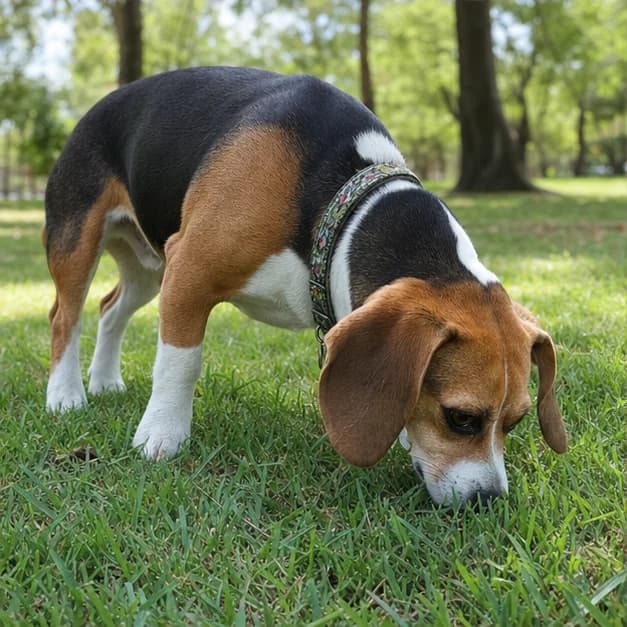
Adult size may fall in a small-to-medium band, with body length and leg height varying widely. Fit the home and equipment to the actual outline. A low dog with a deep chest may need a different harness shape from a taller, Beagle-like adult at the same weight.
Good enrichment uses the nose: A supervised option such as the Outward Hound Nina Ottosson Lick N' Flip Treat Puzzle can use part of a measured meal without turning the cross name into an activity prescription.
- Scatter part of a measured meal in grass.
- Hide treats in open boxes before making the search harder.
- Teach a short scent trail in a quiet area.
- Reward check-ins during sniff walks instead of demanding constant eye contact.
- Use gates and secure storage to prevent food scavenging.
A Doxle is not automatically a carefree family dog because both parent breeds are popular companions. Ask about resource guarding, noise, chasing, handling, and behavior with children and animals. A dog that is friendly outdoors may still need slow home introductions and separate feeding.
Dorgi and Dorkie
A Dorgi is a Corgi-Dachshund mix. The word "Corgi" may refer to a Pembroke Welsh Corgi or Cardigan Welsh Corgi, which are separate breeds with different standards and histories. Confirm the claimed parent rather than treating Corgi as one interchangeable ingredient.
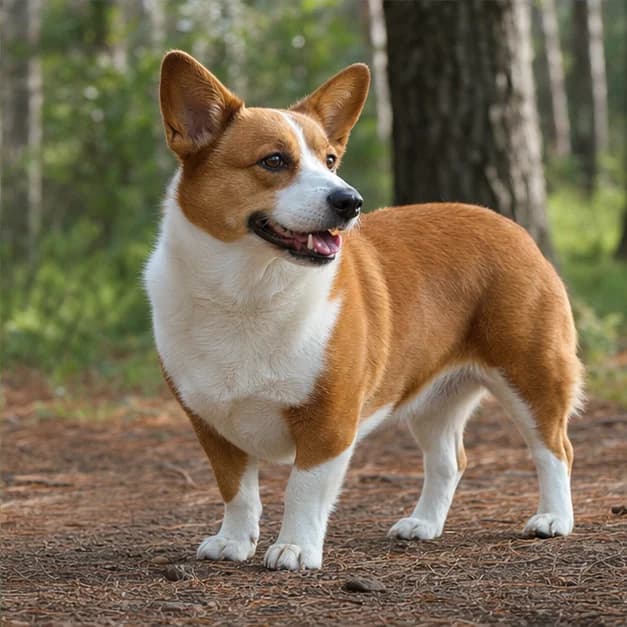
A Dorgi may have a low body, upright or partly upright ears, and a dense shedding coat, but leg length, topline, chest, tail, and coat can vary. Herding-related movement interest and Dachshund prey interest may both be plausible. That does not let an owner predict whether the dog will chase ankles, bikes, cats, or nothing at all. Observe the individual and interrupt unwanted chasing early through barriers, distance, and reinforcement.
Many possible Dorgi coats include an undercoat, so seasonal loose hair can be substantial. Brush to the coat in front of you and avoid aggressive deshedding that scrapes the skin. Keep the dog lean and build exercise around controlled walking, sniffing, and play that does not depend on repeated high jumps. If the coat and skin tolerate a slicker, the aumuca Self Cleaning Slicker Brush is one tool to compare with a gentler glove or comb.
A Dorkie is a Yorkshire Terrier-Dachshund mix. Adult dogs may be very small or move into a sturdier small range depending on the parents. Coats can be short, silky, wiry, feathered, or mixed. A silky appearance can hide tangles near the skin, especially under a harness and behind the ears.

Possible daily-life questions include alert barking, terrier persistence, prey interest, house training, and comfort with restraint. Small size does not reduce the need for cooperative grooming or dental care. Teach brief brushing, paw handling, mouth checks, and harnessing with rewards rather than holding the dog until it stops resisting. For dogs whose calorie plan and chewing style allow a dental chew, Ark Naturals Brushless Toothpaste Small Dental Dog Treats are one small-dog option to discuss with the veterinary team.
For either cross, ask whether the dog can navigate the home without repeated leaps from furniture. A lower outline does not prove spinal disease, but it is a reason to notice traction, body condition, lifting needs, and signs of pain.
Dameranian: Pomeranian-Dachshund mix
A Pomeranian-Dachshund mix is sometimes called a Dameranian. It may remain small, but coat and body shape can vary dramatically. Some have a fuller double coat and plumed tail; others have a short or lightly feathered coat. A fluffy puppy coat does not guarantee the same adult texture.
Grooming should follow adult density. Dense undercoat needs gentle section-by-section brushing during seasonal release. Longer friction areas may need combing. Shaving is not a dependable way to reduce shedding and can alter coat regrowth. If the dog develops sudden thinning, itch, odor, redness, or bald areas, move from grooming advice to veterinary assessment.
Pomeranians and Dachshunds can both be highly alert in ordinary companion homes. A Dameranian may notice hallway sounds and visitors quickly. Teach a predictable sequence: allow a brief alert, cue movement away from the door, reinforce quiet on a mat, and prevent long window rehearsals. Do not promise that a Pomeranian parent makes the dog calmer or more cuddly.
Terrier and pinscher Dachshund mixes
"Dachshund terrier mix" is not one cross. Terrier can refer to dogs with very different size, coat, working style, and health history. Identify the claimed terrier whenever possible. A Jack Russell Terrier-Dachshund mix is not equivalent to a Yorkshire Terrier-Dachshund mix, a Rat Terrier-Dachshund mix, or a mixed shelter dog with a generic terrier label.
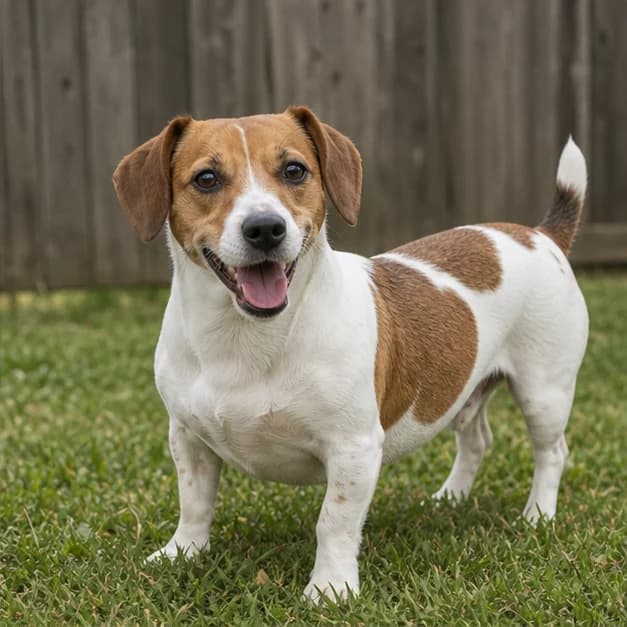
Jackshund: Jack Russell Terrier-Dachshund mix
A Jackshund may be quick, persistent, interested in movement, and highly motivated by searching or chasing. Those are possibilities grounded in the histories of the parent breeds, not a diagnosis of the puppy. Ask how the individual responds to wildlife, running children, small animals, frustration, and a closed door.
A useful routine combines controlled movement and problem-solving:

Petful may earn a commission when you click through to Chewy, at no extra cost to you.
- Sniff walks with reinforcement for checking in
- Short recall games on a long line in a safe area
- Food searches and simple object-finding
- Tug or fetch with clear start and stop cues
- Protected rest after activity
- Secure fencing with no gaps at ground level
Do not try to "wear out" a high-energy Jackshund through nonstop ball chasing. Repetition can increase fitness without teaching recovery. Build a calm mat, chewing period, or quiet crate routine as carefully as exercise.
Rat Terrier-Dachshund mix
A Rat Terrier-Dachshund mix may share the Jackshund's interest in movement and small animals, but the actual dog's history matters more than a broad terrier comparison. Size may remain compact or reach a lower-medium range. Ears can stand or fold, and coats are often short but can vary with the Dachshund parent.
Owners should ask about escape behavior. A low dog may fit under gaps that look secure from standing height, while a determined terrier-type dog may dig or climb. Inspect the fence line, use supervised outdoor time, and keep identification current.
Around cats or pocket pets, no parent label guarantees safety. A calm response on leash is encouraging but not proof of safe unsupervised access. Provide barriers, elevated escape routes for cats, separate feeding, and professional help when fixation or chasing appears.
Miniature Pinscher-Dachshund mix
A Miniature Pinscher-Dachshund mix, sometimes called a Doxie Pin, may be small, agile, watchful, and physically confident. It is not a miniature Doberman, and the name "pinscher" should not be used to predict guard behavior. Focus on handling, noise, recovery, other-dog behavior, and the ability to settle.
Fine, short coats provide less insulation than a dense longhaired or wirehaired coat. Cold-weather comfort may require shorter outings or a well-fitted layer, but the need depends on the individual, temperature, wind, wetness, body condition, and activity. Clothing should not restrict the shoulders or rub behind the front legs.
Dachshund-Pit bull mix
"Pit bull" may refer to an American Pit Bull Terrier, another bull-type breed, or a visual shelter label. That uncertainty makes records especially important. A Dachshund-Pit bull mix may mature from a sturdy small-to-medium dog to a much larger adult than expected from the Dachshund side. It may have short legs, ordinary-length legs, a broad chest, or a relatively light frame.
Do not predict aggression, friendliness, or child safety from either label. Assess the individual dog's history around people and dogs, handling tolerance, arousal, guarding, strength, and recovery. Housing and insurance rules may apply to visual labels even when ancestry is uncertain, so verify policies before adoption.
Larger Dachshund mixes
Larger-parent crosses attract attention because their proportions can look surprising. The welfare-first response is not to seek the most extreme body. It is to evaluate an existing dog as an individual, recognize that ancestry may be uncertain, and prepare for adult size, joint load, handling, and exercise needs that a novelty photo does not show.
Golden Dox: Golden Retriever-Dachshund mix
A Golden Retriever-Dachshund mix, often called a Golden Dox, can have an exceptionally broad size and coat range. A miniature Dachshund paired in the family history creates different possibilities from a standard Dachshund, and Golden Retriever family size also varies. Some adult dogs may be medium-sized with feathering. Others may be larger, shorter-coated, taller, or more elongated.
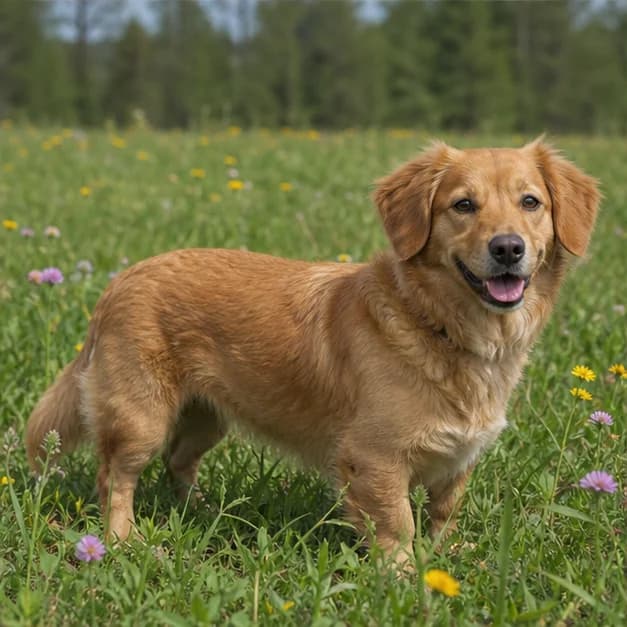
A Golden Retriever parent does not guarantee a universally social, gentle, or easy-to-train dog. The Dachshund side does not guarantee short legs or alert barking. Ask for current examples: Does the dog greet without jumping? Release objects? Tolerate brushing? Settle after play? Pass dogs on leash? Live safely with the household's actual children or pets?
Feathered or dense coats may need combing around ears, chest, legs, tail, and friction areas. Shorter coats still shed. A larger dog with a long outline needs equipment sized for chest girth and body length, not a "medium" label copied from a generic chart.
Dachsador: Labrador-Dachshund mix
A Labrador-Dachshund mix may be called a Dachsador. Adult size can range widely, particularly when the Dachshund parent size is unknown. The dog may have a sturdy chest, shorter or ordinary-length legs, a long tail, a short dense coat, or an outline that does not obviously advertise either parent.

Food motivation is possible, but it should not be assumed. If present, measured kibble can support training. Count rewards within the daily ration because both excess weight and an elongated body can increase physical workload. Unexpected hunger, weight change, or poor condition needs veterinary assessment rather than a breed-based feeding guess.
Some Dachsadors may enjoy swimming, but body proportions and confidence vary. Introduce water gradually, use close supervision, and choose a properly fitted canine life jacket when conditions call for it. Do not throw a short-legged or hesitant dog into water because Labradors are associated with swimming.
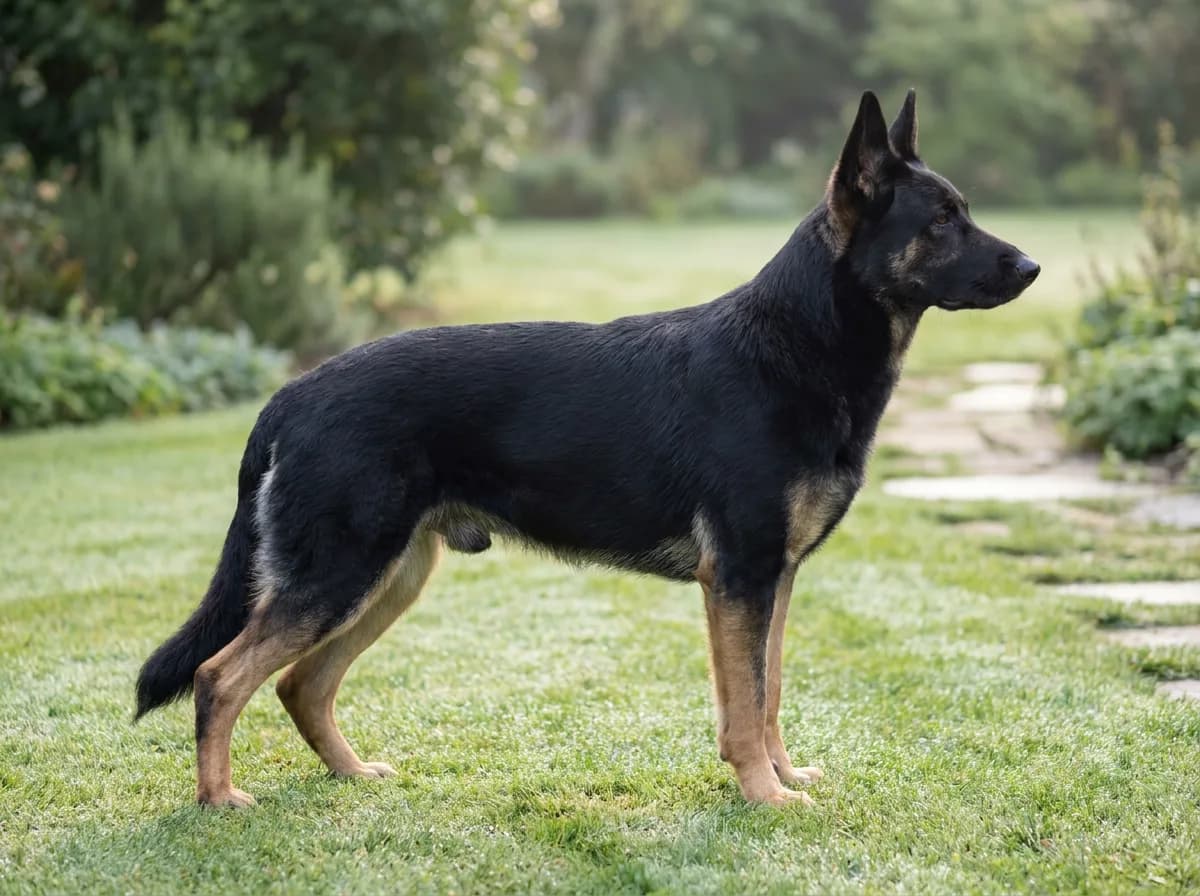
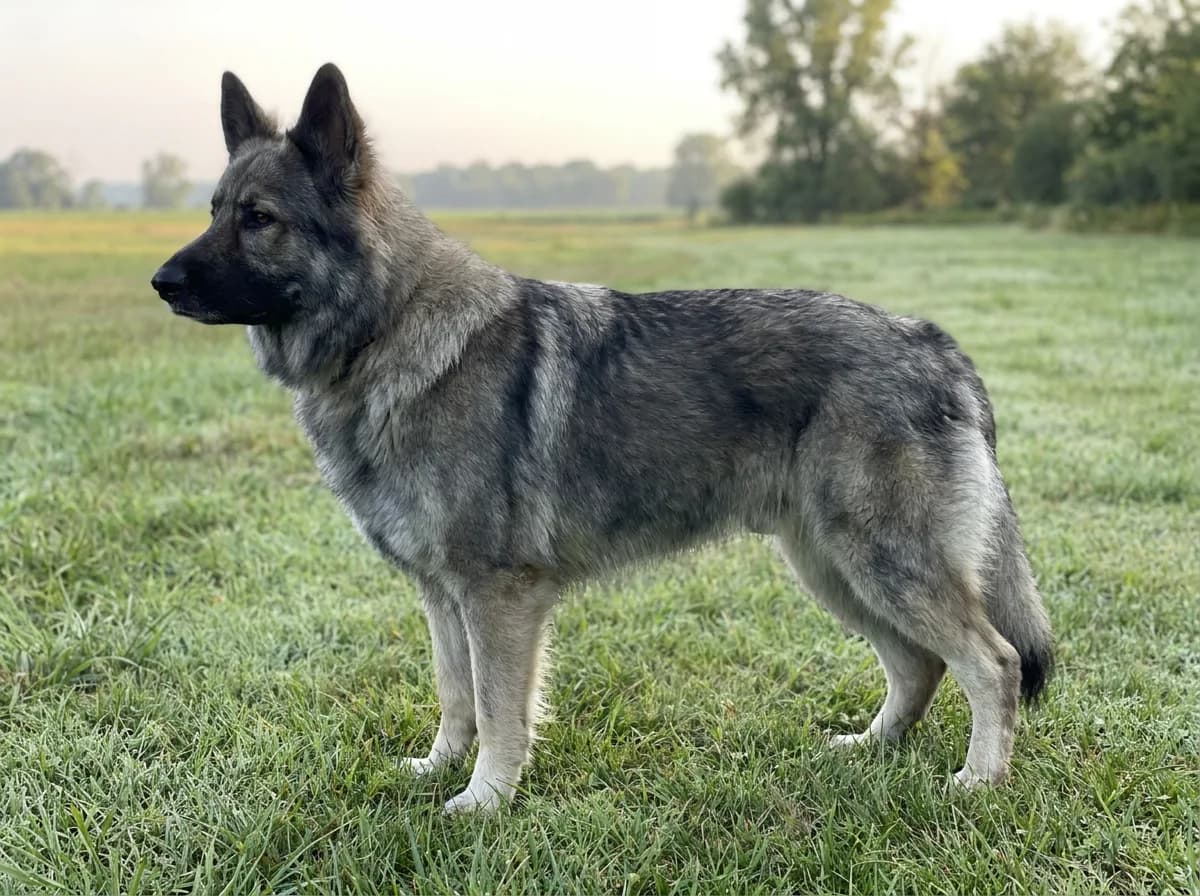
German Shepherd-Dachshund mix
A German Shepherd-Dachshund mix is an unusual label with a very broad plausible adult range. The dog may have unknown or more complex ancestry, so documentation or a DNA estimate can be more useful than visual storytelling. Expecting a tiny German Shepherd or a long-bodied guard dog oversimplifies both inheritance and behavior.
An adult may be medium or larger, with upright, partly upright, or folded ears and many possible coats. Behavior should be evaluated through observed sociability, environmental confidence, movement interest, guarding, other-dog responses, and recovery. Do not call the dog protective because it barks or appears wary. Fear, uncertainty, frustration, and learned alerting require different handling.
Joint and neurologic questions should include both possible parent families. Ask a veterinarian to assess the individual body, gait, weight, and history. Breeder claims should be supported by verifiable parent identity and health testing, not a photo of two alleged breeds.
Other unusual large-parent labels
Search results include Dachshund crosses with Rottweilers, Huskies, Dobermans, Great Danes, and other large breeds. Some dogs may have that ancestry, but a surprising size mismatch should increase curiosity rather than confidence. The dog could have multiple breeds, an inaccurate shelter label, or grandparents that make the visible result less direct.
For an existing adult rescue, the practical questions are straightforward:
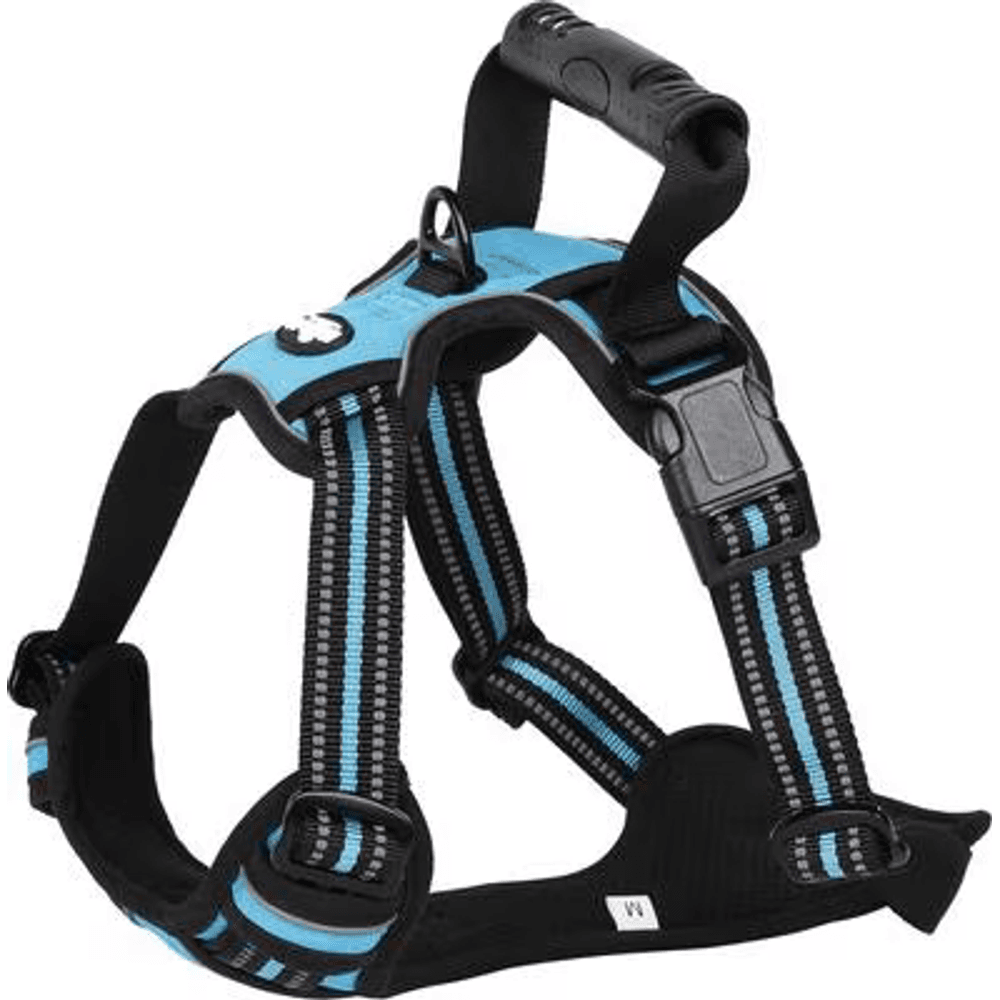
A padded, reflective no-pull harness that spreads leash pressure across the chest instead of the throat, the switch most vets recommend for a dog with a cough, a collapsing trachea, or any airway irritation so the leash never presses on
Petful may earn a commission when you click through to Chewy, at no extra cost to you.
- What does the dog weigh, and what is its body condition?
- Is the body elongated, and how does the dog move?
- What equipment contains the dog safely without restricting movement?
- What behavior has been observed around people, dogs, wildlife, and handling?
- What medical findings, medications, or prior injuries are documented?
- Can the dog settle in the home after normal activity?
Avoid breeders whose main selling point is an extreme or shocking cross. Responsible sourcing centers health, stable behavior, welfare, transparent records, and lifetime support rather than novelty.
Size, coat, and exercise comparison
The ranges below are planning categories, not predictions. "Small to medium" does not provide a crate size. "Moderate to high activity possibility" does not prescribe minutes. Measure and observe the individual before buying permanent equipment or setting a daily workload.
| Cross | Possible adult size category | Coat possibilities | Activity questions to ask |
|---|---|---|---|
| Chiweenie | Very small to sturdy small | Short, long, smooth, or lightly feathered | Barking, handling sensitivity, prey interest, ability to settle |
| Doxiepoo | Very small to medium or larger depending on Poodle parent | Straight, wavy, curly, wiry, mixed, shedding variable | Grooming tolerance, frustration, recall from scent, alone time |
| Doxle | Small to medium | Usually short to moderately dense, shedding possible | Scent persistence, vocalizing, scavenging, secure recall |
| Dorgi | Small to lower-medium | Often dense or double, seasonal shedding possible | Chasing movement, barking, recovery, low-impact exercise |
| Dorkie | Very small to small | Short, silky, wiry, feathered, or mixed | Handling, coat care, house training, alert barking |
| Dameranian | Very small to small | Short to full double coat, adult change possible | Noise, grooming, separation, temperature comfort |
| Jackshund | Small to lower-medium | Short, broken, wire, or mixed | Chase interest, digging, arousal, secure fencing |
| Rat Terrier-Dachshund | Small to lower-medium | Often short, with shedding possible | Escape behavior, prey interest, other animals, recall |
| Golden Dox | Small-to-medium through large depending on parents | Short, dense, feathered, or mixed | Adult size, handling strength, coat care, social history |
| Dachsador | Lower-medium through large depending on parents | Often short and dense, shedding possible | Food motivation, body condition, water confidence, joint comfort |
| Dachshund-Pit bull | Small-to-medium through larger | Usually short, density variable | Housing rules, strength, dog history, handling, recovery |
| German Shepherd-Dachshund | Medium to large possible, ancestry often uncertain | Short, dense, medium, or double coat | Environmental confidence, guarding context, gait, joint history |
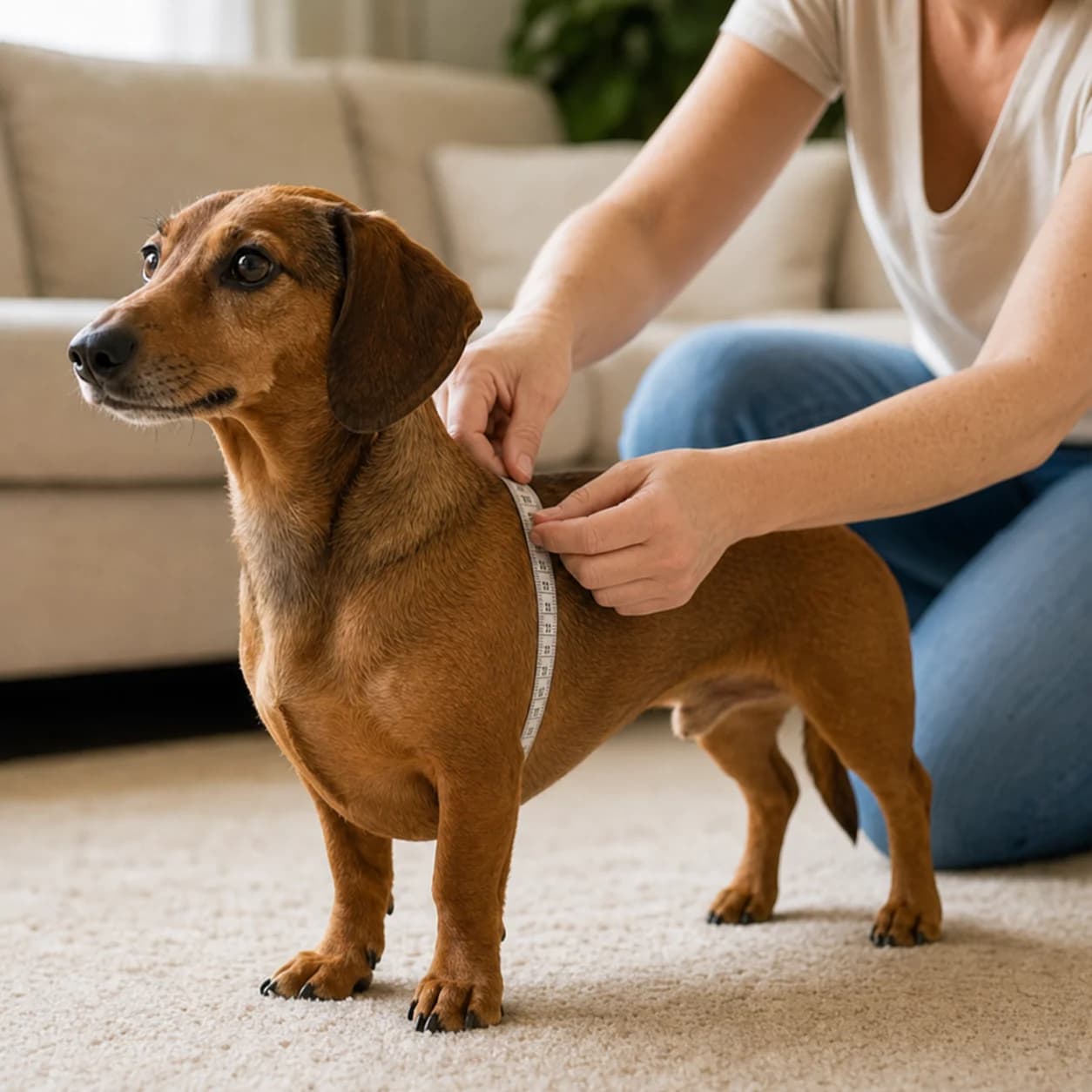
Measure chest girth at the widest part of the ribcage, neck where the collar or harness sits, and back length according to the product maker's instructions. An adjustable EliteField no-pull harness is one existing option, but the dog must be measured. A fit that works for a short deep chest may not work for a taller narrow dog at the same weight.
Exercise should match age, body shape, fitness, medical status, weather, and the dog's response. Productive choices can include sniff walks, training, controlled play, food searches, and quiet recovery. Repetitive high jumping, forced running, and sudden weekend overload are poor substitutes for conditioning. A dog with pain, weakness, reluctance, or gait change needs veterinary evaluation before an exercise increase.
Coat care also follows the adult dog. Use fingers and a comb to check whether a wavy or long coat tangles at the skin. Watch how much undercoat appears during brushing. Inspect for redness, odor, sores, flakes, and sudden thinning. A mix name cannot tell you which brush, grooming interval, or bath schedule is correct.
Household fit: children, pets, apartments, and alone time
A Dachshund mix can be a good family dog when the individual dog's history, handling comfort, arousal, and prey interest fit the home. It is not enough that both named parents appear on family-dog lists. Children and pets change the management burden, while apartment living makes barking and elevator or hallway behavior more important.
For children, look for a dog that can move away, recover after noise, accept ordinary handling without freezing or escalating, and rest in a protected area. Adults must supervise young children. No child should ride, squeeze, lift, chase, corner, or wake the dog. A small mixed dog is especially vulnerable to being dropped or stepped on.
For cats and other dogs, ask about repeated real-life observations. A foster note that says "ignored a calm cat through a gate for three weeks" is more useful than "seems cat friendly." Use barriers and separate resources during introductions. A dog that fixates, trembles, screams, lunges, or cannot disengage needs greater distance and qualified help.
Apartment fit depends on the routine
- Can the dog pass neighbors and dogs in shared spaces?
- Does the dog bark at hallway sounds?
- Can the dog toilet on the available schedule?
- Is there a safe plan for stairs or elevators?
- Can the dog rest while the owner works?
- Does the building have size, breed-label, or noise rules?
Alone time is an individual skill. Build it in small steps, beginning with departures the dog can handle calmly. Video can reveal pacing, vocalizing, scratching, salivation, or inability to eat. A puppy needs frequent toilet and social care; an adult with separation distress may need a structured behavior plan and veterinary support.
Health and back-care questions
A Dachshund mix can inherit health risks from either parent family. Mixed ancestry does not automatically prevent disease, and "hybrid vigor" should not be used as a health guarantee. Genetic diversity can affect risk, but the individual still carries a specific combination of variants, body structure, exposures, injuries, and life history.
Back care deserves attention when the dog has an elongated body, short legs, a Dachshund parent, prior pain, or a related veterinary finding. Intervertebral disc disease is an important Dachshund concern. Not every mix will develop it, and appearance alone cannot calculate risk. A veterinarian can evaluate gait, pain, neurologic function, body condition, and history.
Reasonable everyday management includes:
- Maintain an appropriate body condition through measured food and treats.
- Provide traction on slippery routes.
- Prevent uncontrolled leaps and falls where practical.
- Support the chest and hindquarters when lifting a short or long-bodied dog.
- Condition exercise gradually instead of adding sudden intense work.
- Arrange veterinary assessment for pain or movement change.
Seek prompt veterinary care if the dog cries out, refuses to move, develops a hunched posture, walks unsteadily, drags a limb, knuckles a paw, or loses normal bladder or bowel control. Restrict uncontrolled movement while arranging care. Do not stretch or manipulate a painful spine.
Petful may earn a commission when you click through to Chewy, at no extra cost to you.
For a breeder, request current health-screening evidence for both claimed parent breeds. The Orthopedic Foundation for Animals breed directory can help identify parent-club recommendations, but a listing must match the actual parent and test result. Ask for registered names or permanent identification so records can be verified independently.
For a rescue, request veterinary records and disclose what remains unknown. A normal examination is valuable but cannot guarantee that no future problem will appear. Build an emergency-care plan and insurance or savings around the dog's real size, body structure, and known history.
Planning around inherited health
The Dachshund parent's broad longevity is covered in Petful's Dachshund lifespan guide. A mixed dog's expected lifespan also depends on the other ancestry, adult size, health, care, and chance, so copying a purebred range into every cross profile would be misleading.
DNA tests: what they can and cannot tell you
A consumer DNA test can estimate breed ancestry by comparing the dog's genetic markers with a company's reference panel. It may help when records are missing, especially if the result explains an unexpected size or points to parent breeds whose health guidance should be discussed with a veterinarian.
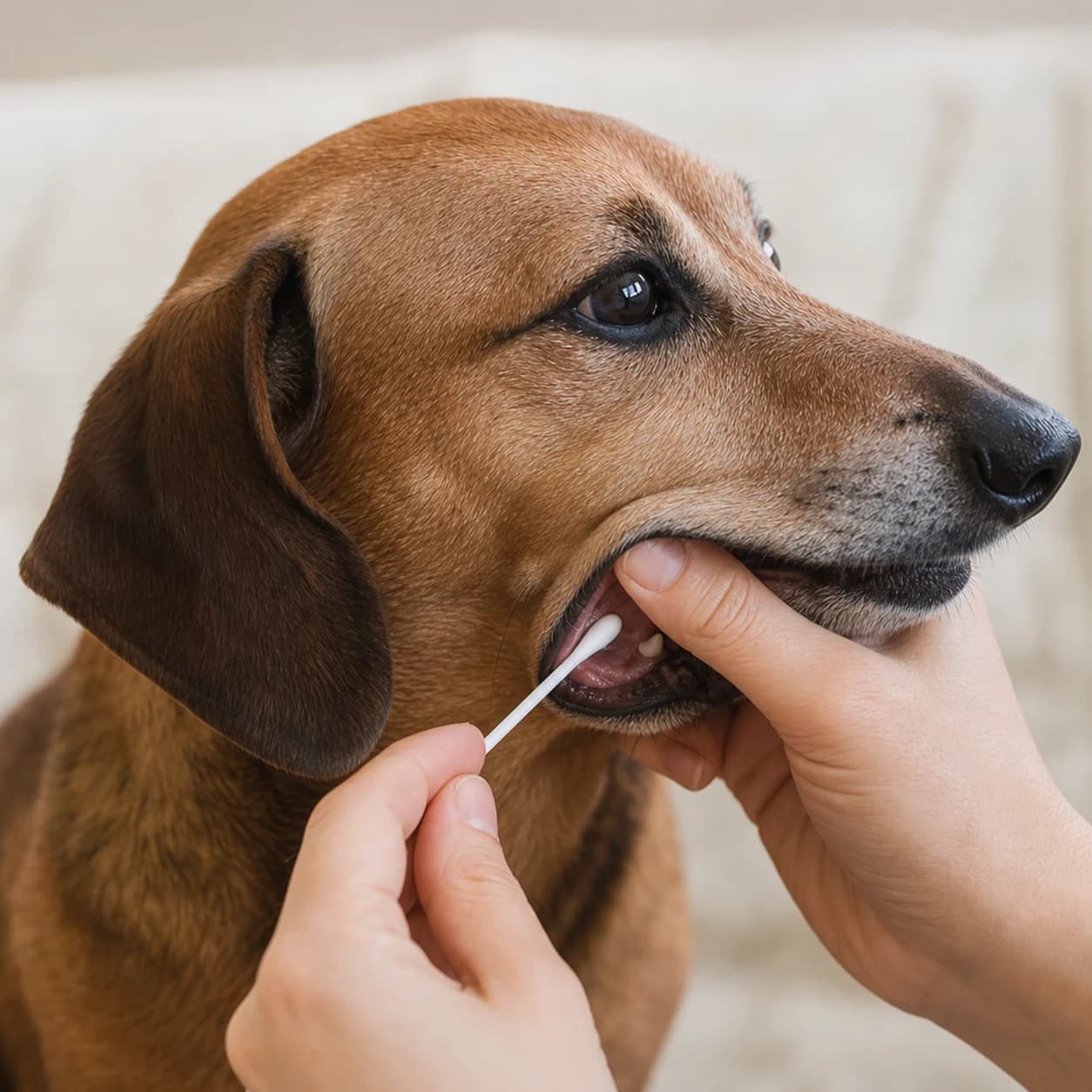
The result is an estimate, not a pedigree certificate. Companies use different databases, marker sets, algorithms, and reporting thresholds, so percentages and small-breed calls may differ between products. Closely related breeds can be difficult to separate, and a low percentage can reflect uncertainty several generations back.
Use a test for these jobs:
- Generate questions about possible ancestry.
- Compare the result with known records and relatives.
- Learn whether a company reports specific health variants worth discussing with a veterinarian.
- Give a rescue owner a more informed starting point for parent-breed research.
Do not use it to promise these outcomes:
- Adult temperament or child safety
- Exact adult weight or leg length
- A non-shedding or hypoallergenic coat
- Freedom from disease
- Registered purebred status
- A guaranteed exercise requirement
The Embark Breed and Health kit is the existing-library option that combines an ancestry estimate with health-variant reporting. Wisdom Panel Essential is another established breed-identification option. The useful comparison is not which brand can reveal the dog's destiny. It is which report, reference panel, relative matching, health scope, price, and support fit the question you actually have. Shoppers who want an ancestry-focused comparison can also review the Embark Breed Identification Dog DNA Test Kit without treating either report as a guarantee of adult behavior or health.
If a test reports a health variant, do not diagnose or change treatment from the dashboard alone. Share the full result with the dog's veterinarian. The clinical meaning may depend on the variant, inheritance pattern, number of copies, breed context, symptoms, and confirmatory testing.
Adoption, rescue, and responsible sourcing
Rescue and foster care are practical places to find Dachshund mixes because many adults already show the size, coat, and household behaviors buyers are trying to predict. Search local shelters, foster-based rescues, and reputable Dachshund or hound rescues. Widen the search to small mixed dogs instead of requiring a fashionable cross name.
Ask for ordinary evidence:
| Decision | Useful evidence | Weak evidence |
|---|---|---|
| Adult size | Current weight, body condition, height, chest girth, veterinary notes | A puppy photo or guessed parent midpoint |
| Household behavior | Foster examples across days or weeks | One calm shelter meeting |
| Children | Supervised history with children of similar age and behavior | "Family friendly" label |
| Cats and dogs | Repeated barrier and home observations with ability to disengage | One greeting or a guessed breed reputation |
| Alone time | Video or foster notes about specific durations | No property damage noticed |
| Handling | Paw, ear, mouth, harness, lifting, and veterinary examples | "Sweet" or "lets me pet him" |
| Health | Veterinary records, medications, gait and pain history, verified parent tests when available | "Mixed breeds are healthier" |
| Ancestry | Records, known parents, or a transparent DNA estimate | Ear shape, coat color, or a rescue guess |
An adult with a detailed foster history is often the clearest match for a home with cats, children, a landlord weight limit, shared walls, or limited lifting ability. The dog may change after adoption as stress falls and routines develop, so the history is not a guarantee. It is still far stronger than predicting a puppy from appearance.
Turn the mix label into an individual-dog assessment
A useful adoption decision compares the dog with the home's nonnegotiable conditions, not with a generic description of the cross. Before a visit, write down the limits that could make placement fail: maximum measured weight, stairs the dog must use, hours alone, resident animals, children's ages, landlord rules, grooming capacity, and the amount of barking neighbors can tolerate. Ask the foster or shelter for examples tied to those conditions before deciding that a familiar mix name is a match.
During a first meeting, observe the dog at a comfortable distance before requesting interaction. Look for the ability to notice a person or dog and then disengage, recover after a sound, accept a harness without a struggle, walk on ordinary flooring, and settle after mild activity. These observations do not prove future behavior, but they produce more useful questions than ear shape or guessed ancestry. Avoid staging a stressful "test" with a child, cat, food bowl, or painful body area. Safety-sensitive introductions need barriers, knowledgeable supervision, and the option to stop.
If the first visit goes well, use a second visit or foster conversation to check whether the same pattern appears in another setting. Ask for specifics:
- What did the dog do during the first 15 minutes after a visitor arrived?
- Could the dog pause sniffing or chasing and reorient to the handler?
- What happened after the dog became frustrated or overexcited?
- Did the dog remain comfortable when the harness, paws, ears, or body were handled?
- How did the dog move on slick floors, steps, curbs, and after a normal walk?
- Which management tools were actually needed: gates, covered windows, separate feeding, a long line, or midday help?
Record direct observations separately from interpretations. "Barked for 40 seconds, then lay on a mat" is more informative than "protective." "Pulled toward the cat and could not take food at 20 feet" is more informative than "high prey drive." When a behavior is central to household safety, ask a qualified behavior professional to help assess the individual dog rather than treating a breed percentage as an answer.
Ask the rescue:
- Why did the dog enter care?
- What medical problems, injuries, medications, and procedures are documented?
- Has the dog bitten, snapped, guarded, escaped, or injured another animal?
- What does the dog do when a visitor enters?
- How long has the dog been left alone, and what was observed?
- How does the dog travel, toilet, sleep, and handle grooming?
- What post-adoption support and return policy are available?
If buying from a breeder, ask why the pairing was planned. A defensible answer should address health, stable adult behavior, welfare, and a real purpose beyond creating a surprising shape or marketable name. Verify the identity, age, size, temperament history, and breed-relevant health testing of both parents. Ask how puppies are raised and matched.
Red flags include:
- Guaranteed adult size, coat, temperament, or hypoallergenic status
- Claims that mixed breeding automatically eliminates disease
- No independently verifiable parent health records
- Refusal to discuss difficult traits or prior outcomes
- Many cross types always available
- Pressure to pay before records are reviewed
- Shipping with no meaningful conversation or matching
- Extreme body shape used as the central sales point
- No contract, return support, or lifetime take-back policy
What should you avoid with a Dachshund mix? Avoid treating the label as proof, allowing a short or long-bodied dog to become overweight, forcing exercise through pain, using a puppy as a guaranteed fit for hard household limits, and buying from someone who markets certainty instead of records. Also avoid assuming a warning behavior is merely a quirky breed trait. Sudden irritability, handling resistance, or withdrawal can have a medical component.
The downside of a Dachshund mix is not that mixed dogs are flawed. It is uncertainty combined with the possibility of barking, prey interest, house-training difficulty, grooming work, orthopedic or spinal concerns, and traits carried by the other parent. A good source helps you see those tradeoffs before commitment.
Frequently asked questions about Dachshund mixes
No. A Dachshund mix inherits a shuffled set of variants from both parent families, and littermates can differ in size, body shape, coat, shedding, temperament, and health. Environment, training, age, pain, and experience also affect behavior. Use known parent records, current measurements, foster observations, and the individual dog's response in ordinary situations instead of treating the cross name as a preset package.
A reputable test can provide a useful ancestry estimate, but accuracy depends on the company's reference panel, marker set, algorithms, and how closely related breeds are represented. Small percentages may be less certain, and two companies can report different breakdowns. Treat the result as a probability-based clue. Compare it with known records and discuss any health finding with a veterinarian rather than using it as a diagnosis.
Adult size depends on the measured sizes of both parents, whether the Dachshund is standard or miniature, the second parent's breed and family, sex, and the particular genes inherited. A parent midpoint is not a growth forecast. When a hard size limit matters, choose a measured adult. For a puppy, review both parent families, track the individual growth curve, and buy adjustable equipment until adult measurements stabilize.
Some do, but a mix label or long body cannot determine one dog's diagnosis or future. Dachshunds have an important association with intervertebral disc disease, while the other parent may bring additional orthopedic or neurologic risks. Keep the dog at an appropriate body condition, provide traction, avoid uncontrolled falls, and seek veterinary care for pain, weakness, wobbliness, dragging, or bladder and bowel changes.
Check local shelters, foster-based rescues, and reputable Dachshund or hound rescues, and search for small or medium mixed dogs rather than only a designer name. A fostered adult can offer useful information about measured size, coat, toilet habits, barking, alone time, children, cats, and handling. Ask for veterinary records, behavior examples, disclosure of bite or escape history, post-adoption support, and a clear return policy.
No Dachshund cross can be guaranteed hypoallergenic. A Poodle or other lower-shedding parent may make a lightly shedding coat possible, but littermates can inherit different coat textures and shedding patterns. Allergy-triggering proteins are found in dander, saliva, and urine, not just loose fur. A person with serious allergy concerns should seek medical guidance and spend meaningful time with the individual dog when possible.
Parent coats show possibilities, not certainty. A puppy can inherit short, long, wiry, feathered, wavy, curly, dense, or mixed-texture hair, and the adult coat may differ from the puppy coat. Ask about both parent families, inspect the current coat at skin level, and plan flexible grooming. Choose an adult when a strict shedding or grooming limit matters. No visual coat can prove ancestry.
Some are excellent family companions, but suitability depends on the individual dog's history, arousal, handling comfort, guarding, prey interest, and ability to settle. Children need active adult supervision and must not lift, ride, chase, or corner the dog. Introductions to cats and dogs should use distance, barriers, and separate resources. Select a dog with observed success in a household similar to yours instead of relying on the mix name.
The honest bottom line
A Dachshund mix deserves to be chosen as the dog it is, not the dog a listicle predicts. Cross names can organize research and suggest questions about size, coat, behavior, and health. They cannot guarantee the answers.
Measure the adult, review records, observe recovery and rest, verify parent health information when available, and plan for the more demanding plausible traits. That evidence-first approach may feel less exciting than a perfect designer-dog promise, but it gives the household and the individual dog a much better chance to fit.

Coreen Saito is a pet writer and longtime shelter volunteer with more than a decade in animal rescue. She covers cat behavior, breed care, and the small, ordinary science of sharing a life with companion animals, with a particular focus on honest takes about the products and decisions that actually matter. At home in Arizona, she's outranked by Mac (a dog with the loudest opinion in the house), Rebel (a cat who governs by quiet authority), and Meri (an orange tabby who runs the late shift and the laundry basket). She writes about all three, plus the rescues that keep coming through her life, at LifeWithMinty.com.
Sign up for expert-backed reviews and safety alerts all in one place.