Dachshund: Breed Guide, Temperament, Size, and Care
This complete Dachshund guide covers temperament, size, exercise, training, grooming, health, family fit, costs, and practical back-aware care.

Petful is reader supported. As an affiliate of platforms like Amazon and Chewy, we may earn a commission when you buy through links on this page. There is no extra cost to you.
A Dachshund is a bold scent hound in a low, long body, not simply a small lap dog. The breed can be affectionate, funny, alert, and deeply attached to its people. It can also be vocal, persistent, interested in chasing, and slow to accept a house rule that does not seem worthwhile. For the right household, those qualities create a lively companion. For an unprepared household, they become daily friction.
This Dachshund breed guide covers the broad owner decision: temperament, size, exercise, training, family fit, health, care, and the practical setup a long-backed dog needs. The most important question is not whether Dachshunds are "good dogs." It is whether you enjoy living with an independent hound and can provide consistent training, healthy weight management, safe handling, and veterinary care.
- 1A Dachshund can be a wonderful pet for a prepared household
- 2Expect a bold scent hound with a real voice, prey interest, and an independent streak
- 3Daily sniffing, reward-based training, and a calm rest routine matter as much as walks
- 4Keep the dog lean, support the body when lifting, and treat sudden pain or weakness as urgent
- 5Choose the individual dog for your household rather than relying on a breed stereotype

Sign up for expert-backed reviews and safety alerts all in one place.
Dachshund breed overview
Dachshunds were developed in Germany to pursue badgers and other quarry in and around burrows. Their name is commonly translated as "badger dog." The work helps explain the modern breed's low outline, strong front, deep chest, keen nose, willingness to dig, and determination to keep investigating after a person is ready to move on. The American Kennel Club Dachshund page places the breed in the Hound Group.
| Trait | Practical owner guide |
|---|---|
| Breed purpose | Scent hound developed for below-ground and ground-level hunting |
| Adult size | Standard is usually 16 to 32 pounds; miniature is 11 pounds or under at 12 months and older under the American standard |
| Coat types | Smooth, longhaired, and wirehaired |
| Temperament | Alert, courageous, curious, devoted, and often independent |
| Exercise | Daily age-appropriate movement plus sniffing and problem-solving |
| Grooming | Varies by coat, with routine nail, ear, and dental care for all |
| Barking | Often quick to alert; quiet behavior requires management and reinforcement |
| Lifespan | Commonly cited in the low-to-mid teens, with wide individual variation |
| Best fit | A patient home that enjoys a clever hound and can manage stairs, weight, barking, and prey interest |
A breed description is a starting point, not a personality guarantee. Family line, early development, socialization, learning history, age, pain, and the current environment all affect behavior. A reserved adult rescue and a bold puppy may share the same breed label while needing very different introductions and training plans.
Standard vs. miniature Dachshunds
Standard and miniature Dachshunds are size divisions of the same breed in the American system. The standard generally weighs 16 to 32 pounds. A miniature is 11 pounds or under at 12 months of age and older. Informal labels such as "tweenie," "toy," or "teacup" are not additional American Kennel Club size divisions, so ask for the adult dog's measured weight instead of relying on a sales term.
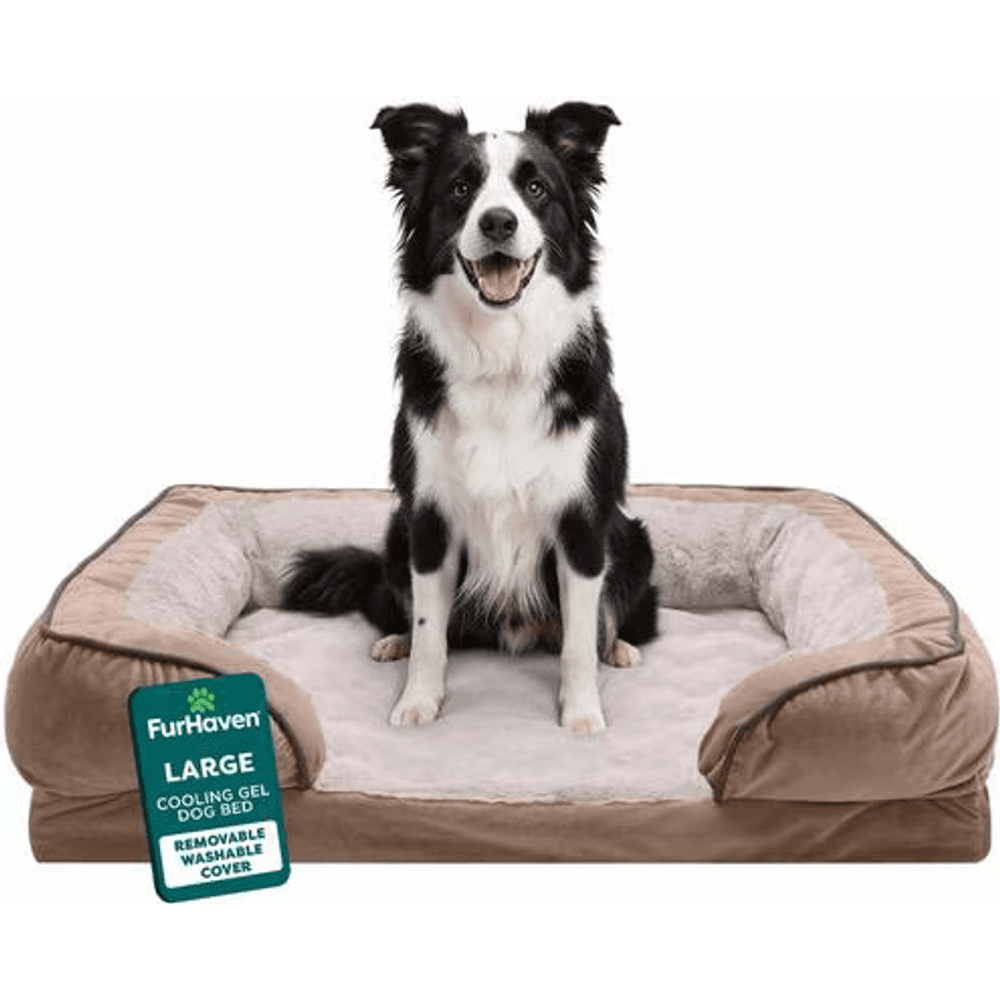
An orthopedic sofa bed with three bolstered sides for dogs who like to rest their head and joints against a cushion. The supportive foam base cradles hips and elbows, a comforting spot for an older or shaky dog to settle.
Petful may earn a commission when you click through to Chewy, at no extra cost to you.

Size changes practical decisions. A small adult may be easier to carry, but it is also more vulnerable to accidental injury from rough handling or a jumping child. A standard adult may need a larger bed, carrier, harness, and more physical support when lifted. Neither size is automatically calmer, easier to train, or safer with children.
Use Petful's miniature Dachshund guide for measurement rules, miniature-versus-standard comparisons, and small-space fit. For this broad guide, the owner rule is simple: size equipment to the measured dog. A medium Frisco travel safety carrier may fit some Dachshunds, but measure body length, standing height, and turning space before ordering.
Dachshund temperament and daily life
A typical Dachshund brings more nerve and initiative than its height suggests. Many are affectionate with familiar people, observant of household movement, enthusiastic about food or games, and willing to announce a visitor. The same dog may ignore a recall when an interesting scent crosses the yard or dig at a blanket because burrowing is rewarding.
The best way to understand Dachshund temperament is to connect each tendency to daily life:
- Scent-hound persistence: Sniffing can be more rewarding than following a repeated cue. Train with excellent rewards and practice before distractions become intense.
- Alert barking: A hallway sound, delivery, dog outside, or visitor can start a loud sequence. Block rehearsal at windows and reward the pause after an alert.
- Prey interest: Some Dachshunds chase wildlife or fixate on small animals. Use a leash, secure fencing, and careful introductions rather than assuming size makes the dog harmless.
- Digging and burrowing: Provide appropriate blankets, supervised digging options, or search games. Petful's guide to why dogs burrow explains the broader behavior.
- Attachment: Many enjoy close contact, but closeness does not automatically create comfort with being alone. Build short, calm separations before an owner needs a full workday.
A workable weekday includes toilet trips, a sniff-focused walk, a few short training opportunities, quiet food enrichment, and protected sleep. Constant entertainment can create a dog that expects action all day. Alternating activity with calm rest teaches a more useful rhythm. For supervised food enrichment, the Outward Hound Nina Ottosson Lick N' Flip Treat Puzzle can turn part of a measured meal into a short problem-solving session.
Coat types, colors, and grooming
Dachshunds come in three coat types. Smooth coats are short and sleek. Longhaired coats have feathering around the ears, chest, underside, and tail. Wirehaired coats have a harsher outer coat and characteristic facial furnishings. The coat changes grooming work, but every Dachshund needs nail trims, ear checks, dental care, and regular skin observation. For longer coats, the aumuca Self Cleaning Slicker Brush is one tool to compare, but use light pressure and choose the brush for the individual coat.

Soft-sided travel safety carrier that keeps a stressed cat secure and well-ventilated on the way to the vet, with mesh panels for airflow and a seat-belt loop.
Petful may earn a commission when you click through to Chewy, at no extra cost to you.

Keep broad care simple:
- Brush a smooth coat to lift loose hair and inspect the skin.
- Comb a longhaired coat where friction encourages tangles, including behind the ears and around feathering.
- Ask an experienced groomer or breeder about maintaining a wire coat without damaging its texture.
- Keep nails short enough that the dog can stand and walk comfortably.
- Lift ear flaps during routine checks, but do not put cleaners or tools into a painful ear without veterinary guidance.
- Brush the teeth with dog-safe toothpaste. Dental treats can supplement a routine, but they do not replace brushing or professional care. If a chew fits the dog's calorie and dental plan, Ark Naturals Brushless Toothpaste Small Dental Dog Treats are one small-dog option to consider.
For a full visual explanation of accepted colors, patterns, and markings, use Petful's Dachshund colors guide. For coat-specific loose-hair expectations and tools, use the Dachshund shedding guide. Those spokes own the depth, while this hub owns the everyday care decision.
Exercise, enrichment, and training
Dachshunds need daily exercise, but the goal is not to exhaust a long-backed dog with repeated jumping or endless high-impact fetching. Use age-appropriate walks, controlled exploration, scent work, and brief reward-based training. A healthy adult may enjoy several outings across the day, while a puppy, senior, or dog with pain needs an individual plan from a veterinarian.
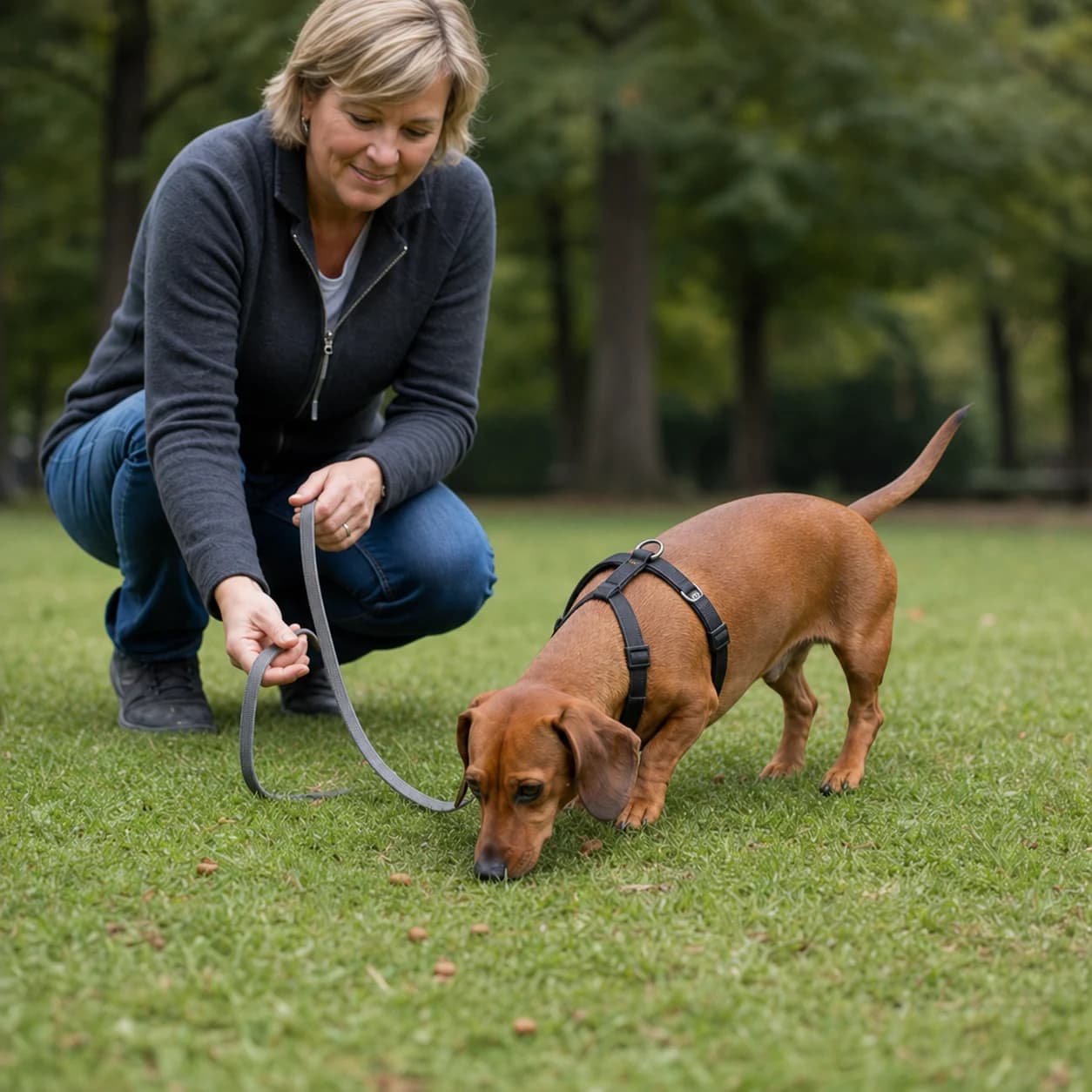
Scent games are especially useful because they let the dog perform natural work without requiring speed. Hide a few pieces of the measured meal in boxes, scatter kibble in grass, teach a simple "find it," or place an easy trail through one room. Keep the first searches obvious so the dog learns the game before difficulty rises.
Training succeeds when the reward competes with the environment:
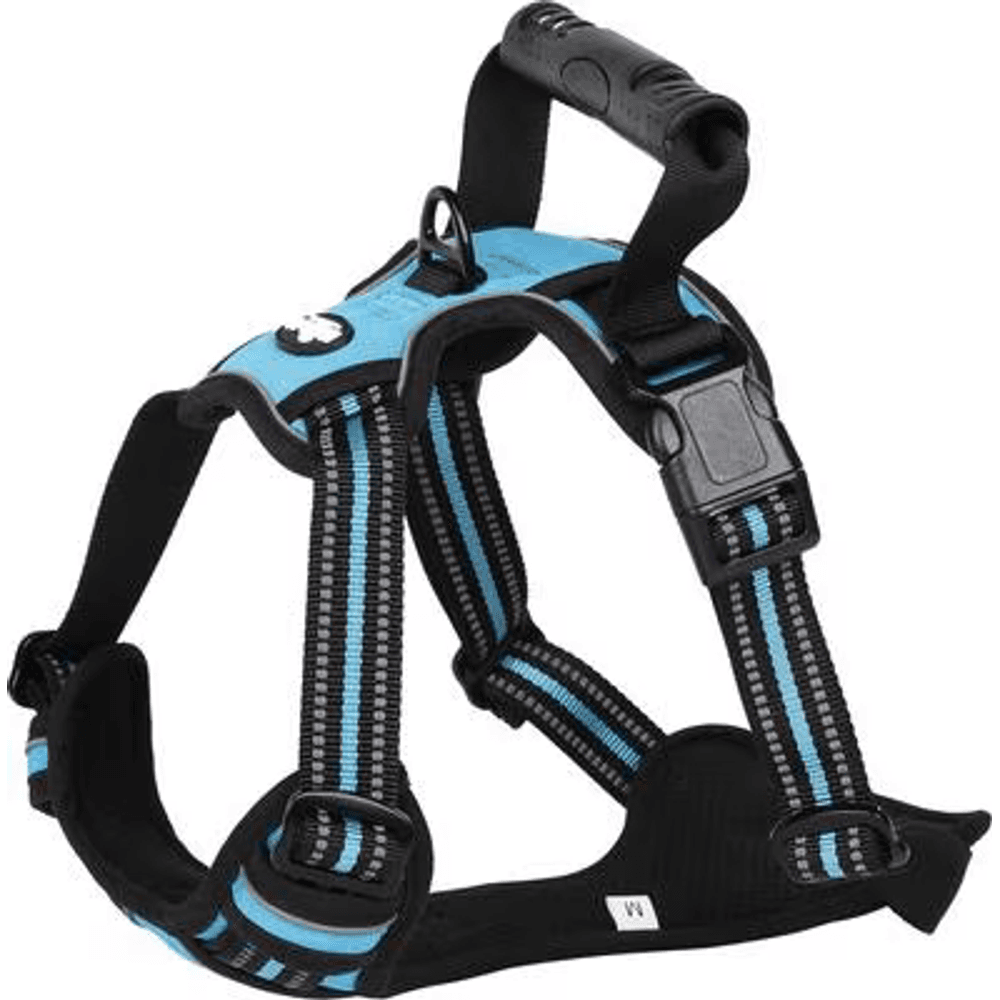
A padded, reflective no-pull harness that spreads leash pressure across the chest instead of the throat, the switch most vets recommend for a dog with a cough, a collapsing trachea, or any airway irritation so the leash never presses on
Petful may earn a commission when you click through to Chewy, at no extra cost to you.
- Teach a cue in a quiet room.
- Reward promptly with food, a toy, access to sniffing, or another outcome the dog values.
- Add one distraction at a time.
- Keep sessions short enough that the dog remains engaged.
- Prevent unwanted rehearsal with gates, leashes, covered windows, and secure storage.
- End with a simple success and a chance to settle.
An adjustable EliteField no-pull harness is one existing option for walks, but it must fit the actual dog without rubbing the armpits or restricting shoulder movement. A harness does not teach loose-leash walking by itself. Pair equipment with reinforcement for staying near the handler.
House training can take patience. Use a consistent schedule after waking, meals, play, and changes in activity. Go outside with the dog, reward immediately after elimination, and supervise or confine safely indoors when you cannot watch. Punishing a hidden accident can teach avoidance of the person instead of the correct toilet location.
Barking should be treated as information. First identify the trigger, then reduce repeated exposure and teach an alternative behavior. For a dog barking at a window, block the view and reward moving to a mat after one alert. For distress when alone, address the separation pattern rather than using a bark collar to suppress the sound.
Living with children and other pets
Dachshunds can live successfully with children, cats, and other dogs, but the breed label does not guarantee compatibility. Their long backs and relatively small size make rough play risky, and prey interest can matter around small pets. The individual dog's history provides better evidence than a general promise.

Set family rules before the dog arrives:

Petful may earn a commission when you click through to Chewy, at no extra cost to you.
- Children sit on the floor for calm interaction instead of carrying the dog.
- No one disturbs the dog while it eats, sleeps, chews, hides, or uses a safe bed.
- Adults supervise every interaction with young children.
- Introductions to cats and dogs begin with distance, barriers, and escape options.
- Food, chews, and valued toys are separated until behavior is well understood.
- Chasing is interrupted through management rather than allowed because it looks playful.
Do not label growling as stubbornness. Growling communicates discomfort and deserves space and assessment. Petful's broader dog aggression guide explains why breed lists are less useful than context, history, and current behavior.
Back-aware home setup and handling
Dachshunds are predisposed to intervertebral disc disease, often shortened to IVDD. Sensible home choices can reduce unnecessary slips, falls, and uncontrolled jumping, but no ramp, harness, supplement, or lifting technique can guarantee prevention. Genetics, age, body condition, activity, and chance all contribute to an individual dog's risk.

Create traction with secure rugs on slippery routes. Block unsupervised stair access where falls are likely. If you use a ramp, choose a stable model with a gentle angle and train the dog to use it calmly. Place water, rest areas, and commonly used routes on one level when practical. An orthopedic FurHaven sofa bed can provide a comfortable floor-level rest option, but a bed is not an IVDD treatment.
To lift a Dachshund, place one hand under the chest and the other under the hindquarters so the body stays supported and reasonably level. Hold the dog close to your torso. Do not lift by the front legs, let the rear hang, or allow a child to carry the dog without capable adult control.
- Contact a veterinarian promptly if a Dachshund cries out, refuses to move, develops a hunched posture, walks unsteadily, knuckles a paw, drags a limb, or loses normal bladder or bowel control. Restrict uncontrolled movement while arranging care. Do not stretch the back, massage a painful spine, or wait for a supplement to work. Severe or worsening neurologic signs can be an emergency.
Healthy weight is part of back-aware care because excess body fat increases the load the dog carries. Judge body condition rather than chasing one internet number. Ask a veterinary professional to show you how to feel the ribs and recognize the dog's waist, then measure meals and include treats in the daily total.
Dachshund health and lifespan
IVDD is the breed's most recognizable health concern, but Dachshunds can also experience dental disease, obesity, eye conditions, orthopedic problems, skin or ear disease, and other individual issues. A veterinary exam is the right place to turn symptoms into a diagnosis. A breed guide can describe risks, but it cannot tell whether one dog is healthy.
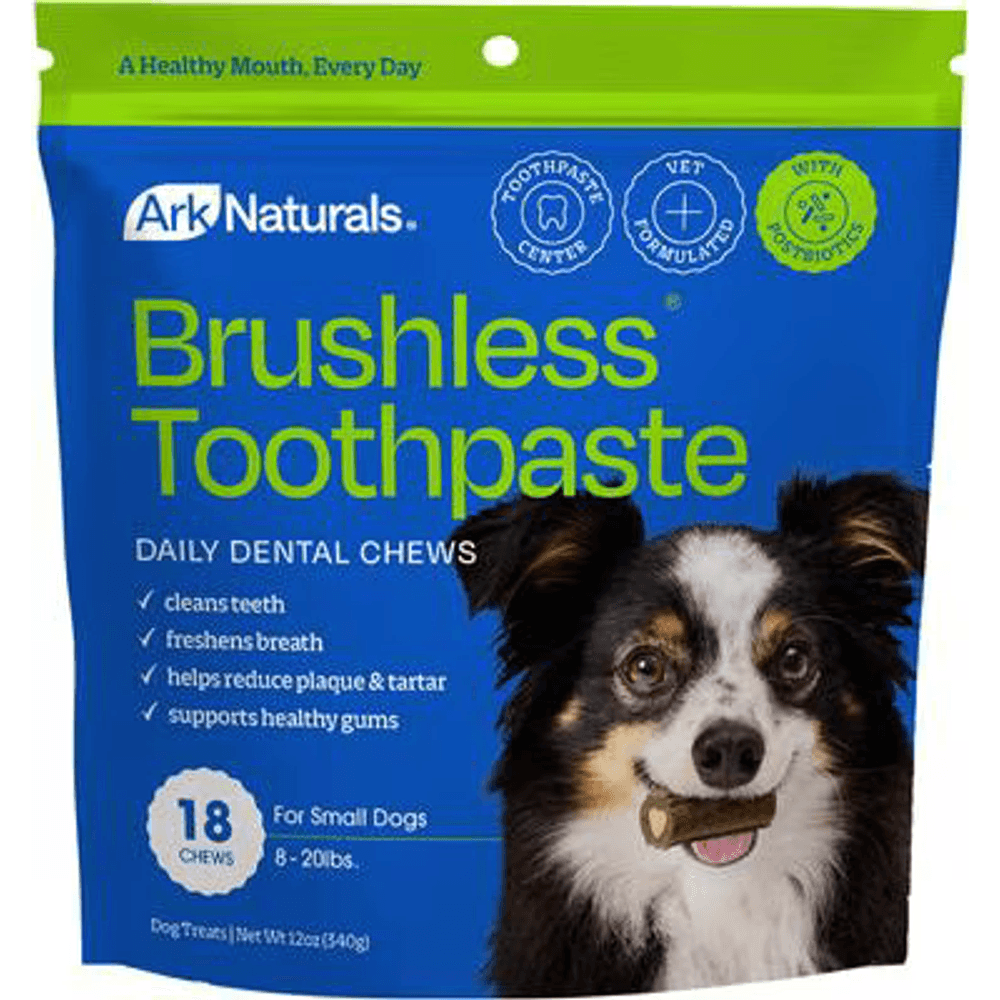
Brushless dental chews for small dogs with a toothpaste center that cleans teeth, reduces plaque and tartar, and freshens breath as they chew. A no-brushing daily option for dogs 8 to 20 pounds.
Petful may earn a commission when you click through to Chewy, at no extra cost to you.

Preventive care includes:
- Regular veterinary examinations and recommended vaccines and parasite prevention
- Measured feeding and body-condition checks For recipe and portion comparisons, see our guide to the best dog food for Dachshunds.
- Daily or frequent tooth brushing with dog-safe products
- Nail, ear, skin, movement, appetite, and bathroom-habit observation
- Prompt assessment of sudden pain, weakness, or behavior change
- Health screening documentation when choosing a breeder
Many Dachshunds live into the low-to-mid teens, but no lifespan number predicts one dog. Genetics, size, body condition, disease, preventive care, accidents, and access to treatment all matter. Petful's Dachshund lifespan guide owns the evidence, senior-care decisions, and longevity factors in depth.
Finding and preparing for a Dachshund
Rescue, a foster-based organization, and a responsible breeder can all provide useful information. An adult in foster care often offers the clearest evidence about house training, barking, alone time, other animals, handling, and ordinary indoor behavior. A puppy offers less certainty and requires a plan for sleep, toilet trips, safe socialization, veterinary care, and gradual training.
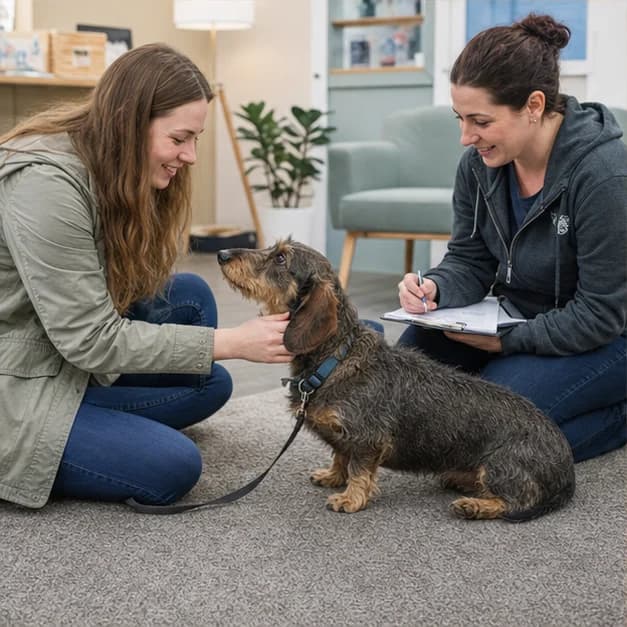
Ask a rescue for specific examples rather than adjectives. "Friendly" is less useful than knowing what happens when a visitor enters, another dog passes on leash, someone touches a paw, or the dog is left for 30 minutes. Ask about medical records, bite or escape history, resource guarding, mobility, and the organization's return support.
A responsible breeder should provide independently verifiable health information, let you learn about the parents' temperament and adult size, explain how puppies are raised, and offer a contract with lifetime take-back support. Avoid sellers who promise a "teacup" adult size, guarantee a personality, refuse to show records, always have many breeds available, or use urgency to prevent careful questions. Petful's guide to spotting a puppy mill gives a fuller red-flag checklist.
The purchase or adoption fee is only the starting cost. Budget for veterinary care, training, food, insurance or emergency savings, dental care, secure gates, a carrier, correctly fitted walking equipment, grooming, and help during travel or long workdays. A lower acquisition price can become very expensive when records, early care, or responsible support are missing.
Dachshund mixes and individual variation
A Dachshund mix may inherit any combination of traits carried by the Dachshund and the other parent or parents. The label cannot promise adult size, coat, shedding, temperament, health, or suitability for children. When ancestry is uncertain, current behavior, measured size, veterinary records, and foster observations are more useful than a visual guess.
Petful's Dachshund mix guide compares popular crosses with range-based language and explains how to assess the individual dog. This hub does not list mixes because cross-specific intent belongs to that spoke.
Is a Dachshund right for you?
A Dachshund is a good pet when the household appreciates hound behavior and is willing to manage it. The breed is a difficult fit when people want silence, instant off-leash reliability, careless handling, or a dog that will automatically accept every child and animal.
| Good-fit conditions | Difficult-fit conditions |
|---|---|
| You enjoy scent games and short reward-based training | You expect obedience without reinforcement or management |
| You can plan for barking and teach a quiet routine | Shared walls require silence and no barking plan exists |
| Children can follow gentle handling rules under supervision | Young children will carry, chase, or climb on the dog |
| You can use gates, traction, secure fencing, and measured feeding | Stairs, slippery floors, and uncontrolled jumping cannot be managed |
| You can arrange gradual alone-time training and midday help if needed | The dog must immediately tolerate a long workday alone |
| You will budget for veterinary and dental care | The purchase price is treated as the full cost |
The honest downside is that the same courage and persistence people find charming can appear as barking, digging, chasing, house-training difficulty, guarding, or refusal to disengage from a scent. Those are not reasons to dislike the breed. They are reasons to select carefully and build a routine before the dog arrives.
Frequently asked questions about Dachshunds
Some Dachshunds take longer to house-train because outdoor weather, scent distractions, and a history of indoor accidents can compete with the owner's plan. Use a consistent schedule after waking, meals, play, and activity changes. Go outside with the dog and reward outside immediately. Supervise or use a safe confinement area indoors, clean accidents thoroughly, and avoid punishment. A sudden loss of house training in an adult needs veterinary attention.
They can be good companions for children who use respectful handling, but size alone does not make an interaction safe. Adults should supervise, prevent carrying or rough play, and protect the dog's food, sleep, and retreat space. An older child who can follow rules is often easier to match than a toddler. Choose the individual dog based on history and observed comfort, not a universal breed promise.
Yes, some Dachshunds live well in apartments when they receive daily toilet trips, sniff walks, training, enrichment, and a plan for alert barking. Floor space matters less than the routine and the building's noise tolerance. Teach calm hallway behavior, block repeated window barking, provide protected rest, and arrange help if the dog cannot yet manage the required alone time.
Some do, especially when the individual has a calm history and introductions are gradual. Prey drive and chasing can still matter around cats or small animals. Begin with barriers, leashes, distance, and separate resources. Give every animal an escape or retreat area, supervise early contact, and do not leave them together solely because the first meeting looked friendly.
The acquisition cost varies widely by location, age, rescue fee, breeder program, and health documentation. Ongoing costs include veterinary care, food, training, dental care, grooming, equipment, pet sitting, and emergency savings or insurance. Compare lifetime readiness rather than shopping by puppy price. A suspiciously low price with no records or support can create higher medical and behavior costs later.
There is no safe breed-wide number. A healthy, trained adult may manage several hours, while a puppy needs frequent toilet breaks and an anxious dog may struggle within minutes. Build alone time gradually, watch for distress rather than only property damage, and arrange a midday break when the required absence exceeds the individual's current ability. Sudden separation distress deserves veterinary and qualified behavior support.
Most healthy adults benefit from daily age-appropriate movement divided across more than one outing, plus sniffing and brief training. The useful amount depends on size, age, body condition, weather, fitness, and health. Choose controlled walks and scent games over repetitive high-impact jumping. A puppy, senior, or dog with pain needs an individual veterinary plan instead of an adult exercise target.
Support the chest with one hand and the hindquarters with the other, keep the body reasonably level, and hold the dog close to your torso. Do not lift by the front legs or let the rear hang. Children should not carry a Dachshund unless a capable adult has judged that the child can support the dog safely. If lifting causes pain or the dog becomes weak or unsteady, contact a veterinarian.
The bottom line
A Dachshund fits people who see the whole dog behind the comic outline: a courageous scent hound with opinions, a voice, and a strong desire to investigate. Daily life works best with patient training, secure management, sniffing opportunities, gentle handling, healthy weight, and a home arranged to reduce avoidable slips and falls.
Choose the individual dog for your real household. Verify records, ask specific behavior questions, and make room in the budget for preventive and unexpected care. When those foundations are in place, the Dachshund's humor, devotion, and determination can be exactly what makes the breed such an engaging companion.

Kristine Lacoste has been researching dog and cat breeds for nearly a decade and has observed the animals up close at dog shows in both the United States and the United Kingdom. She is the author of the book One Unforgettable Journey, which was named as a finalist for a Maxwell Award from the Dog Writers Association of America, and was host of a weekly pet news segment on the National K-9 Academy Radio Show. In addition, she was the New Orleans coordinator for Dogs on Deployment, a nonprofit that helps military members and their pets, for 3 years. Kristine has researched and written about pet behaviors and care for many years. She holds a bachelor’s degree in psychology, another bachelor’s degree in English and a Master of Business Administration degree.
Sign up for expert-backed reviews and safety alerts all in one place.