Dog Dental Care: Comprehensive Guide to Dog Dental Cleaning, Costs, and Chews
Dog dental care combines daily plaque prevention with professional treatment. Learn what exams and cleanings involve, how to compare estimates, and how to choose safe home-care products.
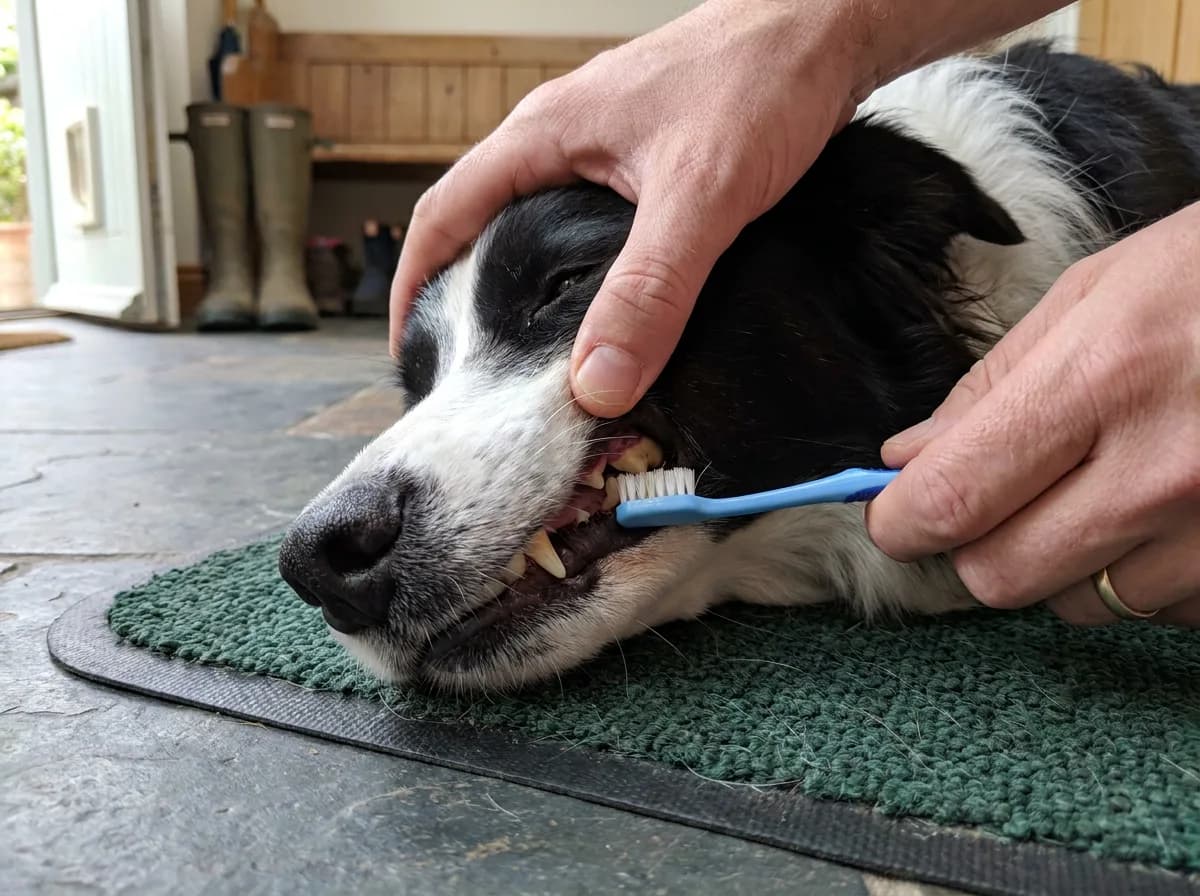
Gently lift the lip and brush the outer tooth surfaces with a soft brush and pet-safe toothpaste.
Petful is reader supported. As an affiliate of platforms like Amazon and Chewy, we may earn a commission when you buy through links on this page. There is no extra cost to you.
Dog dental care has two jobs: prevent new plaque from building up, and find or treat disease that home care cannot reach. Daily brushing helps with the first. Veterinary examinations, dental radiographs and treatment under anesthesia address the second. A dog who still eats enthusiastically can nevertheless have a painful mouth.
At a family reunion, my cousin told me her dog had just had a reasonably priced, convenient “dental” without anesthesia. That conversation was the inspiration for this guide. A clean-looking tooth surface and a complete veterinary dental procedure are very different things. Understanding the difference helps you decide what your dog needs and what a treatment estimate actually includes.

Sign up for expert-backed reviews and safety alerts all in one place.
Facts and Myths About Dog Dental Care
Good dog oral health starts with regular dental checkups and daily hygiene. Plaque is the soft bacterial film that reforms on teeth. When it mineralizes, it becomes hard tartar, also called calculus. Brushing disrupts plaque; it does not safely remove established calculus or repair the supporting tissue lost to periodontal disease. Common symptoms of dental problems in dogs include bad breath, red gums and visible deposits, even when the dog is not refusing meals.
- 1Daily home care limits new plaque, but it cannot replace an examination or treat an infected tooth.
- 2Dental radiographs and periodontal probing help reveal disease hidden below the gumline.
- 3Ask for a written estimate and a clear consent plan before an anesthetized procedure.
Owners sometimes describe a damaged or infected tooth as “rotten.” You cannot fix it with a harder chew, a stronger dental powder or home scraping. A veterinarian must assess whether the tooth can be treated or needs extraction. If there is facial swelling, bleeding, a broken tooth or obvious difficulty eating, arrange a prompt examination rather than experimenting with dental products. If a dog stops enjoying dental treats, drops them or chews on one side, pause the treats and arrange a mouth examination; changing brands is not the first answer to possible pain.
For a comfortable mouth, start with a brush you can control and a routine your dog accepts. A small head should reach the outer tooth surfaces without forcing the jaws open. The Virbac C.E.T. dual-ended toothbrush offers two head sizes; choose the end that fits your dog rather than using the larger end automatically.
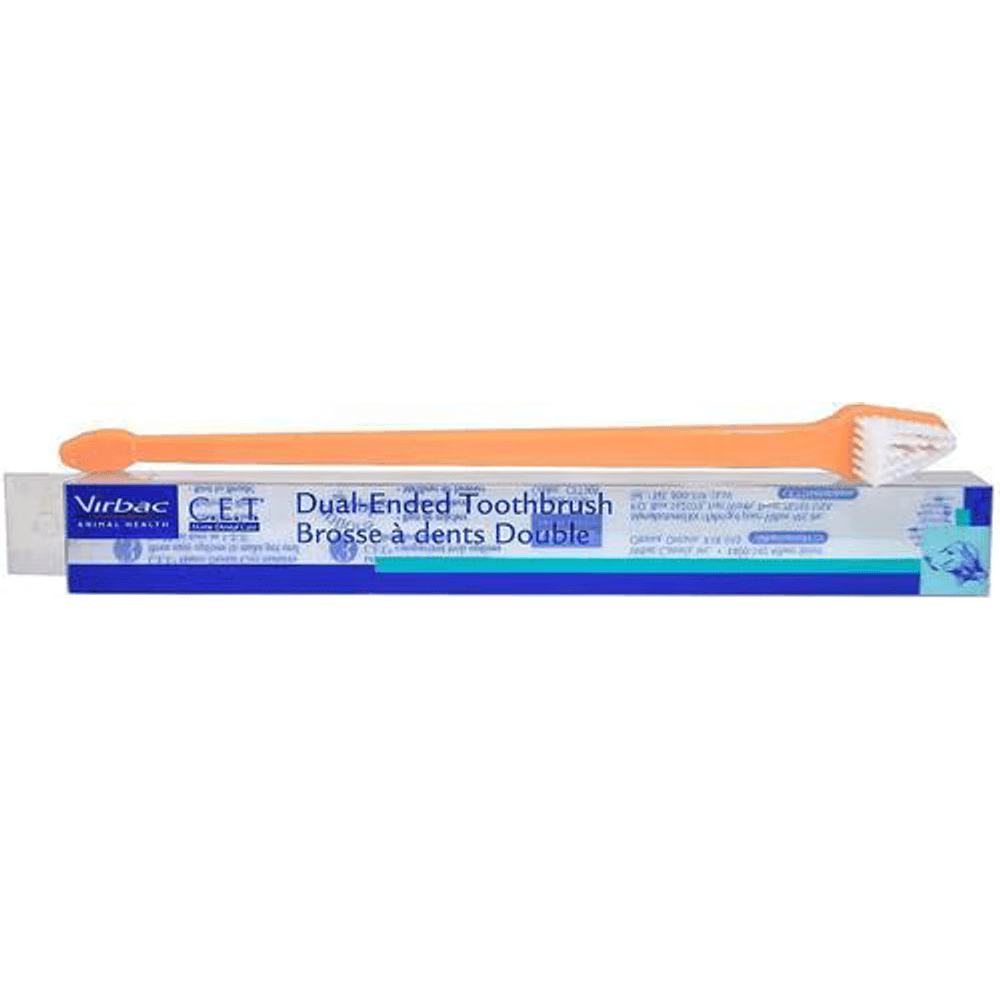
A dual-ended toothbrush with a large and a small head to fit different mouth sizes and reach the back molars where plaque hides. Soft bristles angled for the gumline.
Petful may earn a commission when you click through to Chewy, at no extra cost to you.
“Stage 4 tooth decay” usually refers to advanced periodontal disease, not ordinary human-style cavities. At that stage, more than half of the tooth’s supporting attachment has been lost. The stage belongs to an individual tooth, so different teeth in one mouth can need different treatment. A photograph or a glance at brown tartar cannot establish that diagnosis.
- Normal eating does not rule out pain: many dogs continue to eat despite inflamed gums or diseased teeth.
- Ordinary dry kibble is not a substitute for brushing. A specifically evaluated dental diet is a different product with its own directions.
- Professional cleanings are not a once-in-a-lifetime task. The timing depends on your dog’s examination, disease risk and home-care routine.
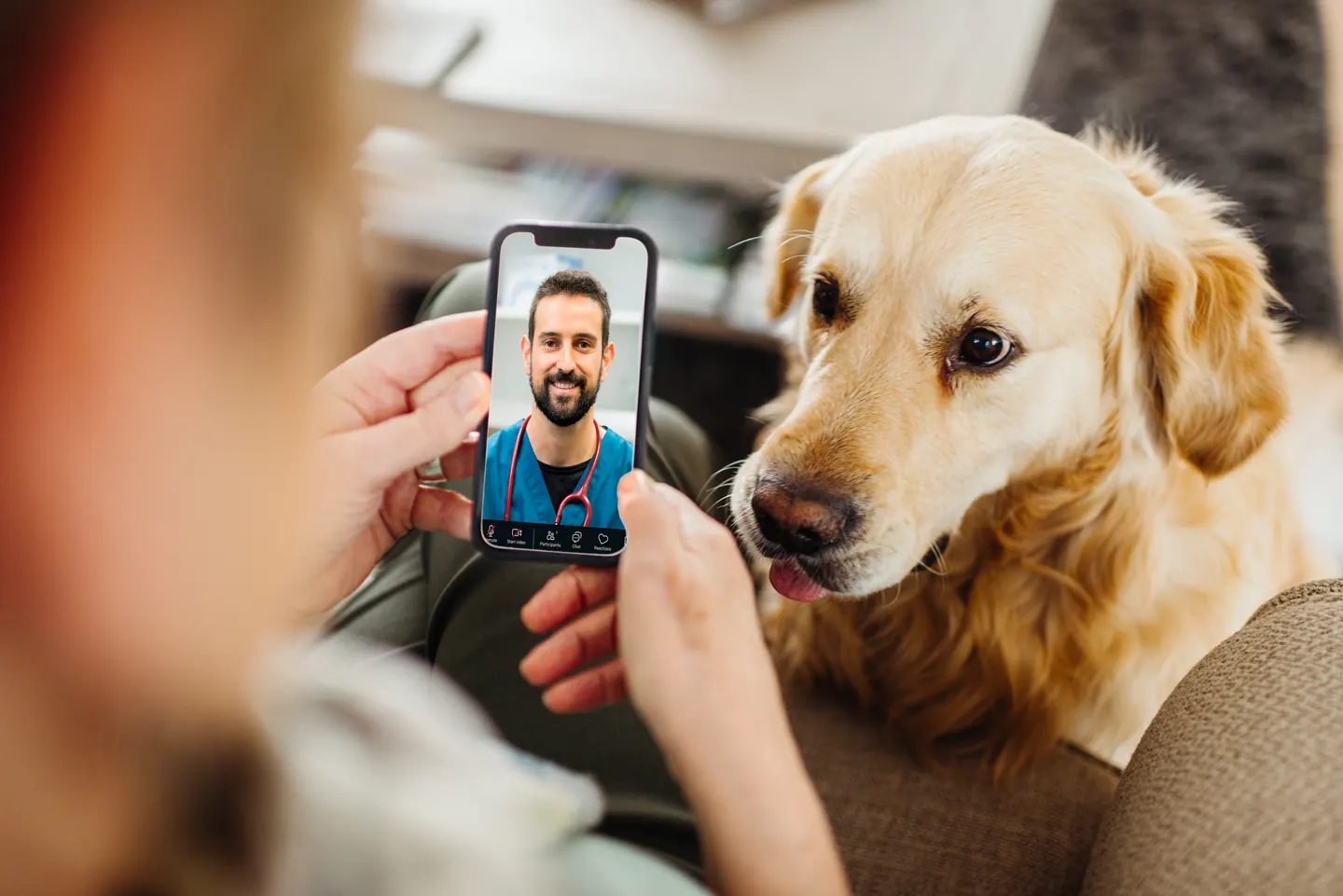
 Sponsored
Want a vet's take on your dog's teeth and gums?
Talk to a licensed vet at Dutch over video, often the same day. They can recommend treatment and prescribe it when it's appropriate.
Use code Pets60
Plans start at $12/month · covers up to 5 pets
- Licensed vets in most states
- Rx for 150+ conditions
- 4.7 on Trustpilot
Home Dental Care for Dogs
The most useful daily habit is gentle toothbrushing. AAHA’s home-care guidance recommends daily brushing because plaque returns continually. Brushing removes soft plaque, not hardened calculus. Begin only when your dog’s mouth is comfortable and your vet has cleared any painful disease. Forcing a toothbrush against sore gums can make the next attempt harder and delay the care your dog actually needs.
Choosing Dog Toothpaste
Use dog toothpaste, sometimes sold as dog dental paste, rather than a human toothpaste or homemade mixture. Dogs swallow what you put in their mouths. Avoid products containing xylitol and do not use mouthwash intended for people. Flavor and texture matter because a product your dog calmly accepts is more useful than one that makes brushing a daily struggle.
A pet enzymatic toothpaste such as Virbac C.E.T. poultry-flavor toothpaste is one option for that routine. Its pet-specific formulation does not mean it can dissolve existing hard tartar or cure gum disease. For ingredient, formulation and acceptance differences, use Petful’s dog toothpaste guide, then choose with your vet if your dog has dietary restrictions.
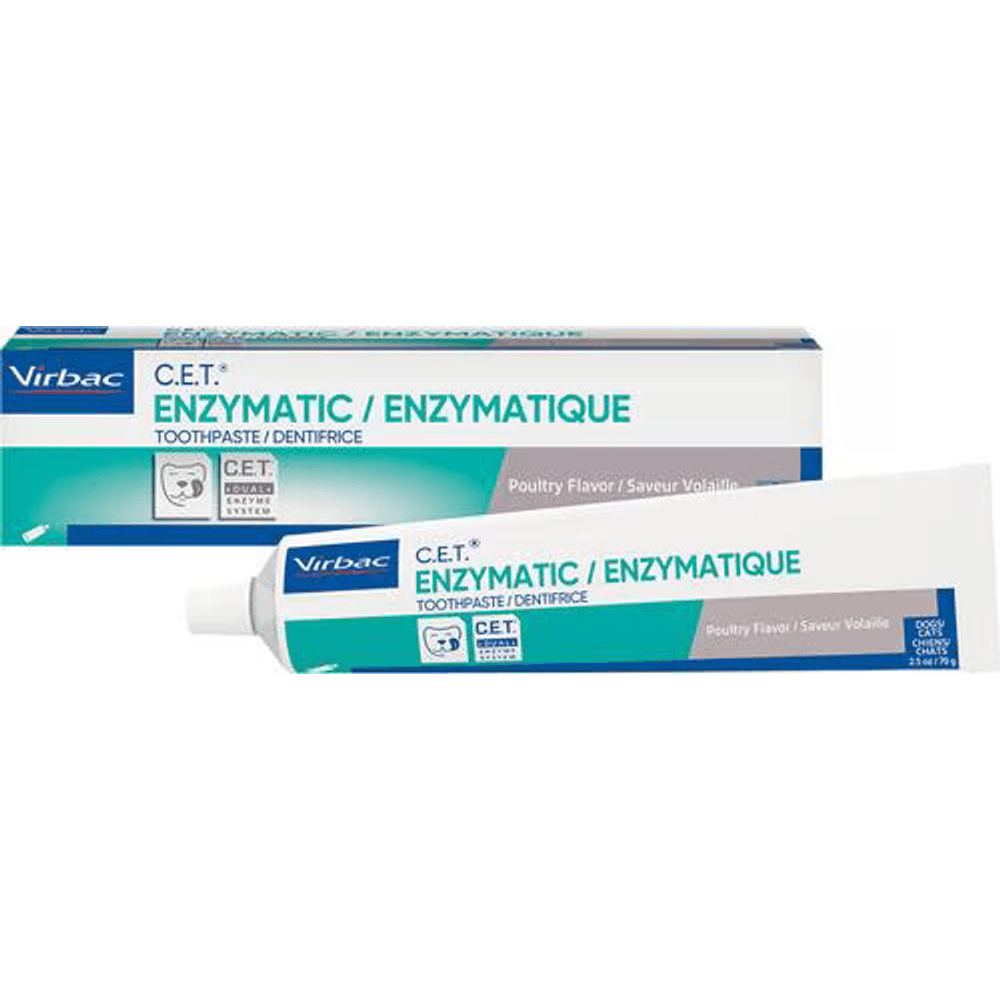
The vet-favorite enzymatic toothpaste. Its dual-enzyme system keeps working between brushings to control plaque and freshen breath, and the poultry flavor makes daily brushing easy.
Petful may earn a commission when you click through to Chewy, at no extra cost to you.
Build a gentle brushing routine
Dental floss is not a replacement for brushing a dog’s teeth. Rather than forcing human floss between teeth, ask the veterinary team to demonstrate an appropriate home routine for your dog’s mouth. Cornell’s dental guidance prioritizes brushing and suitable adjuncts; persistent trapped material or a sore space between teeth warrants an examination.
- Choose a quiet time. Let your dog investigate the brush and taste a small amount of toothpaste made for pets.
- Lift the lip gently, with the mouth relaxed. Start with a few outer tooth surfaces rather than trying to scrub the entire mouth immediately.
- Use light pressure along the gumline. Build up gradually as your dog becomes comfortable, including the back teeth you can safely reach.
- Stop if there is pain, marked bleeding, snapping or distress. Ask your veterinary team to demonstrate a safer technique instead of wrestling with your dog.

The goal is consistent contact with the tooth surface, not vigorous scrubbing or a perfect performance on the first day. A finger brush may suit some dogs, while a small handled brush keeps your fingers farther from the teeth. Neither should be forced into the mouth of a frightened or painful dog. Reward calm cooperation so the routine remains manageable.
To keep tartar from returning, work on the plaque that comes before it. Daily brushing, an appropriate accepted dental product when useful, and the recheck schedule your vet recommends form a practical routine. If the deposits are already hard, leave scaling to the veterinary team. Our guide to removing plaque from dog teeth explains that prevention-versus-treatment distinction in more detail.
If you are choosing the brush itself, our best dog toothbrush roundup compares finger, dual-ended and small-breed options.
Dog Dental Exams: What to Expect
Does your dog really need a dental procedure? The decision starts with an examination, not age alone or the color of the teeth. If your dog is getting their teeth cleaned, ask how the visit moves from screening to diagnosis and treatment. Your vet looks for gingivitis, broken or loose teeth, abnormal growths, painful areas and other clues. Share changes such as dropping food, chewing on one side, pawing at the mouth or avoiding toys, even if appetite seems normal.
What an awake check can and cannot tell you
During a routine checkup, most dogs allow a brief look inside the mouth. Even a cooperative patient cannot reliably remain still for detailed probing around every tooth or diagnostic dental X-rays. Your vet may therefore recommend a procedure while still being unable to tell you the exact number of extractions. That uncertainty reflects the limits of the examination, not a reason to ignore the findings.
Think about your own dental visit: a proper assessment takes more than looking at the front surfaces of your teeth. Dogs also cannot understand why sharp instruments need to move under their gums. AAHA explains why anesthesia is central to complete dental assessment and treatment, including intraoral radiographs and a controlled, protected airway.
Understanding a dog dental grading chart
A dog dental chart records findings tooth by tooth. Periodontal staging describes inflammation and loss of the tissues that hold a tooth in place. AAHA’s staging guidance combines periodontal probing with dental radiographs for the most accurate assessment. Use the stages to understand your vet’s explanation, not to grade your dog’s mouth yourself.
| Stage | Clinical finding | What the owner should understand |
|---|---|---|
| 1: Gingivitis | Inflamed gums without attachment loss | Address plaque and obtain veterinary advice before disease progresses. |
| 2: Early periodontitis | Less than 25% attachment loss | Disease extends beyond a cosmetic surface deposit. |
| 3: Moderate periodontitis | 25–50% attachment loss | Treatment decisions depend on the particular tooth and whether it can be maintained. |
| 4: Advanced periodontitis | More than 50% attachment loss | Significant support has been lost; advanced treatment or extraction may be needed. |
Ask your vet to connect the chart and radiographs to the proposed treatment and written estimate. A dark deposit on one tooth may attract your attention, while a less dramatic-looking tooth has a damaged root or deeper periodontal pocket. The treatment plan should explain what was found, what can be preserved and what will relieve pain.

Anesthesia is managed, not risk-free
Anesthesia carries risk, and the plan should account for your dog’s examination, medical history and recommended testing. Monitoring, airway protection, temperature support and recovery supervision reduce avoidable problems. Local dental nerve blocks can form part of the pain-control plan when treatment is needed. A senior dog needs an individual assessment; age by itself is not a complete reason to accept or reject treatment. Discuss your concerns and your dog’s previous anesthetic experiences with the veterinary team.
- Removing visible tartar from an awake dog cannot replace full-mouth dental radiographs, reliable periodontal probing or treatment below the gumline. Cosmetic improvement does not establish that the mouth is healthy.
Importance of VOHC for Dog Dental Care
Choosing Dental Chews
A dental chew can complement brushing when your dog can use it safely. It gives the tooth surfaces another opportunity for mechanical contact, but swallowing a treat quickly is different from chewing it. Choose the labeled size, supervise use and remove a piece that becomes a swallowing hazard. Dogs with sore or damaged teeth should be examined before you offer anything intended for sustained chewing.
Greenies Regular dental treats are one example from an established dental-chew range. This particular regular-size offer is not appropriate for every dog: check the weight and age directions on the package and choose another size when needed. Include the calories in your dog’s daily allowance, and avoid assuming that more chews will produce better teeth.
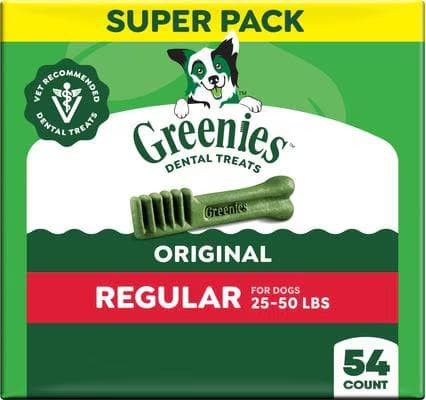
Daily dental chew that cleans teeth, freshens breath, and is accepted by the Veterinary Oral Health Council. Sized for dogs 25 to 50 lbs.
Petful may earn a commission when you click through to Chewy, at no extra cost to you.
The Veterinary Oral Health Council’s Seal of Acceptance is a useful filter when choosing home-care products. The current VOHC accepted-product list specifies which exact products meet its requirements for plaque control, tartar control or both. “VOHC accepted” is more precise than calling every dental product vet approved, and acceptance does not apply automatically to everything sold by the same brand.
Match the claim to the job. A product accepted for tartar control should not automatically be described as having the same plaque evidence. Neither claim promises that a dog will avoid periodontal disease, and a seal does not mean a chew is suitable immediately after an extraction. Your dog’s size, chewing habits, diet and dental condition still govern the choice.
For a broad comparison of products and ingredients, see our best dental chews for dogs guide. The VOHC dental chew guide explains how to match an exact accepted product and its plaque or tartar claim. For a small dog, a large dog or a senior with changing chewing comfort, our chew size and texture guide helps narrow the fit. “Natural,” grain-free or long-lasting describes a feature, not proof of better dental results.
- Avoid very hard items that can fracture teeth, and ask your vet which textures are appropriate for your dog.
- Introduce any new treat with its ingredients and calories in mind, especially for dogs on a restricted diet.
- Treat a dental chew toy as a supervised activity. Choose a size that cannot be swallowed, avoid tooth-breaking hardness and remove damaged pieces. Stop if chewing causes discomfort. A toy does not replace brushing, an examination or professional cleaning.
Wipes and gels may help with accessible outer surfaces, but they do not clean a periodontal pocket. Match any adjunct to a specific job instead of layering products without a clear purpose.
Dental powders: Fera, ProDenta and evidence
Fera Pets Dental Support is a food-topper powder containing brown kelp, enzymes, botanicals and a heat-treated postbiotic. Its label cautions about use in animals with thyroid disease. Ask your vet whether that formulation fits your dog before adding it, especially alongside other supplements. Ingredient studies and customer reviews do not establish that the complete powder treats an infected tooth.
ProDenta dog dental powder is another food topper, marketed by Pup Labs for oral-health support; its current ingredient information includes spirulina. Compare the full label, feeding directions and evidence for the finished formula, rather than assuming its claims apply to established periodontal disease. Neither a sprinkle-on format nor a veterinarian-formulated claim makes a powder a substitute for daily brushing or necessary treatment.
There is no demonstrated best dog dental powder for every mouth. Prefer evidence for the exact product and plaque or tartar outcome, check the current VOHC list, and ask how your vet will assess whether the adjunct is helping. Fresher breath alone does not show that disease below the gumline has resolved.
Dental diets have a separate preventive role
A dental diet for dogs is formulated to reduce plaque or calculus through its texture, size or other properties. AAHA’s nutrition guidance supports checking the exact diet’s VOHC evidence. Ordinary dry kibble does not automatically have those demonstrated effects. Choose a complete, balanced diet appropriate for the dog’s life stage, calories and medical needs; ask your vet before replacing another therapeutic diet. This long-term prevention decision differs from temporarily softening food after surgery.
 Sponsored
Vet care that's always there
Unlimited video calls and messaging with licensed vets for less than a typical vet visit. One membership covers up to five pets.
Use code Pets60
Plans start at $12/month · covers up to 5 pets
- Licensed vets in most states
- Rx for 150+ conditions
- 4.7 on Trustpilot
Water additives as an optional adjunct
A water additive may appeal when an owner wants another simple breath-care step. It should remain an adjunct to the routine, and your dog must continue drinking normally. Follow the exact dilution instructions, keep the bowl clean and stop using a product if it discourages drinking or causes a suspected reaction. Never withhold plain water to make a dog drink a treated bowl.
Oxyfresh Premium Pet Care Solution is a water-additive option marketed for pet breath care. It is not presented here as a VOHC-accepted product or a treatment for established periodontal disease. Despite “skip the brushing” wording in some marketing, daily brushing and veterinary treatment still have distinct jobs that a water additive cannot take over.
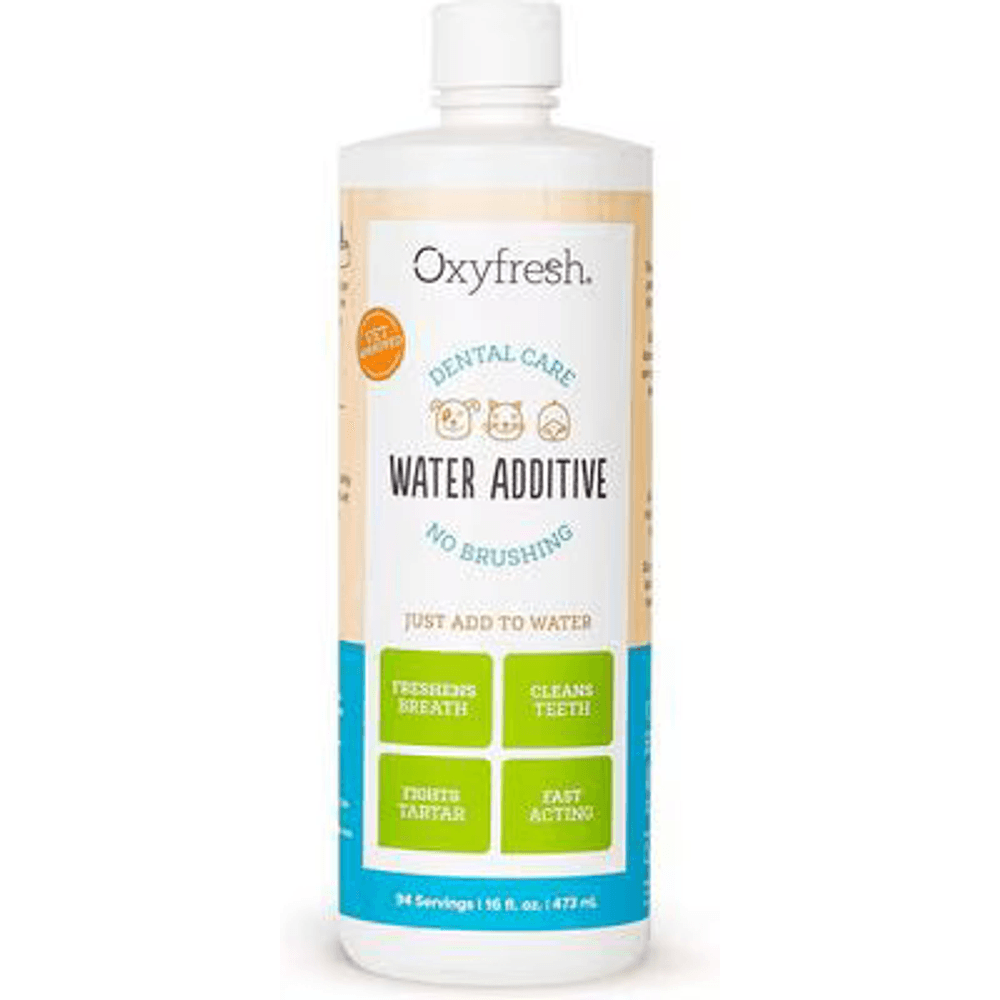
A taste-free, odor-free water additive you pour straight into the bowl. No brushing needed: it freshens breath, helps clean teeth, and fights tartar. About 94 servings per 16-oz bottle.
Petful may earn a commission when you click through to Chewy, at no extra cost to you.
If your dog will tolerate neither brushing nor a suitable chew, tell your veterinary team what happens when you try. Pain, handling fear, a poorly fitting brush or a disliked flavor may require different solutions. A realistic, gradual routine with appropriate rechecks is more useful than a cupboard full of products and no plan for how to use them.
Dog Dental Procedures and Costs
A dental visit and a complete dental procedure are different services. An office examination identifies visible concerns and starts the plan. An anesthetized procedure includes substantially more staff time, equipment, monitoring and treatment. Ask whether a quoted price covers only a cleaning or also bloodwork, full-mouth dental radiographs, extractions, pain relief and follow-up.
As a US budgeting starting point, a straightforward professional cleaning may be around $300–$800 before extractions, with considerably higher totals when more complex treatment is needed. This is not an all-inclusive national fee. Petful’s dog teeth cleaning cost guide provides current planning ranges and explains how imaging, monitoring, location and extraction difficulty change the estimate.
The useful question is not simply “How much is a full dental?” It is “What care is included, and what could change once you can examine the whole mouth?” One clinic may bundle services that another lists separately. A very low price for an awake cosmetic cleaning does not represent the same procedure as anesthetized assessment and treatment.
Agree on the plan before the procedure
- Request an itemized written estimate with an expected range and the amount you authorize.
- Ask how the team handles findings such as a damaged root, loose tooth or advanced periodontal pocket.
- Confirm whether staff will call before additional treatment, what happens if you cannot be reached and whether staged treatment could be appropriate.
- Check which medications, recovery instructions and rechecks are included. Ask about payment arrangements before the procedure date.
An awake examination cannot reveal every problem, which makes advance planning particularly useful. AAHA’s dental guidelines discuss agreeing on the treatment plan and what happens when additional work is found. The clinic and owner should share a clear understanding before anesthesia begins.

What happens during a professional cleaning
After the pre-anesthetic assessment, the veterinary team administers and monitors anesthesia, protects the airway, examines and charts the teeth, takes dental radiographs and cleans above and below the gumline. Polishing follows scaling. Diseased teeth may need periodontal treatment, extraction or referral for another procedure, with local nerve blocks and other pain control as appropriate.
There is no reliable one-hour promise for every dog. A straightforward cleaning, several difficult extractions and specialist treatment require different amounts of time. Your dog also needs preparation and monitored recovery, so the total stay is longer than the time spent cleaning teeth. Ask when to expect an update and when the clinic will assess whether your dog is ready to go home.
When other treatments are needed
Ask which problem a proposed specialist procedure addresses and what follow-up it needs. Tooth preservation, a comfortable bite and repair of damaged tissues involve different decisions:
- A dog dental crown may protect a damaged tooth, often after root-canal treatment, but it does not make the underlying tooth stronger. VCA’s crown guidance explains why protection and remaining tooth health both matter. Ask whether preservation or extraction offers the better prognosis.
- A dental sealant can mean a plaque-control barrier or a material protecting exposed dentin. AAHA illustrates antiplaque sealants; Merck describes dentin sealants. Ask which purpose applies and what reapplication or monitoring is needed.
- An oronasal fistula is an abnormal opening between the mouth and nose. AAHA explains that dental disease can cause this connection, letting food or saliva enter the nasal cavity. Nasal discharge or suspected communication needs veterinary assessment and a repair plan, not home packing or a cleaning powder.
- Dental attrition is wear from tooth-to-tooth contact; chewing objects causes abrasion. A veterinary dental decision review distinguishes these problems. Worn teeth need examination and sometimes radiographs to assess internal damage; do not file a tooth yourself.
- Dental braces or other orthodontic treatment may help a dog whose abnormal bite causes trauma. AVDC’s position is that treatment should produce a comfortable, functional bite, not a cosmetic change. Discuss specialist expertise, alternatives and the required rechecks before agreeing to an appliance.
Managing Dog Dental Health After Procedures
Follow the discharge instructions for the treatment your dog actually received. A cleaning without extractions and oral surgery do not have identical healing needs. Ask when to feed, which food texture to use, which activities or toys to avoid, and when brushing or dental chews can restart. A fixed “wait one week” rule is not suitable for every procedure.
Before leaving, ask the team to show you which teeth were treated or removed and explain any findings that need later attention. Keep the discharge sheet and medication directions somewhere everyone caring for the dog can find them. Confirm the clinic’s daytime and after-hours contact details, the recheck date and the specific changes that should prompt a call. If the written instructions seem to conflict with something discussed earlier, clarify them before improvising at home.
Food, treats and medication
If soft food or softened kibble is prescribed, use the diet and duration your veterinary team recommends. Do not test healing with a hard chew because your dog seems eager to eat. Appetite does not prove the gums are comfortable. Avoid adding rich unfamiliar foods that could upset the stomach, and give only the medications prescribed for this dog. WebVet’s guide to food texture and dental discomfort explains feeding-comfort considerations; use your own veterinary team’s postoperative instructions.
- Call the clinic if you cannot give the prescribed medicine, your dog refuses the recommended food or discomfort seems uncontrolled.
- Ask promptly about persistent bleeding, increasing swelling, discharge or a recovery that is not following the clinic’s expectations.
- Seek urgent care for breathing difficulty, collapse or another severe change. Do not wait for a scheduled dental recheck in those circumstances.
Return to prevention after healing
Your vet may want a recheck before you resume brushing near extraction sites. Start again gently when cleared, and use the visit to review your dog’s daily routine. Some dogs need more frequent professional care because of tooth crowding, previous disease or difficulty maintaining home hygiene. The schedule should follow findings, not an automatic annual rule applied to every mouth.
Use the recheck to make the next step concrete: which teeth need extra attention, which product is appropriate now, and when the next oral examination should happen. If several people share feeding or brushing duties, agree on one routine so treats and medicines are not accidentally duplicated. Bring the actual product label when you need advice about a chew, toothpaste or additive.
Frequently Asked Questions
Tell the clinic before delaying care and ask for an itemized treatment estimate. Discuss which work is urgent, whether staged treatment is medically reasonable, and whether local nonprofit clinics, veterinary teaching hospitals or payment arrangements are available. These options are not guaranteed, and an infected or painful tooth may not safely wait. A cheaper cosmetic cleaning does not treat disease around the root.
A dog may continue eating and behaving normally despite a diseased tooth, but that does not make leaving it untreated comfortable or safe. Infection and pain can persist, and supporting tissues may deteriorate. Arrange a veterinary examination to determine whether treatment can preserve the tooth or extraction is needed. Do not pull a loose tooth or scrape it yourself.
There is no single age when a dog’s teeth inevitably become diseased. Risk varies with tooth crowding, mouth anatomy, previous disease and home care, and young dogs can develop problems too. Preventive examinations help identify gingivitis or damage before you notice obvious changes. Ask your vet when to begin a home routine and how often this particular dog should be rechecked.
References
- AAHA: Recommending home oral hygiene and products. Daily brushing, plaque control and the limits of home care.
- AAHA: Explaining the role of anesthesia. Complete oral assessment and treatment.
- AAHA: Periodontal disease staging. Gingivitis, attachment loss and diagnostic requirements.
- Veterinary Oral Health Council: Accepted products. Current product-specific plaque and tartar acceptance.
- AAHA Dental Care Guidelines. Consent, treatment planning and discharge guidance.
If you have questions or concerns, call your vet, who is best equipped to ensure the health and well-being of your pet. This article is for informational purposes only and is not a substitute for professional medical advice, diagnosis or treatment. See additional information.

VMD
Dr. Debora Lichtenberg, VMD, is a small animal and exotics veterinarian who has been practicing medicine for over 30 years. A graduate of the University of Pennsylvania School of Veterinary Medicine, Dr. Lichtenberg also trained at the Philadelphia Zoo. She now practices in the New York City area and lives in the West Village with her husband and her rescued pets, Cocoa and OG. Dr. Lichtenberg has been writing for Petful for many years, and she has been recognized with Certificates of Excellence from both the Dog Writers Association of America and the Cat Writers Association of America.
Sign up for expert-backed reviews and safety alerts all in one place.