VOHC Dog Dental Chews: What the Seal Means Before You Buy
Use this VOHC dog dental chews guide to compare seal claims, plaque or tartar support, size, calories, texture, product fit, and safety before buying.

For VOHC-style buying intent, the article should help readers verify evidence and fit before choosing a chew.
Petful is reader supported. As an affiliate of platforms like Amazon and Chewy, we may earn a commission when you buy through links on this page. There is no extra cost to you.
VOHC dog dental chews are worth comparing because the seal gives shoppers a clearer evidence signal than ordinary dental packaging. The hard part is that the seal does not make every chew right for every dog. You still need to match the claim, size, texture, calories, ingredients, and chewing behavior before you buy.
This guide is built for the shopper who wants an evidence-first shortlist, not a generic best-of list. Use it to understand what the Veterinary Oral Health Council seal means, how plaque and tartar claims differ, which dogs need extra caution, and how to compare current dental-chew options without treating any product as a substitute for brushing or veterinary dental care.
- 1VOHC acceptance is product-specific. Match the exact product and size to the current accepted-products list before relying on a plaque or tartar claim.
- 2Plaque, tartar, and breath claims are not the same. Buy for the claim you need, then check whether the chew fits your dog.
- 3The best VOHC dog dental chews still need the right weight range, calorie load, texture, feeding frequency, and supervision.
- 4Dogs that gulp treats, have painful teeth, need prescription diets, or show signs of dental disease should start with a veterinarian instead of a new chew.
- 5Dental chews can support home care, but they do not replace brushing, exams, or professional cleanings when those are needed.
- Start with the official VOHC accepted-products list, choose the dog category that matches what you want to buy, then verify the exact product name, size, claim, calories, and feeding directions. For most shoppers, the safest shortlist is not simply the most popular chew. It is the VOHC-accepted option that your dog will actually chew slowly, tolerate well, and use according to the label.

Sign up for expert-backed reviews and safety alerts all in one place.
What the VOHC Seal Means
The Veterinary Oral Health Council exists to recognize products that meet preset standards for plaque or calculus, which is tartar, in dogs and cats. VOHC does not make a chew safe for every dog. It reviews submitted product data and authorizes a seal for a specific product claim.
That detail matters when you are shopping. The VOHC accepted-products list includes dental diets, rawhide chews, edible chew treats, water additives, gels, sprays, toothpaste, toothbrushes, wipes, and professional sealants. A chew treat, a dental diet, and a water additive do not fit the same routine, even when they all sit under the oral-care umbrella.
| Claim on the product | What it points to | How to use it as a buyer |
|---|---|---|
| Plaque | Targets sticky buildup before it hardens | Best when you are building a prevention routine and can use the product consistently |
| Tartar | Targets mineralized buildup or tartar control | Useful when your concern is hardened buildup, but heavy tartar still needs a dental exam |
| Plaque and tartar | Broader claim coverage | Strong evidence signal, but still check size, calories, and chewing behavior |
| Breath or freshness language | May be tied to oral hygiene or ingredients | Do not confuse fresher breath with a full plaque or tartar claim |
| No clear VOHC claim | Marketing may still sound dental | Treat it as a general dental treat unless the exact product appears on the official list |
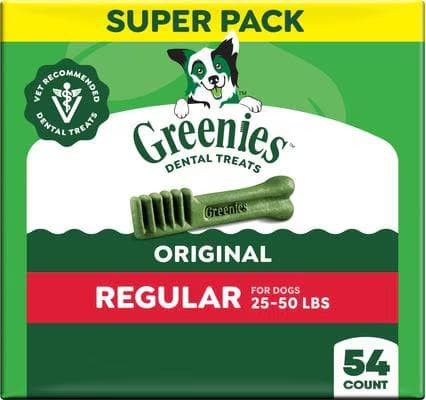
Compare the exact size and claim against the VOHC list before adding a daily chew to the routine.
Petful may earn a commission when you click through to Chewy, at no extra cost to you.
How to Read the Accepted Products List
The accepted-products list is useful because it prevents a common shopping mistake: assuming a brand name equals a universal dental claim. A company may have one accepted product line and several other oral-care products that are not accepted for the same claim. Formula, size, region, and product category can all matter.
Read the list from the dog outward: species first, then category, then product name, then claim. If the product on the package does not match the product on the list closely enough, do not treat it as a VOHC-backed purchase. That is especially important for multipacks, flavor variants, age-specific versions, and small-dog or large-dog sizes.
| List field | Why it matters | Reader action |
|---|---|---|
| Dog product category | Chews, diets, additives, and wipes solve different routine problems | Stay in the category you actually plan to use |
| Exact product name | Similar names can refer to different formulas or regions | Match the package wording to the official list |
| Claim | Plaque and tartar are separate buying intents | Pick the claim tied to your dog's need |
| Availability | Some products are consumer items while others are veterinary only | Avoid chasing a product that needs veterinary access |
| Seal year | The list changes over time | Check the current list before buying or refreshing a subscription |
- Do not buy on the seal alone. Check weight band, daily feeding directions, calories per chew, supervision language, ingredients, and whether the product is meant for puppies, adults, seniors, small dogs, or larger dogs.
Which VOHC Dental Chew Fits Your Dog?
The right chew starts with the dog, not the product shelf. A careful chewer with healthy teeth can often use a different format than a dog that swallows treats quickly. A toy breed with a low calorie budget has a different buying problem than a large dog that needs enough size and texture to keep from gulping.
A broad product list is not enough because the real question often changes by constraint: dental chews for small dogs, VOHC dental chews for bad breath, dog dental chews for tartar, dental chews for dogs that gulp, or whether dogs can have dental chews every day.
| Dog or household constraint | Better buying direction | What to avoid | Specific question this answers |
|---|---|---|---|
| Small dog or toy breed | Smaller size, lower calories, clear weight band | Large chews cut down without label support | VOHC dental chews for small dogs |
| Large dog or powerful chewer | Large enough chew that encourages gnawing | Tiny treats that disappear in one bite | Dental chews for large dogs |
| Dog gulps treats | Vet guidance, slower routines, non-chew options if needed | Hard or small chews given unsupervised | Dental chews for dogs that swallow whole |
| Sensitive stomach | Simple ingredient direction and one product introduced slowly | Stacking multiple new dental products at once | Dental chews for sensitive stomach dogs |
| Weight management | Lower calorie math or a different home-care tool | Daily chews treated as free calories | Can dogs have dental chews every day |
| Known mouth pain or missing teeth | Dental exam before chew shopping | Chews used to hide pain or bad breath | Are dental chews safe for senior dogs |
| Brushing refusal | Chew plus gradual brushing training or wipes | Replacing all home care with treats | Dog dental chews vs brushing |
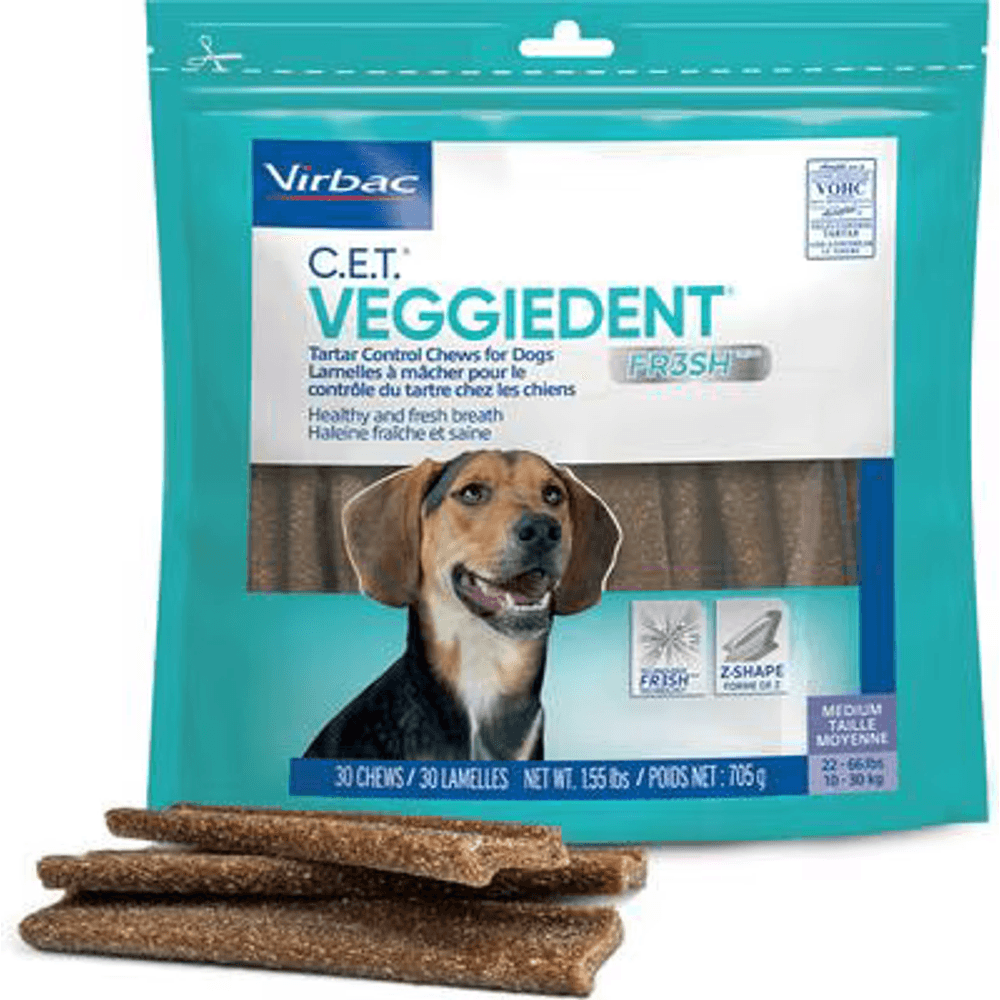
A plant-based chew can be a useful comparison point when the size, texture, and claim fit your dog.
Petful may earn a commission when you click through to Chewy, at no extra cost to you.
By Dog Type: Practical Buying Notes
The same accepted chew can feel very different depending on the dog using it. This is why a VOHC dog dental chews article needs more than a seal explanation. The buying decision should translate the evidence signal into the day-to-day realities of mouth size, chewing strength, stomach tolerance, and owner supervision.
Small Dogs and Toy Breeds
Small dogs need the most calorie discipline. A chew that looks modest to a person can be a meaningful snack for a dog under 15 pounds. Check the package size, calorie count, and daily feeding directions before deciding that a daily chew fits the dog's diet.
- If the product is too large, do not assume cutting it down keeps the same safety profile unless the label supports that use.
- If the dog already gets training treats, dental calories need to come out of the daily treat budget.
Large Dogs and Power Chewers
Large dogs need enough size and structure to encourage actual chewing. A dental treat that disappears in one bite may deliver calories without much contact time on the teeth. Watch the first session and judge the product by behavior, not by package photos.
- If the dog cracks hard treats apart, prioritize supervision and ask whether another format would be safer.
- If the dog swallows pieces, stop using that chew and reassess the size or format.
Sensitive Stomachs and Diet Restrictions
Dogs with sensitive stomachs, food allergies, pancreatitis history, prescription diets, or food trials need a slower decision. A VOHC claim does not override a diet plan. Introduce one dental product at a time, watch stool quality, and avoid stacking new treats, chews, additives, and toothpaste in the same week.
- If a dog is on a prescription diet, ask the veterinarian before adding daily edible chews.
- If loose stool or vomiting starts after a chew, stop and reassess before trying another product.
Senior Dogs and Dogs With Dental History
Senior dogs can still benefit from home dental care, but comfort comes first. A dog that drops a chew, chews on one side, paws at the mouth, or refuses a texture it used to enjoy may be showing pain. In that case, a new chew should wait until the mouth is checked.
- Missing teeth, worn teeth, or previous oral surgery should change the shopping criteria.
- Softness is not the only question. The dog still needs safe chewing behavior and a product that fits the label.
Bad Breath or Tartar Concerns
Bad breath often leads people to dental chews, but breath can be a symptom rather than the whole problem. A tartar-focused chew may be useful for a maintenance routine, but sudden or severe odor, bleeding, swelling, or appetite change should be treated as a health signal.
- Choose tartar support when hardened buildup is the shopping goal, but do not expect a chew to remove established disease below the gumline.
- Choose plaque support when the goal is routine prevention and the dog can use the product consistently.
- If the product wins on evidence but loses on the individual dog, it is not the best choice. The strongest purchase is the one that passes both tests: an exact, current VOHC match and a realistic fit for your dog's mouth, diet, and behavior.
Product Examples to Compare Carefully
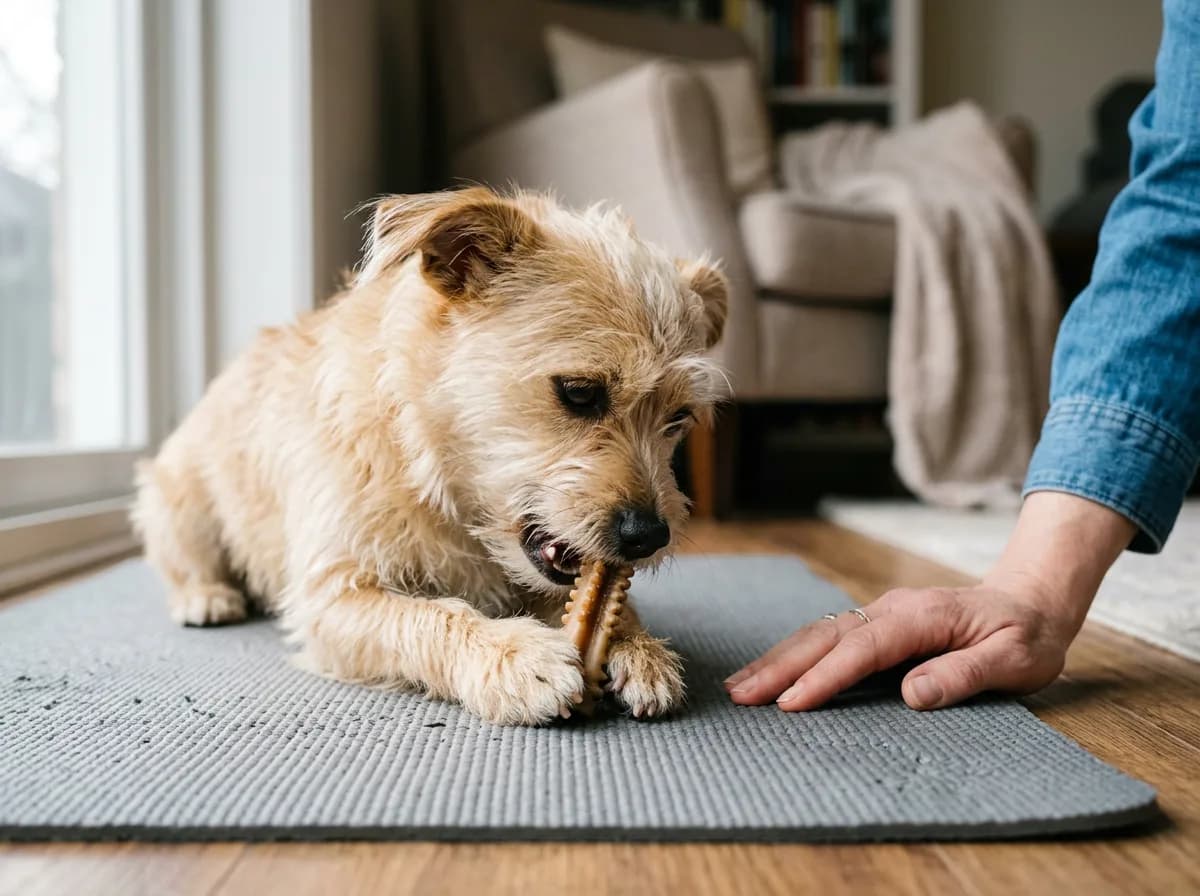
The products below are not a substitute for checking the official VOHC list today. They are a practical shopping framework for comparing dental products a reader may encounter while shopping. Some examples overlap with VOHC-listed chew lines in the official list. Others belong only in a general dental-treat comparison unless the exact package and current list confirm acceptance.
| Product example | Where it can fit | Claim caution | Best reader use |
|---|---|---|---|
| Greenies dental dog treats | Mainstream edible dental chew comparison | Match exact size and line before relying on a plaque and tartar claim | Good first example of why exact product names matter |
| Virbac C.E.T. VeggieDent Fr3sh | Plant-based chew comparison | Confirm size and current list entry before purchase | Useful for readers comparing texture and daily routine fit |
| Purina DentaLife Daily Oral Care | Tartar-focused chew comparison | Do not assume plaque coverage if the listed claim is tartar | Useful for readers focused on tartar and budget-friendly repeat use |
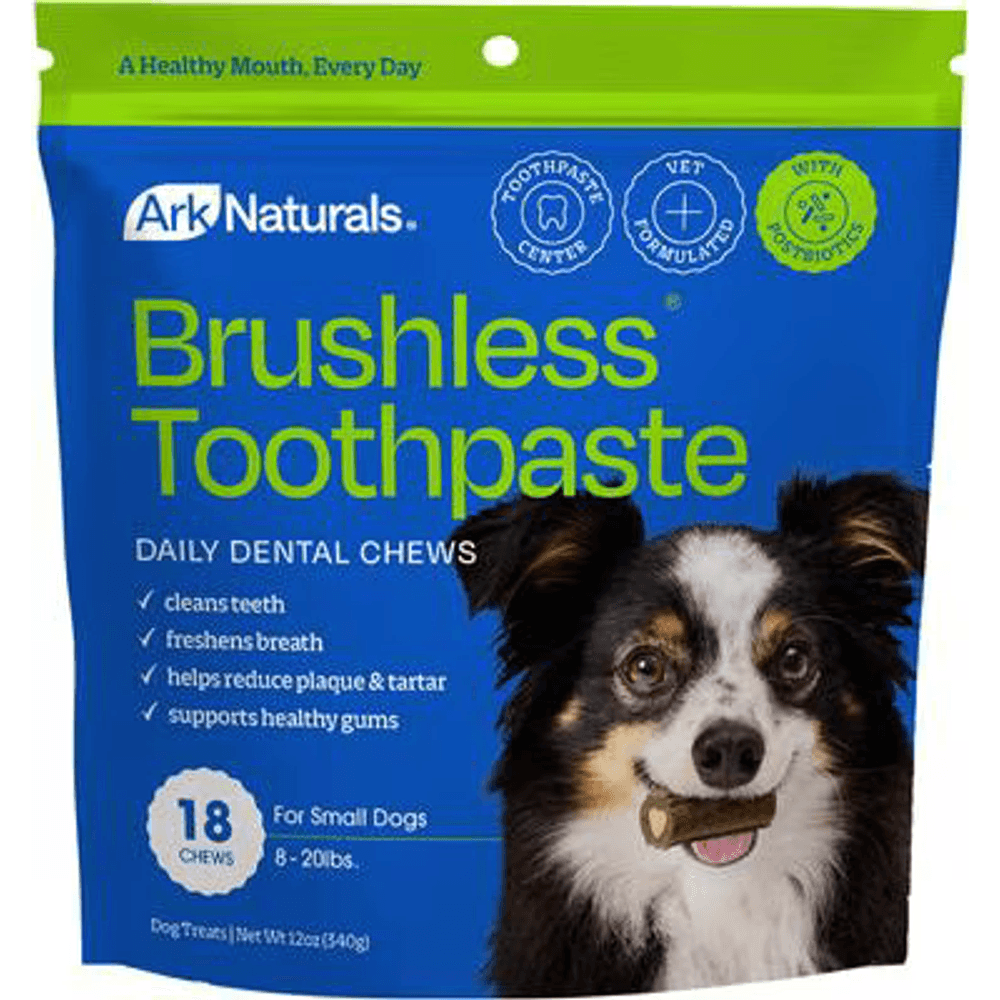
| Ark Naturals Brushless Toothpaste treats | General dental-treat comparison only | Do not present it as VOHC accepted without current official confirmation | Useful as a contrast for shoppers comparing dental marketing against VOHC evidence |
In practice, compare the exact label before you buy: Greenies Regular Dental Treats, Virbac C.E.T. VeggieDent Fr3sh, DentaLife Daily Oral Care, and Ark Naturals Brushless Toothpaste are useful shopping examples, but the VOHC claim should be checked against the official list for the exact product and size.
- Some dental treats can be useful for fresh-breath or chewing routines but are not the same as a VOHC-listed product. If the exact item does not appear on the official list, compare it as a general dental treat and choose a listed product when plaque or tartar evidence is the goal.
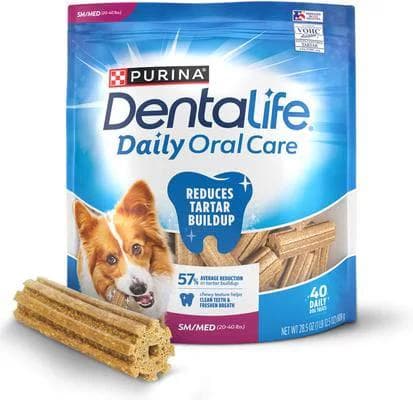
A tartar-focused chew is useful to compare when the dog's size and daily calorie budget fit.
Petful may earn a commission when you click through to Chewy, at no extra cost to you.
How to Compare Two Similar VOHC Chews
Once two products both pass the evidence filter, the better choice usually comes down to fit details that broad roundups often skip. That is where a shopper can win or lose the purchase. A chew with a stronger-looking claim can still be wrong if it is too large, too calorie-dense, too quick to swallow, or too rich for the dog's stomach.
The goal is not to crown one universal winner. The goal is to make the tradeoff visible. If two chews both look credible, compare the exact size range, claim language, shape, chew time, calorie count, ingredient direction, subscription cost, and what you will do if the dog does not chew it safely. That gives the reader a decision, not just a list.
| Comparison point | Why it matters | Stronger fit | Weaker fit |
|---|---|---|---|
| Exact VOHC claim | Shows whether the product supports plaque, tartar, or both | Claim matches the reason you are buying | Claim is vague or aimed at a different problem |
| Size and weight band | Affects chewing time and choking risk | Package size fits the dog without improvising | Owner has to cut, split, or size up without label support |
| Calories per use | Daily dental routines can become daily snacks | Fits the dog's treat budget | Would require unrealistic meal cuts |
| Chew behavior | The product needs time in the mouth to be useful | Dog gnaws under supervision | Dog swallows, cracks, hides, or guards it |
| Ingredient fit | Food trials, sensitivities, and low-fat plans can conflict | Ingredients fit the current diet | New proteins, rich formulas, or diet conflicts appear |
| Buying rhythm | Package price can hide monthly cost | Cost per safe use makes sense | Bulk pack is cheaper but wrong size or wrong claim |
- If two VOHC dog dental chews are tied after the claim check, choose the one with the better fit for your individual dog: safer size, slower chewing, clearer calorie math, cleaner diet fit, and a routine you can repeat without guessing.
- For puppies, check age guidance and puppy-specific labeling instead of assuming an adult chew is fine.
- For seniors, prioritize mouth comfort and a veterinary check if chewing has changed.
- For overweight dogs, compare calories before comparing flavor or package size.
- For multi-dog homes, choose by each dog's mouth and weight instead of buying one shared size.
When to Ask Your Vet Before Buying
Some shoppers should not start with a cart. They should start with a mouth check. Dental chews can be helpful for home care, but they can also delay treatment if a dog already has pain, infection, broken teeth, or advanced periodontal disease.
The AVMA pet dental care guide explains why brushing, exams, and professional dental care still matter. A chew is a maintenance tool. It is not a diagnosis, pain reliever, or cleaning under the gumline.
- Ask your veterinarian before adding a dental chew if your dog has bleeding gums, loose teeth, broken teeth, swelling, mouth pain, pawing at the mouth, trouble eating, sudden bad breath, a history of obstruction, pancreatitis, a prescription diet, or a pattern of swallowing chews whole.
- The dog drops food, chews on one side, refuses hard treats, or suddenly stops enjoying chews.
- Bad breath is severe, sudden, or paired with drooling, bleeding, swelling, or appetite change.
- The dog has known dental disease, missing teeth, worn teeth, jaw issues, or recent oral surgery.
- The dog guards chews, hides them, cracks them apart, or swallows large pieces.
Routine Checks
- The dog is on a strict diet, food trial, low-fat plan, or prescription food.
How to Use a VOHC Dental Chew in a Real Routine
A dental chew only helps if it is used the way the product was designed to be used. That means the first week should be a fit test, not a blind subscription. Watch how your dog handles the chew, how long it lasts, whether stool changes, and whether the daily calories still fit the overall diet.
Owners often ask whether dogs can have dental chews every day. The answer depends on the label, calories, dog size, medical history, and tolerance. Daily use on the package does not mean unlimited use, and it does not mean the chew remains right forever if the dog's weight, teeth, or digestion changes.
| Day or step | What to check | What a good fit looks like | What should change the plan |
|---|---|---|---|
| Before first chew | Weight band, calories, ingredients, frequency | Everything matches the individual dog | Wrong size, unclear calories, diet conflict |
| First chew | Chewing style and supervision needs | Dog gnaws steadily and does not gulp | Coughing, cracking, guarding, swallowing chunks |
| Next 24 hours | Stool, vomiting, itch, appetite | No digestive or skin change | Loose stool, vomiting, itchiness, reluctance to eat |
| First week | Routine consistency | The household can use it as directed | Owner forgets, doubles up, or uses it as a boredom snack |
| Ongoing | Weight and mouth comfort | Dog maintains weight and chews normally | Weight gain, mouth pain signs, new bad breath |
Use non-VOHC dental treats only as comparison points unless the exact product appears on the official list.
Petful may earn a commission when you click through to Chewy, at no extra cost to you.
VOHC Chews vs Brushing, Additives, and Dental Diets
A VOHC chew can be part of home dental care, but it is not the only route. Some dogs do better with brushing training, wipes, a water additive, a dental diet, or a veterinarian-led dental plan. The best option is the one the dog can use safely and the owner can use consistently.
| Option | Where it helps | Where it can fall short | Best fit |
|---|---|---|---|
| VOHC dental chew | Easy routine, chewing action, product-specific plaque or tartar support | Wrong for gulpers, painful teeth, or calorie-restricted dogs | Healthy chewers with a matching size and label |
| Brushing | Direct plaque removal and habit building | Needs training and owner consistency | Dogs that tolerate handling and gradual training |
| Water additive or gel | May help dogs that cannot chew safely | Does not create chewing action and must be used correctly | Dogs that gulp, seniors, or households needing non-chew support |
| Dental diet | Daily food-based dental routine | May require vet direction or diet change | Dogs whose whole feeding plan can support it |
| Professional cleaning | Addresses disease, pain, and buildup below the gumline | Not a daily home-care substitute | Dogs with symptoms, heavy tartar, or veterinary findings |
For a deeper routine comparison, use Petful's guide to dog dental chews vs brushing and water additives. If the main problem is breath or hardened buildup, the related guide to dog dental chews for bad breath and tartar is the more focused next step.
Shortlist Checklist Before You Buy
Use this checklist after you have narrowed the list to products that appear to fit your dog's category. It keeps the decision practical and prevents the article from becoming a brand popularity contest.
| Question | Why it matters | Pass signal |
|---|---|---|
| Is the exact product on the current VOHC list? | Prevents brand-name assumption | Product, size, and claim are a close match |
| Does the claim match the goal? | Plaque and tartar are not interchangeable | The label claim matches the dog's need |
| Is the weight band correct? | Size affects safety and chewing time | Package size matches the dog without improvising |
| Can the dog chew it safely? | Gulping changes both risk and usefulness | Dog gnaws under supervision |
| Do calories fit the diet? | Daily chews can add up quickly | Meals or treats are adjusted if needed |
| Do ingredients fit the dog? | Sensitive stomachs and prescription diets matter | No conflict with the current diet plan |
| Can the owner use it consistently? | Inconsistent use weakens the routine | Frequency and supervision are realistic |
A Safer Buying Path in Five Minutes
When a shopper is standing in front of a shelf or comparing tabs online, the decision can get noisy fast. The safest path is to reduce the choice to a few checks that happen in the same order every time: evidence, dog fit, diet fit, first-use behavior, and a stop rule.
Step 1: Confirm the exact evidence match
Start with the official list, not a retailer page or a package photo. Match the product category, product name, and claim. If the official list says tartar, do not turn that into plaque support in your own notes. If the package is a flavor, age line, or size you cannot match, treat it as unconfirmed until you can verify it.
Step 2: Match the dog before the brand
Write down the dog's constraint before choosing a brand: small mouth, powerful jaw, sensitive stomach, weight-loss plan, senior teeth, gulping behavior, bad breath, tartar concern, or brushing refusal. That single constraint should decide which products stay on the shortlist and which ones leave.
Step 3: Run the calorie and frequency math
A daily chew has to fit into the dog's actual food day. If the label says one chew daily, that means one correctly sized chew within the dog's calorie budget, not an extra snack layered on top of normal treats. For small or overweight dogs, this step can decide whether a non-edible option makes more sense.
Step 4: Watch the first chew like a test
The first chew should be supervised from start to finish. You are looking for steady gnawing, comfort, and normal behavior afterward. Coughing, gulping, guarding, vomiting, loose stool, itchiness, or reluctance to chew tells you the product may not fit even if the evidence claim is strong.
Step 5: Set a stop rule before you subscribe
Before buying a bulk pack or setting a subscription, decide what would make you stop. Weight gain, stool changes, new mouth pain, bad breath that worsens, swallowed chunks, or a diet conflict should pause the routine. A dental chew should earn its place in the dog's care plan over time.
- If a product cannot pass the exact-list check, the dog-fit check, and the first-use behavior check, do not keep it on the VOHC shortlist. Move to another accepted product or a non-chew dental-care option. This is especially important when a retailer page uses broad dental language but the official claim is narrower, because the evidence-backed claim should drive the purchase. When in doubt, write the product name and claim down before buying.
- 1Best evidence fit: exact VOHC-listed product, matching claim, correct size, and a dog that chews safely.
- 2Best safety fit: no mouth pain signs, no gulping pattern, no diet conflict, and owner supervision.
- 3Best routine fit: calories and frequency work well enough that the chew can be used as directed.
Common Mistakes That Make Dental Chews Less Useful
Buying for the seal but ignoring the claim
A product accepted for tartar is not automatically the same as a product accepted for plaque and tartar. If your buying goal is plaque prevention, tartar control, or breath support, read the claim before comparing price.
Choosing the wrong size because the brand looks familiar
The best-known chew can still be the wrong size. Small dogs need lower calorie math and a size they can handle. Large dogs need enough size to encourage chewing instead of swallowing. Multi-dog homes should buy by dog, not by household.
Using chews to cover symptoms
Dental chews should not be used to hide severe bad breath, bleeding gums, loose teeth, broken teeth, swelling, or pain. Those signs belong in a veterinary conversation.
Stacking several dental products at once
If a dog gets a new chew, additive, toothpaste, and treat in the same week, you will not know which product caused loose stool, vomiting, itching, or refusal. Add one product at a time and watch the dog.
VOHC means the Veterinary Oral Health Council accepted the product for a specific oral-health claim, usually plaque, tartar, or both. It is an evidence signal for that product and claim, not a guarantee that the chew fits every dog. You still need to check the exact product name, size, feeding directions, and dog fit.
They are worth prioritizing when you want a stronger evidence filter than generic dental marketing. They are not automatically the best choice for every dog, so size, calories, texture, ingredients, and chewing behavior still decide the final fit. A VOHC-listed product that your dog swallows whole is not a good match.
No. Dental chews can support home care, but brushing, veterinary exams, and professional cleanings still matter. A chew is best treated as one part of a dental routine, especially for dogs that will not tolerate brushing every day. Symptoms such as bleeding gums, loose teeth, swelling, or pain need veterinary care.
The current accepted-products list lives on the VOHC website. Check the exact product name, category, size, and claim before buying because acceptance status and product lines can change. Do not assume every dental product from an accepted brand carries the same claim.
They can be safe when the product size, calories, and texture fit the dog. Small dogs need extra calorie discipline and should not be given oversized chews unless the label specifically supports that use. If a tiny dog struggles with a chew, swallows pieces, or gains weight, choose a different routine.
Some dental chews are designed for daily use, but daily use should follow the label and the dog's health context. Calories, stool changes, weight gain, allergies, and chewing behavior can all change the plan. Daily should mean correctly sized and supervised, not unlimited.
Neither claim is universally better. Plaque claims focus on sticky buildup before it hardens, while tartar claims focus on hardened mineral buildup. Choose the claim that matches your dog's dental goal and your veterinarian's advice. If your dog already has heavy buildup or mouth pain, start with an exam.
Stop using that chew and ask your veterinarian about safer options. A dog that gulps chews may need a different size, a different format, brushing training, wipes, additives, or a veterinary dental plan. Do not try to solve gulping by giving harder or larger products without guidance.
Related Petful Guides
Use these next when the buying question gets more specific.
- Dog Dental Chews Compared: VOHC, Ingredients, Size, and Safety: compare the broader dental-chew category before choosing a specific routine.
- Dental Chews for Small Dogs vs Large Dogs: narrow the decision by size, chewing style, and calorie budget.
- Can Dogs Have Dental Chews Every Day?: pressure-test daily use, calories, and safety.
Size and Diet Checks
- Dog Dental Chews for Bad Breath and Tartar: choose by breath, plaque, and tartar intent.

Coreen Saito is a pet writer and longtime shelter volunteer with more than a decade in animal rescue. She covers cat behavior, breed care, and the small, ordinary science of sharing a life with companion animals, with a particular focus on honest takes about the products and decisions that actually matter. At home in Arizona, she's outranked by Mac (a dog with the loudest opinion in the house), Rebel (a cat who governs by quiet authority), and Meri (an orange tabby who runs the late shift and the laundry basket). She writes about all three, plus the rescues that keep coming through her life, at LifeWithMinty.com.
Sign up for expert-backed reviews and safety alerts all in one place.