Best Cat Laser Toy Picks: A Vet's Guide to Safe Play
A veterinarian ranks the best cat laser toys of 2026, from automatic units to handheld pointers, and explains eye safety, frustration research, and the catch-completion routine.

BVMS, MRCVS
Petful is reader supported. As an affiliate of platforms like Amazon and Chewy, we may earn a commission when you buy through links on this page. There is no extra cost to you.
A good cat laser toy taps directly into your cat's prey drive: that darting red dot mimics the erratic scuttle of an insect or mouse, and many cats will chase it. As a veterinarian, I get two questions about lasers constantly: which one should I buy, and is the laser actually bad for my cat? This guide answers both. I have ranked the best automatic and handheld lasers on safety-first criteria, and I explain exactly how to run a laser session so your cat gets exercise without frustration.
One note on how these picks were chosen: I have not hands-on tested these products. This product roundup adds a vet-authored safety layer to published specifications, laser class and manufacturer power output, shut-off timers, pattern features, and the behavioral research on frustration. Each pick-by-pick verdict names who the toy fits and an honest drawback. Nothing here implies physical testing, and a listed feature is not treated as proof of safe unattended use.
- 1Laser toys can be used safely for many cats when sessions are short, supervised, and always end on a catchable physical toy plus a treat.
- 2The main behavioral concern is frustration: an uncatchable dot may contribute to repetitive light-chasing in susceptible cats.
- 3Use only purpose-built pet lasers with a documented low-power classification, preferably Class 2 or lower, and never aim any beam at eyes.

Sign up for expert-backed reviews and safety alerts all in one place.
The Best Cat Laser Toys of 2026
What is the best laser toy for cats? For most households it is an automatic unit with random patterns and an auto shut-off timer, because the timer enforces the short sessions the behavioral research supports even when you get distracted. If you want to control the dot yourself and steer it onto a physical toy at the end, a handheld rechargeable pointer is the better fit. Here are my four picks, ranked by how well each supports safe, frustration-free play.
The four ranked picks cover dual-beam automatic play, randomized stationary movement, a rechargeable multi-mode unit, and full handheld control. The verdict under each model explains the cat and household it fits, the power and supervision tradeoff, and the drawback most likely to affect ownership. That makes the comparison useful even when price or availability changes after publication.
| Pick | Type | Auto Shut-Off | Power Source | Price |
|---|---|---|---|---|
| Best Automatic: PetSafe Zoom Rotating Laser | Automatic, dual rotating lasers | Yes | Batteries | $29.99 |
| Best Stationary Automatic: PetSafe Dancing Dot | Automatic, random patterns | Yes | Batteries | $23.99 |
| Best Rechargeable Automatic: PawsPik 4-in-1 Laser Cat Toy | Automatic laser plus catchable attachments | Check current instructions | USB rechargeable | $29.99 |
| Best Handheld: Ethical Pet Spot Single Dot Laser Dog & Cat Toy | Handheld single-dot pointer | Manual control | 3 LR44 button batteries | $4.49 |
Best Automatic: PetSafe Zoom Rotating Laser
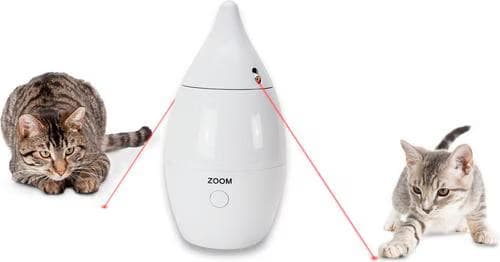
The PetSafe Zoom Rotating Laser ($29.99, rated 3.7 stars) sweeps two rotating lasers across the floor at once, which is a genuine advantage in multi-cat homes: two dots means two cats can stalk without competing for one target. The automatic shut-off caps the play window while you supervise nearby, an important backstop that does not replace observation.
- Benefits: dual beams for multi-cat play, hands-free operation, auto shut-off enforces short sessions
- Drawback: the rotating sweep is more predictable than a random-pattern unit, and some cats decode it quickly
Stay nearby while it runs. When the cycle ends, redirect the final pounce onto a catchable toy and offer a small treat so the hunt closes properly.
Petful may earn a commission when you click through to Chewy, at no extra cost to you.
Best Stationary Automatic: PetSafe Dancing Dot
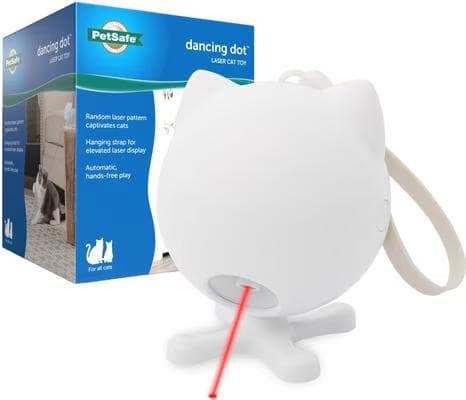
The PetSafe Dancing Dot ($23.99, rated 3.8 stars) sits on a surface and throws a single dot through randomized patterns, which better mimics real prey movement than a fixed rotation. It is the budget-friendliest automatic on this list and the random patterns keep cats engaged longer before habituation sets in.
- Benefits: true random patterns, compact stationary design, lowest price among the automatics
- Drawback: single dot only, and battery drain is noticeable with daily use
Like the Zoom, it shuts itself off, so the timer can cap the session if your attention lapses while you remain nearby. Stay present for the full cycle and finish on a catchable toy.
Petful may earn a commission when you click through to Chewy, at no extra cost to you.
Best Rechargeable Automatic: PawsPik 4-in-1 Laser Cat Toy
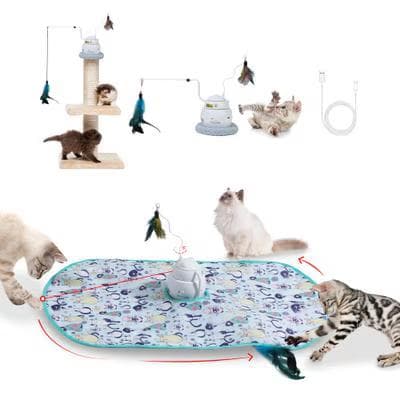
The PawsPik 4-in-1 Laser Cat Toy ($29.99) is the pick if you want an automatic unit without a battery drawer: it charges over USB and combines laser movement with hide-and-seek-style play attachments. Those physical attachments give you a built-in way to end the session on something the cat can touch instead of a disappearing dot.
- Benefits: USB rechargeable, automatic movement, and catchable attachments for the handoff after laser play
- Drawback: the extra modes create more moving parts to inspect, and owners should confirm the current timer and supervision instructions before use
Petful may earn a commission when you click through to Chewy, at no extra cost to you.
Best Handheld: Ethical Pet Spot Single Dot Laser Dog & Cat Toy
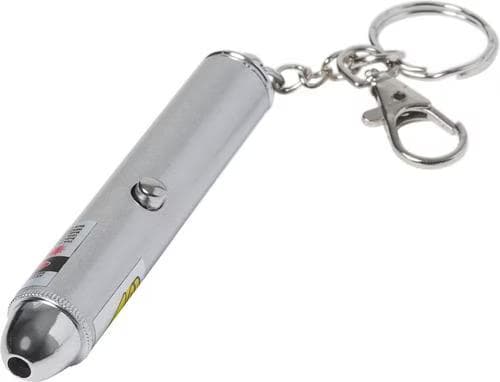
The Ethical Pet Spot Single Dot Laser Dog & Cat Toy ($4.49, rated 4.4 stars) is the straightforward handheld pick: a compact single-dot pointer with a hold-to-activate button, keychain, and three included LR44 batteries. Manual control lets you steer the final pass onto a catchable toy, but the product listing does not state a laser class or power output. Treat the included batteries and pet-toy branding as convenience features, not proof of beam safety; never aim at eyes, keep every session supervised, and confirm the current documentation before use.
- Benefits: inexpensive, compact, hold-to-activate control, keychain, and three included LR44 batteries
- Drawback: not rechargeable, and the product listing does not state a laser class or power output
Petful may earn a commission when you click through to Chewy, at no extra cost to you.
Are Laser Pointers Bad for Cats? Laser Pointer Syndrome Explained
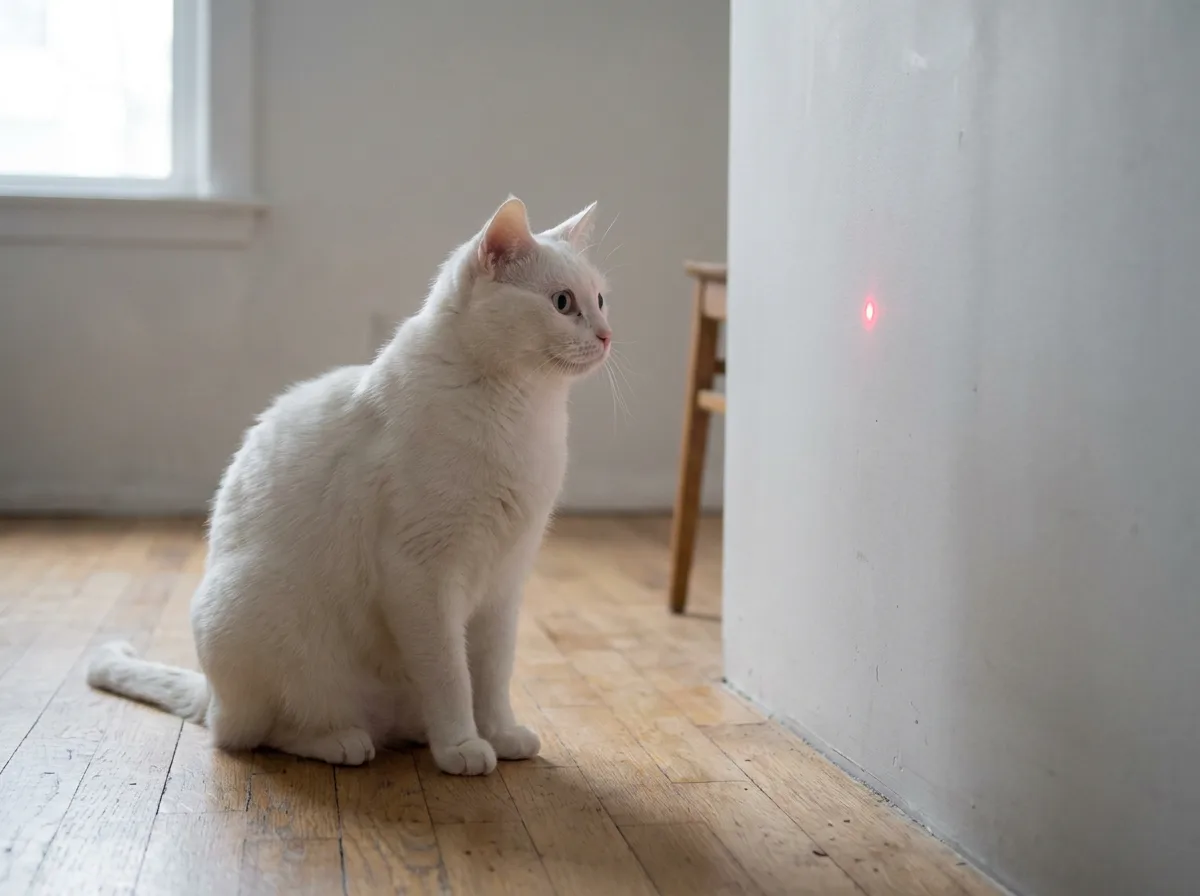
Are laser cat toys good for cats? My verdict as a vet: yes, for many cats, laser toys can be a useful outlet for prey drive when sessions are short, supervised, and completed correctly. Are laser pointers bad for cats or dangerous? They can be when a beam reaches an eye, when the product's classification is unknown, or when repeated no-catch sessions intensify fixation. The concern is both physical eye safety and behavioral frustration because a light beam can never be caught.
Why Lasers Frustrate Cats: The Missing Catch
Why can't cats play with lasers, according to some behaviorists? The objection is not the chase itself but the missing catch. A cat's hunting sequence is wired to end with paws and teeth on prey. A laser dot denies that payoff every single time, and for some cats the repeated near-miss builds frustration rather than satisfaction. That is why every session protocol in this guide ends on a physical, catchable toy: it completes the cycle the laser starts.
Is Laser Play Stressful? What the Research Shows
Are lasers frustrating for cats in a measurable way? A 2021 study by Kogan and Grigg, published in the journal Animals, surveyed cat guardians and found an association between more frequent laser play and guardian-reported abnormal repetitive behaviors, such as chasing lights or shadows and fixating on reflections. This is the pattern often called laser pointer syndrome: compulsive light-chasing that continues after the toy is put away.
Two honest caveats about that research:
- It shows an association, not proof that lasers cause compulsive behavior; cats already prone to fixation may simply chase lasers more.
- The strongest associations involved chasing lights or shadows, staring at lights or reflections, and fixating on a specific toy; the survey did not diagnose individual cats or measure the effect of a supervised catch-ending routine.
The practical takeaway is moderation and structure, not a ban. Cats that stare at walls, stalk shadows, or hunt reflections after playtime are the ones I would switch to physical-toy play entirely.
Eye Safety: Laser Class and Power
The beam itself is a separate question, and the buying filter is documented laser class plus manufacturer-stated power output, not a seller's unsupported claim that a pointer is pet safe. The FDA's laser pointer guidance explains that class reflects injury potential and warns against directing a beam at people or animals. Prefer a purpose-built product whose manufacturer documents Class 2 or lower, never aim at eyes, and skip any pointer whose class or milliwatt output is missing or unclear. A generic “under 5 mW” claim by itself is not proof of safe use.
Automatic Cat Laser Toys: How They Work and What to Look For
An automatic cat laser toy projects and moves the dot on its own, using rotating mirrors or randomized motors. That autonomy is the appeal and the risk in one feature: it entertains your cat while you work, but it also removes the human who would normally end the session sensibly.
When comparing automatic units, prioritize these features:
- Auto shut-off timer: non-negotiable; it caps the session even when you forget
- Random patterns over fixed rotation: unpredictable movement mimics prey and delays boredom
- Adjustable speed or range: lets you match the dot to a kitten's sprint or a senior's amble
- Multi-cat coverage: dual beams or wide sweeps prevent competition in multi-cat homes
An automatic shutoff is useful because it limits runtime, but it does not complete the hunt or make the toy safe to leave running without observation. Check the current manufacturer instructions for the exact model, remain present for every laser session, and plan the physical-toy handoff before you start.
Automatic vs. handheld: which should you choose?
Choose an automatic unit when you want a short, repeatable movement pattern while you remain nearby. Choose a handheld pointer when you want to control speed, pauses, terrain, and the exact moment the dot lands on a catchable toy. Handheld control may make a structured ending easier, but it is not inherently safe: either format can frustrate a fixation-prone cat or expose eyes if used carelessly.
Handheld and Rechargeable Cat Laser Pointers
A handheld cat laser pointer gives you what no automatic can: full control of the dot's story. You decide where it runs, when it slows, and, critically, where it disappears, which should always be onto a physical toy your cat can grab. That control can make the catch ending easier, but cats showing fixation after play should switch away from lasers rather than relying on a different pointer format.
A rechargeable pointer avoids disposable button cells, but charging method does not establish beam safety. Confirm the manufacturer's class and use instructions for the exact product, keep any laser pointer out of children's reach, and supervise older kids who use one with the cat.
For a handheld and rechargeable laser pointer, ownership quality comes down to more than the charging port. Look for a clearly documented low-power class, a button you can release instantly, a shape that is comfortable to direct toward the floor, and instructions from an identifiable manufacturer. Manual control makes the catch ending easier, but it also means the human must control session length, beam direction, and every pause.
How to Use a Cat Laser Toy the Right Way
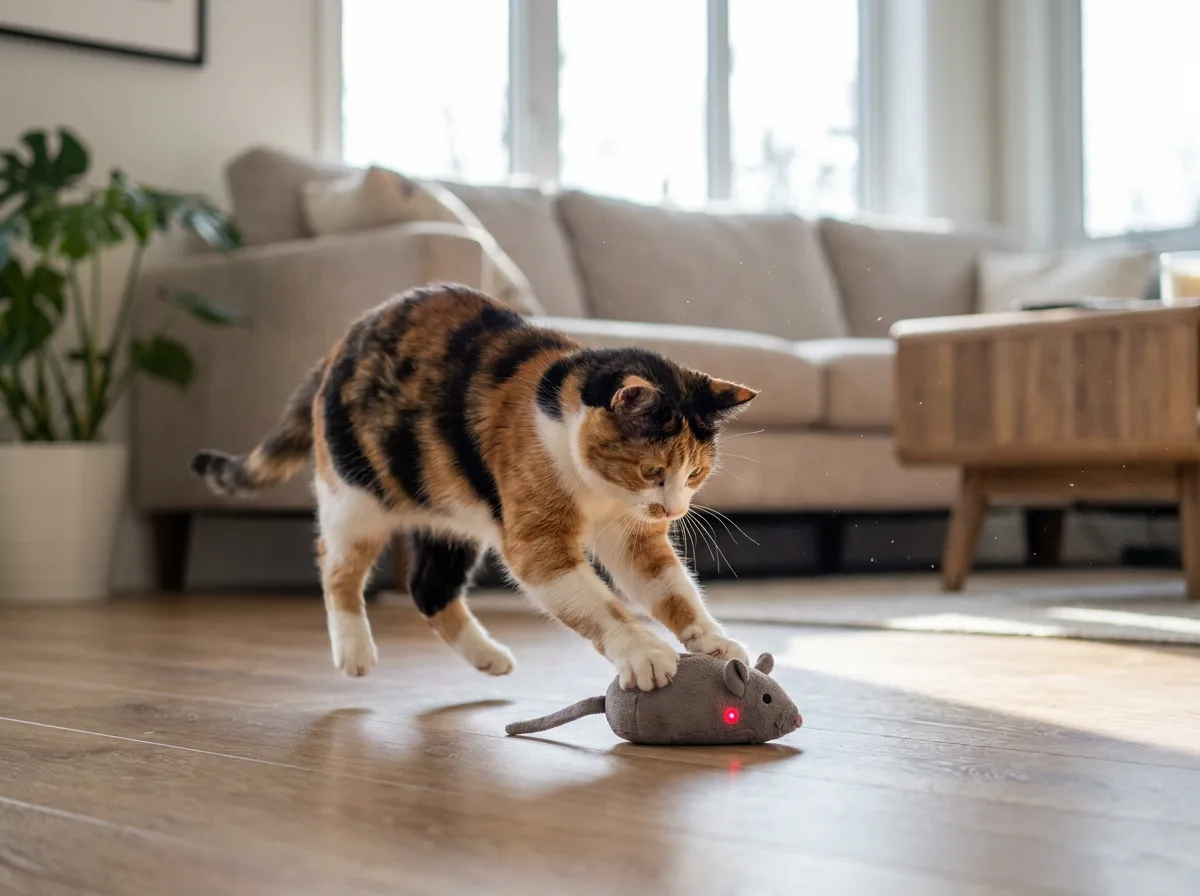
How often should you play with your cat using a laser? Aim for one or two short sessions a day of roughly 5 to 10 minutes each, rather than one marathon. Short, frequent hunts match how cats naturally expend energy, and stopping while your cat is still engaged beats pushing to exhaustion or fixation. A timer controls duration; it does not supply the physical catch or tell you how an individual cat responds.
Run every session with this protocol:
- Start slow: let the dot scuttle like an insect near the floor, with pauses your cat can stalk
- Vary the terrain: run the dot around furniture and up scratchers, never at eye level toward faces
- Watch for fixation: if your cat pants, vocalizes with frustration, or cannot disengage, end early
- End on a physical catch: steer the dot onto a wand toy or stuffed kicker, switch the laser off, and let your cat seize the toy
- Pay the hunter: follow the catch with a treat or a small meal so the hunt-catch-kill sequence ends with a real payoff
That final catchable-toy handoff is the single rule I would keep if you forget everything else. Redirect the last pounce onto a physical toy, switch the laser off while the cat has contact, allow a short grab or kick, and follow with a small treat payoff. This concrete end-the-session protocol turns the dot from an endless tease into the opening act of a completed hunt.
- Never aim a laser at your cat's eyes or any person's eyes. Prefer a purpose-built pet laser whose manufacturer documents Class 2 or lower, and skip products with unknown output or classification. An automatic shutoff limits time but does not make unattended use safe. Supervise children and store the pointer where they cannot reach it.
More of the Best Cat Toys Beyond Lasers
A laser should be one tool in a rotation, not the whole toy box. Wand toys deliver the catchable prey a laser cannot, puzzle feeders make your cat work its brain for food, and crinkle balls and kickers cover solo play between sessions. For a full tour of what belongs in that rotation, from wands to tunnels to food puzzles, see our guide to the best cat toys overall. It covers every major category and which cats each suits, and it is the right starting point if your cat turns out to be lukewarm on lasers.
Interactive Cat Toys That Finish the Hunt
If your cat loves the chase but you want a toy that lets the catch actually happen, interactive toys are the natural next step. Motorized mice, moving-feather units, and hide-and-seek prey toys all give your cat something physical to grab at the end of the stalk, which makes them the ideal complement to laser play or a full replacement for fixation-prone cats. Our roundup of the best interactive cat toys ranks the standouts, and our explainer on interactive cat toys and play behavior covers why this style of play satisfies cats so deeply.
The Potaroma 3-in-1 butterfly toy is one current physical-catch alternative: its moving attachment gives a chase-focused cat something tangible to contact. It is not a substitute card for the handheld laser pick above; it belongs here as the different toy type to use after a laser session or instead of lasers for a cat that keeps searching for the dot.
Cat Laser Toy FAQs
Yes, cats can get bored of lasers. Many habituate to the dot, especially with automatic units that repeat the same patterns daily. Signs include watching without chasing or walking away mid-session. Rotate the laser with physical toys like wands and kickers, keep sessions short, and shelve it for a week or two when interest fades; scarcity may restore interest.
No. Laser sessions are excellent cardio, but cats also need play that ends in a real catch, plus climbing, scratching, and foraging outlets. Treat the laser as the warm-up act in a varied routine, with wand toys, puzzle feeders, and interactive toys carrying the rest of the enrichment load.
BVMS, MRCVS
Dr. Pippa Elliott, BVMS, MRCVS, is a veterinarian with nearly 30 years of experience in companion animal practice. Dr. Elliott earned her Bachelor of Veterinary Medicine and Surgery from the University of Glasgow. She was also designated a Member of the Royal College of Veterinary Surgeons. Married with 2 grown-up kids, Dr. Elliott has a naughty Puggle named Poggle, 3 cats and a bearded dragon.
Sign up for expert-backed reviews and safety alerts all in one place.