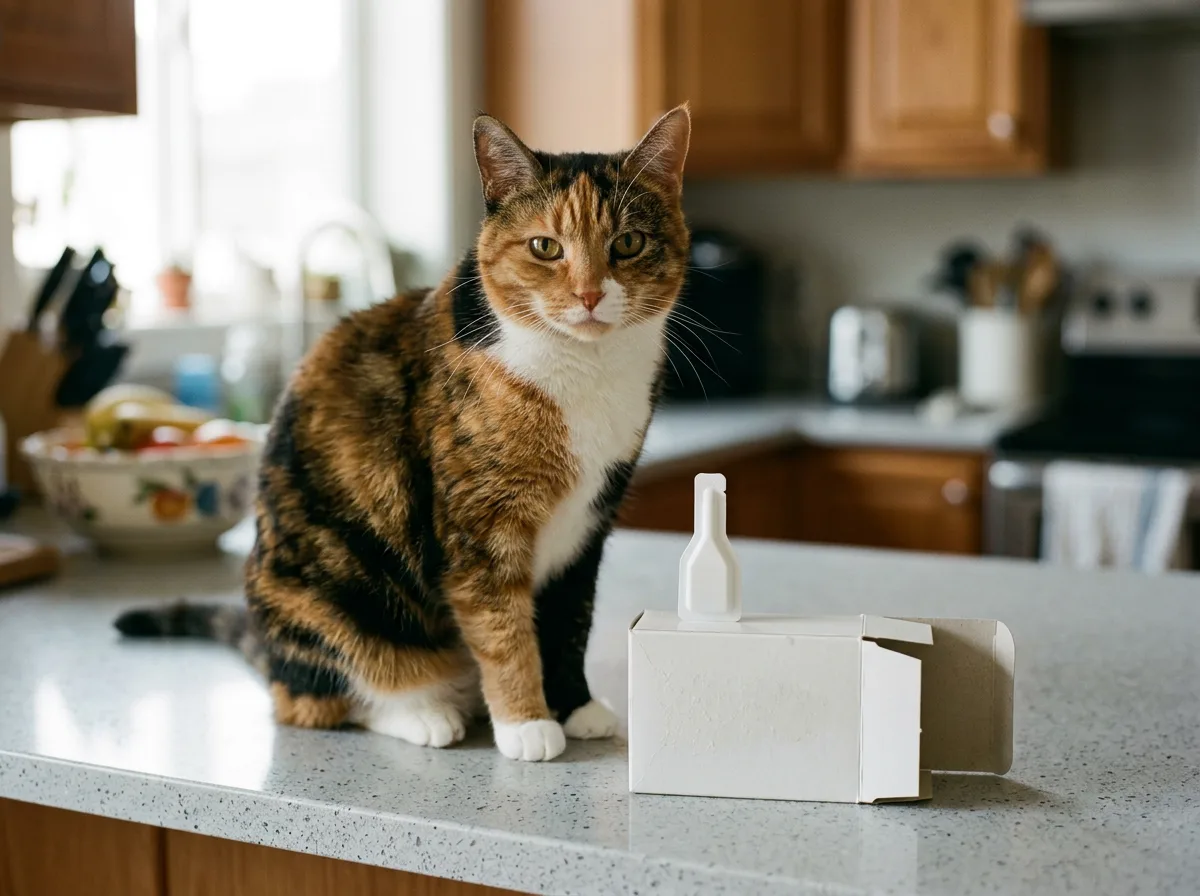
Best Flea Medicine for Dogs Without Vet Prescription (2026)
A veterinarian ranks the best flea medicine for dogs without a vet prescription, from Frontline Plus and K9 Advantix II to the Seresto collar and Capstar, with an honest guide to what needs a prescription.

BVMS, MRCVS

Petful is reader supported. As an affiliate of platforms like Amazon and Chewy, we may earn a commission when you buy through links on this page. There is no extra cost to you.
The best flea medicine for dogs without vet prescription, for most dogs, is Frontline Plus: a monthly spot-on that kills adult fleas and ticks and, thanks to its insect growth regulator, stops flea eggs and larvae from rebuilding the infestation. If you live in tick country, K9 Advantix II is the stronger pick; if you want eight months of hands-off protection, choose the Seresto collar; and if your dog is covered in fleas today, an oral Capstar tablet starts killing them within about 30 minutes.
All of these are sold over the counter (OTC) in the United States. The EPA registers spot-on treatments and flea collars as pesticides, and the FDA approves oral flea drugs, so OTC does not mean unregulated. What OTC cannot get you is a monthly or 12-week flea chewable: NexGard, Bravecto, Simparica, Credelio, and Revolution all need a prescription, and we explain exactly why below.
How we chose: this is an expert analysis by a veterinarian, not a hands-on product test. We did not test these products on our own dogs for this guide, and we did not obtain any product from a manufacturer or retailer. Picks rest on each product's active ingredients and label claims, EPA and FDA regulatory status, Chewy listings and prices, the pattern of owner reports, and veterinary parasite-control guidance. We may earn a commission when you buy through links on this page, but this guide is not sponsored and the rankings are our own.

Sign up for expert-backed reviews and safety alerts all in one place.
Best Flea Medicine for Dogs Without Vet Prescription at a Glance
- 1Best overall OTC flea medicine: Frontline Plus, which kills fleas, ticks, and chewing lice and breaks the flea life cycle with (S)-methoprene.
- 2Best for ticks and mosquitoes: K9 Advantix II, which kills and repels, but is toxic to cats.
- 3Best long-lasting option: the Seresto collar, up to 8 months of flea and tick protection from one collar.
- 4Best flea-only topical: Advantage II for Dogs, for low-tick areas.
- 5Fastest knockdown: Capstar (nitenpyram), an OTC pill that starts working in about 30 minutes but lasts only about 24 hours.
- 6Best budget option: PetArmor Plus, the same active ingredients as Frontline Plus for less per dose.
- 7No monthly flea pill or chewable is sold without a vet prescription in the U.S.
This comparison table lines up every OTC pick by active ingredient, speed of kill, duration, tick coverage, and price per month. Prices are typical Chewy prices for a large-dog pack at the time of writing and shift with sales and dog weight band.
| Product | Active ingredient(s) | Starts killing fleas | Duration | Ticks? | Approx. price per month |
|---|---|---|---|---|---|
| Frontline Plus spot-on | Fipronil + (S)-methoprene | Within about 12 hours | About 30 days | Yes | About $12.50 |
| K9 Advantix II spot-on | Imidacloprid + permethrin + pyriproxyfen | Within about 12 hours | About 30 days | Yes, kills and repels | About $13.30 |
| Seresto collar | Imidacloprid + flumethrin | Within about 24 hours | Up to 8 months | Yes | About $7.50 |
| Advantage II spot-on | Imidacloprid + pyriproxyfen | Within about 12 hours | About 30 days | No | Similar to Frontline Plus |
| Capstar oral tablet | Nitenpyram | Within about 30 minutes | About 24 hours | No | About $7.20 per tablet |
| PetArmor Plus spot-on | Fipronil + (S)-methoprene | Within about 12 hours | About 30 days | Yes | About $6.70 |
- Several OTC spot-ons use active ingredients veterinarians have relied on for decades. The real dividing line is not strength but regulation: topicals and collars are EPA pesticides sold at retail, while systemic monthly chewables are FDA prescription drugs.
How We Picked the Best OTC Flea Medicine for Dogs
We started from what veterinarians and the Companion Animal Parasite Council (CAPC) recommend for routine flea control: year-round prevention, every pet in the home treated, and a product that interrupts the flea life cycle rather than only killing the adults you can see. A single female flea can lay up to about 50 eggs a day, so a product that misses the eggs and larvae lets the problem rebuild within weeks. Then we ranked the OTC options on the factors that actually change results:
- Proven active ingredients with a long safety and efficacy record, such as fipronil, imidacloprid, permethrin, flumethrin, and nitenpyram.
- Life-cycle control: an insect growth regulator, (S)-methoprene or pyriproxyfen, that stops eggs and larvae from developing.
- What it kills: fleas only, or fleas plus ticks, mosquitoes, and chewing lice.
- Speed and duration: a 30-minute knockdown and an 8-month collar solve different problems.
- Safety by weight band and minimum age, plus clear cat warnings for permethrin products.
- Price per month at Chewy and the pattern of owner reports about reactions and failures.
Which flea treatment do vets recommend without a prescription? When a vet tells an owner to buy something off the shelf, it is usually a fipronil plus (S)-methoprene topical, an imidacloprid product, or the Seresto collar, often with Capstar for a heavy infestation on day one. Those vet-recommended staples are exactly the six picks below.
The Best OTC Flea Medicine for Dogs Without a Vet Prescription
What is the best non-prescription flea and tick medicine for dogs? For most dogs it is Frontline Plus, with K9 Advantix II close behind wherever ticks and mosquitoes are a bigger worry. These are the best over the counter flea medicine options for dogs we found, ranked for an average healthy adult dog, strongest all-round choice first. Each pick names the active ingredient, what it kills, how long one dose lasts, and who it suits, so you can match the best non prescription flea treatment for dogs to your own dog rather than to a generic top-10 list.

 Sponsored
Need flea, tick, or parasite care for your pet?
A licensed vet at Dutch can recommend the right preventive and prescribe it when it's appropriate. Annual members get 20% off their first flea and tick order.
Use code Pets60
Plans start at $12/month · covers up to 5 pets
- Licensed vets in most states
- Rx for 150+ conditions
- 4.7 on Trustpilot
Frontline Plus for Dogs: Best Overall OTC Flea Medicine
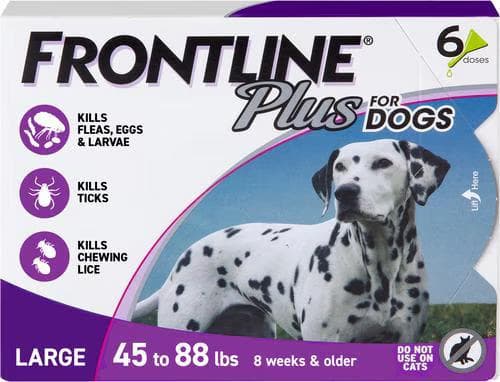
A monthly topical spot-on for large dogs 45 to 88 lbs that kills fleas, ticks, and chewing lice. A waterproof pick for dogs who do better with a topical than an oral chew.
Petful may earn a commission when you click through to Chewy, at no extra cost to you.
Frontline Plus for Dogs is the OTC topical most vets reach for first. It pairs fipronil, which kills adult fleas, ticks, and chewing lice, with (S)-methoprene, an insect growth regulator that kills flea eggs and larvae. That two-stage attack is why it remains the best overall OTC flea medicine for dogs without vet prescription: it clears the adults you see and stops the next generation hatching in your carpet.
One application lasts about 30 days, and the pack we priced is the one for large dogs 45 to 88 lb; smaller weight bands cost a little less. It is approved for dogs and puppies 8 weeks and older, and it stays effective after bathing or swimming once it has dried, though most labels advise waiting 48 hours before a bath. It also covers the ticks that can carry Lyme disease, which matters in much of the country.
- Best for: most dogs that need reliable monthly flea and tick coverage.
- Pros: kills fleas, ticks, and chewing lice; breaks the life cycle; waterproof once dry; decades of track record.
- Cons: a monthly topical some dogs dislike; not a same-day knockdown for a heavy infestation.
K9 Advantix II: Best for Ticks and Mosquitoes
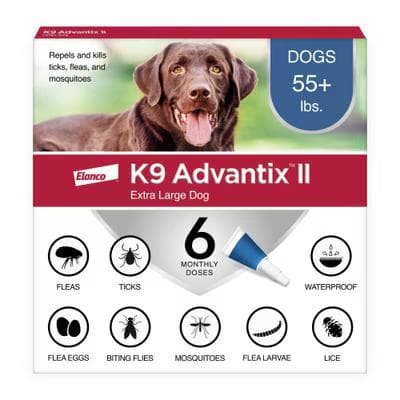
A monthly topical for dogs over 55 lbs that repels and kills ticks, fleas, and mosquitoes. Repelling ticks before they bite is a useful layer during heavy tick season.
Petful may earn a commission when you click through to Chewy, at no extra cost to you.
If you live in tick country or want mosquito protection too, K9 Advantix II is the broadest OTC topical. It combines imidacloprid for fleas, permethrin for ticks and mosquitoes, and pyriproxyfen, an insect growth regulator for eggs and larvae. Unlike most spot-ons, it both kills and repels, so many ticks and mosquitoes are driven off before they bite.
It is labeled for dogs 7 weeks and older and lasts about 30 days. The trade-off is the permethrin. Read our WebVet colleagues' explainer on permethrin for dogs before you buy if you share your home with a cat, because permethrin is toxic to cats.
- Best for: dogs in tick-heavy regions, hikers, and homes that also battle mosquitoes.
- Pros: kills and repels fleas, ticks, and mosquitoes; growth regulator stops the next generation.
- Cons: contains permethrin, which can cause tremors and seizures in cats; monthly application.
Seresto Collar for Dogs: Best Long-Lasting OTC Option
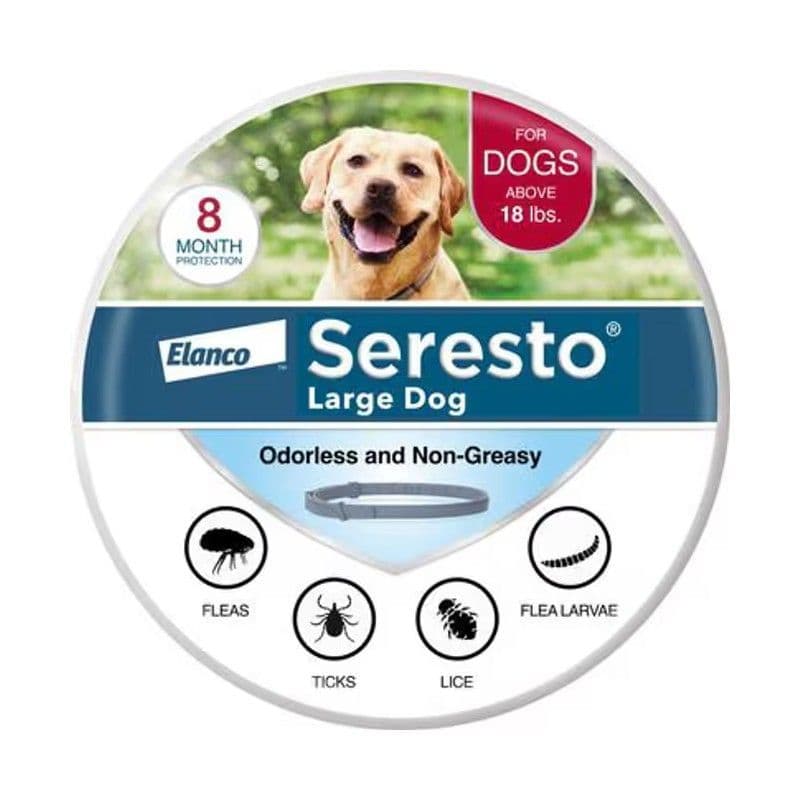
Odorless, non-greasy 8-month flea and tick collar for dogs over 18 lbs that kills and repels fleas and ticks and also kills lice and flea larvae.
Petful may earn a commission when you click through to Chewy, at no extra cost to you.
For owners who hate monthly reminders, the Seresto Flea and Tick Collar is the standout. One collar slowly releases imidacloprid and flumethrin into the skin oils for up to 8 months, killing fleas and ticks without a monthly application. It is odorless and water-resistant, and per month it is one of the cheapest flea and tick treatments you can buy.
Seresto drew public scrutiny in 2021 over incident reports, and it remains EPA registered. Fit matters: the collar should be snug enough to touch the skin, with room for two fingers, and you should check the neck for redness in the first weeks. There is a small-dog collar for dogs up to 18 pounds and a large-dog collar for dogs over 18 pounds. Trim the excess collar length so your dog cannot chew it, take it off for heavy grooming only if the label allows, and mark the replacement date on your calendar: protection fades toward the end of the eighth month, and frequent swimming or shampoo baths can shorten it.
- Best for: set-it-and-forget-it protection, dogs that fight topicals, and multi-month budgets.
- Pros: up to 8 months per collar; fleas and ticks; low cost per month.
- Cons: higher upfront price; some dogs show irritation where the collar sits; must stay on to work.
Advantage II for Dogs: Best Flea-Only Topical
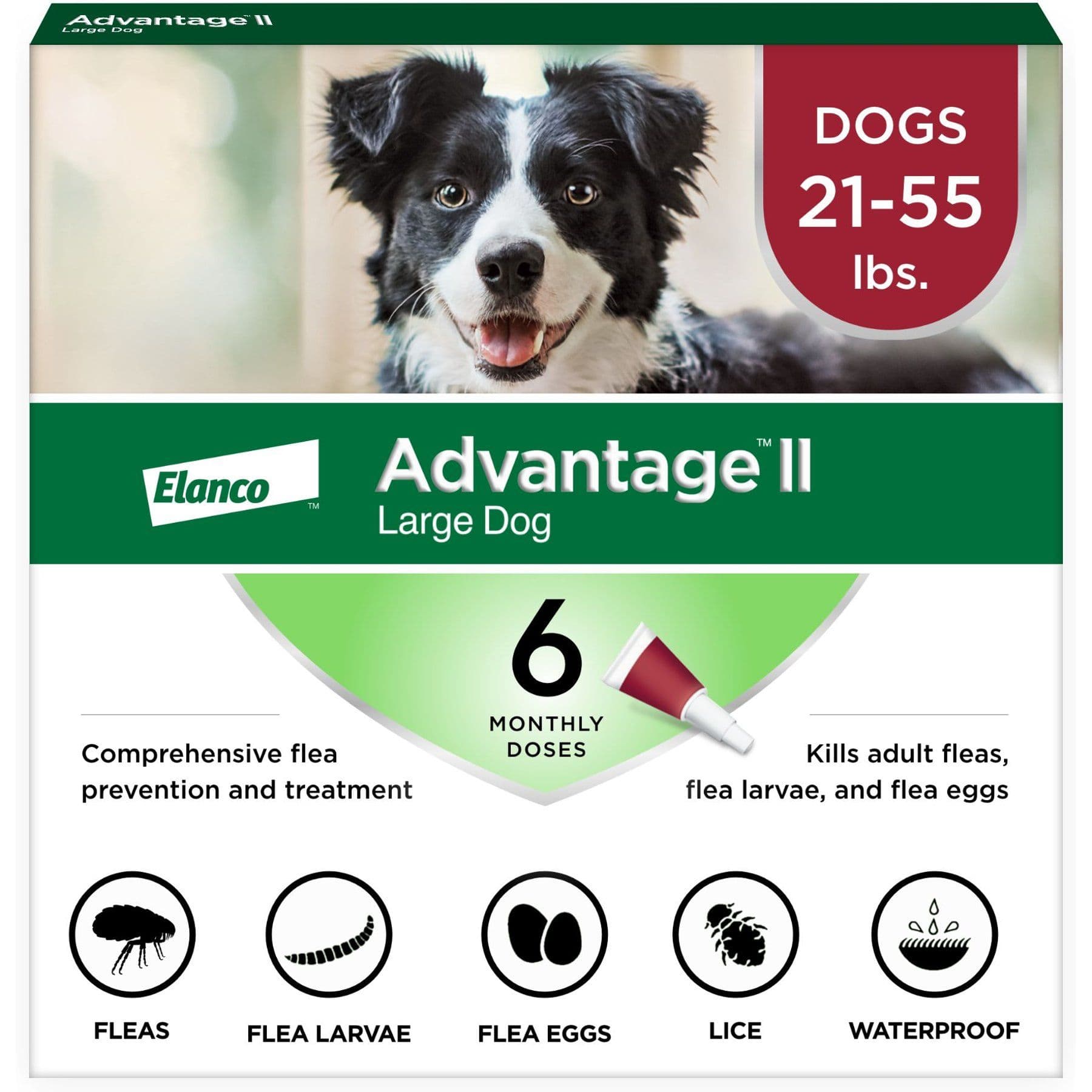
Advantage II for large dogs is the flea-only spot-on with no prescription: imidacloprid plus pyriproxyfen kills adult fleas, larvae and eggs for a month per dose.
Petful may earn a commission when you click through to Chewy, at no extra cost to you.
If ticks are not a concern where you live, Advantage II for Dogs is a focused flea-only topical. It uses imidacloprid to kill adult fleas, usually within 12 hours, and pyriproxyfen to kill eggs and larvae, so it breaks the life cycle just like Frontline Plus. It also kills chewing lice. It does not kill ticks.
It is labeled for dogs 7 weeks and older and lasts about 30 days. For an indoor-leaning small dog in a city apartment, it is a sensible, gentle choice. If you hike, camp, or live near woods or tall grass, skip it in favor of a tick-covering pick, because a single attached tick can transmit disease within a day or two.
- Best for: flea-only households with little tick exposure.
- Pros: strong flea control across life stages; waterproof once dry.
- Cons: no tick protection; monthly application.
Capstar: Best Fast-Acting Flea Pill
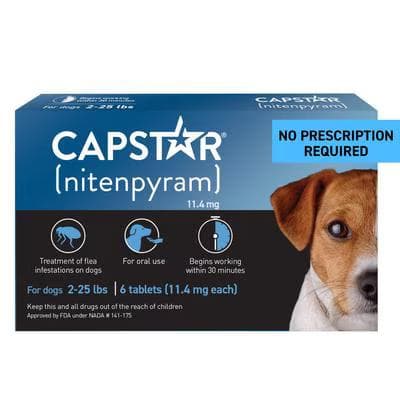
An over-the-counter nitenpyram tablet that starts killing adult fleas within 30 minutes. A fast knockdown for an active infestation, no prescription required, useful alongside a longer-term preventive.
Petful may earn a commission when you click through to Chewy, at no extra cost to you.
When your dog walks in covered in fleas and you need relief today, Capstar is the OTC tool for the job. The tablet contains nitenpyram, which starts killing adult fleas within about 30 minutes and keeps working for roughly 24 hours. It is FDA approved for over-the-counter sale, for dogs and puppies 4 weeks and older weighing at least 2 pounds, in a 2 to 25 pound tablet and a tablet for dogs over 25 pounds.
The catch: Capstar is a knockdown, not prevention. It leaves no residual protection, so pair it with a monthly topical or a collar. A common plan is Capstar on day one to break an active infestation, then Frontline Plus or a Seresto collar for the long game.
- Best for: a heavy flea load right now, or a quick clean-up before boarding or a groomer visit.
- Pros: works within about 30 minutes; oral, so no residue; safe to combine with the topicals and collars here.
- Cons: lasts only about 24 hours; no prevention; must be paired with a maintenance product.
PetArmor Plus for Dogs: Best Budget Flea and Tick Treatment
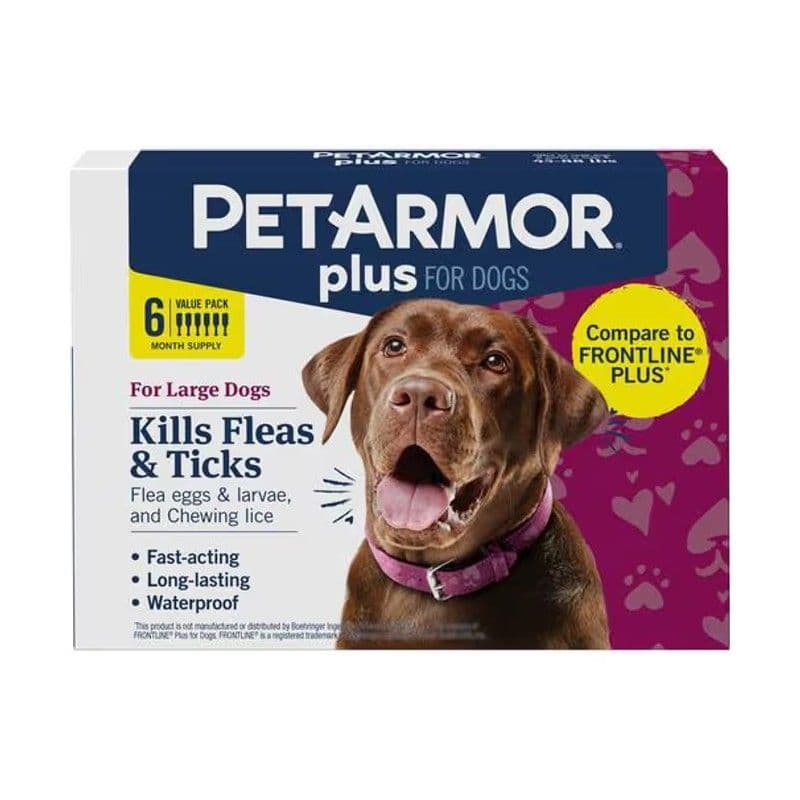
Fast-acting, waterproof OTC spot-on that kills fleas, flea eggs and larvae, ticks, and chewing lice for large dogs 45 to 88 lbs. A budget alternative to Frontline Plus.
Petful may earn a commission when you click through to Chewy, at no extra cost to you.
PetArmor Plus Flea and Tick Spot Treatment uses the same two active ingredients as Frontline Plus, fipronil and (S)-methoprene, at a noticeably lower price per dose. If cost is what keeps you from treating every pet in the house every month, this is the affordable dog flea treatment that closes the gap without dropping life-cycle control.
It is labeled for dogs 8 weeks and older, kills fleas, ticks, and chewing lice, and lasts about 30 days. Owners report the applicator is a little less tidy than Frontline's, but the formula is the point.
- Best for: multi-dog homes and owners treating year-round on a budget.
- Pros: Frontline Plus actives for less; kills fleas, ticks, and lice; breaks the life cycle.
- Cons: same monthly routine; packaging and applicator are basic.
OTC Flea Pills for Dogs: Oral Options You Can Buy Without a Vet

If you specifically want flea pills for dogs without a vet prescription, here is the honest account: the only oral flea options sold OTC are short-acting, and every long-acting oral brand requires a prescription. The OTC oral flea treatments for dogs are:
- Nitenpyram tablets: Capstar and lookalike generics such as PetArmor CapAction and CapShield. They kill adult fleas within about 30 minutes and last about 24 hours, and can be given as often as once a day during a heavy infestation.
- Imidacloprid soft chews (Advantus): a daily chewable flea treatment that kills adult fleas fast but, like nitenpyram, offers no lasting prevention.
What kills fleas immediately? An oral nitenpyram tablet such as Capstar is the fastest OTC option, killing adult fleas on the dog within about 30 minutes. A dish soap bath also kills fleas on contact, but neither one prevents new fleas tomorrow. This is fast acting flea treatment for dogs, not a monthly preventive.
There is no monthly flea pill for dogs, and no flea and tick chewable, that you can legally buy without a vet prescription in the U.S. today. Every once a month flea pill and every chewable flea and tick medicine for dogs, the ones most owners picture, belongs to the prescription isoxazoline class: NexGard, Simparica, Bravecto, and Credelio. If a monthly oral is what you want, a vet visit is unavoidable. For other same-day tactics, see what kills fleas on dogs instantly.
- Online listings for flea and tick chewables without a vet prescription that are not Capstar, a nitenpyram generic, or Advantus are usually supplements, not drugs. Garlic, brewer's yeast, and essential-oil chews have no reliable evidence of killing fleas, and garlic is toxic to dogs in larger amounts.
The Strongest OTC Flea and Tick Medicine, and Choosing by Your Dog's Size
What is the strongest OTC flea treatment for dogs? It depends on what you need it to beat. These topical flea treatments for dogs, applied as spot-on drops, are the most effective flea treatment for dogs you can buy over the counter, because each pairs an adulticide with a growth regulator:
- K9 Advantix II is the broadest and strongest for ticks and mosquitoes: imidacloprid, permethrin, and pyriproxyfen kill and repel in one monthly dose.
- Frontline Plus is the strongest all-round flea and tick spot-on without permethrin, so it is the safer strong choice in a home with cats.
- PetArmor Plus delivers the same fipronil formula as Frontline Plus for less.
- Advantage II is the strongest flea-only choice for low-tick areas.
- Never apply K9 Advantix II, or any dog product containing permethrin, to a cat, and keep cats away from a treated dog until the product is fully dry. Cats lack the liver pathway to break permethrin down, and exposure can cause tremors, seizures, and death.
Ticks matter beyond itching: our WebVet sister site's guide to tick-borne diseases in dogs covers Lyme, ehrlichiosis, and anaplasmosis, which is why tick coverage ranks so high in our picks.
Do flea collars really work for dogs? Modern medicated collars do. The Seresto collar is the longest-lasting OTC option at up to 8 months, while older-style cheap collars and "natural" herbal collars rarely deliver lasting control. For a full collar comparison, see our guide to the best flea collar for dogs.

Whichever you choose, dosing by your dog's size is the most important step. Every product here is sold in weight-banded packs, and the right band is the one your dog's current weight falls into:
- Puppies: Capstar from 4 weeks and 2 pounds; K9 Advantix II, Advantage II, and Seresto from 7 weeks; Frontline Plus and PetArmor Plus from 8 weeks. For the best flea medication for puppies, weigh the puppy and buy the smallest band that fits.
- Small dogs: flea medicine for small dogs comes in the smallest bands (often 4 to 10 or 5 to 22 pounds). Never split a large-dog applicator between two small dogs.
- Large dogs: flea and tick treatment for large dogs is sold in 45 to 88 and 89 to 132 pound bands for topicals; pick the band your dog sits in today.
- Between sizes: do not round up to a bigger band, because over-dosing can cause toxicity. Re-weigh and re-buy as a puppy grows.
What Needs a Prescription: NexGard, Bravecto, Simparica, Credelio and Revolution
Can I get NexGard without a vet prescription? No. In the U.S., NexGard (afoxolaner) is an FDA prescription drug, and so is every chewable in its class: Bravecto (fluralaner), Simparica and Simparica Trio (sarolaner), and Credelio (lotilaner). A legitimate pharmacy will contact your vet before shipping them. Listings that offer prescription flea medicine for dogs without vet prescription are either counterfeit, gray-market imports, or illegal.
These brands need a prescription for two reasons. They are systemic drugs that work through the bloodstream, which the FDA regulates as prescription animal drugs, and combination products that also prevent heartworm require a negative heartworm test first, because giving a heartworm preventive to an infected dog can trigger a dangerous reaction. That is why flea, tick, and heartworm medication, including NexGard Plus and Simparica Trio, always goes through a vet.
The prescription flea medicines you will hear about:
- NexGard and NexGard Plus (afoxolaner): monthly flea and tick chewables; Plus adds heartworm and intestinal worm prevention.
- Bravecto (fluralaner): a flea and tick chewable that lasts up to 12 weeks, the main three month flea treatment for dogs.
- Simparica and Simparica Trio (sarolaner): monthly; Trio adds heartworm and roundworm and hookworm control.
- Credelio (lotilaner): a small monthly flea and tick chewable.
- Revolution (selamectin): a topical that covers fleas, heartworm prevention, ear mites, and sarcoptic mange. Selamectin for dogs without vet prescription is not legally available in the U.S., because the heartworm claim makes it prescription-only.
- Advantage Multi (imidacloprid and moxidectin): a prescription topical with heartworm prevention; do not confuse it with OTC Advantage II.
- Comfortis and Trifexis (spinosad) and Sentinel: other prescription oral options.
- In 2018 the FDA alerted owners and vets that isoxazoline products (NexGard, Bravecto, Simparica, Credelio) have been associated with neurologic events such as muscle tremors, ataxia, and seizures in some dogs. They remain widely prescribed and safe for most dogs, but a dog with a seizure history is a reason to choose a non-isoxazoline product with your vet.
OTC vs. Prescription Flea Medicine: Which Is Right for Your Dog?
For a healthy adult dog with routine flea and tick exposure, a well-chosen OTC topical or collar is genuinely effective and much cheaper than a vet visit plus a prescription. The OTC picks above cover most households, with Capstar for same-day emergencies. Here is how the two routes compare:
| Factor | OTC flea medicine | Prescription flea medicine |
|---|---|---|
| How you buy it | Any retailer, no vet visit | Vet authorization required |
| Forms | Spot-ons, collars, short-acting pills | Monthly or 12-week chewables, some topicals |
| Typical duration | 30 days, or up to 8 months for a collar | 30 days to 12 weeks |
| Heartworm coverage | None | Available in combination products |
| Best for | Healthy adult dogs with routine exposure | Severe infestations, medical conditions, pill-only households |

Prescription products earn their place when you need a pill instead of a topical, the longest dosing interval, heartworm prevention in the same product, or veterinary oversight for a sick dog. Many owners use a hybrid approach: OTC protection for routine months and a vet check if problems persist. The best flea medicine is the one that matches your dog and that you will actually apply on schedule.
 Sponsored
Vet care that's always there
Unlimited video calls and messaging with licensed vets for less than a typical vet visit. One membership covers up to five pets.
Use code Pets60
Plans start at $12/month · covers up to 5 pets
- Licensed vets in most states
- Rx for 150+ conditions
- 4.7 on Trustpilot
How to Use OTC Flea Medicine Safely and Effectively
A few rules turn an OTC product into a reliable defense, and they also answer the safest flea and tick prevention for dogs question: the safest product is a registered one used exactly as labeled, and it is the same advice any veterinarian recommended flea treatment plan starts with.
- Match the product to the problem: fleas only, Advantage II; fleas plus ticks, Frontline Plus, PetArmor Plus, K9 Advantix II, or Seresto.
- Dose by weight: buy the band your dog's current weight falls into and never improvise doses.
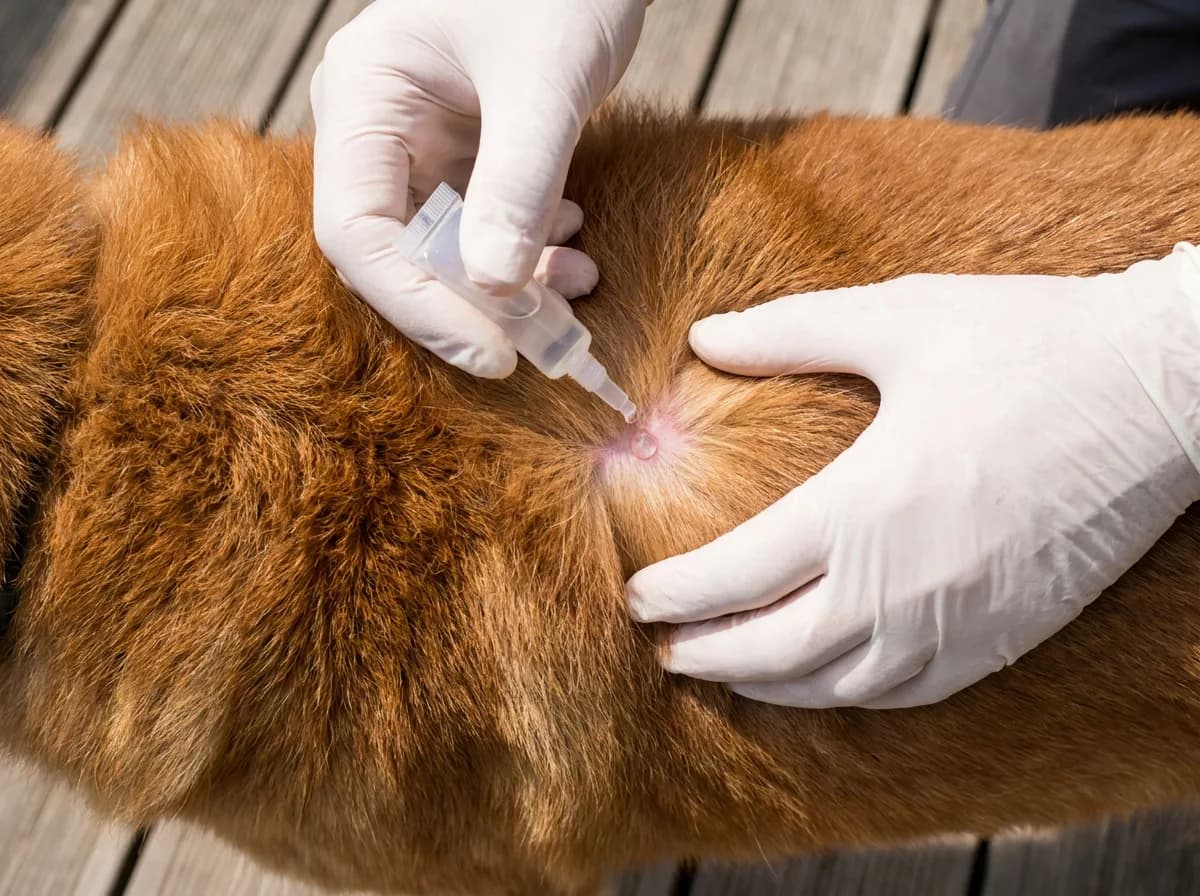
- Apply correctly: part the fur and apply a spot-on to the skin between the shoulder blades, where your dog cannot lick it, and let it dry fully.
- Stay on schedule: a lapse of a few weeks lets a new generation of fleas establish.
- Treat every pet on the same day: dogs, cats, and rabbits each need a product labeled for their own species.
- Never use dog products on cats, and never use cat products on dogs.
- Treat the home: wash bedding hot, vacuum daily for two weeks, and use a home spray if needed.
- Watch for reactions: mild redness can happen; call your vet for tremors, drooling, vomiting, or lethargy.
Can you combine flea products? Some combinations are safe and some are not:
- Capstar plus a monthly spot-on or a Seresto collar: safe, and the standard plan for a heavy infestation.
- Two spot-ons at once, or a spot-on plus a medicated collar: avoid unless your vet approves, because you stack insecticides without adding much protection.
- A flea shampoo and a spot-on: bathe first, let the coat dry fully for about 48 hours before applying, and wait 48 hours after applying before the next bath.
- An OTC topical plus a prescription chewable: only on your vet's advice.
Know the signs of a reaction so you can act quickly:
- Mild and common: redness, itching, or hair change at the application site, or a greasy patch for a day.
- Wash it off: bathe the dog with a mild dish soap and call your vet if the skin reaction spreads or blisters.
- Urgent: drooling, vomiting, wobbling, muscle tremors, or seizures. Call your vet or an animal poison control line right away and keep the product box handy for the active ingredient and EPA number.
- Using a large-dog dose on a small dog, splitting one applicator between dogs, or using a product below its minimum age can cause toxicity. If your dog is pregnant, nursing, elderly, on other medications, or has seizures, ask your vet which product is safe before you buy.
Pregnant and nursing dogs, seniors, and dogs with liver, kidney, or neurologic disease are where "safe flea treatment for dogs" stops being a label question and becomes a vet question. For a dog with a seizure history, a non-isoxazoline topical such as Frontline Plus is the usual starting point, but confirm with your vet.
Since most no-prescription products are monthly, a free MyPetID profile is an easy way to log each application and get a reminder when the next dose is due, for every pet in your home.
What About Dawn Dish Soap and Other Home Remedies?
Is it true that Dawn dish soap kills fleas? Yes, on contact. Dish soap breaks the surface tension fleas use to stay afloat, so a lathered bath drowns the fleas on your dog. It can be a useful emergency step, particularly for very young puppies before they are old enough for medicated products, and a gentle flea shampoo such as Adams Plus Flea and Tick Shampoo for sensitive skin does the same job with less drying of the coat.
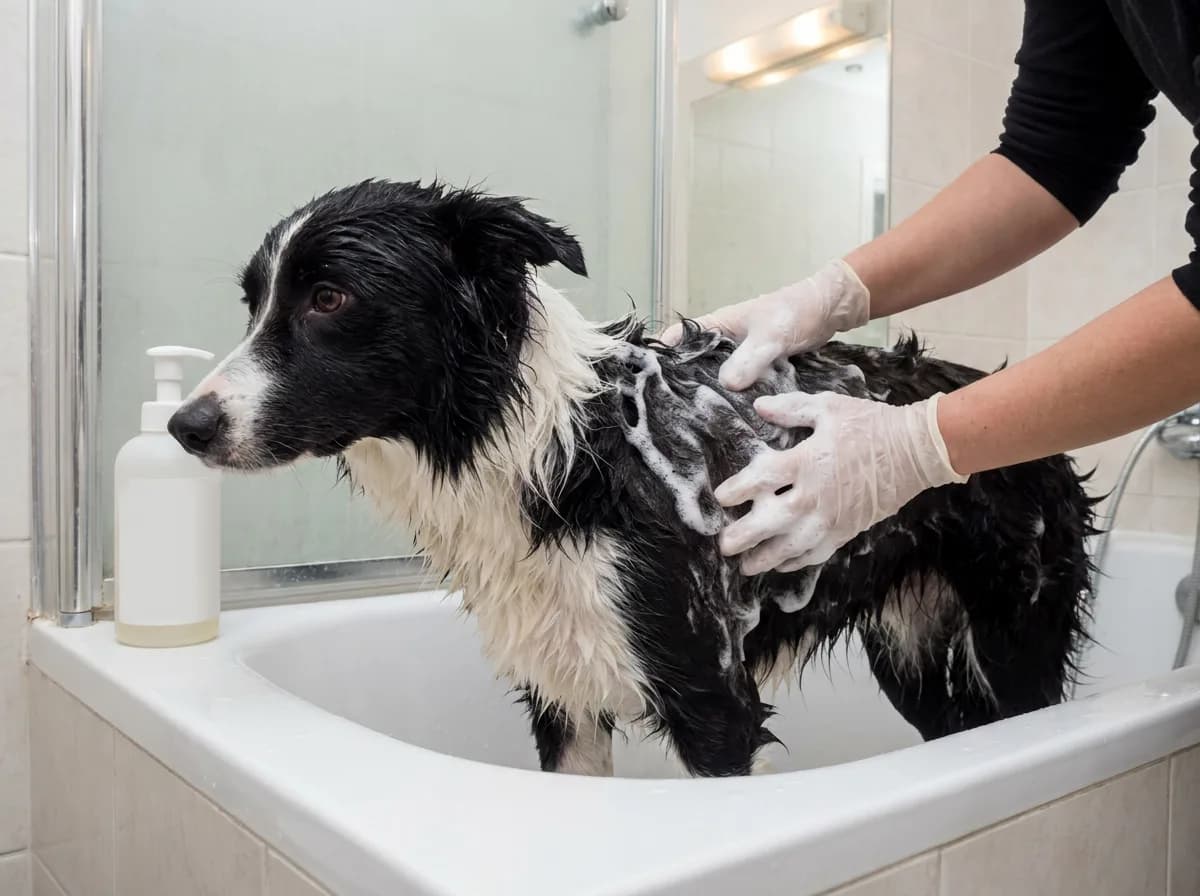
But a bath is not prevention. The moment your dog dries off, fleas from the carpet, yard, and bedding can hop straight back on. Use it as a one-time knockdown, then move to a registered OTC product. Our guide to the best flea shampoo for dogs compares the shampoos worth buying.
What about other home remedies?
- Apple cider vinegar and lemon sprays: no evidence they kill or repel fleas reliably.
- Essential oils: tea tree, pennyroyal, and concentrated oils can poison dogs and are especially dangerous to cats.
- Garlic and brewer's yeast: no proven flea effect, and garlic can damage a dog's red blood cells.
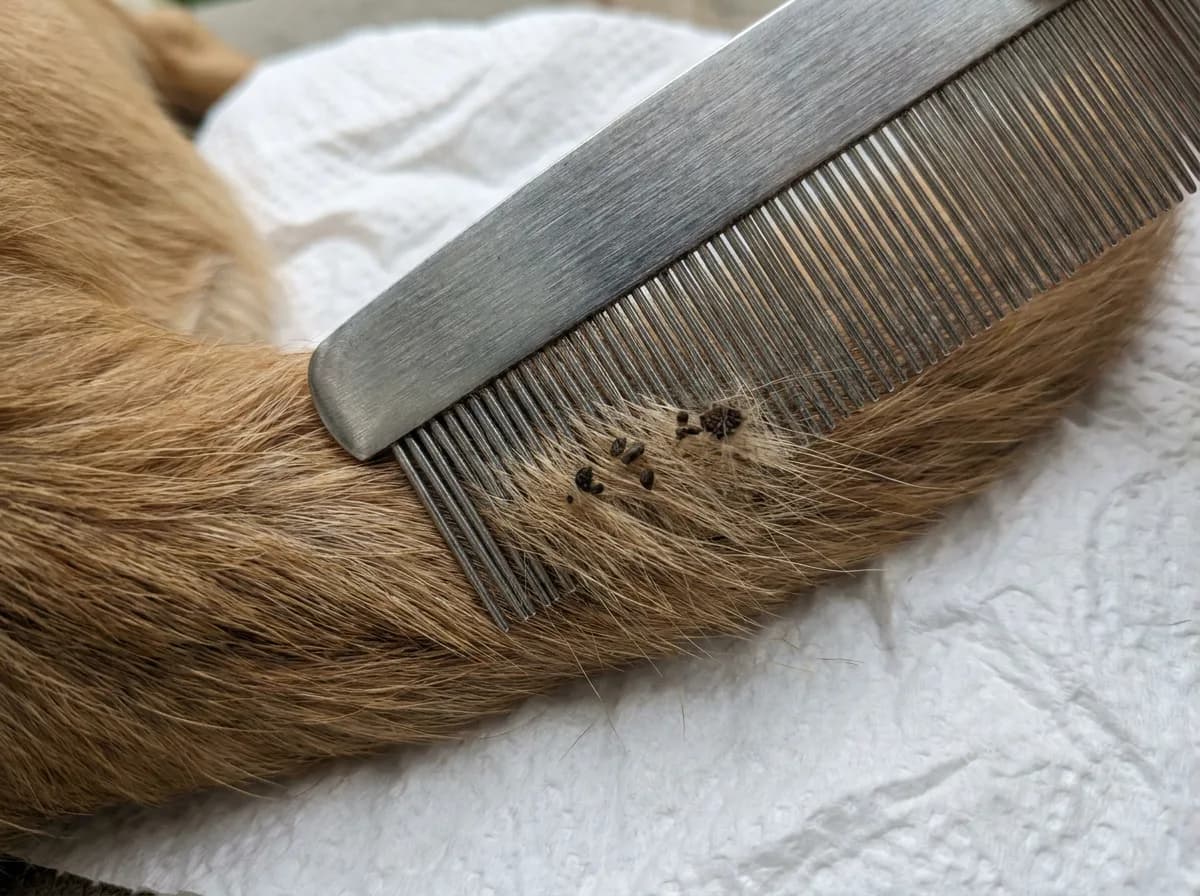
- A fine-toothed flea comb such as the Frisco Double-Row Flea Comb: genuinely useful for checking for fleas and flea dirt, and for removing fleas from puppies.
- Only a small fraction of a flea population lives on your dog; most is eggs, larvae, and pupae in carpets, bedding, and the yard. A pet-safe home spray, hot-washed bedding, and daily vacuuming for two weeks finish the job the medicine starts.
A plant-based option such as Vet's Best Indoor Flea and Tick Home Spray is labeled for use around dogs on carpets and bedding. For a step-by-step plan covering bathing, combing, and the house, see our guide on how to get rid of fleas on dogs.
When You Still Need a Vet (Don't Skip This)
Can I get rid of fleas without going to the vet? For most healthy adult dogs, yes: a registered OTC product, every pet treated on the same day, and a cleaned home will clear fleas within about three months, the time it takes to exhaust the pupae already in your house. Still, there are clear situations where you should talk to a veterinarian first:
- Heavy or stubborn infestations that do not improve after two to three months of correct OTC use.
- Puppies below the minimum age or weight on the label.
- Pregnant or nursing dogs, where ingredient safety varies by product.
- Senior dogs, sick dogs, or dogs on other medications, including those with liver, kidney, or neurologic conditions or a seizure history.
- Flea allergy dermatitis, hair loss, scabs, or skin infection, which often need prescription treatment alongside flea control.
- Tapeworm segments (rice-like pieces) near the tail, since fleas transmit tapeworms.
- You want a monthly pill, a 12-week chewable, or heartworm prevention in one product.
How long until the fleas are gone? With a correct OTC plan, expect this timeline:
- Within 24 hours: the adult fleas on your dog are dead, faster with Capstar.
- Weeks 1 to 4: new fleas still appear as pupae in the house hatch, then die on the treated dog. This is normal, not product failure.
- Weeks 4 to 12: sightings fall steadily as the home supply of eggs and pupae runs out, provided every pet stays treated on schedule.
- Past 12 weeks: if you still see fleas, something in the plan is missing, and it is time for a vet visit.
Constant scratching and hot spots after only a few bites usually point to flea allergy dermatitis. Our sister site WebVet explains flea allergy dermatitis in dogs and how vets treat it, and our own guide to flea treatment for dogs walks through every product type, OTC and prescription.
Why OTC Flea Medicine Sometimes Seems to Stop Working
Owners often decide an OTC product has stopped working, and occasionally local flea populations do respond less well to an ingredient. Far more often, though, the problem is the plan, not the product. These are the usual culprits:
- The pupal window: flea pupae in carpets and bedding are protected from insecticides and can wait weeks before hatching, so new adults keep appearing even when the medicine is working.
- An untreated pet: a cat, a second dog, or a visiting pet that carries fleas reseeds the home.
- The wrong weight band or a split dose: an under-dosed dog gets incomplete protection.
- Application errors: product applied to the fur instead of the skin, or a bath too soon after a spot-on.
- Gaps in the schedule: a missed month lets a new generation establish.
- Outdoor hot spots: shaded yard areas, crawl spaces, and wildlife visitors keep supplying fleas.
If you have fixed all of these and still see fleas after three months, ask your vet about switching active ingredient class, for example from a fipronil product to an imidacloprid product or to a prescription isoxazoline. Switching brands that share the same active ingredient rarely helps.
Where to Buy Flea Medicine for Dogs Without a Vet Prescription
Because EPA-registered topicals and collars and FDA-approved OTC nitenpyram need no prescription, you can buy them almost anywhere pet supplies are sold:
- Online: Chewy and Amazon carry every pick in this guide, with weight bands listed on each product page.
- Big-box stores: Walmart and Costco stock the major spot-ons and Seresto, often in multi-dose packs.
- Pet stores: Petco and PetSmart carry the full range, including Capstar tablets.
- Farm and rural stores: Tractor Supply stocks spot-ons and collars for large dogs.
- Discount stores: Dollar General and similar shops carry basic brands, but check the active ingredient before you buy.
Searches such as the best flea medicine for dogs without vet prescription at Walmart, on Amazon, or near me nearby all lead to the same products: Frontline Plus, K9 Advantix II, Advantage II, Seresto, Capstar, and PetArmor Plus are the same formulas in the store as at the clinic. There is no stronger "vet-only" version of these specific products, and buying from the shelf costs less than a clinic markup.
What matters more than where you shop is buying a genuine U.S. product. Look for the EPA registration number (EPA Reg. No.) on topicals and collars, or the FDA approval number (a NADA or ANADA number) on Capstar, on the package and the product page. Avoid third-party sellers shipping unregistered foreign versions, which may be counterfeit, mislabeled, or dosed for a different market, a problem the EPA has repeatedly warned about with counterfeit spot-ons and collars.
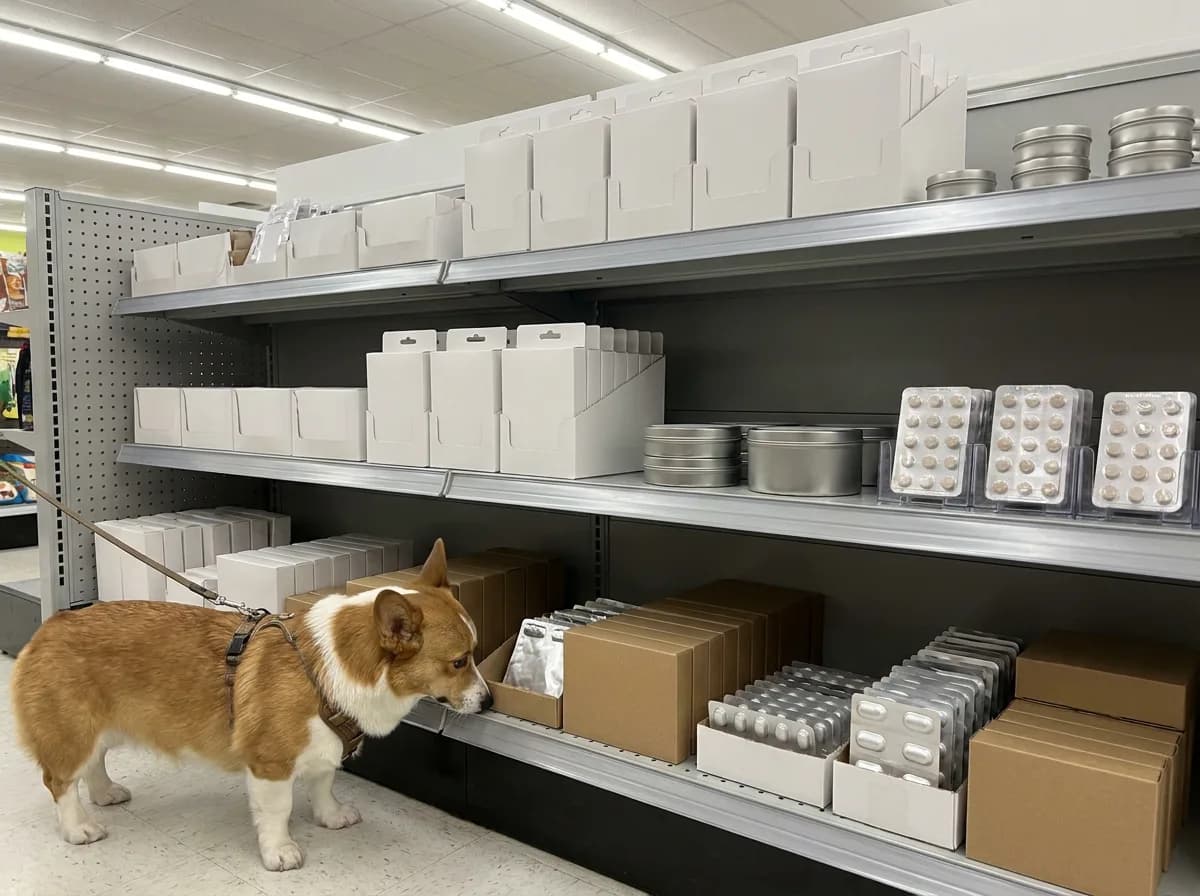
Match the package to your dog's weight before you check out. If you also need cat products, never use a dog box on a cat; our guide to flea medicine for cats without a vet prescription covers the cat-safe OTC options, and our roundup of the best oral flea and tick options for cats covers pills.
Frequently Asked Questions
For most dogs, Frontline Plus is the best non-prescription flea and tick medicine, because fipronil kills adult fleas and ticks while (S)-methoprene stops eggs and larvae. K9 Advantix II is the better pick in tick- and mosquito-heavy areas, as long as no cats live in the home.
No. NexGard is an FDA prescription drug in the U.S., as are Bravecto, Simparica, and Credelio. A legitimate pharmacy will verify a prescription with your vet before shipping it.
Modern medicated collars do. The Seresto collar releases imidacloprid and flumethrin for up to 8 months and kills fleas and ticks. Cheap older collars and herbal collars rarely give reliable control.
Usually, yes. Treat every pet with a registered OTC product such as Frontline Plus or Seresto, wash bedding, and vacuum daily. Expect about three months to clear the home, and see a vet for puppies, sick dogs, or skin infections.
An oral nitenpyram tablet such as Capstar starts killing adult fleas on a dog within about 30 minutes. A dish soap bath kills fleas on contact. Neither prevents new fleas, so follow up with a monthly topical or a collar.
Yes, on contact, because the soap lets fleas sink and drown. It offers no lasting protection, so fleas return as soon as your dog dries off unless you also use a flea preventive.
There is no homemade flea killer that matches registered products. A dish soap bath and a flea comb remove fleas safely in the short term, while vinegar, garlic, and essential oils are unproven and some are toxic, so pair any home step with an OTC product.
Yes, but only short-acting ones: nitenpyram tablets such as Capstar or PetArmor CapAction, and Advantus imidacloprid chews. They kill adult fleas fast but do not prevent new ones.
No. Every monthly or 12-week flea chewable sold in the U.S., including NexGard, Simparica, Bravecto, and Credelio, requires a vet prescription.
K9 Advantix II is the strongest OTC flea and tick treatment for broad coverage, because it kills and repels fleas, ticks, and mosquitoes. Frontline Plus is the strongest choice without permethrin.
You can use an EPA-registered spot-on such as Frontline Plus, K9 Advantix II, or Advantage II, a Seresto collar, or a Capstar tablet for a fast knockdown, always in your dog's weight band.
They do different jobs. NexGard is a prescription monthly chewable that prevents fleas and ticks, while Capstar is an OTC tablet that kills adult fleas within 30 minutes but lasts about a day.
The Bottom Line
You do not need a prescription to protect your dog from fleas. Pick by the job:
- Most dogs: Frontline Plus, the best all-round OTC flea medicine.
- Tick country without cats: K9 Advantix II.
- Longest protection: the Seresto collar.
- Flea-only homes: Advantage II.
- Tight budget: PetArmor Plus.
- Same-day emergency: Capstar.
Dose strictly by weight, treat every pet and your home on the same day, and save the vet visit for puppies, sick or pregnant dogs, skin infections, or when you want a monthly pill.
BVMS, MRCVS
Dr. Pippa Elliott, BVMS, MRCVS, is a veterinarian with nearly 30 years of experience in companion animal practice. Dr. Elliott earned her Bachelor of Veterinary Medicine and Surgery from the University of Glasgow. She was also designated a Member of the Royal College of Veterinary Surgeons. Married with 2 grown-up kids, Dr. Elliott has a naughty Puggle named Poggle, 3 cats and a bearded dragon.
Sign up for expert-backed reviews and safety alerts all in one place.