How to Get Rid of Fleas on Dogs: A Vet-Reviewed Step-by-Step Guide
A vet-reviewed, step-by-step guide to getting rid of fleas on dogs: confirm the fleas, knock down the adults fast, start long-term prevention, treat every pet and your home, and break the life cycle for good.

BVMS, MRCVS
Petful is reader supported. As an affiliate of platforms like Amazon and Chewy, we may earn a commission when you buy through links on this page. There is no extra cost to you.
Learning how to get rid of fleas on dogs comes down to a simple one-two punch: a fast knockdown to kill the adult fleas crawling on your dog right now, plus long-term prevention that breaks the life cycle so they cannot come back. According to the Companion Animal Parasite Council (CAPC), a single female flea can lay up to 40 to 50 eggs a day, which means the handful you can see on your dog represent only about 5 percent of the total infestation. The other 95 percent (eggs, larvae, and pupae) are hiding in your carpet, bedding, and yard. This guide walks you through the exact process veterinarians recommend, from confirming the fleas to treating your dog, every pet in the home, and the environment all at once.
- 1Confirm fleas first with a flea-comb and the white-paper "flea dirt" test before you treat
- 2Use the one-two punch: a fast-kill product (like a Capstar tablet or a soapy bath) plus a long-term monthly preventive
- 3Treat EVERY pet in the home on the same day, dosed by weight, even pets with no visible fleas
- 4Treat the environment (wash bedding hot, vacuum daily, treat the yard) because ~95 percent of the infestation lives off your dog
- 5Breaking the flea life cycle takes about 3 months of consistent treatment, so do not stop early
- 6See a vet for puppies, seniors, pregnant or nursing dogs, pale gums, or fleas that survive correct treatment
- To get rid of fleas on dogs, give a fast adulticide first: an over-the-counter nitenpyram tablet (Capstar) starts killing adult fleas in about 30 minutes. Pair it the same day with a monthly preventive (an EPA-regulated topical or an FDA-regulated oral) so newly hatched fleas cannot re-establish. Then treat the home AND yard, because only about 5 percent of the fleas live on your dog and roughly 95 percent (eggs, larvae, and pupae) are in your environment. Re-treat and re-clean in 5 to 10 days (the CDC advises two or more follow-up treatments in that window), and keep it up for about 3 months to outlast the armored pupae. No single product kills 100 percent of fleas instantly.

Sign up for expert-backed reviews and safety alerts all in one place.
How to Get Rid of Fleas on Dogs Fast: A Step-by-Step Plan at Home
If you only have a minute, here is the whole process in order. Each step is expanded in detail further down.
1. Confirm the fleas. Run a fine-tooth flea comb through your dog's coat and tap the debris onto a wet white paper towel. If reddish-brown specks smear rusty red, that is flea dirt (digested blood) and your dog has fleas.
2. Kill the adults fast. Give a fast-acting oral knockdown such as Capstar (nitenpyram), which starts killing adult fleas within about 30 minutes, or bathe your dog in warm water with a gentle soap to drown the fleas on contact.
3. Comb and bathe. Use the flea comb during and after the bath to physically remove fleas and eggs, dunking the comb in hot soapy water between passes.
4. Start a long-term preventive. Apply or give a monthly (or up to 8-month) preventive to keep new fleas from establishing. This is the step that actually ends the cycle.
5. Treat every pet in the home. Dose each dog and cat by weight on the same day, even ones with no visible fleas.
6. Treat the environment. Wash all bedding in hot water, vacuum floors and furniture daily, and treat your yard's shady spots.
7. Repeat and break the life cycle. Keep up treatment and cleaning for about 3 months so newly hatched fleas are killed before they can lay eggs.
8. See a vet if needed. Get professional help for very young, old, pregnant, or sick dogs, or any infestation that will not quit.
- Flea eggs and pupae in your home can stay dormant for weeks and hatch long after you think you have won. Plan to treat your dog and your home consistently for at least three months, which covers a full flea life cycle. Stopping at the first sign of improvement is the number one reason fleas come back.
To make that three months of consistency easier, a free MyPetID profile lets you log each flea treatment, track how often you have given it, and get automatic reminders for the next dose so the cycle actually breaks.
For the bigger picture on products, dosing, and year-round protection, see our complete flea treatment for dogs guide, which serves as the pillar resource for this whole cluster.

 Sponsored
Need flea, tick, or parasite care for your pet?
A licensed vet at Dutch can recommend the right preventive and prescribe it when it's appropriate. Annual members get 20% off their first flea and tick order.
Use code Pets60
Plans start at $12/month · covers up to 5 pets
- Licensed vets in most states
- Rx for 150+ conditions
- 4.7 on Trustpilot
Step 1: Confirm Your Dog Actually Has Fleas
Before you spend money on treatments, make sure fleas are really the problem. Itching can also come from allergies, mites, or dry skin, so confirm before you treat.
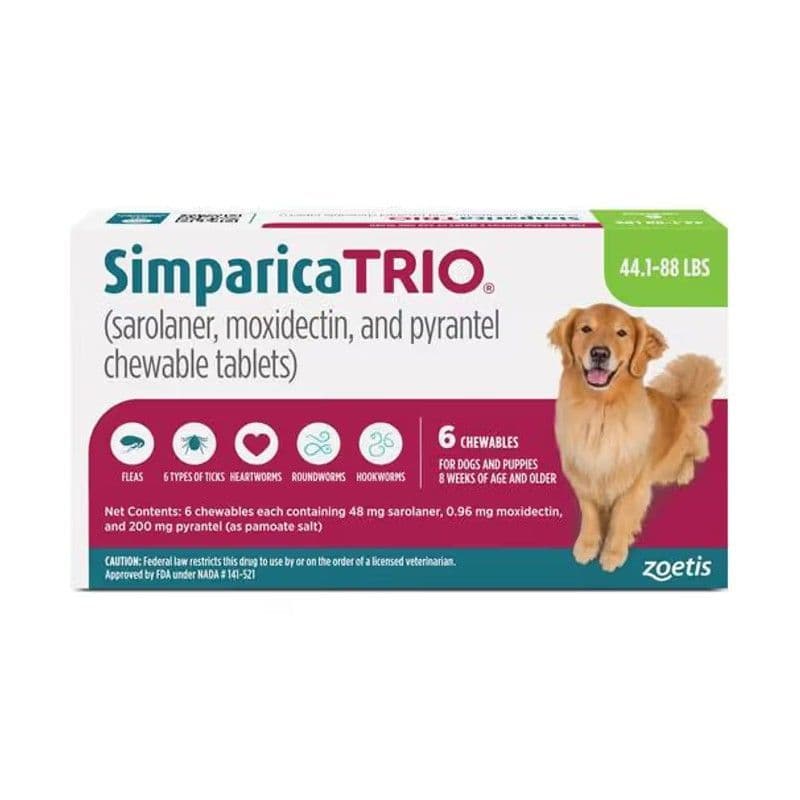
Monthly vet-prescription chew that kills fleas and ticks and prevents heartworm disease, roundworms, and hookworms in one dose. For dogs 44.1 to 88 lbs.
Petful may earn a commission when you click through to Chewy, at no extra cost to you.
Look for the signs
The most common signs of fleas on dogs include:
- Persistent scratching, biting, or licking, especially at the base of the tail, the belly, and the inner thighs.
- Tiny fast-moving brown insects about the size of a sesame seed in the fur, most visible on the belly and groin where the hair is thin.
- Flea dirt, which looks like ground black pepper scattered on the skin.
- Red, irritated skin, scabs, or hair loss from scratching. Some dogs develop flea allergy dermatitis, an allergic reaction to flea saliva that causes intense itching from just a bite or two. Petful’s guide to flea bites on dogs has the full breakdown.
The flea-comb and white-paper test
This is the cheapest, most reliable confirmation, and vets use it too. Comb your dog with a fine-tooth flea comb (the teeth are spaced to trap fleas and debris), then tap whatever you collect onto a damp white paper towel. If the dark specks dissolve into reddish-brown streaks, that is flea dirt, which is digested blood, and it confirms an active infestation. Plain black flecks that stay dry are usually just dirt.
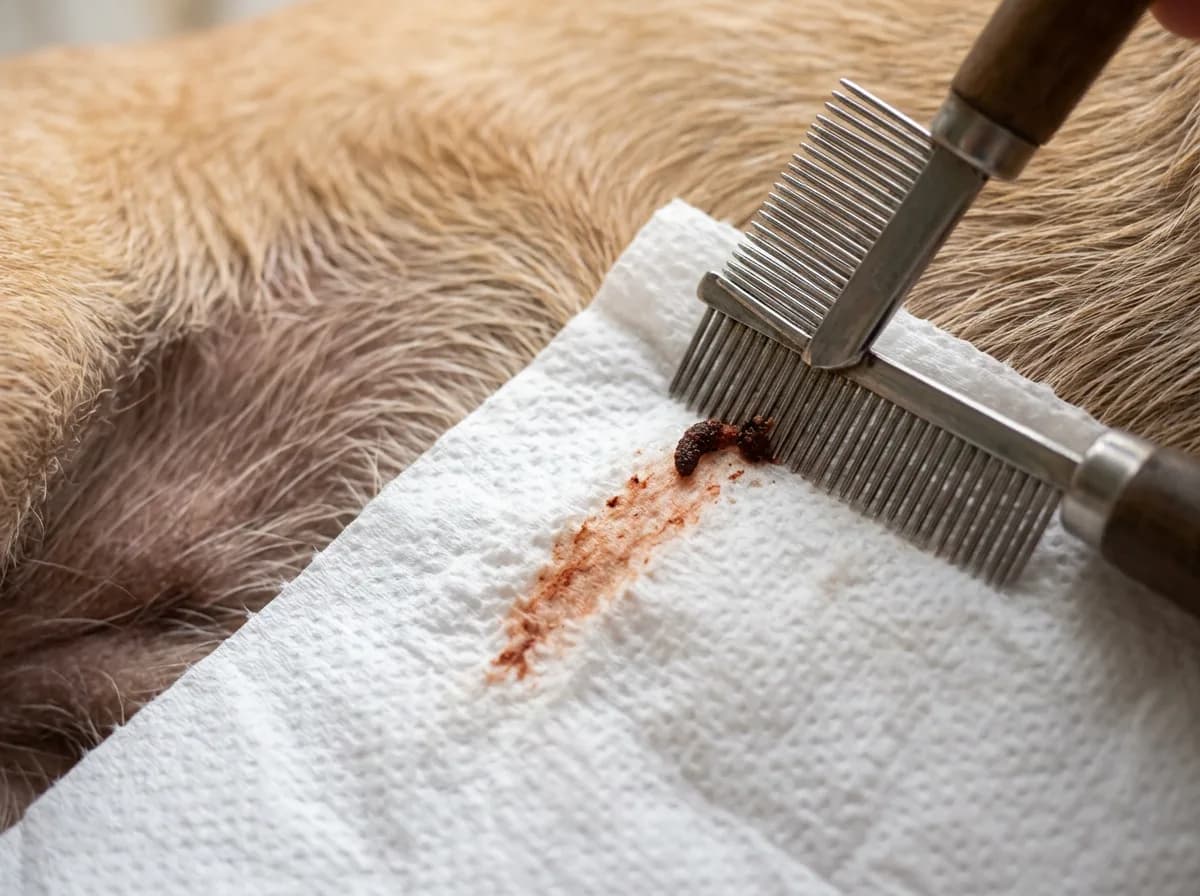
- Flea dirt is essentially flea feces made of your dog's digested blood. When it gets wet it rehydrates and smears rusty red. Regular dirt and dandruff will not do this, which is what makes the wet-paper test such a dependable way to tell fleas apart from other skin issues.
Step 2: Kill the Adult Fleas Fast (The Knockdown)
Once fleas are confirmed, your first move is fast relief. This stops the biting, reduces your dog's misery, and starts cutting the population before those adults lay more eggs. You have two main fast-kill options, and using both is fine.
Option A: A fast-acting oral tablet
An over-the-counter tablet containing nitenpyram (Capstar) starts killing adult fleas within about 30 minutes and works for roughly 24 hours. It is the fastest knockdown you can buy without a prescription. Important: Capstar is a knockdown, not protection. It kills the fleas on your dog today but leaves no residual, so it must be paired with a long-term preventive (Step 4). For more on the fastest-acting options and how they compare, see our breakdown of what kills fleas on dogs instantly.
Option B: A flea bath
A bath in warm water with a gentle soap kills fleas on contact by breaking the surface tension of the water so the fleas drown. Plain Dawn dish soap works for an emergency bath and is gentle enough for most adult dogs. Lather thoroughly, leave the suds on for several minutes, then rinse. Like Capstar, a bath is not preventive: it gives zero residual protection, so it cannot be your only step.
- A Dawn bath kills the fleas in the water that day and nothing more. It strips your dog's coat oils if used repeatedly and offers no protection against the next wave hatching from your carpet. Use it once to get relief, then move straight to a real monthly preventive.
Step 3: Bathe and Comb Thoroughly
Whether or not you used a medicated product, a careful bath and comb-out physically removes fleas, flea dirt, and some eggs.
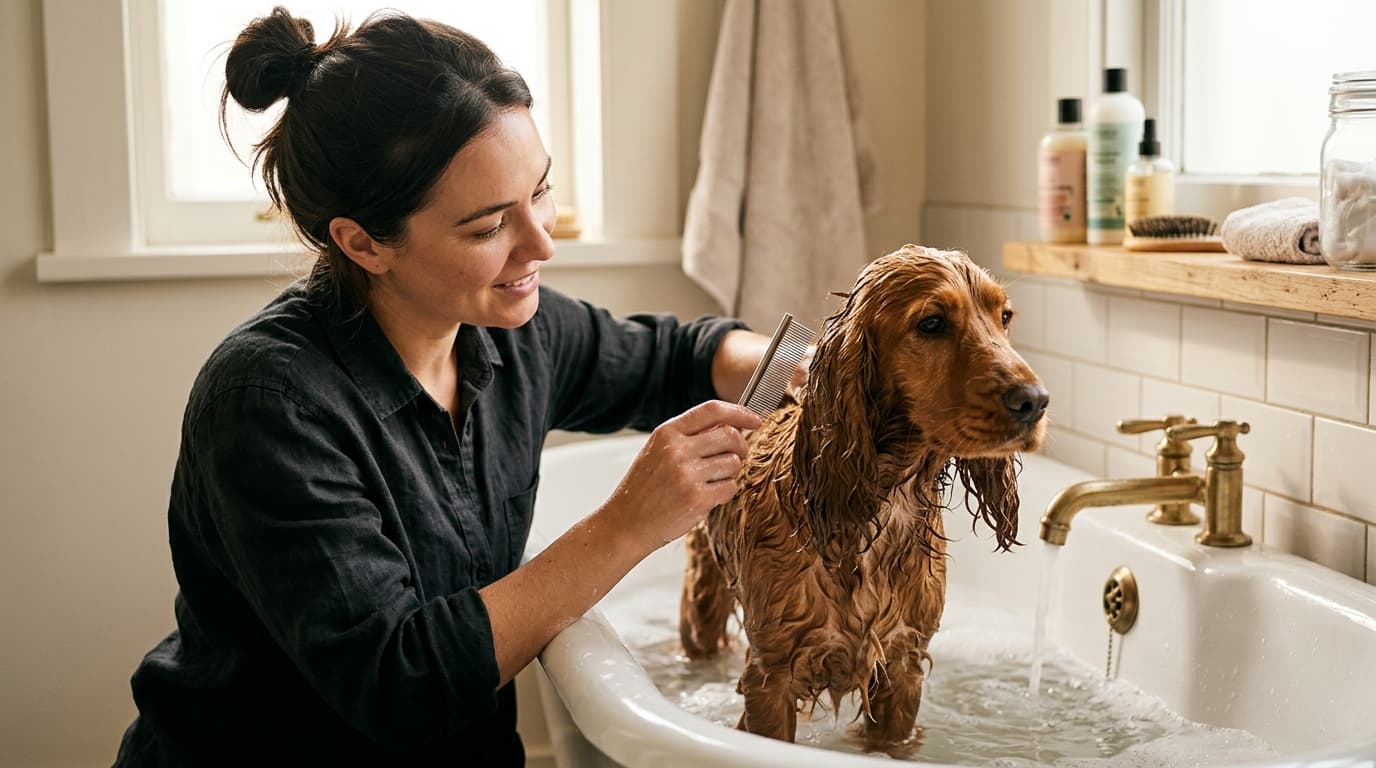
How to bathe a dog with fleas
1. Fill the tub with warm (not hot) water before bringing your dog in, so fleas in the coat cannot escape to dry areas.
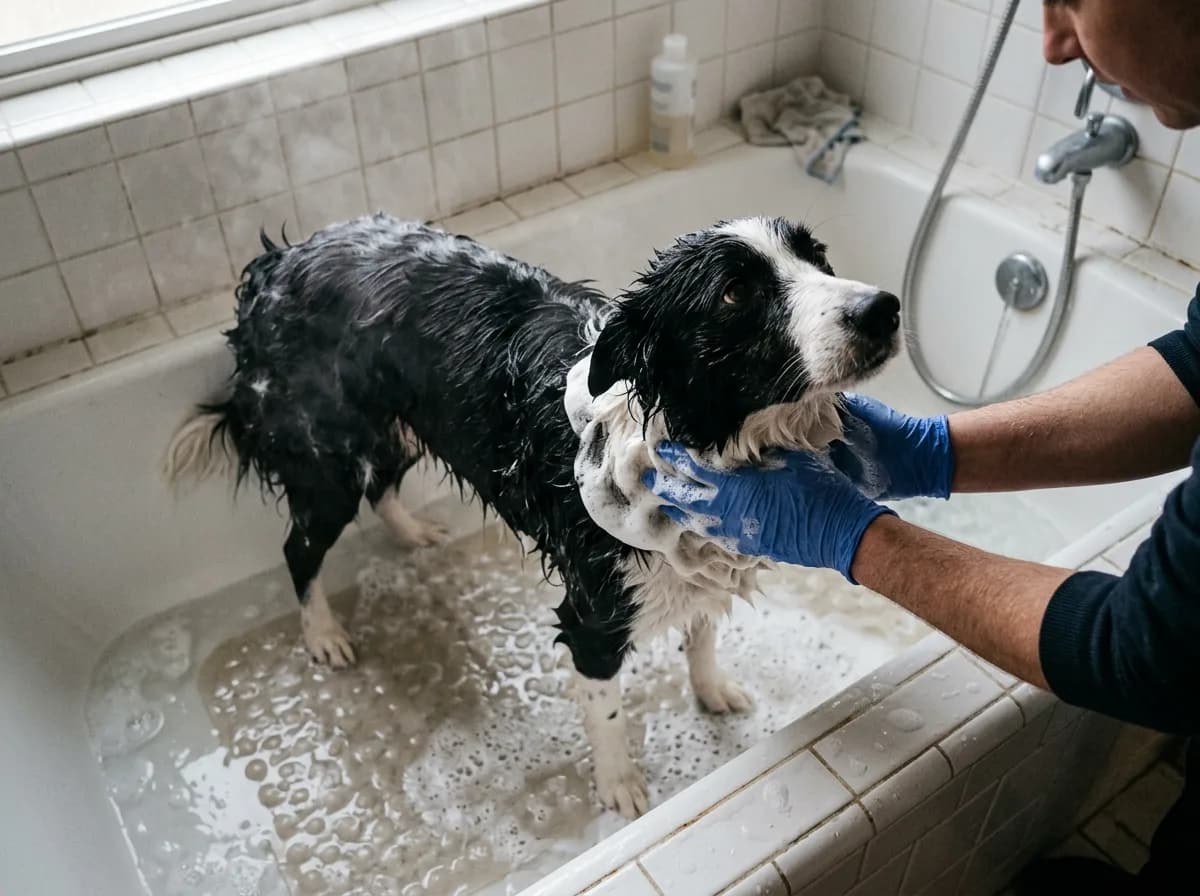
2. Start at the neck and lather a ring of soap there first. Fleas flee water by running toward the head and ears, so a soapy collar of suds blocks their escape route.
3. Work the lather backward over the whole body, avoiding the eyes. Leave it on for 5 to 10 minutes.
4. Rinse completely.
5. While the coat is still wet, comb section by section with the flea comb, dunking it in a bowl of hot soapy water after each pass to kill what you pull out.
6. Dry your dog and wash the towels and any bedding immediately in hot water.
A homemade option some owners use is a rinse of one quart water, one cup white vinegar, and one cup of gentle baby shampoo or Dawn. The soap does the killing; the vinegar can help deter fleas but will not eliminate an infestation on its own.
- Many over-the-counter flea shampoos and dips are not safe for puppies under 8 to 12 weeks. For a young puppy, a warm bath with a few drops of plain Dawn plus diligent flea-combing is the safer route, and you should call your vet before using any medicated product. The same caution goes for kittens.
Step 4: Start Long-Term Prevention (The Other Half of the Punch)
This is the step that actually ends the infestation. Fast-kill products clear today's fleas; a monthly (or longer) preventive kills the new fleas that hatch over the following weeks, breaking the cycle for good. Skipping it is why so many people feel like the fleas "keep coming back."
Most over-the-counter preventives are EPA-regulated topicals and collars. Here are the proven no-prescription picks:
| Product | Type | What It Does |
|---|---|---|
| Capstar (nitenpyram) | Oral tablet | Fast knockdown only: kills adult fleas in ~30 min, lasts ~24 hrs, no residual |
| Frontline Plus | Topical, monthly | Kills adult fleas plus flea eggs and larvae, and ticks |
| Advantage II | Topical, monthly | Kills fleas at all life stages (no ticks) |
| K9 Advantix II | Topical, monthly | Fleas, ticks, and mosquitoes (toxic to cats, dog-only) |
| Seresto Collar | Collar | Up to 8 months of flea and tick protection |
Frontline Plus (fipronil plus (S)-methoprene) kills adult fleas, ticks, and flea eggs and larvae, which makes it a strong all-around topical. Advantage II (imidacloprid plus pyriproxyfen) targets fleas at every life stage but does not cover ticks. K9 Advantix II adds tick and mosquito protection but contains permethrin and must never go on or near cats. The Seresto collar (imidacloprid plus flumethrin) delivers up to 8 months of flea and tick coverage from a single collar.
For a deeper, side-by-side look at the strongest no-prescription options, read our guide to the best flea medicine for dogs without a prescription.
- K9 Advantix II and many other dog-only products contain permethrin, which is highly toxic to cats and can cause tremors, seizures, and death. In multi-pet homes, keep the treated dog separated from cats until the product is fully dry, and only use cat-labeled products on cats. If your cat is exposed, call your vet or a pet poison line immediately.
A note on prescription options
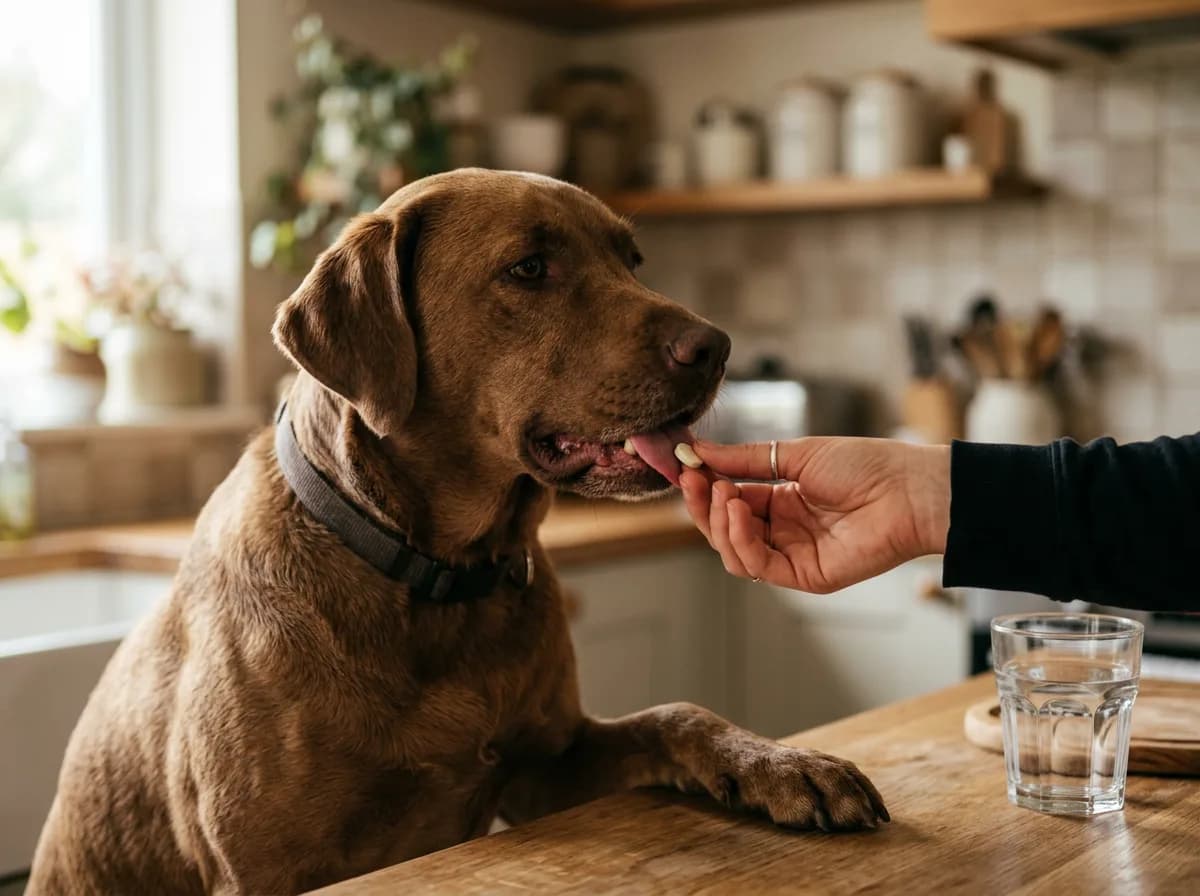
If over-the-counter products are not enough, ask your veterinarian about prescription flea control. Oral isoxazoline chewables such as NexGard (afoxolaner), Simparica and Simparica Trio (sarolaner), Bravecto (fluralaner), and Credelio (lotilaner) are popular and very effective, and these systemic drugs are FDA-regulated. One thing to know: in 2018 the FDA issued an advisory that isoxazoline-class products have been associated with neurologic adverse events in some dogs, including muscle tremors, ataxia, and seizures. Most dogs tolerate them well, but discuss your dog's history with your vet, especially if your dog has a seizure disorder. Other prescription options include Revolution and Revolution Plus (selamectin), Sentinel, Trifexis, and Comfortis (spinosad).
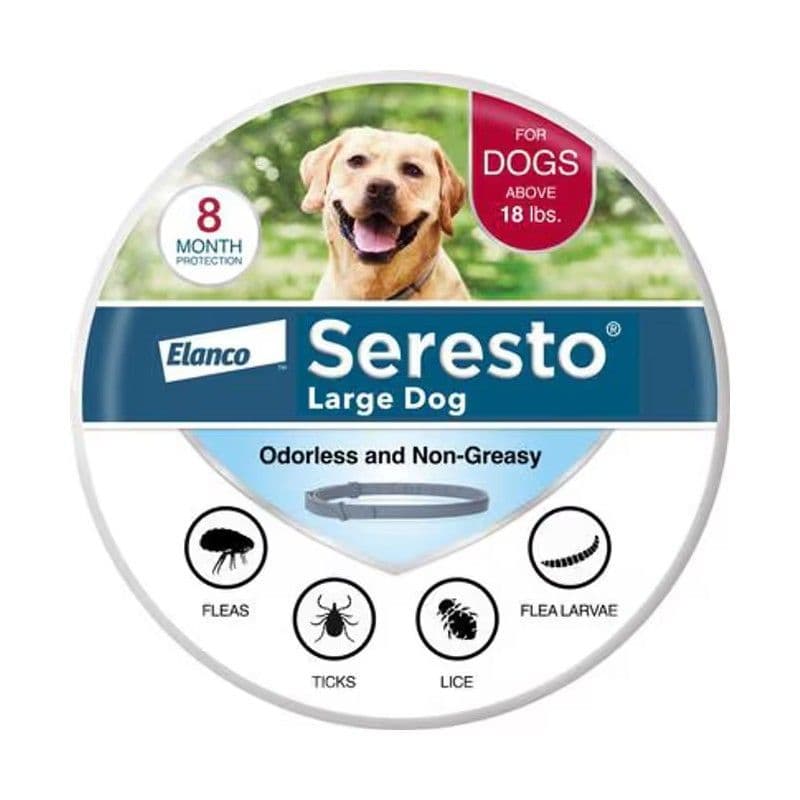
Odorless, non-greasy 8-month flea and tick collar for dogs over 18 lbs that kills and repels fleas and ticks and also kills lice and flea larvae.
Petful may earn a commission when you click through to Chewy, at no extra cost to you.
Step 5: Treat Every Pet in the Home on the Same Day
Fleas move freely between animals, so treating only the itchy dog guarantees re-infestation. On the same day:
- Treat every dog and cat in the household, even ones showing no signs.
- Dose strictly by weight using each pet's own correctly sized product. Never split a large-dog dose between small pets or estimate.
- Use species-appropriate products only. Dog products can be deadly to cats (see the permethrin warning above).
If you have a cat or kitten in the mix, our kitten flea treatment guide covers the age-and-weight rules that keep young cats safe, since many products are off-limits for them.
Step 6: Treat Your Home and Yard
Remember, the fleas on your dog are roughly 5 percent of the problem. The eggs, larvae, and pupae in your environment are the other 95 percent, and they will re-infest your dog if you ignore them.
Inside the house
- Wash all bedding in hot water, including your dog's bed, blankets, and any throws or covers your pet uses. Dry on high heat. Severely infested bedding may be easier to replace.
- Vacuum every day during an active infestation: carpets, rugs, upholstered furniture, cushion crevices, and along baseboards and wall edges where larvae hide. Vacuuming also stimulates dormant pupae to emerge so your treatments can reach them.
- Empty the vacuum (or discard the bag) outside immediately after each use so trapped eggs and larvae cannot re-hatch indoors.
- Consider a home flea spray or fogger containing an insect growth regulator (IGR) like pyriproxyfen or methoprene, which stops eggs and larvae from developing. Sprays such as Adams Plus, or plant-based options like Wondercide, can treat carpets and furniture. Follow the label and keep pets off treated surfaces until dry.
For a room-by-room plan to clear an established indoor infestation, follow our dedicated guide on how to get rid of fleas in the house.
 Sponsored
Vet care that's always there
Unlimited video calls and messaging with licensed vets for less than a typical vet visit. One membership covers up to five pets.
Use code Pets60
Plans start at $12/month · covers up to 5 pets
- Licensed vets in most states
- Rx for 150+ conditions
- 4.7 on Trustpilot
In the yard
Fleas thrive in cool, shady, humid spots, not in open sun. Focus outdoor treatment on:
- Shaded areas, under decks and porches, and along fences and the foundation.
- Spots where your dog rests, naps, or patrols.
- Keeping grass mowed and clearing leaf litter and debris to reduce flea-friendly hiding places.
Yard products with an IGR or a pet-safe insecticide can help, and for heavy outdoor infestations a licensed pest-control professional can apply targeted treatments. Always keep pets off treated areas for the time stated on the label.
Step 7: Break the Flea Life Cycle (Why This Takes ~3 Months)
Understanding the life cycle explains why one treatment is never enough. Fleas develop through four stages: egg, larva, pupa, and adult. The pupa stage is the spoiler. Pupae are wrapped in a protective cocoon that resists insecticides and can lie dormant for weeks until vibration, warmth, or carbon dioxide signals a host is near. That is why fleas seem to "reappear" days after you treated.
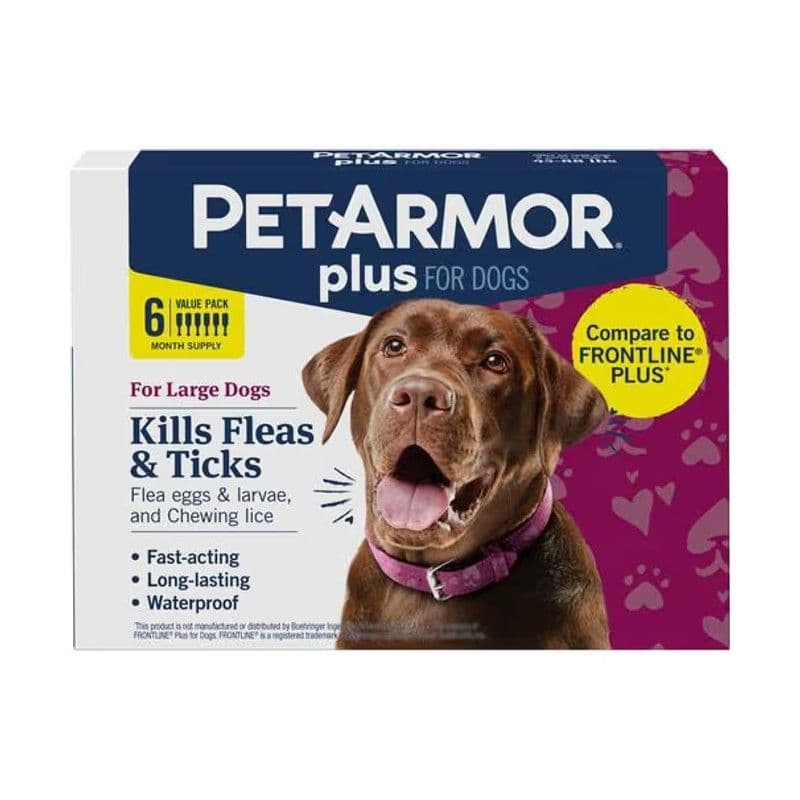
Fast-acting, waterproof OTC spot-on that kills fleas, flea eggs and larvae, ticks, and chewing lice for large dogs 45 to 88 lbs. A budget alternative to Frontline Plus.
Petful may earn a commission when you click through to Chewy, at no extra cost to you.
To win, you have to keep killing each new wave of adults as it emerges, before it can lay eggs, until the entire dormant population has hatched and died out. In practice that means:
- Keep your dog on a preventive without gaps.
- Keep vacuuming and washing bedding regularly.
- Plan for about 3 months of consistent effort, which spans a full life cycle in most homes.
- The three most common reasons fleas persist: (1) the home and yard were never treated, so the environment keeps re-infesting your dog, (2) not every pet was treated on the same day, or (3) treatment stopped too soon and the pupae simply waited you out. Fix all three together and the cycle breaks.
When to See a Veterinarian
Most flea problems can be handled at home, but call your vet if any of these apply:
- Puppies or kittens, senior pets, or pregnant or nursing dogs. Many products have age, weight, and pregnancy restrictions, so get vet guidance before treating.
- Pale gums, weakness, or lethargy, which can signal flea-bite anemia from heavy infestation, an emergency in small dogs and young puppies.
- Raw skin, hot spots, hair loss, or signs of infection from flea allergy dermatitis, which often needs prescription relief.
- Fleas that survive correct, consistent treatment, which may call for a prescription product or a check for tapeworms (dogs can get tapeworms from swallowing fleas while grooming).
- Any sick pet, before adding a new flea product to the mix.
Your vet can also recommend the single best year-round product for your specific dog, which is the most reliable way to never deal with an infestation again.
How to Get Rid of Fleas on Dogs Naturally
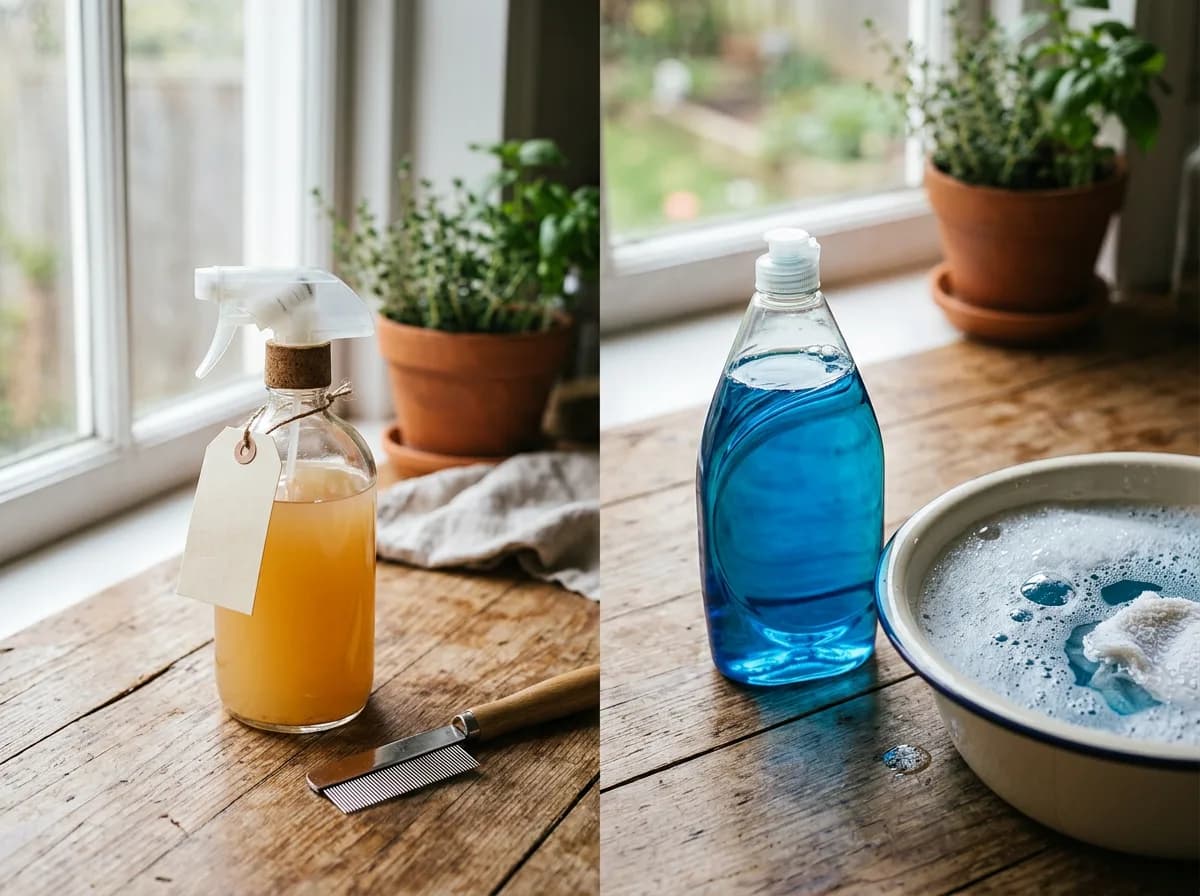
Owners often ask about natural options, and a few have a limited role as mild deterrents, though none reliably clear an infestation on their own. Diluted apple cider vinegar in a spray can make a dog's coat less appealing to fleas. A thorough comb-out with a flea comb is a genuinely effective mechanical removal method. Some people report that certain scents, like cedar or specific essential oils, repel fleas.
- A number of essential oils popular in DIY flea recipes (including tea tree, pennyroyal, and concentrated citrus oils) are toxic to dogs and especially to cats, even in small amounts or through skin contact. Never apply undiluted essential oils to your pet, and check with your vet before trying any oil-based remedy. For a reliable result, an EPA- or FDA-regulated product beats a home brew.
Best Flea Treatments for Dogs: Oral, Topical, and Collars
The best flea treatment for dogs is the one your dog will actually keep getting every month, matched to whether you also need tick coverage. Over-the-counter topicals and collars are EPA-regulated, while oral and systemic drugs are FDA-regulated, so both are held to real safety standards. For the best flea treatment for dogs over the counter, the proven picks are Frontline Plus (fipronil plus (S)-methoprene), which kills fleas, ticks, and flea eggs and larvae; Advantage II (imidacloprid plus pyriproxyfen), which kills fleas only at every life stage with no tick coverage; and the Seresto collar (imidacloprid plus flumethrin), which lasts up to 8 months. K9 Advantix II (imidacloprid plus permethrin plus pyriproxyfen) adds tick and mosquito protection but contains permethrin and is dog-only, because permethrin is toxic to cats.
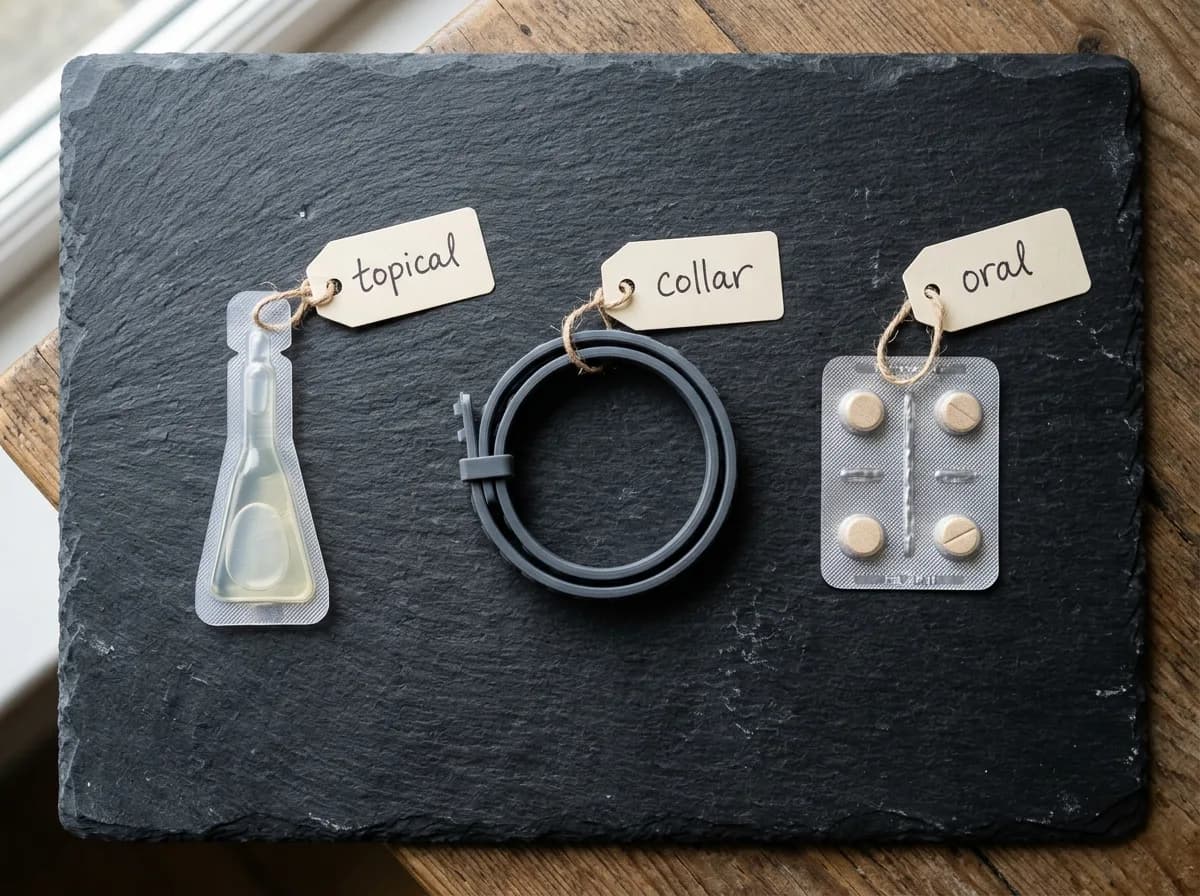
For the best flea treatment for small dogs, the rule is to dose strictly by body weight and to buy the size band labeled for your dog, never a split large-dog dose. Most products carry a minimum age of about 7 to 8 weeks, so very young puppies need vet guidance first. If over-the-counter options are not enough, ask your veterinarian about prescription isoxazoline chewables (NexGard, Simparica, Bravecto, Credelio); discuss the FDA's 2018 neurologic advisory for that drug class, especially for a dog with a seizure history. To compare the strongest no-prescription options side by side, see our guide to flea medicine for dogs without a prescription.
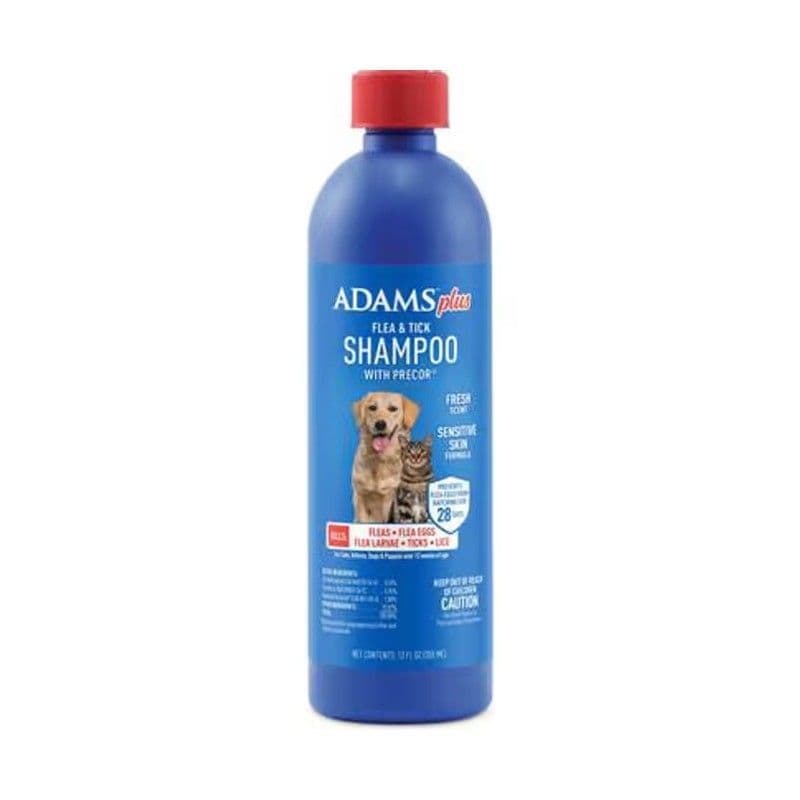
Sensitive-skin OTC shampoo that kills fleas, flea eggs and larvae, ticks, and lice on contact, with a Precor insect growth regulator that helps prevent reinfestation for up to 28 days. For cats and dogs.
Petful may earn a commission when you click through to Chewy, at no extra cost to you.
Home Remedies to Get Rid of Fleas on Dogs (What Works, What Does Not)
If you are searching for home remedies to get rid of fleas on dogs, set expectations first: home methods are mechanical removal and mild deterrents, not infestation cures. They belong alongside an EPA- or FDA-regulated product, not instead of one. So what home remedy will kill fleas on your dog right now? The most reliable is a bath in warm water with a few drops of Dawn-type dish soap, which breaks the water's surface tension and drowns adult fleas on contact (it leaves zero residual, so it is a one-time rescue).
What actually helps
- A Dawn-type dish soap bath drowns the adult fleas on your dog that day. No lasting protection, so follow it with a real preventive.
- A fine-tooth flea comb plus a bowl of hot soapy water physically removes and kills fleas and eggs on contact. This is genuinely effective mechanical removal.
- Daily vacuuming of carpets, rugs, furniture, and baseboards removes eggs and larvae and triggers dormant pupae to emerge so treatments can reach them. Empty the canister or bag outside afterward.
- Washing all bedding in hot water and drying on high heat kills every flea life stage in the fabric.
What does not clear an infestation
Diluted apple cider vinegar (ACV) sprayed on the coat can make a dog less appealing to fleas, but it only repels and never eliminates them. Salt and diatomaceous earth get talked up online and are messy, slow, and unreliable as standalone fixes. Essential-oil home sprays are mild repellents at best, and some oils (such as tea tree and concentrated citrus) are toxic to pets, especially cats, so always vet-check before use. For the full deterrent-by-deterrent breakdown, read our guide to home remedies for fleas.
How to Get Rid of Flea Eggs and Break the Life Cycle
Knowing how to get rid of flea eggs on dogs is what separates a temporary win from a permanent one. Fleas develop through four stages: egg, larva, pupa, and adult. The math is the reason fleas feel impossible to beat: the adult fleas crawling on your dog are only about 5 percent of the population. The other roughly 95 percent is in your environment, split into about 50 percent eggs, about 35 percent larvae, and about 10 percent pupae. A single female can lay up to 40 to 50 eggs a day, which roll off your dog and into carpet, bedding, and soil.
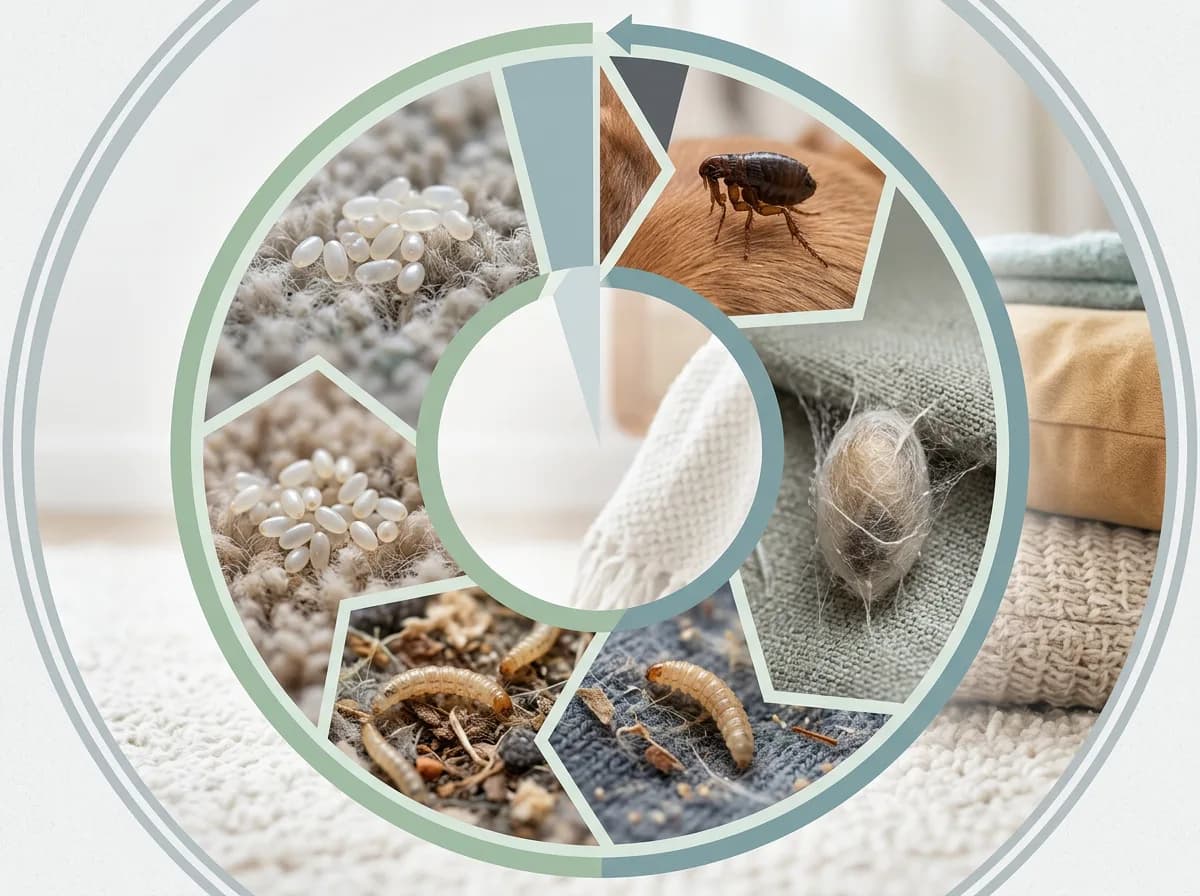
You cannot pick eggs off your dog, so you attack them two ways. First, use a preventive or home product with an insect growth regulator (IGR) such as pyriproxyfen or methoprene; an IGR sterilizes eggs and stops larvae from maturing, so the next generation never reaches biting age. Frontline Plus and Advantage II both include an IGR-type ingredient that targets eggs and larvae. Second, physically remove eggs from the environment by washing bedding hot and vacuuming daily. The pupa stage is the spoiler: pupae are armored in a cocoon that resists insecticides and can keep hatching for weeks. No product clears 100 percent instantly, which is why you must keep killing each new wave for about 3 months until the dormant population is gone.
How to Get Rid of Fleas on Dogs Without Bathing
Some dogs hate water, some coats are hard to dry, and sometimes you just need relief fast. Here is how to get rid of fleas on dogs without bathing, using the same vet-backed logic minus the tub. What kills fleas on dogs instantly without bathing is an oral knockdown: a nitenpyram tablet (Capstar) starts killing adult fleas within about 30 minutes and works for roughly 24 hours. It is a knockdown with no residual, so it stops today's biting but does not prevent the next wave.
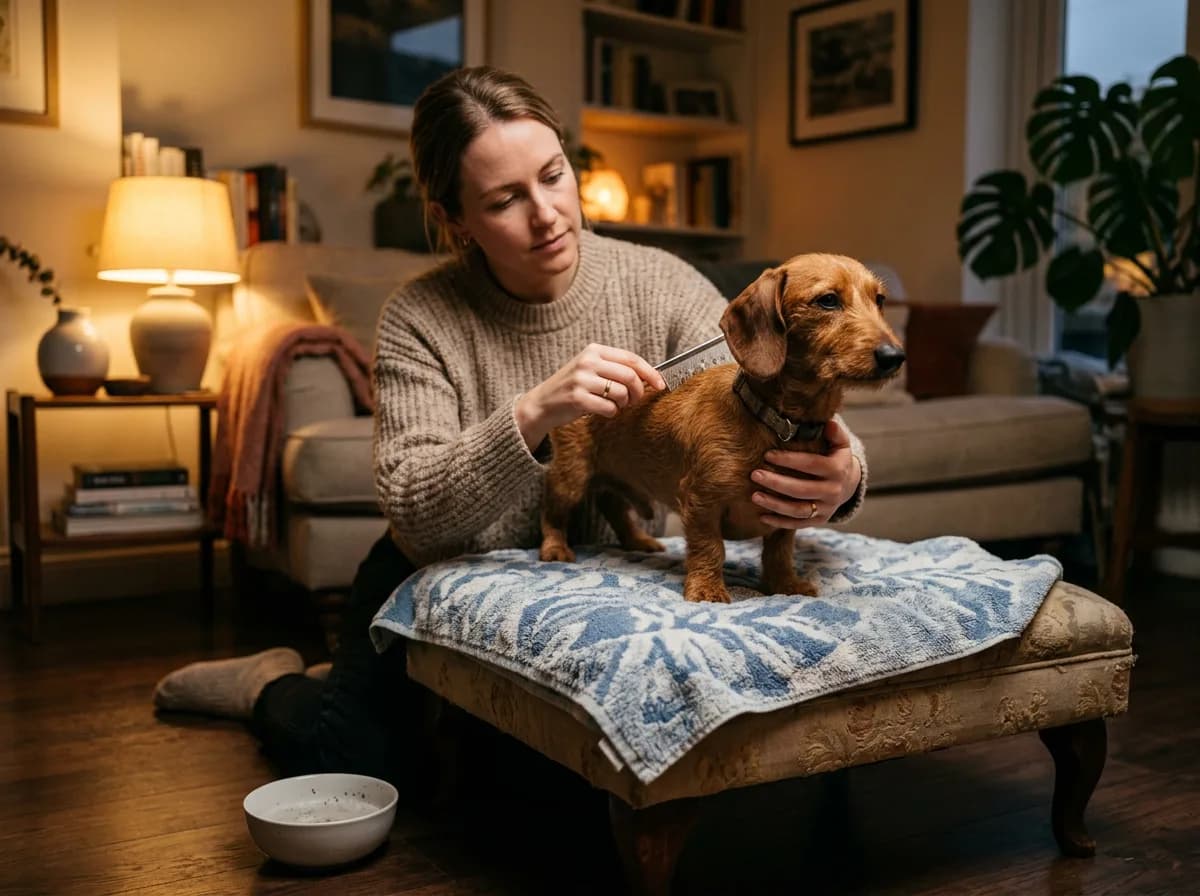
- Give a nitenpyram (Capstar) tablet for a roughly 30-minute knockdown of the adult fleas on your dog right now.
- Work a fine-tooth flea comb through the coat and dunk it in hot soapy water between passes to remove and kill fleas, flea dirt, and some eggs with no bath needed.
- Start a monthly topical or an up-to-8-month Seresto collar (or an FDA-regulated oral preventive) the same day to break the cycle, since the tablet and comb give no lasting protection.
- Treat the home and yard too, because the dog is only about 5 percent of the infestation.
The Bottom Line
Getting rid of fleas on dogs is not about one magic product, it is about hitting the problem from both ends at once. Knock down the adults fast, start a real long-term preventive, treat every pet in the home, clean the environment, and keep at it for about three months so the hidden eggs and pupae cannot restart the cycle. Confirm with the flea-comb test, dose by weight, never put dog products on cats, and loop in your veterinarian for the very young, the very old, the pregnant, or any pet that is unwell. Do all of that together and you will not just clear the fleas you can see, you will end the infestation for good.
The fastest options are a nitenpyram tablet (Capstar), which starts killing adult fleas within about 30 minutes, and a bath in warm water with gentle soap, which drowns fleas on contact. Both are knockdowns with no lasting protection, so pair them with a monthly preventive.
Capstar (nitenpyram) is an over-the-counter oral tablet that begins killing adult fleas within about 30 minutes and lasts roughly 24 hours. It is a fast knockdown, not long-term prevention, so use it alongside a monthly flea preventive.
Warm water with a gentle soap such as Dawn dish soap kills fleas on contact by breaking the water's surface tension so they drown. Lather thoroughly, leave it on a few minutes, then rinse. Use it as a one-time rescue, not a substitute for a real preventive, and avoid medicated flea shampoos on very young puppies.
Wash all pet bedding in hot water, vacuum carpets, furniture, and baseboards every day (empty the vacuum outside afterward), and apply a home flea spray with an insect growth regulator. Treat every pet at the same time, because the home holds about 95 percent of the infestation.
Treat the home the same day you treat your dog. Wash bedding hot, vacuum daily including cushions and wall edges, discard the vacuum contents outside, and use an IGR-based spray or fogger on carpets and furniture. Repeat regularly for about three months to break the life cycle.
Fleas are deterred by some scents like cedar, and by diluted apple cider vinegar sprayed on the coat, but these only repel, they do not clear an infestation. The thing fleas truly cannot survive is an EPA- or FDA-regulated flea product used correctly. Avoid essential oils, many of which are toxic to pets.
Fleas prefer to live on a furry host, but they can end up in bedding and on mattresses, where eggs and larvae may develop. They rarely survive long without an animal to feed on. Wash bedding in hot water and vacuum the mattress and frame to clear them.
You can kill the adult fleas on your dog within hours using a fast knockdown, but fully ending an infestation takes about three months. That covers a complete flea life cycle, so newly hatched fleas from eggs and pupae in your home are killed before they can reproduce.
No single product kills 100 percent of fleas in the house instantly, because flea pupae are armored in an insecticide-resistant cocoon and keep hatching for weeks. The reliable way to reach 100 percent is a combination over time: an insect growth regulator (IGR) spray on carpets and furniture, daily vacuuming, washing all bedding in hot water, and treating every pet on the same day. Keep it up for about 3 months to outlast the dormant pupae.
To get rid of fleas and ticks on dogs, choose a product that covers both: Frontline Plus (fipronil plus (S)-methoprene) kills fleas, flea eggs and larvae, and ticks, and a Seresto collar (imidacloprid plus flumethrin) protects against fleas and ticks for up to 8 months. K9 Advantix II adds tick and mosquito coverage but contains permethrin and is dog-only, so never use it on or near cats. Treat your dog, every other pet, and the environment together to keep both pests from coming back.
BVMS, MRCVS
Dr. Pippa Elliott, BVMS, MRCVS, is a veterinarian with nearly 30 years of experience in companion animal practice. Dr. Elliott earned her Bachelor of Veterinary Medicine and Surgery from the University of Glasgow. She was also designated a Member of the Royal College of Veterinary Surgeons. Married with 2 grown-up kids, Dr. Elliott has a naughty Puggle named Poggle, 3 cats and a bearded dragon.
Sign up for expert-backed reviews and safety alerts all in one place.