Flea Treatment for Dogs: The Complete Vet-Reviewed Guide for 2026
A vet-reviewed guide to flea treatment for dogs: how it works, the flea life cycle, every product type (chewables, spot-ons, collars, sprays), OTC vs prescription, how to choose by weight and lifestyle, plus the best OTC picks compared.

BVMS, MRCVS
Petful is reader supported. As an affiliate of platforms like Amazon and Chewy, we may earn a commission when you buy through links on this page. There is no extra cost to you.
Choosing a flea treatment for dogs is one of the most common health decisions a dog owner makes, and it is easy to get wrong: the U.S. Environmental Protection Agency (EPA) and the Food and Drug Administration (FDA) together regulate dozens of flea products across four delivery types, and the Companion Animal Parasite Council recommends year-round protection in most of the country, not just summer. This guide explains how flea and tick treatment actually works, walks through every product type (oral chewables, topical spot-ons, collars, shampoos, and sprays), separates over-the-counter from prescription options, and shows you how to choose by your dog's weight, age, and lifestyle. It closes with a vet-reviewed comparison of the best OTC flea treatments and answers to the questions dog owners ask most.
- 1A single adult flea can lay up to 50 eggs a day, so you have to treat the dog AND the home environment at the same time or the infestation rebounds
- 2The four main flea treatment types are oral chewables, topical spot-ons, collars, and shampoos/sprays, each with different speed and duration
- 3Topicals and collars are EPA-regulated; oral and systemic flea drugs are FDA-regulated, and prescription products generally work faster and longer than OTC
- 4Always dose by your dog's exact weight, and never put a dog product containing permethrin (like K9 Advantix II) on or near a cat
- 5The FDA issued a 2018 advisory that prescription isoxazoline chewables have been linked to neurologic side effects in some dogs, so discuss your dog's history with your vet
- 6The best OTC picks for most healthy adult dogs are Frontline Plus, K9 Advantix II, Advantage II, and the Seresto collar, with Capstar for fast knockdown
- The most effective flea treatment for dogs is a vet-chosen preventive matched to your dog's age, weight, and health. For fast, long-acting control, vets often point to prescription oral isoxazoline chews: Simparica (sarolaner), NexGard (afoxolaner), Bravecto (fluralaner), and the 3-in-1 Simparica Trio that adds heartworm protection. These start killing fleas within hours of a dose, cannot wash off like a topical, and last either monthly (NexGard, Simparica) or about 12 weeks (Bravecto) per their FDA labels. If you want a no-prescription option, topical spot-ons like Frontline Plus (fipronil plus (S)-methoprene) kill adult fleas, ticks, and flea eggs and larvae. No single product clears 100 percent of fleas instantly, because only about 5 percent of a flea population lives on the dog while roughly 95 percent (eggs, larvae, and pupae) is in your home and yard. Lasting control means treating the dog AND the home AND the yard in the same window to break the life cycle. Topicals and collars are EPA-regulated; oral and systemic drugs are FDA-regulated. This guide is reviewed by veterinarian Dr. Pippa Elliott, and reflects guidance from the FDA, EPA, and the Companion Animal Parasite Council (CAPC).

Sign up for expert-backed reviews and safety alerts all in one place.
How Flea Treatment for Dogs Actually Works
Modern flea treatment for dogs does not just kill the adult fleas you can see. The most effective products work on two fronts at once. Adulticides kill adult fleas already living on your dog, usually by attacking the flea's nervous system so it cannot feed or reproduce. Insect growth regulators (IGRs), such as (S)-methoprene and pyriproxyfen, target the eggs and larvae, breaking the life cycle so the next generation never matures. A product that combines both, like Frontline Plus, gives you faster relief now and longer-term control.
Treatments reach the flea in different ways. Topical spot-ons spread through the oils of the skin and coat. Oral products travel through your dog's bloodstream, so a flea has to bite to be exposed. Collars release their active ingredients slowly across the skin over months. Understanding this matters because it drives how fast a product works, how long it lasts, and whether it survives a bath or a swim.
- Vets generally recommend keeping dogs on a flea preventive year-round rather than only treating an active infestation. Breaking the flea life cycle before it starts is far easier than clearing an established one, which can take two to three months even when you do everything right.
Understanding the Flea Life Cycle
You cannot win against fleas without understanding their life cycle, because the adults you see on your dog are only a small fraction of the problem. The flea life cycle has four stages:
- Egg. Adult fleas lay eggs on your dog, but the eggs fall off into carpet, bedding, and soil. A single female can lay up to 50 eggs per day.
- Larva. Eggs hatch into larvae that burrow deep into carpet fibers and cracks, feeding on debris and adult flea droppings.
- Pupa. Larvae spin cocoons. The pupal stage is the tough one: cocoons are resistant to many insecticides and can lie dormant for weeks or months, waiting for a host.
- Adult. A new adult emerges, jumps onto a host, feeds, and starts laying eggs within a day or two.
At any given time, experts estimate that only a small share of a flea population is the adult stage living on your pet. The vast majority (eggs, larvae, and pupae) is in your home and yard. That single fact is why treating only your dog almost always fails, and why the home environment has its own section below. For a deeper walkthrough of clearing an active case, see our guide on how to get rid of fleas on dogs.

 Sponsored
Need flea, tick, or parasite care for your pet?
A licensed vet at Dutch can recommend the right preventive and prescribe it when it's appropriate. Annual members get 20% off their first flea and tick order.
Use code Pets60
Plans start at $12/month · covers up to 5 pets
- Licensed vets in most states
- Rx for 150+ conditions
- 4.7 on Trustpilot
The Types of Flea Treatment for Dogs
There is no single best format for every dog. Each of the four main types has real strengths and trade-offs. Here is how they compare in plain terms.
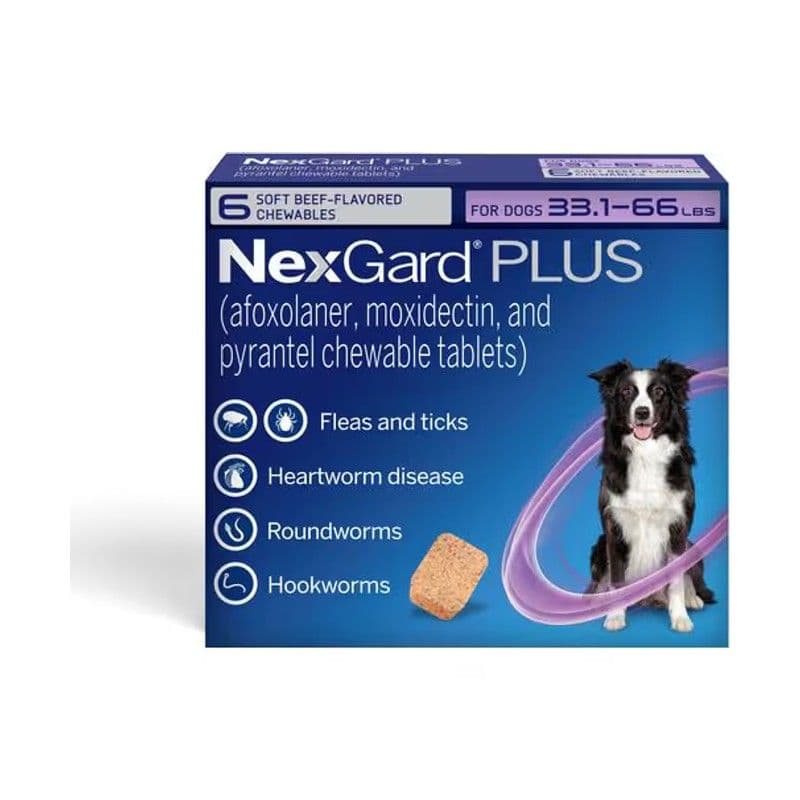
Monthly beef-flavored prescription chew that protects against fleas, ticks, heartworm disease, roundworms, and hookworms. For dogs 33.1 to 66 lbs.
Petful may earn a commission when you click through to Chewy, at no extra cost to you.
Oral Flea Treatments for Dogs (Chews and Pills)
Oral flea treatments are tablets or flavored chews your dog swallows. The active ingredient circulates in the bloodstream, so fleas are killed when they bite. The big advantages are convenience (no greasy spot to keep kids and other pets away from), and they cannot wash off in the bath, the lake, or the rain.
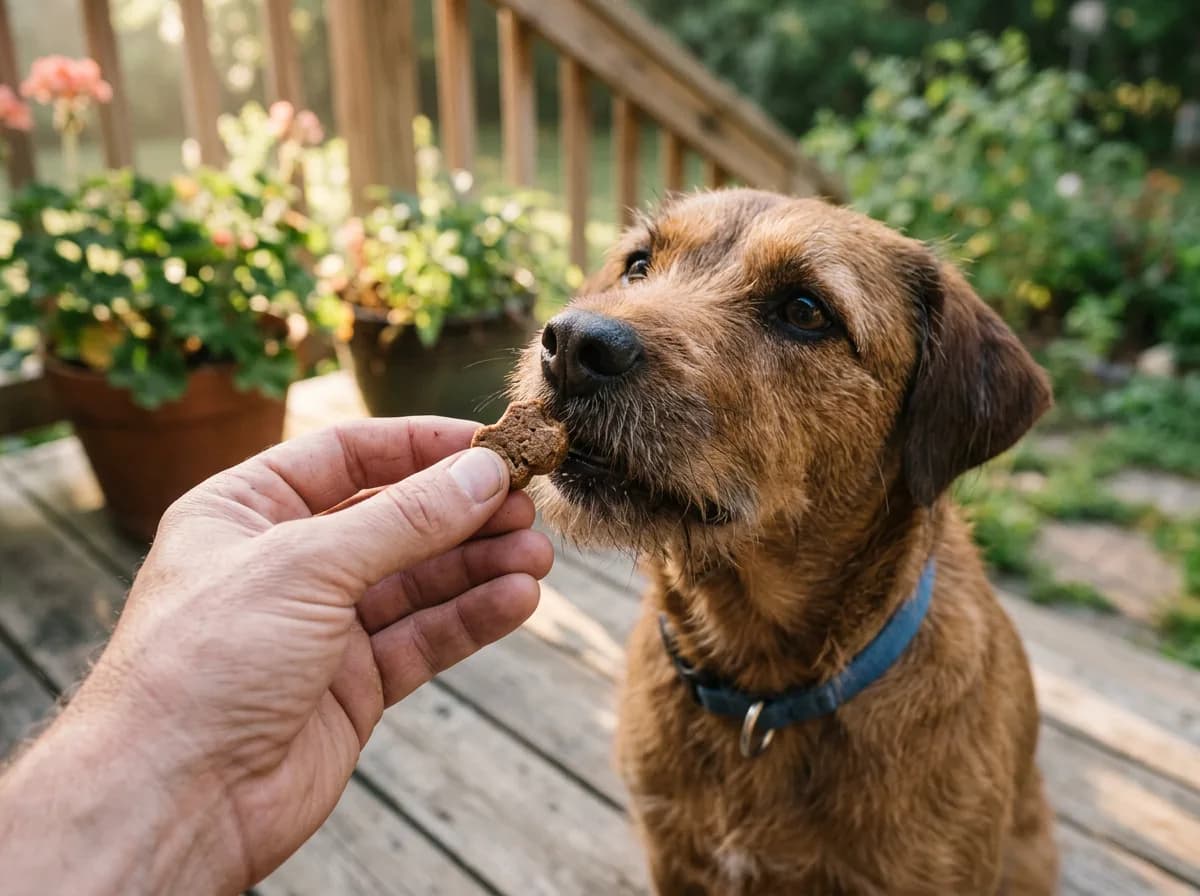
Oral products split into two groups. Fast knockdown pills like Capstar (nitenpyram) start killing adult fleas within about 30 minutes but only last around 24 hours, so they are a rescue tool, not prevention. Long-acting monthly and 12-week chewables (almost all of which are prescription isoxazoline products like NexGard, Simparica, Bravecto, and Credelio) provide sustained protection and often cover ticks too. We cover the prescription options and their safety profile below.
Topical Spot-On Flea Treatments for Dogs
Topical "spot-on" treatments are liquids you apply to the skin, usually between the shoulder blades where your dog cannot lick it off. They are the most familiar format and include most of the strongest OTC options. Spot-ons spread across the skin and coat and typically last about a month.
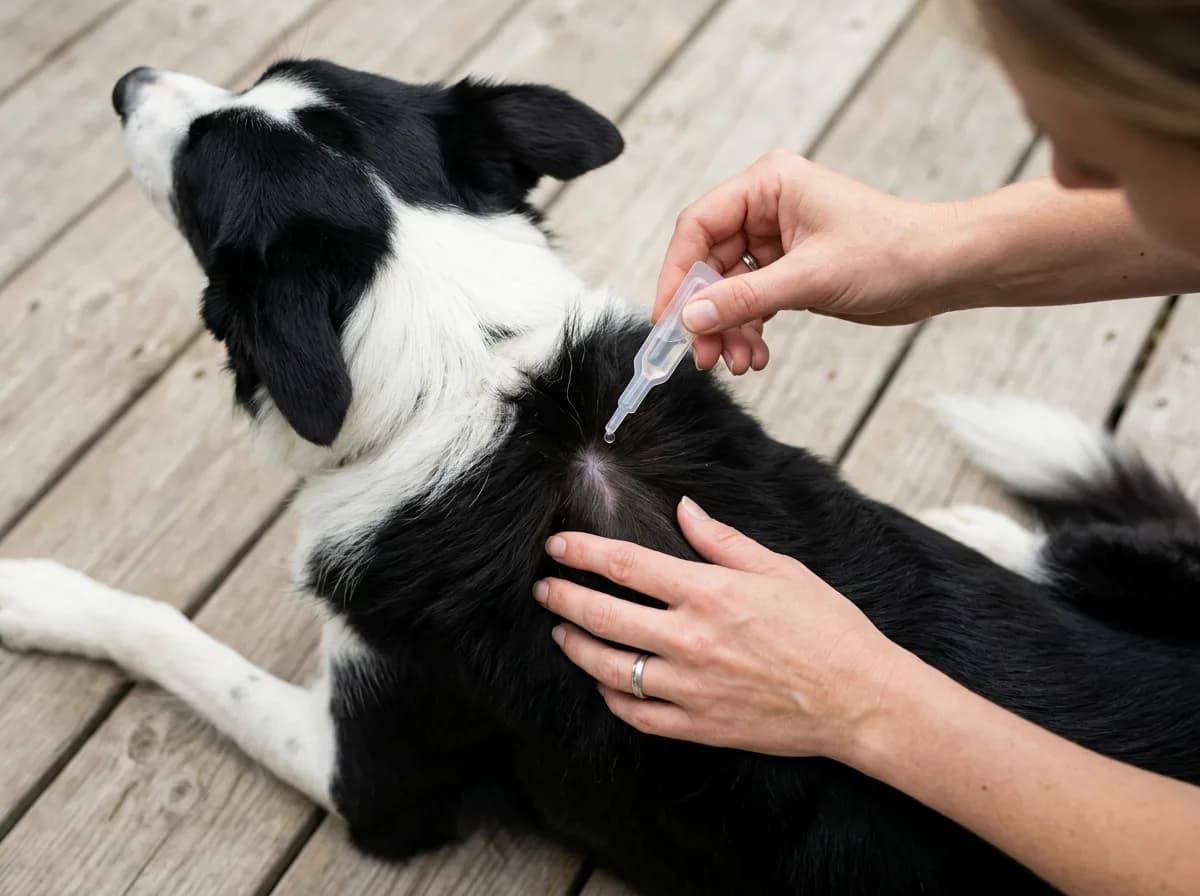
Topicals are an excellent default for many dogs, especially those who are hard to pill. The main rules: part the fur and apply to the skin (not the coat), do not bathe your dog for about 48 hours before or after applying, and choose a product matched to your dog's weight band. Frontline Plus, K9 Advantix II, and Advantage II are all topical spot-ons and are available without a prescription.
- K9 Advantix II and many other dog spot-ons contain permethrin, which is highly toxic to cats and can be fatal. Keep treated dogs separated from cats until the product dries, and never apply a dog product to a cat. If you have both species, our companion guide to the best oral flea and tick options for cats covers cat-safe choices.
Flea and Tick Collars
A flea collar releases active ingredients that spread over the skin's surface. Older collars had a weak reputation, but modern ones changed the math. The Seresto collar (imidacloprid + flumethrin) protects against both fleas and ticks for up to 8 months from a single collar, which makes the per-month cost competitive and removes the "did I forget this month?" problem.
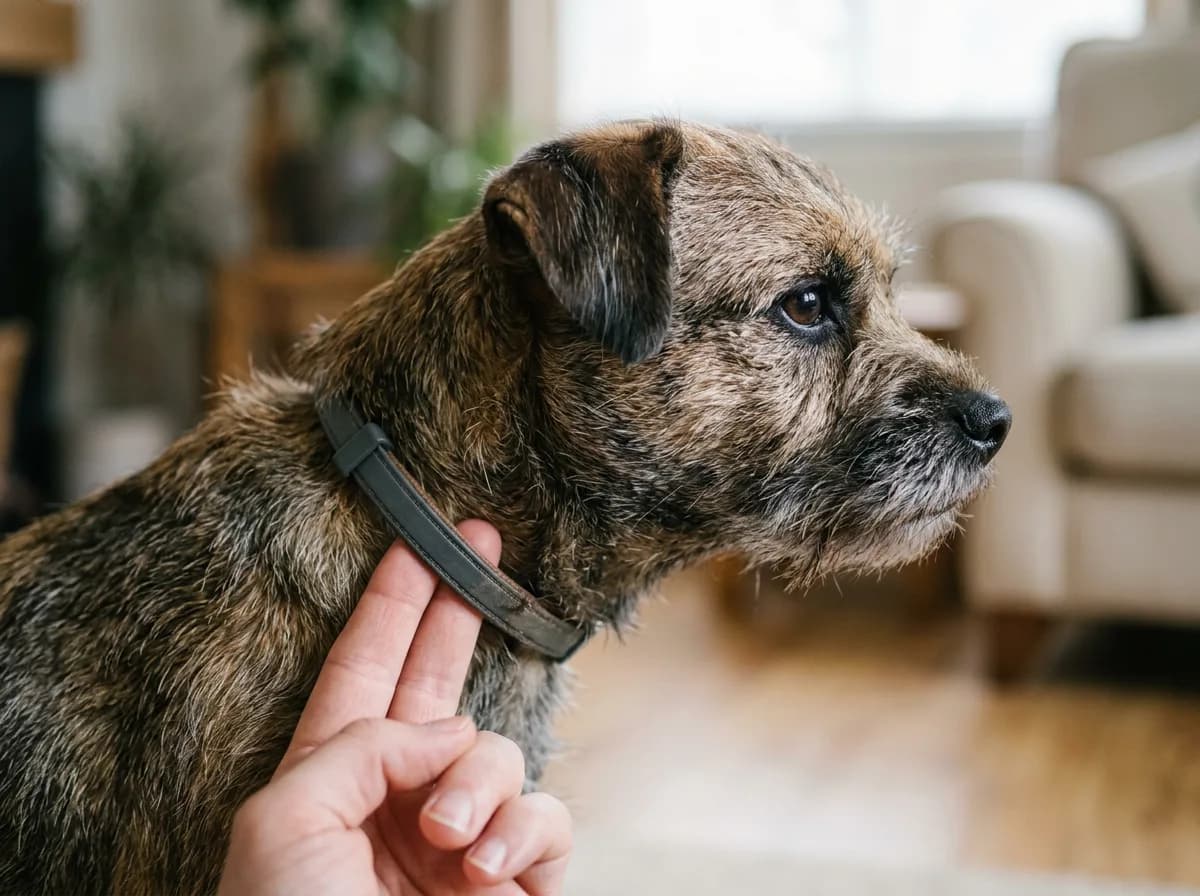
For a collar to work, it has to contact the skin. Fit it snugly enough that you can slip two fingers underneath but no looser. Collars are a strong fit for dogs who hate pills and react to topicals.
Flea Shampoos, Collars, and Sprays for Dogs
Shampoos and sprays kill fleas on contact during a bath or application but usually leave little or no lasting protection. They are best thought of as a knockdown step, not a standalone plan. Some, like Adams Plus, pair an adulticide with an IGR; plant and essential-oil based options like Vet's Best and Wondercide are popular for owners who want a gentler on-pet or in-home product.
One widely shared home trick deserves a clear-eyed note: a bath with plain Dawn dish soap does kill fleas already on your dog by breaking the surface tension of the water so the fleas drown. It works in the moment, but it gives zero residual protection, so the fleas in the environment simply reinfest your dog the next day. Use it as first aid, then follow with a real preventive. For the fastest options, see what kills fleas on dogs instantly.
OTC vs. Prescription Flea Treatment for Dogs
One of the most common questions is whether you need to see a vet at all. The honest answer: for many healthy adult dogs, a well-chosen over-the-counter product works well, and you can treat fleas without a vet visit. But there are real differences and real limits.
Over-the-counter (OTC) products (Frontline Plus, K9 Advantix II, Advantage II, Seresto, Capstar, and the spray/shampoo options) are sold without a prescription at pet stores and online. They are EPA-regulated when they are topicals or collars. They are a sensible first line for a straightforward flea problem on an otherwise healthy dog.
Prescription products require a vet because they are FDA-regulated systemic drugs. They tend to start faster, last longer, and often bundle flea, tick, heartworm, and intestinal-parasite protection into one dose. If your dog has a flea allergy, a stubborn infestation, or other health issues, prescription strength is usually worth the visit.
- Book a vet visit (rather than self-treating) for puppies under the minimum age on the label, pregnant or nursing dogs, senior dogs, any dog that is sick or on other medications, dogs with a known flea allergy, or any case where OTC products have already failed. A vet matches the drug to your dog's full health picture.
If you would rather start with a no-prescription option, our roundup of the best flea medicine for dogs without a prescription compares the strongest OTC picks head to head.
What Flea Treatment Do Vets Recommend for Dogs?
When people search for vet-recommended flea treatment for dogs, they are usually pointed toward the prescription isoxazoline chewables: NexGard (afoxolaner), Simparica and Simparica Trio (sarolaner), Bravecto (fluralaner), and Credelio (lotilaner). These are popular with veterinarians because they are highly effective, easy to dose as a tasty chew, and several cover ticks and other parasites in one product. Other commonly prescribed options include Revolution and Revolution Plus (selamectin) topicals, plus Sentinel, Trifexis, and Comfortis (spinosad).
There is an important safety note to carry into that conversation. In 2018, the FDA issued an advisory that products in the isoxazoline class have been associated with neurologic adverse events in some dogs, including muscle tremors, ataxia (loss of coordination), and seizures. The agency still considers these products safe and effective for most dogs, and they remain among the most-prescribed flea and tick medications. But it is a real, documented signal, which is exactly why these are prescription-only: your vet should know your dog's history, especially any prior seizures, before choosing one.
- Because of the FDA's isoxazoline advisory, share your dog's complete neurologic history with your veterinarian before starting NexGard, Simparica, Bravecto, or Credelio. If your dog has ever had a seizure or tremor, your vet may steer you toward a different class of flea treatment.
How to Choose the Best Flea Treatment for Dogs
The best flea treatment for dogs is the one that fits your specific dog and that you will actually use on schedule. Walk through these four filters.
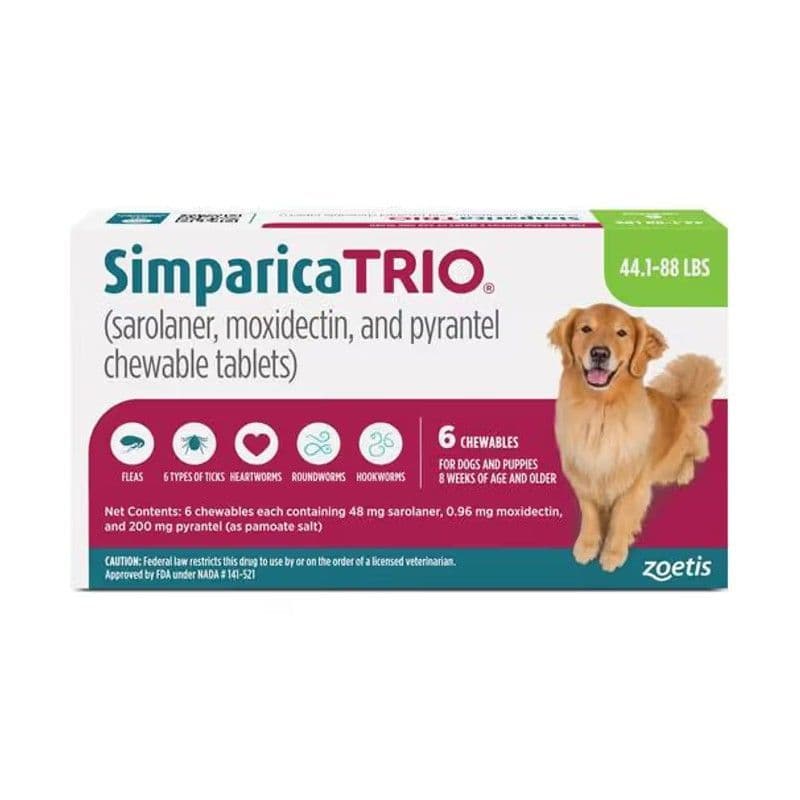
Monthly vet-prescription chew that kills fleas and ticks and prevents heartworm disease, roundworms, and hookworms in one dose. For dogs 44.1 to 88 lbs.
Petful may earn a commission when you click through to Chewy, at no extra cost to you.
Match the Product to Your Dog's Weight
Every flea product is dosed by weight band, and this is not optional. Underdosing leaves fleas alive; overdosing risks toxicity. Weigh your dog (or use the vet's last recorded weight) and buy the exact band on the box. For multi-dog homes, never split one large-dog dose between two small dogs or double up small-dog doses for a big dog; the concentrations are formulated per band.
Factor in Age, Pregnancy, and Health
Age and health status narrow your options fast. Most products carry a minimum age (often 7 to 8 weeks) and a minimum weight. Puppies below that line, pregnant or nursing dogs, seniors, and dogs with existing conditions should be treated only on a vet's guidance. If you have a very young puppy, our kitten flea treatment guide also explains the general principle that the youngest animals need the gentlest, age-appropriate products.
Match the Format to Your Dog's Lifestyle
Lifestyle decides format. A dog who swims daily or gets frequent baths is a poor candidate for a topical and a better one for an oral chewable or a collar. A dog who lives with cats should avoid permethrin topicals entirely. A dog who is impossible to pill does better with a spot-on or collar. A dog in heavy-tick country needs a product that kills ticks, not a flea-only option.
Decide Whether You Need Tick Coverage
Not every flea product kills ticks. Advantage II, for example, is fleas only. If you hike, live in a wooded or grassy region, or are in a Lyme-disease area, choose a flea-and-tick product (Frontline Plus, K9 Advantix II, Seresto, or a prescription combo) rather than a flea-only one.
| Product | Type and Active Ingredients | What It Kills | How Long It Lasts |
|---|---|---|---|
| Frontline Plus | Topical spot-on (fipronil + (S)-methoprene) | Adult fleas, ticks, plus flea eggs and larvae | About 1 month |
| K9 Advantix II | Topical spot-on (imidacloprid + permethrin + pyriproxyfen) | Fleas, ticks, and mosquitoes (toxic to cats) | About 1 month |
| Advantage II | Topical spot-on (imidacloprid + pyriproxyfen) | Fleas only (no ticks) | About 1 month |
| Seresto Collar | Collar (imidacloprid + flumethrin) | Fleas and ticks | Up to 8 months |
| Capstar | Oral tablet (nitenpyram) | Adult fleas fast (starts within about 30 minutes) | About 24 hours |
 Sponsored
Vet care that's always there
Unlimited video calls and messaging with licensed vets for less than a typical vet visit. One membership covers up to five pets.
Use code Pets60
Plans start at $12/month · covers up to 5 pets
- Licensed vets in most states
- Rx for 150+ conditions
- 4.7 on Trustpilot
Don't Forget the Home: Treating the Environment
This is the step most owners skip, and it is why infestations come back. Because the majority of a flea population lives in your home and yard as eggs, larvae, and pupae, treating only your dog leaves a hidden reservoir that reinfests within days. To break the cycle, treat the dog and the environment in the same window.
At home, wash all pet bedding in hot water, vacuum carpets, rugs, upholstery, and along baseboards every day or two during an active infestation (and throw the vacuum bag out afterward), and consider a home flea spray or fogger labeled with an IGR to hit the eggs and larvae. The dormant pupae are the reason you keep seeing "new" fleas for weeks even after treatment, so consistency over two to three months is what finally wins. Our full playbook for the house is here: how to get rid of fleas in the house.
- Fleas move between animals, so a single untreated pet keeps the whole household infested. Treat every dog and cat in the home at the same time, each with a species-appropriate, weight-appropriate product, and treat the environment in the same window.
Because flea control only works when every pet stays on schedule, a free MyPetID profile is a simple way to log each pet's flea and tick treatments, track how often you give them, and get automatic reminders so you never miss a dose.
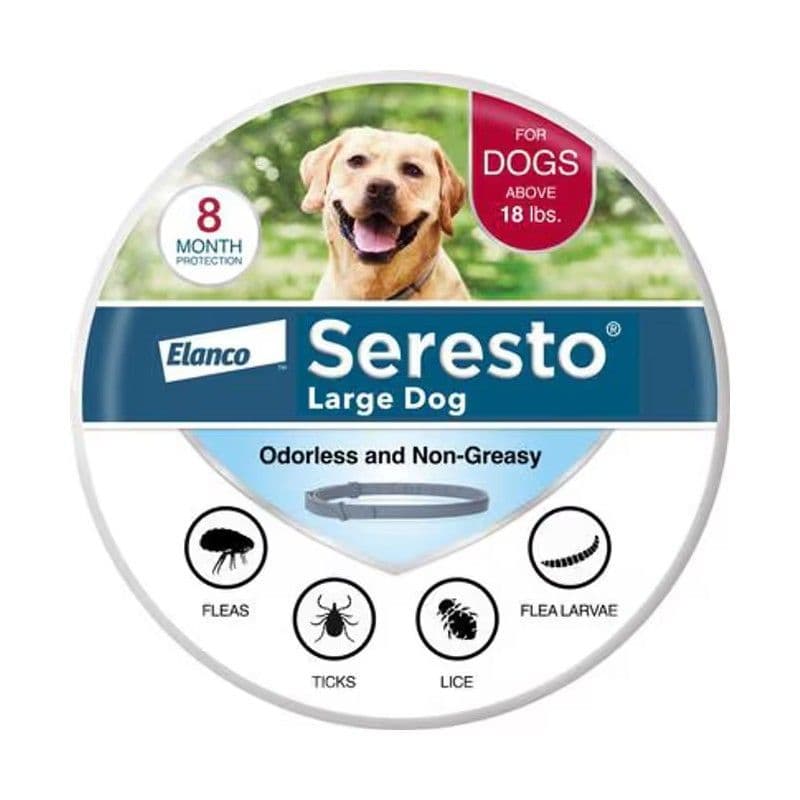
Odorless, non-greasy 8-month flea and tick collar for dogs over 18 lbs that kills and repels fleas and ticks and also kills lice and flea larvae.
Petful may earn a commission when you click through to Chewy, at no extra cost to you.
Flea Treatment Safety: The Rules That Matter
Flea products are generally safe when used correctly, and serious reactions are uncommon. Most issues trace back to a few avoidable mistakes. Keep these rules front of mind:
- Dose by exact weight, every time. Buy the band that matches your dog and do not improvise across dogs.
- Never cross species. Dog products, especially permethrin-based ones like K9 Advantix II, can be deadly to cats. Read every label.
- Read the age and weight minimums. Most products are not for the youngest puppies; check the box.
- Watch after the first dose. Apply or give a new product on a day you can observe your dog. Mild topical irritation or brief stomach upset can happen; tremors, severe lethargy, or any seizure is a call-your-vet-now event.
- Ask a professional for the hard cases. Pregnant, nursing, senior, sick, allergic, or medicated dogs should be treated under veterinary guidance, not from the OTC aisle alone.
If you ever see a serious reaction (collapse, repeated vomiting, tremors, or seizures) after a flea product, contact your veterinarian or an emergency clinic immediately and bring the packaging with you.
For most healthy adult dogs, the most effective flea treatment is a vet-recommended prescription chewable (such as NexGard, Simparica, Bravecto, or Credelio) because these work fast, last weeks to months, and many also kill ticks. Among no-prescription options, Frontline Plus is one of the most effective because it kills adult fleas, ticks, and flea eggs and larvae. The "best" product is the one matched to your dog's weight, age, and lifestyle that you use on schedule.
Capstar (nitenpyram), an oral tablet, starts killing adult fleas within about 30 minutes, making it the fastest knockdown option. A bath with plain Dawn dish soap also kills fleas on contact by drowning them. Neither provides lasting protection, so follow up with a long-acting preventive.
Yes. For a healthy adult dog with a straightforward flea problem, over-the-counter products such as Frontline Plus, K9 Advantix II, Advantage II, the Seresto collar, and Capstar work well without a prescription. See a vet for puppies, pregnant or nursing dogs, seniors, sick dogs, dogs with flea allergies, or cases where OTC products have already failed.
Veterinarians most often recommend prescription isoxazoline chewables (NexGard, Simparica, Bravecto, Credelio) and topicals like Revolution, because they are highly effective and many cover ticks and other parasites in one dose. Among OTC products, vets commonly point to Frontline Plus, K9 Advantix II, and the Seresto collar. The right pick depends on your dog's health and lifestyle.
Fleas peak in the warm, humid months of late summer and early fall, often August through October in much of the U.S., though they can survive indoors year-round. Because of that indoor survival, the Companion Animal Parasite Council recommends year-round flea prevention rather than seasonal treatment.
Fleas are repelled or killed by the active ingredients in veterinary flea products, which is what actually clears an infestation. Some owners also use plant-based sprays containing essential oils such as lavender, lemongrass, or rosemary as a mild repellent, but these are not a substitute for a proven preventive and some essential oils are unsafe for pets, so check with your vet first.
Capstar (nitenpyram) is the oral pill that kills adult fleas in dogs starting within about 30 minutes. It works as a fast knockdown that lasts roughly 24 hours, so it is best used for quick relief alongside a long-term flea preventive, not on its own.
It depends on whether you need tick coverage. Frontline Plus (fipronil plus (S)-methoprene) kills adult fleas, ticks, and flea eggs and larvae, while Advantage II (imidacloprid plus pyriproxyfen) kills fleas only and does not cover ticks. If your dog is exposed to ticks, choose Frontline Plus. If fleas are your only concern, both work well against fleas; match the product to your dog's weight band either way.
No single product kills 100 percent of fleas in the house instantly, because only about 5 percent of a flea population is the adults you see, while roughly 95 percent lives in your home as eggs, larvae, and pupae. To clear the house, treat every pet with a weight-appropriate preventive, wash all bedding in hot water, vacuum carpets and baseboards daily, and use a home spray or fogger with an insect growth regulator (IGR), then repeat the cleaning for two to three months until the dormant pupae have all hatched and been killed.
No natural method is as reliable as a vet-recommended preventive, but a bath with plain Dawn-type dish soap drowns the adult fleas on your dog on contact, and a flea comb dipped in soapy water removes and kills them too. Plant and essential-oil sprays only mildly repel fleas and do not provide lasting protection, and some essential oils are toxic to pets (cats especially), so always check with your vet before using one. Treat these as first aid, then follow with a proven preventive.
Year-Round Flea and Tick Prevention for Dogs
The smartest flea and tick prevention for dogs is the kind you never have to think about, because it runs all year. Clearing an active infestation can take two to three months of consistent work, while preventing one is a single monthly habit. That is why veterinary groups, including the Companion Animal Parasite Council (CAPC), recommend keeping dogs on flea prevention year-round in most of the country rather than only during the warm months. Fleas survive indoors through winter, and a few warm days are enough to restart a population.
Most flea prevention for dogs is dosed on a monthly cadence. A monthly flea and tick treatment for dogs (an oral chew or a topical spot-on) keeps a lethal dose in place before fleas ever establish, so the life cycle never gets started in your home. Longer-interval options exist too: Bravecto chews protect for about 12 weeks, and the Seresto collar (imidacloprid plus flumethrin) lasts up to 8 months from a single collar, which removes the did-I-forget-this-month problem entirely.
Whatever cadence you pick, the key to prevention is consistency. Set a recurring reminder, line up your refills, and do not let coverage lapse between doses, because a single missed month is often all it takes for fleas to move back in.
Natural and At-Home Flea Treatment for Dogs (What Is Safe)
If you want a natural flea treatment for dogs or a quick flea treatment for dogs at home before a preventive arrives, it helps to know what actually works and what is marketing. The most reliable home step is a bath with plain Dawn-type dish soap. The soap breaks the surface tension of the water so adult fleas on your dog drown on contact. A flea comb worked through the coat and dipped in soapy water removes and kills fleas the same way. Both are genuinely effective in the moment.
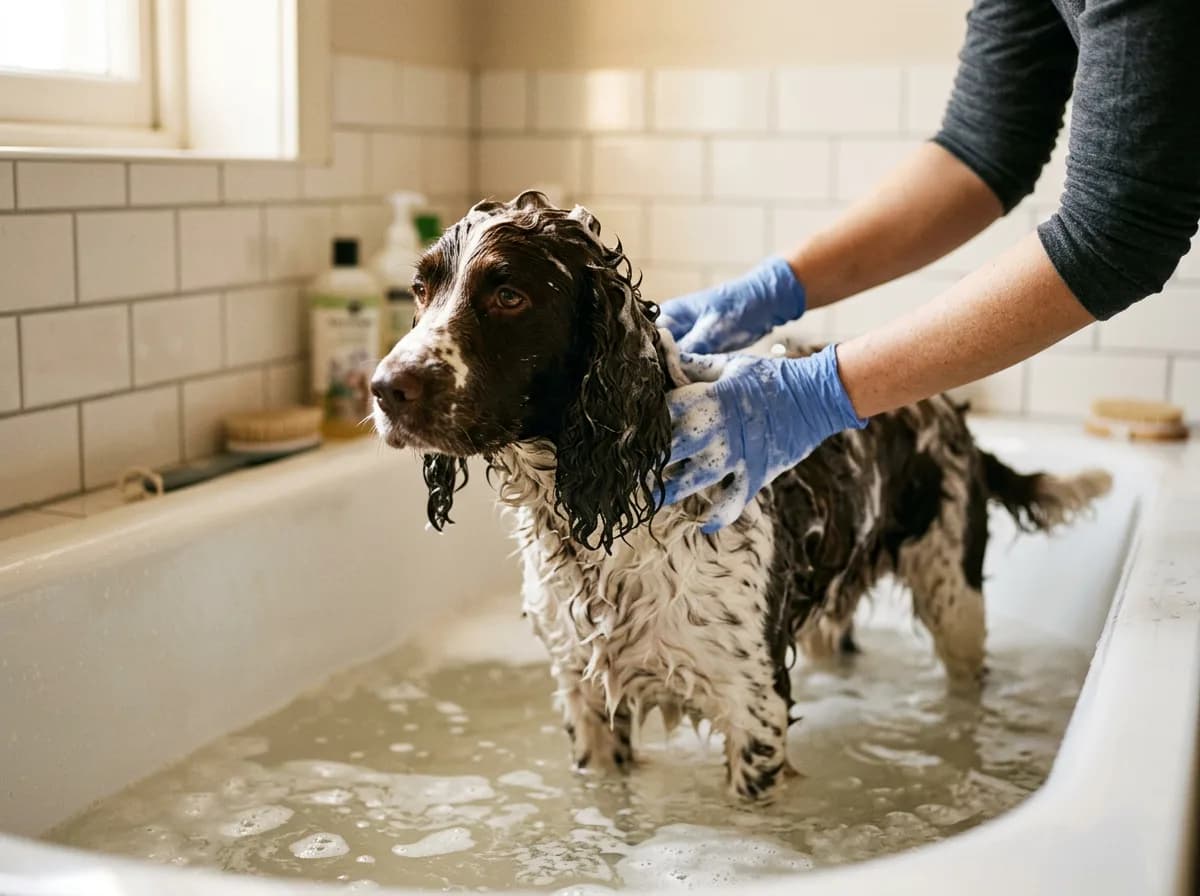
The honest limit is that none of these home methods leave any residual protection. A Dawn bath kills the fleas on your dog today, but the roughly 95 percent of the flea population sitting in your carpet and yard as eggs, larvae, and pupae will reinfest your dog within a day or two. Use a soap bath or flea comb as first aid, then follow with a real preventive that lasts.
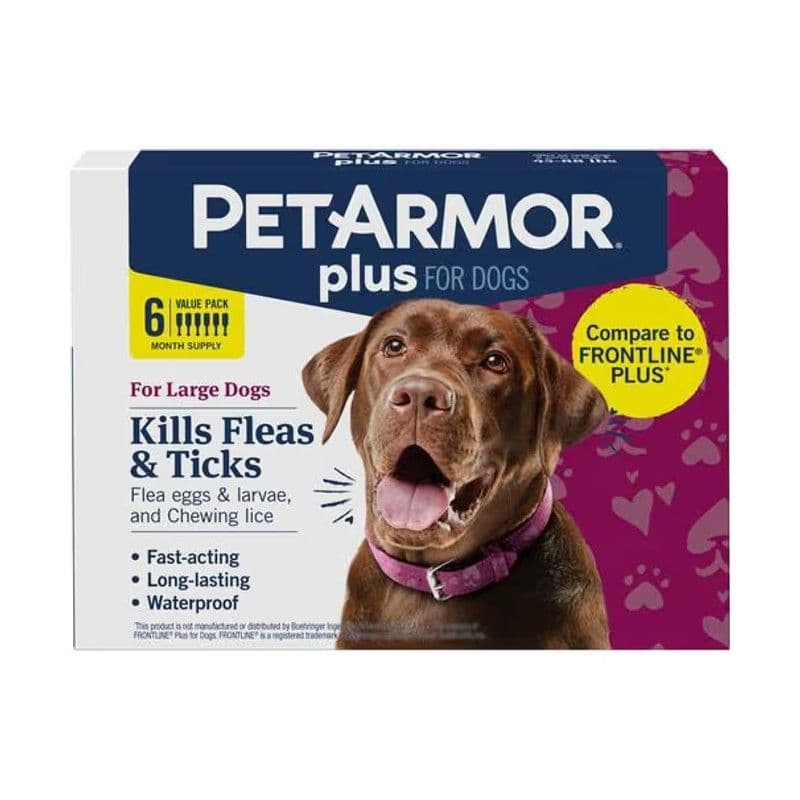
Fast-acting, waterproof OTC spot-on that kills fleas, flea eggs and larvae, ticks, and chewing lice for large dogs 45 to 88 lbs. A budget alternative to Frontline Plus.
Petful may earn a commission when you click through to Chewy, at no extra cost to you.
Plant and essential-oil home sprays (sold as homeopathic flea treatment for dogs and marketed with oils like lavender, lemongrass, or rosemary) are mild repellents at best, not reliable killers, and they are not a substitute for a proven product. Some essential oils are toxic to pets, and cats are especially sensitive, so always check with your vet before using any oil-based product on or around your animals. For a fuller rundown of safe at-home options, see our guide to home remedies for fleas.
Treating Fleas in Your Home and Yard
People often ask what kills 100 percent of fleas in the house, and the honest answer is that no single product does it instantly. The reason is in the numbers: at any moment only about 5 percent of a flea population is the adult fleas living on your dog. The other roughly 95 percent is spread through your home and yard as eggs (about 50 percent of the population), larvae (about 35 percent), and pupae (about 10 percent). Treat only the dog and you leave that hidden reservoir untouched, so the fleas come right back.
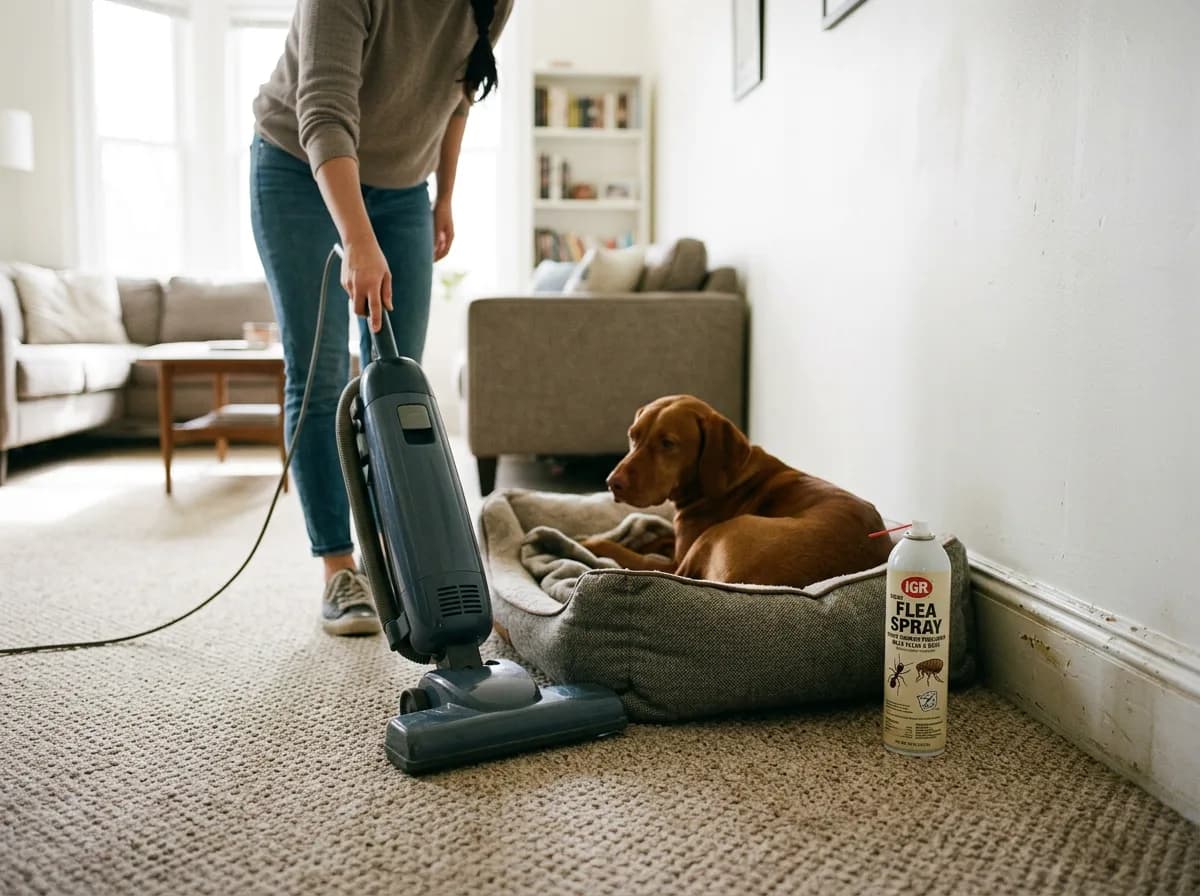
Indoors, the playbook is mechanical plus chemical. Wash all pet bedding in hot water, vacuum carpets, rugs, upholstery, and along baseboards every day or two during an active case (then discard the vacuum contents), and use a home flea spray or fogger labeled with an insect growth regulator (IGR) such as methoprene or pyriproxyfen to sterilize eggs and stop larvae from maturing. The armored pupae resist insecticides and keep hatching for weeks, which is why a flea treatment for home has to be repeated and sustained for two to three months rather than done once.
Do not skip the yard. Fleas thrive in shaded, moist, organic debris, so a yard flea treatment focuses on the spots your dog actually uses. Mow regularly, rake up leaf litter and clippings, and treat shaded resting areas, under decks, and along fence lines (the sunny open lawn is rarely the problem). Outdoor IGR or adulticide yard products labeled for fleas, applied to those harborage zones, cut down the reinfestation pressure coming back inside. Treating the dog, the home, and the yard in the same window is what finally breaks the cycle.
Flea Treatment for Dogs: Puppies, Weight, and Age
Flea treatment for dogs puppies is the situation where the rules tighten the most, because the youngest animals are the most vulnerable to both fleas and the products meant to kill them. Most flea products carry a minimum age, commonly around 7 to 8 weeks, and a minimum weight, so a young or tiny puppy may not be eligible for the product an adult dog uses. Always read the label and never assume a puppy can take an adult dose.

Dose strictly by your puppy's current body weight, not its expected adult size, and buy the exact weight band on the box. Puppies grow fast, so re-check the weight band as they gain. For very young puppies below the label minimum, or for any pregnant, nursing, senior, or sick dog, work with your veterinarian rather than the OTC aisle. A vet can recommend a gentle, age-appropriate option (sometimes a careful soap bath and flea comb to buy time until a labeled product is safe to start).
One species note matters in any multi-pet home with puppies or small dogs: never use a permethrin product such as K9 Advantix II on or near a cat, because permethrin is highly toxic and can be fatal to cats. If you also have cats, choose cat-safe products for them and keep treated dogs separated until the product dries. Our guide to the best oral flea and tick options for cats covers safe picks for the feline side of the household.
Flea Allergy Dermatitis: When Fleas Cause Skin Problems
For some dogs, fleas are far more than an itch. Flea allergy dermatitis is an allergic reaction to proteins in flea saliva, and in an allergic dog a single flea bite can trigger intense, out-of-proportion itching that lasts long after the flea is gone. The classic signs are relentless scratching, biting, and chewing (especially over the lower back, tail base, and inner thighs), along with hair loss, red or scabby skin, and sometimes secondary skin infections.
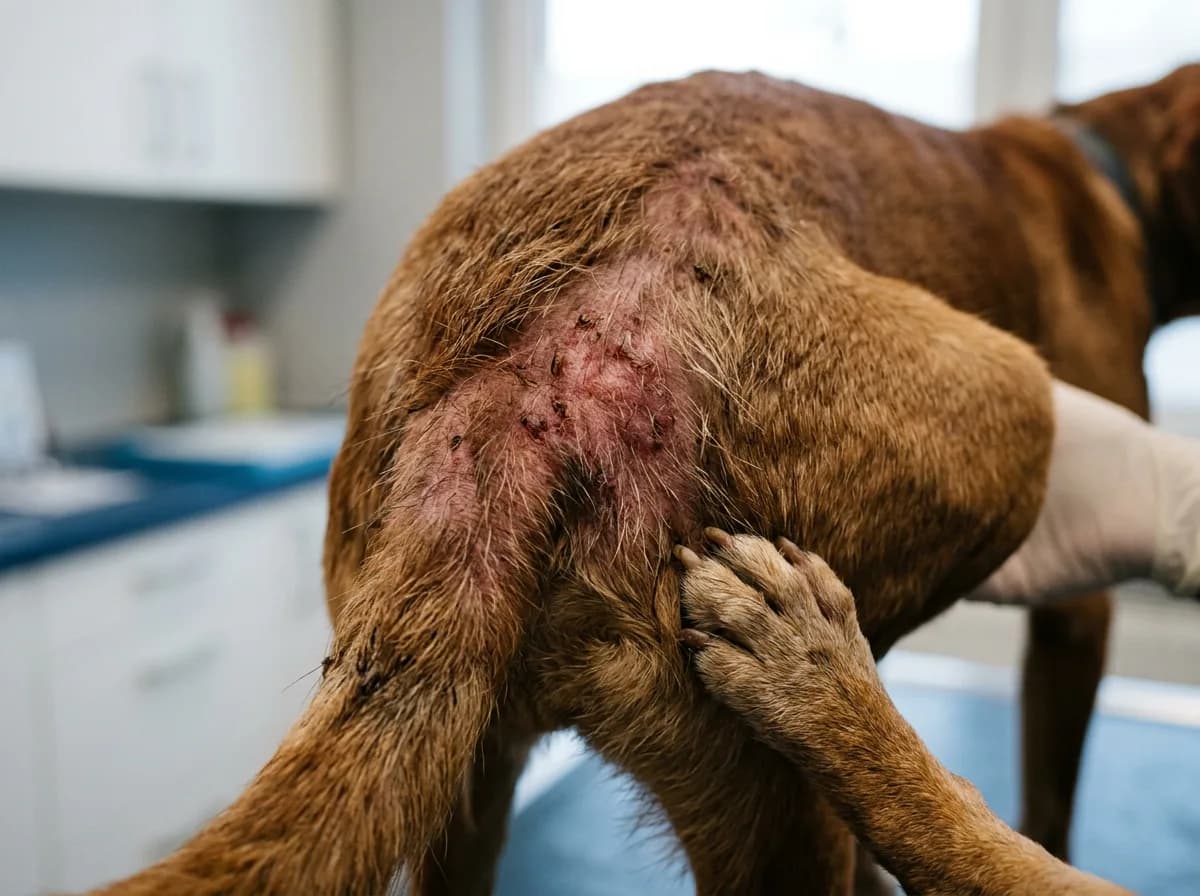
Treatment for flea allergy dermatitis in dogs starts with airtight flea control, because the allergy will keep flaring as long as bites keep happening. This is exactly the scenario where fast-acting systemic products matter most: an oral preventive that starts killing fleas within hours after they bite limits how long the dog is exposed to flea saliva, and it cannot wash off like a topical. Pair that with treating the home and yard so no new fleas reach the dog at all.
Because flea allergy dermatitis often comes with inflamed or infected skin, see your veterinarian if your dog is intensely itchy, losing hair, or has raw or oozing skin. Your vet can confirm the diagnosis, choose the right fast-acting flea product for an allergic dog, and treat any secondary infection or inflammation so the skin can heal.
The Bottom Line
Flea treatment for dogs comes down to three moves: pick the right product type for your dog's weight, age, and lifestyle, treat the home environment in the same window so the infestation cannot rebound, and stay consistent for the two to three months it takes to clear every life stage. For most healthy adult dogs, a strong OTC option like Frontline Plus, K9 Advantix II, Advantage II, or the Seresto collar gets the job done, with Capstar on hand for fast knockdown. For puppies, seniors, pregnant or nursing dogs, flea-allergic dogs, or any case that resists treatment, talk to your veterinarian, who can match a prescription product to your dog's full health picture.
BVMS, MRCVS
Dr. Pippa Elliott, BVMS, MRCVS, is a veterinarian with nearly 30 years of experience in companion animal practice. Dr. Elliott earned her Bachelor of Veterinary Medicine and Surgery from the University of Glasgow. She was also designated a Member of the Royal College of Veterinary Surgeons. Married with 2 grown-up kids, Dr. Elliott has a naughty Puggle named Poggle, 3 cats and a bearded dragon.
Sign up for expert-backed reviews and safety alerts all in one place.