How to Get Rid of Fleas in the House: A Step-by-Step 2026 Guide
Only 5 percent of a flea problem is on your pet. Here is the vet-reviewed, step-by-step plan to get rid of fleas in the house and yard: wash, vacuum, treat with an IGR, and outlast the pupae reinfestation window.

BVMS, MRCVS
Petful is reader supported. As an affiliate of platforms like Amazon and Chewy, we may earn a commission when you buy through links on this page. There is no extra cost to you.
Learning how to get rid of fleas in the house comes down to one uncomfortable fact: the fleas you actually see are the smallest part of the problem. Entomologists at universities including the University of Kentucky and Texas A&M, along with guidance from the Centers for Disease Control and Prevention (CDC), agree that only around 5 percent of a flea infestation is the biting adults on your pet. The other 95 percent (eggs, larvae, and pupae) is hidden in your carpet, bedding, and floor cracks, which is why most infestations take 2 to 4 weeks to fully clear even when you do everything right.
- 1About 95 percent of a flea problem (eggs, larvae, pupae) lives in your home and yard, not on your pet
- 2You must treat the pet AND the environment on the same day, or fleas bounce right back
- 3Wash all bedding in hot water, vacuum daily, and empty the canister outside every time
- 4Look for indoor sprays with an insect growth regulator (IGR) like methoprene or pyriproxyfen to stop eggs from hatching
- 5Expect a "reinfestation window" of 2 to 4 weeks as protected pupae keep emerging, so do not quit early
- 6Never use dog flea products containing permethrin on or near cats
If you are also fighting the fleas riding on your dog, pair this guide with our deep-dive on how to get rid of fleas on dogs. This article is about the other front in the war: the environment.
- To get rid of fleas in the house fast, work four steps in order. 1) Treat every pet the same day. 2) Hot-wash all bedding and dry on high heat. 3) Vacuum daily and apply an indoor IGR spray (methoprene or pyriproxyfen). 4) Repeat for 2 to 4 weeks, because insecticide-resistant pupae keep hatching. Completely controlling an existing infestation typically takes 2 to 3 months (Merck Veterinary Manual).

Sign up for expert-backed reviews and safety alerts all in one place.
Why 95 Percent of Your Flea Problem Is in the House, Not on the Pet
It feels backward, but the adult fleas jumping on your dog are the tip of the iceberg. A single female flea can lay up to 40 to 50 eggs per day, and those eggs do not stay on the animal. They roll off wherever your pet walks, sleeps, and rests, seeding your carpet, rugs, upholstery, and the cracks between floorboards.
Understanding the flea life cycle is the whole game, because each stage hides in a different place and responds to different treatment:
- Eggs (about 50 percent of the population): Tiny, white, and slick, they fall off the pet into carpet fibers and bedding. They hatch in roughly 2 to 14 days.
- Larvae (about 35 percent): Worm-like and light-avoiding, they burrow deep into carpet, under furniture, and into baseboard cracks, feeding on "flea dirt" (adult flea droppings).
- Pupae (about 10 percent): The problem child. Larvae spin a sticky, protective cocoon that shields them from sprays, foggers, and even vacuuming. They can lie dormant for weeks to months and emerge only when they sense a host (warmth, carbon dioxide, vibration).
- Adults (about 5 percent): These hop onto a host to feed and breed, and the cycle starts over.
This is why a one-and-done spray never works. You can kill every adult and every egg in the house, and the armored pupae will still hatch days later. Winning means hitting the environment repeatedly until the last cocoon has opened.
- The fleas you can see are roughly 5 percent of the total infestation. The hidden 95 percent (eggs, larvae, and cocooned pupae) is in your carpet, bedding, and floor cracks. If you only treat what you can see, you are treating one flea out of twenty.

 Sponsored
Need flea, tick, or parasite care for your pet?
A licensed vet at Dutch can recommend the right preventive and prescribe it when it's appropriate. Annual members get 20% off their first flea and tick order.
Use code Pets60
Plans start at $12/month · covers up to 5 pets
- Licensed vets in most states
- Rx for 150+ conditions
- 4.7 on Trustpilot
Step 1: Treat Every Pet in the Home on the Same Day
Environmental cleanup is wasted effort if your pet is still a walking flea factory, dropping fresh eggs onto carpet you just vacuumed. The single most important rule of flea control is to treat the pet and the home simultaneously, and to treat every warm-blooded pet in the household, not just the one that is scratching.
Talk to your veterinarian about the right product for each animal's species, weight, and health status. Topical "spot-on" treatments and collars are regulated by the U.S. Environmental Protection Agency (EPA), while oral and systemic flea drugs are regulated by the U.S. Food and Drug Administration (FDA). Common over-the-counter options that do not require a prescription include:
- Frontline Plus for Dogs (fipronil plus (S)-methoprene), which kills adult fleas and ticks and also targets flea eggs and larvae.
- K9 Advantix II (imidacloprid, permethrin, and pyriproxyfen) for fleas, ticks, and mosquitoes.
- Advantage II for Dogs (imidacloprid and pyriproxyfen) for fleas only.
- Seresto Collar (imidacloprid and flumethrin) for up to 8 months of flea and tick coverage.
- Capstar (nitenpyram), an oral tablet that starts killing adult fleas within about 30 minutes and lasts roughly 24 hours. It is a fast knockdown for a heavy infestation, not long-term prevention.
For a full walkthrough of on-pet options, including prescription chewables, see our flea treatment for dogs pillar guide.
- K9 Advantix II and many other dog products contain permethrin, which is highly toxic to cats and can cause tremors, seizures, and death. Never apply a dog flea product to a cat, and keep treated dogs away from cats until the product is fully dry. Always dose by weight and ask your vet about puppies, seniors, and pregnant or nursing pets.
Step 2: Wash All Bedding and Soft Goods in Hot Water
Pet bedding is flea ground zero. It is warm, it is where your animal sleeps, and it collects the heaviest load of eggs and larvae anywhere in the house. On day one of your attack, strip and wash everything washable.
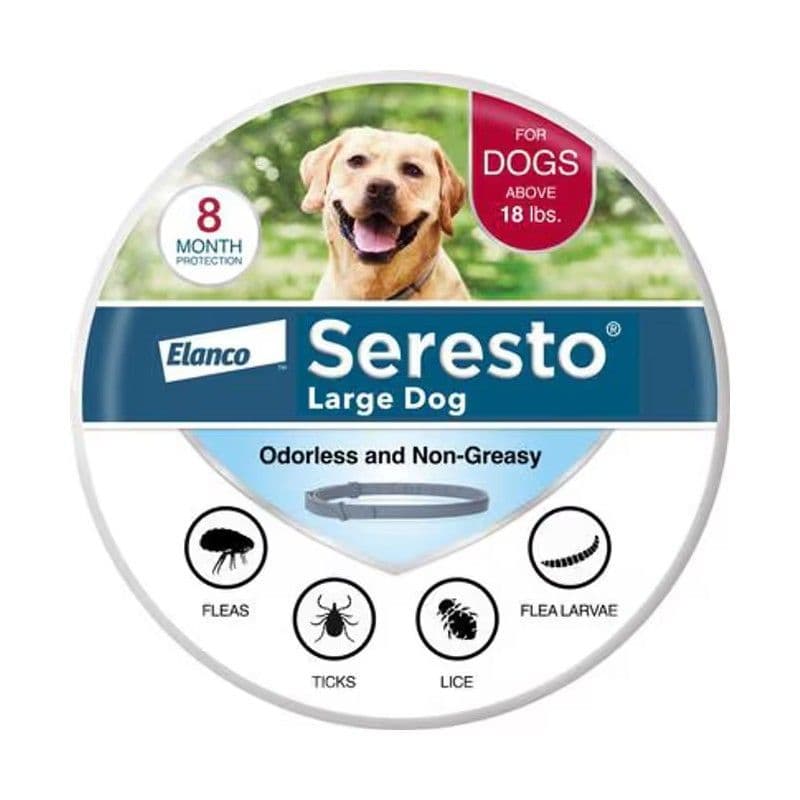
Odorless, non-greasy 8-month flea and tick collar for dogs over 18 lbs that kills and repels fleas and ticks and also kills lice and flea larvae.
Petful may earn a commission when you click through to Chewy, at no extra cost to you.
Gather pet beds and blankets, your own bedding, throw blankets, couch covers, washable rugs, and any soft pet toys. Wash them in the hottest water the fabric allows, then dry on the highest heat setting the items can tolerate. Heat is what does the killing here: it destroys eggs, larvae, and adults that survive the wash cycle.
For items that cannot go through a hot wash, bag them and run them through a hot dryer cycle on their own, or set badly infested, low-value bedding aside to replace. Repeat this wash on heavily used pet bedding weekly until the infestation is over.
- Do not wash pet bedding just once. Because new pupae keep hatching for weeks, launder your pet's bedding in hot water every week until you have gone at least 7 to 10 days with zero flea sightings.
Step 3: Vacuum Daily, Then Empty the Canister Outside
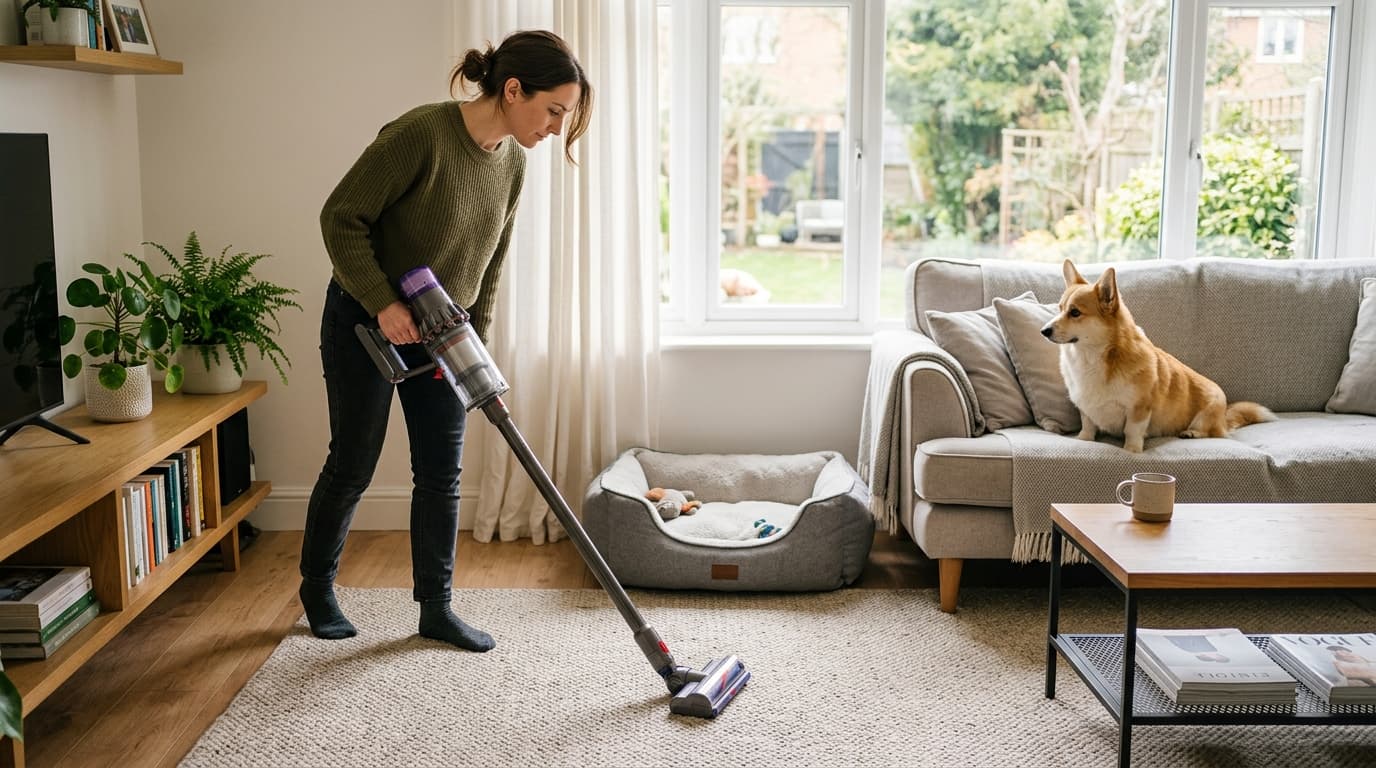
Vacuuming is the most underrated weapon you have, and it does double duty. It physically removes eggs, larvae, and flea dirt from carpet fibers, and the vibration and warmth actually coax dormant pupae to hatch early, pulling them out of their spray-proof cocoons and into the open where treatments can reach them.
Vacuum daily during an active infestation, and be thorough:
- Hit all carpets and rugs, plus hard floors, baseboards, and the cracks between floorboards where larvae hide.
- Use the crevice tool along baseboards, in corners, and under furniture and beds.
- Vacuum upholstered furniture, including under and behind cushions.
- Pay special attention to wherever your pet sleeps and lounges.
The step most people skip: empty the vacuum immediately and outside. A canister or bag full of live eggs and larvae is just a flea nursery sitting in your closet. Empty bagless canisters into a sealed bag, take it straight to an outdoor trash bin, and for bagged vacuums, remove and seal the bag after each session.
Step 4: Treat Carpets, Upholstery, and Floor Cracks With an IGR
Cleaning alone will knock the population down hard, but for a real infestation you will usually need a targeted indoor treatment. The key is to choose a product that contains an insect growth regulator (IGR) such as methoprene or pyriproxyfen in addition to an adulticide. An adulticide kills the fleas you have now; the IGR is the long game, sterilizing eggs and stopping larvae from ever developing into biting adults. That combination is what breaks the cycle instead of just denting it.
You have a few formats to choose from:
- Carpet and room sprays (for example, Adams Plus Flea & Tick Carpet Spray or Vet's Best Flea + Tick Home Spray) let you target carpets, baseboards, upholstery, and the spots where your pet rests. Sprays give you precise control, which is why pest professionals generally prefer them over foggers.
- Carpet powders can be worked into carpet fibers in hard-to-reach areas, then vacuumed up after the label-directed time.
- Plant-based and essential-oil sprays (such as Wondercide or Vet's Best) appeal to households with small children who want a lower-tox option, though they typically offer less residual protection than synthetic IGR formulas.
Whatever you choose, read and follow the label exactly, keep pets and people off treated surfaces until everything is fully dry, and ventilate the room.
- Many "flea killer" sprays only kill adults, so the hidden 95 percent keeps maturing and you are back to square one in a week. Check the active ingredients for an insect growth regulator (methoprene or pyriproxyfen). Without an IGR, you are mowing the lawn instead of pulling the roots.
Should You Use a Flea Bomb or Fogger?
Whole-room foggers ("flea bombs") have a place, but they are widely misunderstood. A fogger releases insecticide into the air, and the mist settles mostly on exposed, upward-facing surfaces. It does not drift under beds, into closets, beneath furniture, or deep into carpet pile, which is exactly where larvae and pupae hide. That is why many entomologists and pest-control pros now favor a direct spray with an IGR over foggers for routine flea jobs.
If you do use a fogger for a severe, widespread infestation, treat it as a supplement to (not a replacement for) spraying, vacuuming, and washing. Follow the safety directions to the letter: get all people and pets (including fish, birds, and reptiles) out of the house, cover or pack away food, dishes, and toothbrushes, turn off pilot lights and open flames because the propellant is flammable, and stay out for the full time on the label before airing the place out.
Step 5: Do Not Forget the Yard
If your dog goes outside, the yard is the supply line that keeps reinfesting your house. Fleas thrive outdoors in shady, humid, protected spots, and they avoid hot, dry, sunny open areas. So target your effort instead of blanketing the whole lawn.
- Focus on shady, moist zones: under decks and porches, along fence lines, beneath shrubs, in crawl spaces, and anywhere your pet naps outdoors.
- Mow and rake regularly to cut humidity and expose larvae to sunlight, which dries them out.
- Apply a yard and perimeter insecticide labeled for fleas (granules or a hose-end spray) to those shady hot spots and around the foundation where pets enter.
- Treating a doghouse or outdoor bedding the same way you treat indoor bedding closes another gap.
Keeping wildlife such as opossums, raccoons, stray cats, and feral rabbits out of the yard also matters, since they drop fresh fleas onto your property as they pass through.
The Pupae "Reinfestation Window": Why Fleas Come Back After You Treat
Here is the moment that breaks most people's resolve. You wash, vacuum, spray, and treat the pet. For a few days the house seems clear. Then, suddenly, fleas are back, and it feels like everything failed.
It did not fail. You hit the pupae reinfestation window. Remember that cocooned pupae are armored against sprays, foggers, and vacuuming, and they can stay dormant for weeks. They emerge in waves whenever they sense a host nearby (body heat, carbon dioxide, footsteps). The new adults you see are not survivors of your treatment; they are pupae that hatched after it.
That is exactly why the experts quote a 2 to 4 week timeline. Your job during that window is persistence:
1. Keep vacuuming daily (it triggers pupae to hatch into your treated, IGR-protected environment).
2. Re-treat carpets and hot spots on the schedule the product label allows.
3. Keep the pet's flea protection current so emerging adults die before they lay the next generation.
4. Keep washing bedding weekly.
Do this until you have gone at least a week to ten days with no new fleas, and the cycle finally collapses.
- Seeing fleas again 5 to 14 days after treatment does not mean your products failed. It means protected pupae are hatching on schedule. Keep vacuuming daily and stay on plan for the full 2 to 4 weeks, and each new wave dies in the environment you have already treated.
To keep every pet on schedule while you clear the home, a free MyPetID profile stores a treatment log for each animal, tracks how often you apply or give it, and sends automatic reminders so no pet falls behind and reopens the door.
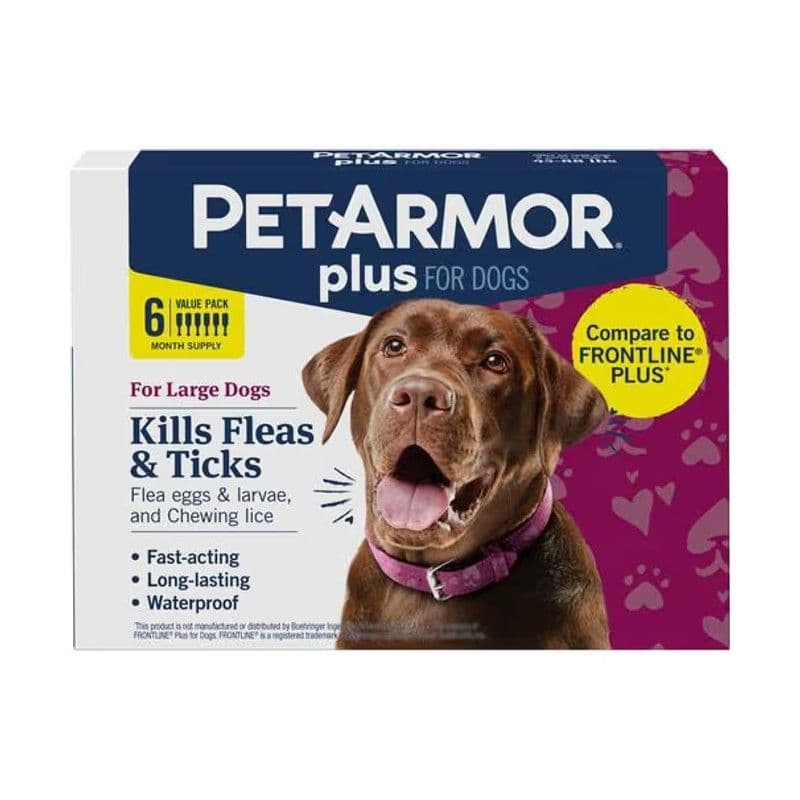
Fast-acting, waterproof OTC spot-on that kills fleas, flea eggs and larvae, ticks, and chewing lice for large dogs 45 to 88 lbs. A budget alternative to Frontline Plus.
Petful may earn a commission when you click through to Chewy, at no extra cost to you.
Home Flea Products by Type
There is no single "best" product, because the job needs different tools for the pet, the soft surfaces, the carpet, and the yard. Here is how the main categories compare so you can build a kit that covers all of them.
| Product Type | What It Targets | Key Things to Know |
|---|---|---|
| Indoor carpet and room spray (e.g., Adams Plus, Vet's Best) | Carpets, baseboards, upholstery, pet resting spots | Choose one with an IGR (methoprene or pyriproxyfen); more precise than a fogger |
| Whole-room fogger / flea bomb | Open, upward-facing surfaces in a room | Supplement only; misses under furniture and deep carpet; evacuate, cover food, kill pilot lights |
| Carpet powder | Deep carpet fibers, hard-to-reach areas | Worked into fibers, left per label, then vacuumed up |
| Yard and perimeter insecticide (granules or hose-end) | Shady outdoor hot spots, foundation, fence lines | Skip sunny open lawn; treat where pets nap and along entry points |
| On-pet topical or collar (e.g., Frontline Plus, Seresto) | Adult fleas on the animal | The other half of the job; treat every pet on the same day as the home |
Natural and Low-Tox Approaches (And Their Limits)
Plenty of households want to start with the gentlest option, and some natural tactics genuinely help, especially as part of a bigger plan. Just keep your expectations realistic: most are best for knockdown or maintenance, not for clearing a true infestation on their own.
- Dawn dish soap baths kill fleas on contact by breaking the surface tension of water so the fleas drown. It works for an emergency bath, but it leaves zero residual protection, so fleas can reinfest the moment the pet dries. Use it as a one-time knockdown, not as prevention.
- A flea comb plus a bowl of hot, soapy water is a cheap, effective daily ritual to physically pull adults off your pet and drown them.
- Diatomaceous earth (food-grade) is sometimes dusted lightly into carpet to dehydrate larvae. Use it sparingly, follow safety guidance to avoid breathing the dust, and know that the evidence for it is weaker than for IGR sprays.
- Steam cleaning carpets and upholstery uses heat and moisture to kill fleas across several life stages and is a strong, low-chemical addition to vacuuming.
For more of these gentler tactics and how to use them safely, see our roundup of home remedies for fleas.
- You will see advice to sprinkle salt or baking soda into carpet to dry out eggs and larvae. It is cheap and low-risk to try as a supplement before vacuuming, but treat it as a minor helper, not a substitute for an IGR spray and daily vacuuming on a real infestation.
When to Call a Professional Exterminator
Most household flea problems can be beaten with the steps above. But call a licensed pest-control professional if you have been at it diligently for more than 3 to 4 weeks with no real improvement, if the infestation is severe and spread across the whole home, if you are dealing with a vacant or rental property, or if anyone in the home reacts badly to over-the-counter insecticides. Pros have access to professional-grade IGR and adulticide combinations and can treat hard-to-reach harborage you cannot. Even then, you must keep every pet on flea prevention, or the problem simply restarts.
A Quick Recap: The Numbered Process
1. Treat every pet on day one with a vet-recommended product, dosed by weight.
2. Wash all bedding and soft goods in hot water and dry on high heat.
3. Vacuum daily (carpets, cracks, furniture, baseboards) and empty the canister outside every time.
4. Treat carpets, upholstery, and cracks with a spray that contains an IGR plus an adulticide.
5. Treat the yard's shady hot spots and your pet's outdoor resting areas.
6. Repeat for 2 to 4 weeks through the pupae reinfestation window until you see zero fleas for 7 to 10 days straight.
 Sponsored
Vet care that's always there
Unlimited video calls and messaging with licensed vets for less than a typical vet visit. One membership covers up to five pets.
Use code Pets60
Plans start at $12/month · covers up to 5 pets
- Licensed vets in most states
- Rx for 150+ conditions
- 4.7 on Trustpilot
Signs You Have a Flea Infestation in the House
Before you can get rid of fleas in the house, you have to confirm a flea infestation in house spaces is what you are actually dealing with. The signs of fleas show up on your pet, on you, and in the rooms themselves, so check all three.
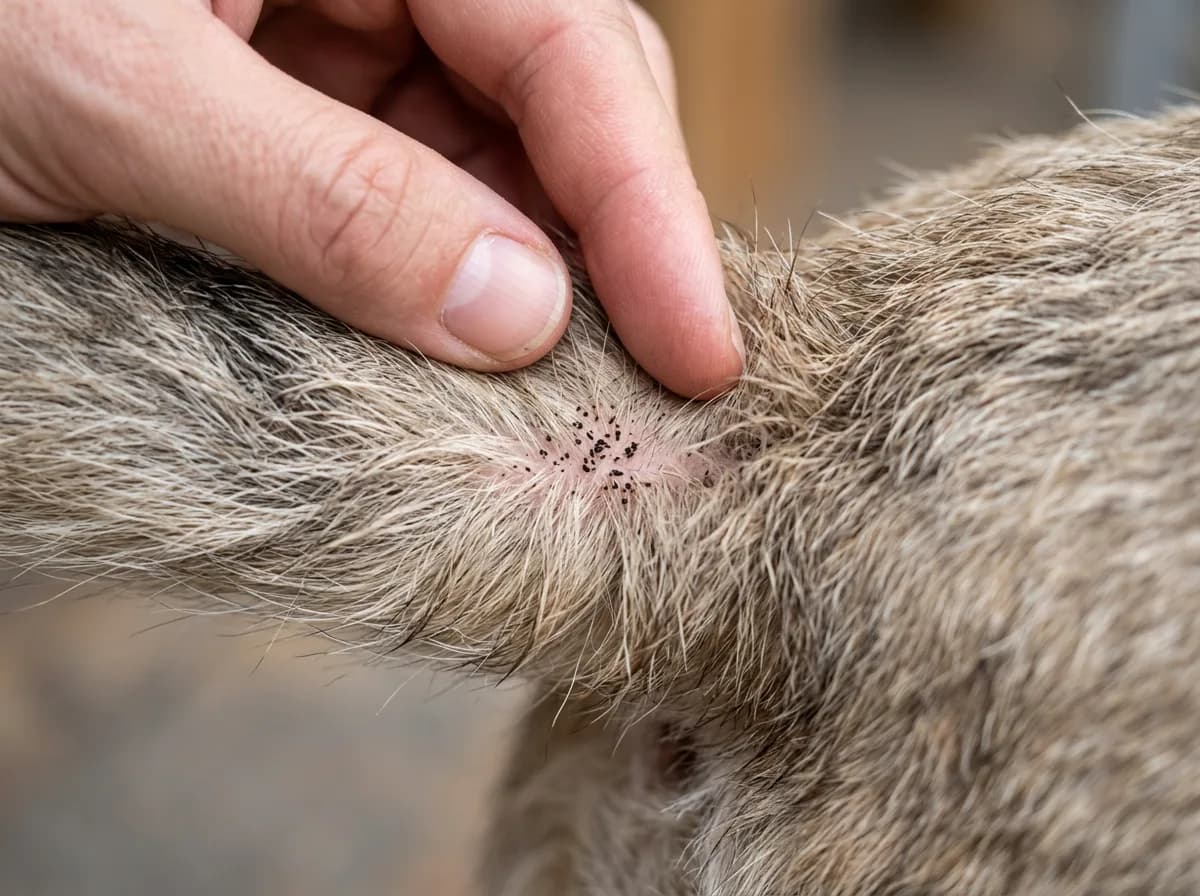
- Flea dirt: fine black specks that look like ground pepper in your pet's coat, on bedding, or on light-colored carpet. This is dried flea droppings (digested blood).
- A pet scratching, biting, or chewing at the base of the tail, the belly, and the back legs, often more than the head and ears.
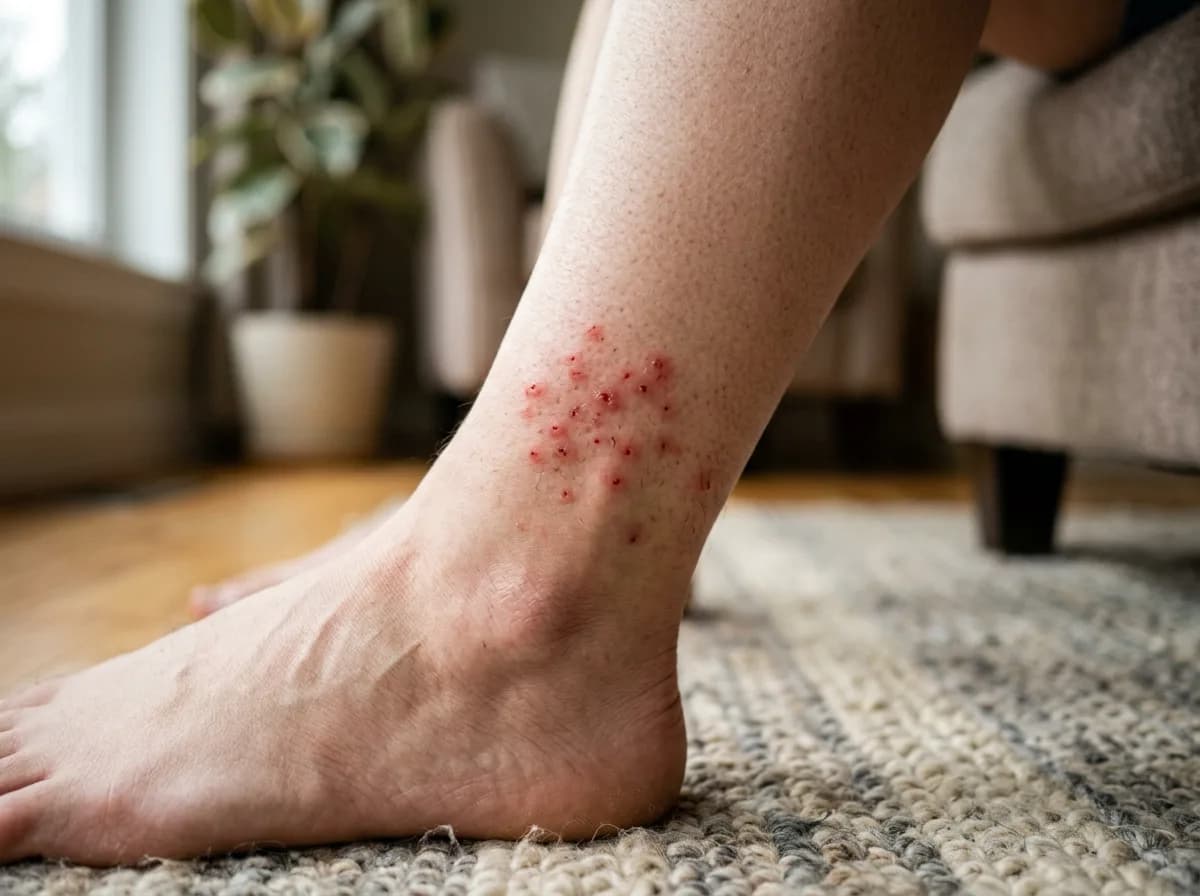
- Bites on people in clusters of small, red, itchy bumps, usually low on the ankles and lower legs where fleas can reach.
- Tiny dark specks that jump or dart away when you part the fur or disturb the carpet (adult fleas are fast and avoid light).
- A positive flea-dirt rust test: comb the suspect specks onto a damp white paper towel. If they smear reddish-brown, that is digested blood and confirms fleas.
- A positive comb test: run a fine-tooth flea comb through the coat over a bowl of hot, soapy water and check for live fleas or flea dirt on the teeth.
What Actually Kills Fleas in the House (At Every Life Stage)
The honest answer to what kills fleas in the house is that no single thing does it all, because each life stage hides in a different place and shrugs off a different weapon. To clear an infestation you have to stack methods that, together, hit eggs, larvae, pupae, and adults.

- Heat: hot-water washing and high-heat drying destroy eggs, larvae, and adults on bedding and soft goods. Steam cleaning kills across several stages on carpet and upholstery.
- Vacuuming: physically removes eggs, larvae, and flea dirt, and the vibration coaxes armored pupae to hatch early into a treated room where they can be killed.
- Adulticides: indoor sprays and powders kill the biting adults you have right now, on contact and with some residual.
- Insect growth regulators (IGRs) like methoprene and pyriproxyfen: these are the long game. They sterilize eggs and stop larvae from ever maturing into biting adults, so the cycle cannot restart.
- A fast-acting oral on the pet: nitenpyram (Capstar) starts killing adult fleas within about 30 minutes for a heavy-infestation knockdown, though it has no residual.
What kills fleas in the house fast (heat, vacuuming, and an adulticide) is different from what kills them for good (an IGR plus 2 to 4 weeks of persistence). Pupae are the reason: the cocoon is impervious to insecticides (it cannot be killed by sprays, foggers, freezing, or drying), and protected pupae keep hatching for weeks, so nothing reaches 100 percent in one pass.
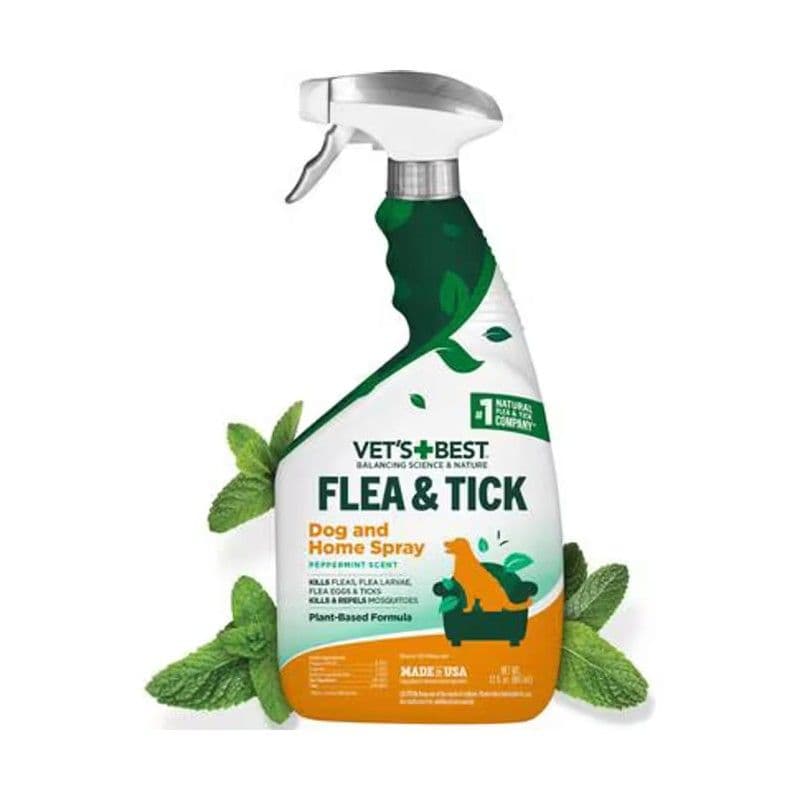
Plant-based peppermint and clove indoor home spray that kills fleas, flea eggs and larvae, and ticks on contact on carpets, furniture, and bedding, and repels mosquitoes.
Petful may earn a commission when you click through to Chewy, at no extra cost to you.
The Best Flea Spray and Treatment for the House: What to Look For
Choosing a flea spray for house use comes down to one thing on the label. The best flea treatment for house environments pairs an adulticide (kills the fleas you have now) with an insect growth regulator, methoprene or pyriproxyfen (stops eggs and larvae from maturing). A product with only an adulticide kills today's adults while the hidden 95 percent keeps developing, and you are back to square one in a week.
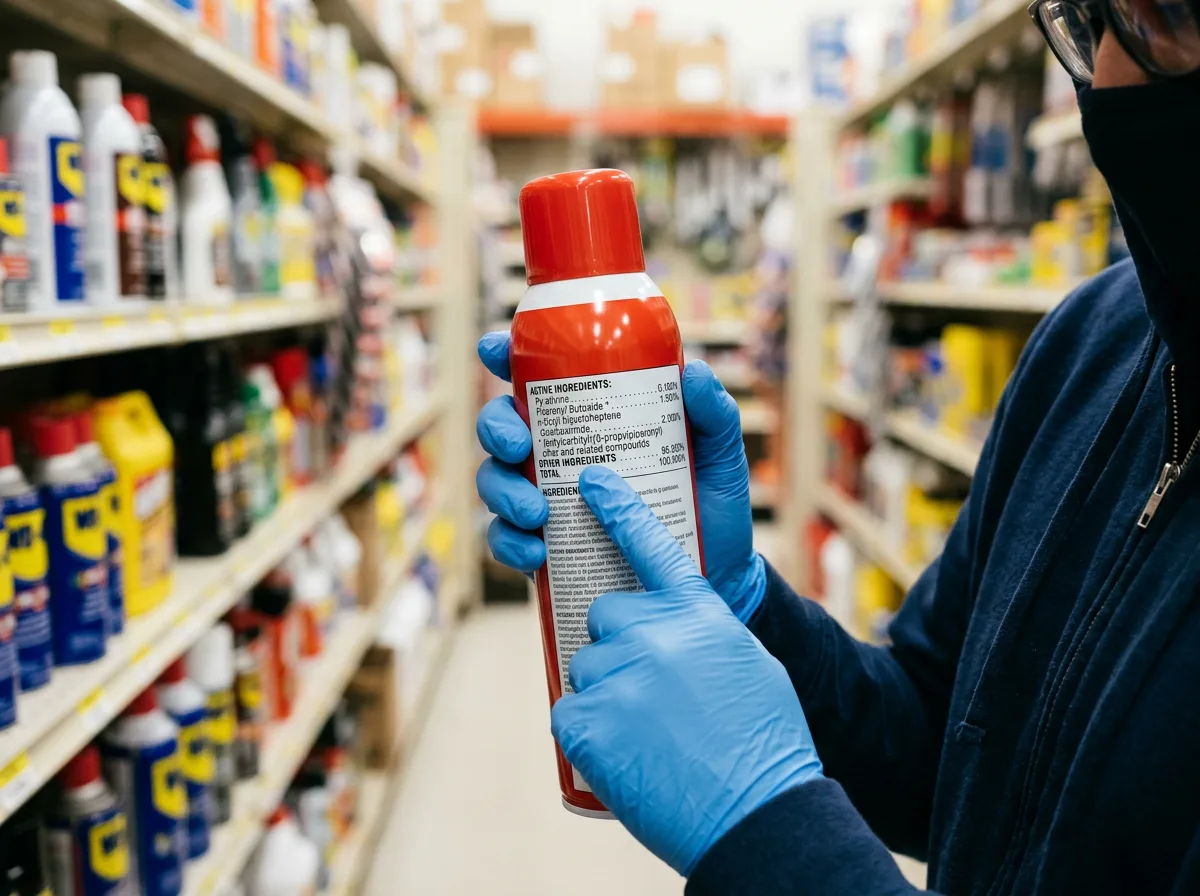
Spray vs. Powder vs. Fogger
- Sprays give you precise control over carpets, baseboards, upholstery, and the spots where your pet rests, which is why pest professionals generally prefer them. This is the best flea spray for home and furniture work because you aim it where larvae and pupae actually hide.
- Powders can be worked into deep carpet fibers in hard-to-reach areas, then vacuumed up after the label-directed time.
- Foggers (flea bombs) settle mostly on exposed, upward-facing surfaces and miss under furniture and deep carpet, so they are a supplement, not a replacement, for spraying.
Using a Flea Spray Safely on Furniture and Around the Home
Spot-test upholstery in a hidden area first, then treat seams, cushions, and the underside where fleas shelter. Keep pets and people off treated surfaces until everything is fully dry, ventilate the room, and follow the label residual interval before re-treating. A natural flea spray for house use (plant-based or essential-oil formulas) appeals to homes with small children, but it typically offers less residual protection than a synthetic IGR formula and is best as a maintenance or knockdown layer rather than the core treatment for a true infestation. Some essential oils are toxic to pets, especially cats, so check the label and ask your vet before use.
Getting Fleas Out of Beds, Bedding, and Furniture
When people ask how to get rid of fleas on bed surfaces, they often mean their own bed, not just the pet's. Fleas do not breed in a human bed the way they do in pet bedding, but eggs and flea dirt drop wherever a flea-carrying pet sleeps or naps, so a bed a pet uses can absolutely seed a fresh wave. Petful’s guide to can cats carry bed bugs has the full breakdown.
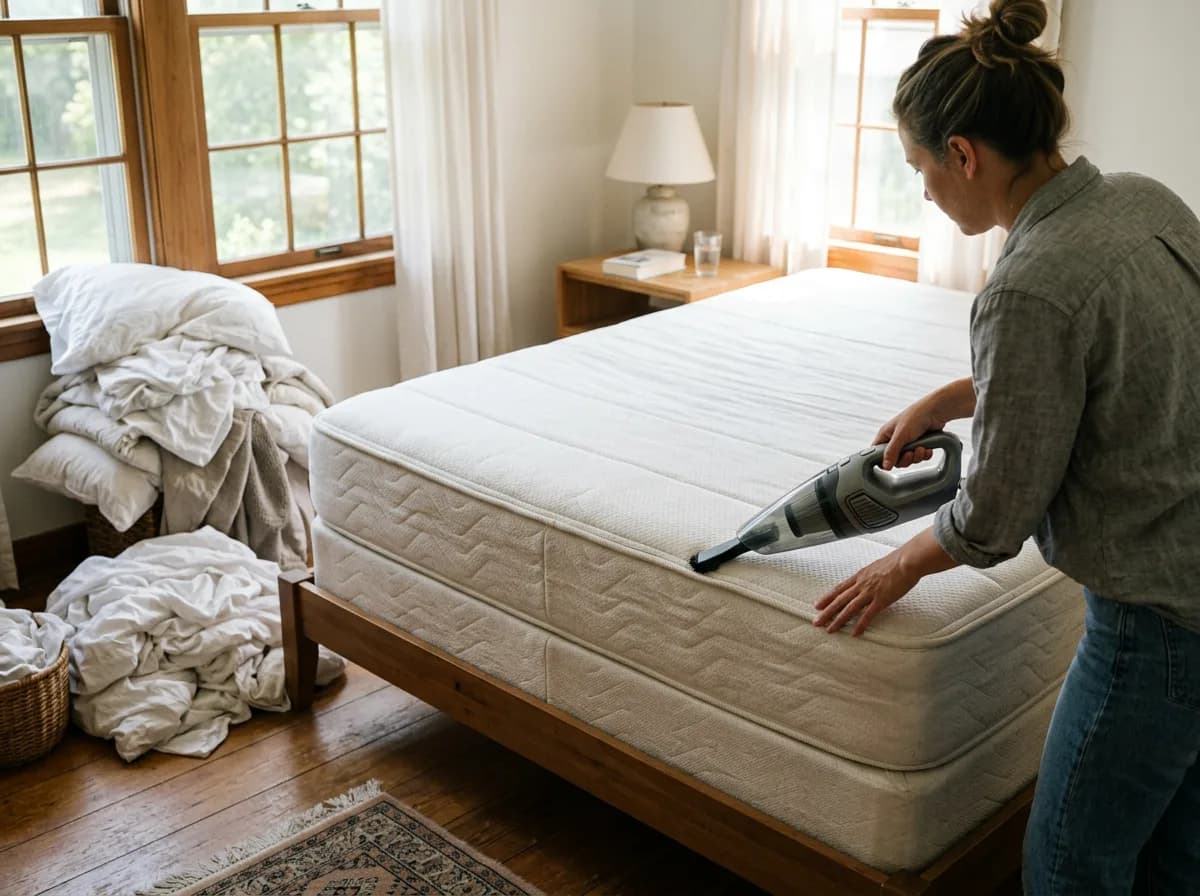
- Strip the bed and wash all linens, sheets, pillowcases, and washable covers in the hottest water the fabric allows, then dry on the highest safe heat. Heat is what kills eggs, larvae, and adults.
- Vacuum the mattress thoroughly, paying special attention to seams, tufts, and piping, and do the box spring and the frame underneath.
- Steam-clean upholstered headboards and any fabric the washer cannot take, since heat and moisture kill multiple life stages.
- Vacuum the floor around and under the bed, including baseboards and cracks, then empty the canister outside immediately.
- If the infestation is severe, encase the mattress and box spring in a zippered cover for a few weeks to trap and starve anything left inside.
None of this holds unless the pet is treated too. Keep flea-carrying animals off the bed until the home is clear, and repeat the wash-and-vacuum routine through the full 2 to 4 week pupae window.
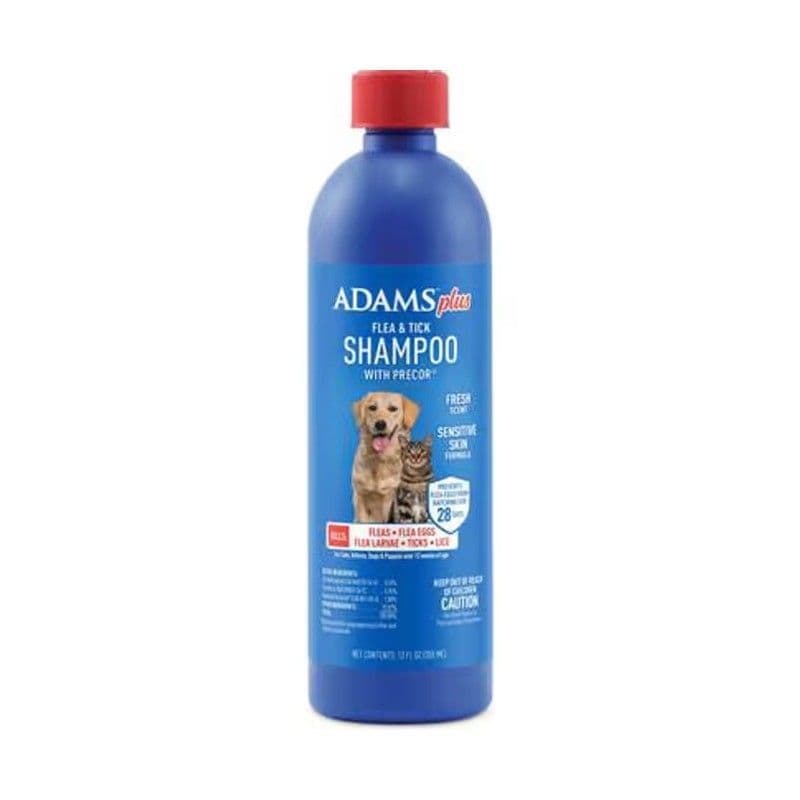
Sensitive-skin OTC shampoo that kills fleas, flea eggs and larvae, ticks, and lice on contact, with a Precor insect growth regulator that helps prevent reinfestation for up to 28 days. For cats and dogs.
Petful may earn a commission when you click through to Chewy, at no extra cost to you.
Flea Bites on Humans and How to Treat Them
Figuring out how to get rid of fleas on humans is mostly a relief to learn: fleas bite people but do not live or breed on us. They jump on, feed, and jump off, which is why human bites cluster as small, red, itchy bumps low on the ankles and lower legs rather than spreading over the whole body.
- Wash the bites with soap and water to keep them clean.
- Use an over-the-counter anti-itch cream or a cold compress to calm the itch and swelling.
- Try hard not to scratch, since broken skin can get infected. See a doctor if a bite looks infected or you have a strong allergic reaction.
- The real fix is the environment: you stop getting bitten once you clear the home and treat the pets, not by treating your skin.
Fleas are also a disease vector. The CDC notes that fleas can transmit illnesses to people, which is one more reason to clear an infestation promptly rather than living with it.
How to Keep Fleas Out for Good (Year-Round Prevention)
The honest version of how to get rid of fleas in the house forever is this: there is no one-time cure that makes a home permanently flea-proof, but year-round prevention keeps fleas from ever getting a foothold again. Prevention is far easier than fighting another full infestation.
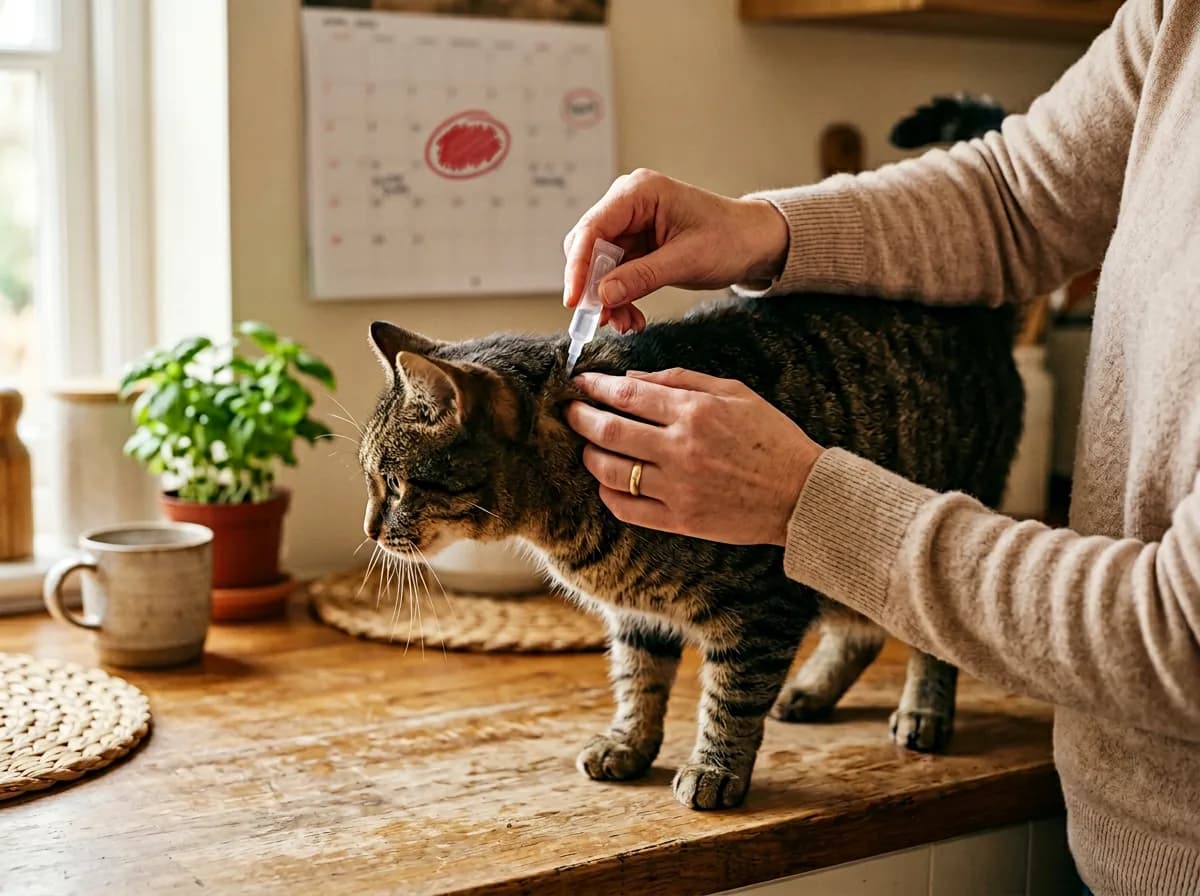
- Keep every pet on a vet-recommended flea preventive all 12 months, not just in summer, so any flea that hitches a ride dies before it can lay eggs.
- Keep up light maintenance vacuuming of carpets, rugs, and pet resting spots, and empty the canister outside.
- Mow and rake the yard to cut humidity and expose larvae to drying sunlight, and treat shady outdoor hot spots if your pet spends time there.
- Keep wildlife like opossums, raccoons, stray cats, and feral rabbits out of the yard, since they drop fresh fleas as they pass through.
- Wash pet bedding regularly and stay alert for early signs of fleas so you can knock back a new arrival before it becomes an infestation.
If you have indoor-only cats, do not assume they are safe. Fleas ride in on people, dogs, and secondhand items. See how do indoor cats get fleas and keep them on prevention too.
How Long Does It Take to Get Rid of Fleas? A Realistic Timeline
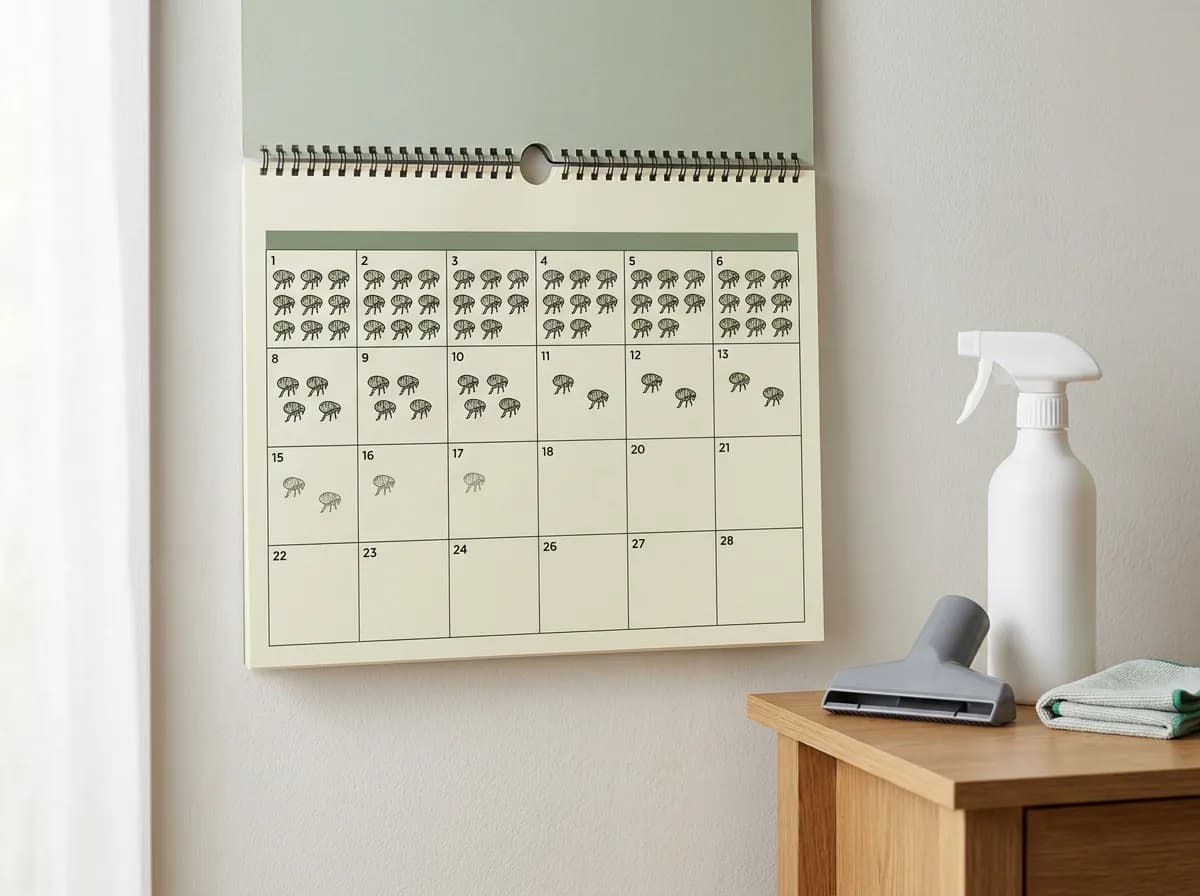
Searches for how to get rid of fleas in 24 hours or how to get rid of fleas overnight are looking for a one-night cure, so here is the realistic timeline. You can do a lot in 24 hours, but you cannot finish the job that fast.
What 24 Hours Can Do
In one day you can deliver a real knockdown: a fast-acting oral like nitenpyram starts killing adult fleas on the pet within about 30 minutes, a hot-water wash and thorough vacuuming remove and kill eggs, larvae, and many adults, and an indoor spray kills adults on contact. The biting you see should drop sharply.
What 24 Hours Cannot Do
What no overnight treatment can do is clear the protected pupae. The cocoon is impervious to insecticides, so it survives sprays and foggers, and vacuuming only coaxes the adults out rather than killing the pupae inside, so fleas keep hatching for weeks. That is why entomologists tell you to expect newly emerged fleas for a few weeks or longer (University of Kentucky entomology advises re-treating if adults are still seen beyond 4 weeks), and why the Merck Veterinary Manual notes that completely controlling an existing infestation typically takes 2 to 3 months. Stay on plan through the whole pupae window: keep vacuuming daily, re-treat on the label schedule (short-residual sprays often need a follow-up about 7 to 10 days after the first application), keep every pet protected, and wash bedding weekly. You can ease off once you have gone several days without seeing a live flea, but keep every pet on prevention so a survivor cannot restart the cycle.
Frequently Asked Questions
The fastest results come from doing three things on the same day: treat every pet with a fast-acting product (an oral like nitenpyram starts killing adult fleas within about 30 minutes), wash all bedding in hot water, and vacuum thoroughly, then apply an indoor spray that combines an adulticide with an insect growth regulator (IGR). No single product is instant, because hidden eggs and pupae keep hatching for 2 to 4 weeks.
Fleas are stubborn because about 95 percent of an infestation is hidden as eggs, larvae, and armored pupae in carpet, bedding, and floor cracks, not as visible adults. The pupae resist sprays and keep hatching for weeks. Fleas are very beatable, but it takes treating the pet and the home together and staying consistent for 2 to 4 weeks, not one quick treatment.
Most flea infestations take 2 to 4 weeks to fully clear, even when you do everything correctly. The delay is the pupae reinfestation window: cocooned pupae are protected from treatment and emerge in waves over time. Keep vacuuming daily, re-treating on schedule, and keeping pets protected until you see no fleas for 7 to 10 days straight.
Yes, you can completely clear a flea infestation, but only by treating the pet and the environment at the same time and staying consistent through the full life cycle. Because protected pupae hatch over several weeks, a single treatment never reaches 100 percent. Combine on-pet prevention, hot-water washing, daily vacuuming, and an IGR-based home treatment for 2 to 4 weeks.
Fleas hate heat, dryness, and direct sunlight, which is why hot-water washing, high-heat drying, steam cleaning, and keeping your yard mowed and sunny all work against them. They are also stopped by insect growth regulators (methoprene and pyriproxyfen), which prevent eggs and larvae from maturing. Some scents like cedar and certain essential oils may repel them, but repellents alone will not clear an infestation.
Adult fleas usually live a few weeks, but a flea problem can persist in a home for months because pupae can stay dormant in their cocoons and keep hatching long after the adults die. Without intervention, the cycle simply renews itself. Treating the pet and home together and vacuuming daily collapses that timeline to 2 to 4 weeks.
Nothing is truly instant for a whole-house infestation, but a hot-water wash and a thorough vacuuming kill eggs, larvae, and many adults right away, and an indoor spray kills adults on contact. For the pet, a fast-acting oral such as nitenpyram begins killing adult fleas within about 30 minutes. The hidden eggs and pupae still require 2 to 4 weeks of follow-up to fully eliminate.
Even with no pets, fleas can survive in a house for weeks to several months by feeding on people or other warm-blooded visitors, and pupae can lie dormant until they sense a host. The same plan works: wash fabrics in hot water, vacuum daily, and apply an IGR-based indoor treatment until you have gone 7 to 10 days with no sightings.
Strip the bed and wash all linens in the hottest safe water, then dry on high heat. Vacuum the mattress seams, the box spring, and the floor around the bed, then empty the canister outside. Steam-clean an upholstered headboard, and encase the mattress for a few weeks if the infestation is severe. None of it lasts unless you also treat every pet and keep them off the bed until the home is clear.
No. Fleas bite people but do not live or breed on us, which is why human bites cluster low on the ankles and lower legs. You stop getting bitten by clearing the home and treating the pets, not by treating your skin. Wash bites, use an anti-itch cream, and try not to scratch. The CDC notes fleas can transmit disease, so clear an infestation promptly.
The best flea spray for the house pairs an adulticide (kills the fleas you have now) with an insect growth regulator like methoprene or pyriproxyfen (stops eggs and larvae from maturing). Choose a spray over a fogger for coverage under furniture and into carpet, use a pet-safe and kid-safe label, and keep everyone off treated surfaces until dry. Plant-based natural sprays give less residual protection and are better for maintenance than for a true infestation.
The bottom line: getting rid of fleas in the house is a two-front war. Treat the pet, treat the environment, do both on the same day, and hold the line through the 2 to 4 week pupae window. Stay consistent and the infestation has nowhere left to hide.
BVMS, MRCVS
Dr. Pippa Elliott, BVMS, MRCVS, is a veterinarian with nearly 30 years of experience in companion animal practice. Dr. Elliott earned her Bachelor of Veterinary Medicine and Surgery from the University of Glasgow. She was also designated a Member of the Royal College of Veterinary Surgeons. Married with 2 grown-up kids, Dr. Elliott has a naughty Puggle named Poggle, 3 cats and a bearded dragon.
Sign up for expert-backed reviews and safety alerts all in one place.