Best Dog Toothpaste: VOHC-Accepted & Enzymatic Picks
Compare five dog toothpastes by VOHC status, enzyme system, flavor, price per ounce, and fit. See why Petsmile is VOHC-accepted, not ADA-approved, and how to choose a safe brush-and-paste routine.

BVMS, MRCVS
Petful is reader supported. As an affiliate of platforms like Amazon and Chewy, we may earn a commission when you buy through links on this page. There is no extra cost to you.
The best dog toothpaste depends on which kind of evidence and everyday fit matter most. Petsmile Professional Pet Toothpaste is our leading choice when current VOHC acceptance for plaque is the priority. Virbac C.E.T. Enzymatic Toothpaste is our leading enzymatic choice because its formula contains glucose oxidase and lactoperoxidase. Those are two different distinctions, and no toothpaste in this five-product lineup holds both.
Petsmile is VOHC-accepted, not ADA-approved. The American Dental Association's Seal of Acceptance is a human oral-care program, while the Veterinary Oral Health Council evaluates dental products for dogs and cats. A good paste still has to be safe for dogs to swallow in the labeled amount, palatable enough for regular use, and paired with a brush that reaches the outer tooth surfaces.
- Choose Petsmile when a current VOHC-accepted plaque claim is the deciding factor.
- Choose Virbac C.E.T. when you want a clearly identified dual-enzyme system.
- Use only dog-specific toothpaste, never human toothpaste, and make daily brushing the goal.

Sign up for expert-backed reviews and safety alerts all in one place.
The Best Dog Toothpaste: Our Picks
What is the best toothpaste for dogs? Petsmile is our VOHC-accepted pick because the current dog list recognizes it for plaque control. Virbac C.E.T. is the stronger enzymatic benchmark because its enzymatic formula names glucose oxidase and lactoperoxidase. The best choice for one dog is the product that matches the owner's evidence standard, budget, flavor needs, and ability to brush consistently.
Prices below are approximate online prices checked in August 2026 and can change. Price per ounce is more useful than tube price because the five packages range from 2.5 to 6.2 ounces. The comparison states the current VOHC acceptance status of every pick: Petsmile is accepted for plaque, while Virbac C.E.T., Arm & Hammer, Sentry Petrodex, and Vet's Best are not listed as accepted toothpastes.
| Product | Best fit | Enzyme system | Current VOHC status | Flavor or format | Approx. price per ounce |
|---|---|---|---|---|---|
| Virbac C.E.T. Enzymatic Toothpaste | Best enzymatic overall | Glucose oxidase plus lactoperoxidase | Not listed | Poultry paste, 2.5 oz | About $4.92 |
| Petsmile Professional Pet Toothpaste | Best VOHC-accepted pick | Non-enzymatic Calprox formula | Accepted for plaque | Rotisserie chicken paste, 4.2 oz, with toothbrush | About $8.82 in the current brush bundle |
| Arm & Hammer Complete Care Enzymatic Dog Toothpaste | Best budget large tube | Enzymatic formula with baking soda | Not listed | Chicken paste, 6.2 oz | About $1.13 |
| Sentry Petrodex Veterinary Strength Enzymatic Toothpaste | Best value poultry flavor | Enzymatic formula | Not listed | Poultry paste, 6.2 oz | About $1.60 |
| Vet's Best Enzymatic Dog Toothpaste | Best gel-style alternative | Glucose oxidase | Not listed | Botanical gel, 3.5 oz | About $2.72 |
This side-by-side table and the product sections below compare formula, VOHC status, flavor, tube size, and per-ounce pricing instead of relying on a name list. The expert analysis is current and named, and the seven-question FAQ provides standalone answers rather than repeating dated review mining or anonymous clinic summaries.
The selection screen also applies to best-rated, vet-recommended, non-toxic, safe, vegan, puppy, Yorkie, sensitive-stomach, gingivitis, gum-disease, and periodontal-disease searches. Homemade formulas and marketplace best-seller lists are outside the product shortlist. Availability differs in Canada, the UK, Australia, India, New Zealand, and the Philippines, while older 2018 through 2023 reviews, Amazon listings, Wirecutter roundups, and Logic product prices may no longer describe the exact packages compared here.
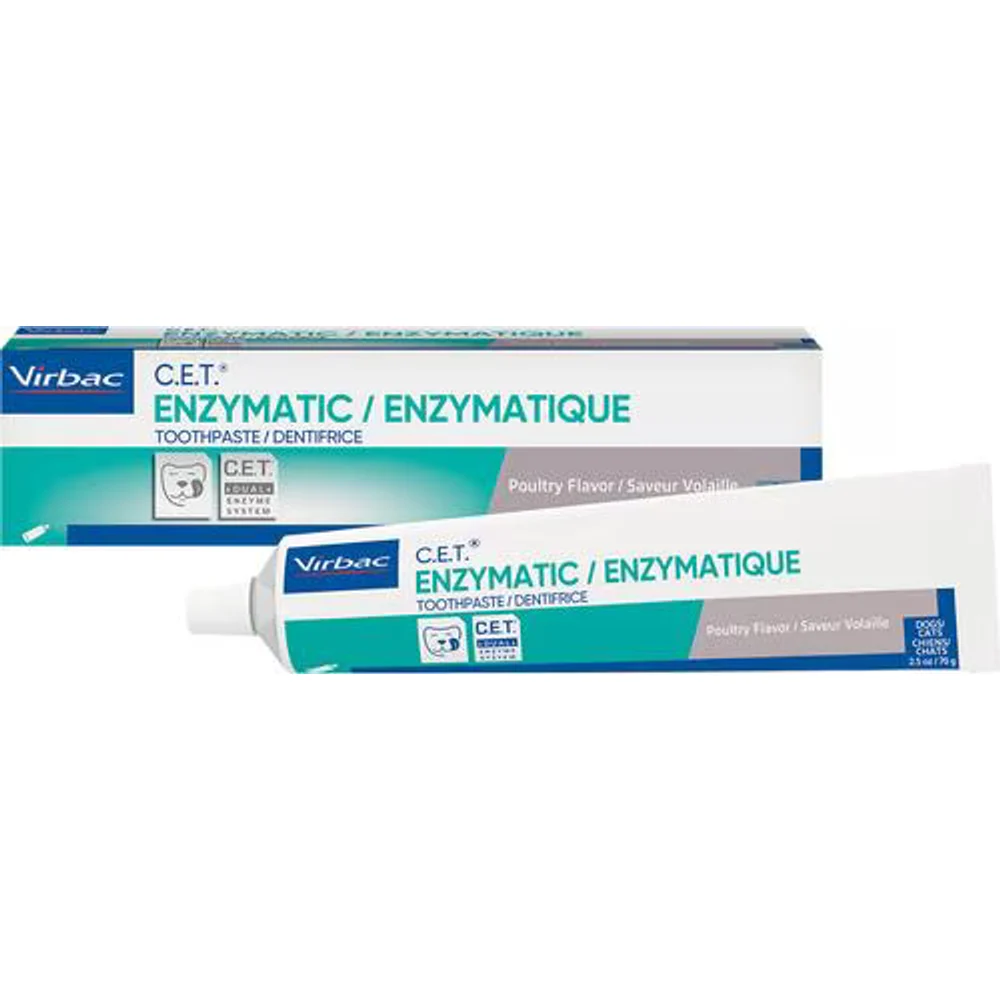
Virbac C.E.T. Enzymatic Toothpaste: Best enzymatic overall
Virbac C.E.T. is our best enzymatic dog toothpaste for shoppers who want a formula with named enzymes and a straightforward daily-brushing role. Virbac lists a dual-enzyme system containing glucose oxidase, lactoperoxidase, and potassium thiocyanate. The official product information says the system helps control oral bacteria and reduce new plaque formation, while the paste's mild abrasives support the mechanical cleaning done by the brush.
The poultry flavor can help dogs who reject minty smells, and the formula does not require rinsing. Its main limitation is important: Virbac C.E.T. toothpaste does not appear on the current VOHC accepted-products list. That does not prove the paste is ineffective. It means readers should not describe it as VOHC-accepted or give its enzyme claims the same status as a VOHC plaque claim.
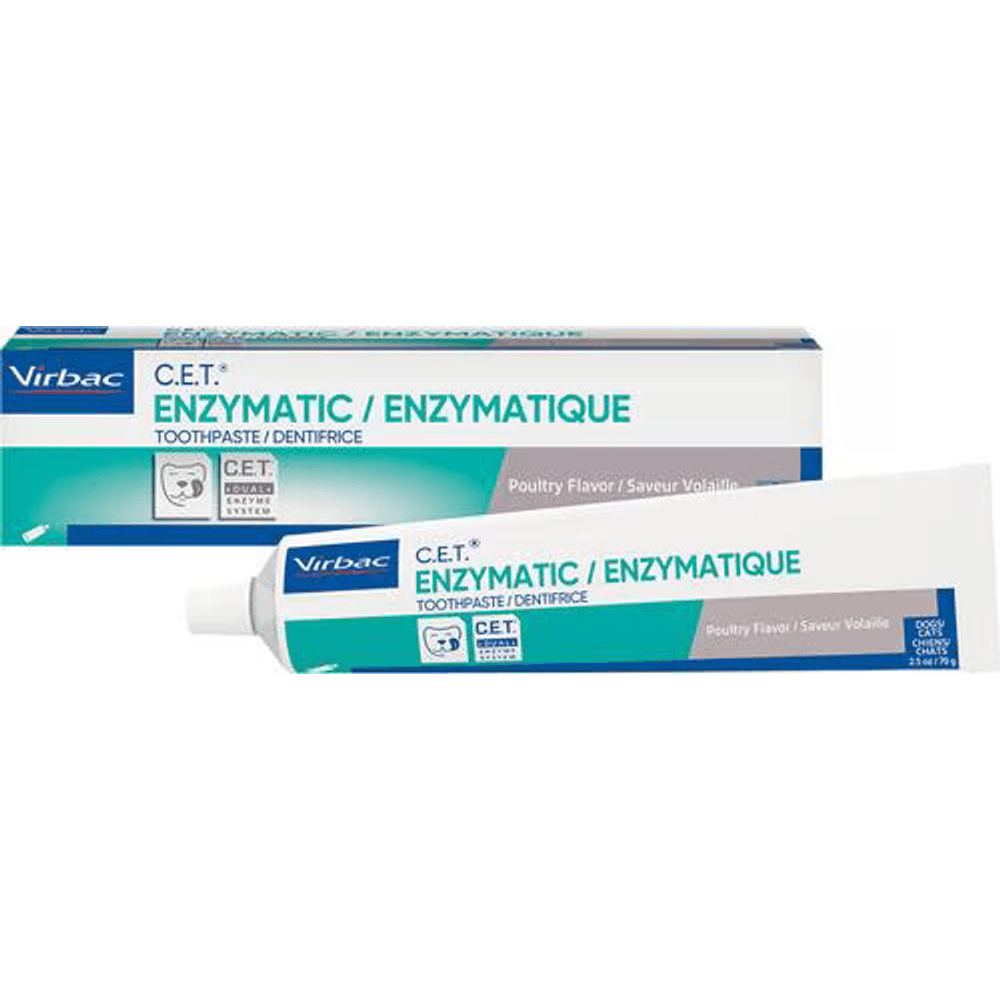
The vet-favorite enzymatic toothpaste. Its dual-enzyme system keeps working between brushings to control plaque and freshen breath, and the poultry flavor makes daily brushing easy.
Petful may earn a commission when you click through to Chewy, at no extra cost to you.
Petsmile Professional Pet Toothpaste: Best VOHC-accepted pick
Petsmile is the evidence-led choice for an owner who wants a toothpaste with a current VOHC seal. The official VOHC dog list recognizes Petsmile Professional Pet Toothpaste for a plaque claim. That wording is precise: the listing does not grant blanket approval for every marketing statement, and it does not turn the product into a substitute for brushing, dental examination, or treatment of existing disease.
Petsmile uses Calprox, a proprietary calcium peroxide and mineral formula, rather than the glucose oxidase system used in several enzymatic picks. The linked package contains a 4.2-ounce rotisserie chicken tube and a dual-ended toothbrush. Dividing the full $37.05 bundle price by the toothpaste weight gives about $8.82 per ounce, but that figure includes the brush and should not be treated as a paste-only comparison. Its value rests on the current VOHC plaque acceptance, not on being the budget choice.
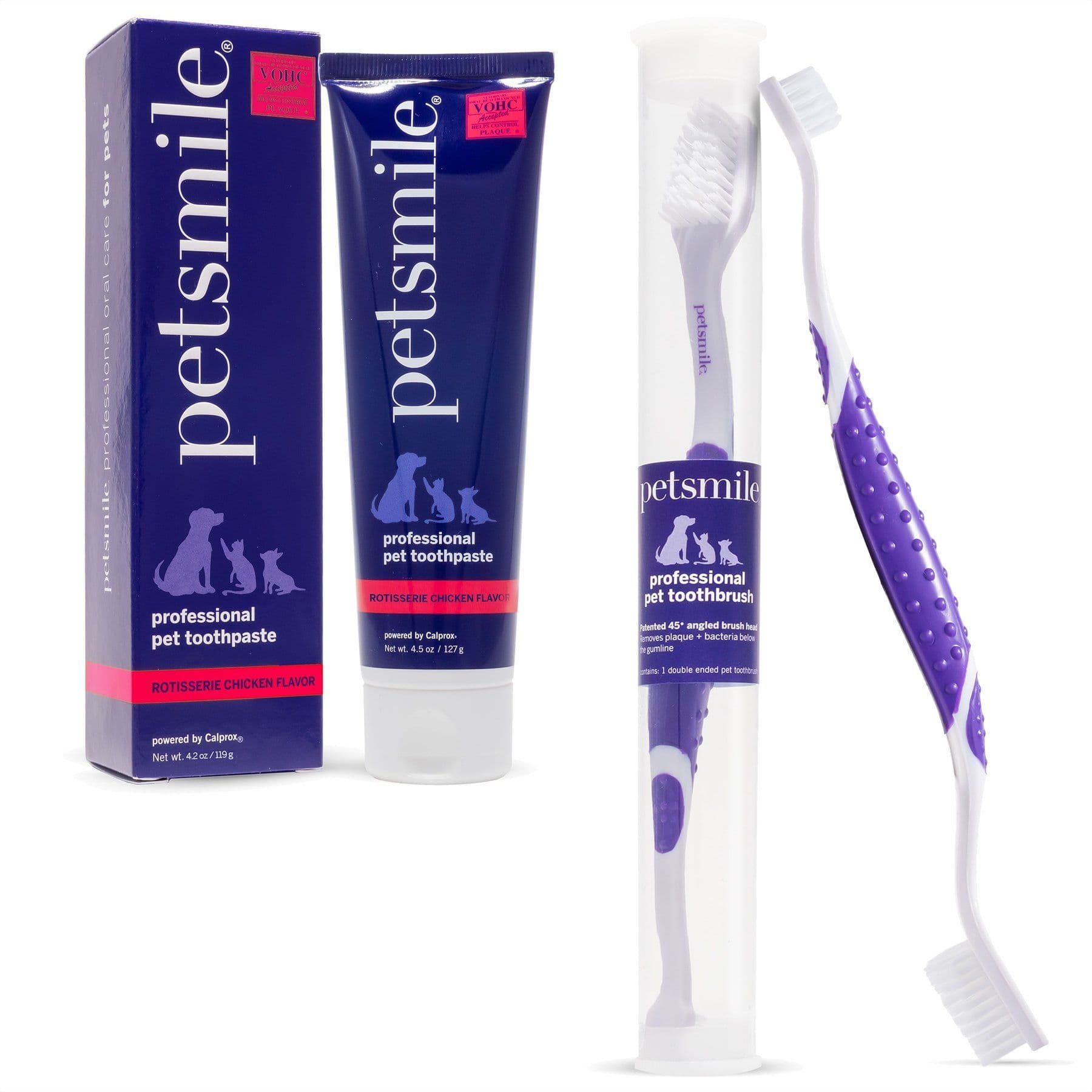
VOHC-accepted 4.2-ounce pet toothpaste paired with a dual-ended toothbrush.
Petful may earn a commission when you click through to Chewy, at no extra cost to you.
Arm & Hammer Complete Care: Best budget large tube
Arm & Hammer Complete Care Enzymatic Dog Toothpaste is the lowest-cost pick by approximate price per ounce. The 6.2-ounce chicken-flavored tube makes sense for a multi-dog household or an owner building a frequent brushing routine. The brand describes it as an enzymatic, fluoride-free formula made with baking soda and calcium.
Budget value is the advantage, but the evidence boundary should stay visible. This product is not on the current VOHC dog list, and baking soda on a label does not by itself prove superior plaque control. Choose it when affordability and flavor make regular brushing more realistic, then judge fit by the dog's acceptance, the label, and the veterinarian's oral-health plan.
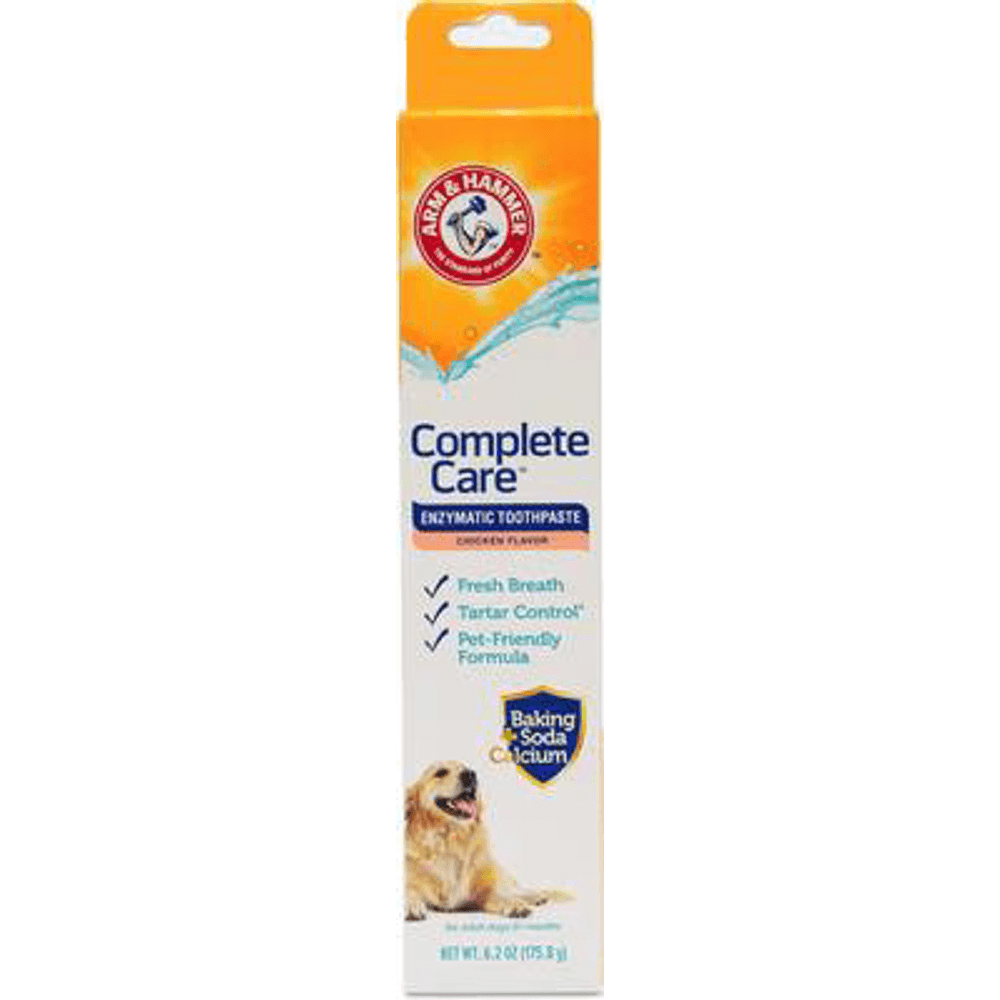
Enzymatic dog toothpaste with baking soda that fights plaque, tartar, and bad breath. Chicken flavored so most dogs accept daily brushing, and safe to swallow with no rinsing needed.
Petful may earn a commission when you click through to Chewy, at no extra cost to you.
Sentry Petrodex Veterinary Strength: Best value poultry flavor
Sentry Petrodex Veterinary Strength Enzymatic Toothpaste pairs a poultry flavor with a 6.2-ounce tube and a relatively low approximate price per ounce. It is a practical option for dogs who strongly prefer savory flavors and for households that want a larger tube without moving to the highest price tier.
The product name includes both “veterinary strength” and “enzymatic,” but those label terms are not the same as independent acceptance. Petrodex does not appear on the current VOHC dog list. The accessible product information also does not identify its enzyme system as clearly as Virbac does, so this pick earns its place on flavor, package value, and labeled use rather than a stronger evidence claim.
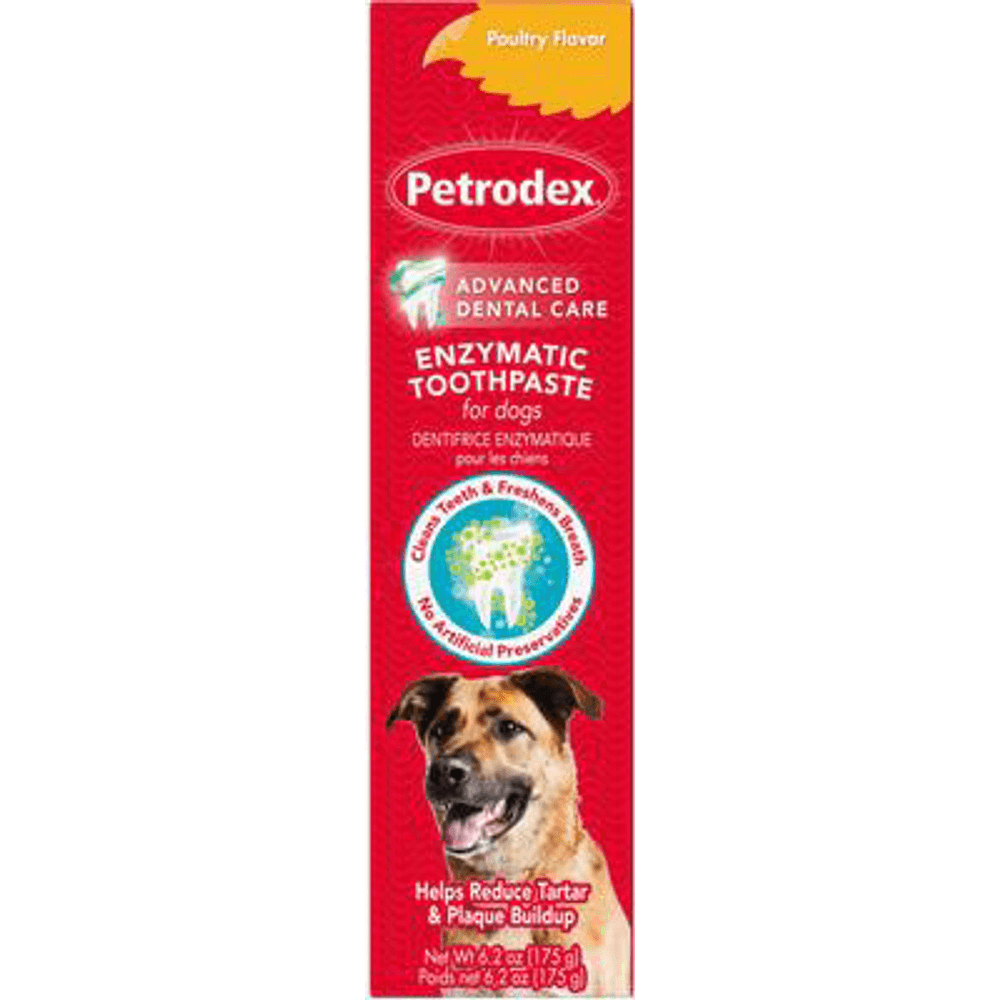
Veterinary-strength enzymatic toothpaste that helps reduce tartar and plaque buildup while freshening breath. Poultry flavored, made for dogs, with no artificial preservatives.
Petful may earn a commission when you click through to Chewy, at no extra cost to you.
Vet's Best Enzymatic Dog Toothpaste: Best gel-style alternative
Vet's Best is a gel-format option that can be applied with a toothbrush or rubbed on the teeth with a finger during early acclimation. Its current ingredient list includes aloe, pectin, neem oil, grapefruit seed extract, baking soda, glucose oxidase, and natural flavors. That makes its enzymatic mechanism more transparent than products that use “enzymatic” without naming an enzyme.
The gel format may suit a dog who dislikes a conventional paste texture, but “natural” ingredients do not automatically make a formula safer or more effective. Vet's Best is not currently VOHC-accepted. Its label suggests using the product two to three times weekly, while veterinary dental guidelines set daily brushing as the stronger plaque-control target. Follow individual veterinary advice when those directions differ.
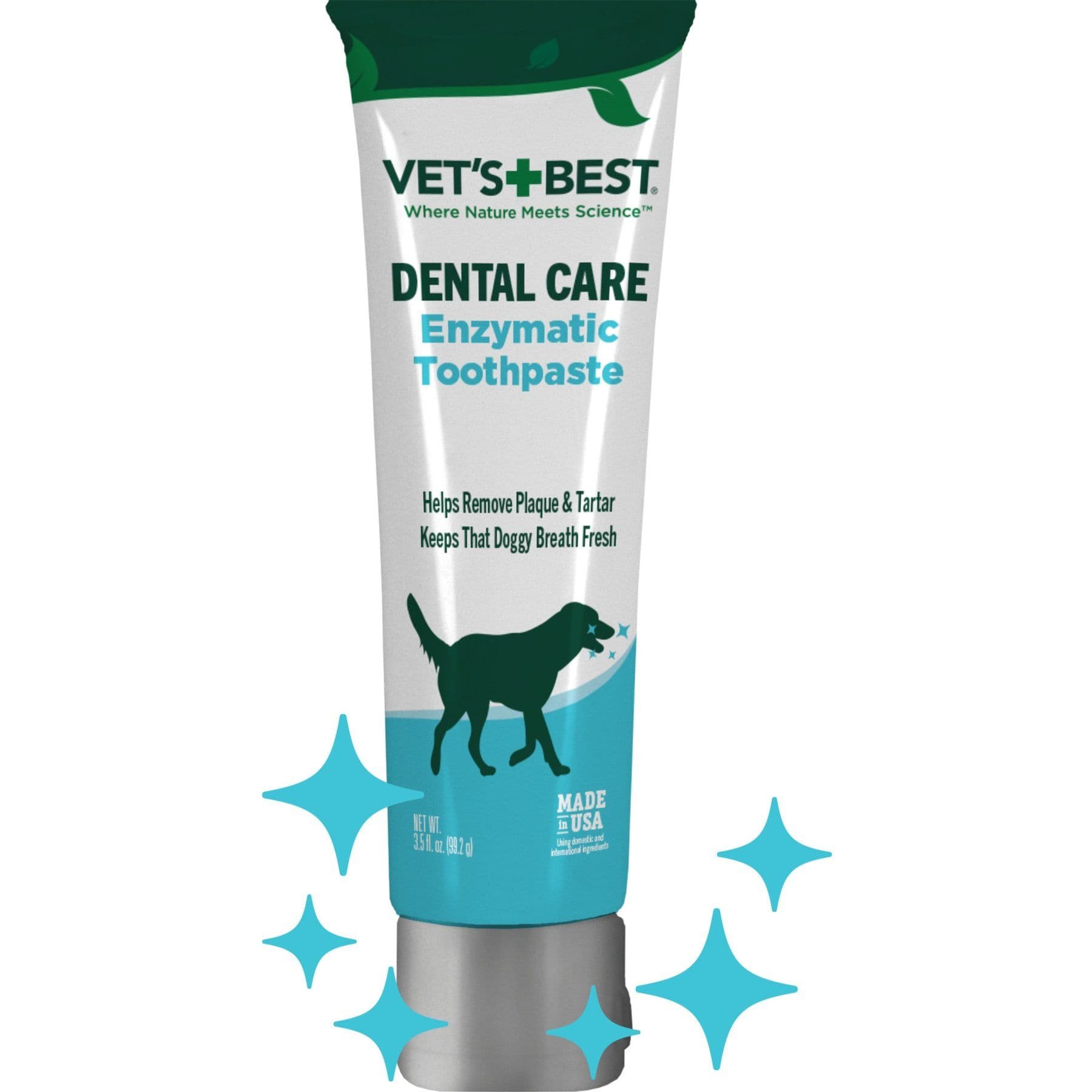
Enzymatic dog toothpaste made with aloe, neem oil, and baking soda.
Petful may earn a commission when you click through to Chewy, at no extra cost to you.
How We Chose These Toothpastes
What is the best vet-recommended toothpaste for dogs? A veterinary recommendation should start with a dog-specific formula, a safe use pattern, and a product the dog will accept often enough for brushing to happen. Current VOHC acceptance adds valuable third-party evidence for the exact plaque or tartar claim shown on the seal. It is useful, but it is not the only reason a veterinarian may recommend a paste.
Petful did not obtain or hands-on test these toothpastes. This expert analysis compared current official product information, formula transparency, the VOHC accepted-products list, flavor and format, approximate price per ounce, and the safety and brushing guidance published by veterinary authorities. Consumer ratings were not treated as clinical evidence.
No ranking page compares these picks side by side or shows per-ounce pricing. Park Grove at rank 5 states that Petsmile is ADA-approved, which is false: the ADA does not approve pet products, and Petsmile is VOHC-accepted for plaque. The three vet-clinic pages at ranks 3 through 5 are roughly 1,000 words with one image and no named author, while the rank-6 AKC page is dated review mining with no FAQ. No ranking page gives brushing frequency a standalone evidence-based answer beyond a passing mention, and competitors gesture at alternatives when a dog refuses brushing without resolving the fallback decision.
Decision factors:
- Third-party status: Whether the exact toothpaste appears on the current VOHC dog list and which claim the seal covers.
- Formula transparency: Whether the manufacturer identifies an enzyme system or another cleaning technology instead of relying on vague language.
- Use fit: Flavor, texture, tube size, and whether the product can support a repeatable routine.
- Value: Approximate current price divided by net ounces, rather than the package price alone.
- Safety boundaries: Dog-specific labeling, no reliance on human toothpaste, and no claim that a paste removes established calculus.
- The American Dental Association does not approve pet toothpastes. Its Seal of Acceptance covers eligible human over-the-counter oral-care categories. Petsmile Professional Pet Toothpaste is VOHC-accepted for plaque, not ADA-approved.
The American Dental Association's current Seal categories describe human oral-care products, while the official VOHC accepted-products list has separate dog and cat sections. Keeping those programs distinct corrects a factual error repeated by some ranking pages.
VOHC Acceptance: The Seal That Matters
VOHC stands for Veterinary Oral Health Council. The council awards acceptance for a specific product and a specific claim, such as plaque, tartar, or both. It does not award a general “best toothpaste” title, and “VOHC-approved” is less precise than “VOHC-accepted for plaque” when describing Petsmile.
Among these five picks, only Petsmile Professional Pet Toothpaste appears on the current dog list, where the accepted claim is plaque. Virbac C.E.T., Arm & Hammer Complete Care, Sentry Petrodex, and Vet's Best do not appear there as toothpastes. Product formulations and accepted lists can change, so verify the exact name and claim rather than relying on a retailer badge or an old article.
Petful's guide to VOHC acceptance explains what the seal means and how it fits into a broader dental routine. Use that guide for seal interpretation, and use the official VOHC directory for the current product list. A seal supports a product claim; it does not diagnose gum disease, make a painful mouth safe to brush, or remove the need for veterinary care.
Enzymatic vs. Non-Enzymatic: How They Work
Enzymatic toothpaste contains enzymes intended to support plaque control beyond the mild abrasive action of the paste. Virbac C.E.T. identifies both glucose oxidase and lactoperoxidase. In that system, glucose oxidase helps generate hydrogen peroxide from glucose, and lactoperoxidase uses peroxide with thiocyanate to support an antimicrobial environment. Virbac's current formula also lists potassium thiocyanate.
For shoppers comparing the best enzymatic dog toothpaste, best dog enzyme toothpaste, best enzyme dog toothpaste, or Vet's Best enzymatic dog toothpaste reviews, the deciding evidence is the named system and finished-product status, not the order of the words in the search. Virbac provides the clearest dual-enzyme disclosure. Vet's Best supplies glucose oxidase in a 3.5 oz bottle, toothpaste-and-toothbrush set, and kit format, but it does not use the same lactoperoxidase system.
- Other enzymatic formulas: Vet's Best identifies glucose oxidase but not the same dual-enzyme system. Arm & Hammer and Sentry describe their products as enzymatic without offering the same level of accessible enzyme detail. That difference matters because “enzymatic” is a category word, not proof that every product uses the same ingredients, concentration, or evidence.
- Non-enzymatic contrast: Petsmile's Calprox formula uses calcium peroxide and minerals, and VOHC accepts the finished product for plaque. That is stronger evidence for the exact finished-product claim than simply recognizing an ingredient name.
How to choose between enzyme systems
- Choose Petsmile when current VOHC acceptance for plaque is the priority.
- Choose Virbac C.E.T. when a named dual-enzyme system and poultry flavor are the priority.
- Choose Vet's Best when a glucose oxidase gel format is easier to introduce.
- Choose Arm & Hammer or Sentry Petrodex when cost, tube size, or poultry flavor may improve consistency.
Is enzymatic toothpaste worth it? It can be, particularly when the dog accepts the flavor and the owner uses it consistently. Enzymes can remain active after application, so the formula does not depend only on scrubbing. Still, “works without scrubbing” should not be read as “brushing is unnecessary.” The brush physically disrupts plaque at the gumline, which is why AAHA dental guidelines continue to make daily brushing the goal.
Ingredients: Safe vs. Avoid
What is the safest dog toothpaste? It is a dog-specific product used according to its current label, with ingredients your dog tolerates and no xylitol. A VOHC-accepted option provides evidence for the listed plaque or tartar claim, but safe use also depends on the dog's mouth. Do not brush visibly inflamed, bleeding, or painful gums until a veterinarian has advised you.
Look for these practical traits:
- A label specifically intended for dogs or pets.
- Directions that account for swallowing and do not require rinsing.
- A flavor and texture the dog will accept without force.
- A clearly identified active system, or VOHC acceptance for a stated claim.
- A package size the household can use before the product expires.
Never use human toothpaste as a routine substitute. The FDA warns that xylitol may appear in toothpaste and can cause a rapid, life-threatening drop in a dog's blood sugar. If a dog swallows a xylitol-containing product, call a veterinarian, emergency clinic, or animal poison-control service immediately rather than waiting for symptoms.
Fluoride needs a more measured explanation. A small accidental taste of many human fluoride toothpastes may cause only stomach upset, while a large ingestion can cause serious gastrointestinal, heart, blood-pressure, and electrolyte effects. Dogs should never be deliberately given fluoride toothpaste to swallow. Use pet toothpaste, store every tube securely, and call a veterinarian or poison service after a large or uncertain exposure.
“Natural,” “organic,” and “homemade” are not safety certifications. A homemade dog toothpaste can have inconsistent concentrations, poor taste, or ingredients that irritate the mouth or stomach. Essential oils, concentrated flavorings, salt, and abrasive powders are not automatically safe because they came from a kitchen. Ask the veterinarian before using a homemade formula, especially for a puppy, a small dog, or a dog with a sensitive stomach or chronic illness.
Picks by Concern: Bad Breath, Plaque, and Tartar
The best dog toothpaste for bad breath is one that helps the owner brush consistently while the cause of the odor is addressed. Virbac, Sentry, and Arm & Hammer offer savory flavors that may improve acceptance. Petsmile adds a current VOHC plaque claim. None should be used to cover up suddenly severe odor, mouth pain, bleeding, swelling, drooling, a loose tooth, or difficulty eating.
For plaque, daily mechanical brushing is the central home-care step. Toothpaste can make the routine more acceptable and may add an enzymatic or accepted plaque-control mechanism. For tartar, the boundary is different: once plaque has hardened into calculus, toothpaste and home scraping are not safe substitutes for a veterinary dental assessment.
- That same boundary applies when comparing the best dog toothpaste for bad breath, fresh breath, plaque buildup, plaque removal, tartar removal, or plaque and tartar together. Natural, organic, all-natural, and best-tasting toothpaste labels do not prove efficacy. Small dogs need an appropriately sized brush, and no paste safely removes hardened tartar or treats the disease causing persistent bad breath.
Petful's dog dental care guide owns the clinical questions about rapid plaque buildup, established tartar, professional cleaning, dental radiographs, and why owners should not scrape a dog's teeth at home. This roundup stays focused on selecting a paste rather than re-covering diagnosis and treatment.
Match the concern to the product
- VOHC evidence: Petsmile, accepted for plaque.
- Named dual-enzyme system: Virbac C.E.T.
- Low price per ounce: Arm & Hammer Complete Care.
- Savory large-tube value: Sentry Petrodex.
- Gel texture and glucose oxidase: Vet's Best.
For small dogs, puppies, and dogs with a sensitive stomach, use only a tiny label-directed amount and introduce one product at a time. Stop and call the veterinarian if brushing causes pain, repeated vomiting, marked diarrhea, facial swelling, or another concerning reaction. A paste cannot treat gingivitis, gum disease, periodontal disease, or a fractured tooth.
The Right Toothbrush to Pair With It
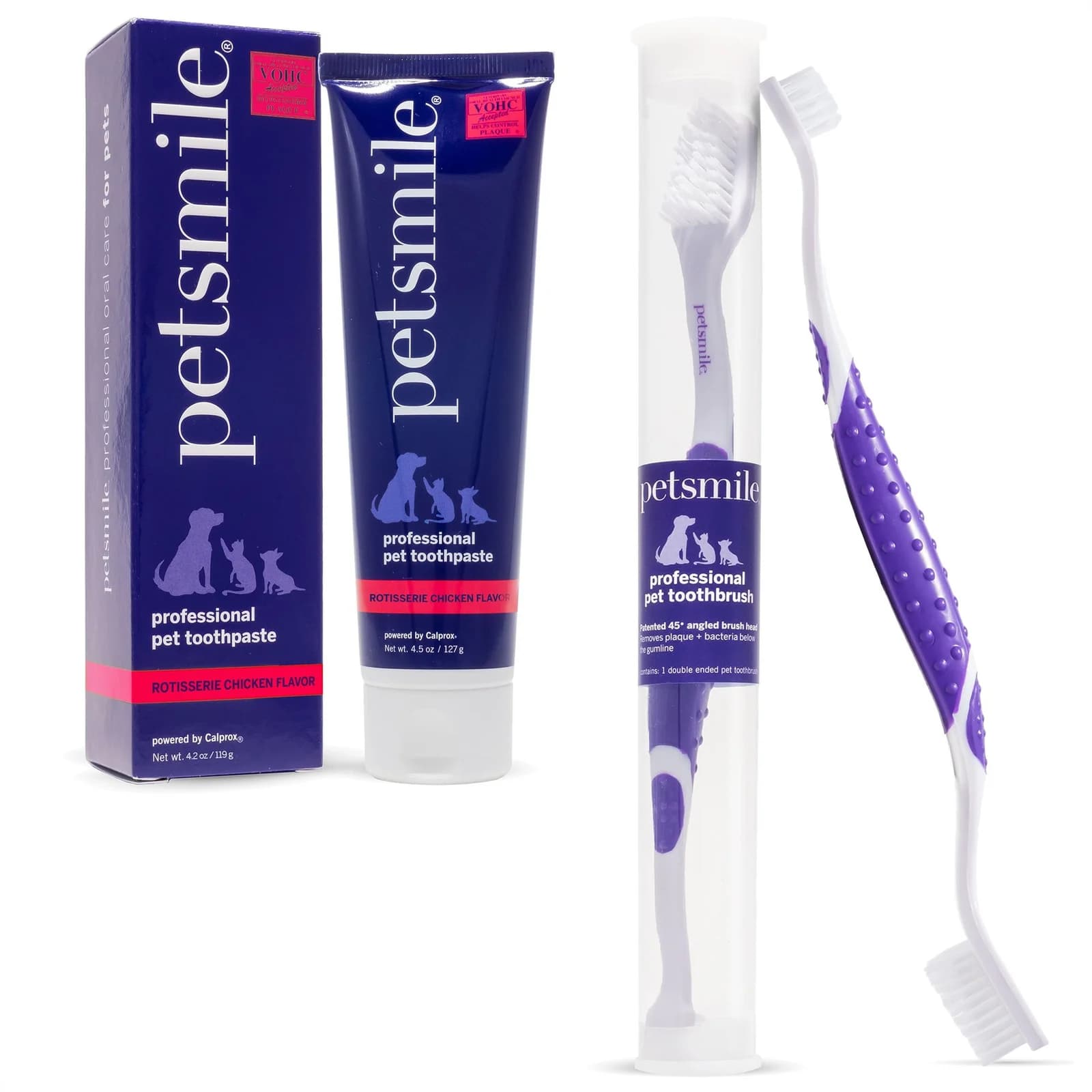
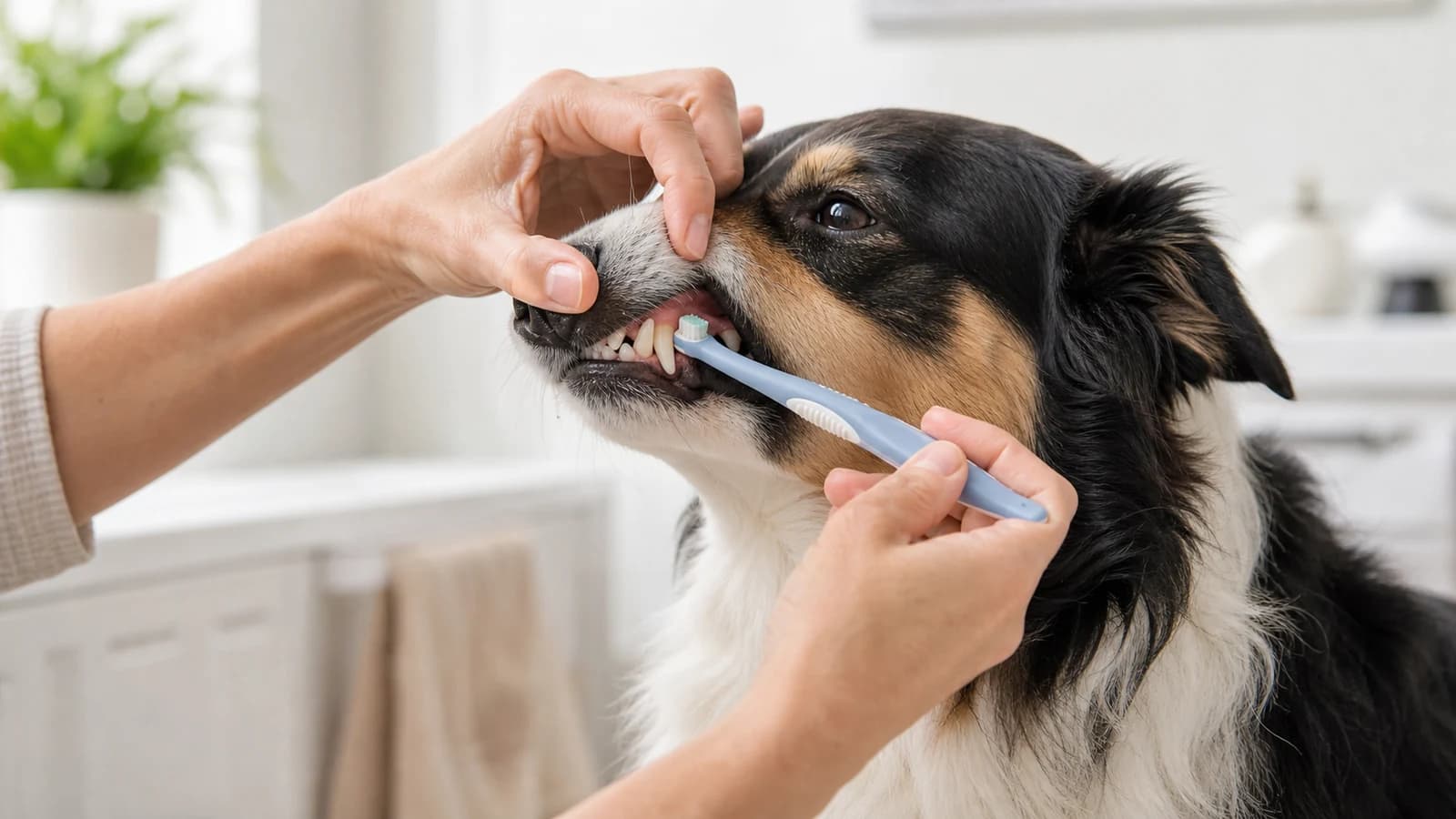
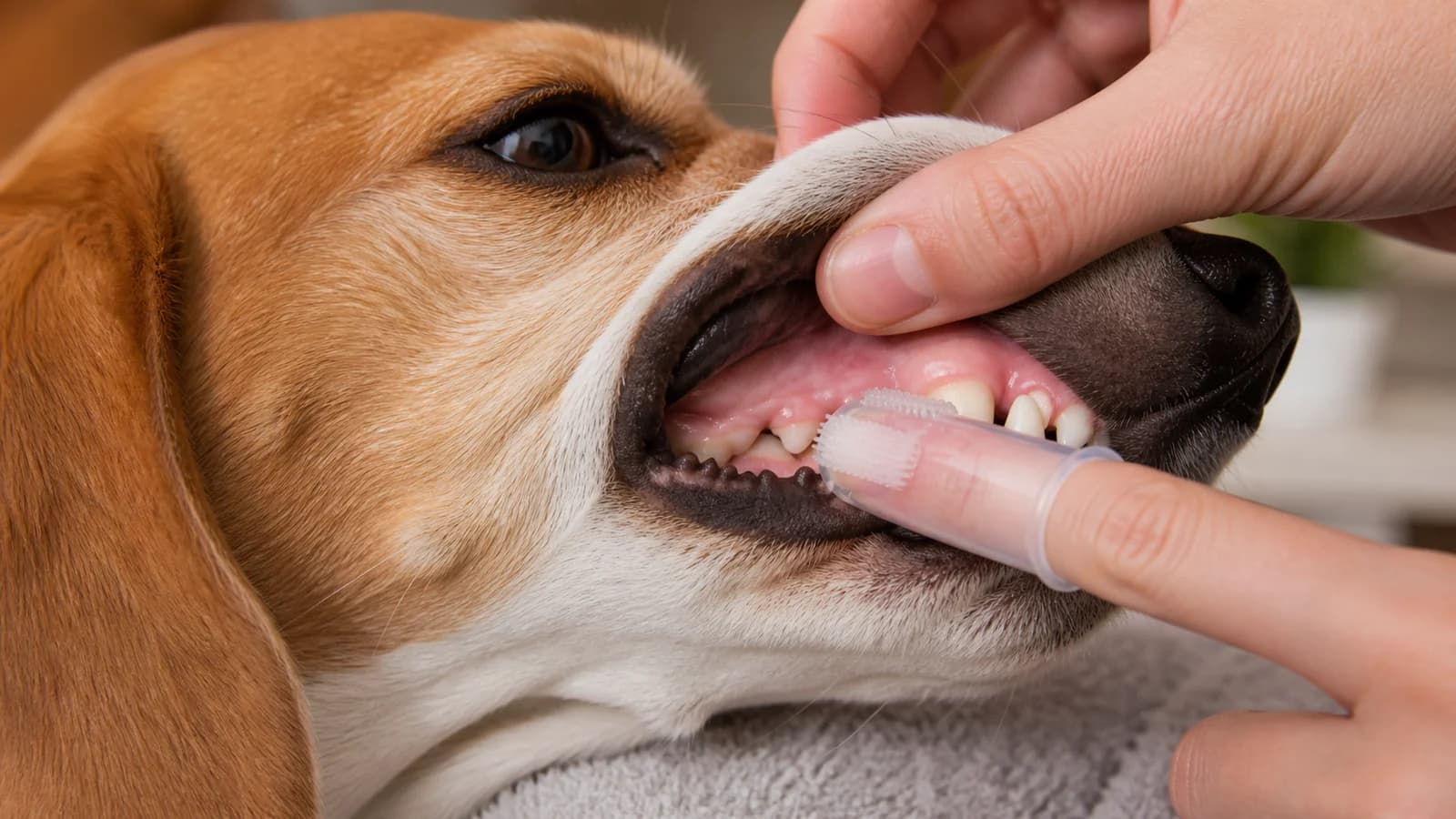
What do vets recommend for brushing dogs' teeth? Use a soft-bristled pet toothbrush sized for the dog's mouth, pair it with dog-specific toothpaste, and work along the outer surfaces where plaque collects near the gumline. Daily brushing provides the strongest home-care benefit, but the first goal is calm acceptance, not forcing a full-mouth cleaning on day one.
A long-handled brush usually gives better reach to the premolars and molars than a finger brush. A small head suits toy breeds and narrow mouths. A larger or dual-ended brush can work for medium and large dogs. Finger brushes are useful for flavor introduction and gentle early handling, but an owner's finger is thicker than a brush head and may not reach the back teeth well.
Build the routine in short steps:
- Let the dog lick a tiny amount of the chosen paste from a clean finger.
- Lift the lip briefly and reward calm behavior without opening the mouth wide.
- Touch one or two outer teeth with a finger brush or soft toothbrush.
- Add a few teeth at a time, keeping each session brief and positive.
- Angle the bristles toward the gumline and use gentle circular or back-and-forth strokes.
- Concentrate on the outer surfaces, especially the upper back teeth.
- Stop if the dog shows pain, bleeding, panic, or a sudden behavior change.
AAHA's dental guidelines say brushing needs to be daily to provide the expected benefit and that brushing inflamed gingiva can cause pain and aversion. The AVMA pet dental care guide says daily is best while several times weekly can still be effective when daily care is not possible. Home care does not replace anesthetized examinations, dental radiographs, or professional treatment when disease is present.
Practical frequency: Daily is ideal, and three times weekly is a practical minimum while a dog learns, provided brushing is comfortable and the veterinarian has not identified painful disease. This is the standalone evidence-based frequency answer missing from many product lists.
If the dog refuses brushing after a gradual introduction, do not turn the session into a restraint contest. Reassess mouth pain first, try a different pet-safe flavor or brush size, and ask the veterinarian about another home-care format. Petful's comparison of brushing, dental chews, and water additives explains what each method can and cannot do.
The same-bundle guide to the best dental chews for dogs can help when a chew is an appropriate supplement. Choose the correct size, supervise use, and account for calories. A chew or additive is a fallback tool, not evidence that painful gums or established tartar can be managed without a veterinary examination.
Dog Toothpaste FAQs
Which toothpaste is good for dogs depends on the mouth and the routine, but start with a dog-specific formula that does not require rinsing, has a flavor the dog accepts, and can be used consistently. Petsmile is the VOHC-accepted choice here for plaque. Virbac C.E.T. is the leading enzymatic choice because it names glucose oxidase and lactoperoxidase. Mouth pain, allergies, digestive sensitivity, age, and brushing tolerance can change the veterinary recommendation.
No. Human toothpaste is designed to be spat out, while dogs swallow much of what reaches their mouths. Xylitol is toxic to dogs, and the practical rule is that dogs should never swallow fluoride toothpaste deliberately. Swallowed fluoride can cause stomach upset or more serious effects after a large exposure. Use dog-specific toothpaste. If a dog swallows a human product, check the label and call a veterinarian or poison-control service when xylitol is present or the amount is uncertain.
How often you should brush your dog's teeth has a direct answer: daily is ideal under AAHA dental guidance. The AVMA notes that brushing several times weekly can still be effective when daily care is not possible, so a three times weekly minimum is a practical bridge while the dog learns. Work toward daily brushing, and stop for veterinary advice if brushing causes pain, bleeding, or marked distress.
Dog-specific toothpaste is designed to be swallowed in the small label-directed amount used for brushing, so routine use does not require rinsing. Call your veterinarian if the dog eats a large part of a tube, develops vomiting or diarrhea, or swallows human toothpaste. Check the ingredient list immediately. Xylitol exposure is an emergency, and a large or uncertain fluoride exposure warrants prompt veterinary or poison-control advice.
Enzymatic toothpaste can be worth it when the dog likes the flavor and the formula helps make brushing consistent. Glucose oxidase and related systems can remain active after application, which is sometimes described as toothpaste that works without scrubbing. That does not make the toothbrush optional. Physical brushing disrupts plaque at the gumline, so compare the named enzyme system, price per ounce, flavor, and tolerance instead of assuming every enzymatic label has identical evidence.
The toothpaste flavor dogs like best varies, but many dogs accept poultry flavor, which makes Virbac C.E.T. and Sentry Petrodex useful starting points. Others prefer beef, cheese, peanut butter, or a mild gel. Run a small acceptance trial with a tiny label-directed taste, then pair it with calm lip handling. Stop after stomach upset, and never use flavor acceptance as a reason to offer human toothpaste.
If your dog refuses brushing, first rule out mouth pain, inflamed gums, a fractured tooth, or another reason handling hurts. Restart with brief flavor tasting, lip lifts, and a smaller soft brush. If brushing remains impossible, ask whether a VOHC-accepted dental chew or water additive, dental diet, gel, spray, or wipe fits the dog. These alternatives support a plan but do not remove established tartar or replace an examination.
Final Verdict
Petsmile Professional Pet Toothpaste is the best evidence-led choice in this group because it is currently VOHC-accepted for plaque. Virbac C.E.T. is the best enzymatic dog toothpaste for a shopper who values a clearly identified glucose oxidase and lactoperoxidase system. Arm & Hammer is the budget pick, Sentry Petrodex pairs poultry flavor with large-tube value, and Vet's Best offers a glucose oxidase gel format.
The product only works as part of a repeatable care plan. Use dog-specific paste, choose a soft brush that fits the mouth, aim for daily brushing, and let a veterinarian handle pain, bleeding, established tartar, or suspected dental disease. Most importantly, keep the labels accurate: Petsmile is VOHC-accepted for plaque, and no pet toothpaste should be called ADA-approved.
BVMS, MRCVS
Dr. Pippa Elliott, BVMS, MRCVS, is a veterinarian with nearly 30 years of experience in companion animal practice. Dr. Elliott earned her Bachelor of Veterinary Medicine and Surgery from the University of Glasgow. She was also designated a Member of the Royal College of Veterinary Surgeons. Married with 2 grown-up kids, Dr. Elliott has a naughty Puggle named Poggle, 3 cats and a bearded dragon.
Sign up for expert-backed reviews and safety alerts all in one place.